There was/is previously a restriction on including dynamic content or non UIWebView/WKWebView rendering, but I'm unaware of current IAS-MAS policies.
You're also demanding the impossible/very difficult because mobile browsers don't support extensions. It's just not a thing.
Also, Firefox is already available for iOS. If it doesn't meet your requirements, then it's FOSS and you're welcome to contribute improvements that meet your requirements.
Once you remove these things that you want to remove, you wind up losing the very things that attract you to iPhone in the first place!
I'm hoping anti-trust law will come to bear on software from apple.
At least in my case, I wasn't attracted to the iPhone because of forced Webkit and the Lightning port.
Yes, but that's the misunderstanding. You want those features without the trade-offs. Apple's hardware and software support come at the expense of "features" like "side loading". If you add in these featuers you want, you lose the hardware and software support you bought the iPhone for in the first place.
It's like the RCS nonsense that Google is pushing (hint, if you have to advertise a standard, it's not a good standard). The iPhone is its own thing. If you want these other features and "more freedom" then the iPhone isn't the device for you. I don't buy an Xbox expecting to play Zelda or with the expectations that it is highly portable. It's just a suite of product features and you have to choose what features you want.
Besides immorally using force now the iPhone will be littered with alt stores where you can only get certain popular apps making the iPhone a nightmare.
Those who thought they were so clever in forcing change will be seen to be fools.
Also, mobile Firefox supports plenty of what I consider essentiall extensions. It's almost as if you got those things wrong on purpose
My iPhone XS which I bought in 2018 just got the iOS 17 update and it's working pretty well.
I want to be able to load whatever I want on my phone, but I also don't want to have to buy a new phone every couple years (or sooner! Looks like the 5a is still in production with security updates ending in 11 months) to get Android updates, or even security updates.
Disclosure: although I have worked for Google in the past, I haven’t worked for them in more than 8 years, never worked on Android or Pixel beyond internally testing pre-release Android OS versions, have never had anything to do with setting their lifecycle policies, have no inside information on these rumors, and am not speaking for Google here.
So on top of google's short timeframe to allow 'next os release' support, apple does a better job on keeping older gen phones working well across multiple os releases.
Again, I have no inside info on this despite having worked for Google many years ago. We'll see what the announcement is on October 4.
I’m not sure promises by Google are worth anything at this point.
(To be fair, both Dropbox and OneDrive has done the same: offered free storage without specifying a time limit for jumping through some hoops, then IIRC:
- in the Dropbox case: suddenly just introduce a time limit
- in the OneDrive case just tell me one day that they didn't want to do this more and I need to take my data out quickly or pay to avoid losing it )
I have used the free compressed photos option the whole time and one day I was suddenly many many gigabytes over limit.
"Don't Be Evil" famously springs to mind.
I was also burned, in my case by the "free forever" or something "high quality photo storage" (as opposed to full quality).
I understand nothing is truly free, but I expect when a large scale company offers something for free they have thought it true and aren't planning from the start to weasel out once you have uploaded a few thousand images using their solution?
Well, I have learned my lessons:
I don't trust Google anymore.
As some said it took a while to stop trusting Google because they had to burn through a mountain of goodwill, but here we are.
I understand your frustration, but this was communicated by Google already at launch.
E.g. my Pixel 4a stopped receiving updates last month but will probably receive Android 14 updates until the next release.
Guess what? Samsung doesn't care about long term Android support. They're in it to sell phones. It's better for Samsung if Android's ecosystem continues to drop older phones.
At some point, Apple realized that long term support is a competitive advantage they can leverage. Due to their enormous profits, they can increase their support costs. With their closed ecosystem, Samsung can't come in and pull their shenanigans to undercut Apple.
IMO, Android’s openness is exactly why the Android experience on older phones suck.
I’d like to see 7-8 years of security updates, but it’s decent.
https://www.gsmarena.com/samsung_pledges_4_os_updates_5_year...
1. We don't know FairPhone can follow through, they're small/young and may not exist in 8y, or may not have money to pay for support. 2. Even if FP succeeds, they accomplished a much easier task than BigCo is expected to.
My main point is that if Pixels sold as many phones as Samsung, it is very likely that Pixel would put in the resources to support older phones. Competition within the Android space does not equate to better long term service.
Windows 8 was released in 2012 and was supported untim 2023 and Microsoft for sure hat _a lot_ more platforms to support than Google / the Android Team.
I would argue that a closed system is a lot easier to support for a longer time (because one can mandate changes/depreciations). But for a open system, there must be another factor coming into play, may it be money or a simple "don't care".
The parents say the iPhone is what they want and that is because the iPhone is the phone you can’t accidentally break by installing alternative stores or apps or making the wrong settings. If Apple is forced to allow alternative stores, apps and settings that can break the system, the iPhone is no longer the phone they wanted.
I just re-read it and couldn't find the part where they said that. Do you have a direct citation from the parent, or are you just floating a guess to support your opinion?
Feel free to not install internet browsers that you don't like though.
The only reason that's not the case on iOS devices is that they don't have that option.
But even reskinned Chrome isn't safe from nag messages to switch to Chrome.
If they were rolling out policy to quash anticompetitive behavior in the browser space along with requiring Apple to open iOS up I’d be much more comfortable. The two should go hand in hand. I don’t want Google to have any opportunity to entrench Chrome/Blink on iOS.
There's little point as a creator to post on a platform with zero reach.
For a certain demographic of people, I would agree. I continue to push the iPad for my aging parents because it can do what they need to do without my tech support. They don't need all the flexibility of a computer as a general purpose computing device. They just need to browse the web, write emails and watch videos, and the iPad is perfect for them.
Any questions, or do you still want to whinge over how "turing completeness isn't computation!"? You're welcome to it, but quite obviously the Digital Markets Act has nothing to do with it. Apple would be a designated gatekeeper if they sold Cuisinart blenders, now they have to cope or leave the relevant markets.
It's truly shocking to me how some people are willing to write multiple pages of comments in response to this. Half the people in this thread are replying to every positive comment they can find crying "Atlas Shrugged!" like bloody murder.
I don’t think the DMA will change much but do find it funny how many people think they are defending human freedom by getting a convoluted process to run emulators, uBlock, and piracy apps on their phone.
So... what's a better way to defend human freedom? Letting market conditions deteriorate further?
How exactly are they different from Apple, then? Why didn't Apple resist their incorporation into FIVE-EYES and Europe's surveillance network?
> If I were them, I’d say their best chance at defending human freedom would be to make nuclear reactors easy to build
That's the Free Market's job. If the world's largest company was a nuclear reactor business and not a smartphone one, maybe they'd be doing it.
> This will end up being as useful as GDPR privacy notices and cookie consents on websites.
Or as effective as their USB-C regulation. Time will tell, eh?
Because Apple sells the highest security mass market consumer device ever made? Because Apple brought easy to use, end to end encryption to the masses with iMessage?
No clue what your point here is besides regurgitating some non-specific conspiracy theory about the extent of Apple’s cooperation with the government.
> That's the Free Market's job.
Regulation is not the free market’s job, as you evidently believe since you are so excited about digital markets regulation.
Maybe they could start by not categorizing wood pellets shipped across the Atlantic and produced from strip mining forests in southeastern United States as “green energy.”
> Or as effective as their USB-C regulation
How was USB-C regulation effective? Yeah Apple complied, but are customers’ lives better? In aggregate? By what metric? I for one had to buy a new iPhone cable for the first time in half a decade to connect my phone to my car. By its stated aims, the regulation was not effective in my case.
https://twitter.com/trunarla/status/1706760798662758517
I suppose hackers really are digging EU regulation in this area!
https://twitter.com/trunarla/status/1706766113672212932
Gamers too?

This argument may not be worth continuing if you don't have anything left to say.
Me: By what standard? In my specific case, it wasn’t.
You: Blah blah blah burden of proof hierarchy of disagreement.
So do you have any citation or do you plan to keep deflecting? So far, my anecdote has been the only evidence provided about the matter, even if it’s weak which I already conceded.
Deflecting what? Nobody here cares about your metric of success, which so far seems to be substantiated on the same marginal frustration that people felt with the 30-pin to Lightning switch. Nothing you have presented suggests a populist rejection of USB-C. If anything, it's actually much more popular than Apple's standard.
> How was USB-C regulation effective? Yeah Apple complied, but are customers’ lives better? In aggregate? By what metric?
...did you miss all those links of people plugging their iPhones into displays and class-compliant devices? People programming and gaming and working with standard audio equipment using a single cable, like they should have been able to do from the start?
Customers lives are great right now. People who own non-Apple products like the Nintendo Switch or cough cough a Macbook can now charge their iPhone using the same cable. Households that avoid Apple products waste less money and material owning and buying cables for one device. Lack of MFi certification means that the cheap cables don't have to be built like shit. Hell, the simple fact that you can break the connector to remove it from your phone instead of taking it to the Genius Bar so you can get the whole IC board replaced.
I'm sure it's frustrating for Apple, losing out on the licensing fees and killing their dream of owning a serial standard. Sucks to suck.
Citation: Apple
> Regulation is not the free market’s job, as you evidently believe
Innovation is. The European Union was not founded to build a better Nuclear Reactor (nor would it tangibly impact their citizen's freedom). Regulating the market those citizens participate in does. I'm not so sure why you're complaining about this so much. If Apple's self-righteous crusade to own all digital IP was truly worth it, they could abandon Europe and continue on. But it's not- for one because they value money, and for two because they already work with FIVE-EYES and every domestic European nation to surveil on their users. No conspiracy, Apple documents it themselves: https://www.apple.com/legal/transparency/
> I for one had to buy a new iPhone cable for the first time in half a decade to connect my phone to my car. By its stated aims, the regulation was not effective in my case.
Cope.
It's a democratically passed bill to protect a market from extensive damage. Here are the people who voted for it: https://www.europarl.europa.eu/cmsdata/242706/IMCO%20Voting%...
Again, if Apple shared your opinion then maybe they'd call Europe's bluff. Again, Apple is chronically incapable of doing this because it would mean being eaten alive by shareholders that make $DIS owners look rational. Leaving the European market would be the trigger-pull of Apple's suicide.
> and now all they can do is nitpick connectors
...you're still mad about a $4 gas station cable? Seriously?
> and firmly demand that Apple support something almost no users care about.
"Why is the United States wasting their time with these Rockefeller people? They're coping over things the unbridled success of Standard Oil, pushing legislation that none of their customers care about!" - imagine the free market with a bunch of yous at the helm.
One can believe regulation is counterproductive while complying with it. Compliance isn’t evidence of success.
> you're still mad about a $4 gas station cable? Seriously?
USB-C is the last connector I’d cheap out on for my personal electronics, given its tendency to fry devices. In any case, the rationale for standardizing the connectors was that buying cables was an environmental and anti-consumer catastrophe, which is hilarious for a continent that imports wood pellets from across an ocean to heat homes. Suddenly me having to buy one is no biggie?
(I’m not mad, I’m perplexed.)
> imagine the free market with a bunch of yous at the helm
It’d be much better. I actually care about asking if regulation is productive and effective. You seem to be focused on whether it’s a sick own and think people who question efficacy are “coping”.
For example, I commented elsewhere in this thread that Apple’s requirement to only rent Macs for 24 hours at a time in VPS services is silly and shouldn’t be enforceable.
If I could facepalm any harder, my hand would pass through my skull and hit the wall behind me. Your definition of success is relative, and judging from every piece of evidence you have presented so far, it's also quite petty. Not the same definition of success the EU is using. So... you're welcome to disagree, but nobody is using your metric of success.
> Suddenly me having to buy one is no biggie?
Quite literally, yes.
> It’d be much better.
I'm going to tear my hair out. This is the reason nobody takes you serious in argumentation.
> I commented elsewhere in this thread that Apple’s requirement to only rent Macs for 24 hours at a time in VPS services is silly and shouldn’t be enforceable.
Congratu-fucking-lations. Next you're going to have some prophetic vision that their relationship with China is somehow harmful, or that the Butterfly Keyboard hurt your fingers. Maybe you are the expert market correspondent you claimed to be.
> You seem to be focused on whether it’s a sick own
You know what? I am. Apple spent the last 10 years playing their own game of sick ownership, now it's only fair that they should be forced to choose between first-world market access and fair play. If you want to question the efficacy of user freedom, use actual examples and arguements. Here's the chart again if you need help: http://2.bp.blogspot.com/-qgQR5VUoGDU/UzV5nP4xKnI/AAAAAAAADo...
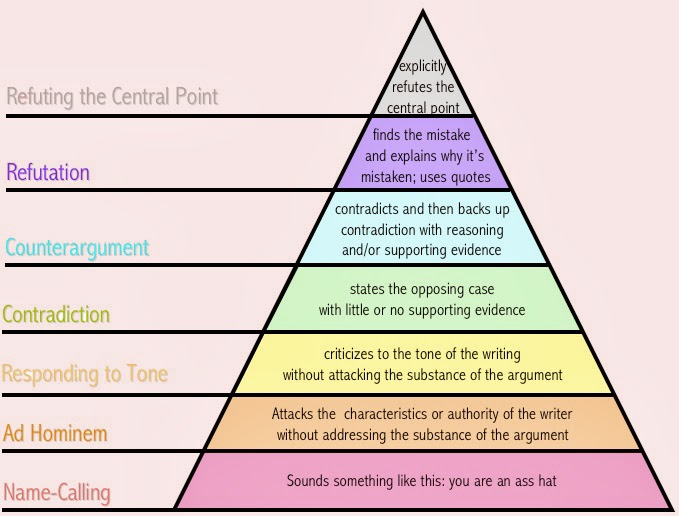
As annoying as it is to call it out, that’s a classic whataboutism right there.
  1.   An undertaking shall be designated as a gatekeeper if:

  (a)  it has a significant impact on the internal market;

  (b)  it provides a core platform service which is an important gateway for business users to reach end users; and

  (c)  it enjoys an entrenched and durable position, in its operations, or it is foreseeable that it will enjoy such a position in the near future.
Seriously, what site are we even on right now?
Or did you mean just running ARM Assembly?
...or a sufficently advanced browser :p (and people wonder why MacOS is loaded with lazy Electron ports...)
Distributing software should be free, ignoring the cost of transmitting the information and storing it on the client. Apple's pricing is arbitrary, and their defense of it is unsubstantiated. Forcing the App Store to compete is the only natural step forward for Apple, whether they (or their shareholders) want to admit it or not.
The freedoms we have, and the freedom that should be protected is market choice to buy or not buy any consumer product.
If you don’t like Apple, don’t buy its products and purchase a device from a large number of competitors. It is really that simple.
There is no rule that consumers have a right to do anything. You are not guaranteed a right to install a Windows app on your iPhone, or iPhone apps on Windows. You aren’t guaranteed that your coffee machine can run Python.
It's nice that they provide that service for those developers that want it. It's not nice that I don't have a choice to distribute my own app however I see fit.
See, I want to build an app, and people want to install it, but Apple is standing between us, dictating how we must and must not interact.
> As an Apple customer I value these things pretty highly, more than I value any one app.
Then you're free to not enable sideloading when it eventually inevitably materializes, and miss out on apps that aren't available on the app store. This decision is still yours to make. We've had this on Android and macOS since forever.
I propose Apple start charging some pennies for every million UIView calls.
But Apple always offered Xcode for free and, iirc, some Macs even came with an Xcode installation CD in the box. But major macOS updates were also paid back then. But the version that came with your computer out of the box was still free. So no, I feel like "we need the $99/year and the 30% to support the R&D cost of our APIs" is a mostly made-up excuse. It's not like Apple would operate at loss if they remove the $99 and 30% fees tomorrow.
Remember: Apple is considered a gatekeeper for app installation regardless of the cost they pay to maintain the platform. Charging per-call on a literally free API would be so profoundly stupid that it would force a second Digital Market Act.
Making an API public, even if the necessary code runs entirely on-device, is not free. It incurs immense upfront and perpetual R&D costs.
The digital markets act is about facilitating competing entrants to “essential platform services.” Charging for the Apple technology those entrants use would not be inconsistent with its aims. A developer could use their own UI framework that draws straight to the window server itself! And maybe use some of that famous Android audio processing software!
Sorry, that's like saying the Apple Developer program fulfills the DMA qualifications because it's not "inconsistent with it's aims".
Apple is of course welcome to try any of these things; nothing stops them as a private business. They failed to defend the mandatory value of the App Store in Europe though, so I fail to see how they could defend an arbitrary charge on other API calls. Apple quite literally cannot call Europe's bluff - that's what my original upstream comment was about in the first place. You can talk confident smack about Apple's talent in the pissing contest, but none of that means anything when the capitalist leash gets tugged and the alternative is losing money.
There is not a single value Apple holds that they would not forgo for money.
Mine as a consumer is that Apple doesn’t have dark patters when I want to cancel my subscription with your app. When I try to cancel my membership for something else like a magazine or the gym I have to go over 10 steps…
Then you're not my user. And I'm not talking about anything involving money anyway.
> When I try to cancel my membership for something else like a magazine or the gym I have to go over 10 steps…
It's the government's job to enforce consumer rights, not Apple's. I'm sorry that consumer protection in the US is so terrible. Where I'm from, "credit card on file" is just not a thing and most of everything is prepaid. If a service really insists on charging you against your will, you can block your card and get a new one but I've yet to hear about this actually happening to someone.
This is a complete red herring and a very sly one at that.
Sure, MS have no obligation to make it so that Safari can run on Windows.
However, Microsoft also cannot stop Apple from building a version of Safari that runs on Windows. Or iTunes on Windows. And when Apple built iTunes on Windows MS had no right to force them to fork over 30% of every song they sold within iTunes to MS. MS had no right to force Mozilla to build Firefox around the IE6 engine, or Chrome around IE6.
It’s very likely Apple, Google, or Mozilla would not have existed if governments (specifically the EU) hadn’t stopped Microsoft from pushing it’s options as the default, never mind blocking alternatives altogether.
Microsoft also doesn’t charge a ransom fee for 3rd party applications to use the hardware features of my computer, that I’ve already paid for. Apple does this with the NFC chip in iPhones - public transit companies the world over need to pay Apple money to use the nfc chip present in iPhones to pay for transit.
What choices might those be? The only other mobile operating system that people develop for is Android. How is a duopoly choice?
But there is, in the EU. That's what this whole thread is about. Like it or leave it, our market, our rules.
This is not even remotely true. Economies of scale mean that power accumulates and monopolies emerge, and monopolies are the antithesis of competition. In order to ensure competition, you need regulation to shake the jar regularly.
I love Apple’s hardware. But I want to be able to get software from other sources just like I can on my Mac and my windows computer.
- Phones are designed and used as general purpose devices, complete with thriving app ecosystems. I’ve installed software from dozens of companies on my phone - for gaming, work, leasure, health, everything. Phones are used much more like computers than an Xbox. We buy them to use them like computers.
- Unlike most game consoles, phones aren’t subsidised by the App Store. Apple makes a profit from iphone sales even if you don’t buy any apps.
- Phones matter more. I carry an iPhone in my pocket every day. I don’t carry a Nintendo switch.
Its my phone. I bought it with my own money. I do feel like I'm entitled to do whatever I want with my device. Its mine.
OS and device vendors forcibly inserting themselves between developers and users like Apple does is unprecedented. Because Apple has a literal technological supremacy over most of the humanity (since iOS devices use secure boot that can't be disabled and relies on keys burned into silicon that you can't change because you lack the technology to do so), regulation needs to happen to enable fair competition among iOS apps.
In other words, no one needed to enable competition when adversarial interoperability was possible. It is not possible on iOS devices because of combination of secure boot and code signing policies.
It's eerie how similar the iphone browser situation paralllels that.
The EU tries to balance this out with more regulation to prevent the stalemate and conflict of interests that exists in the US. Things like the Senate launch system that just exists for pork. Our welfare is for citizens, not big business :)
And it's fine, Apple doesn't have to enable sideloading in the US. But if they want to sell here they'll have to play by our rules.
After Samsung, Huawei, Xiaomi.
This is also why iMessage isn't a thing here in Europe but whatsapp is.
But the latest info is that Apple is going ahead with opening sideloaded stores, but for EU region only.
The market is not competitive enough to actually be able to vote with my feet/dollars. Options are give up control (choose Apple) or give up privacy (choose Google). That is not a choice consumers should be forced to make.
Yeah 100% the other stores will not allow for private APIs and circumvent privacy protections and anti-tracking mechanisms. I would 100% believe Facebook on the App Store vs Facebook on the Meta store will be the same…
That said, there's not a whole lot an app can do to track you (without requesting special permission) that a random website you visit couldn't.
Besides immoral, obviously tons of apps would leave the App Store for a different store making it a much crappier experience for folks that use those very popular apps.
If you don't use Facebook, then it shouldn't matter if they move to a Sketchy App Store.
They were about vendor abuse, vendor contracts. Which is one of the key ways Microsoft tried to maintain its power over the tech industry.
And of course as another person noted, Netscape was not in any manner blocked off of Windows. Netscape lost because it was charging for a browser while IE was free and usually installed by default. Then Netscape compounded the disaster by producing a couple of particularly terrible browser versions in a row while IE kept improving.
There was no scenario where a $49 browser was going to win regardless.
It wasn't FireFox, but Netscape definitely was actively worked against.
> Am I misremembering this era?
Apparently.
But here is a link to refresh your memory.
https://bootcamp.uxdesign.cc/the-netscape-microsoft-browser-...
To save you a click:
"The Shell Execute Bug
However, Microsoft’s most significant tactic was the infamous “shell execute bug.” This bug caused some users to fail when trying to install Netscape, but it was not present when installing Internet Explorer, giving Microsoft yet another advantage. While Microsoft claimed the bug was unintentional, many believed it was a deliberate attempt to prevent users from installing Netscape. The bug caused significant damage to Netscape’s market share and cemented Microsoft’s dominance in the browser market."
Of course they did, what kind of nonsense is this? It isn't their computer.
PC makers had to pay for licenses based on the number of computers sold, regardless of whether they were bundling Windows with them or not.
Then I'm sure users won't mind when I'm allowed to install my own rendering engine on my own computer, that I own, because I bought it, and, therefore, own it.
What solution would you suggest? Just look the other way?
Apple is just trying to keep support costs low and extractive prices high. Everything else is fanboyish rationalisation.
The same solutions we use for kids: parental controls that do not allow them to install new apps or give permissions like location permissions to apps. iOS already supports this.
Apple is the same: they own the IP, they can remote upgrade and forbid you to downgrade the software, they have no obligation to repair if broken after a while and do not allow you, for any reason, to use that thing you got to make copies. You don't "own" that phone in any full property sense. You own a license to use it.
So, ofc we other users won't care, but you bet Apple will not start letting you do anything that could harm their bottom line, like for example find a way to use browsers to launch Javascript apps that deal with online payments with them unable to get any revenue from it. Browser are not rendering engine only, they are also javascript interpreters and that is a giant scare for Apple.
People want Apple’s quality, reliability and performance, but also want no restrictions so they can run any app and install anything.
Those things aren’t compatible.
E.g., Windows and Linux (Desktop distros) don’t have many restrictions. But they can be unreliable.
But actually both Windows and Linux are “reliable” too. Windows is much, much stable in terms of backwards compatibility than macOS and certainly iOS. Linux is so reliable that it runs about 99.9% of the server, appliance and mobile world.
Windows has lost its design forte (peaked in Windows 7), but so has Apple’s claim on design. macOS is a mishmash of OK, bad and worse, as is iOS.
The worst experiences on macOS come from companies with enough clout to piss on the standard mechanisms. Installing their BS installers, having "updaters" to run on the background, not shipping a DMG or PKG, asking you to disable the SIP, never bothering to update to newer APIs, not using the Mac App Store, and so on...
(and it's usually some of the more expensive software)
Not to mention, what if Apple still exerted influence over alternative app stores by providing the SDK and certified security/privacy standards for them to build them?
https://developer.apple.com/documentation/security/notarizin...
I don't think the regulators are going to mandate that Apple not retain any consumer-protecting mechanisms.
https://news.ycombinator.com/item?id=37667740
Static analysis is very easy to be fooled. iOS security comes from its kernel enforcement by means of entitlements, which you can’t easily break.
Try the wider enterprise and creative app market, and you'll find out.
But what do I know, I'm just a personal anecdote.
What is that "real" reliability (or lack) of Windows.
Presented entirely without evidence.
Apple mandating WebKit is the only thing holding v8 back from a total monopoly, while WebKit itself has no chance of being a monopoly in the forseeable future, so I doubt there's a good anti-competitive case to be made for forcing Apple to stop doing this. It would only accelerate the monopolisation of the browser market if this happened. It would be good for consumers in the short term to allow v8 on iOS but I deeply distrust Google.
Breaking the App Store monopoly there is a much stronger case for. There is a security argument for the app store, which I would accept were it not for Apple adding 43% to the purchase price of most paid applications, which is much worse for the end user than the average piece of malware. Not to mention the expenses it imposes on developers, like requiring them to maintain a subscription and buy Apple hardware.
They replied to the comment which said this and wrote, "I see no downsides." I don’t see where they admitted to the downsides.
Don't threaten me with a good time.
Plus, they have those angles covered by token "open" BS like Android allowing sideloading, despite having total dominance on far more crucial for consumers and the economy in general areas that their OS, leaving Apple to be targeted.
https://www.statista.com/statistics/1043061/lobbying-expense...
https://www.statista.com/statistics/277063/lobbying-expenses...
Please free yourself from going to bat for a company that wouldn't care if you lived or died.
>Please free yourself from going to bat for a company that wouldn't care if you lived or died.
I care if my prefered mobile OS were to allow any kind of crap. How about that? Mind blown?
Now the consumer can chose between more competitors.
If Google and YouTube were split up, I could see a future where both start competing for text and video search against each other. This competition would drive down ad rates across both platforms. It would also allow space for other competitors to come in.
In general; let's take that whole monopoly thing serious again, together with regulatory capture.
I'm no free market liberal, quite the contrary. But competition is *good* and we should have more competition between these huge companies that basically make a living from extracting rent.
You sound at least a little bit as though you understand markets, though!
With markets I see it similarly as with democracy; it's the best of all the bad options we have. Given the challenges ahead (demographic crisis, climate crisis, environmental crisis) we must have a dynamic and flexible system to accommodate the to be expected strains, if we want to continue existing as a global civilization.
But markets also have flaws, such as externalization of costs and oligopolies that skew the market through their influence.
We've seen this with Google, that has started as a brilliant search engine, providing a valuable service. Nowadays it attempts to make more and more money through rent taking instead. Instead of creating value, these oligopolies capture value, sometimes even through illegal means (see; no-poaching agreements).
I'm not sure why the situation would be any different with iOS. It seems to me that the app store would still utterly dominate even if it were exposed to competition.
Meta lost tens of billions in market value (and an estimated $10 billion a year in revenue) when the new Apple App Store privacy rules went into effect. That's a powerful incentive.
Also, Nintendo products and Fortnight both were in the App Store store.
It also gives them the opportunity to normalize per-megacorp app stores across the board instead of them always being a weird Android thing like they be if Meta opened an App Store on Android now.
Also running a third party store does not have to mean being able to break privacy protections. If the ecosystem relies on app inspections that much it simply needs to be secured better.
How do you secure something without inspection? We have health code inspections for restaurants, car safety and emissions inspections, IAEA inspectors visiting nuclear facilities… Should we throw all those out too? What replaces them, the goodwill and word of people?
Autocorrect and a lack of editing are a bad combo.
W^X pages are one of the most widespread sources of RCE bugs, and banning them by default is a good idea.
How likely is this when Apple aren't getting paid for apps any more? Who should pay for it?
Why hasn't Meta had any luck doing that on Android?
I think malware on your phone could easily cost you much more than 43% of all your mobile app purchases.
Paid applications on iOS are dirt cheap, so I think the argument that that isn’t paid for by end users but by developers has at least some merit.
I also think it’s more like 18% for the majority of paid applications nowadays (Apple’s cut is 15% for less well selling apps nowadays, and I think there are many, many of those), but that’s a bit of nitpicking.
No, V8 has almost total monopoly because countries are ignoring anti-competitive practices. The EU is doing something about Apple in this case, and it should look at Google too.
You say that as if Apple was a powerless victim with no money and no lawyers.
I'd argue Apple having to straight face Google's domination and doing something about it on the open (basically forcing regulation) would be a better outcome than letting them take iOS users in hostage forever.
Apple has never been big on the web.
Google has the world's most popular web properties which it has used to both push Chrome and sabotage competition.
That may be true today, but I don't think it was true during the early days of the iPhone, where Steve Jobs wanted no third-party native code running on the iPhone, only web apps that connect to third-party services.[1][2] It wasn't until lots of developer backlash and subsequent success of the App Store that they decided to de-prioritize the web.
[1] https://www.youtube.com/watch?v=p1nwLilQy64
[2] https://9to5mac.com/2011/10/21/jobs-original-vision-for-the-...
That was 2007. Can you show me how exactly Apple was big on the web in 2007?
> It wasn't until lots of developer backlash and subsequent success of the App Store that they decided to de-prioritize the web
They never de-prioritised the web. Implementing Chrome-only non-standards isn't what being big on the web means.
Open a list of most-visited websites and show me Apple properties on it.
At some point they had a new browser that they provided to windows as well and could have expanded way further. They could have made Safari a true alternative to IE, Chrome, Firefox. They didn't, it didn't make sense for them.
So yes, Apple isn't big on the web, but it's in part of their own doing. Safari not being a viable browser outside of the mac and iOS is nobody's fault except Apple.
On wether Apple can face Google...let's put it in perspective:
- can Apple face Facebook: sure, at one point they killed their stock value overnight through a single policy change on iOS
- can Apple face Microsoft: a long time ago no. Today they're showing Microsoft the middle finger when they're trying to let users stream games on Apple's platform.
- can Apple face the US government: welp, they sure do. We've seen nothing coming out from any trial or policy happening in the US.
So, can Apple face Google ? I kinda think they can, yes. They have the money, the lawyers, the lobbies and politicians in their pocket. If they really wanted to, they could probably force Google to change on any front they're competing on.
Facebook is destroyed I tell you, completely obliterated.
> they could probably force Google to change on any front they're competing on.
Is Apple competing with Google in:
- web search?
- user generated content (Youtube)?
- email?
- developer tools (GCP)?
Should we also ask if Google is competing in TV production business, luxury watch bands, or computer wheels ?
To get back to the original point, Apple has a browser, and the means to raise a case against Google being too dominant in the browser space. They'd have plenty evidence of Google interfering with the market if they'd go all in and were faced with unfair practices. They never did and probably don't intend to, because they kinda don't care as long as Google isn't threatening their walled garden.
That's where the "Apple is the only defense against V8" falls flat to me.
That is shifting the discussion.
> To get back to the original point, Apple has a browser, and the means to raise a case against Google being too dominant in the browser space.
Yes, they could
Let me quote from a familiar case: "Antitrust laws ensure one company doesn't control the market, deplete consumer choice, and inflate prices. Microsoft was accused of trying to create a monopoly that led to the collapse of rival Netscape by giving its browser software for free."
Even now there’s programmers only product testing in Chrome that makes some web services not work in anything but Chrome.
But otherwise yes, there probably are some special, advanced, use cases.
But in the bigger picture it's currently really the only thing keeping developers somewhat true to making cross-browser sites working for Firefox users, since the Firefox devs has a larger chance of keeping up with what works on ChromeEdge+Safari rather than keeping up with the ChromeEdge pace alone, do you really trust Google (and MS) not to abuse things if FF and Safari became irrelevant?
Let's not pretend that Safari's raison d'être is to protect consumers from Google's browser.
So WebKit, Blink/Chromium, and Gecko are the main ones to my knowledge.
Of course it won't, because Apple restricts it to run only on devices built by Apple.
They had a Safari for Windows many years ago, then killed it.
WebKit itself runs on Windows fine, Mac and Linux. Both Mac and Linux have browsers supported by the WebKit project (Safari and GNOME Web).
However the only Webkit based browser that matters is Safari and the only company pushing it is Apple and only on their hardware.
Google should've been hit with an antitrust case on Chrome years ago and their recent shenanigans with the topics api only make that more relevant, where now Google is playing gatekeeper to an already technically dubious system meant to put the spying on users directly into the browser (all because they couldn't solve the fact that the topics api still makes fingerprinting rather easy). Eliminating the "competition" that Google has artificially made needs to be done though because otherwise it's just not obviously visible.
V8 isn't a monopoly in the antitrust sense, at all. Google gives away the source code to most of Chrome that allows other people to make browsers with it, and they do. Something being popular doesn't indicate a monopoly. Microsoft could choose to make a browser engine, but they don't, and it's not because V8 is a monopoly.
I believe that something being sufficiently popular does make it a monopoly in the antitrust sense - there's language around "market dominance" in there [0].
I'm just an MBA not a lawyer, though.
Mm.
With the caveat that I'm not a lawyer, that seems like "we gave away the source code to this engine" might still count as abusing market dominance in one domain (browser) to support another (ads)?
At least in principle. I couldn't describe the specifics of such laws even if a lawyer helped me out.
There has to be a link. How does one influence the other?
I don't think "making sure that non-crappy web browsers exist" is enough.
If there were calls for V8 to be considered a monopoly, you’d first have to prove that there are viable competitors available and they were being harmed. And particularly — was that harm impacting consumers. Anti trust only gets involved when consumers are being harmed (usually though higher prices or lack of choice).
SpiderMonkey exists and is pretty viable for many use-cases. But, the open source nature of V8 makes it hard to argue that it was really a monopoly. If Google did anything anti-competitive in V8, other developers are free to fork it, revert the change, and distribute that version.
And why they went further and made the core open source: every time I've been around the "we should open source $foo" conversation, the managers have asked, essentially "what's in it for us?"
Firefox wasn't so great back then. Google survives by the Web being great. A free, premiere browser experience means people use the Web.
> every time I've been around the "we should open source $foo" conversation, the managers have asked, essentially "what's in it for us?"
Google overflows with money, so P&L enforcement likely isn't so evident, and they might've just had some engineers saying they wanted to do it that way, and the person with approval power was probably also an engineer.
This seems entirely subjective. I prefer using Lichess to Chess.com, but I would in no way think that Chess.com, with its sponsoring of full-time players, makes the game worse. Advertising-related money goes somewhere and pays for things.
Yes but it also frequently ground to a halt trying to multitask tabs. Chrome didn't so we all switched to chrome.
If you have time to edit your comment: there’s a “not” missing (“not rhetorically”)
Worth noting that Blink is a fork of Webkit, which is a fork of KHTML, which is LGPL-licensed. The engine was always open-source, there was no Google business decision to make the engine open source.
Correct. Antitrust is about monopolization. You can have a monopoly without monopolization, and you can do monopolization without having a monopoly.
For example, suppose there was a small maker of farm implements, Dirty Hoes, and that one of the stores that sold Dirty Hoes hoes was Sneed's Seed and Feed (formerly Chuck's).
Sneed's also sells hoes made by another small company in a small town in Suffolk County New York, Hoes of Babylon.
Dirty Hoes tells Sneed's that unless Sneed's stops selling Hoes of Babylon hoes Dirty Hoes will stop selling to Sneed's.
That could be an antitrust problem of Dirty Hoes, even though they aren't anywhere near having a monopoly, because it could be seen as attempted monopolization.
---
In a technical sense, Chrome is a monopoly though. The development of Chrome moves at such a rapid pace that only Firefox can keep up (kind of, Firefox had to give up on anything involving PWAs to do it and they take a large sum of money from the big G for putting their search engine as the default).
Similarly, just look at how many web RFCs amount to "this was implemented by Chrome and technically a Chrome fork is a second implementation, so it can be OK stamped", which has squeezed the market for third parties to be able to develop their own browser just by making the amount of "required" features so large nobody could meaningfully implement them.[0]
And then there's the utterly dismal state of the Android platform, where Google just uses their control over OEMs and the ROM to outright prevent anyone from easily replacing the System WebView (the browser Android uses to render stuff "in-apps", basically if you've ever used an app that seemingly opens external links without launching chrome, that's the System WebView) with a non-chrome engine (basically, Google lets OEMs specify a hash on what the System WebView should be - almost all mainstream OEMs lock it to the Google implementation -or Chrome Canary which is just the same fucking browser-, leaving the only option to circumvent it to be rooting, which has its own issues and limitations).
There's no meaningful maintained alternatives to it either (Mozilla's work on GeckoView only targets individual apps, not the system version; Vanadium and Mulch are both just Chrome forks that implement it as part of a larger custom ROM but in the end are only competition in the same way GNU IceCat is technically a competing browser - they're openly tied to the Chromium upstream because they lack the manpower to do it on their own. The Vanadium dev also stopped anyone from using his work in the future by setting his System WebView implementation to GPLv2-only to prevent folks from forking it), since nobody wants to bother.
Just being open source doesn't prevent a company from using their leading position and size to muscle away all the competition.
[0]: https://drewdevault.com/2020/03/18/Reckless-limitless-scope....
No - MS could too. They choose not to. Others could too, but it's not worth it. Either way, this is not a monopoly in the sense relevant to this discussion, as anyone can start a browser business and write from scratch, or use Chromium or Firefox as an enormous existing base on which to write a browser.
> There's no meaningful maintained alternatives to it either (Mozilla's work on GeckoView only targets individual apps, not the system version; Vanadium and Mulch are both just Chrome forks that implement it as part of a larger custom ROM but in the end are only competition in the same way GNU IceCat is technically a competing browser - they're openly tied to the Chromium upstream because they lack the manpower to do it on their own
If they lack the manpower to do something, but Chrome gives them with zero strings attached the core of itself, that's a good thing, not a bad one. Chromium enables browsers to be built that couldn't otherwise be.
> Just being open source doesn't prevent a company from using their leading position and size to muscle away all the competition.
Still though - competition over what? JS implementations? HTML rendering implementations? You're stating facts - in the most negative way possible - but without saying what you'd like to happen. If Chromium were never open sourced, would that be better?
Considering that probably 90+% of the content that the average person uses their browser to browse to is paid for by ads, and there is no other existing business model that would currently [1] be workable to pay for creating and distributing 90% of that content, I think you'd have a very hard time making a winning legal argument that Google's advertising platform does not serve users.
[1] There are things that are workable technically, but they either require cooperation from many governments to change how they handle sales taxes or VAT because otherwise accepting micropayments from customers is a tax collecting and reporting nightmare or they require websites to sell the content through third party marketplaces that will act as the legal seller and handle the taxing so that the websites are only dealing with one potentially international relationship (if the marketplace company is not in their country). But consumers don't want to have to have accounts with a bunch of different content marketplaces, so for this to not end up like video streaming has (Netflix, Disney+, HBO, Peacock, Paramount, Hulu, Apple, Amazon, ...) which would be a million times worse for websites we probably need to end up with at most two marketplaces which together cover pretty much everything.
Being on the standards board for "what browsers need to do", having the standards board under your thumb, and continually adding in requirements that only the highest spenders can afford to implement securely, that does indicate a monopoly.
Embrace (web standards), extend (with a billion features), extinguish (rival browser engines)
Also, there is no legal requirement to implement every single API that the standards body specifies. The point of having standards is to make sure that _if_ a browser maker decides to provide some functionality, then they can implement the standardised API rather than inventing their own.
This is a good thing in spite of the fact that it doesn't solve other problems related to market dominance.
What do you think google should do to avoid getting punished? What kind of action would you like to see from Google regarding the near monopoly of Chrome and Blink?
Right now, Chrome is compromised in terms of meaningful user privacy and user security because Googles bottom line largely relies on them not making those features as good as they can, while pretending they do. They can't just block 3rd party cookies to reduce tracking, it has to come with their Topics API so that Google can keep its ad monopoly (and that API consolidates Googles powers even more, especially considering the current implementation has Google playing literal gatekeeper over who can and can't use it instead of solving the privacy issue that the Topics API has).
For another example; WebManifest v3 was intended as a security update to the mess of v2... but it also conveniently takes a wrecking ball to adblockers (a major issue for Google the ad company) and guess what Google (the browser developer) is basically completely non-responsive about. They could respond to this and work out an actual solution, but the only thing they do is keep pushing back the permanent end date for V2 to avoid the bad PR.
Finally, as for avoiding punishment; Google could do all of the above and make an agreement (with legal consequences upon violation) that the Chrome team/subsidiary is wholly independent from the rest of Google when it comes to making executive decisions on where to take a browser. That way, they wouldn't have to break it off and can still take in the profits/fund the development of Chrome without it being compromised into serving Google.
That’s nice in theory, but historically, browser only companies haven’t been very successful in the market. No one wants to pay for a browser and monetizing one is a full of a big pool of dark patterns.
The most successful browser engines have always been those that we tied to another source of income, namely, the OS or search. Doesn’t Firefox still get the bulk of its funding from Google?
Even as a separate company, Chrome would be beholden to some external entity (likely Google search) for money, and that still carries with it the same risks as now, just formalized with contracts.
Would it, though? Paying to be the default search engine is not the same as controlling the whole stack.
Written from Firefox.
In a world where everybody uses Chromium, which is paid by surveillance capitalism.
I really don't know, but I could imagine a world where some people would pay for their browser (many would use the "community edition", probably), and where search engines would pay to be the default.
Google would probably still contribute to Chromium, they would just not directly have control over its governance. Maybe overall the web tech would move slower, but I don't think that would necessarily be bad.
Can't they still do that outside of the EU? Also, firefox funding is for their search business, so it's at least one level of indirection.
Next up in EU land: EU tells Google to open everything web related to its rivals :-D
IIRC most of the revenue is games, and most of game revenue is microtransactions. In this context, 43% (or whatever the lower number is that they announced a while back to reduce the heat) is just sending the same money to a greater evil.
As for "worse"… we already have cryptocurrency miners (leading to app store rules saying no to this because of the battery drain), and encryption-ransomware locking away all your data; financial fraud is only protected to the extent that it can be unwound, which means fraudsters in that domain look for things that can't be reversed.
If we do end up with a laissez-faire free-for-all — which is a possible scenario, but not a necessary one, it depends on the details of how alt-stores are done in practice — then you have to worry not just about your own device being malwared but also those of anyone nearby, because a hot mic in someone else's pocket can clone your voice, and there's already more than one demonstration of how wifi can be repurposed to function as a wall-penetrating radar.
Or this could read as: Apple mandating WebKit is the thing preventing Firefox (and others) from properly competing against v8.
But Chrome certainly would make huge inroads.
I think both WebKit and JSC have merits of their own and are installed by default, so I don’t think they are in existencial danger.
That said, since iOS is not a monopoly, I think Apple has the right to do whatever it wants with its platform and the security, privacy and battery life concerns are valid.
Putting style aside, it's ridiculous that we don't have basic common designs that "just work". I want a kettle and toaster that are expected to work for decades and can be easily repaired if something goes wrong. There are some reasons to differentiate (e.g. I want shoes that work well and last but people have different foot support needs) but in my ideal world we have shared product functionality and slap stylistic preferences on top of that.
The rules were made by representatives voluntarily elected by the people and are an expression of their free will.
It is not immoral. They are open and upfront before you buy the device. I personally buy an iPhone because of the walls.
Keep in mind a village/castle with protective walls is not a prison.
I'm sure Richard the Lionheart would've disagreed with you while locked up in Dürnstein castle.
The walls are only good if you're the one who controls access.
Of course not! You can bring the "huge privacy violations" to iOS, so all of us can enjoy them if we want to use Facebook, Instagram, some Google app, etc.!
Seconded. Perpetually baffled by the so-called hackers in all of these threads arguing vociferously against user freedom.
Freedom isn't free, apparently.
If there were more than just those two providers (say, 10) we’d likely have at least one option like that.
Similar dilemma.
At least it has end-to-end encryption.
Those who argue that forcing Apple to open up their ecosystem is a good thing appear to believe that increased user freedom will lead to more option for all and increase freedom further. Those of us who argue that being forced to open their ecosystem is a bad thing believe (speaking personally) that any user freedom added would quickly be lost and set further back than we started as larger organizations would end up strong-arming or tricking users into giving away their freedom or fear missing out.
Personally I think we all want to see long-term user freedom, and I think whether we expect it to move forward or backward is what differs between us seeing this as good or bad.
You are literally more free if there were no laws about murder but your actual real life freedom would be reduced because you of all the precautions you now have to take.
Apple right now is operating as a de facto governing body forcing developers on the platform to follow its rules that whether or not you like it do sometimes benefit the user against some of the very worst actors. Taking away their ability to have those rules does also take away the benefits users get. And lord knows actual governments, even the EU, aren't going to enforce consumer protections. Whether or not that's worth it to you is fine, both stances are valid but it does logically follow.
Ah yes, we don't trust an actual elected government to enforce consumer protections, so we'll trust a private monopoly instead. In a thread about said government enforcing said consumer protections, no less.
Users are the end customers for apple. For platforms, advertisers are end customers.
All arguments in this thread roll up to -
- You cant have open systems with an advertiser driven economies.
Until people are the end customers for platforms, as ridiculous as it may sound, Apple is the only other choice.
Even MSFT has started inserting ads into Windows. Good grief.
And if the question is of "its only fair that govt gets a say", then its a question of what Govt says fairly.
If your goal is user freedom, then Apple is the only eco system that is actually pro user, compared to the alternative (Android).
In which case, Govt should be tearing into Android/Google and all advertising driven/invasive platforms.
Govt would have to advocate that Android be out of Google's purview, or all mobile OS dev be separated.
The issue isn't Apple. Its Economics.
Some folks are just power hungry and like to wield force unnecessarily.
By definition, A monopoly force does not have a 33% or 50% market share. It has full control.
If you want, you can switch. If you want, you can use products that are NOT locked to a vendor. You have Dropbox, you have obsidian, email - any number of tools that are not vendor locked.
If you want a phone, you can take many of the comparable or superior phones in the Android ecosystem.
This is being phrased as a goal for "User Freedom". If a user wants the freedom to have a locked ecosystem, where they are the actual paying customer, so what?
Any absolutist user freedom argument has to also deal with users who dont want that freedom.
If this is about meaningful freedoms, then the threat is revenue models. There is no reason the Apple ecosystem should outperform Android - yet it does.
I think the optimum would be a well-hidden (like android dev mode, click 6 times on whatever option), but possible sideloading without hacks like AltStore/7-day resigns, etc. Maybe they shouldn’t even allow other stores, just apps - as installing is a very specific permission.
The EU probably has the strongest consumer protection laws. And they do enforce them. Which is the subject of the linked story.
Yes, and when the first order effect is that a giant corporation gets total control over how you use "your" property, you need to be very confident in your predictions to outweigh that.
Personally I think we all want to see long-term user freedom
Apple certainly doesn't.
Worrying about second order effects here considering the current situation is like saying:
We're worried that removing our heel from the throat of the user might allow all sorts of things to go down there, some of which might be dangerous.
Maybe this will happen in some cases but we can be fairly confident it will also help the user to breath.
But the funny thing is, both of us have the same argument of "I want the cake and eat it too".
> "Why does it harm you to have another app store? If you don't like it don't use it!" > But I want to use Whatsapp / etc! I just want to have the Apple policies protect me from what those apps can do on my phone![]
> "Why does it bother you that Apple sells phones under the condition of 'my app store or nothing'? If you don't like it, buy another brand! > But I want to use the quality of iPhones and iOS!
[] This is what I mean by "middle ground". Today, I """trust""" Apple to protect me (somewhat) against random developers. If there are alternative appstores, but either they must follow the same protection policies from the one from Apple[*] or their apps must also be listed in the Apple store, I'd be happy with multiple app stores. But that would defeat the purpose of other stores.
[*] (eg I must be able to use Apple Pay, the code still goes through Apple review, etc)
Apple is the wealthiest single organization in the history of the world, and they just make consumer electronics. This isn't some deep ecological problem. Very little good has come out of letting these big corporations go completely unchecked.
You mean 'lower', now 'elevate'. Business-grade software is usually a tier below consumer-grade. After all, you only have to convince management on the business-advantages of your software, not the actual users who have to use it on a day-to-day basis. They don't get a vote. That's why business software gets away with terrible performance and UX.
Apple makes luxury consumer items, this shouldn't even be questioned.
Regulate away their ability to do that. Even if it kills them.
Just literally write it into law. Make computer device users a protected class of consumer. Owners of computing devices shall have complete access to the devices they buy and shall not be discriminated against based on the software they choose to run, including but not limited to refusal to interoperate.
In this case, the former is being attacked in order to achieve the latter.
“Own this or you’ll be relegated to the fringes of society” very much sounds like coercion to me.
I’d argue that smartphones are rapidly approaching being utilities and search is way past that point.
If this is all you can come up with, step aside and leave room for people that are capable of making a compelling argument.
User also has the freedom to use whatever he bought in any way he sees fit (as long as it isn't illegal). Or do you consider that something a user shouldn't be able to do?
I feel like we're going around in circles.
Even then, Steve Jobs could, with a wave of his hand, instantly achieve things tech nerds had been struggling to do for years before: things like make Flash go away or make DRM on digital music no longer be a thing.
Good luck with that. Hardware remote attestation will fail, outing you to the corporations as someone who "tampered" with the device. You'll be refused service based on that alone, from frivolous content consumption to vital banking services.
Things like remote attestation should be illegal.
If you still don't see how it's related, I don't know what else to say.
But guess what, in the real world you do have the freedom to cut your face with an open razor. Still, you don't see everyone using one (unless they know what they're doing), they rather use a safe razor - they have the sensibility.
I find it demeaning that we "hackers" assume that a certain set of people will never learn about safety when it comes to computing. They can (they did with the razor), but they certainly won't when we give up on them.
Also, I don't think the only merit that iPhone brings is this so-called safety, it is also a very well engineered device. I'd like to buy one but the only thing that has held me back is how closed the ecosystem is. If the EU is able to force Apple to fix that, I might finally buy an iPhone for the first time :)
Yes, that would be great, but I don't see how it could happen with current EU laws.
Are you suggesting we ban razors for public safety then ?
No educated tech people are buying into Apples ecosystem without awareness of the limitations. If this is an issue, why be in this ecosystem at all?
That's an extraordinary statement to make, got any matching evidence? Lots of competitors have been trying for over a decade but nothing has emerged thus far.
While I don't believe Apple's current methods and models are the only way that could possibly work, I haven't seen any other successful way either.
It's a bit like PKI and E2EE in that way, lots of noise around it (be it Secure Boot, Signal or Boot Guard or something else) but no true alternative. All we get so far is regurgitated ideas with Clipper chip concepts.
The EU has the right to mandate rules on what corporations sell to its population. No one is forcing Apple to keep selling phones in the EU. They could even create a version of iPhone exclusively for them. Hopefully that hasn't been the case and finally we all have USB-C. Thanks EU.
Hopefully they start being much more strict about repairability and openness.
And yet, every time Apple gives in to the demands of the authorities of the largest market in the world, unsurprisingly (even if Europe is only Apple's second region per revenue, because they lag very much behind Android there).
Anyone who thinks Apple will give up about 100 billion dollars of revenue to spite the EU is not being realistic.
I don't see how EU has a "right" to decide what the population can buy or not. Sounds like tyranny to me.
Dream on. I use Firefox on my (android) phone and tablet, and it is seriously crippled. Also evolving in the wrong direction. (becoming more crippled)
(also "pain" and "worth it" aren't contradictory)
You make a reasonable point that the poster didn’t imply painfulness made the Altstore not worthwhile for them personally.
iPod and iTunes Store were probably more popular than any project ever built by hackers. Why haven’t hackers, who care about 99% of users, ever been able to make software those users care to use? What private API stands between hackers and epiphany?
tldr; don't piss on me and tell me it's raining.
You absolutely do need permission, that's how Apple enforces the app expiration. Apple will grant you a developer account and sign your apps for local use, but you cannot load your own apps without them doing so.
2. Having to re-sign every 7 days is a completely unworkable proposal, it means that you can't be away from your Mac for more than a week or the apps that you rely on will just stop working
3. Most people don't own a Mac, much less the have knowledge to sign apps with Xcode, for this to even be a realistic proposal
2. So like I said: being able to run whatever software you want for more than a week at a time without having to click a button is the human right? Is that so?
2+3. I propose you start a human rights defending company that rents people a Mac Mini in the cloud for a minute a week and auto-signs any locally signed apps. All the necessary API already exists, and the marginal cost is in the cents. Cheapest welfare ever!
https://www.apple.com/legal/sla/docs/macOSVentura.pdf
> 3. Leasing for Permitted Developer Services.
(ii) each lease period must be for a minimum period of twenty-four (24) consecutive hours;
It also depends on whether auto-signing qualifies as a Permitted Developer Service, which sounds like it might-
> (B) Permitted Developer Services means continuous integration services, including but not limited to software development, building software from source, automated testing during software development, and running necessary developer tools to support such activities.
I'd be happy if the EU deemed these terms unenforceable. That sounds like it could allow for real innovation.
These are some good ones off the top of my head.
I did recently discover that andOTP is no longer maintained, though. I've switched to Aegis since.
But for most random small utility apps, F-Droid will usually be better since you don't get ads or crapware...
So you want to hide them from the user? Are they really choices then anymore? Or how would the user know that these are choices they can, if they want, ignore?
"Hey mom, yeah, don't worry, just scroll past most of the 27 choices and pick the 16th one. That one turned out to be the one everyone uses, it's easiest to explain. Yes, the one between choice X and choice Y. Oh, wait that's Z for you? Hm, you must be on version C still. In version F it's the 16th one. Just tell me the last dozen ones. Hm, no. Oh, yeah, I guess that choice has not been added yet. I think it was part of update D that brought the other 3 choices. Yeah, sorry, guess you can't do it like everyone else then."
Edit: I tried to over-dramatize this but it feels like a conversation about Android I had the other day now that I read it myself ...
Or does Windows show a choice screen for you to choose your Web browser of choice? Surely not, they want you to use Edge. Still, one can use another browser easily.
It's funny you bring this as an argument as I constantly get asked about "the weird dialogue" when you install a third party browser. "What do I do? I don't understand." ... A great counter example to good choice actually.
You keep talking about coercion, but completely ignore the coercive nature of capitalism. It makes your points ring hollow and insencere.
Apple is the one one getting flak for it because there's no other choice. You are forced to use their store.
Only good things can come from this, if people want a vanilla Apple experience then just don't install alternatives to Apple's stuff, pretty simple. All they're worried about is their special locked down "what's a computer?" being "ruined".
For many people this will be a support nightmare, and opens new avenues to problems (little cousin installing spyware on mums phone because he wanted free gbux, vulnerable older family member told by scammer to install alt store rootkit, etc).
Your comment is pretty closed minded and fairly rudely toned. You should probably read things back before you post them.
I'd like to put in a firewall, I'd like to prevent apps from doing things I don't want them to do, and I'd like to run my own apps (without asking permission).
What I really want is an up-to-date browser even if iOS stops being supported on an old phone of mine. (And they seem to be dropping support faster, what with iOS 17 not supporting the iPhone X — introduced in 2017 — without any legitimate hardware reason.)
It's ridiculous that Safari and the underlying WebKit engine only get updated with every accompanying iOS release.
The thing becomes useless as soon as it stops getting updates, because your browser doesn't get new features and gets locked out of various parts of the internet as time matches on without you. On any other computer, you can keep the browser up to date long after the OS stops receiving patches.
Not sure why I'm getting downvoted. The Chromebook Pixel was an awesome home computer until it stopped getting OS updates, which also pinned it on a version of Chrome that got obsoleted from the web. (Unlike IE, nobody cares if something works in old Chrome, and some sites actively reject old versions for security reasons.)
https://arstechnica.com/gadgets/2023/09/ios-16-7-arrives-for...
Could you update to iOS 16.7 and check which Safari version it uses? Would be interesting to know. On macOS you can already install the newest Safari version even when running 3 year old macOS.
I don't want to use WhatsApp, but it's a quasi monopoly in messaging in many countries and thei're not opening up their APIs for others. We should force them too, shouldn't we?
I'm okay with the government forcing WhatsApp (and Apple too for that matter) to adopt the messaging standard.
Do they need to do that, in the first place? And, is there a guarantee that they won't?
If >x% of the population actually take action on any issue, it'll get solved.
Boycotting requires a sacrifice and of course I understand that for some the sacrifice is too great; I wouldn't blame them at all.
But my point was more, in the West people make so much noise about stuff and yet do nothing. And we are all generally quite privileged compared to some other parts of the world.
I'm going to do what you're saying and also <<vote>> for the EU politicians that just told Apple to <<open up>> :-)
How do you like them apples?
Many would disagree with that assessment.
It's simple, don't buy an iPhone. If you say "But I want an iPhone because is better than any Android", than you have to think that maybe iPhone is better because of the more restrictive rules.
I say this every time this topic comes up.
You can side load on your iPhone. Like right now. And it’s easiest if you compile from source. About a quarter of the apps on my phone are side loaded. It’s git-clone-click easy. No jail break required. No App Store restrictions.
We can complain about other things, like that you need a Mac (usually), there’s restrictions without a small fee, and you can’t debug other processes. But that’s a separate set of issues.
> I want to run Firefox on my phone. The actual thing. With containers and extensions. Let Safari compete on the merits.
It's bullshit that you can only run Safari on iOS or that the App Store is the only store you can use.
Yes, I understand the security implications of a third-party browser having deeper integrations into the OS and potential battery life concerns.
I also don't care.
I want to run Firefox on my phone. The actual thing. With containers and extensions. Let Safari compete on the merits.
I want the choice of being able to pay for a great app or use its "good enough" open source equivalent outside of the App Store.
iOS is a fantastic operating system. iPhone and iPad are stellar hardware with brilliant physical UX. Apple Watch is leagues beyond anything else in its class. I will keep buying Apple stuff until I can't anymore.
But a monopoly on core system functions isn't necessary to keep that high bar high.