troupo
Anthropic is incapable of communicating. They rely on random employees in random threads on random social media to do some kind of PR and posts. Regardless of the issue. Or even non-issues but features.
Some say it was the last sci-fi utopia in modern pop culture.
"When there are fewer competitors it means there's increased competition" is quite the take.
> The real competitors to Doordash and Instacart for grocery delivery are not each other.
Together they will have ~80% of the market.
No. The comparison I'm making is non-functional design vs. functional design.
Modern "designers" wouldn't know functional design if it hit them in the face and couldn't design one if their life depended on it.
> Do I need to see a list of every single application on my computer (utilitarian) or do I need to see the applications I use the most and added most recently (functional)?
Again, you're completely missing the meat of my argument while focusing on superficial.
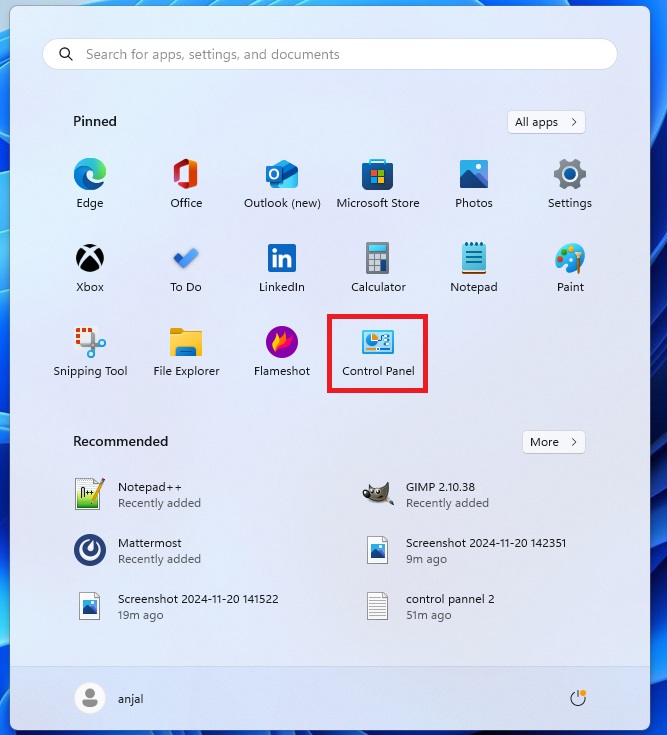
The meat is: why the hell our huge 5k monitors manage to show less information on screen than 600x400 14" monitors of 30 years ago?
Your answer is "but scaling". No, scaling doesn't solve the issue. At best in modern designs you will see 11 items instead of 10. Where there's space for 50.
I wasn't saying that Win95 start menu was perfect. I was saying: modern start menu manages to show less information, and more poorly[1], on an area that is 10x the size of the entire screen available to Win95. And that this issue is repeated through the entire design of the OS.
[1] not to say more slowly, but that is an additional can of worms
No, we didn't. And yet we didn't have to scroll through a settings list with 10 elements.
And no, information density isn't "make everything smaller". It's "use space on screen efficiently".
For example, "modern" startup menu shows fewer items on an area 10x larger than the entire screen available to win95. And no amount of scaling can fix that. And this permeates the entire OS: https://www.buildwindows.com/wp-content/uploads/2024/11/4-4.... vs https://pbs.twimg.com/media/HBTFbzlXwAA5OwD.jpg

There's a famous Jobs story in which he insisted that even the insides of the computers be made beautiful. Because that shows care. Now people are arguing that even the outsides can be as ugly as they want, who cares.
Also, reading through their "SPECS".... https://github.com/JetBrains/thinkrail/blob/d299f20d2ba014f3... or https://github.com/JetBrains/thinkrail/blob/d299f20d2ba014f3...
How is this llm-vomit "specs that are ground truth" etc.?
LLMs do not replicate brain functionality.
> Or the brain itself is magic
The brain itself isn't magic
> An LLM with CoT is Turing-complete,
C++ is Turing complete. Hell, HTML+CSS is Turing complete.
> so there's no wall to its capabilities.
There are multiple well understood and well explained walls and limits to LLM capabilities. And none of those walls, or perceived lack of them, stem from something being Turing complete.
> There's no theorems that establish limits of reinforcement learning either.
There's a very obvious and immediate one: availability and size of training data. And compute. And time.
> There's no evidence of quantum computations in the brain.
What does quantum computation have to do with brains or LLMs?
> All you have is a strong belief.
Says the person who just listed a lot of beliefs in marketing bullshit.
As we all know, the agents are really good at maintaining long contexts and doing parallrl tasks without degradation.
> Perhaps the doctor uses some sort of "safe phrase" to ensure the agent doesn't get distracted by conversational theorizing and discussion.
Yes, there certainly is some magic word tgat stops an agent from context degradation, and prines work to just a useful subset. Sadly, no one knows what it is.
Yes, yes it will be.
See collective nouns, and "Metonymic merging of grammatical number" https://en.wikipedia.org/wiki/Collective_noun
> this would be incorrect: "the corporations employees went to the summer party" again because "corporation" is a thing
You can easily say "the corporation's financial report for Q4 was worse than predicted".
I think you're focusing too much on specific and hyper-specific rigid rules in a single textbook. As others said, prescriptivism vs. descriptivism. Descriptivism is always better, as it describes how language works and may evolve. Prescriptivism assumes languages are rigid unchanging things that can be precisely described.
The full rules for a working language take people years to learn at universities, and they are never as simple as "an inanimate object can't have a possessive form with 's".
Prescriptivism also works in schools/learning as it helps people not to drift too much from the norm. But too many take it to heart.
A lot of that work entails work with very little margin for error and hallucinations.
But you're free to believe whatever you want to believe of course.
And then you pull the curtain, and it is inevitably "the model did almost exactly what we told it to do inside a poorly secured sandbox"
Nope. The agent doesn't actually read, and never will. That is, it may pull it into context randomly, and then purge it from context randomly. But any tool/harness/wrapper that claims that agents actually do something is selling you a bridge.
---
Also, the entire page somehow manages present a condensed example of the worst marketing + the worst LLM-adjacent speech in a few short paragraphs.
I don't think OpenAI ever actually disclosed what they were doing when the hijiacking happened. Probably because their previous stories like HuggingFace were all "oh, actually we were literally prompting agents to run hacking benchmarks in a poorly secured sandbox"
They are not, because all we get is headlines written by the labs' marketing departments.
It's good that you brought up HuggingFace. As more and more details trickled in in the several weeks after incident, all security researches as one said "nope, it's not a sophisticated attack, you literally don't know anything about cybersecurity, and don't employ anyone who does." The rest was mostly marketing and hype buzz.
On top of that, from Wikipedia, emphasis mine:
--- start quote ---
To find out if AI agents are capable of converting known vulnerabilities into working exploits, academic and industry researchers launched ExploitGym on May 11, 2026.
OpenAI was running an internal evaluation based on this benchmark when the incident occurred
--- end quote ---
Humans to LLM: "Please run these exploits in a poorly secured sandbox"
LLM: runs exploit in a poorly secured sandbox
Humans: surprised Pikachu face
This is such an useful feature and I'm surprised so few tools bother to implement it.
And AI labs to stop pushing the narrative of "these amazing thinking machines that escape no matter what we do".
The sibling comment described it very well: https://news.ycombinator.com/item?id=50215904
You assume anyone in AI reads or watches anything beyond some current pop-culture, and even then it's unlikely. You can see it in the way they talk, or approach problems, or in their opinions.
So far all of these amazing stories have been followed up in a few weeks or months with much quieter revelations like "this was a completely open network, no one was monitoring anything, and even when monitoring was turned on we didn't do anything for hours, and that weird shit they were doing was explicitly required in the prompts".
Like even in this article:
--- start quote ---
In most of these tests, we directed agents to investigate specific communication channels or provided them with a protocol for encoding and decoding messages. In one instance, we only supplied agents with a broad list of infrastructure vulnerabilities and asked them to find a way to communicate. The agents converted a vulnerability from that list into a communication channel, agreed on a shared encoding, and successfully exchanged information with each other.
--- end quote ---
"we gave them all the tools and now pretend to be surprised"