For all the benefits of LED lights, incandescent bulbs are infinitely simpler.
Maybe I am missing something from this conversation, but all of my LED bulbs produce far _less_ heat than incandescent bulbs. The lamp in my bedroom no longer keeps me warm!
I think it's much easier to design entire fixtures than retrofit bulbs, as there's much more control over heat dissipation and so on. Finding trusted manufacturers (and supply chains that resist counterfeits) is also extremely important.
Can lights have historically been an issue for insulation of houses, as they provide a channel for the warm ceiling air to enter the plenum space between floors or the attic. Thats bad for insulation, but actually amazing for a retrofitted LED light, because it's the only fixture that will provide airflow to cool it!
On the other hand, faux-recessed LEDs can also be installed directly on top of the ceiling drywall, without any penetration. Thats the worst case scenario for heat build up, as heat rises and it's completely trapped by the dish of the light and the ceiling.
Although, as was pointed out to me at some point, because LEDs are more efficient, people feel less guilty about having more of them; replacing 1x40 watt bulb with 8x5 watt LEDs means the net result is the same. I've got like 7 cute LED spotlights in my TV closet for example, I wouldn't have had that setup if I was forced to use incandescent lamps.
LEDs are definitely simpler than incandescent from a user perspective.
> Power supplies driven hard for cost reasons
Can you elaborate? What does "hard" mean here, I don't understand.
I haven't contacted them for replacements yet, but seeing their comment makes me much more likely to purchase them in the future, despite my early issues.
There's the kicker; how can you tell when something is better quality anymore? Qualifiers like "is this device run at max capacity or is there leeway" are never listed on packaging or product features.
To accept the premise is to believe that anything made of quality will never get bought/used which is manifestly not the case. And it strangely completely ignores the incentives companies have to make things as shitty as possible, namely lower expenses and planned obsolescence.
I disagree. It is a ratio of quality to price. People have different opinions about what the acceptable minimum ratio is, and it varies by product, and by time. For example, many people find Costco to hit the right ratio most of the time.
For example, I have been using LEDs and dimmable LEDs from soft white (~2700K) to cool white (~4000K) with no problem, all purchased at Home Depot/Lowes/Costco. Some have failed earlier than anticipated, but nowhere near enough to cancel out the cost savings.
Some consumers will happily pay for business class seating on planes. Others will generally overlook inconvenience and less comfort if they can save $50.
There must be some kind of listing error on Amazon, maybe an old listing being repurposed without clearing the old reviews.
In other words, more efficient, but not longer lifespan.
Like if you were to drive your car in 2nd gear on the freeway, at 6000rpm. The engine would wear out much quicker than if you drove in 5th gear, at 1500rpm.
So the economics just drive cost down no matter what. And even a picky consumer is hard pressed to get what he wants when you go to the bulb aisle at Lowe’s. They literally went from 10 SKUs to 250, with no meaningful standards.
(Edit: I’m also coming from buying Philips Hue bulbs for precisely this reason, so I’m fairness, it’s not as big a price jump.)
But for going to sleep it's not a bad idea.
this is why more and more businesses only accept cards. :-P
Incandescent bulbs were very simple. Cheap vs name brand. White vs soft white. 120v vs 130v. LEDs have at least 7 attributes, some of which are not documented well or at all.
Tell me what LED bulb is ideal to produce 1500 lumens of output in an outdoor semi-enclosed fixure? It will take about 10 minutes of googling around if you are in the know. The average consumer doesn’t have a chance.
I would prefer incandescents though. The only thing I don't miss about them is the heat. Everything else was superior.
They're not terrible, but the low CRI keeps me coming back to halogen.
That the underlying issue might be the fixture, or in the older electrical system, is not always an intuitive jump.
And it says on the box.
I usually stick to the same brand too. All Phillips bulbs are 90+ CRI and some are 95+ so I just buy Phillips. Problem solved.
A Home Depot bulb is like $2.75.
I hate that you have to research bulbs but you’re making it out way harder than it is.
Unless you claim they are the same tier as the waveform bulbs?
Waveforms are even better but it’s like springing for the luxury item.
But unless you’re someone that could readily tell, it’s not with the price difference.
One of my Waveform Lighting bulbs arrived defective, and it flickers all the time. I couldn't detect the Cree flicker with the naked eye but the defective Waveform bulb flickers visibly. Not sure if Waveform's QA is up to snuff.
Ketra was good, smart bulbs like Hue with an open API, but far better than Hue. Lutron bought them, killed the API and and proceeded to require inferior and costly priority controls
Man I'd love me some indoor lightning, no matter the cost.
In a screw base, maybe. But compare:
https://www.digikey.com/en/products/detail/luminus-devices-i...
$25 for an excellent 700mA driver, 86% efficient.
https://www.digikey.com/en/products/detail/bridgelux/BXRH-30...
$3.45 for a very nice, ~2000lm 97 CRI LED, about 99 lm/W. (Efficiency goes up quite a bit if you settle for 90 CRI.)
So that gives about 2000lm at about 25W, for <$30.
Wikipedia gives about 16 lm/W for incandescent, so 125W. At 10 hour per day, the LED options pays for itself quickly even at national average prices. In CA, it’s very fast.
To be fair, for high-end LEDs like this, the balance of the system is more expensive, because you need a heat sink. Incandescent lamps run very hot and don’t need heat sinks.
I think this is potentially promising, but I don’t think you can buy it:
https://tlo.mit.edu/technologies/high-efficiency-incandescen...
A lot of this topic smells like typical geek snobbery. They're lights, folks. Cheap consumer products have always been cheap. Halogen bulbs suck too.
Otherwise, for probably at least 40 or so bulbs swapped for LEDs over the years, I've experienced maybe 4 or 5 failures. The vast majority of my bulbs have been Feit and GE. I never buy smart bulbs. My best experiences have usually been to just buy LED fixtures though, I replaced a lot of my flush mount ceiling fixtures and ceiling fans for ones with integrated LEDs and have not had a single failure so far after a few years, knock on wood.
I had some problems with my old dimmer switches, but upgrading dimmers to newer ones which advertised good LED dimming and ensuring I had bulbs which stated dimming compatibility it eliminated my noise and flicker issues. There's a recent standard out there, NEMA SSL 7A, which seeks to ensure good compatibility. I set my dimmers to this SSL 7A mode and I've had no problems since.
https://www.energystar.gov/sites/default/files/asset/documen...
This is also the same industry and the same players that were perfectly fine with agreeing to not improve incandescent light past 1000 lifetime hours, illegally. I have no doubt that there is a tacit agreement not to make good lighting, as that would extremely disrupt the industry.
No. I like the fixtures I have, and I have no desire to throw them in the landfill so that I can be “environmentally friendly.”
* bulbs with the UK-standard bayonet fitting in light sockets that are suspended from cables from the ceiling with lampshades -- these I don't think I've ever had fail on me yet
* 4.6W bulbs with a GU10 fitting in recessed spotlights -- these fail on me more frequently (perhaps every few years to every five years)
My assumption is that this is all down to the spotlight-fitting bulbs being in a confined space and getting a lot hotter. I use Philips bulbs in both cases.
They're all in freestanding floor lamps installed in a horizontal orientation, which might have something to do with it. That seems like it'd dissipate heat a lot better than e.g. a pot light housing in the ceiling.
They produce great light at the temperature you want and I’ve yet to have one fail after nearly 10 years using them.
Not cheap, but given I’ve never had to replace one maybe in the end they are
https://www.amazon.com/Philips-Hue-Bluetooth-compatible-Assi...
$45 a bulb! That's probably >$2000 to replace a house's worth.
The white, color-temp only ones are about half the price, which is better, but still not cheap:
https://www.amazon.com/Philips-Ambiance-Hue-Equivalent-Assis...
I don't know if there are any regulations around the 10-year claim, but if there are then I'd expect that it's either an average or something like a one-standard-deviation threshold, like 68% last past that but 32% don't.
"Guaranteed 10 years" doesn't actually say anything about expected lifetime at all, just that they'll do a warranty replacement if it fails sooner.
Personally I'd want a durability guarantee to be more like two standard deviations, on top of replacement in case of early failure.
With Edison-style bulbs, anyway, the orientation they're mounted in makes a huge amount of difference. They're last a lot longer if they're oriented upright (base down) than in any other orientation because it reduces the heat buildup in the power supply.
If there was a "DC" light socket in the house we could have LEDs outlasting owners, and for cheap. Nearly all the expense of LED bulbs is the power supply. Everything else is dirt cheap. A single home DC power supply with ~200W of output could light an entire house, flicker free.
What's even more frustrating is I think we could fix it. A national regulation for DC light sockets would fix it. Mandate a voltage, shape, and max amperage and BAM, you'll get 1000 different manufactures making standard compliant bulbs and home power supplies that will last an eternity.
LEDs are like 15% efficient and power supplies are >95%. They just need to be separated slightly so the LEDs aren't heating the power supply. Most recessed LED lighting now has a separate junction box with the power supply.
I think the biggest problem is that many cheap power supplies cycle at lower frequencies that cause flickering which is perceptible subconsciously. A modern switchmode power supply might operate in the 50-500khz range which will not cause perceivable flickers.
I'd say it's a very bad choice for a bedroom or living room light, but I have nothing against it for the outdoor lights, signage and a bunch of other applications where cost is king.
Just don’t use these devices, please.
But then, a wise entrepreneur would recognize paying extra to have non-flickering signage would attract some customers.
Flickering lights can induce migraines in susceptible people, so literally, saving a penny here actively drives away business.
USB-C PD is at a useful voltage & wattage level, and so is Ethernet POE. I wouldn't be surprised to see them start to be used for general power distribution in niche applications, like RV's and off-grid cabins.
I don't think we're going to ever get a bulb standard, though.
I could definitely see this becoming more common. Powering the ~100 watts of fixed lighting spread across my whole house on ten different 15A 120v circuits, each with their own arcfault breaker and 12 gauge copper electrical lines running back to the panel is fabulously expensive for what could be done with a bunch of CAT5 in each floor running to some conveniently located “POE injector” type devices.
You would want to be able to take a standard fixture and just push DC through it and use special bulbs with a standard A19 base, but that’s problematic when the next owner tries to screw in a standard bulb - what happens when it sees 48V DC?
I would guess if for safety reasons it has to be a non-A19 connector, then your light fixture choices get cut down to almost nothing and no one will make the switch?
It’s really interesting to think about, most everything I’m plugging into AC outlets in my house, the first step is converting it to DC. A lot of my outlets I’ve switched to include USB ports so I don’t need the wall warts. If you have solar and battery backup even more-so you start to question why we are wasting so much money moving everything back and forth between DC/AC/DC within a house.
Either it lights up or not? I don't see a problem here.
But I'm not sure moving part of power supply elsewhere will help that much, it needs current driver electronics anyway.
If by "standard" you mean a incandescent tungsten filament bulb, nothing at all.
For a true LED driver power supply, it would be constant current, so the tungsten filament would see 25mA (or whatever the constant current is set for) of DC, and nothing bad would happen (the filament also would not likely illuminate either).
Screwing in an LED bulb with integrated power supply, the external supply will still feed the constant current value, so what happens depends upon the design of the LED bulb's integrated power supply. If 25mA is enough to drive everything, the LED bulb might light up. If 25mA is not enough to drive everything, most likely nothing lights up.
For constant current, you'd need to drive at least 9 watts so it would be more like 250mA if not higher.
A 1600 lumen LED module might take as much or more current than a 60w incandescent. If your constant current supply can output between 0 volts and input volts, and it's set for an LED like that, it would be able to power an incandescent bulb.
(Of course, they’re quite hot and radiative cooling increases like T^4, so this isn’t necessarily a show stopper. But it’s probably not helpful.)
That means it's totally fixable. You can install such a system in existing buildings right now, and it's not crazy expensive unless you want to run the wires inside the walls.
If we could shift cultural expectations around this, adding a LV system in new construction would not significantly increase the construction costs. It will start to be done if buyers start demanding it.
Having multiple transformers is perfectly doable and commercially viable -- though I would appreciate more product availability for something easy to stash in the hollow space of a ceiling, like recessed lighting is installed.
Everyone here is complaining about ultra-cheap LEDs that don't last very long because they're poorly engineered, but that's exactly what you're all trying to do here by using a separate, shared power supply. You could get away with that in the 1980s using incandescent bulbs, but you can't do it now unless you want the same crappy lifespan and reliability you're all complaining about.
The solution is very simple: buy fixtures that are engineered well. Switch-mode power supply electronics are not expensive at all, but when mfgs cheap out or do a crappy job designing them, you get bad results, usually short lifetime of either the power supply or the LED. What you're trying to do here is buy a really expensive power supply, which has to be engineered to a far greater degree and for a far wider range of operating conditions (since they don't know what you're going to connect to it), just because you had a bad experience buying some $2 light bulb that had a crappy power supply built-in. This really makes no sense.
The constant current thing is true, but that's not a terribly difficult problem.
Depending on who you ask, the limit for low voltage DC might be 42 or 50 or maybe 60 or 120 or 1500.
It seems like there would be a market for cheap as possible 10 mbit switches with 802.3bt/802.3af support though.
https://www.amazon.com/Gigabit-802-3af-100Mbps-250Meter-Unma... is pretty cheap as is, I'm sure you could buy something in bulk for cheaper.
The lights are all basically cut 12v light strips inside of old light fixtures with a custom controller that also terminates PoE. The 48 volts that most PoE standards specify is more than enough to push power down the line for < 100 meter runs.
The advantage of PoE here is that anything under 50 volts is considered low voltage and does not need to follow the same rules as normal house wiring. I did not like that everything is hinging upon a beefy PoE switch so I actually made it passive PoE instead by design.
You can fudge it with resisters like in an LED strip, but you lose efficiency and dimming quality.
That being said, I expect that power supplies with 48VDC input or so would be cheaper.
Probably with some sort of current sensing system to make it compatible with dimmers.
Pair that with DC A19 LED bulbs that have no internal power systems.
Probably expensive to put together and to install, but if the goal was to have LEDs that last longer, that would do it.
The problem is that in 99.99% of homes outlets are on the same circuits as light fixtures, you would need to do some major rewiring.
Those bulbs would then have no internal switching systems to burn out and rely entirely on the module hidden behind the wall to handle their power needs.
I think the way to change it is to replace sockets with hardwired LED fixtures. This is easy for something like a standalone ceiling light. It may be harder for other devices like ceiling fans that integrate a light bulb socket, but converting those devices to take DC power as in your proposal isn't easy either (most would just get discarded and replaced).
Doing it well is more expensive in the short-term than screw-in bulbs. A quick look on Amazon suggests integrated ceiling lights are about 10x the price of LED bulbs, though I suspect the longer service life pays for itself.
Absolutely, the incandescent light bulbs have that shape for a reason: the screw is small because there is nothing to put in it and it doesn't heat, the bulb is large to dissipate all the light and heat it generates. And the LED light bulbs have exactly opposite problems: almost all of the heat is generated near the screw while the bulb itself generates almost none and the light-emitter doesn't even need the bulb that large around of it. Oh, and the casing around the screw is plastic so the thermal conductivity is horrible. Honestly, it's a profoundly terrible form-factor which we're now stuck with.
That's also the pitch of the smart bulbs: a sane way would be to make a smart light switch but what if you can't do that (e.g., you rent the apartment)? So we'll shove the controller chip into a disposable light bulb, that's still perfectly fine for the environment.
By the way, I don't know how things turned out in your part of the world but over here, after the ban went into the force the manufacturers of incandescent lightbulb started selling 95W light bulbs 8D
<https://www.designboom.com/technology/self-cooling-100-watt-...>
<https://i.pinimg.com/originals/b5/c2/c5/b5c2c5d69fb240a571ba...>

It's also helpful to recognise that existing lighting fixtures and lamps were designed around the constraints of incandescent bulbs. The first generation of LED bulbs and lamps largely conform to these. As LEDs mature, both fixtures and lamps which address the limitations and requirements of the technology (transformers, perhaps dedicated 12v circuits, heat dissipation for the transformer rather than lighting elements themselves, and better light-temperature and intensity regulation) should emerge.
We're presently in the somewhat-messy half-emerged state. Think horseless carriages, wireless, and the days of dual gas/electric lighting and lamping systems (yes, these existed, and yes, the failure modes were ... much as you might imagine).
24V is okay. 48V would be nicer for indoor use.
Also low voltage wiring can legally be done by anyone in NZ (a bonus when doing your own work, and a pitfall when buying a house?)
Other circuits must be 20A, e.g., kitchen outlets serving appliances.
A summary of standards here: <https://www.thespruce.com/common-electrical-codes-by-room-11...>
A 15A lighting circuit can serve up to 14 100W bulbs. Or 150 LEDs drawing 10W each....
And besides, idk if you have ever pulled 12ga wire, but it's a pita. Idk any electrician that would agree with you saying it would be a pain to cut back on heavy wire and pull half that with light 22 awg.
Not extremely thick. Wire losses remain similar at 12V as they were at 110V (Replace 100W bulb with a 10W bulb at 12V, current remains ~1A so wire losses stay the same as the were). Wire losses might be say 1W for 1mm2 cabling.
Agree that it is worth upping voltage to chase a few more percent savings, but still need to consider other constraints.
Heck, with such a standard you could have 120VAC -> 48VDC converters and you'd be in the same position we are today with Leads, only better because you'd just have to replace the converter and not the whole bulb.
https://www.sansiled.com/blogs/learn/what-are-the-benefits-o...
Simple metal fins are more than sufficient along with a high efficiency power supply.
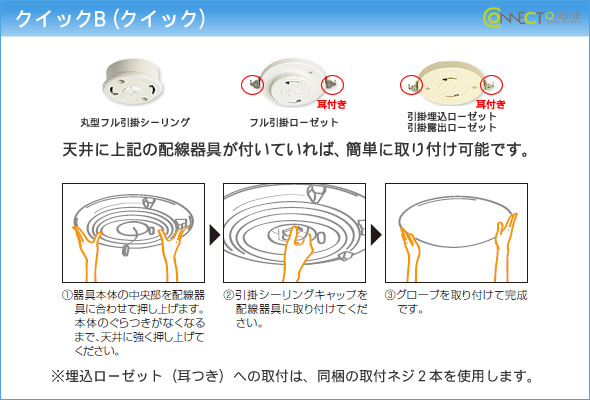
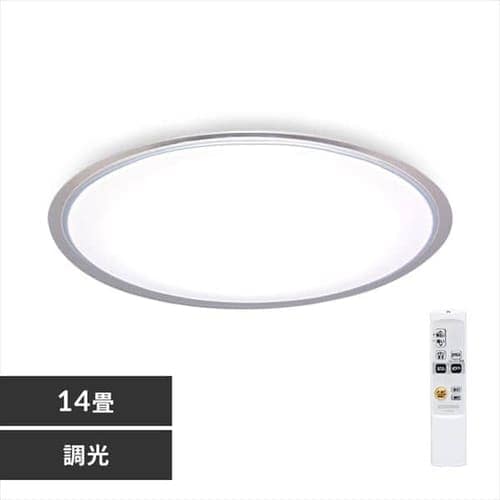
I live in Japan, and instead of just a pair of wires coming out of the ceiling, there is a standardized "ceiling socket" [0] which can also support the weight of a lamp. This means that swapping out light fixtures is plug and play, so the standard LED lamp is something like this [1] where you have a nice big flat metal plate backing the hardware is mounted to for heat-sinking.
I don't own any LED bulbs at all - all our lamps are of this type so I wouldn't have anywhere to put one.
It was the same when I lived in Sweden - a standard ceiling light outlet (IIRC there is a EU standard for this now called DCL) so that replacing light fixtures was easy. Moving into an apartment, often they wouldn't even come with light fixtures, you'd bring your own.
[0] https://www.e-connect.jp/images/to_quickB.jpg
[1] https://www.irisplaza.co.jp/IMAGE/HK/PRODUCT/H246902.jpg
But choosing a DC system for part of the house can make a lot of sense.
For one residential new construction room, it can be practical to have one shared power supply rather than one per LED. Say you have a 12 V, 5 A DC power supply. Using a star wiring topology, this can serve 10 lights (at 500 mA) fine with 16 AWG.
Not practical
And switch mode power supplies are relatively inexpensive and quite efficient.
I say this, because I was guilty of this exact shortcut thinking (in another comment). But I paused and thought to myself "I should run the numbers before just repeating the usual voltage drop criticism".
So I compared scenarios and it depends a lot on the topology, lengths, costs, and situation (new vs renovation).
Sure, a whole house system doesn't typically make sense, but I don't think that's what people are really talking about. I think people are interested in hybrid systems; e.g. DC power supply for each room.
I don't know if you meant it, but the sentence about "any sophomore level electrical engineering student can solve this" can easily come across as dismissive. I also think it gives too much credit to sophomore students. :)
I would have more confidence in an electrician apprentice on this one. I think they'd have more practical experience when it comes to figuring out what are the right questions to ask.
I did EE in college and do a fair bit of hands on residential electrical work.
P.S. How many sophomore level engineering students learn to do a sensitivity analysis?
I completely disagree. Where exactly are you going to put a power supply in a room? Make a special electrical box for it? Won't it be unsightly in many rooms, or need some huge special panel that looks like a breaker panel? The comments I see seem to be advocating a whole-house solution, where a power supply is mounted in the breaker panel to supply LVDC to the whole unit. But this makes no sense for several reasons, especially the voltage drop.
>I don't know if you meant it, but the sentence about "any sophomore level electrical engineering student can solve this" can easily come across as dismissive. I also think it gives too much credit to sophomore students. :)
It's supposed to be dismissive, because this whole discussion is a bunch of software people trying to make up solutions for a perceived problem when they obviously don't know one of the most basic things about electrical theory, which makes all of their solutions unworkable. It's like a bunch of people trying to make a new kind of personal vehicle to replace cars when they don't even understand Newton's Laws. It's really annoying, because I see this kind of discussion pop up every so often, over many many years.
I have another comment here I don't feel like copy-and-pasting, but basically this whole discussion is silly because people are trying to make a solution using a very expensive power supply to fix a problem they see because they're buying cheap $2 light bulbs that burn out quickly, instead of just buying light fixtures that were properly engineered in the first place. With modern SMPSs, you're not going to get any kind of benefit by centralizing the power supply to drive individual LEDs, you're only going to get problems. LEDs need a driver circuit to provide constant current, and that means the power supply needs to be matched to the emitters and kept very close to it.
This sounds like a non-issue, specially considering the pervasive use of "unsightly" installations like air ducts, heating vents, radiators, electrical sockets, telecommunication service panels, routers, and even light fixtures.
If you intentionally dismiss obvious solutions, of course you only end up with problems without obvious solutions.
> It's supposed to be dismissive, because this whole discussion is (...)
If you have nothing to add, please add nothing.
Switched-mode power supplies can be as small as your average Arduino board. They can fit inside the space used for wall outlets or light fixtures. Or you can put the DC transformer inside the light switch.
It's not about DC vs AC, it's high-voltage vs low-voltage. The power dissipation by wire resistance scales with the square of the current ($P=RI^2$), and low line voltage means that you need large currents to transmit the same amount of power.
Also, DC and AC have differences in power transmission independent of resistance, some due to first principles (reactivity), and others related to devices for stepping voltage up or down (eg transformers).
But what about the sub 100W or even 200W applications? That's where I think something like 48VDC would start to shine. Every light in a home, phone chargers, tablet chargers, computer monitors, televisions, computers? (maybe not gaming rigs, but certainly laptops and nucs).
How so? Exactly what benefit does it have over the current AC mains? With 48VDC, you'd still need to use DC-to-DC converters to power everything. I fail to see how that's any kind of improvement over the current switch-mode power supplies used. Instead, it'll just be less efficient because you'll get higher line losses in the power lines in the walls and all the way from wherever that 48VDC is coming from. If that's from a big SMPS in a closet somewhere, that's going to have its own losses. Overall, the entire system will have lower efficiency compared to the current system.
Exactly what problem are you trying to solve with this idea? If you think you're going to eliminate SMPSs in all your electronic equipment, you're not; that's a fantasy. Everything needs a power supply because electronics only work at very low voltages (5V, 3.3V, even 1.8V in places, now 20V with USB3) and most equipment has some kind of peculiar voltage requirements, and usually multiple different requirements inside the same device. There's no improvement in efficiency by running a computer, for instance, from 48VDC vs. 120VAC or 240VAC, in fact it's probably worse.
And since we need high voltage (at least 100V) to keep line losses very low and allow the use of thinner-gauge copper wiring, we need a switching power supply at every light fixture, so it really doesn't matter if it's AC or DC, since modern SMPS (switch-mode power supplies) work equally well with either.
Finally, on top of all that, LEDs are current-driven devices, and need a constant-current power supply. So the power supply must be very close to the diodes, or else fluctuations in supply voltage will have very negative effects.
How about power over ethernet?
I think that non-bulb LED fixtures are relatively common. For example, a style exists where you cut a hole in the ceiling and friction-fit the LEDs with the power supply up in the attic (presumably with infinite convective airflow): https://www.lowes.com/pd/Utilitech-Canless-Color-Choice-Inte...
These power supplies aren't going to die from overheating because the power supply is nowhere near the heat-producing LEDs. And, it's not like $30 for your entire light fixture is going to break the bank.
This is a great idea and I would love it if you would post a Youtube how-to video. It might encourage a bunch of hobbyists to do something useful with those dead bulbs.
I've had a number of LED's fail after only a year or two, in fact more quickly than the average incandescent bulb. Seems like it defeats the whole purpose of "upgrading" and in fact may be more of a downgrade.
LEDs are super cheap. I bought few hundred pre-covid for $3.
LEDs are indeed extremely cheap, but for me, the benefit is reducing the amount of electronic waste I produce, not cost-savings.
I have the exact opposite experience, virtually every single light bulb I have torn down - one LED (all in series) has a black dot, if I shorten it - it will 'work' again. The bulbs I have seen tend to drive the LEDs so hard that some of the latter fail, power supplies might have huge ripple but generally don't fail catastrophically.
I have had lamps that lived long enough to see LED failures (the "black dot of death") but that's not the most usual failure mode that I've personally encountered.
I've been considering following in the footsteps of Big Clive and modifying new LED bulbs to stop them from overdriving the LEDs, but my interest in doing that hasn't yet overcome my inherent laziness.
If the bulb dies but you notice that all of the elements are still just barely on (like a dim spot of light in the middle of each one) then that's a good indication that you have a dead LED.
It's true that the power supply versions are so poorly designed and inefficient that heat is a problem. Design and quality control effort could reduce heat generated by the entire assembly to a fraction of what the socket, fixture, and wiring can sink.
It's more common now to find bulbs that have no power supply at all. They're literally a rectifier made of LED's in series. If the bulb flashes at 2 * mains frequency, that's likely what you have. They die out quickly because the LED strings add up to a maximum voltage a bit over mains voltage, but that's RMS not peak. It's a natural outcome, as using enough LED's to accomodate peak voltage reduces light output by underdriving them, increases obvious flicker from dwell time below minimum voltage, and increases cost.
Hotwired LED strings are cheaper to design, source, assemble, bad parts fail fast more consistently with no effort wasted on quality control, and the market's so flooded and volatile that there's no room for consumer side quality awareness effective enough to make the negative outcomes matter. Power supplies in these bulbs are going away. Ubiquitous 2 * mains frequency strobing, short-lived, hotwired LED bulbs is where the home LED lighting market is taking us.
- Older LEDs house bulbs were much worse than newer ones; far more prone to failure from "things". I had many of them fail after only a few months because our power was "flickery" and their power supplies could not handle it. That's _far_ less common now.
- The power supply / controller circuitry is not a fan of heat. Don't mount them upside down (so the heat floats up to the circuit) and never mount them in a recessed mount. The heat buildup will destroy them a lot quicker. That being said, this advice can be ignored is you're paying attention... mounts that have a way to heat to escape; bulbs that are designed to go in upside-down mounts (maybe?), etc.
- While you certainly don't want to always buy the most expensive bulb, you also don't want to buy the cheap ones. They are far more likely to be made from poor, failure prone components.
It’s not my fixtures’ problem.
It’s these crappy bulbs.
You don't go buy offroad vehicle, then complain it doesn't drive as comfortably on the highway and say it's an objectively worse vehicle. It was designed for a different goal than the 4 door sedan you're comparing it to. It does better at that goal, and worse at others. And, over time, offroad vehicles have gotten better on highways; they'll just never be as good.
The way most people use lighting goes far beyond whatever the manufacturers want to foist.
First, this driver actually specifies flicker, and it has a credible number. Second, I own several and have tested them. Performance is excellent. It dims well, too. If you want a crappy driver, you don’t need to spend $25 for it :)
Second, this LED chip is a serious one, with a serious data sheet, intended for people building their own fixtures.
10 hours per day sounds like a crazy amount of time to use a light. I think we use some lights in our house maybe 4 hours per day on average max. Maybe I just have a lot of windows and don't live in Alaska in the winter.
I think the Alaska point is close. Yet even in (for example) southern Canada, the sun just doesn't get high over the horizon in winter. So you have 7 hour days, but those days are mostly dim and dark.
Even without clouds.
On the other hand, summers are spectacular.
A whole fixture with nice components like this is not cheap.
Sadly, with San Fran anywhere from 4.5x, or more than where I live (Quebec), and with LED products lastly barely longer than incandescent bulbs, it is typically a loss.
Maybe a 5 year warranty on LED bulbs should be a law, to ensure better quality control and build. The competitors can compete around that requirement.
I’ve had the dimmable coloured hue bulbs for a while and while expensive I can say none have ever died on me in ~5 years. Certainly no flickering.
The same utility pays for those efficiency projects.
I’m billed by the cheeseburger. Bill me for the burger flipper if that is what costs money.
I’m billed by the bread loaf. Bill me for the rent and shipping and electricity if that is what costs money.
Utilities don't have that. Everyone is stuck paying for both infrastructure and use, so it makes sense to charge them separately.
If each neighborhood had exactly one restaurant that everyone used for all their food, maybe it would make sense to split the burger flipper costs evenly.
This same reasoning is why I'm not bullish on AI; what the potential is and what we peasants get to use are vastly different
This drives me absolutely insane. When we were shopping for a TV for the living room a few years ago I wanted a 120Hz display. Finding one was a pain in the ass because all anybody wanted to list in marketing material was the backlight strobe rate; you had to dig and dig to find the panel rate.
No, I don't care that you can flash the backlight at a thousand Hz, I want an actual panel that's well synchronized with 24FPS content, and I don't want to spend hours of research to figure out which displays have one.
When I was a teen, I wanted an alligator on my shirt, and not too long after I started seeing simulacra shirts... Enough of a demand for more than one entity to mimic it...
https://www.investopedia.com/ask/answers/040315/what-can-sha...
The second option may be more difficult but let’s not pretend there aren’t companies that choose it and succeed.
For me, it’s rarely about efficiency, and almost always about improving outcomes for workers and users.
Micromanaging efficacy to maximise profit is an economists job.
If the general public wants a cheap, bad product, they can do so, but they rarely have the inside knowledge to discern quality. Marketing is responsible for telling miseducating them.
Nobody's denying you nice things at low prices just out of spite. Nice things just cost more. To put a positive spin on it, our innate sense of 'nice' is a well tuned heuristic for good engineering (and/or whatever the Joneses can't afford).
The homeless certainly aren’t worried about lightbulbs but the 65% of Americans living paycheck to paycheck probably appreciate the savings.
Consumer education is rarely an excellent business opportunity.
Consumers are very good at comparing prices, and "incandescent watt equivalent" labels provide an understandable comparator for light output. Beyond that, the statistics become much less meaningful.
Consumers typically don't read colour temperature ratings (in black-body Kelvin), but instead follow "warm white / soft white / cool white" descriptors. Even still, it's common to see homes with temperature-mismatched lighting.
CRI is a step worse. It is a higher-is-better indicator, but there's no intuitive connection for a consumer. Is a CRI of 80 bad? Is 95 better enough to be worth double the price? Worse yet, CRI is a summary statistic that can gloss over less-measured color reproduction difficulties, and worst yet not all bulbs even publish CRI numbers on the box. My local hardware store is happy to sell you its store-brand generics, none of which have CRI numbers.
Flicker is another step into the unknown. No bulbs that I'm aware of publish flicker numbers, even the otherwise respected names like Philips. If you consider this a 'business opportunity', you're left with an unverifiable claim that your bulbs are uniquely better than the competition.
Sadly, for now good LED lighting really is the domain of the expensive professional or the hobbyist who spends their spare time tracking down reviews or building custom lighting rigs.
Do it right, and eventually your best customers will tell their friends to 'just buy brand "X"' and you can expand from there.
Is this a good plan to take over the bulb market? No. But a good product could be a nice, sustainable business.
Maybe I'm hypersensitive to it, but I don't understand how it's viewed as okay. I walked through a house on a home show and despite being listed for 800k+ (in Iowa), they had a couple mismatches.
Here is one common vendor: https://store.waveformlighting.com/collections/a19-bulbs/
The issue isn’t that MBAs have cost reduced bulbs for no reason. The issue is that 95% of consumers will only choose the cheap bulbs, period. As a result, that’s what gets produced at scale.
> We know how to mass-produce quality LEDs to the point entire TVs are made of the things.
They’re not the same thing. Displays are optimized for specific R, G, and B color points. White LEDs are optimized for full, smooth spectrums.
And then how do I know that they stick with the high quality approach? What happens when a brand decides to rest on the laurels of their brand name and start slipping in lower quality parts?
To expand your metaphor: it's like judging a dish solely on the balance of flavors while not noticing that the restaurants have started changing the smell of the air, the firmness of the seats, the relative humidity and temperature individually.
At this point I believe companies are willfully refusing to inform their customers.
In other words, what they are selling isn't the same as the thing in the box nor the aggregate of all the components (since they interact with one another).
High end museums for example buy bulbs guaranteed to meet their datasheet specs, at a much higher cost of course.
I feel like I can't just have a casual fun hobby anymore. You have to have all of the knowledge about the entire space just to be able to decide if something may or may not be garage.
This has always been the case. The difference now is that with the internet it's within reach.
You don't have to dig through your social network to find someone working for the lighting division of GE. You don't have to visit your local library to check out books on how lightbulbs work in order to figure out which makes one better than another. You just need to hop on Google or ask New Bing.
--
Think all incandescent bulbs were the same? Think again. Manufacturing conditions and filament thickness are two of the several factors involved in how long that lightbulb will last and how bright it will get. Cheap, shitty lightbulbs from discount stores were a thing.
Oh, and one more thing! You're pretty much stuck with one color temperature.
--
There are plenty of examples throughout the 20th century of poorly-made, barely-working tech being sold as acceptable. The plethora of non-electric "vacuum cleaners" sold around the turn of the century are one notable early example. The lightbulbs which came after the agreements made by the Phoebus Cartel are another.
1978! Home video! Do you go with VHS from JVC, Betamax from Sony, SelectaVision from RCA, or DiscoVision from MCA?
For an entertaining diversion, imagine you're living in 1973 and it's time to purchase a new car. Is that Plymouth really going to hold up against your new concerns about gas mileage? How do you know? Do you have any mechanic friends? Do you know anything about how cars work? Does the local library have any books to help?
Random final tidbit: The "older"=="better" myth is the result of the fact that we're not exposed to the junk of yesteryear; only the good stuff. The junk was thrown away years and years ago.
Awful junk existed before the internet. It’s just that people didn’t have much of a way to know any better, nor did they have many options to choose from. People relied on word of mouth, marketing material, or the shop keeper’s advice to decide what to buy… that is, if the store even had multiple options.
There’s not more crap today, there’s more perspective.
Like any informed consumer you must read every retail-based HN comment thread ;-]
6 of them have failed in less than 9 months, either flickering so badly it could cause an epileptic seizure or just straight up dying on me.
It's maddening.
With Philips spinning off the lights division, I don't know the current quality.
It's possible the quality has changed, but i'm also wondering whether the mains voltage might be a factor - there is quite a wide range of possible voltages allowed whilst still being in-spec, so maybe i'm lucky at my properties and mains voltage is on the low end of the standard and maybe you're running hot. It's all most frustrating!
BTW, I went with Philips on the basis that there was a good chance that if I did need to replace a few after a year or two due to failures i'd be likely to be able to source the same bulb, as it's really annoying if you find one bulb a different colour than the others...
PITA I know.
The issue is that LED bulbs aren’t simple devices like incandescent bulbs. LED bulbs have an electronic power supply inside which drives the LEDs at a constant current.
Power supply design is a major subfield of electronics engineering and there are all kinds of tradeoffs you can make to optimize for different goals. Consumer electronics almost always optimizes for cost, to the detriment of all else.
It is possible (and not very difficult) to design LED bulbs that will practically outlive their owners [1]. The problem is that it requires putting more LEDs in the bulb and driving them at lower current. This makes the bulb cost more and the only benefit is longer life. For a manufacturer, there are nothing but downsides to this approach.
It is also possible (and not very difficult) to design incandescent bulbs that will outlive their owners. In fact, the first mass produced light bulbs generally lasted 2,500+ hours. In the 1920s, the major bulb manufacturers formed the 'Pheobus Cartel' in Geneva and secretly colluded to limit the lifespan of bulbs to 1,000 hours to boost sales [1]. Another example of planned obsolescence harming consumers and the environment.
[1]https://interestingengineering.com/science/everlasting-light...
Veritasium - This is why we can't have nice things - https://youtu.be/j5v8D-alAKE
The Great Lightbulb Conspiracy https://spectrum.ieee.org/the-great-lightbulb-conspiracy
> On 23 December 1924, a group of leading international businessmen gathered in Geneva for a meeting that would alter the world for decades to come. Present were top representatives from all the major lightbulb manufacturers, including Germany’s Osram, the Netherlands’ Philips, France’s Compagnie des Lampes, and the United States’ General Electric. As revelers hung Christmas lights elsewhere in the city, the group founded the Phoebus cartel, a supervisory body that would carve up the worldwide incandescent lightbulb market, with each national and regional zone assigned its own manufacturers and production quotas. It was the first cartel in history to enjoy a truly global reach.
You can dim them, and provide a slow start to prevent the inrush current (which is like 10times more than nominal with tungsten resistance increasing due so high 2500K temps).
[1] https://news.mit.edu/2016/nanophotonic-incandescent-light-bu...
That is a fantastic point. If they can't revolutionizing lighting in 7 years, it will never happen. Oh, btw, LED was invented in 1962, but it only took about half a century for the commercial viability of high powered LED lighting to appear and begin to take over the lighting market in 2011.
That said ...
... LEDs involve finding materials which exhibit specific quantum behaviours which correspond to human visual acuity.
Photonic bulbs involve the much simpler blackbody radiation concepts of not only incandescent light bulbs but hundreds to thousands of millennia of previous experience with combustion-based lighting ... and, yes, the added twist of finding viable IR-reflective / visual-spectrum emissive materials.
The second problem seems more reasonably simpler. One would hope that progress might be occuring at a more rapid rate.
(There's a similar argument I've used to contrast nuclear fission, which was commercially exploited within two decades of first demonstration, and nuclear fusion, which coming on a century from its theoretical understanding remains not even experimentally demonstrable on a continuous, energy-positive basis, let alone in commercial application. Some problems are just hard.
Yes, there are thresholds and breakthroughs, and they do occur. But given a few decades of lived experience matching advertisement to delivery, as well as a stronger awareness of historical examples and trends, patterns do become evident.
And that said: I will keep an eye on this. It does have the advantages of being simple, based on very well-proved technology, and a reasonable extension of same.
LED has severe problems, some solvable, some not. The article mentions flicker, but really should have specified. Nearly all LED drivers employ PWM. There are constant current LED drivers, and they are more efficient than PWM drivers, but PWM drivers are cheaper to design and manufacture. While many will claim PWM doesn't bother them because they can't detect it, they're not only exhibiting callousness for those that are bothered and harmed by PWM, they're falling into a fallacious trap, i.e. what they don't know and can't detect can't harm them, which is patently false, and one counter example is carbon monoxide. PWM LED drivers are now ubiquitous, and its effects range from annoying to painful, as anyone that has experienced migraine can attest.
Regarding the actual light LED produces, nearly all LED available are weighted towards the blue spectrum, and this light has been shown to massively mess with wildlife and shorten human lifespans by years by disrupting circadian rhythm, which strangely can lead to diabetes and heart disease.
LED proponents are obsessed with brightness, but this is also a trap, because brightness is not as important as what can be seen. Consensus among lighting and eye experts is that more can be seen with a dimmer light that reproduces color perfectly than with a much brighter light that does not.
As these issues with LED are mitigated, the drivers become more expensive and the LEDs become less efficient. And as the article mentions, the phosphors of better color-producing LEDs will fade rather quickly and over time no longer reproduce colors accurately. And let's realize that the best LED can ever achieve, what the technology has always been striving for, is to perfectly match what incan does with little to no development. Maybe someday LED light will perfectly match incan light, but it is not today and it isn't next year.
What it starts to look like, if the trend can be detected, is that as we fully mitigate the problems of LED, the more expensive it becomes until its cost and durability nearly reaches parity with what we already have with incandescent. It's starting to become a wash.
So unlike LED, if incan can be made more efficient, and there is a massive amount of room for improvement in efficiency there, then incandescent undoubtedly will return and dominate the lighting market. I liberally estimated 20 years, but it may take longer, but it really doesn't matter to my major point, which is that incandescent is coming back, and this is a very very good thing, because LED light, as efficient as it is, still absolutely sucks.
I'd pattern the inner surface of the glass envelope with a cube texture - think of taking a cube and pressing a corner normally into a clay surface, then removing the cube. This pattern is a so-called corner reflector, and returns incident light to its source. Figure the cube indentations at about 0.5mm deep, close packed. I'd deposit a dielectric film reflector stack tuned to reflect most infrared radiation onto this surface.
This combination would transmit visible light, but would reflect IR directly back to the filament, reducing the amount of electrical power needed to maintain filament temperature. Glass textural molding and dielectric film deposition are mature technologies. I think this could readily triple incandescent lamp power efficiency, maybe even better.
When we're talking market price, we have to acknowledge that it is a meeting of the price needed to bring a product to market and the price the consumer is willing to pay. We can't assume that the price of the longer lasting bulb would have been attractive to consumers, when compared to the price of the shorter-lived bulb, even if they had all the information available.
It's perfectly valid for a person to decide they'll spend more over the long run, rather than ponying up a larger sum now. And it's perfectly valid for producers to take the chance of deciding this for the consumer. As Henry Ford noted, "If I had asked people what they wanted, they would have said faster horses."
Was anybody stopping anyone from offering the consumer a higher-priced and longer-lasting bulb?
I retrofitted entire house - 200+ bulbs and fixture retrofits more that 5 years ago. I had one or failures since. I bought highest CRI bulbs, i.e. most expensive, and they work well. (Also, do not use bulbs for downlights - get entire "led can light fixture retrofit")
I used 1000bulbs.com because I can filter/read specs there, but you can get specs for any high-tier vendor and buy elsewhere.
How trustworthy is that state though? I have always assumed 0% trustworthy. Is that incorrect?
In general it's quite reasonable. Cheaper bulbs failed on me, more expensive ones work just fine for many years.
One thing is I wonder about if phosphorus (or whatever chemical they use) is burning out over the years. I.d. do I get worse light quality as these bulbs age?
Of course they won't be as efficient, and output very little light, but they will last forever. (also, no white, but hey, win some lose some!)
It's usually not that much, but I can see why they might eventually be upset about it.
Not all of them! I was very surprised to open up my generic outdoor patio LED bulbs and find two strips of LED filament wired directly to power.
AFAICT it’s just enough LEDs in serial for 120VAC at 60 Hz to be “good enough” that they survive for “long enough”.
That's the million-dollar question of the '10s and '20s (and likely beyond), and is far bigger than just bulbs.
The only solution that I can think of that could work is a distributed rating system with a built-in web of trust. It theoretically shouldn't be that difficult for people to adopt, if only they got collectively fed up with the universe of crap we have now, and someone provided a nice app and protocol to federate information with.
(direct regulation of quality, vendor-controlled ratings, and browsing Reddit/HN comment threads are all fatally flawed non-solutions)
Consumer Reports tests a lot of consumer goods and used to be my go to for testing. They don’t take ad revenue so that helps. Though you have to be a member to see their reviews.
https://www.consumerreports.org/cro/about-us/what-we-do/inde...
They used to be the go to for car reliability info (when your car was rated high you sold more, according to my dad who was in the car business)
I can't edit my post. Trusted reviews are hard to find, I would still trust Consumer Reports over random Amazon reviews.
There is simple heuristic - all LED bulbs are bad. They generally have insufficient heatsink and unreplaceable PSU immediately next to LEDs.
Better are LED tubes (with T12 interface, as a replacement for fluorescent tubes), they have much more area for cooling and for PSU, and sometimes have replaceable PSU. Similarly lighting units with integrated LEDs.
At the end of the day, the author recommends giving filament-style LED bulbs a try, where the emitter is built onto a thin filament away from the circuit housing so it's far away from the heat.
On the other hand, Daniel Kahneman was awarded a Nobel prize in 2002 for researching with Amos Tversky on how we make decisions, and how having more options makes our eventual decision less fulfilling as we suspect that we probably did not make the optimal decision. However, done is better than perfect. At least that's what some people say.
Given that we have multiple technology purchases to make, all of which will involve "research" and making decisions it is very frustrating, to me, that we do not have more reliable trustworthy guidance. There are competent review organizations and websites but they more frequently tend to be owned by product manufacturers and funded by advertisers. We know that marketing tries to create desire in our primitive consumer brains.
And as individuals with deep and long experience in at least one or more areas, we have our own biases that help us make decisions. And if we think carefully about how we gained this expertise, we should conclude that a lot of wasted time and mistakes were involved.
And we know that becoming an expert in lighting, spectral, power consumption, lifetime, CRI, etc could take a long time and there would be more to learn as the engineers create new solutions (blue LED plus yellow phosphor, or RGB LEDs, COB or something else...).
So to answer your question. You won't know that brand X produces quality bulbs that last a long time until you purchase and test them. Assume that they won't last a long time, don't buy the most expensive option, there will be improvements in LEDs and bulbs that will make your next purchase even better.
To sift past the marketing to get actual quality, well we do have some well known brands that distribute through well known stores. Buying from Alibaba or the dollar store is not going to result in the best outcome, but it might. Put those options aside as an experiment rather a "must make me happy now" experience.
How do you know that a product won't slip in quality over time? Well you won't know until you make that purchase. This happens all of the time with everything from salt ("Himalayan" salt with rocks, sea salt with microplastics, honey adulterated with sugar, olive oil with other oils)...
We live in a very interesting time, we no longer have to "follow the herd" or "hunt for the roots" in new locations. We're mostly protected from weather, earthquakes, famine, etc (exception occur). Our health generally good. There is however dog poop on the sidewalk and pot holes in the roads.
So when the grocery store moves your familiar product to another aisle, or changes their product line up, or increases the price, these are all opportunities to step out of "cruise control" and experience the uncertainty that comes with a constantly changing world.
"Marriage has no guarantees. If that's what you're looking for, go live with a car battery." - Erma Bombeck
Up to 70 years ago, item X had an extremely low complexity, and up to some 30 years ago, supplier Y had reliably constant quality between its products.
No previous generation had to deal with the problem we currently have.
- Efficiency >= 45 lumens per watt
- CRI >= 90
- R9 Color Rendering value >= 50
- Rated life >= 15000 hours
- Minimum dimming level <= 10%
- Flicker <= 30%
Theoretically if a bulb is listed as JA8 compliant (and the certification isn't fake) you know it at least meets these thresholds.
And what do you do when the lightbulb burns out after only 3 years? The product has long since changed SKU, the manufacturer gets to claim they fixed any deficiencies (and it'll take years to find out if they are telling the truth), and you long since lost any proof of purchase.
https://energycodeace.com/site/custom/public/reference-ace-2...
This one was a little tricky for me when I was buying bulbs last year. I prefer warm-colored bulbs, and I was kind of confused why Amazon kept on saying it was refusing to ship bulbs to me. It took me a while before I realized it was because I'm in CA and the CRI was too low, and Amazon didn't have a way to just filter by CRI. Eventually my wife just ended up finding some warm-ish LED bulbs at a local store.
A scale that can measure grams is like $10.
I follow his project a bit and it looks like consumers are really at loss. Generally there is no reliable way to choose a good led lamp without consulting such catalog. Lamps packaging often lies about actual specs, lamps with the same packaging but manufactured in different years might have different quality etc
A standard tag for Algolia/web search could work, if any spam comments with the same tag were flagged.
Instead of dumb capitalism, clickbait and silly content marketing driving human activity, to have an AI that saves us from wasting our time figuring out the answer to questions that have been answered long before. And then, instead, points us to those questions that have not yet been asked, much less answered. What experiments have not yet been done.
After all, no GPT-4, no matter how many billions of parameters, could tell you what the best battery is in the world if it wasn’t for that one human dude in his garage in Denmark, or Latvia, or wherever, who actually tested them all.
(random indie site: wet/dry shop vacuums, https://news.ycombinator.com/item?id=32411206)
I searched for "A19" since thats the kind of bulb type that a regular old joe like me has. Just one match and its only 80 CRI. Thats not anywhere competitive with what else has been suggested in this thread.
Besides, I don't control the lighting decisions of every place I go that's not my own home. And many people might be impacted in tiny ways without even noticing (cf. the old research about fluorescent lighting in schools/offices impacting mood or concentration or whatever).
You mean incandescents? I disagree, their efficiency is terrible ("space heaters that happen to glow"). And their lifespan was artificially limited.
Most people don’t want to pay the premium and don’t value the benefits that come with that premium.
This is also called boiling the frog. People actually do care, but in the scheme of things, they'll accept it.
The default lightbulb in the store 20 years ago had a tender warm light. The default lightbulb in the store today has garish light, or doesn't dim, or has that ugly plastic half cover. A real decline in quality of life. but sure, we can be dismissive about it, of course you can spend hours on the internet figuring it out (ignoring the fact that it took no effort whatsoever to get nice lighting before).
That said, even if that's generously 100 million people that's a drop in the bucket compared to the rest of the population of consumers that couldn't care less.
This is such a lie - no, you can't do the research. There are no reseatch papers conparing consumer products
Doing the research means buying everything avaliable on the market and testing it yourself.
Googling is not research, its choosing which SEO'd fraudulent article will lie to you today.
Quality is going to shit, because there is no way to twll apart which item is qualify. The market is failing.
Googling for “premium LED high ratings 95 cri” or searching on Amazon definitely isn’t going to work, because they will just send you to the highest bidder, or the most proficient scammer.
AV forums for picking a TV or projector, cooking forums for picking a knife set, and HN, you know, for picking the contrast level of your <body> text.
Recent purchases include usb cables, rechargeable batteries & USB power pack, LCD monitor, SSDs, multivitamins, torque wrench, belt sander, pressure washer, washing machine, gluten-free pastas and baking mixes, video games…
LED bulbs are kind of a pathological case, along with things like USB cables, speaker wire... If you want something better than the lowest common denominator it’s very hard because they are nearly indistinguishable from the outside and take a long time to fail.
But for example shopping and comparing washing machines online wasn’t terrible. You can narrow down the list very easily based on your requirements and budget, probably you end up with 2 choices that both seem great, you can watch videos of them running, and then you pick the one assembled in your home country or the one that makes a more pleasant ding when it turns on, and call it a day? Obviously the “reviews” are all fake, but the point isn’t for someone to tell you what to buy, but that all the options are readily discoverable while I’m lying in bed on my phone.
I had to drive all over town to find a specialty lighting store with some 'real' Sylvania brand. (But then found the supermarket across the street has Philips on the shelf. Oof.)
I think the issue is that there are no more reputable retailers. Just amazon, which more than half the time isn’t even amazon.
What does "in the West" mean here? Is the situation better outside "the West"? Is this really a modern "tragedy"? Caveat Emptor is not a new saying.
I pay them and they do the research. A very logical business model.
https://www.which.co.uk/reviews/light-bulbs/article/how-to-b...
(Both will be irrelevant for Americans, I have never noticed a multi-voltage bulb.)
I thought full spectrum LEDs are future tech because I haven't seen one.
16 incandescent bulbs, averaging 3 hours per day, would cost about 50 cents per day. $150-$250 per year in most of the country.
So getting the really premium LEDs is still cheaper than lighting used to be. Even better if you use the good bulbs for room lighting and the cheap bulbs for closets and outdoors and such.
You say that like the utilities weren't even larger before the change. That $11-18 a month is explicitly not going to utilities.
I'd say those people are getting an upgrade in food or other things at the cost of CRI. And they can choose not to take that trade if they prefer CRI. You only need to buy one bulb at a time, after all, no need for massive savings. And even if you buy the extra fancy $18 bulbs you'll still save some money compared to incandescent.
Lately I've been using the GE Reveal/Relax. They were better than the contractor grade bulbs that came with the house but still just... wasn't there.
If you know any other manufacturers like this I'd greatly appreciate it if you could provide their links.
GE Filled With Sun, Philips Ultra HD (available on Amazon, but from Canada), and some other Chinese brands are currently top of the chart for CRI 95+, RA 90+ bulbs
Budgetlightforum.com
I read the site and ... Now all my flashlights MUST run open source firmware.
Buy a flashlight with the Anduril UI and you will understand. (search on amazon)
With my flashlights:
- press and hold the power button to ramp up brightness from zero
- press and hold again to ram down brightness
- click twice to get the maximum brightness from the light (mostly)
there are lots of other modes available, designed to be harder to stumble into, plus customizations you can add.
Also, the good flashlights have an always-on dim green LED that lets you find the flashlight during a power outage.
http://www.seoulsemicon.com/en/technology/sunlike/casestudy/
Maybe I should just give up and install a bunch of these "sun tunnels" in my house.
The hardware stores near me, both big and small, stock only a single brand of bulb, as if they have some kind of exclusive deal.
As evidence, notice that Philips refuses to sell the Dubai lamp outside Dubai. They are designed for truly long lifetimes, and nobody at Philips want's that.
What fraction of Microsoft Windows engineering goes into the complexity of picking and combining the feature sets of Windows Starter, Home Basic, Home Premium, Professional, Enterprise, and Ultimate? It isn't 0.
Engineering that is negative for user-value is routine in big business. It's a big part of what MBAs are for. It is such a counter-intuitive thing to do that it requires special training.
$200 Canadian (including shipping) for 6 bulbs is stopping me. $33 / bulb with no guarantee how long they will last.
- Does not overdrive the LEDs and Does not run power supply components at the limit of what they can. (Thus good longevity)
- Has a current based driver, so that slight voltage shifts from an appliance kicking on don't result in an obvious brightness shift.
- Suitable for use in recessed lighting or enclosed fixtures. (For better or worse, can lights and enclosed fixtures are still relatively common.)
- Makes bulbs in most common shapes like A19, chandelier, and PAR/BR shapes (for recessed lighting fixtures)
- Dimmable (And yes, I am quite well aware that being in conjunction with a current source driver is more complicated, but it is still possible). I'm not even particularly big on dimming, but I am big on smart switches, and many of those include dimming capabilities, and I don't want to worry about which bulbs I put where.
- Good color rendering index (and other similar features)
Even the linked companies products don't meet the full list. Their only dimmable A-series bulbs are the filament bulbs, which are not suitable for all use cases. Similarly, non of the non-filament bulbs in the A series shapes are marked as suitable for use in an enclosure.
It's possible to get power supplies to support multiple bulbs daisy chained, so you can invest in one decent power supply.
For general bulbs (e.g. chandelier tulip bulbs) i've found it to be really hard to find stuff that works reliably. 'Normal' round bulbs seem to be more reliable for some reason.
Because the big box stores (Walmart, Home Depot or whatever) don't carry expensive stuff with Cree LEDs and solid cooling designs. They carry whatever shit they can get their hands on for as cheap as possible.
And most consumers don't know better, the 1% of consumers that does know orders from Amazon and prays for not getting ripped off by counterfeiters.
It is a clear ripoff.
Some of the bulbs have exact CRI listed, and some have "90+". I only buy the first kind.
I did find these tables from Budget Light Forums handy for shopping, however the fact that you have to use these I think only reinforces the point of the article:
https://docs.google.com/spreadsheets/d/12jj1A6PNjHmWbFNu0FSi...
But yeah, explaining to normal folks that they need $30-$60 lightbulbs for every fixture in their home is basically a non-starter, but for me, I use this lamp every day and it should last a decade or more, so the value prop isn't bad, especially compared to spending $500 or so on something like a Humanscale "nice" desk lamp, which technically has much worse CRI and much lower output.
We recently built our home and went with WAC recessed lighting in all the main areas, which was about a $15k premium over just using what the contractor wanted to use, involved a lighting design company (that was also purchased the fixtures from), and took a dozen+ hours of our time and input, but I think it was worth it in the grand scheme of how much we spent. I personally can't stand hanging out at peoples houses where they have mismatched lights or just very poor lighting; it kills any interior design niceties and makes you really realize how much lighting affects the general feeling of indoor spaces.
$18 USD for a single 10 Watt bulb? I don't care how expensive electricity is, the $2 incandescent bulb is a better value.
the 4-for-$10 A19 LED bulbs from amazon or ikea are flicker free to my eyes. i've bought some fancy bulbs with big metal heatsink bases, supposed "high CRI" ratings, equivalently high price tags. to my eyes, i can't see the difference. the super-cheap bulbs from one of those amazon marketplace sellers with a randomly generated name are flickery, but just going up to anything other than the absolute bare minimum of quality is good enough. "what the peasants get to use" is because that's actually probably good enough for what us peasants need. if you want to geek out about super high-end LEDs, you're not going to find that in consumer-grade products and that's probably fine.
Very rarely will bulbs visibly flicker in my experience. What happens instead is after several hours I'll start to get headaches and feel fatigue without knowing exactly where it's coming from. Since I replaced my Hue bulbs (which flicker, and I proved it by just using my smartphone camera even) I've felt so much better at home
I used to have an expensive Phillips light alarm and it flickered like no other. Especially if you lower the dimming you'll tend to see more flickering or just notice an "ick" feeling with crappier bulbs.
all bulbs have some flicker, and the fact that it resonates with your phone screen's refresh rate or your camera sensor's sample rate doesn't really mean anything.
"Good old-fashioned" incandescents were also subject to a multi-decade scam to limit their lifetime: https://en.wikipedia.org/wiki/Phoebus_cartel
It's manifesting slightly differently this time around, but it's the same principle.
Apathy towards the consumer, or by the consumer? I don’t think I’m alone when I say that I just buy name brand LED bulbs (usually Phillips) in the color temperature of my choice and am completely satisfied with them. Color rendition is fine, no noticeable flicker, long lifetime. In the past 7 years I haven’t had any fail prematurely, though I’ve replaced some early to change color temperature.
Items have been replaced with poorer quality versions, and the originals become incredibly expensive or impossible to find. Once the downsides of the new version become clear, you are left with obvious and uncounted inflation. It's a mixture of shrink-flation and planned obsolescence.
Examples such as: 100% juice, window blinds, light-bulbs, furniture, vegetables (tomatoes, corn, etc), produce (specifically meat), buildings/building materials.
Until one day you notice you are living in a fake house and eating fake food. And some guy who works for the fed says you have it better than ever because you have a microwave.
Late stage capitalism started in the 80s.
aka capitalism? People prioritize price over quality, but you can't make something better the cheaper it gets. So in an open and "fair" competitive market, all goods and services get shittier over time. It's a race to the bottom.
As long as we're all shoveling shit, nobody gets a whiff of fresh air.
It's not peasants who's gonna use AI, it's the elite. Peasants are gonna get nothing.
<https://en.wikipedia.org/wiki/The_Market_for_Lemons>
Discussed numerous times on HN: <https://hn.algolia.com/?q=market%20for%20lemons>
To get a market for lemons, the following characteristics are required:
- Nonuniform products or services with widely-varying quality.
- Expensive quality assessment.
- Poor information on relative quality, whether by distortions by sellers or lack of sophistication of buyers, or both.
You find this all over the place, with one notable example being tech recruiting (which appears multiple times in the HN/Algolia search above).
This is also a characteristic which leads to worsening product quality as formerly niche markets expand. Bicycles, audio equipment, and electronics are classic instances of these. A larger market is inherently less sophisticated, and more easily distracted by spurious or irrelevant characteristics of products.
Another tendency is for cargo-culting and fads to develop. That is, as products or services become more complex, a follow-the-herd mentality appears, where (apparently successful) influencers drive follow-on behaviour. Often, of course, the influencers and early-adopters themselves have a poor understanding or capability of distinguishing between high- and low-quality offerings. Given random selection, some will emerge as either successful or lucky over others.
There are some mitigations. In the case of used-car markets, for example, the emergence of vehicle history services (e.g., CarFax), reduces informational asymmetries. In the case of appliances, certification services (e.g., Underwriters Laboratories) and review organisations (e.g., Consumer Reports) aided greatly, as did uniform trade practices such as implied warrantee of fitness and generous return policies (both of which reduce buyers' risk).
As for your assessment of AI's future market, that seems highly probable to me, and would greatly dampen actual positive prospects within the field.
"Set all the lights to red" and every single bulb in my house and porch and walkway and garage etc, all turn red.
"Turn on/off all the light"
Set kitchen to firebrick...
Etc.
I LOVE IT.
During the day I rarely have any lights on at all - but at night I have precise control over every bulb in my house with alexa voice.
I initially would never have put alexa in my home, but now that I have it and all bulbs on it, as well as several alexa-fied power outlets, its just a very nice thing to have.
Im not too concerned over "lighting quality" - as I get exactly what I want.
The bulbs I bought were from Costco, where they had them on sale for $5 for a (2) pack. so I replaced all CFLs with RGB Wifi LEDs with alexa, and it was ~$70 to do the whole house (27) bulbs.
As a general answer, dimming. Incandescent bulbs are fantastically sensitive to applied voltage; Wikipedia's article on the subject (https://en.wikipedia.org/wiki/Lamp_rerating) notes that bulb lifespan is inversely proportional to the applied voltage to the fourteenth power or so.
In an ordinary home you can't directly reduce the supply voltage, but dimming a higher-rated bulb will get you somewhere in the ballpark through a reduction in the duty cycle.
However, this comes at the expense of luminous efficiency. Reducing the applied electrical power reduces the filament temperature, and the black-body spectrum of a lower-temperature filament has proportionally more output in the infrared region.
Basically the industry figured out how to win at the CRI game without actually creating the same underlying spectral distribution of light. So they same up with another metric to try to optimize called SSI (also TLCI, etc.) SSI is mostly relevant in the digital cinema space, where the observer is a digital camera, not a human eye, as they can't be tricked the same way because they have different underlying RGB spectral sensitivities.
https://www.oscars.org/science-technology/projects/spectral-...
So having a minimum CRI of 80-90 is a good starting point, there are issues with the CRI measure itself:
> Ra is the average value of R1–R8; other values from R9 to R15 are not used in the calculation of Ra, including R9 "saturated red", R13 "skin color (light)", and R15 "skin color (medium)", which are all difficult colors to faithfully reproduce. R9 is a vital index in high-CRI lighting, as many applications require red lights, such as film and video lighting, medical lighting, art lighting, etc. However, in the general CRI (Ra) calculation R9 is not included.
* https://en.wikipedia.org/wiki/Color_rendering_index#Special_...
* https://en.wikipedia.org/wiki/Color_rendering_index#Criticis...
There are initiatives to come up with a better metric, but there doesn't seem to be much traction:
Yeah, I love Alec's Technology Connections video on some bulbs with that feature, but he pointed it partly because some of the few bulbs that offered it seemed to be getting phased out.
Its much like a bunch of other points on the list. There are a fair few that would only add a small amount of additional cost, but because the companies can save money by not doing it, they don't.
It does not actually cost all that much more to add a few more diodes, to avoid severely overdriving the ones on the board, or to improve the power supply circuitry so that it will likely last longer.
But it really sucks that even if you chose to buy the more premium tier bulbs being offered at the big box store, they often don't fix some of these issues. They may have a better CRI, but are still often overdriven, with questionable power supply designs.
An incandescent lightbulb is a piece of tungsten wire.
Where? How? I can no longer buy quality LED lighting at any price. I have a bunch of Sylvania Ultra Sunset Effects bulbs purchased ~15 years or so ago that nothing since even comes close to.
They overheat and die really fast if used in something that's not vented/cooled. You need fixtures that fully expose the bulb so it doesn't burn itself out.
Amusing that LED bulbs, the energy savers, die from excess heat.
Other solutions to this include using much larger devices, but that costs proportionally more and has application issues because people want their light bulbs to act like either line or point sources, not as areal sources. So most lights on the market use a single small LED, unless they are targeted to a buyer demanding high efficiency and long life, like a city streetlight.
If you get an LED strip, the power supply itself can become warm; but even a LED with no voltage changing needed will warm up.
I made sure they were all the same color temperature, and also all >> 90 CRI.
The main issue I've seen is that dimmer switches are usually not compatible with the electronics in high-end fixtures, and that high-end fixtures often take a long time to power on. (Like, walk across the room and open the fridge amounts of time.)
They should choose a standard way of dimming bulbs that doesn't result in noticeable 60hz flicker, and that dictates a max 100ms turn on latency, then ban the sale of "dimmer compatible" LED bulbs, or "LED compatible" dimmer switches that are not compliant with that standard.
Also, bulb reliability should be tracked, and any product with a > 5% failure rate in the first 5 years should either be banned, or the company should have to put replacement funds into escrow.
(Current bulbs have a ~ 5-10% failure rate from what I've seen.)
If all that's true, it explains my experience that LEDs have totally failed to live up to their promise. Sure, they use less power than incandescents, but they're far more expensive and also more finicky. They were supposed to last a decade, but I'm lucky if I get a year or two out of them. I wonder what the environmental impact is when you factor in e-waste and manufacturing costs.
About the only clear win for me is they run much cooler, which is nice when you have underpowered AC (or no AC).
> - LEDs mix exceptionally poorly, making things even more expensive
I'm not sure exactly what you mean here, but (compared to incandescents), different models of LED differ significantly in light characteristics and start up time. More than once I've had to replace all the bulbs in a fixture, because I couldn't buy and equivalent replacement for one that failed.
[0] https://www.ikea.com/ca/en/p/solhetta-led-bulb-e26-450-lumen...
That there is a huge turn off for me, even if I don't have a smartphone handy ;)
They last for YEARS, and give a soft warm light - the bulbs I have a dim (but then 'Edison style squirrel cage bulbs have always been dim).
I'm going through this again now. At one point I found Philips EyeComfort bulbs on Amazon which checked all my boxes (2700-3000K, 60W, dimmable, almost non-existent flicker). I've had a couple bulbs die on me now, and I cannot for the life of me find replacements, it's like they stopped manufacturing them. I have no clue what to replace them with now
I wanted to upgrade the super faint positional lights in my two garage openers, and I need to stay <= 10W, so I tried some LEDs. But they kill the 433 MHz remote signal, sadly. Tried 3 different brands, a couple of which don't actually fully turn off, or give off a loud hum to boot.
The openers use rear car light bulbs, for some reason (BA15s).
OTOH, (not overdriven) constant driven LEDs with dedicated power supplies (pref. isolated, so safer), with decent area, aluminum PCBs can last long.
A cheap advice if you have to buy a retrofit LED bulb, buy the heaviest one, i.e. get a scale with (at least) gram precision and weight them. More mass - better heat dissipation, better passives.
An expensive bulb with a nice heat sink will fail just as quickly as a cheap one when you put it in a well-sealed can light or something else that traps all the hot air.
Funny enough most mains/350V DC, chips tend to have a limiting resistor for the current drive - lower resistance = high current. Most (if not all) have two resistors in parallel (for a better control, and less power per resistor) - desoldering one would greatly improve the lifespan for a minimal luminosity loss. So by picking a larger heatsink, they might picked a bit large value for the resistors as well.
For example https://www.soraa.com/products/50-Soraa-VIVID-A19-(120v).php...
I ordered samples of a lot of LEDs and found that almost all of them are using their parts, especially capacitors, well above the specs.
Driving caps at well above their specs, at high temperature, basically ensures speedy failure. Not only that, but undersized smoothing capacitor causes visible 100Hz flicker.
What's even more interesting is at the price point putting better caps was almost inconsequential to the price of the product. I have ordered capacitors that should have been there in the first place and replaced the original ones with the new ones. Not only LEDs are flicker free now, I suspect they will be serving me for much longer.
Well, the LEDs themselves will last up to 20 years, so they have to make something in the bulb fail before that. Can't have people only buying replacement bulbs every other decade.
> How exactly did the cartel pull off this engineering feat? It wasn’t just a matter of making an inferior or sloppy product; anybody could have done that. But to create one that reliably failed after an agreed-upon 1,000 hours took some doing over a number of years. The household lightbulb in 1924 was already technologically sophisticated: The light yield was considerable; the burning time was easily 2,500 hours or more. By striving for something less, the cartel would systematically reverse decades of progress.
https://www.bbvaopenmind.com/en/technology/innovation/origin...
In some situations you want planned obsolescence, such as in parts which are critical yet should not be used beyond a certain time period (a filter in a medical device) and it is standard practice to design them to stop working in a controlled way before they become dangerous so that they will be replaced on a timely basis. I've also heard that one reason the Soviet Union failed is they relied heavily on standardized components. This meant that everything was easily replaceable, if your washing machine motor failed you could replace it with the same electric motor taken from an old car. But this also meant Soviet engineers had trouble designing new products since new products with new parts could not compete with those made from low cost and massively manufactured standardized parts. If you needed an inbetween motor size you were stuck with just the standard motor sizes. A higher performing motor that used less energy and lasted longer would have to compete on price with standardized massively produced motors. To some extent this limited the development of new technologies and products. The article linked above mentions that customers also drive product design; if people will always buy whatever is cheaper and pay no attention to product longevity then it is difficult for a manufacturer to compete with a long lasting product; the benefit is not immediately apparent to the purchaser and claims about longer life are hard to prove for the seller (many sellers lie). A lot depends on the specific type of product and peoples perceptions. Many people are willing to spend more on tools that last because they have seen poorly made tools wear out or had it demonstrated how much better a properly made tool works. They are not willing to pay more for long lasting LED light bulbs because the experience with incandescent bulbs is they always wear out so they are used to having to replace them and they are not going to track the individual lifetimes of each bulb type/maker, though that is starting to change as people notice LED bulbs not having the claimed lifetime (hence this discussion).
So some things need to have a limited lifetime, some things are more efficient in terms of manufacturing cost versus lifetime when designed with a limited lifetime, sometimes a limited lifetime leaves room for invention and improvement, and sometimes a longer lifetime uses less resources and is more efficient and makes life easier. Longevity and standardization can work both ways, for and against the minimization of resource use. Capitalism has flaws, and many of them are tied to profit motive, but it does improve some efficiencies and encourage invention. A lot of it is up to people who decide how much they are willing to pay for things. Not everyone can pay the price for longevity, a cheap screwdriver can be used to fix things right now while an expensive screwdriver may mean not also having the use of a cheap hammer right now. Do you live with the house falling apart or buy the cheap tools? Cheap cellphones meant everyone could have one, and replacing them every few years meant the design of cellphones could advance quickly. Once cellphones reached a plateau in design (remember when each new model had more sensors and cheap models had fewer sensors?) the focus should have shifted to longevity.
However, after saying all that, and considering the climate crisis, society and corporations need to be leaning more towards making things last than they are currently. Making things more easily recyclable, making parts reusable, making products last longer. It has to be approached on a product by product basis though, and affect designs where it makes sense. Bring back bumpers on cars that actually prevent damage to the body:
https://ccmarketplace.azureedge.net/cc-temp/listing/108/7778...
    - LED emitters driven hard for cost reasons, age and fail quickly
    - Power supplies driven hard for cost reasons, age and fail quickly
    - Poorly designed power supplies that age and fail quickly
- Poor CRI and SSRI
Otherwise why exclude the california market in this case.
Let's put a capacitor before the regulator to store that power, and design the regulator to compensate for how the voltage will vary over each cycle. Since we don't want to drain our capacitor entirely, let's spec it for .05 joules at 100v, which means 10µF.
Digikey says a 10µF 200v capacitor costs ten cents.
If there's flicker, I blame the voltage regulator or lack thereof, not the requirement of power efficiency.
- I don't see flicker on any of my cameras. The light is actually really nice for filming too.
- The price is way less than hue (I own a few, and don't think they are any better)
- I get way more light per watt than with any other bulp type. Not sure what you mean with luxury.
- I love that each of them has an independent API on their own IP. Works perfectly for my smart home design.
I've had several cheap (in build quality, not price) bulps fail on me meanwhile. Not a single WiZ had failed so far. As said I own some hue too, but I wasn't willing to spend over $1000 just on bulps for my house but then I found the WiZ brand.
Not sure if am just lucky. But I really enjoy multicolour plus warm and cold LEDs in the whole house.
- LED emitters driven hard for cost reasons, age and fail quickly
- Power supplies driven hard for cost reasons, age and fail quickly
- Poor CRI and SSRI
- Flickering
- Dim-to-warm is uncommon
- Poorly designed power supplies that age and fail quickly
- The same light quality is vastly more expensive to achieve with LEDs, even if you account for high electricity prices. Good indoor lightning is now something only people with plenty of disposable income can afford.
- It is quite difficult to even buy high quality LEDs as a mere mortal
- Retrofits generally work poorly on principle
- LEDs mix exceptionally poorly, making things even more expensive