dredmorbius
Re:'Fingerprints' inside the Sun could reveal if it once swallowed a p...
on Sunday September 13, 2026 @04:36PM (#49688416)
A hypothesis I'd seen (from the "aliens" guy, Abraham "Avi" Loeb, at Harvard) is that early in the evolution of the Universe everything was roughly in the Goldilocks zone (warm enough for liquid water, not so hot as to generate steam, not so cold as to result in ice), and ... more dense. If life more-or-less inevitably arises under such circumstances, then there's some credence to the argument that life might have arisen in many parts of the Universe, potentially hybernating in some sort of spore / inactive form, until rocky planets arose later. But we have no specific proof of this, and it seems strongly plausible that life could instead have arisen independently on individual planets and/or moons.
See this thread: <https://news.ycombinator.com/item?id=37850997>.
From which:
Kurzgesagt did a video on the concept: <https://www.youtube.com/watch?v=JOiGEI9pQBs>.
Avi Loeb, "The habitable epoch of the early Universe". International Journal of Astrobiology, vol. 13, 4."
<https://www.cambridge.org/core/journals/international-journa...>
Re:Don't Let Anyone Take Away Your Big Box of Cables
on Thursday September 10, 2026 @09:04PM (#49652265)
There are similar long coated-wire ties used for gardening.
Zip-ties, velcro, and twine (all suggested previously) also work well.
Re:Silicon Valley Is Transforming the Military-Industrial Complex
on Thursday September 10, 2026 @08:46PM (#49652127)
All that's old is new again.
Steve Blanks' "Secret History of Silicon Valley" details the emergence of that tech hub beginning with WWII and the "radiation lab", which helped develop radar.
<https://steveblank.com/2009/03/23/if-i-told-you-i%E2%80%99d-...>
Quite a few HN submissions over the years: <https://hn.algolia.com/?q=secret%20history%20of%20silicon%20...>.
Those of us who can remember the 1980s / early 1990s, prior to the defence build-down following the end of the Cold War might recall quite a few defence-related establishments in and around Silicon Valley, in its original scope centred on Santa Clara County and the Santa Clara - Palo Alto region.
Re:Silicon Valley Is Transforming the Military-Industrial Complex
on Thursday September 10, 2026 @08:44PM (#49652120)
Today that role (strongly discouraging grouped formations) has been occupied by drones.
The current UA/RU front is a 30km deep kill zone crossed by FPV craft (and discarded optic fibre cables) in which the largest effective group size might be four or so soldiers. Tanks are all but useless as sitting ducks.
Reuters made a surprisingly good infographic / interactive feature on this this past July:
<https://www.reuters.com/graphics/UKRAINE-CRISIS/KILL-ZONE/zn...>
Re:iPhone Duo
on Thursday September 10, 2026 @08:33PM (#49652035)
"Throw unlimited resources at a development target" has been an established F/OSS embrace/extend tactic for at least 20 years.
Red Hat, systemd, Chrome, Webkit, Android, and a few others come to mind. Others might include Kubernetes, OpenJDK, Clang, React, Docker, Git/Github.
Forks are possible but sustained forks are expensive, and <https://xkcd.com/927/> is always relevant.
It's helpful to note that the guy who literally wrote the textbook on lock-in went on to have a career as Google's chief economist: Hal Varian, Information Rules.
Re:Nitter has more working instances than before the takedowns
on Sunday September 06, 2026 @12:38AM (#49583375)
What doesn't work is posting a link to a specific Nitter instance with the expectation that that link will persist.
Which is what HN has been doing for Twitter submissions for approximately two years:
<https://hn.algolia.com/?dateRange=all&page=0&prefix=false&qu...>
Those links are all now dead.
Re:TwitterWebViewer also no longer in operation, following a request f...
on Friday August 28, 2026 @07:12PM (#49485330)
Yes, and yes.
Re:TwitterWebViewer also no longer in operation, following a request f...
on Friday August 28, 2026 @06:59PM (#49485248)
I don't know what your definition of "fine" is, but Nitter and XCancel received C&Ds three days ago:
<https://github.com/zedeus/nitter/issues/1442>
HN: <https://news.ycombinator.com/item?id=49437283>
From HN's PoV, the issue is that there aren't well-known workarounds which can be used for X.com / Twitter.com submissions. HN's principle concern is more that any discussion on such posts will largely revolve around the regwall / paywall, which doesn't advance HN's own prime directive: <https://news.ycombinator.com/item?id=27901918>
Re:TwitterWebViewer also no longer in operation, following a request f...
on Friday August 28, 2026 @06:56PM (#49485229)
ChrisArchitect is pretty good at distinguishing between when a discussion is a dupe and when it is related.
Their comment history makes this clear.
Re:TwitterWebViewer also no longer in operation, following a request f...
on Friday August 28, 2026 @06:55PM (#49485218)
I've emailed HN's mods requesting Twitter/X links be site-banned as hard-paywalled, given that Nitter and XCancel had also just received C&Ds (<https://news.ycombinator.com/item?id=49437283>).
Re:TwitterWebViewer has been permanently discontinued
on Friday August 28, 2026 @06:54PM (#49485206)
My understanding is that HN views these as equivalent.
Re:How do newly released 3D images explain the Gyirong mudslide?
on Friday August 28, 2026 @02:50PM (#49482805)
In particular, we now have unambiguous imagery of the site of the former Gyirong Port border crossing:
<https://news.cgtn.com/news/2026-08-28/3D-imagery-reveals-pat...>
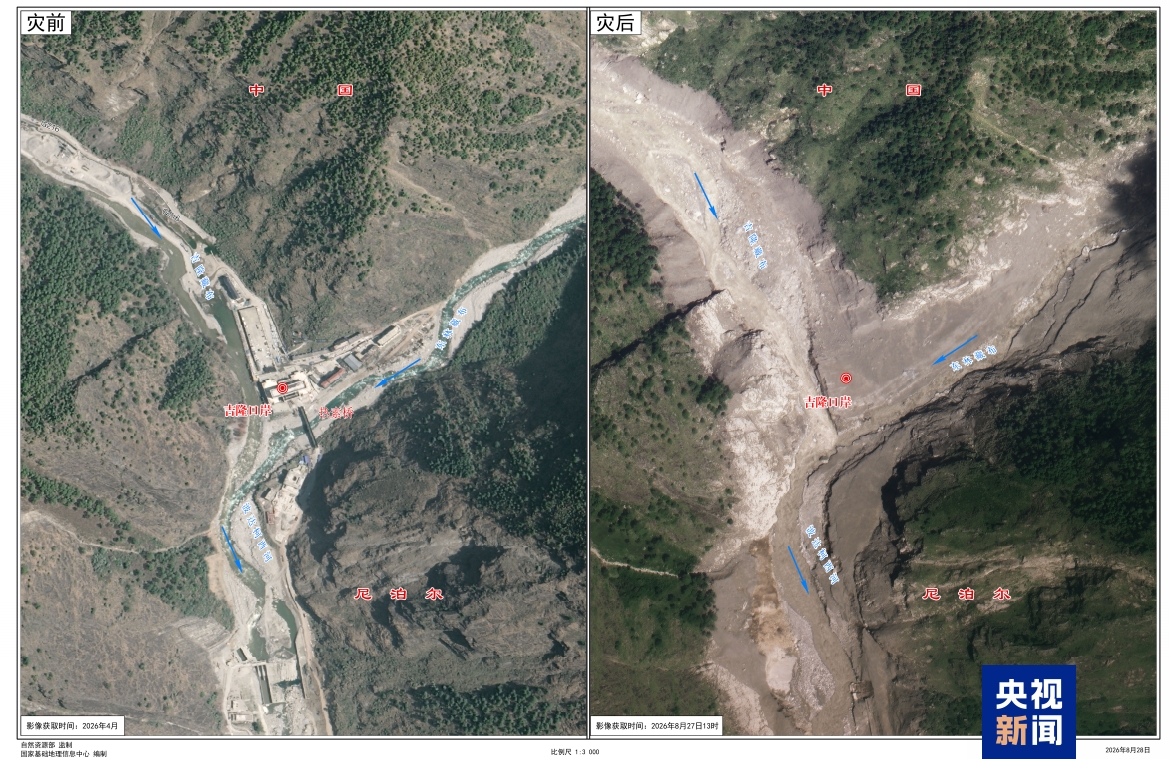
There is no sign that structures (bridges, building, car parks, roads) ever existed there.
Re:Bhartrhari's Paradox
on Friday August 28, 2026 @02:48PM (#49482779)
I see what you did there.
Re:"It works better in the app "
on Friday August 28, 2026 @02:34PM (#49482630)
It's all fun and games until your ride gets towed.
Re:Service Discontinued
on Friday August 28, 2026 @02:29PM (#49482581)
Re:TwitterWebViewer has been permanently discontinued
on Friday August 28, 2026 @02:28PM (#49482569)
I've emailed HN's mods requesting Twitter/X links be site-banned as hard-paywalled, given that Nitter and XCancel had also just received C&Ds (<https://news.ycombinator.com/item?id=49437283>).
Service Discontinued
Re:The terrifying mechanics of the Nepali flash flood
on Friday August 28, 2026 @01:14PM (#49481624)
No, it is not.
The camera position is elevated at least 6--8 stories above the valley floor, an elevation of 20--24m or so by my estimate.
Slightly below it is a concrete platform supporting a parabolic dish antenna.
That platform is well above the main debris flow, catches only comparatively minor impacts, and ... is knocked flat just before the video terminates.
More significantly, the three story block structure at the lower left of the frame is seen visibly displaced an instant before it is obscured by the debris flow, at about 30s into the video.
<https://en.wikipedia.org/wiki/File:Mudslide_at_Gyirong_Port_...>
We now have before/after images of the precise location of the port. THere is absolutely no indicate that structures ever existed there:
<https://news.cgtn.com/news/2026-08-28/3D-imagery-reveals-pat...>
From: "How do newly released 3D images explain the Gyirong mudslide?" <https://news.cgtn.com/news/2026-08-28/3D-imagery-reveals-pat...>.
There is no conceivable way that this can be perceived as a minor or generally-survivable incident.
Re:Twitter Viewer – View Twitter Without Account
on Friday August 28, 2026 @01:06PM (#49481535)
This service has since been discontinued:
As of August 28, 2026, this website has been permanently discontinued, following a request from X Corp. Profile browsing, search, tweet viewing and video download have all been permanently disabled, and all cached content has been deleted.
Re:Twitter Viewer – View Twitter Without Account
on Friday August 28, 2026 @01:05PM (#49481524)
Landed as of 17:00 UTC 28 August 2026.
As of August 28, 2026, this website has been permanently discontinued, following a request from X Corp. Profile browsing, search, tweet viewing and video download have all been permanently disabled, and all cached content has been deleted.
Re:Trade (and Tariffs)
on Friday August 28, 2026 @12:45PM (#49481179)
Exactly what I was going to post.
Here's a direct link to ... several versions of ... the fable:
Re:The terrifying mechanics of the Nepali flash flood
on Friday August 28, 2026 @12:41PM (#49481118)
That and other risks.
There's the 1963 Vajont Dam collapse in northern Italy (just south of the Swiss border).
Nutshell summary: one of the tallest dams ever built (262m / 860ft) created a reservoir in a high valley surrounded by the sedimantary limestone slopes of Mounte Toc. Layers of limestone were separated by clay a few cm thick. As the reservoir filled, the clay was hydrated, effectively becoming a lubrication layer. On 9 October 1963 a 2km long landslide of roughly 260 million m^3 slammed at 110 kph into the reservoir creating a tsunami of 115 million m^3 of water which overtopped the dam itself in a 250m high wave. The primary impact was downstream in the Piave Valley utterly destroying several villages and towns, with 1,900--2,500 deaths. (Other waves washed across the reservoir and upstream causing additional damage.)
There's a detailed Wikipedia article: <https://en.wikipedia.org/wiki/Vajont_Dam>.
Also several good videos detailing the specifics of the disaster on YouTube.
Generally the Alps are at a far lesser scale than the Himalaya, but yes, glacier, flood, and landslide risks exist.
Re:The terrifying mechanics of the Nepali flash flood
on Friday August 28, 2026 @12:31PM (#49480934)
The same argument could have been made about wildfire deaths and damage through the early 2000s in the US.
It turns out that improved forecasting, warning systems, and well-established emergency response, rescue, and recovery systems, can all tamp down risk.
Looking at your article, the subhead reveals a split narrative: "Natural disasters may cost more money, but they claim far fewer lives than in decades past."
What's begun to occur with wildfires is that events are now exceeding the capability of even advanced modern technological societies to address them. Wildfires now regularly enter the urban core, not merely the urban fringe. That's something unheard of in the US from roughly the 1920s, and there wasn't a notable large-scale urban fire until the Oakland Hills firestorm of 1991. Even that was arguably at the wildland-urban interface (WUI). Contrast the Tea Fire (2008, Montecito & Santa Barbara, CA), the Tubbs Fire (2017, Santa Rosa and Sonoma, CA), Camp Fire (2018, Paradise, CA), Carr Fire (2018, Redding, CA), the August 2020 California lightning fires (2020, multiple locations, 3,500+ structures destroyed), the Marshall fire (2021, Marshall, Superior, and Louisvill, CO), the Mountain Fire (2024, Ventura, CA), the Hawaii wildfires (2023, Lahaina, HI), the 2025 Los Angeles wildfires (2025, Pasadena and Altadena CA amongst other locations), and the 2026 Spokane complex (2025, Spokane, WA, ~850 structures).
That's just within the US (an advanced modern technological society), omits wildfires not significantly impacting urban regions, and probably skips a few. There've also been unprecedented urban fires in Canada, Europe, and Australia within the past few decades after nearly a century of no such instances.
(Europe is an exception: for some reason there were numerous urban conflagrations in the period 1939--1945, e.g., Dresden and Hamburg, though climate doesn't seem directly implicated as I recall. Tokyo, Hiroshima, Nagasaki and other Japanese cities had a similar experience at the time.)
As more facts come out about the Nepal-Tibet glacial flood event of 2026, it's pretty clear that many casualties and damage were unavoidable at all once the event itself was triggered. Avoiding casualties would have required extensive evacuations of a nearly 100km stretch of the Trishuli River, possibly for weeks, with an affected population of over 1 million souls.
I've addressed this in a few recent HN comments: <https://news.ycombinator.com/item?id=49473419> <https://news.ycombinator.com/item?id=49473201> <https://news.ycombinator.com/item?id=49460081>
Re:The terrifying mechanics of the Nepali flash flood
on Friday August 28, 2026 @12:04PM (#49480526)
</sarcasm>
(For the detection-impaired.)
Re:The terrifying mechanics of the Nepali flash flood
on Friday August 28, 2026 @12:01PM (#49480499)
Snow can be annoying but is rarely catastrophic.
Somewhat more concerning is that tornado frequency is increasing at a ferocious rate, though most are relatively minor (EF-0 / EF-1).
The total for 2026 to date is 207 ground tracks (as of 27 Aug 2026). The previous full year record was 142, and the historical average (again full-year) is closer to 50.
This has knock-on effects to insurance as well as raising home and landscaping repair (downed trees, etc.).
<https://chicago.suntimes.com/environment/2026/08/27/200-torn...>
Flash-flooding is also an increasing concern, though unlike Nepal, water channels tend to be largely flat. Urban creeks, local rivers, retention ponds, and low-lying locations (underpasses, local low spots) may experience flooding, though generally flow strength is low. Basement flooding is the most likely risk.
Re:Ask HN: What's a Good Physical Printer?
on Friday August 28, 2026 @11:54AM (#49480412)
Brother, B&W laser. That consistently tops independent review sites, e.g., NYTimes Wirecutter: <https://www.nytimes.com/wirecutter/reviews/best-home-printer...>.
It replaced an HP mispurchase made against my recommendation a couple of years ago, and is absolutely solid and boring.
If you only need occasional colour prints, you can use a print service (most office-supply stores, druggists, package delivery (FedEx/UPS).
There are tank-based inkjet printers which may avoid some of the higher-cost ink / DRM issues. Mostly I avoid them as overpriced and problematic.
Avoid HP like the plague it is.
Re:Google forces Android apps to use memory more wisely as RAMpocalyps...
on Friday August 28, 2026 @11:13AM (#49479770)
Now lets do the Web.
Browser bloat is the principle cause of desktop instability for me over the past 5--10 years has been bloated browser sessions. To the point I have a "firefox-reaper" script to kill the largest 10--20 browser tabs in an effort to try to keep things sane. (It helps, but doesn't solve the problem.)
Upgraded memory recently, unfortunately it appears to be bad RAM, purchased ... a while ago. Replacement (if I can't find the warranty) will cost several times what I originally paid a couple of years back.
One of the draws of HN over other aggregator sites is that it's comparatively ultra-lightweight. I can browse it without crashing not just my tab or browser session, but my full system. Even F/OSS sites such as Mastodon compare poorly here, let alone commercial social media (even used read-only w/o login).
See Idlewords' "The Website Obesity Crisis" from 2015.
Something of an HN perennial:
11 years ago (367 comments) <https://news.ycombinator.com/item?id=10820445>
10 years ago (90 comments) <https://news.ycombinator.com/item?id=11659026>
9 years ago (83 comments) <https://news.ycombinator.com/item?id=14088092>
8 years ago (30 comments) <https://news.ycombinator.com/item?id=17943754>
7 years ago (22 comments) <https://news.ycombinator.com/item?id=22283344>
5 years ago (89 comments) <https://news.ycombinator.com/item?id=27355556>
4 years ago (43 comments) <https://news.ycombinator.com/item?id=34466910>
The only bright spot is that the RAMpocalypse is finally imposing real costs on memory-heavy development. Though I fear even it will only have a temporary effect.
Re:The Website Obesity Crisis (2015)
on Friday August 28, 2026 @11:10AM (#49479725)
Multiple past discussions, something of an HN perennial fave:
11 years ago (367 comments) <https://news.ycombinator.com/item?id=10820445>
10 years ago (90 comments) <https://news.ycombinator.com/item?id=11659026>
9 years ago (83 comments) <https://news.ycombinator.com/item?id=14088092>
8 years ago (30 comments) <https://news.ycombinator.com/item?id=17943754>
7 years ago (22 comments) <https://news.ycombinator.com/item?id=22283344>
5 years ago (89 comments) <https://news.ycombinator.com/item?id=27355556>
4 years ago (43 comments) <https://news.ycombinator.com/item?id=34466910>
Re:Worst-case glacial lake flood scenarios in a transboundary Himalaya...
on Friday August 28, 2026 @10:53AM (#49479454)
Thanks.
Re "speculation, ...": my point being expertise, but based on background knowledge rather than close event-specific observations or measurements. Yes, geophysicists would be an equivalent level of expertise.