Obviously this will vary by manufacturer and feature, and it's getting harder as time goes on to remove this shit from your vehicle.
Am I wrong?
This cuts both ways. If the user can show one case of their rejecting the EULA without it being logged, they can then make the claim--correctly or not--that they repeatedly rejected it. If the car refuses to work without the EULA being accepted or rejected, proof of its movement would be sufficient to show repeated rejection.
More pointedly, willfully hiding information like this could backfire massively with the courts or law enforcement.
    void handleEula()
    {
      auto eulaAccepted = readEulaAcceptedFile();
      if (!eulaAccepted)
        eulaAccepted = promptForEulaAcceptance();
      writeEulaFile(eulaAccepted);
    }
> If the car refuses to work without the EULA being accepted or rejected, proof of its movement would be sufficient to show repeated rejection.
If the car refuses to work without the EULA being accepted then it wouldn't move. If some functionality was enabled or disabled by accepting the EULA then you would have to show that the functionality was never enabled based on secondhand sources... which would be difficult. Proving something didn't happen is infinitely more difficult than proving something did. Many systems are not designed to handle that level of introspection.
All I'm saying is that the cute legal theory of "I rejected this N times therefore that one time I accepted it is invalid" falls apart for me when I consider that the user would have to prove they never did something, except that one time. Good luck.
Yet, that doesn't matter - all the user has to demonstrate in court is that rejecting a EULA causes it to come up again in the future, meaning that sooner or later it is going to get accidentally accepted.
Practices like this increase likelihood that the judge rules the entire agreement null and void for the entire userbase.
It falls apart for you, since you are the person trying to trick every single driver. It won't necessarily fall apart for a judge.
Particularly us geeky folk often seem to think that you can find a buffer overflow exploit in the literal wording of the law and the judge will have to let you go. That usually isn't how it works (although the odd case where someone successfully exploits the actual verbiage in the law tends to make headlines and make it seem like that is how it works).
Do you have proof they clicked it, and not their kid? Did they intend to consent, or click the button by accident/ spilled coffee on the touchscreen?
How can we trust your code at all, if all users say the rejected the contract multiple times, and you claim they accepted it and you are the one that stands to benefit from their acceptance, maybe you are lying? Maybe your system is unreliable?
Is it even legal to use the user's property - i.e. their car - to disturb their peace? If you were to post them a letter, you do it at your expense, but now you are doing it at their expense, they are paying to electricity and data to display those pixels for your benefit.
Sure, if the lawyers are actually trying to do things legally first and adhering to the letter of the law, I'm sure they're happy to have their efforts challenged. But I have never, ever, in my life encountered a lawyer who worked this way (and I have lawyers in my family, I've been to court, I've personally hired several, blah blah blah). I am not saying they don't know the law, but they use their greater knowledge of the law to their advantage. Their goal isn't transparency, it's submission.
https://en.wikipedia.org/wiki/Capitol_Records,_Inc._v._Thoma...
https://en.wikipedia.org/wiki/Sony_BMG_v._Tenenbaum
These were widely covered because most people just settled, and there were high hopes for something putting a damper on the lawsuits... from the page about the second case " It was only the second file-sharing case (after Capitol v. Thomas) to go to verdict in the Recording Industry Association of America's (RIAA) anti-downloading litigation campaign"
So 2 for 2 there were found in favor of the RIAA, for huge damages even after appeal.
More recently, even ISPs are getting hit hard: https://arstechnica.com/tech-policy/2021/06/1-billion-piracy...
There's a much harder burden of proof for the RIAA when they sue people over simply downloading songs or albums when the user can easily make the case for fair use. I mean, how many albums, 8-tracks, cassettes and CD's did you buy of the same artist and album? I know I did it thousands of times.
The burden gets a lot easier when you can show the person was actively distributing essentially pirated music to other users - propagating what is by legal definition, illegal activity.
As I remember, at least some cases were complete BS. Some people hardly knew what file sharing was.
I think we're talking about two different things. Yes, the RIAA was running an intimidation campaign. By and large they didn't care about any particular case.
That's quite different than a plaintiff coming at a car manufacturer over sketchy click-wrap agreements.
Anyway, I don't care enough to comment anymore.
I guess it becomes their word against... well, nothing, you don't know what they did or didn't do.
For those who care enough to reject EULAs, they should take a few videos of rejecting the license and hopefully that would be enough to shift the onus to the manufacturer, who, as you said, has next to nothing.
I think consent dialogs are one of the closest things to Newspeak that exist. In any spoken language, new words can be coined to express a desired meaning. In consent dialogs, there is no longer "Accept" and "Decline", instead there is "Accept" and "Ask me later". When presented with an upsell, the choices are not "Yes" and "No", but "Yes, sign me up!" and "No, I don't want to save money."
> A EULA specifies in detail the rights and restrictions which apply to the use of the software.
> Many EULAs assert extensive liability limitations. Most commonly, an EULA will attempt to hold harmless the software licensor in the event that the software causes damage to the user's computer or data, but some software also proposes limitations on whether the licensor can be held liable for damage that arises through improper use of the software (for example, incorrectly using tax preparation software and incurring penalties as a result).
Quoting from https://en.wikipedia.org/wiki/End-user_license_agreement
This seems ... fine.
Adding new Bluetooth connections is something I do more than one would think, because my car doesn't seem to allow Android Auto via a USB cable alone, and periodically it gets into a bad state somehow. The only solution I've found is to forget the pairing and start over. This has happened to me on multiple cars, two Hondas and a BMW, so I'm not sure whether it's universal or not. If for instance, GM cars didn't have this issue, I'd seriously consider one.
Obviously this is a software problem and not a touchscreen issue per se, but I associate it with the touchscreen and the generally poor standards of car tech these days.
Adjusting radio settings is something that I do quite a bit if I am going on a trip, because any given FM station fades out in a fairly short time. I could stream music from my phone, but I have a limited plan due to spending most of my time using wifi these days.
My car does have a reasonably clever and low mental bandwidth way of using the radio, though. There is a "scan" (touchscreen) button and then it changes through the stations reasonably slowly with a "stop" button in the lower left.
I don't understand your third point - it's supposed to be a mitigating factor? It seems like a good reason to "hate on touchscreens" to me, though.
Touchscreens and software bloat are not really central to what I dislike about modern car tech. It's the fact that the user experience has converged on personal computers, where things tend to stop working without any meaningful diagnostic or error and I end up spending 15 minutes resetting and disconnecting/reconnecting things to make it work when I really just want to get home before my food gets cold, etc.
As long as any given computer system is simple enough that the engineers understood it, it seems fine to me in theory.
What GP is talking is return to the design you described, possibly with more focus on car-equivalent of HOTAS and tactile controls.
I think there is proof your eyes spend more time off the road when using a touch screen compared to physical controls
Touchscreens force us to look at them with our eyes to use them.
I think nobody who prefers simplicity objects to that kind of tech. It's overcomplicated interfaces to basic services that we despise, like a volume slider that requires you to look away from the road and that's too easy to mishandle.
The problem with that dumb car is that it is missing that very convenient feature. So you want a dumb car but with feature X, because feature X is really great. But the other guy will not care about X and will think it is bloat, but Y is really important, while for someone else, it will be all about Z.
In the end, to satisfy everyone, you will need X+Y+Z, everyone will think it is bloated but you can't remove a single feature without someone complaining... As in, I want things light but don't remove my feature.
Unless it is custom made bloat is almost inevitable.
Power central locking doesn't need a microcontroller, code, or a touch screen, or updates.
> manual windows
Electric windows doesn't need a microcontroller, code, or a touch screen, or updates.
> no car stereo
Car stereos do not need a microcontroller, code, or a touch screen, or updates.
> no power steering
Power steering doesn't need a microcontroller, code, or a touch screen, or updates. Hell it doesn't even require electronics.
> no thermostat
Thermostats are mechanical...
> no cruise control
Cruise control doesn't need a microcontroller, code, or a touch screen, or updates.
I do not expect to get that soon.
Really?
No microcontroller on that car[1]; it was a very reliable car too (bought it with 50000km, sold it with 270000km and only ever did services. Nothing broke in that time).
Bosch k-jetronic fuel injection, no microcontroller needed.
Push button, engage solenoid, who needs a microcontroller?
> manual windows
Push button, turn on motor, limit switch to turn off the motor when you get to the end. Microcontrollers make pinch detection and calibration nicer though.
> no car stereo
Tons of examples here, a stereo built today would most likely have electronics and/or a microcontroller because it's cheaper than an analog FM radio, but an old one will still work fine.
> no power steering
On my 1978 vehicle. I believe this is hydraulic with a belt powered pump to reduce the user torque on the steering wheel. No electronics, certainly not a microcontroller.
> no cruise control
On my 1978 vehicle. No microcontroller there, just some vacuum linkages. Maybe a bit of electronics to turn things on and off, the switch certainly felt like an electric switch.
None of these things require a microcontroller. Because it's cheaper, almost all of them use a microcontroller on modern cars; thermostats on lower models would probably be the most likely to be a simple system without a microcontroller.
The extreme case (as you mention) is the moment you stick in a touch screen and a fair amount of intelligence. You might as well put a jillion features in there plus you save money on physical controls.
They used to be capable of building cars with numerous option packages in the 1960's and 1970's, it's pretty remarkable. The 1969 Camaro alone had probably a dozen different engines available from 3 families.
Cruise control doesn't have to have any electronics at all either, earlier cars had vacuum actuated cruise control.
I think an extremely small minority of people who want a "dumb" car don't want those features. I feel like you're just making up a strawman here. It's pretty clear (at least to me), that the people who want a dumb car are talking about things integrating with your phone or being displayed on a touch screen. I think anything that existed 20 years ago is not regarded as dumb by basically anybody.
But, you used to be able to order all sorts of stuff - or not order it. For example, you could save a few hundred bucks by not having a rear bumper, not having a radio, opting for manual windows and transmission, opting for no cruise control, etc...
There were a multitude of options and you could add/delete most anything you wanted.
These days, it's down to packages and colors. Often, you can't even mix packages and trying to get manually controlled windows will usually get you laughed at.
Is the stereo just an AM/FM radio? Does it have a CD player? A CD changer (how many people even buy CDs anymore)? Does it get satellite radio? Does it have AUX input? Does it have Bluetooth? Is there an interface to communicate to the the Bluetooth device (people driving around controlling their stereo from their phone is more dangerous than people doing the same on their car's touchscreen)? Can it stream music without a Bluetooth connection? Does it have Spotify? What about Apple Music? Does it offer handsfree control? And so on.
There simply isn't a universal definition of what a "dumb car" would be and not everyone is going to desire the same set of features.
Personally, I really enjoy that with our new van I can listen to a podcast/music through Bluetooth and pause/resume playback through a simple touchscreen without having to fiddle with my phone directly.
I'm not sure what your point is. I never said that no one wants these features. Obviously there are many that do.
US luxury cars in 1965 had all the features you mention. They were delightfully dumb and simple to operate. That's what I want now: knobs, sliders, and buttons that move and click when my finger pushes them.
I just want a car to ENABLE me in intuitive ways and that don't go obsolete before the tires need replacing.
I know exactly where, e.g. my fan speed knob is and I can reach for it confidently. Or I can take my eyes of the road so I'm not blindly groping around the touchscreen to find the increase/decrease button, assuming its even on the right screen and I don't need to go through several menus to find it. Cost doesn't enter my mind in this scenario.
It's not particularly difficult for the manufacturer. All the cars had the wiring for all the features since that's the hardest part to do after the factory, but doesn't cost much. Control modules and actuators can be added very late in the assembly line (sometimes even at the dealer prep) so you only get the ones you want to pay for.
I actually just bought a 2010 which has mechanical door locks, manual windows, and no cruise control. It's great. What's the problem?
I used to own a Datsun 720 pickup (built 1982) that matched this specification. It even had a manual choke; starting the truck without flooding the engine required a bit of skill.
It was the best vehicle I've ever owned. On the rare occasion it needed maintenance, I could do everything myself. I didn't even need a workshop manual, because it was all intuitive.
I think the only car I've driven without physical volume controls was a Ford, and that was nearly a decade ago, I get the feeling there's been a bit of a push back, at least in the UK.
Glass controls are optimal for precisely only one scenario, and that is when you don't know ahead of time what will need to be on the screen. That's why smartphones use them.
I did not know till you said how much effort Skoda is putting in.
My next car is in that line up...
(Prefer level II to level III automation tho)
1. The controls on the 2014 are obvious, easy to find, and my choices are readily apparent. In the 2017 I have to search for them and often guess their meanings. If I'm actively driving, I just give up because it's too distracting.
2. The controls are not as responsive. Sometimes there's a lag. Sometimes they don't respond at all.
3. There are bugs with the digital controls that simply don't exist in the analog versions. As an example in the 2017 the radio turns on every time the car gets started regardless of if it was on when the car was turned off.
UNacceptable.
And yet now the norm.
I'll do you one better - I'm hanging on to my 2004 Subaru WRX for these and similar reasons too :). I go through dealerships every year or two looking for replacement... and keep my WRX with happiness in my heart.
You could argue that’s because of familiarity. Obviously I like a lot about my car or I wouldn’t have kept it for this long! But truly, it’s not that I don’t think there’s room for improvement on my old car. There have been plenty of advances since its time that I would welcome if I bought a new vehicle: improved efficiency, safety features, practicalities like better external lighting, and so on.¹
For me, those benefits always seem to be outweighed by the horrible state of controls and displays and “infotainment” systems in new cars. They’re cluttered and intrusive and distracting. I’m not sure which is worse, touchscreens that take your eyes off the road, or cluttering the steering wheel with controls for a phone that it is almost never appropriate to be using while driving anyway in my country. Meanwhile, apparently I still have to take a hand off the wheel for a second or two to change gear or switch on various external safety lights. This should have been some sort of meme punchline, not real life.
Between poorly designed controls, the security and privacy problems that seem to be rampant in modern cars, and the sense that EVs might be the future but there are still some big unanswered questions, I expect it will be a few more years before I change to a new vehicle unless some practical consideration forces the issue first.
¹ I’m still waiting for the windscreen that automatically enhances the driver’s full view in low light or poor weather conditions and subtly highlights the required driving line through junctions as directed by the navigation system, but I reckon we’ll have that too before the self-driving flying cars are here.
The RAV4 we had for 4 years now - I'm thoroughly familiar with the UI, and parts of it are still completely non-sensible.
Like yourself, before COVID I traveled and rented cars frequently; there are some UI choices that are inherently poor or against my priorities/workflows and they'll never be right. I could list them, but now we'd be into rant territory... :-/
There are physical buttons and knobs for a few of the controls, but it seems that they're just talking to the same software as the touch-screen, so they're just as slow to respond. Adjusting the heat without looking at the touch-screen is pretty much impossible.
IMO the touch screen should not be used to control any aspect of the car's operation. It should only be for phone, navigation, backup camera, and entertainment.
And going from lo to hi takes forever, too. At least the fan speed knob seems good enough. The touch screen in general is decidedly not great; it's better than my C-max (sync2) in many ways, but I really like how the sync2 was designed --- they clearly considered how to make it useful, but then implemented it in the slowest environment possible.
The console is awful. Truly awful. Push the volume button within a few seconds of turning the car on to turn the radio off? Doesn't even register. Even if you give it a minute to warm up, it is half a second of lag on a physical switch. The touch screen has a half second of lag and requires several presses to do something as simple as switch from the radio to bluetooth.
1) that there’s no CAN bus messages in Subaru cars that offer GPS time, and
2) that at least older models of MFD counts time by dividing 125kHz CAN bus crystal, where a sane choice would be to use 32.768kHz one.
It’s not just your car, the issue is in design. To hypothetically fix it a firmware hack would need to be built. I learned this when a friend of mine told his is always way too fast and often makes him upset for a moment that he might be late to work — don’t know he meant it justify flooring it but sounded like he was genuinely annoyed.
It's still an issue in the 2018 Impreza. I've gotten used to it now, but it's still frustrating. Especially if I ended the drive with a phone call. On phone calls I have to really crank up the volume (nearly max) whereas for music and other things I have it very low (10-15? The numbers mean nothing to me, not loud). So when I turn it on after a call I get blasted by NPR for about 5-10 seconds before the audio volume dial actually responds (sometimes it takes the early attempted dialing down but delayed, other times I have to try and dial it down again).
Other than audio controls, though, everything else is responsive, I don't notice any lag. It really seems to be an issue with their stereo system. Either it's not fully booted (and can't respond to controls yet) or there's some mediating system that transmits the controls which isn't booted up as quickly.
This means I need to turn the volume up a ways to hear anything over bluetooth. This also means that between starting the car and bluetooth connecting I'm getting blasted by some random radio station at increased volume.
About the only time I interact with the touch screen is to control the apps I use (mostly maps and podcasts). Even the podcasts app rarely requires me to touch the touch screen; there are volume and back/forward switches right on the steering wheel. (And also on the console below the touch screen.)
Maybe that's switching back after 2017, or perhaps you use more of the controls than I do.
I hope to buy a similarly ergonomic vehicle when this one becomes unmaintainable.
(You kind of make an Ohm gesture around the volume knob with ring and middle for up down channel)
I am glad to see other's desire for analog cars align with my own views.
I have told everyone who will listen for a long time that I will never buy a new car because of these silly digital features that often include surveillance capability.
Neither of my Macs have one of these. This is why I'm asking.
And if you aren't looking you'll accidentally do things you didn't mean to, like press escape, or turn your mac off when trying to hit back space.
I also understand why car makers like digital flash: your 4 year old car doesn't support your latest iPhone, network, or peripherals, so you're motivated to buy a new one every few years.
(And of course, old car tech distracts your driving LESS, however that fits into the picture.)
I think we will never see cars with modular digital tech that can be updated. A car with replaceable digital hardware and software won't rapidly go out-of-date the way current cars do. They would cost far less to update than replace. So nobody wants it... except perhaps grownups.
It is a California "compliance car", which means it was just a modified petrol Spark, so it didn't have product managers trying to jam in unnecessary touch-based interfaces.
I just hope that all companies building electric cars don't move in the all-touch direction of Tesla.
Old SLR cameras had a ring around the lens for f-stop and another dial on top for shutter speed.
New DSLR cameras even now hide all that stuff in a menu on the touch screen, as if it isn't something you want to change ALL THE TIME - and develop instant muscle memory for.
Never mind us older folks, who often have vision problems with up-close viewing, which is a solved problem when you can spin a shutter or aperture wheel by touch. But not when you need no-glasses to view the objective, but reading glasses to view the fine print on the screen.
(although i've never understood why it has a tach since its a manual anyway... but i guess i can close my eyes and imagine my V6 ranger is a corvette...)
Most "pro-sumers" wouldn't bother to adjust what the auto-focus calculates anyway.
I was using those dials all the time as a 16 year old learning to use a camera. It's really easy - especially when you can set one of them to auto and just control the one you care about - plus so quick when they're on a dial.
But I can believe no one wants to do it now, it's amazing how much a bit of tactile feedback can make a task 100X easier, and something you can do instinctively.
I think that is the 'sumers. The prosumer gear is for people who actually want to play with all that stuff, but don't want to pay $10k for a pro body and lenses.
Someone correct me if I'm wrong and tell me where to buy one!
As with anything camera related, where to buy could be B&H, Adorama, Sammy's, or your local camera shop (if they still exist in your area).
https://www.nikonusa.com/en/nikon-products/product/dslr-came...
Who knew a few physical dials would be so expensive...
Don't approximately all DSLR have separate physical knobs for aperture and shutter speed?
Agreed that a DSLR without these would be nearly useless.
Almost everyone will want to pay $30,100 for the better product though, but the market can't differentiate on that.
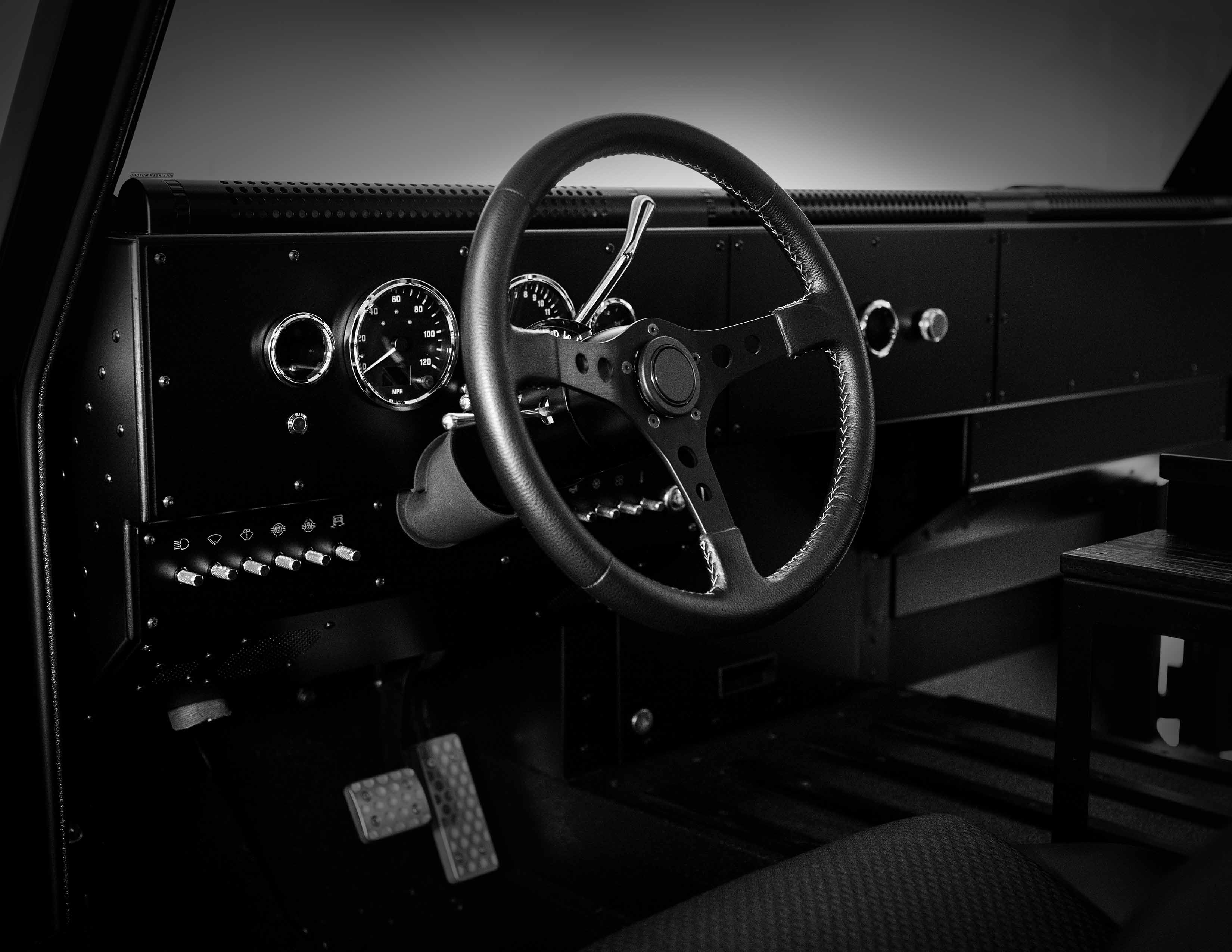
(You can faintly hear it over annoying background music in this video [1].)
It felt better to drive than a Tesla, even though it was orders of magnitude slower. Unfortunately, last I heard they were trying to tone down the Landspeeder-esque “cabin noise”. I’m not sure if the current executive team at Electra Meccanica even realizes what they have.
That's not to say there'll be no software, or even that it won't be proprietary. But at least it's a lot nicer to buy a motor controller, a charger, a battery management system and whatever else you need from companies that know the parts have to be easy to configure and interoperate with other components from other companies, because if they aren't people won't buy them. Modularity is a wonderful thing.
(I just ordered the charger and BMS for a project I'm working on yesterday. I ended up opting for more expensive components because they're configurable by the end user, whereas the popular cheap option you have to send it to someone to reprogram if you change your battery pack configuration.)

Back in the day airplanes where just knobs and levers, and we didn't have the reliability that safety that we have today.
With aerospace, I mean, software engineering as a discipline started with aerospace!
If we write "starup code" (i.e. CRUD web app) for cars we'd still be in huge trouble, but if the automotive industry can adopt the redundant systems, enforce VERY high levels of software testing, and other practices for those other industries I think we could see some interesting things coming from the industry
A lot of the systems we take for granted in our cars (ECU, ABS/stability control, adaptive cruise control, steer-by-wire, OBD) were pioneered in the aviation industry, and both industries' safety records have been massively improved by the ability to do digital design/analysis (CAD, FEA, CFD, etc). Then once you start talking about advances in computer-aided manufacturing and QC/QA processes, training, failure analysis, human-machine interaction...
One of my perennial frustrations with current tech is the idea that putting a computer in the control loop necessarily makes things safer.
I completely agree with you! A simple electronic component is a lot more fragile that a mechanical counterpart that is unfazed by ESD, vibrations or whatever other things that can kill a electronic component, or a circuit board for that matter.
My point is more along the lines that a computer in a control loop makes things different, not necessarily safer. But with the flexibility that a computer brings to the mix, if used properly a computer can add some safety features that would be hard to implement with only analog/mechanical parts.
It seems to me that we have reaching a ceiling with what we can do with mechanical systems, although I do believe that we often get lazy and opt for software convenience instead of using mechanical reliability where it would be beneficial.
So all in all, computer control systems are not safer just in themselves, but they can be, if not in reliability, at least in monitoring health and providing warnings before things are critical (i.e. a temperature reading instead of waiting to see smoke coming of the hood of a car)
No, not really.
TBH, I have similarly optimistic views, but for completely different reasons. The truth is, the worldview has changed completely in the past 100 years.
In the old days, if you failed at operating a saw, you hurt yourself badly. Now we slowly are starting to expect sawstop and other solutions to reduce injury.
The same thing is happening in cars. We no longer expect perfection of the human as we augment them in various ways to both reduce the frequency and severity of collision. Its the early days yet, and its very much the "startup code" mindset with cars having way more bugs than its ever but also producing safer outcomes.
Car software is getting worse, but we're better off for it.
Modern cars are absolutely terrible in the UX department, but they are a hell of a lot safer, so there’s that.
Re electronics the sound system and sat nav (iphone) are boxes you tack on and don't have to be part of the car.
tangentially, "safety" is highly cargo-culted. things that seem so obviously safer are taken without question as better, but in many cases, such features really only provide a false sense of security along with substantive unintended consequences.
most safety features in cars (e.g., lane-keeping) allow people to be less skilled and less attentive at driving, rather than lowering crash/injury/death rates. the better solution is to make people better and more attentive at driving through more rigorous training/testing, more thoughtful design, and importantly, culture, rather than just technology for its own sake.
I'm not saying you're wrong about the things you mentioned, but cars really have got safer, in important ways.
that's not to argue that those tradeoffs aren't net positive, but that they're still tradeoffs to be considered, rather than short-circuiting to "of course it's better!".
One source, just after a quick search: https://www.ghsa.org/resources/Pedestrians20
We've all seen that person in a Honda fit who's so terrified of being on the freeway during rush hour they're driving like an overloaded scrap hauler and generally causing a problem in whatever lane they're in.
That doesn't make the roads safer.
The states look good because safety tech that only matters at the extreme end has improved so the drunks and distracted teenager who would have dies had they gone off a cliff in a 20-30yo car are now surviving.
Basically the medium to low speed impacts that people not behaving particularly poorly get into have always been highly survivable.
Motor vehicle deaths per 100,000 have been on a consistent downward trend since the 70s (1.53 per 100,000 in 2000, 1.11 per 100,000 in 2019), so, no, death rates have in fact been lowered.
It’s also possible better road maintenance, or airbags, or better crumple zones (but not lane help) are driving it down. It’s possible for lane help to be driving it up, just not as much as say better crumple zones, and it will still be trending down.
This is not true at all. There is definitely testing of cars by groups like the NHTSA and Insurance Institute for Highway Safety. For example, they've found crash rates were 14% lower on cars with blind-spot monitoring. Modern cars are far safer than older cars.
But part of the problem with the 50 y/o car may be that the steel has rusted (based on the rust-colored cloud of particles). That may be why the older car just disintegrates.
OTOH the weakening of the steel because of rust creates a de-facto "crumple zone"? A minor improvement? :)
Older cars were much too rigid and the body didn't absorb much energy. It was all transmitted to the occupants.
Also, forgetting about design improvements in safety, I'm not sure I want to "bet my life" on 50 year old brake lines, etc. That sort of stuff just wears out.
As far as rust, I’m sure you can find some rust free cars in AZ or CA.
There's a reason nobody is going to do a crash test of a 1980s Ford cop car into a 2010s Ford cop car. It would be a massive nothingburger.
Frontal airbags do little for seatbelted passengers at crash test speeds (texting into the back of a semi at 70mph is a different story). In fact in many cases they are worse than no airbag at low/medium speeds because you injure your face hitting airbag or are injured in its deployment in situations where you would have otherwise hit nothing. They are intended as damage control for unbelted passengers (which is where do you think the first S in SRS comes from).
Crumple zones are highly overrated. Imagine an old cartoon where someone gets thrown off a building and happens to land on a guy carrying mattresses. That's basically how crumple zones work. Too high of a jump or too soft of a mattress and you blow right through with negligible deceleration. Too hard of a mattress and the mattress decelerates you basically as hard a the sidewalk. Crumple zones provide time for the airbag to deploy, yes but they only really mitigate the forces on the passenger cabin (and its occupants) at a narrow speed range (they shoot for the speed of the relevant crash tests).
For people who were doing things right and wearing their seatbelt the safety of crashing a car changed negligibly from the advent of the 3pt belt to the time of the side curtain airbag. (I'm ignoring rollover safety here, that's been a basically linear improvement since the 1960s but it's not technically interesting because it's a simple case of throwing more and more steel at the problem)
Side curtain airbags have been a major improvement because there's not much restraint nor space for deceleration in that direction. They do a great job keeping people's heads from hitting stuff.
AEB is another good modern one. Knocking 5-20mph off the speed of a collision helps a lot no matter how you cut it.
All that said, everyone who worships safety tech uncritically as though they're all big improvements you can stack on top of each other and get the sum of them all needs to take a long walk off a short pier. Professing your love for airbags and crumple zones might get you fake internet points on Reddit or HN but that's just not how it works and those people pollute and/or prevent legitimate discussion.
Additionally, you think it is a more feasible solution to change culture than to make the safe operation of a car less reliable on the human element? How exactly do you "make people better and more attentive?" Training? Please elaborate on what that would look like.
Cars are designed a lot more thoughtfully than they used to be. An example not related to safety is cupholders. Remember when two flat rings on the dash were considered acceptable for holding a cup? Safety wise I'd say designing contingencies against inattentive drivers is thoughtful design.
If I had a nickle for every social media user who's screeching about how airbags are all that's good in the world but who doesn't understand the inherent tradeoffs to a bag of dense air occupying the space in front of the driver or how a crumple zone is basically a single use spring I would use the money to hire people to beat the first group of people over the head with highshcool physics textbooks.
I wish we'd regress to '50s attitudes about safety simply so that the people who care about safety no longer have to be held back by the people who crap all over everything by wanting to be seen caring about safety.
it's the same impulse that got us mis-masking and lockdowns, when the real danger was inter-/intra-familial contact (because that contact is prolonged and our guards are down, unlike with "stranger danger").
happens all too often, and it's frustrating to watch otherwise perceptive and reasonable people forsake those facilities for primal herd behavior.
I had a 1993 Tercel, same gearbox, manual windows, vinyl interior. It had a leaking head gasket when I bought it, and I drove it for 150,000 km without putting a dime into it outside of oil changes and tires, filling the coolant as needed. Simple cars are basically indestructible.
Modern cars are fine in the UX for what I do. I'd rather not own a car than drive manual, and even vehicles from 10 years ago aren't competitive in creature comforts or gasoline consumption.
That's only true if we talk about hybrids.
>even vehicles from 10 years ago aren't competitive in creature comforts
That depends a lot on your priorities, I drive a nearly 20 year old premium car that holds up very well against many new cars
Maybe I'll give up and dive into retro cars fully with a post-war Citroen 2CV? Naah!
There are EV equivalents too, like the Chevy Bolt and Hyundai Kona EV that offer range in the 200s of miles with make driver assists as an optional upgrade. Even with complicated powertrain electronics, EVs are still more reliable than ICE cars because any iffy software is made up for by lack of mechanical parts. The repair procedure is the same as mechnical parts - just swap the faulty part out for a working one, and the "upstream" supplier will probably take the broken module to reflash software or frankenstein together half-working PCBs to make another refurbished module to sell.
If you're worried about remote compromise, it's pretty easy to avoid IMO. Open the dashboard and yank the cellular antenna, and never pair the infotainment to Bluetooth or Wi-Fi (or just yank the 2.4 GHz antenna). Those are basically the only avenues for wireless attacks into a vehicle unless you count the TPMS and key fob radios, which seem too simple and low-bandwidth to offer an attack surface. And if an attacker can access your car's physical ports, they could already attack you in other ways like by weakening the brake lines. Other new electronics, like MOSFETS instead of relays in the BCM, have actually made the car more reliable so they should be fine. Other newly standard features like blind spot monitoring are (1) solid state, so they won't fail often and (2) tolerate failure or complete removal.
Lots of people want a car with more features, and don't wish to control it directly. They would rather have a solid-state device that can't be repaired, but doesn't need to be. They don't want to upgrade it themselves; ideally, they don't want it to need upgrades until they buy another one.
But you've got it exactly right: many consumers want the car industry to go iPhone, for the same reason they want iPhones. That's neither objectively worse nor objectively better. The only objective thing is that a ton of consumers want it, because it suits their needs. And part of that is achieved by avoiding development by the kinds of techies who think that their preferences are objectively better.
I mean, take TVs. Pretty much every TV has "smart TV" features embedded, to the point where it's hard to find one that doesn't. I suspect this is because the manufacturer gets some kind of kickback from streaming services to include their app and to show ads and to gather data about what people are watching and in the end it's actually cheaper to include an embedded processor than it is to leave it out and lose their kickbacks.
Similarly, those "smart car" features can be monetized by collecting valuable data and introducing subtle suggestions on where to go. It's hard to imagine a car company seeing the kind of revenue that Facebook and Google pull in and not wanting to get in on that. And they can even justify it as good for their customers by saying "we need these computers to collect training data so the self-driving features we deploy in the future will be better and safer."
I can imagine a future where "dumb car" features are actually luxury features. Only high-end cars lack the smart car features because it's cheaper to include them than leave them out. Maybe that already describes the present.
I have a base model Kona EV and it has a ton of driver assists. And they're pretty great frankly.
If electric cars ever become widespread I hope I can find a used one engineered without that stuff. Otherwise I may have to stop buying cars.
1. It still has buttons and knobs for the things that should be buttons and knobs (e.g. climate control, volume, etc).
2. The heads up display is the killer feature that should be standard on all cars (as is only available on the top speced Telluride). It displays speed, speed limit, blind spot monitoring, lane departure, automated steering, navigation, etc. Unfortunately I don't think Android Auto or Apple Carplay's navigation can be displayed on the HUD - only the OEM Kia nav.
3. The "Smart Cruise" aka Highway Drive Assist aka Adaptive Cruise Control is essentially self-driving minus lane changes. It's engaged with a single button on the wheel and presented in the HUD. It takes corners smoother than I'm able to. I often feel it's turning too early and fight the auto driving but in almost all cases it's correct and my inputs are delayed.
Kia's mobile app for remote start, climate control, valet mode, etc. is pretty terrible though.
Mazda's anti-touch stance makes it a non-starter for Android Auto/CarPlay
Toyota, Subaru and Honda have abysmal infotainment interfaces and didn't seem to invest in me enjoying the interior of a car.
Nissan CVTs have questionable reliability . Etc.
The lane keep assist on other average vehicles is so laughably had compared to what Hyundai and Kia have pulled off. These systems actually keep you centered instead of bouncing between lanes (hello Mazda). Blind spot cameras, birdseye cameras, HUD, little touches like the car slowing down automatically for you on some mapped curves when using cruise control etc. (Also I've used that stupid smart park thing waayy more than expected. I love it)
I'm still disappointed that car reviewers don't focus on such usability issues and instead rag on about performance of the engines or "its a toyonda so it is reliable" and ignore such small but practical tweaks.
FWIW my daughter has absolutely no problem using CarPlay on her CX-30. She quickly breezes thru the menus like it's a twitch shooter game. She can probably navigate faster than if it were a touchscreen, because the control pad is low. Her hand isn't extended way out on the dash.
From what I understand Android/Apple have software capability for second screens/HUDs now, but it's on the car manufacturer to support that. There are some BMWs that have it.
With them making so many things mandatory these days, I'd not be surprised to see them making HUD mandatory. It absolutely is easier and faster to read then just looking down. It may only be measured in milliseconds, but it's definitely faster.
Exclude Tesla and most all EVs on the road today are just normal cars that happen to be electric.
This is unique to Tesla, AFAIK. It worked out very well, it is a brilliant cost-saving measure that can also be marketed as 'elegant'. Have to hand it to Musk on that one. The R&D required to build a normal car interior is expensive, so skipping most of it was a phenomenal move.
So anyway, my point is that there are lots of non-Tesla EV choices, and by-and-large almost all of them are just normal cars with normal dashboards and normal controls, just with electric power instead of gasoline. A few manufacturers seem to be trying to ape Tesla's design on their EVs, but personally I expect a reversion to the mean. Too many people could care less about driving a touchscreen.
Sadly, Ford decided to copy Tesla. This picture is from a first look but I think the production version isn't much different.
https://www.slashgear.com/ford-sync-4-first-look-mustang-mac...
Once Ford realized how stupid this was, they glued that knob onto the screen. It literally is glued on. There is a "finger" controlled by the knob that interfaces with the capacitive touchscreen.
I also want a "normal" EV, not a clown car.
Here are some examples of how Porsche advertises its electric cars:
https://www.youtube.com/watch?v=92sXWVxRr0g
https://www.youtube.com/watch?v=8m31EgQkswg
https://www.youtube.com/watch?v=6gozMJnzZhU
https://www.youtube.com/watch?v=Abq-ZjJZ4oo
https://www.youtube.com/watch?v=WvGr0uDKthI
this was a big thing in the early 10s when electric cars looked like i3s and twizys. everyone wanted a normal looking car and tesla was the first one to make a normal looking car.
now priuses and leafs look normal and tesla is making cybertrucks.
Big US auto moves so slowly, they’re always playing catch-up. Time for them to die and be reorganized.
Tesla very much intends to redefine the driver experience as we know it. In the model 3, the entire control system in the center of the dashboard has been replaced by a giant singular 15" carputer touch screen.
If you don't believe me, you can make the comparison for yourself. Just do an image search for the interior on the Model 3 and compare it to that of a Nissan Leaf or Chevy Bolt.
I have a strong suspicion that soon enough after that we will be able to build electric cars from kits, cheap and with no frills. We are on a cusp of a new technological revolution.
I'm skeptical.
An internal combustion engine is a complicated, engineering marvel. But a complete engine, as a unit, isn't difficult to remove/insert. It's big, heavy and awkward, sure (so are electric motors and batteries), but an experienced person can do an engine swap in a couple of hours. And yet there aren't many people building ICE cars from kits. Why not?
Because the drivetrain is only one part of what makes a good car good.
Quite frankly, speaking as someone who is a bit of an automotive enthusiast, you'll probably find even less EVs, because EVs are sterile and boring. They can definitely be fast, but I suspect the average auto enthusiast is not only interested in speed. The sounds and smells of an ICE are far more appealing to the type of people who tend to build custom cars.
There is basically no market for kit cars because if people want a particular kind of vehicle it probably already exists. If they want a particular kind of powertrain it probably already exists. So it's just a case of getting them and combining them. And there are kits that make the most popular combinations a bolt in deal.
I could imagine it being like DIY synthesizer kits. Do it yourself if you have the skills and time to put it all together, or spend a bit more for it to come pre assembled, or “some assembly required”.
I would be curious about the safety regulations behind this.
Example: https://www.evwest.com/catalog/product_info.php?cPath=40&pro...
I wish EV tax credits applied to conversions and not just new vehicles. It would make conversions a lot more economical, and maybe we'd start seeing low-cost mass-produced conversion kits designed for popular vehicle models.
I could see there being ways to build your own, just as you could build your own house or laptop if you acquire the right parts. What makes you think that people will broadly want and use kits? (or am I misinterpreting what you're saying?)
It's made of hundreds of parts, some weight more than a grown man and you could seriously injure yourself or assemble it incorrectly. It's not gonna be an ikea kit.
We've created assembly lines for this exact reason and they are really good at their job, why would you go backwards unless you are seriously into DIY or an arctic explorer flatpacking them?
I _could_ get on your "just give me simple" bandwagon. A part of me was proud of the low-tech, rusty durability of the Toyota, I admit it. Still, I'll also admit I like most of what the Honda can do. I like the phone integration and that I can toss it down on a pad and it will charge while I drive. I like that the wipers, headlights and high beams all activate when needed without input from me. I like that it remembers my seat and mirror settings and restores them when I enter the car. I like keyless entry and remote start. I like the backup camera. I like adaptive cruise control, collision mitigation braking, and lane keeping assist. I like torque vectoring all wheel drive. Heated and ventilated seats are awesome.
Of course, if I were to try to keep this car for 14 years I might regret it, I don't know. Honda makes good cars but there's a boatload of stuff to break, lol. I think I might be better advised to trade it in at five years or so, but I do like the tricks it can do.
Not a hard trick since high beams are almost never needed. Only to tell people it's their turn to go at the 4-way. They're only marginally more useful than fog lights.
My current one has some "modern" archaic crap in it that was all the rage when it was built, it's GM so it has the OnStar buttons in the rear view mirror that are useless, along with complementary antenna on the roof. It's stock stereo controlled the alarm, it has all sorts of compartments that are nowadays mostly useless and IMO just an excuse to cram something in every spot. A lot of the "features" are just dead fads. The seats have lumbar shit in them and warm up. The warmer is useful in the winter I guess. Still with the bloat it is significantly better than the Frankensteins that commercials have convinced people they need nowadays.
My next car is either going to be a ~1995 4runner or a ~1994 diesel f-350 that I build myself. I do miss the corner windows.
At the same time it's important to recognize there's a difference between software bloat and growth. Security fixes often cause code to grow (checks, verifications, etc). That growth isn't bloat. The previous version of the software was exploitable because it lacked the checks that were added. Adding drivers or better handling edge cases in drivers grows code but isn't bloat.
Even "bloat" that's only added on-disk size (a secret Tetris game in some code) that doesn't affect normal code flow isn't the same as bloat as adding some advertising telemetry in the middle of a critical code path.
Not all code growth is bloat and not all bloat is equal.
And don't get me started on the lazy manufacturer design trend of bolting a tablet to the dashboard and calling it a day.
https://www.motorauthority.com/news/1121372_why-mazda-is-pur...
Touchscreens/touch panels are shiny, futuristic, dangerous, dumb, and cheap. Manufacturers use them because they lower BOM costs, at the expense of usability and safety. Vote with your wallet folks.
People just love these big tablets even tough they are an ergonomical non-sense and they have always been for decades. Resistance is futile. Voting with your wallet is useless unless you enjoy the hermit lifestyle.
I think ICE vehicles will continue to have a market, especially in very remote areas of the world where power grids are non-existent or not very reliable.
Its too bad that the Ford partnership fell apart.
I love the idea of rotary engines, but environmentally they're a disaster (at least in their current form), and even if the problems are fixed they'll still not be significantly cleaner than any other gas engine.
(I'm currently working on trying to covert an RX-8 to electric.)
I suspect it's pretty hard to make a rotary meet EU5; that may have been the last of them (the RX-8)
I have my phone for that.
I googled for this and could find no info. Please give a reference for this claim.
> I googled for this and could find no info. Please give a reference for this claim.
I can't even seem to find any reference to odb 3 existing at all in the first place. So yeah any link would be very much appreciated
http://straighttalkautomotive.com/articles/have-you-heard-of...
It's mostly about surfacing the codes via a screen in the car instead of having a generic check engine light and needing an external scanner.
As far as I can tell, it was never mandated. Most posts about it are from ~2011.
http://www.hcs.harvard.edu/pnw/microsoftjoke.htm
And 25 years later here we are...
' For all of us who feel only the deepest love and affection for the way computers have enhanced our lives, read on. At a recent computer expo (COMDEX), Bill Gates reportedly compared the computer industry with the auto industry and stated, "If GM had kept up with technology like the computer industry has, we would all be driving $25.00 cars that got 1,000 miles to the gallon."
In response to Bill's comments, General Motors issued a press release stating: If GM had developed technology like Microsoft, we would all be driving cars with the following characteristics:
1. For no reason whatsoever, your car would crash twice a day.
2. Every time they repainted the lines in the road, you would have to buy a new car.
3. Occasionally your car would die on the freeway for no reason. You would have to pull to the side of the road, close all of the windows, shut off the car, restart it, and reopen the windows before you could continue.
For some reason you would simply accept this.
4. Occasionally, executing a maneuver such as a left turn would cause your car to shut down and refuse to restart, in which case you would have to reinstall the engine.
5. Macintosh would make a car that was powered by the sun, was reliable, five times as fast and twice as easy to drive - but would run on only five percent of the roads.
6. The oil, water temperature, and alternator warning lights would all be replaced by a single "This Car Has Performed An Illegal Operation" warning light.
7. The airbag system would ask "Are you sure?" before deploying.
8. Occasionally, for no reason whatsoever, your car would lock you out and refuse to let you in until you simultaneously lifted the door handle, turned the key and grabbed hold of the radio antenna.
9. Every time a new car was introduced car buyers would have to learn how to drive all over again because none of the controls would operate in the same manner as the old car.
10. You'd have to press the "Start" button to turn the engine off." '
I was less impressed to see it starts at three times the base price of the Cybertruck.
The user experience may get simpler again, but the technology inside is likely to get more complex. Electrification might mean simpler mechanisms and fewer moving parts, but the software will get ever more complicated.
Now in a way it's usually a good thing, if all the complexity of something is hidden and users can treat it as though it's simple. But we'd probably all agree that extra complexity in software that can kill us if it goes wrong is worrying. The only way we know to write safe software is to make it as simple as possible, and write it slowly and expensively. SIL-rated software has already reached the automotive sector. But it seems like the sheer demand to make cars more complex (especially for self-driving) will outrun our ability to make them safe.
If the car is not moving, and you try to turn the wheels with no power steering, you feel massive resistance from the road-rubber interface. When you let the car move this way or that, even just a little bit, that resistance dramatically eases.
To hell with power steering; what's it good for?
Power steering and brakes are dangerous because they are powered from the engine. In an emergency situation, exactly when you need the controls to respond in the expected way, your engine may die. Suddenly, you have no braking power, and the steering is all weird.
One day in in the early 1990's sometime, I was driving a car that started to aquaplane on a patch of wet road. Suddenly the car felt like a boat, and shimmied a bit and spun around. It caught some traction coming out of the wet patch, and at that point I could have stopped it faster, had the power brakes not failed respond in the normal way because the engine cut.
So I ended up striking the concrete divider with the rear corner of the car. I was not moving fast at that point; I didn't hit it very hard, but enough to cause damage and that could have been avoided had the brakes worked.
The engine might have cut because of lock up due to braking without traction. This was an automatic transmission, so that's another piece of idiocy to blame. In a manual, you wouldn't brake with the intent to stop without also hitting the clutch to disengage the engine; there is a good chance the engine and power brakes would not have cut out if that had happened in a manual.
(Electric cars should also fix all this.)
It could have been a pile up; this was in fairly busy, fast moving traffic with cars all around. Everyone behind managed to avoid me, luckily, and, equally luckily, the cars in front who were likely oblivious to the situation did not come to an unrelated halt, which would have seen me careen into them.
It was a cheap Renault. Malfunctioned twice in ten years. Repair was trivial both times.
Sometimes I think about having a car again, but the sort of stuff you described makes me super nervous.
Three knobs: temperature, speed, vent selection. Three buttons: a/c, recirc, rear defroster.
That's it. The entire system. It's a 20 year old design at this point. I have never once thought that I, a mere mortal, could improve on the design in any meaningful way.
The buttons and knobs are big enough that I can work them w/ my huge gloves on, I do not need special gloves that work w/ a touchscreen, the buttons are not context sensitive, and I can hit all the controls in the dark without even looking. Another point, which I've now learned I had taken for granted, is that no software update will ever mess w/ my muscle memory. Those switches cannot be programmed to do anything else in software, as they're physically wired to the functions they control.
The beauty of the system above is that the physical controls are the state machine. I can literally feel the state the HVAC system is in. Nowadays that state machine is all in software, and I have to hunt through menus, look at a display, sometimes multiple displays, just to figure out what state I left the system in. That's just unacceptable.
Doug DeMuro explains why people love the XJ for its simplicity: https://www.youtube.com/watch?v=3STMfI_PS4Q
It I can 100% everything better than our 2016 Subaru Outback with it's annoying touch screen console.
Plus my nieces and nephews are amused by the actual manual window openers.
No. It is NOT letting me turn down (or up) the radio. Meanwhile the radio plays loudly.
This truck is so software bloated.
It was a Dodge Dakota. He demanded a free Service manual from the salesman.
Conversation with my dad in my car after the sale.
Son---I demanded a Service manual because that truck has a computer, and I don't like computers. Always ask for a Service manual.
(The salesman would probally laugh if you requested a Service manual today.)
Son---I'll put in my own stereo. That overpriced factory cd player is a waste of money.
Son---power windows are just something that will break at the wrong time. If I ever get to the age I can't physically roll down a window; shot me.
Different time?
The old crusty mechanic I take my 20+ year old 4Runner to for service complains about this a lot. Cars don’t make nearly as much sense to him as they used to.
Just to be clear, I appreciate improved safety that technology brings to cars, and I know I can’t have it both ways.
I know it sounds like a pedantic annoyance, but that little bit of step-wise discrete behavior I get out of my electronic throttle body right at the threshold of activation is one of the most infuriating things about owning an otherwise "sporty" car. It's not defective either. This is the cost of doing business with a totally-unnecessary software control loop.
I find that mechanical linkages usually have zero fucking latency, infinite resolution, and are much preferable to my monkey brain. Fly-by-wire is a huge mistake.
Also have you tried an electric car? You might be impressed. EVs may have more software, but they don't have nearly as many physical constraints on responsiveness. They don't have to wait for an engine to suck in more air. They don't have to overcome the inertia of pistons and rods and flywheels and clutch discs and long driveshafts. It's just instant torque. Compared to my Model 3, every internal combustion vehicle feels like it has turbo lag.
Manual transmission is simple and requires little to no software, but it's not simple for the end-user. Automatic transmission is simple for the end-user but involves a lot of software behind to make it work smoothly.
I know what the tendency is now ( lock everything up and sell any telemetry ), but could that happen?
I also want "dumb" car. Not completely dumb but say the equivalent of ones released before 2010.
They are bad for driving. Dangerous, even.
I think it's a damn shame that the opportunity for truly simple cars isn't occurring with the advent of mass market EVs. I suppose that ever-increasing safety concerns will push for cars that are more complex.
With more software you can have a car with just one button. You press it and say the name of the place you want to go to.
Feeling resentful about that is just unproductive. (To take a slightly trolling tone, can you imagine how a lot of racists (BLM) must feel? Or religious fundamentalists, homophobes feel (gay marriage). The world does not owe them anything.)
In 2005, there was a huge publicity campaign to make cameras mandatory in cars on the basis motivated by some parents driving over their toddlers playing in the driveway.
Of course, there are many rather more straightforward solutions to that problem. Given the fact that such parents must be in a rather select group, I doubted having cameras would prevent other sources of injury to their children even if they prevented parents from moving them down.
Now, auto manufacturers had to put a camera in every car[1]. Yes, the requirement took effect in 2018, but the manufacturers knew it was coming.
So, you have a screen in the car. In addition, there is the temptation to monitor and collect information. You can sell that to insurers as "anonymized" data. Etc etc. You can enhance the tracking dimensions a lot if you can also get to track all the other stuff people do. Offer them the honey of pairing their phones with the entertainment system, and, boom.
> 221 people were killed by non-traffic (not on public roads) backover crashes in 2007, and 14,000 people were injured.[1]
Given that the value of a statistical life is about $10 million, if the backup camera eliminates all such deaths and injuries, its benefit is about $5 billion. Conveniently, we do not know how many fatalities and injuries have been caused by trying to change stations or select tracks on a touch screen. So, on the cost side, we are stuck with the cost of all the equipment, software development, bug tracking, and, above it all, the annoyance of having to live with all this additional equipment one cannot avoid for the foreseeable future.
Here are sample stories:
* https://www.houstonchronicle.com/news/over-in-an-instant/art...
* https://www.nytimes.com/2005/03/12/nyregion/2yearold-run-ove...
* https://www.kidsandcars.org/how-kids-get-hurt/backovers/
* ...
Ah, the Houston Chronicle stories has this nugget:
> A cost-benefit analysis, required as part of the rule-making process, put the cost of each life saved at up to $19.7 million.
It's all for the children. How there you object?
[1]: https://www.thedrive.com/news/20612/rearview-cameras-are-now...
https://www.sidebysidestuff.com/john-deere-gator-utility-str...
I want my 87’ Toyota pickup back with it’s solid state ignition and carburetor. It’s been down hill since then.
In my 40+ years in the industry I've yet to see code get SMALLER. With the exception of Linux kernel 1.0 in the 90's which was a step backwards into smaller, more compact code, code has always bloated.
Damn. I just want a car with as FEW knobs/buttons/levers as necessary. Literally: make it as simple as possible. Like an golf cart! Is anyone else out there with me? I feel like Walter from The Big Lebowski regarding this: has everyone just gone crazy?