If you do not change your lifestyle, for real and not just superficially, then you will relapse with a vengeance.
That is to say, be careful with using a drug as a crutch. Sure, it can artificially make you much more interested in not consuming so many calories and/or perhaps being more active than before - but you have to continue that lifestyle after stopping the drug.
Will Ozempic users have developed the personal discipline to prevent themselves from relapse without the drug - or will they forever be on a the yo-yo of weight gain/loss?
Longterm glp-1 agonist research doesn't agree with this.
> but you have to continue that lifestyle after stopping the drug.
Why stop the drug?
>Will Ozempic users have developed the personal discipline to prevent themselves from relapse without the drug - or will they forever be on a the yo-yo of weight gain/loss?
A small % of people are able to achieve significant weight loss with diet and exercise. And an even smaller % of that group are able to maintain it for the long term. We've been trying to solve obesity this way for a 50 years and have bubkis to show for it. If someone has high cholesterol we give them a statin, if they have high blood sugar we give them diabetes. Now if they're overweight we give them ozempic.
"For the two in every five patients who discontinue the treatments within a year, according to a 2024 JAMA study, this means that they are likely to rebound to their original weight with less muscle and a higher body fat percentage." The other issue is the muscle loss on being on these drugs as "Clinical data shows that 25 per cent of weight loss from Eli Lilly’s shot resulted from a reduction in lean body mass, including muscle, while 40 per cent of Novo Nordisk’s jab was due to a drop in lean body mass." Via https://www.ft.com/content/094cbf1f-c5a8-4bb3-a43c-988bd8e2d...
The goal should be to use Ozempic until you are in a better place to manage things yourself. The goal should not be to get people hooked on Ozempic for their entire lives.
Perhaps Ozempic prescriptions should come with prescribed exercise with check-in and monitoring, or something.
This gives a vast number of people 5-10 years longer lives, and I think this is great thing, even if some pharma executives end up getting rich.
Many people in my wife’s family have thyroid gland dysfunction and have to take thyroid hormones their whole lives.
This is literally how almost all medicine works that treats a chronic condition.
> Perhaps Ozempic prescriptions should come with prescribed exercise with check-in and monitoring, or something.
Why?
Tons and tons of people managed to fix this chronic medical condition of "picking up too much food with your own two hands and stuffing it into your face every single day" without requiring refill prescriptions for life. I'm not saying there aren't cases of so severe "food addiction" that this treatment would not be indicated, but it's clearly the first line treatment for fatness now, which is just wild: Let's just, uh, replace actual betterment, sustainable habits and healthy lifestyles with... chemically-restrained continued burger stuffing.
But the fact of the matter is... a huge chunk of people don't succeed. 42% of American adults are obese. "Eat better and exercise" has not resolved the issue.
I spent a good chunk of my adult life eating well, doing cardio, lifting weights and loving it. Then I got busy with life and stopped. And it has been incredibly difficult to get back to that and gets harder as I get older. I don't think I'm some paragon of willpower - if so, I wouldn't have fallen off the wagon. But I think it would also be silly to think that if someone who has a proven track record of maintaining that for years can struggle with maintaining it for a lifetime, there's probably a lot of people who have never even had that much success who are going to have even worse of a time.
Are we going to moralize over bp meds and statins too? If people can't adapt, fuck 'em, let 'em die young?
The evidence I see does not support your claim. Obesity rates have only gone up during my lifetime and the folks I know in the medical field have consistently mentioned how diet and exercise simply does not have any sort of patient compliance. The folks who successfully do it are outliers.
I will go for the harm reduction principle on this one. The molecules themselves are trivially mass produced for less than $10 a dose and are already being sourced for that cost by folks who are willing to take a bit more risk to do so. Cost seems to be about the only major side effect so far.
For this reason, I believe your comment is lacking in empathy for people who may struggle differently than you, yet struggle all the same.
But if you want to see if there is a reproduceable lifestyle intervention that treats obesity successfully in the long term you can look here. After a few hours of searching you will probably find the same thing I and almost all obesity researchers have concluded. There isn't one.
Plus, even if it did magically get rid of fat temporarily, I'd rather encourage people to do something rather than simply shaming them for giving into a very human addiction.
Your biggest concern around glp-1 drugs shouldn't be the overweight people successfully slimming down, it should be people who are already a healthy enough weight who think they need to be even skinnier (something I've encountered plenty of).
It's complicated. This is commonly reported by people taking it, but it's not the only mechanism. Also commonly reported are that it reduces hunger levels flat out across the board, makes you feel full after eating less food, and that as you get used to eating less food your stomach physically gets smaller and you can't even eat as much food at all even if you tried to force yourself to (e.g. at a big holiday meal full of delicious food where you want to eat everything so long as physically able to, well past the point of hunger).
There are two ways to lower weight. Eat less, and Ozempic. I don't think it's any of my business which one people pick. The important thing is that they become healthy.
I've realized people are very different. Some can just decide to eat less by applying a little willpower. For others, that's incredibly hard. If you're in group 1, it's easy to think everyone is and be appalled how others can't even put in that little bit of effort.
That is temporary. The effects are real. The fact that you don't think big pharma should profit handsomely for making it happen is not the only alternative. Before too long semaglutide, as one example, will be out of patent and available as a generic. It won't cost a thousand bucks a month to big pharma, it'll be practically free. Cheap enough that most insurance plans will likely subsidize it all the way to zero out-of-pocket cost just because the ROI is so good.
My spouse must take a thyroid medicine every day for life.
Not taking these pills is life threatening. How is taking them not acceptable?
It is really that simple.
Why would you want to continue using a drug for the rest of your life?
> Longterm glp-1 agonist research doesn't agree with this.
Please explain. If you stop using the drug, because you've achieved your goals, what stops you from relapsing other than your own personal habits and lifestyle?
> A small % of people are able to achieve significant weight loss with diet and exercise. And an even smaller % of that group are able to maintain it for the long term. We've been trying to solve obesity this way for a 50 years and have bubkis to show for it. If someone has high cholesterol we give them a statin, if they have high blood sugar we give them diabetes. Now if they're overweight we give them ozempic.
Yes, a pill for this, a pill for that... and there's no chance we'll discover these drugs have negative effects when used by a person for 50 years.
It's better than being obese. This is true of most drugs for chronic conditions. very few of them are curative, almost all of them treat the condition.
> Longterm glp-1 agonist research doesn't agree with this.
Sorry I wasn't clear, I meant with continued treatment you don't rebound.
> Yes, a pill for this, a pill for that... and there's no chance we'll discover these drugs have negative effects when used by a person for 50 years.
They might have negative side effects but obesity has very large negative side effects. I would be incredibly surprised if any of these drugs that have been used in diabetes treatment for a long time have anywhere close to the negative side effects of obesity.
This drug artificially makes them more likely to make a healthier choice. That's great. But the person's goal should be to develop those artificial choices into actual choices, ie. change their lifestyle, then get off the drug.
Setting this up from the start as a "forever" thing is absolutely nuts.
12%. Which shows that your intuitions about obesity and the causes are probably wrong.
Typo?
If you insist on the choice argument, the only way an addict can stop consuming is locking himself in a room and throwing away the key. Other than that, much help is needed, many changes are needed, and even chemicals are needed.
"Choice" is victim blaming
Because it is a substantial net benefit to your life?
Same reason I might want to continue with, say, a regular exercise routine or meditation practice.
Ozempic is only fighting symptoms of that, not the root of the problem which is the stigma around weightgain, being a big person, just fatphobia being extremly generalized and a lot of shame surrounding weight. While it's amazing for people who have medical conditions making them gain a lot of weight, just saying that they should take ozempic will not change people gaining too much weight. It's not anything like high cholesterol or high blood sugar in most cases.
Taking ozempic will definitely keep people from gaining weight and will help them lose weight.
You mean matter is created out of thin air because of a "medical condition" and not by eating too much food?
Can you qualify what you consider to be a 'symptom' vs a 'condition'?
Is high cholesterol a symptom of something, or a condition itself? What about high blood sugar?
Would you say that acid reflux is a symptom or a condition?
Is a person that takes Prilosec daily to treat bad reflux treating the symptoms and not the underlying condition?
What about people using asthma inhalers, or epipens: symptom or condition?
Are people allowed to use the medicines if their underlying conditions are not being treated?
That sounds like a hell of a treatment plan. o_O
Nope, not going back to the doctor that gave me diabetes. That was a mistake.
While on the drug. Will those changes remain if the user stops using the drug?
An example is tobacco/nicotine. If you stop smoking while you are on the drug and you break the addiction and the habit, you aren't going to reform that habit unless you start smoking again. And that's unlikely to occur because you no longer have the habit, you no longer have the chemical compulsion, and you aren't consuming any of it. Maybe stress could force a relapse due to weakness of mind but all things considered that's minor relative to the chemical addiction and the habit forming behavior.
An example where you may see relapse is alcohol or marijuana where the substance comes almost more from a social environment than it does from the chemical draw. Like once the habit is broken, it's still easy to be put into situations where recreational use is common and more or less expected on rare or semiregular occasions. That of course could lead to new habits forming and leading to relapse or it may not depending on what other (hopefully healthy) habits the user is now taking part in, their stress level, and other aspects of their life.
So the answer is of course that it depends but if the drug can reliably help people break habits then it can maybe also be useful in helping them avoid forming new bad habits or relapsing when the urge becomes too strong to resist.
A corpse cannot learn healthy lifestyle habits. A living person who lost weight the immoral way or whatever you're trying to say, can of course.
If Ozempic ends up being another such drug, I don't think that's a bad thing.
All the people I know who are on those for-life medications absolutely hate the fact that they have to keep taking those pills every day until they die.
The point of my saying this is to point that out, because a lot of people in this thread seem to think it is totally ok to be on an Ozempic prescription for your entire life. That's horrifying for so many reasons. Others seem to think you take Ozempic until you're "cured" then you just live happily ever after. That's hardly going to be the case for many people who have struggled with weight for their entire lives.
Why? AFAIK Ozempic seems to work by "modifying" behaviour and reducing the appeal of overeating and possibly engaging in other addictive behaviours.
It's not some magic pill that you take and then don't actually have to change anything about your lifestyles. It seems similar to antidepressants, ADHD drugs etc. in that way and a lot of people take those for extended periods or even their entire lives.
Besides potential side-effects etc. what's to horrifying about it?
At the contrary, given the testimonies it sounds like the drug helps people to adopt better habits, no?
No, it helps people live a better lifestyle so long as they remain on this drug. The feeling/impulses are artificially suppressed.
Maybe they come right back if you stop taking the drug. One would hope you can take the drug until in a good place to take over on your own. Time will see - a great experiment is about to take place.
A lot of people are less capable of controlling those impulse on their own and are inherently more prone to developing addictions than others due to genetic/etc. reasons. Yes they can make different choices, change their lifestyles, adopt certain routines etc. all which would require a huge amount of effort just to get on part with people who can achieve those things (relatively) almost effortlessly.
Why should they be forced to suffer due to something they have limited control over?
Have alcoholics using Naltrexone? Or opioid addicts using Methadone, or smokers using nicotine gum/patches?
See I'm bringing this up to point out the obvious double standard, people suffering from food addiction (i.e. literally the high from food) or binge-eating disorder, who finally have an effective treatment, are treated like it isn't addiction or illness, but a "lifestyle," but if you said this stuff about any other addiction people would call you out and be horrified.
For people mildy overweight or accidentally obese, it is a wildly different illness for people with lifetime problems who have lost/regained weight tens of times and likely know more about nutrition than most healthy-weight people ever will.
"Addiction" is ambiguous and a term almost better not used. "Addiction" may constitute chemical dependency but can also be largely a set of habits. A set of habits and lifestyle are pretty much the same thing.
Masking reality is not a good way to work within it nor modify it.
Nobody has yet been on these drugs for an entire lifetime - which is what is being advocated in this thread.
But no one has proposed mechanisms for GLP1 peptides.
Meanwhile, we know obesity is one of the largest long term risks to health in existence, and one of the most prevalent.
I'm worried about long term malnutrition leading to significant loss of muscle mass, osteoporosis, and other deficiencies that eventually lead to infirmity and brings forward the immobility death spiral much earlier in late age through weak muscles and bones. Most of the long term studies on GLP-1 agonists that I've reviewed have been on diabetic patients who already had to carefully control their diets and we still don't know what decades of poor diet on Ozempic will do.
For very obese people the tradeoff is still pretty damn good though.
It's not great.
The good news is it's quite commonly reported (and I can add my anecdotal experience to the chorus) that I don't crave the food that's worst for me in any real quantity anymore. Even if I'm busy and need to scroll through uber eats, I'm not using it as an excuse to get a delicious but large, fried, high in carbs, high in fat meal. It's way easier for me to say "yeah that tastes good, but I'll grab the grilled chicken wrap and brown rice."
I'm not sure on what causes this - we have some preliminary studies around GLP1 peptides, dopamine, addiction, etc., so it might be something there. But the sheer number of people you hear talking about it makes me believe we'll have some studies that do look into it in the future. It might not happen to everyone, and some people might still just choose to eat poorly even if it does, but in both situations people's longterm health depends on them listening to advice on how to eat better and exercise, and I think most people would rather be average weight and metabolically unhealthy than obese and metabolically unhealthy.
To use an analogy amphetamines have a honeymoon period, and it feels like a lot of people on these weight loss drugs haven’t been on them long enough to get past the honeymoon period and see what the effects are after 10, 20, etc years
I don't think anyone who is both informed and sane would suggest that it is impossible that there are negative long term impacts from taking the medication. Just that we have no current indication of them, and that being afraid about a "what if" without any concrete concerns when the alternative is the "continue being in one of the riskiest states possible for human health" is silly.
We do in fact know a lot about how these drugs affect people by now, and as you point out, we have well over a decade of data on them.
I knew about it from prior research, but my doctor made sure to mention it to me as well. He's also monitoring the speed of my weight loss to determine if I should go on ursodiol to prevent gallstones - another potential side effect of rapid weight loss.
But the same could happen on any sort of caloric deficit. The GLP1 drug isn't causing you to lose muscle through some reaction occurring inside your body - it's your body just doing what it does in a calorie deficit when you aren't overindexing on protein and working out.
The pill alone isn’t magic. It just makes it possible to do the right things for people who found it impossible to do before.
Tirzepatide also has significantly fewer GI issues.
Muscle mass loss happens in any sort of weight loss where you don't eat enough protein and get enough exercise. There's no current evidence that when you control for calorie deficit, diet macros, level of exercise, bmr, etc., that people lose more muscle mass on GLP1 agonists to my knowledge.
Tirzepatide is being investigated as a therapy for IBS. Within two weeks of being on the drug I was able to start living a life not scheduled around being near a restroom. This was suggested as a potential side effect by my doctor before taking it for weight loss, due to the GIP component in the drug which slows down your digestive track.
It could be I’m eating less. However I have went on crash diets before with absolutely no change to my constant lifetime GI issues, and have eaten extremely clean the past half decade due to a partner who cooks amazing healthy meals that would exceed most definitions of the term.
I’ve long since reached my goal weight and target body composition- but I plan on sticking to a low dose of Tirzepatide for the rest of my life since it gave me my life back. No more popping Imodium every few hours on vacation while simultaneously fasting. Just a normal life these days. I can enjoy a breakfast if I feel like it without it ruining the rest of my morning. Heck, I can even eat shitty greasy food at the state fair with only mild discomfort most folks would have from such poor choices.
Every study (still limited in number) I’ve read more or less refutes all the social media hysteria. There is a whole lot of smoke but no fires yet to be seen. They may still be coming.
The things that are not wholesale misinformation seem to be the requirement to cease use many weeks before going into surgery, potentially needing to be on it for your whole life, and the side effect it currently has on your finances. Nothing else seems to hold up under scientific scrutiny yet.
Perhaps I will regret this decision in 20 years, but I’m willing to take that risk to have some of the best quality of life years I’ve had yet.
Cessation tools are not negative. Yes, root causes of abuse should be addressed, but aids are aids.
    Crutch (n)
    a : a support typically fitting under the armpit for use by the disabled in walking
    b : a source or means of support or assistance that is relied on heavily or excessively
It might be more good faith to just pick language that is more clear. The alternative feels a lot like pretending to be one thing while trying to make people think something else - it rings just like a bad faith "Im just asking questions"
That _OR_ is doing a lot of work. I believe that 'or' makes the word not objectively pejorative. Context is important. A no-true-scotsman insinuation, or an insinuation that the crutch will never be removed does lack empathy and would seem pejorative to me.
Though, an empathetic concern that the crutch will never be removed - is not necessarily pejorative IMO. Either way, the crutch is a tool to "healing." Context matters.
Thus, calling GLP-1 meds a “crutch” implies that they are unnecessary, and that the patient should be able to do it without medication, which then creates guilt and shame where there shouldn’t be any.
It is so profoundly disingenuous to pretend not to know what the word "crutch" means or what connotations it has in this context. Like, come on.
But you are making a HUGE leap here in assuming that GLP1 agonists "simply are negative". You have not remotely supported this logical leap. All studies in fact have shown that GLP1 agonists are significantly positive: That they improve health, reduce obesity, reduce all-cause mortality, etc. You are denying observed reality across a large number of double blinded, objective clinical trials.
Here I am looking from western Europe at 100% self-inflicted US obesity epidemics and shaking my head in disbelief, what kind of garbage and in what massive quantities you guys consume daily. Even otherwise smart folks have a brutal mental blind spot with food. Where I live (western Switzerland bordering with France), there is almost 0 obesity at all, people have quality food (ingredients, taste, often self-preparation) as one of cornerstones of society. People love doing sports. And it shows. Kids don't eat garbage because parents don't give them garbage, because parents don't eat and overeat on garbage.
Sure, you can just literally throw money at the problem that is too scary for you to tackle it headfirst, or you can have a wake up call and make your life significantly better from now on and live longer. All is connected - it leads to higher confidence, happier healthier life. The key is to walk the hard path - overcome such a challenge will redefine who you are for the better. Taking pills every day because you can't avoid eating a cookie under stress won't, in contrary.
Yet all I see is people rushing to more drugs without even thinking, taking the 'easy' way out, just continuing with not being in control of their own lives and themselves. Is it improvement to their current helpless situation? It certainly seems so unless long term tests will say otherwise. Is this the right or optimal way to do it? Absolutely not, and that's all.
Eating right, lifting, trying to be active… all of that on top of the nausea created by the medication itself.
Obesity is such a massive epidemic, and shaming people into feeling bad about it has clearly not worked. And that’s before you consider the genetic factors, environmental factors, food deserts, and the other dozen reasons it’s so hard to stay fit for some people.
I am genetically gifted in some ways; an athlete’s metabolism was not one of them. I can be extremely disciplined, but the constant vigilance creates this “food noise” in your head that’s hard to explain, but extremely stressful, and causes you to constantly be seeking the next meal.
It used to be that every single food I put in my mouth tasted amazing (within reason). Apparently this is not true for everyone, and they have a greater and sharper distinction between “foods that are amazing” and “foods that are just fine”. That distinction exists for me now, and never really did before this medication.
There are so many ways it has helped me. My blood labs are perfect, and my liver was definitely not perfect before. My A1C was just on the cusp of prediabetic, at 5.7%. My triglycerides, ALT, AST… all were wayyyyy higher than they should have been.
A1C at last test a few months ago was 5.0%, and all the other numbers are well within low-mid range of where they should be.
Anyone that looks at someone using GLP-1 medications and thinks they’re “cheating” is a child. You still have to put in the work; you still have to eat right and work out and lift. It just makes it actually possible to do that for the first time in many people’s lives. I don’t know if you’ve ever put on a realistic “fat suit,” but trust me when I say that everything is harder when you’re heavier. A walk around the block is an insane workout if you are 450lbs and haven’t walked in years. It’s not where you should end, but it is a start, and if there is a medication that helps someone start… everyone else can fuck right off. You will never find me shaming someone else or judging them for getting healthy, which is the actual point more than just losing weight.
There is one way to get off the medication in the future (or get on the lowest dose, etc): build significant muscle mass. That’s why it’s so important to lift.
One common argument I’ve heard against GLP-1 meds is the idea that you’ll have to be on the meds forever. And for some people, maybe even most, that may be true. We don’t know yet.
But you know what’s worse than being on a GLP-1 med forever? Being obese forever. We know precisely just how that kills so many of us.
But you’re right, we should just go back to the way it was. That seemed to work just fine. :/
At some point, we may find that these drugs cause long-term health problems of their own, too.
There is no guarantee that I’ll have to be on it for the rest of my life. But also, I was not “addicted” to food.
I spent 18 months changing my lifestyle, nutrition, and exercise habits, and I lost zero weight. I gained health (hikes were no longer a problem, I was fully capable of working out after enough time doing it, etc.), but no weight loss.
Yes, I tracked. Yes, I ate below my expenditure. My body holds onto weight.
So yeah, I agree with more help for people with addictions, period. I do not see how it is a “replacement” for a medication that is clearly helping people.
A lack of therapy was not my problem.
> So many people regain all the weight they lost after stopping these drugs, so it doesn't make meaningful progress and just covers the problem.
And so many people don’t.
Also, we’re learning. Quit cold turkey and yeah, you’ll gain. Taper, and you likely won’t: https://www.pharmacist.com/Pharmacy-News/coming-off-glp-1s-s...
> At some point, we may find that these drugs cause long-term health problems of their own, too.
Or we may not; these drugs have been around since 2005. They’re not new, despite most people having just heard of them now.
But we know for a fact that obesity kills.
Again: your contention is that instead of using this medication that helped me get healthier over the last 7 months and will help me get healthier yet over the next 7-8, you would have preferred that I “accept” that I have a problem imbued with negative morals (“addiction”) and try my hardest to break it. The thing is, I had already done that for the entirety of my life, remained obese, and would have died of it eventually.
Can I be disciplined? Absolutely. I even lost 55 lbs doing keto for 10 months. I ran a startup, and successfully sold it.
Discipline wasn’t my issue.
I’m not suggesting you should use a GLP-1 med. I’m suggesting you shouldn’t be the arbiter of whether it is helpful or not; it’s effects should be.
The majority of people who are accessing this drug have endocrine systems that work just fine, but problems with controlling themselves around food. Our societal-level response is to treat it with a drug rather than helping people who really do have significant willpower problems overcoming their lack of discipline. There are hugely beneficial approaches that rely on CBT, for example, but are relatively controversial because of "weightism" concerns.
Citation needed. This is the main assumption you are making that I, and others, vehemently disagree with.
The implication is that this is the first time people have suddenly decided they don’t like being obese. That’s absurd. The people on these medications have tried everything. Talk to literally any obesity doctor and ask them about their patients.
This assumption is the problem. Nothing about the meds is easy. It just makes it possible for people to change when they couldn’t before.
I don’t know why people feel a need to argue against that.
> Our societal-level response is to treat it with a drug rather than helping people who really do have significant willpower problems overcoming their lack of discipline. There are hugely beneficial approaches that rely on CBT, for example, but are relatively controversial because of "weightism" concerns.
Sure, and I don’t disagree. And I’m all for people doing that too. If it works, great!
On average, it doesn’t, for the vast majority of people, though it does work for some, and that’s great. I agree it’s a preferable approach. But if it worked for most people, it would have worked.
But if it doesn’t work? Previously, people just accepted that they were going to be obese and miserable, and that it was their fault, which led to depression, etc., further making it “impossible” to ever fix.
So if there is a medication that helps people change their lifestyle to get healthy, and also appears to be extremely effective, and has a good safety profile… that’s bad?
Citation needed on this one. Almost all the obese people I know have never seen a specialist doctor about it, so I assume your anecdata have selection bias. The people who see obesity doctors are the ones who have tried everything. Not the average obese person.
I don't personally mind if you or anyone who really needs it and gets prescribed the thing by a specialist takes Ozempic. I don't think any drug use, be it Ozempic, abortion pills, or estrogen, should be stigmatized for the individuals taking it. I do think it's a sign of a societal ill that a large majority of the people taking Ozempic are not in that situation.
You sure? Nearly every single one I know has seen their primary about it every time they go in and if the primary referred them to a specialist they went.
What they don’t do, though, is talk about it.
Have you asked them?
> I don't personally mind if you or anyone who really needs it and gets prescribed the thing by a specialist takes Ozempic. I don't think any drug use, be it Ozempic, abortion pills, or estrogen, should be stigmatized for the individuals taking it.
Great, agreed.
> I do think it's a sign of a societal ill that a large majority of the people taking Ozempic are not in that situation.
I don’t think it’s true that “a large majority” of the people taking it are just handed the pills for fun, to lose a few pounds. Your assumption about to whom they are prescribed is my whole issue, as it assumes they don’t need it to lose weight and can “just eat right and work out,” and that is not true.
People who are obese don’t like being obese. They aren’t that way because they don’t care. They aren’t that way because they are lazy. (On average)
No, Wegovy and Zepbound are not diabetes drugs. They are weight loss drugs.
> ... but problems with controlling themselves around food.
Problems that Wegovy and Zepbound solve for most people taking them, when no other solution worked for those people.
> There are hugely beneficial approaches that rely on CBT,
CBT is much more expensive, time-intensive, and less effective for weight loss than GLP-1 drugs. It also scales incredibly poorly, as you need a huge number of therapists. There are roughly a hundred million obese Americans. We can make enough drugs to treat all them, but can we make and pay for several million therapists to perform CBT on all of them, all for less efficacy than the GLP-1 agonists? Fat chance.
Moreover… who cares? Viagra was a failed angina treatment. Valium was originally a dye
So?
Quite frankly this is an incredibly absurd statement. Do you realize that our brains entirely control our behavior? An issue with self control is a brain issue, and very well may be an endocrine issue. Are you an endocrinologist?
It doesn't work for nearly as many people as GLP-1 agonists do. There are many different treatment methods that have been tested and evaluated, and being told to diet and exercise through therapy barely works at all. GLP-1 by contrast works very well.
> At some point, we may find that these drugs cause long-term health problems of their own, too.
Almost sounds like wishful thinking on your part -- you might want to stop and consider why you're so invested in these drugs having long-term side effects.
https://bpsmedicine.biomedcentral.com/articles/10.1186s13030...
CBT is very good at breaking addictions and other bad thought patterns, and it is the scientific basis on which most hard drug rehabs work. There's no reason to suggest that it works less on food than on heroin.
And nobody said it did. But the thought that obese people haven’t considered therapy is absurd. Most of them do so for depression, not the obesity, but they are usually related.
The people who GLP-1 drugs help have not “never tried anything,” including but not limited to “real therapy.”
If CBT and other modalities help someone, great! But they often don’t, and when they don’t, it’s absurd to want them to continue to suffer instead of get help with medication.
Citation needed. As I understand it, serious therapeutic psychological treatments for obesity are highly stigmatized in the US. You may be projecting your own experience onto a group that does not share it.
By the way, CBT as used for depression and for obesity are totally different types of CBT. CBT methods are highly tailored to the specific thought pattern you want to prevent.
And yes, I’m familiar with the differences. I was simply saying they usually walk in with depression, and move on to obesity.
26% and climbing in the UK. 19% and climbing in Germany. 17% in France. 11% in Switzerland - and another 30% overweight. 20 years ago America was 32% obese. Do you want to bet that this is a uniquely American thing? That these numbers won't continue to climb in Europe? Hell, we're seeing them climb in Asia - South Korea's obesity rate among men went from 3.26% to 7.3% from 2009 to 2019, though women increased at a much slower rate.
> Sure, you can just literally throw money at the problem that is too scary for you to tackle it headfirst, or you can have a wake up call and make your life significantly better from now on and live longer. All is connected - it leads to higher confidence, happier healthier life. The key is to walk the hard path - overcome such a challenge will redefine who you are for the better. Taking pills every day because you can't avoid eating a cookie under stress won't, in contrary.
And plenty of people can keep moralizing about how everyone should do it The Proper Way and refusing to understand that while, yes, it is within the power of humans to overcome things with willpower, that there are situations that cause it to require significantly more willpower for some.
> Kids don't eat garbage because parents don't give them garbage, because parents don't eat and overeat on garbage.
This is a great example. A significant number of people end up obese because they're poor. This seems silly at first, right? Go to the grocery store, buy good whole food, cook, save money! There's problems with this: Many poor people work long hours and have difficulty finding the time or energy to cook. Even when they do, many of the cheapest food items are also the most calorie dense and worst calorie:satiety ratios. So this starts them on a cycle of eating the sort of food that makes you fat. And then the fatter you get, the more feedback cycles you have encouraging you to continue getting fatter - such as the well researched links between obesity and leptin. So they get fat, their kids get fat, and it becomes ever more difficult to stop being fat, all because that's the food they could afford to feed their families with.
Every one of those poor Americans has a vote. One vote per person, same as rich people. Experts have long noted that there are more poor people than rich people. There's nothing stopping them from doing what western Europeans did, vote in leaders who provide better working conditions, better worker protections and better pay, and other policies that reduce poverty.
If only there were a drug that suppressed political defeatism.
On the local level, gerrymandering can quite literally stop them from doing that.
I think folks using drugs (or meditation or habits or diet or any other thing) to intentionally make their life better is amazing and should be celebrated.
If some things are easy for you but not others try to be grateful for yourself without having to be petty or wanting others to be worse off.
Much like if we geoengineered cloud seeding or similar light blocking and fail to reduce CO2, the treatment masks the cause and can lead to worse outcomes globally (even if some folks are better off - and I hope they are!).
However, if they are, then modern life is a sledge hammer that’s constantly breaking your legs.
Our (US, UK, Australia and so on) life styles and food chain have created this obesity problem.
We are now a sedentary population, and low-nutrient high-calorie food is being made readily available to stressed, tired, overworked, and economically challenged people. When you are stressed and tired, you don’t make the best choices!
These drugs are not so much a crutch as they are a rescue helicopter!
We still need education though.
These drugs might reduce hunger, but they won’t stop you from consuming junk-food. People are used to overeating, and a feeling full isn’t always what’s stopping them from eating!
So we do absolutely need to address the root of problem….
Yes, but once you’re rescued you hopefully try to avoid falling in the same situation that lead you to have to be rescued the first time. This should be a double approach solution, a short term (the drug) and a long term ( lifestyle changes) it can be done with the second only but personal commitment is required. Besides that we, as a society, are not accustomed to “subtractive solutions” they’re simply never considered or pushed by anyone because there’s no money on them. Money is in “creating solutions” not in “eliminating problems”
What is more, getting hung up on the wording is missing the larger point.
People with pacemakers can't get off of them either, but it doesn't have the same stigma. Diabetics often need regular insulin injections, but it doesn't have the same stigma. People with high-blood pressure often need regular medication, but it doesn't have the same stigma. It's mostly antidepressants and now Ozempic which have this stigma.
> A set of habits and lifestyle are pretty much the same thing.
I believe the DSM does not consider them "pretty much the same thing".
'Learn from a new' is missing an object.
It can be very hard to avoid booze or cigarettes. They are everywhere. Potentially throughout all of a person's social group. Maybe at home if spouse or parents smoke.
As a former smoker, changing diet was easier for me than to change a smoking habit
If the same logic applies to a "food addiction", then discontinuing the drug that helped you go over the initial addiction is going to be almost impossible, since you can't abstain from food.
We are mostly on the same page I think. To the point though, re: food - it is not all equal. Fast food, ice cream, fried food, candy, chips- it is quite different from cooking your own meals and snacking on things like fruit, veggies and hummus (etc..)
Similar to your first point, I can't buy ice cream because I have no self control over it. (I would not say I have a food problem, it would therefore be a lot harder for others I believe)
While I agree "you can't abstain from food", it might be a bit overly reductive. Not all food is responsible for 'problem' eating. Similar to near absolutely (or absolutely) avoiding booze/nicotine, there might be similar foods that must be avoided. Which comes back to habits, changes to how a person snacks, when they eat, how long is spent in food prep,more grocery store trips, how they shop in the grocery store (etc)
So, it's easy to only think about how good it makes you feel at the moment.
But alcohol will show nasty side effects rather sooner than later, it will show on your face, you will feel liver problems very fast and since you are in a secondary state when inebriated you will seem out of place when not in that state.
Both of those substances have the particular effect that if you use them repeatedly over a short (1-2 week) period of time in moderate but sustained quantities, you will get chemically addicted. This is nasty and the reason why every parent tries to make this fact known to their children (more or less successfully depending on method).
Food addiction in my opinion is very different, it comes purely from psychological factors and should be very easy to correct on time. It's not something that comes around in 1 week or 2. Even if you overeat 1000 kcal (1/3 more than the average of 2000) over the course of 2 weeks, you would only gain 2kg of body fat at worse. It's really a very long sustained process to really become obese, it's not like chemicals that can get you in 2 weeks max.
While it's hard to lose what you gained (you basically need to starve a little bit) it's not that hard to make adjustment to life choice to avoid making the situation much worse.
Despite not being overweight and taking regular exercise, I have recently been diagnosed as diabetic and now see the world in a different light. It really is quite shocking how many aisles in. a typical supermarket are stocked with complete junk food.
Is it impossible to buy healthy food in your region? The average American spends six hours a day watching TV, do they really not have enough time to cook a meal? Just how many people do not have a cooker in their home? Is it cheaper to buy preprocessed food rather than the raw ingredients in that meal?
It seems to me the real problem is the supply of food is abundant and corporations have gone to extraordinary lengths to make it very palatable. Add in peoples tendency to chose the easy option (ready meals, eating out) and you get an obesity epidemic.
Empathy can go a long way and the more we can have for each other the better we will collectively be.
If you want to solve the problem you have to understand it. I see lots of dubious suggestions like lack of time when working hours have reduced massively in recent history[1].
>Empathy can go a long way and the more we can have for each other the better we will collectively be.
If our read my second paragraph then you will see I'm not laying the blame at individuals.
You can easily tell this is the case by seeing where the obesity is less prevalent
Your entire body and brain is a complex and messy chemical reaction.
The opening sentence of the wikipedia article on addiction currently reads: "Addiction is a neuropsychological disorder characterized by a persistent and intense urge to use a drug or engage in a behavior that produces natural reward, despite substantial harm and other negative consequences."
The page then lists "eating or food addiction" as examples, with food addiction being its own entire page.
More likely it's listed as one so insurance company pay for the drugs.
Addiction treatment gets payed, low self control not.
Half Bake- Thur good goes to rehab NSFW
Brains are fascinating. There is a choice being made every time someone with gambling addiction goes to gamble or someone with a smoking addiction goes to smoke, but that doesn't mean they're not experiencing addiction/withdrawal distorting the ability to make that choice in a healthy fashion. Some people do manage to quit smoking by just making a decision one day to stop and sticking with it, with no assistance whatsoever; that doesn't mean they weren't experiencing addiction/withdrawal. There are, in fact, mechanisms that encourage addictive behavior, ranging from social media use to alcohol to food to MMORPGs. Not everyone who uses those things, even to excess, has an addiction. But some do. And breaking that addiction is laudable, whether with or without assistance.
Rather, you sound like you would be saying that "quitting alcohol is merely a question of personal choice" if you had struggled with alcohol rather than weight.
> I realize people are trying to make over opiod abuse into some sort of addiction. It makes it easier to not blame the person and absolves them of all personal responsibility for their condition - they just can't help themselves, don't ya know!
I change one addiction to another addiction. If people find the above distasteful, I agree, but my question is why do you believe one thing for food addiction and another thing for other addictions?
So their addiction was a choice - and now they have developed a chemical dependency which is no longer a choice.
There is no such chemical dependency from eating two cheeseburgers for dinner instead of one.
That doesn't mean that it's not within the means of human willpower to overcome it - everyone has the power to not be obese. But that doesn't mean that it isn't significantly harder for some people based on their genetics, biochemistry, the feedback loop of being obese, etc.
Wouldn't the initial dependency be almost purely psychological for opioids as well? Most people certainly wouldn't develop a chemical dependency after just two doses as well.
> developed a chemical dependency which is no longer a choice.
Why? They still have a choice. Of course it might be much harder for them to stick with that choice than for someone suffering from a mainly psychological addiction.
And even then, you do have a chemical dependancy on enough calories, that dependency led to an evolved response mechanism, that mechanism is exploited by junk food manufacturers. That the substances your body and brain produce in response to food stimuli are endogenous (made in your own body) rather than exogenous (made outside) doesn't make them magically less potent — some of us can get past this with our willpower*, but observationally it's obvious that most of us can't.
* I seem to have a lot of willpower, but I suspect that's mainly that my conscious self is fairly oblivious to my body's needs, as my willpower also leads to me pushing myself too hard in various different ways.
Apparently not in your body, no. Or maybe you just failed to recognize what addiction is, and managed to overcome it. Good job!
Now stop trying to pretend that your lived experience equals everyone else's because it clearly doesn't.
Since we know this phenomenon is real, this means that, even with a chemical dependency, people choose whether to take the drug or not. So, by your logic, they are not really addicted, they can just choose to stop at any time, they're just silly and weak people, right?
Of course this is reductive and simplistic. Ultimately your choices are a computation that your entire nervous system makes, and urges and cravings are a component of that, just like rational processes are. Different people's nervous systems weigh these factors differently, and have more or less powerful cravings and urges to begin with. It's absurd to think that your rational thinking can overwrite anything in any condition, and it's absurd to think that all people experience these thinks to the same extent.
Or if burgers were a thing you had to go to an illegal dealer for.
These are all choices.
Just because you can do something, doesn't make it a "just" for everyone:
• Without any training, one day I decided to put one foot in front of the other and keep going, and managed 42 km, a literal marathon in distance — but it's obvious that, even though I was walking, most people can't do that.
• When I was at university, I gamified my diet to be the lowest cost without feeling hungry, and in retrospect that was probably 1100 kcal/day and only even safe because it was limited to term time, and it's really obvious that most people can't do that.
• Concersely, when I was on antidepressants and did graze myself into obesity, there simply wasn't a part of my mind aware of what I was doing to myself. I've lost that weight, but the strech marks are still there a decade later.
These are all things that we acknowledge are possible to be addicted to to that are not substances. Not to mention that coke has caffeine which is a chemical substance just as much as anything.
You can pin addiction to anything as a personal weakness, including drugs. Why are some people able to smoke a few cigarettes or do a little bit of cocaine without ever getting addicted, when others are hooked on day one?
If there's one thing that's been fun to see as the outcome of GLP-1 drugs, it's that a lot of people seem to have a real problem seeing people better themselves the "easy way".
Sure, you don't take the substance directly. But the things you do have your body produce/release the substance.
A dopamine high is a dopamine high. Even though you didn't buy a dopamine pill from a shady dude in the parking lot.
Addiction is basically highjacking our brain wiring that’s meant to help us expend energy chasing things that we need for survival (food, reproduction), and using it to chase other things
(When I feel charitable, I can instead wring my hands and hemm and haww about the unknown consequences of people using medication to solve their health problems. I can't outline what exactly those consequences are, but I can certainly hemm and haww.)
Compulsive overeating relies on the same behavioral/reward mechanisms, with the added bonus of food being something you do physically ingest in the process.
When I was a poor teenager I was gambling online and it is an incredible way to lose money unlike anything. With the click of a button you can throw $100 or $1000 into the void- and you often follow it up until your account is empty. Hard to do with many other substances.
I think avoiding bad foods is a better solution than reaching for drugs, but if the drugs help break the cycle, it could be beneficial.
If you listen to nutrition gurus, you'll hear claims like "food X contains chemical Y and chemical Y is either itself toxic or metabolizes to something toxic, therefore you shouldn't eat X". I promise you I can find videos where somebody has found something bad about spinach and will try to convince you not to eat it. It's a bad way to reason.
Identifying individual biological pathways isn't enough to make (dietary) prescriptions. Often, the metabolites of the food aren't produced in high enough quantities to make a measurable effect (on health, or this case behavior). This kind of thing has to be studied at the level of behavior.
Addiction hits the same part of the brain, no matter if it's chemical, physical, or digital. Just because our culture sees them differently doesn't make it the same underlying problem.
If a prescription for "lifestyle changes" were a drug, it would be one of the least effective drugs ever made. I read something directed at medical professionals that are skeptical of the GLP-1 receptor agonists and it asks, if you prescribe a drug and your patient refuses to take it, why would you keep prescribing that drug? Of course not. That's what lifestyle changes are, and the landscape has changed so that there are alternatives.
(My employer is heavy on the "lifestyle changes" angle. They will not pay for GLP-1s, but they will send you a newsletter about losing weight if you want. Guess who's losing the weight.)
I don't think we fully know what led to the problem in the first place.
I think it's a complex interaction between the types of foods we eat, and which are more affordable, our gut microbiome, and the amount and frequency of exercise which we are able to fit into our day.
We have some pretty good ideas that reducing intake of high glycemic foods, safely reducing overall calorie intake, and getting regular exercise will help.
However, it's the bad food which many families can most afford. Many people find it difficult to make time for exercise, since they are pretty exhausted from making a living. The foods which are bad for us tend to make us feel good in the short term.
When a person has become obese, it is harder to start exercising, and it's harder to find exercises which don't hurt their feet, joints, back, or other parts of their body.
Ideally, we would all have copious time to exercise, and healthy food would be abundant and affordable. But, that's generally not the case for most people.
And some people seem to be genetically predisposed to gain weight.
The problem is most Americans (where the obesity crisis is worst) don't know their country's businesses are selling them rubbish and their government is subsidising it.
You say this - but not from experience (correct me if I'm wrong and you have taken a GLP-1 agonist).
I say this because as someone who has taken it, I found one of the craziest parts is how they do seem to help you set better habits, and those habits do stick, and it's not like some fake thing.
For example MJ helped me do the following: entirely stopped late night snacking, stopped craving sweets, stop smoking weed. And it doesn't come back when I go off, even after months.
I wasn't especially overweight when I went on (maybe 20lbs), I did it for the incredible immune system benefit which seem to heal my immune disorder, but I was stunned at the results outside of it.
I get that people hate the idea of something that helps you be better without having to "put in work", but in the weirdest and best way possible, it seems to do that, at least in part.
This is kind of an incredible reaction many people seem to have. Isn’t this just a net positive? Even if someone feels like gatekeeping good health, ozempic is only giving you maybe 60% of the benefits of a healthy diet and regular exercise. It’s not taking anything away from people who put in the effort
I also live in a "vodka belt" and know several alcoholics who tried very hard to maintain their "personal discipline". It's impossible for most of them -- almost all relapse in a few years' time.
I mention this because I feel like you need somebody who has gone through the experience to actually have credibility in the conversation, to tell you that personal discipline is a real thing that can achieve results. I think it's ridiculous how quickly you dismissed the parent post.
The GLP-1's are a game changer. I will never lose weight the "white knuckle" way again. I can, and I have proven it to myself and others. It's not complicated as you say - it's quite simple.
It's simply such a giant imposition on your life and mental well being that I am thankful others won't have to go through it as their only option in the future. The sheer chunk it takes out of my executive function means I can't perform nearly as well at other tasks in life. The GLP-1 class of drugs make it trivial in comparison. Like a performance enhancer for a diet.
I also have worked out a hell of a lot more taking Tirzepatide than I ever did counting calories on a food scale. This is because I feel so much better it's not even a comparison - primarily mentally, but also physically due to the other positive side effects the drug has associated with it. Plus I don't feel guilty when I go out with friends to a burger joint - I eat half and feel perfectly satiated, no guilt or "cheat day" required. My energy levels are not comparable. I have much more time in my day available for other activities, such as keeping appointments with my personal trainer at the gym or taking 6 miles of walks per day.
Losing weight and maintaining an active healthy lifestyle doesn't have to "suck" any more.
I feel like you need someone who has gone through both experiences to actually have credibility in this conversation. Willpower isn't a special trait, it's not something to lord over other people.
I'm not special. Look at his post. He quickly dismisses the idea of personal discipline and asserts that keeping weight off is "basically impossible" in the first two lines. What kind of bullshit is that? Because we don't know what it's like? Well I do.
You know nothing of anyone else’s experience and pretending otherwise is comical at best.
Well we're all technically different, so nobody knows what it's like to be you. So literally no advice or data can actually apply to you. Those scientific studies studied other people, right? Cool world we've created.
Reading on the topic of self control and personal discipline, and talking with friends with phds on the subject of addiction medicine changed my mind and perspective on it. I can white knuckle pretty much anything - so can most people if properly motivated. I no longer find that interesting or a point of pride.
When you look into addiction at a deeper level you find people who are sober from their drug of choice, but utterly miserable. This is similar to your description of having to lose and maintain weight through self control. The “it sucks” part. I no longer feel it needs to suck, just like a former alcoholic will tell you how it’s relatively easy to be sober but miserable. The hard part is figuring out how to do it while being happy and not constantly in a battle with yourself. I see what you describe as someone who avoids alcohol by not visiting establishments that serve it and keeping it out of the house.
What I realized is that I don’t need to do that with food - there is help available. I’m now like the former alcoholic that can be around booze without a single thought of taking a sip. It’s an entirely different life experience and I’m not miserable or using a portion of my brain to remain in control.
I have done it both ways and the GLP-1s effectively saved my life. Not literally - but it’s now a life worth living vs just surviving.
I firmly believe these drugs will be as society changing as antibiotics were.
And you're right. I've had to make lifestyle changes where I avoid certain venues. I don't have fast food. I've had chips maybe a handful of times in the past several years. You can call it a battle, but I wouldn't say I'm miserable on a daily basis. I just got used to it.
Using drugs to improve your quality of life is incredibly valuable. At the same time, I still believe that lifelong dependence to drugs should be avoided. I anticipate negative societal and psychological outcomes in the future. But I have to run.
Edit: I'll add that I've successfully shed 100lbs through discipline before. With the life I currently as caretaker for my son I don't nearly as much room in my life for the mental overhead that sort of change in diet required me in the past.
1. https://www.cdc.gov/nchs/products/databriefs/db313.htm#:~:te....
Telling somebody that they're ignorant or not trying hard enough isn't exactly constructive. But neither is digging up studies trying to convince people that they can't achieve some level of fitness. It's science, but somebody else's failure doesn't determine yours. Again, common sense.
You need to examine your life and figure out what factors contribute to your weight gain. Is that already unreasonable?
I'm currently on tirzepatide and have also started to resume exercise, and I'm enjoying it like I did when I was younger - I expect I'll be able to go off of it when I get to my goal weight.
But at the same time, there's not any real reason that people would need to go off the drugs, outside of cost. So far we don't see any adverse reactions in the vast majority of people. Some people have reactions from rapid weight loss - gallstones, hair loss, etc. but these are also risks in crash diets, etc.
We accept that people will need lifelong medication (often with worse side effects) for other illnesses that have less risk to all cause mortality, etc., than obesity. Why would we be unwilling to do it for obesity?
The fact of the matter is that despite the risks and downsides of obesity being well known in America, 42% of American adults are obese. No amount of education or knowledge that has gotten us on the whole to eat better or exercise more. Plainly, being on these GLP1 medications is preferable to being obese based on all current knowledge.
It's down to 40% and dropping now, thanks essentially solely to GLP1 agonists! This will, no lie, save our country trillions of dollars in increased years of quality of life (and thus productivity) and reduced healthcare costs.
Would we consider insulin a crutch? Think of this as something in the same league. At least that is the case for a good chunk of the target audience.
There’s some small percentage of people for whom “discipline” is enough, but when people talk like you are with the implicit assumption that all fat people are lazy and immoral due to lack of “discipline”, you only reinforce the misinformation about the causes of obesity and make it harder to address novel causes with novel treatments.
This drug somehow effects our emotional resilience and/or the strength of our response to emotional decisions and/or the way our brain weighs different options regarding to long-term planing.
Basically instead of your suggestion of not treating drugs as a crutch, and trying hard to restructure your life; this drug basically does exactly that. It gives you the decision making of a person that already did fight the addiction and restructured his life. The only thing then is for the person to actually restructure his life by living his newly well-decisioned life for a while.
That's why it is sometimes bad advice to tell people not to use medicine as a 'crutch'. Just like actual crutches, they actually are meant to be able to temporarily support a person. If somebody needs a 'crutch' they should fully use it, especially if it can help them ultimately solve the need for the crutch.
I get what you're trying to say with the crutch thing, but personally this kind of attitude prevented me from considering medication much earlier. Even though we all feel deep in our hearts that standing by yourself is better than relying on some crutch, nobody cares, and nobody is going to give you any bonuspoints if you make it to your death without any help. If any type of medication or treatment can help you, for the love of all that is good, use it.
This podcast, and Aubrey's book "What We Don't Talk About When We Talk About Fat," opened my eyes to the fact that many people are just _born_ hungrier than others.
The body will weigh what the body wants to weigh, no matter how many fad diets or drugs you throw at it.
Unfortunately, those whose bodies that don't conform to our modern, eugenicized definition of "healthy" and don't particularly care for working out at all times are dealt a lifelong sentence of social ostracizing, "have you tried this diet" and "calories in, calories out," mostly against their will.
To wit: I can easily scarf down 3000+ calories per day. EASILY. I also know people who struggle to eat 2000 calories per day. I've seen this dynamic with kids in the same family as well.
I'm not saying that it's impossible to make healthier choices. Everyone can benefit from a balanced diet and more exercise. I'm saying that some people will naturally be heavier than others, and that should be okay.
But yes, there's a reason people are celebrating those drugs.
I wouldn't be surprised if they come up with a drug for that that's more sideffect free than testosterone/ derivatives. Lean and ripped cocktail
https://www.mayoclinic.org/diseases-conditions/metabolic-syn....
Recomping is a huge struggle, you just can't eat enough to add muscle bulk. Cycling on and off is tough because if you don't taper off it, your body is like "thanks for ending that long term caloric deficit, have you heard of cake?". So you definitely need to approach the muscle mass question seriously, but in no world was I healthier back when I had an extra 10 to 20lbs of muscle, and the rest in fat.
Fair warning though, this isn't an easy diet if you're not good at cooking and can't easily develop your own recipes. Lots of lean chicken breast so techniques like sous vide really help.
I wonder how well it works for people with Normal to Overweight BMI of about 25 to 35
I have no particular opinion on him - I’m just interested in what the interviewees in this specific episode have to say about metabolic health which has direct implications on the massive usage of drugs like ozempic.
Then I'll point out that these guests are MDs, not PhDs.
And then I'll point out this bit from the description:
> Dr. Casey Means is the Co-Founder of Levels Health, which provides insights into metabolic health through real-time data. Calley Means is the Co-Founder of Truemed, which enables HSA spending on healthy food, supplements and exercise. They are the co-authors of "Good Energy."
Their livelihood is based on selling people apps, services, hardware, supplements, etc. around a certain lifestyle. They've got direct financial incentive to be against GLP1 medications.
For any specific claims, well, if you're going to use a video for reference, present the specific claims, timestamps, etc. You can't expect random people on the internet to watch a two and a half hour video off of nothing more than "you'll understand at a deep level the problem with glp1 drugs!"
I wish there were more Casey and Calley Means in this world instead of ever more metabolic and mentally ill society living more like zombies than free human beings.
Drugs lose their patents and much of the research on novel medications is done in partnerships with universities, etc. Plenty of other scientists unrelated to the drug companies are continuing research through entirely separate funding. But I guess everyone is in the pocket of big pharma?
> not caring about their long term effects but only on profit.
What long term effects? You still haven't elucidated any concerns.
> I wish there were more Casey and Calley Means in this world instead of ever more metabolic and mentally ill society living more like zombies than free human beings.
You can find plenty of them on instagram, youtube, and tiktok. They'll be happy to sell you another fitness device and Yet Another Protein Powder or a pill made out of some plant extract that has minimal to no scientific evidence of efficacy.
And yes, many research programs are funded by pharma - the conlict of interests is blatant and getting more people sicker every year.
Honestly, I’m pretty sure you’re very aware of all this so I question your motivations to be openly promoting a drug that interferes directly with cellular metabolism like if you’re selling candy.
"Interfering with cellular metabolism" is a meaningless phrase. Please provide some sort of method of action that you are actually concerned about. What is it that it is doing to cells that we should be concerned about? What scientific evidence is there that this action is unhealthy?
By the way - why are you so eager to promote this drug - can you please declare any conflict of interests?
The closest thing to a conflict of interest I have is that I am currently seeing great results while taking tirzepatide. I find it significantly easier to choose healthier meals made of whole foods with balanced macros, to eat less in general, and to motivate myself to push back towards the exercise habits I had in my 20s. I have no relation to big pharma, and I have no idea if my index fund tracking retirement plans include Novo Nordisk or Eli Lilly, but if they do, that's the closest thing I have to a financial incentive in these companies doing well.
> we can start with "Risk of Suicidal Thoughts and thoughts of self-harm with medicines known as GLP-1 receptor agonists,1 including Ozempic (semaglutide), Saxenda (liraglutide) and Wegovy (semaglutide)"
Please read the content you are linking. It said that there were some reports so they were beginning to perform a review. The article specifically mentions the review was set to conclude in Nov 2023. Upon seeing this, I figured it would be a good idea to see if the results of the review had come out.
It took me one google query to find the results: https://www.ema.europa.eu/en/news/meeting-highlights-pharmac...
> The PRAC has concluded that the available evidence does not support a causal association between the Glucagon-Like Peptide-1 receptor agonists (GLP-1) – dulaglutide, exenatide, liraglutide, lixisenatide and semaglutide – and suicidal and self-injurious thoughts and actions.
So we can scratch that one off the list.
"This study was not a random control trial. It was a comparative cohort study, which is an observational study design.
In a randomized control trial, participants are randomly assigned to different groups, with one group receiving the treatment being studied and the other group receiving a placebo or a different treatment. This allows researchers to determine whether the treatment is effective by comparing the outcomes of the two groups.
In a cohort study, researchers observe a group of people over time to see if there is a relationship between certain exposures and outcomes. Participants are not randomly assigned to groups. The study in the source is specifically a comparative cohort study with an active comparator, new user design.
This means that researchers are comparing the outcomes of two groups of patients: those who are new users of GLP-1 receptor agonists and those who are new users of SGLT-2 inhibitors.
The active comparator is the SGLT-2 inhibitor group. This group is used as a comparison to the GLP-1 receptor agonist group to help researchers determine whether there is an association between the use of GLP-1 receptor agonists and an increased risk of suicide-related and self-harm-related events. It is important to note that cohort studies, like the one described in the source, can only show an association between exposures and outcomes. They cannot prove that one thing causes another."
"Therefore, while the study aims to contribute valuable insights into this potential safety concern, its design and inherent limitations preclude it from making definitive causal statements. Even if the study finds no association, further research, potentially using different methodologies, would be needed to strengthen the evidence and confidently assert that GLP-1 receptor agonists do not causally increase the risk of suicide-related and self-harm-related events"
Taking this into account I'm still going to stick with my ketogenic diet, thank you very much.
https://www.youtube.com/watch?v=izqKRo3e31E
"Yes. I'm a T2 diabetic and have been on an SSRI for years. A couple years ago I was trying to up my dose of Ozempic, as prescribed. Perhaps it was coincidence, but over time I sank into a deep depression and I simply felt like the only reason not to k*l myself was I could never do that to my family. I also developed panic attacks. More fun than a barrel of monkeys! Since then, I've drastically reduced my carbohydrate intake, stopped the Ozempic, and basically made an almost complete recovery. I haven't had a panic attack in two months, and it was mild."
"Dear Dr Scher. I can confirm a very serious major depressive reaction to Saxenda/Liriglutide. This happened 2 days into 1.8mg dose which was exactly when my appetite diminished. Very, very disappointing . This was in spite of taking long-standing Venlafaxine/Effexor, which for this reaction was useless. After stopping Saxenda, my mental state took about 10 days to restabilize. I trust this may be of help to other"
"
instead of ever more metabolic and mentally ill society living more like zombies than free human beings.
Youtube Videos
https://youtu.be/PeqQd4_xveI?t=43
https://youtu.be/G0lTyhvOeJs?t=421
https://www.youtube.com/@metabolicmind
Books
If you do 1000+ calories a day of exercise above your basic metabolic rate / consumption, you will lose 1kg/2lb per week. I'm doing this at the moment (and then will be continuing beyond) and it really does work. I do, however, have the luxury of spending 3-5 hours a day in the gym & fitness classes and swimming pool, and cycle there and back. My Apple Watch is amazing at tracking the calories burned in all these exercises, so I know that I'm burning 3500 - 4800 calories a day from exercise. It's trivial to then only eat around 2000-2500 calories a day. This can barely even be classified as a diet, just healthy choices.
The availability of cheap calories and easy carbs everywhere really is the peril of the western diet. Eating vegetables and protein is a little strange at first but the weight will drop off without having to feel hungry. Hence I'll be joining you in the blasphemy, but this really is a solution to excess weight and it's simple maths that cannot be cheated by the body – unless one has some kind of extreme medical condition, the body simply will not stay heavy while running a deficit and a high protein and low "lazy" carb diet. And I'm saying this as someone who has a decent amount invested in both Novo Nordisk and Eli Lily stocks...
Yet it seems that now these drugs exist, it's easier and quicker to take them as a fast track, because if you're 50kg / 100lb overweight, then to say to someone "you need to exercise quite a lot every day, while not eating cheap carbs, for a whole year and then continue beyond" it simply seems too difficult and hard.
Now, I can easily stick to a super low carb diet
I've sometimes heard it said that it's an unhealthy reliance on a drug in place of curbing behavior, but I think it's important to understand it as, among other things, a stimulant to the activation of beneficial behaviors, which can be as critical as the drug itself.
But I atleast believe change is possible now. I’d pretty much given up. Every time I tried to go on a diet, I’d end up heavier than when I started. Not joking.
In 2009 I did have a winning streak on low carb keto, lost like 75lbs. Gained it back and more over the next couple years though. I’ve tried many times to get back into keto / low carb but have not been successful for more than a few weeks.
This is the first thing I’ve done for weightloss that has legit results that are personally shocking.
I’m very concerned about how to make changes long term. I don’t have a track record of making long term life changes, but I’m going to do my best with this opportunity.
I notice now that there is a LOT of judgement, bias(?), around obesity, that people, obese or not, carry with them [1]. I certainly carried that bias, and the reason I noticed it was because Ozempic is literally an external substance that you take that simply makes obesity go away. So if you believe (like most of us unconsciously do) that obesity is a personal failing or an issue of willpower, an issue of personal merit -- HOW is it possible that a chemical pill, an external chemical process, can SO effectively resolve it? When no amount of hectoring and moralizing and willpower can? My inability to square that circle really changed my thinking about obesity in a fundamental way.
Already there is a reaction to Ozempic -- like people thinking that taking Ozempic is a personal failing, or judging celebrities, for taking it, thinking it's the "easy way out" -- I think the origin of that is this very deep unconscious bias that we all have about what obesity actually is fundamentally.
My view: It is a health condition, that people do not choose. Not unlike diabetes, celiac, or clinical depression. We should be focused on how to improve the lives of people who suffer with that health condition. We all agree insulin is unequivocally a good thing; that it's not a "personal failure" or "cheating" to take insulin; that it really is simple as, diabetes is a health condition and insulin is used to treat it. Ozempic? Same. Exact. Thing.
It's really heartening to hear your experience. Your post really struck me, I felt exactly the same way after getting on a CGM + Insulin Pump for my Type 1 Diabetes. Nobody EVER thought I had a lack of "personal responsibility" or an "issue of willpower" for going low or high on shots of Humilin and NPH.
Thank fucking god for Novo Nordisk.
---
[1] see: this thread!
Once you get to quite obese you're dealing with physiological factors that make losing weight medically difficult from behavioral changes alone. It also makes the chances of "yo-yoing" the weight higher as well. At that point the treatment for obesity overlaps with the treatment for type 2 diabetes.
As a contrast -- the point was that nobody judges me for having type 1 the way they judge people for having obesity.
As an aside, I notice that sort of "lifestyle/willpower" type framing in discussions about type 2 also.
The latter is, like obesity, considered a personal failing (being one or more of the Seven Deadly Sins, depending on when you look), and medical treatment elicits similar reactions — both against it being ‘too easy’, and in favour of wholesale societal restructuring instead (“That trick never works!” — Rocky the Flying Squirrel).
For me, it was purely an issue of personal falling and willpower issue. I was obese because of a diet I was indulging in; full of unhealthy things and snacks.
It was due to nobody else but myself.
How about alcohol and smoking ? Is that the same as obesity then
Yes, for the first time in the millions of years of existence of humanity and pre-humanity, we consistently have enough to eat.
All standards have since changed. I watched the 1st season of the Simpsons again recently. In one of the episodes, Homer weighs himself and is distressed when discovering he weighs 200 lbs. 30 years later, dieters who cross down from 200 lbs to 199 lbs call it “reaching onederland” and it is considered a huge success.
I see Ozempic as "taking the easy way out" the same way I see steroids as "taking the easy way out" (except it brings people closer to the norm of a average healthy person and will probably lengthen lifespans).
If you're in it to show mental fortitude for internet/social points, then it is "cheating", but if you're just in it for results it's perfectly acceptable and even recommended.
Considering our society is pushes us toward sedentary highly-caloric lifestyles, I'd say we're set up to fail from the get-go. Therefore the failing is systemic not personal. I wouldn't compare to individual health issues. You can't cure celiac, but you sure could reduce the obesity using policies to drive the food industry toward less-sugar/more-fiber.
On topic, very happy this medicine exists, but let's pray god will keep the prescription only for BMI > 35.
In the US nearly 75% of the population is overweight and almost half are clinically obese. Sounds like "willpower" isn't working for the vast majority of people.
If we give up on willpower, we have no plan b.
Isn't that already the case. I'm of belief, the failing isn't individual but societal. You have obese toddlers and wild animals in the US.
I don't think this is a failure of willpower, it's a failure to investigate the actual causes of the obesity epidemic. Maybe it's sugar, perhaps it's highly processed oils, etc. Whatever it is, people aren't investigating it thoroughly enough.
The school where my kids go to has zero obese and zero overweight kids (n = 300).
We have Starbucks, McDonalds, Dunkin' Donuts and the same brands like Heinz and Coca Cola. Pizza.
So, I am optimistic willpower can prevent us from a new Ozempic disorder. I suggest to go for willpower and not pills. If willpowers falls short, in my country when a child becomes obese, child welfare steps in. So let the government intervene (yep, you will lose your parental power) with a lifestyle program.
I expect that the people who hold this viewpoint are afraid that their lack of being overweight will not be seen as badge of honor, a sign of superior morals and willpower.
To them I say -- GLP-1 agonists are good for anxiety, too!
I see no contradiction here. That ozempic works doesn't imply that willpower isn't real or that people can't lose weight via diet and exercise.
> My view: It is a health condition, that people do not choose. Not unlike diabetes, celiac, or clinical depression. We should be focused on how to improve the lives of people who suffer with that health condition. We all agree insulin is unequivocally a good thing; that it's not a "personal failure" or "cheating" to take insulin; that it really is simple as, diabetes is a health condition and insulin is used to treat it. Ozempic? Same. Exact. Thing.
I'm very suspicious of "it's a health condition" applied to obesity, type 2 diabetes, and even depression. I absolutely believe that some people will be able to avoid or cure those "conditions" by changing their behavior. Of course that doesn't imply that there should be a taboo against medication to help people who can't. But my concern is that "it's a health condition" discourages people from examining their choices and making good ones.
When you eat more than your energy consumption rate, you're less hungry. When you eat less, you're more hungry. You think the activity would stop you getting obese, but it's actually that you aren't hungry enough to overeat, despite high activity.
I'm not overweight, never mind obese. I pay no attention to diet or exercise. If I'm really hungry one day, I can end up overeating something I quickly deep fried from the freezer. And then I barely eat the next day. Not consciously. I'm just not hungry for a long time after I overeat.
Energy homeostasis is the big thing you're not accounting for. Excercise doesn't really do anything much for your weight, just your fitness.
Looking at it from the other angle: can obese people be active and have a balanced diet ?
The answer is yes. In particular you can be obese and maintain your BMI at the same level while being fairly active and not overeating, that happens a lot with people gaining weight and reacting to it, but without going down.
From the pool of people physically active and with a balanced diet, what's the split of obesity is a question I don't have the answer to, but the lifestyle part doesn't look like a good differenciator to me if we're solely focusing on current obesity.
PS:if you eat a LOT more without gaining much weight, imagine eating a LOT less and see very little change.
Had the right approach better results?
If not, why is it the right approach?
Note that "have a balanced diet" is doing a lot of work here. Our modern environment is saturated with super calorically dense, hyper palatable food. THAT is the cause of the obesity epidemic -- it's not endocrine disruptors or seed oils or office jobs or anything else.
And the ability to refrain from eating cheap processed food, which has been specifically engineered to hack your brain, requires education, discipline, and willpower. As does hitting the gym.
It's not surprising that most people don't innately have this ability, and have ended up sick from it. That sickness is a medical issue regardless of how we got there.
If this is true, then why are we so focused on curing it after the fact?
Are we also working on prevention?
If it's not a choice, then what is the cause? And why shouldn't we work on preventing that cause?
I mean it's clean that more people are obese today than in the past right? So what changed to cause that that isn't about people's choice? Why not work on reversing whatever those changes were that caused obesity to increase?
And a separate question:
If it's really not a choice, what would be the approximate rate of obesity among a group or population that all exercised regularly and ate healthy?
I don't think I can be convinced that not exercising regularly and not eating healthy is not a choice.
I just feel like the number of people that would be obese who are regularly exercising and eating healthy would be rather small. And if we agree that exercising regularly and eating healthy is a choice, then it seems at least for many who are obese, it indeed is choice.
I'm not going to say there aren't outliers or other special circumstances, but I still feel like for more people than not, it is indeed a choice.
Obesity was rare until the United States officially decided in 1977 that saturated fats were considered harmful. A few years later, it started rising to the current epidemic level. We've come a long way since the American Heart Association was recommending candy and soda as "healthy" alternatives to real food, but the idea that an optimal diet contains low saturated fat and high complex carbohydrates remains firmly entrenched in present-day nutritional and medical orthodoxy.
Imagine a counterfactual where Congress had reached the opposite conclusion, instead recommending a standard diet full of saturated fats, high in salts (both sodium and potassium), moderate in monounsaturated fats, low in polyunsaturated fats, and sparing in carbohydrates. The population and food industry would have moved in an entirely different direction. We'd have a whole different universe of nutritional advice, diet trends, restaurant menu options, and easily available processed foods. A lot would be the same, but large sections of the grocery store would look like lowcarbfoods.com, maybe burger joints would serve mozzarella sticks instead of fries, maybe instead of potato chips and corn chips people would eat pork rinds and kale chips, and maybe instead of rice or potatoes an average dinner would include all manner of delicious fried vegetables. Instead of a low(er)-fat (i.e. high(er)-carb) diet, doctors would tell fat people to try keto. Maybe that timeline's equivalent to trans fat would be sugar alcohols and artificial sweeteners, and governments would ultimately pressure the industry to transition to stevia, monk fruit, and inulin fiber.
In such an alternate universe, I'm sure the food industry would still work overtime to find ways to make many of its products shitty and addictive, and I'm sure the average person would still lean heavily on processed foods and fast food over home cooking and whole foods. I'm sure that would cause its own set of health issues, but what I highly doubt it would cause is an obesity epidemic. It's simply a lot harder to overeat fats than it is carbs. We'd also inherently have less insulin resistance, which means less type 2 diabetes, less dementia, and probably a good amount less of mental/neurological issues like depression and anxiety.
Unfortunately, we live in this universe. And in this universe, I find it really hard to blame individuals for struggling with obesity when we've practically purpose-built an environment to make us fat and keep us that way. In order to not be fat (by pre-1980 standards), you either have to win the genetic lottery, be extraordinarily physically active, put a high amount of effort into controlling your caloric intake, or be willing to go against the grain (no pun intended) on what you've most likely been led to believe for your entire life by everyone and everything around you. It's great to fall into one of those four buckets, but on a population scale it should be obvious that the majority wouldn't.
On the other hand, is picking up the habit in the first place, or choosing not to attempt to quit, a failure of character? I'm not sure that's for anyone other than the individual to decide. I personally feel it's unwise given that in 2024 smoking tobacco is pretty much universally known and accepted to be wildly unhealthy, but if someone weighs the tradeoffs and decides that maybe it has social and/or professional and/or mental benefits for them that outweigh the downsides, I wouldn't call that a character flaw so much as a decision that I'd highly disagree with. I'd say the same whether we were discussing tobacco or meth.
Edit: More to the point I now see you were probably getting at, there's a pretty big difference in the knowledge and time/resource investment required to stop buying cigarettes (which costs nothing) and to adopt a low-carb or ketogenic diet that a particular individual would be happy with long-term. I've been keto for over 12 years, and I have a routine that I enjoy, know my way around a kitchen, know what foods I like, and know all the right ingredients and recipes to use to create any food I might want to eat in a keto form that's as good as or better than what I could otherwise buy at a store or restaurant. For example, I make some of the best ice cream I've had anywhere (sometimes in flavors that I've never seen commercially available), and the one time I cheated for a New York slice I was disappointed because it didn't hold up to the pizza I'd already been making at home. Maintaining my diet takes zero willpower because I enjoy it even more than my diet from when I was fat, and I never lost my sweet tooth. The problem is that for that to work it required not just the inclination to research and adopt keto (a major hurdle in itself), but turning it into a dedicated hobby with development of knowledge and skills that I wouldn't expect the average person to casually pick up; that may work for me, but isn't a scalable solution for the population at large.
Stricly speaking we don't.
This is "common sense" and the official recommendation, but fundamentally we don't have solid long term reproductible experiments[0], and due to the nature of the problem (humans living their life in a complex society) we'll probably never have a good answer.
I've read many many studies spanning a few months and calling it a day (did the subjects rebound ? who knows), other taking a very small and homogenic pathological group, making it follow a strict regimen and end the experiment right after the subjects are let free again. But nothing with an actually rigorous protocol that gives a clear undisputable result.
In a way I feel a lot of researchers are bound to their common sense and think they either don't need to prove the obvious, or it brings them nothing to let the room for controversial results ? (nobody's paying for research that says current policy is dumb)
[0] If you have any double blind study with more than a hundred subjects taken randomly from the general population (including "healthy" subjects), with a control group, spanning more than 3 years of observations I'd be dying to read it..
If you think that's a high bar, obesity is touted to be the worst health crisis the US has to deal with with tremendous impacts, putting at least that much effort into research doesn't seem outlandish.
Yes we do, because it works. Exercise burns more calories. Diet limits your calorie intake.
If you rebound into not doing exercise and overeating, that's on you.
I see a multitude of cases where jumping out of the plane without parachute won't kill me. From the plane being on the ground, to me being equipped with anything other than a parachute that lets me fly enough, jumping from a plane to another etc.
And I'm not just being facetious, that's exactly the issue we have with pathology related diets, there's a myriad of variables and circumstances to take into account, which makes vague common sense dogmas innaplicable.
Think about it: we have very thorough studies of people dying from hitting static surfaces at high velocity. Why don't we have the same level of evidence for long term obesity treatment if it's a obvious as you say it is ?
> we have very thorough studies of people dying from hitting static surfaces at high velocity
What are those studies?
Sure - if you ignore the incredibly poor % of people who comply with a prescription of diet and exercise. If you include compliance then the drugs are way way way ahead.
> But we do know that diet and exercise work.
Do you think the ~40% of American adults that are obese don't know that they should eat better and exercise more? That they don't understand that they're cutting decades off their life?
Yes, it is 100% within the power of the overwhelming majority of them to fix things. And I think evolution has kept shame with us for a purpose and that it can be a useful emotion. But I also think it's plainly apparent that neither are causing a real reduction in obesity.
So, should all the people in the world that are obese just continue to fail at losing weight despite knowing what they should, in theory, be doing to resolve it? Because, despite being obese being one of the riskiest things you can do in life for your health and lifespan, we don't know if there might maybe be long term effects from something we know will get them to lose weight?
This room is on fire! I could run out that door over there - I know if I open it and go through I'll leave this room that is currently on fire - but, should I? What if whatever is on the other side of the door is just as bad as being on fire, or worse?!
Of course people don’t choose to be obese, but the culture and environment inevitably pushes you to it. A proof of that is that there are places in the world, with similar genes, that don’t have the same problem in the degree that US does.
I don’t think it is a personal failing, more a collective one - the society itself has chosen a set of environmental factors as desirable (car centric, hectic, individualistic, processed cheap food etc) and it just results in more obese people.
Loose the cars (change to walk / cycle / public transport), spend on food as much as the rest of the world do (adjusted to PPP) and suddenly you don’t need ozempic.
It is still weird to me how US choose unironically to develop a drug for reducing addiction, and not putting societal pressure to fix the environmental issues. It’s a democracy, people do choose all of that and can’t really blame it on the government.
America is an unfortunate pioneer in obesity, but it is not even remotely unique to America.
> It is still weird to me how US choose unironically to develop a drug for reducing addiction
Novo Nordisk, the company behind Ozempic, is Danish. (Eli Lilly is American, though, for the tirzepatide drugs.)
I don't disagree with your fundamental premise - a huge amount of the initial conditions for obesity are environmental. But they're incredibly far ranging, incredibly intertwined with modern life in much of the developed world. Unwinding those, even with strong support from the people, would take decades.
We should still do it. But in the mean time, there's a hell of a lot of people that would die earlier than they would if they weren't obese. And a hell of a lot of them can significantly increase their lifespan with the help of these drugs.
Ok, someone needs to explain how thoroughly non-Western, undeveloped countries, more known for starvation and malnutrition than overabundance of food, are developing an obesity problem!
The diet in North Korea is characterized by a heavy focus on grains, but has changed over time to include more animal protein:
Grains, Rice, wheat, and maize are the main sources of calories in the North Korean diet. In 1961, over 70% of calories came from grains, and that number dropped to 61% five decades later.
Animal protein Before 2000, North Korea's diet was mostly vegetarian, with meat eaten only a few times a year. However, since 2005, the availability of animal protein has increased, with an emphasis on poultry, pigs, rabbits, sheep, goats, and cattle.
Other foods Popular foods in North Korea include kimchi, red pepper paste, soybean paste, soup, and rice dishes. A traditional meal might include side dishes, a main course like noodles, porridge, or grilled meat, and rice dishes.
Regional differences People in rural areas and mountain valleys eat more vegetables and herbs, while people in coastal areas have access to seafood.
Healthy options The upper class in North Korea favor healthy, balanced diets, including chicken wraps and tofu rice.
Obesity in adult men in South Korea more than doubled between 09 and 19.
America pioneered the obesity epidemic, but a huge chunk of the rest of the developed world is doing their best to catch up.
The method of these programs is to use the GLP-1 medications to allow you to change your habits significantly while also reducing your weight. The goal being, you keep the new habits and your reduced metabolic requirements which allows you to keep the lower weight.
I think many people are going to use GLP-1s without a structure - and they may find it's not as easy to taper off without making a meaningful diet change.
The dysfunctional biochemical processes that contributed to overeating are still present if you discontinue the drug. Your body has a natural set-point for the weight it wants to be at, and the hunger and food noise comes right back as your body tries to get you back to your old weight.
It's possible that after after a long enough time at a healthy weight your body's natural weight set-point will regulate itself back down. But this process take years.
But rapid weight gain after weight loss (until you arrive somewhere near your old weight) is at least a well observed experimental effect. About 80% of people who lose weight, through any means, will revert back to their old weight.
Source:
In addition prey animals will defend against weight gain more aggressively than non-prey animals. Which makes sense from an evolutionary standpoint. If a lion gets fat he doesn't have nearly as much to worry about than if a gazelle gets fat.
I've spent a fair amount of time pursuing obesity research and I've never seen that. The closest I've seen is researchers or studies mentioning "Maybe the set-point resets are x years" but never seen any direct evidence of this.
Your lupus will flare up again if you stop taking Plaquenil! Your eyesight will be bad again when you take off your glasses!
I'm just being objective in stating that the evidence suggests that these drugs need to be taken long term to have lasting effects. Not everyone realizes this.
But I think that's okay if it can get people back down to a healthy weight. The health impact from being overweight is serious, and we know that lifestyle intervention has a stunningly abysmal success rate.
Anything we can do to reverse the obesity epidemic is a good thing.
That said, I've noticed in the past, and also now on this drug, that my gastrointestinal issues abate noticeably when I consume less food. Thought I had IBS and then I went on a significant diet and lost 40 pounds in 2020. The IBS resolved, and not after I lost 40 pounds -- it basically stopped altogether a matter of weeks after I changed my diet. That was educational. YMMV.
I'm still working out my approach to eating while taking tirzepatide. Old habits die hard, and I'm having to cut my meal size way back. This sucks because my problem with eating too much was about eating too often, or not when hungry, not about binging. So I have to eat pretty small meals now. It will take some adjustment to find the right way to get sufficient nutrition while volume limited, but I think it can be done.
Because you eat more or is there some other factor?
A less emotionally grounded, more balanced and nuanced description would be more accurate, honest. But it'd sell way less.
(That's why the parent think they could be ads, unless he's deeply cross-referencing South Park…).
The loudness of that lie ITT might also drag people down an unhealthy path: it's irresponsible not to speak up about it.
We know that being prescribed diet and exercise has not helped hundreds of millions of people in the world stop being obese.
We do not catch every long term concern when developing a medicine - but we do catch a decent amount! We know specific mechanisms to be concerned for, e.g. angiogenesis and the likelihood of accelerating tumor growth, lots of others. We do not see any mechanisms that would point towards health risks anywhere near the level of obesity.
So the realm of concern lies around possible long term side effects that we're not aware of.
If you find yourself in a room that is on fire, and you see a door but you're not sure what's on the other side of it, are you going to refuse to open it because there might be something worse on the other side?
"Too good to be true" is also just an aphorism, not a law of nature. It's certainly possible that are negative long term impacts from GLP1 medications, but should all of the people that have been unable to remove one of the single biggest health risk factors in human history via diet or exercise not pursue an option that we know is highly effective at removing that risk factor just because there might maybe be something worse years down the line? We're not talking about acne or hair loss here, man.
The immediacy of the danger makes things incomparable.
> "Too good to be true" is also just an aphorism, not a law of nature.
It's not "too good to be true". It's "no free lunch" (unfortunate pun), or "conservation of energy": the more one wins without apparent loss, the more one should be suspicious.
There are furthermore great reasons to be highly skeptical of pharmaceutical compagnies: consider the ongoing opioid crisis in the US, in great part caused by the sale of opioid-based medication (OxyContin) whose addictiveness was purposefully downplayed. Not to say that things will be as scandalous, merely that pharmaceutical compagnies cannot be trusted.
> We're not talking about acne or hair loss here,
Yes, and the people suffering from eating disorders are often psychologically weakened as a result (and/or cause), thus vulnerable to further abuse. Of course such people want to hear about a miracle way to solve this pesky, long-standing issue, of course.
And that's exactly what they're being sold; it's disheartening.
Being obese is an immediate danger. It is an increase in risk for all cause mortality. Being obese today is making you more likely to develop cancer. It's making your more vulnerable to hear attack or stroke. It is one of the highest comorbidities with covid and plenty of other diseases.
It also is taking decades off your lifespan in the long term, of course. Some of that can be reversed by reversing your obesity, but for some the damage is cumulative over time. Maybe we'll get gene therapy or some other advanced medicine and be able to fully reverse, but maybe not.
> It's not "too good to be true". It's "no free lunch" (unfortunate pun), or "conservation of energy":
No free lunch is another aphorism. Conservation of energy is largely true, though some quantum effects, dark energy, etc. mean it might not be on the largest and smallest scales, but at a human size reference frame, is. But... no one is suggesting any physics boggling mechanism of action for these GLP-1 meds. We spend energy manufacturing a chemical that agonizes receptors that have the effects we're looking for.
> the more one wins without apparent loss, the more one should be suspicious.
There's fairly significant economic loss right now, but I know that's not the point you're going for. But iodine in salt has been basically 100% positive. Well studied over decades, it's one of the largest public health wins in human history. Caffeine, consumed in reasonable quantities, is basically universally a health win. You can have contraindications, certainly, but those also exists for GLP-1s - no one suggests they don't. But for the vast majority of people, ingesting caffeine is basically all health benefits - even if we remove the energy/wakefulness portion, we have mountains of research on how moderate amounts of caffeine a day reduce all of the major CVD outcomes, etc. We've been using caffeine for thousands of years - should I be suspicious of another shoe dropping?
> There are furthermore great reasons to be highly skeptical of pharmaceutical compagnies: consider the ongoing opioid crisis in the US, in great part caused by the sale of opioid-based medication (OxyContin) whose addictiveness was purposefully d
To be clear, I'm not a fan of big pharma - despite being generally incredibly pro-capitalism, public health is one of those areas where I think a government that serves the people should be stepping in and handling things. The power imbalance is too high for the market to be free, and profit motives generally lie in treatment vs. cures. If I could wave a magic wand, we'd have socialized medicine and pharma research would be funded by people where the motive is curing disease first and foremost.
But that doesn't mean that I'm going to shun modern medical science. And yeah, stuff like OxyContin is horrific. But for every oxycontin there's a hundred drugs that weren't handled nearly as recklessly.
> Yes, and the people suffering from eating disorders are often psychologically weakened as a result (and/or cause), thus vulnerable to further abuse. Of course such people want to hear about a miracle way to solve this pesky, long-standing issue, of course.
I mean, what's the alternative here? We should just... not use a drug that is succeeding in getting people out of obesity and being overweight? Because something might maybe happen later that will be bad?
We know obesity is one of the absolute worst things you can do to your health. It is 100% an immediate and clear danger to the health of every obese person. I'm not going to say they have to take a GLP-1 drug - that's their own choice. But we know the overwhelming majority of obese people do not succeed in getting the weight off to begin with, much less keep it off, despite being "prescribed" diet and exercise. So what's your proposed solution? Have hundreds of millions of people stay fat for a couple of decades while we wait and see if there might be long term risks that are worse than what is already one of the single most significant risks factors to health and longevity?
I do not believe that is a rational take.
To take the time to study the root causes of obesity more closely, and treat the genuine causes, instead of slapping medicine on top of it, for an undetermined period of time to millions of people. It's insane.
Obesity at that scale is a recent issue[0], I'm sure we're clever enough to figure it out.
Think about it: as far as we know, the human body has evolved slowly over many thousands of years; how can drafty-patching it at scale over a few decades works? When something as inconspicuous as switching from stale bread to softer bread has had a drastic impact on dental issues[1]?
It's like a junior dev undertaking a major rewrite on his first day of work.
I'm reluctant to argue much further, I doubt it'll change much for either of us.
[0]: https://www.ncbi.nlm.nih.gov/books/NBK44656/
[1]: https://www.youtube.com/watch?v=3wWg9Jx-Byw (French, English papers in the description if you want to dig)
What if medication is treating the genuine causes? What if we find out that there are genetic or biological reasons that increase your likelihood of being obese and decrease your ability to take action to resolve it? Medication still no go there?
But either way, your solution is effectively "Leave millions of people in a state that makes them significantly more likely to die until we find a nebulous ~right~ way to treat it."
> Think about it: as far as we know, the human body has evolved slowly over many thousands of years; how can drafty-patching it at scale over a few decades works?
I listed multiple examples of us draft patching the human body in ways that have been overwhelmingly positive in the prior response. Humans did not get iodine supplementation at the levels iodine salt provided until modern history. Regular and consistent access to caffeine for any significant portion of the population is something that we measure by centuries, not millennia. Even if we look at the populations that started getting more irregular access in 1000 BC or so, they don't have statistically significant outcomes than the rest.
> When something as inconspicuous as switching from stale bread to softer bread has had a drastic impact on dental issues
That's an interesting example. Do you think we should make everyone switch back to stale bread and refuse giving them dental and orthopedic work if their issues are caused by not eating soft bread now that we know the cause?
Aside from the disruption in cravings, the immediate results seem to have motivated you to do more.
Edit: Heh, nobody wanted to hear this, apparently. Sorry for my genes, or subconscious habits, or whatever's behind it. But I can appreciate the appeal of Ozempic, self-control sucks, and invites inner conflict.
I wonder if there is enough research on how gut bacteria influences these things, because if this is what people want maybe I could sell mine.
It's pretty much 50/50. Which is weird, as you'd think that eating is only a pleasure when hungry and I'm proposing them a way to get rid of hunger. Even weirder is that I personally would take the second pill and enjoy my gluttonous lifestyle.
Regarding this thread: I personally decided for myself that if I can be stubborn towards my wife, friends and mom (and I am a stubborn SOB) I sure as hell can be stubborn towards my own bodily desires. I removed all meals except once per day and pretty much all desserts. Fuck what my body thinks it desires, if it needs it that much it can go fix a meal while I sleep.
But I also really like cooking. If I have the time I don't mind spending hours in the kitchen to prepare something. I don't really need that second pill yet, but sometimes you just want to pig out...
* Unexpected bursts of random activity like dancing for a few minutes or moving heavy furniture, that these people didn't even notice, while still doing no deliberate exercise,
* Binging like suddenly eating a whole pizza, but then eating next to nothing the next day because "too busy", without putting thought into it. This would be bad for you on the scale of months, but fine over one week.
So, of course, they made up for all the calories they seemed to be taking in. There's an implication that this is instinctual, or just fortunate habits. In my case, I also burn energy arguing, puzzling, and worrying, and I naturally radiate more heat than most, and although I'll happily try to eat a whole tiramisu by myself I seem to have a small stomach and don't attempt it often anyway. So although I think of myself as lazy and gluttonous, I guess I'm just fortuitously, circumstantially not. Imprison me in a restaurant, I'd probably get fat.
Edit: right now I'm idly eating chocolate while I type. But I have no other food in the house, except three bananas. That's because I didn't organize it, because I'm lazy, but what "lazy" really means is a complex subconscious strategy, I think.
Likely the placebo effect
> I've kicked the habit from daily to occasionally on weekends. I've started walking 2-3 miles a day, 2-3 days a week regularly, in addition to eating less and being more motivated to calorie count.
This would have done the same without the drug
That said, perception is reality. Keep up the good work! Glad you're getting healthy.
I've had a medical cannabis prescription for many years and vaporise up to 3g a day which is quite a bit. It definitely interferes with my cravings for food, as you know the common 'munchies' effect, making me eat when I'm not really hungry or binge snacks.
I gave up on Semaglutide (Ozempic) after a few months, but Tirzepatide is working a lot more effectively and has been better.
Cannabis also helps a lot with the nausea side effect for me which can be particularly bad the first few days going up a dosage every month. It takes six months to titrate from the starter dose to full strength, if necessary.
Also the downside a lot of people don't talk about is that most people need to be on these drugs for life. They also aren't cheap.
Check https://metabolicmind.org for details.
My own experience with the keto diet - https://www.feelingbuggy.com/p/finding-hope-after-decades-of...
Put simply, it's easier to adhere to a drug than to a specific, somewhat anti-social diet.
If you stick to cooking keto recipes for a few weeks you end up internalizing the recipe patterns and you start cooking without even thinking about it.
Even if you consume the same calories as in a traditional diet you’ll likely lose weight. Check the https://metabolicmind.org site for more insightful information.

That's a lot of carbs. Only like 3 years ago did I learn they changed it around 20 years ago to be less carb-centric.
I'm Italian we eat a ton of carbs, but the pyramid I was shown as a kid decades ago had vegetables at the bottom
https://www.alimenti-salute.it/sites/default/files/sites/def...
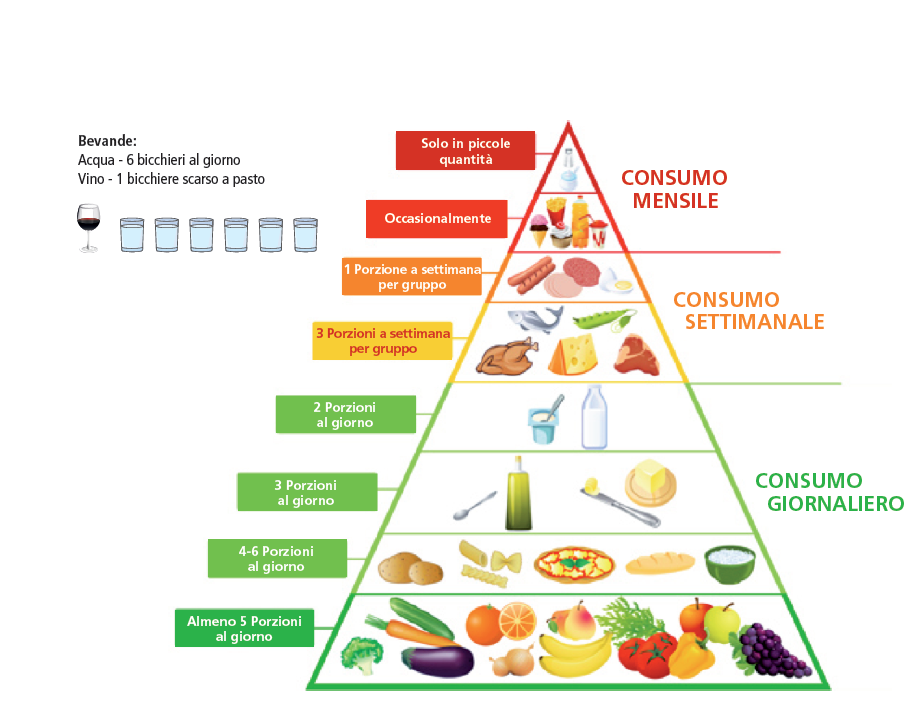
Go see what people are eating in real life. There are a lot of studies.
Americans eat way more meat, almost no fruits and vegetables, and a lot of carbs.
The point is that the food pyramid has absolutely no impact and pointing to it and making correlations with it is like doing astrology to explain why you broke your hand while playing basketball the other day.
Edit: you do a great job to illustrate how little anyone knows about these food guidelines.
It took you 17 years to even learn they’ve changed.
> It took you 17 years to even learn they’ve changed.
I gave an age range for a very specific reason: That's the age group this food pyramid was pushed hard on kids. I didn't know it changed because I was finishing gradeschool as the change happened.
You don't have to memorize and precisely follow it to have internalized generic things like "lots of carbs = good". They are supposed to be our bodies' main source of energy and there's really no way you can have too much (or so we were taught at the time).
There is heavy research on the usage of the ketogenic diet for the treatment of metabolic and mental illness.
I've written about my personal story here - https://www.feelingbuggy.com/p/finding-hope-after-decades-of...
Youtube Videos
https://youtu.be/PeqQd4_xveI?t=43
https://youtu.be/G0lTyhvOeJs?t=421
https://www.youtube.com/@metabolicmind
Books
As I have been following the ketogenic diet and wrote about it
https://www.feelingbuggy.com/p/finding-hope-after-decades-of...
https://www.feelingbuggy.com/p/my-journey-from-mental-health...
https://www.feelingbuggy.com/p/how-the-ketogenic-diet-helped...
I strictly maintain my weight. If I catch it going over over 155# (I'm a 5'10" 61 year3 old male) I'll do a strict cut. And I know that either strictly counting calores OR going to as close to zero carbs will have the same net effect.
But a person who has obesity or is overweight will not be able to follow a diet. They are just incapable of doing so, or will lie to themselves or other about it and claim it's their "metabolism" or a medical condition, etc.
Again, it was not a calorie restriction diet - it was a carb restriction diet.
> you do not need to follow a calories restriction.
Weight loss comes down to energy balance. People tend to consume fewer calories at the outset when going low-fat or low-carb (in large part because protein is afforded a higher fraction, and it is more satiating), but clearly that does not mean that you'll always have a caloric deficit. Eventually, you'll need to reduce intake to continue losing weight.
I see in other replies that you've had success in losing weight, and congratulations - but that doesn't mean it can work for everyone else.
I don't look at any kind of "pill solution" lightly, and absolutely think lifestyle changes should be made as well - but I can definitely see how medication like this can help get people on track and get back control. It's very encouraging to hear about psychological effects in terms of self-control, decision making etc. I'm just worried that we'll discover serious negative side-effects before too long, as with previous attempts.
Cutting carbs only helps to the extent you’ve reduced calorie intake.
People drop their calories too low, and then they take a cheat week after a year or so where they eat pasta, and suddenly they feel a lot better and they’re back to eating more calories and back to gaining weight, leading to yo-yo dieting, which may even be worse than just having a higher than healthy but static weight.
Friends doing it also had the same experience as I did.
Not saying it isn’t as advertised, but everyone on it I knew (n=14 or so) was getting results from fewer calories after we all decided to start carefully logging food intake.
It’s a great diet that works, but via other mechanisms for many vs ketosis.
It’s still a restriction diet that poses a lot of challenges for most to remain consistent with on a long term basis.
The next generation of drugs are including 2nd molecule...I'm blanking on the name, and a search isn't bringing it to me...which maintains or potentially increases muscle mass.
But curious what your experience with exercise has been.
I also didn't know there was a planned reduction in dosage, but the expectation is that you'll be on some type of GLP1 for life, is that not right?
My understanding of the literature is that there's nothing special about semaglutide or tirzepatide that promote muscle loss - it's just people who lose weight based purely on diet tend to also lose muscle mass. Even bodybuilders lose some muscle mass when cutting.
It's up to the individual to increase their protein intake and exercise, the same way they would in any caloric deficit.
But fat people actually frequently have quite a bit of lean body mass - it takes muscle to carry around all that weight, even if you're sedentary. If I somehow maintained the LBM shown in my DEXA scan at the start of tirzepatide, by the time I got to my goal weight, I'd be looking more jacked than when I was lifting 3 times a week.
Obviously, I won't. I'm adding more and more cardio and lifting back in as my weight is dropping and it becomes more maintainable for my joints, etc., and I've been supplementing protein since the start, and I'm sure I'll still lose plenty. But I have the room to lose A LOT and still be in the healthy range of body fat%.
The idea that caloric restriction is causing all this muscle loss is one of the dumbest ideas we currently have.
It is simply not true.
IFBB bodybuilders getting weekly DEXA scans and running multiple steroids including cycles specifically designed to help prevent muscle loss during cuts still lose muscle mass when losing weight for shows, despite taking every drug under the sun, working out an obscene amount, eating huge amounts of protein.
Your body will break down muscle when losing weight. You can do a lot to prevent the vast majority of it, but there is going to be some no matter what you do.
If you calorie restricted with the same exercise routine without the drug you’d see the same amount of lean muscle mass loss as you would taking the drug. This spreading of misinformation is actively harming people.
I've been on tirzepatide for just over a year now. Before that, I managed to lose 6% of my body weight over the previous year. With tirzepatide, I've lost an additional 17% of my body weight, for a total of 23% over two years.
Tirzepatide isn't a magic drug that just makes you lose weight, it simply makes it much easier to avoid overeating.
It makes the difference between being so hungry that I can't fall asleep and having the ability to just go to sleep.
I had this problem as well. Being on tirzepatide I went from 220 to 185 in just six months because my previous insatiable hunger went away. It feels so powerful now choosing when to eat or not.
Forgive my ignorance and curiosity, was the feeling of hunger due to drastic reduction in portion size? Could you not eat some low-calories filling food?
I ask cause I've been overweight and sometimes obese most of my adult life, but when on a diet I usually feel "unsatisfied" but rarely actually hungry, e.g. I can eat a couple carrots or whatever and hunger goes away, but I would still crave a hamburger.
Still, I'm happy for you that you found something that works!
While that was sometimes the case, it wasn't always so. Sometimes the feeling of hunger was almost random, and certainly stronger than it should have been. This was likely caused by insulin resistance.
When I got out of bed because I was too hungry to go to sleep I didn't always make great food choices. I'd tend to eat a 200-400 calorie 'snack', which felt like it wiped out any progress.
Now that I'm on tirzepatide I still feel hunger and cravings, but I suspect it's more in line with what regular people feel. Even if I haven't eaten much during the evening and am a little hungry at night, it's not the type of hunger that stops me from being able to get to sleep.
> Still, I'm happy for you that you found something that works!
Thanks!
I'm honestly in the category of people that have considered weight loss surgery, but I've seen enough problems from that that I've never really wanted to risk the associated problems.
From all the reading I've done it sounds like tirzepatide is almost as effective as weight loss surgery. And people are going to have a hard time convincing me that weight loss surgery is 'safer' than a GLP-1 injection.
1) “obesity” has no clear clinical definition, nor is it really a disease. [1] 2) there has been no evidence yet that weight is at all a primary determinant of health [2] 3) Weight loss drugs must be taken forever or it’s nearly certain you will gain the weight back [3]
There’s a lot of great research these days that shows fatness is not what people think it is, and weight stigma is far more harmful than being fat itself [4].
Also, nobody knows what happens yet if you take these drugs for 30 years, and what we do know is that being fat hasn’t been proven to kill anyone.
I'd just say follow the money.
[1] https://www.science.org/content/article/obesity-doesn-t-alwa... [2] https://withinhealth.com/learn/articles/why-body-weight-isnt... [3] https://www.bbc.com/future/article/20240521-what-happens-whe... [4] https://bmcmedicine.biomedcentral.com/articles/10.1186/s1291...
Did you try to reduce your cannabis consumption before using tirzepatide?
Because although you say(feel) like the realization made you reduce your intake, I can hardly imagine that you were totally oblivious to the fact that smoking cannabis is unhealthy in the first place.
Do you feel like you think less about e.g. cannabis, or do you feel like it's easier to say no to that impulse?
Does it seem to mainly influence health choices or are you also less likely to be angry or does it interact work place interactions?
I love your tactic about building healthy habits while you have some support and leaning on those to carry you through the future.
Good job!
As close as I’ve come to an effective remediation was living abroad where the food wasn’t actively adversarial: capitalism can do many good things but it drives the quality of food to “edible plus epsilon”. Rich people eat pasture-raised shit for a reason. For me it just deleted that problem.
But I’m interested in this class of medication because it’s difficult bordering on impractical to eat well in some regions. People say just cook, well, there’s an infrastructure around that which amounts to a declared bias against those who didn’t settle down young. Much like people who met their partner before partnering became monetized, “easy for you to say”.
I hope you have success in your journey either way, and the less meds involved on average probably better, but if it works and has no bad side effects I don’t see why one would stop. Welcome to your new awesome life!
Every SV power player I’ve ever met was enhancing themselves via chemicals. It’s not tweeted about (other than when Garry Tan threatens elected officials), but it’s a quiet norm.
For those of us old enough to remember what society looked like before the obesity epidemic kicked in, it’s hard to understand how something genetic can suddenly result in a dramatic change over a period of years. Our genetics didn’t change. Our food environment did. Experts disagree on what factors are responsible for this, and any random person had their own pet beliefs.
But this flat-earth-like notion of reducing obesity to an issue of basic willpower needs to be recognized for the drivel it is, along the related notion of calories in & calories out while ignoring the overwhelming role that basal metabolic burn plays and how it dynamically responds to changes in diet and exercise.
If you want to educate yourself, read Posner’s Burn [1], which is firmly grounded in empirical measurements of doubly labeled water to measure true metabolic consumption. Look up the reporting the NYT on past contestants of The Biggest Loser.[2]
[1] https://www.penguinrandomhouse.com/books/603894/burn-by-herm...
[2] https://www.nytimes.com/2016/05/02/health/biggest-loser-weig... (gift link)
Edit: Added links to sources.
You're the only one to bring up morality so far in this comment chain.
> Those of us who are fortunate enough to not struggle with obesity do so not because of some skillset that we have, but because our bodies do not maintain the same homeostasis.
That's just utter bullshit. Homeostasis is heavily influenced by lifestyle choices.
> But this flat-earth-like notion of reducing obesity to an issue of basic willpower needs to be recognized for the drivel it is,
No, your incessant need to convince yourself and everyone else that something as straightforward as controlling your calorie intake is in fact a complex and naturally intractable problem that requires drugs and counseling is what's flat-earth-like drivel and utter bullshit.
> If you want to educate yourself, read Posner’s Burn [1], which is firmly grounded in empirical measurements of doubly labeled water to measure true metabolic consumption.
You're cherry picking terrible studies that happen to fit the preconceived notions you desperately want to believe, because they make you feel better about being undisciplined and weak-willed. Your understanding of nutrition, exercise and health are also clearly very minimal.
All this to say, this drug has been life changing for me. I spend more time doing things I want to do, depression and anxiety have less of a hold on me now. I feel that this drug has allowed me to be the best version of myself I have been in a long time. The only side effects so far have been positive. I do worry about what I will do once it's time to titrate off the weekly dose and the best I can think of is that the habits I'm forming in the time on the drug I will have the resolve to continue after cessation.
I say this because I have battled depression, anxiety and obesity issues my entire life. I've had many failed attempts at getting back to a healthy, productive and non-obese lifestyle. I don't know what is so different about having the drug help me, but I can tell you that it has been different.