Alsr, the population is less educated and able to actually think critically about these issues than they used to be.
People aren't having conversations about the federal deficit? Where?
Being pedantic about which particular conversation is or isn’t happening where and by how many people is counter-productive and only serves to exhaust everyone and exacerbate the issue.
I'm arguing there is no conspiracy. It would be lovely if rich people were running the government. But the reason we're seeing chaos is because there are fundamental interests attached to each of those major spending lines that have wide voter support (and antagonism).
In congress, it’s very much a rich persons club.
Maybe this is how it’s always been, but it feels even more obvious and extreme today.
That doesn't mean they're coordinated. Particularly not on matters of deficit reduction, let alone controlling the national conversation around it. Saying the conversation around the deficit is being suppressed is more a statement of ignorance than anything happening in reality.
And they enrich themselves even more while there. Insider trading is illegal? Everywhere except in Congress!
This is usually the correct view to take, but in this case I'd disagree. Hot button political topics are easy "conspiracies." Political parties are groups that get together and decide what to talk about. They pass around memos with talking points to their members. They often focus on problems that are divisive but either unlikely to happen or unlikely to affect much if they do. It's not too keep the little man down, but to win elections and avoid making hard decisions with unclear consequences.
Consider transexual rights. Very divisive, but transexuals are a tiny minority. Transexual voters won't be deciding elections, so it's "safe" to bash or advocate for them. Another topic I believe had been seen as "safely impossible" was pro-life stances. Because abortion rights had been asserted through the Supreme Court and based on a Constitutional right, politicians felt safe to rail against it. They never thought they could do anything short of a constitutional amendment. Republicans were thrown for a loop when the SCOTUS reversed the decision, and the "red wave" of 2022 was much smaller than anticipated.
If you don't believe me, open a new X account, navigate to the "for me" page and count the number of left-leaning tweets. The expected number is zero.
This is about as relevant as when Twitter was a cesspool of far-left nonsense. Twitter and X aren't the real world. They influence it. But what people are talking about there has about as much correlation with policy and politics as what your neighbourhood housecats might be yapping about.
Just not far right enough. So, stop with this nonsense. Right has to be either go out of their way to harass peoppe or post swastikas to be removed.
Also, studies proved that conservatism was always the favored ideology by the algorithm. Republicans just like to claim they're being censored and play the victim.
It's ironic how often people criticise the lack of critical thinking in higher education while simultaneously not bothering to examine the hypothesis.
Cognitive development is associated with critical thinking [1], and the "number of years of formal education completed by individuals is positively correlated with their cognitive function throughout adulthood and predicts lower risk of dementia late in life" [2].
So yes, voters with educational credentials are more likely to be better critical thinkers as well, as a bonus, not suffering dementia in their later-voting years. (Whether this is a selection effect or product of education is unclear. And it doesn't suggest everyone in academia is an excellent critical thinker.)
It may be true that there's some A-C relationsip, but having two separate studies for A-B and B-C does not prove there's any A-C relationship.
> So yes, voters with educational credentials are more likely to be better critical thinkers as well
Not based on your argument, no.
You're making a claim about the world. The evidence points in the opposite direction. If you have a problem with cognitive function relating to critical thinking, put forward some evidence about it. Because the link between those seems much more intuitive than your unsubstantiated hypothesis.
B-C - cognitive function/critical thinking
I don't have problem with either. But you're claiming A-C(education/critical thinking relationship) based on the above two without any justification other than your intuition.
B is not even the same thing in the two studies you mentioned. One uses "Lawson CTSR" measure secifically, the other uses nothing in particular, it's just a summary of research in which you didn't point to anything in particular. When it uses something it measures cognitive decline (which is not the same thing as the cognitive development measure in the first study, it's difference between two measures of cognitive development at different times).
Even the example table in the study pretty nicely disproves what you're claiming:
https://pmc.ncbi.nlm.nih.gov/articles/PMC7425377/table/table...
Someone with 22 years of education has cognitive performance of 10 while someone with 10 years has performance of 15 at the same age in that table. Lower educated just decline faster over time, but are still "smarter" in the end.
You also cite no numbers for correlations. So if A-B has correlation 0.2 B-C has correlation 0.3, A-C will have correlation 0.06 in general, which is nothing that proves A-C has any meaningful relationship.
Again, I'm not saying there's no A-C relationship. If there is it just needs to be studied directly. Pointing to two random studies proves absolutely nothing.
Note I didn't criticize either group that voted for or against POTUS. That's another discussion.
I'm not contesting that people should be more engaged, but the "back in the olden days, everyone thought about things better and more than now" doesn't seem backed by data. Hell, 100 years ago we'd only just barely allowed women to vote.
I mean, any actor—including state adversaries—can essentially run military-grade psyops on our population. In a "stable" environment, an inability to think critically is somewhat buffered and fallout is limited. But, in a hostile information space—intent on manipulating subjects for the destruction of their society—it's catastrophic.
There's a lot of well-preserved documents, debates, and critical discussions from those periods, but most of those are preserved because they were among elites in the academy or political spheres.
I find it hard to believe the average person in 1925 was more informed or even able to think critically about national and international politics than someone today. It certainly wasn't as if there weren't powerful people who controlled most of the news and communications back then either.
So, the effects of our citizens not being able to reason effectively are more impactful/destructive.
You mentioned that 100 years ago, there was one source of news. This underscores my point. Sure, that's not ideal, but even pernicious effects were somewhat self-limiting versus a frequently hostile, 24/7 technology-fueled infospace, featuring hostile actors—known and unknown—who are out to destroy the fabric of our society.
On top of that social media has put people in echo chambers and force fed them outrage content. People who are outraged and surrounded by peers who are also outraged are less likely to think critically.
I personally think that the replacement of newspapers that invite critical thinking by yellow journalism and social media has had a more significant effect on critical thinking than the drop in education quality.
A world where underperforming people are just pushed out of the path of ever attending high school or college, like some of my friends's parents were, may lead to higher statistical education outcomes for high school education while still being worse for the country at large than having those students attend high school even if they don't make amazing grades.
You bring up "the replacement of newspapers that invite critical thinking by yellow journalism" as if the term Yellow Journalism wasn't literally used to critique one of the major US newspapers over a century ago. Sensationalism and rabblerousing is, if anything, the normal state of news dating back centuries!
Those are fair questions that I don't have the answers to. I share your suspicion that a larger number of people have received a high school education and that in absolute terms more people are educated than ever. That is why I do not think it is the reason why there's been a decline in critical thinking.
> You bring up "the replacement of newspapers that invite critical thinking by yellow journalism" as if the term Yellow Journalism wasn't literally used to critique one of the major US newspapers over a century ago.
Correct, and it seems we have regressed back to those days. I do believe the post-war period was an enlightened era in journalism where the press went from a vehicle for propaganda to an independent institution.
You don't need a conspiracy theory to explain why cutting benefits to old people is politically toxic.
Global health insurance plans usually come in two flavors:
1. Global coverage
2. Global coverage excluding United States (for half the monthly premium of the first plan)
The United States in an extreme outlier in terms of cost. This is separate from rationing care. This is separate from even population health (ex. higher obesity rates)
His premiums at that time for professional negligence were $1m per year. He would have to keep paying those premiums for 18 years after his retirement.
Same for every obstetrician.
Professional fees then must be set to cover those insurance premiums.
Has that changed for the better in the USA? Seems very unlikely to be the same in Europe.
Obstetrics is obviously a illustrative case. How are the professional negligence premiums across the other specialties?
Why does the effect of the US legal system never seem to come up much in the “US healthcare is insanely expensive” discussion? Is the effect of it really not significant?
So insurance costs may be a factor, but its doubtful that its a large factor in healthcare costs, they largest factor is by far the public vs private system.
I experienced US healthcare when I went to visit a doctor in the US for a simple (obvious) ear infection. I was charged $600 USD for a five minute consult because the doctor wanted to milk as much $$$ from me as he could, giving me lots of unrelated/pointless blood tests (which were pointless because I was flying out the next day and wouldn't get the results).
In Australia it would have been a $65 fee paid by the government, and $10 for the antibiotics, around 1/10th of the US costs.
The problem in the US is that doctors and hospitals are incentivised to give patients unnecessary tests and medication, because it inflates their bills, and they make more profit.
I've noticed the same thing happening in Australia with private vets & vet hospitals because they are less regulated. They try and talk you into a lot of unnecessary procedures, test, and drugs because they make more profit, and the industry is not where near as well regulated as healthcare.
At least with a vet you can usually shop around, when you are sick often you cannot.
You’re right about what happened, but not for the wholly right reasons. The hospital charged you so much because they have to also negotiate prices with insurance companies (health insurance companies are just for-profit government agencies, they don’t actually serve a market value today) and pay for those who are uninsured. There are for-profit healthcare systems of course, but that’s only part of the story.
If the cost of the doctor’s time and the medication was $100, they can now cover let’s say 3 uninsured people for $300 each then take the other $300 you paid and book that against someone going bankrupt or a difference in negotiated cost with the insurance agency.
In America we have privatized profit for the insurance companies and socialized loss. They deny a claim, book a profit, the person with the claim doesn’t get treatment, then can’t work, then needs care, and society pays for it.
Purely from a cost perspective we should just go to single payer, but we won’t do that because who is going to the the politician that causes 10s of thousands in job losses of highly paid white collar professionals?
I had a nasty ear-infection, could hardly walk, and was in no state to argue, but the nurse gave me dozens of what they said were completely "normal procedure" blood tests from their in-house lab, which the doctor would have profited from directly. I told them I was leaving the next day and wouldn't get any results if they took a day, but they ignored and persisted.
I looked at the bill later and they were for loads and loads of completely unrelated conditions, diabetes, HIV, etc... a useless waste.
It was price gouging from the doctor directly pure and simple, no insurance providers involved, but I'm sure that normally that also adds an extra layer of silly costs.
In Australia its carefully regulated what a doctor can charge, and its a different company that does any tests, or gives out medication, the doctor or company can't profit directly from sending patients off for more testing, or for prescribing medication.
So to claim in 2004 that there are doctors paying > $1m/year in malpractice insurance is at least an order of magnitude away from what casual googling discloses.
I agree that the whole system is fucked, but I would like to make sure we are working on a solid set of base facts.
I found this article [0] from the NYTimes in 2005 that highlighted a neurosurgeon who was paying >$200k/year in malpractice premiums around that time
[0] https://www.nytimes.com/2005/02/22/business/behind-those-med...
OBGYN is not an illustrative case, it's an outlier.
> How are the professional negligence premiums across the other specialties?
The malpractice insurance is about 1-3% of the cost. The physician and nurse salaries are about 15% of the cost in total.
The majority of expense goes towards prescription drugs, devices, and for the admin costs.
It hasn't had much impact on costs:
https://healtheconomicsreview.biomedcentral.com/articles/10....
Also over the last 20 years physicians groups have mostly been bought up by private equity, so any actual savings just gets vacuumed up as their profit.
https://www.google.com/search?q=obstetrics+salary
https://www.google.com/search?q=obstetrics+individual+malpra...
Are you sure? People comparing US healthcare costs to European costs don't realize that these are two very different products. The US population is much more unhealthy, yet it has about the same life expectancy as an average European country. This would suggest that Americans actually have access to significantly more healthcare services than Europeans do.
I think a lot of people assume that some of this stuff is linear when it actually seems to be exponential (or super-exponential) in cost. The median American spends half of their lifetime medical bills in their last year of life. That's a lot of money for not a lot of time. Incidentally, American doctors also tend to spend a lot less in this period, indicating that they have a much more healthy relationship with at least one of health or death.
I haven't been particularly convinced, looking at the healthcare systems across the pond, that they are providing anywhere near the same level of service that you get from the ultra-expensive US healthcare system. They are somewhat more optimized for efficiency and the US healthcare system is much more optimized for outcomes - partly because Americans are so litigious and IMO partly because the patient is the customer. That doesn't lead to low costs.
And while they aren't giving the same service, there isn't much evidence the service is necessarily worse. More healthcare doesn't necessarily lead to better outcomes, it's not uncommon for more liberal treatment guidelines to only improve through statistical errors or to lead to compensatory idiopathic illness.
This is systematically incentivized in the US, where both the doctors (obviously) will be paid more for more/worse care, but also the insurers which have to follow the 80/20 or 85/15 rules and are therefore incentivized to increase costs to increase total profits, especially in places where they have little competition, or agreements with hospital systems to pay a similar amount to other insurers.
Additionally, the spurious nature of claims in the US system wastes massive amounts of resources where insurers (with their 15-20% of premiums) but also practitioners (sometimes even over 20%) spend their time just haggling over approvals instead of using a clear and deterministic system, which also causes knock-on consequences later.
I think it's clear that there's significant waste in terms of advertising, haggling with each other, etc. that you don't get in a universal healthcare system. However, there is also waste in universal healthcare systems around the cost of the bureaucracy to manage the leviathan.
In fact, given the BMI and age of the average mother, it's a wonder that American births are as successful as they are.
Noone can be an expert in everything so everybody needs to fall back to authorities to advise or act in unknown fields. Blaming it on habits is like saying "why did you choose the doctor that botched the surgery?"
Not quite. Let's take, for the sake of quantification, the life expectancy of a developed western European country: France. Considered poor when compared to American wages, it has health care system of average quality when compared to its neighbours. (So this could be done with any other west European country)
2023 life expectancy: 83.5 years.
2023 life expectancy USA: 79.3 years. Which is the same life expectancy as France in 2000/2001.
> They are somewhat more optimized for efficiency and the US healthcare system is much more optimized for outcomes - partly because Americans are so litigious
So by having the "customer" die early the system ensures that they can't be sued..?
They charged $194,000. Insurance claims they paid $193,781. Of that, it was $7300 a day for staying in the ICU. My ambulance ride was $2500 for an 11 minute trip where one guy listened to my lungs and took my blood pressure. I had a palliative care doctor who met with me for 1.5 hours during my entire stay. She charged me $1K per hour.
When you consider that the PE firm that owns her group skimmed half of that off the top, if she met with you for 1.5 hours, she spent at least twice that time thinking about you, ordering meds, completing notes, and answering questions from the rest of the team caring for you, she probably made about $250 an hour or less.
Then consider that she accepted liability for you. Which includes the possibility that if you had a bad outcome your family could sue her for more than the total payout of her malpractice insurance, so she could literally lose her house.
And palliative care requires a fellowship so she has 12 years of total training with probably $200k-$400 in student loans. And she didn’t start making any serious money until her 30s. Then factor in that she’s on call constantly and frequently works terrible hours and she pays thousands a year in certification fees, and continuous education (plus in most cases hundreds of unpaid hours a year training residents and med student, sitting on advisory boards, or other unpaid expected service work).
I think $250 an hour is pretty fair.
I didn't pay $250 an hour. I paid a thousand an hour. You don't get to arbitrarily eliminate money because it didn't go directly to her. It still got paid.
If she really didn’t change anything about your treatment (as opposed to you just not knowing what was changed), the most likely explanation is that the ICU ordered a consult, and after talking with you and your doctor, and going over your notes, she came to conclusion “nope there’s nothing to change here. good job everyone!”
Would you have preferred that she’d made a few unnecessary changes to justify the bill?
Palliative care requires fellowship training, the doctors burn out quickly, and there’s a shortage of them. There’s no reason for a hospital to waste them on record taking.
>a thousand an hour
You didn’t pay $1k an hour. You paid $1500 for services that included 1.5 hours of direct interaction. I guarantee if she talked to you for 1.5 hours, she spent much more time than that.
As for eliminating money that didn’t go to her. You said “she charged you”. She didn’t charge you. Her group did. She was called in, did her job, documented what she did, and her group figured out what to bill you for based mostly on what insurance companies are willing to pay.
If you think you were charged too much, you can blame the PE firm that owns her group.
And so are the salaries.
>And so are the salaries.
The original estimate was off by at least a factor of ten, so alas your comeback falls apart.
[1] https://randomcriticalanalysis.com/why-conventional-wisdom-o...
When you have the state as a single payer then all those expenses just vanishes.
The difference is that in these systems the government has some stake — whether it’s providing the public insurance fund, or owning the company itself — so that the government is financially incentivized to reduce costs.
In the US case everything is private so all parties are incentivized to increase costs as much as possible.
We really should to copy the Bismarck model. Public owned “public fund”, heavily regulated private insurance and care.
Wrong.
"I̶n̶ 2̶0̶2̶3̶ a̶l̶o̶n̶e̶, t̶h̶e̶ f̶o̶u̶r̶ b̶i̶g̶g̶e̶s̶t̶ i̶n̶s̶u̶r̶a̶n̶c̶e̶ c̶o̶m̶p̶a̶n̶i̶e̶s̶ i̶n̶ t̶h̶e̶ U̶.S̶. p̶a̶i̶d̶ a̶ t̶o̶t̶a̶l̶ o̶f̶ $̶3̶.7̶ b̶i̶l̶l̶i̶o̶n̶ t̶o̶ g̶e̶t̶ t̶h̶e̶i̶r̶ n̶a̶m̶e̶s̶ o̶n̶ y̶o̶u̶r̶ s̶c̶r̶e̶e̶n̶s̶" [1] (EDIT: It's less than $30bn [3].) out of $1.5 trillion of premiums collected [2].
[1] https://www.bankrate.com/insurance/car/insurance-advertising...
[2] https://www.cms.gov/files/document/highlights.pdf
[3] https://www.emarketer.com/content/us-healthcare-pharma-ad-sp...
2. I misspoke and meant "marketing" broadly, not ads in particular. This all fits under administrative overhead which is one of the major sources of inefficiency between private health plans in the US compared to Medicare/Medicaid.
Do you have a figure for this?
They are both insurance programs.
Aside from variations in fraud detection efforts (which Medicare/Medicaid should do more of), what justifies such a gap?
It's various methods by which they grow and retain market share, which Medicare/Medicaid don't need to do.
This doesn't say the difference is in marketing.
I have no idea what the actual solution should be, though.
I don't know. I remember reading an MIT PhD thesis describing how Kaiser Permanente does autism diagnosis [0] – and comparing it to my personal experience of the same topic in Australia, it seemed significantly more rigorous – e.g. specialist centres that only do autism diagnosis, using the multidisciplinary team diagnosis model instead of the single clinician diagnosis model, use of research reliable examiners for ADOS (the training and validation process required to use ADOS in research settings is much more intensive than that required to use it clinically), etc. Now, the thesis does acknowledge that Kaiser is somewhat of an outlier in this regard compared to the US average (plus it is 10 years old so now so I don't know how things have evolved since), but I still get the impression that this highly rigorous approach to autism diagnosis is much more of a thing in the US than in Australia – and if that's true of autism, maybe it is true of other conditions as well.
[0] https://dspace.mit.edu/handle/1721.1/90070 – the first half of the thesis uses the pseudonym "Allied Health", but I know from other sources that "Allied"=Kaiser; the second half discusses Kaiser without any pseudonym
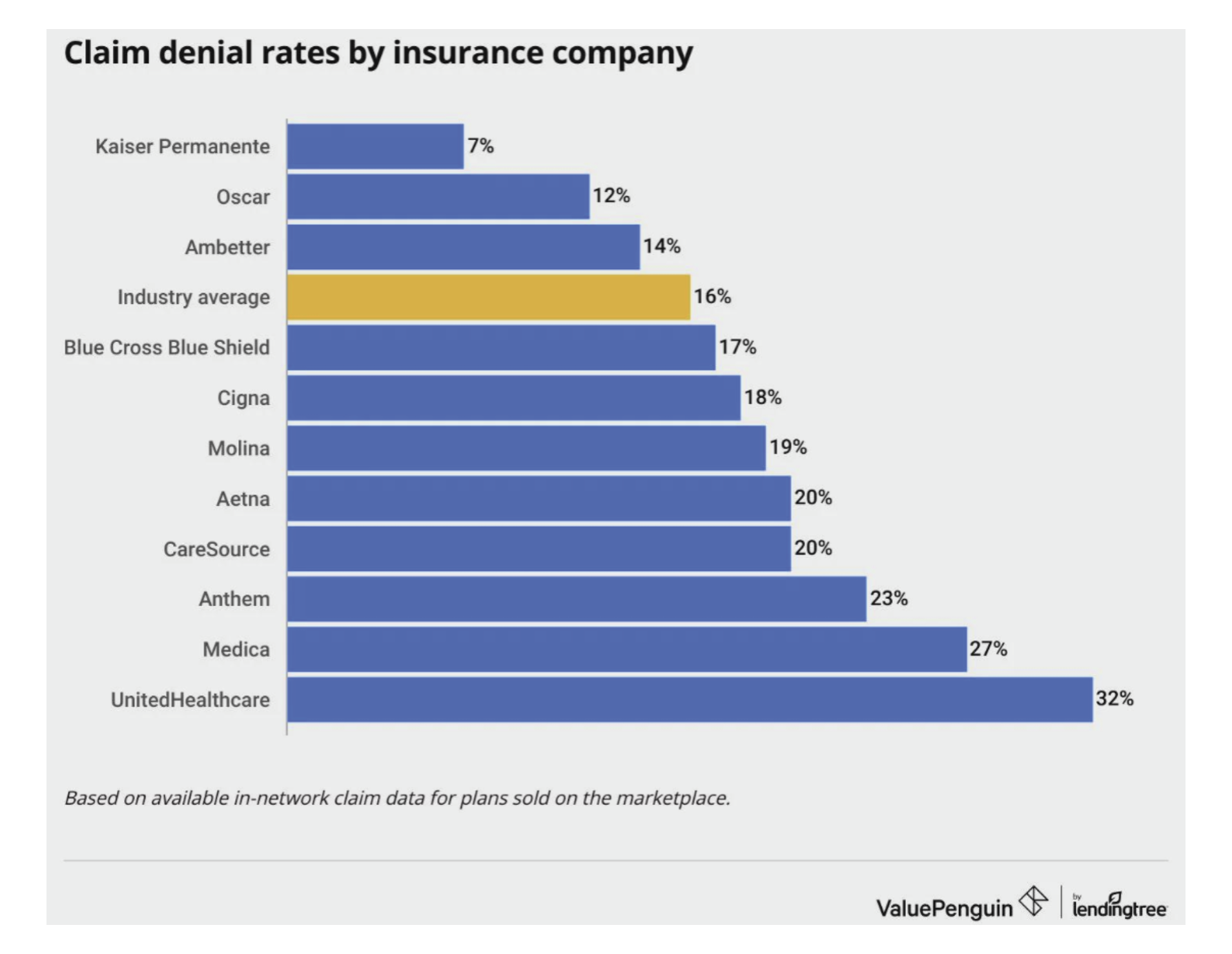
If you live in an area served by Kaiser and don’t have a very specific health reason to choose a different provider, I highly recommend them. They might not be able to treat that rare and aggressive cancer as well as the Mayo Clinic, but because it’s whole-life care, you’re more likely to find the cancer early.
Edit: Question. Can Mayo expand to cover everyone in Florida? Or is their advantage in hiring the best of the best? What makes their model better than Kaiser?
I have my doubts. Over the last 50 years the ratio of US per capita health care costs and European per capita health care costs (or per capita health care costs for most of the rest of first world countries) has stayed about the same.
In other words, health care costs have risen at about the same rate throughout the first world over the last 50 years. So if in 1970 the US was paying say 3x per capita what some other country paid the US would still now be paying about 3x what they are now paying. Both would be paying maybe 35x now than they were in 1970.
Over that same time both US and European obesity rates went up, but they went up way more in the US. If obesity was a major factor driving health care costs then I'd expect US health care costs to be rising significantly faster than European health care costs.
A number of gene therapies are to expensive for any public health system, so are only available in the us.
Needles to say they're experimental and carry lots of weight in a effectiveness vs cost analysis.
I had almost identical cases of cellulitis, one in the US and one in the UK. In the UK, I opted for private hospitalization in one of the fancier hospitals in London. The care was noticeably superior in the UK hospital. The attending doctor was available for a case summary on a few minutes notice, the sterilization and cleaning of the room was vastly better and the nursing staff could recite my case notes and recent test results and vitals at any time. None of these applied for the US hospital.
The bill in the UK was about half what it was in the US and the walk-in price in the US if I hadn't had local insurance would have been nearly double the price I did pay.
The kicker was that the UK hospital was run by HCA, an American corporation.
The ACA that we got instead cemented the separation of people from the price of their service and costs have ballooned even more than that were previously.
The economic approach is the only real way to fix things long term.
Before you conclude that the free market can solve everything, consider too that health care isn’t a typical service that follows ia supply/demand curve. The demand curve is practically vertical, especially when your life is on the line. You’re not going to shop around when your appendix is about to burst. Plus there are still high base costs, and scarcity (artificial or otherwise) of healthcare resources. And the monopolies granted to medical device and drug makers through the patent system keep prices high so the patentees can recoup their investments.
There is no easy way to solve this problem, despite breathless claims to the contrary that have been plaguing our airwaves since the 1980s.
That said, single payer has problems, too, which is why few countries use it in its purest form. Everyone gets a “floor” of coverage, which is a good thing, but people also hate waiting long periods for treatments and the inability to choose a specific care provider. Britons love NHS, but they hate it, too.
You can’t go single payer in the US without actually destroying the entire insurance industry overnight and because of that, there’s no way to transition to it smoothly. The HSA plan does both.
Mark Cuban’s cost plus drugs is proving this in pharma right now.
If they give you pricing that in any way contradicts what they tell the any of the insurance companies they are charging, then the practice can get themselves in hot water with the insurance company.
Are you going to shop around different pathology labs when they snip a bit out of your colon during a colonoscopy where you are under general anesthesia? Are you going to be googling for reviews of different neurologists when you get taken to the emergency room with a bad concussion or a stroke?
I don't think so.
So how is your market-driven medical system going to work? This isn't like picking a restaurant.
All of the lower cost, non-emergent services would get the benefit of you shopping around.
You’d also need to be able to select your own insurance provider directly (pretax) rather than being stuck with whoever your employer selected.
In the current situation your employer selects your provider, your medical service providers have to deal with that provider whether they want to or not. You and your medical service provider were both removed from the decision of whether your insurance company was a good choice or not.
The HSA plan puts everyone back in direct contact with their providers and allows market forces to work naturally again.
It’s the only proposal that has a prayer of fixing things.
https://www.presidency.ucsb.edu/documents/carson-campaign-pr...
1) It kinda doesn't matter if it was caused by the pandemic or not, what matters is it needs to be fixed. Cherry-picking "since the 1970s" keeps us in difficult times energy-wise which we've attempted to correct for with more spending. If you go further back, our current ratio is what it was during WWII. Do you currently see federal government production as similar to during WWII, or are we not getting value out of what we're spending?
2) Assuming we all agree with those percentages, there's still an obvious 9% to look into. At these levels, that's real money. Also, certain initiatives are way more destructive than the spending would suggest, e.g. just about everything found out about USAID impacts hearts and minds, which impacts further negatively productive efforts outside the federal government.
3) Of course healthcare is on the list. Single-payer systems have their problems, free market systems have their problems, our current hybrid gets the worst of both. So it needs to be addressed, but perhaps not "first" because the answer here is a total rework, whereas there's plenty of other savings available right now as low hanging fruit.
4) Corporations do not pay corporate tax, their customers and employees do. Why should we burden our productive populous with tax on their income, tax on their workplace before they even get paid, inflation due to government spending, etc? If the argument is that tariffs are passed on to the customer, then corporate tax is definitely passed on to the customer and the employee. Additionally, corporations are not currently benefiting from a healthy workforce (look around), or an educated workforce (steady decline since the DoE was established), or a safe environment (go to SF), or a working transportation system in many cases. Again, are we getting what we're paying for?
1. The claim that spending / GDP is at WWII levels is simply wrong: please take a look at the link in my original comment.
2. 9% isn't nothing, agreed. It does, however, pay for: scientific and other research (mostly medical, then much smaller slice for general science, then a much much smaller slice for everything else); keeping national parks running smoothly; keeping planes in the air; shutting down financial scams; and other wonderful things like that. Like you said, it comes down to what we get for that spending. I think there's bound to be some waste here and there, but I rather like all these things our tax dollars are paying for. Oh, and funny you mention USAID - I rather like the idea of feeding starving children around the world too, with a triple whammy of moral impact, winning hearts and minds in other countries, and putting money into the pockets of US farmers. Would love to hear properly sourced arguments on why USAID is as terrible as you seem to think it is.
4. You forgot about the shareholders. Corporations mostly get taxed on profits, not revenues, so it's hard to see how consumers are part of the equation. (We're not talking about consumption taxes, which tend to be state level anyway.) And employees pay income tax - the only part that the corporation covers is the employer end of payroll taxes. Wikipedia has a nice breakdown and comparison: https://en.wikipedia.org/wiki/Payroll_tax
(Yay, thanks to whoever saved the parent post so my thumb exercise wasn't entirely wasted.)
2) USAID has nothing to do with humanitarian efforts. It is not "aid", it is Agency for International Development. Specifically developing "capabilities" in those foreign countries, with "capabilities" being defined as things our intelligence and defense departments can use for their missions. It's not humanitarian. It's international manipulation, with a heaping side of money laundering. Seriously, it's horrible.
4) Employer end of payroll taxes is a thing. Tax on profit is a tax on the customer. Companies would not exist if they are not profitable; they protect profits harder than they protect anything else. Therefore additional costs, including taxes, are passed on to the customer, even if it's indirectly.
I can answer this one: Corporations come with a veil, to shield risk takers from financial liability and ruin.
That’s normally good, as we want to encourage business.
But the corporate veil was never intended as free pass to break or subvert the law; nor to undermine national interests.
It’s both the corporate veil and the sheer size of some multi-state and multinational companies: It takes considerable resources to police.
A single multinational has the resources to undermine any state, with lawyers to delay; and lobbyists to influence legislators against their constituents interests. This undermines government credibility and rule of law.
Look at the broadband fiber fiasco: https://arstechnica.com/tech-policy/2020/11/verizon-wiring-u...
Or the garbage tier right to repair law, written up by the NY lobbyists: https://www.theverge.com/2022/12/29/23530733/right-to-repair...
You say corporations are very productive, but these hidden costs are being born by everyone including the consumer.
This why limited-liability businesses are expected to pay more: It takes a lot of money to provide necessary oversight.
The Chicago school Republicans were responsible for dismantling and starving the institutions meant to enforce these laws; then every Republican did their part to help install judges hostile to said laws. This has been going on for 40 or more years.
The MAGA conservatives are actively allied with these pro-monopoly conservatives, willfully blind, and instead just blame “the other side”.
I agree bi-partisan work is needed here, but pretending this will happen when one party is actively undermining the effort is bad-faith smoke-and-mirrors.
Unless, of course, we take the dictatorship route and ignore rule-of-law and checks-and-balances… (for the record, which I’m very much opposed to).
I agree that republicans, probably more than democrats, like to hide behind "free market" to protect their donors from anti-trust, but it's certainly a both-sides problem. I do believe MAGA conservatives are less aligned with traditional republicans / neocons than most believe, as evidenced by the fractures within the GOP over the past three election cycles. But overall I do think you and I are on the same page.
After. Corporate taxes are paid on income, not revenue. Income is what's left after paying employees.
Corporations get more productive by having fewer employees or paying them less. That's not a bad thing, it's what's supposed to happen in a competitive market with technological progress. But it also means tax revenue will shrink unless taxes on workers increase. I don't see how that's better.
A simple/common form of this subversion is giving the c-suite ungodly salaries such that there are no profits, on the books at least, to be taxed. In that case, and basically all others, the customer is paying the corporate tax because the corporation has shifted all burdens (including tax) away from the protected profit.
A simple/common form of this subversion is giving the c-suite ungodly salaries such that there are no profits, on the books at least, to be taxed. In that case, and basically all others, the customer is paying the corporate tax because the corporation has shifted all burdens (including tax) away from the protected profit.
In a world you imagine where there are 0 taxes on corporations, how do you punish said corporation for malicious behavior or actions? Because by similar logic, any monetary punishment is useless and results in them simply passing it down. Do you punish the people working there? Who do you choose to punish, especially if the people responsible are gone and dead?
I never imagined a world where there were 0 taxes on corporations. I just said that corporate tax is effectively an individual tax because it never comes out of profit.
You then argue that monetary punishments must behave the same way. They do. Any cost to the company, even when it is monetary or some court judgement, is passed on to the consumer (or the worker, in the form of lower compensation). When was the last time you heard of a monetary fee or judgement causing a company to shut down?
Every company in existence pays corporate insurance specifically to pay out if they have a judgement against them. That insurance premium does not come out of profit. It's a cost, that's passed on to the customer, exactly like any other cost. Profit is always protected.
Corporations pay tax on their profits not, revenue. Employees have already been paid and customers have already bought before these taxes are levied. (The first bit is of course more complicated; for example, salaries paid for R&D don't always count as a deductible business expense.)
The market price is the market price. If corporations could raise prices further (even without new taxes) without losing customers, they would. If corporations end up being taxed more, raising prices in order to "pass on" those taxes will just cause them to lose customers, and end up with lower revenue (and likely profit too), perhaps even more than if they just sucked it up, paid their taxes, and left prices alone.
> If the argument is that tariffs are passed on to the customer, then corporate tax is definitely passed on to the customer and the employee
No, because they're not the same thing. Taxes, as I said, are applied only to profits. Tariffs are essentially in increase in COGS. They more or less require corporations to increase prices, with the expectation that sales will decrease. (They can also choose not to raise prices, and live with lower profits, if they have the margin to do so.) And this is the actual point of tariffs: to get people to buy less of that particular good, and presumably buy more of a similar locally-produced good. (The problem, of course, is when the locally-produced good already has a higher price, so everyone either has to pay more, or do without.)
I agree with part of this. Corporations will raise prices to make more profit whenever there is opportunity to. They exist to make profit, so they will do anything to do that. I also agree that in theory, a small tax increase on one corporation may make them want to take a profit hit versus a customer size hit. However-
- if all the corporations are all paying the same taxes (which hopefully is how it works), they are all able to raise the market price to cover it. They won't have competition - with lower expenses - to lose customer to. The only lost customer will be the one who simply can no longer afford their product.
- Second, as mentioned in other branches, corporations will do anything to protect and increase profit, including finding loopholes, paying the c-suite insane salaries, accounting for asset purchases and depreciations in ways to reduce the on-paper profit, etc. The more the company does this, the more the corporate tax burden becomes a normal cost of goods expense, which is passed on to the customer and the employees (in the form of worse compensation).
That might not be the best metric. Sure it's only "~13%" higher than the running average, but in that 55 year period only 4 years (2008, 2020,2021,2022) had a higher spending to GDP ratio than 2024. Also those years all had ZIRP
Ok, Zero Interest Rate Policy
1. Thank you for linking that graph, it seems to show that our spending is 25% higher than it was in the 1970s as a % of GDP (23 vs 18). But our level of _debt_ is approx 375% higher (as a % of GDP) than it was in the 70s (120% now vs 32% then). That doesn't sound like we are sustaining it well, and tht interest is compounding as we borrow to pay it.
2. The underlying assumption that makes this argument compelling is that every dollar being spent on these noble categories is being done efficiently. What if fixing healthcare costs cut them in half for the same effect? What if there is fraud to cut in the programs for the elderly? We should tighten these and prepare to pay more as we age.
3. Strongly agree and hope to see some action. It seems that fixing the incentives and inefficiencies of the healthcare system is the core mission of RFK Jr., despite all the vaccine FUD.
4. Strongly agree. I wonder if a VAT would be effective for this.
EDIT: The response was saved from the dead, yay
Edit: I didn't flag it, to be clear.
In many ways I love the US and its citizens, highly diverse and fascinating folks that you are, but recent events have been crushing that view. Us Europeans have always felt our differences but also an acknowledgement that we are essentially “on the same side”. DOGE’s apparent violation of the constitution has eroded that bond, as America turns away from democracy.
I understand the anger that fuels Trump voters, but it is a misdirected anger and I hope that America can recover its path and also reform itself to address the genuine concerns of trump supporters.
HN mods (or perhaps pg) have said in the past that "I disagree" is a perfectly reasonable use of the downvote button.
I guess I don't really think we can have fundamentally similar views on what it means to be "in control" of something, because I don't think something can be "out of control" for 100 years.
But, if you want to go back to pre-1913 levels of federal spending, you must mean to significantly cut or eliminate all federal entitlements?
If that is your view, do you think you're representative of others that would argue that federal spending is "out of control"? Do you think it would be fair of me to assume that most people who think federal spending is "out of control" also want to significantly cut or eliminate social security/medicare/medicaid? Or do you think your views are an outlier among those that think federal spending is "out of control"?
Generally if 50,then at least 90.
To be fair, though, my original question was in response to someone saying that "many people who would say spending is out of control now, would say it was out of control in the 1970s".
I guess I'd love to get some kind of intuitive sense for what fraction of people who think spending is out of control _today_, would think it was out of control in the 1970s, and what fraction would think it was out of control in the 1930s.
Honestly, my naive my assumption is the number of people who would think spending has been out of control since the 1930s, and want to totally eliminate things like social security and medicare completely is small enough to be politically ignored. I could be wrong about that, though (I get the feeling that _most_ of the political actors who are aiming for this goal have decided to lie about their intentions, because it's such a politically toxic position to take today; but that makes it hard for me to get a sense of how many of those actors there are).
But, then I'd assume that the number that have thought it "out of control" since the 1970s would be a higher fraction (I would've guessed maybe...30% or 40% of the people who think it's out of control today). I would've assumed that a decent chunk of people thinking spending is out of control today, would've at least looked back favorably on the Clinton era deficit elimination and mild surpluses.
Anyway, I guess my point is, I have no idea how many people would hold to each of these positions, but I'm quite curious about each since it seems like my naive assumptions don't really line up well with how you think the distribution would be. And since you hold those beliefs, I think you probably have a better intuition about those belief distributions.
I don't understand this question: how can the private companies in the industry be placed on the chopping block? By outlawing them?
So that's what I'd like to see happen.
There are also outlier issues like being unvaccinated and unhealthy-lifestyles that tax payers are forced to pay for.
I highly doubt DOGE is actually targeting these types of fraud, however.
2. Reduce defense overall and make the process of getting money to the needy more efficient.
3. No comment. Healthcare is mess.
4. Taxes on corporations, like tariffs, are just passed onto consumers. I'm in favor of tax reform, but thinking that taxing corporations is a way to stick it to rich people is shortsighted, IMO.
2. Personally, I'm not opposed to trimming defense spending. However, how do we square that with the current security environment (an increasingly antagonistic Russia, China, etc.) and the fact that defense spending is also essentially a domestic jobs program?
4. The share that corporations have been paying has been falling over time. I'm not saying we should stick it to rich people - but what about making corporate taxes more in line with what they've paid in the past, instead of having employees (those same consumers you're talking about) pick up the slack?
This in practice requires real cuts due to inflation.
It would be an extraordinary claim to say that corporations are not pricing as high as they can without decreasing profits. If you believe that there is some other mechanism by which taxes on corporate profits could increase prices, please explain it.
https://www.nber.org/system/files/working_papers/w27058/w270...
"A one percentage point increase in a state-level corporate tax rate leads to an increase in affected retail prices of approximately 0.24 percent." is much less strong of an affect than, say, tariffs.
They also say "Pass-through is larger for products purchased by high-income households, higher priced goods, and in less competitive markets.", which makes it seem like corporate taxes might still be highly progressive even with pass-through.
Saving this paper in my references folder.
Reducing corporate taxes also appears to reduce what is paid to labour:
> From 2010 to 2013, the Chinese central government cut the corporate income tax rate in 21 cities for service firms whose revenue from outsourcing services offshore surpassed half of their total revenue. Leveraging a regression discontinuity design with proprietary administrative data, we find that a one percentage point decrease in the statutory corporate income tax rate induces a one percentage point decrease in the firm-level labor share. Firms respond to the tax cut by increasing their physical capital and bank borrowing while keeping their employment unchanged, consistent with a capital deepening process documented in recent theoretical models. Our results suggest that falling corporate income taxes could have contributed to the global decline in the labor share. […] Labor share is defined as the share of gross value-added paid to labor and can be measured at the level of the firm or the economy.
* https://www.sciencedirect.com/science/article/abs/pii/S03043...
And yea, not like tariffs at all.
The manner by which tariffs and taxes effect the price consumers pay are not at all the same. Tariffs have a far more direct (and immediate) impact.
And, in the case of taxes, these are not "just passed onto consumers" in healthy markets with good competition. But, I agree that this does not describe our current market, which I'm all in favor of fixing.
As it is these oligopolies and monopolies are double dipping. They get us on price and selection to their own gain, then threaten to get us even more if we ask them to pay more taxes on those gains.
Never heard this argument before - it sounds very implausible. Do you have any studies or source for that claim?
Perhaps, but that's not really how it works. The market price doesn't care how much it costs to make a particular good, it's just the market price. If you raise prices in order to pass on new costs, fewer people will buy your stuff.
Put another way, if consumers would tolerate higher prices, corporations would already be charging those higher prices.
[1] https://blog.ssa.gov/medicare-fraud-prevention-week/ [2] https://www.usaspending.gov/explorer/budget_function
> Scott was pressured to resign as chief executive of Columbia/HCA in 1997. During his tenure as chief executive, the company defrauded Medicare, Medicaid, and other federal programs. The U.S. Department of Justice won 14 felony convictions against the company, which was fined $1.7 billion in what was at the time the largest healthcare fraud settlement in U.S. history.
Article from 2022: https://www.nytimes.com/2022/10/08/upshot/medicare-advantage...
In short, yes there's fraud, yes it's a problem, and the biggest offenders are probably insurance companies. This shouldn't surprise anyone who has dealt with the US health insurance scam, er, I mean system.
P.S. To clarify for others who may not bother to click into the links, the parent post mentions the social security administration but the numbers and sources are specifically referring to Medicare, which is what I'm responding to.
[0] https://www.kff.org/medicare/issue-brief/what-to-know-about-...
Fraud is also tough, as it is an optimization problem. You want the amount of fraud to be less than what it would cost to fight it more. Especially since a lot of mistakes are labeled as a type of fraud.
Indeed. They've been quite explicit in their goals.
Because late stage Capitalism. Greed.
2/3. If the US pays more for health care and gets worse results why should we give them more money?
I don't think health insurance companies should be abolished by royal decree. I think the government should offer an alternative and when that alternative is 4x as dollar efficient the health insurance companies will die a natural death.
4. Your chart shows corporate tax rates have been flat for 50 years. Seems fine?
As an aside, I dislike the overemphasis on Federal spending and Federal income tax. The real question is federal+state+local spending and revenue.
I wish as a society we could work backwards. What services do we want to provide? How much will that cost? How do we pay for it? We've turned into a culture where some people thinking spending is good solely for the sake of spending. When politicians trumpet how much money they're going to spend rather than the benefits they're going to be provide I get very sad!
2/3. Then perhaps the US should elect representatives who will expand Medicare to more people. (Or go back in time and get the public option added back to Obamacare.) Unfortunately, instead we have an increasing number of people using Medicare Advantage, essentially a private wrapper around a public insurance plan, which costs taxpayers 22% more per participant.
4. Are we looking at the same graph? The ratio is almost half of what it was in the '70s. The economy has grown substantially; corporate tax contributions, not so much.
I agree with your sentiment that we should talk about what spending achieves and not just the dollar amounts. Hopefully, now that a lot of things are being cut, more people will appreciate what the government has been quietly providing for us all this time. I just hope that the rebuilding won't be as slow and painful as I fear it will be.
> The economy has grown substantially; corporate tax contributions, not so much.
Hey wait a second. Why should the PERCENT of corporate tax contributions increase as the economy grows? That doesn't make any sense. Corporate tax percent has been basically flat for 40 years.
The absolute value of corporate contribution has, of course, increase substantially alongside GDP. https://fred.stlouisfed.org/series/FCTAX
Personally I find the whole "tax the rich / tax the corpos" philosophy to be misguided. That's not how countries like Sweden and France pay for robust social services! They do so with extremely regressive taxes (20% or 25% VAT) and very high tax rates (40%+) at relatively low income rates (50k to 80k depending on country).
If we want to decrease inequality and increase social services then the average blue collar worker is going to have to pay for it. Taxing the rich is populism that cares more about being punitive than useful. But I digress.
1. The effective corporate tax rate has been decreasing over time. Corporations are enormously profitable, and contributing a smaller and smaller share of those profits over time. See: https://en.wikipedia.org/wiki/Corporate_tax_in_the_United_St...
2. The corporate tax rate was cut by the last Trump administration in 2017, which also removed tax brackets and made the rate uniform. So even the nominal rate hasn't been flat.
But at the end of the day, I actually agree with you. There are other ways to raise revenue, and the US needs to decide if it wants to pay to support its old people, its poor people, and its military. Right now, it seems like the answer is trending towards "no".
2. As we've seen with DOGE, there's clearly a lot of waste and inefficiencies. So first cutting out all of that, plus the grift, etc. would go a looong way, as we're seeing with DOGE currently. Also obviously the healthcare system has a lot of grift and inefficinecies on a massive scale that can drastically reduce the spent on healthcare, but this applies to so many systems that government is involved in, again DOGE is clearly proving this to be the case.
3. Yes definitely healthcare needs DOGE
4. Corporations should and do, but corporations are also made of people who also already pay their fair share of keeping national debt in check
I think it is more productive to understand the "federal budget is out of control" argument in its spirit and motivational effectiveness. The simple fact is that many people are unhappy about HOW the money is spent and would rather reserve the choices on how to spend that money to the households.
To respond to your specific callouts, the growth of federal programs in the post WWII era is a fundamental point of contention. Averages going back to the 1970s (pegged to GDP of all things) are somewhat beside the political point. The federal bureaucracy is enormous. The ancillary industries that service the federal budget is prone to grift, graft, and corruption. Anyone who has worked in or near Washington DC knows this.
I believe you are talking about Social Security, which is a bit different from "taking care of the elderly." It is more like a public pension. Historically, no country in the world would have spent 36% of its budget "taking care of the elderly" because families, churches, and charities served that function, when necessary. Your framing is already misleading but let's go on.
Combining "defense and veterans" is also misleading. I believe somewhere south of 5% goes to Veterans Affairs (if that much). If you think the US government should spend 15% of its budget on its war machine and the inevitable foreign wars that feed the military industrial complex, we can have that discussion. I don't think 15% of budget is an absurd amount to maintain a global empire, but I assure you it won't be cut all that much.
"Taking care of the poor and disabled" is also a misleading number. Much of that is towards the "welfare state" which is a very gameable and corrupt program. Even if you remove all the outright fraud, reasonable people wonder why a healthy, wealthy country should incentive people not to seek work or to have families out of wedlock and become perpetual wards of the state, as the programs (as currently constituted) promote. And if you think the corruption only helps the poor, you are ignoring the many services that benefit from a large pool of welfare recipients.
Health care costs in the US are too high, but there are many perverse incentives at work leading to those costs that would be tedious to go into here. You cannot begin to fix them without removing the main sources of cost. One is that the population is unhealthy, but also over-medicalized. If Medicare can't negotiate costs by law (remember that battle?) the it is hard to bring down prices. If you want to have a good morbid laugh, take a look at the pricing sheet from a hospital one day. You don't charge that kind of money unless you have someone by the short and curlies.
Corporations are the employers of the workforce. Many are also owned by you and me as common stockholders in our 401k and other savings. You say they are declining as a percentage, but that says nothing about what the optimal percentage is. Too high and you will choke off dynamism and job creation, and drive industry overseas. Who does that benefit?
But all this penny-counting is a distraction. The political motivation for shrinking the federal government is as American as apple pie. As the recent political realignment suggests, most people don't want to be governed by this a federal bureaucracy (or civl service, if you prefer) that has its own political interests at odds with the rest of the population. Centralized power is very susceptible to grift and corruption. It's useful to point out "waste" in terms of inefficiency, but more revealing to point out spending at odds with the values of the majority of the population. People may not want their tax dollars spent on projects they find diametrically opposed to what they value. They don't want to be "pay pigs" for a vast patronage network that extends well beyond any benefits that come back to them. It is at those moments that people start to think that the government isn't working for them. Is that so hard to understand?
https://apnews.com/article/ap-poll-government-spending-socia...
I also would like to believe that quite a small minority see social spending solely as a personal investment.
Is having a federal workforce that's managed by an unelected, and unaccountable, oligarch more in line with the best interests of any country?
> Centralized power is very susceptible to grift and corruption.
Isn't putting oligarchs with significant conflicts of interests in charge of the federal bureaucracy also susceptible to graft and corruption? Isn't halting enforcement of the law banning Americans from bribing foreign government officials also susceptible to graft and corruption? Doesn't pardoning a former governor convicted of literally selling a Senate seat make us more susceptible to graft and corruption? Doesn't the Supreme Court continually narrowing the conditions for bribery, making all but impossible to ever charge someone for accepting a bribe make us more susceptible to graft and corruption?
Honestly, it seems strange to me to say that the current administration is reducing graft and corruption, when the policies of this administration and the current conservative Court all seem to be *pro* graft and corruption.
This will all make more sense when you incorporate the concept of "lawfare" into your framework. Laws at this level are very often used as political tools. The courts are not immune to practicing lawfare, either.
The current administration is reducing graft and corruption of necessity because they are breaking up established patronage networks (NED, USAID) and Tammany Hall-style vote harvesting progams (welfare, immigration policy, voter id) that rely on graft and corruption to function. If you understand networks as political weapons then these acts can be understood as disarming your political opponents.
Does it look like we're going to less of that though?
Also, just looking at the numbers, I wonder if a few percent savings in the federal budget could possibly translate to positive changes for the working class. Maybe part of the population will be happy to know they don't fund hypothetical gender studies anymore, but let's hope the cuts don't affect them negatively.
I can't parse this sentence at all. Are you maybe able to better articulate your point?
Possibly to preempt: I hope you can also understand that saying something like "look at these certain kids at a liberal arts school and their crazy ideology" is not going to be a satisfying argument by any measure. It really shouldn't be whichever side your on. We need to strive to be rational and look at actual data or otherwise evidence as much as possible.
And again, the "left" that is probably in your mind absolutely hate the Democrats, so its just strange they could be cunning enough to come up with a whole nefarious plan to indoctrinate the kids but at the same time be dumb enough to still presumably shoot themselves in the foot about it.. It just doesnt add up!.
Also, I'm sorry, I don't want to be bugger in case english isn't your native language, but the subject and point of your first sentence is ambiguous and again hard to parse.
By "the left" do you mean "socialism" or "progressivism?" If socialism, then both as a political persuasion and political movement I agree that "the left" "hates" the Democratic party. For one, the Democratic party is not socialist. Two, they compete for mindshare and the socialists always lose. I did not bring up the "left/right" dichotomy in my comments and don't believe they are that helpful in the current context. That said, the socialists don't really matter. Socialists don't/can't/won't/shouldn't hold power so their only function is as a faction within the broader "left coalition" that has broken down since the 1990s when global liberalism reached its apex. That coalition is dominated by "left liberals" (aka Progressives). These are not all that different teleologically from Communists, but seek to push forward a type of Whig history. The representative expression of this Whig history is Obama's "The arc of the universe is long, but it bends towards justice." Sometimes, it doesn't bend fast enough and has to be bent by technocratic governance. And this can't be limited to the borders of a polity or nation, but logically requires a global scope. It is both interesting and convenient that such an ideology happens to provide cover for the administrative actions of global empire. It would be hard to convince the individual people to act against their better judgment. Much better if they believe they are a force for good. Hence the role of indoctrination towards ideological conviction. You see the effect when this fails while the government persists in the later stages of Soviet and Communist governance. The people just didn't believe it anymore. If interested, you can read a sociological study of this effect in Timur Kuran's "Private Truths, Public Lies".
Nobody is "cunning enough to come up with a whole nefarious plan to indoctrinate the kids." Holding to such formulations is obtuse and a trivial form of casuistry. Ideology and its supporting indoctrination programs are emergent in the modern era. That said, plenty of past Propaganda Ministers have existed who did take an active role in managing popular opinion. They don't call themselves that anymore, but they still exist. (Interesting books have been written on the topic[0].) In the modern context, propaganda may seem subtle until some kind of crisis occurs when all points converge and you get those hilarious memes of all news anchors somberly enacting the same exact text at the same moment. It is at those times that one sees behind the arras and understands that "news" is not organic nor is it independent. Editorial boards collude regularly to shape public opinion. (I would call it a subtler version of Pravda but people who lived under Eastern European propaganda have scoffed at the heavy-handedness of our version compared to the actual Soviet programs.) The breakdown of this function/ability is one of the more interesting phenomena of our current times.
All that is to say that the process of indoctrination is not all that mysterious, but its conspiratorial aspects, while real, get too much attention imho.
[0] For examples, see Walter Lippman's "Public Opinion", Edward Bernays' "Propaganda", Noam Chomsky's "Manufacturing Consent", Jacques Ellul's "Propaganda", Sheldon Wolin's "Democracy Incorporated", Martin Gurri's "The Revolt of the Public", etc...
I know it has broader use, but "indoctrination" to me has a connotation of force, of some active aligning of the subject's consciousness with a particular belief system/conviction, especially when invoked in this particular context (and just, you know, the way TV republicans talk about it right now). Propaganda is more broad though, certainly. A lot of what, at least, Chomsky talks about is the propaganda of distortion and omission: its not about telling people what to think per se, but making sure they don't think about XYZ, or at least don't care too much about it. This kind of propaganda feels like the truly distinctive thing about the emergent modern liberal order: they don't need us to fight any wars, there is no more communists really, they don't actually care if we are woke and think the Iraq war was a terrible crime, they just need us to go to work and then later order stuff from Amazon. This is ultimately I think why, yes, the conspiratorial aspects are hugely overblown: it just seems so strange to look around our world right now and believe that what's important is what everyone merely thinks. It's clearly "what we do anyway" that matters!
I think in this its somewhat too optimistic to think what we are seeing is any kind of "breakdown" between the ideological levers neoliberalism employs and the people who, e.g., watch the news. It is not like there is something else disgruntled citizens can flock to, and the system has proven at this point it can tolerate and/or incorporate every atom of dissent quite efficiently. It's a well oiled machine that Obama and Trump and all of them always slot into quite well at the end of the day. Why else is it that everything always seems to resolve down to inane culture wars that go back and forth contesting rights and privileges that ultimately do nothing to actually push the needle of our collective freedom or prosperity?
But this all truly begs the question for me: what were you even talking about to begin with? What, in this vein, did parents realize about their child's education during covid? If it isn't the silly conspiratorial stuff, I just can't imagine what you are talking about, much less how any of this situation is actually going to change with simply a new president or budget cuts.
I wouldn't subsume progressivism under neoliberalism. I would class neoliberalism as the "new world order" or post-war consensus of global power, first during the Cold War, and then with the unipolar US hegemony. Very much about geopolitics.
Progressivism is what is being taught to kids in school and it effectively just is one side of the culture war. Simply put, I'm referring to egalitarian identity politics. It refers to a way to think about people, their place in society, new values, etc... the contrast might be the old "melting pot" values their parents were taught. Or, further back, an identitarianism centered around ethnic pride in tension with a "civil religion" defining what it is to be an American. You can quibble with the truth of these claims but there must be some governing myths uniting a people or else what are they? The myths being promulgated to children (indoctrination) are "far left" progressive (aka "woke").
Culture is downstream from politics. The changing of the political order can absolutely change the culture. Trump 1.0 wasn't able to do it because the entrenched neoliberal (global american imperialists) forces were too powerful and the Trump admin too inexperienced, naive, or infiltrated with enemies and grifters. It happens to be the case that the domestic politics of the governing class of the Global American Empire is Progressivism. Progressivism is not itself neoliberalism/imperialism/globalism, but is used as a tool of domination by the imperial administration abroad. Hence why we teach Progressive values to Afghani women, or insist on sexual liberation policies in exchange for Western foreign aid.
The players from 2016 are a decade older and wiser. Trump 2.0 came in with a new playbook and flooded the zone to blitz the "deep state" before they could muster. Will it succeed? TBD. Lawfare and friendly judges are being rallied in opposition to Trump 2.0 as we speak. The entrenched interests see themselves as the defenders of the unipolar US hegemony, and Trump as a harbinger of declining US power abroad. It's not just that they believe he'll be bad for the existing revenue sources (forever wars, multilateral trade deals, human trafficking), but that he's bad for the Global American Empire. They see him as an existential threat to US global dominance. Hence why the most extreme Never Trumpers came from the foreign policy establishment (State Department, CIA, DoD). The budget cuts are to neuter Trump's political opponents, which will change the culture if successful. I've commented about this elsewhere in this thread.
Like if we can both agree on the ultimate arbitrariness of the myth, of the myth as a function, it seems dissonant to take it so seriously on its face, to see something distinctively dangerous or not about it. Ultimately these kinds of concerns about wokeism or whatever is precisely the same absurd impulse from the other end that celebrates the fact of more queer prison guards or whatever.
Just to say, I would wager however successful Trump is with his stuff, the people who are worried about their kid's education are probably going to stay worried, even if they are worried about something else. As good capitalists like to say, there is no free lunch, and the country's debt crisis and waning global hegemony will continue to push austerity, insecurity, and sacrifice onto the people that deserve it the least. Its hard for me to see anything else add up here, even if, yes, he is successful in "dismantling" (read, consolidating) the empire. Apple pie pull-up-your-bootstraps optimism is dead, its not coming back. No one but the elderly even want it. We all broadlt, have no real opportunity or access to know what we really want. Much less what we need.
While I am personally grabbing my popcorn for more catastrophic failure that has nothing to do with people's feelings, its an amusing thought to me that maybe Trump will ultimately teach a lesson to his followers that leftists (not progressives) have already learned over and over again: disappointment. If anything, there is a maybe going to be an elegant kind of karma to it all...
Otherwise, fascinating to hear this viewpoint, thank you.
I personally don't think there is enough agreement about an ordering of values to take "getting better" at face value. Rather, I see Progressivism as presupposing quite a lot of unspoken values that it assumes all reasonable people share. When people turn out not to share that order of values, Progressives don't have any mechanism of reconciling that except to dismiss such people as simply invalid and atavistic. They believe right-thinking people are progressives, by definition. Evidence contrary to human perfectibility are merely obstacles to be overcome. Just progress harder!
I do not agree that myths are arbitrary. They must be adaptive or the people that hold them will not survive. I believe the recent rejection of progressive politics "at the polls" was akin to an immune response by the American people rejecting a non-adaptive myth (egalitarian identity politics) that was intuited to be suicidal.
I don't completely separate Progressivism from Liberalism. I see substantial overlap to the point they could be described as converging on a point from two separate directions. Progressivism requires a standard to measure progress. Progressivism is essentially egalitarian or horizontally oriented. It wants to level everything and deny that anything is inherently better than anything else except egalitarianism itself. The levels of bad faith entailed in the Progressive mindset are not worth mentioning in this context. The principal tool to achieve this leveling is something akin to deconstruction (Derrida) or generally suspicion of any hierarchy of values. All identities are of equal value. (Just think of horizontal vs vertical systems of value. They are almost metaphysically opposed.) This deconstructive instinct can't exist as a purely negative force. There must also be some measure of improvement (because things get better). But these measures can't be based on quality (that would be hierarchical). They must be based on quantity. The OP in this thread exemplified this with the framing of the question in terms of various hedonic measures in an accounting ledger. Because a dollar is a unit of measure divorced from and changeable to any good, costs are a natural metric for a Progressive. It is a utilitarian calculus. To the Progressive, only a lunatic would ask whether a benefit is good. It is good by definition. More services for more people. The greatest good to the greatest number. (Just don't dwell for long upon who decides what those goods are and how they are measured.)
The way this converges with Liberalism is interesting. Classical Liberalism (what people now call Conservatism) was a series of liberalizing reforms that released the individual from obligations and duties that were historically centered in kinship bonds and fealty oaths, and then in a very stratified quasi-caste-based social order. If you were the son of a peasant or artisan, you were likely to die as such. Formal privileges calcified over time and offered few opportunities for ambitious youth to advance. The rise of a dynamic commercial class, yada yada yada, you know the story I'm sure. The logic of liberalism is the breaking of bonds on the individual. At first these were legal or broadly social, but over time the logic of liberation politics seeks out new bonds to break. The teleology of liberalism is complete liberation of the individual from anything outside the self's free choices ("the only thing forbidden is to forbid"). Again, the many bad faiths of such a position need not be dug into here. Long story short, liberalism to the left is the continuation of liberation politics to their logical conclusion. Conservatism (classical liberalism) is just left liberalism with the breaks on. (Libertarianism is Anarchy with the breaks on.)
Both Progressivism and Liberalism converge on the "atomized individual". Liberalism does so because it rejects any constraint that could create obligations on individual within a group that is involuntary. All actions/decisions redound to a choice, and the choice is an expression of the will of the individual. Hence the individual can never be truly "bound" but is like a noble gas, completely free. Progressivism also produces atomized individuals, but by a different method. Within Progressivism, all identities are equal. If everything is equal and nothing is better than anything else, then by what means can we choose one or another except by personal taste or affinity (my "identity" from the Latin "idem" meaning "the same" or what I consider "the same as me")? Progressives resort to a utilitarian ethics (most good for the most people) but constrained by the essential need to not elevate anyone above anyone else. If one person or group gets some goods and another doesn't then that first group is "made better" by the benefit (originally beneficium: a privilege granted). But that cannot be allowed. It doesn't make sense, but it feels good to some people.
I sense you consider yourself a "leftist" (perhaps in the worker's cooperatives sense, like Mondragon). While I think it is natural to want these social/political efforts to work, I personally reject their viability completely. I believe leftism has no non-totalitarian or anarchic outcome. Forced collectivization is inhumane. Anarchy never works in practice. There will always be leadership in larger organizations and the interests of leadership will diverge from the non-leaders. Some have called this the Iron Law of Oligarchy. Anarchy is simply a transitional stage between non-anarchic social orders. True anarchy would be simply horrific to most people involved. It wouldn't last very long before serious people simply took power and put things back in order.
It may be there is no return to optimism. I try to be dispassionate about The Great Wheel. Empires rise and fall. But I'm still a citizen and love this country. I want to see it prosper. If the US loses its hegemonic ability to project power globally, that may mean life as we know it changes. It may mean a much less stable world. If China+Russia becomes a true global competitor to the US in the next 20-50 years, Americans may lose some of the privileges we've enjoyed to date. We can probably survive the debt crisis if we maintain the dollar as the global reserve currency. I believe people on HN are not doing their intelligence justice to have such childish ideas about Trump. People want to frame him as some kind of PT Barnum huckster. Go back and look at the political cartoons of Lincoln or Reagan and try to read them as anything other than the resentment and buffoonery of enemies. It's a mistake to think that the personal merits or faults of the man are the determinants of his value. He is clearly a man of destiny. What that destiny is, we will have to wait to see, but when a man of destiny appears on the world stage, a "world-historical figure", I'm absolutely here for it.
I don't believe this conclusion can at all be drawn from the many variables involved in the "political realignment".
From, Gallup [0], top 5 issues for Republicans:
Economy
Immigration
Terrorism and national security
Crime
Taxes
[0] https://news.gallup.com/poll/651719/economy-important-issue-...
The word "unaccountable" gets thrown around a lot in these discussions. The leaders of these bureaucracies are ultimately appointed by and accountable to the President, who is in turn elected by and accountable to the public. In what sense are they unaccountable?
> Historically, no country in the world would have spent 36% of its budget "taking care of the elderly" because families, churches, and charities served that function, when necessary.
I'm talking about both Social Security (21%) and Medicare (15%). Historically, families were much bigger; you'd have many children who could all pitch in to help take care of their parents. Historically, people also didn't get treated for cancer, heart disease, etc.
Families, churches, and charities still exist, and still can help in this capacity. As a person with gradually aging parents, I fully intend to help my parents however possible, but I'm also glad that society (well, for them, Canadian society) sees fit to provide them some support too. And as a Christian, I'm both happy when I see churches serving the poor and elderly, and happy when I see society agreeing with these Christian values and also collectively striving to serve the poor and elderly.
> Even if you remove all the outright fraud, reasonable people wonder why a healthy, wealthy country should incentive people not to seek work or to have families out of wedlock and become perpetual wards of the state, as the programs (as currently constituted) promote.
If you're talking about welfare traps where government benefits disappear when your income increases over a (fairly low) threshold, disincentivizing extra work or raises, I fully agree that there are changes to be made.
On the other hand, if you think people don't work because they think they can live off government handouts, I'm curious if you've ever tried that, or put yourself in the shoes of someone who has.
> If Medicare can't negotiate costs by law (remember that battle?) the it is hard to bring down prices. If you want to have a good morbid laugh, take a look at the pricing sheet from a hospital one day.
Fully agree on Medicare negotiation. I've seen my fair share of hospital bills, and believe me, I wasn't laughing...
> The political motivation for shrinking the federal government is as American as apple pie.
Only if you pretend that FDR, LBJ, etc. are not "American" (or perhaps, as American as apple pie - but maybe pumpkin?). Yes, there's always been a strain of rugged individualism in American political thought. We'll see where it leads, I guess.
> They don't want to be "pay pigs" for a vast patronage network... Is that so hard to understand?
What's hard to understand is how this (IMO) distorted view of the government has taken hold. The government may be slow at times, may be wasteful at times, but, til now, it's worked. Old people get health care. Social Security checks get cashed. National parks stay open. Science gets funded. Planes stay in the air. The US university system is the envy of the world. And so on.
What hasn't worked is that people's lives haven't really improved that much. Jobs have gotten worse - more part time, more "gig economy". Housing prices have shot up. Health care costs are out of control. Etc. But please, help me draw the line between excess government spending and all of these problems, because I can't seem to see the connection.
People voted for change, and now they're going to get it I guess. Let's see if it's the kind of change they wanted.
The government works in some areas and not in others. Our once envied university system has become a human gristmill cartel, indenturing a generation of our youth under debts they will never dig out of because of perverse incentives engineered via vast federal spending programs. Foreign students may still come for the prestige but many diplomas are effectively worthless and many schools properly should be mothballed. In any case, measuring a government's worth by how many people receive benefits is a pretty pathetic standard. It's beneath human dignity to have such meager aspirations for a country.
Unaccountable civil services aren't hard to understand in history. Like a military that is ostensibly under the control of the king or president but not really, so have civil services sometimes constituted as separate government that can just ignore the commands of elected representatives of a people. Laws can and are passed to entrench the civil service even deeper, making it hard to fire any but the top-level appointees. These can try to get the institution to do something differently but if the institution is unresponsive they can rant and rave all day, the careerists can just wait them out. It's not hard to understand if you study incentives. They are deeply misaligned and it is only because the administration learned some of these lessons the first time around that they came in with a much more effective game plan this time. You can see how dramatic actions are required to overcome the institutional resistance. I'm sorry that good people have/will lose jobs, but government should not be a tenured jobs program. The taxpayer doesn't have that luxury, why should this subgroup? Why should we all engage in a fantasy that federal employees aren't people who, sometimes despite the best of intentions, are going to pursue their group interests even at the expense of other groups? Huge pots of money are going to attract huge pressures from outsiders trying to access funding. Many of the high profile grants to ridiculous projects are not surprising when you see these institutions as participants in political patronage networks. There has to be some way to officially distribute the money. Have them dig and fill holes or put on puppet theater for the blind. It doesn't really matter.
Keep in mind there is no ultimate fix for this. All institutions decay and need to be replaced from time to time. Getting upset about this particular patronage network being disrupted is the wrong worry unless you were a particular recipient of its largesse. If not, then you might come out better off at the end of the day.
So, I suppose I'll just hope (against hope) that you're right in your optimism about these changes.
I'm a Canadian expat who's lived in the US for many years, partly for work and partly because of the relationships built up over these years. I can only laugh a little and shake my head at your notion that Canada is authoritarian. I suppose it all depends on how you define freedom, and whose freedom ultimately matters.
I'm not sure what's unaccountable about a bunch of people who report to political appointees who have been confirmed by the Senate (a body elected by the people), who then report to the president and vice president (also elected by the people).
Old people [1], veterans [2], high earners and homeowners [3] turn out to vote. The only demographic we can cut benefits to are the poor. That's what's happening. (Given partisan polarisation, my guess is Democrats will take an axe to veteran benefits next cycle.)
> Why shouldn't the health insurance industry be the first item on the chopping block?
Health insurance is orthogonal to federal spending. The correct question is why Medicare shouldn't be allowed to directly negotiate pricing with providers on more items.
> Why shouldn't corporations (that benefit from a healthy and educated workforce, a safe and secure environment, a working transportation system, etc.) be paying their fair share to keep the national debt in check?
The term "fair share" is always loaded in tax discussions. Be honest and say why shouldn't corporations pay more. The answer to that is it's an inefficient way of taxing the wealthy since absent a progressive corporate tax structure, which nobody seems to be proposing, you wind up taxing a lot of small and medium-sized businesses.
Better: add tax brackets at the $1mm, $10mm and $100mm thresholds.
[1] https://www.pewresearch.org/politics/2023/07/12/voter-turnou...
[2] https://ivmf.syracuse.edu/wp-content/uploads/2024/10/2024_Re...
[3] https://nlihc.org/resource/new-census-data-reveal-voter-turn...
Democrats do a lot of things deeply wrong, but they seem to exhibit punitive behavior like this a lot less than their Republican counterparts. Republicans pay a lot of lip service to veterans but actual GOP legislation in favor of them is sparse at best
It's not about being punitive. It's about finding resources to deliver goodies to your voters. Democrats have plenty of spending priorities. They're also, at least now, cognisant of the electoral impact of inflation. That means no more trillion-dollar deficit packages, but finding places to cut. Republicans have the poor. Democrats had deficits; if they can't figure out how to pass tax increses on the wealthy or corporations, that only leaves cuts, and the first place to start is where people who will never vote for you (and are already turning out to the opposition) live.
Hence next cycle. Nobody will say they’re punishing veterans. The pitch will be increasing efficiency at the VA, and the reason to fund e.g. the energy transition or some other Democratic priority. Hell, the GOP might wind up going along with it to pay for their tax cuts and border priorities.
I think they have plenty of appetite to tax the wealthy and corpos... and we're possibly seeing the first stirrings of a new populist backlash to the billionaire bros. If D's can ride that wave back to power, they'll have a mandate to stick it to the uber rich.
B/c honestly, Musk, Theil, Adreessen, et al, through their recent actions, are making the argument that billionaires shouldn't exist much more effectively than Elizabeth Warren or Bernie Sanders ever could.
As an Australian looking at the USA - I'm not sure how you make that claim sincerely.
Perhaps you're constraining it specifically to 'insurance', rather than the only slightly broader question of private health coverage. It still feels like a tenuous claim, given parent's valid point about health costs at the federal level, and intimation around the poor comparison to almost all the other advanced nation states on the planet.
> Be honest and say why shouldn't corporations pay more. The answer to that is it's an inefficient way of taxing the wealthy ...
You seem to be conflating corporations with wealthy people.
Taxing corporations more has been shown - in your country, albeit some decades ago - to be both eminently achievable and effective.
Taxing corporations less has, in recent years, demonstrated clearly how poor a decision that is.
Correct. Our major uses of our $4.9tn of annual healthcare funds are 31% to hospital care, 20% to physician and clinical services and 9% to retail prescription drugs [1]. Lowering that number begins and ends with better price transparency from and efficiency in hospitals and physicians' practices.
Our sources of funds are private health insurance (30%), Medicare (21%), Medicaid (18%) and out-of-pocket (10%). Within the context of federal spending, Medicare and Medicaid are relevant, as well as the price and utilisation of the aforementioned uses.
> You seem to be conflating corporations with wealthy people
I'm specifically saying these are separate, and that taxing the latter would strike me as fairer than raising taxes on McDonalds franchisees.
The adjacent 'National Health Expenditures by type of service and source of funds, CY 1960-2023' paints this picture more clearly, and identifies $1.5T of that $4.9T as going to 'private health insurance'.
It's odd that you overlooked that 30% figure in your summary of major uses (or 'wealthy corporate parasitic recipients', in this case).
I think it's this bit that everyone outside of the USA can't understand the high tolerance for.
> I'm specifically saying these are separate, and that taxing the latter would strike me as fairer than raising taxes on McDonalds franchisees.
Perhaps, but perhaps try both? Anyway, as I said, the USA used to have high corporate tax rates - up until Reagan, I believe - and almost every graph showing something awful happening in the USA at some point in the past 80 years has a suspiciously consistent inflection point of Reagan. [0]
I mention this only as it relates to any proposal to reinstate higher corporate taxes. I don't think anyone's suggesting chasing large numbers of (likely already acceptably taxed) $500k franchisees are the place to focus on. I don't understand why you would assume that's what I meant.
   Between 2011 and 2020, Amazon, Facebook, Alphabet (the owner of Google),
   Netflix, Apple and Microsoft — known as the "Silicon Six" — paid roughly
   $219 billion in income taxes, which amounts to just 3.6% of their $6
   trillion-plus in total revenue.  [1]
[1] https://www.salon.com/2021/06/01/amazon-facebook-and-other-t...
That 30% is a source of funds. It’s the top of the second paragraph.
Select the fourth download - as noted above - called "National Health Expenditures by type of service and source of funds, CY 1960-2023 (ZIP)"
I opened the .xlsx, but they ship a csv too. The xlsx file shows on line 6 'Private Health Insurance' - and this is under the sub-heading 'Total National Health Expenditure', itself in the column called 'Expenditure Amount (Millions)'.
I've re-visited your earlier link - https://www.cms.gov/files/document/highlights.pdf - and can't see anything - especially 'top of the second paragraph' that tries to explain that figure differently.
In any case, the full ledger has a lot more clarity.
(Oh, in your highlights document - on page three - there's a 'Health Spending by Major Sources of Funds' - but I note that it's Health Spending they're describing there.)
I highly doubt it. The Senate “Democrat” in charge of the VA is Bernie Sanders himself, and he’s been a stalwart supporter of improving veteran benefits his entire career. There’s also the whole “it would be political suicide” thing.
Partisan polarization is a good way to predict a lot of things, but if you lean into it too much you will in fact be wrong.
It was political suicide because the 18% of Americans who are veterans turn out to vote, are seen sympathetically by other voters [1] and were often swing voters.
The last part was critical: veterans are already turning out, so offending them was less about turning out votes for your opponent than losing your own votes. But if they aren't voting for you [2], you aren't losing anything by them. Meanwhile, the resources they're getting could help you gain votes (or turnouts) with others.
[1] https://www.rand.org/pubs/research_reports/RRA1363-7.html
[2] https://www.pewresearch.org/short-reads/2024/09/30/military-...
AFAIK, we had a progressive corporate tax structure prior to Trump’s 2017 TCJA bill.
If you run a corporation, and a larger tax bill comes, you will keep your own salary (hence, wealth) and either pass the tax onto your employees or cut employee benefits/jobs to afford the tax.
With corporate tax in effect what you are doing is handing the responsibility of allocating obligations to the owners/controllers of the corporation. They will definitely choose to pay the tax in a regressive manner.
Instead what must be done is a progressive income tax, enforced evenly, even for owners of corporations. Unsurprisingly, what we are seeing today is an immense tax cut for high earners.
Ironically, if you reduce employee salaries or benefits, then you will have lower expenses, and thus a larger amount of profits you have to pay taxes on (regardless of the tax rate).
I do agree that corporate tax should be progressive, though, just like personal income taxes are. Corporate taxes used to be progressive, but Trump and the GOP changed that in 2017.
One policy economists of all stripes agree on is having 0 tax on corporations. We should tax the profits when they show up in the owner’s income. Otherwise, you are taxing owners who are poor.
https://www.npr.org/sections/money/2012/07/19/157047211/six-...
Why should it scale linearly with GDP? I can see an argument that it should scale linearly with population (maybe), but if GDP per capita increases, you could also expect better tech/productivity to allow gov spending per capita to decrease.
> What do you think should be cut, and how?
Given the complexity in the details, I don't think a 'serious discussion' about this is even possible in this forum. But if the question is 'do you think an effort should be made to look for things to cut', I'd say 'yes, of course.'
> Why shouldn't the health insurance industry be the first item on the chopping block?
Absolutely, it should be looked at! I don't think it's a trivial problem to solve, but as RFK was confirmed as the secretary of HHS we should expect a lot of scrutiny on big pharma and insurers.
> Why shouldn't corporations .. be paying their fair share to keep the national debt in check?
By definition of 'fair', they should. But again, tax receipts falling as a % of GDP isn't evidence that they're not.
—- As someone that has been in healthcare for 12 years it’s broken because of the corporate structure and administrative state of companies. The payors and providers share the same incentive to raise rates because they each collect a percentage of premiums. This is a solved problem in every OCED country in the world except here. RFK isn’t going to fix this, he hasn’t even labeled the problem correctly. He has some ok ideas around nutrition but the rest of his ideas range from futile to dangerous.
—- Corporate tax contributions aren’t at fair levels the national debt is increasing even while spending isn’t. They get access to markets created by society and government and yet as debts increase their ratio of tax payments is going down. The fair level would cover social service costs. I haven’t even gotten to the companies that receive subsidies or pay workers so little that they are in social support.
That would be scaling with population, not GDP.
> The payors and providers share the same incentive to raise rates because they each collect a percentage of premiums
This must be an oversimplification. Why would insurers ever reject a claim, or spend time negotiating lower rates, if they're only incentivized to see health costs increase?
Inflation. What paying workers costs. What is considered an “acceptable” level of poverty vs abject poverty as we get richer. New, expensive medical procedures. And as the world gets richer, defense gets more expensive.
We can’t pay 1930 salaries to workers, field a 1930s army, nor would we consider it humane for our elderly to end up with an impoverished 1930s standard of living with 1930s medical care.
Inflation is misleading for these purposes, too, because it includes hedonic adjustments. So a new better procedure or bigger apartment costing 40 pc more might only be 10 pc higher from an inflation point of view, even though you can’t really buy the old one.
Re: insurers— it is an oversimplification. Suffice it to say they are at scale where they have market power and thus don’t price where p=mc, and the regulatory pressures and price opacity push them even further away from efficiency. They are not completely insulated from costs or market pressures, but it’s fairly close.
GDP without qualification is 'real GDP', not 'nominal GDP', i.e it's already adjusted for inflation. I agree that costs need be adjusted for inflation
Nah.. I can't intuit what you are thinking or arguing. But I already addressed much more than you responded to. e.g.:
> > Inflation is misleading for these purposes, too, because it includes hedonic adjustments. So a new better procedure or bigger apartment costing 40 pc more might only be 10 pc higher from an inflation point of view, even though you can’t really buy the old one.
Educating kids the way we did in 1910 would certainly be cheap, but I don’t think anyone in the country is looking for that.
This is Baulmol's Cost Disease (https://en.wikipedia.org/wiki/Baumol_effect) in action, and it's something that advanced economies must take into account.
A barber today is not much more productive than a barber in 1900, but a haircut today costs much more than a haircut in 1900, even adjusted for goods inflation. Why is today's haircut evidently more expensive?
The answer lies in the labour supply. If haircuts didn't cost more today than in 1900, would-be barbers would work in goods-producing sectors that have seen real productivity growth and consequently 'naturally' improved wages.
In some sectors, this has led to the replacement of labour with capital. Domestic help was once hired by the ordinary middle class, but now we have kitchen and household appliances instead. We see fewer expensive hand-crafts and more factory-produced goods. Even fast food joints try to replace human service with ordering kiosks.
This replacement is much more difficult in the government sector, where transfer payments tend to relate to income rather than absolute provision of hard goods and where health-care and education are two of the sectors most affected by the Baulmol effect.
After the economic boom due to rising productivity, there weren't enough dirt poor people willing to work for peanuts, and today things like minimum wage and various benefits programs make it easier to not work for so little money a middle class family can easily afford it.
People would rather buy cheap factory goods than the more expensive hand made ones because they prefer to spend money on other things instead.
Google says the average barber haircut in 1900 for a man (women often did their hair at home) was 25 cents, which is just shy of $10 adjusted for inflation. Most places around me offer basic haircuts for $20.
In 1900, only the state of Minnesota had a requirement for barbers to be licensed (it was the first state to do so, in 1897). No beautician school requirement, no licensure payments, no state or federal income or sales taxes.
In short, it's surprising that the rise in cost of a haircut hasn't been higher.
I think there's something to Baulmol's theory, but there's a lot of hand waving that isn't really supported as well by the examples given here or elsewhere that I've seen. That, or the effect isn't all that it is claimed to be; it's almost tautological that as supply of workers for a low paying job dries up, the wages for the job have to go up to retain workers.
For reference, a visit to a family doctor is 30€, 28€ is reimbursed (you pay 2€ effectively)
It's not about poor areas. My city is middle-class AF and there's a 8€ barber there.
It's just that they have a list of exactly one haircut they apply to everybody, and a few more shaving styles.
Barbers are crazy priced (because hipsters and whatnot) and the typical chain (Jean Louis David) is 30€ or so.
That's precisely the Baulmol effect. When your next-best job is subsistence farming, being employed as domestic help is a step up. When your next-best job is (e.g.) something relatively well-paid in a factory or a phone exchange, being domestic help is no longer so attractive.
> That, or the effect isn't all that it is claimed to be; it's almost tautological that as supply of workers for a low paying job dries up, the wages for the job have to go up to retain workers.
I think we agree here. The mechanism of the Baulmol effect is pretty boring and pedestrian, but the outcome is surprising in aggregate. It's "why are we paying X times more for the same number of teachers?" and "why are there fewer tailors and more fast fashion?" and "why can't I find a handyman who won't refuse to fix something around my house because the job is 'too small'?" all wrapped up in one.
This implies that higher productivity gains result in higher wages, which is historically not the case. This explanation appears to only establish a weak correlation (productivity->wages) and stick to it where other factors like cost of living better explain even regional differences. Or what do i miss?
Unfortunately, MD compensation has more to do with a bottleneck in residency spots (post-medical school training), part of which may be artificially tight from lobbying efforts, but also there are real physical barriers to scaling up medical education. there are only so many operating rooms where a resident can be safely assigned and supervised.
However, I think there is a grain of truth to MD's perception of the Baulmol effect, just in the opposite direction. Despite claims of healthcare being privately-funded, about half of healthcare dollars in the US originate with a government agency of some form. This does not taking into account the fact that healthcare organizations don't pay taxes (501c3), get government-provided free labor (aforementioned residents), and have a workforce educated through government financing. Though not one-to-one, our salaries are impacted by what medicare/medicaid sets as procedure-related reimbursements. Though no MD could live off of medicare payments alone (I think total reimbursement for a PCP visit is $125), its a proxy, and is one of the big reasons why proceduralists (surgeons, anesthesiologists) make more than the thinking specialties (infectious disease, rheumatology). So - I think Baulmol here works in that the public/govt who agree to some compensation for MDs that is commensurate with other high-paying fields. There may be some perception that top students would actually choose ibanking over neurosurgery based on compensation, so the public is willing to pay in the same ballpark. Whether that belief is true is another conversation - and whether we really should be sending top students to medicine (where they tend to despise their job and look elsewhere for intellectual stimulation) is another story as well.
Too often the enemies of the deep state wind up dead under suspicious circumstances. I see no reason why any of the new guard will be exempt from those methods.
There are fewer kids to educate, but all the school funding formulas are based on number of kids, so as there are fewer kids, there are less federal and state funds for the kids (but schools have a lot of fixed costs). And there is a lot more legally mandated costs for special education than in previous decades due to legally mandated “Individual Education Plans”.
This means less resources overall, and especially less resources for higher achieving kids. Rich people who can supplement their kids’ education will benefit, and lower class kids who used public education systems to break their families out of the lower class will be less likely to succeed.
https://www.axios.com/2024/07/03/education-enrollment-cliff-...
> By the numbers: The U.S. is expected to reach "peak high school graduate" in 2025, when around 3.9 million young people will graduate, per WICHE.
>By 2037, there'll be only about 3.5 million high school graduates, WICHE projects — a 10.7% decrease.
GDP per se, maybe not, however we should still expect it to scale with the costs of services and goods that are correlated.
Ex: If the dollar price of rent doubles, then dollar expenditures to keep the elderly from dying in ditches will likewise double, even with no change in population.
It doesn't have to. But GDP is a good proxy for the tax base. If the problem is deficits and spending isn't increasing linearly with GDP, that suggests the problem is with taxation. Not spending.
Spending is related to debt only inasmuch as it exceeds taxation.
This happened, I believe, in FY 2024 [1][2].
We're currently running a 6.5% primary deficit/GDP [3]. With real GDP growing around 2.5% a year [4], that means we need to cut about 4% of GDP, or $1.2tn [5], to stabilise our debt/GDP ratio. That's two Medicaids [6]. (Which would probably trigger a recession.)
[1] https://comptroller.defense.gov/Portals/45/Documents/defbudg... $842bn
[2] https://budget.house.gov/imo/media/doc/the_baseline_and_inte... $870bn
[3] https://bipartisanpolicy.org/report/deficit-tracker/
[4] https://fredblog.stlouisfed.org/2024/06/how-much-did-the-us-...
For simplicity, imagine one program like food stamps. It costs X dollars per person on the program.
The cost of that program should scale with inflation and population. If taxes and government should scale with GDP, that implies either making more programs or expanding existing ones. As an example, you'd increase the amount of people eligible for food stamps as the population became wealthier.
I can understand that as an argument but implying that the government isn't growing because the relationship to GDP hasn't changed seems to prove the opposite to me.
The federal budget, if the size of government remained static, should be Inflation * Population increase, shouldn't it?
GDP is rising faster than inflation so the services that the government provides should take less, as a percentage, of the population's money.
The logic for food stamps does not really apply to other programs though. The amount of calories people need is constant, so supplying a given population with enough food to survive should be easier as time goes on. However for most things, we're not aiming for a fixed outcome but one that scales with GDP. For example medicine - providing people with 1970s levels of care would certainly be cheaper adjusted for inflation than it was in the 1970s, but providing access to modern medicine in modern hospitals performed by current doctors is substantially more expensive, and providing 2050 medicine will be more expensive still.
The standard of medical care you'd receive today for the same price, scaled by inflation, is higher than it was in the 70s.
You are literally just suggesting we spend more no matter what. Obviously, there is a massive difference in types of spending right? And we have an incredible amount of bad spending. In fact, in places like public education and health, we continue to spend more to get worse outcomes.
You're making large, sweeping generalizations and most of the positions espoused are more political than scientific.
Conservatively, 20% of the nation's wealth goes to the top 1%. The people who need it the least.
I can buy the argument that we could be more effective with spending, but not with the idea that we need less wealth transfer from rich to poor.
You understand that firing a program manager doesn't de-obligate the spending of the program he managed, right? Because I'm seeing a lot of people online who don't seem to grasp that.
This is only true if the value of government services increases over time and not just their cost. If GDP doubles and the government then spends twice as many real dollars to provide the same level of services as before, all you've done is cut efficiency in half.
That does seem more intuitive, but I think throwing GDP in the mix is intended to measure something different—kind of our theoretical ability to bear the cost.
>but if GDP per capita increases, you could also expect better tech/productivity to allow gov spending per capita to decrease.
To some degree, yes. But, this potential decrease is limited by the proportion of our spending represented by direct transfers, such as Medicaire and Social Security.
Social security is a direct transfer, but it's also... not a very well-targeted program. The nominal purpose is to prevent indigent retirees from being on the street, but then it not only makes payments to the retired Bill Gates, those payments are larger than the payments people who had made less money will receive. A major efficiency improvement would cause everyone to receive the same payments. That would face obvious opposition from the affluent retirees who are currently receiving payments and spending them on luxury vacations etc., but it could certainly save a lot of money without at all compromising the goal of the program.
But, on the substance, you're correct that it was a horrible example, because the outlay is influenced by a highly inefficient system. Feel free to ignore.
My larger point to OP was that, the higher the proportion of our spending that is represented in transfers, the less likely it is that the same general technology and productivity gains that lifted per capita GDP would likewise decrease government spending per OP's assertion.
But, I missed the mark a second time in my comment by failing to mention that very little of those private sector productivity gains would flow to any government spending by osmosis. Beyond true direct transfers, other services would require regulatory change (to your point) or a review of specific government processes.
So, in any case, there's little reason to believe that per capita GDP increases would cause a corresponding reduction in government spending. They're coupled very loosely, if they are at all.
There are a lot of other de facto transfer payments in the government, but those programs do have the potential for significant efficiency gains, because they're not just transfer payments. They're each making relatively small payments and then have associated eligibility and means-testing bureaucracies. They would also be better replaced with tax credits for the same people for exactly that reason, but in a comparison against the historical programs, the current programs should be benefiting from significantly improved administrative efficiency as a result of computers etc.
And the budget items that aren't direct transfers generally aren't individually large budget items (the military being an obvious outlier), but cumulatively they're still most of the budget.
Your point that the current programs should be (emphasis mine) benefiting from improved efficiency "as a result of computers, etc" suggests that we are in agreement that it's not automatic (since it's not happening). Likewise, we agree that direct transfers are the larger individual items.
But, that's not to say that I agree with you 100%. For instance, recent data suggests that only 0.5% of the money paid to Social Security recipients goes to administrative costs [0]. So, I don't want to overlook the programs that are administered efficiently. And, if by "monstrous" you mean we pay out a lot of money, then this is only a potential issue relative to what we take in. That is, the implication is always that cutting benefits is the answer.
So, the other third rail seems to be having the wealthy pay more by raising caps on FICA or otherwise. I mean, at what point do we consider that billionaires and centibillionares are increasingly common, and we're well on our way to minting a trillionaire? Yet, we're considering cuts to programs that contribute to mere subsistence for others? (I'll leave aside the irony that it's the would-be trillionaire who may well drive the cuts, because it's almost too rich).
>They would also be better replaced with tax credits
I'm not sure that adding to our already insanely complex tax code/bureaucracy gains us much, or that it would approximate needs as accurately as the current means testing approaches (even if it were more efficient).
[0]https://www.cbpp.org/research/social-security/top-ten-facts-...
You can argue that the increase in government productivity wouldn't be exactly the same percentage change as the increase in private sector productivity, but it's highly implausible that it would be zero.
> that it's not automatic (since it's not happening)
That's not necessarily what's happening though. Some of the efficiency improvements have been realized by the government. But instead of taking the efficiency improvement as lower spending, other spending increased to consume the surplus.
> For instance, recent data suggests that only 0.5% of the money paid to Social Security recipients goes to administrative costs
That doesn't necessarily imply a high level of efficiency given the massive outlay though. "Oh, it's only 0.5%... of $1.5T." That's still billions of dollars in overhead. If you could cut the overhead in half you could save billions of dollars.
It's also not even accounting for all of it because a lot of the overhead from Social Security comes from the administration of the tax, which falls under the IRS. Which then uses the same trick where they hide a huge administrative budget by comparing it to the entirety of all income taxes paid by everybody to turn a large number into a small percentage. And then the separately budgeted federal law enforcement resources that go into investigating social security fraud etc.
It's easy to make something look more efficient by shifting its costs into someone else's budget.
> And, if by "monstrous" you mean we pay out a lot of money, then this is only a potential issue relative to what we take in.
Well no, any given program should have to stand on its own. Just because you could hypothetically collect more tax revenue doesn't mean you should raise taxes, nor does it mean that you should spend the money on program A instead of program B. For example, which is a better use of tax dollars, sending a social security check to millionaires, or increasing the child tax credit?
> So, the other third rail seems to be having the wealthy pay more by raising caps on FICA or otherwise.
The far better solution is to eliminate FICA whatsoever and put Social Security and Medicare into the general budget. Having a separate tax for them is an anachronism and it would eliminate the wailing about the "social security trust fund" which was never anything but Congress immediately spending the money when social security was collecting a surplus and funding the shortfall out of general revenues (or, let's face it, deficit spending) now that it isn't.
> I mean, at what point do we consider that billionaires and centibillionares are increasingly common, and we're well on our way to minting a trillionaire?
Why does anyone think this has much to do with taxes? Taxes in general are a percentage of profits. If someone's company becomes worth three trillion dollars and as a result they now have $800B, is the problem actually that the government took 30% of it instead of 38% or something like that? No, the problem is that the market is so consolidated there is a three trillion dollar corporation roaming around, which there still would be even if you changed who owns it unless you do something about that, which is a competition problem rather than a tax problem.
> Yet, we're considering cuts to programs that contribute to mere subsistence for others?
The point is that the program's budget is so expansive because it's cutting larger checks to affluent people who are not relying on it for subsistence.
> I'm not sure that adding to our already insanely complex tax code/bureaucracy gains us much, or that it would approximate needs as accurately as the current means testing approaches (even if it were more efficient).
You don't have to create a separate tax credit for each individual program. The programs all do the same general thing: Transfer payments to lower income people. Create a single refundable credit in the combined amount that everybody gets (and parents can claim on behalf of minor children) and it replaces all the different programs at once.
I agree that it's likely not technically $0.00. But, as the entirety of the rest of your comment suggests, many of the opportunities for increased efficiency will come from structural or other changes, specific to how we administer these programs.
>Some of the efficiency improvements have been realized by the government...other spending increased to consume the surplus
I would have to see the data on all three assertions here: that we have realized significant efficiency gains; that they were owed in any significant way to private sector gains; and that we simply spent the gains. Actually, that last point is likely incalculable, as it'd be buried in overall increases in spending, which is a separate issue in any case.
>doesn't necessarily imply a high level of efficiency given the massive outlay though
But it does. I rightly focused on percentages, not size, to convey efficiency. You can argue that even tiny improvements in efficiency can yield meaningful numbers when the outlay is massive, which you also did...
>"Oh, it's only 0.5%... of $1.5T.
but it's impossible for either of us to know how much room is there. We can reasonably say, however, that 0.5% reads as "impressive", given that it's far below the percentages for private retirement annuities (see previous citation), and there's numerically just not a lot of room there.
>lot of the overhead from Social Security comes from the administration of the tax, which falls under the IRS.
As it should, since tax collection is the IRS's function. Look at it this way, if instead this were on the SSA's budget, people would say the IRS was pushing off its collection budget onto the SSA, and they'd be more correct.
Same with some part of fraud enforcement falling to the federal law enforcement budget (i.e. the actual LE-related part). The SSA does have its own investigation office, as it should. That office then coordinates with federal law enforcement, as needed to enforce the law.
So, you can't simply zero out the federal LE budget there and I'm sure you don't want to replicate an entirely new SSA-only LE apparatus within the SSA.
>Which then uses the same trick where they hide a huge administrative budget by comparing it to the entirety of all income taxes paid
But, it's not a trick. Income taxes paid is a relative proxy for the number of taxpayers involved, the implicit complexity of tax returns, etc.—all related to the IRS's function. Now we can say the administrative overhead is 80% of taxes paid or 0.5% or whatever as a way to measure relative efficiency. There's nothing nefarious going on here.
>The far better solution is to eliminate FICA...Having a separate tax for them is an anachronism
It's an anachronism with value, in that it represents what's supposed to be happening here. But, now that it is off of that original design, we do need to recalibrate, particularly WRT to having the wealthy more fully subsidize the program; whether that's by increasing the corporate share, raising the cap on collection and reducing the max benefit, or adding it to the overall general tax. I do think keeping it separate has the benefit of clarifying the subsidy effect and the focus on subsistence. I also think it's protective of its intent, because adding it to the general budget/tax collection is the gateway to nullifying the subsidy effect as the wealthy continue to lobby for (and receive) tax cuts.
You could perhaps set a baseline percentage of the general tax for this purpose, but it gets really murky, really fast.
>Why does anyone think this has much to do with taxes?
Because, as it is, there are maximums and loopholes, etc. that mean the wealthy and these massive corporations pay a much lower percentage of their profits in taxes. I'm all for anti-trust for multiple reasons, but litigation and restructuring our economy are not the most efficient paths for addressing this tax problem. Increasing the corporate tax rate is.
>cutting larger checks to affluent people who are not relying on it for subsistence
I'm not sure an increased budget size, owed to higher payments to wealthier people, is really the issue here. Remember, that the point is subsistence and that we don't know who is going to end up wealthy. So, we try to calibrate how much we collect over the working lifetime of each person by collecting based on what they're making at any point.
So, wealthier people are likelier to receive higher payments, but we do cap their payments. So, I'm not sure exactly what you're proposing as the efficiency gain here. Are you saying don't pay people anything if, at the end of their lives, it turns out they don't need it? If so, that sounds like means-testing and the current lack thereof is exactly why the SSA is as efficient as it is today. So, I don't see what we gain by adding means testing, simply so we can say the budget is lower. It's likely a net efficiency loss.
>Create a single refundable credit
You won't find me arguing against simplifying the tax code, but I have a suspicion that it's not quite this simple. Too many variables, including people's specific circumstances (and regular changes therewith) affect this. For instance, how does a tax credit help when someone suddenly needs (or no longer needs) SNAP benefits? OK, so you start prepaying the credit as-needed, then try to settle up at tax-time (oof) or just carve it out of the tax credit altogether and keep SNAP. But, you can start pulling threads like this everywhere and what you weave out of those threads is a picture of how we got here (e.g. the problems we're trying to address). I agree that improvements can be gained by looking at the entire system in hindsight versus its piecemeal construction, but I'd wager the solution set is far more complex than simply moving everything to a single tax credit.
See the CPROFIT, CPATAX and FCTAX charts.
These are very similar taxes: A business takes its revenue and subtracts its expenses, the tax rate is applied to what's left. The distinction is that VAT is paid to the jurisdiction where the corporation's customers are, whereas corporate income tax is paid to the jurisdiction where the corporation files paperwork. It should be obvious what happens when you do the latter: International corporations start filing their paperwork in the countries with lower tax rates.
To fix this you need to tax corporations using a different kind of tax which is tied to some actual activity happening within the jurisdiction, which is what the US has been doing piecemeal rather than all at once, with corporate income tax playing a smaller role as time passes.
Under classical economics, there's also another effect at work. Corporate income taxes are capital taxes, whereas the VAT is a consumption tax.
Under "spherical cow in a vacuum" economics, capital taxes wind up reducing wages in equilibrium. The idea here is that investors care about their after-tax return, and if corporate taxes (on profits) go up they'll simply forego less-profitable investments to keep the marginal return on capital at the right level. With less capital investment, workers are less productive, and under the same spherical-cow assumptions workers are paid in proportion to their marginal productivity.
Conversely, VAT is assessed on consumption but not investment because corporations receive a VAT rebate on their inputs. The same "taxes are a disincentive" effect orients the economy towards investment (on the margin) and away from consumption. Capital intensity, productivity, and wages increase in equilibrium.
Reality's messier, of course, and economic academia engages in lively debate about the real incidence of all of these taxes.
A lot of government service does not scale that way. When a veteran needs help getting groceries, or getting to the VA, or has to go into long-term care, for example, there isn't technology to scale up a human being helping them with the groceries, or the transportation, or the nursing.
The government mostly serves human beings and the options for scaling that problem domain (which aren't dehumanizing) are limited.
Moreover, a major role of the government is record keeping, which computers have made dramatically more efficient. Many of those roles have in fact been replaced in the government, with the savings being reallocated to new spending rather than returned to the public. And many of them haven't been but could be; take any instance of something that could reasonably be done via a government website only the website doesn't support it or is broken so instead the government is still paying a large staff to do it manually.
Besides the fact that they don't work yet (source: I'm working on it ;), a self-driving car can't bring the food to the door because the veteran is in a wheelchair. It can't knock on the door, have short chat, ask about the wife (who is deceased five years), and when necessary... Call elder care services when the veteran says he just talked to her yesterday.
None of this is part of the formal job description; it's the stuff that keeps real human beings from "falling through the holes" of the social safety net.
There's a lot of the web of government support of people that doesn't scale because the human-to-human contact is part of the point.
They don't work everywhere all the time. They clearly exist; they're out there on the roads.
> a self-driving car can't bring the food to the door because the veteran is in a wheelchair.
It could, however, deliver the veteran to their appointment, in the many cases where the path between their home and the VA is one of the ones a self-driving car can already navigate.
Grocery delivery, by contrast, could still be done by a person, but modern logistics technology allows that person to deliver groceries for multiple people with one trip to the store.
> It can't knock on the door, have short chat, ask about the wife (who is deceased five years), and when necessary... Call elder care services when the veteran says he just talked to her yesterday.
That is an entirely different service. To see why, consider the veteran who has that problem but has never needed (or anyway requested) to have groceries delivered.
I am also not sure if grocery delivery is as big of a problem as we are talking about? Does the government even provide grocery delivery?
Meals on Wheels served 2.2 million Americans in 2022.
There's a lot of the process of elder care that robots can't do yet (and won't be able to do in the next five years) while America's median population age continues to increase. These are human problems best solved by human interaction.
> That is an entirely different service
Personal experience suggests otherwise. A "soft wellness check" is something Meals On Wheels specifically does; they can notify an out-of-state loved one if they notice the client isn't coming to the door or picking up the meals. They can also make the human-being call to say "Everything's mostly fine but your uncle seems kind of... out of it? Not sure if anything's up."
What's the argument that corporations should be laying a lower share of the GDP? Due to their greater proportionate wealth, corporations and the wealthy can better afford to pay. They also tend to disproportionately benefit from the government.
Government organisations don't have the same profit incentive as they aren't in a competitive market, nor are there any personal incentives for executives to achieve these efficiencies. Government does eventually implement productivity improvement however it lags behind the private sector, with investment in productivity only occuring once risk has effectively been eliminated.
I've worked in both sectors, and people working in each sector are equally frustrated with inefficiency and seek to improve things. The problem with government isn't really the people nor the agency nor the sector, it's that the organisation and it's people only gain rewards by improving the status of the politician running the agency.
Nowadays saying that $X billion is being spent is more important than whether it successfully achieved the outcome. The effect of this is that one politician can announce $X billion to more efficiently achieve the same outcome as another politician announcing $2X billion at half the productivity and the second politician sounds like (or can easily be spun to sound like) they are achieving more/ care more than the first. The end result is massive expenditure on very little.
The book “Tax Free Wealth” covers this and points out that the tax code looks pretty similar across all western countries when it comes to the way the activity the code is trying to stimulate.
I personally don’t like the tax code being used for such manipulations regardless of the motive behind it.
it’s absolutely wild to me how people fail to see how much more companies benefit from taxes.
Eh, we're going to see a lot of scrutiny on proven vaccines and other proven medications that RFK harbors a lot of delusional beliefs about, because he's a conspiracy addled pudding-brained nutjob.
Over time it _can't_ scale linearly with population, unless you decide to not adjust for inflation. It _could_ scale with population and inflation, assuming that you agree that you don't want more services from your government.
Don't forget, a percentage of that GDP increase is just inflation.
Most people, as they get richer, want to have services increase, as they can afford to pay more. For example, they go to nicer restaurants, nicer hotels, maybe they get a massage, where previously they would not have, etc.
This is largely also true of a population. We expect that our children will be better educated. We expect better roads/bridges/other infrastructure. Heck, we might even expect better public infrastructure such as trains, buses, etc.
By design, GDP measurements are adjusted for inflation, unless you're looking at 'nominal GDP' (which nobody does because it's pointless).
> Most people, as they get richer, want to have services increase, as they can afford to pay more
This makes sense. But I'm not sure how many people believe that they're getting what they pay for, esp when it's not actually paid for, but financed
This is such an unbelievably lazy response. Every single person in existence thinks there’s some amount of government waste that we wish were cut and either returned to the citizens or put to better use elsewhere.
The interesting and important question which GP poijted out—and which you completely dodged—is where and what should be cut. DOGE is looking at the set of government spending that accounts for less than 9% in aggregate of the entire federal budget. At best if they found that 10% of this money was abuse, it would account to less than 1% of the overall federal budget.
This isn’t about reducing government spending. If it was, they’d be going after larger targets. It’s about fulfilling their long-stated wet dream of finally drowning the government in a bathtub.
Except for the parts for the government that can shoot you or kick down your door. Those parts are sticking around for sure.
Whether all that was sincere or not is not the question: that was the promise I learned. 'Common defense' is well taken care of ... unlike 'general welfare' and/or liberty, particularly for 'our posterity'
I’d forgotten about “general welfare” and now I wonder how that got in there considering it didn’t really make it anywhere else in the founding vision.
Maybe they didn’t intend it like our modern reading at all?
This is false on a substantive level. The parent challenged (1) the premise that federal spend should scale and with GDP and (2) whether current healthcare cost levels are justified.
It's also notable that you redacted a key part of the parent's quote. Here's the full quote:
> Given the complexity in the details, I don't think a 'serious discussion' about this is even possible in this forum. But if the question is 'do you think an effort should be made to look for things to cut', I'd say 'yes, of course.'
Using that as an excuse to ignore the actual question which was asked so you can throw yourself the softest of softballs is what is unbelievably lazy.
You'll only learn how they really think when you see election outcomes, or which side they're standing on when it's 'ok' to dissent, and by then it's too late.
As an analogy, if someone comes in and says global warming isn’t happening, the goal isn’t to eviscerate that opinion. That is the outcome of the opinion being wholly inconsistent with the corpus of scientific data collected up to this point.
Bad takes get the respect they deserve. If getting hammered with difficult questions in response is too much to handle, maybe it’s time to reevaluate them. If you aren’t the type to reconsider opinions in the face of difficult questions, you’re sadly correct that an open forum for discourse probably isn’t the right place for you to be.
The stakes are too high at this point. We’re diving headfirst into a climate crisis, the U.S. government is possibly irreversibly on the path to a complete authoritarian takeover, we’re on the verge of allowing the destruction of our remaining natural heritage, and crucial functions of our government are being dismantled without any scrutiny while being egged on by the least well-informed half of the electorate. I am done pulling my punches on those who champion this shit.
I'm not saying any opinions need to be coddled. I'm saying that while you may interpret your interactions as 'eviscerating', I doubt if others interpret it that way.
> the goal isn’t to eviscerate that opinion. That is the outcome
Are you sure that's the outcome?
> If getting hammered with difficult questions in response is too much to handle, maybe it’s time to reevaluate them
Right.
The fact that DOGE is only focused on the items it has access to is not a logical critique of DOGE’s effort.
So people who are currently struggling, and rely on government assistance to get by? They will struggle more. People who fall on hard times, and need a bit of help to get back on their feet? Much less likely to get it.
We live in an era of unprecedented abundance. That we are unwilling, that our system is unable, to provide even a basic standard of living for all of our citizens -- that on its own is already a deep, deep, condemnation of how we do things. To go even further, to destroy the bits of aid we do give out, without even trying to replace or rebuild them?
I am more than happy to discuss a re-written Social Security net for American citizens who are truly struggling, but not those looking for lifelong paycheck for nothing. Today we have a grossly abused, wildly expensive, and unbudgetable aid program. And it’s all by design.
We can by all means cut fraud written systems today with plans to add back the necessary functions later. Rewrite and consolidate for the modern era.
There are an enormous number of government services for which the benefit to society is straight multiples of the cost. Throwing out the baby with the bathwater is an exceptionally efficient way to make sure we all suddenly start paying more.
For a blindingly obvious example, see universal healthcare (or more specifically, our country’s lack of it). As the one developed economy without it, we pay multiples of what other people do for worse results. Consider me not particularly enthusiastic about finding out what else we can start paying more for to receive worse results.
> The fact that DOGE is only focused on the items it has access to is not a logical critique of DOGE’s effort.
Of course it fucking is. Just like it is, was, and continues to be a valid critique that California asking residents to cut back on water use when the aggregate of all urban use counts for about 8% of the water is a pointless waste of time, resources, and political energy.
Instead of actually tackling deficits and government spending, they’re putting on a show while cutting to the bone extremely valuable services we rely on. NOAA and FAA are critical for air travel. NASA, the NSF, and scientific research funding in general are critical for our continued technological dominance and for attracting the best and brightest to our country. The CFPB has done incredible work in protecting individual consumers from the worst of banking practices. The parks service, USFS, and everything else under the department of the interior protect our remaining natural spaces which can never be reclaimed once lost.
This is just a microscopic fraction of what’s being dismantled in front of our eyes, and all for the “benefit” of pointlessly saving relative pennies.
For fuck’s sake, as a high-earning, wealthy taxpayer: tax me more. And anyone who’s in the upper echelons of our economy that isn’t saying this while seeing the conditions the rest of our country and world live in is unbelievably narrow-minded, ignorant, selfish, straight up evil, or more likely a combination of all the above.
The switch in your argument to "it's just a drop in the bucket" is odd to me. For one, I hope the same sentiment carries over to other components of government. Massive rein-in of spend. FAA has not been canceled; instead, its unchecked spending is being challenged. Same for the rest of these programs. FAA's 2025 budget is nearly 4x the 1995 budget, despite serving roughly the same number of airports. There may be 30% more flights today than in 1995, with all those occurring at the same airports we had back in 1995. How do you explain a 4x mission scope creep? Inflation address a bit, but ATC should be getting more efficient with technology, not more complicated.
The real answer, theres a lot of misappropriated funding and spending that needs to be reeled in. It is ok to disagree, I nonetheless adjure you to voluntarily pay more taxes.
This is quite an attack, to say if I dont agree with you, then I am a combination of these things: >>anyone who’s in the upper echelons of our economy that isn’t saying this while seeing the conditions the rest of our country and world live in is unbelievably narrow-minded, ignorant, selfish, straight up evil, or more likely a combination of all the above.
2. Your taxes will not be lower. If that's your goal I don't know what to tell you.
> Democrats made up about half of the workforce during the 1997-2019 data period (compared with about 41% of the U.S. population). Meanwhile, registered Republicans dropped from 32% to 26% during the period, with an increase in Independents making up the difference. The most heavily Democratic departments are the EPA, Department of Education, and the State Department, where about 70% of employees are registered to the party, while the most conservative departments are Agriculture and Transportation.
https://newsroom.haas.berkeley.edu/research/study-finds-the-...
Also American First propaganda site lists some individual cases where career staff hinders agenda due to ideological reasons.
Additionally, the republican image typically espouses the idea of private industry and private capital more so than the democrats, where public service takes a bigger role. If people already identified with a given ideology, it’s likely that their career choice would reflect that.
Finally, one’s political leanings aren’t being used to determine if they should be hired.
I'd imagine you wouldn't find an abundance of pacifists working in the military either
You will have a different type of ideologically fueled bureaucrats running the governemnt, just look at what’s happening and who got appointed where. I mean, come on, Kash Patel running the FBI? Kash Patel was selling his own merch.
Could you please elaborate on that decades long terror, but please try not to make it about only you.
What specific examples do you have of being terrorized by bureaucrats?
You mean like Reagan did, bringing in the private sector:
* https://en.wikipedia.org/wiki/Grace_Commission
* https://www.reaganlibrary.gov/archives/topic-guide/president...
* https://www.gao.gov/products/123531
* https://www.pgpf.org/programs-and-projects/convening-experts...
* https://news.ycombinator.com/item?id=42463355
Or Bush (43):
* https://en.wikipedia.org/wiki/Council_of_the_Inspectors_Gene...
Or FDR:
* https://en.wikipedia.org/wiki/Brownlow_Committee
Or Truman:
* https://en.wikipedia.org/wiki/Hoover_Commission
Or Clinton/Gore:
* https://en.wikipedia.org/wiki/National_Partnership_for_Reinv...
There's an entire agency whose job is auditing:
* https://en.wikipedia.org/wiki/Government_Accountability_Offi...
This isn't the question. The question is about the premise of federal spending being "out of control". By what measure is it out of control?
https://www.budget.senate.gov/chairman/newsroom/press/extend...
https://taxpolicycenter.org/briefing-book/how-did-tcja-affec...
So the strategy is to cut taxes and revenue and balloon the deficit, then declare that spending is out of control and constitutes emergency measures to fix.
While certain specific functions of government can and probably do get more efficient as technology progresses, the demand for new functions or more of existing functions goes up. You didn't need an FAA before air travel and you needed less FAA when there was less air travel, for example.
1. Aren't shareholders already taxed? Maybe revise how they are directly taxed instead of indirectly taxing them again which they can compensate for (see point 2).
2. Aren't corporate taxes simply passed on as costs to customers and employees as lower pay and benefits? Maybe that's the opposite of what should happen, see point 1.
One loop hole that I think is more important to close is taking loans against volatile assets. This lets the very wealthy live lavish lifestyles without apparent income on any balance sheet, and so no tax owed. ProPublica documented this a few years ago IIRC.
Employee wages are "already taxed" too, for the same underlying reasons even if not the same mechanics.
Stop putting words in their mouth/running cover for them when they TELL YOU what they are doing.
"We want the bureaucrats to be traumatically affected. When they wake up in the morning, we want them to not want to go to work" https://www.nytimes.com/2025/01/11/books/review/administrati...
Other people's feelings do not matter. What matters is what the people in authority making the cuts have STATED OVER AND OVER as to what their goals are. That you want to pretend they are doing something else does not make my comment pointing out the facts/reality mean spirited nor disingenuous.
According to https://smartasset.com/taxes/income-taxes#QL3tlUFIae, it’s an effective tax rate of 28.3% for federal/state/local income tax for someone making $100k in SF. For $300k, effective tax rate is 38.13%.
Then the total sales tax in Sf is 8.63% according to https://www.avalara.com/taxrates/en/state-rates/california/c....
So, for each gross dollar, you have 71.7¢ net after income tax, which gets taxed 8.63% on purchases, about another 6.19¢, bringing that original dollar’s purchasing power down to about 65.5¢ for a $100k/yr earner. At $300k, this goes to 61.87¢-5.34¢=56.53¢.
Edit: I don’t think I’m calculating the sales tax burden correctly, but don’t see my error yet. Would I just subtract the 8.63¢/$? That’d make the combined tax rate 36.3%-46.76%.
BTW, I am not "rich." I still can't afford a house in CA. My income last year was a temporary fluke due to RSU inflation. So meanwhile billionaires get away, regular W-2s like me get squeezed by both the working class and the billionaires.
Taxes are largely a waste and a scam. I have seen firsthand how government contractors overcharge absolutely scam the American people. Millions of dollars charged for a shitty Python script written in a day. Screws selling for $80 each. We do not need to pay as much as we do. Years of "small" increases have made people complacent to the point where losing half our income to some bureaucratic black hole is seen as acceptable.
Hmm, I live in Southern Florida. Full time. It has the shittiest roads of any place in the US I have been and some of the highest fatality rates to go with.
Highways look like someone ran a snow plow at full speed, turning what were once scattered potholes into a continuous network of trenches making their own interstate.
This is in a state without cold weather, ice, or snow...
There are many non-0 income tax states that have vastly superior roads than FL. Does this prove anything about taxes?
> My income last year was a temporary fluke due to RSU inflation
In other words, you won the lottery and still have the gall to complain that it wasn’t higher. Stock equity is called monopoly money for a reason.
I filtered the current zillow results for houses in california below $700k and got nearly 22k hits, including plenty in the east bay (no idea where you actually live, i’m just sticking to the SFBA as one of the most expensive areas to live with high tech employment potential). I think what you meant to say is you can’t afford to pay cash to outright own the ideal home you want. That’s not how it works.
You go on to complain about billionaires “getting away” and sure, they should be paying more to reach a fair share in my opinion, but you are simply out of touch if you don’t think that receiving a net sum of $700k in one year isn’t a completely life changing amount of money. That’s 33 years living at the single-person poverty income level, at which about 37 million people live in the US.
I really don’t think you’re going to get much sympathy on that from anyone except that billionaire class (and their wannabes) you seem to detest, so you’re stuck between a rock and a hard place, there.
2. I would support cuts in all of those categories. Pete Hegseth has ordered the DoD to begin budget cuts. [2]
[1] https://www.capitalgroup.com/individual/insights/articles/us...
[2] https://www.politico.com/news/2025/02/19/pete-hegseth-orders...
But I do think the government should constantly be using tech and putting systems in place to accomplish three things:
  1. Become more efficient
      (use AI to solve Bloom's two sigma problem)
  2. Become more transparent
      (data.gov, blockchain)
  3. Become more useful and friendly
      (online, not on-line at the DMV)
Of course, I later learned that I was way too optimistic. They never even read these applications. They are just more of the same... a blunt government hammer that isn't actually solving much, just doing surgery.
I hate that they are removing data.gov datasets and other scientific and health data. That's less transparency. It smells of sharpiegate all over again.
I like that they are exposing a lot of waste and corruption. I really like that they will be going after the GOP's sacred cow: the Department of Defense budget, which is the LARGEST discretionary budget, where we can get the most bang for the buck. The Pentagon can't account for $35 TRILLION in spending, that's insane.
But there is a lot more transparency that needs to be done, than simply budgets. I am somewhat hopeful that Tulsi Gabbard will clean up the "deep state" in terms of transparency, as CIA fomenting avoidable wars affects many people's lives around the world: https://community.qbix.com/t/transparency-in-government/234
Now, to answer your questions:
1. We've seen this before. The Grace Commission in the 80s concluded: "With two thirds of everyone's personal income taxes wasted or not collected, 100 percent of what is collected is absorbed solely by interest on the federal debt and by federal government contributions to transfer payments. In other words, all individual income tax revenues are gone before one nickel is spent on the services that taxpayers expect from their government." https://en.wikipedia.org/wiki/Grace_Commission
Subsequently, Clinton got a surplus, Gore campaigned on putting Social Security into a "lockbox", and Obama reduced deficits by 2/3 from $1.5 Trillion (after two wars, etc.) It's the Democratic presidents who actually get things done. Bush and Trump just did massive tax cuts which balooned the deficits to trillions, and the current idea is to cut a check to Americans, a la 2021. I thought the goal was to reduce deficits? In that case elect Democrat presidents (not Biden or Kamala, though, LOL) with a Republican congress.
2. Go for the discretionary budgets, working your way from the largest items on down. But Trump has done the opposite back in 2017 and 2019, giving them even more than they asked for, even though they failed audits for decades: https://foreignpolicy.com/2019/03/10/pentagon-eyes-windfall-...
If MAGA makes Republicans step aside and cut wasteful spending of the DoD, that would be very impressive indeed. Kind of like Bernie's movement would have done with Democrats.
I agree that USAID and CIA causes a lot of damage and costs (not just in money, but human lives) around the world with their regime-change operations, so I would like to see that brought to light and limited.
3. The health insurance agency is actually the only part of the health system whose incentives are aligned with people being healthier. Think about it... if people are healthier, they pay out less. Everyone else in the industry on the "supply side" makes more if people are sicker and aren't cured. If you really want to know how bad it is, read this: https://magarshak.com/blog/?p=362
Besides, their profits are only like $18B I think. Not much savings there.
If you want us to pay less, phase out the Patent System, where we go after the rest of the world for daring to share our R&D costs. We pay the most for drugs, and
Also if you want us to pay less, then stop letting lobbyists write laws such as Medicare Part D, forbidding Medicare to negotiate drug prices as a single payer health system. That's insane. Let me quote wikipedia:
Former Congressman Billy Tauzin, R–La., who steered the bill through the House, retired soon after and took a $2 million a year job as president of Pharmaceutical Research and Manufacturers of America (PhRMA), the main industry lobbying group. Medicare boss Thomas Scully, who threatened to fire Medicare Chief Actuary Richard Foster if he reported how much the bill would actually cost, was negotiating for a new job as a pharmaceutical lobbyist as the bill was working through Congress.[58][59] 14 congressional aides quit their jobs to work for related lobbies immediately after the bill's passage
And the revolving door with regulatory capture is a systemic problem in general:
https://www.healthaffairs.org/doi/10.1377/hlthaff.2023.00418
This is not rocket science, people. If government should do anything, it should be taxes, followed by single payer or UBI. That's it. The Patent system being enforced internationally only makes drugs more expensive, not less.
4. In my opinion, Corporations and LLCs etc. should be the only ones paying tax, and also required in order to be employing people. The personal income tax is stupid! And I say this not just as a libertarian, but because Milton Friedman already made these corporations withhold our taxes. They know exactly how much we make, since they pay us. Why should every employee be forced to pay an accountant in order to report the same info? Rich people can pay accountants to save money, perhaps, but that leads to just more loopholes and corruption, typically the rich people can afford to pay more tax, they'll just drop down one tax bracket.
On the other hand, corporations have well-defined budgets, and they need accounting. You could cut the number of accountants -- and staff at the IRS -- in half by phasing out the individual income tax, and instead requiring this tax of the corporations which pay them, in various forms. In fact, you should tax automation and robots, as corporations increasingly fire their staff and cut their salaries. But I doubt that will happen anytime soon.
I'll throw in a critique of our monetary system. Our money is issued by banks on the basis of guessing whether a business or a consumer will be solvent in X years. Instead, a UBI would be issued on the basis of what people actually need, now. People ask "how can we afford it" because they don't understand that the role of taxes in a modern monetary system is to remove money from the economy. As long as people fear taxes and money printing, they entirely miss the point. Giving every American a UBI (monetary policy) coupled with massively increasing Pigovian Taxes (fiscal policy) would give government much better levers to do things like curbing pollution, congestion, fossil fuels etc. Much better than the Green New Deal!
Show me where MAGA blames Trump for increasing the military budget beyond what even they asked for, in 2017 and 2019. Or the Bush + Trump tax cuts being a huge factor in our debt.
Show me where MAGA endorses Modern Monetary Theory and argues that we should massively increase pigovian taxes to help curb greenhouse gas emissions, phase in a UBI, and increase the power of single payer systems like Medicare to reduce costs (this was what was asked)
Show me where they argue about phasing out the Patent system, or anything else
Let's start there. As a libertarian, I guess 50% of what I say may sound like one side, and 50% like the other, but people tend to only pay attention to the stuff they don't like.
What I think if if you want a real discussion then you need to talk about the real federal budget separately from the retirement, income security, health benefits for and paid by the peons.
So take away social security, unemployment, welfare, Medicare, VA and federal retirement benefits. And lets talk about what left. And pikachu there ain't any fat and little meat.
The whole debate from where I sit is based on innumeracy and wishful thinking.
Government expenditure as a proportion of GDP has been rising steadily for a century and is now approaching 40%. From IMF: https://www.imf.org/external/datamapper/exp@FPP/USA. The recent trend is shaky due to Covid, housing crash, maybe dot com crash, etc., but it looks like it's probably still trending upward.
I've actually heard claims of the opposite -- that government has been under persistent and increasing attack since the 70s (or alternatively, since Reagan). I just can't see how the numbers square with that.
No it hasn't. It rose until about 1980 (mostly until 1970), and it's been about the same for the past 45 years.
And yes, it rose 1925-1980 as we built the modern social services state. With social security, Medicaid, Medicare, and so forth. This was a worldwide phenomenon too, not just the US. People asked for more from their governments. This is a good thing.
It does not look like it's currently trending upward, from your own data.
Yes it has. In 1980 it was 34.25%, in 2022 it was 36.25%.
> And yes, it rose 1925-1980 as we built the modern social services state. With social security, Medicaid, Medicare, and so forth.
US government spending on healthcare is about as most other developed countries yet they are able to provide universal or similar healthcare access. Americans spend that amount again privately on healthcare, and the result is worse outcomes in many objective measures of public health. Just one example since healthcare is one of the biggest expenditures. This is not a good thing.
The idea that "some government good" = "more government better" or "less government worse" is just not a sound argument. At all.
> This was a worldwide phenomenon too, not just the US. People asked for more from their governments. This is a good thing.
Not many Americans I know of asked to pay universal healthcare tier costs without getting universal healthcare. Not many asked to pay for forever-wars and interventions and meddling all over the globe.
> It does not look like it's currently trending upward, from your own data.
It does to me. The linear trend plotted from 1980 to 2022 does have it increasing too.
Honest question, do you expect people to take your position seriously when this is the stat you’re putting up in defense of your argument?
What Trump / DOGE has proposed or claimed to have cut amounts to far less than $500 billion / year from the budget. Like 1/10th that amount. Yet people are seriously concerned about those cuts. Clearly it's not a reasonable amount, as you would understand if you had any idea of the context of this conversation.
$500bn/yr would be about 15% of the annual budget. That number doesn't even pass a basic sniff test.
(I sympathize; I read it that way myself at first, but realized what you actually meant during a confused re-read.)
Covid spending was an "outlier" but it is not an uncommon kind of outlier when there is some market crash or trillion dollar wars etc -- there was almost as large a spike, and a broader peak meaning more overall expenditure as a proportion of GDP only 10 years before Covid.
I think it is perfectly fine to say that the 90s are not representative of the overall trend.
I'm not cherrypicking. I'm not saying it's actually going down. My argument is very simple, that "consistently up" is not a correct description of the situation.
If you look at it a couple years at a time, it's swingy and there's no real pattern at this level. If you look a decade at a time, it went up quickly for quite a while, it went down more slowly for a while, and now it's going back up even more slowly and it's still below the peak. If you zoom out really far, then things are close to flat over the last 40 years.
And the trend is upwards, in the past 40 years. Run an analysis on it and it's trending upwards. It's not close to flat, it's increasing by a couple of %, i..e., the spending ratio is increasing around 5% in that time. Which is enormous. You can cry foul that's due to covid and the housing bubble spending, but that's reality, that's the money that is getting spent and added to the debt and is what people are concerned about. Even if there was no Clinton cuts outlier going the other way, you still couldn't discount those spikes as outliers and therefore not representative. Because they exactly represent the reality of the situation. This is not a concern about a measurement error or sample that's not represenative of a population, it is the actual money that is being spent. If there weren't these big outliers for wars and stimulus and everything else then sure, things would probably be better. But there are.
Are consistent and steady not synonyms? You seem to have been arguing consistency, I'm not trying to make a strawman here.
Are you saying it's steady but inconsistent?
> Run an analysis on it and it's trending upwards.
Pretending everything can be coerced into a straight line is statistics abuse 101.
It also forces any data set ever to be "steady".
2022 is lower than 1982. That's also overly simplified, but it helps show that trying to cram things into a single number is not correct here.
> you still couldn't discount those spikes as outliers and therefore not representative
I wasn't discounting any spikes other than covid. The 2008 spike spent most of its time below the early 90s.
> Are you saying it's steady but inconsistent?
You don't have to ask all these obtuse rhetorical questions, you can just read exactly what I'm "saying".
> Government expenditure as a proportion of GDP has been rising steadily for a century and is now approaching 40%. From IMF: https://www.imf.org/external/datamapper/exp@FPP/USA. The recent trend is shaky due to Covid, housing crash, maybe dot com crash, etc., but it looks like it's probably still trending upward.
Point out what is so wrong about that, and I will point out an insufferable nitpicker who is incapable of having a substantial discussion but they're upset about something so they feel they simply must score internet points with idiotic arguments about semantics (which they are wrong about anyway).
It's funny that you latched onto the mention of the year 1980, because if you used 1982 (or 1983, 1984, 1985...) you'd see that it has gone down. The most recent measurement is lower than it was in the years around 1990, and the measurements before covid hit were also lower than those years.
And I just realized. If you actually want to go back 40 years from the most recent data point, the year to use is... 1982.
It really is.
> It's funny that you latched onto the mention of the year 1980,
Excuse me, I didn't latch onto 1980, crazygringgo nominated that date.
> because if you used 1982 (or 1983, 1984, 1985...) you'd see that it has gone down.
Sure unless you choose a different end point, right?
> The most recent measurement is lower than it was in the years around 1990, and the measurements before covid hit were also lower than those years.
A linear regression from 1990 to 2022 has it trending upward too.
> It really is.
It was dropping for most of the 1990s, and most of the 2010s.
So it's been rising steadily over the past 45 years...except for about two decades of that time? This isn't what most people call a steady rise.
It was dropping in the 90s because of Clinton's enormous budget cuts and firing half a million federal employees which is clearly an outlier and something that now seems to be far more partisan and difficult to achieve. And in 2010s it was dropping relative to enormous stimulus spending aimed at helping the economy after the housing crisis.
> So it's been rising steadily over the past 45 years...except for about two decades of that time? This isn't what most people call a steady rise.
You can quote me correctly instead of making up a weak strawman. I stead it has been rising steadily for a century, and that recent trend is more shaky but probably still trending upward.
Can you define "recent" here? Because to me it looks like the last 40 years is shaky, and 40 out of 100 is a huge amount.
> 1. There are claims that federal spending is out of control. How do you square that with the fact that spending as a percentage of GDP is only slightly elevated compared to the historical average going back to at least the 1970s, with the main deviation in the past few years coming from the after-effects of the pandemic? [1]
Most certainly since 1970 the trend (using a linear regression) has been very significantly upwards, which contradicts that claim.
Since the 1980 the trend has been upwards.
Since 1990 the trend has been upwards.
Since 2000 the trend has been upwards.
Since 2010 the trend has been upwards.
Now just give it a rest for god's sake. Don't keep doing the reddit internet arguing thing.
If the list of data points was 10 98 times, then a 50, then another 10, it would give you the same results with those linear regressions. You'd see a "trend" going up when you measure from anywhere in the past to the present. But that trend would not represent anything real about the first 98 years. That is not the correct test to use.
> Since the 1980 the trend has been upwards.
> Since 1990 the trend has been upwards.
> Since 2000 the trend has been upwards.
> Since 2010 the trend has been upwards.
Only one of those statements is true.
Stop using linear regressions for everything.
I said "latched onto" specifically because someone else said it first. Though they said "about 1980".
> Sure unless you choose a different end point, right?
It's only different if you choose the two covid years. There are several years before and one year after that are all lower than the 1990-ish zone.
> A linear regression from 1990 to 2022 has it trending upward too.
Because of 2020 and 2021. Unless you expect another anomaly like that to happen in the next handful of years, it's obscuring the real trend.
The numbers are slowly climbing over the last decade, but after a big period of decline in the first part of the last 40 years, and we're still below where it used to be.
Wrong, try actually comprehending the thread. I was being generous, they said "mostly until 1970". 1980 is higher than most of the 70s. I could have taken an average of every year in the 70s, and 1980 is 1.5% higher than that. So if I did that it would have shown nearly 2x the rise.
> It's only different if you choose the two covid years. There are several years before and one year after that are all lower than the 1990-ish zone.
So it's different if you choose something different as you did which is okay, but apparently if I do it it's wrong.
> Because of 2020 and 2021. Unless you expect another anomaly like that to happen in the next handful of years, it's obscuring the real trend.
And the 90s were low because of Clinton's historic expenditure reduction, which is an outlier too. You want me to remove my outlier so your outlier can look better by comparison? lol.
> The numbers are slowly climbing over the last decade, but after a big period of decline in the first part of the last 40 years, and we're still below where it used to be.
The numbers have steadily been increasing over a century, and even in the past 45 years, certainly from the 1970s, they have been rising. Exactly as I said in my original post.
The numbers also went down 6 years in a row in the wake of the 2008 spike.
And if you don't treat covid as an outlier, then the numbers went down massively from 2021 to 2022! Treating 2020-2021 as normal years works against your argument more than it works against mine.
I certainly can, over a century.
> The numbers also went down 5 years in a row in the wake of the 2008 spike.
Yes, that's how long it took to reduce spending and it still didn't bottom out at pre-2008 levels. This all contributes to the trend of increasing expenditure relative to GDP.
> And if you don't treat covid as an outlier, then the numbers went down massively from 2021 to 2022! Treating 2020-2021 as normal years works against your argument more than it works against mine.
No it doesn't. It still didn't drop to pre-covid levels.
An 8 percent drop since the covid peak, oh sorry I mean a 19 percent drop, ruins the claim of "steadily rising".
And on top of that it drops below the 1982-1996 levels. That's not a steady rise.
The two long series of dropping values make up more than a third of the last 40 years.
> It still didn't drop to pre-covid levels.
Good thing nobody claimed that.
Is true.
> The two long series of dropping values make up more than a third of the last 40 years.
The trend over the past 40 years is rising.
> Good thing nobody claimed that.
You tried to because you disingenuously tried to say that the drop would "disprove" my argument. You don't even understand what my argument is, and fixating on nitpicking the definition of "steadily" is just hilariously insane. Like, we can see WWI and WWII in those figures, I'm not trying some weasel word sleight of hand to fool people into believing I meant monotonically increasing, as though the actual increase doesn't prove my point in substance.
The point I replied to said this:
> 1. There are claims that federal spending is out of control. How do you square that with the fact that spending as a percentage of GDP is only slightly elevated compared to the historical average going back to at least the 1970s, with the main deviation in the past few years coming from the after-effects of the pandemic?
At least the 1970s. Every one of the full 4 decades after the 1970s was substantially higher than the 1970s, taken as an average (which is slightly weird but it'll do). And not just slightly elevated, the next lowest decade is more than 6.25% above the 70s, and the rest are 10-11% above.
Getting angry about the numbers is really just clutching at straws because you don't seem to like the conclusion. Try arguing with some facts you actually have on your side if you don't like it so much.
"It went down 19%" disproves your argument if you don't treat it as an outlier.
It doesn't matter how that compares to 2019 in particular.
I don't understand why you think there's anything disingenuous about that.
> Like, we can see WWI and WWII in those figures, I'm not trying some weasel word sleight of hand to fool people into believing I meant monotonically increasing, as though the actual increase doesn't prove my point in substance.
I assumed we were treating those as outliers. Hence my confusion at not treating covid as an outlier.
> Every one of the full 4 decades after the 1970s was substantially higher than the 1970s, taken as an average (which is slightly weird but it'll do). And not just slightly elevated, the next lowest decade is more than 6.25% above the 70s, and the rest are 10-11% above.
But a lot of the interesting points don't align well with decades.
If we offset by exactly half a decade, to get a different view but in the least cherry-picky way possible, 1975-1984 is 34.6 average, 1985-1994 is 37.3 average, and 1995-2004 is 34.6 again.
Then 2005-2014 goes up again, but only to 36.8, less than the peak.
Is that facts enough for you?
If we can agree that the trendline is linear and that it goes up, then yes, we can agree on "steadily".
However, if we observe that the actual data goes both up and down over a specified period, then no, the data cannot be characterised as "steady".
For those interested, perhaps I could suggest drawing a process capability chart? The sigma variation lines would seem to clearly demarc outliers.
We still could have single payer, but that’s not going to happen with the current group in charge.
That people are so flabbergasted and astounded that voters should be concerned by government spending and waste is actually the incredible thing to me.
From the article: "Voters are right to want a less bloated and wasteful government. But Elon Musk’s plan will fail because the most inefficient parts lie outside it."
And also: "That’s because Trump and his DOGE sidekicks both misunderstand the nature of the problem and risk undermining the government services that their base depends on. The primary source of government waste and inefficiency isn’t what they say it is: a bloated civil service insufficiently “loyal” to the president. Rather, as writers for this magazine ... have tried to explain, the problem is the opposite. Federal agencies have too few civil servants with the right expertise to manage the contractors who increasingly deliver the federal government’s services. The key to reducing waste and increasing efficiency is for the government to hire more high-quality government employees and shrink the number of contractors. And there’s even a huge opportunity here of bringing in the technology and people skills to remake government so it’s ready for the challenges of the future."
Why are there so many contractors? As the article explains: "There are two reasons why the number of federal workers has flatlined over the past six decades. Republicans have been distinctly unsuccessful in cutting federal programs—and often have been complicit in increasing them—but they’ve found that attacking federal employees is a useful proxy battle in the war for controlling government. Democrats have been too afraid of being labeled as apologists of big government to fight back very hard. As a result, the two parties have reached a quiet understanding. Government can grow, as long as it doesn’t grow its workforce. ... After decades of the “no more bureaucrats” political feedback loop, private contractors working for the federal government now outnumber federal employees by a factor of more than two to one, as estimated by the New York University professor of public service Paul C. Light. That’s right: There are more than twice as many contractors working for the federal government as there are federal employees. The result has been an endless parade of stories about cost overruns and policy snafus, which get blamed on Washington—and on incompetent federal bureaucrats. ..."
The solution? "What we ultimately need is a massive increase in the number of civil servants in the federal government— upward of one million more by 2035, according to the eminent political scientist and scholar of government John DiIulio. ...""
To begin with, that is a chart of federal spending as a percent of GDP. Since 1960, real GDP per capita has increased by 360%, so if real government spending per capita would have only increased by 360%, federal spending as a percent of GDP would have been flat. Instead it increased by 35%, which is to say by 486% in real dollars per capita.
> Federal spending largely falls into a few categories: taking care of the elderly (36%), defense and veterans (20%), taking care of the poor or disabled (22%), and interest on existing debt (13%). [2] This adds up to 91% of the budget. The US population is aging, which means that 36% slice is going to naturally grow. What do you think should be cut, and how?
The premise of "government efficiency" is to improve efficiency. That doesn't inherently mean discontinuing programs as much as investigating them to see how they're wasting money.
For example, a large chunk of that money is Medicare and Medicaid, and we would like people to continue to have healthcare, but maybe we would like to not pay so much for it. Medicare is paying significantly more to provide healthcare to the elderly in the US than the healthcare systems in most other countries. What's going on there? Are certificate of need laws or other rules inhibiting competition between healthcare providers? Are regulations imposing onerous compliance costs on providers? Lower the cost of healthcare and you can lower the Medicare budget without reducing benefits.
Likewise, there are a lot of assistance programs for the poor. A convoluted, overlapping bureaucratic mess of them that burden the recipients with paperwork and create perverse incentives as a result of stacked benefit phase out rates. The purpose of the whole lot of them is simply to make transfer payments to lower income people, so the entire bureaucracy could be deleted and the programs replaced with a refundable tax credit in the same total amount to the same set of people.
> The US pays far more for health care (28% of the budget if you include Medicare) and with worse outcomes on average. Why shouldn't the health insurance industry be the first item on the chopping block?
The insurance companies aren't where most of the money is going, it's the healthcare providers. Which in turn is down to the healthcare regulations that inhibit competition between them or require them to spend an undue amount of money on administrative and compliance costs -- a government efficiency problem.
> Corporate tax receipts have been steadily falling as a percentage of GDP. [3] Why shouldn't corporations (that benefit from a healthy and educated workforce, a safe and secure environment, a working transportation system, etc.) be paying their fair share to keep the national debt in check?
Corporations pay a variety of taxes, one of which is corporate income tax. Corporate income tax is essentially a tax on profits, but that leads to a problem. Where is the "profit" from an international supply chain? There is no principled way to pin it down because it's just the number at the bottom of a spreadsheet where all of the inputs are in different countries. But if you let the corporation decide, or leave enough play in the system that they can squish it around, international corporations will arrange to have their profits in jurisdictions with lower tax rates, and furthermore cause corporate income tax to act as a penalty on purely domestic corporations, which then promotes market consolidation because international supply chains gain a major tax advantage.
But to do otherwise you have to pin the profits down to something which is happening in a particular place. If that's workers, it's equivalent to payroll tax. If it's real estate, property tax. If it's customers, sales tax or VAT. If it's shareholders, the income tax on dividends and capital gains. So of all the taxes you can collect from a corporation, corporate income tax is one of the least sensible because the megacorps you most want to pay are the ones most able to avoid it, and giving them another advantage over smaller domestic companies is nothing we need, whereas those other taxes they can't avoid while still doing business in your jurisdiction.
Regarding insurance companies, I was writing a bit hastily - my train of thought is that providers are able to charge obscene amounts largely because insurance companies pass on these costs to consumers, who have little choice (and only see the result as steadily rising premiums). Meanwhile, these government programs end up paying the same kind of increasing costs to health care providers.
On your first point, I think sibling comment threads already have some good discussion about why it may make sense for spending to keep pace with GDP.
1) Military (and their families)
2) Retired military.
3) Government workers (all levels of government—not all paid out of the federal budget, but paid by public dollars nonetheless; this includes teachers. To be clear, these folks all pay quite a bit themselves, too, but their insurance is covered by the taxpayers. This isn’t a complaint, just an observation)
4) Many of the very poor (Medicaid, CHIPS)
5) The old (Medicare)
6) The disabled (Also Medicare)
7) Elected officials.
Probably a few more groups I’m forgetting about.
This ends up being a large proportion of all people in the US.
On top of this, the government funds things like healthcare research.
End result, our government spends as much per capita as some OECD states do to provide universal healthcare… but we spend that much and don’t cover everyone.
Part of the reason the math works the way it does is that the government covers a lot of the costs for some of the most-expensive groups of people (old, disabled, veterans with extra wear n tear if not outright injuries).
This is much more than any DOGE savings, and shows that this isn't about reducing the federal budget, but about cutting services in order to fund two things: military, and corporate tax cuts (which largely benefit the rich).
With cuts to other parts of the federal budget, the defense share of the budget will be even larger than 50%.
I'd much rather my money being spent on education, foreign assistance, scientific research, etc., even if there is some inefficiencies and waste, than being spent on the military (which, by the way means that the big defense contractors in the US are _subsidized by tax payers_).
After all, now that the Democrats aren't in charge any longer, increasing the debt limit is no biggie - we'll just grow ourselves out of the hole! Once we enact those tax cuts, it'll be hard to justify even more debt spending on such silly things like "education" and "research". We've got to pay the interest on the money we borrowed to provide those tax cuts after all.
They claim to want to reduce the deficit, but are also committed to pretending that the best and least-painful ways to do that just don’t exist. So. Kinda hard to actually do it.
They only care about deficits when a democrat wants to pay for sick children’s medicine or something.
Public sector liabilities are private sector assets. GOP is the party of billionaires and billionaires want more money, so they demand lower taxes and greater deficits.
Two birds with one stone.
If that works, the incentive to be a representative is reduced and there won’t be people who make it into a profitable career against the interests of the people.
That switch was in the 1960s:
* https://en.wikipedia.org/wiki/Southern_strategy
Pre-1960s the racists were mixed between the two parties to a varying degree. In the 1960s the GOP decide to actually go after / court the racist voter.
Having said that, Americans seem to be extremely pragmatic when it comes to voting, not ruling out someone for being a terrible human being if their policy proposals make sense to the voter. I wish Americans would be more ideological and principled in that situation.
Interesting. Coming from a country where most people vote purely based on their ideologies, I wish they would vote more for policies. Grass, green, etc, I suppose.
This has not been true since Reagan. The US political right has been selling economic bullshit since the 1980s:
> Ronald Reagan launched his 1980 campaign for the presidency on a platform advocating for supply-side economics. During the 1980 Republican Party presidential primaries, George H. W. Bush had derided Reagan's economic approach as "voodoo economics".[21][22] Following Reagan's election, the "trickle-down" reached wide circulation with the publication of "The Education of David Stockman" a December 1981 interview of Reagan's incoming Office of Management and Budget director David Stockman, in the magazine Atlantic Monthly. In the interview, Stockman expressed doubts about supply side economics, telling journalist William Greider that the Kemp–Roth Tax Cut was a way to rebrand a tax cut for the top income bracket to make it easier to pass into law.[23] Stockman said that "It's kind of hard to sell 'trickle down,' so the supply-side formula was the only way to get a tax policy that was really 'trickle down.' Supply-side is 'trickle-down' theory."[23][24][25]
* https://en.wikipedia.org/wiki/Trickle-down_economics#Reagan_...
It's the same snake oil as "shareholder value" being most important thing:
We all would, but given that Russia, Iran, China, and NK are aggressive states and all actively claim that the US is the enemy, and that the relative world order expired in 2022, we cannot have nice things. The peace dividend expired years ago
But back then it didn't look like Russia was the primary risk to the free countries of this planet.
It's up to the people supporting him and about who talks to him just before he issues actual orders. Recently, it has been people like Putin which is reflected on his output. Others wilö talk to him too.
The insane rhetoric of Biden and Zelensky and specifically entertaining the idea of Ukraine joining NATO is what led to this tragedy.
It’d be like Mexico joining the USSR. Do you think the USA would simply let that happen?
For fucks sake, who gives a shit about what Russia thinks? They suppress democracy and political opposition. They poison journalists outside of Russia. They jail and kill public interest figures. They kidnap and jail Americans on false pretexts.
https://www.npr.org/2022/07/08/1110577439/zelenskyy-has-cons...
>They poison journalists outside of Ukraine.
https://www.aljazeera.com/news/2022/10/6/us-intelligence-say...
>They jail and kill public interest figures. They kidnap and jail Americans on false pretexts.
https://www.helsinkitimes.fi/world-int/24744-the-tragic-end-...
Food for thought.
I'm sure Russia feels the same when considering the prospect of a neighbor joining an nuclear armed international alliance constructed specifically to oppose it's power and existence.
My goto analogy for this is the hypothetical of Mexico joining the USSR. Sure it sounds far fetched, but how do you think the USA would react to that type of situation?
NATO is a defense pact.
The mere fact of your defending Russian invasion of Ukraine is enough to completely discredit your opinion on the matter.
Oh lordy. I only ever hear this on the internet and I always find it bizarre. Who is telling people this? University professors? Where and in what subjects? Prime time news programs? Again, in what countries? I've been in the military for 20 years and I've never heard an NCO or officer utter these words. Because it's nonsense. Defense pacts don't conduct totally-offensive air campaigns against countries that none of their members are at war with.[1] There is no formal legal mechanism for NATO as an organization to act as an enforcement arm for UN Resolutions, by the way. If there was, NATO probably should have been bombing Israel since UN Resolution 497 in 1981.
Second, you have shown us three examples of Ukraine fending off Russian aggression.
I dont know why you are advancing Russian propaganda, but the fact that you are provides moe than enough justification to completely ignore your claims.
The purpose is to demonstrate that the complaints have no morally universal application. Despicable actions by Ukraine are given a carte blanche. I find it bizarre that people hold it up as some sort of beacon of liberal democracy.
>Second, you have shown us three examples of Ukraine fending off Russian aggression.
So the ends justify the means? Anyone who feels they are "fending off aggression" can kill civilians with carbombs and fatally abuse American citizens in their prisons? That's your position?
>I dont know why you are advancing Russian propaganda
Are you saying that NPR and the Helsinki Times are Russian propaganda outlets? That strikes me as completely irrational, but nevertheless a very common viewpoint among European warhawks. It's no surprise that Europe wasn't invited to the peace talks in Saudi Arabia.
> Ukraine only exists as a post Soviet country because we agreed with Russia that they (Ukraine) would never have nukes nor be a part of NATO.
Key documents:
* Final Act of the Conference on Security and Cooperation in Europe (1975): https://en.wikisource.org/wiki/Helsinki_Final_Act
* Memorandum on Security Assurances in connection with Ukraine's accession to the Treaty on the Non-Proliferation of Nuclear Weapons (1994): https://en.wikisource.org/wiki/Ukraine._Memorandum_on_Securi...
* Founding Act on Mutual Relations, Cooperation and Security between NATO and the Russian Federation (1997): https://www.nato.int/cps/en/natohq/official_texts_25468.htm
* Treaty on Friendship, Cooperation, and Partnership between Ukraine and the Russian Federation (1997): https://treaties.un.org/doc/Publication/UNTS/Volume%203007/P...
> In early February 1990, U.S. leaders made the Soviets an offer. According to transcripts of meetings in Moscow on Feb. 9, then-Secretary of State James Baker suggested that in exchange for cooperation on Germany, U.S. could make “iron-clad guarantees” that NATO would not expand “one inch eastward.” Less than a week later, Soviet President Mikhail Gorbachev agreed to begin reunification talks. No formal deal was struck, but from all the evidence, the quid pro quo was clear: Gorbachev acceded to Germany’s western alignment and the U.S. would limit NATO’s expansion.
Whether they were written down and signed is nowhere near as relevant as whether they were actually promised. The word of the counterparty is what makes and enforces a diplomatic deal, not some piece of paper.
All top Soviets have refuted this. When the German ZDF channel asked Gorbachev about it in 2014 when Russia used this as a pretext for invading Crimea, he directly called it a myth on camera. So did his minister of defense Yazov and minister of foreign affairs Shevardnadze.
Gorbachev even explained that claims of such promise make no sense. Elected leaders of democracies cannot promise what their successors will or will not do. Voters set the direction. Trump is not bound by what Biden, Obama, Bush or Clinton allegedly promised someone in private decades ago. "Had we had an agreement, we would have written it down", he summed it up.
Shevardnadze went further and explained how this myth misrepresents the actual talks they held in 1990 regarding German reunification. The talks were about placement of foreign troops in East Germany before the Soviet forces had left East Germany. They agreed that only West German Bundeswehr would enter East Germany and take command alone to avoid getting multinational foreign NATO forces intermixed with Soviet forces. This was to prevent any potential misunderstandings that could spiral out of control during the handover. Germans upheld their part and everything went as they had agreed.
Shevardnadze said that during his tenure (1985-1991), the question of Eastern Europe joining NATO was not discussed even once with Western representatives, Warsaw Pact countries, or in the communist party circles in Moscow. Why would they discuss it if they didn't expect Warsaw Pact to dissolve? It came as a surprise. Nobody expected that the USSR itself would disintegrate, and parts of it would declare independence and join NATO.
Gorbachev, Yazov and Shevardnadze have passed away, but Shevardnadze's successor who was in charge of Russian foreign affairs from 1990 to 1996 is still around and active on social media. If you're not convinced, you can contact him directly and let him explain this myth personally: https://x.com/andreivkozyrev/ Putin's senior advisor from 2000 to 2005, who departed over disagreements with Putin's increasingly authoritarian style, is also active and recently published a video where he tears the myth apart (in Russian, sadly): https://www.youtube.com/watch?v=YFCNwGjko54
This myth is rather unique because three different generations of officials have refuted it: the Soviet representatives (late 1980s / early 1990s), people from Yeltsin's tenure (1990s), and people from early Putin's admin (early 2000s). Rarely do myths get so strongly refuted. No paper trail exist either. Western countries make a huge military commitment, but it doesn't get mentioned anywhere in internal Soviet meeting notes, private diaries, or other sources? That's hard to believe.
I find this myth a very good subject for a case study of a hoax. It is internally coherent and derived from an actual fact (the talks about German reunification), but doesn't connect to anything else. It floats around in isolation.
As rhetorical questions go, that one's not great.
https://m.youtube.com/watch?v=yg-UqIIvang&pp=ygUOc2FsYW1pIHR...
as long a they believe you would nuke them for taking a single town they wont do it, so you won't have to.
Putin considered using new, smaller tactical nukes on Ukraine and that set off huge international opposition. The mere mention of nukes is extremely counter productive to whatever a state is trying to accomplish.
By some estimates Israel dropped 4 Hiroshimas worth of explosives on Gaza.
https://www.trtworld.com/middle-east/the-israeli-destruction...
The US dropped far more destruction on Bagdad in 2003 than on Hiroshima.
Modern conventional bombing is far more effective and just as hideous.
It’s a simplisic view, I know.
Also, it assumes they can get to those locations in time from wherever they happen to be.
If the rumours are true, he's had no option but to support Russia since the 80s.
Worst case, it'd be a little reminiscent of the very first Black Mirror episode: https://en.wikipedia.org/wiki/The_National_Anthem_(Black_Mir...
For someone who is (I would suggest) a malignant narcissist / borderline sociopath like Trump, "suffering personal shame for someone else's benefit" is not an option because it just wouldn't occur to them. Even if you sat down and patiently explained it, the concept just doesn't make sense to them, like, eg., the concept of a flat earth doesn't make sense to non-lunatics.
Can you find a source where the Chinese government or even a Chinese official has stated the United States as an "enemy"? I've heard "economic competitor" or "strategic rival" before, but never "enemy".
On the contrary, I have heard many U.S. politicians (as well as social media commenters like yourself) claim that China is an enemy. However, I do think the official U.S. government view towards China is "strategic rival" as well.
it might not longer be able to be the "undisputed global power" but, as someone who has lived abroad most of my life and seen American foreign policy from the other side, I don't know that's a bad thing
If they hadn't wasted the resources they'd just be better off with no downsides.
It's about gutting the civil service and staffing them with loyalists that will do what Trump or Musk want, despite what the law says. It's consolidation of power and corruption. Musk is also crippling many of the agencies that enforce regulations on his businesses.
It's budget is around 600 million a year. So yeah, it probably recovers a little over double what it costs to operate.
That sounds okay, but bear in mind the recovered funds are... taxpayer dollars that we unfairly paid. And when you factor in the cost in taxes we pay for CFPB, that means... we're only getting a little more than half our money back. That's certainly better than not getting anything back, but I'd hesitate to call it "efficient".
If the benchmark is perfection, no one can meet that standard. On top of the 20B in recovered consumer relief, they’ve levied another 5B in fines. It’s also important to look at their progress [1] where they’ve taken > 350 enforcement actions since they started. They were on track to be quite successful at enforcement actions until Trump’s first term when he started trying to cripple them. Same with penalty relief btw. Most of the dollars returned were under Democratic presidents.
No agency within the government can do well when the administration is purposefully trying to cripple you in the first place.
> https://www.consumerfinance.gov/enforcement/enforcement-by-t...
- the legislative (Congress): both chambers have a Republican majority, and all Trump critics in the Republican party have long since been eliminated or have retired. Democrats are currently debating whether they should use the upcoming funding bill to force the Republicans to make concessions via inducing a government shutdown (https://www.theguardian.com/us-news/2025/feb/15/democrats-co...), but many fear this could backfire (e.g. Trump could say something along the lines of "these bad Democrats are forcing me to fire even more people because I can't pay them anymore").
- the judicial: some courts have ruled against some of the actions of DOGE (as well as other executive orders), but Trump is mostly ignoring them. It remains to be seen how the supreme court (with its 6-3 conservative majority) will decide when these cases (eventually) bubble up to them.
Courts are doing their thing, but they are slow. Republicans are already starting campaigns against judges and threatening impeachment against those that rule against them, and we're still all unsure at what point the Trump admin will defy courts and go full rogue. I think it's inevitable.
It's basically up to us now. If you have any Republican politicians representing you, blow them up on the phone, emails. Confront them in town halls and public appearances. They need to feel the backlash. We're seeing a little bit of this the past couple of days:
https://www.ajc.com/politics/mccormick-confronted-by-angry-c...
the federal workers union? they got told they don't have standing in a recent court case only the workers can bring a case despite the fact that the whole point of the union is to represent said workers.
the workers well being fired and told by the court their union can't help they are pretty much out of luck they don't have the money as they had paid it to the union that isn't being allowed to do its job.
the courts? maybe some but thanks to Mitch McConal leading the republicans to block filling many of the open judicial seats as possible they were left unfilled for much of the Obama administration allowing Trump to pack the federal judicial system with supporters during his first administration.
we are in the middle of an auto-coup
at this point the only thing that can stop in the shortish term is the democrats winning the next three special elections and having a 1 vote majority then having no defectors in any consequential vote. but even then that will only allowing the to block legislation not pass any as the republicans will still control the senate.
The two Florida congressional districts holding a special election in April are Trump +34 and Trump +37 from the last election. So yeah, that’s not happening.
DOGE is an 18 month project. Confidently asserting the end result after a few weeks is bold.
I get your point, they are still active and there will be more to evaluate.
"Move fast and break things" was an early FB motto, that they abandoned in 2014. Pretty sure Musk has never said it.
> Musk has embraced Silicon Valley’s most notorious instincts to “move fast and break things” in a lightning battle to muscle into the computer systems and power structures of federal agencies.
Me: Has Elon Musk ever used the phrase "move fast and break things"?
ChatGPT: No, “Move fast and break things” is a phrase famously associated with Mark Zuckerberg, not Elon Musk. It was Facebook’s internal motto for many years, reflecting their approach to rapid innovation and iteration, even at the cost of breaking things along the way.
Elon Musk, on the other hand, has used phrases like:
• “The best part is no part” (referring to simplifying engineering designs)
• “Failure is an option here. If things are not failing, you are not innovating enough.”
• “Move fast and fix things” (sometimes attributed to Tesla/SpaceX as a counter to Zuckerberg’s phrase)
Musk does value speed and iteration, but he tends to focus on engineering precision and iterative improvements, rather than outright breaking things recklessly.
DOGE cut all the easier stuff first -- such as firing employees on probationary status, shuttering USAID. To achieve any meaningful cuts they have to gut Social Security/Medicare, Medicaid or the Military. SS/Medicare is off limits. Cutting Medicaid would not only break Trump's promise to "not touch Medicaid", but would directly hit his prime voter base. And cutting the Military won't be allowed by Congress (who as I mentioned, wants to raise, not lower, the defense budget).
Having said that, of the three, Medicaid is the most likely to get cut and in fact the GOP is already proposing this, which is abominable.
In fact, I’d argue that the government’s role is specifically to spend on things that are economically inefficient but nonetheless important.
It's absolutely possible for a government to value investing in health care or education or foreign aid in a way that a corporation could never monetize, but still value doing it in a more effective way.
Is there evidence that this is what’s actually happening?
https://www.axios.com/2023/12/31/elon-musks-x-fidelity-valua...
"Fidelity has again marked down the value of its shares in X Holdings, which the mutual fund giant helped Elon Musk buy for $44 billion when the company was known as Twitter.
By the numbers: Fidelity believes that X is worth 71.5% less than at the time of purchase, according to a new disclosure that runs through the end of November 2023 (Fidelity revalues private shares on a one-month lag).
* This includes a 10.7% cut during November, during which time Musk told boycotting X advertisers to "go f*k yourself" during an on-stage interview with the New York Times.
* In terms of publicly traded comps, Meta stock rose 4.9% in November while Snap shares climbed 38.2%."
I personally think X is worth at least 10x that evaluation as it is now state-sponsored disinformation network which is worth much more than $44bn. it is best investment Elon has ever made
This is the equivalent of flipping every breaker in the box turn off one light in an apartment building. Sure the light turned off but you also turned off everyone's refrigerators, and the oxygen machine the old lady in apartment 3b needs to live. But you turned it back on the breakers of anyone who came down and complained... unfortunately the old lady died but she didn't make it down to complain. the question is who are Doge going to kill with their actions that wont get their complaints heard?
PS: at many time’s I’ve been successful using the “flip every breaker” strategy. A well designed oxygen machine has a battery and a fridge can tolerate a brief power outage.
Sure, but you would at least do the due diligence to confirm that the case for Mrs Shelby before you YOLO it and wish for the best with her life on the line.
There really isn't any upside for anyone in this whole thing except for Trump, Elon and their buddies. And they are breaking the law.
The farce of this whole thing is that none of the destructive cuts they've made will amount to a hill of beans compared to federal spending. They're jumping over hundred dollar bills to chase pennies.
(That's b/c none of this is actually about making government more efficient)
Un-reforming the civil service:
* https://en.wikipedia.org/wiki/Civil_service_reform_in_the_Un...
That’s 340,000,000 individuals of all ages, backgrounds, and geographies.
They wake up every morning and go about their lives. Things like planes need to stay in the air, water needs to be clean, trains need to not derail in the middle of towns, dams need to stay not only structurally sounds but in some cases keep producing electricity.
The USA is the fourth largest country by area in the entire world.
To say that the government is too big and complex and it should be smaller and simpler feels like a drastic oversimplification and incredibly simple thing to say.
I can stipulate there must be essential complexity. I think we have to dispute any suggestion that this hypothetically-essential complexity has grown at the same rate as the spending[1].
It's not obvious that fairness, charity, national defense, public health, postage stamps, corn ethanol... [or air traffic control (cough), clean water (cough), non-derailing trains (cough), levees (cough)]..., ad infinitum should require a static percentage of the economy. Essential or not, those costs fundamentally cannot continue to outpace real GDP growth.
Rather, it seems obvious to me that the political class has scope-creeped "governance" into spending as an end in itself.
Practically, and morally, the government is too big and complex, and it should be drastically smaller and simpler.
[1] https://en.wikipedia.org/wiki/United_States_federal_budget#H...
We're software engineers. If anyone should understand the difference between domain complexity and added complexity, it should be us.
More Perfect Union has good video covering it on youtube
Anyway, the topic of this tread, DOGE, is reading the books and asking questions and then recommending areas where fraud/waste/abuse can be cut. They are not directly cutting entire gov’t programs for fun and profit. This whole sub-tread feels like it’s on a different set of tracks headed a loosely similar direction. DOGE isn't cutting medicare.
>DOGE isn't cutting medicare.
Let’s follow up in two months to see where this statement stands.
https://www.reuters.com/world/us/doge-aides-search-medicare-...
Then they came for the trade unionists, and I did not speak out - because I was not a trade unionist.
Then they came for the Jews, and I did not speak out - because I was not a Jew.
Then they came for me - and there was no one left to speak for me.
- Martin NiemöllerI mean, that's exactly what they're doing, isn't it? First thing they did was boast about shutting down entire departments at the weekend. Then they started mass layoffs of anyone on probation, with grudging acknowledgement they might have been a bit hasty in firing nuclear safety operatives without asking the question of whether they'd been promoted or recently hired because they were useful. And the subject of this entire thread is them publicly demonstrating lack of basic understanding of the books
Firing and then trying to rehire nuclear safety employees: https://www.bbc.com/news/articles/c4g3nrx1dq5o.amp
Firing employees at the CDC and other health agencies: https://www.npr.org/sections/shots-health-news/2025/02/17/nx...
(But not the “disease detectives” as originally reported: https://www.cbsnews.com/amp/news/cdc-disease-detectives-doge...)
Laying off IRS employees: https://www.axios.com/2025/02/20/irs-layoffs-trump-doge
A list of cuts and firings: https://federalnewsnetwork.com/agency-oversight/2025/02/a-co...
Additionally, many of the claims by Musk and others being made about the agencies being cut are false: https://www.forbes.com/sites/conormurray/2025/02/19/here-are...
This is absolutely outrageous.
What "is happening" is that Republicans in the mid-2000s ensured that Medicare and Medicaid would be unable to negotiate drug prices by baking that into the law. Insurance companies can negotiate drug prices.
I cringe when I hear about my town getting $20k-200k grants for stuff that would have cost perhaps half as much were my town simply catering to its own needs rather than trying to optimize for getting the feds to pick up the tab. My town's library, several school programs and several intersection renovations fall into this category. The library in particular is pretty stupid for reasons outside the scope of this comment.
could you say a few words on how you think dodge making it harder for anything to happen without going through them is going to make it cost less to spend on the useful things?
A single payer healthcare system is, by every measure, more efficient than private healthcare. There's 1 system. You don't need hundreds of billing analysts. You don't need administrators on top of administrators. You don't need constant tug of war.
Part of the reason Medicaid is so inefficient is because there's other things that are not Medicaid.
Also, to adjust market dynamics to shift things toward long-term good when short-term incentives won't necessarily produce the same result.
I would rather not spend taxpayers money on any of these and especially on military.
Source?
https://newsroom.haas.berkeley.edu/research/study-finds-the-...
https://www.fedweek.com/fedweek/share-of-veterans-in-federal...
While there is certainly a wide range of individual viewpoint in the military, compared to the general population I would not describe it as "overwhelmingly liberal".
.
There is evidence that DOGE has targeted Federal agencies perceived as "liberal":
https://www.zmescience.com/other/economics/ideological-purge...
https://newsroom.haas.berkeley.edu/research/study-finds-the-...
> about cutting services in order to fund two things
Gutting the administrative state. Then restaffing with loyalists.
1. The GDP is largely raised due to costs of services, tech innovation, & inflation. Note that the measurement of inflation has been revised several times over the past few decades. Why would we not expect the government to become more efficient due to tech innovation? Should they not get better & more cost efficient with the services they provide? Why is the expectation that the public budget must always grow to match GDP growth?
2. I don't think your numbers are correct. There's also bad accounting & no public source (possibly nobody) knows the true budget. For example, the Dept of Defense hasn't passed an audit. $11 Trillion went missing around the time of 9-11. There's also black budget projects that are top secret. Those projects are substantial & don't factor into the numbers. There's also rampant corruption with contracts. An example is the "Homeless Industrial Complex"...though that may be more of a select state + city government issue. Nonetheless, contracts are heavily padded for incumbent contractors in general across all sectors of the Federal Government.
3. IMO, the black budget projects along with the Dept of Defense should be the first to be audited & cut. The Health Care segments a close 2nd. USAID is a good cut, as it's been a vector for color revolutions & regime change. Looking forward to the IRS going away as well. Since it's founding justification was to support the war effort...And we have had never-ending wars (technically conflicts) since. And the Federal Government simply doesn't provide value to justify it's expenses.
4. I believe the argument is to attract companies. But I otherwise agree with you.
I'm skeptical over the changes that are occurring, but the size & scope of the Federal Government is clearly unsustainable & counter-productive to private commerce...particularly with small businesses. Considering how regulatory agencies are often revolving doors with industry incumbents with the incentive to stifle competition & promote incumbent interests.
[1] https://constitution.congress.gov/browse/essay/artI-S8-C18-1... [2] https://www.uscourts.gov/educational-resources/educational-a... [3] https://www.law.cornell.edu/uscode/text/5/706 [4] https://avalon.law.yale.edu/18th_century/fed47.asp
Not sure what you mean by "protecting". Of course none of those agencies are mentioned in the constitution, but that doesn't matter. They were all created by bills passed by the legislature and signed into law by the president at one point or another. Their existence has been upheld by the judiciary on more than one occasion. The executive branch doesn't have the authority to disband something that Congress has created by law.
If you don't like that those agencies exist, you are free to lobby your congresspeople to write and sponsor bills to disband them.
I agree with (3) but don’t think (4) has substance. “Fair share” is subjective never used in good faith.
[1] https://www.imf.org/external/datamapper/exp@FPP/USA/FRA/JPN/...
Since USA just surrendered from their role of global hegemon you can reduce this just to veterans and nukes.
Congress is supposed to fund the government and say how money is spent.
The executive "cutting" things to "save money" is basically the executive assuming the power of the legislative branch.
That said, what we're witnessing doesn't actually seem to be about spending. It seems to be more about obtaining direct dominance over the whole branch so it can be run essentially free of any oversight or connection to legislation and law - IE to create a quasi-imperial executive branch narrowly focused on the priorities of it princely leaders. So most of the "firings" are basically to make a point, winnow things down to loyalists who will ignore the law, and keep the news so filled with surface reporting on each new small outrage that the big ones don't get noticed, not so save any money.
Anyone who truly believes that there's tons to cut and that government institutions need reform can't also think that getting rid of huge swaths of the institution without attempt to identify improvements, priorities, or waste, will actually create efficacy, unless their real goal is not reform and cutting waste, but rather to make the whole of the current form of government fail.
I've seen some wild social media posts that suggest that people have really absurd views on this, too - someone I went to high school with like 20 years ago is having some kind of issue with navigating the Social Security Administration for something via phone and he's cheering on what's going on like it will actually solve his issue.
Which is to say, the opinion of your old high school classmate matters, for better or for worse. And I'd like to believe that our conversations matter, in so far as we can talk civilly with each other, and perhaps, just perhaps, change each others' views over time. We need to reverse this trend of shouting at each other over the Internet and hating "the other side" that we've been on for the past 10, 20 years. Our democracy depends on it.
I'd be incredibly careful assuming that lower tax receipt from corporate income is due to lower tax rates.
Why? Because lots of things impact corporate tax receipts beyond tax rate.
If you look at the graph since 1980, you can clearly see a correlation with economic downturns. In fact, they tend to lead downturns which makes sense as corporations see a drop in profits as the economy slows and heads into recession.
Corporate tax receipts would also drop as corporate investment increases. When Amazon spent billions on expanding their business, profits dropped and so did tax receipts.
Companies always do something with their profit after tax. Most commonly it's paid out as a dividend (which would be taxed) or used in a stock buy-back (increasing share price and eventually taxes as capital gains).
Trump’s administration believes they are cutting legitimately outrageous spending across every piece of the pie. We can ra ra all day about how an effective and ethical government shall include some layer of social welfare, but cutting out pieces of the pie is not specifically what DOGE is doing or was tasked to do.
So we should spend on elderly: why must it be 36%? What makes up the 36% and is it legitimate? Are there portions of that percentage deployed in a way that does not serve taxpayers’ interests? Is the workforce tasked to manage the “give money to the elderly” program performing to expectations? Are there redundancies? Why are any of those type of questions bad to ask especially when you’re asking them unilaterally (across all gov’t programs)?
2. All of those things can be done more efficiently. Drug prices, crappy mega defense contractors, welfare work traps, etc.
3. People eat themselves to death. RFK is going after this problem.
4. I'm in favor of simplifying the tax code and charging a flat tax to corporations, ending tax havens. We should end the tyranny of the shareholder and start rebuilding the American worker.
Er what? The top marginal tax bracket is only 37%, and no one will pay that percentage on all their income. Perhaps you misunderstand how marginal tax rates/brackets work?
I was very tax-inefficent a few years ago, and my effective tax rate was still under 25%. Usually it's under 20%, even though my income does sometimes put me in into the tax brackets that are in the 30s.
If you're paying 40% of your income in taxes, you're either a) doing something exceptionally wrong, or b) one of a very small, sub-1% group of people who need to do super tax-inefficient things on a regular basis for some reason.
> All of those things can be done more efficiently. Drug prices, crappy mega defense contractors, welfare work traps, etc.
How? That's the meat of the question and problem here. It's easy to say "government is inefficient". It's a lot harder to identify what those inefficiencies actually are, and come up with a plan to reduce or eliminate them. Simply saying that certain things in government are inefficient is not useful.
Perhaps you forget that state taxes exist. Add in sales tax after that. Then, perhaps, recall that property taxes exist.
Can you be a bit more specific? I mean, I can use that "argument" everywhere.
* Pointing to a government building "there is clearly a ton of waste"
* Pointing to a car "there is clearly a ton of waste"
* Pointing to a rock "there is clearly a ton of waste"
2. This assumes a 100% effective government. If it's only 70% effective, you can cut spending by 30% without affecting the noble goals you list.
3. This is the Luigi argument. Get rid of health insurance and we'll all be happy! What exactly to replace it with is TBD.
4. The main argument against high corporate taxes is that it leads to companies moving to countries with lower taxes. The US still has higher such taxes than most and suffers from that, but the optics of lowering further are too bad, so we live with it.
For #3 there is like dozens of models from different countries around the world. The U.S. could start by looking into those.
A lot of the savings in those systems come from simply not providing certain costly treatments that are common in the US.
That's not to say the US system is the greatest etc, but many Americans have a really idealized view of the alternatives.
2. They are "overlapping" categories. The money you give to the elderly is then spent by them in healthcare. So the true expenditures in healthcare are higher when you take this into consideration.
3. The pharmaceutical industry and insurance companies share a lot in common with organized crime. It is here where most of the money is leaked.
4. Because there is tax avoidance and tax evasion. Tax evasion is illegal, tax avoidance is not. If there's a way to achieve tax avoidance, someone will find it and use that approach.
Doesn't that align with US conservative principles? Instead of trying to be the world police (in actuality suppress our "enemies'" access to dwindling oil and minerals) we could focus our efforts domestically?
I'm all for it: more education, healthcare, arts, housing, green economomy, less BS libertarianism (loot the treasury and "break out the bootstraps, you poors")
Politics is about sticking it to the other side, even if it means hurting oneself in the process.
I'm not sure anymore the famous Churchill quote about democracy[0] is true. Elections inevitably produce populism, and populism often lead to catastrophe. But we haven't tried "all the other" forms of government, and some could be tried again. Sortition being a prime candidate:
https://en.wikipedia.org/wiki/Sortition
[0] “Democracy is the worst form of government, except for all the others.”
Some examples are:
* Voting systems that don't encourage polarization * Mandatory voting * Anti-gerryamndering
But there's lots, from small scale to large, within and outside of political parties and politics generally.
It's a bit "no true democracy" but generally giving people a say seems to work really well, even in the face of people trying to sub wet it.
The callous, cynical and on-brand answer to that question is: "the number of elderly, in the cruellest possible fashion". You've got to balance the age pyramid somehow, right? And if that sounds obscene, you're not alone.
The depraved part is that from an inhuman, entirely utilitarian perspective there is a ruthless logic to it. For many Western societies it would be fiscally so much easier if you could just ... get rid of the over-aged population. Or at least the segment who don't have dynastic wealth to protect them from the ruin.
It seems to me the US now have a government who have no problem trying out their own variant of Logan's Run.
So the obvious response here should be - who cares? Nothing apocalyptic's happened so far. True. And the reason for that is because the US has (and to a lesser degree) retains a unique superpower to export our inflation [3] to other countries. This was because of a perfect storm of a number of factors including:
- the USD being world reserve currency (the currency other countries kept under their bed in case of a rainy day, or if they wanted to buy oil...),
- the US being the largest consumer economy
- the USD being the standard in global trade
But these factors are all coming to an end, some slowly and some not so slowly. The petrodollar is basically dead, countries are gradually to detaching themselves from the dollar, an increasing chunk of the largest economies in the world are now no longer settling trades in the USD, and so on. The world becoming more multipolar, the introduction of alternative global currencies, and such will only accelerate this trend. This is also happening that the US economy is starting to slow down.
So basically this level of debt spending is simply unsustainable. If the spending is indeed necessary, then our economy will have found itself in a situation where it can't sustain itself, and there will end up being a 'correction' that'd be far more painful than some bluntly targeted cuts.
[1] - https://fred.stlouisfed.org/series/GFDEGDQ188S
[2] - https://en.wikipedia.org/wiki/List_of_countries_by_governmen...
That needs some context. Here [2] is a graph of corporate profits after tax versus GDP. Corporate profits are, counter-intuitively, a far smaller percent of the total GDP, so it's rather logical that tax from said profits would be a smaller percent of GDP. This is one sample of why looking at things as a percent of GDP can be quite misleading.
Have you seen this? https://balajis.com/p/americas-175-trillion-problem
Seems that you want more taxes instead of spending cuts and to go after health insurance. Maybe that’s the right thing to do I don’t know but the q’s seem loaded.
I also worry about shifting staff to contractors. From friends that work in the DOD contracting they get paid 3-4x what an equivalent gov employee does. If contracts are cut too that could be a much bigger win than the gov staff.
2. They've discussed cutting programs like the F-35 and shifting towards robotics and drones for defense and offense. The goal is to move away from expensive Cold War-era weapons that are easy targets. If this just redirects more money to Anduril and Silicon Valley, that’s unfortunate. But if it reduces overall costs, that’s a positive step.
3. Diabetes and dialysis treatments are extremely expensive. Addressing obesity could significantly lower end-of-life healthcare costs. RFK has explicitly focused on this issue.
4. Agree.
Another major issue is the sheer number of regulations involved in anything. Not all are federal, but it's revealing to count how many laws you unknowingly break. For example, where I live:
If your dog chases a squirrel—illegal.
Flying a drone and disturbing a bird’s flight path—illegal.
Using a quadcopter to photograph your house in snowy conditions (when visibility is below IFR limits for airplanes)—illegal.
Taking pictures of dolphins from a boat, even if they move away on their own—illegal.
I don’t own a business, but friends who do often describe the nightmare of dealing with regulatory agencies. They may not be police, but the experience feels just as stressful—especially since they can effectively shut down your business. Compliance is incredibly expensive for the company.
Why would contracts be cut? If you're firing federal employees but the work still has to get done (as directed by the laws enacted by Congress which the president is obligated to faithully execute to the best of his ability) then the only solution is more contractors, not less. In addition as you hollow out the expertise in agencies by buying people out or letting them take early retirement you're going to have more government consultants and contractors providing that expertise at a multiple of what the existing employees cost.
Is the Stalinist purge of perceived enemies by the president and resident billionaire worth all of that extra spending? Is it worth introducing more spending and inefficiency in the name of saving money and efficiency?
From personal anecdotes, I'm seeing a lot of people in my town at gov contractors laid off already.
2. This is all true, but much of the fraud takes please "in name" of something good. You will easily find things like funding some NGO to host a party in the "taking care of the elderly" code. Many things get misclassified to hide them better.
3. You don't really want to be fast and loose with health because it can produce some very bad headlines like people left with no care. Truth is, you can cut some spending and some pharma company who is on the receiving end of it can just stop supplying drugs or services leaving people to die and blaming you. And because it's a private company with it's own accounting, that may be true or not, but in any case it's better business for them to sabotage you and teach you a lesson.
4. This has more to do with accounting quirks than anything else. Companies have ways to spend money on intangibles with less and less scrutiny and it makes no sense to book any kind of cash profit, especially with higher inflation among other factors.
Personal spending is up relative to GDP: https://fred.stlouisfed.org/graph/?g=1DWC7
Household net worth is up relative to GDP: https://fred.stlouisfed.org/graph/?g=1DWCd
This might be chalked up to population growth, but then again so could increased GDP or government spending.
2. this is the typical response i've seen to this and it's missing the point entirely. in government spending you typically pay off lots of groups, pay too much, and give some guy's friend's cousins shop some business because it puts money in people's hands. this is wasteful and can be cut out. it's not the point of DOGE to cut programs that people want, they just spend their money irresponsibly and that can be further optimized to deliver the same results for less money. just as was done with twitter
3. without even getting into it, trump didnt campaign on this. the healthcare system is big and complicated and it needs a lot of magnifying glasses to go through it, if you want that then find a candidate who supports it
4. they do, they pay a lot and those costs can be inhibitive. the taxes generated from this process doesn't pay for what we need, the problem is that government spending is way higher than what industries generate and this is backwards. private business is supposed to support the government through its taxes, not the government spending supporting businesses through nepotism
The next argument would be that most of the spending is not wasteful, so doge will fail to make a dent, as most money is going to directly help people.
Lets see!
Why do you choose 1970 as a baseline? Federal spending is absolutely out of control when compared to, say 1913, as a baseline.
The standard of living enjoyed by working-age adults and their children will be right-sized one way or another. Either by devastating tax hikes that make Social Security and Medicare sustainable, or by workers taking on the burden of their own aging parents' care as a personal responsibility.
The thing that the deficit and the debt are buying you is the ability to take the kids to Disneyland in the same year as a grandparent or great-grandparent has round-the-clock help with going to the bathroom. That is stretching real productive capacity beyond its limits. We need the Imagineers working on medical devices, the custodial staff sweeping hospitals and nursing homes, and the cast members wiping butts.
Pretty sure one of the core arguments behind the drive to slash federal spending is the belief that federal spending has been out of control since long before the 1970s.
1. There are claims that federal spending is out of control. How do you square that with the fact that spending as a percentage of GDP is only slightly elevated compared to the historical average going back to at least the 1970s, with the main deviation in the past few years coming from the after-effects of the pandemic? [1]
2. Federal spending largely falls into a few categories: taking care of the elderly (36%), defense and veterans (20%), taking care of the poor or disabled (22%), and interest on existing debt (13%). [2] This adds up to 91% of the budget. The US population is aging, which means that 36% slice is going to naturally grow. What do you think should be cut, and how?
3. The US pays far more for health care (28% of the budget if you include Medicare) and with worse outcomes on average. Why shouldn't the health insurance industry be the first item on the chopping block?
4. Corporate tax receipts have been steadily falling as a percentage of GDP. [3] Why shouldn't corporations (that benefit from a healthy and educated workforce, a safe and secure environment, a working transportation system, etc.) be paying their fair share to keep the national debt in check?
[1] https://fred.stlouisfed.org/series/FYONGDA188S
[2] https://fiscaldata.treasury.gov/americas-finance-guide/feder...
[3] https://fred.stlouisfed.org/graph/?g=1DUdb