His premiums at that time for professional negligence were $1m per year. He would have to keep paying those premiums for 18 years after his retirement.
Same for every obstetrician.
Professional fees then must be set to cover those insurance premiums.
Has that changed for the better in the USA? Seems very unlikely to be the same in Europe.
Obstetrics is obviously a illustrative case. How are the professional negligence premiums across the other specialties?
Why does the effect of the US legal system never seem to come up much in the “US healthcare is insanely expensive” discussion? Is the effect of it really not significant?
So insurance costs may be a factor, but its doubtful that its a large factor in healthcare costs, they largest factor is by far the public vs private system.
I experienced US healthcare when I went to visit a doctor in the US for a simple (obvious) ear infection. I was charged $600 USD for a five minute consult because the doctor wanted to milk as much $$$ from me as he could, giving me lots of unrelated/pointless blood tests (which were pointless because I was flying out the next day and wouldn't get the results).
In Australia it would have been a $65 fee paid by the government, and $10 for the antibiotics, around 1/10th of the US costs.
The problem in the US is that doctors and hospitals are incentivised to give patients unnecessary tests and medication, because it inflates their bills, and they make more profit.
I've noticed the same thing happening in Australia with private vets & vet hospitals because they are less regulated. They try and talk you into a lot of unnecessary procedures, test, and drugs because they make more profit, and the industry is not where near as well regulated as healthcare.
At least with a vet you can usually shop around, when you are sick often you cannot.
You’re right about what happened, but not for the wholly right reasons. The hospital charged you so much because they have to also negotiate prices with insurance companies (health insurance companies are just for-profit government agencies, they don’t actually serve a market value today) and pay for those who are uninsured. There are for-profit healthcare systems of course, but that’s only part of the story.
If the cost of the doctor’s time and the medication was $100, they can now cover let’s say 3 uninsured people for $300 each then take the other $300 you paid and book that against someone going bankrupt or a difference in negotiated cost with the insurance agency.
In America we have privatized profit for the insurance companies and socialized loss. They deny a claim, book a profit, the person with the claim doesn’t get treatment, then can’t work, then needs care, and society pays for it.
Purely from a cost perspective we should just go to single payer, but we won’t do that because who is going to the the politician that causes 10s of thousands in job losses of highly paid white collar professionals?
I had a nasty ear-infection, could hardly walk, and was in no state to argue, but the nurse gave me dozens of what they said were completely "normal procedure" blood tests from their in-house lab, which the doctor would have profited from directly. I told them I was leaving the next day and wouldn't get any results if they took a day, but they ignored and persisted.
I looked at the bill later and they were for loads and loads of completely unrelated conditions, diabetes, HIV, etc... a useless waste.
It was price gouging from the doctor directly pure and simple, no insurance providers involved, but I'm sure that normally that also adds an extra layer of silly costs.
In Australia its carefully regulated what a doctor can charge, and its a different company that does any tests, or gives out medication, the doctor or company can't profit directly from sending patients off for more testing, or for prescribing medication.
So to claim in 2004 that there are doctors paying > $1m/year in malpractice insurance is at least an order of magnitude away from what casual googling discloses.
I agree that the whole system is fucked, but I would like to make sure we are working on a solid set of base facts.
I found this article [0] from the NYTimes in 2005 that highlighted a neurosurgeon who was paying >$200k/year in malpractice premiums around that time
[0] https://www.nytimes.com/2005/02/22/business/behind-those-med...
OBGYN is not an illustrative case, it's an outlier.
> How are the professional negligence premiums across the other specialties?
The malpractice insurance is about 1-3% of the cost. The physician and nurse salaries are about 15% of the cost in total.
The majority of expense goes towards prescription drugs, devices, and for the admin costs.
It hasn't had much impact on costs:
https://healtheconomicsreview.biomedcentral.com/articles/10....
Also over the last 20 years physicians groups have mostly been bought up by private equity, so any actual savings just gets vacuumed up as their profit.
https://www.google.com/search?q=obstetrics+salary
https://www.google.com/search?q=obstetrics+individual+malpra...
Are you sure? People comparing US healthcare costs to European costs don't realize that these are two very different products. The US population is much more unhealthy, yet it has about the same life expectancy as an average European country. This would suggest that Americans actually have access to significantly more healthcare services than Europeans do.
I think a lot of people assume that some of this stuff is linear when it actually seems to be exponential (or super-exponential) in cost. The median American spends half of their lifetime medical bills in their last year of life. That's a lot of money for not a lot of time. Incidentally, American doctors also tend to spend a lot less in this period, indicating that they have a much more healthy relationship with at least one of health or death.
I haven't been particularly convinced, looking at the healthcare systems across the pond, that they are providing anywhere near the same level of service that you get from the ultra-expensive US healthcare system. They are somewhat more optimized for efficiency and the US healthcare system is much more optimized for outcomes - partly because Americans are so litigious and IMO partly because the patient is the customer. That doesn't lead to low costs.
And while they aren't giving the same service, there isn't much evidence the service is necessarily worse. More healthcare doesn't necessarily lead to better outcomes, it's not uncommon for more liberal treatment guidelines to only improve through statistical errors or to lead to compensatory idiopathic illness.
This is systematically incentivized in the US, where both the doctors (obviously) will be paid more for more/worse care, but also the insurers which have to follow the 80/20 or 85/15 rules and are therefore incentivized to increase costs to increase total profits, especially in places where they have little competition, or agreements with hospital systems to pay a similar amount to other insurers.
Additionally, the spurious nature of claims in the US system wastes massive amounts of resources where insurers (with their 15-20% of premiums) but also practitioners (sometimes even over 20%) spend their time just haggling over approvals instead of using a clear and deterministic system, which also causes knock-on consequences later.
I think it's clear that there's significant waste in terms of advertising, haggling with each other, etc. that you don't get in a universal healthcare system. However, there is also waste in universal healthcare systems around the cost of the bureaucracy to manage the leviathan.
In fact, given the BMI and age of the average mother, it's a wonder that American births are as successful as they are.
Noone can be an expert in everything so everybody needs to fall back to authorities to advise or act in unknown fields. Blaming it on habits is like saying "why did you choose the doctor that botched the surgery?"
Not quite. Let's take, for the sake of quantification, the life expectancy of a developed western European country: France. Considered poor when compared to American wages, it has health care system of average quality when compared to its neighbours. (So this could be done with any other west European country)
2023 life expectancy: 83.5 years.
2023 life expectancy USA: 79.3 years. Which is the same life expectancy as France in 2000/2001.
> They are somewhat more optimized for efficiency and the US healthcare system is much more optimized for outcomes - partly because Americans are so litigious
So by having the "customer" die early the system ensures that they can't be sued..?
They charged $194,000. Insurance claims they paid $193,781. Of that, it was $7300 a day for staying in the ICU. My ambulance ride was $2500 for an 11 minute trip where one guy listened to my lungs and took my blood pressure. I had a palliative care doctor who met with me for 1.5 hours during my entire stay. She charged me $1K per hour.
When you consider that the PE firm that owns her group skimmed half of that off the top, if she met with you for 1.5 hours, she spent at least twice that time thinking about you, ordering meds, completing notes, and answering questions from the rest of the team caring for you, she probably made about $250 an hour or less.
Then consider that she accepted liability for you. Which includes the possibility that if you had a bad outcome your family could sue her for more than the total payout of her malpractice insurance, so she could literally lose her house.
And palliative care requires a fellowship so she has 12 years of total training with probably $200k-$400 in student loans. And she didn’t start making any serious money until her 30s. Then factor in that she’s on call constantly and frequently works terrible hours and she pays thousands a year in certification fees, and continuous education (plus in most cases hundreds of unpaid hours a year training residents and med student, sitting on advisory boards, or other unpaid expected service work).
I think $250 an hour is pretty fair.
I didn't pay $250 an hour. I paid a thousand an hour. You don't get to arbitrarily eliminate money because it didn't go directly to her. It still got paid.
If she really didn’t change anything about your treatment (as opposed to you just not knowing what was changed), the most likely explanation is that the ICU ordered a consult, and after talking with you and your doctor, and going over your notes, she came to conclusion “nope there’s nothing to change here. good job everyone!”
Would you have preferred that she’d made a few unnecessary changes to justify the bill?
Palliative care requires fellowship training, the doctors burn out quickly, and there’s a shortage of them. There’s no reason for a hospital to waste them on record taking.
>a thousand an hour
You didn’t pay $1k an hour. You paid $1500 for services that included 1.5 hours of direct interaction. I guarantee if she talked to you for 1.5 hours, she spent much more time than that.
As for eliminating money that didn’t go to her. You said “she charged you”. She didn’t charge you. Her group did. She was called in, did her job, documented what she did, and her group figured out what to bill you for based mostly on what insurance companies are willing to pay.
If you think you were charged too much, you can blame the PE firm that owns her group.
And so are the salaries.
>And so are the salaries.
The original estimate was off by at least a factor of ten, so alas your comeback falls apart.
[1] https://randomcriticalanalysis.com/why-conventional-wisdom-o...
When you have the state as a single payer then all those expenses just vanishes.
The difference is that in these systems the government has some stake — whether it’s providing the public insurance fund, or owning the company itself — so that the government is financially incentivized to reduce costs.
In the US case everything is private so all parties are incentivized to increase costs as much as possible.
We really should to copy the Bismarck model. Public owned “public fund”, heavily regulated private insurance and care.
Wrong.
"I̶n̶ 2̶0̶2̶3̶ a̶l̶o̶n̶e̶, t̶h̶e̶ f̶o̶u̶r̶ b̶i̶g̶g̶e̶s̶t̶ i̶n̶s̶u̶r̶a̶n̶c̶e̶ c̶o̶m̶p̶a̶n̶i̶e̶s̶ i̶n̶ t̶h̶e̶ U̶.S̶. p̶a̶i̶d̶ a̶ t̶o̶t̶a̶l̶ o̶f̶ $̶3̶.7̶ b̶i̶l̶l̶i̶o̶n̶ t̶o̶ g̶e̶t̶ t̶h̶e̶i̶r̶ n̶a̶m̶e̶s̶ o̶n̶ y̶o̶u̶r̶ s̶c̶r̶e̶e̶n̶s̶" [1] (EDIT: It's less than $30bn [3].) out of $1.5 trillion of premiums collected [2].
[1] https://www.bankrate.com/insurance/car/insurance-advertising...
[2] https://www.cms.gov/files/document/highlights.pdf
[3] https://www.emarketer.com/content/us-healthcare-pharma-ad-sp...
2. I misspoke and meant "marketing" broadly, not ads in particular. This all fits under administrative overhead which is one of the major sources of inefficiency between private health plans in the US compared to Medicare/Medicaid.
Do you have a figure for this?
They are both insurance programs.
Aside from variations in fraud detection efforts (which Medicare/Medicaid should do more of), what justifies such a gap?
It's various methods by which they grow and retain market share, which Medicare/Medicaid don't need to do.
This doesn't say the difference is in marketing.
I have no idea what the actual solution should be, though.
I don't know. I remember reading an MIT PhD thesis describing how Kaiser Permanente does autism diagnosis [0] – and comparing it to my personal experience of the same topic in Australia, it seemed significantly more rigorous – e.g. specialist centres that only do autism diagnosis, using the multidisciplinary team diagnosis model instead of the single clinician diagnosis model, use of research reliable examiners for ADOS (the training and validation process required to use ADOS in research settings is much more intensive than that required to use it clinically), etc. Now, the thesis does acknowledge that Kaiser is somewhat of an outlier in this regard compared to the US average (plus it is 10 years old so now so I don't know how things have evolved since), but I still get the impression that this highly rigorous approach to autism diagnosis is much more of a thing in the US than in Australia – and if that's true of autism, maybe it is true of other conditions as well.
[0] https://dspace.mit.edu/handle/1721.1/90070 – the first half of the thesis uses the pseudonym "Allied Health", but I know from other sources that "Allied"=Kaiser; the second half discusses Kaiser without any pseudonym
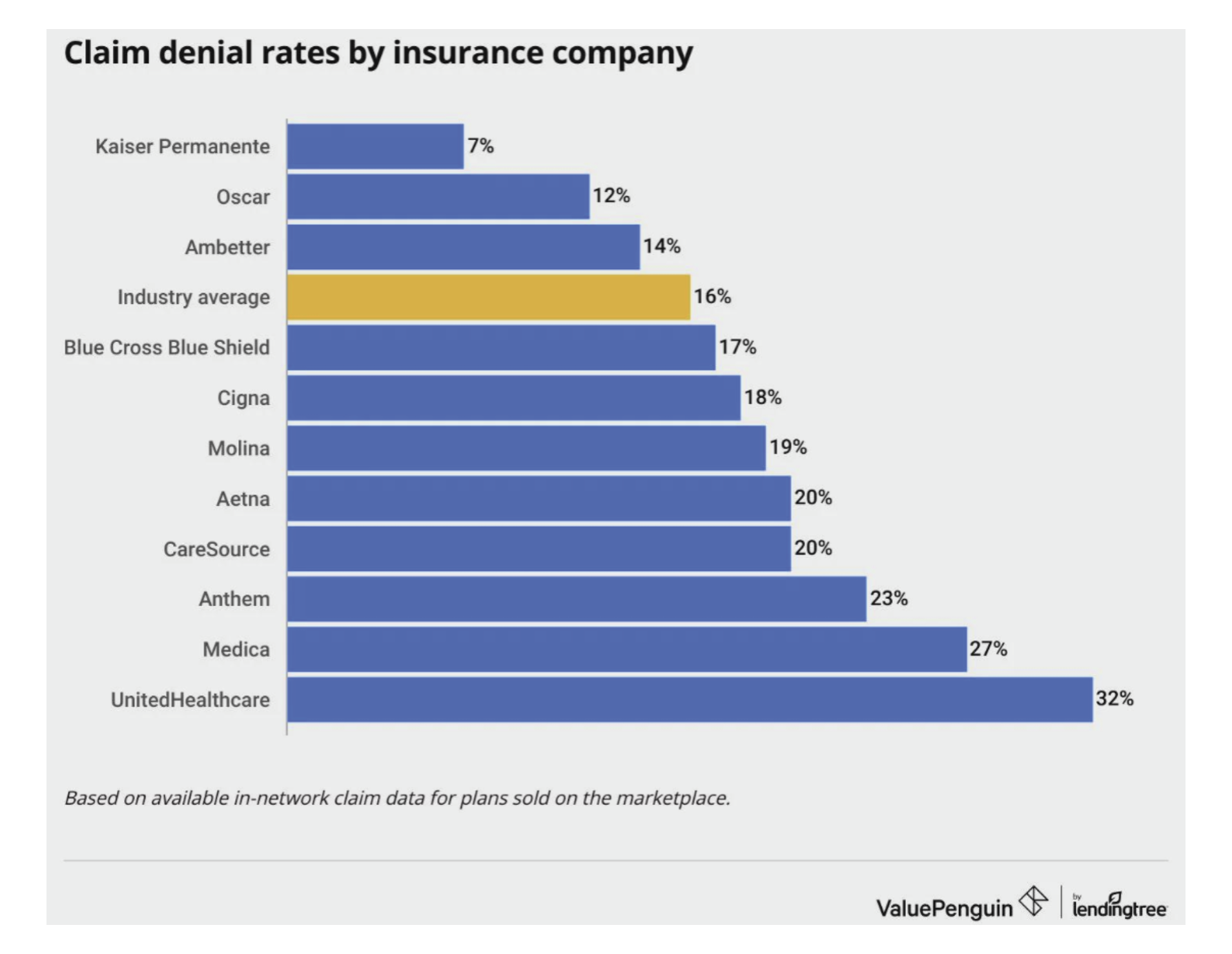
If you live in an area served by Kaiser and don’t have a very specific health reason to choose a different provider, I highly recommend them. They might not be able to treat that rare and aggressive cancer as well as the Mayo Clinic, but because it’s whole-life care, you’re more likely to find the cancer early.
Edit: Question. Can Mayo expand to cover everyone in Florida? Or is their advantage in hiring the best of the best? What makes their model better than Kaiser?
I have my doubts. Over the last 50 years the ratio of US per capita health care costs and European per capita health care costs (or per capita health care costs for most of the rest of first world countries) has stayed about the same.
In other words, health care costs have risen at about the same rate throughout the first world over the last 50 years. So if in 1970 the US was paying say 3x per capita what some other country paid the US would still now be paying about 3x what they are now paying. Both would be paying maybe 35x now than they were in 1970.
Over that same time both US and European obesity rates went up, but they went up way more in the US. If obesity was a major factor driving health care costs then I'd expect US health care costs to be rising significantly faster than European health care costs.
A number of gene therapies are to expensive for any public health system, so are only available in the us.
Needles to say they're experimental and carry lots of weight in a effectiveness vs cost analysis.
I had almost identical cases of cellulitis, one in the US and one in the UK. In the UK, I opted for private hospitalization in one of the fancier hospitals in London. The care was noticeably superior in the UK hospital. The attending doctor was available for a case summary on a few minutes notice, the sterilization and cleaning of the room was vastly better and the nursing staff could recite my case notes and recent test results and vitals at any time. None of these applied for the US hospital.
The bill in the UK was about half what it was in the US and the walk-in price in the US if I hadn't had local insurance would have been nearly double the price I did pay.
The kicker was that the UK hospital was run by HCA, an American corporation.
The ACA that we got instead cemented the separation of people from the price of their service and costs have ballooned even more than that were previously.
The economic approach is the only real way to fix things long term.
Before you conclude that the free market can solve everything, consider too that health care isn’t a typical service that follows ia supply/demand curve. The demand curve is practically vertical, especially when your life is on the line. You’re not going to shop around when your appendix is about to burst. Plus there are still high base costs, and scarcity (artificial or otherwise) of healthcare resources. And the monopolies granted to medical device and drug makers through the patent system keep prices high so the patentees can recoup their investments.
There is no easy way to solve this problem, despite breathless claims to the contrary that have been plaguing our airwaves since the 1980s.
That said, single payer has problems, too, which is why few countries use it in its purest form. Everyone gets a “floor” of coverage, which is a good thing, but people also hate waiting long periods for treatments and the inability to choose a specific care provider. Britons love NHS, but they hate it, too.
You can’t go single payer in the US without actually destroying the entire insurance industry overnight and because of that, there’s no way to transition to it smoothly. The HSA plan does both.
Mark Cuban’s cost plus drugs is proving this in pharma right now.
If they give you pricing that in any way contradicts what they tell the any of the insurance companies they are charging, then the practice can get themselves in hot water with the insurance company.
Are you going to shop around different pathology labs when they snip a bit out of your colon during a colonoscopy where you are under general anesthesia? Are you going to be googling for reviews of different neurologists when you get taken to the emergency room with a bad concussion or a stroke?
I don't think so.
So how is your market-driven medical system going to work? This isn't like picking a restaurant.
All of the lower cost, non-emergent services would get the benefit of you shopping around.
You’d also need to be able to select your own insurance provider directly (pretax) rather than being stuck with whoever your employer selected.
In the current situation your employer selects your provider, your medical service providers have to deal with that provider whether they want to or not. You and your medical service provider were both removed from the decision of whether your insurance company was a good choice or not.
The HSA plan puts everyone back in direct contact with their providers and allows market forces to work naturally again.
It’s the only proposal that has a prayer of fixing things.
https://www.presidency.ucsb.edu/documents/carson-campaign-pr...
Global health insurance plans usually come in two flavors:
1. Global coverage
2. Global coverage excluding United States (for half the monthly premium of the first plan)
The United States in an extreme outlier in terms of cost. This is separate from rationing care. This is separate from even population health (ex. higher obesity rates)