I do think its true that you can no longer be a diy hotrodder for most models because there is so much complexity with timing, emissions, fuel efficiency strategies, variable valve timing etc.
1) Doesn't break
2) Easy to repair
I've had this discussion numerous times over the years and the second meaning, while surprising, seems to come up frequently.
"My Toyanda is ultra reliable"
"So is my 76 Esquinot. It's really easy to fix, <insert reason why>."
When a car makes regular maintenance really easy and/or cheap, it's going to be more likely to never break. My Toyota Prado had the oil filter easily accessible at the top of the engine bay instead of being a PITA deep underneath near the sump, and had a "lip" around the seal to catch oil drips and divert down a hole to a catch line.
Makes me actively angry that this design isn't universal.
I've found most car forums tend to drive the real experts away due to them being full of blowhards. The real experts get tired of getting told by these folks they don't know what they're talking about, and end up creating closed invite only forums to trade info and advice on that the casual shade tree mechanic has no access to. I completely gave up on Rennlist after I asked a question about the turbo control system on the Porsche 951 only to realize many useless replies later that these people didn't even understand the basic theory behind how a turbo works. I answered my own question by bench testing an old junk turbo I bought on eBay and reported back to the forum only to be yelled at for not trusting their 'expert' advice. I've had similar experiences on other forums. Don't even get me started on the internet myths of DOT5 brake fluid that pretty much every forum takes as gospel. Even stacks of research papers and mandatory legal requirements don't keep people from spreading false information. Who needs all that nonsense? I now typically just pick up the phone and talk to experts I have personally worked with.
Please do!
Safety between cars, and within cars, has improved. However, due to the increasing size of the average vehicle on the road, among other factors, car safety for pedestrians/cyclists has decreased.
https://www.npr.org/2023/06/26/1184034017/us-pedestrian-deat...
With the roads deserted people went faster and more carelessly. When things recovered and roads got crowded they didn’t tone their driving back down.
I do insurance things. It’s well known in the field.
If the point was the reduce the flow, why wouldn't you make a roundabout?
Roundabouts have far higher throughput than junctions with traffic lights.
story: An out of state tech visiting our job site greeted us with "What the hell is wrong with the traffic lights in Florida!?" This was SW FL and I was a little confused because he had driven thru one of the most benign counties. I might be conditioned though.
Just north of Tampa is a county where most traffic lights are timed to insure you reach the next one on the yellow. I've traveled thru it regularly for 30 years. Between 20 and 15 years ago it reached ~as bad as possible status and there it remains.
Adding awful to bad are the drivers who've realized they can defeat much of this timing with sufficient speed.
Want ZERO fatalities? ISOLATE the Pedestrians from the cars entirely. Build it like Disney World does.
It didn't help that most, maybe all, governmental authorities were improvising their COVID response, some other percentage of people lost their fear/trust in authorities that way.
Ha, societal breakdown indeed...
There's noticeably more serious accidents too, although the data won't be available until mid-2024 to confirm.
https://en.m.wikipedia.org/wiki/List_of_road_traffic_acciden...
Certainly, when I lived there Ireland was a terrible place to bike or walk.
https://www.cso.ie/en/releasesandpublications/ep/p-cp6ci/p6c...
https://fortune.com/well/2022/12/13/covid-unvaccinated-great...
The state of research surrounding the pandemic has been appalling. Th line between science and propaganda is very blurred.
'Of course, skipping a COVID vaccine does not mean that someone will get into a car crash. Instead, the authors theorize that people who resist public health recommendations might also “neglect basic road safety guidelines.”'
https://openvaers.com/covid-data
The whole thing is junk science.
Yes, it was rushed. Sometimes rushing is appropriate. They still tested a lot.
Getting covid can be extremely bad even if you survive, and most of the US caught it so far. The vaccine route is the safer route.
Driving culture has changed, at least in this area.
I don't have a level spot with the recommended distance so we went with some tape on the garage door as a reference. We got them a tad low the first time and raised them up a bit. I can still see and apparently everyone else can too because nobody is flashing their lights at us.
Our other vehicle is a 2014 3/4 ton Ram pickup. Nobody ever flashes me in it.
Either way, it’s genius. I don’t know why that isn’t offered in more vehicles.
That is exactly the purpose and required (or via dashboard electronics) in most vehicles in the EU after a certain date (don't know which exactly and also I do not know the exact rules but every car i've ever owned had those). Automatic is also fine. They are not meant for "Alternative High beam" as what some people use them for.
The "clip" on the rear view mirror is also not meant for looking at your kids in the rear. It's meant to flip the mirror up so the reflection is not by the mirror but by the refractive index of the glass any you see a "dimmed" image of the high beams behind you.
Usually it is supposed to be calibrated so that the highest position is the default no load in the back position, but you can recalibrate so that it is in the middle if you want.
I wouldn't call them shopping carts either but if you come from the US you might have different size expectations.
Complete failure of government to regulate and enforce headlight position and brightness.
Since I don’t drive an 8ft tall truck with permanent high beams, I eventually got forced off the road.
In my state the only thing they check is the diagnostics to make sure your car isn’t polluting too much otherwise you can drive around just about anything that starts…
If I’m wrong and their lights are always like that, my assumption is that they would appreciate someone letting them know anyway. If it happens a lot, maybe they’ll figure it out and correct their embarrassing problem.
And if they’ve jerks who know they’re blinding others but just don’t care (or savor it) oh well they should still hear about it.
And I say it is insane because in many, many cases I just have to slow down when encountering those lights coming from the opposite direction, for the sole reason that I get blinded by them and I can't see the road for one, two, God knows how many seconds. It's insane, from a safety perspective, that we're allowing blinding devices out there on the road.
Which is the same pattern as your eyesight gradually degrading. But no, the lights really are blinding everyone. It’s utterly stupid.
What exactly are government safety agencies for exactly, if they can't even sort this obvious problem out?
I guess that's just always happening anyway. Except in a few cities doing proper bike lanes, roads are always getting widened, intersections expanded.
IMO the faster acceleration and heavier weight of electric cars will just lead to much more disastrous accident when people (for example) press on the wrong pedal. Long term the extra deaths are probably balanced out if the more dangerous cars displace enough fuel cars and lower carbon emissions and air pollution... but I wish we regulated acceleration (maybe with a different license category, like we do with trucks?)
It shouldn't be possible to kill someone 10 m in front of your car when leaving from a stop because the manufacturer wants to impress professional car reviewers.
That distraction didn’t exist 25 years ago on the scale it does today. I wish cell phone use penalties would be promoted closer to those of alcohol use while driving.
By opening a window?
This kind of exaggeration undermines any point. An invention as useful as the cell phone was a mistake because people (ab)use it while driving? Any invention is used and abused but the benefits of this invention far outweigh the drawbacks. I'm sure more lives were saved by the mobile phone, and even more were made better, than were taken.
No unga-bunga is speaking here. NixOS-loving Rust-writing software dev. Read some Ted Kaczynski folks.
It doesn’t matter what distractions you remove - ban eating and drinking (even water) while driving, impose ruinous fines for those caught… none of it will work.
You need to address the root cause, not the symptom.
The root cause is unspeakable. You will face extreme repulsion if you choose to openly discuss the root cause in this society because it would mean tough questions for our cultural identity.
Unspeakable, unimaginable, impossible to write in a sentence on HN?
To me the root cause is that 2-ton metal bricks shouldn’t be propelled at 50 kph, much less 140 kph, by tired hairless apes with tired ape reflexes, ape kids in the backseat, listening to other apes on podcasts, or talking even hands free with ape friends or ape spouses.
We were never designed for this. It’s guaranteed to be a leading cause of death and life-changing injury, so long as we keep it up.
Is that unthinkable or unspeakable? I say it on HN all the time.
They're good apes brant
On a more immediate time frame, road engineering can work really well which is why deaths are like 5x lower in places like Holland. Put bends and obstacles in the road and drivers will either have to pay attention or hit them.
Cynical answer: Humans.
Slightly less cynical: Cars.
We've built an environment (in the US, at least) where driving a car is basically a requirement to participate in society. So, people drive, whether they want to or not. And they drive whether they're physically or mentally capable of doing so successfully.
And we're so entrenched in this design that discussion of a change is met with derision and scorn.
The human nature isn’t going away, and although the environmental factors are technically under our control, they’re just getting worse.
The fact that technology only made a pre-existing issue worse does not mean that technology is not the problem.
Maybe faraday cages should be mandated in cars, in addition to rear-facing cameras. :)
Interestingly is to see police officers and transit officers also distracted inside their cars doing the same.
It objectively got worse in my country of origin for example.
The number of drivers using the bike lane outside my house to make illegal passes has also increased. As has the amount of tailgating and excessive use of horns on the same road.
The best thing you can do is drive in a way that even bad drivers expect. Be a speed-limited, blinker-indicating, cautious log in the river. They will parkour around you and you will be fine. Greatly limit your reactions to things. If you freak out, others around you will freak out. Bad drivers cause okay drivers to perform worse. Herd mentality.
(Obvious disclaimer: The best defensive driving in the world won't prevent all accidents)
It's gotten to the point where even defensive driving doesn't do much. How do you defensively drive against someone just blasting through a red light 15 seconds after it turned red and cross traffic is moving steadily? Or the guy in a lifted truck who decides to force you into the shoulder because he thinks it's funny?
Probably upgrading to a tank at some point. Or bringing a gun. Or bribe politicians, that they urge the police to focus on maintaining sanity on the roads and take away the licence(and at some point the cars) from those drivers eagerly.
Honestly, if I can, I drive a bicycle, even now in wintertime. But I often indeed wished for a gun, to bring awareness to my fragile self. To express, that I also have rights on the road, despite being lighter. But I am aware, this might not be the best solution overall.
Meanwhile there is a million equally bad drivers out there. We can't be doing "a purge" every weekend. It's either policing, or self-driving cars. I am looking forward to the latter.
But till they are there, policing is the only other option to self justice (aside from changing the road environment like the sibling commentor mentioned). There are drivers who intentionally drive close to cyclists - if one of those will have his tyre shot (without him then crashing into other bystanders, or crashing at all) he likely will have some respect in the future. He also might invest into a bulletproof design, further escalating the whole thing, so like I said, I am not advocating for road warfare. Just expressing my anger.
It's counter intuitive on one level, but making the road feel less like a racetrack causes most drivers to slow down and treat it less like one:
https://www.strongtowns.org/journal/2023/11/8/public-health-...
Making the corner tighter helps solve this.
I walk to work in the suburbs. I have to cross a 6 lane highway. It's signaled properly. But the one thing that nearly kills me every few months the road has very smooth radius corners. Drivers can easily carry 40mph through the corners. Between red-on-red being legal, right-on-green-even-though-pedestrians-crossing-is-active, and generally driver fuckery, I'm amazed nobody has been killed at this intersection.
Of course car lobby makes it sound like impossible task because of "think about all the edge cases" while even making the most crude system would save tens of thousands of lives and hundred of thousands of injuries per year.
As it is we can even force car manufacturers to implement max 140km/h speed limit in cars even though driving faster than that is criminal level behavior and illegal about anywhere in the world. Like we can't even force them to make the least controversial safety check imaginable already written into law because "driving a car fast boost my ego and you are not taking away my freedom to do so".
Drive an older car from the '90s with a mechanical throttle adjusting a mechanical throttle body and you'll realize that it barely responds until the pedal's about halfway down. Drive a newer car and you'll realize that it's already putting nearly half throttle through the electronic throttle body when the drive by wire pedal is a tenth of the way down. The brakes react like this too, which is a completely difference annoyance. It's a result of manufacturers gaming for fuel efficiency regulations and it manipulates the way people drive into being more aggressive with their acceleration.
For decades never needed speed limiters aside from the gentleman's agreement of 155MPH over tire safety reasons because most people couldn't get above 90MPH, and most cars didn't want to go above 45MPH without stomping on it. Since the early 1990s as a side effect of emissions regulations making engines much more efficient cars have doubled, tripled, or even quadrupled their power output. A 1995 Chevrolet Lumina made 210HP from a 3.8L V6 at the very top of the rev range, meaning for most driving you were at 150HP or less. Right now you can go and buy a low trim Chevrolet Blazer with a 3.6L V6 that makes 305HP about a third of the way up with a flat horsepower curve from there. Just holding speed without accelerating you're at peak horsepower in the Blazer and it feels that way.
https://youtu.be/r11j5yo8BhM?si=NnDDZtmiyNAHkqvQ
This neighborhood has brutal speed bumps with a warning sign on a 30mph road. This double bump just hammers cars.
Couldn't they find a more silent way to slow down cars?
The only thing narrow streets and turns do is make it harder for parents to check for oncoming traffic before crossing. No amount of "traffic calming" will protect us from these rotten drivers. We need at least a modicum of enforcement.
Some of us have children, and some of us will hopefully always going to have children, so sorry, but we won't go away with our safety concerns as death on the road is the number one safety issue in everyday life.
At what point did we lose our ability to enforce our own desires through violence? The one real tool we have for making any tangible change, just stripped away from us at some point.
You can even today join a gang or the mafia, you will find that this is still a very common use case.
If you do, you might also find out that it's not a lifestyle anyone wants, thus realizing why most of civilized society doesn't work that way.
Dueling, boxing, and so on used to be common among the upper crust. I still get into fights with some of my immigrant friends whenever we reach some total impasse on conflict. We're all civilized, educated, and generally good people. But violence always seems to be the quickest way towards a resolution to certain problems, where simple communication will not do.
Judging by reports of violent crime, it would be a stretch to say that the “right” to exercise violence when your individual will is otherwise thwarted is very much still possible. I mean if someone wants to gun down their Amazon HR person or manager, there is little to stop them. It won’t end well for anyone though.
Cut out the lame strawman args. No one anyone said ever said "ALL" or that there was a 100% certainty in something going to zero overnight
Ticketing dropped. Also the quality of policing in general (and officers specifically) improved dramatically. We had way better cops than under the previous sheriff.
No longer bothering to turn off long beam headlights, when there is oncoming traffic. And with the new bright led lights, the long beams are really bright.
Sometimes even the low beam lights feel too bright, especially if the oncoming car is big, and thus has its headlights sitting higher up.
https://www.resources.org/common-resources/how-much-do-regul...
Increasing fuel efficiency standards has outsized impact on the price of small cars, so fewer of them are made.
Anecdotally, I have personally heard many people say they want to sit up higher, or have a bigger vehicle because it is safer for them.
That's true to a point. In the US there are regulatory loopholes for SUVs, so that's impacting what vehicles people choose.
I agree that fuel efficiency standards are pretty silly. Especially CAFE standards. They should just tax CO2 emissions (or fuel) directly, and let the market sort it out.
Perhaps also have a tax on the weight of the vehicle, because that's a negative externality: heavier cars are worse for other people in a crash.
But the US is a country that has effectively legalised running over cyclists, so I don't have much hope for them. See https://www.nytimes.com/2013/11/10/opinion/sunday/is-it-ok-t...
It's similar to house prices. The more regulations you pile on, the more things cost. While those things are seen as "good", it removes choice and increases cost.
Given the choice between a $35k sedan and a $40k SUV the choice is going to be SUV for most people.
Given the choice between a $15k sedan and a $40k SUV, it gets a lot more interesting.
The US car market is incredibly restricted. You can buy a 300 mile range electric sedan for $25k in China. Why the fuck can’t we get that in North America?
Bare bones 300 mile cars like the BYD Dolphin cost $16.9k.
They also have a model called the Seagull that is 250 mile at ~$11k. I would buy either of those in cash, today, if I could.
I don't think that in isolation people broadly prefer bigger vehicles, but in the context of other people having bigger vehicles, a circular problem exists, with people feeling like they're in ever increasing danger behind the wheel if they have a small car but are surrounded by behemoths. If it weren't contextually dependent, I don't think it would be a relatively recent phenomenon, since big vehicles have always been available, and I think you'd see people getting large vehicles despite what's common around them, in terms of both geography and what's on the road. I'd prefer a larger vehicle if I was driving around polar bear country, and I think every other car on the road in North America is a metaphorical polar bear.
- 1991 Ford Ranger 2WD
- 2016 Toyota Tacoma TRD OR (4WD + extra features)
The Tacoma is Toyota's smallest North American truck and is dramatically larger than the Ranger. The Ranger suited my needs perfectly except that it wasn't 4WD and would frequently get stuck in Canadian winter. I couldn't even buy good snow tires for it anymore because the rims were too small.
If there were a recently built 4WD truck available in the North American market that was the size of the 91 Ranger, I would have bought it in a heartbeat. It does not exist.
When CAFE standards specifically carve out an exception for larger vehicles (pickups and SUVs), thus forcing only compacts and sedans and station wagons to be subject to the new standards, of course there's some price pressure that nudges people into bigger cars.
If CAFE was applied across the board, there'd be no impact on choice at all. But it's not.
They are buying it because they like bigger cars, and the people that can’t afford bigger cars still want to sit up higher, hence the popularity of CRV/Rav4 type vehicles.
Yes, there are (largely misguided but in some senses game-theory justified) preferences for higher/larger/heavier vehicles. But from what I've read, these don't provide much (statistical) explanatory power for the actual numbers.
Modern cars with huge pillars feel absolutely claustrophobic especially compared to those with wraparound windshields which were common mid-century.
Those standards are pretty silly, even without the loopholes. They should just tax CO2 emissions (or petrol), and let the market sort it out.
There's some formula between overall car area (the literal length x width of the vehicle) and the allowed mpg for the automaker's corporate fuel economy. Yay for second order effects...
Well, every economist (or anyone with half-a-brain) could have predicted these effects.
Because wankers gonna wank.
The Corolla? I don't think half of them would even have noticed if they ran it over.
Anyway - point being, I don't think we are anywhere near getting caught up in the giant car fad. Not yet, anyway.
Oh we definitely are, it’s nowhere near as bad as in the US yet because they are decades ahead in that mess, but around here mid-size and light-duty full-size are becoming more and more common.
They functionally didn’t exist a few years ago, nowadays it’s a good days when I don’t see one. And that’s not including the few I know of parked in driveways on the drive to work.
And the Tacoma is dwarfed by the larger pickups on the road. It's wild.
Many Europeans are bathed in US media. They see the huge cars constantly on US footage, and some are inclined to purchase these even if they are impractical in EU towns and cities. As these behemoths are introduced in the traffic mix, others in classic smaller cars feel threathened, and their next purchase will be a big tanky SUV to feel less vulnerable.
It self-reinforces from there.
in parts of Europe, vigilante groups are deflating tires of SUVs to discourage people from contributing to this trend. Not that I endorse the practice but it's interesting to consider how unimaginable something like this would be to Americans. Whereas in Europe people can probably at least understand why they're doing what they're doing
If you want people to drive better, don't put airbags in their steering wheel, put a 6" metal spike pointed at their chest.
It wasn't this study:
An Evidence Based Review: Efficacy of Safety Helmets in Reduction of Head Injuries in Recreational Skiers and Snowboarders (2012)
https://www.ncbi.nlm.nih.gov/pmc/articles/PMC3989528/
from Trauma & Acute Care which concluded:
* The use of safety helmets clearly decreases the risk and severity of head injuries as compared to non-helmeted participants in skiing and snowboarding.
* The beneficial effects of helmets are not negated by unintended risks as their use does not appear to increase the risk of neck or cervical spine injury as compared to non-helmeted participants in skiing and snowboarding.
* The use of safety helmets also does not appear to increase the risk of compensation behavior as compared to non-helmeted participants in skiing and snowboarding.
* Therefore, helmets are strongly recommended during recreational skiing and snowboarding.
I mean, sure, there are BMJ Sports Medicine Opinion Pieces by Dr Paul McCrory who was prolific with his thoughts on the matter but short on evidence, not to mention that whole, ummm, thing:
https://bjsm.bmj.com/content/56/23/1327
(The investigation into his extensive single author pieces).
https://www.ncbi.nlm.nih.gov/pmc/articles/PMC3989528/
> Helmets do not appear to increase the risk compensation behavior among skiers and snowboarders.
Nor has it been proven with a bunch of other activities
> Convincing evidence in support of the risk compensation hypothesis has not been seen with the use of the face-shield in ice-hockey, motor vehicle seat belt use and motorcycle helmet use.
Though the data isn’t the best but what we do have does not seem to support that hypothesis.
You still get concussions, and plenty of blood in rugby, but more serious amounts of concussions in grid iron because of all the excess padding.
People are more likely to charge head first with a helmet, and the helmet doesn't protect your brain from rattling about.
Are you saying that in Grid Iron there are no concussions? Hate to break it to you, but they are fairly common even before they broadened the definition last year.
Or are you saying that no player ever does a foul, or an illegal tackle?
If so, I'll link you to YouTube clips that disagrees with you.
They are constantly researching helmets and trying to reduce the chances of concussion, but ultimately wearing of a helmet introduces a risk factor, in the same way that that bigger cars make people feel safer so drive more dangerously.
Cars without breakable steering column were pretty much this, so everyone had this before ~1990. Yet, deaths in traffic have steadily decreased since then.
Or in your words: "hurr durr, reddit is that way ->>> smh"
We just pretend, that we care about environment untill we start speaking about our safety.
It's also decreased for anyone NOT willing to buy a "light truck" (e.g. a modern SUV). There's a loophole that makes it so that light trucks don't have to be tested against the same safety standards as other vehicles. Basically they just have to prove they're safe to crash into other light trucks but do not have to be tested against regular passenger vehicles. This loophole is credited as one of the main reasons car fatalities have been rapidly growing in the US but falling in most other nations. And also for the massive recent explosion in size (again, mainly observed in the US).
But size is just one factor that's reduced safety. Another one is reduced visibility. One of the contributors to the rise in fatalities has been due to parents literally running over their own children in their driveways. These are low-speed, suburban vehicle fatalities that are not happening in other countries
Side note, the Wikipedia page has a section about how SUVs get away with less stringent emissions standards
My saving grace was that the truck was so light that even at age five I managed to survive being crushed under one of the wheels thanks to my aluminum frame bike wrapping around my ribcage. Even a modern-day Tacoma is much larger and probably would have killed me.
The only thing that I couldn’t fix on my own in my 2020 vs my 2006 was re-alignment of lane keep system after replacing the windshield.
> The bells and whistles are mostly for creatures comfort.
This is increasingly (and rapidly) less and less true. Traction control, lane assist, adaptive cruise control, and emergency braking, are all things computer controlled (and things that are programmed to disable when the computer barfs. You can argue these are creature comforts, but in my experience they are becoming necessary modern safety features.
In a previous car, the sound system wigged out completely when it was only 5 years old. That’s a creature comfort, except really annoying to go without, and it was insanely expensive to replace, several thousands for a pretty basic stereo.
That's why people don't like increasing amount of electronics in cars.
EU recently mandated that all new models have Intelligent Speed Assistance[1].
This requires the car to use GPS, read signs and such to determine the current speed limit, and provide some feedback like a dynamic force on the gas pedal[2].
I got this in my new car, being a model introduced last year, and while it's nice when it works, it's often confused or wrong. And that's when it's operating normally. I already had to replace the gas pedal unit because the force feedback mechanism in it had some issues (would tap the pedal like a light hammer strike at a specific position, repeated around 5 Hz if held at the exact position). Wonder how it'll all hold up down the line.
[1]: https://road-safety-charter.ec.europa.eu/resources-knowledge...
[2]: https://www.autoweek.com/news/industry-news/a40543584/anti-s...
I especially love the mid-90s and newer VWs, which will report through VCDS software literally every part failure, or sensor output, from any system in the car.
The reality is more like how Ford has victimized its customers with its EPAS system. That's Electronic Power Assist Steering.
They got rid of the old dead-simple power steering pump and replaced it with a flakey system based around an electronic sensor that is prone to shorting if you look at it funny and can only be replaced along with the entire steering rack that it's attached to...to the tune of thousands of dollars.
You know what's even better than a working CarPlay, the cupholder in my own car that can hold my phone in a nicely visible spot.
All of the important sensors have been in cars for years and years at this point.
As others have mentioned, sensors and stuff related to safety fail all the time. I recently paid $800 to re-enable the safety systems in my (newer) car after a part failed. I've never had such expensive repairs on my 20 year old car.
But that's 18 years old. Give me two more and we can have this convo again.
If anything the Lexus was a bit more, due to how common BMW specialist shops are, while there's none for Lexus.
The issue for me was the frequency of the repairs, 5 years of Lexus ownership cost me less than any 3-4 month period of BMW ownership over the 2 years I owned it.
I suppose I can only compare 2-3 repairs, cause the other dozen repairs for the BMW simply didn't break on the Lexus, nor did it spring any of oil leaks my BMW was famed for.
The worst is software problems. The dealer techs don’t have the tools, training or interest to sift through TSBs and upgrade systems.
German and American cars seem to have a very frustrating time with reliable electronics compared to Asian brands for some reason, and the problems persist year after year.
For especially electronic heavy brands, typically higher-end ones the problem can become particularly pronounced, the bottom ranked vehicles on this list are mostly high-end, expensive, and packed full of gear (except for a few). Electric vehicles and PHEVs have the biggest problems being almost entirely electronics.
That car isn't old enough for anything to be breaking yet. It's barely 4 years old. In a 2006 so many basic simple things break like the clip to hold down the center console, the knob on the AC control. Not to mention the suspension, fan on the blower, belts, power window on at least 1 window. And you expect that touchscreen and software to make it?
I am an enthusiast of the entire reliability spectrum of vehicle brands.
There are people on Range Rover forums wondering why their infotainment doesn't work half the time in their brand new SUV, meanwhile when I goggled why my windshield wipers wouldn't turn off in my 97 Tacoma, I found a thread that suggested a wire would wear through in 200-300k miles (which was my mileage).
I owned a BMW 325i that was full of gremlins, then owned the competing Lexus IS350 (with far more features), to double the age and mileage without 1/10th of the issues.
But the control/configuration of mechanical components is now being done from touch panel and if it becomes unresponsive then it’s as good as mechanical component breakdown.
The 5th Gen Camry was one of the first, if not the first, cars with drive-by-wire throttle.
FBOW however, the increasing demands of Fuel Economy and emissions standards led to a lot of poorly-executed moves for various companies from a reliability standpoint; Sometimes it's dual clutch transmissions or CVTs, sometimes it's stuff like cylinder deactivation or a cheaped out Turbo 4 or 3 cylinder design.
And then, all the speeds on an auto in general now. It took a decent amount of time for (most of) the automakers to make a reliable 4 speed auto across their lines. Hondamatic 5 speeds warned of things to come, because first everyone started flipping to 6 speeds (emphasis on the starting bit, in 2006). Then over the next 10-12 years we got all the way from 6 speeds to 10, often without enough size increase budget to know it will all be reliable.
So what they did was first drop their pickup truck and then develop a smooth and efficient 4 cylinder engine mated to traditional transmission to deploy across the fleet, then slowly migrate all of them to a hybrid drive and then finally move to a fleet wide EV architecture. This keeps the fleet average down while also not compromising in other ways like crummy CVTs. (Im not sure if they use deactivation.)
Will it work? well so far their first EV entry didn't fare so well. But they are still on the move to hybrid phase and they make some pretty darn smooth cars these days.
> Their thesis was whats the point of being green if you still are selling gas guzzling hogs and you just sell some garbage EV to offset them.
Ford doesn't do this, but at the same time I find it hilariously suspicious that despite the success of the Maverick, there doesn't seem to be any messaging about increasing capacity. And I say that because even as an early adopter -most- problems have been in the 'I can still drive it' category. And yet they won't increase production.
A few years back, I had a late model Mercedes GLS, and the damn thing was in the shop almost every other month, and each time it was at least $300-400. Mostly it was electronic components that were at fault; an error in the anti-theft system which cost me $2000 was too much to bear, and I sold the car at a loss...
2005 9-3 Linear here. I wish minor repairs were that cheap. Wait until you need your water pump replaced ;) Get ready to squick hard at the required labor charges (water pump is integral to the engine IIRC, requiring the engine to be pulled.)
Right now I need new spark plugs, injectors, and a turbo replaced, and a grounding strap issue somewhere I haven't been able to isolate. Gonna run me a small bit of change.
As someone who owned a Saabaru, many 4 figure shop quotes become a weekend and <$100 in parts. Just depends on if you have the time and space to DIY.
1. In the world of Honda S2000's, all other things being equal the 2004-05 models command a premium over the 00-03 and 06-09 model years.
2. My wife (2022 Prius) sighs when she sees how attached I am to my 2008 CR-V. It has 220K miles and I'd be happy to drive it another 220K.
I'm averaging 20-30% of a new car payment keeping them running and replacing big parts, but I would spend double (maybe lol) that so I can keep the experience. If I had a commute longer than a half hour maybe I'd look into a Prius or Leaf? Just waiting for a cts-v wagon to fall into my lap....
That said this electronics is rock solid, my '08 Civic Type-R is basically pristine mechanically and after 15 years only required maintenance of wear parts. The paint job though has time taking its toll, as varnish is peeling off in various places. Still with proper care I expect the car to last another 15 years without breaking a sweat.
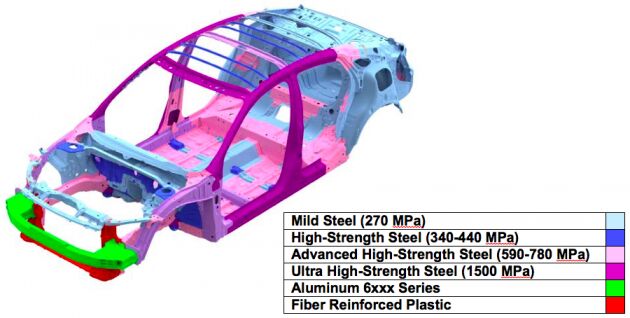
New vehicles are much safer from a structural standpoint than older ones. Modern high strength steels form the safety cage of the vehicle, and greatly reduce the risk of injury in offset frontal impacts, side impacts, and rear impacts.
And then you have the multitudes of air bags.
Finally, the various electronic gizmos that further reduce risk of injury.
The presence of high strength steels alone warrants a new vehicle purchase. Vehicles are disposable, people are not.
Perhaps if you compare the same model 15 years ago and now that is true, but people rarely buy the same model used as they would new. At least among my aquitances it is common to consider a higher class used car, or a much cheaper lower class new car. I doubt a 6 years old lexus rx350 is less safe than 2023 Toyota Yaris for example. Two cars of comparable price around here in Central EU.
Ok, but those two vehicles are significantly different sizes regardless of year, are they not? And that’s usually very relevant where safety is concerned.
Maybe there would be less of a difference in a single vehicle collision, but AIUI in a multi vehicle collision size (and relative height) usually matters a lot. So it didn't seem to make their point very well.
    - Improved FEM makes modern crumple zones deeper and smoother
    - Heavy use of composites dramatically improve the raw amount of energy absorbed by the car instead of the passengers
    - Better manufacturing methods mean parts can be shaped/placed to be less likely to enter the cabin
    - Better placement of more airbags means you're more likely to hit something soft
    - Better seats and better placements of better seat belts means you're less likely to snap something due to whiplash
    - Better brakes and steering geometry reduces your chance of losing control
    - Better brakes and steering geometry improves your ability to avoid other vehicles
    - Electronic stability control _massively_ reduces chances of rollovers
    - Electronic stability control _massively_ improves your ability to dodge other cars in emergency maneuvers
    - Electronic stability control _massively_ improves your ability to handle bumps and potholes and waves and black ice and other disruptions
    - Electronic stability control _massively_ improves the car's ability to go where you point the wheels regardless of speed or condition
https://en.wikipedia.org/wiki/Electronic_stability_control:
    > According to the U.S. National Highway Traffic
    > Safety Administration and the Insurance
    > Institute for Highway Safety in 2004 and 2006
    > respectively, one-third of fatal accidents
    > could be prevented by the use of the technology

    > Additionally, SUVs with stability control are
    > involved in 67% fewer accidents than SUVs
    > without the system

    > The IIHS study concluded that ESC reduces
    > the likelihood of all fatal crashes by
    > 43%, fatal single-vehicle crashes by 56%, and
    > fatal single-vehicle rollovers by 77–80%.

    > ESC is described as the most important advance
    > in auto safety
And those numbers are from 2005-ish. Modern active rollover prevention and traction control systems and anti-understeer/oversteer controls are _even better_.
I just checked wikipedia and there is a paucity of info showing actual effectiveness, and some showing what I just mentioned. It's a little suspicious that there is not overwhelmingly positive data https://en.wikipedia.org/wiki/Anti-lock_braking_system#Effec...
1. If you are too fast to squeeze the brake lever, the tire carcass will not deform properly, giving you the the maximum braking potential. There's a large difference in braking performance just grabbing vs. applying in a controlled manner. You can look up motorcycling racing brake application for more info on this.
2. Breaking too hard can cause a stoppie (a wheelie using your front wheel). Done improperly, that creates a lot of fear in the rider.
3.If you lock the brakes and steer, you are likely to have the front end of the motorcycle dip, causing it to lowside.
ABS helps mitigate all 3 of these issues.
ESC in a car for me can be helpful or detrimental depending on the vehicle and the implementation.
I have an old 90's tachoma that doesn't even have antilock brakes. It drives a bit like a car when compared with a modern truck, but the rear will slide out even on gentle curves, in the rain it can slide hundreds of feet when stopping (yah pulse the breaks manually), and its narrow and high meaning they roll over if you look at it wrong. One doesn't feel "safe" in it, and you know to maintain a lot of stopping distance, slow down before curves, and generally drive like a 90 year old. I have a much newer tundra. It is a brick on wheels with magic traction control, and it feels glued to the road because of it. Except it is easy to fail to respect it and discover one is simply going too fast into a turn, or a stoplight/whatever, and the antilock and traction control aren't going to save you. The one significant advantage is that you can steer it into a ditch while panicking rather than ramming it straight into oncoming traffic when that happens.
So, i'm betting in the end, the more aggressive driving the turndra encourages by giving people more of a feeling of being in control negates some of the additional safety. It's like power steering lets tiny women (and men) drive massive trucks/SUVs they wouldn't otherwise drive if they had to crank those huge tires holding all that weight manually.
Combined with the various electronic gizmos and infotainment systems that further increase the risk of injury. :)
Agreed. Although the steels used for safety critical parts of new vehicles are now "ultra-high-strength steels", with tensile strengths exceeding a gigapascal. These can be 4x stronger than "high strength steel", and 6x stronger than steel from the "good ol' days"
e.g.: https://cdn-fastly.thetruthaboutcars.com/media/2022/07/19/92...
Same sentiment for my washer/dryer. Bought an older (used) set for $300, They have lasted 7 years so far, which is in addition to however long they were in use before: I would guess at least 7 more.
Seems like lots of people lament how things like cars, refrigerators, washers, etc. are becoming less mechanical and more electronic. Maybe there's a market for "bespoke" mechanical items.
I knew enough to google the symptoms and found someone that would “rebuild” the main circuit board for a flat fee of $250 with about a week to turn around. That’s a fair bit cheaper than the remodel option.
But that got me thinking “if it’s a flat rate, and occasionally something is hard to fix that means most repairs must be trivial or the person wouldn’t be making enough money”. What’s an obvious, easy and cheap circuit board problem? Capacitors.
I had to buy a tester for $150 but I get to keep it. And the bad capacitor it found cost $.08.
Knowing just a little and being willing to learn a little more saved me a considerable amount of time, trouble and money.
I hope the same is true for cars because I have three relatively new ones in the family and we tend to keep them 10-20 years.
This is why you get things like heatable seat DLC.
Seems like there are still reliable appliances to be found, it's just probably that there's more low-quality cheaply made appliances on the market than there used to be, so it used to be easier to get a good one without researching so much...
Rumor has it that Toyota will finally unveil a new design for the 2025 model year.
https://en.m.wikipedia.org/wiki/Toyota_4Runner#Fifth_generat...
Which I actually like a lot better. The 4Runner is a very old platform. Other than the infortainment system, a rental I coincidentally had a couple years back was basically identical to the fairly poor handling SUV I had for 10+ years.
But yeah ... I forgive plugs, oil changes, brakes, filters, etc as it's PM that has given my other cars their longevity.
legitimately the only major repair I've ever needed is to replace the oil pan and that was my fault. runs like a champ, I literally just got back from driving it about 10 minutes ago.
It looks ugly as sin as over the years people have thrown themselves at the vehicle, including a line down the passenger side where a fedex semi took a left turn too sharply, but it runs beautifully. Part of that is maintenance, of course, but if you treat'em well they'll treat you well.
Bluetooth stereo: that, you could install after-market.
Though, I imagine an AirTag will give you more precise location.
We had to do something with the spark coils/plugs last year, but other than that, no repairs except routine maintainance (tires, oil, filters etc).
Amazing vehicle, very sad that Honda initially talked about an EV version and then pivoted to "no more Fit in North America"
It also has grease fittings on the drivetrain that, if not greased on a regular schedule (read maybe every ~10K miles), will squeak, the mass airflow sensor needs to be cleaned on nearly the same schedule as even tiny amounts of contamination throws it off and the gas mileage will suffer and eventually the 5ZVFE will knock because of it. And because it doesn't have auto tensioners on the belts, they need to be checked and adjusted every 40K or so, etc. Lots of extra maintenance that some of the newer Toyotas don't seem to require. And of course, just about all of the toyota truck/4runners/etc of that era a super sensitive to brake and tire wear issues which turn them into vibration machines if not kept in perfect alignment/wear/etc because apparently the suspension/etc are so lightweight. Plastic headlamp fog is another one.
While yes, things that seem to wear out on other vehicles seem to be designed for the vehicle's life (alternators, wheel bearings, AC, cabin controls, etc).
(ex my 201x 4.6L tundra, which is plugs every 100K, brakes, tires and fluids, oh and hell the battery on that thing even lasted 2x as long as it was labeled for, I just replaced it last year)
Anyway, many of those items can be ignored for a long time if the vehicle is treated like a 20 year old beater. Things like the rear axle seals can leak into the rear drums and largely be missed until someone notices that the rear diff has been run for 100k miles with barely any fluid, and is cooked. The same is true for the valve covers; they seep in the back near the firewall or onto the exhaust manifold. Unless you look for it, there won't be enough oil lost between changes to notice.
https://www.theonion.com/ford-unveils-new-car-for-cash-strap...
even with expensive gas.
Can be a bit dangerous on slick roads with no weight in the back.
Easy to hit things and people while turning if you're not used to the size, and even if you are.
Parts can be more expensive than one might think.
Couldn't agree more, due to their added size maintaining/operating a Silverado 1500 was similar to maintaining my Lexus. Reliable enough, but bigger tires, brakes, rotors, more fuel, etc.
I was at the Toyota dealership not long ago and the mechanic says, “we’re not supposed to say this, but if you just do basic maintenance these cars will go for 20+ years. No way would I sell this for a new one. They cost too much now.”
It's still relatively safe, at least in terms of passive safety (it has a well engineered crash structure, curtain side impact airbags, etc).
It drinks fuel like a drunk uncle drinks wine at a wedding, burns and leaks a little oil, etc. Fuel is very expensive where I live (currently around $8,3 to the gallon), so that's a thing.
But mostly, modern cars are extremely expensive and just not appealing to me as a driver or as an owner. I'd have to go through a ton of repairs and fuel before I'd break even on a new car, I can probably drive my car for more than a decade still before it gets to that point.
Pair that with Mozilla's Privacy Not Included report[0], pervasive tracking in modern cars and bullshit practices like "heated seats as a subscription", and I'm out.
I'm considering just buying a good shell of a car and have it converted to EV when the time comes to replace the Volvo. An EV conversion is about $30-35k for a professional to plan, build, execute and certify. If I want to buy a car that matches or exceeds the comfort, practicality and joy of my Volvo, I'm looking at $60k+ on the new market, at least.
[0] https://foundation.mozilla.org/en/privacynotincluded/article...
As most people know, Lexus is also Toyota, and I've been driving a fully loaded luxury sedan from 2008 that also gave me no problems I didn't cause.
It had plenty of fancy do-dads (that are pretty standard nowadays), a steering wheel and seat that moved into place upon entry, adaptive headlights that swivel and self-level, heated/ventilated seats, backup camera and infotainment, etc.
Only time I thought it was acting up (error with the self-levelling headlights), I discovered something had bashed the entire sensor bracket off the undercarriage. Replacing the bracket fixed it immediately.
It made it to 280,000km (175k miles) before a red-light runner wrote it off, and it went to the scrapyard without even the check engine light on.
Meanwhile the equivalent BMW fell apart on me in half that mileage, and hell, so did an F150 actually (and it was as basic as could be!)
That's a key point. Reliability might be good these days, but long-term repairability is very low.
It's come to the point that even a mind-dumbingly trivial change like changing a brake light bulb or a battery can't be done (on a BMW, surely many other brands) without access to factory repair computers.
So when the factory stops supporting your particular model, what then?
I firmly believe that a century from now we'll still have historical cars from the 1950s-60s running around, but surviving cars from the 2020s will be extremely rare, since they can't be repaired beyond factory support.
If you can legally buy one. In the near future you might not be able to transfer ownership over on older cars because of their "emissions" and new state or federal restrictions
"It's time to get a new car" given that car safety has drastically improved and I have two younger kids in that thing a few times a week but I'm honestly having a really hard time giving it up, something so reliable and plainly functional.
New cars with all their computers and smart technology only look like expensive repairs to me, whereas if something breaks (again, rare!) on my extremely mechanical 4Runner, it's almost always something simple and relatively cheap.
Glad to see Yodas at the top of this list though, when mine finally kicks the bucket, will confidently get another one I suppose.
One of my favorite Onion articles: "Toyota Recalls 1993 Camry Due To Fact That Owners Really Should Have Bought Something New By Now"
https://www.theonion.com/toyota-recalls-1993-camry-due-to-fa...