https://nathanwpyle.threadless.com/designs/we-own-things/hom...
Its just not even on my radar
It's funny you mention the cabinets. My wife and I can tell whenever my siblings have been over: they're all incorrigible cabinet goblins.
I still leave cabinets open, but it's typically because I'm using it as a reminder to return whatever I had taken from the cabinet. Of course, my Cabinet Sight still has a ways to go, so the thing doesn't get returned until I actually notice the open cabinet the next day.
Life hack: if you keep all your bottom cabinets open, you don't have to bend over to see what's inside :^)
Open shelving is a thing. No one said your cabinets need to have doors.
I'd been living here for like 5 months at that point and had completely blocked out the noise of a dead fire alarm in my basement.
Same way the top shelf of the fridge disappears. Bad angle.
Both require bending over then standing.
Edit: There’s just enough room to back up and see it all in the cabinet. I’m sorry I lied.
But I also think it's a difference in how we were raised, because he does not push his chair in after leaving a table either..........
(Perhaps related: a `util` class is basically a junk drawer in a kitchen. Some kitchens are basically just giant junk drawers. Good luck finding anything, but hey putting things away is super easy - just put it wherever it fits!)
Perhaps this is a regional thing... living in Michigan I've always let the water warm up first (perhaps drought is a concern where you live?)
Also, most showers I've used automatically switch back to tub mode once the water shuts off. Maybe he's used to that style!
this is nice indeed, but not universal sadly
> Do you get in the shower before turning it on?
In some large buildings I've lived in, it takes like 1 second for the water to be warm -- it's magnificent. So yeah, if you have a shower-over-tub in that kind of place it is easier to get in, have the 12 ounces of cold water go harmlessly into the tub, then switch to shower.
My better half has very few things that catch my attention in a less than positive way, one is not turning off the lights. It’s like a museum tour to learn what has been visited that day.
They have had the lights turned off for them their whole life despite being super independent otherwise. So I just used it as an excuse to install some Caseta wifi light switches and suddenly the lights were turned off before bed because it was remembered but too much work to do once in bed. But because the Apple Watch had an extension app it was easy enough to do. It doesn’t mean everything should be automated but it was one that kept a small thing into a fun and easy going solve. It made it easier to consider motorized blinds due.
I am not an organized person, I see a horizontal surface and I put stuff on it. But leaving doors open? I don’t think I even take my hand off the cabinet door when I open it. One hand for the door, one for the thing I’m getting.
The only door I leave open is the washing machine, so it can dry out. It gets closed the next time I’m in the laundry room though.
It's just as easy for the next person to put it down as it was for me to put it up.
I guess it doesn’t really matter if your toilet is in its own room, but at least most houses in the US have the toilet next to the sink (where your toothbrush is).
Put the seat down before you flush, because it’s more sanitary.
[1] https://microbiologysociety.org/news/society-news/does-putti...
I skimmed that study, and it mentions possible transmission of infectious diseases, but I mean, if you live alone, whats the harm?
[1] I think Mary Roach talked about this in this interview by Adam Savage, but don't remember exactly: https://www.youtube.com/watch?v=kfZ9RrxQ5NM
But also, what does dusting have to do with leaving doors open?
I am probably in like the 99th percentile of aloof people
Our home has a two-stage "recycle bin" policy, though: some of my stuff "gets moved" to a random box in the cellar; if I don't ask for it for a few months, it gets "donated". You know.
There’s a similar trick for papers covering your desk; without looking, shove them all in a Manila folder, date, and seal. If you haven’t felt compelled to open it in three months, throw it away without opening.
Admittedly the utility depends on how much you/your office likes paper. Or if you go to an office.
This needs to be ~1 year, to make sure there's nothing important for taxes in the pile.
My family moved into our house when I was 3. Around age 9 we were going to finish the basement and a stack of boxes from the move came into discussion. When I proposed the idea, it was not really considered by my parents.
I've proposed it again to my wife after a move or two, and again she didn't take me up on it.
Maybe someday I'll get to give the method a shot.
Just put random crap in a box with a date in it. You can take it out if it is useful but you can't put new stuff in. Once the date is up, toss/sell it.
Basically expiration date for stuff.
I like having tools in my home, don't get me wrong, but storage being free is an illusion. I still think the cost to be worth it.
You're spending mental power indexing all the things you have. I assume you pay for your dwelling, dollars-per-sqft is a thing to consider.
Doing the Amazon route (which is exactly what I do) means I know I have every cables I could ever need within 24 hours. And I don't have to remember where I last put it, and I don't have to deal with knotted cables, and I don't have to wonder when a thing doesn't work, is it the cable?
I'd say Amazon is not necessarily a guarantee of that.
Instant access to useful items is valuable. Think of it like... caching for tools. I like having items I need within reach. I'd love a bag like Hermione's in Harry Potter.
Waiting 24h is a lot if you're in flow and you want that thing _now_ dammit!
Even then, it's most likely even more expensive, because if it's just an off-the-shelf HDMI cable, you'd probably have one around. Look for the cheapest SCSI cable, if you don't think so.
I don't want to say 'store everything', but just backordering stuff is much more expensive in my experience.
Video game output cables are already hard to find for cheap.
The bins sit neatly on a shelf and I know exactly where to find any type of cable I need. The cable wraps prevent them from turning into giant tangled messes.
Not zip ties.
I'm not the person you're asking.
The diameter of the circle depends on the cable length and thickness. 2m USB cable should be 10cm, 3m power cord should be 20cm, and 10m Ethernet cable should be 30cm.
[1] https://www.walmart.ca/en/ip/8-x-1-2-Black-and-Gray-Cable-Ti...
I actually tested all my microUSB cables and found out majority of them had trouble delivering over 1A of power through them -> bin.
For the rarer ones I kept one of each (usb-a->usb-b, mini-usb etc), the ones that were the best quality.
Never.
I never would do that and my wife never did this.
It helped me to start putting things away in drawers and so on, but also to think about how often I use them, or if I still need them.
The tv show was about "proffesional organizers".
(this wasn't factoring in WFH, of course—I think most of the important original work was done in like the 70s)
Pfff, fancy posh TV lady with her ACTUAL DEDICATED STORAGE SPACE in SPACIOUS HOME.
I notice this in reverse as well, it's probably best when moving in with someone to get a new place and set expectations early.
Well, there is another reason. When your room has a consistent default state, it's easier to look around the room and notice anything that is unusual. It makes the room into a sort of sensor. When it is always changing states — things here one day, there another — any changes can be missed. Subconsciously, we usually feel calmer when we know what's going on around us, which is facilitated by an orderly living/working environment.
Yet compare that to if I'm staying in a hotel. I just look around on the 5 surfaces -- nightstand, dresser, desk, bathroom counter, bingo, of course it was in one of those places and it sticks out obviously. 10 seconds max.
Devil's in the details of course, and I haven't yet been able to declutter, but I intuitively know you're right.
We have an ongoing battle about where whisks live: with the blender and beaters, or with the cooking spoons and ladle.
Our rule is “whoever empties the dishwasher gets to put things where they think they belong”.
I have not tried using one as a ladle but I have low expectations.
When I hide things I just forget that I have half of them almost immediately. Let alone remembering where I have them.
Then there is me looking for something for half an hour or more then finally finding it exactly where it was supposed to be.
Ah, the 'housekeeper strategy.'
The BEST thing about the $600 a month we spend having weekly housekeeping is that it brutally forces us to put shit at least SORT OF "away" in a frenzy every Sunday night. Because if we don't, the housekeepers will stuff it into the a random drawer or cupboard, or throw it away, or otherwise stack it in a random place. So at least if WE do it, we'll have an idea where we would have put it when we're looking for it.
This isn't the wrong choice by the way -- I mean, they couldn't clean if they had to respect the random spot where they find each little item.
I can have things that get "put away" i.e. in a container/cabinet/drawer/room IF that container will be something that I open and access at least every other day. Otherwise, things that get put away out of sight are GONE until I accidentally stumble across them years later.
Limited exception: if there is a tool or device or something that is so uniquely suited for a task that when presented with a task where it would be useful I will immediately think of the tool—and thus remember that I have it—I can safely store it away, as long as the place I'll put it is the first place that I'd look for it.
Kitchen bowls/pans/etc (though one of the Exception items is a really cool apple corer-peeler-slicer thing that can be in the back of a cabinet for months but I'll never forget it during apple-baking season)
FOOD IN THE FRIDGE is the worst (food in the pantry not much better)
Flavours of liquor, if I don't have them all out in the open on the bar-buffet
Oh hey let me look in the drawers of my desk RIGHT NOW and list semi-useful stuff I forgot was there:
Whiteboard markers
Business envelopes
A backup hard drive
Most of a ream of printer paper
A pair of thin knit gloves that I've used in the past to type when the room was cold but I haven't seen or thought about in years
A small wad of foreign money from two trips ago that actually would have been useful on my last trip abroad
A supply of staples
...that's not an exhaustive list. And it'd be longer, except three of the eight drawers are empty because I try not to keep stuff in drawers, because I'll forget about them.
Accounts>2020>July>july_20.xlsx
For other stuff is a nightmare because it often could be in 2 places. Maybe you have a folder for <bosses_name> and one for HR...now your boss asks you for that hr thing he asked you to do 2 years ago, where is it?
I give my non-hierarchical files filenames with as much meta data as possible, and stick them all in one folder. Search does the rest.
I save my temporary files in my downloads folder. Now and again I delete stuff from a year or so ago.
Symlinks are an obvious solution for OSes that support them, without having to resort to tagging and/or search search
The kids (4 and 5) have adapted to this wonderfully. It really helps them. It makes cleanup a trivial task because everything is known to belong somewhere specific.
Related to this: the recognition that everything is harder in a messy home. If you have stuff everywhere, you are paying a small tax any time you want to find or do something. Even cluttering your cupboards and drawers means you're tediously sifting through too much stuff or constantly worried about knocking something over while getting something else out. It's been especially good to avoid the dance of removing items to get the items underneath, then putting them back.
Finally: the lesson that when you keep stuff, you are paying a "tax" on keeping it. Throw away stuff you don't think you'll ever need again. It's cheaper to re-buy 1 or 2 things than to keep 100 of them for years and years. That storage space could be better used.
Bonus: If everything has a home, and you run out of homes, you quickly recognize that you have too much stuff and it might be time to make trade-offs. This puts an upper bound on the amount of stuff in our home.
Note that this could all easily sound super hardcore but it's not. It's just a general guide we have. We aren't forcing our kids to throw excess toys away and we're not writing a book about it. A flexible tool to guide behaviour, not enforce it.
Conversation from last weekend -
"I want those brown shoes. They're so nice and fit like they're made for me"
"You're shoes are overflowing your side, into mine and now into the corridor. I think you have too many."
"I don't have any that are like boots. I want brown ones for the city.I'll wear to my $event"
"You got yellow ones last month. They look like boots"
"They're for a hike. These are for the city. I don't like being told about my shoes."
And then there were more shoes.
Same night -
"I need to donate my old clothes"
My several attempts to understand this have been fruitless.
This might belong on the short list of things to work around, rather than work through.
It's nobody's fault shoes are bigger than earrings except the architect/builder who didn't accommodate that in the closet. :-)
I'm a guy, and I do this, too. I have two identical pair of boots. One pair is for "clean" things, such as going to the store, the office, etc. The other pair is for "dirty" things, such as yardwork, hiking, gardening, woodworking, etc.
As my "clean" boots age and wear, I swap them out for a new pair, and the previous "clean" boots become my new "dirty" boots. It's a cycle I've been running for decades now.
The hike vs city distinction makes sense to me, regardless of gender.
Now here I am a middle-aged man, still reminding myself, “don’t put it down, put it away.”
We DO have a "junk drawer" but it's really just a "assorted kitchen stuff" drawer. You'll find birthday candles, matches, elastics, twist ties, etc. but that's their home.
Super fun semantics talk because we love semantics: maybe your junk drawer isn't a junk drawer? Maybe you know exactly what's there and why. Homes are of all different sizes and maybe that works perfectly because you don't need things like a battery cupboard.
I can't help but hear that in a northeastern accent like from the folks from This Old House :)
This blew my mind wide open. Absolutely game changing. The space works for us, not the other way around!!
I was having a hard time thinking about what I'm doing wrong, but I think this is close enough. I'm so inspired to steal some variant of this disclaimer especially this part: "We aren't forcing x to do y and we're not writing a book about it."
“This is great for the kids!” Maybe! Or, equally plausibly it’s annoying, but they don’t tell you.
The first thing that comes to mind is how to communicate this without people thinking, "oh those poor kids, they've been brainwashed into being neat freaks." I guess the answer comes in: 5yo is not like this and that's fine. Their rooms are usually a mess because they're kids. And our house is usually a disaster because we have kids and are tired. Just because everything has a home, doesn't mean we're perfect about it... far from it. The kitchen would usually horrify you.
The kids genuinely love it because when they ask to get out the slime or do arts and crafts, and we say, "but first you have to clean up your other toys," that's a task they are 100% capable of doing themselves. It gives them agency.
Haha, your world is going to be rocked in two decades, when your kid casually mentions something you thought they “loved” but really thought was stupid. It’s almost like you’ve forgotten your own childhood!
It's even got an entry in TVTropes![3]
But why would you have a "sorrowful empathy" because I have a passing knowledge about childhood and children? You can't seriously think you're going to always know what your children are thinking or that they're even being entirely straightforward with you now, can you? Surely they have their own lives by now even a little bit, some space for their own that you're not involved in and don't know about.
[0] https://pubmed.ncbi.nlm.nih.gov/15473508/
[1] https://archive.nytimes.com/parenting.blogs.nytimes.com/2009...
[2] https://www.psychologytoday.com/us/articles/201407/parents-j...
[3] https://tvtropes.org/pmwiki/pmwiki.php/Main/DoesntKnowTheirO...
Maybe it's not well known! Maybe it's extremely rare! Maybe I've got biases! Who knows, I certainly wouldn't. You have no idea what my qualifications are, what my expertise is, and generally there are no social consequences for me spouting nonsense, so there are not a lot of good reasons to listen to whatever my argument may be, right or wrong.
Even if they really liked it and adopted it, then they would not be able to cause chaos and destruction, to embrace disorder, noise, unpredictability of things (both physical and social/abstract). This would be to their disadvantage.
Too much order, not allowing for chaos is _not_ good for kids. Ways of chaos and destruction should be welcome. Order should be welcome. Walking lightly between the two, while maintaining contact _and_ giving kids freedom is not an easy task, I think.
To add to this, I have a dedicated place for almost anything, as I code things rather spatially than visually, so I think it's great. I just think it is important to leave lots of freedom for kids. It's like difference between "I see you did not put all things away today" vs. "How are you doing in 'everything needs to have a home' department, today?"
All the best!
I eventually realised he bought things without thinking about where to put them, when he got home with it. So it just sort of would get abandoned wherever. There was no assigned "away" for him, and I was assuming there was. Baffling, but at least it wasn't passive-aggressive like I had thought. Some of my habits eventually wore off on him, thankfully.
A related theme is: I don't have anywhere to put this even after thinking about it -- then you probably have too much stuff!
And it took much longer until I realized it's actually not silly.
Now I try to live this way, with limited but increasing success.
I seldom run into the problem of not having anywhere to put something. On the other hand, I often run into the problem of being unsure of how best to categorize something so that I can decide where it should belong.
But if it's an extra pair of glasses or something fragile, you don't want it getting tossed around other things like metal tools or otherwise damaging things.
Other times, I leave things out of place in the open deliberately to remind myself to do something. This could be placing a bill or usually other paper items right at the end of the dinner table to force myself to remember taking care of it. Another example is leaving a cardboard box near the front door to recycle it later. It's intended to ugly up my space to bug me and take care of it.
So, I often use my physical space as a natural to-do list of sorts. Works well!
or not enough clear surfaces x)
Ok, learned something. I never think about where anything will be placed when I buy them. I basically hope that I can move stuff and it will fit. No wonder my place is always messy. I know this is basic but I never even thought about it. Live and learn... Thx!
I keep several shelves full of stacking storage boxes in my garage. I’ve given each of these a unique number, written in permanent marker on the front face and lid of each. I chuck things mostly randomly in whatever box has some space, and then I track those newly added/removed items in a spreadsheet (more specifically, I just use a text file and treat the line numbers as the respective bin number — primitive, but works better for my workflow than something like Google Sheets).
I’ve found that trying to keep an immense inventory “organized” is too daunting (what happens if I overflow one bin — do I dedicate an entire bin to the one or two items that wouldn’t fit, leaving this bin mostly empty? Ugh!), and the only real utility with keeping things categorically collocated is to retrieve/store items efficiently anyway — by introducing a layer of indirection, I get the end result I’m looking for with a fraction of the work.
I've been applying that to my own life lately, and I think he's right.
I have a lot of stuff, probably too much. Some of it I haven't touched in years but only a relatively small portion of it would I consider getting rid of. I tend to go through cycles of interests where I will work on some category of thing for a few months and produce a few items and then I'll exhaust my creativity in the matter and leave it to lie fallow. Later on I'll pick up the pursuit again and I happily have everything I need to hand. Nothing is worse than being in the midst of making something and realizing you haven't got the part you need, you're left with a few options: to buy it, scavenge it, or make it; all of which take time and effort away from the thing you are working on.
The minimalist life may appeal to some, I can understand the sentiment. I've spent holidays away from home in a serenely empty cabin with nothing but nature and a book. It's pleasant but it grows tiresome after a while and I yearn to be back in the shed, tinkering and building.
I find my ad hoc organizational style is by far the most effective for me. It's like a LIFO data structure. The most frequently used items (phone, laptop, TV remote) are in the easiest to reach places. My beach and fishing stuff are near the door in the summer, the salt and shovel make their way there in the winter.
I think people with the rotational-evolving quality tend to organize things in time rather than space, which doesn't look right to most people who think the other way around.
I tend to be the Goldilocks principle. I do get rid of things that I know I'll never use--especially if they're bulky. But I don't mind keeping things around that I may get back into someday. Or want for the occasional thing. And I can keep some magazines and piles of books lying around, seasonal clothing piles, travel stuff grab boxes, etc. laying around without them taking over. If people were coming over, I might spend an hour tidying up but it's a happy medium for me for the most part.
Does it count if everything goes into one big box?
Or if I just declare the living room as the home for my stuff?
This, absolutely.
They take up more cupboard and bench space around the house then the additional 2 people did before.
Makes it challenging in a house to find space when you need it, if it's already filled simply because there was a free space.
If you’re in the bottom drawers, less closet space, back of the fridge, at the bottom of the pile, the the more awkward storage space, fewer drawers, appliances that like to be seen but not used, or more of your stuff is in storage it might not entirely be you.
At the same time it’s valuable to learn to build shared storage solutions jointly to let both (and little ones) put the items most used, important or at hand is a critical skill to develop together, early on.
Otherwise deferral or indifference can be quite tough when one of you might have a change of heart.
There are many thinna that happen in life where you will literally not remember to do.something (medication, etc) if it’s not sitting out on the counter.
You can't hide their makeup that they are not using, the 10 bottles of shampoo with different colors and allegedly different properties, the 7 bottles of hair conditioner etc etc
So everyday I wake up to something like this, but worse
https://i0.wp.com/blog.cliomakeup.com/wp-content/uploads/201...
Lucky us we have two bathrooms, so we can keep one tidy, right?
WRONG!
The second bathroom is for the exclusive use of our 2 cats.
Could I have a say about it?
Of course not.
Is it logical?
Absolutely not.
People don't want to see other people's crap, but are more than happy to live surrounded by their own.
If there's a paradise, many people deserve it just for going through all of this, every day.
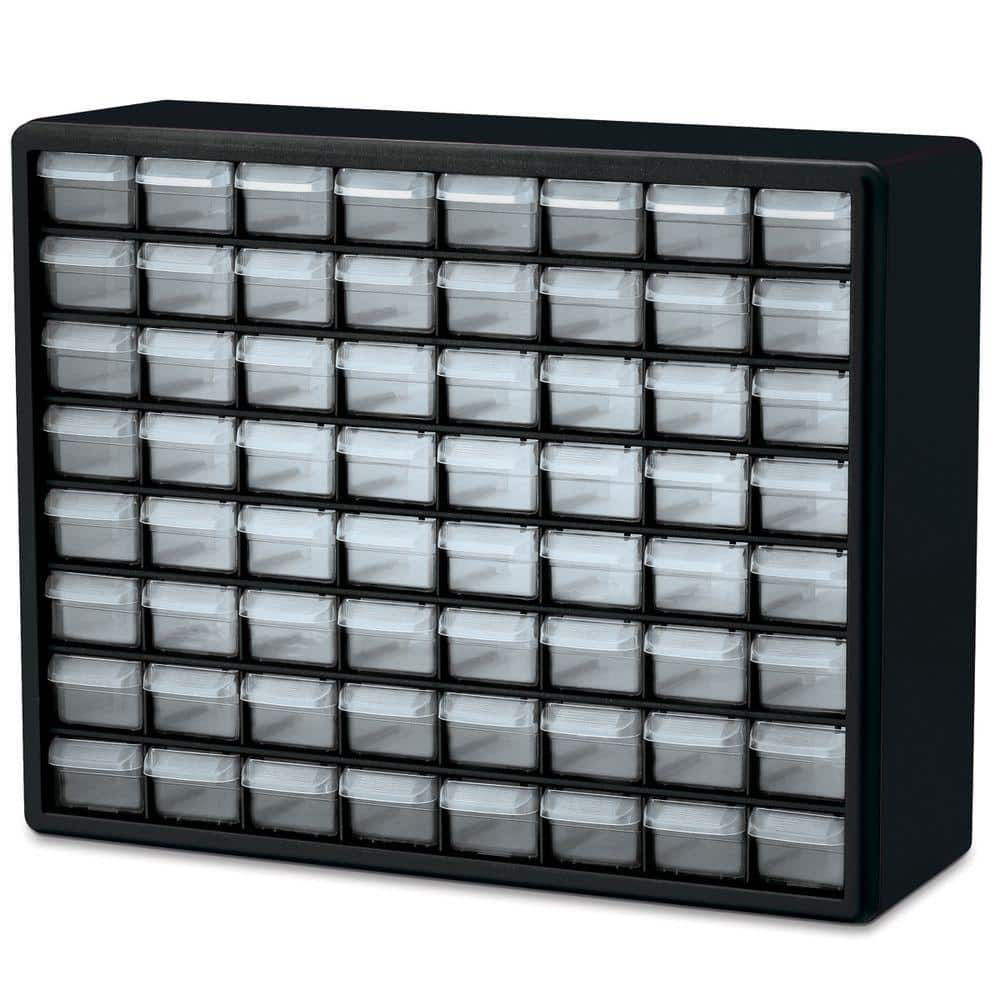
[1] https://images.thdstatic.com/productImages/a34bd723-d555-429...
Clutter intolerance can have a profound impact on daily life for sufferers. Many will engage in maladaptive coping strategies such as ritualistic tidying and avoiding cluttered rooms or spaces. Whether tolerance can be improved through therapy is an area of active research. Unfortunately, clutter intolerance is thought to be neurobiological.
“There, doesn't that feel better?”
“Yes [I will say anything that will make you go away, and then I will cower in the corner of a room that is no longer my bedroom in a suite that is no longer my home]”
It's also a battle because of the clutter, 10% of it is mine, and I never move their stuff.
The problem comes in when there's something that could reasonably be trash (usually a box that I might need to return something) gets tossed. :(
This reminds me of the difference between 'tidy' and 'organised' .. They are independent properties and an area may be very tidy while being very disorganized and vice versa.. Eg. typical thing where if there is a pile of random crap on a table someone will dump it all into a drawer. The area is now more 'tidy' but also more disorganized.
Tidiness is superficial, whereas being organized has practical benefits.
Trust me, I suck at tidying and have a cluttered mess, so I'm not being Marie Kondo here.
Your logic works but only so far. If you put nothing "away" all your "working surfaces" will eventually be covered with crap -- except of course it's not crap, it's your things that you intended to keep easily at hand. It'll make it so that it's a chore to find things and also a chore to have a useful space to actually DO anything. Sure, leave out a set of favorite often-used stuff, like say, bread on the counter instead of away in a pantry, your most-worn shoes on the floor by the door, whatever. But curating that set of stuff that is important enough to be "just left out" is important, and it's a REAL challenge for me!!
In my experience women do this a lot. I don't know if it's some kind of an evolutionary thing. On the one hand that it was something women traditionally did and can't let go, on the other that it is/was a way to make themselves more important. You become very important when somebody needs you all the time to tell them where things are.
It talks about needing less space in general and being more free, simply by having fewer things, since things beget things; the more things you have, the more organizational containers you need, in turn creating yet more things and yet more space to store them in. Since then, I've tried to actively limit the amount of things and space they take up, since I hate clutter, but I hate organization as well.
I chose the word "yelled" because it was the simplest way to imply the frustration/betrayal/hurt I was feeling at the time. In retrospect, I could have said, "cried out," and captured the emotion/action more accurately without sacrificing brevity. But that phrase didn't occur to me at the time.
Words are hard.
I realized also that this is a TERRIBLE reminder system. I started putting everything in OneNote and my calendar via the Getting Things Done Methodology, and I'm honestly upset that no one ever taught me such a system a long time ago. I've been told a million times to "use a planner", "write things down", "use a calendar", "use a notebook" etc. etc., but no one ever told me HOW to use those things. Getting Things Done is awesome because it told me almost exactly how to use that stuff, and the effect has been life-changing for me. My spaces have never been cleaner, and I've never been more effective in my life.
Some people have mental disease that makes them annoyed where the flat surfaces are covered with immediately useful and easily accessible stuff and act up. "Oh look at those flat surfaces that don't get used for anything useful 99% of the time, how neat and tidy"
Some other kind of people have different disease of just leavin shit lying around for months and never use it, where it should be put back in storage (or bin) weeks ago already. "Don't touch my stuff, if you move it I won't remember where it is!" (then promptly forgets and wastes time searching thru clutter anyway.
Sane compromise is somewhere in the middle. Don't constantly hide the favourite knife every fucking day, ain't nobody got time for that shit. But probably clean it so the next time you use it you won't waste time on that. Cutting board can stay out, you use it every day, multiple times anyway.
Make your home work for you, don’t work for your home.
If that means the best way for you to live your life is to leave things out so you can find them more easily, then do that. Chances are though that having a “home” for everything (mentioned in other comments) is going to work better for you. It’s a process of learning and iteration.
Part of the motivation is the minor discomfort of seeing so many projects open and set aside. For me the solution is to complete projects, not categorize and hide everything.
She freaked out when I told her, but it came with two keys and I gave her one so she doesn't think I'm hiding anything from her.
Also I firmly believe really nice drawer hardware, like soft close and good runners can encourage this behaviour by making operation enjoyable. Grew up with very satisfyingly click put to open drawers, in retrospect not as functional as direct pulling, but man that click conditioned me to want to tidy.
Ideally I'd have ceiling-to-floor shelves EVERYWHERE.
GTD says your mind is not so much storing to-do's as for processing them. Likewise, the contents of spaces. Memorizing contents is unnecessary mind clutter.
Cabinets without doors, and shelves without doors are critical too. I'm not sure why but if I do not have regular visible sight of things, they may as well not exist and I will quickly forget that they are there, leading to all kinds of chaos.
I think that it is rather to have them all in one place, and that they do not take the place of other things or are in your way.
The fact that they are hidden is because they are behind a door, probably to avoid that catching dust.
What was that HN article recently of Las Vegas and windows on buildings more of something causes distress and less is more soothing to a point.
At some point, I yelled, "It's like you don't even want to see any of my things when I'm not using them!" Then I stopped for a second. For the first time in my life, it made sense.
The whole point of putting things away is to hide them! No one wants to look at your crap when you're not using it.