We have varied reactions to parts of the world that still suffer the consequences of human waste in irrigation water. In the far future people will view our current indoor spaces with similar varied reactions.
And buildings will be much more pleasant. It's possible that people would be smarter, too (as opposed to being shut up in a badly ventilated conference room for an hour or two).
There are costs, as heat or/AC will have to run more to keep the temperature in the right range.
The cool thing is you can make it part of the interior. I have 3 panels hanging from the ceiling, 1 painting and one mirror. They can be integrated into hanging or floating ceilings and usually have standard dimensions. You have to be aware, that most panels do not have thermostat. They have only one operating mode - On. In order to regulate them, you have to put a thermostat on the electrical line before it(essentially a smart switch). There are thermostats for wall integration. I use those, the cables are hidden in the wall and the actual thermostat is mobile so it can measure temperature at any location in the room. There are also thermostats which are plugged directly on electrical sockets for more integration out of the box. The price is comparable to any other heating solution and the consumption is a little less than air conditioner. Mine came with 5 year warranty. I just hope that they last longer, but with the exception of the painting, all the rest are easily replaceable.
For air conditioning the best part of it is the dehumidifiation. It doesn't need to be arctic cold just the dryer air and a bit of cool is OK.
I've also been sitting quietly at home and suddenly half my thumb goes purple and the other half is fine.
You know it's Raynaud's syndrome because it feels like someone hit your hand with a hammer. It's not just cold hands it's the pain too.
Buildings are often (not always) set to 24-25C in summer, and 21-22C in winter.
*no figures sorry, just in my experience
IIRC a person can be approximated as 100 watts of heating. If you add up everyone in the full restaurant or theater you get quite the number for how much heat the people themeselves are putting out.
Infectious disease would be more of a concern, but the submarine itself is a pretty effective quarantine.
Heat recovery ventilators can largely solve this problem, while also reducing particulate pollution indoors.
Will we have an issue with airborne diseases?
So all the standards and codes are designed around reducing unnecessary ventilation and frankly, there's been very little consideration of the health implications until COVID hit.
On the HVAC side, you want a system with a high CoP and I'd probably be looking at some form of energy recovery on the ventilation side.
I live in a relatively new building in NL, where many of these configurations are applied and on its own it won’t go lower than 21C in winter and 25C in summer. Thick walls, thick anhydrous cement floor layer for insulation (although I think it’s also meant to give the option to implement floor heating), _external_ blinds on the South side.
I simply can’t justify a smart thermostat/radiator valve build, despite my inside nerd constantly whispering I should.
Only downside is the heat exchanger air recirculator: it dries the air terribly in winter. You need a humidifier to avoid getting parched skin and mucosa.
This is the answer! Even more important than insulation is air sealing, so you keep the conditioned air inside.
I've learned an enormous amount about building efficiency from
https://www.greenbuildingadvisor.com/ and https://www.energyvanguard.com/
I installed it, and would never go back to forced air. For some reason, it's not popular on the west coast.
It's so simple, a DIY'er could do the instal.
My energy bill is down, and allergies are better.
(I've noticed every store I have been in has forced HVAC, and I have a weird feeling forced air spread viruses. Plus--most retail stores have old systems. They might have slapped in some high mir filters, but I doubt they help with anything on old leaky systems.
(To those interested in hydronic heating, buy Modern Hydronics, by Stegenthal? I'm too lazy to look up his last name, but his book is used as text books.
- The term hydronic heating.
- That most Americans don't have hydronic heating.
That's so weird, here in France radiators are just ubiquitous.
This is the detachable showerhead thing all over again. How do you people survive like that? You're supposed to be the highest GDP country in the world!
You can also find baseboard heating, but that tends to be electric and have quite expensive operating costs. It's mostly only used in additions and places where you would only heat the space if you were currently in the room.
> This is the detachable showerhead thing all over again.
Uhhh... Everywhere I've lived in the US has had a detachable showerhead, from places built in the 1890s to places built in the 2000s. It's a normal thing for apartment dwellers to buy a nicer showerhead to replace the likely cheap and crappy one that landlord installed and then put the crappy one back before moving out.
You’ll find hydronics in expensive houses that can justify the double expense or in colder climates where the heating benefits are more important than AC.
Also everyplace I’ve lived in the last 25 years has had detachable showerheads.
This contrasts against the more common American method of using hot air to heat a home. I believe air heating is more common in the US because AC systems already require the relevant air ducting, so it's easier to install.
Meanwhile here in NL airconditioning is very rare, and 95% of people use a gas fired water heater and metal radidators in rooms for heat distribution.
He recommended I buy it myself on amazon and linked me to a youtube to install it: https://www.iwaveair.com/products/iwave-r
He said that his company would install it, but they'd overcharge and it is easy for anyone to install themselves. He had one in his house and told me all about it like a sales pitch. I installed one not because of the coronavirus, but because it helps with particulates in the air such as pollen and dander, which absolutely wreck me. I've only had it for a year, but it does seem to be noticeably better allergy-wise.
That's a good thing, because there is no safe/acceptable level of ozone in indoor air:
https://www.epa.gov/indoor-air-quality-iaq/ozone-generators-...
Ionizing can be a great way to remove fine particulate from the air, but it works best when there are charged surfaces for the charged particles to plate-out on. Simply ionizing them in the ductwork means the particles stick to whatever's handy, which may be the ducts, may be the furniture, may be your lungs.
Which is to say, this product uses a lot of the right vocabulary, to describe precisely the wrong engineering.
https://www.epa.gov/indoor-air-quality-iaq/ozone-generators-...
Do read the warning from the EPA.
We are, of course, talking about miniaturizing a Direct Air CO2 capture system, which usually operates at large scale to get efficiency. Replaceable cartridges that are regenerated at a central location may be a better option.
But oxygen concentrators are small and cheap and portable and don’t require much energy to operate.
At 1400ppm CO2, we've turned what, 1000ppm O2 into CO2 (is it 1-1?), or 1% of the atmosphere. Dropping O2 from (Edit: Fixed numbers) 21% to 20%. Or about a 5% reduction in O2 density. Equivalent to approximately 1500 feet of elevation... That's just not that much.
(There's also a long list of papers showing issues with CO2 toxicity at low levels of CO2... I keep intending to write a blog post summarizing them)
1400ppm is 0.14%. Earth's current atmospheric co2 level is around 400ppm, or 0.04%. While the jump from 0.04% to 0.14% might seem significant (3.5x more co2!), it's not.
Submariners survive on 3400 to 11300 ppm co2, or 0.34 to 1.13%:
> Submarine crew are reported to be the major source of CO2 on board submarines (Crawl 2003). Data collected on nine nuclear-powered ballistic missile submarines indicate an average CO2 concentration of 3,500 ppm with a range of 0-10,600 ppm, and data collected on 10 nuclear-powered attack submarines indicate an average CO2 concentration of 4,100 ppm with a range of 300-11,300 ppm (Hagar 2003). [0]
[0] https://www.nap.edu/read/11170/chapter/5
I'd like to emphasize that the average CO2 concentration for submariners is 4,100 ppm or 0.40%, or ten times Earth's current CO2 level.
Oxygen is much more toxic than small amounts of CO2. Pure CO2 will kill you quickly, pure o2 will kill you slowly.
> (There's also a long list of papers showing issues with CO2 toxicity at low levels of CO2... I keep intending to write a blog post summarizing them)
I'm interested.
2) Don’t doctors provide severe COVID patients with pure oxygen? If it’s toxic, why would they do that?
3) How does pure oxygen kill you? What’s the mechanism?
Pure CO2 will knock you out in 4-6 breaths, and cause your expiration in 10-20 minutes. Laboratory animals are routinely euthanized with co2 [0]. Pure O2 will cause your expiration in 4-6 days through the accumulated damage of reactive oxygen species.
[0] "Expose the animals to CO₂ until complete cessation of breathing is observed for a minimum of 2 minutes (a total of approximately 5 to 10 minutes is usually required)" - https://www.bu.edu/researchsupport/compliance/animal-care/wo...
> 2) Don’t doctors provide severe COVID patients with pure oxygen? If it’s toxic, why would they do that?
This is bad medicine. Early 20th century medical investigators figured out best practices for oxygen support, but the insights got forgotten, now they're just in the old papers in the libraries.
> 3) How does pure oxygen kill you? What’s the mechanism?
tl/dr: Hyperventilation.
Oxygen is highly toxic to the cells in the human body, but not generally under standard atmospheric pressure. Breath pure oxygen while >33ft below water and you’ll quickly experience oxygen toxicity, ultimately leading to death. Yes, that’s generally specific to divers, but even pure oxygen at standard atmospheric pressure can have health impacts.
More information: https://en.m.wikipedia.org/wiki/Oxygen_toxicity
---
> I'm interested.
Well I don't have a blog post ready to go yet, but I can point you to some papers now.
- This review cites a bunch of papers about health effects in the 1-10k ppm range: https://www.nature.com/articles/s41893-019-0323-1.epdf?refer...
- Table 3 in this paper references a bunch of papers around 10kppm: https://www.researchgate.net/profile/Susan-Rice-3/publicatio...
- These papers show mental effects in the 1-4k ppm range:
https://ehp.niehs.nih.gov/doi/full/10.1289/ehp.1104789
http://www.aretas.ca/sites/default/files/imce_images/Indoor%...
- These two are from nasa about the ISS - which brings it's own complications but otherwise also show mental effects in the above range
https://web.archive.org/web/20190613133240/https://ston.jsc....
As someone pointed out in a reply to another comment in this thread, oxygen is especially toxic 33 feet below the surface of the water (because of higher pressure), but can have toxic effects at the surface too. I don't grok respiration yet, but my understanding is that altitude/pressure is essential for putting the relative N2/O2/CO2 partial pressures into context.
Dry air is ~21% oxygen by volume.
I'm getting the density numbers from here by the way if you want to check the rest of my math: https://www.engineeringtoolbox.com/air-altitude-pressure-d_4...
Regardless of air or sunshine (which are both extremely important to our physical health), not being outside makes us unhappy. People who work outside often sing while working; when was the last time you heard someone sing in an office.
Imagine that, having to live and work in oxygenated habitats on our home planet.
https://www.acer-acre.ca/resources/climate-change-in-context...
Do you know how humidity affects transmission?
Pre-pandemic I used to go indoor bouldering where there tends to be a lot of chalk in the air and I was curious how that affects transmission. Couldn't decide if the dryer air meant less transmission, or the larger particles meant more maybe. Couldn't find anything about it.
Mute, because he can't speak our language.
The reason seems to be the Latin word theodiscus from Old German theod / people.
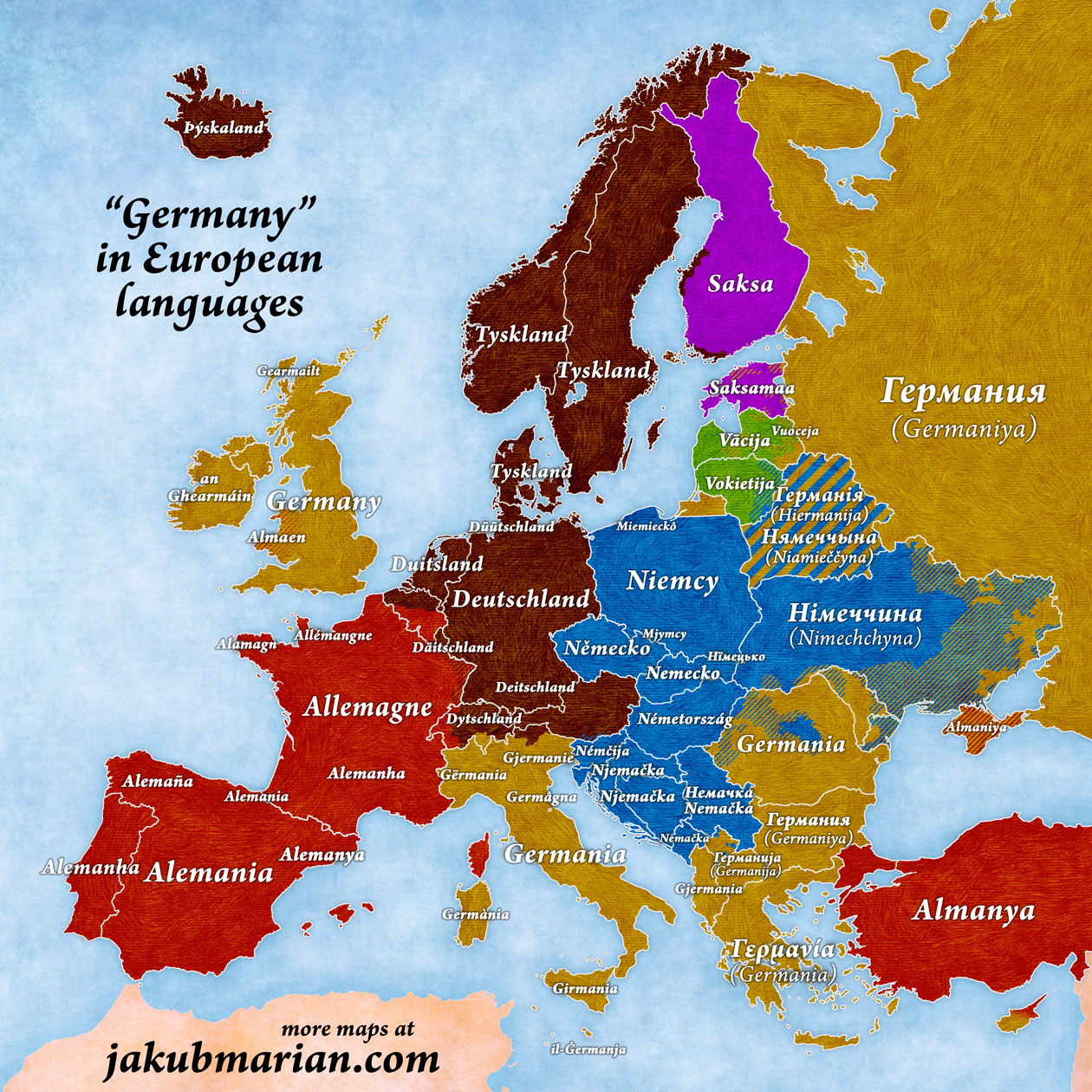
Interesting that Finland/Estonia call them, essentially, Saxony.
The Latvian/Lithunian name for Germany is the only one I don't understand. Does anyone know?
Četrnaeste, četrnaeste, Švaba udario, (2x) Osamnaeste, osamnaeste, Srbin pobedio. (2x)
(In the 14th year, the Schwab struck. In the 18th year, the Serb won.)
https://hr.wikipedia.org/wiki/Ko_to_ka%C5%BEe,_Srbija_je_mal...
It comes from the fact that Germany didn't unify until very late, so the people were called by the small city-states that they came from. In American revolutionary war, some British mercenaries were called Hessians....
https://en.m.wiktionary.org/wiki/%CE%B2%CE%AC%CF%81%CE%B2%CE...
In Hungarian, német means "German" (the word has Slavic origin, literally meaning "he does not speak", since German is not a Slavic language)
https://en.wikipedia.org/wiki/Siege_of_Neam%C8%9B_Citadel
Barbar means what it means in Greek, because that's where it's borrowed from.
It's slangy and self-consciously borrowed, like 'schlep' or 'schmuck' in New York English.
https://www.telegraph.co.uk/global-health/science-and-diseas...
Which explains the British idiom in a Anglo paper in a bilingual city in Canada. (Bonjour-Hi!)
I guess you could say we've been keeping schtum about it.
Merriam-Webster added “embiggen” but declined to add “cromulent”: https://www.bbc.com/news/newsbeat-43298229
Guess "keeping quiet" didn't come to the author's mind. /s
1.) RNA and the lipids used to get it inside a cell are inherently pretty immunogenic (a huge plus for a vaccine). If you think about it, you basically never see free mRNA/DNA in the blood stream other than if something has gone wrong (usually a virus), so the immunogenicity here is pretty ancient.
2.) RNA gets shunted to the liver and chopped up. Hence most RNA based therapeutics target the liver.
Vaccines are a really great use case, not just a, "we could help out here too," side-case. They're delivered intra-muscularly so there's less "go to the liver!", and the immunogenicity is a feature not a bug.
Lots of this comes from siRNA therapeutic research that is older than mRNA work, but the principles are very similar. Some older articles that touch on some of these issues:
https://www.ncbi.nlm.nih.gov/pmc/articles/PMC3378126/
https://www.ncbi.nlm.nih.gov/pmc/articles/PMC3269031/
https://www.sciencedirect.com/science/article/pii/S016836591...
Useful reference:
https://blogs.scientificamerican.com/guest-blog/botanical-se...
You can lift weights at the gym and build your arm muscles, then use those muscles to lift or push other things more effectively, because muscles are general purpose tools.
Most of your immune system is more like a key. It’s specific to one thing. There are some exceptions but overall the fewer viruses you encounter the better.
As for the exercise: yes. There’s already preliminary evidence that exercise is highly coordinated with covid outcomes.
Do you have any resources to help me understand your position better?
GP asked “lack of exercising one’s immune system” not “lack of exercising” in general.
That'll need a reference. It's only a few weeks since a worker was infected in a one-person workshop[1], from the guy working there two days earlier. Testing showed that it was the exact same (rare) virus strain and the only explanation was that the second guy got infected from using the same tools as the first guy (not infected _through_ the hands of course, but presumably by touching his face afterwards. As one does).
(Keeping surfaces clean is the most important part, otherwise you'll have to clean your hands every time you touch something. As for myself I've become very self-conscious about what I touch.)
[1]https://translate.google.com/translate?sl=no&tl=en&u=https:/...
https://www.cdc.gov/coronavirus/2019-ncov/more/science-and-r...
Kids, highest risk group for this flu virus... right?
Psychologically, they are, and I think you know that.
We're still using lots of hand sanitizer here, because the combination of masks, social distancing, and hand sanitizer seems to work. Though, we could be mistaken about the relative effectiveness/necessity of the three measures. My office building has hand sanitizer dispensers in the entryway.
Yes, it's primarily a respiratory virus, but the cost of hand sanitization is pretty low and the virus remains infectious on most surfaces for several hours. Here in Hong Kong, we're one of the most dense cities on Earth, with a lot of public transit use, so surface contamination may be more of an issue here than in other places.
They sure work for limited amounts of time in specific use-cases, especially with training and when you can wash your hands before putting them on.
Day-to-day for longer durations at a time they seem detrimental actually, due to the fact that you have to touch your face more often (especially with glasses), wear them for too long and reuse them often.
This is only anecdotal, but as somebody working in healthcare, mostly with autoimmune compromised patients in ambulate care, there's most certainly been a very noticeable effect among those patients, and even myself.
I will usually get a cold at least once, sometimes twice a year, forcing to take sick days. Yet that last year I wasn't sick once.
We've had to administer way less antibiotics therapies, the hospital stations we work together with are super happy about how well their patients are doing now, particularly the children.
Kind of funny to think about: The way we've been living for a year has always been their way of living. But when we all do it, that apparently even gives a kind of "herd protection" to those who really depend on these measures not to get sick.
And that is certainly due to masks? I ask because there are generally speaking more measures in place, especially in hospitals/nursing homes like fewer visitors (if any) for example.
> We've had to administer way less antibiotics therapies, the hospital stations we work together with are super happy about how well their patients are doing now, particularly the children.
And again, is that due to or despite using masks?
But since I am questioning the rationale, it would be nice if there would be a good explanation why it is better for symptomless people to touch their face more often, wear masks beyond their intended duration and reuse them (because it is impractical otherwise especially with mandatory medical/FFP2 masks)
I didn't specifically point masks out anywhere, it's most certainly the combination of all kinds of measures, but wearing masks and taking care of proper hand hygiene has been a rather normal part of life for many people with autoimmune diseases for a long time before any pandemic came around.
In many Asian countries it's absolutely normal to wear a mask when sick, to prevent further spread possibly to the weaker among society.
That's done not because we like to make people do things, we do that because it's been established as good practice in these circumstances.
> But since I am questioning the rationale, it would be nice if there would be a good explanation why it is better for symptomless people to touch their face more often
A hygiene regime isn't some binary thing where one failure of perfect compliance ruins the whole effort.
Particularly with examples like "touching face more often", why would you even do that? You put on the mask and you leave it on, the constant touching, particularly with dirty hands, is really down to a lot of people being lazy/careless or trying to wear the mask as little as possible.
> wear masks beyond their intended duration and reuse them (because it is impractical otherwise especially with mandatory medical/FFP2 masks)
Their intended duration is, once again, a best case scenario often designed for completely sterile conditions. Depending on the use a FFP2 can easily last a week. Just like surgical masks they can actually be handwashed with soap to get a good reduction of whatever might have collected up in there.
Of course that doesn't work forever, just like this current situation ain't forever.
But one could hope that we learn at least in a couple of places from this. Like the aforementioned example of people who caught something voluntarily wearing a mask, without getting weird looks. Somewhat more readily access to hand-sanitation is also a big plus, when previously a lot of people didn't really care about it, many still don't, even tho that's one of the simplest ways to stay healthier.
"When sick" is an important distinction from the current regime.
> A hygiene regime isn't some binary thing where one failure of perfect compliance ruins the whole effort.
It's exactly like that. You get either infected or you don't. It's binary, however you maybe mean that there is a probability attached that is bound by the circumstances.
> Particularly with examples like "touching face more often", why would you even do that? You put on the mask and you leave it on, the constant touching, particularly with dirty hands, is really down to a lot of people being lazy/careless or trying to wear the mask as little as possible.
How is it better to wear masks for these "lazy/careless" people (which are apparently a lot)?
Sorry, but that's just not how it works, by now there's plenty of evidence that initial viral load exposure plays a major role in the later disease progression, which is not something unique to SARS-CoV-2.
As such it's very much part of the whole spectrum of outcomes from "Asymptomatic to mild symptoms" to "Ending up on a respirator and dying".
These are basics, and I'm not gonna discuss them with some random stranger who, once again, tries to politicize rather common sense, and established, medical practices.
> How is it better to wear masks for these "lazy/careless" people (which are apparently a lot)?
Yes, the top of the bell curve is sadly a very crowded place.
The common cold is a 1-2 month ordeal with an ambulance ride in the middle. If someone made a pill that just made common colds less severe in the lungs, it would be absolutely revolutionary. Our healthcare system could pay $20k/year for my child to have that and still make money. Heck, I'd pay that out of pocket if they didn't.
The common cold is a tricky one because it's about 200 different viruses, including rhinoviruses, coronaviruses, RSV and parainfluenza. And a bunch more that haven't been identified yet.
After the second week, a handful of Covid tests, and one fever, we took her to the doctor and asked why this cold was lasting so long.
Our pediatrician was like “not cold, colds. She probably had 3-4 viruses back-to-back.”
I had no idea this was a thing - he called them “daycare viruses.”
Probably your kid has by the time you started supplementing just gone through the typically circulating virus strains and thus the viral loads in your kid don't replicate to levels that almost guarantee you being infected when interacting with them (like cuddling, comforting when they cry, etc.).
As I said I sometimes get sick every few years but one day is typically the maximum. Consider me convinced.
Do children who attend daycare eventually develop a much stronger immune system? (No idea how this could be scientifically measured.) I also wonder about doctor's who work in the emergency room. How are they not constantly sick with some kind of common cold / flu / bronchitis? They must have the immune system of a super hero.
I have many siblings (more than 9). All of us grew up on an active farm except the youngest one. None have had any food allergies except from my youngest brother.
> I also wonder about doctor's who work in the emergency room. How are they not constantly sick with some kind of common cold / flu / bronchitis?
A colleague of mine told me his wife would eat anything that had expired best before date etc while she was in training, just to build her defenses.
I cannot vouch for this theory but maybe someone else can tell if it is a common tactic.
(I think it sounds weird.)
I lived for 5 years in a college dorm sharing bathroom/toilet and a communal kitchen with 14 other students. I am not quite sure it built up my immune system. I managed to get the swine flu back then, too.
This reminds me of another dorm story, a friend of a roommate always washed his hands when he came of the bus and visited. And I distinctly remember how we all felt that this was somewhat weird, obsessional, when in retrospect it just feels prudent and I don't really think he showed signs of pathological obsession. Its interesting how standards change.
As to eating stuff past expiry date: my wife tends to stockpile yogurt and dairy products in our fridge, not that uncommon that they were past their date. Turns out, since they are pasteurised they are often still good weeks after their best-before date. I actually don't think there is much in them to train your immune system (unless they are spoiled and I don't think fungal toxins is something you voluntarily want to put in your body).
> Contrary to popular impression, the current system of food product dating isn’t really designed to help us figure out when something from the fridge has passed the line from edible to inedible.
> For now, food companies are not required to use a uniform system to determine which type of date to list on their food product, how to determine the date to list or even if they need to list a date on their product at all. [1]
[1] https://theconversation.com/how-do-food-manufacturers-pick-t...
[1] https://www.webmd.com/allergies/news/20180716/can-dogs-keep-...
I would say so, yes. Your body remembers what viruses it's already fought, and will remain primed (for a significant time) to fight it again. Kids exposed to lots of illnesses when young, should end up with a more robust immune system in adulthood.
This is why chicken pox parties are a thing.
First few months of daycare, constant colds. Then COVID hit and we took the kids out of daycare, no colds for months. Back at daycare, colds started right away.
It has mostly stopped for my five year old. She gets a normal amount of colds now (a few per year), but our two year old is still a constant cold machine.
Did the doctor's test for respiratory syncytial virus (RSV)? I only learned about that illness recently. Interestingly, there have been multiple, failed attempts to build a vaccine. It is one of the last statistically significant childhood viral illnesses without a vaccine in highly developed nations. I wonder if an mRNA solution can be found after the COVID crisis is over. I sincerely hope so.
Ref: https://en.wikipedia.org/wiki/Respiratory_syncytial_virus
So yeah, this wouldn't be a cure for common cold. Maybe it could be a pill people could take with a 10-20% chance of curing it, if they're lucky.
> Pfizer is keeping schtum about the detail of the lab tests it has completed but says it has demonstrated “potent in vitro antiviral activity against SARS-CoV-2”, as well as activity against other coronaviruses, raising the prospect of a cure for the common cold as well as future pandemic threats.
H.G. Wells knew his stuff
[1] https://www.abs.gov.au/articles/measuring-excess-mortality-a...
This is leading to very long ambulance waits at hospital entrances and lead to at least one death when an ambulance wasn’t available. (Sorry that I don’t have time to find a link right now)
To be clear I fully support the government action in Victoria, life is pretty much back to normal here, and looking overseas it seems hard to believe how fortunate we are, but it was not without unexpected consequences.
This could really use some additional context for non-Australians.
Melbourne is the largest city in Victoria. The Premier of Victoria enacted interregional border closures during its several months-long lockdown.
(This wasn’t unique to Victoria — Western Australia did the same thing at the start of the pandemic.)
If hospitals are “filling up” now, that could be at least in part due to the logistics previously not allowing it.
However, as someone who avoided getting stitches for a finger laceration due to fears of catching Covid in a medical facility, I’m convinced people avoided necessary medical procedures to reduce exposure risk primarily. Hence I’m not sure how much of this surge in delayed medical procedures is due to interregional border closures, and how much of it is due to the public’s fears of catching Covid having been assuaged by the successful Covid safety measures taken by the Victorian state government.
Lockdowns have become one of the most politicized aspects of the pandemic. It’s really a shame they’re so unpopular amongst Americans: I think many there would happily subject themselves to 4 months of hard lockdown — in unison with generous unemployment support ofc — if it meant eradicating Covid completely in their local area.
Overall I feel we managed the pandemic fine so far without lockdowns. Sure, people died and I'm sure in much larger numbers than Australia. But if we ever need to experience something like this again, I would still prefer this over strict lockdowns after a few new cases like in AU. I'm not against strict lockdowns, there might be times when they are a good solution, but nothing longer than a couple of weeks.
My experience of Covid, which is the same for almost everyone in Australia, is nothing remotely like yours. For the vast majority of people living here, Covid is a minor inconvenience that doesn’t materially affect our day to day life.
I meet friends at bars for drinks and dinner, my kids take public transport to school and go on school camps, I go to the office for work, and I’m even flying to Sydney this afternoon for a couple of days.
Australia is basically operating normally with almost no restrictions. Situation normal.
You seem to be saying that lockdown was too heavy a price to pay for the freedom I now enjoy, but I respectfully disagree.
It was totally worth it.
The only thing that I’m unhappy about was that Melbourne stuffed it up the first time and we paid heavily for that. But you know what?
Still worth it.
In Melbourne we have had three lockdowns, the first was a couple of weeks, the second was extremely long (several months; I think it was one of the longest hard lockdowns in the world), and the third was 5 days (2 of which were over a weekend).
Importantly, the second lockdown was due to what seems to have been preventable problems, including a significant delay before enacting the lockdown itself; by the time we did it, the virus had taken a firm hold across the whole city (Melbourne's population is a bit over 5 million). If we had locked down a few weeks earlier, the duration of lockdown would have been much lower (easy to say in hindsight).
That said, the rest of the county didn't suffer the same fate as Melbourne, and they only had to endure a few weeks of lockdowns at worst. I don't know the specifics from other states because I live in Melbourne.
I think this parallels most of the rest of the world: had everyone agreed to one or two really good, solid, early lockdowns, much of the pandemic could have been avoided. The countries that did this - NZ, most of Australia and I think some of SE Asia - have not suffered nearly as much as the rest of the world.
The second Melbourne lockdown was super hard on everyone, and of course we had government support in many (but not all) cases, but I still say it was totally worth it.
People seem to be OK discussing hundreds of daily deaths from Covid as if that's something that can't be prevented, but it could have been. Our lockdowns have literally saved tens of thousands of lives here.
https://www.dhhs.vic.gov.au/victorian-coronavirus-covid-19-d...
I've had one lock-down for about 6 weeks, starting on 30th March 2020. That's been the extent of it for me.
Lockdown meant the family stayed home with the children doing school remotely. We were allowed out for exercise (family group only) within a few km radius, supermarket shopping, medical and looking after aged family. I could have gone to an office, but was able to work remotely.
Other areas have been through more due to localised outbreaks. Parts of Northern Sydney did several weeks around Christmas due to an outbreak. Victoria's second wave was the most intense lock-down. That went for about 3 months. It was tough on the Victorians I know, but as a comparison at the beginning of the lock-down the UK and Victoria were in a similar situation. By the end of the lock-down Victoria was on zero cases whilst the UK was at risk of the NHS being overwhelmed.
We've now settled into a pattern of 3-day lock-downs at the first sign of any outbreak, these being lifted if there is no further transmission detected during the lock-down. So far there have been about 4-5 of these in different state capitals but all have been lifted at the end of the 3 days.
Vaccinewise, Australia's dropped the ball a bit. The government under spent on mRNA vaccines and didn't invest in local mRNA manufacturing. We're making the AZ vaccine locally, but there turns out to be a low risk of blood clots. Given the low COVID numbers it's borderline whether the risk of blood clots is outweighed by the risk of COVID for under 50s. The medical recommendation is for mRNA over AZ, but decent supplies won't arrive until the end of the year. I mention this as low COVID numbers makes decisions about vaccines more complicated.
Life here is "normal" in that there aren't many restrictions beyond overseas travel, but a significant number of people are choosing not to go back to their old ways, partly due to COVID risk and partly because they have figured out that some of their previous activities weren't actually that important and that life is good without them.
When a case is detected, the NSW government's contract tracers conduct confidential phone interviews to determine all contacts, both forward and backward. A forward contact is someone to whom you may have given the virus. A backward contact is someone from whom you may have received the virus. The "backward" contact is the more critical one, as it can lead to previously unknown community cases. The contact tracers are aiming to trace the new case back to an already known case. If they find any intermediate transmission or close contacts, they recursively do the forward/backward thing on the intermediaries and close contacts until they reach limits imposed by COVID's known incubation and infection times. The aim is to locate every person who has any chance of having COVID, given the known properties of COVID.
If the contact tracers successfully traverse the tree to all possible cases then lockdown is avoided. Close contacts are required to isolate at home for 14 days (with a support payment), whilst casual contacts are asked to get tested and monitor for symptoms. If the contact tracers are unable to traverse the tree or are overwhelmed by the numbers then a lockdown occurs. NSW has put significant resources into contact tracing as it recognises that the cost of a lockdown will always be greater than the spend on contact tracing.
Beyond phone interviews, contact tracing is assisted by a requirement for all public venues to keep a 14 day digital log of names, phone numbers and time of attendance of people who have visited. Patrons provide details on an honour basis, but most people do this honestly as they realise that it is their own interest to be contacted if they have been exposed to COVID. There's also a certain amount of pride that the country has weathered the storm (so far) and people don't want to be the one that stuffs it up.
Now what they have done is kept me here living in Australia. Which has been a particularly big deal for my specific lifestyle in which I was living overseas in a dodgy visa abusing way, meaning I couldnt qualify for an exception to the international travel ban by showing I was legitimately living elsewhere. Day to day though its like it almost didnt exist except online.
Most shops were still open but had reduced numbers allowed inside. High risk venues like nightclubs and casinos were closed, restaurants went to takeaway only. This was early in 2020 when nobody knew what they were dealing with, really. They were talking about "Keeping numbers down until we can build capacity", but they just found out they were really good at keeping numbers down, and I don't even know what we did with our 2K extra ventilators when we peaked at about 60 patients in hospital in NSW I think.
We switched from a suppression to an elimination strategy and have been mostly normal since then.
One small group of suburbs had a lockdown around Christmas/New Years, but it only affected about 100K people I think and only for a few days.
The model in Australia seems to be to keep community transfer to zero, and if a case is detected, a 3 day lockdown of the suburb/city in question to let Contact Tracing and Testing travel faster than infections.
(One might think that borders would only have to stay closed until local vaccination has been rolled out. However, several of the scientific advisors recommending the "zero COVID" approach à la Oz and NZ, also want borders closed – except for strict hotel quarantine – for some years into the future to prevent variants from arising, or even in perpetuity to prevent the next pandemic from ever starting.)
And a mere 48-hour disruption had pretty disruptive results [1] - and week-long quarantines simply aren't an option.
With regard to the proposal that borders stay closed – except for strict hotel quarantine – until some indefinite date a few years from now when COVID has been eradicated not just locally but worldwide and there is no more threat of variants, see, for example, the interviews which Devi Sridhar (one of the main advisors to the Scottish government and a fan of Australia’s approach) gave over the last several months.
Not true. There's repatriate flights weekly out of both NZ and AU. You just have to quarantine coming back in.
There's a process for approval, but it's fairy straightforward. If you can afford a ticket and the destination country will take you, you can go.
The hard part is - most countries or connecting countries if you can't fly direct require 2 week quarantine or limit people entering. ANY inter-country travel is a bureaucratic nightmare.
What if you are not taking a "repatriate flight", but rather you are simply an Australia citizen who wishes to travel abroad e.g. to see family or be with a lover? My understanding is that Australia has forbidden its own citizens from freely leaving the country over the last year.
And having to do a strict hotel quarantine upon reentering definitely does not qualify as being able to freely travel, and as I said in my original post above, many people would not stand for it. Most European countries that require quarantine, for example, allow one to do it at home and it is easily gamed.
Australia’s policy of a hard lockdown followed by strict hotel quarantines worked for Australia, but it wouldn’t work here, and it is always tone-deaf when Australians recommend it as some kind of universal solution.
It was also arguably “unconstitutional” [1] for Australian states to close their borders with one another over the pandemic. Business magnate Clive Palmer sued Western Australia over its border closures, in fact, and even received backing from the Australian federal government [2].
Particularly in light of the patchwork framework surrounding state-mandated church closures in the US, the difference between Australia and the United States as it pertains to interstate border closures seems to be more a matter of cultural expectation, than legal impossibility. But IANAL.
US airports are highly controllable ports of entry. I think a lot more could’ve been done there had the population willed hard border closures into existence.
[1]: https://auspublaw.org/2020/08/border-closures-and-s-92-clive...
[2]: https://www.theguardian.com/australia-news/2020/aug/02/feder...
As time passes so does the understanding of civics in the US. People think the President is like a king and just decree things willy nilly not appreciating the federal and state jurisdictions and that there aren’t departments which run things without direct intervention. Cheers!
More than half of the eligible voters in each state voted (either directly or indirectly through preference based instant runoff voting) for their government. This is significantly higher political participation than almost any other country in the world, and I’m sure it contributed to the outcome.
If you want to see "porous borders" you only need to look at Africa, Asia or Europe, all of which can be walked in-between. Walking from the ME to America? Not gonna happen.
Crossing the Mediterranean is very doable with limited resources while crossing the Atlantic/Pacific with the same resources would be impossible.
So I don't think the current situation is a result of iso but rather a result of Covid, and the fact that we are no longer fearful of it.
The unemployment support was missing/inadequate. Had it been adequate, I doubt we'd have had over half a million deaths from this.
In fact, there was one particular story on the news that I remember the most about a woman who couldn't get her appointments for an eye treatment due to the lock down and it progressed from curable to incurable.
She's blind now.
https://apnews.com/article/pandemics-health-traffic-coronavi...
https://www.sciencedaily.com/releases/2018/05/180521131746.h...
This... is exactly what (many) vaccines do.
But by far, the most useful thing we got of this pandemic is once again moving medicine up in the priority list. Lately it had gotten stuck at "hiv is not curable, let's have another cancer fundraising". And one year later we're at "vaccine for cancer, pill for common cold", plus god knows how many other things. And hopefully, just hopefully, it's shown enough people that FDA-style organizations are a huge brake for serious progress. Challenge trials -> vaccinations started 6 months earlier -> probably 0.1% deaths overall (yes, it's 6 months in an exponential).
Now if we have a vaccine for those, do those relatively benign viruses evolve to bypass the vaccine, but in doing so pick up more dangerous mutations in that process?
The more people that have a virus, the more copies are out there mutating, and the more mutations (in total) you'll see.
If you introduce negative pressure, like a vaccine or antibiotics, some of those mutations that were previously deleterious will turn out to be a net benefit. E.g: A thicker cell wall in bacteria makes it harder to absorb nutrients, but also increases the dose of antibiotic it can survive. These mutations happen all the time by chance, but in the absence of the vaccine/antibiotics, they are less fit and will tend to die off.
A vaccine that eliminates a virus is likely to result in less infections. Less infections means less mutations means less chance for a dangerous variant. If some variants do evolve that escape the vaccine, odds are good that they will be less dangerous than the original, not more.
Unless you can eradicate the virus or bacteria completely (mass effective vacination), the tools we create to fight them are really only delaying the inevitable.
>If some variants do evolve that escape the vaccine, odds are good that they will be less dangerous than the original, not more.
From my understanding, this is not the case. It's pure chance whether a mutation is advantageous or disadvantageous. If you are looking on a per-mutation basis, then sure, it's likely the mutation is disadvantageous. But at a population level, it's likely that atleast one advantageous mutation will emerge reasonably quickly when we are talking about something at the scale of several thousands of infections.
Perhaps viruses are simply more specialized, so it's easier to eliminate anywhere to hide by innocculating affected populations, while bacteria are more general purpose and can survive even without living hosts.
If we're talking only human viruses, the count is 1: Smallpox, and it took about 20 years. If not, I think the count is 2, the other being a cat one.
In both cases, if I remember right, the virus couldn't jump species, while SARS-CoV-2 already has multiple times.
[1] https://asm.org/Articles/2020/March/Disease-Eradication-What...
As for your second point - mutations are happening whether or not we vaccinate. Vaccination does not cause mutation.
Antibiotics do not treat viruses. They treat bacterial infections, which WILL mutate and evolve as you claim with overuse of antibiotics.
This does not apply in the slightest to VIRAL infections.
Finally, human DNA is peppered with traces of viruses.
https://www.smithsonianmag.com/science-nature/virus-genes-hu...
That isn't a real worry, that is a science-fiction worry.
Viral load, transmissibility and virulence are fairly tightly coupled and they will definitely not come fully uncoupled like that.
https://www.cambridge.org/core/journals/parasitology/article...
Anderson, R. M. and May, R. M. (1982). Coevolution of hosts and parasites. Parasitology 85(Pt 2), 411–426.
Frank, S. A. (1996). Models of parasite virulence. Quarterly Review of Biology 71, 37–78.
Alizon, S., Hurford, A., Mideo, N. and Van Baalen, M. (2009). Virulence evolution and the trade-off hypothesis: history, current state of affairs and the future. Journal of Evolutionary Biology 22, 245–259.
It's not 100%, but it seems to be more than we hoped for. At least for covid, the viral load is reduced and infection depends on that.
And it won’t be our last, so we had better start learning how to deal with them. I give us a C- right now. The vaccines were great, but the public governance left something to be desired.
Not surprisingly it turns out that travel networks play a major role in the early phases of a pandemic [1].
Since domestic air travel continued unabated and without direct testing to board a flight, it’s not hard to see how many people got the idea that this pandemic wasn’t all that serious.
Dr Fauci never once suggested it - to the best of my knowledge.
Which there are infection scenarios where that might be true. This obviously wasn't one of them.
A standard line is that we couldn't restrict travel in the US because we aren't an island. But we didn't do much of anything, our travel was much more extensive than necessary.
Maybe not THAT bad.
The probability that ivermectin generated results as positive as the 52 studies to date is estimated to be 1 in 85 trillion (p = 0.000000000000012).
A doctor who thought they had covid, took ivermectin and turned out their covid results were negative, but it still aided their recovery for the flu.
Dr. Pierre Kory gave an excellent discussion on the latest scientific findings of ivermectin as as a treatment for covid and general antiviral treatment on John Campbell's youtube channel: https://www.youtube.com/watch?v=19DPijOoVKE
Personally, I think a drug with 37 years safety data makes a more promising candidate than a novel therapeutic that is rushed to the market.
https://www.gavi.org/vaccineswork/ivermectin-why-potential-c...
Unfortunately not only Ivermectin became politicized, but the whole Brazilian health situation. For example, 4 health ministers since the beginning of the pandemic (a military general amongst them) and an early investment in hydroxychloroquine without solid scientific proofs (while at the same time refusing to buy Pfizer vaccines).
Sure, it might be that a dozen long time lurkers had to create an account to made people aware of it. Its plausible.
I think its more plausible that HN is suffering a disinformation attack by a cheap as botnet.
A limit of "wait 1 day after registering to comment" would make whatever cheap botnet is doing this much less effective. Since after 1 day most stories are not in the frontpage anymore.
Other treatments have good data like Fluvoxamine, here's a good article from Steve Kirsh: https://www.quora.com/Is-there-any-cure-for-COVID-19/answer/...
Am interested in a genuine discussion of facts. There's a lot of censorship around Ivermectin. Youtube specifically says it can delete videos mentioning ivermectin as a treatment for covid. Since when is science advanced through censorship instead of debate?
Science is never advanced through debate; it's advanced through research. Research which gets repeated by different teams, in different places, in different circumstances, and conducted in different ways, while still producing the same results.
Random people on internet discussion boards who want to advance science via a "debate" is how misinformation is advanced.
One guy signing up or creating a throwaway isn’t exactly unlikely.
"The sale of vermifuge ivermectin jumped from R$44.4 million in 2019 to R$409 million last year, an increase of 829%."
(In portuguese) https://negativando.medium.com/m%C3%A9dicos-pela-vida-s%C3%A...
Or that the FDA promotes Remdesivir which make's Gilead billions of dollars, where the largest non-manufacturer sponsored trial by the WHO showed 0 benefit for saving lives?
Why is hacker news so excited about something that may take months to get to market, currently has less efficacy data than ivermectin, and will never have the safety profile of ivermectin?
Disclosure: no dog in the fight and never heard of this drug before.
All studies on c19ivermectin.com are directly related to Ivermectin efficacy versus SAR-Cov-2, a small number relate to Ivermectins viral efficacy in general.
Hot off the press (all peer-reviewed):
Ivermectin SARS-Cov-2 binding:
https://link.springer.com/article/10.1007/s13721-021-00299-2
https://www.frontiersin.org/articles/10.3389/fmicb.2020.5929...
https://www.nature.com/articles/s42003-020-01577-x
Ivermectin in humans, versus COVID-19:
768 outpatients, prospective trial vs control, significant improvement:
https://www.sciencedirect.com/science/article/pii/S120197122...
Infections - 0 of 788 treated, versus 237 of 407 in control group:
https://medicalpressopenaccess.com/upload/1605709669_1007.pd...
Retrospective, 3099 infected patients treated, 1 death:
https://www.longdom.org/open-access/the-use-of-compassionate...
Examples of counter-studies against Ivermecitn or HCQ (similar profile and response) in journals you love:
The infamous Lancet front-page retrospective observational study on HCQ which turned out to be based on zero verifiable data, despite passing Lancet's "peer-review". (Sorry no link, it's been retracted.)
FDA: "The FDA has approved the antiviral drug Veklury (remdesivir) for adults and certain pediatric patients with COVID-19 who are sick enough to need hospitalization."
WHO: "WHO has issued a conditional recommendation against the use of remdesivir in hospitalized patients, regardless of disease severity, as there is currently no evidence that remdesivir improves survival and other outcomes in these patients."
[0] https://www.fda.gov/consumers/consumer-updates/know-your-tre...
[1] https://www.who.int/news-room/feature-stories/detail/who-rec...
[2] https://www.has-sante.fr/jcms/p_3201940/fr/evaluation-des-tr...
The feedback? Meh, provably doesn't work in regular doses, +-works in lab culture when dosage is 1000x the regular one with god knows what side effects, and thus no doctor here uses it. Its not some emotional dismissal, but deep study of available research by top medical virology experts in a country which has more money to spend than any other on this, and plenty of this medicine if its proved working. They discuss & evaluate daily all available information, and Ivermectin simply doesn't pass as anything even remotely working.
Now I am far from virology expert myself, but I don't mind listening to massive group of experts. I've seen some people propagating this drug, presumably in good faith. But from the outside it looks exactly like another conspiracy theory when you can't discuss with people about simple facts. All this because of some web page, youtube channel etc going mental in one single direction, about one 'expert' who discovered truth that governments and pharma corporations don't want you to know
No. India and Brazil are giving Ivermectin liberally. See how good they're doing
> is estimated to be 1 in 85 trillion (p = 0.000000000000012).
Their estimation is BS. Or better, it's the famous "CICO" (crap in, crap out) statistics
"Oh but it won the Nobel prize". Yes and John Voigt won an Oscar, doesn't mean his performance in Anaconda was up to snuff
Incorrect, if you go to any pharmacy in any area of Brazil you'll find it being liberally sold even without a prescription. (one of multiple references https://g1.globo.com/sp/sao-paulo/noticia/2021/03/29/uso-de-... )
Also go look up the numbers of Drug-induced hepatitis caused by Ivermectin in Brazil
Ivermectin is incredibly safe. "Acetaminophen overdose is the leading cause for calls to Poison Control Centers (>100,000/year) and accounts for more than 56,000 emergency room visits, 2,600 hospitalizations, and an estimated 458 deaths due to acute liver failure each year." https://aasldpubs.onlinelibrary.wiley.com/doi/10.1002/hep.20...
"Hepatic adverse events Ivermectin was suspected to be a hepatotoxicant. In fact, this claim reproduced in several publications was based on few individual case reports [Sparsa, 2006; Veit et al., 2006; Hirota et al., 2011] where the causal relationship with ivermectin treatment was not convincingly established. The last update of LiverTox [2018], a database of drug-induced hepatotoxicity, did not classify ivermectin as a known hepatotoxicant, a conclusion recently confirmed by the US National Institutes of Health [NIH, 2021]."
Taken from a recent 48 page review of the the entire literature on Ivermectin safety by a medical toxicologist: https://www.medincell.com/wp-content/uploads/2021/03/Clinica...
(edit: not 50,000 liver failures, 56,000 er room visits :)
"Nobody cares" about standard of care. The medical college (CRM) has pretty much said that the doctors are free to prescribe whatever they want
> Ivermectin is incredibly safe.
Yes, at the recommended doses for parasite control (which is a single or dual dose), not for usage for several consecutive days or weeks (and I agree with the Paracetamol criticism)
And ivermectin is safest of the current covid treatments, so I find it hard to accept that we shouldn't use it because of safety concerns (for comparison, since 1992 the pharmocavigilance database shows less than 1 death per year from ivermectin, where Remdesivir has 500+ deaths, vaccines has over 2000 deaths with only months of usage).
https://sciencebasedmedicine.org/ivermectin-is-the-new-hydro...
In the cell culture study by Caly et al from Monash University in Australia, although very high concentrations of ivermectin were used, this was not a human model. Humans have immune and circulatory systems working in concert with ivermectin, thus concentration required in humans have little relation to concentrations used in a laboratory cell culture. Further, prolonged durations of exposure to a drug likely would require a fraction of the dosing in a short-term cell model exposure. There are multiple mechanisms by which ivermectin is thought to exert its anti-viral effects, with the least likely mechanism that of the blocking of importins as theorized in the Monash study above. These other mechanisms are not thought to require either supraphysiologic doses or concentrations and include competitive binding of ivermectin with the host receptor-binding region of SARS-CoV-2 spike protein, limiting binding to the ACE-2 receptor; binding to the SARS-CoV-2 RNA-dependent RNA polymerase (RdRp), thereby inhibiting viral replication (Swargiary, 2020); binding/interference with multiple essential structural and non-structural proteins required by the virus in order to replicate. The theory that ivermectin would need supraphysiologic tissue concentration to be effective is most strongly disproven by the now 24 controlled clinical trials which used standard doses of ivermectin yet reported large clinical impacts in reducing rates of transmission, deterioration, and mortality.
I'm not sure if you could attribute COVID-19 to such a success. Several highly skilled teams are working on this and other concerning diseases like Tuberculosis (independent of COVID).
> We need long term data on technologies before we immunize hundreds of millions of people with it.
But we have already done this, hundreds of millions of people have received the mRNA vaccines.
That we discount the geographically and temporally distant too much, and the local almost not at all is a) what helps us locally survive & b) what causes our long-term downfall.
Why not? What are the limits of multivalent vaccines?
But coronavirus is just one of the several viruses which cause common-cold symptoms unless COVID-19 level attention goes to every single one of them I doubt we will ever see an end to it. It's estimated that 20% of coronavirus causes cold.
Perhaps some accidental discovery with mRNA level technological leap would prove me wrong.
Even in COVID-19 running nose was one of the rare symptoms listed, I wonder whether the second/third wave with new variants has changed that because from the anecdotal statements I hear here(INDIA)[1] the symptoms might have altered.
I feel more data related to symptoms needs to be collected and published.
[1] https://timesofindia.indiatimes.com/life-style/health-fitnes...
Still not worth it by few magnitudes. Just in France (67 millions inhabitants) there was over 100 days of lockdown in total. That 6.7*10^9 days wasted in less than a year. And the current lockdown continues…
The only way I could get to solving the problem was by drawing a line in the sand and refusing to work on symptoms anymore. And the only reason that was effective was because my team was so understaffed that my refusal effectively brought all feature work to a halt.
Even then, “solve the problem” buy in was shaky and constantly dismissed/side-stepped. It took a full end to end proof of concept exploit against a production system, being incredibly careful not to actually cause harm, to get support from the top (which I conjured in less than an hour and regret holding those cards as long as I did, but I was seriously worried about how I could demonstrate the vulnerability without exploiting it harmfully).
If you haven’t been shot down by an expendable in the past, the best course of action is to find the most complementary position historically taken by leadership, twist to your objective and then credit them publicly with the vision.
The gap can be reconciled privately later.
You missed that part. "Here is the email chain it was discussed in, including the bit where I raised the concern of what could happen" is generally pretty solid CYA.
What has your experience been? Have you had success reprioritizing necessary and critical fixes that were previously not in scope postmortem?
And in both situations even when said thing exploded in a bloody mess I struggled to get the buy in to give the fix the full attention it needed because "we're losing money not having these features" (I mean no, you're not, but ok)
Hence my incredulity but honest curiosity, being an ops guy who over-prepares and tries to keep his leaders as informed and prepared to make a decision as possible, but still feels like he's often left holding the bag is dang exhausting, you know?
Yes, we knew about it. Also, here's all these other things we know about that will result in similar catastrophes
Maybe I'm overthinking it (this happens sometimes, I'm working on it), but waiting around for a security crisis to happen when a solution is in sight, even when facing difficulty prioritizing the work seems dangerous to one's career.
But I admit not knowing a lot of things most engineers just assume are a given, lately.
In a push shop (e.g. most non-tech businesses / legacy tech), one is forbidden from working on a thing without management signing off on it and pushing the task to you.
In a pull shop, management communicates priorities (increase reliability) and engineering teams pull tasks to fulfill that.
Believe parent is talking about the former, which is always a cluster&#+@ of technically clueless middle management.
That's been a real struggle lately, and I want to get better at this to avoid these kinds of push shops you're describing
On a side note, I've found push shops tend to be highly correlated with length of position (i.e. "What's the longest someone has ever been on this specific team without transferring or pursuing new opportunities?"). But that's probably more accurately identifying heavily regulated industries, which tend to be push shops do to the Byzantine sign-offs required.
I would say don't ask, "Tell me about a time your team originated an idea, took it to production, and the net impact." Because even push shops have the odd exception that can be rattled off. It's more talking about the typical workflow.
The best I could probably come up with is "Take me through a normal task for your team, from idea origination to prod deployment."
If they start with "We were told to do X", then "By whom? And what did they tell you?" (To the latter, did they specify exactly how or just the end goal?)
Everything about that situation is dangerous to our careers: saying something, saying nothing, saying a lot, stomping our feet, saying we told them so.
But don’t second guess yourself. You’re expressing exactly the right attitude toward addressing things before they’re an emergency. The people who are using those emergencies to get things done agree, we’re just accustomed to getting shut down unless there’s no other option.
The problem is really of incentives and risk aversion. When there's a tough decision to make without enough clarity on the outcome, people will always prefer the status quo.
Since the future and the result of our actions is uncertain, society is basically executing a search algorithm. This covid crisis has focussed society on finding a local optimum. Though this focussed search will only get us so far. To find a better _global_ optimum, we need a lot of random, seemingly counterproductive search.
Don't get me wrong, I strongly dislike a lot about the current state of society. But I think it's irrational to think that we can predict what will be useful in a hundred years.
Keep in mind that if the pandemic results in extermination of the common cold, in the alternative world without a pandemic we would most likely also achieve it, just slower. It isn't a matter of now or never.
The situation is different when COVID is a catalyst because we are already spending $19 billion (for example) on a COVID cure, and along the way we have learned that if we spend another $1 billion there's a 90% chance we'll cure the common cold.
Having been forced into this situation, it makes sense to go the last mile. That doesn't mean the whole trip would have been clearly worthwhile from the start.
On the other hand, it is an indictment when that's a concern, when a private company trivially spends comparable amounts for buying things like Instagram and WhatsApp to push more ads, milk more personal details, and poison more minds with BS and waste more personal time...
Covid is a specific class of virus (coronavirus) of which there are relatively few variants.
If it cost $20 Billion to deal with Covid, you'd have to spend at least 100 times that for each and every individual strain of virus that tends to be viewed as one 'common cold.'
Oh, and we've already been trying to cure the 'common cold' for decades. The problem is that there's just too many of 'em.
That is a great lost.
And when 2nd one come as it would may be in 2 decades how back our human institution is. That is the bad part.
Science is one of the few area we can improve on. It is what around it that is worrying.
How about who will control gene editing and the recent experiments on mixing human genes or chinese doctor trying to do designer baby (perhaps with an excuse of fighting aids).
I have a more pessimistic view on that. It means that it took 4 millions death to realize that we could use resources to save millions of preventable deaths if only we invested a bit more in R&D.
Eradicating diseases is not technologically hard, but it requires budget. I wish as a society we would find it more commendable to invest in the obviously good endeavor of saving lives.
It just wasn't profitable to put a lot of research into. Vaccines are the most obvious application, and vaccines just aren't profitable most of the time. There are few endemic diseases in wealthy countries, and even fewer where you can sell every person a dose in a few years. For most diseases, the total number of doses sold during the patent period would be relatively small. For example, a potential hepatitis C vaccine would probably look like the hep B vaccine's deployment -- with some ~200 million hep B vaccines given the USA over the last 40 years. Compare to a similar number of COVID-19 vaccines sold in under 12 months.
The underlying technology may well be the cure for many types of cancer and a broad solution to most infectious disease. But again, that likely wouldn't pay off while the patents are in effect. So no point in investing heavily.
Pfizer and Moderna were both sitting on quite a lot of proprietary knowledge, based on the sheer volume of patents filed since early last year. Some basic research, hoping for some breakthrough, but mostly just waiting for an opportune time to develop it into something that would be profitable.
They'd gain a benefit over pills in that a nurse is required to inject the patient
The common cold cure could have happened without COVID, but nobody cared to fund it until COVID happened and then they went "oh shit maybe we should actually fund medical research".
I have wondered if the COVID-19 pandemic might lead to some results, like extermination of the common cold, that humans would look back on and say that it was a net benefit. Something along the lines of, "yes, 4 million people died, but in fighting COVID-19 we created highly-effective therapeutics for the flu and common cold. Over the following 10 years, these inventions saved 4 million lives and saved 15 million days of lost work/school".
It's hard to think about these things as we are going through the pandemic, but hopefully there will be some good that comes of it. (Of course, it's also possible that by thinking we've 'cured' the common cold, we will open ourselves up to a once-a-century pandemic, where millions are wiped out by what used to just be a common cold.)