News for hackers. Stuff that matters.
Re:Pfizer is testing a pill that, if successful, could cure ... by neartheplain on Monday April 26, 2021 @08:11PM (#26949999)
Aside: I’m a native speaker of American English, and in all my years of reading and conversation I’ve never seen or heard the word “schtum.” Is it a regional thing?
Re:Pfizer is testing a pill that, if successful, could cure ... by anextio on Monday April 26, 2021 @08:13PM (#26950019)
> Borrowed from Yiddish שטום‎ (shtum, “mute, dumb, voiceless”), from Middle High German stum, from Old High German stum. Cognate with German stumm, Dutch stom, Swedish stum. [1]

[1] https://en.wiktionary.org/wiki/shtum#English

Re:Pfizer is testing a pill that, if successful, could cure ... by shimonabi on Monday April 26, 2021 @09:13PM (#26950547)
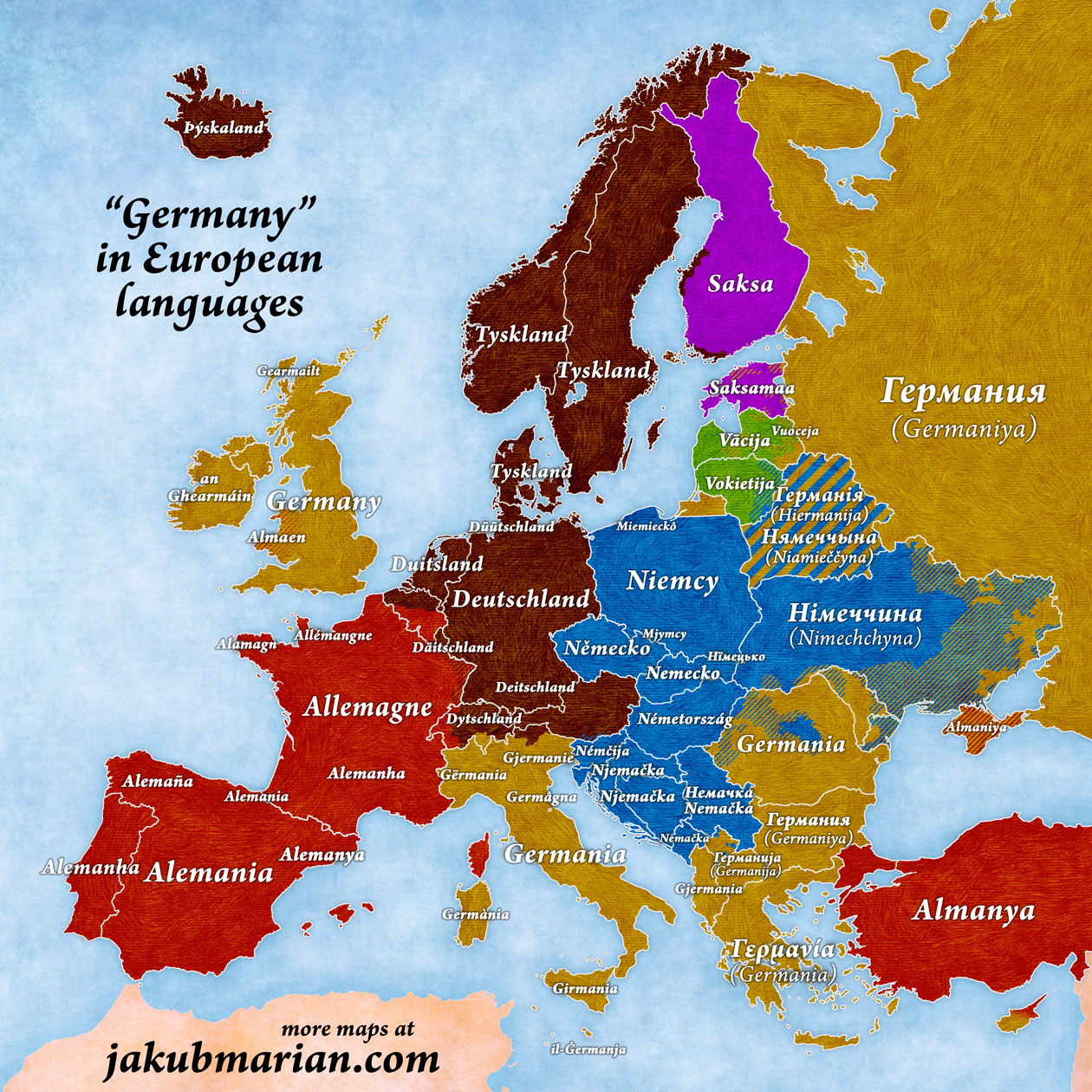
The funny thing is that in Slavic languages, the word for a German translates to "the mute one". For example, NEMec in Slovenian.

Mute, because he can't speak our language.

Re:Pfizer is testing a pill that, if successful, could cure ... by elgenie on Tuesday April 27, 2021 @12:32AM (#26952038)
In Russian, at least, the country remains “Germany” but the people from it are the “mute-sies”, unlike pretty much every other pairing of country name / demonym.
Re:Pfizer is testing a pill that, if successful, could cure ... by pmontra on Tuesday April 27, 2021 @01:29AM (#26952370)
In Italy Germany is Germania, but Germans are tedeschi and German (the language) is also tedesco. (BTW, we lowercase people and languages and weekdays and months, but this is changing - English leads.)

The reason seems to be the Latin word theodiscus from Old German theod / people.
Re:Pfizer is testing a pill that, if successful, could cure ... by tomsto on Tuesday April 27, 2021 @05:08AM (#26953676)
Interesting tangent, but I believe this is also a slavic surname and is anglicised as Nimitz. And before you know it you have an aircraft carrier called USS Mute.
Re:Pfizer is testing a pill that, if successful, could cure ... by Tenoke on Monday April 26, 2021 @09:15PM (#26950575)
I've wondered why we have a different word for Germans but never realized that's where it comes from (if it's true).
Re:Pfizer is testing a pill that, if successful, could cure ... by pySSK on Monday April 26, 2021 @11:40PM (#26951725)
It is true. Here's a map of what Germany is called by other countries in Europe: https://jakubmarian.com/wp-content/uploads/2016/08/germany-e...

Interesting that Finland/Estonia call them, essentially, Saxony.

The Latvian/Lithunian name for Germany is the only one I don't understand. Does anyone know?

Re:Pfizer is testing a pill that, if successful, could cure ... by seminole on Tuesday April 27, 2021 @01:02AM (#26952197)
Apparently it's most likely tied to the German municipality of Waake or the Swedish tribe of Vagoths. However most Lithuanians would likely explain it in the form of a joke - either about Germans being thieves ('vogti' = to steal) in reference to Teutonic/Livonic ordins, or about them being 'tough' or well armored ('vo kiets' ~= 'wow, tough/hard').
Re:Pfizer is testing a pill that, if successful, could cure ... by kungito on Tuesday April 27, 2021 @03:33AM (#26953108)
Another fun fact: at least in Croatia, we colloquially call them "schwabs" which originates from another group of germanic people https://en.wikipedia.org/wiki/Suebi
Re:Pfizer is testing a pill that, if successful, could cure ... by shimonabi on Tuesday April 27, 2021 @05:44AM (#26953869)
Can confirm (as a Slovenian), the term is used through the Balkans. For example, it is present in the old Serbian song:

Četrnaeste, četrnaeste, Švaba udario, (2x) Osamnaeste, osamnaeste, Srbin pobedio. (2x)

(In the 14th year, the Schwab struck. In the 18th year, the Serb won.)

https://hr.wikipedia.org/wiki/Ko_to_ka%C5%BEe,_Srbija_je_mal...

It comes from the fact that Germany didn't unify until very late, so the people were called by the small city-states that they came from. In American revolutionary war, some British mercenaries were called Hessians....

Re:Pfizer is testing a pill that, if successful, could cure ... by elgenie on Tuesday April 27, 2021 @12:40AM (#26952071)
According to Wikipedia [1], it’s a matter of some debate, with the theories being the (standard) corruption of a name for the first Western Baltic people encountered, or a take on the “unintelligible war cry” people from the Latvian root for speaking.

[1] https://en.wikipedia.org/wiki/Names_of_Germany

Re:Pfizer is testing a pill that, if successful, could cure ... by GeneralMayhem on Monday April 26, 2021 @09:52PM (#26950907)
Similarly, the word "barbarian" comes from the ancient Greeks describing the people who lived around them as sounding like they were saying "bar bar bar".
Re:Pfizer is testing a pill that, if successful, could cure ... by nielsole on Tuesday April 27, 2021 @01:00AM (#26952180)
That's amazing. Wiktionary backs you up on this and compares it to "bla bla bla".

https://en.m.wiktionary.org/wiki/%CE%B2%CE%AC%CF%81%CE%B2%CE...

Re:Pfizer is testing a pill that, if successful, could cure ... by umeshunni on Monday April 26, 2021 @11:29PM (#26951668)
Funny, I always thought it came from the word Barba (hair/beard) because they considered them uncultured and unshaven.
Re:Pfizer is testing a pill that, if successful, could cure ... by sorokod on Tuesday April 27, 2021 @12:22AM (#26951979)
Greeks were into beards big time.
Re:Pfizer is testing a pill that, if successful, could cure ... by tharkun__ on Monday April 26, 2021 @09:37PM (#26950767)
I only knew it from Hungarian, which I guess is a slavic enough language to compare: https://en.wikipedia.org/wiki/N%C3%A9meth:

In Hungarian, német means "German" (the word has Slavic origin, literally meaning "he does not speak", since German is not a Slavic language)

Re:Pfizer is testing a pill that, if successful, could cure ... by kingofpandora on Monday April 26, 2021 @10:34PM (#26951266)
Hungarian isn't Slavic.
Re:Pfizer is testing a pill that, if successful, could cure ... by petre on Monday April 26, 2021 @11:30PM (#26951670)
The word is probably borrowed into Hungarian from Slavic. We have a similar word in our language as well, but it's used as someone who doesn't understand. Also used interchangeably with Turk.
Re:Pfizer is testing a pill that, if successful, could cure ... by anticensor on Tuesday April 27, 2021 @03:38AM (#26953134)
Do you mean Barbar?
Re:Pfizer is testing a pill that, if successful, could cure ... by petre on Tuesday April 27, 2021 @06:33AM (#26954163)
No, it's very similar to nemec, basically the same thing also borrowed from Slavic. The "c" ending is pronounced as "ts". The full phrase goes like: "Why don't you understand, are you German/Turk?" (as in not understanding the language). There's also a place, a citadel and river with that name, which your ancestors might have been familiar with:

https://en.wikipedia.org/wiki/Siege_of_Neam%C8%9B_Citadel

Barbar means what it means in Greek, because that's where it's borrowed from.

Re:Pfizer is testing a pill that, if successful, could cure ... by robotresearcher on Monday April 26, 2021 @08:28PM (#26950152)
Fairly common in UK English, particularly in London which has long-term Jewish community.

It's slangy and self-consciously borrowed, like 'schlep' or 'schmuck' in New York English.

Re:Pfizer is testing a pill that, if successful, could cure ... by fy20 on Monday April 26, 2021 @10:56PM (#26951435)
I was born and raised in the UK and have never heard of it. No Jewish friends or family though.
Re:Pfizer is testing a pill that, if successful, could cure ... by mdda on Monday April 26, 2021 @11:07PM (#26951511)
Definitely a thing in the UK : http://www.bbc.co.uk/comedy/onlyfools/lingo/
Re:Pfizer is testing a pill that, if successful, could cure ... by bencollier49 on Tuesday April 27, 2021 @07:09AM (#26954382)
Very much a London-centric word, originally. And it seems like people of a certain age heard it all over the country on telly.
Re:Pfizer is testing a pill that, if successful, could cure ... by perardi on Monday April 26, 2021 @08:34PM (#26950196)
Ahhhhh, I had to look at the byline carefully. This article is syndicated from the The Telegraph.

https://www.telegraph.co.uk/global-health/science-and-diseas...

Which explains the British idiom in a Anglo paper in a bilingual city in Canada. (Bonjour-Hi!)

Re:Pfizer is testing a pill that, if successful, could cure ... by sillysaurusx on Monday April 26, 2021 @08:26PM (#26950127)
I've never heard of it either. Grew up in the midwest, lived on the west coast.

I guess you could say we've been keeping schtum about it.

Re:Pfizer is testing a pill that, if successful, could cure ... by elromulous on Monday April 26, 2021 @08:23PM (#26950095)
I don't think the other reply answered the question. Google trends show 10x as many queries from the UK than US for "schtum". So I would guess your intuition is correct.
Re:Pfizer is testing a pill that, if successful, could cure ... by justinator on Monday April 26, 2021 @08:59PM (#26950416)
It's a perfectly cromulent word.
Re:Pfizer is testing a pill that, if successful, could cure ... by cognaitiv on Monday April 26, 2021 @11:43PM (#26951742)
Re:Pfizer is testing a pill that, if successful, could cure ... by lstamour on Tuesday April 27, 2021 @01:20AM (#26952323)
Without any context, Apple’s Dictionary lookup serves up the definition of “cromulent” from both OED and New OED entries. It was apparently added in 2017 according to a Reddit thread, and in 2018 according to this list: https://public.oed.com/updates/new-words-list-june-2018/

Merriam-Webster added “embiggen” but declined to add “cromulent”: https://www.bbc.com/news/newsbeat-43298229

Re:Pfizer is testing a pill that, if successful, could cure ... by ggm on Monday April 26, 2021 @09:58PM (#26950958)
Common in the wider Jewish community in the UK. Universally understood now by most british people. In widespread use. Was in Monty Python, back in the 70s.
Re:Pfizer is testing a pill that, if successful, could cure ... by fortran77 on Monday April 26, 2021 @11:39PM (#26951717)
Re:Pfizer is testing a pill that, if successful, could cure ... by boxed on Tuesday April 27, 2021 @11:04AM (#26956883)
I'm a non-native English speaker and has heard it used many times. But since I'm Swedish it's also instantly understandable for me and so easier to remember maybe.
Re:Pfizer is testing a pill that, if successful, could cure ... by sedeki on Tuesday April 27, 2021 @12:15PM (#26957952)
I'm Swedish and have never seen nor heard "schtum" before.

Guess "keeping quiet" didn't come to the author's mind. /s

Re:Pfizer is testing a pill that, if successful, could cure ... by CRConrad on Wednesday April 28, 2021 @01:42PM (#26972028)
And it didn't sound the least bit familiar from any similar Swedish word...?
Re:Pfizer is testing a pill that, if successful, could cure ... by sedeki on Wednesday April 28, 2021 @03:55PM (#26973412)
Of course it does, given that there is a cognate Swedish word. I still have never seen "schtum" in English before. Maybe I'm just a schmuck.
Re:Pfizer is testing a pill that, if successful, could cure ... by CRConrad on Thursday April 29, 2021 @10:56AM (#26981963)
Ett kutterschmycke.