This confuses me too. The camera wart is ridiculous, and I bet if they made the device just that slight bit thicker they'd have room to retain the 3.5mm jack.
The other possibility is that the headphone jack makes water resistance that much more difficult. Maybe they think it's worth it?
Personally, I'm going to hold on to the 6s for as long as it's usable and then consider my options.
The funny thing is, they made a huge deal about catering to runners in the watch presentation. In the offseason I run about 20 to 30 miles per week, and I can tell you bluetooth headphones suck for running. They fall out easily as soon as I start sweating. Also, during training season the headphones will run out of juice if I don't remember to plug them in. They also drain the phone's battery - on a 30 minute run that's no problem, but on a 2-hour run that sucks. The best earphones are over the head, light-weight ones I can tuck under my cap whcih keeps them in place.
Oh well, maybe on the 8 they have a change of heart. And if they don't... there's always OpenMoko
Edit: In previous version I accidentally said Samsung Headphones.
Personally, I could never run with corded headphones again. I've used Motorola S8/S9 forever. Get last gen for $30-40, and they've held up to years of sweat.
I agree, I used to go through a few pairs of cheap headphones a month when marathon training, but once I stopped buying the $10 variety (wired and bluetooth, you can get OK ones on Amazon for $20) and got closer to the $100 range, I've had those for more than a year. Definitely a self-fulfilling prophecy. You get what you pay for.
http://www.idropnews.com/2016/09/21/10-alternatives-to-apple...
But I agree, that staying under $30 is key!
I've probably spent a hundred bucks on fifteen pairs of Philips over the years. And they're cheap enough that I can keep a pair in my bag, a pair in my house, and a pair in my car. Most of my listening is podcasts. They sound fine for that.
In contrast, I only have one pair of noise canceling Bose headphones which cost 3x as much as all the Philips put together. They sound great and are wonderful for the train to work, but they were also very expensive and I don't run with them.
Headphones are a very personal product, from fit to use case, which explains why many people are having strong reactions here. All we each have are anecdotes. Meanwhile, design and tech march on.
In finding a link for you though, I see the price has become outrageous as they've apparently been discontinued :(.
I find it's the wire that goes first, probably from all the twisting and tangling that happens day to day. At 5x the cost I could see wireless ones being cheaper, long term.
I still wouldn't want to muck about with batteries, etc though.
This would be perfect for me - headphone cables and wheelchair wheels do not mix.
http://www.shure.com/americas/products/earphones/se-earphone...
I vastly prefer bluetooth for working out, but I am incredibly sceptic about the sound quality from that lightning adapter.
FWIW this is what I use, and I buy 3-4 pairs at a time, about once per year: https://www.amazon.com/Philips-SHS3200BK-37-Flexible-Headpho...
Maxell HB-202 Stereo Head Buds https://www.amazon.com/dp/B00006JPRQ/ref=cm_sw_r_cp_api_32k0...
I mean, Apple's justification is that they are being courageous in pushing the world towards their vision of the future, which is wireless. Ignoring, for the moment whether this is a valid vision, how does a courageous move towards this future involve bundling not one, but 2 wired options with the phone?
I'm fairly certain I would have been unhappy with the decision to drop the headphone jack no matter what, but couching it as courage has taken me from unhappiness to screw them.
All I wanted was them to tell me what great benefit that space in the case being free brought me, be it more battery, waterproofing, more processing power. But what did I get? I got told they were doing it because they hate wires and it's a courageous thing to do, like I'm supposed to applaud them for that. No solid justification for it at all.
For years I have used my headphones in my iPhone on the way to work then as soon as I get to work I plug them into my laptop.
Now I have a choice of: - switching over the BT (gonna be fun pairing and unpairing when I arrive and leave work) - using my same headphones and carrying a dongle having the dongle rattling around my desk during the day, then taking the dongle with me for the trip home - buying two pairs of headphones with one that ONLY works with the iPhone
None of these are good solutions.
Sounds like you didn't actually watch the video. 1) AirPods don't use Bluetooth. 2) Connecting them is super simple; just hold them close to the device and tap OK. And you only have to do it once per family of devices associated via iCloud.
At $159, they only need to sell 15000 to reach $2mm in sales.
Unless you thought I meant units. I definitely think millions of units is possible, if Apple continues selling hundreds of millions of iPhones. But it's not just AirPods sales. Apple makes a few dollars with every lightning device that is sold. So essentially, even if those hundreds of millions of iPhone devices don't lead to sales of millions of Airpods, they will lead to sales of 10s of millions of Lightning headphones. Which means tens of millions of free dollars for Apple.
Here's the other thing though. If Apple does not expect to sell millions of Airpods, then the whole "Courage, because the future is wireless" justification falls apart, because if not even 1% of the headphones being sold are Airpods, it's likely the future is not wireless.
I don't think they make design decisions on that basis
[0]: http://www.accountingcoach.com/blog/what-does-m-and-mm-stand...
Researchers have not come to a definite conclusion about how much EM waves can be related to diseases, but they haven't denied it either. And one thing is obvious: long-term exposure to EM radiation cannot be good, no matter how much low-power it is.
Apple (and other Bluetooth headphone companies) are building on a presumption that EM waves are not harmful, and even if they are, lawyers can easily close the case for Apple.
forcing you by including wired headphones in the box and wired headphone adapters in the box and not even having the bluetooth headphones available at release date? That kind of forcing?
long-term exposure to EM radiation cannot be good, no matter how much low-power it is.
You realise that wires radiate E/M as well, right? And that light is 'electromagnetic waves'? and that radiant heat is too?
Yes, Apple has included those wired headphones, too. But don't forget that the focus henceforth is on "wireless" headphones, about which I wrote my concerns.
You can ignore the facts and go on and just "trust" these companies, or you can read for yourself and realize that not every new technology is inherently good for your health.
The power in the signal between the phone and the nearby base-station/cell-tower is going to be orders of magnitude larger than between the phone and any bluetooth headset.
I don't think anyone is arguing that using bluetooth headphones is 'good for your health', just that it's 'not bad for your health'. I'm not aware of any mainstream studies that have shown adverse effects from exposure to 'normal' levels of radio waves of the type produced by consumer products. I am open to being proven wrong though!
I often listen to audio on my iPhone through wired headphones as I'm going to sleep (either relaxing ambient sounds, or podcasts).
When I do this, I put the iPhone on Airplane Mode to disable all radio transmissions. I also keep any other radio transmitting devices well clear of the bed (this is commonly recommended for people who have impaired sleep, which I do).
On any occasion when I neglect to enable Airplane Mode before falling asleep, I awake feeling significantly less refreshed in the morning (or even awake in the early hours of the morning feeling terrible).
Given this, the prospect of having to switch to Bluetooth headphones while I sleep is at least somewhat unappealing. Bluetooth may not be as powerful and disruptive to brain waves as cellphone transmissions, but when sleep is already impaired, you want to avoid anything at all that will make it any harder than it already is.
So, I'll be sticking with wired headphones and keeping all transmissions turned off when I sleep.
I'm not aware of any mainstream studies that have shown adverse effects from exposure to 'normal' levels of radio waves of the type produced by consumer products. I am open to being proven wrong though!
Studies of these kinds of effects are notoriously hard to do accurately, as they usually study a random sample of "average" people, but don't/can't take into account increased sensitivities of people who fall outside the norm due to illness or other factors.
Anecdotal evidence is often sneered at by those who pride themselves on being only persuaded by "data" and "evidence". But those of us who fall outside the populations represented by the samples usually included in mainstream studies learn the hard way that anecdotal evidence is the only way for us to figure out what is good or bad for our day-to-day wellbeing.
http://www.who.int/peh-emf/publications/facts/fs296/en/
This leads people to think that this means that no-one can be effected, whereas it could be that the self-diagnosed simply have a large false-positive (a high-proportion of people that while believing to, do not have any hypersensitivity).
It also doesn't help that there have been no proposed mechanism by which EMF could act on the CNS/body. It also doesn't help that usually the signals complained about are orders of magnitudes smaller to other signals that people might just not be aware of/think about, like TV/Radio transmissions.
You're right that it's not very easy being in the fringes, here's hoping you get better.
I haven't diagnosed myself with "EMF hypersensitivity", or hypersensitivity to anything else (I'm not a voluntary gluten-avoider, or heavy consumer of organic kale or chia seeds or any other faddish "superfoods").
I'm surrounded by EMF all day from the iPhone in my pocket, the Wi-Fi enabled laptop on my lap, and the Bluetooth sound system in my car, not to mention all the incidental EMF that you mention. And I don't have any belief that any of it is a major problem, any more than the full-gluten bread and pasta I eat, the red meat I enjoy, or the red wine and beer I drink - all in moderation of course.
Over the 10+ years I've been dealing with this illness, I've tried living with and without all of these and many other things, and have developed a very good sense of what my body tolerates well and what it doesn't.
One thing I know very well is that my sleep is of lower quality when I have a transmitting cellphone right beside my head all night.
And whilst I don't need lab studies to convince myself, for your benefit I can point to some studies [1] and a perfectly plausible mechanism for why this is the case, which is that the phone transmissions alter brain waves (i.e., Alpha, Beta, Theta, Delta), which play a significant role in sleep quality. (Speaking of which, I've personally had good success improving my sleep by entraining my brainwaves through the use of binaural beats [2] – indeed this is one of the very reasons I use the headphones while sleeping in the first place.)
Whether this will also be the case with Bluetooth, I don't know - I'm open-minded either way. As I've always done, at some point I'll experiment and go with what enables me to sleep and feel my best. But in the short term I'll stick with what has been working well for me up till now.
You're right that it's not very easy being in the fringes, here's hoping you get better.
Made all the more difficult when your conversations on the topic so often tend towards patronising misappropriations of science to dismiss your experiences.
But for what it's worth, my health (and sleep) is the best it's been in at least 5 years, and continuing to improve at an increasing rate, thanks.
[1] http://www.scientificamerican.com/article/mind-control-by-ce...
[2] https://www.stevens.edu/news/sound-asleep-student-uses-binau...
I wasn't trying to lump you into the group of people self-diagnosed with 'EM hypersensitivity', but explain why some people find it hard to believe when people profess to having issues with mobile phones/wifi etc. If there are a vocal majority of people who make claims that can't be backed up, the minority of people who have valid claims will suffer.
My original comment back up the chain was to a comment that looked logically inconsistent regarding bluetooth power output vs. a mobile phone overall. Yours was perfectly reasonable.
I had read about that mobile-phone/brainwave study before, and I'm sure that given time we'll understand more about how EMFs do interact (however subtly) with the body. It is worth noting that I think bluetooth power output is many orders of magnitudes lower than having your phone communicating with a tower.
Lastly, have you looked into getting a femtocell for your flat/house? Could help reduce the power output of your phone overall when you're at home.
The whole issue is very complex, that's for sure. The extent to which these kinds of "illnesses" or "sensitivities", in myself or others, are "all in the mind" or "imaginary" is something I've considered and researched very heavily, and found it to be applicable to a significant degree.
But to someone who is in distress/pain/fatigue, the retort - whether from a doctor, a well-intentioned layperson or an insensitive asshole - that "it's all in your mind" or a "placebo/nocebo", is unhelpful and simplistic, particularly if you accept that the mind and body are all one entity anyway.
And then there is the reality, that you acknowledge, that certain effects are too subtle to be observed with current measurement technologies and diagnostic methods, inevitably leading to both false positives and false negatives.
In my case, the key to getting well has been to address all aspects, including diet, environment, and mind/emotions - the latter of which has had the most significant effect. Which puts me in a position to say "yes, in fact it probably really is the placebo effect, and I've used it to recover from having really terrible health to having great health", to which the next standard response from curmudgeonly skeptics is "the placebo effect doesn't actually change anything about your health, it only makes you feel better" - as if feeling well and being well are independent phenomena.
So, in my case you chuckle to yourself as you realise you're having an unwinnable argument with people who are more interested in feeling smart that achieving any good, and get on with doing what works for you.
As for the "femtocell", thanks for the tip, I hadn't heard of it. But really, as I said in the previous comment, EMF in my environment is really not an issue I worry about, I only take care to avoid having a transmitting phone right next to my head as I sleep - given that good sleep is the most critical factor in overcoming fatigue.
Many thanks for the discussion.
That said, my relative is very one-sided and wont acknowledge the mind part and is firmly convinced that it's only the physical phenomenon of em-waves that creates the physical reactions.
This person is old and uneducated so suggesting experiments is out of the question. However you seem like a scientifically aware person. So my question is, have you tested your ability? You said that you sleep bad when you know that you have a active phone beside your bed. Have you tried getting someone to place the phone in an shoebox either off or on for some weeks? It wouldn't be a double blind study so it wouldn't be super valuable but if that other person is scientifically minded it would be cool if you could get 100% coverage over a month. 10 days on, 10 days bad sleep.
That kind of trial isn't something I'd consider to be particularly valuable, as the whole issue of sleep quality and overall health is too complex for it to be possible to isolate one factor like this.
I should point out that at the times when I've experienced poor sleep with the phone on, I haven't been aware of it until I woke up the next day. It's been a case of waking up feeling less well rested, thinking "shit, why do I feel so terrible?", then reaching for my phone that had been sitting on the pillow next to my head and realising that it was turned on. So it is somewhat blind, without being scientific.
I certainly don't claim this experience as clear evidence that "cellphones impair sleep" – it's just one factor among several that seem to make a difference in my case.
It's this complexity that makes these kinds of illnesses so hard to understand and overcome. For me, good, refreshing sleep has been hard to achieve for many years, even with the phone turned off (though mercifully it's getting much better lately, as is my overall health and happiness).
And I know other factors make a difference too - what I ate/drank that day, what time I got to bed/sleep, what kind of exercise/activity I did that day, what my emotional state had been that day. Any one or combination of these factors on any given day could cause worse sleep than normal, so it would be very difficult to isolate the phone being on or off as a standalone factor.
Given all this, I'm perfectly open to the possibility that the phone being on or off is actually not a factor at all.
But given that (a) there is some established evidence that cellphone transmissions alter brain waves, and (b) it takes close enough to zero time/effort to turn off the phone's transmissions before going to sleep (as well as preventing interruptions from any calls or alerts that may happen during the night), I'm content to keep up the practice of keeping transmissions turned off when I sleep.
By the way, if you want a somewhat-scientifically based explanation that may help you understand what's going on with your relative, I'd recommend reading The Biology of Belief by Bruce Lipton. He has some colorful ideas and is easily dismissed by curmudgeonly skeptics, but his approach has solid scientific basis, and it's only by following the principles he recommends that I've been able to start enjoying such good health lately.
That aside, I wish you all the best for your relative's wellbeing.
You could take a cue from joncrocks' last comment for civility and kindness. See my reply to that comment for discussion of placebo/nocebo effects.
I'm not averse to having a cellphone or other transmitting devices close to my body for extended periods of the day; it's having it right next to my head/brain for the entire 8 hours I'm trying to get good quality sleep that I'm more cautious.
BTW, it is completely ridiculous to think the Sun is more dangerous than manmade wireless devices.
Plus, how come there weren't reports of people (self)diagnosed with "hyper-sensitivity" to EM waves, before the "wireless age"? By your claim, billions of people who lived before us must have been felt similar effects on their body, but as far as I know, they were fine.
Omnidirectional antenna on the other hand, transmits information in all directions (kind of like a sphere around the antenna). The transmitted power per surface is identical at a certain distance, and for the same input power, power density of an omnidirectional antenna is less than that of a directional one.
Complete omnidirectional antenna doesn't exist in practice, but sources like the Sun and wireless modems (some of them) come close to this definition. BTS towers on the other hand, make use of directivity methods to further cover the area, which is why you see something called SAR (Specific Absorption Rate) on your smartphone's box. In layman's term, SAR measures how much EM power your body-flesh absorbs because of your phone, and as you might guess, the less SAR, the better.
Please see my comment below; sneering about this topic isn't helpful or fair.
I have Omnidirectional antenna's that put out power at about 46 dB, and directional antennas that do likewise at -24 dB.
You could have replied to that effect to begin. HN is a better place when people are charitable in their interpretations of comments and kind in their replies.
I can get a little indignant (I'm working on it, I really am), over the tendency of some HN commenters to exhibit belligerent skepticism in response to people sharing sincerely-considered views or insights regarding yet-to-be-settled matters in health/medicine/science.
In that state, I mistook your comment as being sarcastic, which I now realise it wasn't. Please accept my sincere apologies.
https://www.amazon.com/Nike-HJ020-headphones-Discontinued-Ma...
For bicycling, I am mainly on bike paths but when I have to enter traffic for a bit, I would never, ever ride with any kind of ear bud or closed headphones. The Flite design has gentle pressure pushing the phones against my ears, for a very open design that keeps me aware of what is happening around me. They are very stable, resting on the back of my neck, even while running. I don't remember them every falling off from exercise.
The original Flite headphones were somewhat overpriced, and lasted about a year before they failed. The Chinese clones moved in and the price collapsed. I bought a batch of ten knockoffs for $17 a few years ago, and they still last a year or so.
http://www.ebay.com/sch/i.html?_nkw=sport+headphones+behind+...
http://www.consumerreports.org/smartphones/samsung-galaxy-s7...
http://www.jlabaudio.com/products/epic2-bluetooth-wireless-s...
Not sure if you've seen or tried these.
My connectivity has been fine while running, and always surprises me in the gym. I leave my phone in my gym bag now and range is no problem if I'm super setting exercises and moving to different equipment. These are my first and only pair of BT headphones, and they spoiled me to the point where I'll never go back to wired for exercising.
Besides, no BT headset would relieve the battery problems.
For me something like this works really well: https://www.amazon.com/dp/B00QHOCTG6/ref=cm_sw_r_cp_api_goh0...
Just put my hat over them and they are firmly held in place.
https://www.plantronics.com/us/product/backbeat-fit
But now I just wear them all the time, as they're so convenient. Can take calls on them, they have a remote on them, they also just scrunch up in to a pocket. Battery lasts at least all day, for me, anyway.
And as they don't enclose the ear canal (which could be a good thing for maintaining awareness of ones surroundings) it can leave them ineffective for anything other than very quiet environments.
Two BT headsets will. I buy cheap Chinese ones for $20.
What bugs me about the iPhone 7 is that I expected if Apple was removing the headphone jack that they would add USB type C and Bluetooth 5 instead of the same-old lightning port and 4.2. In fact, it looks like there's more than one model of iPhone again, and the 6S' support for both CDMA and GSM appears to be a fluke, or they couldn't do it in time with the new antenna design. Unless I'm reading the iPhone LTE specs page incorrectly...
I actually carry three: the one I use every day, the spare for that one, and the other one that's more comfortable but lacks the volume for use during my commute.
This is not a big deal if you carry a satchel or purse or backpack or pretty much anything bigger than the pockets in your clothing; all three of them, plus charge cables and manuals, fit in a hard-sided case that's about the size of a can of Skoal, and which very conveniently came with the first Bluetooth earpiece I bought. If I didn't have such a preference for entirely in-ear monaural models, they'd take up a little more space, but only a little.
It's totally doable and not even inconvenient - this latter, in particular, not something which can fairly be said of wires.
Hmm. Interesting.
If Apple wants to continue pushing into the jewelry and personal-accessory business, this suggests an obvious direction. They tend to be good at making unfashionable things fashionable.
> Connections
> AirPods: Bluetooth
> Charging Case: Lightning connector
Thanks.
http://www.plantronics.com/us/product/backbeat-fit (cheaper on Amazon).
Just another option to add to the list.
[1] - https://www.amazon.com/Motorola-SF600-Wireless-Sports-Headph...
I'll never use the lighting dongle and I don't use corded buds/headphones now so I will literally not feel a difference in that respect. I only listen to audiobooks, podcasts, Pandora, and Spotify on the phone, so I'm not exactly getting the greatest audio I could be anyway.
However, having increased dust and water protection are something I'm very happy to get if it improves the longevity of the device. I don't really care too much about it getting that much thinner either, but I'm happy with making the phone more physically robust if they can.
Moreover, if you want to play a song from your phone through your stereo and want the best sound possible, you'd use a digital connection versus an analog one.
And what about the battery life? Don't you care about that either? Or do you even recognize it's a critical issue for many people? It just sounds like you're desperately defending an Apple product at all costs.
My last Android (Samsung Galaxy Nexus) had AWFUL battery life (3,700 mAh battery, btw) and I had a couple of spare batteries with me at all times. My iPhone 6S+ gets me from 0500 to bedtime nearly every night without a charge throughout the day. According to the release notes I should expect another hour of battery life with the iPhone 7, so it's not like they took things away and decreased the battery life.
For me, and that's all that matters in MY buying decisions, better durability and extended battery life at the cost of a port that I have never used on this phone are an unequivocal upgrade.
There was never a Galaxy Nexus with 3700mAh battery.
A shame actually, for me it was the perfect phone. The curved screen, just the right size, the textured back and (I think) headphone on the top.
Really? How long do you keep your phones for? 2 years, tops? I've never damaged a phone I've owned, let alone rendered one unusable because of either dust or water.
This will have no appreciable effect on the life of the product for me.
I can't imagine iPhone line continue this way for next 5-10 years. They need to get into something new fast. VR, AR etc.
My boss said something today concerning Apple that is relevant to this. After hearing Warren Buffet bought a bunch of APPL.
"Apple isn't a technology company anymore, they're consumer goods, so that's an understandable choice."
People say they want lots of battery life, but slimmer devices consistently outsell thicker ones.
Plus, Apple always promises the new iPhone will fix everything you didn't like about the previous one and people eat that up.
What a coincidence.
The camera bump on the 6S is ~1mm high. 30% more battery capacity in that amount of space seems optimistic.
I guess if they make battery last 30% longer, then you won't be forced to change a phone in 2-3 years when battery starts deteriorating and it is bad for business.
Edit: More like in the 80s.
With that said, I don't actually disagree with taking the headphone jack out. I do think there needs to be a more universal replacement than what they are suggesting though.
It's mostly the fact that it was replaced with the lightning port that gets to me more than anything else. If it was something like USB-C, I'd feel more comfortable since that should be more widely available in time.
The software platform Apple has built is unrivaled.
Not really true anymore. Android (while drinking Google Koolaid) is an amazing platform. I bet for most users (in terms of apps and basic phone features), there is really no justification to get an iPhone over an Android.
Android's great. You just have to spend an incredible amount of time researching the gigantic ecosystem and all the permutations of hardware and software to figure out which phone actually has the combination of good/responsive enough hardware, support for things you want to do, and comes with a recent version of the OS and magic proprietary Google bits. Then once you've put in the time doing that, the ecosystem has moved on and the phone that would have been correct to buy when you started now isn't and will probably never be updated again, because in the Android world anything that's been on the market more than three weeks is an ancient obsolete toy.
I don't understand why more people don't want to join that ecosystem!
Android is approachable and slick now a days (and yes I remember when it was utter crap :) )
iOS is just a better platform.
One of my ex-collegues is now working for one of the android-phone manufactures and by his words the whole process of creating the the new device is basically trying make shit work good enough to pass Google's tests (something is going wrong with hardware? fuck it, we'll fix it in software later), then releasing a bunch of patches, then new phone, because nobody will ever invest their time into makeing the currect device to work with new Google's test. It just won't.
Going to have to disagree.
There are no redeeming qualities for Android. From a sloppy, disjointed user experience to an incredibly shady app store, Android doesn't compare to iOS.
That's not to say iOS doesn't have issues. It certainly does, but in terms of comparability it's not even a contest.
Luckily for Android many people really don't care about design.
I found Apple's flat UI design to be very awkward, especially things like the decision to use text labels with hidden bounding boxes as "buttons".
Apps tended to have inconsistent UI language, and I frequently found myself surprised by UI interactions that weren't discoverable, like the speed setting in Pocket Casts. It was a flat element - if you tapped it, it would toggle between preset values, but if you long-pressed it, it would pop up a weird slider. But there's no feedback from the UI.
On Android, I find that UI elements are much more likely to provide visual feedback - tapping elements produces an animation, long-pressable elements show proggessive animation, etc. For example, the Pocket Casts app on Android's speed setting actively animates when touched, and pulls up a standard settings dialog with intuitive sliders and checkboxes.
And I can't tell you how many times I would attempt to open an app link only to have it open in a web browser with a giant banner telling me to install the app I already have.
Still feel Apple completely dropped the ball with iOS7, just ambiguous tappable text labels everywhere... now we're at a point where it's been there so long without fixing they just take it for granted that it "works" when it's really poor.
Spent 10 minutes on the phone to my mom once trying to find out how to search in the app store. She couldn't see the search box… turns out it's because 2 months ago she searched for BBC iPlayer and the search text still read "BBC iPlayer" in light grey with a tiny light grey magnifying glass next to it. Doesn't even look like a search box.
I like multiple app stores, and multiple vendors to buy apps from. I like downloading program source and building an apk from it. I like having a terminal app and a file manager. I like running an ssh server to get files on/off the phone. I like using the phone as an oversized USB flash drive, and not having to install a vendor's software to do it (and not caring which OS I'm booted into at the time).
iOS is pretty, well-thought-out, performant, predictable, and the best ecosystem on it isn't produced by a tarted-up advertising firm. It has a lot to recommend it...but I'll still take the tangled nest of features over the carefully pruned garden, because I don't always agree with the decisions of the gardener, and I like to have other options.
That's very reasonable. Conversely, my iPhone does everything I want out of a pocket phone, and the Androids I've tried have not.
A sysadmin buddy of mine thinks it's awesome that, when a process spins out of control and pegs his phone's CPU, he can drop right into a root shell and kill it from top. I think it's awesome that in five years and two iPhone models, that's not something I've ever needed to think about doing. Different strokes.
("Phone" is perhaps an oversimplification of those. But "pocket effective and reliable communication and navigation device" has all the grace of a two-ton truck hitting a Jersey wall.)
>>Luckily for Android many people really don't care about design.
Not only iOS tops the software platform charts but it has superior design. Facts! Goodness, I was the impression being fanboi was out of fashion.
As for your comment on user experience/design, I realize we're entering the realm of subjectivity here. All I can say is the latest Androids are _beautiful_ with Material Design.
As a dev. platform I'd take Android any time (and steer clear from obj c)
Too afraid to test it myself though.
This race to thin phones with unusable battery life reminds me to the race to more and more mega pixels in digital cameras with unusable low exposition quality some years ago. It's just about the buzz, it just hinders the technology in order to be able to tell a more catchy number to consumers.
I would happily go with a 33% thicker iPhone with great battery life and a headphone jack and I doubt that most of the people would notice the difference in size.
I would guess most people are okay using their phone during the day and charging at night.
My phone's about 3 years old now. Even when it was new, I couldn't use it indiscriminately and expect a full day of charge. If I want to have it available for critical purposes like emergency calls, it's literally not usable in the way that I'd like to use it. I don't think that it's even remotely unreasonable to advocate for better battery life, and I think it's only a slight exaggeration to call current phone battery life "unusable".
At least in the iPhone ecosystem it's not so much best option available, it's the only option available.
There's no immediate danger of people not buying iPhones because they want better battery life, so Apple doesn't even have to try harder than an average show of effort.
My iPhone 2G had better battery life than this given similar usage patterns. Sure you can cite LTE vs. 2G and processor ability etc, but battery life made the modern(-ish) phone less useful to me under what I consider are not that strenuous of conditions. This is a real problem, and battery life will definitely be a major consideration to the next phone I buy.
The point is that the battery didn't last even a full day.
All these gimmicks and breakthroughs don't mean shit, make a phone that lasts 3 days and that will be a game changer.
Oh, I completely agree with that. It's more that I have an iPhone 5S that I replaced the battery in and it lasts for about 24 hours with my usage patterns -- would I love more? Heck yes I would! A phone not making it through from morning to evening though implies that it's likely a dying battery, as the iPhone 5S should last longer than that.
Maybe I'll regret it but my next phone (and last iPhone) might be an SE.
It turns out the important dimensions are the overall width (for being able to hold it one handed) and the screen height (to reach everywhere with your thumb), and the iPhone SE's top and bottom bezels don't screw up either of those.
With the Z3C you can hold it one handed, but you can't use it effectively unless you have gigantic hands. Making a phone fit in one hand isn't enough; if the entire face is covered with screen then it still takes two hands to operate it.
Oddly enough, the main complaint I had about it was that because it was so flush and shiny, it slid around too much on a table. Had to put a protective film on which was a bit more grippy.
You mean those stupid plastic flaps with the gaskets that came unglued and prevented the flaps from even closing properly?
http://stellatech.com/pubs/uploads/54c8de18efd94.jpg

And after marketing it as an underwater camera, they later backpedaled and said "waterproofing was tested in a standby state under laboratory conditions, do not attempt to use the phone underwater"?
http://www.trustedreviews.com/news/sony-don-t-use-waterproof...
Waterproofing, maybe. Top notch waterproofing, absolutely not.
This. Girlfriend had that phone. The device and their after-sales service was completely garbage. Sony failed to repair the unplugging flaps, even after multiple service attempts. And every single time, they did complete factory reset on the phone to replace the flaps (!!!).
My phone flaps are fine, but I charge it using the magnetic connector, so I rarely open them.
That's why I listed magnetic charging as a key feature ;)
I'm guessing that the average consumer has no idea what an f-stop is, or that having a maximum lens aperture of f/1.8 is any better than f/5.6 or f/16. And the people who do know probably also know that for a lens and sensor that are maybe a quarter of an inch wide, a bump in the maximum aperture is not going to make the camera perform anywhere near a dedicated camera, so the focus on that detail is a bit odd to me.
Small sensors are getting better. I am shocked at how good the image quality is on my RX100 (with a "one inch" sensor; one inch refers to the size of vacuum tube that would contain such a sensor if it were 1960 or something, no dimension is anywhere near one inch). I'm not going to give up 4x5 for it, but it's way better than a phone.
That said, the camera bump is ugly. Why can't they use a telephoto design (your 500mm SLR lens isn't 500mm long, remember).
It's a look Nikon used to have ten or so years ago, and to me it suggests over-aggressive noise removal.
To be fair it's very good for a tiny camera, and amazing considering the state of the art ten years ago.
But I wonder if it's starting to fall into uncanny valley: the closer it gets to pro performance, the more obvious it becomes that it's not there yet.
They did mention that you'll be able to capture raws with the iPhone camera now, which will hopefully alleviate some of that.
They are, but they will also hit a physical wall at some point (if not already), and you'll continue trading "natural" dynamic range and low noise for software interpolated dynamic range and smoothing, which as others have noted, starts looking like Madame Tussaud's museum.
Then again, if Apple really wanted to impress me with their camera skills they would have to develop a medium format mirrorless digital camera for less than $5k. One can dream, I suppose.
Basically, pixels are so small these days that even tiny amount of camera motion is going to blur a point of light between two pixels. I'm not sure how much that matters, but I think it does. So you can't make the sensors small and increase the detail you get. 20MP is the best you are going to do with full-frame, much less APS-C or 1" or iPhone size. Maybe image stabilization fixes all of this.
I took some photos on an airplane of a lightning storm today with a 1" sensor camera. ISO 5000, .5 second exposure hand-held, and they're pretty sharp. Not portfolio sharp, but good enough for some Internet Points probably. My iPhone did not do well, however. (I tried that first, then realized, hey I have a better camera with me.)
This looks like another method to lock in the consumer to their eco system and or squeeze that extra buck out of them. Not so much about shrinking in size or technology.
IMO this is nothing more than selling and controlling peripherals that can play with iphone and drm.
Edit: Why the heck am I being downvoted for this? I'm not even expressing an opinion as to whether I think the jack should have been removed or not.
Apple gets royalties from the production of Lightning connectors, which they certainly don't from standard 1/8th-inch TRS jacks. So therefore, they have a very obvious and vested interest in killing off standardized connectors and pushing everything to proprietary connectors, for which they receive royalties, whenever possible.
I dunno - if they were really in this for making you buy new headphones, they'd not bundle the adapter, like they did in the past when they switched from 30-pin to lightening.
Connections
AirPods: Bluetooth
Not to mention the point made elsewhere in this thread that they bundle the adapter for people who still prefer wired.
I even own a pair of wireless Bluetooth headphones (nice onces, Sony's) but it's a pain in the ass to keep them charged and deal with pairing/unpairing them to various devices, or connecting to the wrong device when I want to use them with something else, or get them to work with various laptops' shitty Bluetooth drivers, when I can just use a pair of decent wired headphones and stick them into the ubiquitous 1/8" jack and move on with my life.
I personally favor Bluetooth headphones even with all the annoyance because as bad as it is, cords are even worse.
For those who feel differently, I suspect they'll either use the bundled earpods or just leave the lightning adapter attached to their best pair of headphones and move on with their lives. Maybe I'm wrong and everyone except me is rotating five pairs of headphones between six different devices on a regular basis, but it seems like just another case of piling on to resist change.
You obviously have no idea how Apple works. Apple would never in a million years make a user-hostile decision like this simply to collect royalties. They hold user experience to be sacred, and the fact that they're making this move now means they think that, at least in the long term, this will provide for a better overall user experience, despite the pain of the transition.
Everybody complained when Apple ditched the 30pin connector for Lightning too, basically all of the same arguments here (e.g. "Apple just wants everybody to buy new accessories"), but it turned out to be the right move. Making this argument again over the headphone port just means you don't know Apple and you don't know history.
I have no comment on how Apple actually works or doesn't work but I admire the marketing acumen of a company when a random internet user can argue so passionately about eternal goodness of the company. Especially a company that's about as secretive in it's actual operations as nation-state level intelligence agencies.
This is a repetitive cycle. See it happening right in this thread with the "Apple invented a proprietary wireless protocol to DRM all the music, close the analog hole and make you license their tech" stuff. When... it's just Bluetooth. Same thing happened when they put the microphone and volume controls in the iPhone earbuds; people said it was a way to insert a secret "DRM chip" and force only Apple-approved headphones to be able to listen to music.
So if nothing else, the weight of history is against your "just did this to charge people money" argument. Plus, y'know, the adapter's literally included in the box.
I had no comment on any of that. In fact I started my comment with "I have no comment on how Apple actually works or doesn't work"
Who's talking about goodness? I'm talking about the values that Apple has, and how your claim is a gross violation of those values. I didn't say Apple was "good", however you want to define that. User experience is but one facet of the whole, though it's an important one. And if you're trying to dismiss my arguments on the ground that I'm a "random internet user", then you have to dismiss literally every single comment made in this thread, or any HN thread, including yours.
Why doesn't they Macbook ship with the dongle to connect it to HDMI screens and regular USB then? Why does that dongle cost almost $100?
Tim Cook's Apple is VERY MUCH in the business of lopping things off to just sell you an addon later.
Also, FWIW, I just checked Monoprice and the HDMI dongle costs $35. And Apple's own dongle (which is $79) includes more than just HDMI (it has a USB port as well, and a USB-C charging port).
The Macbook Pro ships with one…
Still, I think the last non-USB-C Macbook didn't have HDMI either.
> This is the cry of people who desperately want to love a company unconditionally
Insulting people is not how you win arguments.
Edit: Seriously guys, what's with the downvotes? I feel like I'm being brigaded at this point.
I seem to recall hearing that was because people most often carry their phones upside-down in their pockets, in order more quickly to bring them up to viewing position when retrieving them. (Think about it: Your hand goes fingers-down into your pocket, but viewing position has the top of the phone alongside your fingertips, so if you pocket your phone upside-down, you don't have to rotate it around the Z axis to get it into position before you can use it.)
No idea whether that's actually the case, or whether instead it was something to do with easier component placement or the like. But as far as just-so stories go, it's not a bad one.
Of course apple and their legion will claim it as an innovation.
Do we really need that last sentence? Is this perhaps not already divisive enough a subject for anyone?
Then he realized why they do it, and now I know zero people who store it right-side up.
> it is more naturally of a movement to pull it out of my pocket that way.
How is that more natural than simply landing your hand on the phone in the position that it will be holding it? I'm having trouble seeing this as a matter of opinion.
2.) Reach into your pocket with your left hand.
3.) Grab the phone by edges near the top between your thumb and middle finger.
4.) Lift upward while rotating your wrist counter-clockwise. The phone should swivel between your two fingers while coming to rest right side up in the palm of your hand.
It is an entirely fluid motion that does not require flipping the phone over since pulling it out upside down results in the screen facing away into the palm of your hand.
Why not? They did just moved it to the bottom just as frivolously.
They're both the same level of difficulty.
Must be magic, if Apple hasn't trademarked that already.
>Insulting people is not how you win arguments.
Perhaps it might be best to heed your own advice?
All in all. I'll wait a year for 7s to replace my 6s if nothing else worthy and working out of the box comes out.
>This confuses me too. The camera wart is ridiculous, and I bet if they made the device just that slight bit thicker they'd have room to retain the 3.5mm jack.
I hate that they removed the 3.5 but if you assume that people are using a case then camera wart does not really make the phone any thicker.
So tired of this argument in defence of the wart, people use a case because of the wart and then this is used to justify the wart "everyone uses a case"
I really don't want any such things on my iPhone.
Wouldn't surprise me if iPhone 9 was wireless only. Somehow.
what annoys me more is that most advancements are only for the 'plus' size model. that's the easy way out of the tech race, and I was just hoping that they brought feature parity with an updated SE model
so far I see no good replacement for my 5s except the previous year SE, but I'm not the one to spend that money on two year old hardware.
The animation when loading the page made that bulge almost phallic. That phone appears like an erection, growing up and up...
It's almost certainly only in my mind though.
I recall Apple having a patent on a manufacturing process to bond a small aluminum region around the headphone jack to a case made of something harder, so maybe the headphone jack was causing problems in advancing case materials?
If an opening for a 3.5mm jack was an issue for some future design, so would all of the other holes (esp. the lightning port).
If you are talking about their new wireless headphones, It will probably have some delay but probably not even close to bluetooth. They could just modulate that same bytestream to some ghz radio frequency without adding anything remotely as over engineered and cumbersome as a bluetooth stack. I'm pretty sure those airpods are not bluetooth compatible.
Edit: From the official product page:
> Connections
> AirPods: Bluetooth
What about encryption?
Not to mention that Bluetooth doesn't use PCM because of battery life constraints (more radio traffic == more energy used), I doubt that Apple's protocol is uncompressed.
Bluetooth 4.0 really dropped power requirements for a lot of use cases. It's an adapting standard that's not sitting still by any stretch.
Apple's tech specs list them as bluetooth.
Seems to me it's a solved problem for most devices.
They do provide the lightening-to-jack adapter in the box for free.
https://sixcolors.com/post/2016/09/what-to-look-for-at-wedne...
The adapter that comes in the box is the proverbial drug dealer's "first one" that's always free.
Imagine getting a $4 royalty on every pair of iPhone-compatible headphones that's sold in the world. That's worth a lot of free adapters in the short run.
Just as a first-order estimate: Forbes says that annual worldwide sales of headphones are $300M. If the average price of headphones is around 20 bucks (taking into account there are a small number of very expensive headphones but also a lot of cheap ones, that's probably high), that's something in the neighborhood of 15M pairs sold per year. If half of those become Lightning-connector equipped, that's $30M/year in revenue (on costs of zero!) going to Apple.
The connector could make the phone substantially worse as a phone and it still might be worthwhile. There doesn't need to be a compelling technical reason.
[1]: http://www.forbes.com/sites/theopriestley/2016/01/11/apple-d...
The risks are so staggering that I would think they must genuinely believe that the jack connector is so technically obsolete that it makes the iPhone worse than the iPhone will be without it. I just can't fathom Tim Cook (or anyone) betting 100 billions for $30M/year. Of course I can be completely wrong.
[1] http://www.statista.com/statistics/263402/apples-iphone-reve...
Tim Cook's Apple is all about grabbing extra small amounts of cash from users. e.g MacBook being unable to use USB devices or HDMI displays without a $90 dongle
2- do you seriously think a company with a $515B market cap is doing this solely for the financial reason of adding a $30M/yr revenue stream? If Apple TV was considered "a hobby" for years the wired headphone market is... I don't even know. A momentary flash of color?
Can't the reason be exactly what Apple said? Wired headphones using an analog connection kind of suck. wired headphones with a smart connection are a little better because power and noise cancellation or other "smarts" don't have to all be bolted on to the earphones, but honestly still kind of crappy because of wires.
Clearly Apple thinks that wireless audio is the future but today wireless kind of sucks as well (pairing, moving between devices). Apple thinks it can make that better. So if in their view that is the future why would they waste energy and time and space on a 2nd dedicated IO port for audio?
When your[1] answer to a dongle problem is "add more dongles", you really need to rethink the situation.
1. The generic "you", not specifically you, Phillip.
Sounds like another dongle to me! The last half of your sentence contradicts the first half.
http://www.ebay.com/itm/6FT-Genuine-Apple-iPod-Dual-USB-Fire...
Am I that weird?
So any time I'm going to be out long enough to have to theoretically carry full kit for my phone (in a hypothetical multiple-dongle world), I'm also going to have that bag with me, or some equivalent object for carrying things (i.e., extended outings not involving going to work), and not have to stuff everything in my pockets.
Apparently this is weird enough to be downvoted into negative-score territory.
I had never thought of it being a significant cultural difference.
Wouldn't the dongle just be permanently attached to your headphones ?
Or that my headphones are always used with just iPhones.
Basically, no more plug-and-play. This is exactly why 3.5mm was good: universal plug-and-play.
I'm getting a lot of mixed messages from Apple here...
Why does this matter? Because I can still have my phone's audio going to the car by way of an AUX cable.
There are lighter-plug Bluetooth receivers that have an analog out specifically for cars, I'll likely have to buy one of I end up getting the 7.
Edit: also in the car (I have an older car with just an AUX jack).
(The stupid option is to lift the ground on your mains adapter, but you really shouldn't do that, somebody might get killed.)
maybe they'll make a lightning hub/splitter so you can do both?
This is the wireless future they're talking about. We shouldn't have to have a device to charge and listen through at the same time. We should charge wired and listen "wirelessly" (even if the audio device is wired for power).
Hopefully with the improved power features of the new CPU, the amount of time when you want to simultaneously listen and charge is reduced.
(Sarcasm)
I use my headphones for:
-Listening to the environment while PC Gaming using a Windows PC
-Listening to records using my stereo
-Listening to music while working on my Macbook Pro
-Listening to music while being mobile w/ iPhone 6
-Listening to music while driving in my car (audio jack works faster with less interruptions then USB)
The big win of 3.3mm audio jack is they work with all these different systems and use-cases. There is nothing to lose, nothing to think about. Plug and Play. Dead simple. Dumb analog.
Now to fully cover all my uses cases I have 2 more things to carry around with me full time, and not lose. Not a simplification, buying a Nexus. Steve Jobs is dead.
That said, their vision for the world to go 100% wireless is absolutely right. However, I don't think their execution is great in this area. Their AirPods don't hold a long enough charge quite yet and they are highly susceptible to being lost. Also, while I think Bluetooth has many many problems, I wish Apple spent time improving that standard instead of introducing their own standard.
Or a simple analog jack would work too.
A little dogbone shaped white silicone thing would look a lot nicer than duct tape.
I think you already realize both of those things.
But more to your point, the adapter would belong with the phone not with the headphones. There are potentially N number of headphones, and one phone for which the adapter will be used. So the adapter being carried with the phone instead of N adapters for N headsets makes more sense.
The primary issue is interchangeability. In the event you leave your earbuds at home. Borrowing a friend's, or purchasing an additional set is a simple. This is nolonger a simple solution.
You're conflating the switch to a proprietary jack with the introduction of wireless AirPods. Those are separate things. You can still use 100% of existing wired headphones with the iPhone 7, just with an adapter, which is a tradeoff that gets you some great other features like the new camera system.[1] The bundled wired headphones and any wireless headphones don't require an adapter. If you don't like wireless headphones, you don't have to use them.
> I would seriously move off iOS if I was making music with it.
Why? That comment seems unsupported by your reaction to this headphone jack change.
[1] https://www.buzzfeed.com/johnpaczkowski/inside-iphone-7-why-...
It's a shame they're discontinuing the line, the build quality of this phone is immensely good, it shows me the quality Android phones _should_ have.
Is iOS used as a platform in professional music making? Is that really a thing?
Check out the list of compatible apps on their website, companies like Ableton, Korg, Yamaha, and countless indie devs take this seriously, and really, we all should.
Courage is running into a burning building to save a family. Courage is going to war for your country knowing you might die. Courage is being more afraid than you've ever been in your life and doing the right thing anyway.
To call throwing an age-old standard into the toilet while shoving vendor lock-in down people's throats "courage" is offensive. Shame on Apple.
Based on my experience (which is worth next to nothing), people don't really care about the thickness of their phone. Most people I know end up throwing it in a hideous Otterbox (or similarly gigantic case) anyway. Who's going to notice an extra millimeter matter then?
If you shell out for the AirPods, you can.
Though I definitely agree - I'm pretty sad to see the headphone jack go.
Which will need charging themselves.
Now I have to choose between being concerned about either my phone's battery or my headphones' battery.
Besides, you can charge your phone and your AirPods at the same time, you just need to have two outlets (or two USB ports) and two cables.
I wistfully remember the days when I could go away for the weekend and not have to take a charger for either my ipod or phone...
No, I'm simply talking about a scenario where I want to listen to something but my headphones aren't charged.
In such a scenario, I have to wait 15 minutes.
Murphy's Law in this case means that the best outcome is to remove the possibility of poor planning by not having to juggle multiple devices that require you to plan your charging schedules around in the first place.
Isn't the point that you shouldn't need to 'plan' this at all. That's just extra mental load that isn't necessary.
Can you explain this?
My only experience with creating music electronically was with Fruity Loops back in the day, so that's what I had in my head. I figured it would be hard to manipulate something like that on such a small screen.
The iPad does seem more suited, as the other comment mentioned.
I've definitely seen some live iPad mixing and synthesis, though.
USB-C indeed. Apple chose not to use it though
The Dell XPS 13 has a USB-C (Thunderbolt 3) port, which can do display, audio, and AC power all in the same port.
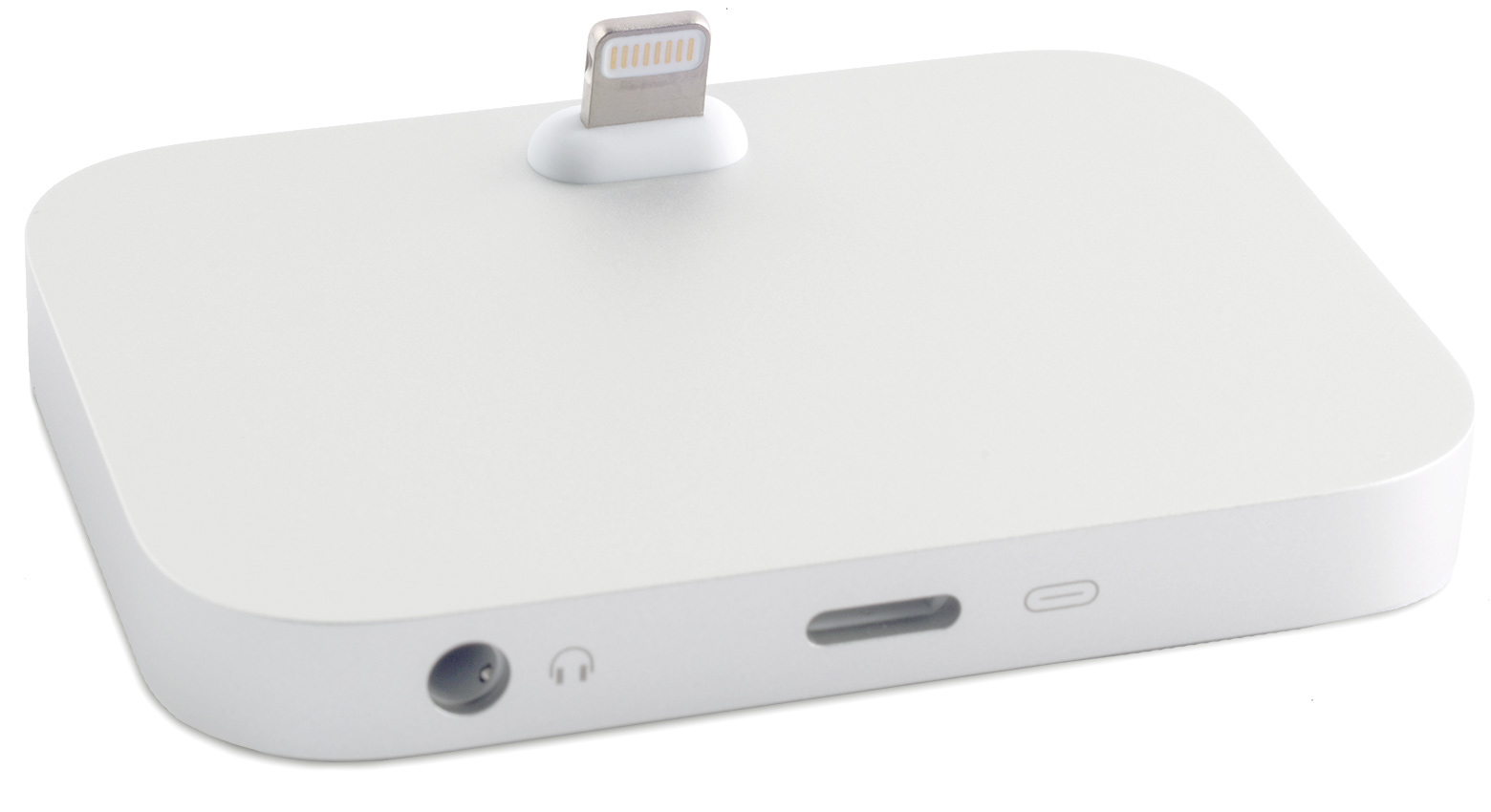
I'm also worried about the potential for consumer-hostile DRM on audio playback, especially since it looks like they're introducing their own proprietary wireless protocol.
Or just break open the phone and solder a fucking 3.5mm jack into it.
> I would seriously move off iOS
Memories of all the feature phones I had with adaptors tells me they will break all the damn time. Kids have a happy habit of losing small things - adaptors and bluetooth earbuds.
So that's 3 sales lost here - not buying 7's for the kids. They can put up with the iPhones they have, buy themselves (slim chance), or switch to Android. That's my popularity shot for a few days.
That didn't even occur to me! Holy crap, what a design flaw. I'm glad I'm not an iUser today
This is a complete deal breaker for me. I was confident that apple was going to unveil two models, one which had the headphone jack and one which didn't.
Lenovo at least had the good sense to offer at least one model that still had the headphone jack, as they were introducing a similar model which did not.
I'm so disappointed in apple.
Many people have the micro usb cable for charging, and iPhone users use the lightning charger.
Only issue for me is you can't listen to music via headphone and charge at the same time.
Audio latency used to be a HUGE advantage for IOS vs Android. It was their biggest USP in my opinion. Android has been improving but it's still not there yet. If the next ipad has this it will be the end for musicians using IOS.
This is huge.
Apple doesn't want everyone to switch to lightning. They are banking that bluetooth will eventually be the 90% even 99% standard among consumers. I tend to agree.
This seems backwards. Only reason to buy Apple phones is the superior hardware. As far as the OS goes, Android (and the google services backing it... especially Google Now) have completely surpassed it and continue to increase the gap every day. Increasingly, Google is treating the mobile devices as just a conduit to access their cloud services (including their far superior machine intelligence backing it). While Apple continues to treat the iPhone as a beautiful device with mediocre cloud services backing the hardware.
Don't believe me? Imagine if you Google stopped creating apps for the iPhone. How big a catastrophe would that be for Apple management? Now imagine Apple ceased to exist. Would the Android ecosystem be affected in any way?
For example, I rooted my phone to find out if any wake locks were draining my battery. It didn't show anything. Looked at the battery usage screen, it didn't show the culprit. Eventually I had to do a science experiment on my phone and disable all background processing and then switch on apps one by one to see the battery life change.
I finally found it was my carrier's generic usage app that was killing my battery. The app was installed from the app store on my unlocked device, so it wasn't carrier pre-installed crapware that caused this.
On iOS, I've never had to do this because app developers are not able to drain your battery like that.
---
Camera software speed and quality has never been matched for me on iOS. Maybe motorola gets to iOS's camera speed. The software also makes getting good photos a lot easier with things like detecting your hand shake with the accelerometer and taking the photo when you're still in the moment.
Siri has better locked screen and in car voice interaction for me compared to android when I tried with android OS 5
---
If google disappeared, you would basically get china and other companies would fill in the gap.
The series of caveats there tells a tale of it's own. Google Now is so far ahead of Siri, there's simply no comparison... starting with the basic magic of automatic contextual updates and notifications without even asking ("Your flight has been delayed by 30 minutes", "Heavy traffic on 101. Leave in 10 minutes to reach your meeting on time" etc.)
Add to that almost perfect voice recognition with any accents in the world, automatic language recognition etc and all that backed up by Google search engine. Sorry, calling out Siri as a Apple's superior cloud service is simply not credible at this point.
For me, I only use voice in a car and some other basic cases, since it fails on the locked phone case for me, it's not that useful.
---
My basic issues with android:
1. A battery monitor that just works(tm) without playing science experiment. An OS that clamps down on apps to prevent it becoming an issue in the first place.
2. Faster & better camera software, quickly accessible from a locked screen, quick to start, helps me take photos without me realizing it.
3. A voice interface that works well when the screen is locked or occupied by another app, where it easily does things like:
a) Send & speak text messages
b) Control my music / podcasts
c) Change my GPS navigation.
4. An OS that really tries in security. Android is not as secure as iOS, as evidenced by the prices of jailbreaks.
5. An OS that will get updates on devices for years to come. Windows has being doing it for decades despite having similar hardware fragmentation, why can't android do it?
"The technical engine behind it is better, but the UX for using it on a locked phone isn't good"
The OK Google thing on completely locked device has been working on Moto phones (and later Nexus devices) way before hands-free "Hey Siri" thing became generally usable on untethered iPhone 6s last year (at long last).
And calling the incredible functionality of Google Now as "better technical engine" is quite an understatement. If iOS had this service integrated behind it, the entire world would be plastered with TV ads 24x7 calling out this "Magical" experience. Instead Apple's best effort is Siri, which works so well that this entire subreddit (https://www.reddit.com/r/Siri/) is mostly devoted to Siri's hilarious fuck-ups. That's the reason you don't really see much marketing about Siri anymore. Instead the focus has shifted mostly on hardwares... especially the camera (which is indeed amazing).
https://www.macobserver.com/tmo/article/how-to-see-whats-kil...
The difference is you don't have to play science experiment because you can clearly see what the cause is and how to shut it off. The android battery monitor is ineffective in comparison in my experience.
The incoherence of that response (China is not a company) should be a clue.
In china google play services don't really work due to the GFW, so everything is replaced with some local chinese equivalent. You have android without the google parts for the most part.
While this is a usage pattern familiar to HN'ers the average user doesn't care too much about cloud services.
Average users care more about things like camera, battery, music, playing games and overall ease of use.
The only critical Google service for iPhone users is search (and maybe Youtube). Both are available from the browser.
Umm don't know which world you're living in but Google Now/Search, Photos, Maps/Waze, Youtube, Gmail, Calendar, Hangouts, Drive.. etc. Pretty much every smartphone in the world is running one or more of those services on a daily basis.
Care to name one Apple cloud service that's so indispensable to that many users? Or perhaps, even just to iOS users?
I never said they weren't running one or more of those services. Of course they are. I said that aside from Search and Youtube they weren't critical.
But I also wasn't aware we're calling basic web search, email and other web applications that have been around for a decade or more "cloud services". When did that happen? I guess by that definition (everything is a cloud service!) then you're certainly right - cloud services are indeed very popular.
I'm particularly fond of IMAP "Cloud Email" or as it used to be called "email". That's a good one. There's also "Cloud Messaging" (I've been calling it "texting" but I guess I'm pretty old school).
>Care to name one Apple cloud service that's so indispensable to that many users? Or perhaps, even just to iOS users?
I'm not sure why you're trying to make this an Apple vs Google thing. That's not at all what I intended. But re-reading your original comment I see thats exactly the kind of thing you were trying to stir up. I'm not interested in that type of discussion. Not even a little bit. Goodbye.
I don't think the disappearance of Youtube app in it's current form would make any difference.
Another dongle to loose. Tons of headphones obsoleted. Can't charge while listening. Laggy audio. more batteries in the world. They're ok with a bulge for the camera but not headphones? I work in a lab and a phone with headphones is standard equipment on the commute and work (for at least part of the day).
I would seriously move off iOS if I was making music with it. If only iOS devices were made by other manufacturers... (I know I know....)
on the plus side minimum memory had been bumped.