EV doesn't mean "cars". The V is for vehicles. We've had electric scooters on the roads for many years. In some cities, especially in the north they are nearly the majority of vehicles on the road.
But even if you limit yourself to cars, a friend just bought a Volvo S90 Recharge electric car to drive in Ho Chi Minh City.
And the first electric bus route launched earlier this year.
Toyota will never be very popular in Vietnam. If anything the Kia Smile is probably the most popular car and will be for a long time.
Cars themselves went from being a rich person's curiosity to mostly-affordable to ubiquitous in the space of 50 years.
Airline travel went from a luxury for the rich to broadly affordable in about ~30 years.
For more recent examples see smartphones - in less than 10 years it's gone from exclusively high-end device to near-universal adoption across the world.
It's often hard to figure out what technologies will stick and what will never resolve fundamental flaws - but once it sticks in the high-end market there is a good bet it will rapidly drive its way down the price scale, at a far faster speed than you might expect.
A petrol car engine is inefficient due to constraints (small + no cooling source other than air).
An electric engine + battery is extremely efficient (the "downside" is you can't use the wasted energy to heat up the car in winter like an ICE).
An electric engine + hydrogen fuel tank brings back inefficiency, and you can't even reuse that wasted energy because most of this waste is electrolysis.
I can see a future where you can opt for a hydrogen fuel cell EV rather than a battery powered one. Efficiently using the hydrogen will be a non-issue if we are able to trivially produce a vast abundance of it.
It’s hard to say that an EV is just as good (for the consumer) as an ICE engine if I am taking a road trip and one of many fill-ups makes me wait for hours. There are these uncommon cars that opponents usually cite and are sometimes unfairly dismissed. I say this because we can and will make EV technology better and cheaper and I’m willing to bet money that hydrogen fuel cell in lieu of batteries will become a thing.
The EV trickle-charges and uses direct grid current while driving in between cities, and then a 200km range at the endpoint of the journey is more than ample.
It is not even 3 decades to 2050, which is the USA's target date for net zero carbon, so with conservative estimates primary energy from wind should increase by at least 10% per decade, so 4 times faster than last decade.
Where is the vast abundance of renewable energy that you are talking about? Now is not the time for deploying another massively wasteful technology just because some people want to go on road trips without taking a 30 min break (a recent EV fast charge does not take hours) every few hours.
If you recall from my original post, I said nothing about that hypothetical, abundant hydrogen being born from any particular source, but I did have solar in mind specifically. I personally think solar cells and panel arrays will get more efficient at producing power that we will eventually have a global excess. If we have grids producing renewable electricity when conditions allow, they can redirect some of the excess energy and use electrolysis to produce hydrogen creating energy reserves for when the power source is not available to them.
Hydrogen is still not super efficient because we have not even scratched the surface of optimizing it’s consumption. If we had concerted efforts towards that goal, we can get it to work for us in ways we never thought possible. I don’t think lugging around large batteries is the future, rather our fuel storage needs will be met by hydrogen tanks.
This is a optimistic scenario. Current trend is mostly linear. See:
Wind power generation, world: https://ourworldindata.org/grapher/wind-generation?tab=chart...
Solar power generation, world: https://ourworldindata.org/grapher/solar-energy-consumption?...
You can choose linear/log, it doesn't look exponential to me.
Add to this the fact that primary energy generation is increasing all over the world, so the share of renewables is increasing even less.
The target is 2050. There is no R&D that will get rid of electrolysis and Carnot cycles by then. Maybe by the end of the century if you want. But for the next 30 years, batteries will be in the lead.
Total renewables = 20.1%, that includes hydro which may not be as renewable as we thought.
Just had this discussion but relative to why not re-invest in nuclear so we looked up the amount of nuclear energy (~20%).
Not sure if we are looking at different sources, they are counted differently, etc.
Source for this is; https://www.eia.gov/tools/faqs/faq.php?id=427&t=3
We are nowhere near being able to satisfy 100% of our energy demand with solar or even a renewables mix, except for a unicorn scenario in which we have high winds and a sunny sky at the same time. On top of that, it is extremely wasteful to use that energy to produce hydrogen and then pipe it around, compared to storing it in batteries - either portable ones like in cars or bigger house or grid-sized ones.
If we have excess solar energy, it would be great to make recharging your car free at that time, although I know that's a pipe dream due to the profit motive.
Hydrogen might fill a gap to replace large vehicles like buses or trucks but not passenger vehicles.
We have yet to design many vehicles around a hydrogen fuel cell and we have yet to really realize it’s full potential as a power source, dismissing it on these grounds is simply short-signed thinking.
We can extract this resource from a very abundant resource, water, which is huge. With only energy (from the grid or a micro-grid) and water as inputs, you can produce a substance that is able to store energy for later use who’s only byproduct is water.
Ignore all the "revolutionary" new batteries you hear about almost every week. None of them are heading for production for the same reasons: their capacity or durability are much lower than current Li-Ion batteries.
lol, do you really live in Vietnam?
How many electric scooters do you see on the street in compare to the gasoline counterparts? Honda alone deliver about 2.7 million bikes per year in Vietnam. All of the Honda bikes are ICE. The number of new electric scooters is not even six figures.
> Toyota will never be very popular in Vietnam.
Recently Toyota is not as popular as some years ago. But they still ship the most passenger cars among other manufacturers last year.
Honda, Yahama, Suzuki, Piaggio, and SYM combined sold 2,492,372 units in 2021. And that wasn't a massive crash due to covid, sales were "only" down 8.1% compared to 2020. Honda is about 75% of the market. So around 1.8-1.9 million bikes.
https://vietnam.vn/cong-nghe/xe-dien-dang-ham-doa-de-che-xe-...
> The number of new electric scooters is not even six figures.
Sure, I didn't say it was a big thing nationwide, I said some cities, so we're not really disagreeing. They make up 10% of sales now, not 50%, and even if they did it would takes year to replace all the aging bikes on the road.
I said there are some cities in the north where they are very popular; I'm not talking about Ho Chi Minh City or Hanoi. I don't pretend to know why some cities seem to have tons, whether it is local policy (I think this is what happened in central Hue) or because cheap Chinese ones have been available for a while (I think this explains some of the border towns) or what. Lạng Sơn is one place where I remember them being very popular.
> But they still ship the most passenger cars among other manufacturers last year.
Toyota sold 69,002 cars in 2021. Hyundai sold 70,518. THACO also technically sells more than Toyota but they sell under multiple brands so it's not really the same thing.
But you're right that I overstated things with Toyota; I was pushing back against the ridiculous claim that they will somehow have a monopoly and went too far.
Toyota sales from VAMA http://vama.org.vn/en/sales-report.html
Hyundai isn't part of VAMA so you need to see their sales from TC Motor https://hyundai.thanhcong.vn/htv/tin-cong-ty/tc-group-thong-...
Vietnam is still a relatively poor country (~$600USD/month average wage). It's going to take a long time before the current vehicles on the road are replaced with new ones.
It's still pretty common to see people riding around motorbikes from the 80's and 90's.
The heck does this mean? Suddenly, vietnam is going to follow the trend and buy electric cars? This car costs something like $60k in Vietnam. The country gdp per capita is $2700. Most people who can buy cars will probably buy an old gas car.
Everything was either a tiny scooter, or a massive truck well oversized for the narrow and crowded roads.
In countries where wealth divides are big, people go all out on large and expensive items. I could see 60k electric cars taking off among the top 2%, which still amounts to millions of people.
I don't see this happening in EVs, at least not current generations. On super-proprietary cars like Tesla probably never.
And then, electric cars seem to be pretty easily repairable. Just look at all the home-built electric conversions. Or the guy who builds new Teslas out of totalled ones.
I think it is even the other way around. There was a startup in Germany which designed a small electric truck with Africa in mind. Basic, cheap, not only repairable but designed to be assembled by the customers. This is way cheaper to do with electric technology then with combustion engines.
If you think about the limited battery supply chain, with the minerals, components, modules etc, it doesn't make so much sense to put them to huge battery SUV:s that mostly just sit on the driveway or office parking lot.
This too will eventually happen, but it's better for the economy and the climate to put them where they are actually displacing the most fossil fuels.
Sure it might take up to a full day to get 50-100 miles in the battery, but with smaller vehicles (three wheelers, motor bikes etc) it will definitely work out. Certainly considering many development countries are mostly sunny places like south east Asia, Africa, and south America.
Costs Rs. 9 lakhs, about 11,000 USD. They give a 7 year battery warranty.
For coty commutes, which is most of car usage in India, this is a perfect spot.
And Tata, has proven EV tech, via its Nexon EV range (400 km range, 22000 USD for the highest end version).
Tata cars have solid build quality, great resale value and are blindly trusted by many Indians.
The source[1] I found immediately showed a range from 8.5 to 11.8 lakh. If you're going to criticize someone for not providing facts and sources, you should do the same yourself.
[1] lot of ads warning https://auto.hindustantimes.com/auto/electric-vehicles/tata-...
Auto websites are a much better source of prices.
See: https://www.cardekho.com/tata/nexon-ev-prime
However, there are cheaper EVs available from the Tata stable, such as Tigor EV for under 12 lakh, so the point stands.
Tata Tiago is priced much lesser. I would be vary of range as advertised (unlike many other countries). My car gives me practical range of 220 kms and the advertised range is 312 kms. I drive at 115 to 125 WH per km, my wife drives at 135 to 150 WH per km.
Tata Tiago (going to be released in 2023, announced yesterday) costs Rs. 9 lakhs. (11000 USD) - https://tiagoev.tatamotors.com
Tata Nexon EV (released a few years back) costs Rs. 16-19 lakhs. (23000 USD) - https://nexonev.tatamotors.com/
A medium model between the two also exists, Tata Tigor, costs about Rs. 14 Lakhs (17000 USD) - https://tigorev.tatamotors.com/
What I understand is that in India
  - Buy Maruti for efficiency and low cost of spares and service
  - Buy Tata or Mahindra for build quality and sturdiness
- Buy Honda / Hyundai for good engines but high cost of spares and service.All the Korean-Japanese makers otoh are selling sub-standard "tin-cans". Anyone who knows Hindi can check out what Indians broadly think of Tata (as opposed to say, Suzuki) on Youtube.
India's car industry is a bit of a sad story. The market is flooded with cheaper cars that would never think of showing up to any safety tests. The Volkswagens, Toyotas, and Fords that do come to the market are "made for India" models which means they are severely handicapped in the safety department in order to cut the costs to compete. VW at least a few years ago when I knew would sell you the same car platform, but good luck trying to get service for it anywhere in India without paying near German costs.
I have been living outside India for a long time, so my impressions may be outdated.
However, the claim merely stated: "EVs are definitely going to remain a first-world item for my lifetime at least". It's pretty safe to say, looking at what we already have and how quickly it scaled in the last years, that this is complete nonsense and will be increasingly so.
Also, most traffic in India and other 3rd-world countries drives at much lower speeds than in the US etc.
The largest EV market right now is China, and in India and other similar markets battery-swapping auto-rickshaws are increasingly common.
EVs in developing markets won't look like EVs in North America and Europe, but that doesn't mean that they won't be massive EV markets.
In India there are some relatively cheap EVs on sale, and they're all picking up stream.
By cheap, this is what I mean: the price of Tata Nexon EV is slightly over the price of Hyundai Accent (called "Verna" over here) and maybe equivalent to the price of a Kia Seltos. The Nexon EV is now a fairly common sight in Indian cities.
Then there's the slightly more expensive MG ZS EV, which at this point I'm seeing on the roads fairly frequently.
Haven't seen too many Hyundai Kona on the road. Tesla is unfortunately not in India yet. There are some super-expensive EV models from Mercedes and the likes, but those are very expensive.
(Disclaimer: I'm NOT affiliated in any way with any of the brands I mentioned).
You don't need hectares of panels to charge an electric rickshaw or a scooter.
Maybe The Tiago EV will ship for 8.5 lakhs, but I'll believe it once I actually see meaningful shipments at that price. Cool if they do though, don't get me wrong. But plenty of promises in the car industry get left at just promises.
Tata has awesome reputation. Also, they have a 23000 USD Car, 17000 USD car and now they are taking bookings for this.
Also, the said car already has a gas version. This EV version is modified version of that, the exact thing they did with the other 2 EV cars (Both have gas versions)
Check out their website. Its not a concept car. It has actual production facilities and will be modified for EV versions.
I guess it would have been better to show the Model 3's $35k price point as example. Or the massive hikes the Mach E has had. Keeping car prices low has been challenging, especially EVs.
Good on them if they can keep those prices low for a while though!
I get that, and I get the car mentioned will probably never even get close to $30k+USD equivalent.
> As for Tesla, why on Earth would they bother selling a $35k car when they're having trouble keeping the $45k one in stock?
As for Tata, what if they similarly can't keep the 8.5 lakhs version in stock? Why would you bother selling it for 8.5 if your entire output of those cars could sell for 9.5 or 12 lakhs? What's the secret sauce that means Tata can manufacture infinite cars while everyone else is seemingly so supply limited? How are you so sure Tata won't experience the same kinds of pressures Ford and Tesla and everyone else seems to be experiencing IRT making EVs?
There are absolutely NO good cars with CVT or DCT transmission under 10 lakh. There used to be one model, Maruti Baleno, but that’s now switched to AMT instead.
If I can get CVT-like performance (or really, much better) for under 10L, I’ll take it. The EV is just the cherry on top.
I disagree. iPhone remained a first world item. Smartphones are being adopted even in the poorest countries.
I'd argue that it's in the third world where the advantages of the EV are particularly important. Lower operating costs, simpler maintenance, local power sources.
Most of the developing world is where there is a lot of solar radiation. Solar PV has already the lowest generation costs. It's already the power source that requires the least capital investments, and works the best in the regions with underdeveloped infrastructure (see stories about Afghan farmers).
Yes, 50K vehicles are too expensive for countries with a GDP of < 10K per capita. They are even too expensive for most of the EU. But eventually the cost parity will be reached, and at some point it will be more economical to produce budget and low margin EVs than to support a legacy supply chain of ICE vehicles.
Even the bleakest estimates predict EV cost parity in 10 years. 20 years for nearly complete fleet replacement. So in 30 years or so an ICE vehicle will be like a steam engine. TCO parity will happen sooner, and most vehicles are replaced after 10 years, so the majority of the cars will be EVs in 15 years or so (in high GDP countries). And if the majority of the cars produced are EVs, and they are less expensive, the developing world will switch too.
[1] https://www.alibaba.com/product-detail/Cheapest-Chinese-Elec... [2] https://electrek.co/2022/04/02/awesomely-weird-alibaba-elect...
EDIT: 100Ah 12V battery? So an electric golf cart, supposedly rated to go up to 50mph, with a "bed" and four seats and a lot of extra weight and drag. You're barely going to go 10 miles at 30mph in this even without four people and cargo in the bed of this "truck".
Streetcars built the suburbs, then cars of the 40s and 50s expanded that. Model T and A proved the performance of cars, but they were still largely toys for the wealthy or workhorses. Not necessarily white collar workers commuting to the office.
Plus, suburbs didn't come into full force until after WWII in the US. Show me the massive amount of suburbs which were founded in the 1920s or earlier which were only accessible by car.
What people need most of the time is basically irrelevent though. If you need a car to drive 20 miles a day for 364 days of the year, and 300 miles 1 day a year, then you need a range of 300 miles. It's the outliers that determine the requirements, not the typical use cases.
I did this calculation when I switched from ICE to a cheap EV. With just the money I save a gas+maintenance yearly our family can _fly_ to our yearly vacation spot (~1200km away) and rent the biggest fanciest Mercedes for the week. And we'll still have money left over.
Or we could load our EV on a night train, wake up at the destination and drive around all week.
Or we could rent an ICE car for the week.
There was zero point in spending ~20k€ more for the car just to match that once a year event.
And if you need to do a second trip that year? Or a third? Or 10 extra trips? The marginal utility of a cheaper EV starts looking really expensive. This is how people think. Owning a car that can cope with the outliers is a hedge against a period where you have to make lots of unexpected long trips.
People enjoy the freedom of ICE cars and their ability to go on essentially unplanned long journeys. Giving that up to use a cheaper EV will be a very hard sell.
Maybe I'm unusual but I rarely have any plans further than a couple of months ahead. Whether I'll be going on any long trips in the next 12 months isn't something I have any idea about yet. It depends on loads of factors (money, weather, work, whether I can pick up a bargain, etc.)
A month or two in advance is just fine, most people can do as much. They do know how many days of vacation they get though, and it's unlikely to change, so any plan you have you keep.
I could go camping with it, I could use it to haul stuff. It can fit seven adults and two dogs at the same time.
But for daily driving it'd be a huge pain. I don't need a car that big 90% of the time, a smaller, nimbler car is much more practical.
No, I don't. I'll rent a u-haul every now and then, and own the 95th+ percentile transportation machine.
Does a "perfect world" imply me missing birthdays? Does it imply me missing lunch with close friends? Does it imply me not taking a job outside the local bus line? Does it imply me not visiting a dying relative? If I'm limited to either entirely public transit or a vehicle which can barely do 10 miles at 30mph then yes, I'll miss many of these things.
Green solutions are part of the continuing decentralization through technology and will be just as popular in developing countries as in first world countries. One practical example of this is that green tech can be financed in bite-sized chunks, compared to the large commitments needed for power plants.
With EVs people in remote locations can have local infrastructure to generate what they need locally.
But seriously, if you're doing a bunch of long desert crossing trips it's a good idea to keep using an ICE.
How much longer are you planning to live?
EVs WILL be the VAST majority of autos sold globally in 30 years.
Depending on the curve, ICE vehicles could still make up the majority of vehicles on the road - but the writing for them will have been on the wall for a long time - probably within 10 years.
They won't. You underestimate the amount of investment needed to upgrade grids, add capacity to account for EVs, and the cost of upgrade to new cars.
Edit: and the cost of scaling up battery production
The market for cheap electric cars and scooters/bikes will explode as consumers worldwide see the price of gas get higher and higher. Many of these cheap EVs won't be sold (or even legal to sell) in North America, but someone somewhere will meet that demand.
Opening up a new field costs mucho $$ and it takes a while to pay it back before it'll start making a profit. And it seems that their analysis shows that 25+ years in the future they're not making as much as they are today so there's no point in spending money up front.
It's easier just to sell their existing inventory at insane prices.
(Just as some underdeveloped countries have been able to jump over transitionary steps in internet infrastructure and where they are seeing investments in internet infrastructure it is often faster on average than developed world averages because they jump straight to fiber everywhere skipping over many copper wire intermediaries.)
It is not 100% political. In a single family home you can (usually) put enough solar panels on the roof to charge an EV. An apartment has only one roof for dozens (or even hundreds) of apartments, so that's not going to work.
The only issue is people being against it politically/socially.
The chargers can either do it by themselves (adjust load to match hookup to grid) or the power company can manage it. Usually it's a lot easier just to manage it locally.
You're thinking of the fridge-sized units with the wrist thick black CCS cable. Yes, those need very specific grid hookups.
I'm thinking of, you know, a household plug. The kind an American would plug in their dryer to. You don't need a separate substation to run a dryer, right? Even if an apartment building has 20 of them.
One of those can charge 100-150km of range to a car overnight easily, which is more than the average person drives every day. YMMV.
Oh yes, you do. If too many people run too many electrical appliances, the grid needs to be upgraded.
I've noticed, especially recently, that a lot of tech people are hilariously out of touch with anything outside of first-world metropolitian environments.
For example, anytime I see someone espousing the virtues of EVs and lambasting pickup trucks and SUVs, or how <popular> infrastructure should be just erected, nearly every time they are only concerned/knowledgable with city life and don't have a single clue what life in rural/undeveloped regions are like. Sometimes I wonder if they even understand how the world functions in general.
Incidentally, yes, some people do need to drive an hour or two down the freeway to commute. Not everyone has the luxury of, nor necessarily likes, city life with decent public transport and tight population density.
A rural/suburban lifestyle where you commute hours a day is inherently energy-intensive, and the rising price of oil is going to put a serious cramp in the lifestyles of wannabe ranchers. Not to mention that roads and oil is pretty seriously subsidized by governments as they are essential for commerce. What happens when oil gets too expensive even after subsidies? Let's see. So far the SPR of the US has had the biggest drawdown in its history just in 2022 in an attempt to rein in the price of oil. I daresay that ends with the Midterms.
You are probably aware that ICE vehicles can run on LPG or hydrogen and even diesel cars can run on synthetic dimethyl ether (DME). A PHEV with a 10 kWh battery or an EV with a small backup combustion generator make total sense as one can charge at home with a wall charger. Use the car regularily for urban trips of less than 50 km and run on some sort of fuel when one needs extended range for extraurban trips. Renault did exactly this with the new Captur PHEV. In markets where suffcient H2 infrastructure becomes available, automakers could sell a variant with a H2 tuned engine and fuel tank, in other markets they could continue to sell the gas version or gas/LPG. Of course, if one wants people to use LPG rather then gas, the gas tank can be made smaller as it's only required at power startup. Others automakers targeting first world countries with sufficient H2 infrastructure will use fuel cells combined with a smaller battery to accomplish the same thing and fully ditch the ICE.
I too think Toyoda-san has the right market approach. They also have a headstart in H2 tech.
The car utilizes the turbocharged inline-3-cylinder engine from the GR Yaris, but with a few alterations to accommodate the hydrogen fuel.
Because the hydrogen is delivered in pressurized gas form, the same kind used in its Mirai FCEVs, Toyota teamed with Denso to develop special fuel injectors that could safely and efficiently introduce the hydrogen—which has a higher ignition temperature than gasoline and eight times the combustion speed—into the combustion chambers.
“Controlling abnormal combustion is the key to hydrogen engines,” said Naoyuki Sakamoto, the Chief Engineer of the project. “The abnormal combustion has the potential to add stress to the engine hardware. Therefore, we developed high-heat parts as well as adjusted the ignition timing and fuel ratio for the Corolla Sport H2 Concept.”
1. https://pressroom.toyota.com/the-familiarity-of-sound-sensat...
Toyota is living in the past, and resting on their laurels just like GM did decades past. I used to be a Toyota loyalist. Not anymore when it’s clear where the future lies
Lithium-ion cars, sure. The EV category, however, is far larger. Economies of scale go both ways. If "everyone other than Toyota goes completely electrics," maintaining consumer gasoline-distribution infrastructure becomes solely Toyota's problem.
Same for India, Tata will probably not stop making combustion engines for a while but they will have to produce cheap EV for their market and abroad.
Toyota may resist for a while but they will lose market share in luxury and middle-range cars as combustion engines get banned or at least restricted in wealthy countries and will remain too expensive for emerging markets.
So Toyota may end up producing the cheaper models of ICE cars only.
Society subsidizes car ownership to an extreme degree, from the environmental impact, parking space to road infrastructure etc.
A lot of people live in cities, and in a lot of cities, there is just not enough space for cars.
What do you mean by break? Everything at some point breaks. If you do your research to buy a quality and cared for vehicle in the first place, keep it maintained, 300k miles is of minimal cost and effort.
I suspect we'll see an overlap in wealthier households of a petrol or plug in hybrid for longer journeys, and a second hand EV for the daily commute, idling in traffic wastes significant petrol.
And that's fine. Remember, EV cars don't just compete with ICE vehicles. They compete with walkable cities, bicycles, scooters(ICE or EV), busses and other mass transit. They will face that competition even in the first-world.
The mindset of the group of people that think $20,000 is economy (and that it "will" definitely get done) reflects everything that is wrong with a lot of recent ESG propaganda and policies. That is, ignorance of the state of most of the world outside of rich, first class bubbles.
But the same is true of ICE cars. Transmission, engine, catalytic converter, fuel pump, alternators (not to mention routine maintenance like oil changes). EV's win on ongoing maintenance, and even if you have to replace a battery at an authorized dealership, you will still come out ahead versus the maintenance cost you would have otherwise paid.
In terms of 'catastrophic battery failure' compared to 'catastrophic engine failure' - not sure the EV would lose that battle either.
In short, yes, EV's have a finite lifespan, but so do ICE cars, and ICE cars are much more complicated, with many more expensive components that can fail, and are extremely expensive to replace.
Yes, other than the battery, EVs are very low maintenance. But that doesn't matter at all to low income people who usually buy 10 year old cars. They are guaranteed to owe a large repair bill on any car that is available to them.
The EVs I see on the second-hand market for $2000 have neither. It'll be a few years before I can get a used tesla for $2000.
Anyone with mechanical knowledge, tools, and patience can rebuild an engine or a transmission. It really is not that difficult.
When you have a vehicle with a monolithic conformal battery pack, once you can't buy a new one the car is junk. Unless you just so happen to own a factory you can afford to retool.
It doesn't exist yet beyond some small enterprises because there isn't enough volume: even 10+ year old EVs are still going strong with very few battery issues. We need to wait longer to get any business going.
There was a dude in Finland who replaced and upgraded Nissan Leaf batteries, he had to stop because it was a) impossible to get new batteries due to huge demand b) ran out of customers.
The controllers are black boxes though, but you can get 3rd party units for Tesla batteries _today_. JerryRigEverything on Youtube built his own EV Hummvee on the military chassis using some Model X batteries and all 3rd party electronics.
It wasn't plug and play, but perfectly doable in a semi-well stocked home garage.
Just imagine what can be done with actual resources and R&D.
The current limiting issue isn't skill or technology, but available new batteries. They can't make them fast enough even for new cars, never mind for spare parts.
But when battery production ramps high enough, there's absolutely nothing preventing people from upgrading existing batteries with more modern tech - bigger battery capacity in the same space.
There will also be a huge industry converting "dead" EV batteries to in-house battery backups. A car with 50% battery degradation is a bit iffy, but the battery will still have tens of kWh of usable capacity. Enough to run a house for a day or two in a pinch - or just store cheap energy and sell it back to the grid when the price goes up.
If we're talking hypothetically, why not just expect someone to develop a battery that lasts forever?
It just takes time to build enough factories to produce enough.
Just like everyone with a PC and an internet connection can become a software developer; there are a few steps in between why it doesen't "just" happen
There is some reason to believe this; stories like this [1] are going around, where EV owners have been told they need to replace the battery pack but, by the way, the part cannot be procured.
[1] https://www.wtsp.com/article/news/local/electric-car-battery...
I have driven approximately 700k miles across five vehicles and never touched any of these, nor have I ever been concerned about them, except with the vague idea such things can become a problem around ~250-300k miles.
What I have had enormous trouble with in all ICE cars is the electronics, which if anything are more populous in EVs.
The idea that "EV maintenance is clearly superior to ICE maintenance" seems like a baffling canard to me, aside from relieving me of the very minor burden of changing my oil twice a year or so, and some even more infrequent $20 filter replacements or simple spark plug replacements I've had to do exactly once which required only a deep socket. I've done more maintenance on my desktop computer.
  - Turbo (~1k€)
  - Radiator (300€)
  - Clutch
  - Dual-mass flywheel (1.5k€ combined with the clutch)
  - DPF (would've cost upwards of 2k€, bypassed it for 500€)
Dunno if you always drove brand-new cars or were really lucky.
For my current EV (2,5 years of ownership) I've had to replace the cabin filter twice and I've filled the washer fluid a half dozen times. That's it.
None of my cars stayed with me longer than 220k, but I have never heard of anyone that wasn’t driving cars from the 70s and 80s having to do those things, or with very high mileage.
No more weird running issues where it works just fine to 2000rpm, but at 4000rpm makes that weird noise. Or the transmission rattles a bit at exactly 3700rpm, but is fine on other rpms.
There will be plenty of “weird running issues” from software bugs and electronics failures, which are the worst and least reliable parts in ICE cars as well. An EV is not just a simple electric motor packed into a case.
Finally, as I noted elsewhere in the thread, Tesla is offering the same powertrain warranty on Model 3s that Kia is offering on their ICE cars. Clearly Tesla doesn’t have any more faith in electric powertrains than Kia has in ICE powertrains. If the EV powertrain was really so much more reliable than ICE, Tesla would be offering a standard 250k mile warranty on the powertrain instead of the same 100k warranty offered by some ICE manufacturers.
EV maintenance costs have been well studied at this point and are lower than ICE, and for very sensible reasons, it’s not a mystery or a canard.
There have been many many studies. Here’s a random one;
https://www.consumerreports.org/hybrids-evs/evs-offer-big-sa...
I’ve seen lots of electronics failures. This will only be worse in EVs, or at least EVs like Teslas, where things like door handles have been motorized.
[0] https://moottori.fi/liikenne/jutut/suomen-henkiloauton-keski...
Of course a sufficiently old car will be falling apart, whether it's part of the "ICE" or not - the suspension and shocks will be need to be replaced, door seals degraded or positively worthless, interior will be faded and cracking, wheel bearings fail, AC compressor goes out, various sensors fail (my favorite so far was the antitheft sensor)...when everything starts going bad, that's when I would expect the engine to be just be worn; basically, I would expect the ICE to last as long, or outlast, the rest of the car, save any issues on the left hand of the bathtub curve from manufacturing defects that should be covered under warranty. What you're saying is totally wild and alien to me. Mechanics must get a lot of business there.
If EVs are so reliable and maintenance free, why is the Tesla drivetrain warranty only 100k miles on the Model 3? That's no different than many ICE cars (eg I know Kia has the same warranty on ICE cars), and also well within the middle of the bathtub curve for an ICE car.
But for the rest of it, like temperature differences...this is still going to be a major impact on EVs, and like ICE cars, it won't be just the engine you have to worry about.
As I noted upthread, Tesla has the same powertrain warranty that, say, Kia has. It isn't much of a testament to the vaunted EV reliability that the most famous EV manufacturer doesn't have more faith in their electric powertrains than Kia does in their ICE powertrains.
Years matter as well, not just mileage. I have a 20 year old truck and the interior is basically just destroyed from sunlight and time.
True. But since every point has at least three counterpoints (true, false and anywhere in between), I will provide a counterpoint.
> They just lose capacity. So instead of a 300 mile range you have a 250 or 200 mile range. It's still a useful vehicle, just not as valuable.
This is true for urban environments where infrastructure is plentiful, and making it to the next recharging station is not a problem.
There are, however, many places on this planet that have resisted urbanisation (for one reason or another). On the A87 highway from Adelaide to Alice Springs in Australia, service stations can be up to 300 kms apart in some places. Losing 150 km of the driving range out of 450-500 kms on a brand new battery means that the vehicle will not be able to make it to the next service / recharging station.
People going across South Australia into Western Australia on the federal highway bring extra fuel along because there are no service stations in between. Yes, people still travel by cars and, no, they can't bring a spare battery with them but they bring extra canisters filled up with petrol/diesel. Also, going up the coast in Western Australia can be a pretty harrowing or even lethal experience if the vehicle runs out of power especially at the turn of dry and wet seasons when weather turns a holiday road trip into a gamble with life.
Cape York in Far North Queensland is not electrifed at all, and is powered locally by diesel generators. Electric vehicles are of no use in Cape York.
I imagine there are multiple similar fringe areas in countries such as Canada, the US (Alaska certainly comes to mind), Argentina, Brazil, Russia, west and nort-west of China and probably many others that require the infratructure to be built first and, until that happens, the liquified hydrocarbons are still the only viable option.
The remote regions you describe, currently powered by diesel generators (where does that fuel come from?), isn't there an incentive to power them by solar and also charge electric cars that way?
And even if there are some remote spots on earth where electric cars are not useful, how large is the market share for cars for these regions? If Toyota continues to make land cruisers for those regions, what does it matter for eletrifying 99% of all other cars?
Depending on geography diesel comes from boats, tanker trucks or planes. Solar might start getting some niche use, but it's not reliable even with batteries at a reasonable scale. The main benefit to diesel generators is it's pretty easy to fix and maintain them with minimal equipment. The amount of diesel per person for a generator isn't that much, even smallish planes can carry about a week of diesel for about 10-20 people.
EV charging stations just need an electric grid connection. Some maintenance/labor is still a good idea, but it isn't necessarily the same regularity and overhead costs of a trucking-based supply chain.
Maybe these situations will require more service stations be built. Maybe they'll require the development of better towable battery packs. Maybe they'll require the development of specialized vehicles for the, relatively speaking, very small number of people who need to make these trips on a regular basis.
What they don't require is maintaining our horribly-wasteful fossil fuel based transport system indefinitely.
People used to do powertrain replacements on used cars, after all. (Maybe still do? The used cars I see are generally in better mechanical shape these days.)
Then they get less range, they don't die completely..
A 5-6 year old EV battery is unusable in winter at low-ish temperatures. Not only do you lose range when parked, you can be in real trouble if you’re stranded in a snowstorm.
These issues are manageable with a new car of course!
I definitely don't live in California.
> A 5-6 year old EV battery is unusable in winter at low-ish temperatures.
A brand new EV gets less range in winter. A used EV gets less range in winter. A used EV in winter gets less range still.
But that doesn't make it unusable, it just changes the use case. A 300km range (when new) EV might reliably get 50% range in winter, and 70% range when 6 years old, combining for 35% of new range when used and in winter - plenty of buffer for an average driver's commute, but wouldn't want to use it for a winter road trip.
> you lose range when parked
Same applies whether it's a new EV or a used. If I were driving an EV in the winter (gets to -20C here regularly), I'd definitely be looking to park somewhere I could plug in - which are pretty common. As is, I drive an ICE, and I have to turn my car on for a few minutes to warm the engine before I start driving (or else the windshield becomes an unusable fogged-up mess before the end of the block)
> you can be in real trouble if you’re stranded in a snowstorm.
Yes, monitoring weather is important regardless of your vehicle choice. The only time I've been stuck in a snowstorm was when knowingly going for a weekend camping trip when a blizzard was forecast. (the solution was bring extra food in case we got stuck)
> These issues are manageable with a new car of course!
Or used. It's all about anticipating a situation.
At least with current tech, battery chemistry makes such replacement extremely tricky without a full replacement. You can technically swap individual packs in a Model S/X battery[0], but it'll inevitably die[1][2] because of how voltage balancing works.
Packs each with their own BMS would be interesting but I'm sure the automakers have already considered the tradeoffs for a lot of ideas like this.
0: https://electrek.co/2021/09/13/tesla-battery-pack-replacemen...
1: https://twitter.com/wk057/status/1437607772959428608?s=20&t=...
On the other hand, I don't pay for: oil/fluid changes, filter replacements, transmission/engine rebuilds or smog checks. Probably forgetting a half dozen other things too.
Add all that up and it's a free battery replacement in 10 years which I don't even think I'll need.
EV batteries won’t get replaced in 20k cars anymore than engines are. You total it out at that point.
If you had to rent your cell phone off of ma bell with no other equipment allowed on the network we wouldn't have iphones.
If roads had ford specific infrastructure like the future elon imagines we wouldn't have tesla.
A balance between interoperability, end user control, and freedom for manufacturers is how you get innovation. In the current auto market you have none of the above.
It sounds like there may even be a fully new battery option available for early Model S vehicles in the near future.
Battery replacements may be much easier to complete.
If you buy a full replacement engine (as opposed to parts to rebuild an engine), replacement is quick and easy in an ICE. In endurance racing an engine can often be replaced in less than 30 minutes. In non-racing conditions you'd do it a bit slower but it's not hard.
At the higher end of professional racing, those are custom built cars.
But for most categories of racing, endurance race cars are just regular street cars. Hondas, Mazdas and BMWs are what I've raced or crewed with.
Ok, there is some sarcasm in that. You can get a Leaf for cheap.
And of course people are talking about "economy" relative to the USA, it's where half the people on this site live. Nobody is saying car prices are the same everywhere in the world, and that's not going to be the same with widespread EVs either.
If anything, there's no reason why those rich, first class bubbles should be able to buy $40,000 luxury ICE vehicles when the world is slowly burning, but try telling them that, and now those people who just lectured you about "first class bubbles" will brand you a Marxist.
Some people just want the status quo, whatever the ultimate price is. They can't be reasoned with.
That includes ensuring that Cuba does not use electric cars
That said, I am also quite a bit more pessimist than OP that we will see a full conversion in the near future. It will be a long, and quite possibly painful, process.
Then, you have the issue of rolling out updates to grids. There's a variety of options, all well technically understood, and little movement in many areas. California, for example, ought to have buried a lot of its electrical lines. Construction work during droughts seem like a good way to start a wildfire, as is installing new overhead lines.
I'm just being pedantic though, I agree with your point.
In fairness, they did catch up decades later...but that's likely at least a couple decades of revenue lost. And never really innovating.
If they'd have been more forward thinking, we'd likely see Kodak sensors in every phone today instead of Sony.
There is nowhere near as much money to be made in the digital camera market. They failed to adapt, but at the same time, there was no saving what was an immensely large company even if they did adapt.
Film revenue for Kodak was $16 billions in 1996, adjusted for inflation that would be $30 billions, that number will make anything digital look like nothing (15 billions is the current revenue for the entirety of the digital sensor market in current dollars and Sony has 43% of that pie, a share that has been dropping as more competitors have entered the market and as Samsung kept improving.). You see a Sony sensor in many phones, but Sony doesn't make anywhere near film-era Kodak revenue on that side of their business. The higher end camera business is more profitable, but it doesn't sell much in volume, and the low end of the camera business has almost disappeared because of smartphones. (Canon, the biggest producer of digital cameras, has all but ceased making compact cameras apart from their G7X model. You can still find other models on the market but they're older unsold stock and refurbs. They also announced they would stop producing new DSLRs and will solely focus on making a narrow range of mirrorless cameras. To put it bluntly, the digital camera market is in a very unhealthy state. Don't solely look at price tags either, Leica for example makes some of the most expensive cameras on the market but.. their revenue is $400 millions, not even $1B)
For example, if Kodak had been first to digital, that doesn't mean they'd have had to give up any film at all. And since they were first, they could have set margins where they liked. Whether it would have survived and thrived...who knows. As others have pointed out, computers weren't commonplace back then.
Digital cameras did get commoditized, nearly 30 years after Kodak had invented it. So obviously, by today they'd had to have move on. High end sensors, glass, heck even cloud computing, something akin to Google Photos... there's no telling where they could have been if they'd have leaned in early.
That said, you point out the sensor market is 15 billion today... and Sony has about half. This is way, way more money than Kodak makes anymore. Today Kodak is at about a billion revenue per year.
Who wants to invest time & money into developing a mature, low-margin business?
Sears, after dominating mail-order for a century, marketed Prodigy, a successful early dial-up network. But they were by that point heavily invested in malls, and were beat out as the 21st century's Sear's, Roebuck and Co. by a bookseller.
All they had to do was have the foresight to move that model onto the internet. They had the supply chain, warehousing, etc. They may have even been able to have done their own logistics, since every city had a Sears. Kinda how Walmart does deliveries now.
And as you mentioned...they got crushed by a bookseller :(.
Amazon was the right size to grow with the market. Amazon didn't even start selling clothing until 2002.
Service Merchandise hit some weird bad luck in early franchising (and franchising may have been the wrong choice/it's own bad luck) and accidentally got somewhat region-locked into the US South East, but the business model was from today's perspective ahead of its time, directly addressed that "mall shopping need" while still keeping what made catalogs and drop shipping useful (and relatively efficient just-in-time logistics).
Sears seems like it could have transitioned if it didn't have its head up its ass. The death of film means Kodak would have to constrict and double down on printing, and simultaneously expand their general chemistry efforts into new markets (which I believe they did but too little too late).
How a company that was focused on their legacy customer relationship system and logistics operations lost out to a company that was focused on building the future of customer relationships and logistics is a lot less difficult to understand.
I remember it differently. Also, actual history is different too.
> Bezos finally decided that his new business would sell books online, because of the large worldwide demand for literature, the low unit price for books, and the huge number of titles available in print.
https://en.wikipedia.org/wiki/History_of_Amazon#Online_books...
Selling books was never the ambition, it was only the path.
https://www.forbes.com/sites/peterlyon/2021/06/29/at-last-to...
https://en.wikipedia.org/wiki/Toyota_RAV4_EV https://en.wikipedia.org/wiki/Toyota_C%2Bpod
But it is the first one where they're aiming for mass adoption.
One good exampel is Apple. They were a computer company which was doing well again after the return of Jobs. Then came the iPod. And revenue exploded. But when the rumors of a phone appeared, a lot of people would comment: no, they won't do that as that would eat into their cash cow iPod. But we know how this ended. They released the iPhone, grew multiple times the size the company was and eventually even stopped making iPods.
Back to Kodak: they did invent the digital camera, but at a time it was way too early for being a product. But more importantly, they did bring some important digital cameras to the market in the late 90ies, the first usuable DSLR were Nikon/Canon cameras equipped with Kodak guts. They started the professional digital camera market. Without Kodak, it might have happened years later.
And at that moment, when the writing for film was clearly on the wall and they actually had managed to kick start its killer, they dropped the ball. Good management would have seen that they could "protect" film sales only on a per-quarter basis, but it was a dying business. They should have used the billions of cash they still had, to gain a solid foothold in the digital camera business, perhaps even outright bought Nikon, which was limping for a while.
Or invest strongly in all the adjacencies of digital imaging, which they did far too late.
I think you can find examples of failed pivots and successful pivots but I'm not sure that "big companies should stick with their current cash cow and never pivot" is a best practice.
Any yes, people are all over it to the point that the most popular varieties can be difficult to find in stock, and prices have climbed significantly from a few years ago.
It's not like they're not going in EV, they are just doing it at their pace (which is slow typical of Toyota).
Tesla already got the first mover advantage. Kia/Hyundai/Ford etc are fighting for second place. The gap between second and the rest won't be as large as Tesla vs second.
The same reason Apple went all in on the iPhone and dropped their lucrative iPod business. You drive your car on the road that takes you to the next level, not the familiar one that's heading off a cliff.
https://insideevs.com/news/601770/world-top-oem-ev-sales-202...
https://electrek.co/2021/02/25/this-weird-little-4000-electr...
Keep in mind I'm not saying EV can't be as cheap, but China isn't the best example.
Lots of countries manufacture their own cars, unlike some random plastic toys.
Also, You don't get this price when China are exporting them if that's what you're trying to say.
The price is mainly subsidized on the (Chinese) customer's side (there are big incentives to buy EV over gas car, and it's not limited to the price of the vehicle itself: in some places it costs more money to get a plate for gas car than the car itself), not the manufacturing side (obviously it's both, but why it got as low as $4000 is mainly because of the former).
EV have very low maintenance compared to gas cars. As time goes on, new EVs will get better real fast. The old EVs will still be solid workhorses despite this.
The problem with India is twofold: manufacturing and import regulations. But someone somewhere will figure this out: they’re trying to fix that same issue with iPhones. Some EV company (maybe Tesla) can piggyback off of the same solution.
That’s when all the “old EVs” with perfectly useful motors, readable easy to upgrade batteries and solar energy will make sense.
Now I’ll admit: this super hand wavy. But ever since I bought my EV, I have just found my transportation costs trending to zero. It’s ridiculously cheap!
Going from 300km range to 270 isn't going to change my life, anything over 200km is perfectly fine for my daily use.
Even after the battery is at 50% capacity in 15+ years from now, I'll need to consider if it's worth it to replace the battery or just take it out and plug it into my house and sell the other bits of the car to someone.
My newest ICE car is 18 years old and my oldest is 34 years old. They work great.
I want to travel in comfort and safety and not have to worry one second about my car breaking down. I also don't want to spend a single second servicing my car myself. I want it to take me from A to B every single time without fail.
I had enough "fun" with cars old enough to drive when I was young and less well-off. Can't beat the excitement of a car randomly breaking down on a remote road in -20C weather. Oh and it just as randomly started working after my uncle drove for 30 minutes to rescue us. Never again.
Overall I don't see mass EV adoption as a good news for crude oil. If I can get a little conspiratorial IMO this is the reason why there is such a strong push from hydrogen lobby as it provide them for an outlet for existing fossil infra and hope that they can keep it alive with massive lobbying and subsidies.
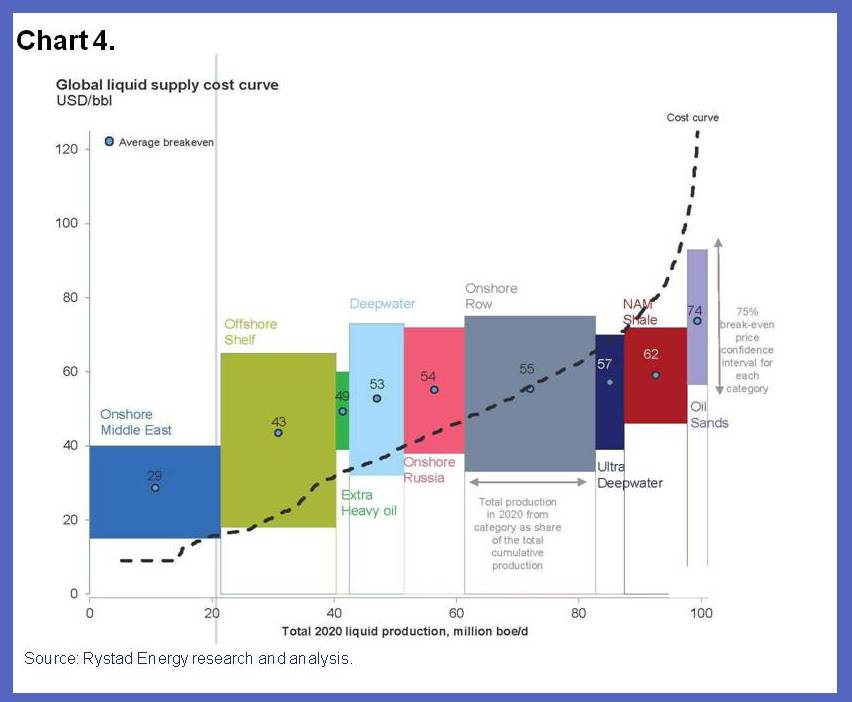
ref 1: https://imfdirect.files.wordpress.com/2014/12/oil-4.jpg
But no reason not to get an EV. I’m on week 4 and would never dream of going back to an ICE.
https://res.cloudinary.com/nimblefins/image/upload/c_limit,d...
Tesla battery only degraded 20% in 9.5 years.
Sounds like a good deal to me.
Battery costs are still falling and the typical cost of a battery in a mid range EV is about 6000 USD. For the battery to lose 30% of capacity, it takes 10 years. So your amortized cost (crude) for 10 years is about 400 USD per year.
I am sure the gas costs will be much more than that, compared to EV running costs.
Still a great deal.
In reality, someone buys an EV new, drives until the battery is worn out, and trades it in. Now the price of used cars just went up $6k across the board because you need to put a new battery in any affordable used car out there.
If you have a nickel-cobalt Tesla battery right now, there is going to be at a minimum LFP (no nickel/cobalt) replacements available. Or Li-S, or Solid State, or some sodium ion or maybe sodium sulfur.
If your car lasts ten years, that is going to a completely different ballgame given what is coming down the pipe from technology and scaling.
Even if it drops to 150 mile range, guess what? That is still a car with a ton of use cases: city car, cab, delivery car, etc. Unlike an ICE where the engine or transmission breaks, a battery losing range is still a battery that works.
Any economy car you can buy will easily survive for a very long time even if you completely neglect all maintenance. It is nowhere near true that an engine will fail from missing a few oil changes.
Other than standardising the batteries, unlocking the chips so they can be maintained and maybe switching to a motor that doesn't require niobium, what's to improve?
Electric motors are a mature technology, and putting a box or a 3:1 teardrop on wheels is quite simple.
It is true there is a need to improve infrastructure, but that can be a positive thing to generate employment and invest for the future.
It was a lot easier to put one cell tower every X kilometers than it was to run cabling around the country.
Skipping landlines and going right to mobile is an example of that.
https://www.motor1.com/news/613494/tata-tiago-electric-vehic...
(Article says it goes on sale October 10)
Most EV's are charged from a grid that's still burning oil/gas/coal to power them. We haven't achieved much of anything in those areas.
The batteries simply DO NOT EXIST to enable a grid that is based off of renewables - or even half off renewables.
A tank of gas does not lose energy in transmission nor in storage, and it is far far more weight:performance efficient.
India ranks 4th worldwide for new car sales and will likely take 3rd place in a year or two.
We are so used to EV drivetrains being more expensive, we can't think of the possibility of EVs become so cheap, but I predict they will, and with sodium ion batteries at 140wh/kg coming into production next year, along with 200+ wh/kg LFP and LMFP, it's going to h ppen sooner than I would have guessed only a couple years ago.
I will agree with Toyoda that a PHEV has a functional place in the next two decades. They were one of the top PHEV companies so they probably have the platforms already, so may as well use them.
But make no mistake the arrival of usable sodium ion to me is the game changer for the mass production EV: the napkin math says that 140wh/kg cell density if it is efficiently packed (90% is current cell-to-pack expected ratio) will make a 200-300 mile car. That's no cobalt, nickel, or lithium.
And a city car only needs 150 miles of range for the "second/third world" urban centers in some teeny car.
200 wh/kg (cell) LFP/LMFP should be 300-400+ mile cars. That leaves the cobalt-nickel and whatever comes out of initial solid state into exotics, supercars, and long haul trucking.
And if those sulfur batteries papers are legit, that will also be dirt cheap and near-solid state densities.
But yeah, I think in ten years a cheapo EV will be 1/2 the cost of what a cheapo ICE will be. We'll know when the Chinese invade the US market. Luxury cars and big cars will still be dominated by equivalent doodads costs, but I think possibly in ten years the industry will hit 50% of ICE drivetrain cost.
Now? Why invest in a brand new comprehensive PHEV platform? All existing ICE platforms are "last hurrahs". Like, holy shit ALL ICE PLATFORMS are dinosaurs. They won't invest in new ones, no way, they need ALLLLL that for EV switchover to stand a small chance of surviving the big paradigm shift. No new engines, no new transmissions, no new gee-whiz ICE tech. The last gasp was Mazda's compression ignited gasoline engine, that's probably it.
If the regulatory agencies had said in 2000, "in 10 years all consumer cars will be hybrids, ideally with PHEV hybrids, and ideally in increasing all-electric range capability, and we will deliver a good subsidy and a hefty penalty" and moved the entire industry to PHEV, we'd have had a good decade of ramp-up to hybrid platforms, getting everyone used to home charging, had great gas mileage, had 50-80% of consumer daily trips fully electric, and probably had all electric drivetrain components further down the maturity path.
But... we don't. PHEVs probably could still make an impact in the next ten years, but there is no way our nonfunctional congress could get that done. Instead, it is full bore on full EVs and people carrying around 5x-10x more batteries than they need for driving.
My idea for that is to offer a city car that has about 100 miles of range, and then an optimized aerodynamics "trailer" that is either a battery or a gas generator that extends the range of the car. You could rent them, swap them at exchange kiosks (fully charged/fueled) at highway truck stops, and bam no recharge issues on the car's main battery. That would be cheap EV cars that maximize battery supply. All you need is a trailer hitch and a special charging port on the rear of the car.
That inside-out rotary engine would be perfect for a really long range extender that uses synthfuels or fossil, or for long haul semis. Oh yeah, semis would be perfect for a two-behind booster battery. It could have drive wheels to help stabilize in crosswinds, it could have aero shape to help with the "flying wall" effect of most trailers. The trailers could also do hydrogen, although I still think hydrogen is a trojan horse by the petroleum companies.
You just think of a college football Saturday where 100k people drive in, tailgate all day and then either stay in a hotel or head back the same day. Often coming from 3-4 hours away.
It’s simply not realistic for all those vehicles to need to do 45 minutes of charging.
When that gets solved, you’ll see rapid adoption.
5 minute charging is a nothing burger. If they are tailgating for hours, they can do normal level 2 and get what they need.
5 minute charging is something that sounds like a good idea if you've never had an electric car, and are used to only charging at very specialized locations that you have to seek out and spend dedicated time at, ie gas stations. But after actually having an electric car, the idea becomes superfluous. Current charging speed is going to be just fine for 99-99.5% of those driving long distance to a football game.
Most EV ranges I see are in the 300 mile ballpark (currently) which is going to require a full recharge for the round trip.
On the day to day with an EV, I agree it’s not a big deal. Travel is a very big deal though.
4-5 people in a vehicle loaded with luggage or other gear. People driving to beaches during the summer. People going to Disney. People travelling to ports to go on a cruise.
For pretty much every European a 1000km round trip is something you do on a special vacation. And you stay for a few days on the other end :D Definitely not something you do on a weekend to go see a sports team.
There are some UK football fans who do that, but they're on a bus and can sleep both ways (usually they don't, they get shitfaced)
Charleston, SC (240 miles, 580 round trip)
Florence, SC (210 miles, 520 rt)
Columbia, SC (132 miles, 262 rt)
Charlotte, NC (134 miles, 268 rt)
Atlanta, GA (121 miles, 242 rt)
People come from all over and this happens all over the country.
100k people drive in. All individually in personal vehicles? Most commuting 4 hours away? No.
Even if the average occupancy gets to 2, you've massively reduced the energy needs.
I really doubt the failures of electric vehicles are because of college football. If that's truly the case I feel really bad about the future of the human race.
What we need is not an EV that can drive 400 miles and charge in 5 minutes, but public transportation infrastructure that can ferry you from your home to the massive gathering place and back without you and the other 100,000 attendees needing to drive your own 3 ton vehicles.
Turns out my neighbors next door have relatives the exact opposite direction of where my relatives are and we've got very different hobbies.
I'd like to see what kind of electrical infra you need to (even partially) charge 20k cars in 5 minutes.
That's about one Tsar Bomba of energy.
That's about one Tsar Bomba of energy.
This is too high by 4 orders of magnitude. 100 kWh is a larger than average battery capacity for a contemporary BEV [1]. That's 2000 MWh for 20,000 vehicles charging from empty (modulo charging inefficiencies). 1 megaton is 4.18 * 10^15 joules or 1,162,000 MWh [2] while the Tsar Bomba had a yield of at least 50 megatons as tested [3]. So charging 20k electric cars from empty requires about 0.003% as much energy as the Tsar Bomba released.
[1] https://en.wikipedia.org/wiki/Tesla_Model_S#Battery
Still, if you look at power, that much energy moving in 5 minutes is about 24GW. That's massive. Unless I'm wrong with numbers again :P.
Graphene has seemed to be the key to rapid charging while maintaining temperatures for over a decade. The challenge was always getting enough usable graphene at low cost without mining.
It's perfectly enough to have rows of 22kW three phase chargers there, during a 2 hour(?) ballgame you get a good 100km of range - enough to take you back home or at least to the nearest rapid charger if you need one.
Or you could have rows of 100kW+ chargers with smart load balancing. The CCS connector tells the charger how much battery is left in the car so the load balancer can prioritize cars with less charge dynamically.
But in your example there are two long periods of time where the cars are stationary, right? They're parked all day while partying and parked all night when they're staying at a hotel. Any pauses in the driving can also come with charging up.
I don't know if that's realistic or not.
Solve college football tailgating because that's what most people in the world REALLY care about!
Really no different then solving a drive down the coast to Orlando. When every car on the highway has to stop to recharge to do a long drive a 45 minute recharge will bottleneck the entire highway system.
The rapid recharge is the key use case to address EV adoption. I’ve owned 3 and I’m speaking from experience.
Many of Toyotas competitors have de-emphasized investments in their ICE products to pursue EVs that they can't produce in large enough volumes for longer than anticipated. Toyotas strategy is going to work well at least in the mid term.
They're also pretty good for special use vehicles, a Mitsubishi Outlander PHEV is pretty much the best EV-ish vehicle if you need to tow a bigger load for long distances without shelling out 100k€+. And you can still drive on full electric around the town cheaply.
Considering they are unused most of the time, I'd expect very infrequent maintenance, and even some parts switching from X years to lifetime.
Edit: a short Google search [1] shows that for actual cost, plug-in hybrids have the same cost per mile than EVs, which is half the cost of ICE cars. It makes sense to me because batteries are a lot smaller/cheaper, the ICE doesn't get used all that much, and there is regenerative braking.
[1] https://www.greencarreports.com/news/1129728_plug-in-hybrids...
The Prius engine is a good gateway drug to full EV ownership, you'll learn that the amount you press the accelerator doesn't correlate with the engine RPM at all. The car picks whatever it thinks is efficient to move the car, any extra is stored into the EV system.
It's called the Nissan Leaf and it's been available for years!
Billions was poured into this and I remember it being a big item in healthcare reform. But im still answering the same questions and filling out the same forms every time I go see a doctor.
Generally more money and mandates from top down don't work
All the labs are also easily accessed online, and I can easily login to my account and download them all to Apple Health app in my phone.
no Toyota is just not buying the "all in" bet on EV, and they keep researching on other alternatives such as Mirai with fuel cells; the article is quite clear on that.
this imho makes Toyota more reliable than other manufactures who are running at making only SUVs with shitload of batteries just to please the market, greenwashing and not innovating at all.
[1] https://www.wired.com/story/review-wuling-hongguang-mini-ev/
It somewhat remains to be seen if a used electric with a new battery can be cheaper than a used hybrid.
These things may work, but I don’t want to spend the money to be the one that finds out.
I've had a water pump die on me within 6 months of buying a 2nd hand car. In nearly 20 years of driving 2nd hand cars I've had more issues with ICE cars I've bought than I have with the two used EVs I've bought.
With that in hand, I was confident in the health of the EV and made my purchase.
In the future it may very well be possible to do the same home repairs on your EV. We're barely past the first decade of publicly available EVs. A number of early EVs have plenty of guides out there on how to replace and rebuild battery packs on your own, and aftermarket mfgs are starting to produce speed controllers and ECUs for custom EVs.
It's just a new wave of tech, and that too will become normal over time just like ICE cars themselves.
Batteries on the other hand will eventually break down. Sure, eventually it will become cheaper to repair and replace. But the oldest EVs on the road are probably Teslas. The Model S is something like 10 years old now? And a full battery replacement is still hugely expensive. A decade on and EVs are still luxury items.
The cost of the vehicle and maintenance over 10 years would have to be dramatically less in the average case for regular people to start buying them. In that sense I think Toyota has plenty of run way.
My yearly maintenance is 250-325USD per year. Occasionally you need to replace the brake pads. And a few other things come up sure. But over 10 years I’m only looking at 5KUSD unless something horrible goes wrong. And I could probably get it cheaper. At my level of fuel consumption I’m looking at another 4K over 10 years.
I can’t find an up to date quote, but in Australia, the Tesla 3 years service plan for a rear wheel drive Model 3 was 1.75 times the cost compared to the standard service for my car in 2018.
Non Tesla EVs do better. And some are half the price or less than what I pay for annual servicing. But I still have to cough up 3-4 times more money 2nd hand. So potentially a 2nd hand EV based on current prices will start to be cheaper in 8ish years. Not including the loan I’d have to take out to pay for the thing.
Then don't? There will be millions of people testing it for you.
I'd much rather we let people not drive at all if they want to as a way of reducing the strain, as well as allowing LEVs or small electric cars on the road for the people that don't insist that they need to tow a boat and a caravan up a mountain at 20 over the speed limit 200km away with a pallet of plywood to drop their kids off at school.
Tata Motors launches $10,000 electric car in India to further its lead
https://www.reuters.com/business/autos-transportation/tata-m...
Here is a walk around of the car: https://www.youtube.com/watch?v=_RCXDsfVniY&ab_channel=Autoc...
Today you’d be lucky to pay that for a Leaf, and if you do it’ll be far more used with far more battery degradation. That’s not a knock against EVs, it’s a product of the car market we have today.
Lots of things could work. The logistics of hydrogen make it laughable as a mass replacement for gasoline as an energy fuel for mass market.
There's also significant subsidies for hydrogen storage technologies, hydrogen vehicles, and hydrogen fueling stations.
Personally I'd take this at face value: the point is that hydrogen has the potential to decarbonize a lot of industrial & transportation uses of fossil fuels, and so it's attempting to build up the necessary technology and infrastructure to make this practical. There are always side effects when you throw massive amounts of money at a problem, so I'd expect some boondoggles, but at least the intent of the law isn't a boondoggle.
[1] https://www.utilitydive.com/news/the-ira-will-accelerate-ele...
Hydrogen beats batteries in terms of energy density, so maybe it has a future in aviation. I think ground transport will eventually all transition to battery electric (and hopefully we'll get electrified roads at some point so battery size and range isn't really an issue anymore) unless energy somehow becomes so cheap that we just don't care how inefficiently it's being used. I don't expect that to happen any time soon though.
From what I've read that seems to already be playing out in small planes that fully battery electric is winning over hydrogen or hybrid hydrogen/battery. It will probably be another decade or so before we see how it plays out on the larger planes.
The only place I've heard hydrogen might win out is large sea transport (large cargo ships and cruise liners), and even then there are interesting recent developments in wind power for ship's cruising speeds and battery charging that are going to be competing with hydrogen
Ammonia to Green Hydrogen Project https://assets.publishing.service.gov.uk/government/uploads/...
First, the well known short comings of BEV as often pointed out on HN. The most common is range anxiety (dead electric car) and how long it takes to recharge (30 minutes at a quick charging). With a hydrogen fuel cell vehicle, it has a higher energy density so its range is farther and it takes about 10 minutes to fuel up a Toyota Mirai with hydrogen. This is the reason why commercial trucks and long distance trains are looking at hydrogen fuel cells. [1] [2] [3]
The second and probably more important reason why Toyota is betting on hydrogen is that the Japanese government mandated it. [4] By 2050, Japan wants to transition off fossil fuels using a combination of electrification and hydrogen/methanation/synthetic fuels/biomass. See slide 2(2) Energy Outlook of Carbon Neutrality in 2050 from [4]. This make sense to Japan. Japan is not only looking passenger vehicles. Japan is thinking about how to wean off commercial trucks, heavy industry, and shipping off fossil fuels. It thinks that hydrogen fuel cells may be the answer.
The biggest drawback with hydrogen is that transporting long distances requires cooling hydrogen to –253 °C [5]. However, in 2006, the US Department of Energy had already talked about using ammonia as the "hydrogen carrier" [6]. Ammonia can be transported at –33 °C [5]. The Department of Energy envisions transporting liquefied ammonia via pipelines, trucks, and tankers. Then "cracking" it back to hydrogen at a substation.
>Ammonia may be considered as a potential hydrogen carrier for hydrogen delivery and for off-board storage, such as at refueling stations and for stationary power applications. Ammonia, delivered to refueling stations and stored onsite, would need to be reformed prior to vehicle filling and levels of trace ammonia in the hydrogen stream would need to be reduced to meet fuel purity requirements (e.g., < 0.1 ppm NH3) for PEM fuel cells. The use of ammonia as a hydrogen carrier is being investigated further by DOE’s Hydrogen Delivery Program and the FreedomCAR & Fuel Partnership’s Hydrogen Delivery Technical Team.
[1] https://spectra.mhi.com/planes-trains-and-ships-hydrogens-ro... [2] https://www.cummins.com/news/2022/04/28/cummins-fuel-cells-p... [3] https://www.cummins.com/news/releases/2022/08/25/cummins-fue... [4] https://www.meti.go.jp/english/press/2020/pdf/1225_001a.pdf [5] https://cen.acs.org/business/petrochemicals/ammonia-fuel-fut... [6] https://www.energy.gov/sites/prod/files/2015/01/f19/fcto_nh3...
Also, hydrogen is the better choice for Japan because their power grid is even worse than the one in the US.
I hope a lot of these people (assuming they're not willing to go car-free, which would be ideal) will switch to low-speed electric vehicles. They're much cheaper than standard cars, take up less space, and are far less dangerous to other road users. This one from Polaris is $15k, and there are off brands for much less. https://gem.polaris.com/en-us/e4/
20K isn’t economy. Half that and make sure the car still runs for over a decade with reasonable maintenance costs.
Then why are you comparing the theoretical _new_ price of an EV with the used price of an ICE?
$1000AU worth of panels, a $200 charge and a $1500 battery will give you 30km or so a day.
Pays off in about 4 years vs $1.80/L even with very optimistic fuel economy. if you park at home then the price halves.
If you can put the panels where you park that goes down to 1-2 years.
Nobody in their right mind would buy an EV there. It may look differently in 10 or 15 years from now, but this is the reality today and this is one of Toyota's markets. They are the maker of the Land Cruiser and the Prius.
There is a reason, why the Prius is so wildly popular all over the world. It is capable of driving long distances anywhere, but it saves money at the same time, while it almost never breaks down. Toyota is not ignorant at all. They realize that now is the time for gradually transitioning to EV, but not for making a sudden dogmatic switch to EV, while ignoring what people actually need. The logical outcome of this though process is the hybrid car. And then the plug-in hybrid. And then the EV - at some point in the future.
People don’t want EVs specifically. People want cheap reasonably clean ways to quickly get from point A to point B.
>"There will be $20,000 economy EVs with crappy everything but still go A to B."
but you know? https://tiagoev.tatamotors.com/
tata tiago ev is a $10,000 ev that launched a FEW DAYS AGO. Sure it wont have all features of tesla but it is still ncap 5 stars so its not a death box and will be sold hopefully by thousands
2030 is around the year I think they will become an intelligent buy.
Why do electric cars, which you have specified to have to charge in minutes just like petrol cars, need to have double to 50% extra range?
More broadly, having to go 700 miles is a niche issue, I don't drive a lorry/flatbed etc. I drive for more than 3 hours maybe two to three times a year. The vast majority of people are in this situation, in the US, in Asia, in Europe, everywhere. Getting 300-400 miles range and charging in 20 minutes is what is needed. The blockers are initial price, and charging infrastructure.
Where do you get that stat?
I'd expect the distribution of individual amounts driven to be such that the median would be lower than the mean, but a little searching has failed to turn up any details on that distribution.
True, but there can't be that much skew--there's only so many hours in the day.
Somehow I put 32k miles in my EV in 2 years despite WFH with no commute
"The United States Department of Transportation Federal Highway Administration said that the average driver traveled 12,724 miles in 2020. That’s down from 14,263 average annual miles in 2019. The 2020 average equates to 1,060 miles per month per driver, or about 35 miles per day. By comparison, the DOT said the average annual miles was 13,476 in 2018."
https://www.kbb.com/car-advice/average-miles-driven-per-year...
1. Electric charging will never be standardized. Gas is gas. Until we pass laws saying your electric car cannot have subscriptions or non compatability for charging you will always be stuck with specific types.
1. Gas stations are contracted to sell gas. That contract can say "no electric". The stores make money from gas customers. The drive range of EV's would have to run circles around gas to compete, and if it does, they won't be customers anyways.
2. The vast majority of people cannot charge an ev rapidly, if at all. Parking infra did not take access to electricity into account. I know at universities you have to pay extra, and it's just a normal 15A outlet.
3. Ev companies, especially Tesla, are rent seeking. The average consumer cannot afford it. Packages and subscriptions to your own vehicle are a cyberpunk dystopia.
We already cannot properly handle power demands. 100% green initiatives lack on demand scaling, especially in disaster conditions. The base cost of natural gas electric generation means it must take up a chunk of overall power gen.
Ehm, it's already standardized, or 90% there, in most of the world. In the US it's basically just Tesla, and they announced they'll also conform. And tbh when they invented their own standard it made sense, it's just no longer necessary.
>2. The vast majority of people cannot charge an ev rapidly, if at all. Parking infra did not take access to electricity into account. I know at universities you have to pay extra, and it's just a normal 15A outlet.
I need rapid charging along highways but not really in a parking - even the slowest available single-phase charger (apart from using a standard wall plug) gets you 41km range in 1 hour in a model 3. That's not quick, but you're likely parked for at least 2 to 3 hours (university, concert, shopping mall, restaurant, movie theater) - if not overnight/a full work day - so that minimum of 82km is already more than what most people drive in a day. We just need cars to have a decent (350km+) range to start with (range anxiety is a thing, efficiency in winter drops significantly, highway driving consumes more, batteries age and lose about 10% over 8 years) so that missing 2 or 3 charges in a row doesn't ruin anybody's day.
>3. Ev companies, especially Tesla, are rent seeking. The average consumer cannot afford it. Packages and subscriptions to your own vehicle are a cyberpunk dystopia.
Tesla is indeed very pricey and their promise of 35K dollars was not really met, even though it existed (with some caveats) for some time. But we're starting to see decent (not crippled with a comically small battery) models from other manufacturers and we'll hit the 20k threshold for an OK car very soon if we haven't already done so, and then 15k, and then 10k (maybe not in the western world but I'm sure China and India will manage - with cars which are actually safe and which make their buyers happy).
Don't judge the entire market by looking at Tesla. They got there first, we owe them this revolution, but they're no longer alone in this space. But don't judge it by looking at Toyota either, they were asleep at the wheel, completely missed the revolution and are now busy coming up with some bullshit to explain it's best for everyone.
If there are hundreds of billions or even trillions riding on upgrading the grid and securing mineral resources/researching alternative solutions, it will get funded and figured out.
There will be $20,000 economy EVs with crappy everything but still go A to B. There will be grid upgrades to handle everyone charging (really topping off is more realistic, few drive more than ~25 miles/day, the upgrade to accommodate this might simply be "grid smart" chargers). There will be alternative chemistry batteries that don't need rare earths (like LFP in some Teslas).
Toyota is just stubbornly refusing to take the L on their 30 years of research into this. I don't blame them, but I'm not them, so I'll call it how it is.