Going from 300km range to 270 isn't going to change my life, anything over 200km is perfectly fine for my daily use.
Even after the battery is at 50% capacity in 15+ years from now, I'll need to consider if it's worth it to replace the battery or just take it out and plug it into my house and sell the other bits of the car to someone.
My newest ICE car is 18 years old and my oldest is 34 years old. They work great.
I want to travel in comfort and safety and not have to worry one second about my car breaking down. I also don't want to spend a single second servicing my car myself. I want it to take me from A to B every single time without fail.
I had enough "fun" with cars old enough to drive when I was young and less well-off. Can't beat the excitement of a car randomly breaking down on a remote road in -20C weather. Oh and it just as randomly started working after my uncle drove for 30 minutes to rescue us. Never again.
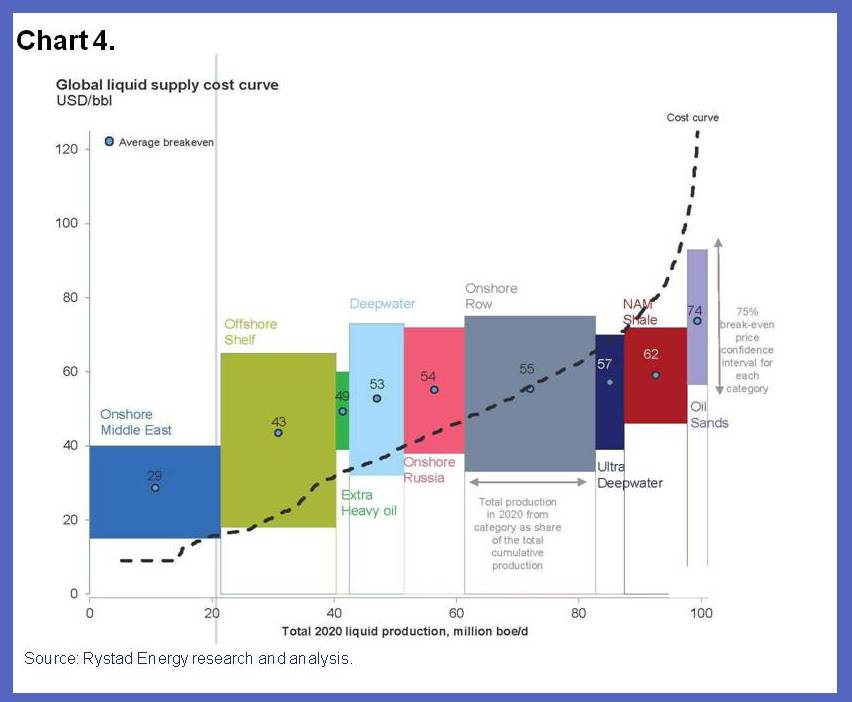
Overall I don't see mass EV adoption as a good news for crude oil. If I can get a little conspiratorial IMO this is the reason why there is such a strong push from hydrogen lobby as it provide them for an outlet for existing fossil infra and hope that they can keep it alive with massive lobbying and subsidies.
ref 1: https://imfdirect.files.wordpress.com/2014/12/oil-4.jpg
But no reason not to get an EV. I’m on week 4 and would never dream of going back to an ICE.
https://res.cloudinary.com/nimblefins/image/upload/c_limit,d...
Tesla battery only degraded 20% in 9.5 years.
Sounds like a good deal to me.
Battery costs are still falling and the typical cost of a battery in a mid range EV is about 6000 USD. For the battery to lose 30% of capacity, it takes 10 years. So your amortized cost (crude) for 10 years is about 400 USD per year.
I am sure the gas costs will be much more than that, compared to EV running costs.
Still a great deal.
In reality, someone buys an EV new, drives until the battery is worn out, and trades it in. Now the price of used cars just went up $6k across the board because you need to put a new battery in any affordable used car out there.
If you have a nickel-cobalt Tesla battery right now, there is going to be at a minimum LFP (no nickel/cobalt) replacements available. Or Li-S, or Solid State, or some sodium ion or maybe sodium sulfur.
If your car lasts ten years, that is going to a completely different ballgame given what is coming down the pipe from technology and scaling.
Even if it drops to 150 mile range, guess what? That is still a car with a ton of use cases: city car, cab, delivery car, etc. Unlike an ICE where the engine or transmission breaks, a battery losing range is still a battery that works.
Any economy car you can buy will easily survive for a very long time even if you completely neglect all maintenance. It is nowhere near true that an engine will fail from missing a few oil changes.
Other than standardising the batteries, unlocking the chips so they can be maintained and maybe switching to a motor that doesn't require niobium, what's to improve?
Electric motors are a mature technology, and putting a box or a 3:1 teardrop on wheels is quite simple.
EV have very low maintenance compared to gas cars. As time goes on, new EVs will get better real fast. The old EVs will still be solid workhorses despite this.
The problem with India is twofold: manufacturing and import regulations. But someone somewhere will figure this out: they’re trying to fix that same issue with iPhones. Some EV company (maybe Tesla) can piggyback off of the same solution.
That’s when all the “old EVs” with perfectly useful motors, readable easy to upgrade batteries and solar energy will make sense.
Now I’ll admit: this super hand wavy. But ever since I bought my EV, I have just found my transportation costs trending to zero. It’s ridiculously cheap!