In (musical) theatre we do it the other way around. The we call it "stage left" and "stage right" or "SL and SR" since we use abbreviations everywhere in our notes. It's always from the "stage manager's perspective" which is traditionally (but not always) facing the audience.
If the stage manager is facing a different way that doesn't affect the meaning of left/right.
It's from their perspective because they are basically the only person who isn't running around like a chook with their head cut off (because their eyes are glued to the script and video screens - https://youtu.be/DP2QOmN57iU?t=82).
To be clear in the UK the wheel is on the right but the indicator is still on the left side of the wheel as in a European LHD car, just to keep things different.
Like position of reverse gear on a H-style gear stick, some left-and-up, some right-and-down; some with a collar interlock, some with a button, some you push the whole stick down towards the ground ...
Case in point: my wife and I live in Australia (have done so all our lives), and my wife had a 2008 Ford Focus, made in South Africa (a RHD country). Indicator stalk was on the left, wiper on the right (aka "European" style). She then upgraded to a 2020 Ford Focus, made in Germany (it's the wagon model), and the wiper is on the left, indicator on the right. Which confuses me, as I drive a BMW, which has indicators on the left and wipers on the right.
I am used to the indicators on the left though when driving my BMW, so I experience the classic "wipers instead of indicators" dance many times when I drive my wife's car. As most cars nowadays are automatics, I guess this reasoning is falling out of relevance more and more.
I also want to note that not all Australian built cars had wipers on the left and indicators on the right – many GM Holden models like the Kingswood and early Commodore models from the 1980s had them both on the one stalk – that stalk being on the right of course.
Anecdote 1) In NZ I saw a car in the middle of a busy roundabout, wipers on, passengers visibly confused and crying.
Anecdote 2) A kayak guide also mentioned, that if you see someone entering a roundabout, windshield wiping, on a sunny day, you just wait and let them do their thing.
Anecdote 3) After a month in NZ I came back to Germany and actually muscle memory let me to use wipers instead of indicators on the autobahn when changing lanes. Oof.
Royal Oak has an ice cream parlour with a good view of the carnage.
I was surprised how easily my body got used to left-hand shifting, but I will say this: I've been driving stick shifts for nearly 40 years, and never miss a gear in the US. However, driving in the UK I find that left hand is NOWHERE NEARLY AS GOOD at distinguishing 1st from 3rd as my right is. Muscle memory!
Steering-column manual shifting (e.g. "three on the tree") is pretty much extinct today, but I assume that the "move the whole driver section over" thing means that column-shifted manuals in the UK were still shifted with the right hand. Does anyone know?
He’s a sport sedan, so it applies.
I still use is when checking tyre pressures for example, they are handy and unambiguous acronyms. For example Off Side Front ( OSF ) would be the drivers side front mostly.
Sometimes, you want to use passenger/driver side: for example, on my car, brake flushing procedure is always rear passenger first, no matter driving side.
And sometime you want to use left/right, which is always assumed to be according to the driver's position (so it's reversed when facing the engine), because some things aren't reversed, no matter the driving side: for example, on my car, the BCM and hood latch are always on the right side (which makes it inconvenient to open the hood for a left-side driving car).
P.S.: how do I know for certain? A friend has the exact same model but with opposite driving position because it's a UK import.
Generally the indicators will be operated with the hand that's furthest from the centre so that you can change gear in a manual car and turn the indicators on at the same time.
Australia, Japan, New Zealand amongst others all operate their indicators with the right hand. Not in the UK though.
Even though we drive on the left our indicators swapped to match other EU[0] countries that drive on the right sometime in the 1980s.
I drive a manual car and you just get used to doing both with the same hand. All done via subconscious muscle memory.
In fact I never really gave it much though until going round a corner in an automatic hire car in Christchurch, New Zealand. Wipers scraping across a dry screen, my hand desperately hunting for the missing gear stick as other cars hooted at me...
-
0. Let's just ignore elephant in the room for now.
Some of the terms: dorsal/ventral, proximal/distal, anterior/posterior, superior/inferior, oral/aboral, basal/apical
When you're describing something like a microbe, the terms get fairly arbitrary; which is the "head" end of some little blobby thing?
Didn't know that! So how pervasive is this principal? Would it apply to a descriptive reference to a diagram in a book for example?
I thought they just sent them to radiology?
[%] usually, because this is HN
The E roads of Europe are generally numbered that way too[1], though exceptions exist.
[1] https://en.wikipedia.org/wiki/International_E-road_network#N...
I think generally in Europe people think in terms of landmarks rather than fixed directions.
- relative: in relation to the viewer (e.g. The mouse is to my right)
- absolute: using some coordinate system, such as cardinal (e.g. Plant is on the North side of the room)
- intrinsic: relative, but with respect to another object and not the viewer (e.g. the TV is on top of the TV stand which is opposite of the door)
It is worth mentioning that this is overly simplified and that there is a lot more nuance to all this.
[0] https://en.wikipedia.org/wiki/Language_and_spatial_cognition
Alot of the literature also makes hay about these language speakers having preternatural skills at maintaining a cardinal orientation mentally. I don't doubt they're good at it, but I suspect that that skill is something that has only recently become uncommon in the industrialized world. As a kid growing up in the U.S., being able to keep track of cardinal orientation was something I understood as a skill expected of men, and not by tracking the sun or consciously using other obvious markers. It was quite obviously a vestigial gendered skill at that point--noteworthy if you had any proficiency at it--but clearly one within recent memory of male adults. Moreover, AFAIU, there's also research showing that Americans tend to use cardinal directions and navigation more than many European countries, presumably related to our lived geography.
Wahern is referring to the Sapir–Whorf hypothesis[0] (Linguistic Relativity). I do find that this is also often misunderstood. I'm in your camp about the directions. I've always viewed linguistic relativity as just saying that your language is a framework. It should be relatively obvious that if you use something a lot that you'll be good at it. You'll find that mountaineers, sailors, and pilots are better than most at of the population because they use cardinal directions a lot. It is experimentally provable that you can make your brain prioritize rather arbitrary things. For example, get a watch and set it to beep every hour. You'll probably get a better sense of time (especially if you can get different tones for 15 minute intervals). So what I'm saying is that the weak Sapir-Whorf is well recognized (what we discussed) but very few realistically believe the strong Sapir-Whorf.
But either way, if anyone reading these comments hasn't been interested in languages before I promise you that they are a lot cooler than you imagine. Far from just communication (which is rather incredible in the first place) and if you're interested in LLMs you should learn a minimal amount of linguistics.
Outdoor recreation often uses climbers left/right and skiers left/right (even when there's no rock or snow) to orient direction relative to slope, which is similarly descriptive and clear to those who haven't heard the terms before.
Except for rivers, where True Left and True Right are commonly used in New Zealand for hiking and kayaking, and I can never remember which way round they go!
Same for skiers’ left and right.
In geography left and right banks of a river are always in the direction of the flow
Isn't there some river where the flow goes either way depending on tide? I'm thinking it might be in Alaska, but there might be more than one.
A better example is https://en.wikipedia.org/wiki/Tonl%C3%A9_Sap#Geography:
“As the monsoon rain begins, the water level of the river begins to rise. As the water level continues to rise, the flow of the river reverses. The water level of the Tonlé Sap increases by about 10 metres (33 ft), the flow of the Mekong gradually decreases at the end of the rainy season, and the flow of the Tonlé Sap then reverses and began to replenish the flow of the Mekong.”
Although in this instance, I think it's more common to talk about north/island/south in Nantes rather than left/right banks. While Antwerp's part on the left bank is literally called "left bank" (Linkeroever).
I suspect the reason he made a meal of this subject (and the reason he insists on using the left/right terminology) is because he finds it challenging.
I learned it with the Seine, in Paris: the left bank is to the south of the right bank. It's also where the bulk of the 1968 political protest happened; the protestors were leftists. The Seine generally flows south to north, emptying into the English Channel.
"I'm on the left side of the boat, and hold an apple in my left hand." The boat has a clearly distinguishable bow and stern, so it provides a frame of reference.
While this is true, we (at least in England) would normally say "leave the buoy to starboard" (though when racing we'd call it a 'mark' rather than a buoy). Perhaps it's habit, I'm not sure, but it's generally unambiguous.
In the context of a channel, the buoys (marks) are coded port and starboard, coloured red and green, and shaped like a can or a cone respectively.
When navigating a channel into harbour, the port marks are left to the port of the ship, and the starboard marks to starboard.
Except when weird species seize their feisty foreign neighbours.
In Region A (Europe, Greenland, Africa, most of Asia, most of Oceania) port marks are red and starboard marks are green.
In Region B (North and South America, Japan, South Korea, Philippines, Taiwan) port marks are green and starboard marks are red.
Understatement of the week... pretty much everything on a boat has a different word for it. Often for practical reasons, sometimes purely traditional reasons. It is nice because it binds one to nautical tradition leading back centuries/millenia.
"tiller" is just the thing that controls the position of the rudder, which I think most people know about. (That said, nobody in aviation calls their rudder pedals the "tiller", so it might be a strictly nautical term.)
It's a good thing I'm not at the helm ;)
Without farming/sailing we'd go 20000 years back
That's the hallmark of industrialization, right there :).
In case anyone thinks the important bits stopped at the age of sail.
https://www.etymonline.com/word/telltale
>also tell-tale, "discloser of secrets," 1540s, from tell (v.) + tale. As an adjective from 1590s. Phrase tell a tale "relate a false or exaggerated story" is from late 13c.
Is it maybe that the nautical term comes from plain English?
You’ll still hear folks say “hit the head” referring to using the restroom.
[1] https://history.stackexchange.com/questions/56264/when-did-h...
30 degrees should be enough to prevent toxic hazards. Sitting on the head on a tilting ship, during upwind sailing, is prone to other hazards though.
After that, there's some fun slang that's nautical. Chockablock comes from the blocks (pulleys) getting jammed on each other when multiple ropes are being worked on. "Not enough room to swing a cat" refers to the Cat o' Nine Tails which was a whip used for punishment on board ships.
Of course, I'm not even including the influx from containerisation! Helm, tiller, etc. etc.
Not obvious what it originally meant.
Rig (noun): The mast and supporting stays on a boat. (oil rigs, "big rig" come from this I think).
Rig (verb): To put the sails up and tie on the sheets and other lines that control sails. ("Let's rig this up." == "Let's set this up.")
Posh (my favourite, though I doubt it's actually true): Port Out Starboard Home. When travelling from England to India around the tip of Africa, it was favourable to have a cabin on the port side on the way to India and starboard on the way back as it would be in the shade most of the time and a little cooler in the sun, with a view of the land.
See also: Change tack / try a different tack, right the ship, stay the course, (to be) swamped, "At a rate of knots" (very fast), keep an even keel, keel over.
Swedish (also picking a lot from German, of course) has the same word ("lä", and no I'm not going to try to describe the pronunciation) but our usage is wider in scope. In Swedish lä is simply "out of the wind", and not restricted to use onboard a vessel. Cool, didn't know that about English.
Wiktionary talks about posh coming from the Romani language, meaning half, in monetary terms, as in half a crown. Seems believable to me, a lot of modern terms come from traveller’s languages and argots and such. See also tory and whig.
We're going to need some leeway on the requirements for this project in order to finish on schedule otherwise we'll have to change tacks on the plan.
* Taken aback
* Above board
* Adrift or at sea
* Afloat versus underwater
* Ahead
* All hands
* Anchored
* Awash
* Batten down the hatches
* Bitter end
* Boiler room
* Buoyed up
* By and large
I stopped after B. Also, "cut of your jib", of course.
[1] https://www.spanish.academy/blog/the-ultimate-guide-to-nauti...
I don't know Spanish, but "molino" looks like French "moulin", which is a mill; a windmill is "moulin a vent".
So I reckon "very different" is an exaggeration.
Modern English lost the "n" part, but it was present in Middle English, milne.
"Mjolnir" means something like "crusher" and the noun "mjol" (flour) means "having been ground up". For example, it can be combined as vetemjöl (wheat flour) or stenmjöl (ground stone or stone powder).
Ah - "mjol" as flour must be cognate with "meal". I hadn't previously associated meal with mills, but it makes sense.
Port and starboard used to be "babordo" and "tribordo" in Italian but they were replaced by "sinistra" (the very word used to say "left") and "dritta".
you mean unlike French?
This was new for me.
The Spanish words carro, carreta, coche, carretilla, carrito all mean "something that has wheels on it", but the meaning keeps changing between car, horse drawn carriage, baby stroller, shopping cart, horse drawn cart or toy car between countries.
Fortunately it's easy to figure out from context and doesn't have possible misunderstandings as the Spanish word for straw.
What/where are the misunderstandings for sorbeto?
https://www.woodwardspanish.com/how-to-say-computer-spanish-...
On checking, it looks like there is a short (but very mountainous) border: https://maps-spain.com/maps-spain-geography/spain-language-m...
French fromage Italian formagio
Spanish queso English cheese Dutch kaas
Languages are so weird :)
My French relatives however, insist that this is not real cheese, as it is not fermented. But the Norwegian language has no such distinction -- the 'brunost' is an instance of 'mysost'; 'cheese produced from whey'. This is no less real cheese than the one you ferment from caseine.
This naturally led me down a rabbit hole of etymological investigation.
The best conclusion I've reached so far, is that the Germanic words stemming from 'kase', referring to caseine, naturally refer to cheeses that would mostly be fermented, as this is what happens with the solid caseine when you leave it around for a bit. Whereas Norwegian 'ost', stemming from 'yste', the verb for separating the caseine from the whey, makes no such distinction.
And ironically, the Latin-stemming words 'fromage', 'formagio', stem from Latin 'formicum'; something that is cast in a form. Having nothing at all to do with fermentation or even milk!
There are two conclusions here, one being that the dictionary translation of words does not capture somewhat-subtle but sometimes important distinctions between words.
The second conclusion is that my French relatives are wrong and brown cheese is in fact fromage. But not cheese, I will concede as much.
Casein was not discovered before cheese was. 'kase' doesn't refer to casein. Casein, the family of proteins, is named after cheese, the milk product consisting in large part of those proteins.
And 'kase' is not a Germanic root. Fromage descends from the Latin word for "shape". 'kase' descends from the Latin word for "cheese".
> There are two conclusions here, one being that the dictionary translation of words does not capture somewhat-subtle but sometimes important distinctions between words.
This isn't right either. Tin soldiers must be cast, but they are obviously not cheese, and therefore they are also not fromage. The etymology of the word tells you nothing about its meaning.
(The conclusion is fine, but drawing it from this evidence is not -- if you translate French fromage as "cheese", you're not missing any subtle distinctions. It means cheese.)
The relation between 'kase' and casein is very fair; cheese production obviously predates protein chemistry. I guess what I was trying to say was that the words are related, but if 'kase' derives from Latin for 'cheese', the rabbit hole continues. Why does the French word derive from shape, if the Romans already had a word for cheese? And what did their definition of cheese include?
This is not a question that it's possible to answer. Languages change.
Why is the modern English term dog, a word of no known origin, instead of the native (still extant, but not really alive) term hound?
> Do you have references for the last of your claims? I thought I did a reasonably exhaustive search for a layperson, but the sources I found could certainly be wrong.
Assuming you're referring to the claim that the English word "cheese" (and the similar terms in other Germanic languages) is derived from an ancient borrowing of the Latin word caseus, meaning "cheese", I was not able to find any source that didn't confirm it. Wiktionary will tell you this. etymonline will tell you this. The OED will also tell you this:
> Forms: 1 cese, cyse, 2 cease, cæse, 5 schese, 6 chease, cheise, chiese, ches, 2–6 chese, 4, 6– cheese. [OE. (Anglian) cése, (WSax.) *cíese, cýse (with i- umlaut from céasi, cǽsi) = OHG. châsi (MHG. kæse, Ger. käse), OLG. kâsi, kêsi (MDu. kâse, Du. kaas):—WGer. *kâsi, ad. L. cāse-us cheese (bef. 5th c.).]
Where were you checking that didn't say this?
If you want a reference to the fact that the Latin word caseus means "cheese", try here: https://www.perseus.tufts.edu/hopper/text?doc=Perseus%3Atext...
I'm only familiar due to 'cacio a pepe'.
Good point. I have yet to see a dictionary that also provides delineation with similar-but-different words and describes the differences.
That'd be very useful for language learners, as colloquial use often eschews definition in favor of socially common convention. I.e. "That word does mean that, but you would never use it in that way"
Authentic, Genuine. The prevailing sense of authentic is authoritative, trustworthy, with the implication of accordance with fact; as "confirmed both by legend and authentic record" (Froude); "assurances more or less authentic" (Wordsworth); an authentic portrait. The prevailing sense of Genuine is native, real, true (see Real), often with the implication of descent from, or correspondence to, an original source or stock; as, a genuine merino, genuine piety; "true simplicity and genuine pathos" (Wordsworth); cf (colloq.) "the genuine article" with "the real thing." Both terms are used - genuine more frequently than authentic - as opposed to spurious, counterfeit, apocryphal; as "Let them contrast their own fantastical personages ... with the authentic rustics of Burns" (Jeffrey); "What is genuine knowledge and what is its counterfeit" (J.H. Newman). The 18th century distinction between the two terms, as applied to documents - "A genuine book is that which was written by the person whose name it bears as the author of it; an authentic book is that which relates matters of fact as they really happened" (Bp. Watson) - while still often observed, is becoming obliterated in present usage; as "The criticism which thus so freely diminishes the numer of his [Giorgione's] authentic works" (W. Pater); "Some collectors frankly take the ground that they buy what pleases them, and that age and authenticity are minor considerations" (The Nation). See Real, Correct.
On the whole, Wikipedia et al. are improvements in comprehensiveness and timeliness, but god damn do the gems of prior methods still shine brightly.
Here's one more entry, on synonyms of Intention:
Intention, Intent, Purpose, Design, Aim, Object, End are here compared in their general senses; for technical definitions, see defs. Intention, which often suggests little more than what one means or proposes to do, implies less settled determination than Purpose, less definite plan or prearrangment than Design, which frequently adds the implication of crafty or artful scheming; as "She had not had an intention or a thought of going home, until she had announced it to him as a settled design" (Dickens); his intentions are good; cf. to declare one's intentions; "My purpose holds to sail beyond the sunset, and the baths of all the western stars, until I die" (Tennyson); "I go amongst the buildings of a city and I see a man hurrying along - to what? The creature has a purpose and his eyese are bright with it" (Keats); "envious commands, invented design to keep them low" (Milton); "Should he find me here, [he] would discover my name, and perhaps my designs, to the rest of the family" (Goldsmith); cf. "designing lovers" (id.). Intent is chiefly legal or poetical; as, intent to deceive, kill; "the power of a sublime intent" (Shelley). Aim emphasizes directness of purpose, Object that on which activities are focused, End that towards which they tend as their consequence or final cause; as, "to [his trust] keeps faithful with a singleness of aim" (Wordsworth); "her steadiness and courage in the pursuit of her aims" (J.R. Green); "Yet in the task of luxury of freedom I began to wish for the daily task, the active pursuit, which gave a value to every book, and an object to every inquiry" (Gibbon); the object of education, a man without an object in life; "I see in part that all, as in some piece of art, is toil cooperant to an end" (Tennyson); "Man's chief end is to glorify God and to enjoy him forever" (Westminster Catechism). See Cause, Effect, Plan, Voluntary.
If I kick my foot on a rock, I may say something out loud about hurting my leg. That doesn't sound right to native speaker.
See e.g. https://en.m.wiktionary.org/wiki/cheese
Interestingly, the pronounciation guide for origin of ost is /ˈjus.tɑz/ which seems a lot like the Finnish word for cheese, "juusto".
In other words, the reason that Spanish is similar to English/Dutch here is that they borrowed the Spanish word, becoming more like Spanish. The reason Italian and French aren't similar to Spanish is that they changed while Spanish didn't.
How are they different?
I think it is more about who introduced these words. Etymology is fascinating.
Indeed. Spanish is my native language but I learned sailing in the US so my nautical vocabulary is all in English. I feel completely illiterate on a Spanish speaking boat.
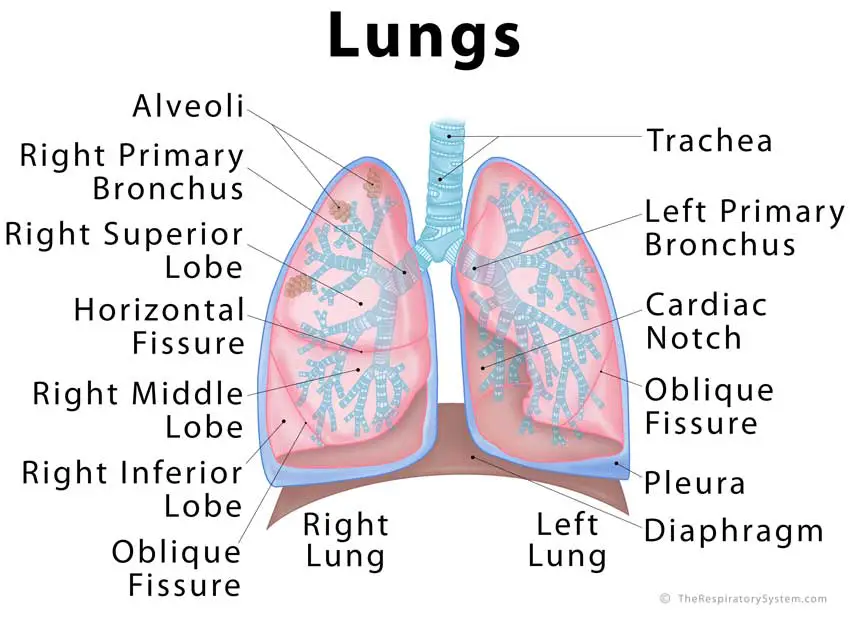
This is unlike for a doctor, where it's obvious which side is which: you can see the patient.
This isn’t always true and it’s not always obvious.
For example with imaging - axial slices of the patient through symmetrical structures. The brain, lower abdo, a single leg or arm etc, etc. There are conventions in image display for a reason - it is not obvious.
For axial slices, as an observer, you are positioned as though at the foot of the patient’s bed. Your right is the patients left.
Don't make assumptions, codify it.

The orientation is screwed up and images should almost never be displayed like this.
If the patient’s organs are in non-standard locations (situs inversus, dextrocardia etc), something very bad will happen when orientations are messed with. Use standard orientations and label the images.
Your point was well made.
I'd also assume it would be simple to spot just because the image is always took from the same direction so the narrow part points out to front/back of the patient
Greek dexios and aristeros ... well dexter come from dexios", as does the chemical suffix -dextrin. Aristeros* is a euphemism, it means something like "best" (I wonder if that's the origin of 'put your best foot forward') ... I'm told that left-sided things were unlucky to the Greek speaking peoples and Greek language apparently compensated by describing that position positively.
It's an interestingly deep rabbit hole in language etymology just how much "left" gets besmirched and "right" gets positive connotations. (The fact that "right" is also a synonym in English for "correct" being another bit of evidence.)
Often not true. In any sort of imaging it can be ambiguous what way the patient is facing
E.g. you don't call it the front/back door, you call it the bonnet/boot (or maybe hood/trunk depending where you're from) though that probably is stretching the definition of a door a little bit... but then you also have nearside and offside for passengers/drivers side, though that's probably a bit more of a technical term.
It is, but then so is the stupid "3-door" / "5-door" / etc. car classification, which is really 2-door / 4-door / etc. with the trunk being counted as additional door for some reason.
“Driver side rear door” or “passenger side rear door” are pretty common, at least in the US and UK, where they mean the opposite.
“Nearside“ (passenger side nearest curb in a right-hand drive vehicle driving on the right) and “offside” (driver side furthest from curb) are also used in the UK.
I've the vaguest recollection that sailing/steam boats used to say which side to move the wheel towards to steer; that begging opposite of the way the boat will go??
I was recently involved in a case where a patient decided that their left should be called the right side during a phone consultation as that would help their doctor.
Good times.
Either that or my recent C excursions have me thinking in buffer overruns and index errors.
That's before even getting into the assumption of face to face orientation over a phone... is that in virtual terms, or in terms of absolute orientation, I hope they took into consideration the curvature of the Earth.
When I first moved to Hong Kong, I kept making eye contact with passengers instead of drivers when crossing the road on foot.
In New Zealand (my first experience driving on the left), I turned on my wipers (on a sunny day) the first couple of times entering a roundabout (the turn signal is on the other side of the steering wheel). Also, I couldn't resist the urge to glance over my left shoulder for oncoming traffic in my blind spot when making left-hand turns, despite the fact that traffic approaching me from there would need to be driving the wrong way down the road.
Thank goodness that the manual shift pattern and pedal layouts are kept the same between left-hand and right-hand drive models. Driving in South Africa could have been a disaster had the shift pattern been reversed.
Really though, just use _your_ left and right as most people do, because as has been mentioned, the standard is for doctors to refer to and visualise left and right from the patients perspective - so every time you do something different they have to transform, translate or clarify which increases chance of mistakes.
When having my arm x-rayed years ago they places a small pad with an embedded metal "L" to indicate that it was my left arm. But if you place the L backwards, then they will think the image has been reversed, which just makes everything more complicated. So the L-pad needed "this side up" label.
X-rays are effectively shadows and things further from the X-ray plate get more magnified. Large structures like the chest benefit from being done a certain way, like having the heart near the plate. That way it’s less magnified.
PA or AP is often a thing you see on the corner of films, indicating the technique.
The film also used to be processed in a film processor, and it was very easy to accidentally flip. This is another reason we have conventions.
On a big ship, like an aircraft carrier or cruiser, you can qite easily lose track of which direction is the prow (front). Many carrier crew rarely go up on deck. And if the ship happens to be sailing astern, left and right become ambiguous.
If you don't where the prow is, how do you know where starboard is? I guess if the sailing direction is backwards, it might be confusing if you say "to your left", but if you say "left side", it should still be clear I think, maybe not.
Always annoying that it could be clearer and more stable and shorter to use the driver’s perspective with “Driver left/right” to be specific and then would be the same sides on all cars moving or parked in any orientation in all countries.
[1] not valid if you turn around and park backwards!
In each the UK, Ireland, and the United States, the inside lane is the leftmost lane. However, due to driving on the opposite sides of the road, this means that while the inside lane in the US is closest to the central median, in the UK & Ireland, the inside lane is closet to the curb.
Source: https://dictionary.cambridge.org/dictionary/english/inside-l...
https://www.naturalnavigator.com/news/2010/09/guugu-yimithir...
What if the patient lies on his back vs on his stomach? Theoretically this should then revert left and right in addition to how the doctors are facing the patient, from their point of view.
On stage, they are "côté cour" and "côté jardin" because the "Comédie-Française" theatre during the 1770 was in the Tuileries palace, and the stage was oriented with the Louvre courtyard on its right, and the Tuileries garden on its left.
Probably a non-trivial number of people were hurt or killed because of that linguistic similarity; we see the same with air traffic control and pilots using ambiguous language.
The word ‘back’ in German meaning ‘back’ in English doesn’t even exist. Only in this one loanword from Low German.
Only today I looked up this word, I never knew or understood that Backbord is literally backboard.
That is the most french explanation possible.
Then there's space, where it gets even more fun, as the relevant frames - the ship, the orbit (or the "centre of gravity" of everything pulling on you) - are completely independent. That is, your orientation doesn't matter for the travel direction. Now, not only "right" and "left" are ambiguous - but also "up", "down", "forward" and "backward".
When in orbit, you have "prograde" and "retrograde" to refer to the velocity vector's direction and its opposite; if we dub that "forward" and "backward", then "radial" and "antiradial" are "down" and "up" (i.e. towards / away from the center of orbited body), and then "normal", "antinormal" for "left" and "right", which you can get from the cross product of "forward" and "up".
There's windward (towards/upwind) and leeward (away/downwind).
Are there left and right too?
But points of sail don't have any handedness, correct? I.e. they're mirrored on both sides of the wind.
As mentioned in another comment, tacking (with its active directionality) is probably the closest to handed-terminology.
The right-of-way rules in sailboat racing depend on who is on 'port tack' or 'starboard tack' (ie, they differentiate those mirrored halves). There's nothing physically special, though.
Strokeside is always port, even if in that particular boat stroke's oar is actually on the starboard side- and even in a sculling boat!
The space shuttle normally orbited with it's payload bay, opposite of the landing gear facing Earth. The payload bay was +z direction. From the layperson's point of view, the shuttle orbited upside down, but from an aerospace engineer's point of view it orbited right side up and landed upside down.
I used to work satellite navigation for NOAA. For the GOES sats we often used Intrack (Prograde/Retrograde), Crosstrack (Normal/Anti-normal), and Radial (Towards planet/away from). I don't think anyone really referred to any directions as "plus x" or "minus y"
Actually I work on rovers and it's a perennial debate whether to follow spacecraft convention (+z is down) or automotive convention (+z is up). Then mechanical engineers will usually follow what is intuitive on the screen (+z is forward). This is because computer graphics convention is +z facing out of the screen.
We used to tilt the spacecraft when doing inclination burns so that we could get a little bit of intrack delta-v to even out our orbit. I always thought that was delightfully janky.
That wasn't a choice. The doors had to remain open and pointing away from the earth so that the radiators could properly dissipate heat. It also, in theory, kept the most important thermal tiles pointing away from incoming space rocks.
It's the opposite. The orbiter usually kept it doors pointed toward Earth and the "bottom" tiles pointed away from Earth, and orbited with its engines pointed prograde. (Upside-down and backward relative to the atmospheric flight people are familiar with)
https://space.stackexchange.com/questions/12321/why-did-the-...
"Skier's left/right" for snow skiing. Ambiguity arises when looking uphill or downhill.
When riding on a float in Mardi Gras in New Orleans. You might be on the "driver's side" or "passenger's side". You could also be on the neutral ground side (left) or the other side. Or the rider could be on the "lake side" (left) or the river side (right). Parades run South to North and the Mississippi River would be on the rider's right and Lake Pontchartrain on the left.
Aviation uses a clock face (traffic is at your 2'oclock, northbound) to reference traffic at the pilot's right / front.
But what about “snowboarder’s left”… sounds a lot like “starboard’s left” at which everybody on the fake ski slope on the cruise ship gets incredibly confused? We have to drive out all ambiguity here, or people are doing to die.
In an effort to avoid ambiguity, I always talk to my doctor in terms of "driver's side" and "passenger side" - thus adopting the maritime approach, but in more common terms.
For example, if you are standing and looking at a mountain, it’s easier to say “just to the climbers left of that peak” because it’s on the left from your perspective, likewise when descending it best to say “stay to the skiers left of the rock”.
There’s also lots of times it’s good to mix and match, like if you are looking at and discussing a mountain from afar and planning on skiing down it later, you might keep the conversation from a skiers perspective.
(Same story, mutadis mutandis, for "north bank" and "south bank" of generally east/west-flowing rivers.)
I don’t know so much about the theatre world, I’m a professional dancer, but at least the dance scene is increasingly international, switching fluently between English or German depending on the people present; some people learned the English/international convention, some - especially older - directors know mainly the German convention, some people are not aware that there are different conventions in English and German and the result is complete chaos.
The concept of left and right hands was not very commonly used historically. It wasn't important to most people. During the English Civil War many recruits didn't know which hand or foot was left or right. During marching training instructors used to stick some hay in one boot and straw in the other for each recruit and call out "Hay, Straw, Hay, Straw".
The opposite of that, rarely used but still out there, is house left/house right.
At the other extreme you have the medical profession where the first thing you learn in medical school is that left/right always refer to the patient's perspective. You could imagine that the maritime world could have gone with a similar convention. But the downside is that on very rare occasions someone along the way gets confused and the doctor operates on the wrong side of the body.
The theatrical world takes an intermediate approach, where they use the terms "stage left / stage right", which always refer to the perspective of an actor onstage facing the audience. Then the word "stage" tells you the perspective, but you still keep the words left/right so you don't have to memorize two completely separate words.