This is a needlessly complex explanation.
Very low physical activity rates are the likely cause.
A majority of men in the US are obese or overweight[1] and, culturally, Americans barely even walk.
Testosterone levels are linked to physical activity.[2][3]
[1] https://en.wikipedia.org/wiki/Obesity_in_the_United_States#P...
[2] https://www.ncbi.nlm.nih.gov/pmc/articles/PMC4706091/
[3] https://www.cpandr.co.uk/2018/08/22/the-impact-exercise-has-...
I completely blame the food. Even eating absolute junk in Europe I noticed I lost 5 or 6 pounds over 2 weeks.
Here if I eat junk food for 3 days my weight jumps by 7 pounds. I am a bit dismayed with all the attempts to normalize obesity in the US. I was morbidly obese up until I got serious about my weight in my early 20s. You can read all the dating books you want, but getting in shape is the only thing that works. It's much easier to hop on Reddit and complain though.
I'm very optimistic I'll be able to move to a healthier country once I retire at 40 or so. Not exactly easy to stay in shape when this country tries to pump us all full of corn syrup
I don't. Certainly it doesn't help and, of course, Americans should eat much better than they do, but ...
I think the most important factor is that our built and cultural environment are constructed to make us obese.
If one does not live in a modern city center one barely ever walks. Most Americans sit all day - at a desk or in a car.
Further, many Americans are 1-2 generations removed from "the farm" and are still heavily influenced by habits like "three square meals per day" that made great sense on the farm and make no sense at all in the city.
We're bad at being urban.
I contrast us with people I see who are good at being urban. The old Chinese women in the park doing Tai Chi every morning. The 70+ woman I saw running (running!) to get the bus in Zurich. The Spanish people I lived with who sort-of ate one big meal every day at 14:00 ...
We'll get there ...
If you dig more into it, you'll find the obesity crisis started around the late 70s with a change in dietary guidelines and medical guidelines saying basically 'fat & meat bad' and 'carbs good' along with the widespread introduction of vegetable oils, leading to too much insulin and other hormonal effects slowly increasing diabetes & obesity in our population. Also food companies honing on what obesogenic combos of food lead to people to eat more, buy more and thus get better sales.
Read "The Obesity Code" if you want a more detailed description with a lot of links to papers and studies for more info. [0]
[0] I said this yesterday too in another article: https://news.ycombinator.com/item?id=25767604
For another anecdote, my wife's friend worked at Starbucks in Canada and in Japan. She said the Frappuccinos in Canada use around double the amount of syrup than those in Japan.
> how much of a punch in the face of sweetness/richness literally everything available in US restaurants is
Yeah, too much sugar/salt/syrup/condiments, too many artificial ingredients on things. Today I was talking to my wife how the Cheetos here is not so good, as it has a weird orange color and the taste is way too much superficial. The cheese too. too many cheddar varieties with colors that doesn't seem like something made out of milk.
The sweetness is another major put off. There's no concept of a savory snack here. There's also no culture of an afternoon or tea time snacking. In my personal opinion, having a small post-lunch snack helps me stay satiated for longer and have a much smaller supper instead of a large dinner.
Why is it so Easy to be Thin in Japan?
Spending has dropped because there are such large subsidies to cheap carbs, and that is the bulk of many people's diets. A steak and veggies is no cheaper than it was 40-50 years ago, but we're eating far more refined junk with additives because it is cheap and convenient.
I believe the leading hypothesis is that being rich absolves you of the stressors that make junk food attractive. Others are, as you mentioned, the ability to buy more expensive food with more nourishment/satiation per calorie ("protein leverage hypothesis"), or access to nature and refuge from pollution (it's certainly the rich people where I live who ride bicycles.).
Regardless, a poor person from 50 years ago couldn't buy the cheap sugary crap even if they wanted to.
That is, the point of the parent's post was not obviously "crap food is so much cheaper than high quality food", but as most naturally read as "because we can afford more food, we're buying and eating more"
My point was "if that logic holds, I would expect the rich to be significantly fatter than the poor". Which, as you note, is not the case. Nothing more.
Other restaurants have retired round plates and serve meals on platters.
[1]https://www.youtube.com/watch?v=Q2UnOryQiIY
[2]https://www.amazon.com/Big-Fat-Surprise-Butter-Healthy/dp/14...
You can also write an article for the Huffington Post arguing it's impossible to ever lose weight.
I'm not calling for fat shamming, but you can't be both obese and healthy. You can't really be obese ( over a certain point anyway) and be happy. When I was over 300 pounds every day was an experience in pain.
But it's considered rude even for doctors to say you need to lose weight. I was fortunate enough that an alternative medicine provider told me to just lose weight.
And that said, I'm even reluctant to make the argument above since there's a lot of really angry people who will try to misconcue it and call me a monster or something. But I've been morbidly obese, and I'm in shape now ( still trying to lose that last 10 pounds ) .
Life is better now in every single way.
I'm pretty sure this isn't actually true. I mean I'm sure there are some people that get offended, but some people will get offended at anything and being called "overweight" when you are convinced you are just "big boned" isn't pleasant.
It wasn't my doctor's advice that led to my weight loss though, it was my father dying prematurely. He wasn't even obese, he just had a poor diet and little exercise. A real wake up call.
Really? Is it a US thing?
I'm overweight but not obese, and basically every doctor I've seen for various issues (blood pressure, back pain, sprained ankle) told me to lose weight, in two european countries.
I don't think so. They may be referring to the fact that it is increasingly becoming an issue of political correctness. But science is pretty clear about the risks of obesity and the medical professions follow that.
https://www.nytimes.com/2013/06/19/business/ama-recognizes-o...
I have a friend who's (US) doctor told he needs to lose weight or he will die. It got him to join a gym at least.
Obesity is more or less considered to be normal now, it’s a real shift in the last few decades.
With my new doctor, I was looking at my last 2 yrs of blood tests and my LDL cholesterol has been at 105. Losing more weight will help with that, so will changing my diet - but my doctor didn’t point my LDL out as a problem even though it is.
So if that's the case, why does it matter what the Huffington Post says?
I'm not morbidly obese, so perhaps I've missed the pro-obesity PR. A fashion magazine might give a cover to an obese model once a year, but the other 11 months all seem to have the same rail thin models that have dominated since the '80s.
Same goes for TV and movies. Producers wouldn't hire a fat guy to play Mark David Chapman, it'd be an easier sell to get a fit actor and have him balloon up to that desired weight.
The only obese poeople of renown in our society are older politicians and the rich, i.e. people that do not care about meeting society's beauty standards.
People used to see those and aspire to be like them and improve themselves. Something changed over the last decade or more, and now no one wants to do any better than they currently are. They are despairing in content with themselves.
People still aspire to be attractive they just don't feel the same social pressure to chase it that they used to. Personally I don't see the problem for the USA, if people are happy being unhealthy then let them be unhealthy. If this was Europe I could see a public cost argument but US businesses are already starting to charge more to people who are inconveniently obese so I don't see why it's a real concern.
They're not happy. They're suffering and helpless. That's the problem.
It's not about beauty standards, it's about healthy standards. Remember when there was a push-back from models being too thin? Everyone agreed that it was bad to show ultra-thin models because it was unhealthy and generally unobtainable. The same should be for overweight people, except now we have the concept of body-shaming (which didn't apply to ultra-thin models??). There needs to be more of a focus on self resposibility along with a push-back against the bad practices of the food industry.
I don't have any references or numbers to back that up, but that's what I've understood from what I've read in papers and heard from some people who apparently did the math.
With that said, physical activity has lots of benefits beyond just weight loss, and it would be worth it to make one's lifestyle non-sedentary in any case.
For one, an hour you spend exercising or walking around is probably an hour that you're not eating. Many Americans are constantly eating when they're at home, either mindlessly snacking or eating a huge meal. Given that you only have 8 hours between work and sleep, occupying yourself for 1 of those hours could mean a significant decrease in time spent eating.
Incidentally, this is why intermittent fasting works well for some people.
Diet is clearly a much more important aspect for weight loss. Exercise has many other benefits though.
When I lost 70lbs, I did so by deciding it was easier just to not consume the calories in the first place rather than trying to burn them off.
On my bike I have a power meter which uses strain guages and an accelerometer to calculate force x distance / time at the crankset so I have accurate calorie burn numbers.
Riding for an hour at the output a generally sedentary person can manage, I’ll burn sub 500 calories. Riding at my maximum output for an hour burns about 1000. Given that the recommended energy intake for a day is 2500, you can see what a difference that makes proportionally to what you can consume.
The fact that companies sell you these “features” in products is a scandal in my opinion, because it’s nothing more than a totally inappropriate guess. They always overestimate based on my experience when compared against actual output measurements, and that can only be harmful to people that are trying to use them to lose weight.
(Not to totally give up exercise tho' - there are other health benefits besides losing weight)
The only caveat I've learned is that weightlifting can make a dent. It's one of the few things where as you improve, you can burn more calories in the same amount of time instead of fewer (partly because you're doing more work as you add weights, partly because the muscle you build is more metabolically expensive to maintain).
I also had success restructuring my life so accessing food was way more of a hassle. Kept a mostly empty fridge. Meal prepped so only whole meals were there. Don't take money unless I know I need to buy something, found a few reasonable options at local sandwich places that became routine, etc.
I'd love to see a correlational study on fridge size and obesity. In America we buy SUV fulls of food, in Europe it's much smaller frequent trips, i.e. generally higher hassle per calorie.
Or more! When I started losing weight, my target was 1600 kcals a day. I learned that I was eating 1600+ calories __every single meal__, plus snacks. Pasta is the devil y'all.
And yet Italians are generally slim and healthy :)
In take is the kcal of the food times the digestion factor. The kcal out is the metabolic need, which depend on factors such as fat building vs energy usage, which in turn is influenced by stress but also things like dieting.
This is why counting calories can be an ineffective strategy for some while for others it is a good match.
Let say 1000 kcal in, and for an average healthy person 1000 kcal in metabolic rate.
For digestion, this person eat mostly proteins resulting in about 20% of kcal going into energy for the digestion system itself (proteins is relative hard to break down). Let also say that in addition, sloppy digestion and incorrect gut bacteria is resulting in additional 20% of the food never getting digested and resulting in feces. Result is a loss of 400.
If thats the whole story you have a person that is loosing weight despite keeping a diet that seemingly fulfills their calories need.
Lets now change metabolic aspects. Rather than suffering from bad digestion they are suffering from chronic stress with high cortisol, adrenal and other stress hormones. The body crave more food that cost less to digest, ie fat and sugar, insulin is spiking in order to get the body to take up more energy, the body goes into lethargic state in order to save energy, muscle and organ cell production is decreased in favor of fat cells. Instead of 1000 kcal in metabolic rate we might have 600 kcal, with now a surplus of +400 going into fat production.
The upper bound on bioavailable kcals is still 1000 kcal, but the numbers won't tell you if the person is going to loose weight or gain it, unless the person is in good healthy to begin with.
Intuition would make me wager testosterone levels of you average powerlifter would be in the higher ranges (necessary to build muscle), despite not generally being lean.
Meh, Americans snack all the time. French people are anal about their meal structures and times and we’re not fat.
Or...to quit and become a lumberjack, etc.
I don't like to go to parties with an empty stomach, because of the poor choice of food there (chips, salsa, cake, cookies, etc.). If I go with an empty stomach, I know I would not resist, and I would feel sick and bloated later, high on sugar & salt, and dehydrated with alcohol.
Just don't snack.
> If one does not live in a modern city center one barely ever walks. Most Americans sit all day - at a desk or in a car.
As opposed to someone in China, where we must do such extraneous physical activities like order take-out delivered to our place less than 15 minutes, then order a masseuse to come give us a massage and finally order a bottle of wine to top the night off, all without needing to get out of bed.
The food ingredients in this country are, on average, garbage. With careful shopping you can get around this but it does take effort and vigilence.
Cultural expectations around both diet (especially portion size) and exercise (I cite the walking thing a lot too) are also bad. It takes effort to avoid those hazards.
I think both of these and probably a few other factors are a terrible combination that compliment each other in a bad way.
That said, I'm 30 lbs heavier than I was a decade ago. I know WHAT I need to do (exercise more, drink less), it's just been hard to get back into better habits.
I’ve also had the same experience on shorter (few month) stays in Europe, while still working a 9-5.
Philippines was part of the Spanish crown and had Spanish customs. Plenty of European (Western) countries have balanced diets and healthy lifestyles.
But for them, it might as well be. People simply did not eat large amounts of packaged, processed food only a few generations ago, like people do everywhere in the west, including the EU.
Also, exercise accounts for maybe a hundred or two calories a day for the average person who isn't into marathons or something, so the only true way to lose weight is to decrease what you eat.
It's not lack of exercise, that's the way these corporations try to blame you for being lazy so you forget their food is garbage that's making you fat.
Yes, driving cars everywhere is not great. But we’re also more obese than other car dependent cultures, so it’s not a satisfactory answer to say that it’s entirely about being sedentary.
I eat mostly fruits, veggies and meats. Pretty much 80% natural foods. But I live in east Asia now so it’s easier to do that and with more variety.
But, I don’t recall American supermarkets food feeling strange. Unless you mean the processed stuff?
For the rest of it: might just be my perception to be honest, my impression was that the fruits and vegetables tasted very watery with little flavour, as if they were grown in the most efficient way to bring them to market quickly. Same for the meat, was kind of floppy and the cheese just didn't taste like much. There were some good things from farmers markets, but at absurd prices.
I see differences in Europe as well, e.g. I think the quality in Switzerland is better than Germany and Austria. In Spain and France I was able to get really good food, probably because it's closer to where it is produced.
Again this might be my perception, didn't do a blind tasting. Unless the food is specially prepared to be stored (like fermented food, cheese, etc.), I don't think the highly industrial production, refrigeration and long transportation is doing the quality any favours.
https://www.greenoptimistic.com/fruit-vegetables-taste-europ...
https://www.treehugger.com/why-doesnt-american-produce-taste...
The key point seems to be that we prioritize the looks, which unintentionally affects taste.
As an American who recently moved to Europe, I don't think 20 minutes of walking per day is being generous. COVID-related measures aside, I find I add about 20min/day of walking easily, and more if I need to do something (e.g. buying groceries). Now, in the US I own a car and here I do not -- but in my Midwestern town I am totally obligated to own and operate a car. Here in Europe I get along fine with walking, riding a bike, and using public transport.
Yes but not by a very wide margin. [1]
Average BMI in the US is 28.5, Saudi Arabia is the same, Mexico is 28.1, New Zealand is 27.9, UK is 27.3, Canada is 27.2.
My point is that the impression that the US is unreasonably fat compared to the rest of the world is mostly just bias.
[1] https://en.wikipedia.org/wiki/List_of_countries_by_body_mass...
Some people seemed very very fat.
Edit found something that would support that idea.
Proportion of people who are obese over the globe: https://ourworldindata.org/grapher/share-of-men-defined-as-o... https://ourworldindata.org/grapher/share-of-females-defined-...
Walmarts are everywhere, there are thousands of them and millions of people in them every day. You're going to see the best and the worst just because of sheer numbers.
Not saying that the fatest American isn't fatter than the fatest Australian but "people of walmart" is a bit of a misnomer because you only need one picture of a fat person in a Walmart and there's literally millions of opportunities each day to see that one example.
This shows IMO in obesity rates - they are significantly lower in London than the rest of the UK.
The other major factor is wealth. Richer people can afford higher quality food. Poor people generally consume more calories from junk foods and sugary drinks, which are staples of drive-throughs and fast food chains.
It is not as entirely car dominated as the USA, but I think it's pretty fair to call it "car reliant".
If you are gaining 7 pounds in 3 days, I imagine the vast majority is just water weight, which can probably be attributed to the salt levels in the junk food more than anything else.
During the early pandemic, I stopped drinking for 3-4 months...and still didn't lose any weight. I honestly don't understand the human body.
The most shocking thing to me when I first moved alone was how easy it was too eat a ton of sugar, without realising it till after.
My solution these days is to just ensure its not there, and commit to not getting takeaway (easy if I think about all the money I save).
Even doing all that, I still have habits I need to keep up: eating toast too often is a problem, for example. I've eliminated peanut butter entirely. Don't eat lunch when I'm at a desk job and replace it with just mid afternoon coffee to keep me going.
The human body is stupidly efficient, unfortunately.
It's shocking how much of your calorie budget a sugared soft drink has.
Soft drinks have a ton of calories which have to go somewhere; we all know that. The paradox is that the human brain does not generally treat liquid calories as calories. So even though you might drink down 300 calories of soda, your brain will not adjust your hunger levels to match. This is obviously very bad.
Eat warm porridge and on average you will feel twice as full as the equivalent calories in white bread: https://pdfs.semanticscholar.org/b3cf/3b7d71a7485e6355e49b2e...
Counterpoint: I got in great shape in my early 20s, but didn't have much luck with dating because I was still a "Reddit niceguys"-style jerk
Later on I stopped being a jerk, and even though I ballooned back to a very stately American weight I had way better luck with dating. Including "attractive females" as a young involuntarily-celibate gentleman might say
If you don't happen to be at least average in terms of looks, things are looking grim.
Going on a dating site and messaging attractive women there is like sending resumes into the online job sites for Google/Facebook/etc. MAYBE you'll get a response, but more likely you're just wasting your time.
In the working world, you can build up your skills and network to get a referral
In the dating world, you can improve your hygeine/personality and get an introduction via mutual friends/family/family's friends/family's friends' coworkers.
The best way to meet people will always be to leave your house and become socially active. You may even meet people of various genders just to hang out with ! Online dating profiles are more mostly bots / con artist anyway. The FTC filing against Match goes into detail here.
The best fun I've had was on the way to the club with my amazing friends, irrespective of if I meet anyone that night. The biggest sin of social media has been to convince people they didn't need real friends .
The world is great, is you save the 40$ a month Match.com cost for 12 months you can afford a trip to London or Paris, then at least you'll have some interesting stories to share at your local bar!
Do you seriously believe women will suddenly view a physically unattractive male as sexually desirable just because they got an introduction? It doesn't happen.
Raw sexual attraction is not something one builds towards with friend/family introductions/referrals and good hygiene. It's a visceral, almost animal-like condition that manifests at the drop of a hat and physical appearance (face, height, build) is _the_ most (if not the only) important attribute.
Those that have won the genetic lottery are smooth sailing. The sky is the limit.
Those that are average have to put in work to get results (and there are definite limits, they will hit a ceiling).
Those that have lost the genetic lottery are kneecapped from the get-go and they're looking at a vastly diminished set of possible partners and opportunities.
Will she sleep with him that night? Probably not. Would she agree to a date right away? Also probably not. Six months later, after a dozen group social events, might she have a serious crush? Decent chance. (Might his fast-burning infatuation be dead by then? Also yes, been there done that).
Seriously, the first hurdle is not 'is this guy sexually attractive' but 'is this guy potentially dangerous', and it's far safer to err on the side of caution.
I guess you can get some signals, sometimes... For when a person IS a danger.
But anyhow, most abuse happens in the privacy of a home, so I don't think I'd be able to vouch for anyone to really not be a creep. You never know what side of their personality people might be keeping hidden.
There is more to sexual attraction than photos. Sense of humor plays a great role. If you can make a girl laugh out loud, you're half way to wherever you want to have her. As are other elements of personality; some people are so irresistible in person that you forget their homely face. This works for both sexes, btw.
Yes, this does not work on Tinder, unfortunately. Dating apps are absolutely unnatural in this regard, very one-dimensional.
Sure high social status alone can help you land relationships but absent raw physical attraction, the foundation will be shaky. There is such a thing as a trophy wife / gold digger after all.
Instead of being a sweaty, nervous wreck desperately trying to hold an awkward conversation, you could just be a cool dude hanging out with his friends, playing Fortnite or hacking firmware or making pizza. Your date can see what actually makes you cool and fun, instead of just seeing some fake persona you've constructed.. and if she doesn't like it, forget about her.
People tried to tell me this when I was a kid/younger man, and I just assumed they were all a bunch of ignorant old fools. I didn't figure it out on my own until I was in my 30s, and then I was married before I knew it.
I do my best to try and pass this advice on whenever I can, even though I know that most guys who had the same issue as me won't heed it. Shockingly, I explained this to my greasy 12 year old nephew when he was complaining about women.. at the time he basically told me to piss off, but a few months later he had a girlfriend, haha.
(incidentally - is 'creamytaco' a veiled sexual reference?)
It is entirely justified and reasonable, but if you didn’t notice the gap, you will end up believing people have a bad character.
Personally, I think that whiteboarding/in-person interviews are mostly BS and "culture fit" (AKA: You like the person) has an oversized impact. But since you're not trying to woo the hiring manager into bed with you, you just have to make sure you aren't obnoxiously gross. Even if you're the ugliest dude on the planet, all that means is you need to take a shower and wear clean clothes.
I know I’m sounding naive, but if it’s something you decided to change and were able to, maybe it could be interesting.
https://www.niddk.nih.gov/-/media/Images/Health-Information/...
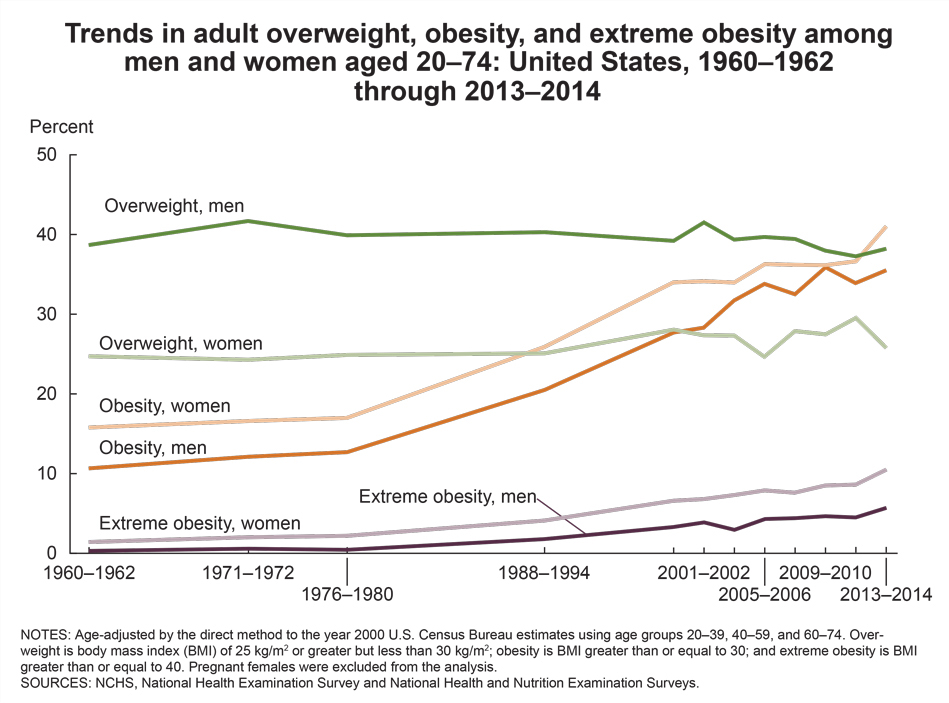
That's impossible you would have to eat 8167 extra calories a day to do that, you are doing something else like drinking lots of water or something.
I believe it’s my glycogen storage increasing, along with water weight due to the excess salt.
When I stop, it comes right off again in a couple of days.
This pandemic of shitty food starts with the kids and their tastes being set at a young age.
Still managed to lose 2 pounds. In the 3 days I was back here, I managed to eat a burger and pizza. I guess I could have politely say no. But clearly the processed food here in US is ubiquitous and cheap, so difficult to escape.
No idea if this is the reason of lower testosterone. But I realize that simple food based on fresh products would go a long way.
I watched this youtube video recently about recipes for cutting (weightlifting term for a diet that makes you lose weight) and eating some of the food has helped me lose some weight.
World obesity rankings are curiously topped by a bunch of small Pacific island nations and Kuwait, followed by the US:
https://en.wikipedia.org/wiki/List_of_countries_by_obesity_r...
That's it I think. Advertising has become much more effective over the past 40 years. Humans can simply not resist.
There should be advertising for healthy eating, to steer people to healthy food.
The problem now is we have #fatfobia that shames people for advertising their healthy lifestyle.
Europe is on the rise: https://www.euro.who.int/en/health-topics/noncommunicable-di....
No way to, pun not intended, sugar-coat this fact.
Sorry to say that, but "moving to a healthier country" is an excuse. Come on, dude! :)
I don't completely blame the food itself. It's more about food habits.
One of the things I found very weird was American portion sizes. Go to any restaurant and plates were easily double the amount I was previously used to. I felt bad leaving almost half of a plate every time.
And then... I got used to it. But also very fat. With similar levels of sedentarism so it's not only about exercise levels. And frankly, while exercise is healthy, you don't burn that much energy with cardio. Every time I do the calculations I'm shocked. From a weight loss perspective, you're better off reducing food quantity (and the proportion of highly energy dense food types) than just increasing exercise. Unless you are at marathon-levels, that is. Increasing muscle mass is also time well spent (still pales in comparison to just eating less). Need to do it for the health benefits anyway, but it's easy to see why people get frustrated.
The kind of food served must have an impact too. Most places, if you are even offered a salad, it's awful. It's either tasteless or downright nasty and you can only make it palatable by overdosing on dressings. It seems that the nastiest tasting greens are chosen - don't even get me started on the "spring mix". So many people just don't eat salad and I can't blame them. Kids are right to rebel against their vegetables.
The American-style breakfast is delicious. It's just that most options are caloric bombs.
This is obviously not applicable if you don't eat out with any regularity. But that was the norm pre-pandemic, whether it's a restaurant or a $5 meal at Taco Bell with the nastiest (but tasty to our lizard brain) calories imaginable. Given that many people in the US don't really have the habit (or the employer doesn't give them time) of having lunch, burgers and the like are common.
Fine, let's eat healthy then and stop complaining. Let's start with fruits.
... and they suck. Apples are tasteless. Bananas are terrible. Mangos are a shadow of what they are supposed to be. Some grapes are ok. Berries are good (but not cheap in most places!). And so on. Fruits seem to be selected for appearance, easy of transport and shelf life, nevermind if they taste like used cardboard. Except berries and even then, IFF they are sourced locally.
You can make a decent salad with ingredients found in any supermarket, so there's that. Less convenient - you need to make your own with tastier greens(whatever your preference is!) rather than grabbing a box of spring mix that tastes like grass that was mowed a week ago. Add some lemon, vinegar and a very small amount of salt and it's all you need.
Meat is essentially the same everywhere(barring some food regulations). Can be affordable if one is ok with eating based on what's available, as prices fluctuate like crazy.
You _can_ eat healthy in the US. But you'll be battling: affordability, time, convenience and cultural norms. You need to check the labels on everything too, the corn syrup comment is relevant.
Little kids are really surrounded by lots of fresh new plastic.
That or USA citizens really like to eat overly sweet and fat stuff.
This is also the case in restaurants. I get it that many people pack left over to go, but the portions served are comically large. For someone with broken "I am full" sensor, it is easy to consume the whole portion at once, and then get a dessert.
I cook most of my meals at home though, which allows me to get enough without needing desert every meal. Plus my cooking tastes better since it is real flavor not added sugar/salt.
Depending on where exactly you were, this is the experience of a lot of Americans compared to the sizes from their childhoods. A lot of places missed the point on Super-Size Me and just renamed their sizes to eliminate extra-larges around that time. So a 16oz shifted from being medium to being small.
There's weirdly enough, quite a bit of scholarly literature on this.
Here's a decent survey, scroll down to see the links
https://journalistsresource.org/studies/environment/energy/g...
There's also studies that show increasing gasoline sales tax is predictive of future obesity prevalence (see https://www.ncbi.nlm.nih.gov/pmc/articles/PMC5415832/). The correlation appears robust enough to generally use petroleum prices as an indicator of obesity prevalence as measured through BMI.
They're all pretty careful to note that "the relationship between gasoline prices and physical activity must be empirically determined".
Maybe, for instance, people purchase less food or go out to eat less frequently in high gas-price places. (See https://onlinelibrary.wiley.com/doi/abs/10.1002/j.1550-8528....)
Maybe people spend less time commuting in high petroleum prices areas, which increases well being and decreases obesity prevalence (see https://link.springer.com/article/10.1007/s11524-012-9678-6)
Maybe petroleum-based fertilizers lead to high obesity (see https://www.cambridge.org/core/journals/british-journal-of-n...).
Maybe the psychological activity of driving affects metabolism (see https://www.sciencedirect.com/science/article/pii/S009174351...).
Maybe this is all p-hacking and it's nonsense.
Regardless, if scholarship is to be believed, moving to a place with high gas prices might help you lose weight. Yes, it still sounds nutty to me as well.
Rumi
I don't know my guy. I'm 39, weigh 280lbs at 5'9 but am married to a smart and beautiful women a decade younger than me and 150lbs lighter than me. It's not a sugar daddy thing either, she makes more than I do. Not everyone is shallow and a great sense of humor / shared interests / good personality is more than enough for plenty of people. That said, being fit certainly ups the odds in your favor.
If you’re a man in DC, NYC, or some rural town you’ll have more luck.
Bay Area? Zero chance.
So, after correcting for BMI, physical activity, etc, there was still a very significant decline in testosterone between 1999-2000 and 2015-2016.
"According to Lokeshwar, potential causes for these declines could be increased obesity/BMI, assay variations, diet/phytoestrogens, declined exercise and physical activity, fat percentage, marijuana use, and environmental toxins."
My personal, totally unsupported hypothesis: society is simply kinder and gentler now. As evidenced by the high testosterone in prison populations, this hormone responds to environmental threats of potential violence.
Loved reading that. I don't know if it's true, but I hope so.
That’s funny as the first time I heard about feedback loop was in college biology courses, when we were taught how women hormones interactions are modelizable.
Was 1999-2000 that golden age when we all threshed the fields by hand and steered the plows on foot ?
I remember people being quite sedentary and obese then and I don't know that an activity comparison to 1999-2000 has any utility ...
EDIT: OK, I am thinking about this backwards - if, as I suggest, people were just as sedentary in the first period as they are in the second, then the T drop begs a different explanation. As you suggest, they also corrected for age.
So, perhaps, my instinct is wrong. I would still look very closely at the (adjusted, corrected) physical activity before drawing any other conclusions ...
I mean ideally they'd have huge numbers of testosterone samples from all of human history, but what are they going to do?
The first strangeness is that this hints at a much weaker effect. The second strangeness is reporting the p value rather than the effect size. I clicked the link to a pdf at the bottom of the article, but it is not the paper. shrug
This is something I can anecdotally confirm: A few years ago my libido was low and I had borderline depression. After my lifts exceeded 100 kg (220 lb), there was a noticeable positive correlation between my libido and the deadlift days.
Our bodies need to move. Isn’t there strong evidence that we can’t even function properly without exercise? I mean, basic functions like regular waste disposal/cell regeneration. Circulation is insufficient without some added pressure and agitation. All kinds of stuff.
We are too fat and lazy, period.
It’s an “easy” fix, but it’s also really, really, really hard. Man. I used to run 50km per week, now I don’t even walk 5km. So much kid stuff, work stuff, house stuff.
Sexual behaviors can radically change testosterone as well.
> Lokeshwar noted that even men with a normal BMI (18.5-24.9) had declining total testosterone levels (P < .05) during the same time frames.
There are men who exercise and yet have low T.
In the abstract of your [3] we see a problem. Quote:
> If you have a low level of fitness you are likely to have a greater increase in testosterone response to exercise. As your body adjusts to the demands of exercise the testosterone response will decrease.
Basically you have to be unfit to get a T boost from lifting some weights. If you're already fit and adapted to exercise, more exercise won't fix the T problem.
Ive been around this discussion a lot and everyone seems to want to blame the whole phenomenon on some chemical or another, "xenoestrogens" are thrown around a lot. Yes, there are more unnatural chemical compounds entering our bodies than in the past (also important to examine) but addressing the terribly unhealthy lives most of us lead is obviously the first step.
> After controlling for confounders—including year of study, age, race, BMI, comorbidity status, alcohol and smoking use, and level of physical activity—total testosterone was lower among men in the later (2011-2016) versus earlier (1999-2000) cycles (P < 0.001)
But if you look at the study the effect persists after controlling for both BMI and exercise. There must be more to it.
- High yield, less nutritious crops - Climate change - less physical activity
https://www.politico.com/agenda/story/2017/09/13/food-nutrie...
But sugar, or more specifically insulin can reduce testosterone in the blood as well. Sugar will also make you put on weight more easily and body fat will also increase estrogen.
The whole phenomenon of "toxic masculinity" is not about "masculinity makes you toxic" but about the ways we terrorize young males and indoctrinate them with fear & violence at an early age.
https://www.scientificamerican.com/article/strange-but-true-...
Op: don’t link testosterone and violence - the real problem is toxic masculinity not testosterone a thing all men have.
Someone: you’re not doing this, but toxic masculinity is a motte and bailey
Someone else: no it’s a well defined idea
You, moving the goalpost: how the term is used socially it is
If someone is using the term as you suggested, by all means call out their actions. But if they are not - as op did - why bring this up?
Personally I find the idea of toxic masculinity a useful tool to understand and categorize the things society is telling me i should aspire to, many of which are harmful to who I am personally
Feminist theory is a serious academic discipline that isn't just making shit up to attack men.
As we all know, naming things is one of the two hardest things.
Just call it something like "toxic gender roles" or "toxic gender expectations" and you short circuit the entire debate.
But regardless, the name does derive from some historical reasoning. For many decades feminist theory used to consider the feminine to be aberrant and the masculine to be the cultural norm and a pure good, only investigating the ways in which femininity trapped and harmed people. "Toxic masculinity" was a re-evaluation of these assumptions, identifying ways that masculinity, like femininity could trap and harm people. The term was positioned against the assumptions of the time and "toxic masculinity" expresses this position much better than "toxic gender roles" since it was explicitly about changing how feminism thought about masculinity.
That is no longer especially significant to the term, but inertia exists.
>It truly is about how many masculine-coded expectations trap men in harmful behaviors and patterns.
That's the motte. The bailey is using the term to sell expected patterns and behaviors that are not necessarily any less harmful, just more desirable to the person doing the talking.
https://www.scientificamerican.com/article/testosterones-eff...
https://www.newscientist.com/article/dn12191-hormones-affect...
The concept of testosterone=aggression is damagingly simplistic, and should not be held up as a good model.
I speculate that is likely why libertarianism is the most male-dominated political ideology, and its adherents have the highest income levels.
Testosterone could also explain why libertarians are the most-rational/least-emotional of the political typologies:
It also attracts people with an egotistical streak and those with low empathy, plus those with a high confidence in their own rationality.
They did not become all of those things by being libertarian, they became libertarians because that ideology attracts people who are comfortable in life and focus more on individual personal gain than on an empathetic society that benefits everyone more equally.
>>It also attracts people with an egotistical streak and those with low empathy
High ego and low empathy is also correlated with testosterone.
The silver lining is the sense of fair play mentioned by the parent comment, as well as imperviousness to superficial peripheral traits that appeal to emotion.
I remember reading that libertarianism appeals to the stereotypically male mind, but I don't know if the studies that conclusion was based on controlled for income.
Die hard libertarians in my circle of acquaintances have argued against stores hiding away tobacco products to discourage smoking as irrational, because they see making as much profit as possible as the only rational objective.
When you can define anything you personally believe in to be rational, all your opponents automatically become irrational because they disagree with your enlightened position. Since they are irrational, their arguments can be dismissed out of hand.
It is an extremely arrogant worldview. Believing that it makes you impervious to emotional arguments just makes it even more arrogant.
>"fair" is defined as something that adheres to the libertarian's personal definition of what is rational.
Do you have any kind of scientific evidence supporting this hypothesis, or is it just speculation based on intuition and observations of personal acquaintances?
>>When you can define anything you personally believe in to be rational, all your opponents automatically become irrational because they disagree with your enlightened position.
It's tautological that a person will view beliefs that they personally view as rational/right, as rational/right. This is irrespective of their political ideology.
As for arrogance, I think "live and let live" is the least arrogant political philosophy one can hold, and that's the defining ethos of libertarianism. I think that lack of pretence/arrogance in this ethos is what draws people to libertarianism.
Any non-libertarian political persuasion will advocate for all manner of government measures that use force against peaceful people to force compliance with a larger social plan.
I personally don't see how the person opposing this sort of mandate is arrogant, while the person advocating for it is not. But I guess these issues are subjective.
>>Believing that it makes you impervious to emotional arguments just makes it even more arrogant.
From what I recall, the study found that libertarians are less likely to pay attention and give weight to peripheral cues that appeal to emotion, and be more focused on substance.
Any non-libertarian political persuasion will advocate for all manner of government measures that use force against peaceful people to force compliance with a larger social plan."
If you were talking about the original socialist libertarianism, then you would have had a point.
Unfortunately libertarianism today is more of a "live and let die"-type ideology, where those who cannot support themselves must fail, as they provide "no value". It is social darwinism writ large.
Regulations exist for a reason and the effects of gutting for instance the EPA has massive consequences, irreparable damage to the environment and to people's health. Or do you think the people in Flint, Michigan should just move somewhere else?
We absolutely cannot trust powerful people and corporations to do the right thing, since they do not feel the consequences themselves and thus actively do not care, because that would eat into their profits.
Voluntarism doesn't work, for that exact reason. Hence why regulations and laws are needed.
Altruism is completely orthogonal to libertarianism. The only consistent property of libertarian policies is that they protect and preserve the right to voluntary interaction.
How people choose to voluntarily associate is in no way a concern of what's defined as libertarianism.
In other words, one can believe and promote a society based on compassion, sharing and collectivism, or a society based on self-sufficiency and only profit-motivated interaction, and be equally libertarian.
>>the effects of gutting for instance the EPA has massive consequences, irreparable damage to the environment and to people's health. Or do you think the people in Flint, Michigan should just move somewhere else?
There are a multitude of types of regulations, and not all of them violate the non-aggression moral principle that libertarianism holds as inviolable. Environmental regulations generally do not violate the right to free association, and can indeed protect rights, so are generally consistent with libertarianism.
Moreover, regulations have a multitude of effects, and not all of them positive. To quantify their net effect on human welfare requires far more evidence than the single data point you've provided. It requires a comprehensive and methodological accounting of their entire impact.
>>Voluntarism doesn't work, for that exact reason. Hence why regulations and laws are needed.
Voluntarism does not imply a lack of laws. Voluntaryism can only be enforced with laws and a state to back it. There is a distinction between laws that protect people's right to their life, liberty and property, and laws that violate it.
It always boils down to "doing something I agree with", defining any perceived violation of ultimate personal freedom as aggression, leading to any retaliation to be "justified" as self defense, which is utterly morally bereft.
The pure and simple truth is that a society based solely on voluntary interaction is no society at all. Along with the benefits of being part of a society, there will always be obligations. You can act as if that doesn't apply to you, but someone always has to pick up the bill or do the work and you can't count on there always being a volunteer.
Libertarianism is a pie-in-the-sky utopian thought experiment ideology.
Libertarianism posits that all interactions between people should be voluntary, and that the misfortune of one does not justify coercive measures against another.
Rational does not guarantee correct, if you don't consider all the variables.
Anecdotally, I find Libertarians are just as susceptible as people of all political parties of being selective with arguments that support their points of view, and ignoring others.
What is unique to Libertarians I know is an arrogance about the objective correctness (because of their lack of emotion and rationality) of their philosophy.
>>Rational does not guarantee correct, if you don't consider all the variables.
Of course, but a rational mindset is more likely to base its beliefs on evidence and logically sound suppositions, and thus be correct, than an emotional one.
>>What is unique to Libertarians I know is an arrogance about the objective correctness (because of their lack of emotion and rationality) of their philosophy.
I think the willingness of adherents of non-libertarian ideologies to use the force of the state to force peaceful people to bend to their will reveals a greater arrogance. I find "live and let live" to show the greatest humility, but I suppose this is all subjective.
What is your basis for that claim? Go on r/conservative and you’ll see plenty claiming the opposite.
(Genuine question — I’m not familiar with the metric and the differences seem small)
The link between aggression and testosterone in modern studies is a complicated one. The theory that testosterone levels can be used as a predictor for violence has been extensively debunked. However violence is a predictor for high testosterone, a finding mostly done on apes. The prevailing theory, as far as I seen in modern research, is the challenge hypothesis. If two males fight, the winner of the two will have raised testosterone afterward. The winner will also be more likely to be more vigorous defending themselves if their new won status is challenged.
On a more subtle human experience, place people in a economic game and inject some with testosterone. What ever behavior that the game has in order to defend status will be increased in those injected. If status is preserved by giving money, those injected with testosterone become more generous.
A similar study has been done on sport fans. When a team wins a match, male fans of that team will have their testosterone raised afterward. If there is a confrontation between fans of the two different teams, it is more likely that the winning side will react more aggressively.
Talking about toxic behavior, there is also a similar finding for women. It is however a bit more complicated and involve multiple hormones. The aggression is also more complicated, harder to define, and is more context sensitive.
There is plenty of scientific research on the topic. "Testosterone == violence" is plain wrong. In some papers, partial correlation was indicated.
The belief that testosterone is some sort of "manly warrior hormone" is an example of cultural bias that has been researched as well (see google scholar) and fits very well the description of "toxic masculinity".
There's a biological basis for men being less risk-averse than women. If you think about cavemen days, as a woman, if you are pregnant, or could be pregnant, going hunting, making physical threats, or taking unnecessary risks will reduce your chances of reproductive success. It's better to be safe and conservative, because the life of your children could be at stake.
As a male, in primitive times, it was the opposite. Obviously it wouldn't be to your advantage to just pick fights with everyone, but there is much more of a competitive dynamic. The men who go out, hunt, and bring the food, will have more success within their tribes. In order to succeed as a caveman, you had to leave the camp in a hunting party and risk getting killed.
AFAIK, based on studies on mitochondrial DNA, we have 2-3x female ancestors as males. Meaning most males died childless. This is obviously not a model for how we want modern society to be, but I think it's healthy to understand where we come form, and why males may have more of a tendency for violence, or to get themselves killed in motorcycle accidents. It's not just because of socialization. There is a biological basis.
And I don't intend to. The topic is big enough for a degree and specialization in endocrinology.
I recommend to read the books from https://en.wikipedia.org/wiki/Robert_Sapolsky or at the very least watch all his lectures on youtube.
> I don't believe in toxic masculinity. Masculine and feminine traits have
You are confusing "toxic masculinity" with "masculinity is toxic"
"toxic work culture" does not mean "work is toxic"
It doesn't "===" violence but if you're intentionally using "==" for type coercion, it could be true.
Is it possible for the cause-and-effect to be backwards? A change in socially acceptable behavior causing the testosterone drop?
This wouldn't be a genetic argument then.
Testosterone in your body fluctuates throughout the course of a single day, based on what happens to you in that day.
So at a societal level, we'd expect some general zeitgeist based average to fall out of other factors, potentially.
I agree with the premise, that social and environmental norms can influence hormones, but the fox study is a different phenomenon altogether.
I wouldn't rule it out. After a generation of anti-bullying and zero tolerance schools have gotten pretty good at making sure anyone with even the slightest violent tendencies is primed to be caught up in "the system" by the time they're done and we've thrown the "fuck the government I smoke what I want" crowd in prison.
Estrogen emulating particles [1] are a candidate considering the short time intervals from article.
I don't know the numbers, but that would mean that high T does not cause aggression, not that aggression does not cause high T.
On the other hand normal levels testosterone supposedly saturate receptors. Big exception is muscles.
I don't think higher levels of testosterone have been reliably linked to aggressive behaviour except in case of anabolic steroid abuse. Those kind people might well have high levels of testosterone.
Not how it fits in the discussion, but I'd put duelling in the same category, and this was clearly acceptable among elites when it was acceptable overall
How exactly do you propose that a change in socially acceptable behavior in the span of about 40 years had a tangible effect on hormone levels? It's not like someone can say "oh getting into fistfights isn't cool anymore, better reduce my testosterone levels". Maybe if we were talking about a timespan an order of magnitude or two longer then sexual selection (high testosterone and more violent men being less favored as mates) could come into play, but again for a time span of 40-50 years that's just not feasible. Also, socially acceptable or not, violent and aggressive men typically don't have problems finding sexual partners; Ted Bundy, the notorious serial killer and rapist, was known to receive many love-letters in prison, even after the details of his crimes (exclusively against women and girls) were made public and he was able to marry and conceive a child while incarcerated.
Have you considered that the body may produce different hormone levels as a result of our mental state?
For example, when startled, the body produces a hormone called adrenaline. We know with certainty that mental state is responsible for certain types of hormone production.
I honestly do not know if there might be a link between testosterone production specifically and mental state, but I took this to be the question that the above poster was asking.
https://www.webmd.com/men/features/exercise-and-testosterone
Lower testosterone causes fat gain and fat gain causes lower testosterone.
https://simondsmetabolics.com/2020/09/10/how-obesity-affects...
> Scientists have established that excess fat increases enzymes known as aromatases. These molecules convert testosterone into estrogen. While estrogen is present in males in very small amounts, increased amounts can alter normal function. Having too much estrogen tricks the body into thinking that you do not need more testosterone. The danger lies in the vicious cycle that develops once the high estrogen levels kick in.
Cheap, high calorie food and obesity...
I was actually considering something like that. That if you engage in more aggressive behavior regularly for a long period of time, your testosterone levels might stay higher on average than if you didn't.
You seem to assume testosterone levels are only a function of genetics, which they are not.
I didn't go to a very violent school, and fights got rarer as age made them more serious. My parents also treated it as normal. They didn't encourage it, but it wasn't a major outrage. Schools too. A note to parents or somesuch minor penalty was the usual recourse.
As for later years, schools took a zero-tolerance policy, so that would have cut down on it significantly. With social media use increasing towards the end of the 2000s, fights could have been reduced further because people did not want to end up as a punchline (no pun intended) on Worldstar or Vine.
I experienced way more violence in my late teens and early twenties thanks to drinking in dodgy towns.
If you read Mark Twain's Tom Sawyer and Huck Fin, boys fighting, even if they just met seemed to be part of life.
> The summer evenings were long. It was not dark, yet. Presently Tom checked his whistle. A stranger was before him—a boy a shade larger than himself. A new-comer of any age or either sex was an im-pressive curiosity in the poor little shabby village of St. Petersburg. This boy was well dressed, too—well dressed on a week-day. This was simply astounding. His cap was a dainty thing, his close-buttoned blue cloth roundabout was new and natty, and so were his pantaloons. He had shoes on—and it was only Friday. He even wore a necktie, a bright bit of ribbon. He had a citified air about him that ate into Tom’s vitals. The more Tom stared at the splendid marvel, the higher he turned up his nose at his finery and the shabbier and shabbier his own outfit seemed to him to grow. Neither boy spoke. If one moved, the other moved—but only sidewise, in a circle; they kept face to face and eye to eye all the time. Finally Tom said: “I can lick you!”
http://www.gutenberg.org/files/74/74-h/74-h.htm#c1
I'm not from that culture myself but I know people who are.
Definitely tapered off the last couple years of high school, but some of the rougher kids continued to engage it. Those kids pretty quickly got into serious enough trouble that they ended up in jail, expelled, on probation. That quieted things down a good bit.
This was common for other people who I met later that from developing nations. Not sure if this still happens anymore.
https://www.motherjones.com/kevin-drum/2018/02/an-updated-le...
[ EDIT for the downvoters: this isn't a joke or some snide remark. The lead hypothesis as the basis for the huge spike in violence in various societies, especially among teenagers and young adults, has huge amounts of evidence. Correlation is not causation, but we even have a plausible causal mechanism. ]
Fights were not uncommon. I saw probably 8 or 10 inside school and a handful more after school at designated spots over 4 years in high school.
It was a suspension offense but no police or record was involved.
I won't go into details about my involvement in any school fights, but there were 2 incidents with tormentors at new schools that were quickly resolved and I lived in peace thereafter nor do I regret my actions. Besides I was like 8 and 11 years old at those times.
I don't think those "rougher" times were good and I'm glad there is less of that now. Still (and this might be personal bias), I can't help feeling like we lost something in the sense there is a fundamental underlying biological reality and people are shocked when they find out it actually exists underneath everything and people are more balanced if they learn this at an emotional level early.
I think these are the conditions we evolved under (constant threat of violence and need to deal with it) so even though it's not good and people got hurt and killed needlessly, we are somewhat adapted to that and changing the circumstances makes us a bit neurotic. Or something along those lines.
Without lead.
It's so weird that someone would say they didn't go to a violent school, but there were constant fights. Violence doesn't mean "weekly school shootings."
I did encounter some, but it was more like we as kids watched a lot of US media and thought this was how we needed to behave but were more “playing at it” than actually being vindictive.
My one fight in school was with the “toughest” kid in my age group (I was the nerdy outsider they were bonding over to defeat), we duked it out in the yard with half of the school watching, and didn’t get a clear winner. We both got tired and called it quits.
Both got reprimanded of course. Weirdly enough that was the most violence I’ve encountered in my life, period.
I blame video games. Aggressive teens got an outlet where they can establish rankings, troll, be dicks, or defend others, with zero parent supervision.
In my case, since it was done in computer cafes, it had its strong social aspect, with crowds cheering, gangs and clans. Counter Strike was more of a religion to us than anything. And it was so much fun that we didn’t really need “the real thing”.
Fights and bullying were extremely common in my schools (went to several), though they were the standard public ones (I'm not even sure there were private schools at the time). Late 90s to very early 00's.
I see nowadays it's much less common, as kids are all on smartphones, they've got no time for any physical activities. Silver linings, I guess. Kids still exclude the less "cool" ones, but at least no one (or fewer of them) gets spit on and beaten up.
fights were few and between. those that i remember had ethnic background.
Same years, 5km apart, different experiences. ...Maybe just a different recollection of the experiences.
I don't think it's that way anymore.
However, increasingly sedentary lifestyles are definitely part of the problem. Jobs encourage people to sit motionless, of course, but most of our leisure time has been replaced by other motionless activities.
Global obesity rates have also been rising steadily while testosterone levels have trended downward. Obesity is well known to reduce testosterone levels.
There might be additional answers in environmental toxicities, but it's a mistake to ignore the elephant in the room: Lifestyle is a problem.
Decreasing testosterone could also be a contributor, but it's unlikely to be as significant a factor from what I can tell.
See e.g. https://en.wikipedia.org/wiki/Lead%E2%80%93crime_hypothesis or https://www.motherjones.com/kevin-drum/2018/02/an-updated-le....
Combined with the increased use of bottled water, takeout in plastic containers, tupperware, and other food-related uses, and the new prevalence of microplastics in our environment, it's easy to imagine this has a global effect on men's testosterone levels.
Also I would guess that at 42 you are much less likely to be in a situation where a physical fight might start than you were in the 1990s - at bars at 2am for example. I know that I am.
> For instance, the peak in leaded gasoline use in the late 1970's corresponds to a peak in aggravated assault rates in the late 1990's in urban areas across the United States.
Yes, and they address this in the study. They controlled for BMI, among other confounding variables.
I think there is a strong cultural influence for that. I'm from Spain and in my country drunk fighting is something that mostly British and German tourist do. We don't understand why, we may get super drunk and have super heated arguments, but it's quite uncommon we will get to a physical fight. But in the areas around the Mediterranean Sea full of tourists, fights are a daily occurrence.
Does this research provide any insight into why testosterone levels have been in steady decline in the United States for several decades? If a safer, less-challenging environment leads to higher testosterone levels, wouldn’t levels be rising instead of falling?
Magid points to trends toward higher rates of obesity and lower rates of smoking that at least partially explain lower levels of testosterone. “There are a number of theories why this might be occurring, and there are those who dispute whether this is either a real trend or what it could mean for male health in the long term,” he says.
I am wondering if our current understanding of testosterone traits is wrong, or perhaps my understanding is wrong?
Edit: I’m a little older than you.
You can have muscle if you have low testosterone, but it will develop slower compared to if you had higher testosterone.
take your pick.
https://news.utexas.edu/2010/09/27/stress-hormone-blocks-tes...
Probably a minor contributor. As the paper states:
According to Lokeshwar, potential causes for these declines could be increased obesity/BMI, assay variations, diet/phytoestrogens, declined exercise and physical activity, fat percentage, marijuana use, and environmental toxins.
More like lifestyle changes.
This is something I often think about. I think we (as a society) have lost a certain something by the reduction of violence. I'm not advocating for violence here or anything, but sometimes a knuckle to the face is the lesser of two evils. We hardly ever see "regular" violence anymore, by which I mean the occasional fistfight. When violence is brought to our attention, it's using knives, guns or bombs. I think in a way we've become so afraid of getting punched in the teeth that we've now collectively become afraid of standing up to people. Only the police are allowed to execute violence, and in handing over that responsibility we've lost some of our guts.
Some anecdata: Years ago, I was witness to an attempted robbery in a restaurant. Some idiot came in and threatened the owner with a bottle. The place was packed, but everyone suddenly found something else more interesting to look at ("ooh, I'm wearing new shoes", "ooh, there's some fries on my plate"). No one got involved, because 20+ people were afraid of one idiot with a bottle. I grabbed him by the scruff of the neck and threw him out while the owner snatched the bottle out of his hands. We held on to him until the cops showed up. But no one else did jack shit. No one even asked if the owner was ok or anything. My faith in humanity took a deep dive that day.
Something tells me that had this happened 100 years ago, a lot more people would have been willing to get involved.
TL;DR; Exposure to small-time violence might help us feel safer and be more responsible adults.
I keep finding stuff that links psychological aggression and testosterone in men, but only loosely -- i'd like to read something contrary to that if you have it. [0]:
[0]: https://thepsychologist.bps.org.uk/volume-22/edition-1/testo...
https://youtu.be/2bnSY4L3V8s?t=1815
To summarize in text, Testosterone does not cause aggression. It amplify existing defensive behavior in the context of a persons social status being challenged. A person that has high status, or more significantly gains social status, also trigger higher levels of Testosterone. In turn Testosterone increases behavior which in the cultural context maintain that new won status.
You also largely got away with it back then too.
When I was in school, so long as you didn't hurt the other person too badly, the punishment for fighting was generally getting thrown into a room with all the other bad kids and forced to sit in silence for the entire school day. If you did it too much, they'd eventually expel you, but I only remember this happening to a few people.
Today, I'm pretty sure you end up getting your ass beat by the cops before getting thrown into juvie.
Edit: plus, we have video games today.
Not sure if the US Army do anything similar to this but it would be a bit of a shock to the system: https://en.wikipedia.org/wiki/Milling_(military_training_exe...
Interesting graph here: https://ichef.bbci.co.uk/news/976/media/images/74298000/gif/...
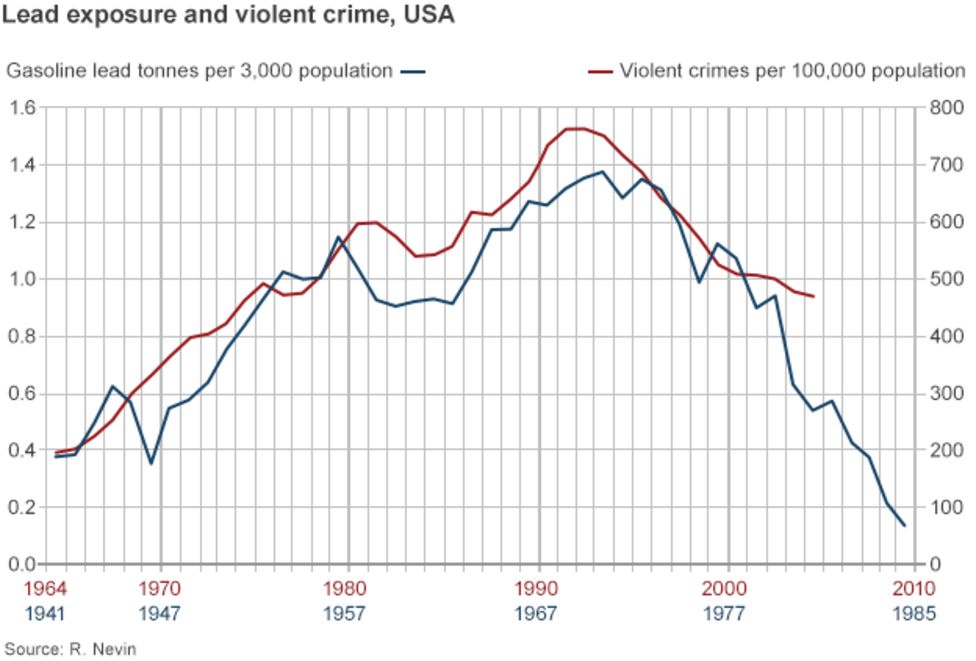
https://www.sciencedirect.com/science/article/pii/S230505001...
https://twitter.com/search?q=%22from:Royal_arse%20Adipocytes...
This has a notion that high testosterone levels and high aggression are something normal and perhaps desirable.
I think the most probable explanation is that people are just evolving to be less aggressive naturally.
Plastics.
It's porn. Porn has proliferated right alongside this trend.
Toxicity of media, liberal arts/Ivy league graduates going to have a career in education/media/HR constantly telling man and young boys how toxic masculinity is harming their fragile beings.
American culture has an wide extending impact. 5 years ago toxic masculinity was not even a term here. Now I hear it teachers in pre-school in my country of <10million population.
[1] http://openvault.wgbh.org/catalog/V_474CF2C8A20B4173988486AC... (relevant portion min 40-45)
This assumes (it seems to be universally assumed in this thread) that the earlier average level of testosterone - meaning the year 1999 - is more optimal, which doesn't seem evident to me.
Why not, equally: a toxin has possibly been removed?
I choose these words for two reasons. First, the ratio of muscle to fat is important for most any metabolic disorder (this means both diabetes and obesity, which are comorbid). Muscles are actively important in metabolic health as they burn calories through use. And contrariwise, among their other problems, fat cells store and secrete estrogens, which is problematic for those that wish to identify as cis male. Clearly some level of the growth cascades that testosterone produces is useful for metabolic health, if not testosterone itself. Else we get into an obesity spiral and limit the development of our own bodies.
Second, high testosterone is often associated with anti-social outcomes like violence. While this is (weakly!) true, this isn't the whole truth. For instance, people given testosterone actually produced fairer deals vs non-blinded placebo.[0] So it seems more appropriate to call testosterone a status regulator than an aggression hormone.
Let's say we avoid the view that no testosterone is good – this would be ad absurdum considering its central role in the body's development. Even if you were to disagree as to basal level of testosterone in 1999, there are clear positive outcomes associated with testosterone which we can organize our sense of what is optimal around; it is possible that we have swung too far, and our current levels are not good enough.
To deny the positive aspects of testosterone, is to deny its usefulness to metabolic health, to regulating status, and maintaining the spiritedness to engage with life.
[0] https://www.lesswrong.com/posts/uRg5Q2vAteDem5b5S/social-sta...
I think this comment illustrates a significant problem of people's (including some scientists) thinking around testosterone.
I'm identifying that people are only suggesting positive aspects of high testosterone and ignoring the negative. And, you are again reiterating the positive aspects in a biased, almost spiritualised way.
Clearly, as you suggest, 100% testosterone is absurd and not desirable, so there must be some limit to the amazing wonder-drug testosterone. Excessive testosterone is harmful to health apart from in behavioural changes (it's linked at least to heart failure).
My remark was that no testosterone is absurd due to the critical role it has in development, providing a bound on what it would mean for testosterone to be a toxin. Some is good. I acknowledge that having high-enough testosterone levels to the point where heart failure and prostate cancer is implicated, would be difficult (although if true, the effect is non-linear: this study did not replicate issues with heart disease, nor did its citations[0]). So too much is bad. If you insist on framing testosterone as a toxin, then the dose will make the poison as well as the cure.
(100% testosterone is a nonsense quantity since you can always raise blood concentrations, but let's put it at values greater than 1000ng/dl for most people)
A universal drop in testosterone within at least the US, with something leftover to explain after controlling for lifestyle factors, and no sign of stalling in the trend, brings us to a conundrum. If we do nothing, and testosterone decreases faster than it used to, and some testosterone is good, and no testosterone is bad, but too much testosterone is bad, should we stop the process? Unless you set the "too much" to be much lower than what has been medically accepted, the answer must be yes at some point.
Since this is about picking an optima, what is at stake is whether or not testosterone levels before the 2000s were responsible for outsized rates of heart disease and prostate cancer (or other morbidities), and if this is true, whether or not the problems gained through the decline of testosterone weigh off the cost of its presence. We could include other externalities like status-seeking behaviors or sperm counts, which would make the comparison harder but more honest.
What I expect - I am not sure - is that testosterone's presence in heart disease (not prostate cancer) will be comorbid with testosterone-independent factors, such as diet/exercise. And since the norm seems to be testosterone declining with age I would be surprised if pushing that curve towards youth ends up being a good thing.
Feel free to challenge these assumptions, but I really think what we need to do is debate the weights.
> I'm identifying that people are only suggesting positive aspects of high testosterone and ignoring the negative. And, you are again reiterating the positive aspects in a biased, almost spiritualised way.
I am curious why you would use the word "spiritualized". I was not invoking the supernatural within my argument (the word "spiritedness" doesn't count; its meaning is secular). The emphasis on positive factors is because I'm debating your emphasis on the negatives. Attempting to frame the argument as spiritual without pointing to particulars is to add connotations of irrationality which aren't there. It is true that I am arguing emphatically.
I didn't intend my argument that way.
I was responding to the parent who was proposing that some environmental toxin had been introduced since the 1990s resulting in lower testosterone levels in men, seemingly from an underlying assumption that high testosterone is inherently good.
I was challenging that assumption directly. It seems at least equally plausible that some environmental toxin has been removed since the 1990s (to be specific, lead would be a good candidate) resulting in lower testosterone levels in men.
If you exclusively look at pictures from the 90s of people doing mundane things like shopping at a grocery store, they don't look any different from people today (except perhaps with worse fashion sense).
Men went from an average weight of 189.4 to 197.9 in the same time period and BMI went from 27.8 to 29.1. Men on average added 1 inch on waist size.
A 5% increase in weight over 20 years might be concerning from a public health perspective, but it's not something you'd see just by looking at people.
I think it's a lot more common now but that might just be selective memory.
Again, look at pictures of groups in candid settings and you'll notice similar levels of obesity.
High testosterone levels in men are linked to much higher heart problems, a major cause of early death.
Absent any other information, you should therefore assume...
https://en.wikipedia.org/wiki/Flying_Spaghetti_Monster#Pirat...
Note that the model does take the Arabian Sea into account.
I distinctly remember the popularity of gang culture in North American west coast cities. Everybody were forming gangs based on ethnicity usually (but racial diversity isn't uncommon). This was the era of gangster rap, Tupac, Biggie Smalls, Ice Cube, DMX, Bone Thugs, Nas....all the classics...the lyrics are simply HARD compared to today.
Testosterone is not simply and directly causing aggressiveness.
A lot of research shows that human behaviors are way more complex than that, and sometimes absolutely counterintuitive.
We are not baboons.
[1] https://bmcpublichealth.biomedcentral.com/articles/10.1186/s...
There is, in other words, an undeniable correlation. The more interesting question is -- are there any safe levels of exposure, and what are the effects over time?
[1] https://link.springer.com/article/10.1007/s12011-008-8204-x
That rumor is false
https://i.imgur.com/SaDtCba.png

This is just one example of how they play fast and loose with facts. How can you trust this website?
https://rbej.biomedcentral.com/articles/10.1186/s12958-020-0...
Possible toxicity of something that we deem safe could be an explanation.
A side comment. I am 42. When I was younger, in the late 90s, getting into physical fight was much more common than today. These days even drunk young guys seem to be content with hurling a few insults. (For record, I am a peaceful person and the possibility of getting beaten up for no good reason was something I definitely did not look forward to during my old pub crawls.)
I wonder if this is actually a manifestation of population-wide testosterone drop.