It's like if we took sleeping pills every time we had trouble sleeping. Having said that, I just realised I have the impression that's exactly what people do in the USA?
Source: multiple friends, family and forums (while researching how to help friends & family get off of various SSRIs).
Your second paragraph reveals a biased motive behind your opinion.
I'm really tired of reading anti-medicine testimonials from people who had anecdotal bad results. Yes, penicillin won't stop antibiotic-resistant strains of some germs, and in fact may kill people like me if we take heavy doses. That's worse than what you're describing for SSRIs; does that mean doctors shouldn't prescribe it?
Chemistry trumps psychology. Good enough chemistry enables cognitive treatments. But to fix the wrong chemistry you need chemistry.
When looking at the same reality one persons sees the situation as OK and another as a an endless and hopeless disaster it is hard to tell who is right. A depressed person would tell that most people around him are wrong and are optimistic only because they don't understand how bad all is.
No, anxiety and depression aren't simply a matter of perspective.
Or because of a legitimate chemical imbalance or some other cognitive issue they can’t control alone. Right?
- https://www.psychologytoday.com/us/blog/insight-therapy/2022...
and
> "the etiology of depression is incredibly complex, the narrative that it is caused by a simple “chemical imbalance” persists in lay settings. We sought to understand where people are exposed to this explanation"
- https://pmc.ncbi.nlm.nih.gov/articles/PMC11752450/
and
> "Onset of depression more complex than a brain chemical imbalance. It's often said that depression results from a chemical imbalance, but that figure of speech doesn't capture how complex the disease is. Research suggests that depression doesn't spring from simply having too much or too little of certain brain chemicals."
- https://www.health.harvard.edu/mind-and-mood/what-causes-dep...
and
> "Analysis: Depression is probably not caused by a chemical imbalance in the brain – new study"
- https://www.ucl.ac.uk/news/2022/jul/analysis-depression-prob...
(These are not thoroughly checked articles, they're the first few search results; however claims that depression is caused by a chemical imbalance ought to be able to show where that idea originated, how the imbalance is measured in patients, where that hypothesis is supported by evidence, why antidepressents don't fix depression in half of patients, and several more suspicious things).
(I've written paragraphs and paragraphs thinking through some of my views in this thread. You wrote three words naming a thing which doesn't seem to exist. If you want more engagement, engage more. What words am I twisting? Where did you say it was anything more detailed than that? What behaviour that people "can't control alone" are you talking about?)
For emphasis: I do not think it is simply/exclusively “chemical imbalance.”
I'm incredibly optimistic and am content with my position in life. My default state is being mindful of the present and I don't think about things too far into the future. I very rarely ever feel stressed out over things in life.
However, none of that changes the fact that I feel completely empty and find no joy in things. Interests are nearly non-existent, emotions dialed to 1, and the only thing I'm motivated to do is lay in bed staring at the ceiling... unless I'm on sertraline.
Admittedly that's just anecdotal, but I worked in a clinical neuroscience lab researching treatments for severe treatment-resistant depression (read: people who tried so many options including CBT that they even tried electroshock therapy). The only thing that helped those subjects was a regimen of personalized neuroimaging-guided transcranial magnetic stimulation for 10 minutes every hour for 10 hours every day for a week. Even then, it wasn't permanent. Some saw improvement for months, others only weeks.
For some people, it's not just a matter of "perspective".
Maybe the idea that we should find joy and feel full is wrong?
We are on a random planet circling a random star in an unfathomable Universe.
STOP looking for meaning and you are liberated. The quest for meaning by itself might be exhausting and makes you feel depressed.
It's not as liberating as you might think. A joyless existence is either suffering or nothingness. A life without meaning, either internal or external, is one where nothing is meaningful with no motivation thus one of crippling catatonia til death.
All I can say is just that it doesn't feel good and if you can't feel good about anything, your calculus of your life inevitably leads to the conclusion that existence isn't worth it.
Go somewhere where you need to work physically you az off to afford daily food. You will be so exhausted eventually that: 1 you will not have any energy left for thoughts. 2 If you have any energy left, you will give it to angriness which will lead to other circumstances which are none related to find the meaning of life.
Ignorance may lead to happiness and friends :)
I didn't have anxiety, just depression. I rarely thought. I existed on autopilot. I was physically exhausted on a daily basis as a division 1 athlete in college. Often went days without eating either because I simply forgot to eat or forgot to make time for it between classes and training. Didn't change anything.
I think something people are forgetting is that motivation is either driving you toward something you want or driving you away from things you specifically don't want. A complete lack of motivation means I wasn't motivated to do anything to get something, but also I wasn't motivated to anything to avoid something either. I wasn't motivated to eat to avoid hunger pangs. I wasn't motivated to quit my sport to avoid routine physical exhaustion. Instead, my empty autopilot existence just freely acted on the expectations of those around me as a proxy for motivation.
If One can´t be happy with what One have now, One will never-ever be in any circumstances.
This is not your case certainly but is connected with the autopilot (meaning we don´t get to choose.
This one came out good :)
In my own opinion, we need to stop viewing "mental health" as a separate class of conditions from general/physical health. A mental illness is a health/medical condition just like any other and shifting our views and diagnostic criteria in that direction would do a lot to remove the stigma associated with mental illness.
Someone with depression has a chronic illness, not a temporary "it's just in your head" condition.
In case of depression in particular, it appears to be a label given to a big bag of various issues you may have causing similar symptoms.
Most, especially GP’s/primary care doctors will immediately prescribe without making sure you’re also going to see a therapist at least once.
They also hand them out as if there’s no withdrawal symptoms. And many doctors aren’t even aware that many people do have withdrawal symptoms. (Withdrawal symptoms being terrible “brain zaps” that make anxiety 10x worse when coming off)
No one is denying they’re useful. There are just a lot of doctors pushing these drugs as a fix all for everything, and a lot of patients who aren’t informed and aren’t getting good advice from their primary doc
To nitpick: The mind is applied biochemistry. Psychology intervenes in the chemistry, like many other activities do. The goal of that is to solve the root cause so that your future levels will be maintained at the right level, instead of just forcing the level by sourcing the respective chemicals externally.
A good rule of thumb in biology and particular any kind of hormone production and balance is "use it or lose it" - if you start regularly receiving something externally, internal production will scale back and atrophy in response, in many cases permanently.
We don't really know how SSRIs work, but there's some evidence that it's through desensitizing serotonin receptors, not directly addressing the lack of serotonin. If so, "use it or lose it" doesn't apply; long-term adaptation is the point, and SOMETIMES does persist after quitting.
There are ways to "hack it".
For example, ~6 months ago I started trt (testosterone replacement). It was the best decision health wise ever. I feel way better psychologically, first time in my life I managed to stick with cardio training for so long (before 3 months was the most). There are other benefits too.
So what about the "loose it" part? Well there is a hormone called HCG one can take a twice a week to trick one's balls into producing some natural testosterone. Its use prevents atrophy and infertility.
Interesting.
Well, I don't think you'll be able to avoid testicle atrophy even if it minimizes it, but the important part is understanding the tradeoff. Particularly, that adding testosterone will cause changes throughout your entire body (including, for example, shortening life expectancy a bit), and that adding other hormones to the mix will likewise cause changes around the entire body and not just one single process or organ.
But it's your body, your life, your priorities and decision. I also wouldn't consider it a good decision health-wise to take steroids to get huge, but I have no problem with someone deciding that absurd bulk is their main goal in life and worth the tradeoff.
I only take 250iu twice a week. 6 months in I can't see any atrophy. Some people take it every other day.
This hormone HCG is very interesting. In fact it is what many urine pregnancy tests test for. I wonder if I did a pregnancy test it would cone out positive :-)
But, the reason why I'm talking about it is to explain that it works the same as another hormone called LH produced by the pituary gland that regulates natural testosterone production by testes
So when one takes external testosterone the mechanism through which body shuts its production down is by shutting down this LH hormone.
By taking HCG ones testes are told to make testosterone. Not a lot of it, but it seems to be enough to prevent atrophy so far.
> Particularly, that adding testosterone will cause changes throughout your entire body (including, for example, shortening life expectancy a bit), and that adding other hormones to the mix will likewise cause changes around the entire body and not just one single process or organ.
For sure. Many of these effects are very positive. For example I was a little pre-diabetic, this has improved a lot (but one may argue via exercise - then again I manage to be consistent with the exercise thanks to psych. changes caused by the testosterone).
Another is these psychological changes. I feel more "stable". I never was really unstable, at least I never noticed, but it feels better. Like, whatever happens I can most likely solve it kind of feeling, even when things go wrong.
Finally about the shortening of lifespan. I think I offset this by exercising, but another factor is getting regular blood tests. The doc monitors things like hematocrit etc. I'm told to drink a lot more water, to measure blood pressure even though I never had high pressure etc to keep it in check.
I think most problems happen with people that do not realise their blood gets "too thick", they get high blood pressure, miss it for years and end up with circulatory system issues.
It is a tradeoff. Not everything is ideal. One negative side effect I did get is worse skin until I found a procedure to exfoliate/moisturise and so on. It's a bit of a pain in the arse as before I'd just have quick showers. Now it takes longer. But so far it is worth it.
Very basic and very often wrong rule, so take it with a grain of salt.
Insulin for example is the opposite. "lose it then use it" would be a general rule for type 2 diabetics where insulin resistance commonly due to weight gain is the primary problem. Losing the weight leads to better uptake and usage. For a type 1 "lose it then use it" you typically lose the ability to produce insulin to an an autoimmune disorder, then are stuck using insulin for the rest of your life.
The body itself typically attempts to main homeostasis, but at population scales this is something that is going to have a massive range of ways it shows up. Evolution, at grand scales, doesn't care if you survive as long as enough of your population survives and breeds. At the end of the day you might just be one of those people that was born broken and to work properly you need replacement parts/chemicals. A working medical system should be there to figure out which case is which.
You're describing entirely orthogonal issues. In case of insulin resistance, your natural production is running full blast with demand exceeding supply because the consumer stopped caring about the hormone. In case of autoimmune disease, the natural production was killed - you can neither use nor lose what is already dead, and even if some capacity was left it will either soon be killed or atrophy under external insulin, but it will not be mourned.
So no I would say it is exactly the same - "use it or lose it" - but that does not mean that there is never a reason to manually overrule your body's attempt at homeostasis through direct manipulation. It just means that there is a very significant consequence to the process.
> The body itself typically attempts to main homeostasis, but at population scales this is something that is going to have a massive range of ways it shows up.
As a somewhat sidenote, this is also why I dislike the idea of trying to classify people into "normal" and "divergent/atypical". In my eyes we're all normal people and an entirely normal aspect of being a human is that we all differ and have individually specific needs by virtue of being built by a trillion micro-meter sized workers, each with their own hand-copied version of the blueprint, only caring about the millimeter of you in their immediate vincinity and not really talking to any of the others.
A few HN submissions recently are in the style "thinking about doing the thing is not doing the thing. Planning the thing is not doing the thing. <etc etc>. Only doing the thing is doing the thing". Comparing a brain to a large software project with bugs hiding in it, in that vein giving the computer 11 hours of 'sleep' each night is not debugging the code; overclocking or undervolting the CPU is not debugging the code; installing the latest updates and patches is not debugging the code. 'knowing there is nothing to worry about' is not debugging the code. Only debugging the code is debugging the code. Reading a badly explained idea on an internet comment and dismissing it with a mocking "thanks I'm cured" isn't debugging the code. Saying "I've tried everything" isn't debugging the code.
A more specific example, if you are going on a rollercoaster and you are experiencing physical and mental symptoms of worry - nervous, anxious, angry at the person pushing you to ride, twitching and trying to back away, eyes looking around searching for an exit, coming up with excuses to do something else instead, nervous shaking, dread tightness in the chest, affected breathing, perspiring, gritted teeth, etc. etc. then washing over all that with "I know there is nothing to worry about so this must be a problem of brain chemistry" seems a clearly incorrect conclusion.
Such a person clearly has a worry. Quite likely one that's out of proportion (e.g. "rollercoasters kill thousands of people every day!"). Possibly one that's completely incorrect (e.g. "going more than 10mph makes people's insides fall out!"). Quite likely a less clear and less obvious one - which could be anything, e.g. they saw a documentary about a rollercoaster which behaded a child and that's their only thought about rollercoasters; they saw a show about fighter pilots pulling high-G maneouvres and passing out and think that will happen to them on a big rollercoaster; they see the rollercoaster track and support flexing and don't understand that a some flexibility doesn't mean weakness; they went to a theme park as a child and older children bullied them into riding a scary ride and they wet themselves and figuratively died of shame and buried the memory; they were pushed into learning to drive at 15 by their wicked stepfather and this is pattern matching to the same kind of experience; etc. etc.
Saying "there is nothing to worry about, rollercoasters are safe enough and you know it, so your brain chemistry must be broken" isn't debugging the problem. It isn't even explaining the problem. Why would broken brain chemistry particularly affect them at a theme park, or in Winter, and not the rest of the time? How was this broken chemistry identified and measured and quantified and that hypothesis proven?
Likewise, just because the parent poster has tried sleeping and exercising and taking Vitamin D, doesn't address that humans evolved in Africa, connected to oceans and trees and tribal living, and not commuting to a fluourescent lit beige box filled with strangers writing JavaScript while being bombarded with news items about wars and genocides and stories of how everyone else is having a wonderful Christmas, earning more money than you, with a cost of living crises always on their mind, etc.
> "Good enough chemistry enables cognitive treatments."
Drugs can force people to carry on with a life that's making them miserable when they have no other available options to find out why and fix it. That isn't evidence that "there is no root cause"(!). Any more than turning it off and on again can let you get on with your job, but that doesn't show there's no root cause for a program locking up.
> "then you deduce that the black cloud is produced within."
And you have a lifetime of your prior experiences affecting your mood. When you remember that your aunt hit you when you swore at the dinner table, or you saw someone slip on ice and fall over and break their wrist, or watever, every life learning experience is "the mood is produced within".
Ha, of course it can be! Our brain chemistry is not stable through our life! Many children are born with epilepsy, but some people develop it later in life. epilepsy, like all neurological disorders are nature AND nurture, genes AND the environment.
Using your roller coaster analogy, there very well may be genes that control; how much fear someone experiences when riding a roller coaster. The problem society has is telling people that they all should be able to not have feear riding a roller coaster and if youa re too afraid to ride a roller coaster you should take xanax.
Citation requested. Because, y'know, it's not like your leg muscles suddenly don't work from age 40-50 and then start working again and we say it's because of unstable "leg chemistry". It's not like your stomach, liver, kidneys, <organs> suddenly stop working after you lose your job or your life partner and we say it's both inexplicable and because of a deficit of "body chemicals" and nod agreement with each other that "body chemistry isn't stable" through a lifetime.
These are just unsatisfyingly crappy non-explanations.
And quick attempts to assume that Doctors, Neuroscientists, Psychiatrists, Psychologists must have a better detailed knowledge of brain chemistry and I'm just falling for nonsense seems to find that they actually don't, and they don't agree that "brain chemistry" is a good explanation, and it can't be measured in a patient, and the idea isn't strongly supported by evidence, and even the mechanism of action of "drugs which correct brain chemistry" isn't agreed on, and when given to people to "correct brain chemistry" it often doesn't make the problem that was blamed on brain chemistry go away.
> "there very well may be genes that control; how much fear someone experiences when riding a roller coaster."
I will lump "genetics" in as another pet-hate unsatisfyingly crappy non-explanation that people tag onto whatever they want so they can stop thinking about it further. There probably are many genes which affect how much fat bodies store, or burn, or food cravings, or what constitutes hunger, or production of various leptins and grehlins and insulins and stomach acids, but that doesn't mean "I'm obese because of my genetics" is any kind of explanation at all. Or "I have this personality because my parents and grandparents had it, it's genetic" is an explanation. Downe's Syndrome is a good use for genetics as an explanation. "I have a macro-scale set of vaguely related behaviours, symptoms and body effects and no clear cause, it's my genetics" isn't.
Even if you have sequenced your genome, and have some specific gene that is associated with extra fat storage, genes can be turned on and off through a lifetime by behaviours and environment. Having a gene from birth doesn't mean it's being expressed and is therefore causing a specific problem, or that the problem can't go away and can't be fixed. ( https://www.cdc.gov/genomics-and-health/epigenetics/index.ht... )
> "The problem society has is telling people that they all should be able to not have feear riding a roller coaster and if you are too afraid to ride a roller coaster you should take xanax."
I agree with this. Society likes assuming everyone is the same. Imagine if we collectively noticed that Adrenaline gives people "a burst of strength" and decided that daily exercise, individual strength training plans, gym visits, were all too much bother and that ageing adults were suffering from "an imbalance of Adrenaline" and when they struggle to carry their massive haul of groceries in from their car they should carry an auto-injector of Adrenaline to help their chemical deficiency.
Ohhh, leg chemistry, good choice! You know that leg "chemistry" is control by neurotransmitter release, yes? So you must have never heard of Familial Periodic Paralysis then. Let me tell you what happens with that, because it happened to me while taking Seroquel. Familial Periodic Paralysis is also called Hyperkalemic periodic paralysis and is due to mutations in the gene that encodes the alpha-subunit of the skeletal muscle sodium channel (SCN4A).
https://www.ncbi.nlm.nih.gov/books/NBK1338/
"The paralytic attacks are characterized by decreased muscle tone (flaccidity) more marked proximally than distally with normal to decreased deep tendon reflexes. The episodes develop over minutes to hours and last several minutes to several days with spontaneous recovery.
Some individuals have only one episode in a lifetime; more commonly, crises occur repeatedly: daily, weekly, monthly, or less often. The major triggering factors are cessation of effort following strenuous exercise and carbohydrate-rich evening meals. "
Look at that! Their muscles stopped and stared working again!
And yes, this happened to me while taking seroquel because it lowered my potassium so much it affected my nervous system.
Any good psychiatrist will tell you that they have no idea what is going on. But that does not mean neurotransmitters cannot be changed and that they do not effect behavior.
> I will lump "genetics" in as another pet-hate unsatisfyingly crappy non-explanation that people tag onto whatever they want so they can stop thinking about it further.
As someone who, as an armature geneticist, helped design a genetic study for Stanford, can I say that I put more energy into thinking about these things over the last 45 years than you can even imagine?
>Or "I have this personality because my parents and grandparents had it, it's genetic" is an explanation.
I have my hair color, height, skin color, all the physical traits from my parents, so why do you think the brain is not physical as well? Or or adrenal system? The brain is effected by genetics, this is true as has been shown clearly as a risk for schizophrenia. I have no idea why people think our mood, which is dictated by our thoughts which are created and sensed by our brain, which is a physical organ, does not have anything to do with genetics and neurotransmitters.
and then you go on to talk about epigenetics, like that matters by genes don't? Do you know that genes control the epigentic response? Genes like DNMT1? So people with differences in DNMT1 will have different epigenetic responses?
> I agree with this. Society likes assuming everyone is the same.
So how are we different? nature AND nurture. Genes AND environment. I agree the solution to these problems are wrong, but your solution are just as bad as the ones your are prescribing.
Listen, there are times when our neurtranmitters are supposed to be different, like when we are in pain or when some one dies. But some people, like me, have these changes regardless of the situation and we can like them to other environmental factors like diet, sunlight, weather, etc.
I could tell you whey and why I think am so sensitive to the world but I doubt you would listen, because no one listens, because everyone knows.
If your old fashioned TV glitches and you hit it and it works, that doesn't mean it had a percussive imbalance. If you sledgehammer your brain chemistry that can change your mood and behaviour, and that doesn't mean you had a chemical imbalance and need a sledgehammer every week forever. It's the lack of supported good explanation that I'm against, especially after becoming convinced that a lot (not all) depressions and anxieties are addressable with therapy - but not just any therapy with any technique, just like a TV problem can be traced to a bad solder joint or a loose wire or a warped chassis shorting out a wire, but not by just randomly poking wires and replacing components without any training or experience and saying "I tried everything so it must need hitting". Similarly, "genetics" can be a fine explanation which is why I edited Downes Syndrome into my comment, also blue eyes, Trisomy 21, Huntington's Disease, and many others.
> "As someone who, as an armature geneticist, helped design a genetic study for Stanford, can I say that I put more energy into thinking about these things over the last 45 years than you can even imagine?"
And how do you feel about these quotes I just found on Reddit: "I think my genetics are stopping me from losing weight. I am 25F 5'2 and 145lbs and I have been having the hardest time trying to lose 20 lbs; or "I hate my genetics. I'm lifting 5~6 days a week since october last year, what means almost 10 months of consistent training, but my measureaments and bodyshape still like shit" or "Are my genetics/health screwing me over or am I just shit? r/GuitarQuestions"
Do you think those uses of 'genetics' are good explanations, that the poster should be satisfied with? Explanations that have good predictive power and a clear model of finding other people with the same problem, and suggest what to do next to compensate? Or are they (as I grumble) bad explanations which don't have any predictive power because they don't specify any particular gene or its effects, in much the same way that saying "it's fate"?
> "your solution are just as bad as the ones your are prescribing."
My solution of fix the TV electronics is just as bad as "hit the TV and accept a bad explanation for how that helped"?
Human evolved to have no modern medicine, indoor heating or refrigerators.
My personal preference is to always suggest getting actual daylight on your retina for 20 min three times a week. Not through glasses, including eyeglasses, but can be through eyelids. That loads transferatin, as in transfer, this loads the enzyme that make serotonin. This then allows the body a better chance to make the intermediate between Serotionin and Melatonin, and is the one believed to help. But the patents have expired so it is like an orphan drug now.
It's not at all clear that chemistry is the root issue. The brain is a synaptic graph that does something. Some graphs can have weird paths that lead to pathologies (maybe bad feedback loops). Chemistry seems like fairly a blunt instrument for bludgeoning a "bad" graph into one that's "better".
Forced habits, like cognitive exercises from psychology, can sometimes rewire the graph by themselves because that's how the brain learns/adapts, but we still don't have a good grasp on how to do this truly effectively in many cases.
That said, the blunt instrument of chemistry can sometimes be useful, particularly if it enhances neuroplasticity, as I think psychedelic research is beginning to show.
I know this road leads to SSRIs at the very least, so I always reply in the negative.
The parent comment hints to me that this might be a mistake. I do not want to become accustomed to an antidepressant, so perhaps my course of action was correct.
I was measured low on Vitamin D, which I've hopefully corrected, and I haven't always eaten fish regularly. Perhaps I should pay more attention to that.
Seems odd. Your doctor can't force you to take anything. If they say "do you want to try X?" just say "No". Not giving your doctor full medical context seems like a mistake - for example, maybe depression would be indicative of another issue, or maybe people who are depressed really shouldn't take a specific medication.
To each their own, and perhaps you have other reasons, but this seems like a less than ideal solution to a very trivial problem if the goal is just to not take an SSRI.
She then proceeded to say "well I'll just write you the prescription anyway and you can do your research later and decide to fill it or not".
I was actually shocked by this interaction, and think about it often. She's a regular family doctor with the local hospital system, and this was just a regular checkup. I answered one question with a "yes, but it's manageable and I think I can handle it with lifestyle change" and then said no twice to medication and ended up with a prescription, which I ignored but don't appreciate having on my record, since it's a false indicator for future prescribing physicians.
Getting treatment for "depression" doesn't always mean SSRIs etc. Sometimes it means treating the underlying condition(s) that are having downstream affects. I would suggest everyone gets their Testosterone levels checked among other common things.
I am doing several blood analysis with a functional doctor and lyme may be around or was in the body, and so many other things. I was thinking I had lucky gut, but seems negative..
I did get my Vit D up to 65 and I seems to be issues with ADH hormone since kid and probably that makes dehydration. It's a fucking nightmare..
I may only see a testosterone replacement as a solution maybe..
This is actually a somewhat difficult diagnosis to make, especially when diagnosing adult ADHD without the user documenting and bringing in a well defined log of their behavior (and possibly another person to point out things they don't know about themselves).
>ADHD is a highly heterogeneous disorder with a significant comorbidity rate.
Is thing that you read about in literature around it. And even more common than that is the comorbidity of all the above symptoms, that is ADHD and depression + more in autism.
The brain zaps were also hell if I was even like an hour later than usual to take it
1.) It's killing my libido 2.) It's too strong
For 1.) - yes, this is a very very common side effect. And it's logical - you simply get "triggered" less. Applies for me, too.
And 2.) is the same that a lot of people fail to understand: Then try a lower dosage!
Unlike most anti-depressants, where you have to constantly increase the dose because your brain just generates more receptors to fight back, SSRIs hardly wear off.
Also, relax about the "become accustomed" part. Should your Serotonin levels be too low, then they are too low. Just think about it like you think about table salt. It would be just as unhealthy to try to "get off" salt.
All of this being said: There are tons of different kinds of root causes for depression. A good rule of thumb is: Are you depressed because bad things happened to you? Then seek psychological therapy, and potentially combine this with medication in case it would be too painful to uncover the dark things. Are you depressed on a regular basis, but can not name any valid logical reason? Then your brain has a chemical problem, so stop treating it like this is an illness, but do what you would do if your car would turn on the "oil warning" lamp. You can not replace oil with therapy or willpower.
Doctors of all countries have been under a lot of pressure by patients and health administrators to "fix the issue and quick". The last thing that your doctor wants is giving you pills so you go away, but that's what the context very strongly incentivize. You want doctors to stop abusing pills, stop asking them for immediate fix. Give them less patients, more time and more resources to deal with the health of the population. Also, prevention.
Prevention is one of those things that when we actually attempt to fix it would have to completely change the world you live in.
Humans are social creatures and a huge part of our mental health is dependant on the society around us. If the actual problem is "wow capitalism is really broken and showing us ads 24/7 that say were not good enough is killing us", then taking a pill is a valid solution because changing the system will take generations or very violent wars.
Except for all the doctors who do want just that.
> Doctors of all countries have been under a lot of pressure by patients and health administrators to "fix the issue and quick"
While such patients exist, I don't believe they're a global majority, and the group of patients who want the exact opposite, more time rather than "quick", is the bigger out of the two.
Literally a few comments down from this one:
> N=1, but last yearly physical my primary care doctor asked me if I ever had anxiety. I said yes, but that I wasn't really interested in treating it outside of lifestyle change. They asked if I wanted a prescription for prozac, without explaining anything about how to does it or titrate up or down or a time frame. I said I wasn't interested again, and that I particularly didn't want to take any medications that you can't just stop taking one day on a whim (a statement she didn't respond to). She then proceeded to say "well I'll just write you the prescription anyway and you can do your research later and decide to fill it or not".
> I was actually shocked by this interaction, and think about it often. She's a regular family doctor with the local hospital system, and this was just a regular checkup. I answered one question with a "yes, but it's manageable and I think I can handle it with lifestyle change" and then said no twice to medication and ended up with a prescription, which I ignored but don't appreciate having on my record, since it's a false indicator for future prescribing physicians.
Yes, that's normal in the US. I have multiple family members who take Ambien (zolpidem) before bed every night.
https://www.cdc.gov/nchs/products/databriefs/db462.htm
Seems like daily users would be less than 10%.
something weird is going on there, for sure.
I'm not sure if it is common but I've definitely taken my fair share of my dog's trazodone.
meanwhile people are like "just take magnesium or melatonin lol"
Everyone should check with their doctor, but it's an inexpensive supplement and the effects (if any) show up pretty quickly, so IMO it's worth a shot.
I don’t know how rampant that problem actually is, but I don’t think you should discount the impact of social stigma when it comes to mental health. It is only in the past 10 to 15 years, at least in the US, that mental health has entered the public dialogue in any meaningful sense. Historically it has been a source of massive shame with people expressing embarrassment at their loved ones suffering from mental health crises. And now we have a whole generation of influencers and politicians who are trying to tell people to pour out all their medications, reject doctors wholesale, take their specific brand of colloidal silver, and be free.
I just think this is a lot more complicated than “psychiatrists abuse the diagnosis.”
Well that but also they have poorly understood long term effects even after being discontinued (in some people, not others) and they don't work for everyone. The latter is probably most of the reason they get hated on. I don't recall the source but a given antidepressant only works for something like 1/3 or less of the population. So take a person not in a great place emotionally, who is also statistically not in a great place in life overall, subject them to an insufferable bureaucratic process, give them a drug that doesn't end up working for them, add in some pretty wild side effects, sprinkle on a few long term effects that persist after they discontinue the thing that didn't work to begin with, and of course you end up with a bad reputation.
The tl;dr is that our understanding of the brain and mood disorders kind of sucks.
Because it's easy to say change your habits when the problems are systematic as you say. Cutting yourself off social media, or stopping watching the news isn't easy. Being bullied/stressed about work and not having other work options isn't easily dealt with. Being bombarded with advertising telling you that you suck is not something you can personally deal with.
The US especially has this idea that we're all rugged individualists and any problem we have is our own and not one created by the larger society around us and therefor communal solutions are bad, and you should toughen up.
^ citation needed
What does "would have responded" mean? Are you saying that >50% of people with depression that are "helped" by antidepressant, would have been helped _to a similar extend_ with a placebo?
That placebos can work should not be seen as undermining the severity or pain of the depression, but rather underline the power of tricking the mind into improvement.
And yes, agreed with argwhat.
Only true for some. Inarguably, well-proven false for others.
Likewise, placebos and aspirin are comparable at relieving those headaches where aspirin doesn't really solve the source, but that doesn't mean aspirin's well-documented effects are meaningless in general.
And when you question this approach, the famous lecture comes: "but diabetes patients take insulin for life. You realize depression is a real condition and need to be treated right?"
It's not a great idea to make general assumptions about such a large and diverse country. Some drugs may be over prescribed, I have no idea if Ambien is one of them, but trying to fit 340 million people across 50 states into the same box isn't going to be very accurate.
Luckily, sertraline was an almost instant cure.
I can come off it for periods, but it tends to reoccur after a while. So, it does mean I have to take a drug indefinitely, but is that really a problem? It turns my life into one worth living.
The reason we can't take sleeping pills daily is because they stop working in fairly short order. But if, like antidepressants (typically), they didn't lose their effectiveness over time, would there even be a problem with using sleeping pills if you had trouble sleeping?
They also give you low quality sleep, because they just knock you out. It's not a natural kind of sleep.
At least that's how it was a while ago. Maybe the situation has improved.
Fortunately it has. Orexin antagonists don't cause dependency and provide high-quality ("natural") sleep.
Why buy 1mg pill when you can buy 100mg pill?
There actually is a condition that calls for extremely high (100mg+ doses), but it is a very rare thing, no one should ever consider that much without instruction from a doctor. But you'll find it right next to the normal <=5mg doses without any explanation.
Not that my personal experience is actually a statistically significant sample, but I don't know anybody who takes sleeping pills. Or maybe I do, but they haven't told me. I've also never heard heavy sleeping pill use is one of the stereotypes about Americans. There are an estimated 342 million people in the United States, so impressions aren't always meaningful.
But that’s exactly what many claim. Even this article is trying to claim that Vitamin D has 4.5X higher effect size than antidepressants (e.g. that they don’t work)
> It's like if we took sleeping pills every time we had trouble sleeping. Having said that, I just realised I have the impression that's exactly what people do in the USA?
USA is actually not the world leader in over medication in this domain, even though it’s popular and safe to hate on Americans. The rates of benzodiazepine and Z-drug prescription in some countries like France are substantially higher than the USA.
Similarly, SSRIs have much better evidence in treatments for many other situations, like anxiety, and yet the medicine itself is attacked, not using it to poorly treat a disorder we barely even begin to understand.
The "hate" is not based in science, despite the fact that SSRIs are objectively a mediocre treatment for depression.
We just don't really have much in terms of better treatments because we know so damn little about depression.
The medical community knows SSRIs are mediocre and have a low success rate at treating depression. They don't have better tools. Everything is a bad treatment for depression because "depression" is a loose collection of symptoms and statistics that we have really poor understanding of, and will certainly be broken up into the actual diseases that make it up when we figure them out, and we will be able to medicate those diseases more effectively.
Every single doctor that would prescribe you an SSRI for your depression will also prescribe vitamin D supplementation if your blood shows low levels.
Someday we will also have a situation where we are going to have to admit that for some subset of the population, their depression has no cause other than "Your life is utterly terrible, for reasons entirely outside of your control, and nothing I can do as a medical professional can fix that".
The lingering roots of Calvinism in the US cause us all kinds of problems.
"You were born broken because god made you that way, don't make yourself better, and hurry up and die" permeates huge parts of our culture. It's why lots of other cultures look at us and what we do with relative confusion.
I wish people would stop saying this.
Our understanding of the brain is not sufficiently sophisticated to allow us to identify the "root cause" (whatever that means) of depression in most people. Indeed we have no reason to believe that there even is a root cause to most people's depression.
If you take antidepressants, go to therapy (or meditate or exercise or whatever), then go off them and still feel good, that's great.
And if you take antidepressants indefinitely because doing so improves your life, that's also great! Your life is improved! This isn't an "abuse" of the drugs.
No psychiatrist is making you do anything. They're advising you based on their clinical judgement and experience, but ultimately it's your decision to take the pills or not. If your goal is to go on antidepressants temporarily, any decent psychiatrist will support you in that (because, again, they understand that they can't make you take the pills one day longer than you want to).
I've been on Lexapro and done evidence-based therapy for years. They both have been helpful, but if I had to pick one, I'd immediately pick Lexapro. For me it is a miracle drug. And the miracle is, I can choose how I feel.
(I also added a small dose of Buspar to help with the sexual side-effects.)
If you're on the fence about trying an antidepressant, I really encourage you to talk to a psychiatrist. If you try it and hate it, then you can stop. But a lot of people try it and love it. And I think a lot more people would be willing to try it if the notion that this is somehow "wrong" were gone.
For further reading I recommend https://lorienpsych.com/2021/06/05/depression/. I don't agree with everything Scott Alexander says, but his writing about mental health specifically has been useful to me.
For a long time I wrote off my symptoms as being all in my head. And after a formal diagnosis, I am 100% certain they are all in my head because that's where my brain is. Symptoms are also unequivocally psychosomatic. What I'm feeling can influence my physical symptoms and rather abruptly at that. It's right in the definition of the illness. None of this means that disease is imaginary or not real or I can talk myself out of it. It's as physically irreversible as losing an arm. There are some very good treatments, but I will never ever be cured (barring a miraculous breakthrough).
While the causes of mood or personality disorders are less well understood, it seems entirely plausible that they can be just a physically inevitable. Every thought, feeling, sensory input and motor output is a physical process originating in your brain and your brain can malfunction if it's ill. And we can treat illness with medicine.
I can't speak for USA but in parts of Europe a lot of people have PTSD that prevents normal sleep, so they end up on these pills, and then they end up with PTSD and worse insomnia caused by long term use of sleep meds.
I think it's just incentives. Easier to take a pill than to deal with horrible trauma. And that probably stays true forever.
What is either revealing or terrifying is seeing how many people attempt to prevent that. Sexual abuse for example is pretty rampant in the US. Sexual education at a young age so people know they are being abused under no uncertain terms is a good solution for this.
And yet you will run into far too many people that under no uncertain terms want their children to be excused from sex abuse education. What deeply concerns me is when you see people with this position that you know where sexually abused themselves.
I don't know, people really suck.
How would you have formed that impression? Whatever media and culture you’re consuming, or how you are interpreting it, is leading you to incorrect conclusions. You should examine that.
We all live in a cultural bubble but any time you find yourself thinking that millions of people somewhere else do something crazy, you should probably talk to someone from there.
Sleeping meds might be prescribed at a higher rate in the US, that wouldn’t surprise me due to the specific incentives in our health care system. But that’s a far cry from your impression.
It's actually like statins. Ideally, a doctor will recommend diet changes in addition to the pills. However, relying on lifestyle interventions almost never is effective, And the more we learn about it, the more we realize that cholesterol is mostly genetic based rather than diet based anyway. So the most effective thing they can do is say "here, take these indefinitely". And thank God they do because it saves thousands of lives annually.
For many people with depression, a neurochemical imbalance is the root cause. Just like with statins, addressing it means taking some pills.
Frankly, I see this as similar to telling diabetics that they should use just enough insulin to get them to learn to stop being diabetic. That’s possible for a few type 2 diabetics who could make lifestyle changes that got them back into good ranges. It’s completely useless for type 1 diabetics, or type 2 who can no longer go back.
I’m neither diabetic nor depressed. I don’t have a dog in this hunt. I’m just always astonished at “have you tried not being depressed?” Some people can “snap out of it”. Many times that number of people cannot.
There's a lot of this attitude, at least in the USA, when it comes to mental illness in general. I have ADHD, it's a common trope/meme at this point of "Have you just tried focusing?" "Gee thanks, I'm cured!"
It's a form of institutional ableism, particularly prevalent in the US I think because of our hyper individualist culture. A lot of people tend to assume that you are just lazy, or not trying hard enough, as if it was just a matter of willpower.
Kind of frustrating, because those same people would never walk up to someone in a wheelchair and say "have you just tried walking?" but for some reason mental illnesses get a free pass to be ableist.
Calvinism.
There's been a number of papers written about how pervasive Calvinistic ideas are in the medical community. This tracks with the New England area of the US pumped out the most doctors while medicine was 'growing up', and protestant christianity was the most common form there. When you view the creation of the US medical system with that view many of our screwed up systems make sense. A lack of willpower is a failure of man to be in touch with god, and not a problem a doctor should solve.
In before "of course things are easier when you're taking stimulants!", which is another dumb thing I hear too often. I feel basically nothing from taking Adderall, and not in the least stimulated or more alert or more awake or anything. I can just concentrate on boring things afterward.
This has been true across two countries (Scotland, Hong Kong) and multiple doctors, with a third country's (China) doctor suggesting I try out sleeping tablets for a few weeks - and only giving me a very limited supply of them - to try out instead.
I wonder if the "here take these" is a predominantly American phenomenon due to the weird incentives around health care costs (I'm being genuine here - maybe it's predominant in other countries too, I honestly don't know!)
I had a very similar experience, except it killed my libido, so I chose to endure the suffering of Winter rather than live with emotional numbness.
Still, I strongly recommend it for people flirting with the abyss. It was life-changing for me while I was raising an autistic 2yo during the pandemic.
Did you, as well as the other people seconding this, have any libido left in the first place? I got on Sertraline because I was depressed, and it actually brought my libido back, by virtue of just bringing me back to a better emotional baseline.
All to say, if it had affected my libido, it'd have been a NOOP anyway in my case.
Wouldn't a "NOOP" be the opposite of a "Nope"?
Sorry for the pedantry, but this forum seems an appropriate place for this.
When I hear people say "it killed my libido" I always think about the fact that hyper-sexuality can be a trauma response, and if your body is healing the hyper-sexuality is most likely also reduced.
It's like when you have a disease and then read the side effects of a medication and notice that a lot of the side effects are basically also something that can happen when your overall condition is improving but still some people report them as adverse effects and then these are added as side effects to the package label.
For example you take antibiotics but bacteria can have toxins in their body, and when the bacteria disintegrate you get more sick from the released toxins. It's called the Herxheimer effect: https://en.wikipedia.org/wiki/Jarisch%E2%80%93Herxheimer_rea...
When I started methyl-B12 supplementation I also had inflammation in sinuses for weeks but it was just from my immune system starting up again and being able to attack long-standing inflammation. Someone else would've put "fever", "headache" and "stuffed nose" onto the side effects medication label of methyl-B12.
Is this your trauma speaking, or do you automatically associate any sexual needs with a pathology?
You've done it twice in this thread alone.
The situation is PersonA has determined they need an anti-depressant. So one thing is 'wrong.' It stands to reason that they may be using sex as a painkilling mechanism. After all, sex feels great. When the anti-depressant kicks in, the body may determine it doesn't have to use that painkilling method anymore, hence, the decreased libido. It doesn't mean having a libido is bad, it means that the person potentially was overdriving it.
But I understand that it would have been better to ask and not associate because it's a fraction of the cases.
Either OP is confused about what libido means, or has some kind of heavy shame around sexuality.
Sex is awesome and liberating! Should be anything but shamed.
Similar experience. Apparently pretty much ubiquitous with SSRIs
please people, take my post for what it is: anecdotal evidence. SSRIs can basically give you any possible side effect, including destroying your libido.
Edit: this was the blog that gave me the idea, it comes up on hacker news a lot. https://www.benkuhn.net/lux/
I am an intermediate metabolized for the first three and the ones I was on most long. It did not suit me and made my orgasms go from ‘wtf’ to ‘that’s it?’ And they are still not normal 2 years after discontinuation.
I am still depressed and anxious to the point of serious consideration of these medicines to save myself, but you can save yourself the experimentation by doing a simple test and avoiding those medicines.
Anxiety depression panic attacks are something I wish more people studied along with sexual health.
I notice a difference after eating non vegetarian food but since I also have IBS, my absorption can be a hit or miss.
A very balanced and nutrient rich diet with good sleep and exercise is the start to mental health recovery. People often forget how important all this is.
IMO it's pretty clear that depression is a symptom of many independent issues, so it's really lame that we don't have a more accurate way of diagnosing it.
Thats why they are eventually tapered and discontinued once you are able to be on your own.
And I can look at the dark world outside the kitchen windows in the morning and not feel oppressed. It's just a lack of light, no menacing presence.
Getting on them can be a ball ache (or entirely painless; escitalopram was easy on and easy off, Wellbutrin was a nightmare to get on, but also easy off), but entirely worth a shot for anyone symptomatic.
Me and my brother just can't stop mixing English and German when we talk to each other. But we don't or barely do it when we talk to others.
When I learned about code, logic, math, I started talking and thinking in different ways and from different and towards different perspectives.
The more I read, which I haven't done in a long long while, the more massive and vast the info I pack into a few sentences becomes.
The more I draw or play the guitar or work on game mechanics and story design or dialogues, the more annoying my speech and manners become but to my environment, that also means that I become "more" social and actually somewhat likeable and bearable.
You smell like Non-evidence based arrogance. I was always surrounded by people who smelled like that. But they are good little copypasta soldiers who follow trends and mutually assure that they don't go completely off the rails. But if one does, they leave him on his real or imaginary battlefield. Nobody wants to evolve anymore. It hurts some people just a little too much, I guess. They'd rather poison others and have their code deleted before getting to live a second life. I hope I could get you on edge a little. I'm just fucking around. But you will probably think something the likes of ... "there's always some truth to it when ..."
A kinda strained endeavor, I must say. It's not bad but the SSRI side effects make continuous hydration obviously important. A small price to pay.
Anyway your comment smells AI generated, I can tell from some of the pixels and seeing quite a few shoops in my time.
https://arxiv.org/abs/2409.01754
https://arxiv.org/abs/2508.01491
https://aclanthology.org/2025.acl-short.47/
https://arxiv.org/abs/2506.06166
https://en.wikipedia.org/wiki/Wikipedia:Signs_of_AI_writing
https://osf.io/preprints/psyarxiv/wzveh_v1
https://arxiv.org/abs/2506.08872
https://aclanthology.org/2025.findings-acl.987/
https://aclanthology.org/2025.coling-main.426/
https://aclanthology.org/2025.iwsds-1.37/
https://www.medrxiv.org/content/10.1101/2024.05.14.24307373v...
https://journals.sagepub.com/doi/full/10.1177/21522715251379...
https://arxiv.org/abs/2506.21817
Either they used an LLM to write part of it, or the linguistic mind virus infected them and now they speak a little bit like an LLM.
"Do not rely too much on your own judgment. [...] if you are an expert user of LLMs and you tag 10 pages as being AI-generated, you've probably falsely accused one editor."
Never accuse people of LLM writing based on short comments, your false positive rate is invariably going to be way too high to be acceptable given the very limited material.
It's just not worth it: Even if you correctly accuse 9/10 times, you are being toxic to that false positive case for basically no gain.
You can get them for $50… they dry out my shoes which makes them last a lot longer before they get so smelly I have to throw them away. Plus, who doesn’t like warm shoes in the morning?
That, and there are some creams called Sweat Block or whatever you can rub on your feet which reduce sweating. Those work as well.
I'm not saying it's a bad.
But I'm also saying there are no magic pills...!
Plus, most of the more serious side effects take a lot more time to manifest than the typical length any given patient remained in the older clinical trials that secured FDA approval and grounded the official manufacturer literature.
I am glad we have these tools, but I suspect they are vastly overused, and patients not well informed.
[0] https://www.alexcrompton.com/blog/2017/05/26/hard-is-not-def...
To cherry-pick a quote from a review of SSRI studies:
>the magnitude of symptom reduction was about 40% with antidepressants and about 30% with placebo.
That tells me that antidepressants have some effectiveness, but placebos work shockingly well. You can give someone a sugar pill with no medical properties whatsoever, and a good portion of people will recover, likely crediting the pill for their recovery.
I did mention the following at the end of the "antidepressants" section, but reading your comment convinced me to move it further up. The intro now reads:
> The "standardised effect size" of antidepressants on depression, vs placebo, is around 0.4. (On average; some people respond much better or much worse.)
Also, I wasn't expecting my article to do well on Hacker News; thank you everyone for the comments & critiques! I'll edit the blog post as I go along, to refine it in response to your comments.
Don't take it as criticism, more of a personal take on figuring out what antidepressants do for me. Furthermore, since posting that parent comment I've converted my vit. D dose to IUs and I realised i'm only taking 800 IUs daily. So a thank you for clueing me in on that, and who knows what happens if I up that. Maybe you were right all along and all i DID need was a heroic dose of vitamin D. (... thats what she said)
About a week ago, there was a reddit post claiming it's actually geographically impossible for anyone where I live to produce enough Vitamin D naturally from the sun alone, due to the shorter days and lower angles throughout the day. I had no idea.
I can't find a rigorous academic source right now, but the top web results all say we need at least UV Index 3 for our skin to be able to make enough Vitamin D. I guess summer may work for us, in the Montreal/New England area, but other than that, yeah, you and I will need to get Vitamin D from diet and/or supplements. And fish is expensive, so supplements it is.
From reading internet comments you’d think so, but your experience is more typical than anything.
Depression is deceptively common. As a consequence, SSRI use over a lifetime is also more common than most would assume. Any drug will come with negative side effects for some portion of its users. Multiply that by the high number of people who have ever taken an SSRI and it starts to become obvious why there are so many Internet anecdotes about SSRIs not working.
Meanwhile, most people who take SSRIs successfully aren’t going around and advertising the fact that they’re on psychiatric medications. There is less stigma now than there was in the past, but it’s still not something most people like to broadcast to the world. For patients on long term SSRIs in stable states, the SSRI is just a routine thing they take in the background and don’t really think about. There’s no reason for it to come up in conversation.
I have started taking SSRI after a harder-than-usual body collapse, and after no matter what I did my mood hasn't improved for a month. Regular running, meditating, writing, crafting, coding etc were my antidote to my mood swings but this time it didn't work. Started taking SSRI and continue doing all this things, and I was reborn.
My therapist said that a big chunk of why i am feeling better is also because I kept doing things that are good for me. That she sees with a lot of her patients that they think a pill will magically change the situation. It doesn't work on itself, you need to show up and do things that release serotonin in your body.
But seriously, unbelievable, years of frustration and friction in my life disappeared and I have never felt better.
I didn't even know I had it, but when I was diagnosed, my psychiatrist was very concerned and made a point of encouraging me to keep in touch, making sure I worked through things and engaged with the problem. I initially thought something like "I'm fine, just a little down here and there, I wonder if this person is inventing work for themselves?"
Same with anxiety. I would have told you something like "I'm not an anxious person at all. I don't even know what that's like, though I can sympathize with people who suffer with it". As it turned out, I was suffering pretty severe anxiety. In retrospect it's as clear as day, but at the time it was just... The way life was.
The thing is, all of my assessments remarked that I demonstrated relatively high self awareness and openness. My experience being diagnosed with ADHD and depression made me seriously concerned for people who 1) can't afford this process and support, and 2) will just continue to grind like I was, living half-dead without knowing it can be any other way.
I suspect there are a ton of these people—I think I notice them quite often—and I was arguably accidentally pulled from that stupor and would likely still be there, unaware, if it weren't for a chance encounter that caused me to think slightly differently about the possibility of having ADHD.
Such a great book. Highly recommended.
Disclaimer: I'm not a doctor, but saw 4 seasons of dr. House. Moreover, few hours of Huberman Lab on sleep and light and most importantly, this episode of Additude Mag Podcast on curing SAD and ADHD day-rhytm shifting with light glasses: https://www.youtube.com/watch?v=fu4mLgkNc6I
What happens in the seasonal affective disorder season is the sunlight pattern diverges from 6-18 that we evolved with. Without daily reminder of getting enough sun (or sun-like) light at the 6 o'clock⁰, your body clock will drift.
It can start by feeling groggy instead of refreshed in the morning, even if you've slept enough. And can escalate into loosing the will to do anything or even live.
No wonder. You're still an animal. You need to be fed, put to bed, etc. at a specific time. If you try to make your body sleep during the day, and eat and work during what body expects to be night, you won't really sleep and won't really live/work. Enough of not really sleeping and not really living - you mess up your body, your gut biome, your hormonal balance and your brain chemistry. You kind of should get depressed when you do it.
You can steer your body clock with light. Most of us do it, by exposing ourselves to strong (strong enough it won't matter if it includes blue wavelength or not).
But you can do it consciously (and in a way good for you) by putting on light therapy glasses (I'm using Lumiere 3¹, and they are not the only ones, find your own) at 6⁰ everyday, or right after you wake up if you're trying to readjust your rhythm. Or if you have time and want to save $200, use a stationary lamp and just sit in front of it doing nothing. I don't have the time. When readjusting, small doses of melatonin (0.5mg) 1h before sleep will accelerate body clock shift.
But don't listen to me, if you have SAD, you should really listen to that ADHD experts episode.
I feel for you, struggling with that stuff for a long time. Vit D, fish oil (lot of). All lights at home set to reduce intensity after 18. Strict going to bed routine. Still sleep poorly once in a while, but can do things in winter again. Hope it will help :)
0: choose whatever suits you. With small doses of melatonin and discipline in using light glasses you can even flip day and night. Just stay consistent, good farmer always feeds his cows at the same time.
1: at the time of buying ( fall '25 ) they were cheapest and best overall in norway. Solid build, ok battery, can have them on during yoga using attached rubbers and kind of can have them over glasses. Mine are very large and have blue light filter, but I manage 20min without eyeglasses. Medical certificate. Few leds, holo strip, battery and some plastic - my inner Scrooge says it's not worth $285, but everything else was worse and more expensive.
However, citalopram specifically has a big effect on the histaminegma the sigma-1 receptor. I will focus on the sigma-1 receptor:
https://www.sciencedirect.com/science/article/pii/S134786131...
Never heard of it? Yeah, don't be ashamed, it is the biggest secret in depression. In fact they are finding that many "SSRIs" are sigma-1 agonists, even prozac.
https://www.frontiersin.org/files/Articles/1691987/fnins-19-...
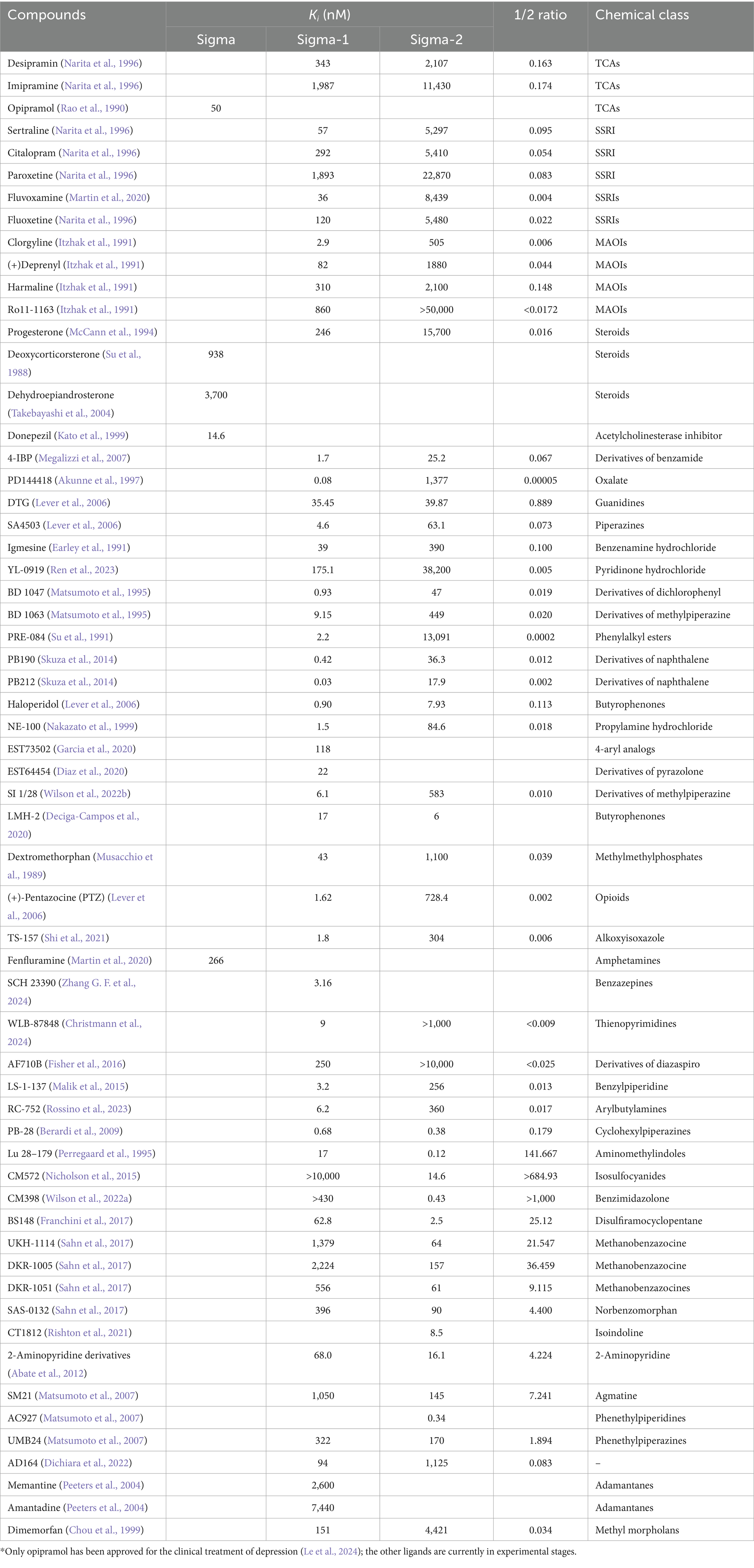
It tunrs out that Sigma receptors modulate glutamatergic dysfunction in depression, and glutamate, being excitatory, well, you can. make your assumptions from there.
https://www.frontiersin.org/journals/neuroscience/articles/1...
It seems the main function of the Sigma-1 receptor is Calcium release. And calcium ion channels are one of the most studies ion channels in mood disorders. By increasing calcium release you increase neuronal activity, hence, the uplifted mood.
It is too bad that the sigma-1 receptor is just starting to be studied and there is limited evidence of how omega-3 and Vitamin D effect it. But I do know that Vitamin D has a huge effect on SLC6A4 (SERT).
https://www.nature.com/articles/s41598-020-79388-7
I have Schizoaffective Disorder Bipolar Type (disabled) and have been on no less than 14 types of meds. I knwo how they work better than my psychiatrists, which I why I no longer take them. I also know my genetics which gave me clues to what is happening in my body. Now I eat a mostly seafood diet and my needs for meds has mostly vanished. I am still an odd old fellow, but at least I am not ranting in the streets or trying to kill myself anymore.
Meds saved my life, but a diet high in Omega 3, D, and a bunch of other things has removed so much suffering from my life, more than any medication has.
(Also, if you want to get into the weeds of depression, you might wat to look at ATP and depression https://onlinelibrary.wiley.com/doi/full/10.1111/cns.14536)
https://www.researchgate.net/publication/353319033/figure/fi...

Many people I know, when tested, were low in B6. That is more important to me than niacin.
Vitamin B6 in p5p form is cheap and widely available alternative.
I had a friend on SSRIs not tell us they were on them when they hit a DMT vape pen at a party years ago and they got serotonin syndrome. Had I known I would have warned them not to.
I am not so convinced. Perhaps your case was simpler, but people can feel chronic depression. They may take some drugs to modify that, but what if the external factors won't change? You can see this issue for some people who have a disease that only gets progressively worse. I think we can not unify all this as "dislike on antidepressants" as a one-size-fits-all formula.
Took a while longer to get the dose right so that my anxiety also mostly disappeared, but the difference in quality of life it made for me is hard to put into words.
There are some forms of depression that you cannot think or act your way out of. If you haven’t experienced that, I promise that you do not understand what it is like. You cannot really understand unless you have experienced it. Your opinion on it is irrelevant, and frequently offensive.
The same is true for people that say that antidepressants are mostly placebo. They are not. When people say that antidepressants saved their life, they aren’t joking or exaggerating in the least.
Yes, I understand that other therapies are also effective, and that some people are non-responsive to some drugs.
Keep your pet theories to yourself if you are not a subject matter expert or someone who has experienced it first hand.
In fairness, anti-depressants are a lot of drugs. The article gives a list. 23 of them seemed to be better than placebo, 19 of them were much less clear.
> When people say that antidepressants saved their life, they aren’t joking or exaggerating in the least.
Placebos can also save people's lives.
I'm not saying it's the same thing as depression or regular anxiety, but it gave me tremendous perspective on how bad these conditions can be and you just don't have the ability to "shake it off" when things are unbalanced.
Maybe that's how my wife feels when she's off the meds. Shit. Now imagine having a douchebag by your side second-guessing your pain. Never again.
The good thing is it isn’t necessary to know how someone else feels to have compassion.:)
It’s enough to accept you don’t understand the other person‘s thought process and stop trying to tell them what they are thinking. You don’t need to fix things, you just need to listen and not make them justify or explain themselves to you.
Doing nothing is better than doing the wrong thing.
This comes from my own personal experience. I can’t relate to people on an emotional level. Every relationship is processed with deliberate, logical action. If I love a friend, I need to figure out what would change their internal state so they can experience that love.
From the outside, this looks like I can relate on an emotional level.
Huge quality of life improvement. 10/10 would medicate again.
B: When people say that antidepressants saved their life, they aren’t joking or exaggerating in the least.
Are placebos unable to save lives?
Not claiming antidepressants are or are not mostly placebo, and don't mean to minimize the pain of depression in anyway. I just don't think whether or not they saved a person's life is an indication either way. The placebo effect is real, right? As in the subject actually gets better after taking it.
> Keep your pet theories to yourself if you are not a subject matter expert or someone who has experienced it first hand.
This is the internet, friend. I wish you the best, but maybe don't put too much hope into that one. I think you'll have better luck cultivating the ability to be comfortable having your own beliefs while others have different (possibly wrong!) ones.
Placebo-controlled RCTs show that some people react well to antidepressants with major variation from person to person.
I'm not disputing that someone had the genuine experience of antidepressants saving their life. I'm asking if that precludes antidepressants acting as a placebo.
In other words both things can be true: antidepressants saved someone's life and antidepressants can act as placebo (even in the case where they saved someone's life). And notice I'm saying "can be true". I'm not saying they are true, cause I have no idea.
This is a logic question, not some kind of moral attack.
A particular point he makes about depression in it is insightful: Although depression is conventionally viewed as a medical illness, research studies indicate that genetic influences appear to account for only about 16% of depression. For many individuals, life influences appear to be the most important causes.
My point is that a lot of the commenters here are saying some variation of "have you tried being happier?" and "these drugs do nothing". Both of which are absurd to the point of offensiveness to people who have gone through it, in the same way that it would be absurd (and offensive) to claim that these drugs have no possible downsides and a negative reaction is placebo.
I'm sure they have their problems too on occasion, but for me the decision to start taking Escitalopram was one of the best things I've ever done.
The side effects were totally negligible compared to the benefits.
I've stopped taking it a year ago or so and... it's basically cured me.
I'm not saying antidepressant are a literal pharmaceutical cure for depression, but in my case it simply put me in a position mentally to change habits and patterns of thinking in a sustainable way.
My only regret is not doing this 10 years earlier; the poor reputation contributed to that.
I had an old gf receive two different drugs each with terrible side effects. To me it looked as poison.
I decided that I would rather hurt myself myself than fuck with my brain chemistry this way.
During the dark northern Winters I lack vitamin D (your doctor can measure this using a blood test). The symptoms are some physical issues and probably something that can be described as light depression which goes away if I remember to take the vitamins.
We are all different. Some people might need anti-depressants. I just need some vitamins.
(Roughly equivalent to Lexapro 15mg/day; Saffron 30 mg/day if Crocin+Safranal properly standardized)
I'm a small, generally sensitive guy so ymmv...
One meta-analysis showed an antidepressant effect size around 1.2-1.6 , and unlike pharmaceutical antidepressants, saffron with standardized crocin has no well-documented or commonly reported withdrawal syndrome in clinical studies or reviews.
So I ended up spending $300 on LED bulbs, both corn bulbs and 200W equivalent, bought some 7-Way splitters for my ceiling fan so it’s holding 28 light bulbs (people have joked I have a “biblically accurate ceiling fan” because it’s so bizarre looking, like a weird glowing biblical angel), and get about 10,000 lux in my home office now. As a bonus, I don’t have to run a space heater in my home office (since I only need it in winter, I’d have been using that electricity anyway via a space heater). Solved the issue completely for me.
I feel like I speedrun Maslow's hierarchy of needs.
No anhedonia so far this year and my creative output is at all-time high. Hope that helps someone get over their own biases about prescriptions.
I finally went and got diagnosed at age 46 for what had been an childhood-onset issue in retrospect. All the signs were there: inability to start work until enough challenge or novelty or a state of crisis had come about, etc. When I spoke to friends about considering treatment, they said they thought of me as a hyperfocus kind of person. But they didn't see how many support systems I had put in place to function normally, how I saw others around me just doing things while I had to work myself up to start and then keep checking and double-checking for the silly inattentive mistakes I knew from experience I would keep making.
I've had a meditation practice for a long time and it has helped with anxiety but it hasn't really helped with getting started on tasks, especially those perceived as boring. I even had to psych myself up to sit down and start meditating, even though I knew I would enjoy it.
I didn't know until a year or two ago that non-stimulant medication existed to treat ADHD. I always thought it was only Adderall and the like, and I couldn't risk anything that would ramp my anxiety up, or take additional treatment for the anxiety with SSRIs because I have severe hemophilia and any additional risk of bleeding from SSRIs was an untenable proposition.
After sitting on the idea for some time and just hoping that I could fix it with more meditation, I finally decided to see a psychiatrist. The doctor suggested Atomoxetine, but said it doesn't work for most people and even then takes 3-4 weeks to take full effect. I started on the absurdly low dose of 10mg/day for the first month to be sure it wouldn't cause additional bleeds. By day 3 I could see a huge improvement in my working memory and ability to perform tasks. It gave me insomnia for a bit but I would wake up at 3 AM, sit down happily to work and write the best code I've written in years. I could not believe the difference it made. There were quite a few side effects initially but I was willing to put up with them because of how smoothly my brain was functioning. I became a nicer person to deal with. I felt this sense of possibility and freedom that I haven't felt since my 20s. My only regret is not having done this sooner.
So yeah, please don't avoid medication based on internet reading.
More recently I was on a vacation where I took mushrooms and had a nice trip. Two days later at work I felt very relaxed driving in and sat at my desk BUT something was wrong, my head was dead quiet (the GP explained this exactly like I would.) So quiet that for a second I had a bit of panic as I thought something was wrong. Then something wonderful happened: I realized I was able to just do my work. There was no stress, no worry, no nothing. Just a calm quiet confidence to get the job done. Best day of my life.
After that I called a mental health center and connected with an ADHD specialist who has been working with me. I am also on Atomoxetine myself and while it has not brought me back to that zen head space it brings me close enough. My only gripe is at a higher dose it gives me sensations in my head. However, I learned that eating a proper breakfast helps a lot as I was taking it on a near empty stomach. Overall my life has been slowly improving and I feel more confident at work.
> So yeah, please don't avoid medication based on internet reading.
This - 100%
Yes, you did. Had the same medication and got tremors and stiffness so bad I thought I had early-onset Parkinson. Could hardly unlock the door without dropping the keys five or six times. Fortunately, it ceased when I stopped the SSRI.
I do wonder if being highly functional and feeling capable is normal though, like as a species it seems almost dysfunctional to happily plow through 8 hour workdays and bills and appointments and all the little bureaucracies we have to navigate. Sometimes a little voice screams "Run to the woods!" when I sit down and look at a long todo list for the day, but with Adderall I can generate some semblance of enjoyment from ticking off the boxes.
Granted our world is what it is, and we are mostly helpless to enact large changes. Finding some kind of peace with reality is probably better than bashing your head against why you don't fit into it well.
I feel like doing those three things would make me feel like reheated cat shit, regardless of the weather outside.
And I hate strict rules and rituals, I love chaos. So that also gets me down. I often stay up till 6am (the parties I mentioned above only start at midnight)
So yah it might make some people better but for me the times I break it are the ones that are exceptionally good.
SSRIs are known to induce a
https://en.wikipedia.org/wiki/Mixed_affective_state
I seriously messed up my life early on by not being able to recognize the difference between being happy and manic.
One of those manic symptoms was often feeling like crying out of joy, and another was feeling way more cognitively capable that I was.
When you're depressed, you're in a hole that's too deep to get out of.
The SSRI basically shovels stuff from the top of the hole to the bottom of the hole so your head is above ground level. You are still in the hole though and you need to climb out of it.
For the past 15-20 years, november thru february are basically a writeoff due for me due to seasonal affective disorder. Cold showers, exercise, no alcohol, strict sleeping rituals. Vitamin d. I can still sleep 11 hours and feel like reheated cat shit.
Enter citalopram. "It will take up to six weeks to dial in" they said. Within four days I felt like the inside of my head was designed by Apple in their glory days. My mind became an orderly, well lit, tastefully designed space... instead of a dimly lit crack den. I'm more emotionally available, no longer tired, less cranky. I felt cozy. I could cry with joy because I could finally understand emotionally why people like the Christmas season.
I won the SSRI lottery I guess, the side effect are sweaty feet, vivid dreams and a dry mouth. That's all.
This just goes to show that for me, they're extremely effective.