About half of the tech people I know have moved out. Of those about half have left permanently, the other half are on the fence depending on long term WFH ability / if the city is able to get the quality of life issues under control / plus a lot of complaints about taxes.
-In my 6 unit building in Nob Hill (5 of which are owner occupied). 3 units including myself have moved out permanently. 1x to Austin. 1x to Palm Springs. 1x to East Bay. -5 of my 6 best friends in rent controlled units have moved out. Mostly to other cities in California. In 10 years living in SF I've never seen people willingly give up rent controlled units like this. -Other friends that were looking to move to SF that have cancelled those plans. In particular employees at large companies that were impacted by layoffs (Uber).
Whether something is too expensive is not just a function of whether you can afford it. It’s a question of whether it’s worth it at the price being offered. You make make that same conflicting point.
The affluent would simply be first movers in this type of situation as many do not need to time their exits with their leases ending. The cash poor, yet high income tech workers will be the next mass exodus.
If you think SF is a shell of a city now, just wait till 6 months from now.
If you consider a post-covid world 5 years from now, do you think that SF with it's museums, bars, restaurants, and proximity to nature will be an unattractive place to live?
Do you think that remote-first/remote-only companies where the majority of employees are outside of the bay area will be as competitive with startups which follow a more traditional model in silicon valley?
Both are things I wouldn't bet on. This is a blip. It could be a major blip, but it's a blip nonetheless and those who are betting in the complete other direction are likely to get burned.
The San Francisco of today is very different from 10 or 20 years ago, and will be very different 10 years from now. This is recoverable, sure, but its not guaranteed, and its absolutely a change of course for this city and others.
The outdoor dining has been a great addition and it looks like it might become permanent [1], which would be a big plus for the city.
There's also a lot more people biking now and I'm hopeful that it will help shape future legislation to make the city even more bike friendly. (I went to 4 different bike shops around me and they were all sold out).
https://ny.eater.com/2020/8/3/21352532/outdoor-dining-extend...
I'm going to predict that this will not happen. More specifically, that it will be unusual in general for rents or prices anywhere to drop any more than 10%.
There's something odd going on and my best guess is that there are (a) accounting/tax practices that provide incentives for vacancy with certain nominal values and (b) real estate markets are now driven more by massive pools of capital trying to soak up opportunities than they are by demand on short-to-mid-term horizons.
But I don't know enough to say for certain and explain how, and I'm hoping that someone can tell me why/how I'm stupid.
It's conceivably better for major real-estate holders to rent the land out at their preferred rate one or two months in a year, and leave it unoccupied otherwise, than accept reduced rates. The former gives a fig leaf for rental value, which props up the land value, which enables refinance. The latter admits that rental value has dropped, which would lower the land value, which would cause refinancing to fail.
Kind of feels like the cliché "make it up in volume" when you're losing money on each transaction.
It's not sustainable indefinitely, but it can go on for some time. And if the economy picks up, then all is right again.
Oh yeah, take a look at the Georgists and The One Tax where land is the only thing taxed since it’s the only finite resource. It’s not impossible that we end up in a situation where holding land just to hold your wealth isn’t going to exist anymore.
A permanent drop in demand because more people are working from home could crash the market.
If only a handful of fools do, you will get economic devastation sooner or later, because you remove the feedbacks of capitalism and hand the reins to monkeys that just happen to have access to the money printer.
Do bikes have the largest amount of unmentioned externalities of any form of transport?
You are just joking, right? You’re exaggerating by an order of magnitude, you can literally fit 10 bikes in the space of a small car, on the road and when parked. You think bike maintenance is the same effort as car maintenance? I’m baffled by this claim, and I maintain several bikes and several cars. Cars are much harder, much more expensive to maintain, and require far more resources. Bike maintenance is something most riders can do on their own, while car maintenance is something people take to a shop.
> Do bikes have the largest amount of unmentioned externalities of any form of transport?
What on earth are you referring to? Are you comparing a few sidewalks and bike lanes in select metro areas to the 3 million miles of paved roads in the US? Are you suggesting the 1-2 ounces of oil I use on my bike chain per year is somehow worse than the average 2 metric tons of gas and oil used by the average car in a year? Are you including pollution in your list of externalities? Are you including accidents and fatalities in your calculation? I’m confused, I really can’t think of a single unmentioned externality where bikes don’t compare favorably to cars by a very wide margin.
So, it seems like the answer is a really clear and obvious no, there are other forms of transport with externalities so much larger than bikes that it makes the mere suggestion seem pretty absurd. Examples include but aren’t limited to: cars, airplanes, and cargo boats.
You are just joking, right? A Fiat 500 is 3.5 meters long and 1.6 meters wide. No way can you "literally" fit 10 bikes being ridden on the road in that space - or even 3. Parked, you might be able to fit 3 if they're staggered, but if you're going to tell me you can double-decker it, you won't also fit the stairs/ramp/elevator mechanism in that space as well.
> You think bike maintenance is the same effort as car maintenance?
You take it to a shop, drop it off, and leave it there, then get it back later? Yes, that sounds about the same effort. Except a car usually needs servicing and is still drivable, a bike is probably punctured or chain snapped and unusable, making it more hassle, and if you decide that means you have to do it yourself, more effort. Everyone remember how fun it is to take a bike wheel off and run it through the bathtub to identify the location of a puncture, yes? Never spent that much effort on taking my car to a garage.
> Bike maintenance is something most riders can do on their own, while car maintenance is something people take to a shop.
You've gone from "baffled by this claim" to "most people spend more effort on bike maintenance than car maintenance" in the space of a paragraph. No comment.
> What on earth are you referring to?
I'm referring to the things I said. If you didn't have paved roads made for cars, you would need to build them for bikes. You wouldn't need to build them for walking. Bikers never ever mention this, it's a kind of parasitism on the car infrastructure - a cost that bikers don't consider. If there were no cars, but we needed to upkeep hundreds of miles of tarmac roads, bikes would need to be taxed hugely. It's an externality in the sense that bikes need it, but aren't paying (directly) for it, and are offloading the cost onto car drivers (who currently need it more and do more damage to it).
> Are you including pollution in your list of externalities?
No I'm not including the cost of container shipping enough bikes for 500,000 people from China, or the cost of digging up the iron ore and making the steel and carbon fibre to build them, or the trash heaps where hundreds of thousands of bikes rot. Good point though, neither do bike enthusiasts.
> Are you including accidents and fatalities in your calculation?
The kind where a big heavy fast moving metal lump collides with a soft squidgy easily damaged slow-moving pedestrian? I'm not including those either, but I am against bikes being allowed anywhere pedestrians are, so let's add that in as well.
> I’m confused, I really can’t think of a single unmentioned externality where bikes don’t compare favorably to cars by a very wide margin.
Neither can I. That's a totally cherry-picked comparison because it's like saying "being stabbed compares favourably to being shot by a very wide margin". There's no unmentioned externality where walking doesn't compare favourably to bikes by a very wide margin - in a place which is designed and built for humans walking -- which all places should be because humans are more important than vehicles. Walking needs less tarmac, less machinery, less maintenance, less money, is more accessible to people of more abilities, takes less parking space, less infrastructure, causes fewer accidents, places fewer restrictions on clothing, has lower environmental cost, lower pollution, less waste, doesn't need helmets and high-visibility clothing and bike-locks, doesn't need insurance and breakdown recovery and loan-cars...
> So, it seems like the answer is a really clear and obvious no, there are other forms of transport with externalities so much larger than bikes that it makes the mere suggestion seem pretty absurd.
Cars pay for roads in terms of fuel taxes and vehicle taxes. Bikes don't pay for either. Cars often pay for car parks, bikes often use sidewalk, or car parks. Cars pay for accidents with mandatory insurance, bike riders are uninsured. That other things are worse was not my point, my point was that bikers gloss over needing roads and the cost of that, car drivers don't.
It’s just us here; acting like a bike is soooo hard to deal with isn’t going to convince me, since I know how much effort bike maintenance takes and how much car maintenance takes. I know from experience that cars are the bigger drain on time and money by many multiples. Pretending otherwise is just ensuring I have more reasons to discount what you’re saying.
> A Fiat 500 is 3.5 meters long and 1.6 meters wide. No way can you “literally” fit 10 bikes being ridden on the road in that space - or even 3. Parked, you might be able to fit 3.
Standard bike rack spacing is 12-16 inches. Mine is 14 and fits mountain bikes side by side. I’ll give you a generous 15 inches, in which you can comfortably fit 8 bikes in 3.5 meters. 1.6 meters wide is a tad narrow, but many full size adult bikes come in at just over 1.7 meters long. You ungenerously picked one of the smallest cars ever made to attempt to prove your point, but I’m happy to concede that you were wrong by 8x rather than 10x. If you picked a Honda Fit, which is on the small side of small cars, then 10 bikes actually do fit in it’s 162 inch length.
Lanes aren’t 1.6 meters wide, they are wider, and bikes don’t need to be spaced out as much as cars. The throughput can be much higher than 10x due to slower speeds and the higher density in both directions, sideways and front to back.
It seems like you decided the outcome before you thought about this very carefully.
> No, I’m not including the cost of container shipping ...
There’s a lot of snark in your answer, but you fail to acknowledge that there’s no winning the comparison against cars, which is what I was talking about. Whatever the costs of shipping and materials, cars are 20-40x the mass of bikes.
Hey, I agree with you that walking is cheaper than bikes in all ways, and I surely advocate walking. I don’t get your rage over bikes though, they’re a huge improvement over cars, and they are not otherwise causing problems relative to walking.
> my point was that bikers gloss over needing roads and the cost of that, car drivers don't.
One tiny little nit you seem to have overlooked: walkers need and use sidewalks too, so for the one “externality” you’re considering (while selectively ignoring the larger and more important ones like pollution, oil & gas, and accidents) pavement is an externality for walking too. You could claim walkers don’t need sidewalks, but bikes don’t really need sidewalks either, plenty of bikes will ride on dirt paths comfortably.
I'm going to back-pedal just a little bit. Pun intended :P I love walking as a means of transport, but...
Biking is the most energy-efficient form of transportation by a long way. https://www.exploratorium.edu/cycling/humanpower1.html#:~:te....
That answers a bunch of the questions asked in this thread. Another relevant answer to why biking is useful is that it extends the range of accessible daily activities around 10x compared to walking. You can bike further than you can walk in a given period of time.
So one of those hidden externalities you like to account for @jodrellblank, of walking vs biking is that walkers require more food consumption to sustain a daily commute of a given distance compared to bikers commuting the same distance.
Biking is the most energy-efficient form of transportation, if you ignore the fact that to get such a result you have to make bikes and make steamrollers and concrete mixers and tarmac and roads first.
> Another relevant answer to why biking is useful is that it extends the range of accessible daily activities around 10x compared to walking. You can bike further than you can walk in a given period of time.
But not 10x compared to walking + bus or walking + taxi or walking + train, and not without added inconvenience of biking; and also not if you've built your environment so plenty of daily activities people want are close enough to comfortably walk to.
> So one of those hidden externalities you like to account for @jodrellblank, of walking vs biking is that walkers require more food consumption to sustain a daily commute of a given distance compared to bikers commuting the same distance.
And walkers require paying more taxes for the infrastructure to subsidise bikers.
Buses, taxis and trains are even less efficient. You’re arguing that we should use motorized vehicles instead of bikes??
> walkers require paying more takes for the infrastructure to subsidise bikers
Bullshit. Nobody is paying walking taxes. You are enjoying the very same “externality”.
Are you going to bike 100 miles to the next city? Are you going to bike to work with a broken ankle? Are you going to bike furniture home from the furniture shop? Are you going to bike everyone's garbage to the dump? Are you going to bike building materials around?
Given that you're going to have motorized things, they should be for optional, occasional use as an assitance for walking people who then don't need a bike or a car.
Because otherwise, you're going to have motorized things, and walking people, and bikes on top, for no particular reason except a bike obsession.
> Bullshit. Nobody is paying walking taxes. You are enjoying the very same “externality”.
? Nobody is paying explicit sidewalk taxes in the same way nobody is paying explicit streetlamp taxes. People are still paying taxes for infrastructure in the environment they live in, and that covers paying for sidewalks.
Yeah, I agree, that's right. The bikers are paying for sidewalks & roads, just like everyone else. You've nicely summed up exactly why bike infrastructure is not being somehow "subsidised" by drivers and walkers.
Despite your wish to call sidewalks your own and not share them, and despite the fact that I agree with you about separating pedestrians from cyclists, sidewalks are multi-use infrastructure that everyone pays for and everyone can use. It doesn't matter that you don't like it, the intent has always included bikes as well as pedestrians and wheelbarrows and dogs and children, among many other uses.
Thus settles the red herring non-issue of externalizing taxes to pay for pavement. It's not a real thing.
Sidewalks predate bikes by roughly 4000 years. https://en.wikipedia.org/wiki/Sidewalk#History
> Despite your wish to call sidewalks your own and not share them
I don't mind sharing them with things moving at walking pace. Dogs, wheelbarrows, ice cream carts, wheelchairs, maybe skateboards.
I no more want to share them with bikes doing 10-15mph than with mopeds doing 10-15mph or sprinting people.
> The bikers are paying for sidewalks & roads, just like everyone else.
Bikers are paying diesel and petrol tax and road vehicle tax? Not in the UK they're not. Pedestrians aren't either. If they're not, that isn't "just like everyone else".
> It doesn't matter that you don't like it
But it does matter that you do like it?
> Fixing a flat takes roughly 5 minutes if you’re slow.
I googled "how long to fix a puncture" (it's a long time since I had to do that) and CyclistResource.com[1] says puncture repair glue takes 5-8 minutes to dry. My proverbial mother is not going to have her puncture fixed in the middle of a pedestrian street in 5 minutes, and when she ends frustrated and with chain oil on her tidy clothes and muddy wet hands with nowhere to wash them and I call her "slow" that will earn me a proverbial slap. Assuming she even knows what quick release is, and can find the tiny inconvenient weight-optimised tyre levers which she's sure are in her bag somewhere under all this stuff she actually cares about. It takes 5 minutes maybe true for a certain kind of bike enthusiast mechanically interested person, I doubt it's true for a majority of the population.
Going to a garage is less effort even if it takes more time. That's usually the trade off - longer, less effort. But even so that's you redirecting to cars away from walking. Nobody has to carry tyre levers and a Nike Air pump to fix even their fancy airwalk trainers, let alone their ordinary tidy going-out shoes.
I'll concede that you can pack more bikes into a parking space than I counted for, but even your estimate of approx 10 bikes per 4 meters means a city like Amsterdam of 800,000 people would need a row of bike parking 80km long just to cover a quarter of its population having a single place to park their bikes. No matter how multistorey that gets, by the time those people can park in many places (at home, work, green park, shopping, entertainment) it's a lot of city space for a benefit of a minority of people. And yes, before you say it, cars are much worse.
> It’s just us here; acting like a bike is soooo hard to deal with isn’t going to convince me, since I know how much effort bike maintenance takes and how much car maintenance takes
I also know how much effort bike maintenance takes, which is not a /lot/ but is more than I can be bothered with for the few situations they have value in. If a journey is short, walking is more convenient. If a journey is long, cars are more convenient. If there's something to carry, cars are more convenient. If there's a destination I need to go inside, walking is more convenient. If there's multiple people to go with, walking or driving are way more convenient. If there's a chance plans will change and I'll get a lift back or we'll meet up with other people, walking and cars are more convenient. Bikes only win out for people who want to ride a bike for the purpose of riding a bike (fun, exercise) or for people who have a short-car-journey distance to travel with little to carry, alone or with another biker, but don't want to use a car (for environmental, cost, or idealism reasons), or a blend of the two (a single digit mile commute they'd rather not drive).
> I don’t get your rage over bikes though, they’re a huge improvement over cars, and they are not otherwise causing problems relative to walking.
They are an improvement over cars. They aren't a huge improvement. Instead of a roof, you have to change your clothes and carry a change of clothes with you. Instead of a trunk you have to arrange your life around the limits of a bike to carry less stuff. Instead of an engine to go any distance comfortably you have to pay attention to distances and hills and how sweaty you are willing to get. Instead of freely wearing what you want, you have to wear clothes suitable for biking. Instead of having a lockable metal storage you have the inconvenience of not having that but still needing to carry bike things (helmet, lock, toolkit). Instead of being comfortbly on a sidewalk as a pedestrian or on a road in a car, you have to be annoyingly (maybe illegally) on a sidewalk or in danger on a road full of cars, or be lucky and go a diversion in the few places there happens to be a bike path.
They're a "huge" improvement over cars only if you take away all the conveniences of a car, and offload those things onto the person while pretending you aren't doing that.
> One tiny little nit you seem to have overlooked: walkers need and use sidewalks too
Walkers should get sidewalks without bikes. If I say you walk at 4mph and bike at 6mph you'll probably tell me you can average 20mph on your bike. If I say bikes don't mesh with people, and are an accident risk, you'll say bikes "use sidewalks too" and point to people sedately biking at 3mph among strolling pedestrians. If you're biking at a speed that's safe /and not annoying/ to pedestrians (i.e. not weaving between people, making them jump out of the way) then you're going slow enough that you're as well off walking. If you're going faster in a way that only a bike can, you shouldn't be on a sidewalk and need a dedicated concrete place to cycle fast.
All 800k people in imaginary Amsterdam pay taxes for sidewalks because all 800k people use them. All drivers pay fuel and road tax, all cars use roads. Bikers don't pay any special tax for roads or bike paths, which means the minority of bikers are subsidised by everyone else. It's not hyperbole, exaggeration, hatred or snark to point out this kind of thing.
> You could claim walkers don’t need sidewalks, but bikes don’t really need sidewalks either, plenty of bikes will ride on dirt paths comfortably.
Leaving a chewed up muddy plowed mess for everyone else to walk on. Walking on cobblestones is easy and comfortable, riding on them needs suspension and arms that don't mind juddering. But what I'm really claiming is that taxing 100% of the people to make sidewalks that 100% of the people use is fine. Taxing motorists for roads which their cars use is fine. Bikes get the benefit of lots of paved roadway, which they approximately need, without explicity paying in any way. If there were only sidewalks bikes would clash with people. If there weren't roadways, bikes would need them to be invented. If my mother needed a full suspension mountain bike to go to church on, she probably wouldn't. If cars vanished, bikes don't provide anything like the income for the upkeep of the roads left behind by cars if cars vanished. If instead you move to a model where bikes need hundreds of km of bike paths weaving through the city seperate from sidewalks, and then you move to a model where bikers are the people who pay for that, bikes will become a lot less desirable.
Even the limited convenience and usefulness bikes have (which is nonzero) is enhanced by leaning on a car-culture and would struggle hard to stand on its own merits.
[1] https://cyclistresource.com/how-long-does-puncture-repair-gl...
I still don’t get your angle whatsoever. Every single thing you claim to want is advanced considerably, and we get closer to walking culture, every single time someone rides a bike instead of a car.
> Any argument which makes bikes better than cars, makes walking better than bikes; you keep ignoring that and diverting back to "bikes are better than cars". Yes bikes are better than cars. Walking is better than bikes
I responded to your comparison between bikes and cars. My argument is that bikes are better than cars. So we are in full agreement. I’m not arguing about walking, I said twice already I’m in favor of walking.
> Walking is better than bikes
That depends entirely on what you mean by “better”. Bikes have a larger range, shorter travel times, and are more efficient. Walking is IMO more pleasant and a slightly safer, but not as functional for traveling more than .5 miles or carrying any cargo with you, even as small as a laptop.
Personally, I think it does a disservice to both bikers and walkers, and to the causes of human designed cities and pollution reduction, to fabricate drama by pitting bikes against walkers as if they're somehow in complete opposition. Bikers and walkers are 99.9% on the same side. I love doing both walking and biking. As a biker, I see people advocating for walking spaces and even bike-free sidewalks as a good thing that helps me. As a walker, I see people asking for bike lanes downtown as a good thing that helps me. You say you don't want bikes on your sidewalk, yet complain about how bike paths are paid for... you do realize that dedicated bike paths get bikes off the sidewalk, right?
> Going to a garage is less effort even if it takes more time.
For someone who brought the concept of externality to this thread, you’re actively trying to externalize time to exaggerate your claims. Cars are more expensive, and money requires time. You can’t count only the travel time to the shop while ignoring the extra time it takes to earn the money to buy & repair your car.
> Walkers should get sidewalks without bikes.
Irrelevant to our discussion, but I happen to agree.
> [in Amsterdam] Bikers don’t pay any special tax for roads or bike paths
This isn’t true, you are making assumptions, making things up. Citizens fund Amsterdam’s bike infrastructure. Not walkers, not drivers. Citizens.
In the city I live in, bike paths are being added by referendum. They are voted on and the funds come from multiple tax sources. I’m paying for the bike infrastructure I enjoy, and the majority of my fellow citizens are asking for improved bike infrastructure.
You are harping up a storm on a complete and total non-issue. Who pays for bike paths is not a major problem anywhere. And if it was a problem, it would be a great problem to have, because it would mean people are biking instead of driving.
A haw haw haw an ad-hom.
> You’re struggling so hard to paint bikes negatively
I'm writing pages of stuff off the top of my head, my biggest "struggle" is how you can't see any of these things exist. I haven't mentioned bike theft (compared to, say, shoe theft), noise pollution of squeaking brakes, people I see around biking while staring at their phones, the fact that we live in a car-world which is to a rough approximation the best possible world for bikes (lots of tarmac, lots of spread out things, low costs) and even then the vast majority of people don't own or regularly use bikes, and almost any other world would make bikes less convenient and more costly, making that worse. Not to mention the way you can leave maps and notes and sunshades and medical kits in your car glove box, but you always need to carry everything away from your bike, not to mention the huge change that sets in if you happen to bike at night and need lights and batteries and reflective clothes for safety, not to mention the extra difficulty of calling someone up to ask for a lift if they have nowhere on their car to put a bike, or leaving your bike out to come back to a wet rained-on saddle, or how cold your hands get held out in front of you, or how wearing a helmet messes up your hair, or how people desire a 'dashcam' experience and have to have it affixed to their helmet.
> I still don’t get your angle whatsoever. Every single thing you claim to want is advanced considerably, and we get closer to walking culture, every single time someone rides a bike instead of a car.
No we don't.
Take the "ungenerously small car" comment and look at the Top Gear clip "Driving in Lucca" - https://www.youtube.com/watch?v=c_eLViH7_YI - the ultracompact cars are the Fiat 500, the Citroen DS3 (~4m long, 1.7m wide) and a Renault Clio also ~4m long 1.7m wide. And look how they barely fit in the streets of a city built for humans. Look as they drive around, how there's no long straight roadways for a bike to get up to speed and make strong use of the vaunted efficiency and ability to cover longer distances more quickly. And if you tried, a chance of a bike popping out of any junction at any time at 10mph would make everything awful for humans who weren't biking.
At 4:30 in the clip there are ~7 bikes visible. That's approximately everywhere you can leave a bike in that scene including in front of some windows on the left. That's 7 people can bike to that street out of a city of ~85k population + tourists. There's no room there for a "small car sized parking for 10 bikes" turned sidways because the "ungenerously small car" takes up the entire human-size space and there wouldn't be room to take the bikes out and barely room to walk past.
What you get from bikes is not "closer to walking", it's "things built around distances too far to walk with the idea that people will bike those distances". Building around walking means building things close enough that nobody needs or wants to bike. It's like saying you get closer to reading by watching a short film.
> My argument is that bikes are better than cars. So we are in full agreement
I'm saying that bikes are /bad/ and you're saying bikes are /good/. That's not full agreement. Even if we both agree that cars are bad, I say bikes are bad for the same reasons, on a smaller scale, and for their own reasons on top.
> As a walker, I see people asking for bike lanes downtown as a good thing that helps me. You say you don't want bikes on your sidewalk, yet complain about how bike paths are paid for... you do realize that dedicated bike paths get bikes off the sidewalk, right?
... you're going to terrorise walkers into paying for bike lanes for you to use, so you don't have to pay for them? You do realize that doesn't sound nice or friendly, or what someone on "the same side" would say, right?
> For someone who brought the concept of externality to this thread, you’re actively trying to externalize time to exaggerate your claims. Cars are more expensive, and money requires time. You can’t count only the travel time to the shop while ignoring the extra time it takes to earn the money to buy & repair your car.
Me: cars have costs. bikes have costs.
You all: Why can't you see that cars have higer costs?
Me: I can see that. Why can't you see bikes have costs at all?
You: I don't understand how you can ignore the costs of cars are so big?
Me: I'm agree the costs of cars are high. Look at the downsides of bikes.
You: But her car emails!
Me: Stop focusing on cars. Bike costs. Annoying. Inconvenient.
You: How can you ignore the cost of cars like this!?
Hello? I know cars have high costs! I'm not /denying that/. I'm not interested in that because /I'm not supporting everyone-has-a-car-world/. I'm supporting nobody-needs-a-bike-or-car world specifically against the alternative most-people-need-a-bike-world.
> This isn’t true, you are making assumptions, making things up. Citizens fund Amsterdam’s bike infrastructure. Not walkers, not drivers. Citizens.
If everyone payes the same tax, that's another way of saying bikers dont' pay any special tax. Which is what I said and you said is made up, then said the same thing. ???
> the majority of my fellow citizens are asking for improved bike infrastructure.
Because the majority (>50%) of them want to use it? Or because they are willing to suffer paying for it to get you off the roads and sidewalks because you're annoying both pedestrians and drivers? Cycling England says there are ~160,000 bikes crossing London every day, but Transport for London says there are 2,600,000 cars registered in London.
Cycling England says "n 2018, cycling accounted for 1.7% of all trips". That's 99.3% of citizen-trips on foot and in cars and public transport "funding" 1.7% of citizen trips.
"England: 42% of people aged 5+ own or have access to a bicycle" yet "80.9% cycle less than once per month or never".
https://www.cyclinguk.org/statistics
> You are harping up a storm
A storm full of points you're completely glossing over in favour of ad-homs and diverting the talk about cars instead.
> Who pays for bike paths is not a major problem anywhere
Did I say it was a major problem? I said it was an example of something bike enthusiasts don't mention. In England 2% of journeys are by bike. That leaves "Citizens" paying for road and pavement usage for 98% of journeys and also paying bike path costs for some subset of 2% of journeys.
> And if it was a problem, it would be a great problem to have, because it would mean people are biking instead of driving.
That would be bad because you'd have a world built around distances too far to walk, far enough to want to drive, but unable to drive. What would get 80% of people to bike those distances in lieu of cars is most likely motorized bikes.
> and diverting the talk about cars instead.
You keep saying this over and over and over, yet I keep pointing out consistently that I'm primarily focused on bikes vs cars, and primarily responding to your comment here, which compared bikes to cars, and didn't even mention walking. https://news.ycombinator.com/item?id=24186001 You somehow don't even see you're the one moving the goal post.
There is an element of social unfairness where people need frequent use of tens of thousands of dollars of car to live a first-class citizen life, and doing without makes people second-class citizens in many ways. If we step away from cars (and for the moment, motorbikes and mopeds and so on), there are not many choices left, they boil down to:
1) Keep the world the same, solely switch cars for bikes.
2) Rebuild and rezone smaller and denser, but stop at bike distances.
3) Rebuild and rezone smaller and denser, to walking distances. Walking distances have to be very dense because people walk slowly.
The first is unworkable - 2% of journeys done on bikes today is not going to boost to 90%+ journeys done on bikes just by taking the cars away. The distances in the world today are built for cars.
The second has all the costs of cars but on a smaller scale. It has all the costs of rebuilding and rezoning. It has all the social unfairness of still needing a personal transportation device. And on top of that it has all the problems of bikes that I've been listing because they're not very good compared to cars.
The third, done well, has the massive advantages that you don't need a vehicle and get more money in your pocket. The cost of having to use walking effort instead of driving is offset by the fact that you don't have to walk far. The disadvantages of not having a vehicle are traded off with the advantages of not needing a vehicle. More people get a first-class experience of life.
The first is cheap but it won't work. People need cars now because everything is so far apart and it was built far apart because everyone else has cars. The second and third are not going to happen because rebuilding is expensive and people don't want to give up their cars. But if they did happen, the second is a chance to make hundreds of millions of people's lives simpler, cheaper, easier, less hassle, and lower global resource use, not done, stopped short of that, deliberately to make people have to use bikes just for the sake of people using bikes. It's a /tragedy/.
Even if the third happened perfectly, that wouldn't stop you from riding your bike to work. What it would mean is you wouldn't have to. Most people wouldn't have to, and wouldn't. If the second happened, it would mean most people couldn't avoid riding a bike to work because work was deliberately zoned too far to walk to prop up bike use.
> yet I keep pointing out consistently that I'm primarily focused on bikes vs cars
I'm primarily focused on humans vs vehicles. Bikes and cars both go on the vehicle side. I criticised biking to work, I have kept criticising biking in every reply, that's not moving goalposts unless you think I was cricitising bikes in favour of cars - I wasn't, I was just criticising bikes. Like the parent three posts to that one is "There's also a lot more people biking now and I'm hopeful that it will help shape future legislation to make the city even more bike friendly" - why? Why hope to make legislation to make the city more bike friendly instead of hoping to make the city rezone so people can live and work close enough that they don't need vehicles? "I want to see more bikes" why do you?
A small car world would be 100% -> 60% resource reduction. At reasonable scale, bikes are at least a 100% -> 10% reduction in all mentioned 'externalities' or should we say resource use, or 10x capacity for same resources, except for road size at maybe 3x, but still more than 10x on cost.
Public transit would grow (no need to fit all cyclists), but that should actually be a net benefit.
To comprehend the difference in scale, view images here [1]. Half as many cars wouldn't fit, even if they covered every cm of the image.
[1] https://biketoeverything.com/2018/12/18/bicycle-infrastructu...
You're missing the part I replied to which was about bikes being usable 11 months of the year. If you need all the car infrastructure for 1 month, plus the bike infrastructure, that makes it overall worse, not better.
But discard that, if biking is a 60% reduction, then a walking+train world would be way more.
Your link talks of a train station building a 12,500 bike-parking garage. For comparison the busiest train station in the UK (Waterloo) has 250,000 people using it every day. Note that the pictured bike parking in Amsterdam takes up the space of two of the large multistorey hotels next to it, just to store metal, but pushes actual walking humans two hotel distances further away from their destination just to walk past unused metal storage.
Bike parking, like car parking, is a non-place in the sense of https://newworldeconomics.com//place-and-non-place/ it's not somewhere anyone wants to go, or a place where anything happens. Scale that bike parking up to 100,000 people and it would be an enormous amount of physical city-center non-place. Now count that you have to park those bikes at both ends of every journey - bike parking at the supermarket, at the clothes shops, at the pubs, at the apartment buildings - and instead of a small, dense, walkable city center, you're now measuring the total area devoted to non-place metal storage in square kilometers, and inconveniencing everyone with kilometers more walking every week just to cross the distances taken up by mega bike park bloat.
This picture is Shinjuku in Tokyo, the world's most populated city, near the world's busiest train station: https://newworldeconomics.com/wp-content/uploads/2017/01/shi... - can you imagine that street being as pleasant with 2,000 bikes barelling down it at 2x walking speed and every one of those eateries having 5-20 bike parking outside?
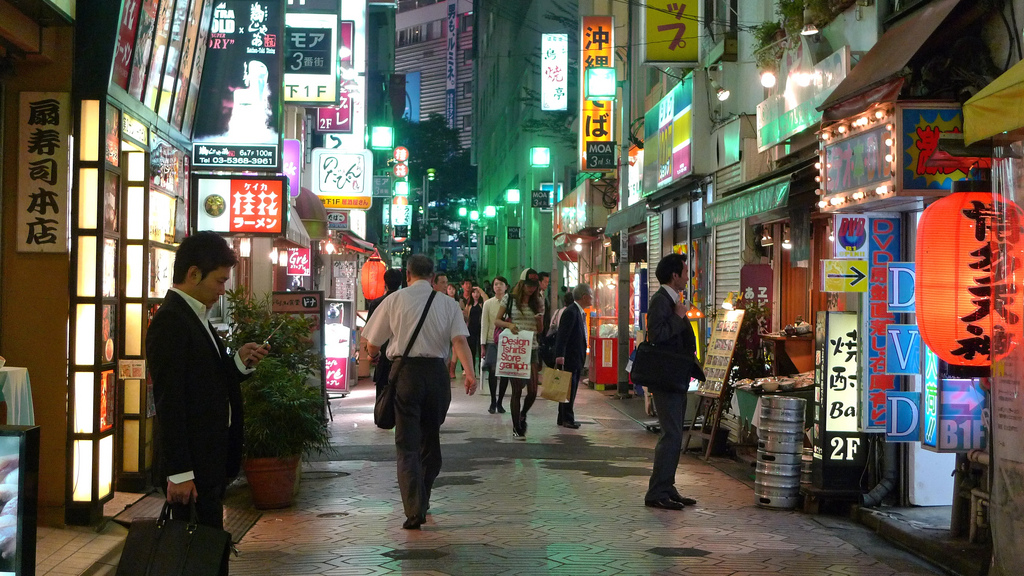
And there's no chance those 12,500 bikes would fit on the trains, how many bikes fit on a passenger train, maybe 15 or so? Bike+train means most people can only bike on one side of any train journey.
> Public transit would grow (no need to fit all cyclists), but that should actually be a net benefit.
If public transit is growing, more people will be able to not-need bikes.
> To comprehend the difference in scale, view images here [1].
Or you, view images here: https://newworldeconomics.com/what-a-real-train-system-looks... and comparisons here https://newworldeconomics.com/the-problem-with-bicycles/
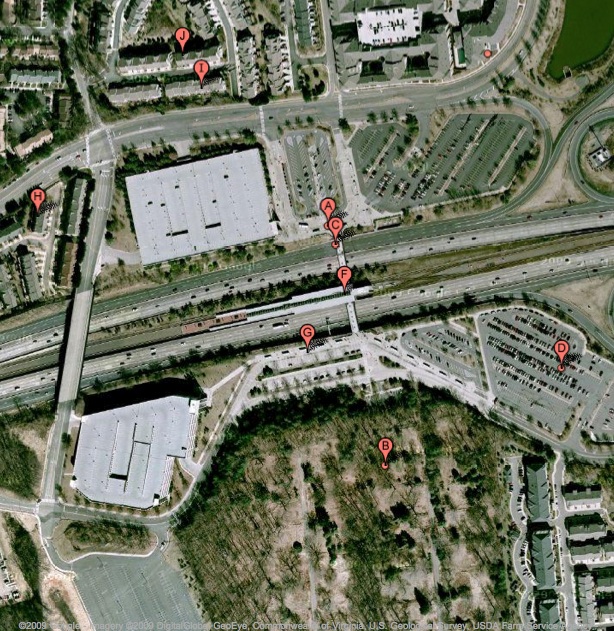
e.g. [1] "The typical U.S. solution is to surround the train station with acres and acres of free parking.[...] There are 157 acres of land in this photo. When you step off the train, you have immediate walking access to 157 acres of /nothing/"
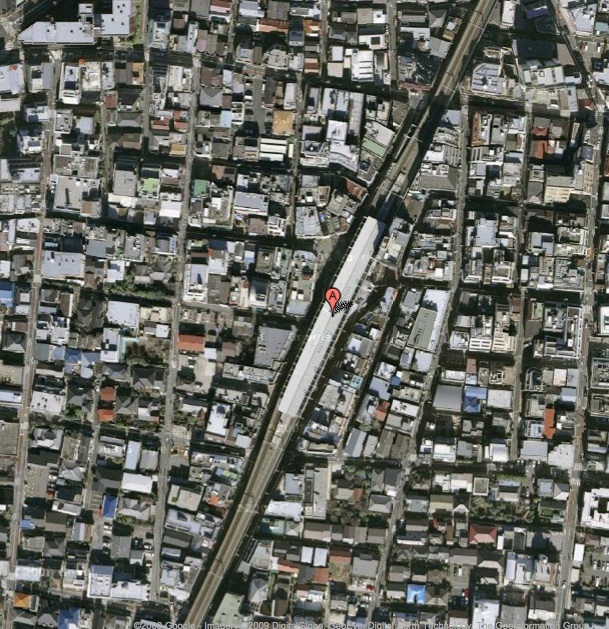
and [2] "The better solution is to surround the station with all the highest-value property. All the best offices, stores and restaurants are as close to the train station as possible, so we can walk there from the station, and where there is the most pedestrian traffic. Plus, you also try to put as many apartment buildings there as you can, so you can easily walk to the station in less than ten minutes."
"if you want people to be able to live without automobiles, you have to make it easy to get from the train station to wherever you want to go on foot. This means you put all the good stuff right up against the train station — even build it into the train station itself if possible. When you step out of the train station, you want to land right in a wonderful pedestrian Traditional City environment, not a parking lot wasteland."
When you switch a "large" surround of car parking for a "large" surround of bike parking, that doesn't fix anything. I put "large" in quotes because the measure is not abstract meters, dollars, or kilos of concrete, the measure is human size and human footsteps - walking past 12,000 bikes is 90% of people walking further for no benefit, while the bike owners also walk further for a small benefit of part of a journey, and puts desirable city space to use by metal instead of humans.
[1] https://newworldeconomics.com/wp-content/uploads/2009/12/vie...
[2] https://newworldeconomics.com/wp-content/uploads/2009/12/gak...
As I emphasized, cars -> bikes is not 100 -> 60, but 100 -> 10. Meaning not 1.5x nor 2.5x but 10x density. A moderately priced double-decker staggered height bicycle parking comfortably fits 20+ bikes in the place of a single car.
The only places that require comparatively large bicycle parking areas are large transport hubs, and in the example, the added distance for pedestrians is less than going between platforms, if any at all.
In a typical not-overly-dense places, bike travel is technically faster than foot if you're going more than about 50m + about 120% of distance to parking (if not along the way).
> U.S. solution .. 157 acres of free parking
That is truly foolish, and would fit over a million bicycles even without racks.
Everything requires comparatively large bicycle parking areas. Here https://newworldeconomics.com/wp-content/uploads/2017/01/osa... is perhaps 5-10% of the visitors bike parking, making the street 30-40% blocked and 30-40% wider for everyone.

Here https://newworldeconomics.com/wp-content/uploads/2017/01/gak... are maybe 10-20 bikes clogging up the path for thousands of people.

> I was talking about cars -> bicycles. Densest cities are best served on foot
Right, so if you're redesigning smaller and denser, why on earth would you build so everyone needs bikes, instead of building so everyone doesn't?
And if you're not redesigning smaller, and distances are still car-suburb distances, they're still too far for bikes for most people and most journeys. You might have to do a 20 mile round trip to get into Houston center and back, for example, that's 1.5-2hrs biking. Way outside what you could expect most people to want to do regularly compared to say a 15 minute walk.
45k people live in https://newworldeconomics.com/wp-content/uploads/2017/01/gak... this photo with a ~10 minute walk to all of those places including a train station with lots of regular large trains.

> The only places that require comparatively large bicycle parking areas
All bicycle parking areas are comparatively large for the people who don't have bikes. "The space of a single car" is ~3 meters. You only need 30 of those to push your walking commute, trip to the shops, visit to your friends, out by +1km and +2km after a round trip. Building for the 10% of bikers compared to the 90% of non-bikers is insanity.
> That is truly foolish, and would fit over a million bicycles even without racks.
If it did, it would still be 157 acres of non-place nobody wants to go to, spend time in, and resent having to get to the other side of. The foolishness is having that much inhuman space dedicated to metal storage, not that it's dedicated to fossil fuelled vehicles instead of pedal powered vehicles.
In a city built small enough to walk, bicycles are unwanted and unneeded extra hassle, and when you occasionally do have to walk a couple of extra miles it's through a vibrant, busy, maybe even beautiful, human space not concrete void.
"It should be obvious that it is better to not need a bike than to need one. [...] we should not think about bikes-instead-of-cars, but rather getting over this unhealthy fixation on My Personal Transportation Device"
Plus, they don't dump any particulates into your childrens' lungs.
Designing things around bikes, and then everyone needs a bike, is a worse option than designing everything around humans (instead of some kind of vehicle).
> Designing things around bikes, and then everyone needs a bike, is a worse option than designing everything around humans (instead of some kind of vehicle).
I'd fully agree we should design things around humans, but where are people designing cities primarily around bikes? And what, exactly, are the problems we actually have with bikes? Not the fear-mongering made-up FUD, but real problems that exist already. Bike parking space is not an actual problem today. What is?
What does it mean - exactly - to design around humans? You could argue the problems we have are because we designed around human convenience already, and allowed our walking space to be paved and prioritized for cars.
Your arguments are vassellating between comparing to cars and then not comparing to cars. What's the goal post here? Are you demanding something perfect, or do you want to improve considerably over the crappy position we're in with cars? Is removing all vehicles entirely a realistic goal? Is redesigning all the largest cities on earth, and getting everyone to work within a mile of where they live realistic? Why are you trying so hard to lump non-motorized vehicles together with motorized vehicles? There is a large difference between having a gas-consuming engine and not having one, don't you agree?
The making of bikes, and the concrete for them to ride on, involves pollution and externalised costs. Bike tyre dust pollutes, abandoned rusting decomposing bikes pollute. Less than cars, no question. "they don't" - not true.
> And what, exactly, are the problems we actually have with bikes? Not the fear-mongering made-up FUD, but real problems that exist already.
They aren't good enough to replace cars. They aren't a good improvement over not needing to own transport. They aren't a good improvement over walking in most dimensions, and the ones they are are dimensions that would be better eliminated than papered over with bikes.
> What does it mean - exactly - to design around humans?
Design around what the human body can do (mostly) unaided. Glasses bring your eyesight back up to human norms, we don't design imformational screens so everyone needs magnifying lenses to be able to read them. Hearing aids bring your hearing back to human norms, we don't make important announcements quietly enough that everyone needs a hearing aid to be able to partake in society. Walking sticks aid balance for the disabled, we don't make waterbed rolling walkways so everyone needs an extra third point of stability to avoid falling over. If it's too far to comfortably walk every day, it's too far. If that can't be helped, mass transit. Personal transport should be a thing people don't need, but the 2% of people who ride bikes today can be the 2% who ride bikes tomorrow if they want.
> Is removing all vehicles entirely a realistic goal? Is redesigning all the largest cities on earth, and getting everyone to work within a mile of where they live realistic?
Is preventing catastrophic global climate change realistic? Is ignoring mass transit so you can strawman that everone needs to work within a mile of their home instead of everyone having work or train station within a mile of their home, reasonable?
> Why are you trying so hard to lump non-motorized vehicles together with motorized vehicles?
Because that's where they belong. The only way bikes are going to become as popular as they need to be to satisfy the pro-bike agenda is when they become motorized. They will approach "electric cars" closer and closer.
> where are people designing cities primarily around bikes?
Good question. If bikes are so great and the answer to pollution and the future, where are people designing cities primarily around bikes? Nowhere? It's old places designed around walking, and new places designed around driving, and occasional neighbourhoods redesigned around walking. Bikes are incidental in both approaches, like nobody is redesigning cities around skateboards, unicycles, Segways, hoverboards, Kangaroo boots, rollerskates, rollerblades, monowheels, pogo sticks, velocipedes, stilts, or spacewalkers. Bikes belong in the category of those things. Fine where they are, not a thing to promote for daily commuting and mass transit of world populations.
There is winter cycling culture in much harsher climates https://www.theguardian.com/cities/2016/feb/12/ice-cycles-no...
Sure, those people who can be bothered with it might pick up the cycle during the winter. Those people who can't be bothered are going to pick up their stuff and leave.
North is sparsely populated because the crops were historically poor and prone to losses due to weather conditions, not because people don't like the weather.
And that was in the Seattle area, where it rarely gets all that cold.
I ain't gonna do that.
But I think about the places (bars, restaurants, clubs, galleries, small shops) I visited almost a decade ago now when I first moved to SF and a bunch of those disappeared in the good times! They were displaced by rising commercial rents or a change in their clientele because of the rapid gentrification of neighborhoods and replaced, oftentimes with more kitsch stuff but sometimes with amazing restaurants or shops, which might not survive this lockdown.
San Francisco was once destroyed by a fire and has bounced back over and over again and I don't think this time will be different. It'll be different but not in the way people are panicking about in this thread and post.
Where to? Santa Cruz, too quirky? Marin, beautiful but overdone? Santa Rosa, I like this. Now, in Silicon Valley, there’s a sense of being out there; Mountain View, Los Gatos; attractive smaller enclaves.
Inner neighborhoods like the Tenderloin, SoMa, Union Square, Nob Hill, Lower Nob Hill, the Russian Hill, etc. Will probably need a lot of infusion to keep the cartels from fighting over territory. With a deficit so big, its hard to see an easy way forward.
A 8.5+ earthquake would be a city changing event. Entire neighborhoods with URMs would probably no longer exist afterwards (Chinatown, Tenderloin, Soma, etc).
Granted, it may turn out that my new home will be the same as my old home, but, at least being forced to be remote is getting the wheels turning.
As long as the city & county and state governments are as bad as they are, yes. San Francisco was easily the most disgusting American city I have ever been to. It somehow has managed to land in an anti-sweet spot of repressive laws aimed at the middle classes, while not enforcing any laws against the mentally ill who do things like defecate in public, urinate on the floors of even nice bars, accost one on the street and so forth.
San Francisco needs someone to do for it what Hercules did for the Augean stables.
The suburban area was much nicer, but still hellaciously expensive, way out of proportion to the quality of life. There's a reason why people are fleeing California in general, and San Francisco in particular.
I've lived in SF my whole life, and I'm pushing 50. My parents live here, I'm raising my kids here. Every day I wonder if I made the right decision. There's still time to leave. It hurts, feeling this way, because in many ways I still really love the place where I grew up, and I feel like a lot of my life is woven in here.
I said all that to make it clear that I agree with you And yet, there's still room for disagreement about how severe it is.
I've been on long walks (something I like doing in urban areas) since COVID hit. Where I go often depends on something I need to do in an area, an errand I have to run. I walked a long distance through the outer sunset along the great highway (closed to cars right now). From Washington and Presidio out through Clement street, for a ways. I surf, too, and while the waves don't have the shape of a point or reef break (think Santa Cruz), I'd much rather spread out in the beach break and find the occasional open corner than crowd in with a bunch of surfers all competing for the take-off spot (I felt this way before COVID, let alone now).
Plenty of others (Carl Nolte wrote about a walk of his own in the Chronicle this sunday[1]), I don't need to list them all. I have glorious days here, still - there is some intrusion from urban blight even on those glorious walks, but in some cases it was a still pretty minor. I was not accosted, nor did I have to constantly dodge human feces. The city showed well, the houses and buildings were interesting looking, the views were glorious, the people around were friendly. There are comments who make it sound like every square block of SF is like escape from New York. It isn't, though it's getting worse, and I'm worried. Some of this, I think, is motivated by a desire to disparage left-wing government (I'm ok with holding progressive San Francisco accountable for what the city has become, though I do think we need to consider macro factors beyond what they can control - not to dismiss the considerable role of SF's policies, but as part of the discussion).
I've also been downtown in plenty of other US cities - most recently, Seattle and Milwaukee. In some ways, the remarkable thing about SF's downtown is that it was inhabitable recently. Many cities wrote off their version of market street long, long ago. I do agree that parts of SF are pretty disgusting, and SF does win the top prize in this regard, but I actually don't agree that it is uniquely disgusting.
Anyway, this is just a disagreement about degree, and some hyperbole is intended as a kind of satire or comic rant. Overall, I agree, we have a really serious problem in SF.
[1] https://www.sfchronicle.com/bayarea/article/The-city-Republi...
Due to tech money and location, it occupies a weird place in the various lists of world's cities. It is just tiny a small city compared to other cities in the world, and geography and politics aren't about to let that change any time soon.
https://www.thrillist.com/travel/nation/best-small-cities-in... lots of cities on that list are <10k and almost all are <100k
Maybe. I do know a couple who live in SF who don't own a car but they sure use a lot of Ubers and do rentals.
More generally, and I'm probably just showing personal bias, but for me living in SF without the ability to just hop in a car and go to mountains etc. seems like it would be cutting myself off from much of what makes SF more interesting than comparably-sized cities.
It's not a personal bias when most Americans share the same bias. I've found Americans are only slightly weirder about their attachment to owning guns than owning a car, but far more Americans have this religious attachment to having a car.
The pandemic has even driven car sales, so it's entirely normal. https://www.sfchronicle.com/business/article/Car-sales-surge...
But my quality of life went way up once I bit the bullet and got a car. Skiing, surfing, and hiking all became way easier. I was already occasionally renting cars to do those things, but the friction of picking up/returning the cars and the marginal cost of each trip were big drags. Now I don't think twice about a 1-2 week long backpacking trip, where previously I would have been dissuaded by that expensive rental car sitting unused in the parking lot.
#2 suggestion: Chicago, IL. Museums (check), bars (check), restaurants (also a Michelin city), nature (Lake Michigan).
#3 suggestion: Boston
I will 100% grant that the weather in the Bay Area is generally better than all three of those places - but if you don't highly rank outdoor activities, does that matter as much?
Come now, you aren't suggesting that the National Mall counts as "proximity to nature" ;-)
I've spent some time in all three cities and live in one; none of them really offer the same ease of access to nature as does San Francisco, if you count nature as necessarily including some level of remoteness from the built-up environment.
With density that I until recently used to consider as an unquestionable positive becoming at least temporarily moot with covid (and frankly becoming permanently soured by the out of control protests - I realized I prefer my density Singapore style, with CCTVs and harsh sentencing), I can see why people would move out. I'd probably be out of Seattle, at the very least to the burbs nearby with the same access to everything and few of the downsides, if it was just me making the decision. Same applies to SF (I've lived in SF and Mountain View before, I'd say it's even more acute in SF, quality of life is just terrible even for someone who loves dense cities - might was well move to peninsula or east bay for better access to nature in essentially the same place).
To be fair, I've never been to Rock Creek Park, but photos of it make it look like any number of state- and municipal-level parks near me. :-)
https://www.loc.gov/law/help/statutes-at-large/51st-congress...
If you're willing to travel as much as it takes you to get to Big Sur from San Francisco, you can easily visit Shenandoah or the Blue Ridge, both bona-fide up-to-snuff pre-approved Real™ Beautiful™ National Parks from DC. There's also the Chesapeake, tons of magnificent beaches and state parks in the surrounding area---many beautiful sites on the east coast had already been state parks far before the notion of a national park was invented. That doesn't make them less beautiful or grandiose, however.
And at that point, you lose a lot of what makes SF appealing versus other cities.
As for weather, some people do value not having snow or typical summer heat/humidity (or both). But SF isn't the only place with a nice climate (and, for many, SF is gray and foggy relative to even other nearby California options).
What are other options for similar mild weather? LA/San Diego gets too hot, Atlanta gets humid as well, Boston and NYC get too hot and humid in the summer, and are snowy in winter (though I don't mind that so much). Seattle's got too much rain.
But coastal California (which, as you say, is mostly somewhat different from SF specifically) is the only real Mediterranean climate in the US.
This particularly unpleasant spell of weather we had until a couple of days ago notwithstanding, New England generally isn't bad in the summer especially once you get out of the cities. You're rarely going to be too uncomfortable on the Maine coast in the summer even without AC. But, yes, it's cold and snowy in the winter.
It's where the most tech jobs are, it's where the VC money is, and if you're in your early twenties and straight out of college, it beats living in a bedroom community on the peninsula.
The winning city, without any doubt, is Washington, D.C.
Also beating San Francisco:
  Houston, TX
  Huntsville, AL
  Pearlington, MS
  Kennedy Space Center, FL
  Dayton, OH
  Seattle, WA
  San Diego, CA
  Chantilly, VA
  Ashland, NE
Chicago's Art Institute is not good. Chicago does however have a couple good museums: Museum of Science and Industry, Field Museum of Natural History,
Boston's MFA is not good. Boston does however have Fort Warren and the USS Constitution.
These two statements aren't even related, and while the first is subjective, the second is misleading in regards DeYoung, which is not focussed on modern art.
I'd much prefer to see a Saturn V, mummy, XB-70, stegosaurus fossil, Space Shuttle, enigma machine, US constitution, SR-71, or moon rock.
The best museum in San Francisco is probably the cable car museum.
No, though like most museums it has and actively promotes special exhibits.
The DeYoung permanent collections, IIRC, are mostly non-European regional collections, with some particular-media focussed collections
I suspect the major SF art museum you'd probably dislike the least is the Legion of Honor.
I see you put Chantilly, VA on your list. The main museum of Chantilly is Udvar-Hazy, also part of the Smithsonian. Like the Smithsonian, it's free, though there's a parking fee (and it's in the middle of nowhere, so you do need a car.) It has many of the large aircraft that don't fit in the downtown Air and Space Museum, including a Space Shuttle, a Concorde, and an SR-71. Highly recommended.
They ain't.
So if it's a 10 or 20 year "major" blip does that make it longer than "temporary"?
Locals tend to go to museums once or never, lots of places have good bars and restaurants and the idea of SF having a proximity to real nature is a joke. I guess time will tell if you, I or someone else is ultimately correct, but the pull of SF was the jobs above all else; if that's gone then I'd argue there are much better places to live for the amenities. NYC is in a similar boat - you move there for the people and what they bring when packing too many people in too small a physical space. This doesn't seem what most are looking for now or in the near/mid term.
* Most of my friends are members of one museum (or have season tickets to SHN/SFJazz/etc)
* Most of my friends go hiking in Marin or Big Basin or whenever at least once a month, and spend a weekend somewhere like Big Sur or Yosemite a couple times a year. Bay Area nature is unparalleled.
SF may be in a tough place for a while, but don’t underestimate why it’s special.
Puget Sound and Denver metros might disagree
The only reason I live in the Bay Area is because my net worth goes up WAY more here per year than it does elsewhere.. If that changes, I'm out
1.) Family/spouse
2.) Where they can get the best-paying job
If you offer most people 50% more money, and they aren't tied down by family obligations, they'll skip town for that new job in a heartbeat.
If you've gotta drive 4 hours to get there, it isn't 'Bay Area nature'... There are very few places in this vast and beautiful country that aren't 3-4 hours away from jaw-dropping scenery - in fact I doubt you could find a single one.
I have to assume that there's a place in Kansas/Nebraska somewhere in the Great Plains that you have to drive 4 hours to see anything other than fields.
Friday's weather was an exception and I'm glad you were able to enjoy it!
- earthquakes and still the same wooden housing which faciliated the burning of the whole city the last time. - forest fires.
Absolutely. Lower overhead, greater access to talent, and assertions that the Silicon Valley model is somehow better than a remote-first model are frequently worthy of a big ol' [citation needed].
This won't make San Francisco a shell, it could even make it a nicer place to be.
Do you think those quality of life issues are temporary or permanent? I mean, many of the things that make SF great are temporarily closed down (its geography and architecture are notable exceptions). That said, I think SF also has more negatives than many other cities (aggressive homeless population, tons of property crime, very high taxes but with services that are comparable, or worse, to other cities). Will be interesting to see what happens in 6-12 months.
But that's been true for a long, long time about most major cities. Wasn't a big plot point in the ending of Friends in the 90s that Monica and Chandler were starting a family thus they were moving out to the suburbs? I don't see any big permanent change here except for perhaps people willing to relocate to somewhere way more out there than just the 'burbs.
Aren't these two sides of the same coin?
Very few people base their housing choices on cost alone. Other livability factors play a huge role. That's why real estate developers put amenities in their apartment buildings, and fight over location: Because people are willing to pay more in rent if the livability is higher than a cheaper alternative.
My point was about the other group that is leaving: more established professionals / homeowners / parents. For that group, saving on housing in the short terms isn't actually a major factor. Many are likely moving to other expensive places. The main thing keeping them in SF was their offices, professional network, or their children. In other words they were in SF despite the declining quality of life. With those constraints gone, they are leavings en mass as well.
Then again, a large contribution to pre-Covid/BC-era "declining quality of life" was due to the city bursting at the seams (the city's population grew far in excess of the number of new housing units being built), and the troubles that came with that.
I think it's important to recognize that unless you know people from a broad selection of socioeconomic groups, it's easy to have observer bias.
But I guess some people are only here because they have to be for their job, and haven't cared to put down roots. I won't mourn their disappearance, frankly. Lower cost of living for those of us who actually want to be here would be delightful.
And good for you! I admittedly don’t have many roots. Most people I know who are leaving are those who were renting and didn’t have kids. I’ve seen rents dropping so I’m sure you can benefit from the exodus as well (if you’re renting). They still haven’t dropped enough for staying to be worth it to me though
What are these quality of life issues, and how have other cities avoided them?
- Homeless issues. Mentally ill people pissing and defecating on the sidewalks in every significant public space.
- Vehicle vandalism is extremely common and unchecked by police.
- Extremely high income taxes with no perceivable difference in government-provided services.
- Property tax law that advantages long-term owners over young people trying to buy at today's inflated prices.
COVID added some new ones:
- Extremely high pre-COVID rents meant many adults were living in roommate situations that seem a lot less acceptable when your health is tied to the willingness of everyone in your unit to behave responsibly.
- Bars and restaurants that made the city attractive for many are now closed
- Public transit in crisis and may no longer meet your needs
I believe the problem is more nuanced. I spoke with a retired police officer, and he said, "we can only give them a citation, and they [the vandals] know that, that they're gonna be out the same day."
In other words, the law is the problem, not the police.
BINGO! Isn't there a really, really old saying about not crapping where you sleep?
The police prioritize protecting the property rights of large landowners, first and always. Don’t buy their excuses.
Even in Austin, Texas is a backwards, overtly racist, pro-big business anti-small business state that hates “freedom” unless it has to do with guns or corporate protections.
By the way, we have so many homeless because other republican heavy cities ship them here. Google ‘Haruka Weiser’ for a pretty normal example of a cop from a small town picking up a mentally unstable transient and dropping them off in downtown Austin a couple of blocks near the university.
I am glad to see that Austin has become more progressive in some ways, but being completely ineffectual in how we care for members of our community while enabling the worse consequences of untreated mental illness and homelessness isn't something to be happy about. The key factor here is "untreated". There are some cities in the US that are actually working in a positive direction to help the homeless communities in their area to improve their lives, rather than just giving them a free pass out of doors.
Homelessness is a major problem all across America, and it's also a very complex problem. There are no easy fixes, but there are some obvious things which make the conditions and problem worse. It'd be great if there were easy fixes, but the reality is that it's very difficult to help people unless they want to be helped, and there's very real human rights considerations to forcing people into mental health or addiction treatments. Our country tried that at one point too, and it also didn't end well.
In fact the mental health insttutions system of the 70's and earlier was very successful from what I've read about. It was the victim of a mass campaign of what we today would call "fake news" from activists. The result is the crisis you have today, where people that NEED help, even if they are incapable of understanding and consenting to it, can't get it and are left to fend for themselves on the streets.
Once we do have the report, even if they do get caught, nothing happens. Many months of reports and multiple trips to the courthouse and we can MAYBE get a stay away order. Usually before that point, the store management has shuffled around enough that the person handling the legal legwork has moved on.
And to add to the roommate problem, I think a lot of people in sf led lives predicated on not spending that much time in their tiny housing. All of a sudden with everyone all home all the time... oof. You really need a separate office for each person so you're not spending 95% of your life in your bedroom. That's pretty unaffordable for most of the city.
My company bit the bullet and allowed permanent remote. Fifteen percent of our employees have already left sf. I suspect this will accelerate as leases expire.
Also, the stunning incompetence of sf government has led to property prices that are just stunning. A coworker bought a nice condo -- obviously elsewhere -- for less money than he was paying to have two roommates in sf. Getting out from under the ridiculous cost of living here leads to such a stark change in quality of life elsewhere.
By contrast, Seattle has been building to keep up with demand and has been able to manage prices much more effectively. We could have had a Tokyo of the West. Instead, we're left with an emptying shell of a self-agrandizing suburb.
(Full disclosure: I also own property in SF, but am in faor of all sorts of new housing, even that which will lower my home's value.)
Edit: Thanks for supporting housing even against your financial interests. I’m on the same boat (across the bay). In my case I just want to live somewhere walkable without breaking the bank.
Do you live in Seattle? Because that's not what anyone who lives here who is not making a tech salary thinks.
https://www.rentjungle.com/average-rent-in-seattle-rent-tren...
https://www.rentjungle.com/average-rent-in-san-francisco-ren...
Maybe I was too much on the dropping side but the article says prices had been booming like you said for a decade and 10k units were filled and then prices stabilized.
I'm not sure I'd call it incompetence though, they are very motivated to keep existing landowners happy. Higher prices and fewer neighbors to deal with is an easy way to do that.
https://www.sfchronicle.com/bayarea/philmatier/article/It-st...
"Ronen fought to prevent the construction of a 75-unit building on the site of a laundromat. She argued that an environmental review of the building did not consider the impact of a shadow on a nearby schoolyard, even though an environmental review conducted by officials at the San Francisco Planning Department showed that the new construction, including its shadow, would not have an adverse impact on children at the schoolyard.]" https://en.wikipedia.org/wiki/Hillary_Ronen
Starting at 7:41 in this video an interview with the same supervisor. https://www.youtube.com/watch?v=uw8MACDZ3RI&t=547s
The tax breaks that she is referring to were roughly $10mm/year. https://news.bloombergtax.com/daily-tax-report-state/twitter...
The city's budget increased by nearly $6bn during the time the tax breaks were active (largely fueled by the growth from tech boom).
Why would anyone vote for the incumbents in SF’s next elections is beyond me.
The current mayor London Breed has been doing good work, her handling of the covid-19 crisis in particular has been excellent. The problem is that most supervisors hate her and block her every step of the way.
I lived in Hayes Valley, across Warby Parker, last year and our electricity went out 3-4 times for the whole night. We paid our bills on time.
Who are the vandals? Why are they vandalizing? Are they related to the homeless problem?
Income/Property Taxes: Vote
Unless you're practically retired, this is not a real issue given the COVID mortality profile. The sort of people who have flatmates tend to be younger, so the idea that COVID means nobody can or should have flatmates anymore isn't backed by any sort of medical reality.
But there does seem to be an issue here with the type of people who live in SF not seeming to perceive the risks around COVID correctly. Why is Google keeping their offices closed until 2021? All you have to do is look at the stats or the history of epidemics to realise that this doesn't make sense, especially for a workforce as famously young as Google's.
But establishing an impregnable firewall is impossible, and long as the boundary between groups is porous, a higher infection rate among the young and healthy will increase the infection rate among the vulnerable, and hence the death rate.
It certainly is if you are one of those odd individuals whose concern for your health involves more than just near-term mortality.
Because of the mild weather and culture, SF is somewhat of a destination for the homeless which is less of an issue, but it wasn’t clear that the city was doing nearly enough to address the filth and human tragedy plaguing the streets.
It is also so expensive that bars and restaurants (before covid) had a hard time hiring because working at an SF restaurant meant either living in squalor packed in somewhere or living extremely far away and commuting. Thus everything opened late and closed early. The food scene was overrated, most of the artists left for the east bay or LA, and the charming things about the city seemed like they were only still there because of fantasy or stubborn inertia.
Other cities have room and willingness to build or the courage to restrict business growth if not willing to expand residential growth. People and businesses are much more willing to leave other cities, and that supply/demand elasticity makes problems fix themselves, but other cities don’t have the romanticism/reality disconnect in nearly the same way.
They haven't. But other cities have handled some quality of life issues differently, or better, or in some cases worse.
It's all cyclical. New York was a great place to be in the 60's, largely due to quality of life. New York in the 70's was a hellhole, largely due to quality of life. These things ebb and flow in every city. It's just SFO's turn to be on the fuzzy end of the lollipop. It'll come back.
I was active in SF housing politics when I lived there for 8 years, and my conclusion is that SF and most other US cities incompetent local governments (SF’s especially) are stuck in a mindset where they still repeatedly declare that they’re “great!” despite their blatantly subpar infrastructure and the rampant, systematic trampling of their own citizens human rights. Perhaps it is great for the elderly voters who never leave their homes in the burbs and see the “undesirables”.
They make excuses about how US culture makes tried and true solutions in other cities impossible to implement (So... are they saying US culture is just inferior?), and that things will get better just around the corner (when it costs 10x more and takes 10x longer to make any updates to the built infrastructure in US cities than anywhere else, and SF itself has built virtually nothing in the last 40 years).
Maybe it will, but I decided for myself that I’m not willing to wait around for it, and chose one of the countless cities in the world that in fact does do better.
Hong Kong was (probably still is for now) a world class city for the rich and the free and now is on path to become a hell-hole for both.
Cities swing through a pendulum of up and down. SF might be going to ruins but it'll be back. It might have to reach rock-bottom first before re-inventing itself though.
That said, the city does not have visible homeless or crime problems of most large US cities, partly because you can legally get a coffin for $300/month.
Why not? Are there support systems to give people shelter and reduce the need for crimes of desperation?
> Tokyo could be the rare example of a once expensive city that successfully managed the difficult political process of removing planning restrictions in order to achieve affordable housing.
They didn't achieve affordable housing as a result of a clean slate. In fact housing in Tokyo was insanely expensive during the 80s. It wasn't until zoning restrictions were changed in the 90s that prices came back down. It's about the laws, not about having to contend with old buildings.
I don't know what your profession or situation is, but if you can line up a job you can pretty easily get a work visa (it's much less binding than US work visas). Japanese corporations are known to have pretty brutal work culture so that's something you ought to be aware of when searching, if you seriously pursue it. Hope it's interesting food for thought :)
I have no doubt there are racists here, especially in the rural areas. But I also have no doubt that the same holds true for places like California and Washington. You may be keeping yourself from experiencing areas of the country that you may love and would love you back.
What about the fact that, nation-wide, many Americans don't have access to good jobs? Especially people without college degrees, but not even limited to that. This is an economy-wide problem. The federal government could probably do something to better address that than a city government.
How about that we generally fail at mental health care, or health care in general? The former is clearly applicable to many homeless folks who are visibly suffering. The latter is a huge cost for many people, drives many personal bankruptcies, etc.
But I also place a lot of blame on state policies too - CA Prop 13 is a cancer on the whole state, incentivizing land owners to fight tooth and nail to prevent progress. I'm glad that Scott Wiener got elected, though, as he's been making solid progress at the state level to rectify these issues.
The roots of these problems are not broadly federal in my opinion and, while they certainly can help, there's a lot of work to do at the city and state level that are achievable with a small number of dedicated people - if only they cared.
Neither would I just blame the sorry state of US cities on inadequate mental health care - while healthcare broadly certainly should be better, I'm in Japan where mental health awareness is relatively speaking in the stone age compared to SF, and that hasn't resulted in the level of human tragedy you experience viscerally by existing for 5 minutes in any of the US's major metropolises. Part of the reason for that is I can get my own apartment without roommates 15 minutes from the center of Tokyo for $600/mo, largely because the local government here actually does things to make it livable (and it's not just here, it's practically everywhere besides US cities).
Allowing construction will alleviate pressure on the system as a whole, but, perhaps due to a failure of my imagination, I'm not seeing ways in which it won't cost something. I think it's worth it, mind you, I'm just not seeing how to make it $0.
In 2020 SF, even the upper middle class struggle to pay for housing. If you, as a first step, allow the housing stock to double, twice as many people can afford to live in the city, and life in SF becomes much more accessible.
Sure, there will always be people out of luck needing some assistance. But it should dwindle down to a smaller core when there are places to live.
Personally, I don't believe in government run housing. It's better to help people with rent money etc. But of course, none of this will ever happen in SF, so my opinions don't matter.
Did your plane ride involve time travel to the 1970's?
With unemployment rising and poor benefits, civil unrest, and shitty containment policies; I’m thinking about riding the rest of this out back in Canada so we don’t get robbed/assaulted.
Better come home quick. Canada is getting more than a little afraid of how badly the US is handling the covid thing. Politeness only goes so far.
https://www.bbc.com/news/world-us-canada-53742684
"While the border closure has had significant economic and personal repercussions for the millions of people that live along it or have loved ones on the other side, the vast majority of Canadians want it to stay shut."
Remember when trump spoke of closing off new york state? Canada has actually done something similar.
https://www.gov.nl.ca/covid-19/individuals-and-households/tr...
>>When entering Newfoundland and Labrador, visitors will be required to produce two pieces of government issued identification to verify that they are a permanent resident in one of the Atlantic Provinces. One piece of identification must include a home address.
Not as much as it was. De Blasio has been an unmitigated disaster, and NYC is rapidly approaching 90s-level (if not 70s-level) squalor. Only time will tell if the voters will throw him out and elect someone who can effectively manage the city government, or double down on failure.
That's true in other cities too. But if you can't take advantage of the facilities a city has to offer, why pay $4,000/month rent to live there during the pandemic when you could pay less than half of that somewhere else?
How are we supposed to reconcile this is all the insanely wealthy people saying they will move out of California because of a wealth tax they can easily afford without even noticing it?
Did they sell those units or are the owners just holding them empty? I think there is a lot of that going on. For those that bought a long time ago, there might be a comfortable equity cushion that can let them hold units like these empty for years.
Everyone wants to make more and pay less to clean up their mess.
“I’m voting cognitive dissonance for 2020!”
I'm a bit older than that in my thirties, and I haven't really observed this effect yet among my peer group. A lot of people are leaving temporarily, one person moved to Marin (but that's where their family is and I think they may have done that anyway), another friend was already planning a cross-country move and just did it a little earlier due to covid. On the other hand, looking at a lot of my younger friends and coworkers over the past few years, it feels like maybe a third to half of them always ended up leaving the city after a few years, and this was before covid.
I saw someone tweet this about NY, and it's my best guess about the present situation too - that it's likely most of the people leaving permanently due to the pandemic were going to leave the city in the next 3-5 years anyway. People have been moving to New York and then leaving after a few years for decades if not centuries (and writing nostalgic essays about doing so so often it has become a whole genre). And now that SF is such a hub for tech opportunities, in the same way that NY has always been for many different industries, I think this is just as true here as well.
For us, we have wanted to leave for several years, but the ability to WFH for my wife actually makes it possible now. More space, owning vs renting, and more local friends elsewhere all are big drivers.
Not the GP, but the social changes that happen with population density may make starting friendships more difficult (e.g. people adapting by being more standoffish than welcoming due to the sheer number of people they have to interact with in a dense environment).
I was able to get a large, modern, luxury 1BR in a decent location for under $3K + almost a 1 month concession and no deposit.
Being a single, young(ish) guy, it still makes sense to be in a city. I have more space than I need now, and I can afford the rent. Maybe things aren’t that nice right now, but I’m hoping they’ll get back to semi-normality in a few months. Plus, I’m still banking on there being more opportunity to level up in my career much more here.
This sounds like a joke about just how absurd SF rents are.
Yes SF rents are generally insane.
So, in the tenderloin? Suddenly not a great deal.
No absolutely not. It's literally only a problem in Civic Center/Downtown/SOMA.
Closer to Golden Gate Park / Pac Heights is gorgeous.
Not most of the city, no. You moved right into its epicenter.
Luxury studios are going to $2400 already though.
Expecting further drops.
Yes, there are many people in Central Valley who can now afford to live out their dream of being in "the city".
A change of scenery is a change of scenery. I've met suddenly unencumbered East Coasters that roadtripped across during Phase 1 Shelter in Place, and they are content with the new environment.
I don't see these as demand drivers, as the replacements are not the economic powerhouses that were here: subsidized college kids and tech workers. So its nice if the city gets a diverse culture again, but in the topic of rent and housing prices, I wouldn't expect a rebound so optimistically.
But the other factor, which I think everyone is still neglecting, is that the exodus was only voluntarily exits. Evictions and foreclosures aren't happening and there is a massive backlog when they do. So with only the current date, November - January is when the fireworks start.
I've left now but I miss the SoCal weather badly.
What is not subjective is from summer to winter, SF has the least variance in average temperature due to its unique geography.
For comparison I own a 2br apartment in Melbourne, Australia. It takes about 15 minutes to walk from here to the heart of the city. My mortgage repayments (including interest) are about $700usd/month.
Melbourne is not cheap, there must be more to this story. The average house price in Melbourne is $855,428. A $600k unit, 20% deposit, 25y mortgage, cheap 2% rate is $1.4k or USD 1k. + strata fees
The numbers work out because I had a decent deposit when I bought - which I should have mentioned above since it certainly brings the repayments down. And (I think) let my mortgage broker negotiate for better rates.
I guess it's possible if you took out an interest-only loan for only a fraction of the purchase price, but then you've painted a highly misleading picture.
Problem with SF is some neighborhoods are being neglected. There’s no penalty for lawless vagrancy, not even a “shoo shoo”. I’ve seen portapotties set up next to tent camps. I guess that’s better than street shitting but it’s a major disappointment to see tent cities encouraged.
$3k might have been common at the high end, but I don't think that was typical.
I'm not assuming anything.
Thinking 36k/year (more then the total comp of many workers in America) is cheap housing is a Bay-area distortion.
Even the 25min commute from Hoboken would make me sad. I want to be able to walk or take local transit to where I want to hang out.
> Thinking 36k/year is cheap housing is a Bay-area distortion.
I don't think anyone's making that claim?
That's a hell of a jump. What about rural South Jersey appealed to them?
A city, yes. SF? No. By far it's the worst place for this I've ever seen.
San Jose is worse. As was the suburb I just moved from. But, yes, point taken.
Also, you can... pretty much, walk around town with a "to go" beer now which is really nice. It reminds me of Europe and taking a nice long walk, and then grabbing a bevvy is a nice change of pace from sitting at a bar in the before times.
A lot of stuff is still really empty, bike traffic is booming, the subways are surprisingly enjoyable to ride on due to the decreased numbers, and the beach is fantastic.
I don't have too many worries about the recovery here. Especially since the populace seems pretty good about masks. Hoping my rent drops a bit though!
Other things that I hope remain post COVID are some of the streets being closed off to traffic with lots of tables in the roads.
At the community board meetings they're already discussing whether or not they'll take a lot of the office space around me and end up converting it to residential. I think it's a bit premature for that but the city seems ready to adapt and thrive.
After being in my 1br in the Tendernob for 10 years ($1675/mo), I upgraded to a larger (similar layout) apt for just over $2K in Nob Hill. I received two-months concession for a 15-month lease.
I'm long past wanting to blow $200+ a night on bars and restaurants every day and because I love being in SF, I'm really happy.
California adopted statewide rent control as of 1 January 2020. [0] If not already under rent control, rental units older than 15 years are now under rent control.
[0] https://la.curbed.com/2019/9/24/20868937/california-rent-con...
However, most landlords in non-managed buildings are fairly reasonable about only raising rent 2-5% a year. Your mileage may vary.
https://www.spur.org/sites/default/files/publications_pdfs/S...
Maybe I was being a cheapskate for keeping my rent under $2k per month when I lived there, but I never lived in an apartment that wasn’t rent controlled.
[0] https://sfrb.org/article/summary-ab-1482-california-tenant-p...
Luxury buildings are the primary ones offering more 1-2 month concessions, which really means rent has dropped another 18% than what is listed.
And this is without evictions on tenants, or foreclosures on homeowners. Both of which can't really get started until November or January due to local regulations and now backlog. This is with purely voluntary departures.
Other people I know at my company have renegotiated rents. Most but not all are open to the idea of moving back depending on how things play out over the next 6-12 months.
I think their is still a big career advantage to being in the Bay Area due to the big tech companies having offices here and face time being important for career advancement.
I would expect somewhat of a swing back away from remote work when we get a vaccine. That being said, I think the wild card is city/state taxes in the aftermath of all this.
I think a lot of people will move back to where offices are located, but I'm wondering if we'll see an increase in people who fly in for a few days every few weeks for meetings then jet back home to a cheaper part of the country. Relationships are hugely important -- and deep relationships are almost always only built in-person -- but we're overselling how much facetime you get in a full week vs. a very impactful 2-3 day trip with time for lunch/drinks etc.
The city already wildly undertaxes due to Prop 13. So the effect is minimal.
Yeah? I've lived in SF and Santa Cruz. The quality of surf in Santa Cruz is vastly better, but the crowds are intense and at times pretty angry. I found it was less about localism, more about the anger of a large number of often very talented surfers competing for a scarce resource. I got longer, better rides in SC than I typically did in SF (by a 20-1 margin), but I'd have to maneuver for an hour to get priority for a few rides. They were glorious waves, though. Up here in SF, I tend to spread out on the beach break and find an uncrowded corner. Every thing has to line up just right to get a long, open, peeling wave out of a sand bar at OB or nearby beaches - whereas SC beaches (steamer lane, the point) generate this stuff pretty routinely.
But that's why it gets so edgy in SC. Everyone's in there, you finally get into position, it's your moment, you get maybe two of these every hour, and... someone paddles through the peak. Someone drops in. Even worse, that a someone is you, and you'll get barked at, at best (and while maybe the guy's being a dick about it, you really did fuck up). It's just too edgy, just boils over too much for my tastes. I know people say "well, don't do those things", but you'd be surprised how difficult that is. How do you know if you're deepest on a wave that breaks both directions? Did you drop in, or did someone snake? If you sit too far out, you'll miss the wave, and if you make it, there will be a sea of people you have to dodge. If you sit too far in, you may be staring down the barrel of a dozen surfers all taking off on the peak - and they'll either run you over, buzz you, or kick out of the wave and be really pissed that you ruined the ride that they spent the last 30 minutes getting ready for. Or, if someone does that to you, you kick out (better that than run the guy over), and now you're now caught inside and pissing off the next guy.
I surf regularly, and I'd much rather be in SF or Pacifica than in Santa Cruz. It's a trade off, though. If you want consistently high quality waves, SC does have more to offer.
I'm not a climber at all, but I've done a little bit of climbing on an indoor wall, and a crowded day means you need to wait longer, which is a hassle, but I get the feeling there's a much clearer sense of how to wait for your turn, with less interference when it is your turn. No idea if this is the case for outdoor climbing, though, or at more advanced sites. I'd still prefer a less crowded day with shorter lines of course - but crowds on a surf break don't just make it take longer to get the experience of a ride, they can pretty well ruin it. That's a big part of why I only surf uncrowded beach break.
Crowds can be a problem at good beginner-friendly single-pitch crags, but yeah lining up for a popular route is pretty straightforward if annoying.
in the end for me ob is to hit or miss and the season is really only fall. 8ft+ ob when the solid winter swell come in gets crazy. spring and summer just blown wind. pacifica has weird locals and crap waves. hmb barely breaks and traffic sucks. fall surf at ocean beach is about as good as it gets though, ill miss that for sure. post covid ill get my perfect wave fill in hawaii, indo, central america i guess, ive saved so much money the last few months
I'm right on the fence. I've been at my current place ~6 years, prices have just started to get to about what I'm paying (rent controlled). I'm hoping it drops some more so I can negotiate a reduction.
...with permanent WFH I too want to leave, head to Europe (I'm a citizen). With travel restrictions in place, and my employer saying they'd adjust my pay to reflect local cost of living I'm not sure what would be best.
This "local cost of living" and "regional market" argument is a farce. Remote workers are competing in a global market by definition. They might as well be honest and say, "we think we can get away with paying you less."
Yeah, exactly. The prices on that global market are miles away of the prices local to Silicon Valley.
My argument being that If I remain local but because of a long commute and choose to be full time remote, how would they really know the difference.
I'm from Portugal so I was thinking of being there, 8am here is 4pm there, and 5pm here is 1am there. I kind of like the idea of having my morning to myself, and working in the evening. With lock down that's been my work schedule now. I do exercise, chores, and cooking in the morning, and actual work in the evening (the occasional meeting tends to occurs as I bake/boil/chop something).
I spend a half the year in my Sunnyvale, CA home. I never go to SF to see shows, concerts, etc. Several times a year, when I'm in the U.S., I'll put together a trip to NY, LA, etc, to see several events over a long weekend. And/or go to Tanglewood, Monterey Jazz, Cabrillo music festivals.
People who visit me are shocked to learn that I live 40 miles from SF and never go there. (Especially because I'm a gay man.)
SF really needs to build more housing, and get the homelessness and crime problem under control. Pre-pandemic, SF had 2.5x the violent crime rate of NYC. (That may be different now that crime has spiked in NY.)
The sources of the data is the FBI "UCR" rates. Why do you believe the FBI is not accurate? That's an odd claim.
IMO it is too early to judge the permanent impact of this to the city.
I am still considering if I should be like your friend #4 and go back to eastern Canada to wait out this disastrous response in the US. If only winter wasn't coming, I would have probably already left but my lease is only ending at the end of September.
But debt and interest have been with us for thousands of years and it is likely that there has never been such low cost liquidity for durable assets (houses) as there is now.
When you think about why THAT is, it should make you worried to buy that house.
Physical dollars are an important medium of global liquidity. Taking them out of circulation is not in anyone's interest. In fact, taking them out of circulation would be extremely bad. Hard to communicate how bad this would be. Pretty much a crossing the streams/total protonic reversal outcome.
Could bad outcomes be prevented? Stunts like what was done with Indian currency, or a move to all-digital currency? I don't see it.
Since hoarding of the polymer bills seems like a likely outcome of negative rates hitting consumers, and this would be bad, and in the absence of other preventative measures, I highly doubt we'll see negative rates at the consumer level.
When the economy was roaring a couple years ago the Fed was starting to bump rates up it shook the markets bad. Started ratcheting down since.
If they can somehow get inflation higher then I could see rates moving up a bit. But it just hasn’t happened. So much of the rest of the world has lower rates (much lower) as well.
Also, Trump or even his successor might juice the economy quantitative easing, meaning that cash you are saving in the bank becomes worth less anyways. This isn’t an easy decision to make.
Mortgage interest could be 0.5% and lenders would...probably still make the deal.
The property itself is collateral for the loan. If the value of the property tanks, and then the owner is also unable to pay their mortgage due to not having a job, then in many cases the bank ends up holding the bag. This happened quite a bit during the Great Recession.
Also, given the way that the Fed has been pushing interest rates to near zero, and with the chance that they could go negative (which I find pretty unlikely, but everything seems so wild right now so who knows) there is a chance that inflation could come into play and keep property values high.
The mechanics you describe are not so much factors any more. Lenders don't keep properties on their books, too much risk and plenty of opportunity to sell and diversify. In that model, flows matter, not values.
And inflation- in my read inflation is due to a scarcity of money- it is an output of money scarcity, not an input- and what we have now is an abundance. So it is exceptionally unlikely.
But at a macro level, values are still extremely important. If there is perception of deflation, flow drops. And there are more govt structures set up to maintain values. I just have less confidence in their ultimate efficacy, and more confidence that politics will change and immigration policies will change and building policies will change.
Cheers.
https://www.fanniemae.com/resources/file/ir/pdf/quarterly-an...
What happens next is a very complex balancing act where some of the loans- mostly lower performing- are kept on Fannie's and Freddie's books, while others- mostly higher performing- are packaged into securities.
And again, what matters are the flows, not the values. The actual value of a property can be seen from auction/foreclosure sales, which are inevitably at a fraction of the prior sale price.
But Fannie/Freddie and holders of larger mortgages that are not performing manage the flow into foreclosure very carefully, in order to maintain prices and confidence.
This is a very, very complex machine. Maintaining values on one side and liquidity on the other is the purpose of this machine. I make no claims to deeply understanding it. I see the value of flows, of getting more commitments from people to feed their income into this machine, and see that reflected in the change in rates, and in the change in valuations. In terms of buying in- what is one buying into?
The other side of this argument is- what actually happens if someone is not able to make their payments? There seems also to be accumulating evidence that there is far more forgiveness for failing to pay a mortgage- even before COVID.
That all smells to me like a value bubble that pops when the end game for COVID is clear, with collateral damage for those who have commitments to flows for the long term but who may need to make changes in the short term.
Best wishes.
What limited regulation was added after the crisis has been largely undermined.
Suburban SFH is performing very well.
Ergo more living space and noise exclusion is suddenly at a premium even if just suburbia.
I wonder if a lot of Californians are coming to WA because of this
For an introvert who hates these sorts of things, and wants to own a house, I'm hoping companies stay this way and people become more open to remote work.
I feel no benifit from living in NYC or SF but I need to be close to these places for work. I hope that if things continue o can buy a house in and just work from home. Never needing to worry about commuting again.
It was sad leaving, but my productivity is massively up. Right now we’re enjoying seeing other parts of the west coast, while playing the waiting game. I want to know how much of a pay cut I’d face if I moved permanently (company hasn’t said yet), and I’m also nervous about the winter coming up and how different regions will handle what I’m afraid will be an inevitable super-surge.
Plus, with everything starting remotely, the fact that school starts tomorrow doesn't really matter. Even for a school with a strong sense of community, in which us as parents are deeply involved, it still feels fairly impersonal. My own child is pretty indifferent as to where they go to school at this point.
That said, sticking it out isn't the wrong call either. This is a great city, it's just that with everything related to COVID, its becoming less worth it.
1) Rent vs own - everyone i know in the own category is staying for now, and actually exhibiting the opposite tendencies and digging in for the long haul
2) School is now officially going full remote. This was a unknown for many families and now we will see what they choose to do.
similar on Peninsula - a neighbor couple, renters, he is at google, went back to their country for 6 month. Upon coming back they're planning to buy a house here.
I tried it for 6 months. It was easy because I had a sister who lived in NYC for a time and essentially I could wash up there and not have to pay outrageous campground prices for temporary stays to seek a shower when needed. I stayed on the street there for 6 weeks mostly around Flatbush area and in Brooklyn elsewhere but also on the street in the Lower East Side of Manhattan. This was the most fun part of the trip. It was really a trip (I wasnt on drugs by the way). I saw a rocker getting into a cab with a woman hanging on him and he had to like push her away "no baby - it's over" right in front of me as he got into the cab. She was hot. It was a deeply personal thing that I shouldn't be reporting on but synchronicity somehow drew me to that event. I was there seeing it go down and I wished I could haved helped her. I couldn't buy her food because I lived in a van, and that story would have to come out in the first 5 minutes or I'd be a sleezebag who didn't explain to women what his deal was yet the deal wasn't completely unworkable. She could have had her own place and have been interested in me intellectually for long enough for it to be fun, and maybe a relationship could have blossumed out of that. Instead I got back in my van and lived a normal life as a vandweller who was afraid to hit on her. She deserved something.
These kinds of antedotes came up throughout the van ride out west (to San Francisco) too and basically I had fun but was stuck too often in situations where I needed to fess up to being a van dweller around attractive women in a way that I couldn't cover myself for doing well back then due to societal norms not having van dwelling being real back then. In today's world it might be OK. I'd talk about tiny houses first and how Twitter helped make them become popular and how a van is almost the same thing underneigth. It's just better looking to be honest (once you have the inside paneled). You need a rising platform (in the back) up on stilts like made of wood with storage space underneath giving you just the right about of headroom with a futon installed above it. A real carpender helped me and it was easy relative to fancy stuff that people do with RVS. You need to really have a second battery with an alternator cut-off solenoid in it so that the second battery charges off of the first and automatically ensures it cannot drain the first if you forget about it. This enables you to run 4 or 5 fans in the back that are mounted above if you can and basically that's it. Enjoy your rig.
Civic places I hung out: - Portland Oregon - Downtown Oakland - SF proper (Haight parking is possible) - Colorado (hotel stay needed - it was too cold sometimes) - Las Vegas (hotel stay needed - the other temperature extreme) - Chicago - and many other places along the way
food - most of what i saw was not good food. hipsterish overpriced food made by chefs trying to show off by putting a twist on dishes -not to be good, just to be different or weird. tiny portions, not tasting above average, on a huge plate. all presentation, not actual taste.
culture: there is no culture. culture was when i lived in versailles. sf is all snooty people with no content, trying to show off. culture is down to earth, with class.
bars -there are very few attractive girls at bars, or at offices, or even on the street, compared to just about anywhere in the world. and if that's not why you go to bars, i have to ask -you'd enjoy going to bars with mostly men? because that's cool too -once in a rare while.
density is poor in sf. in good cities, you can walk where you want in a few minutes. sf is uber heaven. i've lived in cities with amicable density - without a car, and maybe grabbing a cab once a month. sf ain't it.
the weather's not bad, a little windy. and the ocean is close by. housing prices are being kept artificially high by sf itself -not letting people build housing.
so i can't see anything about sf that'd make people want to live there other than higher salaries. and the first chance they have to earn that salary elsewhere or remote, they jump on it.
so i think that's what's happening now. nothing to do with covid directly -just people who would never live there in the 1st place if it wasn't for the job, leaving as soon as the job lets them.
i think all this analysis of what people are doing and why weirdly avoids the very simple explanation -everyone's just doing what work lets them do. it's entirely dictated by employers.
Food is expensive and a lot of it's designed to be instagrammed. There are definitely some great spots but not that many and really not that diverse (lacks middle eastern, greek, british, American bbq, spanish)
Nightlife is horrible, bars pretty much close at 1am, hardly any live music, gender imbalance, and not much density so it often just feels "dead" in a lot of places
the weather is ok. there's usually a few hours per day where it's pristine but quickly gets too cold/windy. And it's too uncomfortable to eat outside for dinner.
Public transit is unpleasant and slow, so most people who can afford it resort to 100% rideshare. And having your own car here is also a pretty bad experience (though some people would say this is a feature not a bug)
Petty crime is high. My friends regularly have to deal with car break-ins. (yes the same person would have multiple break ins in a single year, and no they don't keep anything in their car)
It's hard for me to speak to the culture, most of my network is in tech, and most people I know intend to leave at some point. Living in a city that people don't plan on living in for very long does not create a very good community or culture.
I live here because this is where my job is and where my friends are, but I want to leave pretty badly. I just don't really have anywhere else to go, if not my home country
As a southern Californian, I can attest to this. It's pathetic that our bars have last call at 2am (effectively many close at 1:30a).
There's been push after push to get last-call to 4am like it is in NY but they never go anywhere in the state legislature.
It's always seemed crazy to create a sudden spike in the number of impaired drivers.
What I'd like to see is a comparison of statistics from areas with early last call laws and other jurisdictions with later last call or no restrictions. It would be great to move past what feels good and use some actual data to make a our policies.
Exactly. It is known to have a scene. It is a great place for people who like to go to restaurants. For people who like good food, not so much. I remember going to a tea tasting in SF's chinatown while at a conference there. My friend (a local) asked if we had such good tea in Vancouver. The shop owner who was serving us interrupted: "They do. My brother has a shop there. He sent me this tea."
Since you mentioned Vancouver, I searched for Burmese food on Yelp. Only 7 restaurants total come back total.
2 are "Burmese / Thai / Malaysian" Asian fusion places Three of 3 are a generic Asian chain called Noodlebox that has one item called "Burmese naan" 1 is a Thai restaurant with one "Burmese curry" dish 1 is a Vietnamese restaurant that mentions its near one of the Burmese / Thai / Malaysian fusion restaurants
So Yelp has 7 total Burmese restaurants in Vancouver, not one of them is actually Burmese, and almost all of them don't even have Burmese dishes (where is the tea leaf salad? Burmese naan doesn't count)
So you can act like San Francisco is just known for having a food scene, but when you don't even have access to many of the same world cuisines in other cities it is hard for me to take you seriously when you say its not a place for people who like "good food."
You know the majority of American produce is grown in California? Do the vegetables get better when they're shipped for a few days to the east coast?
Always love to grab myself one when I'm in the UK though.
Discovered the other day a restaurant that sells afternoon cream teas - perfect!
That said, that grill, and the traditional English fry-up are pretty unhealthy; I think I'm better off not living near one.
btw the british school of cuisine is one of the most famous in the world. not scene-wise though, but good food is for eating, not instagram.
sf is definitely not known for tasty food. it's known for showing off food. good for bored tourists. not good to live there. and no, sf doesn't habe good greek food or middle-eastern food. i've been to greece and the middle east quite a bit, and they have better food at has stations.
sf is all show and hype. that's not what locals want.
Yes, it is.
It's mostly orthogonal to the trendy food scene, and if you follow the latter hoping to find the former you’ll likely be disappointed, but SF is known for excellent examples of both a wide variety of authentic ethnic cuisines and a wide variety of excellent unique creative/fusion offerings apart from the trendy scene.
the south is known for great bbq. chicago is the meat capitol, with deep dish and greektown. maryland for crab and maine for lobster, nyc has authentic jew-food that rivals what i ate in israel and jordan.
what is the food sf is known for? because if i literally ask anyone i know, the answer will be 'fusion.' or 'pizza' with ranch and lettuce in it.
you're known for california rolls. the big mac of sushi.
known doesn't mean known just to you.
you may have some good restaurants here and there that people can uber to. the rest is fusion of hipster and lsd microdoses.
in a city i want to live in, i walk outside and pick from 5 good places. you take an uber across town to those. people are leaving now that work doesn't require them there. to a cities with better food.
That doesn't really tell me anything about SF, but it does tell me a lot about the people you know.
> you're known for california rolls.
Me? I mean, I live in (approximately) Sacramento, not SF; of course, it's LA that is known for California rolls, anyway.
> known doesn't mean known just to you.
Yeah, I mean “known in media and culture”; not for a particular regional cuisine, but for the cosmopolitan variety of high-quality cuisine available.
> in a city i want to live in, i walk outside and pick from 5 good places.
Sounds like SF to me.
The good places and the popular, large, heavily marketed and online-reviewed places with glaring signage, though, only occasionally overlap.
Can't think of any place I've known so many people (and not just of any one national background) who live well outside the immediate area go to regularly specifically because of the quality of some particular cuisine (often, people of non-US origin going for their own national cuisine) that is there, though.
And SF has a large populace of vegans like me, who have a choice of dozens of innovative restaurants with mind boggling vegan food, from Michelin quality and expensive to cheap and homely and everything in between, that I literally can’t find in any other city. It’s cool if you don’t like this kind of food but you did ask what kind of fare SF is known for, so it’s not clear what your point is.
Guessing based on a huge pile of assumptions, from relatively few observations, I think it's more health motivated than animal welfare given the apparent demographics of the patrons, but I could very easily be wrong.
Well, ranch perhaps not in the same context, but arugula on pizza is definitely a thing that fits SF quite well, and the unk pledges let seem to refer to arugula as (expensive, hipster-favored) “lettuce”, despite the fact that it's not at all lettuce.
Oh come on, French / German / English use loan words from each other all the time for various reasons. Often in German the English word just sounds better. Also you have no idea if the OP speaks French or not you just made the assumption, the rest of your comment and all your comments in this thread just read like shitposts.
Everyone also has Chicago-style deep dish pizza and Southern barbecue. You asked what food SF is known for, and the Mission burrito is probably its most famous export, with the Bay Area having the most restaurants competing to make the best one.
I've personally had great examples of all of those except Spanish in SF (and that exception may be because I've never sought out Spanish in SF.)
Serious question. Are there many night clubs and any day clubs? I was last out so late/early quite a few years ago but in most (possibly all?) Australian cities there are night clubs that were open through the night until 6am. I can recall one place in Melbourne that opened at, I think, midnight and didn't kick people out until 10am.
There were also a few day clubs in Sydney and Melbourne, which are like a night club but not opening until night clubs are just closing.
Personally, I've not been to San Francisco. I'm just staggered that given the cities fame the night life is so constrained.
So I'm in the South Bay and only visit SF once in a blue moon now that I've got a family, but when I was younger & single there were quirky events that I've never seen in any other city. Things like Bring Your Own Big Wheel, Bay to Breakers, a random pillow fight with thousands of attendees (I guess San Jose has this as well, but it only drew a few dozen), scavenger hunts that covered multiple city blocks, poetry readings in the unpermitted basement of an antique shop, a game fair where indie game developers tested out their street games on the public, Carnivale, the Folsom Street Fair, etc. Maybe it's gotten too expensive since and this all moved out, but at the time it was worth making the trek up from the South Bay just for the events that you couldn't get anywhere else.
The city could be more dense in some areas but it’s far more walkable than almost any US city outside of NY. Maybe go to the Mission next time and show me how LA, Miami, etc. are more walkable after
It's like pointing at little people as an example to show that 5'6" is heaps tall.
Sure I could compare to Portland but it’s small and honestly not that different from SF in terms of the kind of farm to table food and wine that’s served
What are the numerous cities I am missing that have better food and are more walkable than SF and not counting NY? I honesty haven’t found them
Or just are following shallow, presentation-focussed hipster-targetting marketing and being surprised that it leads you to presentation-focussed hipster-targetted food offerings.
Heh.
Reliance on numerical ratings in online reviews isn't particularly different than reliance on marketing with a specific demographic targeting and, yeah, surprisingly enough it does tend to lead you to the more instagram-ready establishments.
The OP literally stated a reason to live in SF is the food. That's simply false. It's not poor quality, but it's no reason to live there. It's not better than in an average city.
There are distinct demographic trends in online reviews activity that are broadly similar to those involved in instagramming meals, which makes the biases in using aggregate ratings similar to those in favoring Instagram or marketing targeting the same demographic, yes.
(You can get better information from online reviews, but it takes more than blindly following aggregate ratings.)
fresh produce is shipped overnight anywhere nowadays. being near a farm no longer gets you fresher produce. and keep in mind, produce is grown in many, many places. heck, in chicago we got farmer's markets every few blocks.
miami is one little street that's walkable, and a run down city of trash. i never said it was better. la was the example i gave of a city that is not walkable, like sf is not walkable. so density is not sf's pro, which the comment i replied to claimed.
as far as discerning taste, i've lived in moscow, versailles, catalonia, and tokyo. i've had good food. sf wasn't it. it was regular food, presented in weird ways, just to be different. putting avocado on something or drinking sake cold doesn't make it good -it just makes it different.
You went to a few sushi roll places and now you want to demean the quality compared to Tokyo? Give me a break. I’ve spent months in both and you’re not painting a very fair picture. Tokyo is the sushi capital of the world. No one would dispute that the Japanese have the widest variety of amazing sushi. But San Francisco is way up there and if anything the problem is there are too many unaffordable omakase menus with the best fish from Tsukiji market in Tokyo or from Monterey Bay. There are places that sell California rolls to tourists like everywhere, but San Francisco has so much actual Japanese food and so much omakase that I find it absurd that you characterize it that way. There is no way Chicago can go toe to toe on Japanese restaurants and you know it.
As for drinking sake cold, if you spent much time in Japan you’d know they typically serve crappy sake warm to disguise the impurities of not having polished the rice enough before making it. A good Junmai Ginjo will be served cold. You are welcome to have sake however you want, but don’t blame San Francisco for knowing how to drink sake properly. In fact, San Francisco has the only sake store in America (True Sake) because there are so many Japanese people and it’s so popular.
The purpose of changing the temperature, as you pointed out, is to change the flavor notes. Having a particular sake cold may bring out fruitier notes while warming it up gives it an extra layer of vanilla. This is just an example. All sake have different notes and it can be really subjective on what notes are being registered. The ability to change the flavor drastically just by temperature is what makes sake interesting. This legit use isn’t just limited to subpar sake, but to the entire quality spectrum sake as well. So it really depends on many factors like the intended temperature consumption by the brewery or the establishment you are consuming the sake at (they want particular notes to come up so it goes well with the pairing of a dish, for example), or the most important: consumers palate.
Playing with the temperature is akin to whisky drinking: neat vs on the rocks vs water dropper. Each preparation changes the flavor and aren’t necessary bad.
You are correct that warming up bad quality sake can mask the undesirable attributes.
"At the risk of overgeneralizing, many sake experts say that ginjo and daiginjo sakes are usually best not warmed (since being served chilled enhances their flavors and aromas), while many junmai and honjozo sakes do well either way (since warming these types of sakes tends to draw out their complex flavors and smooth them out a bit)."
So yes I agree certain styles will be served warm and might have different and interesting taste profiles depending on temperature like your whisky example. But ultimately, warming the sake will tend to hide the subtle flavors that the sake maker did all the extra rice polishing to achieve, so it wouldn’t be recommended for a nice Junmai Daiginjo. The poster I replied to tried to falsely claim that hot sake would better pull out these subtle flavors, which I cannot find any reference for and does not agree with my experience drinking and reading about sake.
as far as sake.. i don't drink anymore, for a while now, but you're wrong. serving it warm brings out the taste, and makes any cheap nastiness worse. serving it cold is what hides it. having a store that only sells sake does not make it 'the store for sake.' there are many stores stateside that have a good sake selection. they also sell japanese beer and plum wine. and in the style of true sf culture, you just said japan has crappy sake, which is why they serve it warm, while sf is doing the traditional japanese wine correctly. this -people like you on every corner, is why i didn't like sf. it's the culture -or lack thereof.
https://boutiquejapan.com/sake101/#:~:text=At%20the%20risk%2...
"At the risk of overgeneralizing, many sake experts say that ginjo and daiginjo sakes are usually best not warmed (since being served chilled enhances their flavors and aromas)"
It is bizarre you go on these rants about how people on Hacker News aren't cultured like you after all your time in foreign cities, but you didn't visit the main neighborhoods, chose a few bad restaurants on Yelp, and clearly don't know how the locals prefer to drink their sake even after bragging about all your experience. Since you don't even drink, maybe you should listen to the people who do and who have toured the sake factories.
Way to be totally obnoxious and ruin the normally polite discourse here. You're posting on a brand new account and already getting flagged for abusive posting. You're not even trying to have a productive conversation. Go argue with people on Reddit.
Ok, you lost me there. I've lived in SF for 10 years and there's sushi all over the place. Actual, real sashimi, nigiri, whatever you want. A la carte, set meals, omakase, whatever. Some of it is pretty high end, and you'll pay more in SF for an equivalent meal in Tokyo.
Beyond that, it's a little weird to bring up Tokyo as an example... the sushi in Tokyo is better than the sushi in pretty much any place in the US, perhaps in pretty much any place outside Japan. Not really a fair comparison.
Regardless, I kinda just think that you were visiting the wrong places when you visited SF. I agree that there's an annoying amount of of mediocre food that seems to exist more to look nice than to taste amazing, but that's true of many cities. (But these places tend not to last that long.) There's lots of fantastic food in SF, and frankly it's not even that hard to find, so I'm baffled by your bad experience.
"farm to table" does not mean the meat is not aged. It just means the restaurant buys directly from the farm. No good restaurant would ever serve you an un-aged steak.
Also this:
> there are very few attractive girls at bars, or at offices, or even on the street, compared to just about anywhere in the world. and if that's not why you go to bars, i have to ask -you'd enjoy going to bars with mostly men? because that's cool too -once in a rare while
Is so awful that the only explanation is that the whole thing is a shitpost.
Boom, mystery solved. Case closed.
I've visited SF about four times over the last few years - staying between one and three weeks each time.
Ready? Lean in close so this doesn't get out.
Some people go to bars... to drink.
Crazy, right? I know! But it's true, I swear.
And it turns out San Francisco has -- well, at least pre-pandemic -- bars that make really good drinks. Smuggler's Cove is hands down one of the best tiki bars in the world. Rickhouse is a great (if crowded) new-deal whiskey bar, right around the corner from another great (if crowded) new-deal tiki bar, Pagan Idol. Tadich Grill is like stepping back in time. Trick Dog is wildly inventive and kind of nuts. Bourbon & Branch is a dynamite speakeasy. Buena Vista has legendary Irish Coffees. Cliff House is kind of a tourist trap, but their Ramos Gin Fizz is on point and you can sip it while looking out plate glass windows overlooking the Pacific. And speaking of gin, there's Whitechapel, which is like someone opened a goddamn steampunk bar in an abandoned London subway station. Tequila? There's Tommy's, a dive Mexican restaurant whose tiny dingy bar happens to be run by a guy designated as a "tequila ambassador" by the Mexican government.
I'm sorry San Francisco bars didn't live up to your standards as pickup joints. But maybe when you come back here sometime you could, you know, get a drink. Cheers.
Hanging out with a group of guys with everyone drinking a ramos gin fizz while overlooking the Pacfic doesn't seem what the average guy would seek in a bar.
What does on point mean? Is this a drink you order everywhere and the quality at this place is comparable to others you've tried?
Is Gin a popular choice for a young person in sf?
"Ramos Gin Fizz is on point and you can sip it while looking out plate glass windows overlooking the Pacific."
> if that's not why you go to bars, i have to ask -you'd enjoy going to bars with mostly men?
Which is a pretty dismissive normative claim (it excludes women too for what it's worth).
It's OK if other people are having a conversation that isn't directly about you. Even better to reach out and see how it could apply to you if you think being in a bar with very few people you could be potentially attracted to would be less fun.
I was pointing out that it was unfortunately that he structured his argument and tone in such a way that it was the reason he goes to bars, it was _the reason_.
It's not a big deal, but it's not helpful and worth thinking about.
> It's OK if other people are having a conversation that isn't directly about you.
(FWIW this does apply to me, I just think this stuff matters).
You probably selected places to eat by either marketing presentation or talking to novelty-seeking hipsters, and so found presentation-heavy novelty-focussed hipster food.
San Francisco has plenty of good food—and it's usually much cheaper than the food of the type you describe. Of course, if you live in a hipster bubble and don't communicate outside of it, and don't actively explore, you might have trouble finding the real gems.
> culture: there is no culture. culture was when i lived in versailles. sf is all snooty people with no content, trying to show off. culture is down to earth, with class.
There's plenty of culture in SF, but this also sounds like you spent your time in the same kind of hipster bubble your food impression reflects.
As someone who actually lived in Versailles, this made me laugh outloud. It’s a boring upper-class suburb which happens to have a big castle in it. Culturally it’s at the same level as the Hamptons, just with older buildings and more royalists.
I liked the food a lot. I got giant, tasty, burritos in the mission for like $8. Of course you have to go to a side street, not something right on mission.
Didn't really go to bars so not sure about that.
To me the city is absolutely beautiful. Seeing the city from twin peaks, walking to the beach through golden gate park, or cycling across the golden gate bridge are all incredible experiences.
Tenderloin is trash though.
I think you may have forgotten the question.
I've lived in San Francisco for a couple of years now, and I'll tell you why I have no current plans to leave: the startup ecosystem.
When I moved to San Francisco, my goal was (and still is) to move into entrepreneurship. Some people working in tech might move away, but the startup community, venture community, and general notion of SF being a "startup capital" seems like it's going to be more or less unaffected by the pandemic.
Personally I only go to bars to socialize with people I know. I have never spoken to a stranger at a bar and I used to go once/twice a month.
I don't think everyone goes to pubs or bars for the same reasons as you might.
If a guy's out having a nice time with his boyfriends, there's no reason to belittle him for that. ;)
The only reason a lot of people live in SF is solely that it's a really good place for a career in the technology industry or to do a startup. That's why I was there.
OP didn't say that. They said that their anecdotal experience matches the argument in the article. Somehow you decided not only to argue with OP on this point, but also to argue about the way OP's roommates and friends decided to handle remote work (from taking a road-trip to moving back home to Australia). What's your reasoning for that?
That said, I personally think now is a great time to get out into nature and travel more locally pending the regulations in your area(s).
(the friend travelling from city to city and staying in Airbnbs sounds considerably worse to me, though)
1) All three of the roommates that I had are choosing to leave either permanently or temporarily.
2) A friend who works for google who is going on a 6 month road trip in a camper van
3) A friend who is moving to Santa Cruz just to be closer to surf while we are remote
4) A friend who moved home to Australia because of how the US is handling the virus.
5) A friend who is going month to month in different cities, staying in Airbnbs, and still paying less for housing then his one bedroom in the bay area
6) A friend who moved to Austin to live with her sister
What I am seeing here is very clear also. The SIP order has removed many of the greatest parts of SF, the food, the bars, the culture, the density to be able to go anywhere and see your friends easily, and whats left are many of the problems that the city has, trash, homelessness, and exorbitant housing prices.