LLMs are truly reaching human-like behavior then
At the top you get the people who are true pros, they write the books, the guides, they solve the hardest problems, and everyone looks up to them. But spin the wheel and get a random SWE to do some work? It's not gonna be far off from an random 1v1 lobby.
Continues to apply
Interesting read, but I feel like the author could've spent just one more minute on this sentence. How good you are at given activity often doesn't matter, because you're mostly going to encounter people around your own level. What I'm saying is, unless you're at the absolute top or the absolute bottom, you're going to have similar ratio of wins to loses regardless whether you're a pro or an amateur, simply because an amateur gets paired with other amateurs, while a pro gets paired with other pros. In other words, not being the worst is often everything you need, and being the best is pretty much unreachable anyway.
This can be very well extended to our discussion about SWEs. As long as you're not the worst nor the best, your skill and dedication have little correlation with your salary, job satisfaction, etc. Therefore, if you know you can't become the best, doing bare minimum not to get fired is a very sensible strategy, because beyond that point, the law of diminishing returns hits hard. This is especially important when you realize that usually in order to improve on anything (like programming), you need to use up resources that you could use for something else. In other words, every 15 minutes spent improving is 15 minutes not spent browsing TikTok, with the latter being obviously a preferable activity.
Now scale that up 10x, because reality is at least an order of magnitude more complex than a video game.
And it's very easy to forget when you're the guy going to the club just how bad most regular players are.
I'm in a table tennis club, my rating is solidly middle of the pack, and so I see myself as an average player. But the author is correct, I would destroy any casual player. I almost never play casual players, though.
Not sure how applicable this is to software engineering.
There are a lot of useless employees out there. So, so much.
And a ton of bullshit jobs as well.
Not as appropriate in a government setting where the impact goes far beyond personal profit and loss.
Very similar to how ultra hard core libertarians assume they’ll be the ones at the top of the food chain calling the shots and not be just another peasant.
But it doesn’t really matter because there is no way in hell any of these LLM’s will uproot all of society. I use LLMs all the time, they are amazing, but they aren’t gonna replace many jobs at all. They just aren’t capable of that.
The available work offers the entire spectrum but we have to divide and plan it.
I can imagine loads of tasks or jobs that would be quite pleasant if it weren't for stressing over efficiency or business admin.
I mean think about it…when was the last time you heard of charity gutter cleaning services? People would much rather enjoy their leisure time on hobbies or with family/friends.
In terms of charity cleaning services, there are people who clean hoarder's houses or landscape unruly yards for free on YouTube... ;)
For free on YouTube in exchange for ad revenue
If the government gives out free money people will pocket it. Should not be controversial.
As for why: for purpose, for praise, for community, for mental health, for trade/contribution, for skill building, etc. Loads of examples of this already. Maybe none of these things are attractive to you but I don't think that's universal.
Like I said, it's just trying to add to the default UBI, not getting everyone volunteering in their community or else.
Also, it’s fascinating that you say “no benefit to the taxpayer” as if the taxpayer not having to work is somehow not a benefit?
A conversation that starts like this is not going to go well.
The vast majority of people's passions are partying, sex, alcohol/drugs, watching sports, gossiping, generally wasting time. Things that mostly
This whole line of thought to me is embarrassingly clueless, naive and basically childish.
It is just mind blowing to me how smart people can't see what a bubble they live in.
I almost suspect, the higher a person's IQ, the more susceptible they are to living in a bubble that basically has nothing to do with the majority of people with an IQ of 100.
I imagine just like with existing benefits, the majority of people wouldn't feel great about being on UBI doing nothing, and they would pursue something that gives them a better social standing, a better sense of purpose, a good challenge, whatever motivates an individual. It's why lots of people do volunteer work, work on important open source software, and so on. Sure, there's outliers that actually proudly slack off, but you don't address specific problems with generic solutions.
But more importantly, having the _option_ to fall back on benefits means people need to take fewer risks to pursue their talents and likely be of more value to society than if they did whatever puts food on the table today. Case in point: People born into a family that can finance them through college are more likely to become engineers than people born into poor households. On the flip side, some people do white collar jobs vs something like being a medic to uphold their standard of living from the higher salary, not out of preference.
I think it would need careful management, but I believe there's every reason to be optimistic.
People work for money. If a job has no pay, you can't expect it to get done.
We need people to actually run hospitals, produce food, construct shelter/infrastructure, provide childcare/education, etc.
It’s a classic economic blunder that dictatorships love to make:
1. Create money & rack up debt.
2. Produce nothing.
3. Create inflationary crisis and exacerbate wealth inequality.
4. Highlight your good intentions and relish your new position as champion of the people.
And why do you need money at all in that scenario, at least for the basic items the UBI intends to make affordable to all? Why not just make them free and available to everyone?
No UBI proposal I'm aware of proposes UBI replaces salaries or is high enough to satisfy everyone. The "B" is for basic. Most people are not satisfied with earning a basic salary.
I know a few people with small businesses in various manufacturing industries. They all had a really hard time finding enough people to work while stimulus checks were going out.
People wouldn't make quite as much, but they were happy to stay home and have the basics for "free" rather than have a job.
Historically, jobs or professions always existed around the intrinsic motivation of the person working and around the needs of the society around that person.
So you could become a poet, but if you do not write poems that people like you would starve. Or you could become a farmer and provide the best apples in your city and you will earn a more than deserve income.
That's why free economies have developed historically so much better than any centrally planned economy.
The give simple jobs, like cleaning or painting, to people on the lower bottom of earnings. Most people in that plan are people with low formation, like those who left school in their mid teens.
This seems like a great idea to me! Making it cheaper for businesses to hire people for these jobs would lower prices for everyone, improving accessibility of the services.
How would this help lower prices? The taxes have to be paid for by someone, and that cost should largely end up landing on the consumer.
It seems like we'd be changing who's hands the money moves through, but it still has to be paid for one way or another. If that's the case we'd risk higher prices since taxes have to subsidize prices and cover all the costs of running the program in the first place.
In the end, you use money from the rich to pay for socially beneficial jobs. Exactly the sort of thing government is for: ensuring that social goods are provided.
Taxing the rich can have unintended consequences. First you have to change the tax code so they actually get taxed and can't dodge it, those rules alone would be difficult to write effectively and would likely mean changing other parts of our tax code that impact everyone. If the rich do get taxed enough to cover a good chunk of wages, demand for luxury items would go down so too then would the jobs that make those products and services.
Once subsidized by a UBI, at best workers will continue to work at the same levels they do now. There will be an incentive for them to work less though, potentially driving up the labor costs you are trying to reduce. How do we accurately predict how many workers will reduce their hours or leave the workforce entirely? And how do we predict what that would do to prices?
The idea of taxing the rich to bail out everyone else is too often boiled down to a simple lever that, when pulled, magically fixes everything without any risk of unintended side effects.
There's an obvious wealth gap that's increasing and the people up top are getting even less oversight as we speak. As you say in your post, you don't know what the effects will be because it's not simple. But I see no compelling reason to continue with the oligarchy
My point was that we can change taxes to a system that we think will work better today, but we can't claim to know what the actual results will be years from now.
The claim made earlier in the chains was that taxing the rich to subsidize wages would lower labor costs and lower prices. I don't think we can ever know well enough how a broad reaching change will land, and claiming to know prices will go down isn't reasonable.
I had to watch this office space clip again just to be sure. https://youtu.be/Fy3rjQGc6lA ah yes, the meaning of life. ha-ha I love the classics https://www.youtube.com/watch?v=ZBdU9v5nLKQ
A much more terrible issue we suffer from already is that without participating we forget how our civilization works. Having a job gives you at least a tiny bit of insight that may partially map to other jobs.
I watch these historical farm documentary tv shows, and they show how everyone in a town had a purpose and worked together, the blacksmith, the tile maker.
And I do often think the limiting factor to a life like this is the “market” so if you could create these communities, and could be an artist/artisan/builder, without strictly having to worry about making enough to live.
I met someone recently who lived in the Galapagos islands, and she seemed to sort of live this community oriented, trading anarchocapitalist lifestyle, and I think most people would be happier if they're small capitalist or socialist community involved direct interaction with people rather than dealing with soulless corpo's all the time.
When everyone in the economy has a minimum of say $3,000 per month the cost of necessities, and everything else, will go up roughly in line with that.
But fine, I'll bite.
> will go up roughly in line with that
Could you at least explain the logic that you believe implies this would occur with such certainty? I've thought about this before and I couldn't see this as a necessary outcome, though (depending on various factors) I do see it as a possible one.
Because we haven’t actually created anything. Supply is the same, demand is WAY up.
As long as we’re in a deficit, spending for this program would directly increase the money supply. Of course there are other factors like velocity of money and elasticity of good/services but at the end of the day we’re increasing the amount of money (aka cash + credit) with no change to supply AND we’re going into debt to do it.
Any increase in supply over time will eat up some of that price fluctuation, but for most products prices are more flexible than supply and a majority share of any capital increase will go towards prices rather than supply.
You actually made my point, I think: that the price increase need not necessarily be "roughly in line with that", but could be less.
This distinction is absolutely critical. Like I said in [1], if you put $3k in my pocket, and my expenses increase by $2k, that's a very different situation from if my expenses grow by $3k. It would mean there is a reachable equilibrium.
I forget the general rule when it comes to companies, but there's a general percentage that is often how much a price increase on a company is passed on to consumers. If a company's tax rate goes up by 10% something like 8% of that is passed on to the consumer through price increases. I'd expect something similar with a UBI.
If so, then explain how you're making the jump from "prices increase some" to "you would need Marx style price controls" or "otherwise UBI will fail to cover the necessities"? If you give me $X and I spend $X * r of it due to price increases, and r < 1, then don't I have (1 - r) * $X left in my pocket, meaning it could be made large enough to cover the basic necessities? This isn't complicated math.
I don't get why "prices increase" is seen as such a mic-drop phrase that shows the system would fall apart. Prices already increase for all sorts of reasons, it's not like the economy falls apart every time or we somehow add Marx style price controls every time. Sure, prices increase some here too. And then what? The sky falls?
With regards to my claim that we'd need strong price controls, a UBI needs prices to the basics to remain stable. I won't go down the road of trying to define what "the basics" are here, that's a huge rabbit hole so let's just leave it at the broad category in general.
If everyone can afford the basics, there is more demand for those items. Supply will likely increase eventually and eat up part of the demand increase, but the rest goes to prices. When those prices go up, the UBI would have to increase to match. The whole cycle would go on in a loop unless there's some lever for the government to control the prices of anything deemed a basic necessity.
No. Just because something increases forever that doesn't mean it won't stabilize. Asymptotes, limits, and convergence are also a thing. You're making strong divergence claims that don't follow from your assumptions.
Say you have a fire-department even though you personally might not be paying anything for it because you are so poor that you don't pay any taxes. You have police protecting you and the army. You have free primary school at least.
So I think the question is, would it help for the government to provide more, or less, or the same amount of free services as it does currently?
Would it "increase prices" if healthcare was free? Not necessarily I think. At least not the price of healthcare. Government would be in a much better position to negotiate drug-prices with pharmaceutical companies, than individuals are.
> Would it "increase prices" if healthcare was free?
That depends, who's ultimately footing the bill? If its paid for with taxes on businesses, yes most of that would be passed on to consumers in the form of price increases. If its paid for by consumer taxes, ultimately you will find consumers demanding higher wages and prices would again go up. If its paid for with tariffs, well we'll fins out soon but prices should go up there as well.
They are free for poor people. For instance, basic education must be free, so we can have a productive work-force that can read and write and pay taxes in the future, which will make us even richer.
Finally, we already do price controls and subsidies in many places, like food production. It's just that a big part of the advantage is soaked up by big companies.
But I also disagree with your assertion. Minimum wage increases are a great example. Opponents will constantly claim they will lead to massively increasing prices, but they never do. Moreover, a higher standard of employment rights and payment in first world countries like Norway doesn't seem to correlate well with higher Big Mac prices.
And our food quality in the US is garbage. We can't say if there is causation there since we can't compare against a baseline US food system without subsidies, but there is a correlation in timing between the increase in food subsidies and the decrease in quality.
> Opponents will constantly claim they will lead to massively increasing prices, but they never do.
The only times that really comes up is when an increase is proposed and the whole debate is over politicized. Claims on both sides at those times are going to be exaggerated.
Prices absolutely go up with minimum wage increases. How could they not? It'd be totally reasonable to argue the timeline that matters, prices aren't going to go up immediately. You could also argue the ratio, maybe wage is increased by 30% and prices are only expected to go up by 20%.
People earning a minimum wage almost certainly have pent up demand, they would buy more if they could afford it. Increasing their wages opens that door a bit, they will spend more which means demand, and prices, will go up in response.
And the point is that the income percentage increase is higher for those with lower incomes. Even if prices go up by 20%, somebody making $20k/year who gets an additional $10k from UBI is going to be much better off.
You can do more harm than good by implementing policies like “guaranteed free money”.
If it was voted down, I'm guessing it was because to the extent that it's a fact, it's trivially true, and there's nothing insightful about the defeatist take. It's possible to do more harm than good doing pretty much anything. And the world is littered with problems that are not "fully solvable" but that we've mitigated greatly.
lets say your car tires pop.
Person A: "I will paint your car tires red. That will fix them."
Person B: "painting my flat car tires red wont fix them."
Person C: "well youre just being defeatest. we have to do something".
Person B: "..."
https://www.mdpi.com/2071-1050/12/22/9459?ref=scottsantens.c...
Spawning money creates nothing.
"They had useless make-work jobs and sent 4 emails a week and watched TikToks the rest of the time"
So?
There's FAR too many people and nowhere near enough jobs for a large portion of people to do something that is both "real", and provides actual economic value.
Far more important that people have some form of dignity and can pay to feed their families and live a life with some material standard.
Anyone who's been in a corporate role knows there's loads of people that have a dubious utility and value--and people with "tech skills" are NOT exceptions to this rule, at all.
Like, if you already got a car, you can drive it for 10-20 years easily, or more if you take well care of it. But advertising makes you think you "need" a new car every few years... because that keeps the economy alive. You buy a car and sell the old one to someone else who can't afford a new car but also wants a new one, so their old car goes off to Africa or whatever to be repaired until truly unrepairable. But other than the buyer in Africa who actually needed a new car, neither you nor the guy who bought your old car would have needed a car. And cars are a massive industry that employs many millions of people worldwide - so if you'd ban advertising for cars, suddenly the bubble would pop and you'd probably have a fifth of the size remaining, and most of it from China because the people in Africa can't afford what a brand new Western made car costs.
Or Temu, Shein, Alibaba and godknowswhat other dropshipping scammers. Utter trash that gets sold there, but advertising pushes people to buy the trash, wear it two times and then toss it.
A giant fucking waste of resources because our worldwide economy is based on the dung theory of infinite growth. It has worked out for the last two, three centuries - but it is starting to show its cracks, with the planet itself being barely able to support human life any more as a result of all that resource consumption, or with the economy and the public sector being blown up by "bullshit jobs".
We need to drastically reform the entire way we want to live as a species, but unfortunately the changes would hurt too many rich and influential people, so the can gets kicked ever further down the road - until eventually, in a few decades, our kids are gonna be the ones inevitably screwed.
Perhaps sleepy sinecures are more prevalent in the public sector (especially post FANNAG layoffs), but not unique to it.
In addition, there's plenty of jobs that are demanding, stressful, and technically difficult but are ultimately towards useless or futile ends, and this is known by parties with a sober perspective.
When i worked as a consultant, I was on MANY projects where everything was pants-on-fire important to deliver projects to clients for POCs and/or overpriced/overengineered junk that they were incapable of maintaining long-term (and in many cases, created more problems than it ostensibly solved)
All that work was pure bullshit; I was never once in denial of that fact. Fake deadlines, fake projects, fake urgency, real stress. Bullshit comes in many forms.
"the economy" = private sector / everything not government; "public sector" = government / fully government owned companies.
And both are horribly blown up due to all the bullshit and onerous bureaucracy that's mostly there because apparently you can't trust people that you do entrust a dozens-of-millions-of-euros worth train carriage to correctly deal with the cash register of the onboard restaurant.
Some computers from 20 years ago are still in a good shap, but...
(You can continue.)
The volume of things we buy but don't need (or necessarily want) drives a huge sector of the global economy. We're working to fill our lives with unnecessary things that bring us no happiness beyond the adrenaline hit when we hit "Buy Now" and the second one when the Prime box arrives at our door.
Consumerism masks the underlying problem and it's only going to get worse as more is automated. Producers will have an incentive to convince us we still need more.
Cars are - to me - a red herring in this argument except for the people who do literally trade in for a new car every few years. I drive whatever fairly boring Honda for as long as I can (usually 8-10 years) and don't feel a ton of regret about investing in comfort. But I've been as guilty as anyone about just buying stuff because it pops up in an ad or recommended on Amazon, etc.
If meaningless jobs are important because its the only way people can make money to pay for all the shit we think we need to pay for, or because they haven't yet been offered the time and freedom to find their own sense of purpose, let's focus on fixing the root cause(s) there.
> If meaningless jobs are important because its the only way people can make money to pay for all the shit we think we need to pay for, or because they haven't yet been offered the time and freedom to find their own sense of purpose, let's focus on fixing the root cause(s) there.
^^^ 100% yes! That! ^^^
Do you include the private sector?
Why do corporations engage in this kind of charity? Do we need more competition?
Personally, I think that a receptionist as a building is useless, but I would be pretty pissed off if my packages kept getting stolen or I had to go get each one when it came at my place of business.
Big entities are such that if you take it all down, you feel the side effect of output (maybe value, maybe something else) but if you take Hugh chunks, you might not feel much because they're so extremely ineffictive and value creation doesn't correspond with value received for the individuals that created it.
Overall economic productivity is high enough that a lot of positions could be split into 2 or 3 short shifts, at full pay - IF you don't factor in the various financial boondoggles that we've gotten ourselves wrapped up in. If you made the decision to wipe out a lot of these obligations (mostly to rich people), we could get to that kind of set-up, solvently.
So I ended up posing the question to Claude and the response was “figure out how to work with me or pick a field I can’t do” which was pretty much a flex.
To impact the labor market, they don't have to be correct about AI's performance, just confident enough in their high opinions of it to slow or stop their hiring.
Maybe in the long term, this will correct itself after the AI tools fail to get the job done (assuming they do fail, of course). But that doesn't help someone looking for a job today.
- Ada's LLM chatbot does a good enough job to meet service expectations.
- AgentVoice lets you build voice/sms/email agents and run cold sales and follow ups (probably others better it was just the first one I found)
- Dot (getdot.ai) gives you an agent in Slack that can query and analyze internal databases, answering many entry level kinds of data questions.
Does that mean these jobs at the entry level go away? Honestly probably not. A few fewer will get hired in any company, but more companies will be able to create hybrid junior roles that look like an office manager or general operations specialist with superpowers, and entry level folks are going to step quickly up a level of abstraction.
Robotics is the big unlock of AI since the world is continuous and messy; not discrete. Training a massively complex equation to handle this is actually a really good approach.
For example you need them to:
- High energy requirements in varied env's: Run all day (and maybe all night too which MAY be advantage against humans). In many environments this means much better power sources than current battery technology especially where power is not provisioned (e.g. many different sites) or where power lines are a hazard.
- For failure rates to be low. Unlike software failing fast and iterating are not usually options in the physical domain. Failure sometimes has permanent and far reaching costs (e.g. resource wastage, environmental contamination, loss of lives, etc)
- Be light weight and agile. This goes a little against No 1 because batteries are heavy. Many environments where blue collar workers go are tight, have only certain weight bearings, etc
- Handle "snowflake" situations. Even in house repair there is different standards over the years, hacks, potential age that means what is safe to do in one residence isn't in another, etc. The physical world is generally like this.
- Unlike software the iteration of different models of robots is expensive, slow, capital intensive and subject to laws of physics. The rate of change will be slower between models as a result allowing people time to adapt to their disruption. Think in terms of efficient manufacturing timelines.
- Anecdotally many trades people I know, after talking to many tech people, hate AI and would never let robots on their site to teach them how to do things. Given many owners are also workers (more small business) the alignment between worker and business owner in this regard is stronger than a typical large organisation. They don't want to destroy their own moat just because "its cool" unlike many tech people.
I can think of many many more reasons. Humans evolved precisely for physical, high dexterity work requiring hand-eye co-ordination much more so than white collar intelligence (i.e. Moravec's Paradox). I'm wondering whether I should move to a trade in all honesty at this stage despite liking my SWE career. Even if robots do take over it will be much slower allowing myself as a human to adapt at pace.
Before a human physical worker can start being productive, they need to be educated for 10-16+ years, while being fed, clothed, sheltered and entertained. Then they require ongoing income to fund their personal food, clothing and shelter, as well as many varieties of entertainment and community to maintain long-term psychological well-being.
A robot strips so much of this down to energy in, energy out. The durability and adaptability of a robot can be optimized to the kinds of work it will do, and unit economics will design a way to make accessible the capital cost of preparing a robot for service.
Emotional opinions on AI aside, we will I think see many additional high-tech support options in the coming decade for physical trades and design trades alike.
I'm not saying the robots aren't coming - just that it will take longer and being disrupted last gives you the most opportunity to extract higher income for longer and switch to capital vs labor for your income. I wouldn't be surprised if robots don't make any inroads into the average person's live in the coming decade for example. It is a MUCH safer path to provide for yourself and others in what is a capitalistic economy where scarcity and barriers to entry (i.e. moats) are rewarded and efficiency while beneficial for society as a whole (output per resource increases) tends to punish the efficient since their product comparatively is less scarce than others (i.e. given same purchasing power makes intelligence goods cheaper, less disrupted goods more expensive). I find tech people often don't have a good grasp of how efficiency and "cool tech" interacts with economics and society in general.
In the age of AI the value of education and intelligence per unit diminishes relative to other economic traits (e.g. dexterity, social skills, physical fitness, etc). Its almost ironic that the intellectuals themselves, from a capitalistic viewpoint, will be the ones that destroy their own social standing and worth comparatively to others. Nepotism, connections and skilled physical labor will have a higher advantage in the new world compared to STEM/intelligence based fields. Will be telling my kids to really think before taking on a STEM career for example - AI punishes this career path economically and socially IMO.
AI rewards the skills it does not disrupt. Trades, sales people, deal makers, hustlers, etc will do well in the future at least relatively to knowledge workers and academics. There will be the disruptors that get rich for sure (e.g. AI developers) for a period of time until they too make themselves redundant, but on average their wealth gain is more than dwarfed by the whole industry's decline.
Another case of tech workers equating worth to effort and output; when really in our capitalistic system worth is correlated to scarcity. How hard you work/produce has little to do with who gets the wealth.
Governments will want to ban them, but there's just too much $$$ to be made from replacing employees, so things will get complicated fast.
But I don't see what governments can really do about it. I mean, sure, they can ban the models, but enforcing such a ban is another matter - the models are already out there, it's just a large file, easy to torrent etc. The code that's needed to run it is also out there and open source. Cracking down on top-end hardware (and note that at this point it means not just GPUs but high-end PCs and Macs as well!) is easier to enforce but will piss off a lot more people.
But there are lots of 'easy' development roles that could be mostly or entirely replaced by it nonetheless. Lots of small companies that just need a boring CRUD website/web app that an AI system could probably throw together in a few days, small agency roles where 'moderately customised WordPress/Drupal/whatever' is the norm and companies that have one or two tech folks in-house to handle some basic systems.
All of these feel like they could be mostly replaced by something like Claude, with maybe a single moderately skilled dev there to fix anything that goes wrong. That's the sort of work that's at risk from AI, and it's a larger part of the industry than you'd imagine.
Heck, we've already seen a few companies replacing copywriters and designers with these systems because the low quality slop the systems pump out is 'good enough' for their needs.
From experience dealing with a few of these companies, there's almost no chance that "vibe coding" whatever thing is going to be anything other than a massive improvement over what they'd otherwise deliver.
Thing is, the companies hiring these firms aren't competent to begin with, otherwise they'd never hire them in the first place. Maybe this actually disrupts those kinds of models (I won't hold my breath).
But honestly, LLMs are here to stay. I like them for things I don't need to trust the output on without further work.
Generating viewpoints and ideas, and even code are great uses - for further discussion and work. A good rubber duck.
I’ve spent a career dealing with the complete opposite. People with egos who can just not bare to admit when they don’t know and will instead just dribble absolute shit just as confidently as an LLM does until you challenge them enough that they just decide to pretend the conversation never happened.
It’s why I, someone fairly mediocre have been able to excel because despite not being the smartest person in the room, I can at least sniff bullshit.
> average humans understand the limit of their knowledge.
We’ll have to agree to disagree here. I’d call it a minority, not the average.
Which is why we live in a world where huge numbers of people think they know significantly more than they do and why you will find them arguing that they know more than experts in their fields. IT workers are particularly susceptible to this.
LLMs also don't have the ego, arrogance and biases of humans.
And if they don't suck at their job, they get promoted until they do: https://en.wikipedia.org/wiki/Peter_principle .
LLMs themselves don’t choose the top X.
That’s all regular flows written by humans run via tool calls after the intent of your message has been funneled into one of a few pre-defined intents.
I’ve built systems like it.
If it was something brand new, Anthropic would be bragging hard about it.
> You could 100% create the tool to search and chose results, go through links, read more pages, etc.
That’s exactly what I’m saying. _YOU_ could build a tool that does that. The LLM essentially acts as an intent detector, not a web crawler.
Not sure how OpenAIs version works, but grok's approach is to do multiple rounds of searches, each round more specific and informed by previous results
I did a little experiment when Grok 3 came out, telling it that it has been appointed the "world dictator" and asking it to provide a detailed plan on how it would govern. It was pretty much diametrically opposite of everything Musk is doing right now, from environment to economics (on the latter, it straight up said that the ultimate goal is to "satisfy everyone's needs", so it's literally non-ironically communist).
In Elon's eyes it's probably based because it will happily answer "what are 10 good things about Hitler?" with a list of 10 things and only mention twice that Hitler was evil. With ChatGPT you have about a 50% chance of getting a lecture instead of a list. But that's just a lack of safeties and moral lectures, the actual answers seem fairly unbiased and don't agree with anything Musk currently does
But he didn’t.
He beat his heart and threw it to the crowd.
You’re being a sore loser about the election.
The biggest sore loser about an election in history is Trump. Funny you didn't mention that though, while projecting it onto someone else who didn't actually incite a violent insurrection then lie and gaslight about it for years.
If I hadn’t a principle, I’d have to consider whether the social suicide of doing so is worth it. Musk could have thought of that, but he didn’t.
That still doesn’t make him a nazi. You need to actually believe that the genocide of Jews is worth pursuing. Or anything remotely resembling outright hatred of jews, and an idealisation of The Third Reich.
I also won’t post a dick pic, and this similarly does not discredit the argument I’m making:
Just because I won’t heil in public (I’m polite, and I have no points to make at 45 degrees), I won’t read Hitler into Musk’s arm waving, when he clearly does not follow up by justifying that he did, in fact, acknowledge the great work of Adolf Hitler. He didn’t because he doesn’t think Hitler was that great, because he’s not a nazi.
He’s not a nazi until he apologizes for not distancing himself from Hitler when he never said Hitler was great to begin with.
Otherwise: you’re a nazi until you publicly apologise for not leaving the subject matter unambiguous. And just saying you’re not is not enough, you have to apologise.
The gesture was quite different to that he'd used previously for 'giving people his heart'.
He's known to be a white supremacist. That is apparently his heritage too.
He supports far right parties in Europe.
Other 'Republican' politicians have repeated the gesture from the dais; but they seem to have made other excuses.
None of the many videos or photos that supposedly show other politicians doing similar gestures actually pass scrutiny. It's possible to inadvertently end with the same hand position. But the full fascist salute, on video, multiple times in succession. That's no accident.
Someone who hadn't meant it would have come back on stage, when it was pointed out to them, and made an apology. Or at least immediately issued a statement/press release.
I would believe he'd planned it as a joke - 'I bought this election, I'm going to throw a Nazi salute for memes'. But I'm not sure that's ultimately any better.
Perhaps you believe he's just a catastrophically idiotic person with no-one around him helping him?
Hitler's was unlike the general population's, as it had a bend to it.
You can bend reality all you like, but the intent of giving the Hitler salute was not there, as he has said. He's not secretly a nazi, and he's not openly a nazi. He's right-wing, yes. That's not illegal, and it happens to be the majority vote in the US.
The most reasonable criticism is calling it a Roman salute and saying it bears connotations to imperialism, and that it was most recently practiced by Hitler.
I think, if you want to read into his deepest, unspoken intents, he probably compares himself to Caesar more than Hitler. Just like Zuckerberg, and all the other multi-billionaires who want to see themselves as the de-facto leaders of the world.
> He's known to be a white supremacist
No, a bunch of observations leads you to conclude it.
He never showed up at a white supremacist rally.
He lets them speak on his platform.
> He supports far right parties in Europe.
Most right-wing parties in Europe are still socialist by American standards.
For example, the most liberal parliamentary party in Denmark thinks a 40% tax is fine.
If you're a Republican, you're crazy in the eyes of a European.
Specifically, he supports a far-right party in Germany, which is controversial, since there hasn't been popular far-right parties (only fringe ones) since NSDAP.
The big, controversial subject is ending muslim immigration into Europe. The far right becomes the bannermen for this cause, because closing down on immigration is viewed as xenophobic. In the meantime, as this opinion is being suppressed instead of addressed, it continues to grow with the populist movements.
The fact that Elon Musk has opinions on European immigration policy doesn't make him a nazi. Just like being against muslim immigration doesn't make AfD nazis (the German party that he endorsed), just uncannily populist.
> Someone who hadn't meant it would have come back on stage, when it was pointed out to them, and made an apology. Or at least immediately issued a statement/press release.
That's how I read his sentence immediately after the salutes: "My heart goes out to all of you." -- it sounded remarkably like something someone would say when they realize what they did could be viewed as heiling. You don't need to apologize to be a good person.
https://xcancel.com/elonmusk/status/1724908287471272299
https://www.nytimes.com/2025/03/14/technology/elon-musk-x-po...
https://www.nbcnews.com/tech/social-media/elon-musk-x-twitte...
I could keep going but there's really no point
No, just post one good summary or obviously revealing incident. And if you point to the salutes, which triggered the whole thing, they’re obviously not sufficient by themselves. You have to at least hear what he has to say. Did you?
But no. He's The Douche.
It's also a balance of probabilities thing. He's leaning hard into the far-right at the moment, and he's a well known troll, so if you behave like a douchey troll Nazi, then people tend not to give you the benefit of the doubt when shit goes down. Like when they give the benefit of the doubt to absolutely everyone else in the world caught in a photo waving and it looking like a salute.
Either way ... The Douche won't ever get another penny from me. Bye Tesla. Fuck Starlink, glad I'm not in a situation where that's the only choice. SpaceX? That was always Shotwell's bag anyway and I don't plan on hitching a ride anytime soon.
I mean, DOGE.
I guess that makes him not a nazi.
Great.
> The most reasonable criticism is calling it a Roman salute and saying it bears connotations to imperialism, and that it was most recently practiced by Hitler.
For the past >100 years, it’s been the gesture representing the fascist party in Italy and the Nazi party in Germany. You sound like you want to defend the gesture for some reason.
> I think, if you want to read into his deepest, unspoken intents, he probably compares himself to Caesar more than Hitler. Just like Zuckerberg, and all the other multi-billionaires who want to see themselves as the de-facto leaders of the world.
Comparing oneself to Caesar is still a profoundly disturbing thing. He was an oligarch first, then a lifelong dictator, and later a literal deity (according to the Senate).
> He never showed up at a white supremacist rally.
I’m sure you’re smart enough to understand that if he actually showed up to a white supremacy rally, he would be financially destroyed. He’s already lost his public image completely in Europe. So not putting up a KKK hoodie is weak evidence for him not being a white supremacist.
But in any case, none of this matters. Whether or not he personally identifies with fascist ideology is secondary to the effect of his actions. Blurring the line between reasonable discourse and fascist apologism trivializes extremism and hate, and that’s the last thing we need.
Ok.
> You sound like you want to defend the gesture for some reason.
Not at all. I want to defend people who use it and don’t intend to associate with nazism.
> Whether or not he personally identifies with fascist ideology is secondary to the effect of his actions.
That is certainly true. But just because the pitchfork brigade has got riled up, there is no reason to applaud them.
As a Jew: He didn't. (This argument is absurd.)
He was interviewed about it, and he said he didn't.
How does being a German get you to jump to conclusions?
Are you born with a special ability to detect nazi salutes?
Like, did a mirror neuron and a nerve in your torso twitch?
When I saw it, I recognised him beating his heart, throwing it to the crowd, and immediately thought "This is going to get misunderstood." Here we are.
> I usually don't like cancel-culture but you have to have boundaries and I think the risk of another Holocaust and all the other Nazi cruelties is a boundary a functioning society should be able to agree on.
Assuming he's a nazi, but this narrative is fabricated.
You can argue that allowing free speech on X may risk an increase in extremism.
But that's not the same argument as saying "Elon Musk is the next Hitler, he wants to kill the jews, and all cars fabricated in his name should be destroyed for the betterment of humanity." There's simply too many emotions involved in this kind of reasoning.
Now, I am not convinced that people of the mentioned religion are anymore better than others to fight nazis. Or even detect them. And when you read the recent international news, it’s clear that many of them don’t really mind genocides after all.
Also you didn't read my comment correctly the whole poin is that you don't have to assume he's a Nazi to condemn a Nazi-like salute.
Would it be better if they called Elon a fascist? He did the fascist salute, after all. And as other commenters have said: if it endorses authoritarian far-right parties like a duck, has controversial white-supremacist parents like a duck, and does the fascist salute like a duck, at which point do we start wondering wether he’s actually a duck?
No, you mean to say “nazi salute” because it was used by NSDAP during WWII. The point here is that “nazi” now means “baddie”, and “fascist” is even worse because most people who are called that have nothing to do with Mussolini, either.
> if it endorses authoritarian far-right parties like a duck, has controversial white-supremacist parents like a duck, and does the fascist salute like a duck, at which point do we start wondering wether he’s actually a duck?
Cute. You can wonder, of course. That seems extremely warranted. But you can’t conclude based on the current evidence.
If he had said “SIEG HEIL!” I would totally be on your side. But it was plain old American English, and it was about love.
Extreme political tribalism is absolutely destroying human discourse.
to Musk doing the nazi like gesture https://x.com/iam_smx/status/1881583500991889729
I think there's a difference.
To me him saying my heart goes out after the second one was trying to cover his arse which seems to have fooled few people who see the videos.
And I'm not sure about the tribalism thing - I was kind of a Musk fan and initially gave him the benefit of the doubt but the comparison of the videos plus his promotion of neo nazis in European politics, plus his mums parents leaving Canada for SA because they were kind of nazi and Canada was too liberal all seems to add up. (dad https://www.youtube.com/watch?v=B6e1ES4MLD0&t=200s)
I think he's been a bit influenced by alt right tweeters on x/twitter. I'm in the UK and he comes up with some strange things about the UK that probably come from there. He seems to feel that our alt rightish anti immigration party, Reform, run by Farage, which has never been in power is not anti immigrant enough and he should step down for someone who properly hates muslims like Tommy Robinson. But it's all a bit odd based seemingly on misinformation from people who have never been to the UK and make things up to tweet.
I'm guessing the salute thing came for interacting with neo nazi types on x and not really realising how negatively that stuff is viewed by many people and now seems bewildered that people would torch Teslas.
I was thinking a lot of the problems are down to misinformation, even going back to the original nazis and stuff about the jews being influenced by satan and causing all the problems which is obviously nonsense but kicked everything off.
The party leader of the party he promotes is a lesbian whose wife is from Sri Lanka.
Neo nazis surely have evolved from the angry, militaristic skinheads we normally picture.
Also, Elon Musk’s local bakery is a nazi bakery, mostly on account of selling bread to Elon Musk knowing he’s a nazi. This makes them nazis, and anyone who eats their bread are nazis, too.
In fact, having not given in to calling Elon Musk a nazi makes me a nazi. It is the fastest growing demography by virtue of absolute inflation of what it means.
I’ll start doing what other people say for no good reason the day I switch off my brain.
What the person should have said is "a Nazi made that car".
A lot of people who definitely were not intending to be nazies are driving swasticars, because they didn't know about how nazi the car company owner was. But here we are. You definitely know now. What you do now matters.
I hope you’re having fun, because that kind of logic won’t lead you anywhere where people get paid to reason.
Just takes some prompt tweaking, redos, and followups.
It's like having a really smart human skim the first page of Google and give me its take, and then I can ask it to do more searches to corroborate what it said.
I find myself much more often using their "Quick Answer" feature, which shows a brief LLM answer above the results themselves. Makes it easier to see where it's getting things from and whether I need to try the question a different way.
You can simply just pass it a direct link to some data, if you feel it's more appropriate. It works amazingly well in their multistep Ki model.
It's capable of creating code that does analysis I asked for with moderate amount of issues (mostly things like it used the wrong file extracted from .zip, but it's math/code is in general correct). Scraps url/downloads files/unarchives/analyses content/creates code to produce result I asked/runs that code.
This is the first time I really see AI helping me do tasks I would otherwise not attempt due to lack of experience or time.
I am always looking for Perplexity alternatives. I already pay for Kagi and would be happy to upgrade to the ultimate plan if it truly can replace Perplexity.
https://kagi.com/lenses/l7mPOuJp7zljHquBjsekFn6dM9Thw1A8
I'm not sure if adding that to your account will include the configuration I have set to access the lens with !guix, but if it does not, you might want to add it. The lens basically just uses this pattern for search result sources:
logs.guix.gnu.org/guix/, lists.gnu.org/archive/html/bug-guix/, lists.gnu.org/archive/html/info-guix/, lists.gnu.org/archive/html/help-guix/, lists.gnu.org/archive/html/guix-devel/*, guix.gnu.org
I don't think I can share the assistant directly, but if you have Kagi Ultimate, you can just go to the Assistant section in the sidebar of the settings page, and add a new assistant. You can set it to have access to web search, and you can specify to use the GNU Guix lens. You can pick any model, but I'm using Deepseek R1, and I set my system prompt to be:
> Always search the web for answers to the users questions. All answers should respond relating to the GNU Guix package manager and the GNU Guix operating system.
and that seems to work well for me. Let me know if you have trouble getting that set up!
I found Perplexity was slower and delivered lower quality results relative to Kagi. After a week of experimenting, I forgot about Perplexity until they charged my $200 to renew my free year. I promptly cancelled the heck out of it and secured a refund.
I’m not sure if Claude does any reranking (see Cohere Reranker) where it reorders the top n results or just relies on Google’s ranking.
But a web search that does re-ranking should reduce the amount of blogspam or incomplete answers. Web search isn’t inherently a lost cause.
Yes, it is that bad.
Website of Nike? Website of Starbucks? Likely position number one.
Every product, category etc., e.g. what rice cooker should I buy? Is diseased by link and affiliate spam. There is a reason why people put +reddit on search terms.
But bonappetit.com is exactly an example of affiliate link spam. Even their budget option is awful.
Until then, my Zojirushi is very simple to clean.
There are other good rice cookers like Cuckoo, and cheaper options like Tiger or Tatung, or really budget options like Aroma, but you pretty much can’t go wrong with Zojirushi if you can afford it.
This is a case of HN cynicism and contrarianism working against oneself.
Expensive sure, but it's only difficult to clean if you're a double amputee.
BTW - the search you suggested gives you Reddit links first followed by other trusted sites trying to make an affiliate buck. There’s no spam on the first page.
To choose the best rice cooker, consider these factors:
Top Brands: Zojirushi is often considered the best brand, with Cuckoo and Tiger as close contenders. Aroma is considered a good budget brand 1. Types: Basic on/off rice cookers: These are good for simple white or brown rice cooking and are usually affordable and easy to use 2. Considerations: When buying a rice cooker, also consider noise levels, especially from beeping alerts and fan operation 3. Specific Recommendations: Yum Asia Panda Mini Advanced Fuzzy Logic Ceramic Rice Cooker is recommended for versatility 4. Yum Asia Bamboo rice cooker is considered the best overall 5. Russell Hobbs large rice cooker is a good budget option 5. For one to two people, you don't need a large rice cooker unless cost and space aren't a concern 6. Basic one-button models can be found for under $50, mid-range options around $100-$200, and high-end cookers for hundreds of dollars 6. References What is the best rice cooker brand ? : r/Cooking - Reddit www.reddit.com The Ultimate Rice Cooker Guide: How to Choose the Right One for Your Needs www.expertreviewsbestricecooker.com Best Rice Cooker UK | Posh Living Magazine posh.co.uk Best rice cookers for making perfectly fluffy grains - BBC Good Food www.bbcgoodfood.com The best rice cookers for gloriously fluffy grains at home www.theguardian.com Do You Really Need A Rice Cooker? (The Answer Is Yes.) - HuffPost www.huffpost.com
Then, the following two links appear as normal search results: https://www.bonappetit.com/story/best-rice-cookers and https://www.bbcgoodfood.com/review/best-rice-cookers (I don't know those websites, so I can't judge them).
Followed by Listicles (a short-form writing that uses a list as its thematic structure). All just one entrance, in this case, Best rice cooker 2024: Top tried and tested models for perfect results expertreviews.com 9 Best Rice Cookers | The Strategist - New York Magazine nymag.com The 8 Best Rice Cookers of 2025, Tested and Approved - The Spruce Eats thespruceeats.com 6 Best Rice Cookers 2025 Reviewed - Food Network foodnetwork.com Best rice cookers 2025, tested for perfect grains - The Independent independent.co.uk 29 Rice cooker meals ideas | rice cooker recipes, cooking recipes... de.pinterest.com 43 Crockpot ideas | cooking recipes, rice cooker recipes, cooker... de.pinterest.com
Followed by Quick Peek (questions with hidden answers that you can display).
Followed by normal search results again: ryukoch.com, reddit/r/Coooking, expertreviewsbestricecooker.com, tiktok, and then many more 'normal' websites.
This search reminded me that I have yet to configure my Kagi account to ignore tiktok.
With no pins, bon appetit (decent) and nbc news (would be fine if it wasn’t littered with ads) were the top results. For NBC news, Kagi also marked the result with a red shield, indicating that it has too many ads/trackers.
Which really goes to show that Kagi is great if you’re really willing to shell out for better content. Having the ability to mark sources as trusted, or indicate that I’ve paid for premium sources makes a completely different side of the web searchable.
Quick Answer
To choose the best rice cooker, consider these factors:
Capacity: Rice cookers range from small (1-2 cups) to large (6-8 cups or even 10-cup models) [1][2]. Keep in mind that one cup of uncooked rice yields about two cups cooked [2].
Budget: Basic one-button models can be found for under $50, mid-range options around $100-$200, and high-end cookers can cost more [3].
Features: Many rice cookers include a steaming insert [4]. Some have settings for different types of rice [5][1].
Brand Recommendations:
Zojirushi: Often considered the best brand, but pricier [6][7]. The Zojirushi Neuro Fuzzy 5.5-Cup Rice Cooker is considered best overall [8].
Cuckoo & Tiger: These are the next best brands after Zojirushi [6].
Aroma: Considered the best budget brand [6]. The Aroma ARC-914SBD Digital Rice Cooker is a good option [9].
Toshiba: The Toshiba Small Rice Cooker stands out for innovative features that cater to a variety of cooking needs [5].
References
[1] Five Best Rice Cookers In 2023. More than half of the... | Medium medium.com
[2] Which Rice Cooker Should You Buy? - HomeCookingTech.com www.homecookingtech.com
[3] Do You Really Need A Rice Cooker? (The Answer Is Yes.) - HuffPost www.huffpost.com
[4] The 8 Best Rice Cookers of 2025, Tested and Approved www.thespruceeats.com
[5] The Ultimate Guide to Choosing the Perfect Rice Cooker | Medium medium.com
[6] What is the best rice cooker brand ? : r/Cooking - Reddit www.reddit.com
[7] What are actually good rice cookers? I feel like all the ... - Reddit www.reddit.com
[8] 6 Best Rice Cookers of 2025, Tested and Reviewed - Food Network www.foodnetwork.com
[9] 9 Best Rice Cookers | The Strategist - New York Magazine nymag.com
It should be noted that individual search results on Kagi are likely to be skewed depending on the user because it gives you so many dials to score specific domains up or down. E.g. my setup gives a boost to Reddit while downscoring Quora and outright blocking Instagram and Pinterest.
...if you're blocking ads and/or they're paying big advertisement bucks.
> Reddit · r/google Is Google Search getting worse? Latest research and ...
The whole "Click here to find ten reasons why it is bad" style I've only come across in HN comments attacking what may be a bit of a straw man?
I was around as well and my memories do not confirm this. But google search definitely degraded a lot.
Google in the past was written by a human because that was really the only option. Once other humans figured out to how automate producing trace Google has gone downhill simply because of the bullshit asymmetry effect. Even if google was totally customer based, it would still be much worse than the past because of the total amount of crap that exists.
This is also why no other competitor just completely blows them away either.
It used to be SO much less likely to return junk.
https://web.archive.org/web/20200801000000*/https://www.goog...
https://web.archive.org/web/20200801000000*/https://www.goog...
First decade of the 2000's if I had to guess.
It's a shame, because Page Rank was a smart idea.
If I were looking for a song, I would type in something like “song used at beginning of X movie indie rock”
He would type in “X songs.”
I basically find everything in Google in one search and it takes him several. I type in my thought straight whereas he seems to treat Google like a dumb keyword index.
Actually, typing out "what a novice normie means" made me realize what is the probable reason Google turned out the way it is: optimizing for new users. However, a growing userbase means most users are new to Internet in general, and (with big enough growth) most queries are issued by people who are trying a search engine out for the first time, and have no clue how or why it works - and those queries are exactly the kind of queries Google is now good at, queries like example you provided.
But if you insist on a dumb keyword search, Google still does that fine if you use quotation marks now in addition to the operator (e.g. +"band"). But I just tried +"band" with my band-vs-song example and all I got were worse results that excluded the artist's website because the artist didn't write the word "band" anywhere on the page -- as expected for a dumb keyword search.
There was no easy way to perform my band-vs-song search back then because Google didn’t understand context and the website doesn’t have the correct keywords. But modern Google knows context and I employ this fact regularly, allowing me to find stuff with modern Google like a magician compared to old Google or even Altavista.
That said I also use Perplexity which does things Google never really did.
I've got a theory that people just like to be negative about stuff, especially market leaders, and are a bit in denial as to how it still has the majority search share in spite of many billions spent trying to compete with it and ernest HN posts saying Google is crap use Kagi. For amusement I tried to find their share of search and Google is approx 90%, Kagi approx 0.01% by my calculations.
This is ultimately google's problem: They are making money from the fact that the page is now mostly ads and not necessarily going to lead to a good, quick answer, leading to even more ads. They probably lose money if they make their search better
Yeah, this is one of my favorite use cases. Living in Europe, surrounded by different languages, this makes searching stuff in other countries so much more convenient.
top results are blogspam but the LLM isn't? /s
Actually, it's astounding to me that companies haven't created a more user friendly customization interface for models. The only way to "customize" things would be through the chat interface, but for some reason everyone seems to have forgotten that configuration buttons can exist.
To be fair, LLM technology in its current form, is still relatively new. I would also like to see what you are suggesting, though.
Perplexity certainly already approximates this (not sure if it's at a token level, but it can cite sources. I just assumed they were using a RAG.)
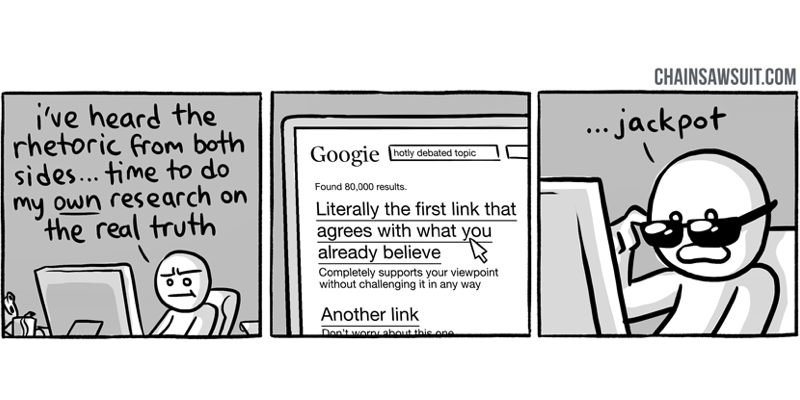
I’m curious why I’m seeing a lot of people thinking this lately. Google definitely made the algorithm worse for customers and better for ads, but I’m almost always able to find what I’m looking for in the working day still. What are other people’s experiences?
For example, when searching for product information, Google results in top 50 to 100 listed items titled “the 10 best …“ full of vapid articles that provide little to no insight beyond what is provided in a manufacturers product sheet. Many times I have to add “Reddit” to my search to try and find real opinions about a product or give up and go to Youtube review videos from trusted sources.
For technical searches like programming questions, AI is basically immediately nailing most basic questions while Google results require scanning numerous somewhat related results from technical discussion forums, many of which are outdated.
RAG was dead on arrival because it uses the same piss-poor results a human would, wrapped in more obfuscation and unwanted tangents.
My question is why the degradation of search wouldn't affect LLMs. These chatbot god-oracle businesses are already unprofitable because of their massive energy footprint, now you expect them to build their own search engine in-house to try to circumvent SEO spam? And you expect SEO spam to not catch up with whatever tricks they use? Come on, people.
It gets even better. When I first tested this feature in Bard, it gave me an obviously wrong answer. But it provided two references. Which turned out to be AI generated web pages.
Oddly enough in my own Googles I could not even find those pages in the results.
Welcome to the Habsburg Internet.
It's amazing that the post by Anthropic doesn't say anything about that. Do they maintain their own index and search infrastructure? (Probably not?) Or do they have a partnership with Bing or Google or some other player?
When you're talking to an LLM about popular topics or common errors, the top results are often just blogspam or unresolved forum posts, so the you never get an answer to your problem.
More of an indicator that web search is more unusable than ever, but interesting that it affects the performance of generative systems, nonetheless.