It's illustrative to remember who and what started this: nVidia's practice of intentionally undercutting their manufacturing partners. See, manufacturing partners tend to apply secondary binning of their cards and sell them with an overclock thus delaying their obsolescence for a year or so, and that's bad when you're in the business of selling the chips themselves (while neutral to the secondary manufacturers; you just buy a new GPU from them a year later, who cares).
So it really isn't a surprise that that, combined with artificially limiting supply for the 40-series GPUs (and most of that allocation is likely going to be to, well, themselves), and now the fact that the price that nVidia likely demanded for those GPUs is coming around to bite the secondary manufacturers, meaning that they all bought (or were required to buy) the GPUs at inflated prices, they're leaving the business.
And guess what manufacturer wasn't forced to pay that premium? That's right, nVidia! So they alone have room to drop prices and still make a profit, while making the value proposition even worse for the secondaries (price premiums for overclocking make less sense as they diverge from the base model and those improved coolers are more expensive to make than nVidia's solutions).
EVGA is understandably the first to bow out; they've never dealt with AMD (who have supply problems for other reasons), whose GPUs haven't been the premium product for a while (arguably, ever), and if they say it's no longer profitable even before a primary usecase for GPU compute vanished overnight I'm inclined to believe them.
And sure, there are still going to be secondary manufacturers producing cards, but most of the other manufacturers are either do-all companies (large OEMs more famous for motherboards and laptops), produce AMD cards too (Zotac-Sapphire-Inno3D), or are otherwise diverse enough (PNY) that ramping down production wouldn't kill them as a company...
Yep. AMD can't write Windows graphics drivers that are stable and performant to save their lives, their cards use enormous amounts of power compared to similarly performing NVIDIA cards, they're nearly useless for computational stuff because most everyone goes for CUDA, and AMD cheated on benchmarks by overclocking/overvolting their cards and slapping huge heatsinks on them so that they'd last just long enough for a benchmark to run before starting to overheat.
There are only two markets for AMD cards that I see: Hackintoshes (increasingly irrelevant with the shift to the new Apple Silicon and inevitable phase-out of Intel-supporting MacOS releases), Linux systems, and AMD fanboys. All pretty small markets.
AMD is properly fucked in the GPU market now that Apple is no longer using discreet GPUs unless they manage to bring to bear the sort of enginering might they did for Ryzen (where they're also slipping as Intel pushes back.) NVIDIA can carry on with all their datacenter-class ML products and lose a bunch of money on the consumer side. The problem is...if AMD drops out of the GPU market, that leaves NVIDIA and Intel, and reportedly Intel's product is even worse than AMD. If NVIDIA is insufferable now, imagine them when they're the only game in town...
You're forgetting two more, one of which is massive: consoles and high-performance embedded gaming systems (basically, the Steam Deck and other high-end handhelds). Consoles aren't going to be super profitable on a per-unit basis, but AMD is making the chips both Microsoft and Sony are using in their boxes, and they're selling a lot of those boxes (right now, about 36MM since they debuted a little under two years ago). Similarly, the Steam Deck is a pretty damn good first attempt at a cohesive handheld that runs PC titles, and I could see that extending past Valve and into a generalized marketplace (and the fact you can plug in a USB-C cable into a dock and get a real Linux desktop is really, really cool).
"The AMD MI250X GPU is in a class of its own now and for a long time to come. The technical supremacy and performance per watt were the primary reasons why AMD’s MI250X GPUs were selected for LUMI, explains Pekka Manninen, Director of LUMI Leadership Computing Facility."
AMD's embedded GPU unit may do fine, and it would be smart for them to shift their development priority to retain that market share. They lost the desktop/laptop discreet GPU battle years ago.
AMD GPUs are in XBox and Playstation.
> AMD can't write Windows graphics drivers that are stable and performant to save their lives
When they changed to RDNA they had teething issues. But their drivers are stable now.
> their cards use enormous amounts of power compared to similarly performing NVIDIA cards
Is this a joke? The 6800 XT draws less power than a 3080 12gb while having similar FPS. Ignoring FSR2 or DLSS.
Disclaimer. I've only ever had 1 AMD card (5700XT) and it was rock solid. Currently using a 3070 and 3050Ti.
People on enthusiast forums are now talking about buying 1.2kW+ power supplies for the new generation of nvidia cards. I don't think you can point at one or the other as bad here.
remember his rumors about 4090 having a 800-900W TGP? That got wacked way down in recent months by more reputable leakers, and now the number is rumored to be around 450W TBP (more like 375-400W TGP), which is plausible given the size of the die (and much more comparable to the rumored 400W of the dual-die AMD products).
So, off by basically double.
https://hothardware.com/news/geforce-rtx-4090-ti-allegedly-a...
Similarly he had 4080 at 600W and other Shit That Ain't Gonna Happen. Stupid partner boards pushing everything to 2x the official spec? maybe, but as a reference TGP? lol no.
if you believed that 800W was ever a plausible configuration for a consumer product, then I have a bridge to sell you. It was most likely some kind of engineering test bios that turned everything up to 11 at max clocks and he heard about that number and just didn't apply any common sense. Which, why would he when he could get months of attention off it from twitter?
People just race to buy into anything negative that is rumored about NVIDIA products and it's taken as absolute gospel as soon as anyone hears it. And the leakers have realized that and play into it.
As such I still don't think it's fair to characterise just AMD as wasteful power hogs here, the post I was responding to seems to me to be unnecessarily partisan.
I have an AMD GPU in my Windows PC and it works fine. It's stable. n=1 of course.
The reason I bought it is because I have a linux machine that currently has an Nvidia card. Fuck Nvidia and their linux drivers.
>their cards use enormous amounts of power compared to similarly performing NVIDIA cards
Don't think this is true at all. Eg first link I came across https://www.tomshardware.com/features/graphics-card-power-co...
As far as I know, console manufacture comes with supply agreements- you agree to supply X number of processors at Y cost... even if the price of those processors, when fitted to a PCI Express card instead of a PS5 motherboard, would net 3 times the profit.
It's also a nice way to get out of having bad drivers- if developers are making games to the PS5 standard, then any errata becomes their problem more than strictly AMD's...
The situation with TSMC being super super limited during the pandemic is unusual, and it was significantly amplified by the crypto boom happening at the same time. Normally it's actually a pretty good deal for AMD in a lot of ways.
The console companies tend to be very very conservative in their designs though and letting the console companies set the direction has left AMD significantly behind on many task-specific accelerators like tensor and RT. And tensor is no longer a niche thing, neural accelerators have been everywhere in phones for ages, Intel's laptop chips have had neural accelerators since 10th gen, intel desktop 11th gen had it, AMD's own 7000-series CPUs have neural accelerators, Intel GPUs have it, etc. Different product segments are finding different uses for it, and AMD has been not just left out of the rain but actually is slowing the development of the whole field because of how tardy to market they are. And beyond that they've taken a strongly anti-consumer position against open APIs that allow other brands to utilize hardware accelerators or closed-source libraries.
https://youtu.be/8ve5dDQ6TQE?t=974
Similar problem with RT... AMD's implementation is very lackluster and has been slowing the whole industry down. It's about half the performance of NVIDIA's first-gen implementation. A lot of times it just seems like AMD automatically assumes that NVIDIA is incompetent and wasteful, and there's some big savings to be had, so they'll take whatever NVIDIA does and cut it in half or a third or whatever (which is what they're rumored to do with tensors next generation - it has "accelerator instructions" but less powerful than the full dedicated units on CDNA, and presumably weaker than NVIDIA's dedicated units as well). Not sure if it's that, or if they're just cheap on silicon, especially with the console market's influence...
It's why Intel and Nvidia refused to work with Sony and Microsoft for their console chips and only AMD took the original contract since they were close to bankruptcy at the time so every extra dollar mattered for them.
Early VC funding rounds are way less than you'll see when your product goes to market too. Applying your accounting philosophy, a couple million bucks surely must be insignificant compared to billions of dollars of sales revenue we'll see later, right? And they want how much equity? What a terrible deal.
Except for the part where you fold years before you get to "later", of course.
And that was a very, very, very real concern with AMD. They were right on the edge for years and years during the Bulldozer years, Ryzen was very much a last-chance move for them and they were obviously still scraping bottom for the first couple years even then. There are numerous factors that all aligned to keep them alive - they would not have been alive without Intel misstepping on 14nm (the early days were very bad) and then 10nm, they would not have been alive without Apple writing huge R&D checks to advance TSMC 7nm and 5nm far enough ahead of the market that GloFo bowed out of the game, they would not have been alive without consoles keeping the lights on while they spent every penny on Zen R&D, and they would not have been alive without their interconnect turning all their IPs into legos and allowing them to break and scale them.
Things were really, really, really touch-and-go for AMD in 2016/2017/2018. I figured they were going under. I have no doubt that console R&D money (along with those other factors) was instrumental in keeping the lights on at RTG.
The GPUs in Xboxes and Playstations are custom silicon.
I've had zero problems with AMD hardware on Windows (Linux kernel, on the other hand ootb still won't boot with this Vega as the amdgpu driver is a disgrace) and other than windows 11 being a complete failure, nobody has reported serious problems.
re benchmarks/power, they scale dynamically and do not have as tight power envelopes as other vendors, so obviously it will use more power [citation needed also].
Their generic GPUs are very fast, but why do they even care when they own the console market, the higher end in car infotainment market, etc?
It wasn’t until the nVidia Geforce 285+295 that they unequivocally regained the performance crown (three years after the acquisition). AMD was still competitive, at the flagship level, until about 4 generations ago; so they were a reasonable alternative, if slightly less performant.
It was the constant rehash of GCN cores that screwed them up, with their limited ROP configuration and generally weak Shaders (after the third+ respin).
Might as well get out while the getting is good.
It's not shocking that the vendors aren't interested in getting zero of the upsides, but all of the downsides of the bullwhip effect.
To lose money, it seems like the raw chip price differences between mid level and high end cards would need to be even higher than what the MSRP differences are.
But if that's the case, why not just sell midrange cards? Or just a tiny amount of high end ones for advertising purposes.
NVidia's datacenter products seem to charge for GDDR like it's made from gold. Memory prices may play a role.
two things:
first, high-end cards are the ones that miners liked, so, partners really loaded up on orders of those cards. They sold a huge number of high-end cards relative to previous generations. And now the mining market has crashed, and they're stuck with a huge number of high-end cards (relative to actual sustainable demand) both at the vendor (NVIDIA) level and the partner (EVGA, et al) level. And miners are dumping their cards, so you have a huge number of high-end cards flowing back into the market too.
secondly, the card he cites as being "their highest-margin card" is a model that was a bad deal at launch and has seen virtually no price reduction since then. I have actually seen quite a few people commenting on just how little prices of that specific model have dropped, with the 3060 Ti and 3070 pushing downwards (and those are significantly faster than the base 3060). On the AMD side, you can now get a 6700XT (which again, significantly faster) for the same price, which is a performance bracket higher. It's an oddity of that specific model.
so, what he's saying is, an overpriced card that has seen no price reduction while much faster cards crash around it, has high margins - "no shit", as they say. Doesn't mean anybody is really buying it though.
the whole thing is very much "true, from a certain point of view"... like his "wow we're losing money!". Yeah, now that the GPU market is crashing you're losing money... and during those years, the company as a whole lost money because this CEO has been doing all sorts of zany business ventures that ended up in massive losses... the GPU division made money hand-over-fist for the last 2 years, and he's lost money hand-over-fist by trying to break into the enthusiast monitor market and enthusiast motherboards (both extremely support, warranty, and R&D intensive markets) and doing a ton of branding deals where he sticks EVGA logos on hdmi capture devices and pcie sound cards (in 2020, seriously) on products licensed from other vendors (who it turns out were skeezes and EVGA was on the hook for a ton of defective and falsely-marketed products).
he ran the company into the ground and is trying to shift blame to NVIDIA. Yeah, the board-partner thing is predatory, but partners don't really add significant value to the product anymore, and middlemen get squeezed out of business everywhere. Yeah, EVGA is in deep shit, and he's lying when he says they're not going to go under, the writing has been on the wall for months now. The GPU market crashing is almost certainly the last straw for EVGA and they won't be able to pivot to their remaining markets.
But like, he did make a ton of money on GPUs over the last 2 years, he just lost a ton of money on other stuff, and that's not NVIDIA's fault. Partners in general ordered way too much (and again, particularly the high-end stuff) trying to cash in, they make fucktons of margin on it during 2020-2021, and now they are lobbying NVIDIA to cover their downside and buy back all the chips they have left over. This is part of that push, and they know the public generally doesn't like NVIDIA, so it's worth a go.
And it's true that unless NVIDIA buys back the chips from EVGA, they probably go under. I imagine that's not a very pleasant conference room to be in during the negotiations. GN notes the extremely "personal" tenor of this guy's affront. If NVIDIA doesn't cave, his company goes under, and he's toast because EVGA is a pillar of the fucking community. Super tempting to try and go around the negotiations and take your case to the public, try and cash in on anti-NVIDIA sentiment (which is broad and intense), and try to appear to be the good guy.
Partners tried to pull this same stunt in 2018... they ran to tech media framing it as "NVIDIA is forcing us to buy obsolete chips if we want next-gen ones!" and if you read the details, what actually happened is partners wanted to cancel their contractually-agreed orders after mining tanked, and NVIDIA said no, if you do that it's over, we're not giving you 20-series chips if you break your contract on the previous batch.
https://www.techspot.com/news/76103-nvidia-putting-squeeze-a...
I bet NVIDIA wishes they could cancel their contractually-agreed orders from TSMC too. That's not how it works unfortunately. But NVIDIA did knuckle under in 2018 and bought chips back from Gigabyte and perhaps other vendors, and now the board partners are hoping for a repeat. But that was 300k chips, which, while it's a lot, was tractable. The current overstock is like, millions of chips, all in the high end.
That's why both NVIDIA and AMD are launching top-first this generation... the lower chips would compete with those massively-overstocked 30-series cards. So, launch the high-end stuff over the top and let the 30-series inventory burn through.
Last I checked most miners went for 3070s and below, because they're energy efficient. Though when supply ran short they used everything they could get.
And you really didn't get the point about high end cards. EVGA previously served a segment of enthusiast consumers that would spend exorbitant amounts of money for slight performance gains / overclocking sport. But under the new NVIDIA rules you can't take a 3090 and put the highest quality components and beefiest coolers on it, because the price of a 3090 is limited by NVIDIA to be around the range of a FE 3090.
https://www.igorslab.de/en/evga-pulls-the-plug-with-loud-ban...
Basically: other partners have confirmed they think EVGA is just being dramatic and making a statement in general here, that this is kinda just how being a partner is. And that EVGA in general has some factors that make it worse - they're super small and contract out all their assembly, so they take lower margins there, they have a very generous warranty by industry standards, and they've been losing money on other business ventures and the GPU market collapsing makes things tough for the company as a whole.
But they describe last year as a "10x margins year" which fits what I'm talking about with TUL Corp too. They think EVGA just wants to quit on a high note, and quit cleanly during a generational changeover.
Actually there probably was a lot wrong all over the place over the last two years, the whole market was insane.
TUL Corp is a great example to look at the profit margins of GPU companies, because their revenue is approximately 95% GPUs (they own PowerColor) and they're publicly traded, unlike most of the other examples of GPU-heavy private companies (EVGA is privately owned). I've seen them used for similar analyses of the 2018 mining boom on seeking alpha [0], for example.
https://www.morningstar.com/stocks/roco/6150/financials
So, profit in 2019: -80m. Profit in 2020: 30m. Profit in 2021: 1.08 billion.
So, they made a 36x increase in profits that year. In contrast, topline revenue increased only 2.3x. So they had a massive fucking increase in margins.
People need to stop being so incredibly credulous, do you really think the CEO doesn't have his own angle here?
It's completely amazing, a year ago nobody would have pissed on these CEOs if they were on fire, because everyone knew they were selling straight to mining farms. And now everybody is just taking them at their word that they didn't make any money on GPUs during the mining boom, heck they probably lost money right?
Like gosh if they say they didn't rob the bank I guess we just have to trust them, why would they lie about something like that?
It's been really fascinating watching the "green man bad" field overpower everybody's common sense. I guess the reflexive hatred of NVIDIA is stronger than the hatred of miners and companies that catered to miners. So much so that people will believe obvious lies (or significant misrepresentations) from companies that were blatantly profiteering right in front of our faces for more than a year, as long as it caters to the "green man bad" perspective. It is incredibly frustrating to watch, as someone who considers themself a seeker of truth and insight.
But then, here we are with the "partners didn't really make any money on GPUs during the mining boom" take. Could it just maybe be possible that maybe the CEO is not being fully honest here?
[0] https://seekingalpha.com/article/4181940-asian-aib-read-thro... https://seekingalpha.com/article/4186417-tul-corp-revenue-da...
People will pay more for EVGA, because they were the only company that respected their customers. The only company you could actually get a decent RMA from and didn't continually break the law.
But Nvidia says no, there's max cap on prices. Nvidia also competes with their partners with their founders edition series. It's a whole around win-win for Nvidia.
I can't imagine why Nvidia would let one of their most respected partners go. Unless, Nvidia plans to shove out their partners and sell direct as they did with founders edition.
It’s important to remember that this was a major contribution to the downfall of 3DFX. A good chunk of which was cannibalized by nVidia.
What killed 3DFX was a combination of no AIB boards to push the architecture past reference; their Sega deal falling through and the delay (and eventual cancellation) of the 6000 as a competitor to the GeForce 2 and Radeon 7000 series’ (later tests of engineering samples showed it outperformed both). The latter being a direct result of the two former problems.
Enjoy the GPU glut. I for one am thinking of having fun with Stable Diffusion and the like.
From my brief research they seem to be available for about $30 / hour, and can run 50 iterations in roughly 6 seconds.
One of the missing pieces for me is how many parallel requests they can serve, and whether it's feasible to start/stop the machines based on demand (it sounds like some providers don't allow the stopped machines to retain state long enough for this to be practical)
Would be interested in your thoughts, have been tinkering using my laptop GPU but it's dog slow and I have a vague idea for an online game that I might try out if I can summon enough mental energy one weekend
Since this is a hobby project, I probably will never be able to break even on that. I'm thinking of writing a bit of code that will use GPU spot instances to perform the computation, and turn it off when the queue is emptyish.
You don't really need any state on the machines, the worker communicates with a broker, receives a very small bit of JSON containing the parameters, does the work and uploads the image to R2. Then, it sends a message back saying that image is done.
That way, you don't even care if you get interrupted mid-generation, since the work is idempotent. I can just spin up a machine whenever available and tear it down whenever.
It will be nice to try, though I think I'll use my desktop for a while yet due to a lack of users. That one takes around a minute to generate an image, and can't run while I'm using it.
With regards to state I just meant the image - wouldn't want to have to install everything at each start. Using something like aws or gcp I don't think this would be an issue, but I was window shopping some providers that specialize in GPU VMs and it wasn't clear if they provided equivalent services. Probably easiest to just use aws.
This kind of depends on the provider, but it's mostly an implementation detail. The main crux is a broker and a queue, I use Dramatiq (the site is written in Python) and it works great.
Docker container might be a good shout, though I've not done anything using a GPU from docker before
Oddly, I did see an issue yesterday with the push notification arriving multiple times (far apart from each other) even though the server only sent it once.
I would hope so, considering the big chip producers bought out the majority of the supply throughout COVID. Allowing them to bail out on that contract without providing an alternate buyer would set a bad precedent and allow them to monopolize resources whenever they desired.
I'm sure the idea that infinity cache decreases the relative mining performance was in everyone's minds at AMD when they were designing RDNA2 - by that point they'd had two major launches (vega too) fucked up by mining, and using more cache/less VRAM bandwidth makes your mining performance worse relative to raster, because mining loads aren't cachable.
A10 uses GA102-890-A1 and there is no retail card on that variant. Variant is very important because Nvidia drivers are...well...not consumer friendly?
For example, Nvidia vGPU only works on certain cards if you ignore ways that break EULA. I don't remember the exact details, but there was also a software lock that prevented using some optimized paths on the consumer's GA102, but used the optimized path for GA102-890-A1.
If Nvidia is great at anything, that would be hostile market segmentation by their drivers.
Only in the past year or two has Nouveau developed well enough that some games are playable. But only on cards not enforcing signed firmware.
How much more anti-consumer can you get after requiring signed firmware? That is when I started my boycott.
- Nvidia doesn't give board partners real drivers until they are public. Which is why evga 3090's were bricking themselves at launch, they only had limited pre-release drivers. How can evga make a good product when they don't have dev tools to make the product?
- Nvidia doesn't give retail partners prices or info at all until the public has the information, but requires order size estimates long before that. How can retailers predict sales volumes if they don't know price or performance?
- Nvidia blacklisted Hardware Unboxed for giving the 3090 positive reviews, but they didn't talk about the proper talking points (8K gaming capability). They don't care about the review or increasing sales, they're actively the top performing GPU, they just care about controlling the narrative and being manipulative.
AMD GPU's aren't as good. but Nvidia isn't SO much better that AMD is just full stop not an option.
No company is your friend. But Nvidia seems to actively be an enemy to a lot of people, and they would be profitable even if they were nicer, they have the best product. Which means they are just actively bad people.
Do people still believe this?
I wonder what it'll take. RDNA3's soon and should be interesting to see happen.
I just want to connect 3 screens, play Team Fortress, and have my GPU not die in the next 2 years on the cheap ;-;
Edit: Also, 2017 level performance in 2022 shouldn't cost 2017 level prices.
Still works stellar today, in son's PC.
I have a 6900XT and while it performs well, the driver is actually shit. I have had issues with one or more of my three displays not starting on boot, or not waking up from monitor poweroff.
Pinning the kernel to an older version seems to keep things stable. I was dealing with that sort of breakage what seemed like once a month for a year.
[0] https://gitlab.freedesktop.org/drm/amd/-/issues (I think this is the correct one now that FDO migrated away from https://bugs.freedesktop.org/)
[1] #radeon on OFTC - https://people.freedesktop.org/~cbrill/dri-log/?channel=rade...
Idk about that, I’ve never believed it. My N=1 anecdata over 12 years of using Linux with the binary nvidia blob says ive generally had a good time. I only have used it on a desktop though.
It’s not like I leave the card alone either as I game on Linux, do dynamic card binding with kvm passthroughs etc.
I have similar issues with my 1080Ti by the way, it just wont recognize one or two screens and will mess up the display configuration if I turn one of them off. Going into display settings, applying a new configuration and reverting it usually helps.
[0] https://www.tomshardware.com/features/geforce-rtx-3090-vs-ra...
But ultimately, people who buy halo tier cards generally don't have a budget set, which means PSU, cooling options, and electricity bill aren't an issue. If you buy either a 6900xt or 3090 and can't afford an adequate PSU and electricity bill, you're probably better off with a completely different tier of GPU, so I get why "raw performance" is the crown that gets chased. MSRP of 3090 is roughly double that of 3080, but obviously it's not double the speeds. There's too many things to consider when you consider "best' GPU so "highest performing" is easiest to refine down to.
I don't fully agree, but I get it. And I opted for the 6900xt so you don't need to convince me of the benefits (for me, Linux open source drivers were on the list as well). But I'm not going to pretend like there is a super readily approachable alternative.
userbenchmark.com notoriously changes their benchmark ratings every time AMD releases a CPU because "AMD bad, Intel good". The core i3 9100f is rated higher than the Threadripper 2990wx [0]. And I don't just mean "on the subjective aspects". They put the i3 as rank #167 in all CPUs and the threadripper at #231. Yes, they claim the i3 is faster than the threadripper, because they don't count ANY scores over "8 cores", and Im pretty sure that it means "8 threads" and not 8 cores. Because "no workload needs more than 8 threads, so we're just going to ignore that." They also release a "review" of new AMD products every time they come out claiming that AMD is garbage for made up reasons.
All this just to say that the second any subjectivity is introduced into the mix, you'll wind up with people skewing tables to show the "real fair metrics" that favor their team. I'd rather just say "yeah, nvidia holds the crown and is technically 3% faster, but 3% isn't enough for me to care". I'm not going to start a debate over "Well actually, Nvidia is better because FPS is the only metric that matters!"
[0] https://cpu.userbenchmark.com/Compare/AMD-Ryzen-TR-2990WX-vs...
erm, more like they got blacklisted because they have continually refused to talk about DLSS or raytracing, not because of 8K. Steve has outright said he doesn't think either of those are valuable features and he won't take them into consideration in the reviews. And DLSS 2.0 was well into the public consciousness at that point too, everyone knew it was much higher quality than the first iteration or other alternatives available on the market (still is better than FSR 2.0 too).
So yeah, I imagine that NVIDIA wasn't too happy about an outlet who flaunted the fact that they were choosing to ignore a 30-40% performance and perf/w gain on what was slated to be a pretty broad selection of titles. That basically is a whole performance-segment worth of gain that HUB managed to downplay and minimize and spin.
Similarly, on raytracing, even first-gen NVIDIA cards are twice as fast as AMD for a given performance segment. "Hybrid" titles tend to downplay this performance gap due to Amdahl's Law, if only half of your workload is RT then a 2x speed advantage only yields a 50% lead. But, for path-traced retro titles where the workload is 100% raytracing and 0% raster, NVIDIA performs about twice as fast, as do synthetic measurements of raytracing ability (and 3D rendering etc).
They quickly walked back the blacklisting, probably someone had a bad day and snapped and committed the worst crime of all: saying what they really think.
Because, to be honest this is nothing new for HUB, Tim's content is great but Steve is a bit of an AMD fanboy and it strongly leaks into the editorial positions and the things he chooses to review, which shape the numeric results as well. DLSS was persona-non-grata until FSR 2.0 came out and then it's "well DLSS is great but why not FSR!?". If he'd been saying the "dlss is great" for the preceding year then maybe it would have come off as good-faith, but, it was a shitty low-quality gimmick that nobody should use, up until AMD did something similar and wow it suddenly is great!. And that's just how Steve is, it'll be the same for raytracing... raytracing is just a fad, until AMD finally gets around to a proper high-performance implementation and then it'll be all raytracing all the time. He's constantly downplaying NVIDIA's work, and minimizing and spinning the weaknesses of AMD hardware, which has to be tremendously frustrating for the people at NVIDIA who are supposed to work with him.
It's not a popular sentiment with the pro-AMD crowd, but, even among the enthusiast world in general there's growing sentiment that Steve is not on the level, in a way that few other prominent reviewers exhibit. But, you just flat-out won't review the card doing what it's designed to do? Yeah, not sure why NVIDIA would pay to give you a sample of that product, then.
"Wow this semi truck sure has shitty track times, and I won't review the hauling capacity because that's just a gimmick, everybody uses minivans".
(also, for the record, AMD has a history/pattern of blacklisting reviewers for critical reviews as well... happened to Kitguru a couple years ago, as well as TechOfTomorrow, for similar reasons... he wouldn't benchmark the hardware the way AMD wanted, so no hardware for him. he made a video about that too. Curiously, nobody keeps bringing that up, though...)
https://www.kitguru.net/tech-news/announcements/zardon/amd-w...
Forgive me, but what is the problem here? Reviewers of all kinds focus on different things. Some GPU reviewers care more about FPS for certain games. Some care more about fidelity. Some care about power efficiency. People follow reviewers who focus on the stuff they care about. So this one guy was reviewing stuff which he and his audience cares about. Because this didn’t make Nvidia look good (this time), it’s okay to blacklist him?
Sorry, no, that’s crazy. If reviewers focused on the things manufacturers told them to, they’d be terrible reviewers. Manufacturers don’t have a right to favourable reviews.
I agree with his take on Userbenchmark as that site is a piece of shit but it also seems that Steve is turning into Userbenchmark AMD version given his numbers always seem to be topping intel over compared to other reviewers like GN. He claims he is unbiased but his review titles and thumbnails say otherwise. The guy just seems like an overall douchebag who gets butthurt when anyone critizes his favorite brand. (P.S I own an AMD system lol, 3700x here.)
Turn it into a employee-owned company!
>The employees would not be taxed just for receiving the stock/ownership, only once they sold it and made it liquid.
This is incorrect; the initial grant is income and anything after that is capital gains. This is also how RSUs work.
My sibling commentor has the workaround.
And make no mistake, that's already exactly what's being proposed here, in making EVGA an employee-owned corporation: a gift of equity from the current shareholders, to a set of new shareholders.
The only difference in what I'm describing is that there's a trust / holding corporation in between the givers and the recipients.
If this was legal all sorts of companies would do this all the time.
I'm sure they'll have to write down a lot of inventory because prices went down, but for tax purposes their valuation is still going to be very high based on earnings. That's why private companies other than startups rarely go this route.
edit: (in the US at least)
YMMV but an NQSO purchase agreement can be your friend.
https://www.canada.ca/en/revenue-agency/services/tax/individ...
And yes, this is a little bit insane.
Not sure in EVGAs case what laws govern their business and where employees are and what existing structure is… but where there’s a will, there’s a lawyer to make a way.
Different industry, but it might be worth looking into how New Belgium went employee owned, with apparently equitable results:
https://www.forbes.com/sites/christophermarquis/2020/05/01/e...
...but give the current employees voting rights without equity, proportional to their seniority... (Or just 1 vote each.)
And then start rolling out equity, maybe, depending.
Easiest would be to convert to some sort of new 501 non profit with employee control.
People don't have to pay taxes when they are hired at an employee owned company like winco, and students don't have to pay taxes when they join a housing coop.
I just never see anything remotely close to that in the US discussions, by the people most interested in employee activism or union formation. I get the impression people don't even know its something to they could be putting energy towards.
first English google result I could find on the concept
https://www.worker-participation.eu/National-Industrial-Rela...
Actually:
The Mondragon Experiment:
False. Only a few are: https://en.wikipedia.org/wiki/List_of_employee-owned_compani...
It isn't a metaphor, it is, in the words of Zizek, pure ideology.
if not, its not really power
Power is not the same as ownership
- Video cards are 78% of revenue for EVGA.
No - the margin is in many cases negative, right now, with high-end GPUs 50% below MSRP. This is an important distinction.
Margins were great for 2 years, EVGA's GPU department made tons of money during that time even with a few gestures towards the public. He lost tons of money during those years with frivolous, high-R&D, high-ongoing-support-cost ventures like entering the motherboard and enthusiast monitor market.
I found a review by Tom's Hardware where it barely passed the minimum[1]. It's not unreasonable small differences between PSU units and measurement equipment leading to it just failing for some other reviewer.
To be fair, I recall it was rated well in other categories, and the Tom's Hardware review does as well.
[1]: https://www.tomshardware.com/reviews/evga-supernova-650-g3-p...
Seeing as johnnyguru is not available as far as I can tell this is the only proof I have: https://www.reddit.com/r/buildapc/comments/5kl4v0/jonny_guru...
It had a total score of 9.8 out of 10
It's so weird to put a ceiling on card prices. Maybe this was a measure due to the crypto-induced GPU demand?
Now, the AIBs differentiate themselves mostly on coolers, aesthetics (cooler design, RGB, PCB colors, etc.), and power delivery (though the latter is much less common).
This was one of my first cards when I was building.
https://pics.computerbase.de/1/1/6/0/8/1-1080.1308227202.jpg
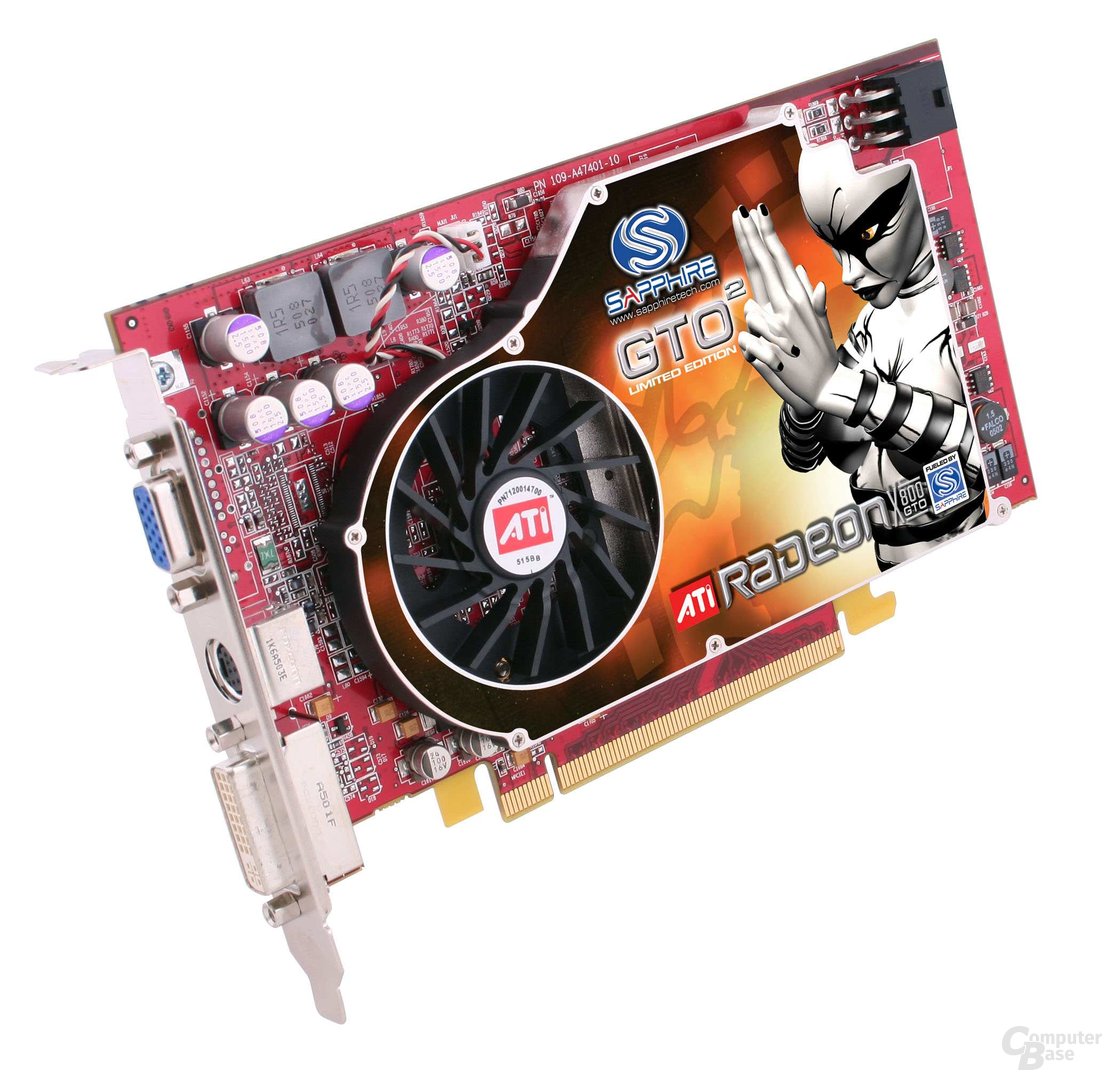
They do secondary binning; the best ones are overclocked (and more importantly, warranted to perform stably at that overclock) compared to nVidia's specifications.
Frequency gains are mostly linear; a 10% increase in clock speed does indeed yield 10% more frames rendered per second.
Importantly, they don't tend to be over-volted to achieve this overclock even though their coolers are more than capable of dealing with that, but overvolting decreases the usable life of the GPU where "standard" overclocking, generally speaking, does not.
And for the Ampere generation, they hardly built any of the lower-tier card models, and those chips have to go somewhere. So they end up using low-tier chips in FTW3/Strix/Gaming X and other high-tier products too. So buying a high-tier model is not any particular guarantee of chip quality anymore either - you can buy a 3090 FTW3 and get a bin-0 chip in it. The only exception is true halo products like the Kingpin/HOF/etc targeted at the XOC market which will definitely get Bin-2 chips and maybe additional binning on top of that. But partners shipped 27 quadrillion FTW3 and Strix and other "flagship" cards and couldn't put good chips in every one of them.
For the mass-market (non-XOC market), everything goes onto the same PCB and you test the finished product and the better ones get the "OC" model sticker. That's it, that's entire binning process for most partners/most of the products on the market. You can have a FTW3 with a bin-0 chip in it. Why do anything more, if you know it's going to sell in 0.1 milliseconds anyway?
The partners that still do binning, typically on limited segments like the Kingpin/HOF/etc, no longer actually test the chip performance, they test the electrical characteristics and then apply statistical analysis to figure out which of the inter-pin voltages/etc are statistically predictive of chip quality. But there is less and less of this because it's expensive and time-consuming, and the differences don't tend to produce significant gains in finished product performance as much as they used to, due to GPU Boost algorithms getting better, etc.
Much like Silicon Lottery exiting the CPU binning business, it's become a bit of a time-waster and partners no longer really bother with it like they used to.
https://www.igorslab.de/en/chip-is-not-equal-to-chip-first-i...
But again, that gets back to the problem with AIB partners: "so what, exactly, would you say you do here?". They made sense in a world where they were allowed some freedom to experiment and service niche product segments/etc. With super tight control, the only thing they are allowed to do anymore is pump up the TDP to try and squeeze out a win, and bigger coolers. Can't do certain kinds of smaller coolers that might compete with the server business either. They just crank up the TDP and slap a bigger cooler on it and crank the price up 20%, it's not really all that significant a benefit to consumers anymore.
They no longer bin. They don't modify the silicon or software in any way. NVIDIA even provides the memory as part of the bundle with the GPU sale. A lot of them use NVIDIA's reference PCB design, and the only common change to that design is custom VRM, which is pointless in a world where overclocking is dead and everyone is undervolting. Cooler design is all pretty functionally-interchangeable across brands, you need something, but a Gaming X is not really different from a FTW3 in any meaningful way. Everything meaningful is done by NVIDIA now.
They are supposed to "buffer inventory" but in practice every time there's a glut they come back to NVIDIA with their hands out looking for refunds for their leftovers and kickbacks on the inventory they keep. So heads they win, tails NVIDIA loses. And it's not like their prices are awesome the rest of the time either.
They no longer even act as a price anchor... 10-series launch, only EVGA and Zotac put out cards anywhere near the "official" MSRP (in hideously limited quantities) and they were still $20-30 over. Everything else was actually higher than the FE cards, in the $725-800 range. Same for the 30-series where NVIDIA cards were the only remotely affordable ones. So these days it's NVIDIA price-anchoring the partners, partners want a 20% higher street price over the NVIDIA design for what seemingly amounts to a higher factory TDP configuration and a bigger cooler. (Which is of course tied to the BOM cost which NVIDIA controls, but... the price structure kinda doesn't matter to the consumer.)
Most of them don't even build the cards themselves... EVGA for example contracts out their assembly to third-party factories in Taiwan, they don't own the factory. So they basically just take the spec from the customer, and give it to the engineers. Well, at least their secretary does that I guess.
So what, exactly, do partners do around here anymore? I realize that a lot of this is the result of product strategy by NVIDIA, some other parts are just the direction that tech has gone over the years (automatic boosting, undervolting, etc), but, regardless, consumers don't really benefit from the things that AIBs are able to offer nowadays. Partners provide almost no real value-add anymore. Functionally they are middlemen, and middlemen get squeezed to zero by the market.
Ironically, in true Office Space fashion, probably the strongest argument is that they deal with the fucking customers so NVIDIA doesn't have to, EVGA could still distinguish itself on warranty/etc. But that's really the only meaningful distinction between AIB partners anymore and it was really only a couple of them that had worthwhile service. With EVGA gone, that argument starts to fall apart too.
We’ve been waiting on a Bronco since late 2020. Got bumped to a 2022 model year which is now built and on a train to the dealer.
Yeah, we could have had one sooner for like a 50-100% markup… rather wait.
and look at the last 2 years of nvidia gpus. you mentally associate $1,000+ with any gpu. even 5+ year old models. they want to put an end to that, bad for the brand
So they're voluntarily choosing to go out of business..?
How does that work?
Not at all complicated.
1. They have no debt based on the video
2. They own their HQ so no long term rental contracts. They would need to sell the building.
3. California's Labor Code contains a presumption that employees are employed at will. This means that either the employer or the employee may terminate employment at any time, with or without cause or prior notice.
4. They file and pay any outstanding taxes.
5. Since EVGA is a Stock Company they need to hold an election to dissolve then file two forms with the California SoS and you are done. The required forms each are one page long, takes a few minutes to file them online but here's the paper version: https://bpd.cdn.sos.ca.gov/corp/pdf/dissolutions/corp_stkdis...
It only makes sense to peruse it in tech where you are looking to unload it onto the next sucker. If you aren’t planning to do a rug pull or go after government subsidies it’s a bad plan
The CEO told GN there won't be another round of layoffs; Instead there will be voluntary attrition.
Pretty sure the implication is that everyone there, not just the CEO, is burned out after 2 years of covid, supply chain issues, and dealing with Nvidia. Employees are planning to leave regardless of EVGA's plans so it doesn't make sense to stay in a low margin market.
So they'll continue to make power supplies and whatever, but they're done with video cards, where they lose money.
unfortunately, a product that doesn't exist isn't really a harm, it's hypothetical harm at best, which would be really difficult to argue as monopolistic.
I actually think this business agreement ending is a good thing - it gives AMD and other card manufacturers a way to get in, and compete with nvidia. In the short term it might hurt, but long term is better.
I'm not an expert, but I imagine nominative use would be ok? i.e. you'd be able to run an ad saying "EVGA RTX-3080-DSFHDSFG - $999" or showing a picture of the box they sell it in (including the EVGA logo on that box).
It’s hard to sell an “EVGA NVIDIA 3040(16GB)” at $1999 against an “NVIDIA NVIDIA 3040(16GB)” at $999. Exaggerated but basically that.
A CEO doesn't run the company, the board does. If the CEO wants to spend more time with their family, that's their call to make, but then the board will replace you because you are no longer the best person for the job.
- Will maintain some stock for RMAs
- Made pre-production boards for 4xxx, will not manufacture
- 3080 and above are not profitable for EVGA
- NVIDIA is not transparent about pricing with board manufacturers, they find out MRSP same time we do
- NVIDIA limits MSRP heavily on cards so they can't do things to sell more profitable higher end cards
- It sounds like (this is my takeaway from GN's description, not their words) EVGA's CEO is tired of dealing with NVIDIA, wants to refocus on family, and there isn't a clear person to replace him and hesitant to sell to people who would mistreat employees/cut corners/damage brand.
- Will continue selling power supplies
- No plan to work with AMD or Intel making boards, CEO sounded dismissive toward it