Far more important to me is ridding ourselves of the twice-annual insanity of changing clocks. I'd be okay with adopting UTC if that meant our clocks never changed again.
Ditto. Switching is the issue for me. And it's not because it's all that disruptive to me personally. But it is highly disruptive, and dangerous to shift workers. The fall change in particularly raised hell in the hospital where I worked, since it literally created an hour that occurred twice. Computers can store time in universal time, but a nurse medicates or does a procedure on a patient by clock time, and that duplicate hour and compressed shift increased risk of patient harm, misrecording of data, and overall stress a lot.
And really, it's just dumb.
Consider coding these two solutions (for n "patients"), in one you simply keep a timestamp of each and check against current time. In the other, you have many timers / stopwatches in parallel. The simplicity of simply recording the time and checking it against current time absolutely extends to the physical world.
It is also fundamentally different in nature, in that leap seconds never create duplicate times in the time sequence. Leap seconds are changes to the sequence of the underlying elapsed time sequence; DST changes are not, but only change the representation and use of time values.
Absolutely agree and that was my point in the comment you replied to.
If you want to measure elapsed time you should not involve absolute time measures because then you will not need to think about leap seconds or DST changes.
    start := time.Now()
    // Code to measure
    duration := time.Since(start)
In rust you use https://doc.rust-lang.org/std/time/struct.Instant.html
Some kind of punch clock system for every action would make that even more tedious, I imagine.
1. Patient care is very bespoke, with all manner of combinations for treatments, including contra-indicated medications. It's similar to why it's hard to automate air traffic control (lot's of human factors at play that require human decision making).
1. https://www.cbc.ca/news/business/air-canada-investigation-nt...
> Federal officials subsequently issued new rules for nighttime landings and control-tower staffing. Now, when an adjacent runway is shut down at night, air traffic controllers will no longer let pilots make so-called visual approaches to land. Instead, they must use instrument landing systems or satellite-based systems to line up for the correct runway.
Not sure this supports that "unambiguous language" is the problem. To me it sounds like the problem is "humans being expected to perfectly perform routine tasks" - and the solution is to move as much of the task away from the humans as possible. I imagine there are parallels in the medical system (but am not expert).
Similarly it's not obvious whether your phone keeps an eye on this for you, if you're not a techie type. And if you are, how do you know what your elapsed time stopwatch does under the hood?
One of my cars gets time from the radio, the other one doesn't, so around this time of year they show different times.
But the system can't solve the core problem - taking an hour out, or adding a duplicate one in, is highly disruptive to nurses already very busy schedules, and introduces multiple sources of potential confusion in patient care.
Waking before light is very demanding for some people's bodies. I can't sleep past beyond 9AM, but waking up at night is a big no no for my body. I can't wake up, I can't function, and it creates all kinds of adverse effects.
Health is more important than changing clocks two times a year.
No, I'm not simply dreading waking up before sunrise. My body can't function until sunrise regardless of the number of hours I sleep. It's built like that. You might not be suffering like me, but I'm not the only one. Half of our office comes in half-asleep during winter hours.
And no, sunrise clocks doesn't work for me.
That's what happened in my high school years in France, which still changes clocks twice a year. Wake up in complete night, take the bus and wait for classes to start under yellow lightbulbs, then go out in the sun for the first time in the day at noon.
I don't understand why people are afraid that this will bring what was already happening.
Paris is further North than Seattle.
Scotland and Denmark are near the same latitude as Juneau Alaska.
edit; nifty visualization, https://www.bytemuse.com/post/interactive-equivalent-latitud...
i live in a country with daylight saving and that happens anyway for a quiet long time each year.
Permanent DST throws me just before sunrise (aka the darkest hour) which wreaks havoc in my body. I'm aware not everybody is affected this adversely, but mine is affected since forever. It doesn't have a switch for that, sorry.
Regardless +1 UTC or permanent anything… I believe I can adjust my schedule for my needs more easily than trying to fix everyone else’s.
As a plant which is participating to many international meetings regularly (including a one which spans from USA to Japan with everything in between), I think I know a thing or two about scheduling.
However, thanks for sharing your valuable insight.
I know dealing with international meetings is challenging. In a former life I managed trading Korean equities from an office in Cambridge, MA (in addition to US equities— those were long days!!)
But doesn’t the fact that the scheduling itself requires some form of attention/expertise (e.g. is that time in your timezone or mine? Does DST apply this week? Does that change anything?), reveal that we’ve perhaps made this unnecessarily complex?
If you and me or any group were tasked with scheduling a meeting, wouldn’t it at least hypothetically be simpler to offer availability in terms of UTC (assuming nobody cares where you live, or if you’re a plant, or vampire)?
No problem, I both have a thick skin pretty flexible sense of humor.
Working with international projects for 15 years have shown me that the process can be relatively simple. There are some pretty robust tools and conventions for that, too. So, without further ado, this is how we do it:
0. Agree that we need a meeting for discussing something.
1. Send a Doodle[0] link to everyone involved, knowing two ends of the timezone involved is enough. Take intersection of your logical hours and theirs. Forget DST and other stuff. +/- 1 hour doesn't mean anything. If you're really unsure, give both slots as an option. Send Doodle link to everyone. Doodle handles timezone conversion and availability.
2. Set the slot with the majority vote, create a calendar file (.ics) with that slot. Be sure to set the timezone and time itself right. Mail the .ics file with the meeting announcement. Use UTC in the announcement. Every responsible party knows their delta relative to UTC.
3. ???
4. ???
5. Profit (meeting).
This removes most of the burden, mental calculation and whatnot. Doodle is free for the most part, a good calendar is either provided by your company or your OS already, and rest is handled by the time libraries. This method makes our life much easier, and enjoyable in fact.
*: If the times are too absurd, a person will send an e-mail with a better availability nevertheless. I do it rarely (once a year). So it's not rude.
**: Also there's World Time Buddy [1] for seeing time differences at a glance.
But for all that, I don't think the fact there are some people in your situation due to their natural clocks and the latitude at which they live, is a good, or even relevant, reason, to not eliminate time switches and move to permanent DST. Some folks that are a couple of sigma from the mean are going to be inconvenienced by anything universal that is optimized for the mean. There aren't going to be airline seats that are comfortable for both 7 foot, 250lb men, and 4'11" 90lb women either.
I'm actually pretty dysfunctional if I wake up before the sun shows its light. I'm slow, clumsy, my brain literally doesn't work, etc. The moment it's past dawn and twilight, everything changes in 5 minutes or so. Also waking before dawn really makes my mood bitter, and my productivity during the day really takes a hit. I follow my tasks with personal planning software, and my daily throughput changes measurably. However, let's return to the main argument I want to make.
The thing which upsets me most is that these changes are made amid the growing body of research underlining the importance of sleep, circadian rhythm, and their effect on human development and long term health. Also there is research exploring the impact of these changes on the productivity, morale and health of the general population.
So, while the governments want to increase economic activity and whatnot, they're possibly undermining the overall health of their populations in the medium/long term. Also, I think that sensitive people are much more common and are not a minority, but they're not aware of their situation. Our lives are busy and we can't always have time to tend ourselves properly. I sometimes forget that winter affects me badly, and re-remember when we arrive to the middle of the March with considerable more sunlight and my mood and productivity jumps in a two day envelope. Meditation, being aware of myself and self care reduced the effects, but they're not nullified completely.
So, what I'm trying to say is, from my experience, the mean is not that well defined as you suggest, and governments make these changes without considering the overall advantages/disadvantages of such decisions. If the change is fitting to their agenda with some vague benefits, they do it. The effects of these changes on general population doesn't mean anything for them, unless it reflects to some important statistics badly.
This is why I don't support permanent time, but a DST system of some sort. All the humans have the right to at least wake in a decent mood, and despite all the work we do voluntarily or involuntarily, we deserve to be as healthy as we can be. Policies which undermine the happiness and health of people in the long term are especially bad in my book, because leaving people no choice and forcing them at the same time is a kind of cruelty which makes me very angry.
In e.g. Edinburgh in December, the sunrise is ~08:45 and sunset is ~15:40. And since the sun only really just peeks above the horizon, any kind of cloud cover and it feels like dusk the whole time. Before flex-time, for a few months of the year I would not see any daylight on most days.
Nowadays, I start work at 10am and live in London, so I get to cycle to work in the light, though usually it's already past sunset when I leave work from about mid-October until mid-April.
Permanent DST throws you to 15 to 40 mins before sunrise in the winter, it's the hardest time frame for my body to wake up.
So, with changing clocks, I can always see my surroundings all year long, and with permanent DST, I have to use headlights for ~3 months to be able to drive.
It's drastic, and it affects my metabolism badly.
I grew up in a permanent DST north of 60° and there is always gonna be a time when most people are up and about an hour or more before sunrise. However it doesn’t have to such a large part of the winter. This period could be shortened by a few weeks if the government decided to move back to standard (which incidentally most people support—along with most public health experts—but the government doesn’t).
I'm built like that, everyone to their own.
They sell things called "full-spectrum" lightbulbs that actually do a pretty good job of standing in for the sun. They're expensive, and use a ton of electricity, but people who've struggled with seasonal affective disorder swear by them.
And then a bunch of links to high power LED lighting.
I did buy some. They are bright.
Are you a plant?
On a serious note, human beings' metabolism is sensitive to light. It's part of how circadian rhythm works [1]. Some people are more sensitive, some people are less. I'm on the more sensitive side. Being forced to wake up before sunrise affects my mood and energy.
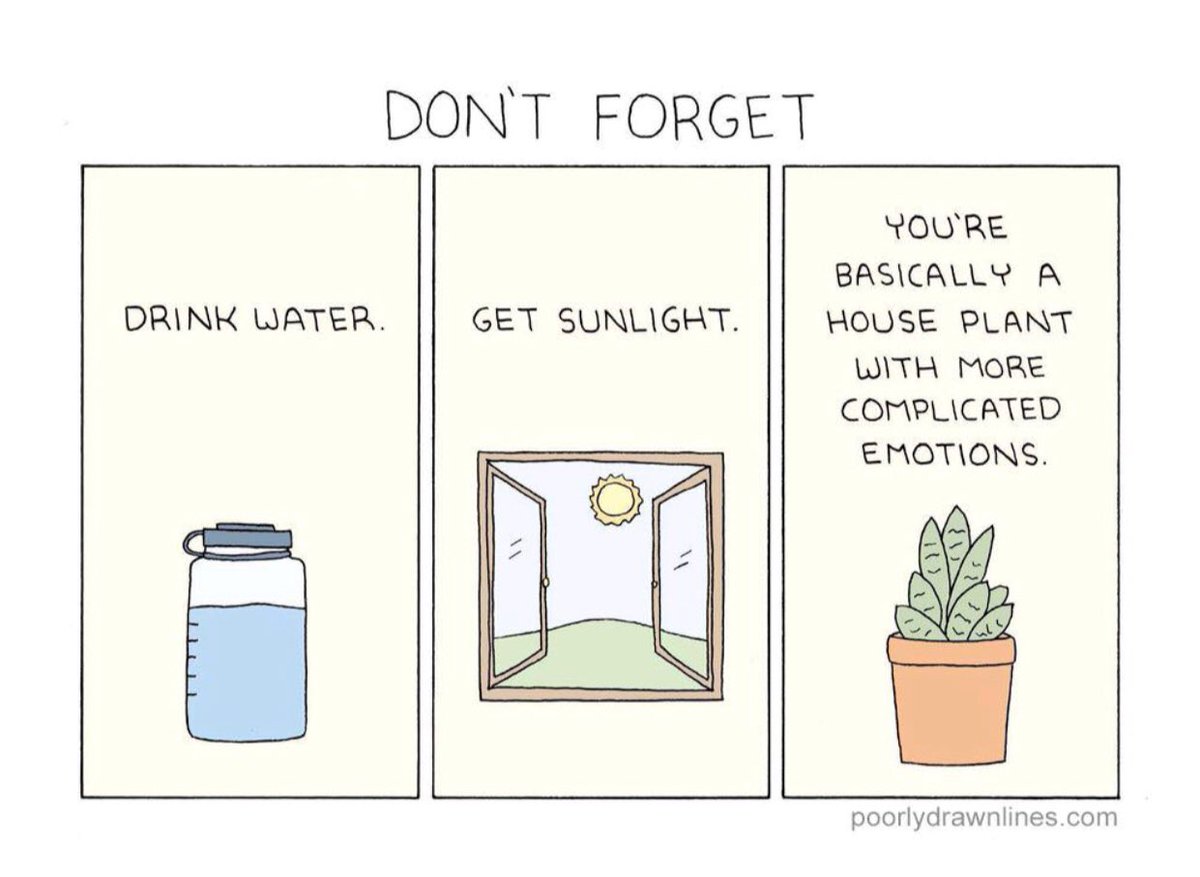
I come from a permanent NON DST zone and love it.
Turns out we all just forgot the offset changed between us.
> DST is linked to a six percent increase in car accidents. The study analyzed 20 years of data and found that DST is responsible for around 28 deaths each year.
https://www.phillypilaw.com/2021/03/15/car-accidents-dayligh...
But just because I'm willing to put up with it when I travel doesn't mean that I want to put up with it twice a year for no apparent benefit.
If I had the option to not have to deal with time zone changes when I travel across the country (or world), I'd vote for that solution. Even if ballistic air travel means I can fly from LA to Tokyo in an hour, the 17 hour (well, 7 hour) time difference means it'll never be a seamless trip even if I can do it in an afternoon. I'm told that if you have the time, taking a cross-atlantic trip to Europe is great because there's no jet lag, you slowly adjust to the time over the course of the travel.
Also flying is optional, but changing from XST to XDT is not.
"Eating is bad."
"Children are bad."
The answer, clearly, is to be a pedestrian who eats children.
The argument could be made that if you don’t board, that plane will still fly and consume the same fuel, but of course the numbers only matter en masse anyways.
Those are still a thing? We just use cell phones for alarms, and the only clocks that need to be changed are the decorative analog wall clock and the microwave which has to be reset after power outages way more often anyway (when we're not just leaving it blank).
We try to limit smart phones in the bedroom in general, spend less time in bed in the mornings.
Wall-clocks were convenient, cheap, and provided comfort in the form of not needing to wear a watch around the house.
[citation needed]
I would think that changing clocks is actually the more "normal" thing to do.
The only clock I don’t change is my motorcycle because I can’t be bothered to use the archaic menu system to update something I never rely on.
That said, it does take me a few weeks usually to update all the clocks as I’ll only do it when it starts to bother me or if that specific clock contributes to me being late/early.
But I used to rely on my car's clock to know what time it is, and kept it updated for DST.
I'm sure you remember passwords, next to which the number 1 is quite easy to recall immediately. Don't make it complicated when it is easy.
Granted, time switching doesn't directly force trains to stop, but I imagine the risks related to the time change or just travelers' confusion is the reason why that happens.
In the US it's normally 0200/0300 to minimize the amount of people actually affected. (When we fall back on Sunday mornings the boozy crowd treats it as an extra hour to keep partying.)
Year 2022 – 30 October,
Year 2023 – 29 October,
Year 2024 – 27 October,
Year 2025 – 26 October,
Year 2026 – 25 October.
Every time it's the same hour 3:00 CET / 1:00 UTC. Which means that the hour 3:00 shouldn't display on the clocks, because the Summer time ended, and so 2a:00 displays instead (the "a" is supposed to be displayed till, and including, 3a:00, after which 3:01 should be displayed without "a").
[1] http://isap.sejm.gov.pl/isap.nsf/DocDetails.xsp?id=WDU202200...
I never thought that changing clocks was the pain.
It’s that everyone gets jetlag kinda randomly.
One hour extra of sleep or one hour less. It’s just random, seemingly comes out of nowhere and knocks me on my ass for a couple of days while my body gets used to doing everything the same but an hour earlier or later.
It’s literally the same as jetlag except I don’t have any environmental clues to help my body understand it’s _supposed_ to be doing something different
I think that depends on how many clocks you have. My wife likes clocks and we have one in nearly every room, including 2 that are only reachable with a ladder. That's in addition to the stove, microwave, and even the refrigerator and toaster oven have a clock for no good reason. Plus the rice maker, bread maker and coffee maker also have clocks to allow timed cooking (i.e. have the rice ready by 6pm).
If you don't use the 6pm feature it doesn't matter if the time is accurate. I have a rice cooker that's permanently blinking 12s, and two TVs that I have no idea what time they're set to because I stopped updating them for DST and there has been a power outage or two since then.
If you're unlucky and _have_ to have everything in sync then you've chosen your pain, so good luck to you. =)
We don't use the bread maker time, but when setting the mode, it shows the estimated completion time rather than duration, so if you want to know how long it's going to take, you need to know what the time is set to.
If there was a way to disable the time completely, that wouldn't be so bad, but I don't like the "set me!" flashing 12:00 all the time on the microwave, and setting it at some random wrong time seems worse than having it exactly an hour off.
If I had to change dozens of clocks but not change my sleep schedule I would do that.
We live in SoCal, which mitigates the problem somewhat.
I really wish we’d end these shenanigans and just operate everything in UTC. How many human lifetimes have been wasted writing code to handle timezones and conversions? We live in a global economy, it’s time to start thinking like one.
I never really cared for the time change. Even though there was a time when I would have preferred one over the other, at this point I would be happy enough to say "good riddance" regardless of which is decided upon.
I’m all for KISS but the fact that we can’t get software to do do this reliably says much more about software quality than anything else. This just isn’t complicated. We’re not talking about calculating across timezones or accounting for leap-seconds or anything like that. Just add/remove an hour on two specific days of the year.
Most people have complete control over when they go to bed, as they choose a particular time to go to bed.
I think the same logic that gives us different timezones would suggest summer hours (or in the limit, a continual shift) though - so perhaps we should just go the whole hog and have GMT (or whatever, doesn't matter) as a fixed global time!
Yes, humans survive in Iceland, but since a lot of our evolution occurred under near-equatorial sun, people notice that some of the “nice to have” chemical reactions in our body (e.g. our circadian rhythm) are less common when there.
If one’s prefrontal cortex decides to use executive functioning to have the rest of the brain “ignore” that problem, that’s one solution, but many people can’t do that or find it very taxing to do so.
Honestly I can't think of a single legitimate reason why you would want to hang onto daylight saving time.
It changes on a Saturday night. It's almost not noticeable. One day a year you get one less hour; another day you get one more.
I mean if changing the times one hour is so bad, what about flying across 3 or more time zones?
While I know that jet lag _does suck_, if changing the time one hour at the least impactful time of week is so insane, it must make traveling very difficult for some people.
I'm not even campaigning for stopping or DST or ST (I frankly haven't thought about this problem that much because it just hasn't mattered much to me), I'm just surprised it is considered "insane" or a huge deal to many people.
Detroiters go from 6:40am sunrise to 7:40am sunrise, which tends to get noticed while Bostonians go from 5:55am to 6:55am.
Guess where DST was a major political issue in the 20th century (the memory of that and related debates is why the previous generation wanted to ‘let sleeping dogs lie’)
In the US it would be less weird, but still weird.
That said, I'm heavily in favor of ending it. It's stupid. But I disagree that permanent DST is less stupid than time changes. I think the idea of permanently having the clock say an hour later than it is is just as senseless or more so than the yearly switch. Just end this madness and be done with it.
I wish they had choose EST but fuck it, I'll take EDT. I don't care. I just want this to stop.
Noon is when the sun is 50% done with its cycle from rise to set. We base our clocks on that. Not delusion, abstraction. It is simply a measure of objective reality.
Deciding that noon is at 1:00pm on the longest days of the year so that the sun can set at night instead of evening is delusion. Deciding to make that permanent all year around isn't any better.
Time zones boil down to "for consistency's sake, we cannot have an infinitely granular way of setting time across longitudes" and people chopped the world into slices. At the middle of each slice, noon is supposed to be noon and is denoted with "12:00(pm)". This is a sensible compromise between clocks changing by the second based on GPS coordinates and the whole world having the same time. " noon is when we decide makes the most sense logistically" is not the argument here, it takes the nuance out. Noon is when, at the middle of the time zone, the sun is midway in the daylight part of the cycle. This is the crux of it, not simply "we all decided". We all decided because of something. there has to be a basis in reality, otherwise society is just shared delusion and things go off the rails quickly.
Hell, the application of 12 to high noon is relatively new. For the Romans, it was the transition between the sixth and seventh hours of the day, but they thought of it as the end of the sixth hour. Because of this, 'six/seis' is the root word of 'siesta', the mid day break in Spanish speaking countries.
Society is not going to "go off the rails quickly" as you suggest just from us moving the numerals we decided in the first place to new temporal locations, locations that we've moved them to and from twice a year for over a century.
http://blog.poormansmath.net/images/SolarTimeVsStandardTime....
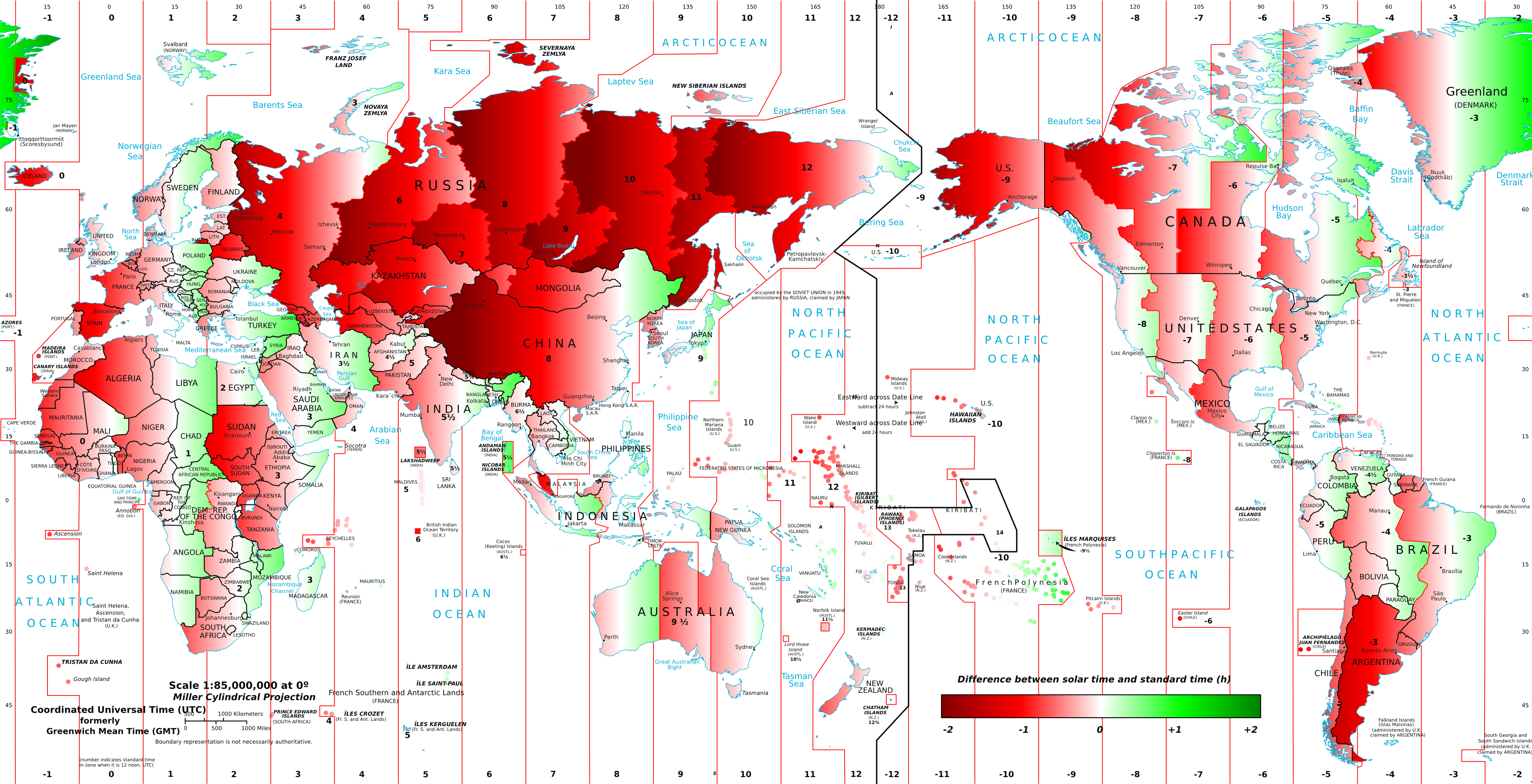
But of course a whole lot of the population lives in the part where it's worse.
In addition, people who don't think it's a big deal because other people have dealt with the problems is causes for them or they have been statistically lucky in never having had a related problem.
- There's a 3 week span where the US changes to DST but my country don't, meeting times get hectic.
- My dog goes out at 6:30 am in the morning, 6:30pm afternoon and eats at 9:00pm. After DST changes, the poor guy gets all confused, and wants to go out at 5:30 in the morning.
- I do find it harder to fall asleep after the daylight time change. It disrupts my sleeping/resting for at least 2 weeks.
I am happy that the USA got rid of it, HOPEFULLY the Mexican government will as well, and fingers crossed, they also decide to stay with DST, otherwise the timezone differences will be crazy.
The states that have this law waiting for the fed asked it to be reviewed.
I wonder if daylight time will be the new standard but your state can opt for standard time if they like.
This passed the senate today but it still needs to go through the house and president. I hope it’s smooth sailing.
Aside: I’m curious why states care about the federal law here but don’t in the case of THC legalization. I think it’s legal with (at least) a medical card in UT and CA.
Weed is illegal in the USA for everyone's regardless of age.
As an example France and Spain have no business being in CET/GMT+1 at all. France is geographically entirely in GMT, while some of Spain is in GMT-1 even, I mean what the actual fuck.
Time zones should be based on science, and work/school schedules should be flexible enough that people can decide on a company/institutional level when to start. If you want to start later, start later, don't fuck with the countrywide clock and make timekeeping a nightmare you goddamn idiots.
With that in mind, picture how annoying it would be if you crossed a timezone line on your way to your (or your child's) school. Picture how annoying it would be if half the restaurants, shops, and businesses in your town were in one timezone, and the other half were in another. These issues are what timezones address, just on a governmental level.
Timezones don't try to be "correct", they try to be useful.
This is correct. As engineers we can design the most symmetric and "perfect" system, but at the end of the day, if it's not useful, people will just adopt something else instead.
> If you want to argue hard science, you'll have an uphill job of explaining to me why there should be 24 timezones and not 1440 of them.
There's a good argument against having too many time zones (this article is about continuous timezones, but the arguments are still applicable)
Well actually there are 96 of them in practice, I think it's tracked in increments of 15 minutes since anything less is a bit meaningless.
Of course in reality it's continuous so there are infinite timezones, but the only practical thing we can change are hours so minutes don't get offset and make planning even more of a nightmare. If we used a more sensible base 10 time keeping one could probably do more.
> picture how annoying it would be if you crossed a timezone line on your way to your (or your child's) school
I'm pretty sure this happens in the US to people on a daily basis? It's the unfortunate reality of living on a rotating sphere that you really can't avoid if you cross country/state lines often.
> they try to be useful
I don't see how it's useful to keep west Spain 2 hours late to their actual sunrise time. It must be rather maddening.
I don't think most of those exist, actually. If nobody is observing (for example) +6:45, I wouldn't count it as an actual time zone.
Even :30 tzs are fairly rare, I think the number of :15/45 is counted on one hand.
I'd expect it to be used in say astronomical observations, where this sort of thing actually matters and isn't treated as made up or subject to stupid opinions. Or other kinds of calculations that need the sun's position to match more accurately.
Not really. The time zones are pretty crooked so that the borders go through desolate areas. Only place that really happens is near Chicago.
The time zone change happens even further afield than the furthest exurbs of Chicago. The places there are well and truly rural.
And of course, it's very convenient to be in the same time zone as most of the EU.
I wish we also switched to permanent DST here, by the way. Daylight at work is useless now that most of us work in offices. I'd rather have it in the evening when I can actually enjoy it.
Why not just have the time be the current longitude where the sun is at the meridian? The whole world could use the same standard and eliminate a lot of confusion.
We would have to use a unit other than degrees since that would make minutes and seconds (and weather conditions) confusing.
Technically of course you're correct (and you'd probably need to include the Netherlands, Belgium and Luxembourg in there), but thousands of people drive across those borders every day. Clearly the timezones need to have borders somewhere, but it's probably easier in practical terms to keep the timezones of adjacent countries synchronised wherever possible. It also makes sense of the very late-night culture of Spain when compared to countries further east, because they're probably eating around the same solar time as the other countries. The one I find weirdest is the western hold-out Portugal.
On the other hand, clock time is entirely a social construct whose whole purpose is to coordinate social and business activity, so it should be specifically designed around social customs in order to serve that purpose.
That said, every old non-updated OS is going to F up once this happens.
I'd prefer we did away with timezones all together and just globally switched to utc. The primary function of time is for communication and that would be easier after a transition period.
It's not going to change what the sun does.
alright, prove to me that time zones exist without getting metaphysical
(YMMV, I'm describing situation here in .cz)
Try to force regulations everywhere and then there will be fights and sterile discussion just for the sake of having a regulation, as if it were a must.
People seem to hate it. Here's a news report lamenting the decision:
https://www-cumhuriyet-com-tr.translate.goog/turkiye/kalici-...
Personally, I'm happy that we get more sunlight after work hours but people who need to get up early (especially children who get up early to go to school) reportedly are frustrated with it.
I'm trying to find a pro-permanent-DST article but not having much success with it.
Here's a more balanced take on the issue with psychologists chiming in:
https://tr-sputniknews-com.translate.goog/20211123/kalici-ya...
Here's a non-newspaper source (don't miss the references bit in the end if you're interesed):
https://bilimveaydinlanma-org.translate.goog/kalici-yaz-saat...
It objectively seems like a bad idea, It appears Turkey should move back to UTC+2 and stay there. Permanent DST has many downsides.
A. The sun rises earlier and sets earlier.
B. The sun rises later, but sun sets later too.
But to add to that, the U.S. has 4 timezones[1]: Eastern Time, Central Time, Mountain Time, and Pacific Time. Each zone has a "Standard" time and "Daylight" time - that is, for the winter half of the year, California is in the Pacific Standard Time (PST), whereas in the summer (B., in your question), California is in the Pacific Daylight Time (PDT). It's a very petty pet peeve of mine when people confuse they two - when they say "Let's meet at 3pm, PST" to mean 3pm Pacific Time, but it's in the summer ~ so 3pm PST would really be 2PM PDT. I know, I know, it's petty... and normally I don't say anything and roll with it... but on the inside I weep.
[1] Note: 4 Timezones isn't exactly correct. There is Hawaii and Alaska of course, and the U.S. Island Territories too. And then there's Arizona, which is permanently on Mountain Standard Time (MST), so when the rest of the Mountain Zone jump ahead an hour to be in MDT, Arizona is still MST, which is the same "time" as PDT ~ is that a different timezone? Oh... and only most or Arizona avoids MDT - most (but not all) of the Native American Reservations in Arizona do observe MDT. WHY HAVE WE DONE THIS TO OURSELVES?!? ¯\_(ツ)_/¯
I am glad they made this change. The sun (or what we have of it) setting at 3pm in Seattle led to a lot of seasonal depression for me.
I never wake up before 7.30am anyway, so the waking up in darkness doesn't affect me.
As others pointed out, some with the actual foresight have been in standard without switching.
People are so disconnected from the world that their abstractions of it become more real to them than actual reality. I don't think it is a good thing.
Why not just make daylight savings time go away and do things "an hour earlier"? You'd literally be waking up at the same exact time, just that the clock will say 6 instead of 7 or whatever. Are we really so far gone as a society that we will go to such great lengths to fool our brains? It's madness.
Goodness. The guy is asking a simple question. People shouldn't have to frame up everything from axiomatic principles before asking for some extremely basic information.
That said, I do think decisions should be made based on axiomatic principles.
Because my job starts at 9 am regardless of the position of the sun.
We spend so much on engineering systems that handle DST changes, there’s an increase in sleep deprived auto accidents, people die from heart attacks… All to avoid individuals asking for different hours at work?
Sorry, “changing” time twice a year is not a reasonable substitute for scheduling work appropriately depending on the season.
Nor clubs nor churches and even friends when they do party they set time.
Yes, because the rest of society also changes their schedules, in sync. Most people don't have the ability to unilaterally change when they work irrespective of everyone else. If they did, switching between DST and standard time wouldn't matter either—just tell your boss you'll be coming into work an hour "later" in the summer.
Now I'm going to have that for three months, while the sun rises even later!
I'm not in favor of switching clocks, but I'd rather switch than have permanent DST. This change caught me out of nowhere and I'm already dreading it, I'm going to be miserable all winter!
The inherent problem is that we're switching the time by a full hour all at once. We could make the change more gradually, perhaps by a few minutes each week—but nobody wants to coordinate that!
They could also tie it to a vacation where people tend to shift schedules anyway. Like “new hours after the new year!”
If we as a society wanted to adopt this solution (which admittedly requires societal agreement—I think you might need that anyway!), I actually think changing clocks would be the only way to make it work. Most clocks these days are or could be computers, so we could make them adjust themselves by 15 minutes every Sunday, and no one would have to think about it.
For most companies it wouldn’t be hard to say “no meetings before 9am from November to March”.
> People are so disconnected from the world that their abstractions of it become more real to them than actual reality. I don't think it is a good thing.
But then you do the same thing. :D There is never a jump of 1h: the "daylight" time changes gradually, so if you want to move 1h one way in 182 days, you only need to note how today, as you woke up at the same time as yesterday, it's now 7 - 1h/182... And it will be 7-2h/182 the day after, and... That's very confusing.
This is not an argument for DST, but an argument against any "artificial" adjustment (both DST and the one you propose where you wake up at the "same time" but it's suddenly 1h of a difference in wall clock time?).
Basically, it's easy enough for a region to decide on the most suitable timezone (eg. with or without DST of today, or even something entirely different), and keep that on for the entire year. If you end up waking up at night for work and that bothers you, make sure to affect that regional decision when it's being made. If, like me, you care more about having daylight hours after work is done, then vote the other way. Ideally, find work that will have flexible start times (this is generally hardest for institutions dealing with plenty of people like schools and government administration).
"Noon" is when the sun is midway through its daylight cycle. We call that "12:00(pm)" for the sake of measurement.
Switching to UTC worldwide is just as bad as switching to DST, except at meridian.
Time does not change naturally; noon is noon is noon is noon.
I'm not proposing what you think I'm proposing. I'm saying the only sane solution to this is permanent standard time, which is what I think you want too, and that permanent daylight time is not more sane than switching twice a year.
As the other poster replied, time is continuous, and sunrise/noon/sunset changes as you move East or West gradually. There are no 1h jumps like with timezones.
So in any timezone, "noon is noon" holds only for a very limited set of areas exactly at the appropriate meridian. Move 80km/50mi East or West at the latitude of 45 degrees, and you are looking at 1 degree of longitude displacement, or noon being 24h/360 or 4 minutes off.
At the same time, in that same timezone, you'll have areas that have their astronomical noons off by 1h (and even more when timezone is not strictly aligned to the 15 degrees of latitude — in Europe, Western-most parts of Spain are almost 2h away from Eastern-most parts of countries in CET/CEST). But as you cross timezone boundaries, you might go 5km between towns, and have a time difference of 1h even though noon is at pretty much the same time in both towns. Any practical solution is going to be similarly "incorrect" no matter how you construct it.
So in essence, all of this is a convention on what time is most useful for a region: none of it is "sane" or, on the contrary, "insane". It is simply what majority of the people agree to. If you are in a minority that disagrees, yes, tough luck.
Finally, time is there to coordinate events between people. Timezones are there to coordinate our internal biological clocks (and some sunlight dependent activities) to the area we are in. While "continuous" timezones would be most correct, they'd be in conflict with time serving as a coordination tool. And not having any timezones would be in conflict with coordinating our internal biological clocks. Both of these are societal constructs to help with societal behaviour.
So 24 timezones (or 48 with DST on/off) is the middle ground, and while I can appreciate some people will struggle more to acclimatize to one or the other, neither is more correct or more wrong. I personally prefer permanent DST for the same reason others have raised: I like my post-work hours to have some daylight even in the winter, and it seems this is the predominant feeling which is why DST is "winning out".
Basically, all this is to say that you seem to be inventing an argument instead of simply saying "I prefer more daylight in the mornings when adjusted to the wall clock time of the society", which is a fair standpoint to have.
Standard time is just as arbitrary. I’m not a morning person and am much further east than the “center” of my zone, I’d much rather have a brighter/longer afternoon.
Perhaps that's most correlated with the choice people might have? Esp since there are studies linked in this discussion that suggest people have better health outcomes (in a few very specific cases, but also winter depression) on the Eastern edges of timezones.
Time is an abstract thing we have let rule us. I love the stories of indigenious tribes where they worked on a task until it was completed, not because some arbitrary shadow on a stick. When it was light, you worked. When it's dark, you don't work. Of course, we have electricity now so we've screwed ourselves with an easy time of day schedule.
Edit: otherwise, yes, this is kind of the style I was thinking. However, I was hoping less of a "religious" difference and more of an enlightened "idiots did that?" kind of thing.
My friend, this is how all of human language works.
"Ceci n'est pas une pipe."
Bruh....
With permanent DST, it will instead be 08:24-18:00
What bothers me is having to wake up when it's still dark outside. The last few days before the DST switch in the fall are always super rough for me, every year. Going through that all winter, every winter... I'm absolutely dreading this!
Society is already optimized for early risers and all we're doing is making it worse. Maybe there will eventually be a movement to switch time zones, but it would take at least another decade.
On the contrary, when the sun is already blaring, it feels like you're already running late & behind. Not to mention interfering with already precious sleep.
The world is already hyper-optimized for early risers. For once, let those of us who don't naturally fall asleep until well into morning hours enjoy a perk! :-)
All I'm saying is that it feels psychologically rewarding (for me anyway!) to wake up and start the day before the sun is blazing. When the time changes in the winter, that perk is gone. Moreover, driving without sunlight in the morning doesn't seem like a big issue; it's presumably preferable to driving at night when ambient light will only decrease.
Excluding shift workers, I don't think I've ever heard someone complain about too much daylight during evening hours--aka the hours during which people are usually living and enjoying life.
From 3rd week of June to mid-July it gets dark at 22:00. Uh, what a difference!
I also have the light switch through two phases of red at night which signals to me to do things in the evening and prep for sleep.
I don't know if that will help you personally, but I can recommend it.
What I don't get is why it's so hard for people to just say "ugh, 5pm is already dark so we should start an hour earlier and go home at 4pm" or whatever.
I bet it's those smug morning peoples' fault.
You don't need to kill anyone. You can just travel to AZ or HI, neither of which changes their clocks for DST.
It would take more effort up front but eliminates the need to change clocks twice a year
But "Permanent DST" is a lot easier to say and type than "Eliminate DST and shift the time zones".
What they're saying is that there are two positions:
1. Permanent Standard Time > Permanent DST > Switching
2. Permanent DST > Permanent Standard Time > Switching
And that NOBODY (or at least, an extremely small minority) would rather choose switching over either of the permanent options.
3. Switching > Permanent Standard Time > Permanent DST
4. Switching > Permanent DST > Permanent Standard Time
It's the ones where Switching is in the middle that are basically unheard-of.
1. Permanent Standard Time > Permanent DST > Switching
5. Permanent Standard Time > Switching > Permanent DST
That is it is some believe that the sleep deprivation imposed by permanent DST is so bad that even with all the downsides and health detriments of switching, it is still preferable over permanent DST. I don’t know how wide spread this is though and I think most public health experts agree that permanent standard time is always the preferred option.
Having lived in Permanent DST and switching timezones (but never in permanent standard) I definitely prefer permanent DST. However I do not have fond memories of permanent DST and I wished policy makers would listen to experts and move to permanent standard.
Timezones and DST were largely instituted in the era of 7-15h work hours (still remaining in plenty of govt institutions), and we are more in the 9-17h realm today, so society has already "timezone-switched" in the last ~100 years (quite a bit simplified, ofc).
I'd be surprised at how come one gets sleep deprived from having a pre-set timezone that doesn't jump around ever for a location? If you go to sleep at 9pm (way past dark time in the worst morning-case) and the sun only comes out at 8am, you'd be sleep deprived if you wake up at 7am (10h of sleep) because it's dark outside?
As for the 09:00-17:00 era. That is largely untrue in most of America. School still starts at 08:00 in most places, industrial and production workers often start at 07:00 and work until 16:00. The largest employer in my town is a production facility and operates between 06:00-15:00 or even 05:30 and 14:30. It is only true of white collar jobs like ours that the 09:00-17:00 is the dominant hours.
School starts at 08:00 because work starts at 09:00 and parents want to drop the kids at school on the way to work.
> The largest employer in my town is a production facility and operates between 06:00-15:00 or even 05:30 and 14:30. It is only true of white collar jobs like ours that the 09:00-17:00 is the dominant hours.
As far as I know where jobs have regulated opening hours (e.g. government agencies, banks) those hours are generally 09:00-17:00. A facility that's already operating e.g. 05:30-14:30 is much more likely to be able to adjust its hours.
The workers might see this as a benefit because they most often commute by car and they get to beat rush hour. And then you have a worker culture which is really hard to change.
> The workers might see this as a benefit because they most often commute by car and they get to beat rush hour. And then you have a worker culture which is really hard to change.
Well in that case it doesn't make any difference to them whether we're talking about changing clocks so 09:00 is 1 hour earlier, or other companies changing their starting time to 08:00. So I don't see how this is an argument for one or the other. If your position is that other companies shouldn't be allowed to change their start time (one way or another) because it might affect this production company, surely that's the tail wagging the dog.
I wonder where the preference for DST then comes from? I've replied to that thread with a question of what the population distribution is in regards to West/East sides of timezones, and I also wonder does this apply if we move the timezones even further (another 1h or 2h?). Basically, it would indicate that the modern rhythm is out of whack, though it'd be harder to test that.
For me, I simply want more daylight in the evening.
I don't give a shit about waking up with the sun. I'm going to sleep until 10 or 11 AM on the weekends anyways, so I want the daylight to be shifted later so I have more daylight to do things.
Somewhere else in this thread, someone put forth the idea of a fixed dawn at 7 AM. I'd rather have a fixed dusk at 9 PM. That would mean that the sun might not rise until after noon during the shortest days of the year, but that's fine by me. Obviously, such a system is not feasible (We'd have to change our clocks every day!), but if it was, it'd be my preference.
Still, even if we allow for 9-17 employees having these preferences, they'd be waking up in the dark hour (somebody mentioned Sun rising at 8:30 in SF in late December with DST, and 7:30 without, which still precludes most of non-white-collar jobs too, and depending on the commute, some white collar jobs too).
Not questioning you, ofc, just wondering why none of the stuff adds up? :)
As for HN demographics, I am not sure that's true: while they are mostly white collar workers, they also get a lot of flexibility so they could probably just get up a few hours earlier to start working for more afternoon daylight.
Permanent DST makes no sense to me. Maybe it's my astronomy background, but "noon" means something, something that involves the position of the sun and the earth. We quantize that to timezones for coordination, but it doesn't mean it's meaningless.
If we stop switching, fine, but don't mess with noon. Just change your schedule to 8-4 or whatever. Permanent DST seems like wanting everyone to be above average. Or deciding that everyone would be happier if they're taller, so we're shrinking the foot by 10%.
Most people don't have the privilege of deciding their work hours.
> Permanent DST seems like wanting everyone to be above average.
Not at all. I'd simply rather have more daylight in the evening when I'm awake. To me, any daylight before 10 AM is mostly wasted, as on the weekends, I don't even wake up until 10 or 11 AM. Granted, I do acknowledge how much of an outlier I am.
Simple fact is, most people would rather have the extra daylight in the evening, even if that means that "noon" no longer has the special meaning of "The halfway point between sunrise and sunset" or "The time when the sun is highest in the sky". I'd rather that time be 1 PM.
* You don't have to commute in darkness (assuming it takes you less than 2 hours to get to work, and work starts at 9AM).
* You have as much daylight as possible when you actually get off from work at about 5. Assuming your day never gets shorter than about ten hours. If you're far enough north or south, this whole exercise gets futile very quickly.
There are cultures that actually did this, but DST is a gross hack on top of a civil time system that isn't designed to work this way, and causes more problems than it solves. I support just getting rid of it.
Since that would also require a lot more work, it doesn't happen, but it's also more obvious what DST is actually doing when you think of it like that.
Heh...I'd rather have a fixed dusk at 9 PM. Yes, I recognize that this would mean that the sun wouldn't come up until noon on the Winter Solstice. I'm fine with that.
Here's the thing: If you're a proponent of permanent standard time, you should be in favour of turning off the switching no matter what. Even if it means daylight time. Because you know what? Your local time zone is changeable. You can lobby to change it. If permanent DST really results in the entire country turning into sleep deprived zombies having spontaneous heart attacks as they arrive at work and crashing into children going to school, then there'll be pressure to change it -- but we will have at least already started the process of eliminating the worse thing: changing twice a year.