Ex: English studies would not be complete without Aesop Fables. Learning the stories is the only way you can understand common phrases / idioms like "sour grapes".
Chinese studies includes Romance of the Three Kingdoms. A Chinese Friend of mine explained the meaning of the phrase "Pour the oil", based on some Sima-Yi / Zhuge Liang story from RotTK. (Which IIRC, means something along the lines of "I'm not going to be a sore loser about this")
Japanese studies include something about an impenetrable shield and the all-penetrating spear, which apparently is the root word for contradict. Using "Google Translate" on this one, "矛盾" translates into "Contradict". But "矛" means Spear, and "盾" means shield.
So a dumb translation would translate "矛盾" into "SpearShield", which is nonsense. But the meaning is "To Contradict".
Most of the vocabulary you pick up from context; idioms aren't fundamentally different from other parts of the language in that regard. You don't need to know an idiom's source material to understand its meaning, no more than you need to be aware of a word's etymology to use it. Though it doesn't hurt and it's often fascinating.
Most of those misspellings have been forgotten, but the most common: Oll Komplete (All Complete) was so common, it became ingrained in our language. Today, everyone knows things are Okay, despite not remembering the original story.
-------
Still, learning some degree of stories helps remind us that not all words are to be taken literally in a language. That meanings are assigned based off of shared experiencnes.
There is no definitive answer for the etymology of OK - your declaration certainly isn’t a fact. And it wasn’t in the 1700’s.
https://en.wikipedia.org/wiki/List_of_proposed_etymologies_o...
Truth be told I never actually looked up where a lot of these idioms come from. I just heard other people using them and then I started to use them too.
Interestingly, the first given translation is itself an idiom (lit. "to wait for the thick/fat end"). An idiom I understand, even though I had no idea where it's from; I looked it up, it relates to corporal punishment. The second translation is a more generic one.
Unfortunately neither of these help to understand the English shoe idiom which I, as a native English speaker, have no clue about.
"what is the work 'fuck' for", the innocent young vulcans want to know. "surely there are more logical intensity modifiers."
"yeah, you'd think so," say the weary, jaded vulcan professors, "you'd really fucking think so."
My favourite is "in bocca al lupo", which roughly translates to "break a leg" - note the lack of verb.
Also that's the current meaning, which changed over the last century.
On top of that I remember three commonly used gestures two of which look the same to the uninitiated eye on photos.
Overall: his eyes red!
A lot of slang was invented less than 1000 years ago.
Honestly I only vaguely recall reading a few stories from Aesop when I was in second grade or something. Maybe a story about a wolf and another animal and a river? None of it really stuck.
Though, as someone who speaks a little 日本語 (though nowhere near fluent), I don't quite understand the significance being ascribed here. There are huge numbers of Jukugo ("compound kanji") [which are frequently, but not exclusively, onyomi words] where trying to understand the word as a compound of the kanji/hanzi components would be equally nonsensical, and aren't anything that requires special mention in language learning. Having multiple readings of even a single kanji is also pretty normal, and sometimes those are not all readily apparent from understanding one definition, either. Also plenty of kunyomi words where the reading would end up with a word totally different from the initial kanji/hanzi.
To my knowledge, this is no more due to idioms from culturally significant literature than the word 'novel' being used to describe books and new ideas is.
Edit: Looks like a fable is the origin for the word in Chinese, but no mention of the fable when I learned it in Japanese, or indication that it was any different than any other word where the component hanzi/kanji (or radicals therein) would not make sense as the definition.
I personally learned of it from the Japanese game "Ace Attorney".
There's a spear/shield ornament somewhere as evidence, so the game spends a decent amount of time introducing the myth to the audience. The myth is seen again in Trigun (impenetrable shield was one of the enemies that Vash took down), and again in "Rising of the Shield Hero" where Shield-guy's biggest rival is the Spear-guy.
A lot of Japanese media talk about this spear-vs-shield story. If it was a myth borrowed from China, that still makes sense. (Aesop is Greek after all, but still influenced English).
--------
My overall point is that some words reference stories rather than the actual meaning of the word. Learning the underlying stories can help when learning those languages.
It was absorbed into Sino-Japanese vocabulary along with many other Chinese words.
It's actually pretty rare, at least for me when I was learning English. Usually I would understand from the context what the idiom must mean, but not necessarily what each word means.
For example: "don't count your chickens before they're hatched" was pretty obvious, but "hatched" was a new word for me in this meaning, I only knew about the door thingy not "hatching from eggs".
I think there's 2 styles of learning - breadth-first and depth-first. My wife is a depth-first learner. She would look up every definition as many levels down as needed before going to the next part. It drove me crazy when I studied with her because my stack would overflow.
I try to understand the general idea, look how it works, and only then go down into details. She was very frustrated with this because she couldn't deal with "details we ignore for now".
In language learning I think depth-first is a bad idea, because meaning of the details change with context. So when I learn a language I don't even look up unfamiliar words if I can still guess the general meaning. After encountering a word many times in different contexts you get intuition on what it means and how it's used much better than if you looked it up and took the first meaning as gospel.
Nearly monolingual English speaker here.
I'm very familiar with the noun "hatch" meaning a kind of door, and the verb "hatch" meaning to emerge from an egg. But until just now I had never noticed that they're spelled and pronounced the same way. (And apparently they're etymologically unrelated.)
One thing I learned recently is the etymologies of the words for “Orange”.
The Orange Order is a fraternal order in Northern Ireland named in honour of the (Dutch) William of Orange, whose title is from the Principality of Orange (in what is now southern France), named after the city of Orange, whose name reached that after a few rounds of minor corruption from the Gaulish “Arausio” meaning cheek or temple.
The Orange Order likes the colour orange. I don’t know where on that etymological chain the connection stops, but the word for the colour is derived from the fruit, the fruit has the name “an orange” as a corruption of “a norange” (except the language this happened in varies from English, French, Spanish and Italian depending who I ask, so might have been “une norenge” but all the stories agree the “n” shifted), that from the Arabic nāranj, and that is apparently fairly close to the Dravidian root word.
Returning to William of Orange, the Dutch word for the fruit is “Sinaasappel” - Chinese Apple. And of course, “Mandarin” is the English words for both a type of orange and a branch of the Chinese language.
It shouldn't, somehow, Guillermo is William and Naranja is orang, it just sounds like someone is having me on.
Sorry!
Not sure why!
hatch / to hatch
fire / to fire
function / to function
form / to form
moor / to moor
...
Well actually I do have one from that time, but not from bash.org: when I started playing nethack I remember being confused because the game would describe foul foodstuffs as "tasting terrible", but in colloquial French (my native language) "terrible" is often used as a positive adjective (much like "awesome" shifted from meaning "inspiring terror" to "excellent" in the English vernacular).
So, when the game says that something "tastes terrible", does it mean that it tastes awful or awesome? I now know the answer, but back then it wasn't so obvious.
Elves are wonderful. They provoke wonder.
Elves are marvellous. They cause marvels.
Elves are fantastic. They create fantasies.
Elves are glamorous. They project glamour.
Elves are enchanting. They weave enchantment.
Elves are terrific. They beget terror.
The thing about words is that meanings can twist just like a snake, and if you want to find snakes look for them behind words that have changed their meaning.
This is the kind of thinking that led to a friend of mine and his entire family, touring Germany, saying the word for "apple juice" whenever they meant to say "thank you".
I'm not even kidding.
Comic example in film: in the Oliver Reed film Hannibal Brooks, a misunderstanding leads one of the major characters to believe that elephant translates into english as "we're-here".
There are several misunderstandings in translation between Australian Aboriginal languages and English.
The latter is easy to figure out
https://www.chicagotribune.com/news/ct-xpm-1986-12-14-860403...
(Coincidentally, I used exactly that expression, precisely that way, earlier today. Unless somehow the OP read what I wrote, which isn't impossible.)
That's what I meant by guessing from context.
Sometimes this is funny, sometimes it's aggravating.
In this case, funny and extremely apt.
Meanwhile, "To fall for someone" is not an idiom but a phrasal verb, and these are (imho) much harder than idioms because they do not "signal" their exceptionality as strongly. How am I supposed to know that "falling for someone" does not involve any actual falling, or that when you "make up with someone" you are not really making anything?
This isn't a great example; from a dictionary perspective there are three words in the sentence "I fell for her", being "I", "fell for", and "her". Trying to analyze it as the four words "I", "fell", "for", and "her" is doomed to failure[1], because two of those words aren't even present. But if you did know all the words in isolation, you'd have no trouble with the sentence; nothing tricky is going on.
(The four-word analysis actually does work, but it would be an unusual reading, with "for her" being a benefactive construction analogous to "I wrote a song for her".)
[1] You can get a sense of why this analysis can't succeed by trying to relate "her" as used in the sentence to any standard sense of the preposition "for". ( https://en.wiktionary.org/wiki/for#Preposition ). None of them work.
This is further exacerbated today where the contexts could be cross-cultural, due to the Internet fostering quicker and communication over borders. I recently ran across a (somewhat off-color) humorous username 「一哭二鬧三上悠亞」: it would have made no sense at all if you only know the Chinese context (first six characters) or the Japanese context (last four characters)! Even though all eight characters are intelligible independently in both Chinese and Japanese.
It turns out there are a lot of poems, stories, etc a native speaker would learn in school and apply to their speech that a foreign learner might not even know about. One of the teachers compared this to learning Shakespeare, but I don't think it's nearly as involved in day-to-day speech the way it seems to be for native speakers of Chinese languages. I certainly don't know anything about Shakespeare other than what I picked up from Star Trek even though I'm sure I use things that came from his works all the time without knowing.
  - Burrito... ew
  - Alambre. huh?
  - "al Pastor" ok, that must be lamb... it's PORK??? WTF???
[1] "What it says on the tin" is a reference to canned food, where the label on the can is important, because you can't see inside. Of course, the cans are made out of steel these days, but we still... ugh, never mind.
- Ludwig Wittgenstein, from Philosophical Investigations
[0] Ironically, there is disagreement over the best translation of verstehen. Understand and comprehend have some conceptual overlap, but also some distinctions. The general idea is, though, of understanding in a greater, more all encompassing sense that is only possible when someone/something is no longer alien.
> Nim's longest "sentence" was the 16-word-long "Give orange me give eat orange me eat orange give me eat orange give me you."
Alien intelligence: the extraordinary minds of octopuses and other cephalopods
https://www.theguardian.com/environment/2017/mar/28/alien-in...
Elements used for prediction include: - Predictable timing, both circadian and in relation to circumstantial events - body language - sound patterns - touch patterns - performative actions with environmental objects
It’s not so much a “universal” language, but rather that mammals seem to share some semi-universal ability to train each other in these cues and learn them. They can be used for surprisingly rich inter-species communication and over time both parties move a lot of the inference and signaling to their subconscious, no longer even taking active brain power to decipher intent and meanings.
I’ve also done this when I was working very closely with just myself and one other person and neither of us spoke the others language but we had to get the job done for 8-12 hours every day. We established a system of different grunts and cues that we used first for several weeks. Once that was fluid and we could communicate everything that we needed to, we started replacing/connecting the established grunts with our own language words and that’s how we taught eachother the others’ language. At least for the domain of our work.
I have no idea if any of these would be possible with cephalopods but I feel like if we had children and baby octopuses raised together they may find reasonably robust ways to communicate intent, feelings, and find the ability to create novel games to play with eachother.
I played with my pet rat and we were good friends. We’d play little games and I’d tickle her Rats and humans diverged maybe 80 million years ago. Interestingly, humans and dogs diverged perhaps 100 million years ago, and we know we can communicate with dogs.
However an octopus is ~600 million years away from a mutual common ancestor, which is way back in the Precambrian. It’s an order of magnitude more time.
It's been a consistent artificial selection pressure.
Aren't there a few primates that have learned sign language?
(The above is meant in jest, of course.)
Sounds like a good idea to me. But of course one needs to be open minded, there are other functions that satisfy the same rules. :-)
I would put forward "grok" as a translation. Your use of "no longer alien" evokes that word all the more.
Shakespeare and Aesop… and Heinlein.
In general you are correct, but there is the special case of a person using machine translation as a tool to try and communicate with someone they don't share a language with.
Of course, the first approximation is the person performing all the stereotypical monolingual behaviors of speaking extra slowly and loudly, using pseudo-simplified language, accompanied with exaggerated hand gestures that don't really help.
BTW, I've seen people struggling with voice assistants in almost exactly the same way (absent the hand gestures).
But the point is that people modify their language to try and compensate for communication barriers all the time, and it is just a skill, whether it is speaking to children, or foreigners, or code switching to speak to someone in a different class or subculture. Machine translation adds a new wrinkle to the mix, but it isn't all that different.
Which I did just yesterday by putting the text I wanted to convey into Google Translate and then tweaking it until the translation looked reasonable. In the end, I still had to postprocess the output a bit, but I ended up with something which I couldn't have written if starting from scratch, which was entirely worth the small pain of using slightly less colorful language.
I will generally run my English emails through machine translation back and forth multiple times until I find phrasing and word choices which are “bistable” (I get back the original English). I’ll also usually double check specific critical or unstable words using a variety of translation aids (not machine translation) to ensure any (scope-limited) Chinese I write is actually correct.
We do have one native Chinese on my side of the team, and every time I’ve had her check the Chinese she says it’s correct for our technical domain.
So we really are already at the point where we can communicate across languages with surprisingly low error rates.
EDIT: As an example, how much time is dedicated in schools to explaining turns of phrase and such in Shakespeare. Who at least was writing Modern English. Go back to Chaucer and good luck...

"Poverty of the stimulus"
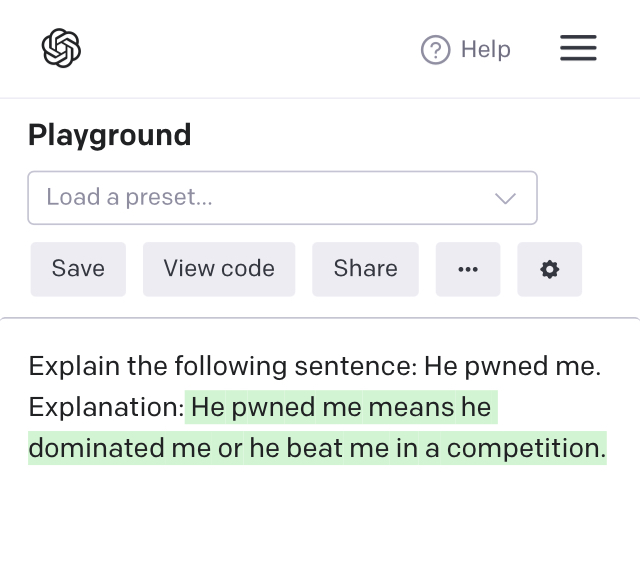
How does it do with "I fell for it?"
So I would say that, while you may have never heard it used that way, it certainly has that meaning in practice to many people. Don't judge the robot so harshly.
[1]: https://dict.leo.org/pages/addinfo/addInfo.php?aiid=En842ho0...
[2]: https://dict.leo.org/pages/addinfo/addInfo.php?aiid=EKHR2Car...
[3]: https://dictionary.cambridge.org/dictionary/english/fall-for...
[4]: https://dictionary.cambridge.org/dictionary/english/fall-for...

Another example would by Troy, which was a mythological city until it’s location was discovered.
(Definitely the one closer to my youth came closer to "bra"/"brah", and while some of that was assumed to be surfer-originated, I can't tell you how much it was related to Hawaiian pigdin or just convergent evolutionary vowel shifts.)
I know someone who won't sympathize with this difficulty, as he insisted on an obscure abortion joke in the man page for abort(), which will come off as super confusing to anyone who doesn't know the reference.
I'm sure most foreign language students will sympathize with the very frustrating and demoralizing situation where you read a sentence, understand every single word but you still have absolutely no idea what it's trying to convey because you're missing some idiom, reference or alternative meaning of one of the words.
For the English monolinguals reading this, imagine studying English and stumbling upon the sentence "I fell for her", except that you only know the literal meaning of the verb "to fall" so while you understand the words in isolation the sentence remains completely opaque and meaningless to you.