Although even then there are some disappointing Catch-22 processes at work. A State Senator is using the existence of a particular court case to try and delay/prevent funding, and the plaintiffs of a court case using the Senator's opposition (which cites their case) as an argument in favor of their case.
Nonetheless, I'm optimistic on the Dallas to Houston high speed rail. In my dreams, I see that project's completion as giving California a dose of motivation, so as not to be second fiddle to Texas.
-Me 8 years ago
Also the new route is a joke. The high speed rail was originally supposed to run from Dallas to San Antonio, and Austin to Houston.
You weren't paying attention then ;) because you could have been hearing about it as far back as the 80's, when Southwest first lobbied it to death (the twice-an-hour-takeoff Houston-Dallas route was their most profitable). I would love to be corrected on this by someone who was in State gov't at that time, but this is my understanding.
>The high speed rail was originally supposed to run from Dallas to San Antonio, and Austin to Houston.
When it was proposed to be federally-funded, yes. From what I recall it was a US-French collaboration that was going to fulfill that one? Unfortunately the politics at the time led to the state gov't to not seek any of the $8BB (iirc) the Obama administration was trying to give out to kick-start nationwide HSR. You can thank Rick Perry & Co. for that.
Now it is a (somewhat) different private group, and if you are posting on Hacker News, I expect you can appreciate how much harder it is to start out with a network connecting 4 cities, than a network connecting 2 cities, when you've not got federal backing. I too would love the "Texas T" network of routes as well, but that didn't happen. Again, you can thank the State administration of a decade ago for turning down the opportunity of federal assistance to build a transit network worthy of Texas.
You say it is "a joke", but it is going to take real work to build, provide real jobs, and deliver real value to people who ride it. Are you so cynical that you would you rather not have it at all, and have nothing to look to, to improve on later? If the route is successful, surely it would come to Austin and San Antonio next? What is the advantage, in your mind, of adopting an all-or-nothing framing?
Did you mean a thousand miles per hour? Dallas to Houston is under 300 miles so a thousand miles per hour would make the commute about eighteen minutes? But then, 1k miles per hour is 447.04 meters per second while speed of sound is about 343 meters per second so I don't know if that technology yet exists...
At a thousand kilometers per hour, even including about fifteen minutes of speeding up and slowing down time, a train from Dallas to Houston shouldn't take more than an hour. It would be awesome.
Speaking of dreaming, Google says Miami to Seattle is about 48 h (3,303.3 mi) driving via I-90 W. Lets round it up to 6000 kilometers to avoid sharp turns. A non-stop train at 1000 kmph would be a six hour train ride, down from a forty eight hour drive.
Imagine a train on this route, full of quiet cars on this route.
The Chinese government is much more autocratic yet it obviously does a much better job in building infrastructure
The problem with the US government is lobbyism. It does not work for itself, it does not work for the people, it works for big corporations and lawyers.
> The richest 70 members of China’s legislature added more to their wealth last year than the combined net worth of all 535 members of the U.S. Congress, the president and his Cabinet, and the nine Supreme Court justices.
> The net worth of the 70 richest delegates in China’s National People’s Congress, which opens its annual session on March 5, rose to 565.8 billion yuan ($89.8 billion) in 2011, a gain of $11.5 billion from 2010, according to figures from the Hurun Report, which tracks the country’s wealthy. That compares to the $7.5 billion net worth of all 660 top officials in the three branches of the U.S. government.
https://www.bloomberg.com/news/articles/2012-02-26/china-s-b...
So, if anything, wealthy Chinese people exert an even greater degree of control over the political process than wealthy Americans do over theirs.
Short term thinking is really destructive and limiting.
Eventually the pendulum swung in the other direction and people gained the ability to stop urban freeways, but now the pendulum has swung too far and people will sue projects out of existence.
China's land rights (or lack thereof) are not uncontroversial, and I would be surprised if they don't become a flashpoint in the future.
The interstate highway system through cities was a disaster that mostly served to turn economically productive land into craters of parking lots generating very little tax revenue. Those with the means fled severed neighborhoods with spiking pollution levels, leaving the poor with asthma in their wake. While some cities managed to recover in the following decades, not all of them have.
And suburbs that people fled to are not necessarily faring any better; suburbs are cheap to live in initially but become extremely expensive when you start having to replace infrastructure at the end of its life. Nassau County, NY, home of the first generation of suburbs, has been under state fiscal control since 2000 despite being one of the wealthiest counties in the nation, because the fiscal math does not add up.
A lot of the suburban growth that happened was also just shuffling it around a region rather than true growth. For example, Buffalo's metro area has tripled in land area despite the same population, so the same tax base is now expected to support triple the infrastructure.
Here’s my hypothesis: when it comes to infrastructure, the operative word is not yet, it’s therefore. Autocrats have a much easier time cutting through any red tape put up by those lower on the food chain than them.
In a democratic society, such as the US, there are countless stakeholders who need to be included in the process for huge infrastructure projects like this. Unfortunately, too many chefs spoil the broth as they say.
Another factor may be that the US has elections every 4 year. There is no long-term planning happening, because who knows what's happening in 4 years. Too much energy is spent on political campaigns, destroying your opponent and getting re-elected.
If you go back 50 years there were still the same election cycles but countries, not just US, were getting volumes of serious projects done.
I think its more abut the mindset change in both politicions and votes. Back then we were nation building. People expected some sacrifice to create a better future and they were witnessing this progress.
Today many people are seeing their quality of life reduce and this creates a focus on grabbing yours and looking for quick wins.
We have a great example in Australia where the govt tried to roll out nation fibre broadband. The oposition critisied what was largely a good plan as far as I can tell simply because they were the opposition. The opposition won the next election, implemented their 'this saves money' plan and fucked it leaving our country with a $50bn project that has done bugger all to improve internet.
Also now its buggered I regularily see people posting things like "why should my tax dollars pay to fix it, if you want fast interent you should pay yourself" type thing. This rather than, this is the modern circulation system of the economy and if we dont fix it our country will lose significant future oppurtunity.
But yeah we have a huge proportion of lawyer politicions in Aus and I think this is an issue. We should be looking for genuine 'doer' skill sets. I almost wonder if we should ban running as political parties and people have to run as themself so we fcus on theier histor and achivements more rather than are they my tribe.
China is much more willing to force people out of their homes for the greater good. It will be interesting to see which prevails.
"Residents living along the proposed maglev route have raised health concerns about noise and electromagnetic radiation emitted by the trains, despite an environmental assessment by the Shanghai Academy of Environmental Sciences saying the line was safe.[26] These concerns have prevented the construction of the proposed extension of the maglev to Hangzhou."
"In 2003, the MOR was believed to favor Japan's Shinkansen technology, especially the 700 series.[29] However, Chinese citizens angry with Japan's denial of World War II atrocities organized a web campaign to oppose the awarding of HSR contracts to Japanese companies. The protests gathered over a million signatures and politicized the issue.[31] The MOR delayed the decision, broadened the bidding and adopted a diversified approach to adopting foreign high-speed train technology."
I think that a big reason for this is that the US already has a half-working solution in place. Some infrastructure already exists that fulfills this role. China, on the other hand, didn't have much of an alternative in place, thus it was easier to find the will to build it.
We saw the same thing with internet connectivity and government services in Eastern Europe. Governments built much more modern infrastructures and offered more modern services because they weren't burdened by the past.
If the Chinese government wants to put a train line where houses, farms, or offices used to be, they do it. One, because they already own the land. And two, the faster goods and services can move, the faster the economy can grow.
Not an advocate for socialist/communist capitalism, but this is one area where central planning can move a little faster than the west. One are the west can vastly improve is permit streamlining.
There's a reason the autocratic government in Civilization has classically been the most efficient one in the ruleset for military and infrastructure buildout. Having to get consensus is slow and error-prone. Decentralized decision-making is effective at preserving a status quo while making minor tweaks, but not so great for changing a status quo radically.
I think the US has major infrastructure changes pinned largely to wartime, 20s Depression, and other extraordinary events that gave the government unusual flexibility.
A major problem with train systems in the United States (and this is both short and long haul) is that almost the entire country is sprawl - built around the automobile.
In dense environments (China and the north-east coast of the US (which has Acela), it's great to take a train into the core -- you beat traffic and are near your destination.
In sprawling environments (like most of CA), the benefit of ending up in the core is so much less (possibly even negative). Lower probability you are near your destination. And if you need to drive, now you are in a much worse situation (higher car rental prices due to high land values, you are stuck in traffic trying to leave the urban core, etc.).
In other words, even if you had a train, most individuals still will prefer driving (you have a car with you) or flying (faster than trains) -- killing the ROI on building the train in the first place.
this is an excuse i have repeated myself, but it is just that, an excuse. have you actually been to china? i have never seen such sprawl. shanghai is massive and sprawling. but yet, they (china) have extremely efficient and unbelievably cheap trains and subways. also, i have never seen a cleaner subway than what i saw in shanghai.
and this excuse doesn't even account for regions like the northeast. the amtrak from boston to new york takes four hours at its absolute fastest and costs couple hundred dollars. this is unbelievably sad. in china, the same ride would take about 1.5 hours and cost around $20 for business class (in u.s. terms, as in china, it's called first class).
Tokyo to Kyoto one way is 13,080 yen ($120) for the cheapest ticket, for a distance of 226 miles. About the same distance as DC to New York.
A lot of people think high speed rail would be cheaper to flying, in reality it's often the same or more than flying today. And it then costs billions of dollars to build the rail.
As for subways, that unfortunately seems more like a corruption/mismanagement problem in the U.S unfortunately. Our subway systems aren't exactly cheap to build, but are often dirty and late like you say. I would much rather put effort into fixing problems with how we spend the money today, then throwing money at high speed rail.
At $240 round trip, though it's great you could take the train in only 2 hours, it's not as if your average citizen in Kyoto is going to head down to Tokyo on a whim.
> A lot of people think high speed rail would be cheaper to flying, in reality it's often the same or more than flying today.
It's a lot more comfortable, and you end up in a downtown location instead of an airport on the outskirts of the city.
And the only reason train stations are downtown is due to historical reasons. If you had to make a 35 track train station today in your average American city, it would very likely not be downtown. Even in China these train stations are often on the outside loop of the city.
In Seattle, the trains used to run through the city. The corridors are still there, but the new light rail system avoids using them, making it far, far more expensive.
They recently dug a new transit tunnel under the city. The best use for the old tunnel they could think of was to fill it with the rubble dug out of the new one.
The expensive tunnel boring machine was sold for scrap.
I don't understand the thought processes involved in these decisions.
To compare travel times you can easily consider a 2-hour advantage to the train.
You have to start with getting rid of parking minimums and "green space" and building dense, walkable cities. Once you have those it makes a lot more sense to connect them with trains or similar.
I think you mean 30 million. A city of 30 billion would contiguously occupy a continent.
Agreed though that the Acela cooridor is the most reasonable place for the US to invest in high speed rail
The existing track corridor in New England is not appropriate for true high-speed train service. That really requires new right-of-ways, which would be extremely expensive in the Northeast.
There are currently plans for the next version of Acela but it is more about replacing aging equipment than any true speed upgrade. The Acela trains are almost 20 years old but I've never been on one as the price difference from the regular service isn't worth the small increase in time. Here are some numbers. I'm showing the cheapest "Saver" fares which are limited, must be purchased in advance, and have strict refund rules. I just picked November 4 as the date for advanced purchase (about +30 days):
NYC to Washington DC.
    Acela Non-Stop: $137, 2h37m
    Acela Regular:  $137, 2h57m (+20m from non-stop)
    NorthEast Reg:  $54,  3h25m (+48m from non-stop)
    Acela Non-Stop: $144, 6h39m
    Acela Regular:  $144, 7h5m  (+21m from non-stop)
    NorthEast Reg:  $81,  7h59m (+1h20m from non-stop)
I think the bigger advantage for China is that the decision to run the track on some alignment doesn’t get litigated and re-litigated for years before construction is allowed to begin.
Non-stop is an important element of a truly fast train. Firstly because you don't want to be constantly stopping and starting, but also because you don't want to detour your route through a dozen cities which aren't conveniently on a straight-line route to your destination.
So if you want to make a train run as fast as possible between Boston, NYC and DC, you're telling Connecticut, New Jersey, Pennsylvania, Maryland, and maybe Delaware, "Hey, we want to take a big chunk of your land for our project, and no, we don't want our super-fast trains to stop at any of your cities, and we can't even run a slower train because making the tracks actually go through the right parts of your cities would slow down our fast trains too much."
Have fun with your negotiations!
1. Direct - They have the least stops and are the fastest. They don't go into towns. They go around them. 2. Express - They only stop at the largest towns. 3. Regular - They are the slowest and stop at every town.
You then use timing to make sure that they don't crash. The slow train will generally stop on the track and wait while the direct overtakes it (you don't want them both moving at the same time).
This isn't new. It's be around for 100 of years.
If you have three cities on a perfectly straight line, you can run your high-speed trains as above.
If the city in the middle is not on a straight line path between the two end cities, now your train tracks need to curve to connect the three. If you make the curve a large enough, smooth enough curve, it won't hurt your maximum speed much, but when you're talking "1000 km/hr" ... and in any case, you're also adding miles to your route, and if you make your route 20% longer to weave from city to city along the way, you are also make it 20% slower.
Shanghai’s massive but I don’t think sprawling is really the right word. Where people live is very dense compared to almost anywhere in the US. Even if you go an hour on the metro from the centre most places will be four or more stories high. If you go two hours out there are suburbs resembling what you’d see in Europe but those are for the rich or upper middle class willing to go into a lot of debt.
US style sprawling suburbs do not exist. And it’s density that makes mass transport viable. Central Paris doesn’t really go above eight stories tall and they have their metro. Dublin barely has anything above five stories tall and precious little that high and their tram network is successful.
As densely constructed as the city of Shanghai may be, 2-hour commutes are not uncommon because millions of people live that far from the city center.
In this context, yes.
It's also way more comfortable and relaxed. I prefer train over driving when I'm going somewhere too.. well until I discovered lane assist functions in modern cars that is :)
But I can't yet work while driving so I guess the train wins in overall productivity.
Flying is also a massive hit to the environment so I try to minimise it. So far I've avoided three roundtrips with planes and driven my car instead, but I've had to fly twice when going Oslo->Helsinki->Oslo.. I should probably have driven there too but for this instance time was of the essence.
Imagine if flying was as easy as getting on a train or bus. Buy a pass. Sign up for a slot on a flight online. Show up DIRECTLY to the gate (your are pre-cleared by TSA and AI verified your face on exit of the vehicle). Someone else or some automated car mover parks your car, drop your bag off IMMEDIATELY on a conveyor belt and forget about it (let some AI system handle its tracking and tagging), then just board with a valid pass. No lines, no checkin process, no bag tagging, per-screened, no fuss. In your seat within 5 minutes of exiting your car. Similar experience on the backend. You exit, grab your bag quickly (not sure how this would work, mass bag pile or some tech to quickly exfiltrate your bag from the plane), then get on a shuttle to a rental car center or bus/taxi/uber center to wherever you are going. Or some automated car mover retrieves your car from a parking garage and has it ready for you outside. Maybe even has your bags carried by drone to it quickly.
Synthesizing jet fuel from atmospheric carbon, directly or indirectly, is an active area of research and will likely happen at some point.
In Europe and Asia these networks are generally separated.
The American model means that passenger trains need to be built to freight-train safety standards, that a passenger car must be engineered to "survive" a potential collision with a freight train, since that is a possibility.
American passenger trains don't own their right-of-way, and freight companies really don't care about high-speed anything since their business model doesn't require it.
Some details in this article: https://www.wsj.com/articles/will-new-train-guidelines-impro...
In Seattle the light rail was pressured to serve the poor communities. Once built, they belatedly discovered that a transit station causes gentrification around it, pushing out the longtime residents. So they've tried zoning to prevent development around the transit station, which then reduces the ROI on the system.
Having lived between NY and Boston for most of my life, and being a massive fan of trains, I am always so disappointed this isn’t a more realistic option.
edit: article says 2200, maps says 900ish
Its coastal areas, where much of the population is concentrated, is extremely dense
The United States wasn’t going to build these. Americans have been making excuses since the 1970s.
Jerry Brown tried to build the CA bullet train 4 decades ago.
Electric cars, electric buses, bullet trains, low-speed maglevs, high speed maglevs... China is making it happen!
In America, all we want is “drill, baby, drill”
Amusing to me he did the Rip Van Winkle and popped up as Governor again after 30 years. In office he pushed hard to get CHSR built. Every time California's high speed rails come up on HN it's obvious that everyone here hates the idea. So the US is getting what it's collectively asking for and deserves here.
California's major cities are almost in a line along the coast. That's the route that makes sense.
California's HSR instead took a tour through the Central Valley's farming communities, taking a slam dunk pitch for linking San Francisco and San Diego via L.A. and turning it into a carcass.
https://en.m.wikipedia.org/wiki/Ch%C5%AB%C5%8D_Shinkansen
"About 90% of the 286-kilometre (178 mi) line to Nagoya will be built underground or through tunnels"
[1] Americans have been carefully propagandized to believe that governments can't do anything right. And cars represent manhood and freedom.
[2] For instance Ubber and Lift are funding the same anti public transportation organizations the Koch brother(s) were.
Then the people decide to give the government a chance, pass a proposition asking for rail, and then the government completely screws it up. Terrible route, corrupt, massively over budget, graft, and effectively cancelled after a decade of waste and work. So now even progressive people in progressive California are thinking the government can't so anything right, not because of propaganda, but because they see the failure.
No matter how you slice it the original route is going to leave some people out.
Always possible to build the high speed rail and then run another connector down the Salinas Valley between Monterrey and Santa Barbara on to Thousand Oaks. (Following HWY 101 basically) Political opposition that is probably bigger than the geography though.
Take a drive down HWY99 instead of I5 sometime.
Actually, it is much easier to build a pipeline, now that I think about it..
No rule of law, organ harvesting, labor camps.... China is making it happen!
In the rest of the world, people are fine with ride sharing.
It might also be one more part actually creepy people, but I bet most folks don't get that far into their evaluation.
Not when it means you're stuck in a traffic jam. In a big city I'd take decent metro system over a car any day.
The elected and appointed officials of both parties serve their parties first. The party is more important than any one elected official and certainly more important than the voters.
high speed rail is romanticism from bygone days when rail was the only alternative to long distance travel. air travel pretty much superseded it and is doing so all over the world. the advent of self driving and electric cars will doom them regardless. In an authoritarian state like China the state can tell people were to live which makes it far easier to put services where those people are. Let alone the one item ignored is that much of the population does not travel long distance and that holds true for many countries. So rail is more of a benefit for the well to do and it makes a great jobs program and political payday as well
This isn't true. High speed rail is alive and well in Europe. Geography, politics and history are all significant factors that you can't explain so easily.
> the advent of self driving and electric cars will doom them regardless
Highly speculative. Nothing beats rail for capacity to move a lot of people around quickly.
> So rail is more of a benefit for the well to do
Quite the opposite.
The alternative to not continuing to build up rail is that people start not making trips within China due to the difficulty. (Obvious grandstanding projects like HSR to Urumqi and Lhasa not included.)
An electric airliner is still unattainable. Synthesizing jet fuel using electricity is of course possible, but must be massively less efficient than using that electricity directly in electric motors with efficiency > 0.95 and recuperative braking.
The carbon footprint of building the railway, likely with massive amounts of concrete to use to support the rails, and the steel for the rails (to say nothing of maglev infrastructure) — that's going to be huge. Building a pair of airports should be much less expensive.
I could see it for a 13 hour flight, maybe. Train tracks don't cross the Pacific, though.
Canada Hockey Place (aka Rogers Arena): Vancouver Canucks NHL team home stadium and concerts. Cypress Mountain: Very popular local mountain for ski/board and snowshoeing. Pacific Coliseum: Used for PNE, concerts, and events. Richmond Olympic Oval: Popular skating rink UBC Doug Mitchell Thunderbird Sports Centre: Amateur sports teams and other events. Vancouver Olympic/Paralympic Centre (aka Hillcrest Centre): Now used as a rec center. Whistler Creekside (aka Whistler Blackcomb): The go-to location for ski/boarding nearby. Whistler Olympic Park: Unsure. Whistler Sliding Centre: Unsure.
Vancouver seems like an exception though. Canada is a wealthy country where the average person is likely to participate in sports (skating, hockey, skiing) that facilities were built for.
Also they didn't have to build new ski resorts, since the area already had some of the best ski resorts in the world.
It's a very different scenario in a country where people have far less discretionary income to spend on sporting venues.
It makes a lot more sense to have a self driving car drive you to the high speed rail station, and then drive you from the train station to your final destination. Self driving cars don't run at 160+ mph, but high speed rail does.
Yes, the 'bygone days' of maglev trains. I don't know if you've ever travelled in Japan or China but the convenience and comfort of high speed rail easily surpasses flying. And in many cases, so does the speed.
In most normal countries, rail is critical transport infrastructure. It's not a conspiracy.
The benefits of rail over air are absolutely endless. And I haven't even mentioned the lower carbon footprint of electric rail (you can make electricity from renewable sources. Can't make jet fuel).
This isn't true BTW. Biofuels are made by pulling CO2 out of the atmosphere.
I've been on vacation in China in 2015. I preferred the high speed train over the standard delay of one or two hours because of airspace traffic congestion.
That's a problem that will be replicated exactly for boarding a train destined to travel at 278m/s.
The consequences for a major security failure on a high speed train are, if anything, more dire than those for even a very large passenger aircraft. An 800,000kg barely-subsonic chain of rigid torpedoes barreling through dense population centres is serious business.
Yes, it is extremely bad when 60-100 ton railcars are being thrown around like toys, at nearly the speed (about 30m/s slower than most .45 ACP) some handguns fire bullets.
*as you can with a _plane_
Setting aside hijacking, which would not be the mechanism for a train attack anyway, the more likely attack on an airplane is suicidal self destruction at this point I would think, with all the new mechanisms in place.
If TSA is this silly with planes, given the relative lack of attractive plans open to attackers now, what makes you think they won't get even sillier with trains than they already have.
As for hitting a specific building, that depends: does your high speed rail line pass near any attractive targets? If the train is 800,000kg (not unreasonable I think?) and is travelling at the rated 280m/s or thereabouts, that's about 31GJ (please check my math) or 7.5 ton TNT equivalent of sheer momentum that can be convinced to continue travelling in an undesirable direction.
Seems like it may be a bit of a risk, at least enough that somebody could be convinced to thoroughly screen passengers.
Passenger railways make sense in places where one metropolis is close to another, and to yet another, etc, with suburbs commuting to these cities, too. This is what you see in Europe like Germany / Netherlands / France, this is what you see in central Japan, this is what you see in coastal China; all these places have very high population density, It works to an extent in US Northeast. All these places have dense and working passenger railways.
But they are a major investment that needs to be repaid, so they need a lot of use. I don't think I'd pay twice as much to get from NYC to Philadelphia twice as fast (say, 45 minutes instead of 90-100), and even 4 times as fast (say, 20 minutes). It would cost comparable to hiring an small airplane already, because there's no such a mass daily ridership. And most places in the US are much lower density. Airplanes are more economical over large sparse spaces.
Fully autonomous self driving cars are decades away[0] - assuming 15-20 years that about 20% of one's lifetime, developing rail is only a few years effort.
I do not understand how electric cars would doom rail.
[0]https://www.businessinsider.in/transportation/cars/experts-s...
Electric is also giving ferryboat transit a new lease on life in terms of energy cost/emissions impact. The SF area fleets have ordered a few electrics already - and they've been expanding service, adding new terminals. It's a return to an older model for regional transit and it has plenty of upsides, with the big caveat of needing a viable coastline.
Between those two, I think you have the model for a lot of future transit infrastructure. Regardless I would also not claim rail is "doomed".
And it has the problem of a massive carbon footprint to go along with it. If we are serious about combatting climate change, we need to find ways to move as people with as much throughput and convenience as airplanes today without burning as much fossil fuel.
Given that electric commercial flight is a way off, high speed electric trains are an existing technology to achieve that.
Presumably that's even truer in China (where 'Party' is capitalized), but at least they're getting a high-speed rail out of the deal.
Especially once highway miles are all self driving.
Yeah I can: approximately nothing. What exactly would you do with such a train? Neither LA nor San Diego have meaningful downtowns or local transit, so you'd still need a 45 minute drive on each end to get from/to where ever you're actually going. It's a 2.5 hour drive door-to-door today, so now you've just got a three-seat journey where there was once a one-seat trip, to maybe shave 30 minutes off journey time.
Moreover, there's no technology that could build such a train. LA to to San Diego is 200 kilometers. It would almost certainly need to make stops like Anaheim, Irvine, Oceanside, etc.. Oh, by the way, there's a mountain range between the two. Even state-of-the-art HSR would struggle to maintain 200 km/hour over the entire route. So now your train ride is an hour, and you've actually saved no time.
The cost of labor, the cost of environmental studies, the cost of materials, and the need for the project to show a profit.
All of these factors are much different in China.
Ultimately the costs come down to politics. You can see the problem repeated dozens of times in this discussion--"I'd support X if and only if X was exactly what I wanted". That's not a recipe for compromise, and compromise is fundamental to efficient group decision making.
The costs balloon not because labor is too expensive, but because we take too long to build things and are constantly changing things as we go along. Regulations don't get in the way because they're overwhelmingly difficult or costly; regulations get in the way because the regulatory processes are hijacked and abused to stone wall projects.
We can't get things done in the U.S. because our politics are broken, especially at the national level, but even at the local level.
France keeps extending their network too... Same with other countries.
In the US the last giant scale build-out was permitted before the EPA or Army Corps of Engineers had any regulatory teeth on the matter. Most projects since have been lane additions or incremental extensions. Loops have been built, but are politically easier since they only need to make one metro area happy. There's only been a handful of "new" interstates built since then (at a substantially higher cost). Much of the originally planned interstate system (that was to be a later phase) just never got built.
Skipping phase 0 design also eliminates any potential political and nimby dissent (where all options are ruled out as "unfeasible").
In 2012, Amtrak estimated $151 billion to upgrade the Northeast Corridor (Washington DC to Boston). Adjusted for inflation that is about $168 billion now. I would assume that the actual price if we proceeded would be much more as I've never heard of a large project like that in the US coming in at the budgeted number.
It is a huge amount of money that can't realistically be recovered by train fares so you have to ask yourself is that the best way to allocate tax dollars? There are lots of other things I would choose to spend $168 billion on and one of them would be not collecting those tax dollars in the first place...
Is there no national/public interest exception in the constitution just for such cases? Where you take someone land buy you pay or give equivalent land back(I know some people would like to get rich quick in this situations)
The bigger obstacle is the environmental impact study, which includes a social justice component. That keeps you from using the cheapest routes, as cheap land usually means it disproportionately affects minorities.
See in Australia how difficult it has been to build a high speed rail between Melbourne - Sydney one of the busiest domestic route in the world.
Edit - I dont mean to imply democracies are bad. It is just that things are hard to get done.
Everyone in the Central Valley will simply vote against whatever California wants to spend money on unless if overwhelmingly benefits them, or “hurts” those in the cities.
I know this isn’t the only reason the high speed rail project was canned, but those in the Centra Valley opposed it unless it connected some stretches like Fresno <-> Bakersfield together.
Why would they support being essentially left behind?
1. Corporate income taxes don’t generate much revenue, and the revenue they do bring in is even smaller relative to the amount of harm and economic distortion it causes. It really only carries on because it’s a useful political football and because having it appeals to a certain sense of “fairness.” There’s really no correlation between corporate taxation and infrastructure, and we might even be better off without the former altogether.
2. The US does spend a lot every year on infrastructure, but it gets relatively little bang for its buck, especially in comparison to places like China; even other advanced economies (France, UK, etc.) seem to be better at controlling costs for these types of projects.
3. We also spend a ton of money every year on precisely the wrong type of infrastructure. The Federal government, in addition to every state and local government, spends enormous sums every year on not only maintaining existing roads, but also widening, adding lanes, or even building new ones. In fact I remember reading that something like one out of every two dollars spent on roads goes to build new ones, even as people decry that the government isn’t adequately maintaining the roads that already exist. That’s insane - but it’s tied up in how funds are allocated, cost sharing agreements, etc. that often comes out of Congress. In short, the Feds will pick up an enormous proportion of the tab for building new state and local roads, but contribute very little to maintaining them. It should be easy to see, then, that building new roads is often more lucrative for contractors, politicians, governments, etc. than simply maintaining what they already have.
4. All the money we just talked about spending on roads is money that was not spent on upgrading sewers, water, power, public services, and everything else that help support denser urban areas like New York. So in effect, we are starving economically vibrant cities like NY of federal funds at the same time we subsidize the continued expansion of suburbia, none of which have the density required to make massive investments in things like railroads anywhere close to economically viable.
I hate that you use this term. Every government is like a flawed human being. I see it as a spectrum but HN sees it as The USA way or the HighWay.
The autocracy and maintenance of that autocracy is exactly how the Chinese government can show up the US. A centralized government with no ulterior profit agenda is exactly the central pillar to make unbiased decisions without resistance.
https://seattletransitblog.com/2016/04/07/st3-is-slow-becaus...
California has no shortage of funding for the transit. The failed bullet connection had more funding then the system in China that carries 10x people. Stop blaming "evil corporations" for failures of local and State governments.
Buy an car transporter, https://upload.wikimedia.org/wikipedia/commons/1/1b/Truck.ca...
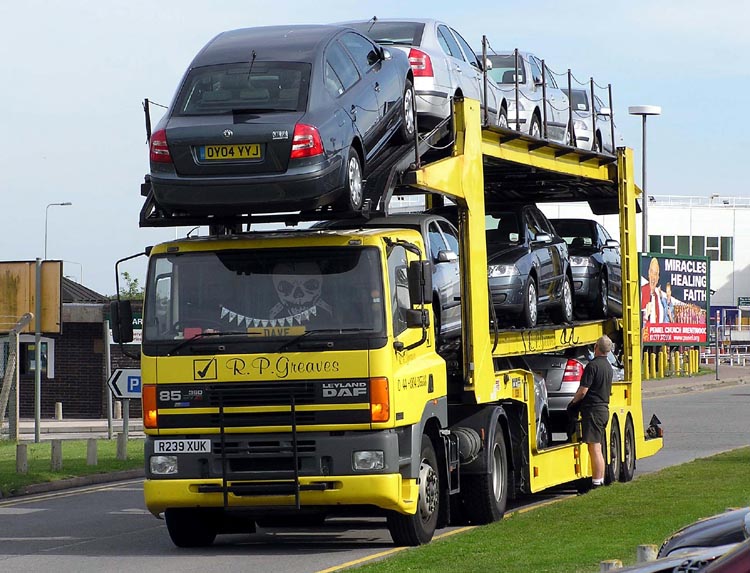
Convert it to being an electric trolley bus https://upload.wikimedia.org/wikipedia/commons/thumb/5/5e/Va...

Haul people and their cars around from city to city, saving them gas, letting them work with wifi.
Dropping taxes on companies has nothing to do with it. Many European countries have lower corporate taxes than we do, and no OECD country raises significant revenue from corporate taxes. It’s a red herring and a distraction. The issue is we have a political system that makes infrastructure enormously more expensive and hard to build than in Europe (much less China). In Maryland, people are lobbying to get light rail stations torn down that have already been built! The average time spent in “environmental review” for a government project is 5 years, and its really just an opportunity for a small minority to hold up and delay infrastructure projects. But that system is a reflection of our values. We don’t build things because we would rather prioritize other values.
That is what it is. We are good at other things! We’re good at things like Silicon Valley, that don’t require centralized cooperation and people falling in line. Lots of countries have the political discipline to build rail. But there is no other Silicon Valley! (What more needs to be said about why California doesn’t have rail, beyond noting that the state’s most significant industry is based in the suburbs/exurbs of an otherwise second tier city?)
"If California was a country"
You (US) are now segueing into the introspective phase of Empire - that's when you learn a few lessons. When you realise that deploying more (aircraft)carriers than everyone else combined is simply a thing or spending way more on cough defence than anyone else is a thing as well, and it isn't as important as some other things.
Anyway, I hope your journey from Irvine to Los Angeles was at least comfortable.
The world turns ...
The US is a country of checks and balances. Viewed differently, it's easy to obstruct changes. On average this works well, as it's far more likely for any random change to be bad rather than good. The unfortunate side effect is that many good changes don't happen, because it's so difficult to overcome all the "checks and balances".
In an authoritarian regime, changes edicted from the top encounter very little opposition. In post-Mao China, lots of these changes were wise, but not all. In the majority of the authoritarian regimes though the story is a bit less rosy.
Can we have our cake (checks and balances) and eat it too (more good changes get done) ? That's a tough question, I personally don't have the answer. But it seems more likely that once China builds a larger network of high-speed rail, the US would get some type of competitive impulse, and start investing in this too. One can only hope ...
Further down this thread is a link to this video called, "Why is China so good at building railways?"
https://www.youtube.com/watch?v=0JDoll8OEFE
The presenter and quite a few commenters seem to have a built-in bias towards rail. Don't get me wrong. I love a good train journey and prefer it to flying when it's competitive. But the video tries to be an optimistic take on what a cold eye could only describe as totally mad and dysfunctional government.
The situation according to the video can be summed up like this:
• China has built tons of high speed rail very fast, this is amazing!
• But they do it because their internal airlines suck incredibly badly.
• There are only three carriers, none of which are budget. Planes are on time only about 65% of the time, which is a staggeringly low figure. The cause is enormous congestion in the air leading to air traffic control frequently denying takeoff rights.
• This bizarre situation occurs because the Chinese Army controls almost all the airspace above China and refuses to let civilian flights anywhere except a few corridors.
• Rather than get the army under control and open up flying to competition, China decided to build tons of railways instead.
• These railways are all heavily subsidised. Theoretically some in the east are profitable, but this is more than offset by railways built along totally unviable routes. For one route the ticket sales don't even cover the cost of electricity, let alone construction debt.
• Because HSR requires long straight lines without sharp curves, HSR railway stations are often as far away from city centres as airports are (France has this problem too). That eliminates one major advantage of rail over flying.
The Chinese taxpayer is forced to pay for these economically insane projects because it's all a part of Beijing's control (or oppression) of Xinjiang and Tibet.
For vague and to me inexplicable reasons, Beijing thinks building expensive and slow railway lines between outer region cities that don't have much travel demand will somehow prevent rebellions. The logic of this is not elaborated in the video, but it's hard not to assume the railways are intended for future military use if there's a need to move lots of troops into these regions.
Now let's compare this to America, which according to Hacker News consensus is some terrible backwater in comparison.
America has perhaps the world's best domestic airline network. Competition is intense, prices are low, travel times are very low, planes travel freely in huge quantities and the airlines are (sorta) profitable without taxpayer subsidies.
America also has an extensive and heavily used railway network, but it's used for freight rather than passengers. This makes sense for all kinds of physical and economic reasons.
HSR doesn't really exist in America, but this isn't because American society is dysfunctional. It's because the massive subsidies and land clearance required are hard to justify when you have an excellent flight network, which operates just fine. Take away "suppress rebellion" and "the military causes 40% of flights to be delayed" as motivating reasons and suddenly the US decisions don't look so bad. Those checks and balances seem to be working out pretty well.
I personally take the train even if the comparison is not that clear cut. Recently I travelled with Acela from NYC to Boston for journey time of about 4h. The flight time would only be 1:05, but considering the security wait time and the airport to city center time, you'd probably end up around 3-4 hours depending on luck. Oh, and luck is what you don't want do depend if you can avoid it.
Unfortunately, Acela is an HSR only in name. But allow one to dream that Acela could run at 200mp (like the Shinkansen or TGV) and extended all the way to Miami. That would be about 6:15h travel time vs 3h for the flight time. Many, many people would take the train without blinking.
Not sure if we should start talking CO2 emissions, where I feel the airplanes don't stand a chance.
[1] https://www.google.com/maps/dir/Marseille,+France/Paris,+Fra...
WRT CO2, it's not quite so clear cut unfortunately. Planes emit more only because they travel further. Mile for mile they aren't that different these days.
May I point out that electric trains have zero emissions?
Every month for the next 5 years, California is projected to build an average of 250 MW solar (15 GW overall [1]). The highest power TGV: 12.24 MW [2]. It's in fact enough to power 20 trains.
[1] https://www.seia.org/state-solar-policy/california-solar [2] https://en.wikipedia.org/wiki/TGV#Rolling_stock
But I think it's a hard problem in the U.S. Autocratic governments just decide to do something and plow over anyone who gets in their way. The country I live in now is actually starting to lay track for a high speed rail system to connect the centrally located capital and major outlying cities, and all the way to the northern and southern borders. It did take a while to get started, because everyone had to decide how the contracts would be divided up among their cronies and how the kickbacks would be paid. But it is getting done, because if anyone stands in the way the government declares a threat to the security of the country and sends in the soldiers.
Boston has infrastructure problems to a degree Seattle doesn't experience because when the Seattle core burned to the ground, it was rebuilt in some critical areas with newer infrastructure and thinking.
If you were a Bostonian or Chicagoan in that era, you were patting yourself on the back because your town hadn't burned in 20 years, and would not again. Today Seattle residence scratch their heads at some of the problems that Chicago and Boston have.
Similarly, residents of Tokyo were 'forced' into cellphones because even the 'burbs were so dense that installing new data lines was hugely expensive. 2-4 times the cost of a cellphone for a year. We were sucking down DSL+ speeds and looking jealously at their cool phones.
And yet now Japan has a nationwide FTTH grid to the point where the telco has discontinued new ADSL signups.
I’m wondering if part of that exorbitant cost was installing repeaters. Which fiber has much less need of.
Unfortunately you don’t really get one without tending to get the other.
You don't need a totalitarian regime to get modern infrastructure. That's just a ridiculous statement.
Eg. looking just now London to Manchester takes 2hr and costs £88 single. I think most brits think I'm not paying £90 for a single I'll drive (3 or 4 hrs), rather than I need it to be 30 min quicker - lets drop $100bn on a new line.
I've tried to dig for references, but it's very difficult to find discussions 2+ years back, let along official news.
The USA's rail system is shit because of lack of investment, and misaligned incentives. It's cheaper to fly, or drive, than to invest in rail, even though rail is very efficient (and i suspect, more environmentally friendly than either of the above).
Note that average real-world occupancy rates of vehicles is 1.5, so that is not to say that rail is more efficient than automobiles. But merely 33% more efficient per passenger-mile than automobiles at the current fleet mpg of 25mpg, which to me was very surprising.
At 60mpg and above (EVs in particular) the automobile at existing occupancy rates is more efficient than rail per passenger-mile.
Part of the challenge with rail efficiency is that it's a fixed point-to-point transit and not a dynamic door-to-door transit. So getting from Point A to Point B has significant wasted overhead distance traveled.
https://www.nationalgeographic.com/travel/features/carbon-fo...
1) We have the curse of being first. Our cities are old so our infrastructure is old.
2) We can't just say, "Your land is ours, get the fuck out, construction begins in one week"
They can also cut corners on safety and pollution. The ends always justify the means.
It isn't limited just to the outskirts either. For example, Rome itself has an amazing metro train system.
The problem isn't the age of the country. The problem is bureaucratic dysfunction.
https://en.m.wikipedia.org/wiki/File:0_series_Yurakucho_1967...

didn't they say that when they arrived 400 years ago
Didn't x say y 1,000 years ago?
You're talking about different people: literally, morally, culturally - in most every way in other words. What does the average American today have to do with someone that came over from the British Empire in September 1620? The Pilgrims were not a mixture of German, African, Mexican and Chinese. Today is not 400 years ago.
You kinda can, via eminent domain. Maybe the will isn't there, but the way is.
You can see proof of that in the fact that Western Europe is barely maintaining its infrastructure properly today. Their spending on such has frequently fallen below US spending levels as a share of GDP.
That's even while having the ability to raise incredibly cheap - often negative yield - debt. Germany refuses to spend and it is starting to badly need infrastructure spending.
EU infrastructure spending as a share of GDP is at 1.8% - 1.9%. The US is at 2.3% - 2.5%. In Greece it's 1.1% (it used to be over 2%). Italy is seeing a similar problem right now as its infrastructure crumbles and they have to fight over spending rules constantly.
From the World Economic Forum's competitiveness report looking at 1998-2017 infrastructure spending and results:
https://i.imgur.com/2jV5Zay.png

EU and Eurozone spending on infrastructure has widely been below proper maintenance levels since the great recession a decade ago. The EU as a whole needs to spend a lot just to catch up to where it should have been right now with its basic infrastructure.
They aren't doing that, and they would build high-speed rail today? There is good reason to be skeptical of that premise.
"Europe’s spending on infrastructure at ‘chronic’ low level"
"Spending at 20-year low threatens region’s prosperity, EIB report warns"
https://www.ft.com/content/51524ab4-cf77-11e7-9dbb-291a884dd...
"According to Statista, the percentage of GDP spent on infrastructure for UK, France and Germany ranged between 2% and 2.2% in 2013 marginally below USA who has been spending 2.4%."
Note: it's not good to be marginally below the US on infrastructure spending in any regard.
https://medium.com/fitch-blog/the-infrastructure-footrace-wh...
"Investment in infrastructure in the EU is today at 1.8% of GDP, according to the EIB Investment Report 2018. This is 20% below pre-crisis levels"
https://voxeu.org/article/addressing-europe-s-infrastructure...
It seems like just about every government function has had it's budget effectively reduced over the years - where is it going?
You judging the U.S for something they did first is only proving the point. It'd be great if we could up our voltage from 120 and change the plugs, but after a point it's just too expensive to change. And it's not as if tens of thousands are dying due to 3 prong outlets...
My understanding is in China the government owns all the land to begin with, you lease it from them. But I guess in this case it would be "your lease is terminated, thanks"
>>autocratic and repulsive... I agree the govt's autocratic but disagree it's repulsive.
well, that train railway and its stops and other infrastructure would have to be build over somebody's lands/homes - the somebody's lives would have to be significantly impacted against their will. "The Needs of the Many Outweigh the Needs of the Few"? Especially that in practice those "Many" are frequently just some other, more influential, "Few".
>an autocratic and repulsive Government
that is a one [brutally] efficient way to outweigh the needs of the few ...
What would be really depressing would be getting stuck with the hidden bill for this stuff. Sentiment like yours is why politicians can dangle the carrot of rail in front of the public for decades and keep cashing out.
It's just not that great a choice of transport on most legs in the U.S; and most places where medium- and high-speed rail makes sense in the U.S. already have it, at some price that keeps it somewhat occupied.
"green tech investment and high tech public transport systems" = actually helps the people
Start by fixing misinformation about what is the PRC and the "democractic" US.
That's what California gets for electing governors George Deukmejian. Pete Wilson, Gray Davis, and Arnold Schwarzenegger.
Don't despair. We have Greta Thundberg. Just look at https://www.marketwatch.com/investing/fund/she - it's doing well!
Any big economy has big incumbents.
> Can you imagine the impact of being able to train from San Diego to LA in 30mins?
Can you imagine what airlines and aerospace companies would think about it?
When you pool all the resources together you can achieve much greater things. What ultimately happened was that the smart people really wanted freedom and if they don't have it they just stop contributing. Which is why communism China is not the same as the original communism because somehow they realized the flaws in the original design. Long term I believe China will not be the best overall due to this, but the bigger projects like this railroad, are much easier to achieve in any dictatorship.
You're not going to get very many high cost infrastructure problems solved when the government doesn't force the issue. Socialism is a red herring, the real greatest enemy of capitalism is the unregulated free market.
China also has the lowest organ recipient lists, maybe we should try to emulate that too:
https://www.businessinsider.com/china-harvesting-organs-of-u...
Nor is it reasonable to equate the complexities of raising revenue in representative government with the ability to direct expenses in a command economy as in China.
If your Federal Reserve stopping adding nonsense imputed and hedonic values to the tune of about ~$7 trillion to your economy's GDP, you would find yourself in second place.
Which might make help explain away your confusion :)
The poster was wondering why his/her USA GDP couldn't support bullet trains.
I was being helpful by pointing out that ~$7 trillion of USA GDP literally (in the old sense of the word) did not happen.
Unless you think that $7T of GDP that is assigned to mortgages on the half the houses in the USA that have no mortgage, bank fees on free accounts, fictitious prices of electronics, etc. are the same as the entire value of the Japanese economy…
GDP is a game that all countries play to try convince sovereign bond purchasers that the debt/GDP ratio is under control.
Have you considered that richness is not measured correctly? Since GDP is effectively consumption, the more a person consumes, the richer a country is. A thousand people driving 5 hours between LA and SF will make the country richer. Not the people, which China appears to be wanting to do.
Not clear yet if this is the early stage of a global trend, and even it it is, it may take a long time to have an effect in the US, where there are fewer good alternatives.
Whats the matter with the Europeans? Don't they care about the environment?
https://theicct.org/blogs/staff/planes-trains-and-automobile...
While the article you're quoting does indeed claim that is the case, it does have (Amtrak) in parentheses.
Here's some data I have:
https://news.yahoo.co.jp/byline/kandatoshiaki/20141002-00039...
A Shinkansen eats 270,000 yen worth of electricity for a single trip from Tokyo to Osaka, and 1 kWh is 12-14.8 yen. A full train would seat about 1300 passengers. So every passenger pays about 208 yen, which works out to about 16 kWh. To side-step awkward conversions, let's look at the electric cars with the best efficiency on https://pushevs.com/electric-car-range-efficiency-epa/, highway efficiency:
2019-2020 Jaguar I-Pace 29.1 kWh/100 km (5 passengers => 5.82 kWh/100 km per passenger)
2019 Tesla Model X 22.5 kWh/100 km (7 passengers => 3.21 kWh/100 km per passenger)
Tokyo-Osaka is 515 km by train, 506 km by car. So in the Tesla you'd use 16.2426 kWh per passenger, which is pretty much the same.
Here come the less reliable figures: this Yahoo Answers thread suggests Shinkansen are about 58% full on average. I don't have any data for cars, but I usually don't see many cars that are completely packed, but I have seen Shinkansen that were over-capacity.
I also have a feeling it would be pretty tough to attain this figure in the car. Occasionally you'd have to spend time in traffic jams, and it's a 5-6 hour ride anyway. Plus, if the Shinkansen were to go as slow as the car, it would probably use much less energy.
One more data bite I've seen is that the railway company in Germany currently uses 57% renewable energy (https://www.railway-technology.com/news/deutsche-bahn-signs-...).
You also need to consider the opportunities that cheap long distance travel gives you, A poor student like I was can travel to a far city to study and afford to come home each 4 - 8 weeks. Because the small cities are linked to bigger ones you get more students or better quality students in the big city. The nation has more educated people, the students from the small city also have to live so they will spend money in the big city, so the big city has an influx of money. The small cities don't have airports, the students are also poor enough so they don't own cars, have where to park them in the big city or afford the fuel.
If you aren't concerned with cheap or green, and want to focus on fast... Then high speed rail might be a better option until the TSA is involved.
-assume improving existing infrastructure instead of new right of way and new track, which limits speed to ~125 mph
-calculate efficiency ignoring embeded energy/costs (fuel per passenger mile, instead of complete LCA)
-are based on unrealistic track usage. At some capacity a track can't hold anymore trains and you need a second track, while airspace for additional planes is flexible and almost free. Also the faster the train, the further they need to be spaced out, which typically reduces capacity.
-price subsidies such that ticket price per passenger mile is roughly $0.45 rural - $0.55 Urban, which matches airfare for shorter flights, but not longer ones. (500+ miles)
-that pricing is targeted because it correlates roughly to the service window where time of travel is roughly competitive with air travel, taking into account check-in time.
[1] https://en.wikipedia.org/wiki/Environmental_impact_of_transp...
I mean transport uses so much fuel I would be surprised over the lifetime of a rail line the infrastructure costs are over 95% of the total cost.
95% is extreme, but it's usually assumed to be in the 55-65% range for generic civil infrastructure, not hsr specific. Compared to that hsr is heavy on concrete and steel, so would be higher.
Embedded rail infrastructure costs are calculated based on near track capacity (amortized over 30-50 years, which is generally correct for civil projects), and typically near train capacity. Empty trains are much worse than empty airplanes, and if ridership isn't projected accurately pulling a train from a route doesn't reclaim any embedded costs of the track or row, while airline infrastructure can be completely reallocated. Multiply a miscalculated capacity by 50 years and it turns into a big number.
I'm about 2/10 so far on finding these papers I'm looking for today, but this one at least addressed ridership implications for the California project in terms of LCA.
https://iopscience.iop.org/article/10.1088/1748-9326/5/1/014...
And arguing for the greater use of LCA in passenger studies:
https://iopscience.iop.org/article/10.1088/1748-9326/4/2/024...
And here's one comparing air to hsr in Europe, showing only 3%-20% gains by shifting passengers from air to rail, based on existing infrastructure, but using LCA assuming a %50 recyclable rate for rail.
Reason probably is that, at long distance, lower air resistance at height starts to count.
Also, it’s easier to move planes around than to move rail tracks around, so if a destination is popular for only a short time (say for the Olympic Games, or for the hajj (https://en.wikipedia.org/wiki/King_Abdulaziz_International_A...), it may be energetically cheaper to build and (basically) discard an airfield than to build and (basically) discard a long rail track.
This isn't as big a factor as you might think. While older aircraft were optimized for design/cruise altitude, modern jets are designed to account for the imposed altitude restrictions and speed limits of departure and approach. They also have a much wider/efficient operating envelope, and due to improved logistics, are dispatched, loaded, and operated more appropriately wrt to flight plan profiles.
http://www.ushsr.com/hsr/completesystem.html
This paper shows only about a 3% to 20% improvement in co2 per passenger mile by shifting air traffic to already existing hsr in Europe (200-800km trips, taking into account embedded energy, and assuming %50 will be recyclable, which I think is quite optimistic)
The US is the world's largest economy and should be the shining example of amazing infrastructure, high-tech, green cities, and forward thinking policies. California is an especially egregious example in terms of infrastructure investment:
If California was a country it would be the world's fifth largest economy. It has a number of large and successful cities and areas connected along the coastline. San Diego, Orange County, LA, San Francisco. Why on earth isn't there a high speed rail between these cities? Can you imagine the impact of being able to train from San Diego to LA in 30mins? LA to San Fran in an hour and a half?
I took the train once from Irvine to Los Angeles and felt I had gone back in time to 1980. This in one of the richest counties in the world (OC). It's unthinkable in the year 2019, that we are all stuck on roads like I5 and 405, stuck in traffic for hours trying to make it to LA and the alternative is an ancient train trundling along at 50mph.
I hate the fact that an autocratic and repulsive Government is showing up the US in terms of green tech investment and high tech public transport systems, while the US govt is dropping taxes for the biggest companies and lowering spending on infrastructure and public works. This is guaranteed to have a terrible knock on effect over the next 20 years while the US is stuck with an old fashioned and clogged up transit system, polluted cities, and a dependence on fossil fuels.