aeternum
Building something from scratch whether it be a city, company, or even just an area of a city is often a risky endeavor. ROI horizons are long so there generally needs to be significant compensation for that risk.
Perhaps part of the problem in the US is it is not profitable enough to found new cities. We've capped the upside with things like statewide rent control and strict countywide zoning while also increasing costs with endless environmental reviews and the number of ways in which developments can be sued into oblivion.
If we encouraged more speculation and rent seeking we might have vibrant new cities.
There is still speculation with these long-term leases, and the article even mentions that the leases themselves became marketable assets, very similar to a land deed.
More people die of cold than of heat.
Stop with the fearmongering.
For the argument to work it must be that climate change causes more extremes on both sides. It's difficult to look at the evidence through an objective lens, but whenever I've looked it seems like warming the earth by a few degrees is most likely to save lives overall. There are of course other unknowns and it it's a very risky experiment to run.
My prediction is that future wars will actually involve increasingly fewer humans and will be more about tech+manufacturing vs. tech+manufacturing. And of course insurgents + lowcost tech vs. increasingly nonlethal hightech.
This would allow wars to continue without as much of the growing political backlash.
Respectfully, you should consider reconsidering this mindset. The best engineers and tech designs take into account not only how users will use a technology but also how they will misuse it.
It's easy to say add inspections. What specific regulations/laws would you put in place and how do you prevent regulatory capture?
Phishing sites already frequently target the reset/create-new-password path because it's actually easier to get a user to generate a new password vs. trick their password manager. Plus 2FA is usually required anyway since no 'remember me' cookie is avail so a password reset is equal in difficulty to a password login.
That method still works just fine with passkeys right?
The key problem is that sites have made users so used to having to generate a new password/credential that they think nothing of it. It's something you just do every few months for most websites esp. secure websites like banks. Even on the same device users are being trained to generate multiple passkeys, one for chrome, one for safari/apple, how about a third for the phishing site.
Are you really going to block that cred reset on the grounds that it's a downgrade? You're going to have a lot of users calling your support asking why they can't login after switching devices.
So you allow it, then oops it was not a laptop, it was a phishing site.
Only in theory. Suppose you are a bank, which enclaves/sources/devices do you support vs. not support? What do you do for users on a desktop PC that don't have an enclave? Phishing sites will leverage your weakest enrollment option.
Everyone knows to hash passwords now and browsers basically enforce SSL. This is not a practical differentiator.
>Passkeys can’t be entered on the wrong site, the sites they work on is an inherent property of the key.
They are still susceptible to malicious enrollment. If a user is convinced a fake site is real, to the point that they are opening their password manager to copy the password to it, you should assume they will do the equivalent with a passkey (re-enroll attacker's key or register attacker's passkey).
>If your entire database is stolen, it’s useless.
As are databases containing strong randomly generated password hashes. What is your threat model here, they somehow forgot to hash their passwords yet they are still hashing session tokens, storing customer data in completely separate databases, safely storing private keys, etc.? It requires quite the strawman scenario to apply.
What do passkeys offer users that rand strong password + password managers don't?
Seems to me that #3 is the whole story. That was the key insight, the thing that was never known before. The secret to how life replicates.
In order to prove security, you must first simulate the universe.
Once the ministry of truth gains power, democracy is finished.
The extremely unpopular citizen's united supreme court case was in many ways a last ditch attempt to prevent the creation of the ministry of truth. It likely won't last.
If anything social media is a benefit to democracy vs. legacy media because it dilutes the power of any one voice, it's very hard to control all social media whereas a couple conglomerates now own nearly all of legacy media.
Looked at another way, if democracy cannot withstand social media and made up stories then it's not a stable system of government. Stories of the end of history are greatly exaggerated, historically democracy is far less successful than autocracy, perhaps due to this issue.
It's somewhat entertaining to watch both sides argue about this as if it's some major difference when both are actually aligned on wanting bigger gov and more gov ownership/control of corps (one party via taxes the other wants it direct).
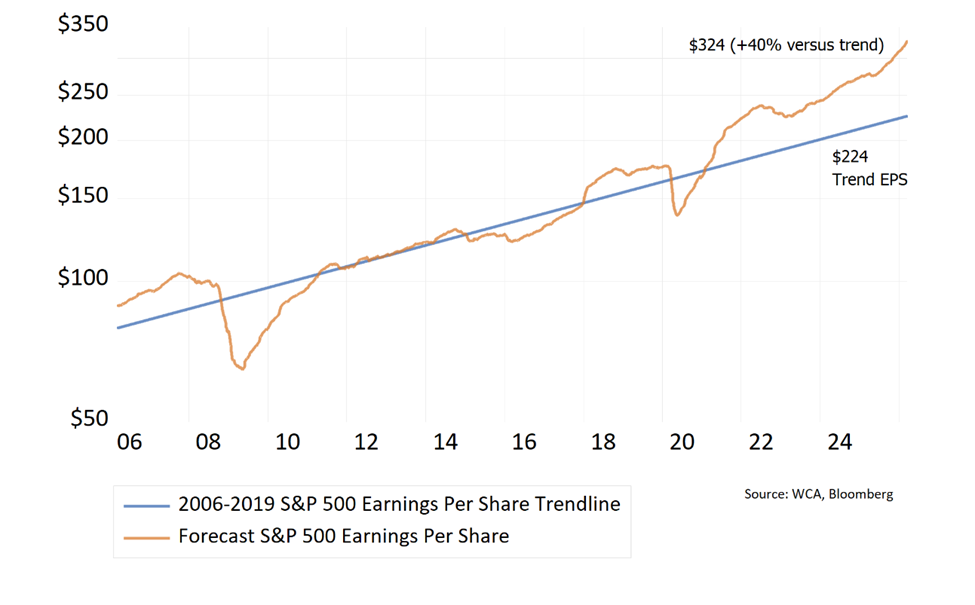
It has exploded, the explosion just isn't evenly distributed. And just as it was with the internet, most people and even most industries are not actually using it yet. Many that are are using it in name only.
People can star github repos and signup their employees for a new subscription quickly, real adoption takes far longer.