1. Tried a politician scare campaign. Failed because it was too transparent it was an attempted distraction from their terrible public safety record.
2. Tried coning and disabling the vehicles. Failed because it was too transparently astroturfed, legal liability.
3. Now attempting leaks of cherry-picked vanity metrics so massaged they can’t fairly be called “statistics” to friendly anti-tech local media.
Will fail because national and international media no longer trust our local journalists, and will investigate independently.
The cars work. The incident data meets the standards set forth by the state of California.
Local politicians need to find another anti-tech boogeyman. This one is too vital to the revitalization of SF.
I am not talking my book, have zero stake here.
It’s just saddening to watch a nascent technology finally start working well and then get kneecapped by political games.
If self driving over the road trucking happens (and that's sort of inevitable), politicians seem to legitimately believe it will collapse our economy. It seems like all self-driving anything gets lumped in with that.
> The Bureau of Labor Statistics has a system, but it’s a bit arbitrary. The BLS classification system attempts to group together workers who have similar duties and skills, but it’s as much art as it is science.
> For instance, the BLS sorts 7 million teachers into more than 80 separate occupations. (Special-ed teachers in elementary schools have a different occupation than special-ed teachers in preschools, middle schools or high schools, for instance.) But all 4 million retail salespersons are lumped into one large category, whether they sell lumber or lingerie.
> That’s where NPR was led astray. NPR looked at a data set that aggregated various kinds of truck drivers into a single category but that didn’t aggregate other occupations in the same way. The sorting was inconsistent, so the comparison isn’t a legitimate one, and it makes us think that truck driving is the most common occupation in many states.
On some of these surveys, I've seen Computer Programmer come up as the most common job in my state, which is definitely not true :).
Fully autonomous cars are cool... don't get me wrong. But electric cars and autonomous electric/gas cars are probably not the right solution to our person transport needs. using energy to move a 4000 lb vehicle to transport one or two 200 lb humans is not energy-efficient... most of the energy is spent just moving the vehicle.
A 60lb e-bike can also transport a 200 lb person whilst using far less resources (both to make the vehicle and to operate it) and space.
Public transport also has better resource metrics than person car-based transport.
But here we are...
E-bikes are great for the situations, climates, and people who can use them.
E-bikes are not a substitute for the majority of people’s transportation needs.
I think the young, healthy people who live in moderate climates with good weather, short commutes, and little need to haul anything often forget that they’re own transportation needs don’t match the average person’s.
If you believe car shares are part of an efficient transportation future then self-driving cars are part of it!
And while I'll grant you I'm no expert, some things I've read strongly suggest that improvements to city planning that making it more friendly for bikes, pedestrians, and transit commuters also tend to benefit the vast majority of drivers in various ways.
I slip on light windbreaker pants on top of the regular, regular winter jacket and gloves, a thin hat and a scarf.
What issues did you run into while trying?
It's also hilarious how - 25 C is being brought up as not suitable for people to bike around. Like how many people in Europe/Northern America actually encounter these temperature even once (let alone regularly that it should determine our traffic policies). These are the same arguments that ICE car proponents make against electric cars, "I might want to make a cross country road trip once every 5 years and so every car with a range of less than 800km on a single charge is not suitable".
You need to load your body. A car takes load off of you.
This is not the topic.
Cycling is the whole point of this little sub thread. Specifically with respect to the increased risks or lack of accessibility it offers for some sub populations. Besides, public transport is not an option for many people. I have a grocery store 3 miles away from me, and no public transport to get there, but again that wasn’t the topic.
Specifically with respect to the increased risks
Car travel is risky. For 2020 NHTSA put the number of medically attended injuries at roughly 400x the number of traffic deaths. For 2021 NSC puts that number at closer to 115x or 5.4 million injuries per 47,000 traffic related fatalities.
Harvard puts the number of deaths due to "a result of exposure to ozone and fine particulate matter from vehicle emissions in 2016" at around 7,000 on the East Coast alone.
Meanwhile with bicycles the NSC puts the annual deaths at around 1,300 with about 800 of those (or nearly two thirds) as a result of "motor-vehicle traffic crashes".
Bicycles aren't riskier, society has just normalized automobile hazards. The answer to "bikes are dangerous because you could get hit by a car" isn't "just use a car".
You can't just pull part of my comment out from that part of the sentence. A few words back you will see I was writing about sub populations for whom riding is riskier. Of course you would think what I'm saying makes no sense if you are getting caught up on one phrase and interpret it to mean I'm making a broad, general statement that riding a bike is dangerous compared to cars.
But that is not what I wrote.
Still have to deal with cars at some intersections, and on streets that are so narrow that their full width from curb to curb is only one lane, but things move slowly on those streets and good intersection design takes a lot of the risk away.
I wish people here would just accept that on average people don't exercise.
I on the other hand am making a narrow, targeted argument in the context of a thread that has diverged into claims about the viability of bicycles as a primary means of transport for certain populations. Particularly those where risks of accidents pose much more serious consequences than others. I don’t think people should be expected to bike everywhere or be looked down upon by others who make the choice to do so.
Exercise only account for a small portion of our time. The rest is spent on doing daily living. Time spent outside exercise are going to matter more.
Having an environment that encourages walking and biking keeps the population healthier than an environment that encourages sedentary behaviors.
The elderly especially need physical load bearing activities of some kind, or otherwise their bones are going to deteriorate to the point of hip fractures.
Why Canadians Can't Bike in the Winter (but Finnish people can) https://youtu.be/Uhx-26GfCBU via @YouTube
That said, I live in a very bike friendly city now, close to their school, can afford a cargo bike, etc.
The cargo + electric combo is really amazing.
The bike, a Tern GSD with a big two passenger seat for the kids, wasn't cheap ($6k) but it lets us get away with owning only one car using far less uber'ing, and is way less expensive and hassle than a second car.
(This is in Pittsburgh - it's hilly and we have weather, but we don't have too many bike-hostile drivers in the city)
The perfect is the enemy of the good. E-bikes are good. They're not perfect on their own and that's ok.
Edited to add: and I left off: they're WAY more fun! It's delightful riding around on it compared to being stuck in a car in rush hour traffic. :-) the bike is almost never stopped. and we get to say hi to more people we know as we pass by. Much better experience, even if a big rainstorm sends us back into the car.
I said reducing your car usage by half doesn't eliminate your need for a car. You still have to buy the car. You still have the need for the car. We’re in a thread under “most people don’t need a car”.
No. At best most people use a car more than necessary, unless you live in a dense city, maybe then you don't need a car. But then you aren't most people.
And frankly that -is- a point worth remembering. I know lots of couples that could be able to get by with a single vehicle instead of two at a significant financial benefit to them as well as an environmental benefit.
I know in my late 20s I was able to ride my -normal- bike to and from Meijer and get 40-80$ of groceries (2008 dollars mind you) in a trip. Back then that lasted the two of us a week, although yes I had to hoof it back for the sake of perishables. And yes I balanced triple bagged items along the handlebars.
But, frankly, if I had the money for even a small 'trailer' that wouldn't have even been an issue. It's amazing how much volume a child trailer has for groceries/etc when there isn't an actual child involved.
Edited to add: maybe the bigger questions are why we have economic and social pressures for single folks to have a car and DINKs (ESPECIALLY SINKs) to have two cars.
And this in a city that has max 500 m to a busstop frequented at least once per hour but mostly every 5-10 minutes. And bike roads covering the whole town. It's just a status symbol with social pressure. You have to have a House, Kids, Car and a dog/cats or you are a looser.
I also do most shopping with the bike, have baskets on the back of it. Works really nice. The kid bikes to school until the ice shows up, then it's bus time. Bigger things still go in the car and I have a job that involves needing the car to transport handicapped people now and then so can't get rid of it yet.
If the whole family is going somewhere we also choose the car because the bus is much more expensive and usually it also involves shopping for the grandma 60 km away.
Exactly, it's half of a counter argument.
Don't let perfect be the enemy of good.
The requirement for “most people need a car” depends on the definition of most people. Live in a small town in Arizona? Sure you need a car. Live in TriBeCa? You don’t need a car.
The touchy part is be ause the logic often goes, because 100% can't get off cars, the necessary infrastructure to allow the 20% who could, won't be built.
It's like public transit, it sucks due to shoe string funding, ridership is low because it sucks, funding is then reduced because ridership is low.
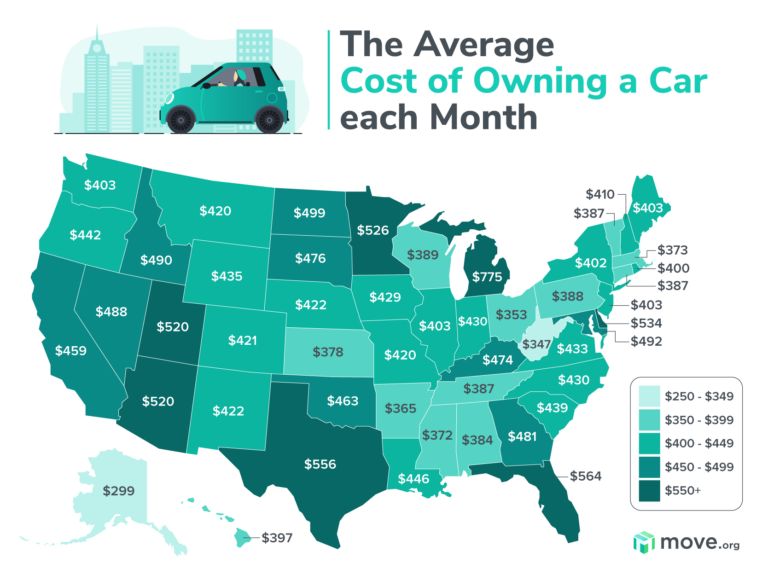
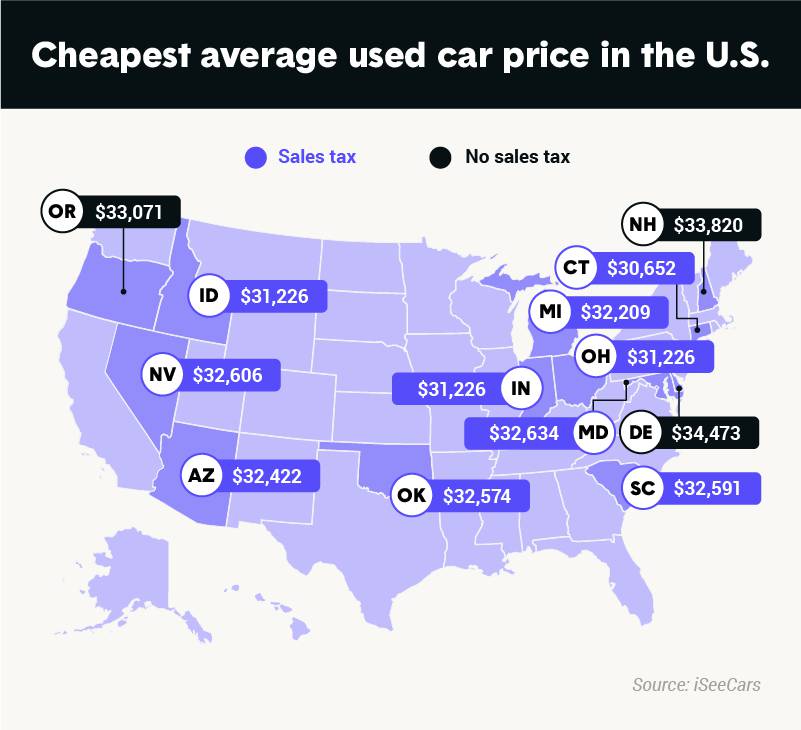
It also sounds like you might be an outlier, the average used car cost is much higher than that[2], let alone new[3]. It's ok to not fall on the average, but it is important to notice when you do.
1: https://www.move.org/app/uploads/2021/02/Average-cost-of-own...
2: https://cdn.thezebra.com/zfront/media/production/images/chea...
3: https://i2.wp.com/financialsamurai.com/wp-content/uploads/20...

But at $0.10 vs $0.50 per mile of operating costs, the TCO is much lower than an equivalently priced car. I bought the bike planning on getting at least 10 years out of it. My road bike is 17 years old and going strong, which is better than I can say for any car I've owned
I think of and treat this bike as my second car more than as a typical "bike".
(It's kind of funny that with the huge size of cars in the US these days, our car won't fit into the garage, so the e-bike gets to share it with a rack of computers. :-)
I am nor sure what you consider “walking distance” but I am going to assume there is a greater population density where you live.
I do not think there is anything that is not a private residence within 200 m of me. It is well over a kilometre to the nearest school. It is more than 2 to the closest business. I am having trouble relating to a world that has all these services available a short stroll from my front door.
Oh, and with regards to the poster from the UK with the free daycare, I pay $800 per month for one child ( and have 4 ).
So yes, these places are very much sounding like utopia to me.
There are 25 day cares within 700m from my home, 3 supermarkets and 3 primary schools, 3 parks and the police station.
Cars are greatly disadvantaged because of the lack of parking.
I have lived in several different towns and know a few more in the area. The town that was 1300 people had plenty of daycare within walking distance (500 m). The town with 150 people had about 1 km to the daycare but we didn't use it, had no kids at the time. The other towns I know: 10k ppl, plenty of daycare within 1 km wherever you live. 500 ppl, two day care at least, all in 500 m. Starting to guess population now but around 500 ppl and I saw at least two daycare when passing through. Surface similar to the other 500 ppl.
Where we live now is planned and built around 1980 and we have five daycare within 1 km. Three of them are less than 200 m away. Many of the younger kids gets walked there by their slightly older siblings that just continue to school after leaving them at daycare. This city have 100 k ppl, we live in the most populated areas of town with mixed single house and bigger appartment buildings with around 10 k ppl.
They all had space for our kid without having to wait or book a place before birth. The state is required to have space for all kids so they keep track of how many births and plan accordingly.
All this in northern Sweden.
I also know a few towns in Germany with similar situations except less bicycle-friendly roads and a lot more population. Didn't have the kid in daycare there though.
We want kids to be able to have other kids to play with and professionals to look after them.
I love my kids dearly, but I'm not cut out to stay at home raising them full-time from age 0.25 through 5.
I would argue that the fact that any of us have to work at all is just poor societal planning.
I mean, societies have been a thing for thousands of years already. At this point, I should be able to argue on the Internet that we should behave as if all problems have been solved by now because—-I mean, why haven’t they been?
The fact that so many parents live so far from available daycares that they need to drive to them is not ideal. It is a problem worth solving and there is no fundamental impossibility in solving it: part of the reason daycares are far is because cars exist, but it is unhealthy for a society to let the option to have a car degenerate into a requirement to have a car.
In any case, I never said the problem was solved or that anyone should act as if it was solved. I'm just pointing it out, because we're not going to solve any issue we refuse to even acknowledge.
Now, suppose I did manage to get my kids to daycare that I could conceivably ride a bike too, and suppose I manage to fit three on a bike, including an infant that’s not even one year old. What then, how do I actually get to my afterwards job? Yep, I still need to drive.
Ultimately, I could probably design my life around the goal of not owning a car. I could move to a place that’s close enough to my job to walk (and hope that all my future jobs are similarly close), and also find a daycare that’s close enough. I would probably have to compromise on housing size, quality and/or cost, distance to my friends and family, my hobbies that require indoor and outdoor space, but why would I, when I can hit a pretty good trade off with everything else, just by getting a car?
I'm going to say one thing, though: I would appreciate it if car owners were a bit more conscious of the externalities of their way of life. When I walk or bike around my neighbourhood, every car I encounter is a nuisance to me. They are noisy, they are scary, they are everywhere. So it's not just about your comfort, it's also about mine. If I understand that your car makes your life easier, and you understand that your car makes my life worse, maybe we can arrive to a productive compromise rather than think that the other is out to get us.
Thing is, the car-centric lifestyle, when taken to its extreme, is so space-intensive that it becomes the ruination of other lifestyles. The more people drive, the less amenities need to be near them, the more space is taken up by roads and parking, the less walkable the area becomes, the more people drive, and so on, until no one can walk anywhere. We have to be cognizant of that and make sure it doesn't get to that point. Part of that is making sure that e.g. as many people as possible have daycares at a walking distance from them.
Now, if you don't have any daycares at a walking distance, do what you must, I'm not the one who is going to judge (what would that achieve?) But in the grand scheme of things, it highlights a problem. Let's keep it in mind, you know. Let's try to solve it at some point, maybe.
But why? You seem to assume it to be universally accepted that everyone wants to live in walkable places, but the evidence in front of you is simply contradicting this. People routinely move to non-walkable places by the millions, with the expectation that they will be driving everywhere, and they don't mind it at all. I think you are so deeply emotionally embedded in your anti-car lifestyle (especially given how you describe them as "scary, noisy nuisances") that it might be hard for you to conceive that people might prefer this to the alternative you describe.
> Part of that is making sure that e.g. as many people as possible have daycares at a walking distance from them.
No, because it is very much unclear that people actually want that more than other things. If you ask people whether they want to have a nice daycare in a walking distance, most will answer "yes", this much is true. However, this is not necessarily compatible with many other things people want, like, for example, big houses, low costs, low noise, low traffic (including public transit and foot traffic), or generally living in a place with fewer people and less churn, so that you can actually get to know your neighbors.
Given all these preferences and constrains, what most people are aiming for is a satisfactory trade-off. Your proposal about making sure that as many people as possible have daycares at a walking distance from them is basically trying to force on them your preferences, and ignoring the trade-off that they choose.
Going back to your description of this vicious (to you) cycle of car-centric lifestyle, I can also describe virtous cycle, where a walkable place pulls more people into it, resulting in more businesses and amenities setting shop there, which pulls even more people, and adds more transit options which are now economical due to existing density etc. Now imagine that someone helpfully tries to "make sure" that as many people as possible have a car parking spot close to where they want to be, and institute parking minimums on businesses. After all, if you ask people whether they want to have cheap and plentiful parking anywhere they need to go, most people will answer yes, just like when asked about daycares within walking distance.
Of course, as you almost certainly realize, you can either have daycares in a walking distance, or free and plentiful parking everywhere, but not both at the same time. Thus, if you understand the mechanics of this, you'll oppose the parking minimums (which, by the way, I oppose too). However, for the same reason, many people will oppose your plans of densification and daycares at walking distance, because they simply don't like it as much as they like other stuff, and they understand that there's a trade-off involved.
> But in the grand scheme of things, it highlights a problem. Let's keep it in mind, you know. Let's try to solve it at some point, maybe.
Yes, let's keep in mind that there are trade-offs, and figure out a way to eliminate it, so that people can satisfy more of their preferences. Often technology helps; for example, cars eliminated huge part of a trade-off between being able to live in calmer, less dense places, and access to amenities. Future technology might help here in other ways.
And yet your experience of it is totally foreign to me. There are a half dozen daycares within walking distance of my house. My sibling who lives overseas has the same thing.
When my kid hits school age the local primary school is next to the tram line that will take me to my office.
Please please please understand that infrastructure is a choice, urban design is a choice. These are not immutable facts of the world.
I took my child to daycare by pushing a pram 500m. Later I'd half-carry him, and half let him walk. After he was walking consistently he later started to cycle there himself, as I walked alongside.
In a few weeks he'll be walking to his school himself, again a distance of approximately 400-500m - with only one road to cross.
I've seen children take themselves to school from age seven by bus, tram, cycles, or walking here. It is common-place.
Maybe that isn't possible in America because the houses and the schools/daycares are too distant. But that's certainly not universal.
I live in a small college town in New England. I bike our toddler to/from daycare, our first grader either rides her bike or walks (about 500m). They’ll be able to walk to school through ninth grade, at which point she can ride a bike or take the bus or hitch a ride with mom. It’s definitely possible in much of America, if you simply choose to do it.
I have 1 kid, and we always went to the daycare by bike. Last year, age almost 5, I bought a followme, and it works great. He's 6 now. When we bike more than a few km or when it rains, he gets connected to the followme, otherwise he bikes by himself. My ebike did 2500km in what's now almost a year, easily paying itself by the gas we didn't buy. The car is mostly used for big groceries every 2 weeks.
Most roads have bike paths. On the way to school, 1.5km away, there are still 2 places where we have to cross unsafe car roads. Ironically, one is the school entrance. I think 1 parent in 3 or 4 still come by car, and their driving makes it harder for the others.
In countries like the Netherlands, urban areas in Germany or anywhere else that has a public infrastructure not exclusively focused on cars (aka, the services required for daily life not being mega-sized and requiring a car to get there, but small and distributed) it is a perfectly viable option. Hell I 'member walking to kindergarten. On my own, in the outskirts of Munich. I had never been driven to school by car.
Today the alternative are cargo bikes modified for child transport which become more and more popular around here (urban Germany).
Heavy citation needed. I've been remodeling my home for the last 2 years and I'd say on regular (every other week or so) basis I've needed to pick up something from the hardware store that can't be biked home. When I buy groceries for the family for the week, I cannot bike those home. When I need to take a large package to the UPS store a bike doesn't work. When I buy a new lawn mower, that box can't be biked. When I need to go more than 3 miles quickly, a bike doesn't work. Baby (in the winter nonetheless), bike's a no-go. Etc.
It's awesome that you live somewhere where you can make do with a bike and hired labor. But you are frankly out of touch if you think that most people rarely need to transport things that are too big for a bike. And you're conveniently ignoring the fact that plenty of people have trucks, SUVs, hatchbacks, etc. for the cargo space so saying "you can't do that in a car" is neither here nor there.
There will be exceptions, to be sure! Remodeling your house (at least to western standards) is surely one.
But then most people could potentially rent a truck from Home Depot for this sort of thing.
Uhaul is much more reliable, but in my experience renting from them is expensive and very time consuming. Each checkout usually takes me 20-30 minutes, even when I use the app ahead of time (their app is horrible).
Where I live, I'd say trucks make up 30% of the vehicles on the road. It's a big part of the culture here and extremely practical. There are no practical rental options. Lots of places in the US are like that. That's what led me to eventually buy a pickup for myself.
Someone needs to create Zipcar for trucks for those of us not living in dense urban cores.
Same for metal working. Moving sheet steel by yourself is stupid unless you want to slice up yourself and your vehicle. Deliver trucks have cranes. They put the pavers 30 feet from the street sneaking under power line easily.
If your doing a house how many trips are you making with a pickup full of drywall. How much are you racking up in gas in that sucker going to hd?
A cargo bike is more than adequate to pick up groceries or drop off a package. It might even haul the lawn mower, though I’ll concede a car might work better. But if you buy a lawn mower more than once every 20 years, you need to find a better mower.
Arguing that people should give up cars is arguing for a huge loss of personal freedom.
I've been to the US and people there just don't understand they've lost a basic personal freedom.
<<Freedom to walk.>>
Freedom from car corporations. Freedom from energy corporations.
I mean, have you ever tried to move house without one? You're either relying on friends, or you're forking out for a removalist. And that's just one small example. As long as that difference in capability exists (and it always will) we'll have a need for cars or something like them. Remember, cars only really filled the social niche that was occupied by horses, so that need was already there.
Definitely cheaper than owning a car 24/7.
And horses were owned by a minority of (generally rich) people.
50% of people didn't have, nor need, horses, unlike cars now.
Cars are great, but again, they should be optional. When did the 3 teens in the suburbs "option" to have to drive everywhere? Never, they didn't, their parents chose for them.
This old image of a data transfer is probably appropriate.
http://www.brabantbekijken.nl/2010/01/middeleeuwse-stukken-o...
I estimate 150 to 200 folders there.
And that's kind of the point. Can you do this stuff by bicycle or other modes of transport? Sure, many do. Would most people make that choice? Probably not, so you have to take it away from them once they have the means to choose a car instead. That's a tough sell.
Imagine how nice it is to get home after the monsoonal cargo cycling, how happy you are to see the family, how nice they are to you drenched and exhausted, how good the food tastes, the cardiovascular perks.
With a car you carry your mood wherever you go, there is no hard reset. You correct your sensitivity to register signals the monsoon would "normally" drown out until everything becomes a stress signal and you need Prozac or Valium to deal with it.
Car owners can workout too of course but it's an entirely different game if you have to fuel it with discipline in stead of necessity.
Any plan that relies on humanity to collectively go through some kind of personal growth prescribed by you, the individual, is bound for failure. You can't force people to give a shit, and you'll have a hard time convincing the guy pulling tuktuks through the rain that he actually has a better deal than the local taxi drivers. And he's not even the guy you really need to convince. We can't even convince billionaires who supposedly believe in climate change that maybe there are alternatives to private jets.
If you really want people to drive less, the only thing you can really do is provide alternatives and hope people hop on board, which is how the car originally spread in the first place. Spoiler though, they probably won't in any scalable long term capacity, because despite their flaws, cars are inherently a force multiplier. They just let you do a lot more, and as long as that remains true, people will be willing to pay the price of ownership.
So what should we do? My response is we should think holistically about the problem. How should most people get about most of the time? Optimise for that case, whilst allowing for the edge cases. Should is doing a lot in that previous statement, but thinking about efficiency and resource allocation is probably a good route towards establishing a reasonable "should".
Let's not get hung up on "freedom" rhetoric. It's not helpful.
So society has already made that choice, which is why it's the status quo. It's not perfect, but it's what we have. This discussion amounts to a relatively privileged minority decreeing that what the rest of society has settled on is, in fact, not the best solution, based on a fairly narrow set of criteria that doesn't take other people's circumstances into account.
If you don't want people driving cars as often, alternative transport solutions can take some of the load off. But take it from a guy who's lived in Asian megacities and didn't own a car until his thirties, people still own cars in those places because they either have responsibilities that mandate it, or because they don't want their movement dictated to them by where the train line ends.
This is the most North-american thing I've read today.
Where I live cars are probably the least useful thing for most people's transport need, we take the tram here.
>So society has already made that choice, which is why it's the status quo.
Same as above.
Cars allow us to do things that wouldn't be possible in their absence. The only real argument here is to what degree we can minimize the need for cars so that more people can opt to go without, but I think that's a losing battle. People vote with their wallets. Not only have they overwhelmingly voted for cars, but global urban density is actually decreasing, and is likely to do so for the next three decades. Trying to take away the freedom that a car provides is going to be a losing battle outside of notable exceptions (Singapore, HK, etc.).
Airport pick-ups can be done with car share, taxi, or rentals.
What you’ve argued is freedom to spend a fortune on a car and drive everywhere outweighs freedom to not do so and freedom to walk or cycle. There’s a balance but right now we’re very much on the car side.
It is probably awesome to drive around in a well paved place build specifically for mass car use but if you get out of the car its just asphalt everywhere. It's not very exciting when not driving?
If I can't cycle it from the hardware store I have it delivered. The hardware store doesn't have 99.99% of things and its expensive.
People without cars [usually] don't get groceries for a whole week. I did hear people do it but it doesn't sound very appealing/appetizing/healthy/fresh. Someone calculated that if one does 20 min worth of exercise per day the life expectancy goes up by about the same. I live near a store, perhaps I chose to, perhaps we have enough cyclists to make it worth it - I don't know.
Be it Groceries or lawn mowers, just have it delivered.
I've never had to send a package so large but you can just schedule a parcel collection with UPS.
> When I need to go more than 3 miles quickly, a bike doesn't work.
I always point to the (mind blowing) 24 hour cycling distance record: 1026.21 km or 637.66 miles. He didn't just get off the sofa and did that of course. It took quite a bit of conditioning. Could he really be 1000 times more fit? I can't imagine.
I see bike trailers full of babies the year round. I just see a bike with one on the front, one on the back and 2 tiny humans on their own bike in front of it.
People go camping on their bike, there are trailers for your surf board.
kids cycle themselves to school.
There is no need to pick parents up from the airport, if you just let them stand there then they will figure out how to get home themselves in no time. Rent a car, take a taxi/uber?
I suppose it would be cool to own your own airstrip and aircraft and fly the parents wherever they want to go. Of course it would be noisy and take up a huge amount of space. Other peoples personal freedom would have to step aside.
I wonder at what age kids can safely be allowed outside in the destruction derby meat grinder that is car traffic. You cant drive a mile without guts spilled all over the road. Globally we are killing something like one person every 25 seconds and god knows how many animals. In the Netherlands roughly the same amount of drivers, cyclists and pedestrians die in traffic accidents but they are all killed by cars. The odd part to me is that 2/3 of those must be in the city where cars are the least useful.
It probably needs 2 documentary films to show cycling countries how things work in car countries and the other way around. I hear people drive down their driveway to get the mail. Sounds surreal to me.
I was a little proud of myself that I waited until January to do so, because that meant I could collect the box from the post-office, and rather than have to deal with renting a taxi, or dealing with the huge weight on my bicycle, I could put it on a (childs) sledge and drag it home over the ice/snow.
Perhaps that wouldn't work for a lawn-mower, which I guess you need to buy "immediately" if the previous one was unrepairable, and it would presumably only be used in summer. But still for a random life hack "Buy bulky stuff in winter, and use a sledge" is hard to beat!
I would agree if ever I had the chance to see it. I would love to live in a friendlier world.
Around here though we don't live in the same world as you.
There's nothing magical about it. Political and technical decisions make the difference between people having to waste time and risk everyone's lives moving around in cars, vs being able to accomplish their daily needs quickly and easily on foot or bike.
The fact that such places exist proves it is possible. They weren't always this way, but they wanted it to be this way, and they made it so. The same can happen almost anywhere, given faith and commitment.
No one claimed that it is impossible to exploit the masses for the gain of the few. What I am saying is that you wouldn't have those things without a much dirtier world providing them.
Everything else can be shipped, albeit for higher fees.
For groceries, you do need to have one within a reasonable distance, but a daily trip to the store more than suffices. You waste less, too. Since such a thing became locally available to us I have made almost no trips to the grocery store by car - those I have have been for specialty shops at longer distance, or the rare case of being tired/lazy/already out.
Transportation of large heavy packages and inclement weather are two areas there are no standard solutions, however there are enclosed designs, tricycles, and e-bikes - a small heating apparatus is all that's necessary to hold back e.g. the cold.
I think the point does stand, in that no its not "needed". It's mainly just a giant PITA when a bunch of unsafe half ton steel death traps are the "norm". The long distances between shops are also a function of the car.
On the flip side, no I don't think ride-share should be the only option, but a lot of people would fare much better without a car payment they don't really want or need.
> a daily trip to the store more than suffices.
You want people to go to the grocery store every day instead of every week?
Every single day might be a bit much, but if I'm bringing home food for 3 people * 3 days, a bike is absolutely fine.
People living in US cities? They can't because American cities are designed explicitly to be hostile to humans.
https://m.youtube.com/watch?v=KPUlgSRn6e0
In my case I didn't go by bike, I walked to the local grocery store 500m or so from home.
You'd just pop in on your way home from work or from whatever you'd be doing in town.
5 minutes in a small grocery store, back home with a bag weighting max 10kg, usually 2-5.
This is close to impossible in many places.
Big business killed small living.
It takes me a few minutes on the way home from whatever I'm doing. Less work than getting into a car and driving 15 minutes somewhere once a week. Plus everything is fresh, we only buy what we need and basically throw away zero food.
Cities can be organised differently, including in ways that facilitate more responsible life choices.
What I do think however is that our perspective why and when a car is needed has been heavily influenced by media.
I just had a conversation with someone who lives in the center of Vienna and he was perplexed that I had to find a parking spot because he did not realize that was even driving a car.
So we should not make assumptions on the need of a car in either direction
Clearly, you have never been a performing musician.
I'm not either anymore, btw. I gave up that dream long ago. It wasn't because I was broke (I was broke, but that wasn't the reason), it was because I found out that I'm not a good musician compared to the folks who pass through Austin, TX. I wasn't even close.
However, in any case, I do have a good friend who is a performing musician (classical). I often go to gigs where he and his collaborators are performing. None of them has a car. They bring their tubas, oboes, bass cellos and the like on bikes. Then they bring them to a bar or someone's house on a bike to have a drink after, and then they bring them back home on bikes.
great definition. this means nowhere then.
Let me guess. You are single or in couple without kids ?
At least one leg of every trip I make requires a larger vehicle.
Oh, and I commute about 50 km each way ( 100 km total ) on a road heavily used by large trucks. I am not sure how small a vehicle I want to be in for that trip, especially after dark.
I use electric scooters extensively. I love them. I own an electric MTB. I really really wish all city centers would be for pedestrians and bikes only. But for the love of god, I cannot understand people who pretend that ebikes are a full solution to any transportation issues.
But many places have been designed explicitly against humans (frequently against the "wrong kind" of humans).
I'm not saying that I love it; as a family of four, we average about 6K miles on one of our cars and 3K on the other per year. I'd be hard pressed to cut that usage in half without significant sacrifice and it would be practically impossible to cut it to 25% or less. Winter skiing alone is probably 2.5K of those miles (10 trips @ 250 miles R/T) and there's not a practical substitute to get from here to there for a weekend of the kids' skiing.
but as an example recently my Air Conditioning went out, the part to replace it was on back order so I was going to be with out AC in VERY hot weather for about a week..
Well I got in my truck, drove down to the local hardware store, bought a couple of portable AC Units and huled them back. I did this on a weekend where no truck rentals were an option, and I did not have to wait for deliver etc.
Over the years there have been TONS to situations where having a truck at my ready disposal to use has really saved me lots of anguish, and inconvenience.
So in short, could I survive with just an ebike, or something sure. However I have no desire to live that style of life, and would find that to be MUCH MUCH less enjoyable, and to be of lower quality of life then if I just continue to drive my Truck instead.
The dutch created the cargo bike for this very reason. But they have the climate and biking infrastructure to support that kind of lifestyle. We (Americans) don't, I wish we did.
You're not going to haul lumber or sheet metal in a cargo bike, and that's the easy case.
Although, yes, you do haul lumber in a electric cargo bike in some countries (e.g. China), although I wouldn't call it a very wise thing to do.
I'd rather not spend all my money on a rapidly depreciating asset that harms the environment around me, is hard to park, and runs the risk of running over children because I can't see them over the hood... but what do I know. Apparently supporting car alternatives is being "opposed to progress" in this country.
Myth that SUVs have big baggage space is a just that, a myth. Most of them have essentially less space than normal cars with similar usage pattern. Station wagons, vans and many other are better in this regards and also are safer for users and pedestrians alike.
Slightly raised car like vehicles with a full fold down back row, I can and have moved regular sheet ply in one.
You can get really popular as the one guy/girl with a pickup who people can call on to help them move that one time a year. I know someone who met his wife that way.
Not that I'm arguing it's super practical, but it's kind of neat that there are open possibilities for those who are determined and creative.
If cold was a problem, cars wouldn't work either because they'd be unable to handle snow. However, we maintain our car infrastructure and plow the roads
Most normal people take public transit into consideration when moving to a new place.
Car ownership is forced upon us here. Some of us would prefer a functional system of busses and trains.
My reaction is the opposite. You’d stick a baby in a car to go a distance you could travel by bike?
If you’re going to the next town over, by all mean, go with the car. But I wouldn’t drive to the store with the car when the bike would do (or I’m particularly lazy that day)
Now sure if I want to spend a nice leisurely Saturday afternoon riding a back then maybe I’d take a bike but that would make my intent the bike ride rather than shopping.
- "there should be fewer cars in cities"
- "I need my car in my rural area, there's no-one close by"
- 200 pages of back and forth talking over each other
If you're not in a city or city adjacent, any infraatructure change won't affect you at all.
Nothing wrong with snail paced riding of course. But going fast is pretty damn fun in a city with decent infrastructure that makes it reasonably safe. I routinely keep pace or beat traffic on shorter trips on my road bike. It's not really that hard to maintain 18mph if you do a lot of riding and have a moderately well-maintained bike (mine isn't even nice lol, it was like $400 used and is almost 50 years old, with a few choice part upgrades). And a lot of city traffic is stuck at that speed or lower during congestion hours in many areas. Granted, I'm closer to 12 mph on the trip home if I'm hauling several days worth of groceries.
America got conned into a car, suburbia, new construction scam that benefited a small number of rich people.
A bike lane is a street you don’t let cars drive on.
This is the reason why motorists lose their minds over bike lanes. It takes up space on THEIR roads and they hate when they can't use roads they personally paid for with THEIR taxes.
I personally find it hilarious they think their taxes cover the maintenance of even 1/10th of a km of a road let alone all of them they drive on all year.
So are many rural areas, but since you don't have to get out of your car, you don't see it. Also, cities with mild climates (not boiling hot) where people are biking, walking, and taking public transit, are going to necessarily have larger homelessness problems than cities with crappy weather (I'll leave it to the reader to reason about why).
I love my car too, for all the same reasons. Plus, I can get 4 people and luggage very far pretty cheap. Two tanks of gas can put me in the desert, mountains, or beach from where I live. I enjoy a walkable neighborhood but I won’t be giving up a vehicle in my lifetime for sure.
Why Canadians Can't Bike in the Winter (but Finnish people can) https://youtu.be/Uhx-26GfCBU via @YouTube
The need to haul weekly grocery is greatly reduced with proper urban planning like corner stores and walkable streets.
Bad weather can be mitigated through proper clothing. In Finland, people ride their bikes through the winter.
Also, I’ve never fallen off of my car and broken a bone or scraped my knee. A car is also a lot harder to steal than a bike. And a car can drive fast.
Why do people insist on lowering the standard of living? Eliminating gas stoves, high powered tea kettles in the UK, next they’ll be coming after our air conditioners claiming that the indigenous equatorial people do just fine by putting a cabbage leaf under their hat.
We have cars, airplanes, air conditioners, and all sorts of great advancements. But there is a growing group that would have us riding bicycles, taking trains, and eating bugs. There are people that want to reverse progress with a religious zeal that’s frankly pretty frightening. The climate alarmists are like the Amish met up with Jehovahs Witnesses and are proselytizing their version of self-inflected austerity on the world.
Car infrastructure is ruinously expensive and the effects of driving harm everyone, either from the pollution generated in the long-term or in the short-term when statistically you are 100-300x more likely to kill someone than if you were on a bicycle.
[citation needed]
Many wonderful cities and regions around the world are perfectly enjoyable with no need for cars. Or are you telling me that people living in central Paris, or London, or New York, or Valencia are suffering a substandard life because they use public transit and walk or bike to their destinations instead?
Even regional travel can be easily done without a car - I recently traveled from Edinburgh, to Glasgow, all the way up to Fort William, then back from Skye all the way back to Edinburgh with no car. At no point did I wish I had one. Why is this so hard for us in the US to accomplish?
This is what does it for me. And a rental just doesnt cut it. My family and I enjoy road trips, even just weekend getaways, and owning a vehicle makes that possible. Also, just regular things like getting kids to rowing practice after school makes all alternatives impractical. There’s no way to get them there on time with public transit and it’s def. too far for an e-bike to get there on time.
A lot of thing are possible or the equivalent in a train oriented society.
For me living near other people and the rich human culture that comes from that is luxury. If you need a car for that you might just have made other choices in life, they are still choices.
Like a decent number of Londoners I own a car. I love my car and I love driving. But I use my car once, maybe twice a month, almost always to leave the city.
I lend it to friends when they need a car too. Many people who don’t own a car use rentals and car clubs for the same things.
So I agree, it’s great to have a car to get out to a lake, beach, or mountain or to transport stuff and people to the countryside, go camping, pick up heavy things, etc.
But that’s a tiny fraction of journeys. My contribution to traffic and pollution is minimal.
I walk or cycle 90% of my journeys within the city and use public transport for almost all of the rest. I regularly take trains to other cities and towns rather than drive.
Do I want a world no cars at all?
Of course not!
Do I want infrastructure, policies, and costs/taxation on car use to reduce the amount of totally unnecessary, selfish car use that makes the city noisier, more dangerous, more polluted, and less pleasant for everyone except the driver, even when there’s a perfectly good walking/cycling/transit alternative for that journey?
Absolutely.
I can get out of London whenever I want on a train.
I personally don't see this as a good or bad thing, just a cultural difference that necessitates a different approach like electric cars over public transportation.
The solution is 'if you want it, pay for it'. It should be immensely more expensive to drive long distances to do everything and even though it isn't, it surely isn't getting any cheaper. If you can afford it and don't care about the effects, then do it, but it I don't think most people realistically can much longer.
I don't see a problem with this. That lifestyle is unsustainable.
Two points: many roads get federal and state funding from the general tax fund meaning we all pay for them whether we drive or not, and the suburbs are going bankrupt because car infrastructure is so expensive. https://youtu.be/7Nw6qyyrTeI
As for your other complaints, why is living in an apartment you own in a city with shared public spaces rather than owning private land such a downgrade?
* No green space, having a shared public park is very different than being surrounded by mature trees, gardens, (and woods depending on where you are).
* $/sq ft is uneconomical to actually do anything in an apartment except live there. Maker spaces are overpriced and a huge pain in the ass to actually use.
* It's not my land so I can't do what I want with it like pant vegetables, install a hot tub, add a fire pit and grill.
* I can make loud noise at all hours of the night. Sure I'll be a good neighbor and not blast the sound system into my yard at 2am but I can watch movies, play video games, or play loud music (or honestly, have sex) whenever I want.
* Ventilation is a million times better which is needed if you like to cook and have a gas range.
* Having the space for a large fridge and chest freezer lets me buy much nicer food because I have a place to store it.
* Being able to have real real gym equipment lowers the barrier to making a habit of exercising. Dragging myself to the gym after work is such a hassle.
* Having extra bedrooms means we can host family who are too old to crash on a couch or take friends in who are between apartments or struggling financially.
* The schools are just nicer, not just from an education perspective but having acres of land for sports, recess, and playground equipment is totally different.
* A lifestyle where you have a car makes you a lot more mobile for weekend trips. I can pack the car and in two hours be on a lake.
I live in a very tiny apartment and I can do almost all of the things you are claiming you want to. I don't want to dox myself, but for much cheaper than a home in the burbs I have pretty much every amenity you described plus 24/7 security which handles visitors and deliveries, plus all the things found in a normal home (including a full gym) and more within one elevator ride. I can't do my laundry in my underwear but putting on sweatpants isn't difficult.
On top of that, everything I want to do or need to do is just a step outside or at most a few minutes on a transit line or a few tens of minutes on a bike ride.
All big box stores deliver and grocery stores too, and I think a tip + delivery fee is a tad cheaper than gas + insurance + maintainance.
Also, you might be surprised regarding schools in US cities...plenty of people go to public schools in cities and get great educations, plus they also experience diversity and when they get old enough they can walk themselves there.
But what's great is we can all choose. What's not so great is that my lifestyle is sustainable and most suburban lifestyles aren't.
> plus they also experience diversity and when they get old enough they can walk themselves there
I was in the minority as a white girl in my suburban elementary school and I walked there starting in 4th grade. I biked then drove myself in high school. All the best schools in my state are in the rich burbs and so if/when I want to have kids I'll be looking to buy my way into that.
I think people have weird ideas about suburban life being just lifeless cookie-cutter rows of identical houses but I loved the diverse community of really cool and interesting families I grew up with.
If you want to talk about growing your own food, livestock, and vocations which require workshops, we are having a completely different discussion.
And we have to admit...it's lousy as well.
The same people who complain about subsidies to public transport don't bat an eye at hundreds of millions spent on extra highway lanes. The typical argument there is "the economic benefit of mobility pays for it!" Yet that same case doesn't apply to public transit, somehow, where the costs are lower and the number of people moved is higher.
(and good luck on the parking, considering my neighbors are up in arms over a proposal to increase yearly parking sticker fees from $40ish to $70ish and the true cost of a parking space is more like $500...)
It never ceases to amaze me how these concerns about the climate can be so casually dismissed when other people half-way across the world are literally waiting for their homes to disappear forever.
Whole countries, usually poor, that contributed peanuts to our greenhouse gas emissions, some of which (Nauru) have been transformed into a hellscape by foreign mining operations, will disappear underwater in the coming decades.
Others, already economically fragile, will see most of their infrastructure and economic investment underwater in the next decades.
And given the inertia of these phenomenon, nothing can be done anymore. Stopping all carbon and methane emissions wouldn’t change a thing.
I totally get that we don’t have to agree with your so-called "climate alarmists" solutions and methods. But I cannot understand how one can dismiss the issue itself so casually.
https://time.com/6217104/climate-crisis-pacific-islands-unin...
I fail to see the relevance. Is it supposed to be a rebuttal? How so?
I’m afraid you are entirely missing my point.
Here, I’ll help you.
1) We don’t have to agree with their proposed solutions of technological and quality of life regressions. I am all for sustainable technological solutions that could help us preserve the best environment for us while keeping or even improving our living standards.
Here’s the relevant quote for you:
> "I totally get that we don’t have to agree with your so-called "climate alarmists" solutions and methods."
2) The problems posed by climate change are nonetheless real. They are dramatically affecting some people’s every day lives today. They will be totally and irrevocably ruining entire countries' tomorrow. There is nothing that can be done about it anymore. So anyone calling anyone else a "climate alarmist" can only be explained by either ignorance, lack of awareness, or a difficult to describe self-absorbed absence of care and consideration for others.
> "But I cannot understand how one can dismiss the issue itself so casually."
Regarding your so-called argument. People smoke. All over the world. People eat crap. All over the world. People drink excessively and too often. All over the world. People even pay bribes and elect corrupt officials. All over the world.
While I do consider that people are free to do whatever they want, to both their themselves, their bodies, and our world, whatever people really isn’t necessarily right or beneficial. Simply because a behavior is prevalent doesn't make it ethical, healthy, or in the best interest of the individuals themselves or society in general.
Meanwhile, I can get on the train and largely vegetate, or do work, despite all the flaws and travesty that is typical in a North America metro system.
We are the richest society on Earth. We can move heaven and earth in making the best mass transit transportation system in the world.
This is your answer to a comment about people "waiting for their homes to disappear forever."
As someone who lives in a dense city, other people's cars are lowering MY standard of living. Can't cross in the middle of the street. Can't enjoy that nice terrace to the fullest because of the traffic noise. Can't have room to bike safely because of the long line of metal boxes littering the curb and which are apparently more important than I am. These drivers don't even pay fully for the damn space, I'm subsidizing them with my taxes.
You have to look beyond your own comfort a little bit and realize there are externalities to it. Cars require a ton of space that could be used for nice things like trees, terraces, bike lanes, gardens or extra housing. They cause a lot of noise pollution and they just make it a lot less pleasant for those of us who actually want to walk or bike.
Almost never do people need to haul stuff that can’t fit in either a cargo bike or a small bike trailer.
Bikes are used in all possible climates and weather, you just need to dress for the occasion.
There are definitely uses for cars. They are a necessary option for people but in a city they really should be one of the last options.
For people who have had accidents it’s proably also a good physical therapy tool.
The old dutch people riding their bakfietsen around in the snow show this is much more a cultural thing than a hard fact of weather and human nature - and culture can change as the need arises.
https://www.youtube.com/watch?v=rQhzEnWCgHA
As far as short commutes - that's as much a factor of public policy as are trains and other forms of public transport.
As a whole, reading this biking thread is an amazing example in failure to understand how a lot of small lifestyle decision lock you in a particular mode of living. I know that much of northern America is not really bike friendly. But, damn, looking at it from a German urban perspective, it does not seem like you were even trying. (And I can't blame you for that because you were missing the role models to follow.)
Half of my friends don't own a car, many of them have children. They started out by not ever having a car in the first place. We chose the cities we live in, the jobs we work for, the daycare facilities we commute our children to, all with the implicit assumption that owning a car is not desirable.
A second factor that is really underappreciated is habit. After about one and a half years of commuting to work by e-bike in various tolerable weather situations, I encountered the first really harsh road conditions. Not just snowy, but icy ground everywhere (which was definitely not fun for cars either). But because I was so used to dealing with bike challenges by then, overcoming yet another (though harder) bike challenge was so much more comfortable to me than working out the alternatives. Same with the day I was somewhat sick and there was intense, icy rain. (Nowadays I would have the decency to stay home when being sick, even though they "need" me at work).
So basically the answer to "How could biking ever work?" is "We make it work" – like with everything in life. And in the right environments, the upsides are enormous.
Downvote all you want; it violates the unwritten social contract you accept when working in a shared office with fellow humans. Furthermore, the spandex looks silly and is worthy of ridicule.
But even if you do, since cycling exploded in popularity over the last decade or so, many (most?) offices here in London now have showers, and those that don’t are getting upgraded fast (as tenants are generally not interested in offices without them).
Cities adapt to the needs of their citizens, it becomes a non-issue.
We should probably also drastically alter our transportation needs, by the way.
That's kind of like saying that the needs of the people who traversed the Oregon Trail were built around wagons. The wagon didn't come first. First came the need to transport goods.
But then I went on vacation to Copenhagen and found I could safely get anywhere in the city in under 30 minutes on a bike. And I was constantly getting passed by people of all ages including many 80+ year olds. People were so fit! It was shockingly liberating to get around this way! I assumed it was a fluke, but no, Amsterdam, Oslo, and Rotterdam were all equally great to bike in.
You should experience it. You won't be able to see how superior that transit mode is until you experience it.
It's really cool, but Singapore isn't exactly a model for the world.
Similarly - you should consider that Copenhagens all bike infrastructure both supports and is supported by the society around it, and a lot more would have to change than just the surface level things that you find good to make it happen.
So let's start doing that and maybe our kids will have awesome cities.
You need transit to be safe and clean so you get ridership from people who are middle class and up, and urban living to be a safe, clean, desirable experience.
This is very challenging, because the combination of increased policing and social programs needed to get there would not be plausible under either Democrat or Republican administrations.
I’ve been visiting Copenhagen long enough to see the same transition over a couple of decades there too.
Start now, and even in US urban areas you’ll see the payoff in the next couple of decades, which is an absurdly short timeframe for urban planning outcomes.
Biking shouldn’t be only for those wearing lycra!
The most magical part of Copenhagen was that its bike infrastructure was so incredibly attainable. Over ~30 years, they built ~350km of curbed off bike paths, ~25km of on-street bike paths, and put out consistent bike traffic light signals [1]. None of the things were hard, and roads have to get redone every 10-20 years anyway, so it's super easy to start updating a city. And it doesn't just make the city more pleasant to live it, it also saves many lives and adds years to biker's lives.
I definitely believe you, but I live in Texas. It was 103 degrees Fahrenheit today. Riding a bike to work in Texas in the summertime is decidedly not superior than driving to work in an air conditioned car, I can assure you.
Always check the wet bulb temperature before going out in conditions like that.
I love being outdoors, but I am very careful in conditions like we’ve had recently with 100+ temperatures and high humidity. Even fit persons can get heat stroke very easily. The UV index has also been incredibly high lately, I have to soak sunscreen on or I burn and my skin type is normally easily tans rarely burns.
What the parent poster just described is a very serious and real affliction that is capable of extinguishing human life. Believe it or not.
Also, there is an absurd notion that you can't bike in the snow... you absolutely can. You wouldn't want to be doing much more than 5 miles unless you are in great shape, I'll grant you that, because it's much harder going. But extremely doable, you just need some basic snow-appropriate tires and gear just like you would want for your vehicle. Anyway, over half the city shuts down when we get bad snow but Trimet keeps running. Can always throw your bike on a bus (or skip the bus entirely) if the snow days happen to fall midweek, and your work needs you in. If Trimet actually shuts down that means like 90% of the city or more is also shut down, and that happens maybe once a decade.
The city has never been bike friendly like Europe, with a significant percentage of routes fully physically separated from cars (eg concrete barriers). But the city is as bike friendly today as it has ever been. Potholes notwithstanding. At least that's how it seems to me, and I do get around. It's easier than ever to chart a route that avoids major arterials but has decent roads that aren't full of constant stop signs and bad infrastructure for riding quick and easy.
The proliferation of greenways in the past 5-10 years has been great, and in more recent years they've created some one-ways, concrete barriers, and other impediments for drivers who try to beat traffic by blowing through the intended bike routes. I get it, traffic is terrible and getting worse all the time, but the city certainly is making an effort to make things safer for bikers and peds despite the awful commute situation and seemingly ever-shortening tempers.
I'd argue the speed limit reduction to 20mph in residential areas and liberal use of speed bumps and other measures on the few remaining 25mph residential streets has done wonders for bike-friendliness that probably doesn't get as much attention as it should. They are even slowly changing stop-sign positioning on residential streets to better inhibit cars trying to cut through going parallel to major arterials and facilitate better bike-routes where you can keep the right of way for most of the route between major intersections.
Sure, traffic keeps getting worse and drivers keep getting more impatient and careless. But the city keeps investing in reasonably bike-friendly infrastructure, despite the vocal minority who always complain about it. There are more safe-ish bike routes than ever. If only more drivers would look carefully both ways while doing their rolling stop at the stop sign to get across the greenway I'm riding down with the right of way...
If we lost our "bike friendliest city" title I imagine that just means somewhere else is doing way better, not that we are doing particularly worse. Don't get me wrong, we could and should do MUCH better. I just don't expect much from city hall these days. We've never really recovered from the popularity and and growth that came in the early-mid 2000's.
Lived here 35 years, never owned a car.
It’s you who is not acknowledging reality.
Why Canadians Can't Bike in the Winter (but Finnish people can) https://youtu.be/Uhx-26GfCBU via @YouTube
But also remember that the objective isn't to have all or even necessarily a majority of trips by bike. Not even Amsterdam has most trips by bike IIRC.
I bet they can replace a majority of trips.
And yes, some trips will still be cars/trucks. Even in places with the best public transit in the world, there are still cars.
For what it’s worth, it’s not that uncommon for European city centres to be pedestrianised. So it’s not like your options are driverless cars or nothing.
But on his electric three wheeled bicycle, he covers a few miles each day. No matter the weather he heads out in the morning and buys a paper, milk and bread. Mid day he'll do a supermarket run for my mother, and in the afternoon they will take a 'walk' together down to the sea, where she will walk and he will cycle slowly along side her.
In the rain he wears a raincoat. As the back of the trike he has a huge basket that can carry their whole weekly shop, and in the front he has one that he throws his bits in.
I'll admit we are lucky to live in a town that is walkable and the distances he covers are mot vast on even UK averages, but electric bikes and tricycles are suitable for all sorts of people and covering all sorts of uses. The trike could not replace their car entirely, but it means they can go weeks without using it.
Rain and snow are routine.
As radical as it is removing a driver in terms of what it means for people's economic relationship to cars and for business operations it's still an incremental adjustment in human behaviour...for regular people. That's how technology gets adopted in the real world.
You don't need to think hard and long about why ebikes are still going to be limited to downtown-living urbanites and recreational casual riders [1]. Basically in an ideal world it will significantly expanding the existing niche biking population in American cities, taking existing riders further/long (ramping up average usage) and introducing tons of new riders to the streets. But still not enough to significantly take cars off roads in a macro-context, especially considering how many people live in suburbs or city neighbourhoods which are glorified suburbs.
[1] I'm just trying to imagine 95% of my family members even getting on an e-bike for recreation let alone as a serious alternative to using a car.
If you are going with taxis/ubers/personal transit anyways, I think autonomous makes a lot of sense. They basically allow you to optimize your road bandwidth if taken to an extreme level (which I'm sure more authoritarian countries with huge traffic problems will jump on). But you are right: the better answer is mass transit, for optimizing roadway bandwidth (and energy resources).
I for one look forward to a day where I can have my car drive us from Seattle to Yellowstone. I know I probably should have flown and rented a car onsite, it is really whimsical, but I want to try that at least once.
The Hummer EV is much worse, but it’s also ~9,000 pounds fully loaded.
We also have to consider that bikes aren’t super efficient either.
We should have public transit improvements across the board, and we should have ebikes/more bikelanes and more mixed used land.
The reality is that there is too much red tape/bureaucracy, too much nimbyism, and not enough political firepower to build out that infrastructure.
The majority of the US is car dependent, and we are stuck in that local optima. Self driving cars will ease the burden by making it realistic to not own a car (you just rideshare for cheap). Less car owners means there will be more demand for better public transportation infrastructure.
What we're talking about is erecting regulatory barriers for a technology that could solve one very large problem (auto safety), just because that technology doesn't solve some other problem (climate). This is like saying data privacy protections on a social networking site are not the right solution, because they don't really solve the misinformation problem.
My parents who live out in the burbs can only drive for so much longer. I sure hope they aren't as stubborn as my grandparent who drove to the age of 90 and got into an accident (fortunately with only a parked car), but either way I don't think finally learning to ride a bike at the age of 70 is the answer either.
We should move forward with rolling self-driving cars as quickly as we safely can. Speaking as someone who does not own a car and has no desire to ever own a car, I think it would benefit me a lot too, by making it less likely for me to get run over while I walk or bike around, the fear of the latter being the biggest obstacle preventing most people I know from biking more too.
Welcome to hell.
Also, not sure if you've used public transportation recently, but man, it SUCKS. Far less time efficient than a car, often crowded during the times you want to use it, and ZERO enforcement of proper etiquette or rules or regulations as far as riders are concerned.
If you could promise me a pleasant public transportation service, clean, no panhandling, no dude blasting music from his shitty offbrand bluetooth speaker, not unbearably hot/cold, armed security keeping the peace, then sure, I'll ride it every day. We both know that is literally never going to happen, and public transport will continue to be a minimally viable pipe dream that we spend far too much money on.
TL;DR; Cars are here to stay, you need to make the cities work with them. Yes it's a harder problem to solve, but it's the problem you've got.
It's raining half the time here in the Netherlands. You can stand under a convenient overhang in the banking district of Amsterdam at 8am and watch the bankers pour into the underground bike parking lots. They use cheap and readily available outerwear that covers their clothes - including shoes - and keeps them dry. Suits, skirts, high heels, whatever.
If you come up with more evidence, I’ll move the straw goal post.
AVs are so much safer and predictable than human drivers.
https://www.carscoops.com/2022/10/motorcycle-advocates-warn-...
But pre-pandemic I e-biked to the office rain or cloudy in Seattle 4 days a week. Albeit Seattle rains aren't usually heavy.
Outer wear solving this problem has been around for a long, long time.
Not much hope and optimism these days when the sky is perpetually falling.
Just because your personal personal upper class bubble world hasn't ended yet, doesn't mean people's lives aren't being upended by climate change. How selfish of you.
(and trains are infinitely better than airplanes for short (<300) mile trips. regular schedules, less expensive tickets, no baggage checking and getting lost, no endless and invasive security procedures? yes please.)
Heh one person berating the op for not being optimistic enough and another berating them for not being doom/gloom enough. What a perfect example of social media “engagement”.
It was clean, people were quiet, all the sort of "crime" or "etiquette" concerns seemed addressed from my POV.
It was still terrible because it was crowded as hell and we were packed in and standing up for 20-40 minutes. From talking to locals, people's commute time tolerance still stretched out and with cost of living and demand and all that, it was no "just take a jaunty 5 minute walk to work" paradise compared to the US.
Maybe that 40 min standing is better for my long-term posture and joint health than sitting in a car? But it would still be a really really really hard sell.
I will never use public transport for commuting in my home country again. I got a car at the onset of COVID, and I'm not going back. As for the suggestion of using bikes, well... I grew up the monsoon zone. Good luck convincing people that a bike will fit their needs for the 5 months of the year when it's raining. People honestly forget what a miracle cars are. They're not perfect, but they're reliable, they get the job done, and there's a car that can meet just about anybody's needs. Even if you made an e-bike with some kind of weather protection, I'd be willing to bet that at some point, you just end up with a downsized car. Bikes just aren't the universal workhorses that cars are.
I've been using public transportation for 13 years and it's better than its ever been in terms of speed, reliability, and the crowds.
Where have you experienced public transportation that is worse off today than it was in the past?
That leads me to think these problems are endemic, and you, yourself, are either really lucky, or just used to the discomfort after so much time. You should treat yourself to some perspective, go out and take an uber home, then ask yourself if it was better.
Your replies lead me to think that you, yourself, are either really sheltered, or just used to the privilege of not having to interact with people you feel like are "below" you.
I have used Uber in all the places you mentioned as well as transit. I can tell you that I would rather spend $4 on a 1 hour transit ride than $15 on a 40 minute Uber literally everywhere. Unless I'm wasted out of my mind at 3am or in an unfamiliar area or not in a state to take transit home or the Uber ride is exceptionally cheaper or faster.
In my life I've been mugged 3x, stabbed once, spat on several times (only spat on while riding the bus funny enough), had a full coke thrown at me while I was riding my bike to walmart (which was worse than being stabbed because I wasn't stabbed that bad and being sticky really sucked). I've been hassled by the cops (because that van was super sketchy looking) countless times, never arrested because I was never doing anything wrong, but no less unpleasant having to put your car back together on the side of the road because you look like you're driving a drug dealer van (which, I did tbh).
These days I volunteer at the local food bank, handing food and diapers and sanitary products who are in need of them. It keeps me grounded, because some of those people are fantastic humans, the real salt of the earth, most are regular folks like you and I, and some are remarkably unpleasant, but I get that they're havin a bad time and that it's not really personal (though the guy who told me I looked like an "r-slured cross between drake and mr bean" because we were out of eggs kinda stung, not gonna lie). I highly recommend doing that sort of thing, those places all need extra help, even if it's just a few hours, and they mostly have zero ways to reach out and get it.
As to where this privilege, where this shelter is that you speak of comes from? That's a mystery to me, I fought to get where I am, I've existed on the good will of others, I've been hungry and dirty, and tired and quasi homeless. I remember where I came from, I know how bad things can get and how much better they are now. My friend, if I were to touch more grass, I would have to become grass itself first.
In terms of time, if 1hr transit = 40min uber, you're spending 21 bucks for 20 minutes of time, so, 63 bucks an hour. Is your time worth less than that or more than that? And that's valuing safety and comfort at $0, which is probably unfair, but harder to quantify. Personally, I'm at a point where I can afford the extra 21 bucks, so I just uber. I also drop like 300 bucks a month on a car, plus gas, including insurance, but timewise, if I didn't I'd be valuing myself somewheres around 18 bucks an hour with how my commute works out with public transport. Haven't been paid that low in years now, no plan on going back. That and, it has the added benefit of being able to go anywhere, anytime, without any real restrictions. Zero public transport options are like that.
But hey, maybe I'm wrong and sitting on an uncomfortable plastic seat for hours every day, getting hassled, maybe stabbed, maybe spat on, would be good for me, doesn't sound like it though.
Oh no, I sit there and play with my phone on the bus and ignore people. Guess what I'm going to go home to do from my couch. the same except except be lonely while doing it.
You have no idea how long I've been sitting on public transit wishing that _I_ was the person controlling the bus in stop and go traffic and having to put my 100% undivided attention on the road in front of me. I stare at the bus driver, and I bet he can feel my daggers piercing his back, my disdain for him that I'm forced to sit here on my phone reading people's stupid opinions on HN and Reddit and pointlessly arguing with them. Trying to change the mind of an idiot who doesn't even want to change their mind.
I had no idea you could go out and buy those things people drive around everywhere. I thought you got them on your tax return if the government owes you > $20k, so thanks for the TIL.
Personally, I don't spend that much time "plugged in" to my phone these days. I don't have social media (HN is as close as it gets), and I keep most of my e-socializing to group messages between various friend groups on signal. So an hour on a train/bus/etc would likely be too much downtime for me.
I do have an uncle who lives in Chicago, at the end of the line, train wise, so, it's over an hour to get into the city. He just catches the train and goes to sleep, because he's riding the whole thing to the end, sets an alarm, earbuds in, +1hour nap. Nice side benefit, but, truth is, he'd drive if he could, but the way chicago is laid out, he'd be walking a half mile from parking, and it's only like a 2 block walk from the end of the line to get to his work, so, makes alot of sense for him. For most, makes zero sense.
Understand that, time is the only truly non-renewable resource. Everything else can be replaced, somehow, someway, but time is irreplaceable. Ultimately, if you're going to have universally viable public transport, it needs to be clean, safe, comfortable, and at least as fast as owning a car. So far, after decades of advancement, it's still none of those things for most people.
You realize books exist, right? Or any other media you'd be consuming sitting down at home anyway?
No it doesn't. If it takes an hour by bus or 30 minutes by car, that 1 hour is more useful to me and way less stress. Until I didn't have to drive every day due to Covid, I didn't realize how costly driving, especially in traffic or long distances, was to my mental health.
It sounds like you're not able to take advantage of the Internet on your smartphone to the same degree as I am. Between the web browser, and all the apps, especially Gmail, there's enough there that I can take care of some chores/errands. I'm not talking about burning time on social media, though that's certainly available. With hotspot functionality, I'm able to do real work on my laptop, anywhere there's cellphone service and also some company shuttles have wifi.
Look, cars are luxuriously convenient but having to drive isn't. We have Stockholm syndrome with it, and think it's a good deal. But we're commenting on an article about self driving cars because it isn't.
You can put rain gear on. Braking and steering are hardly affected. You can't go fast enough for hydroplaning to happen.
Your visibility is impaired, but visibility on a bike saddle is already infinitely less obstructed compared to a driver's seat. You don't even need windshield wipers!
If you ride a bike please ride it in the street with other vehicles. This is the law in some jurisdictions (such as where I live) but frequently ignored.
Failure to do this poses a serious risk to pedestrians. Please do not use sidewalks as an alternative road.
I prefer bike lanes on roads or bike trails. Driving on roads with traffic for a small amount of time: OK, but all the time: hard no.
People get really worked up when you ask them to stop, really angry! Which I find so odd because if somebody comes up to me and says something is both illegal and unsafe, I check the laws, and put some critical thought into what the risks could be, and then typically comply if I'm convinced, or simply respond with "I have heard what you are asking, but it's not absolutely required, so I will continue to do so."
My friend has some good footage he'll post today to show you what it's like. The best drivers to share the road with on an e-bike are AVs. They are polite, allow for bike lane to sharrow merges, give room, etc.
Publix transportation has a place for sure, but this idea that we need to end cars is just silly. The freedom of movement is fundamental to freedom in general. Having lived through Paris transit strikes, as well as numerous major storms — the idea that cars should be replaced is madness. I remember when I lived in Jersey City during Superstorm Sandy and my wife’s due date was the day the storm arrived. The ability for us to quickly evacuate to Albany was critical. If I relied on public transportation, my wife and I would have been stranded in a blacked out city with no means to get anywhere.
If this is about “climate,” then perhaps tell China to clean up their act and when that happens, then we can talk about lowering our quality of life to prevent some hypothetical “emergency.”
Have you ever ridden bikes in SF? I have. Even though I was an occasional rider, I got into 2 accidents that could have seriously hurt me (just through pure luck I didn't end up with hospitalization-worthy injuries). Both not my fault (one a dooring; another a driver turning into me without looking). Ask any rider in SF, and they'll tell you that SF is quite dangerous for bicyclists.
Uber and Cruise are the market's response to public infrastructure not meeting the population's needs due to politics, rent-seeking et al. The media love to disparage them, but as consumers they are exactly what many of us needed in this city.
A more civilized solution might be possible elsewhere, but not here in SF.
These vehicles are also likely to play a lot nicer with cyclists, vs emotional humans that are angered by cyclists for some reason.
Personally this line of reasoning is something I see all the time in SF when the local NIMBYs want to hand wring about something - they’ll reject something saying we should do X instead when X is not even being proposed or discussed, and they certainly aren’t trying to make X happen either. It’s not really about X to them, it’s just a rhetorical tool to stop the thing they want to stop. I’m not saying you’re doing that but given it’s prevalence in SF and the recent media surge against AV in SF I think this phenomenon is starting to rear it’s ugly head.
The few times I do call an Uber (or Waymo/Cruise if available), I am likely intoxicated or needing to get somewhere ASAP. We are very far away from public transit always be faster and biking while intoxicated is very unsafe, especially when sharing the road with human (and AI) drivers.
Meanwhile, an autonomous vehicle, well we know how those will work: Exactly like bedrivered cars, but with a few differences. I like that vision of the future. Maybe once we have this incremental improvement, we can start thinking about further improvements.
Easier algorithm for navigation, less obstructions, large amount of airspace.
Much more direct routes.
I'm far more concerned about a more precious resource in a city: space.
Cars an atrocious, inefficient, deadly use of space. They simply do not scale to the densities needed for the amenities of a city. Sure, maybe 5% of the population can use them, but that 5% does it at a huge cost of space and safety for the remaining 95%, and greatly detract from what can be accomplished in a city otherwise.
Personal car transport is only realistic for low density, low amenity living with access to few people. Rather than cars being a gateway to freedom, their space greediness end up hemming in everyone by taking up far too much space, at least when you want a city with high culture and high access to lots of people and things.
I keep hearing about some grand conspiracy about stopping fully autonomous vehicles, but it is not at all clear who would be behind this, and why. I do see a lot of reports about these things getting stuck, and responders being forever away, causing chaos.
Blind, old, drunk people, people with kids and or lots of groceries, people traveling long distances, and actual kids cannot simply take an e bike (I have two and love them btw).
People going on ski trips or with significant luggage cannot hop on an e bike.
So I for one welcome the reduction in pollution, cost and human error an electric autonomous car can provide.
I also think that vehicles could be much smaller, but still electric and autonomous vehicles which would agree partially with what you seem to think would be best.
A autonomous electric capsule that is weather protected traveling in its own protected lane programmed to go anywhere in a city seems ideal. These would likely be more efficient than buses and more precise in destination.
I’m astonished nowhere has done this, at least to my knowledge
That said, the problem with better solutions is that they need to not only compete with the existing solutions, but also coexist.
The problem with cars? People decided that bigger cars are safer: cars have gotten bigger and bigger.
Look at what a Toyota Camry looks like from 1987 vs. 2023.
1997: 174", 2235lbs. 2023: 192", 3284lbs.
That means a car grew 1.5 feet... 10%. But the mass? Up 50%, over 1000 lbs.
edit: (okay lbs are not mass, its force... but you know what I mean. Nobody talks in slugs)
It's the fact that moving people with cars takes a shitton of space because cars are big and they carry an average of like 1.5 persons per.
Would be cool if these politicians cared about bikes to
Here in SF the Geary BRT line has yet to break ground on fully dedicated lanes despite the original timeline showing (IIRC) 2011 as the completion date. After the debacle with the Van Ness BRT, which only opened last year, it seems most politicians and city officials assume Geary BRT is dead. From a technology perspective, and after untold millions, the best the city has been able to accomplish on major bus lines is specialized signaling at a few intersections, saving a couple of minutes on a typically 45+ minute run--a run that takes 20-25 minutes max in a car.
For the past 3 years, since COVID-19, I've been leasing a parking spot downtown in the Financial District and driving to work every day. But I received my Cruise invite last month. I cancelled my parking rental as of July 1 in favor of taking the bus downtown, and either the bus or Cruise home. (I often work late.) Even if a Cruise ride was $20 and I took it every night, I'd still come out even with the price of the parking spot, but currently Cruise is free so I come out way ahead.
The Cruise ride is slow as molasses--about 30-35 minutes, which is the fastest any 38 Geary bus (i.e. 38AX--still suspended--or a very early morning 38R or 38) can do on my route, bus stop to bus stop (i.e. not including walking to the stop or waiting), in even the most optimal conditions. But Cruise is clean and I don't have to worry about standing out on Market St at midnight to catch the 38 Geary, or squeezing onto a packed 1 California--the much slower but "safe" bus. Also, interestingly, at least judging by the few Ubers I took in 2022 and my few Cruise rides so far, Cruise has similar or better availability from the downtown Financial District after midnight. (Years ago I often frequently caught a traditional cab at the taxi stand in front of the BofA building, as until about 2AM I could reliably walk up and jump into a waiting cab. But by 2020 Uber had killed that taxi stand, and presumably all others. So ironically it takes longer to catch a late-night, middle-of-the-week cab in the FiDi now than it did 10 years ago.)
Anyhow, my point is that self-driving cars seem like the only realistic path to better transit in San Francisco, if not the entire United States. San Francisco (and most American cities) is demonstrably incapable of adequately improving public transit by building fixed infrastructure. The way forward is almost certainly through automation; SFMTA labor costs already exceed capital expenditures, and the gap is growing. Despite self-driving cars being the worst option imaginable when judged in isolation, they're the key toward realizing the best option--better intracity mass transit.
https://www.cbs.nl/en-gb/news/2023/16/more-traffic-deaths-in...
More than half of those deaths are people over the age of 75.
Close to 85% - the 50+ cohort(so including the previously mentioned group).
The Netherlands treats road safety seriously and spent decades prioritizing bicycles, yet this is happening.
What's worrying is that fatalities are higher despite bicycles not being a large part of the modal split:
https://www.statista.com/statistics/449436/netherlands-modal...
The few local accounts that I gathered point to older people using e-bikes (or even so-called fast bikes) and going too fast compared to their situational awareness.
It's the same problem as with elderly drivers, just more pronounced because bicycles give little to no protection.
Silly early morning thought: if the local government has failed to provide adequate public transportation (buses, trams etc.), what's preventing the private sector from stepping up?
I mean, even in the form of vans that would seat around 10 people or so, or smaller buses that don't have many infrastructure requirements like trams would.
If all of these modern ride companies are so good at aggregating data about trips and have modern apps, then surely they'd be able to come up with profitable routes and get people where they need to go. Of course, buying their own fleet of vehicles would be challenging, but what's the actual dealbreaker here?
Government has been providing adequate infrastructure for private interests to sell cars in instead of providing adequate public transportation.
Roads, parking spots, traffic signs and lights, and all the administration and policing and legal apparatus required to make motorized individual transport a reality do not just magically exist.
Public transport doesn't go everywhere.
Is it? Won't it mean needing to make the city even more car oriented than building out better alternatives than car use?
> their terrible public safety record
whose public safety record? the politicians'? or, who would even be materially interested to lobby against robocars and Google? honest q.
automakers seem to be generally onboard with robocars and trying their own. Cabbies have been wiped out as a force by Uber. Even Uber seems generally onboard with robocars. So who is this mysterious powerful Luddite villain?
No, autonomous cars don't work particularly well. Anecdotally, I saw some crap stuck in the high tension wires atop a utility pole the other day. So I called PG&E and reported it. On my way back from the store I saw the lineman had arrived and was doing his thing. This street had two lanes and was a one way street, and the PG&E bucket truck occupied one of those lanes. Shortly after a Cruise car pulled up behind the truck and stopped. At various points the turn signals and four way flashers were on with no rhyme or reason. Eventually it decided to pass the truck so it navigated into the other lane and just stopped. So now both lanes were blocked, various turn signal incantations went on, and the blocked traffic started honking.
After that… I watched as another Cruise car go full tilt through another intersection and stop a few feet from a pedestrian in the crosswalk. Way too close for comfort. Autonomous cars aren't inherently bad but they shouldn't be beta tested on public roads.
Second point – no, more cars will not revitalize anything. More cars will contribute to more decay no matter what is driving. Take a look at the Embarcadero now versus when it was designed to prioritize cars over people and had an interstate running along it.
The situations where they do stupid stuff are also relatively rare. But they are programs, won't they do the same stupid stuff in those situations when they come across them again? If they run over fire hoses in one case, shouldn't that be a show stopper? This isn't some silly app or website, the whole move fast and break things attitude shouldn't be allowed for driverless cars. They should be acknowledging their shortcomings and striving for perfection.
> Local politicians need to find another anti-tech boogeyman. This one is too vital to the revitalization of SF.
How does it help the revitalization of SF? Doesn't it take away jobs for those in the lower rung of society? The only people I can possibly see benefiting are the people that work at the companies that make the cars.
Today I learned a phrase, thank you!
> [Autonomous taxis are] too vital to the revitalization of SF
As an expat from London - Jesus Christ, what a fucking bleak situation. To be clear, I'm not disagreeing, I think you're probably correct - the best way to get people out and spending their tech salaries in SF's service industries is to give them a fast, cheap, convenient way to get directly from their door to the bar/restaurant/club without having to set foot on the street or (heaven forbid!) public transit - but God, what an staggering failure of public policy that this is the case.
Nothing against the technology but can you explain this a bit more? I fail to see how driverless cars are going to be vital to SF’s revitalization when Uber/Lyft are readily available and haven’t seemed to move the needle much in that regard.
I think it's more that the journalism industry has been so throughly destroyed that there is no real capacity to do investigative journalism.
The article actually has quantitative data that shows reports of "incidents where driverless cars disrupt traffic, transit and emergency responders" rising by a couple orders of magnitude in a year.
Yeah, the city officials have to cover their asses and make disclaimers about what they can and cannot conclude, because all they know is that they're getting more reports of incidents; they don't have access to Waymo's data. But given that we know driverless car activity has increased substantially, it seems silly to assume that it must just be a random coincidence that people are now reporting correspondingly more problems.
That seems odd. Surely the authority that licenses this sort of activity should have access to all the data that allows proper evaluation of its safety?
Access to such data should be a prerequisite for the agreement.
Right, but how much is that in absolute terms? If last year you had 0 incidents, and this year you had 1, that's an infinity% increase.
We can split hairs all day about what constitutes an order of magnitude or what percentage increases mean or whatever, but this doesn't appear to just be statistical noise.
Sure, if the complaint rate per mile is constant, but the number of driverless cars increases exponentially, then yeah we might expect the number of complaints to increase exponentially. That doesn't mean this isn't a problem.
they say it's "incomplete"
Okay, so maybe there are more problems than are represented in the chart, but that doesn't seem to paint any prettier of a picture here.
So, by your logic, the public policy we should be looking at is reducing human diven car miles to a minimum.
If you ignore the rate at which the events are occuring and don't bother to collect any data on the relative rates of other things like standard taxis and delivery vehicles, then your "data" is worthless from a public policy perspective.
If some SFFD guy just stood around documenting all driver stupidity it would a significantly different report.
Are you joking? Do you live in SF? People are constantly driving into subway tunnels.
https://www.ktvu.com/news/cars-drive-in-munis-sunset-tunnel-...
https://www.cbc.ca/news/canada/toronto/queen-quay-streetcar-...
https://en.wikipedia.org/wiki/Queens_Quay_station
https://upload.wikimedia.org/wikipedia/commons/1/1d/Queens_Q...

Ok not a million signs, but there's at least 10.
Send this article to someone trying to argue that cyclists never follow the law and should have licenses and be prepared to roll your eyes at the excuses they come up with...
https://www.forbes.com/sites/carltonreid/2019/05/10/cyclists...
People don't even consider cars speeding 10km/h over or rolling stop signs or right at red lights going 10km/h a crime, but if a cyclist rolls a stop sign going 5km/h it's goddamn anarchy that needed a solution yesterday.
Tell me at least a little about the ideology that starts with omnipresent human stupidity and improves safety by adding a new class of proprietary, intractable-decision-makers to that same system.
Edit: reword
I would be surprised if it was a minority. I am an extremely active pedestrian and cyclist in Toronto and if you pay attention to people in their cars stopped at red lights you'll find a majority will be glancing down at something. It could be a phone.. could be the radio.. could be something on their dash panel.. but when you start noticing how many people react to green lights based on hearing the car in front of them go rather than their sight (because their head is down) it doesn't make me optimistic that they're looking at anything other than their phone.
One of the very few actual collisions in SF involving a Waymo was a rear-end accident where the guy behind the Waymo was staring at a phone at a stop, then when the cars in the next lane started moving, he started moving without knowing what was happening. Which is quite common. Looking down at your phone or at the car's console while stopped at an intersection is a bad idea. If you are forced to do it, it's important to keep in mind the need to look around for a moment before you begin moving again.
The comment is a bit naive though.
What is your statistical model for such failures? let's go with the example and assume that from now henceforth forevermore, all AVs will run through caution tape (which is obviously not true).
What is the frequency of caution tape being drawn across the road in front of an AV vs. the frequency of JUST drivers driving drunk, or JUST speed violations, or JUST texting violations, or JUST distracted driving, etc.?
Though, we definitely ought to hold companies' feet to the fire when they are liable for incidents like this. Which we aren't really doing.
To clarify my position, even though I oppose SFMTA's reactionary stance on this topic, I do think Cruise should be sent to the penalty box. Most of these incidents and all of the serious ones like driving through the caution tape were Cruise incidents. I think they should produce a public post-mortem report on that and demonstrate in virtual and practical simulation on closed courses that their thing doesn't do that any more. And I am sure Waymo already incorporates Cruises failure scenarios into their simulations. Call me a Waymo partisan but I don't think Cruise is up to Waymo standards.
The Waymo "incidents" are that it stopped somewhere it should not have, which I view as much less serious.
The optics to me look as though most of them are scaling their fleets too quickly and assuming they are capable of more generalized problems than they actually are. I believe that they know this and, in essence, nobody is seriously capable of stopping them because there is not enough interest to do so. Part of that is because the companies are so secretive of their technologies and capabilities.
Voluntary reports are not the answer to this. They will always find a way to fudge them. The only answer that will work without stifling innovation with uninformed laws is to simply hold them to a high standard and give them the stiffest penalties the law allows in each infraction. I think this will have the natural effect of forcing them to have smaller fleets they can better control, or at least have safety drivers (which also would reuse fleet size).
IANAL, so I don't know how to make this actually have teeth since I think traditionally the driver bears the liability.
But I would ask the people living there what they perceive, not just relying on a news reporter.
Autonomous agents -- humans or otherwise -- base their decision on the imperfect information they have. No one has a global, perfect view of everything, and so the perception of how well other agents fulfill their promises (formally defined as intentions made known to an audience) will always be based upon local, imperfect information.
I can mention other frameworks -- Cynefine, and the error where one confuses a Complicated domain (that can still be accurately modeled) with a Complex domain (that is impossible to accurately model). Or what James C Scott discusses an idea called "legibility" and the fallacy in imposing legibility on complex systems in his book, Seeing Like a State.
Perceptions matter. Blaming the participants of a system for their being uninformed will not lead to voluntary cooperation, much less reliable systems that involve both machines and humans.
There's going to have to be (or there may already be) a rule against accusing people of being ChatGPT, but I can't believe that this is an argument that the "imperfect information" that average people have about some condition or event is somehow more important than the actuality of the condition or event precisely because of how wrong average people can be?
Because voluntary cooperation? I should only be concerned with that if I'm doing PR work for these companies. It's their job to sell safety, the only thing I'm concerned with is when people are lying. Or intentionally confusing the public about some fact, polling the confused public about what they think the facts are, then reporting the poll to further confuse the fact in lieu of simply reporting the data.
Pros: - As mentioned in the article, the cars generally follow traffic laws. I see a lot of drivers run red lights around my apartment, but at this point I'm fairly confident that a Cruise won't accidentally run a light and hit me. The article starts with a story of a Cruise ignoring dangerous road conditions and caution tape, but that behavior could be hopefully be fixed by working with SDC companies to standardize how road hazards are marked. - They're electric. We've got some serious climate issues to deal with and if these companies can give people more non-ICE ride options, then I think we should be working to normalize them. I feel similarly about the electric scooters in the city. - There's no one in them but me. I definitely fall in the camp of people that prefer not to have to talk to my Uber/Lyft drivers so that's a plus in my book. I also like the tagline mentioned in the article that the cars never drive drunk, drowsy, or distracted. I don't have to worry about who my driver is or what state of mind they're in. - Cost. The rides are cheaper than equivalent Uber/Lyft rides in my experience. One could argue that they're going to make driving for ride-sharing companies unviable as a way to make a living, but that's true for most new automation in a given industry.
Cons: - I'm a cyclist, and I often make eye contact with drivers to ensure they're aware of me. Without a driver, there's not a good way to ensure the car knows I'm there. That being said, I've personally never had a close call with one on my bike. - As mentioned in the article, they can get in the way of first responders. I don't think that's justifiable and should be something that these companies prioritize before expanding their operating hours and range.
So yeah, a couple anecdotes and thoughts from someone in the area. They're not perfect, but I think the upside potential is great and the city should be working to accommodate them and get human drivers off the roads as much as possible.
However I also don't want them sideswiping a cyclist in a rush to get out of the way of an ambulance.
Now (literally yesterday) a driverless Cruise car trying to make a left turn was yielding to me walking across the intersection, and then suddenly decided to go before I'd cleared the intersection. Would it have hit me if I hadn't scurried out of the way? I don't know, but it didn't inspire confidence, and it doesn't take many experiences like this to turn public opinion. Cruise in particular seems to have made their cars more aggressive in my small personal sample size.
More importantly: that chart isn't normalized by miles driven. As the companies have been ramping up, you'd expect (under a random model) that incidents would go up.
It could also be explained by greater knowledge of SDCs, increased news coverage, and more awareness of how to report incidents.
More importantly, I wasn't considering the chart, I was considering what the source of the quote said:
Julia Friedlander, SFMTA’s senior manager of automated driving policy, told state regulators in late June that driverless taxi incidents began “skyrocketing” this year. Though city leaders suspect it coincides with a rise in driverless activity, Friedlander said the city can’t make definitive conclusions because it doesn’t have detailed data.
what makes you think that? "Driverless taxis" imply they're being used to transport passengers. A robotaxi taking a fare means that there isn't a human taxi taking the same fare, so human drivers are essentially being displaced.
This is a very frustrating sentence to read. If the per mile incident rate of driverless cars is 1 and the per mile incident rate for normal cars is 2. What happens when you do a 1:1 replacement of all normal cars with driveless cars? The number of incidences halves. i.e the total number of traffic incidences halves.
So unless you see some kind of cap to the number of miles driven (which given the ambition to scale up is not something I would subscribe to) I believe this is an early indication of something that may well develop into an actual problem in a relatively short amount of time.
If AVs are safer, and you increase the AV miles driven, presumably you mostly displace human miles driven (e.g. Uber). In this possible word you would see the missing graph of human-driven harm go down, but you’d still see the graph from the OP go up. Indeed in this scenario the more the AV mischief goes up, the better, as that would be implying that there are fewer humans on the road. (Obviously it’s not only displacement but I think that’s the first-order effect.)
Without quantifying the level of human-related mischief, I don’t think it’s wise to draw strong conclusions.
If you look at Google's QPS chart (maintained in crayon by the original engineers!) you will see that they frequently had to rescale the chart by factors of ten because their growth rate in the early days was exponential.
The chart is not an example of exponential growth.
It's a sudden, alarming, and seemingly sustained trend, and it's worth writing an article over.
(it's not useful being pedantic here, I think I've captured what people think when they hear the word "skyrocket"; it's intentionally used to frame the discussion)
Mostly they look pretty linear.
Solid rockets are pretty much binary in terms of thrust (they are either 100% or 0%), so they would accelerate fastest at low speeds, and accelerate slower as they encounter air resistance, and then begin to accelerate faster as they move into thinner air. But the rate of acceleration is, to my understanding, going to be highest in the first few seconds when air resistance is negligible, and about the same when they reach space where air resistance is 0. Exponential velocity increases mean that the rate of acceleration has to increase, which isn't something that is happening with rockets.
A "skyrocket" implies something different than a "spacerocket". Anything going 17,000 miles per hour is in LEO and no longer in the sky. Using this definition we should look at "fox 3" class missiles as they are launched from the sky at targets in the sky. Hypersonic missiles are actually air-breathing, and not rocket powered so they are excluded. Those missiles have an acceleration graph that is basically linear, but they start out already travelling several hundred miles per hour at a minimum, they then accelerate using a solid rocket motor (providing roughly equal thrust throughout its burn) up to a top speed of Mach 4 or so. After that they then use momentum to reach their target, but generally only lose speed after the engine cuts off.
So I posit that "skyrocketing" is starting from a fixed base, rapid linear increase, followed by a gradual decrease.
How's that for pedantic?
So what I take from this is when a journalist says "skyrocket" it really isn't anything dramatic, it's just hohum fireworks (skyrockets are not missles, they are something else).
In SRMs, usually a hole is left in the center so that the entire length burns towards inside-out rather than bottom-top so to avoid shifting center of gravity, and the shape of the hole is chosen so change in circumference length matches desired thrust profile. This usually means a star shape; the total lengths of edges in the star is longer than what with a simple circular hole, but the points erode faster and decreases reaction surface.
I think the more useful visualization is that a rocket flies at constant dv^2/dt ~ 1.4, with velocity following an exponential. The first derivative being constant satisfies the criteria for an exponential something.
The fact that more "skyrocketing" things exist doesn't invalidate that the word "skyrocketing" could apply to what's presented here, and it does accurately frame the discussion around the sudden, alarming trend of self driving car incidents over time.
The various causes of the data jump/spike/skyrocket/whatever are fairly discussed in the article, and based on what's there it seems reasonable to conclude that there are much more complicated forces at play here other than, "self driving cars bad". The chart illustrates the sudden change, but explicitly tries to provide a number of very different possible explanations for the data.
Even if means what 1 became 3.
Also look at the claims that AVs have not caused death or serious injury. (I noticed that they did not claim that AVs have not caused injury.) That is great, except I would not expect any given corporate vehicle fleet, autonomous or human controlled, to have a record of causing death or serious injury over a short period of time. The sample size is just too small.
Either way, there's not enough data to prove anything. On the other hand, we have a group with a clear conflict of interest (the makers of AVs) up against a group which has noted concerning incidents but has not been provided with the data they need even when it should be available. Then we have a third group who are being asked to let an experiment on the general public proceed. I doubt that it would pass many academic ethics committees, but if you have money, well, go ahead!
Cars kill about as many Americans as the Vietnam War, but every year. Aside from guns, I can't think of anything else so deadly that we give to our children as they enter adulthood.
It is common, it is not part of the news cycle. We care more about the unlikely terrorist. People are bad with numbers.
Personally, I think it would a huge ethics violation to not be running tests of autonomous cars (not talking Telsa toy driving stuff).
That said, I would expect a San Fransisco decision to be based upon San Francisco data.
But of course, things change.
It's like saying you tested your multi-platform app for 10,000 hours, but 9,800 of those hours were on Windows.
As for the unlikely terrorist bit, just in case you weren't around when 911 happened: even mathematically inclined people were shocked. Not only was it the most lethal attack on American soil (nearly 3,000 dead), it was a foreign attack. People genuinely didn't know what was going to happen and were living in fear for a while. Unfortunately, some people still carry those fears to this day. Even though the numbers don't back them up, I wouldn't be so quick to dismiss their emotions and I certainly wouldn't attack them for the all too human mistake of misattributing risk.
That is not to say that safe testing can not proceed or that they are being unsafe in their testing or validation process, but it is important to realize the actual magnitude of the status quo and what we are comparing against. People are bad with numbers.
[1] https://crashstats.nhtsa.dot.gov/Api/Public/ViewPublication/... PDF Page 7
Alcohol
Then again it'll all be on camera so maybe not
A lot of AV enthusiasts seem to be painting the world as against them, when the reality is that people don't like being unwilling experimental subjects. If there was proof that AVs were safe, I could imagine people jumping on them in droves. Why would one reject having a vehicle where you have the option to drive yourself or have the driving being done for you? (I realize this article isn't about that scenario.) On the other hand, the tech industry's mantra of moving fast and breaking things - something that existed in practice long before the likes of Facebook - has bred an incredible amount of distrust. That distrust has only grown as it has shifted from the technology itself into grand social experiments.
These services literally have waiting lists. San Francisco is simply a city that can’t help but distract itself from its endemic problems by torching those who wanted to bet on it. (All that said, I do blame these firms for prioritising San Francisco over another city in the Bay Area.)
The article notes that the data is incomplete, but that only means that there are more incidents than the graph shows.
But what it doesn't note is where the data is incomplete.
If they started actively looking for incidents in March of this year, and the previous months are just whatever they happened to notice on social media, then it could be both true that "the data is incomplete" and that "there has not been a skyrocketing of incidents".
- https://twitter.com/desertflyer/status/1677464706251128832
1 crash to 8 crashes is 800%. In percentage terms, it's kind of accurate to say "skyrocket". But in absolute terms, it might not mean anything, especially if the number of taxis is up 1000%.
- https://twitter.com/desertflyer/status/1677464706251128832
- https://twitter.com/flrent/status/1677483882109882368
Everyone needs to experience these things for themselves before unleashing them on the public. I want them to work, but in their current state, they are an absolute menace.
AVs on the other hand have enough scrutiny the behavior will be fixed.
Isn't that just going in the other direction?
I doubt corporations doing open-ended research, testing, and development on public roads can truly be described as banal.
"in that month of March, dangerous self-driving car incidents increased more than 300% over the previous month (30 such incidents in February, 96 in March)."
Skyrocket does not seem hyperbolic.
Are you sure? In a lot of cases you would get traffic jams. The rate of incidents in a traffic jam are likely different from non-traffic jam conditions.
A study from Australia says: "Results showed an approximately linear relationship between traffic volume and accident frequency at lower traffic volumes. In the highest traffic volumes, poisson and negative binomial models showed a significant quadratic explanatory term as accident frequency increases at a higher rate." [1]
[1] https://www.ncbi.nlm.nih.gov/pmc/articles/PMC7068508/
What's worse, a big point in the article is that we don't know exactly what the denominator is on the incident rate, and we are not even really sure what the numerator is either. The companies running these protracted live-road experiments are not being forthcoming with their data on how many cars they are running, when, and exactly what the incident count is.
Quoting the article:
"The city is left in the dark about the exact number of driverless taxis operating in its streets, and the miles they’ve traveled. Data captured by state regulators, officials say, doesn’t capture the extent of the vehicles’ disruption and potential hazard on city streets."
I reviewed a couple dozen incidents and in every case human drivers are to blame. The most extreme example of this was an incident in which a manually operated vehicle repeatedly rear-ended an autonomous vehicle out of spite, then followed it back to the dispatch lot and made a variety of verbal threats.
That's why in places with good infrastructure, the infrastructure is separated.
Pedestrians are on tall sidewalks with few ingress points for cars (unlike in the US where every corner has a lowered curb for 20m just in case some random truck needs to go on the sidewalk??). Sidewalks are on streets with traffic calming, frequently separated from the actual road by a nice hedge or trees or a patch of grass.
Bike lanes are completely separated from roads and intersections are also traffic calmed (no slip lanes, roundabouts, multiple lanes separated so that the intersection doesn't require crossing 6-8 dangerous lanes at once).
Etc, etc.
Do you think it's realistic to maintain 2 sets of road infra for cars (human vs AI)? We can barely maintain 1 set and it's already forcing many places into deeper and deeper debt or even bankruptcy.
I'm not sure where you live, but we don't have any separate infrastructure here. It's all car infrastructure, and cars suck at sharing. Let them share with road users they can't bully for once.
Yes, but they don't need 20m of lowered curbs. I'm from Europe and you just need a small 2m corridor to each direction. Otherwise what's the point of the curb if there is no curb for so long in a dangerous spot such as an intersection? :-(
Tbh this seems like the opposite argument I think you’re making. Humans (on average) are not really competent to be in command of a large deadly machine and road rage just proves my point.
It is part of the point the city is missing data, these AI car companies have not been transparent with what they know.
Second question, what if the word 'skyrocket' were replaced with 'increased', would that change your perspective?
When I hear "skyrocket" I think "several orders of magnitude in a very short time". But the source of the quote with skyrocket, basically admits that they didn't have any quantitative evidence to support a massive change in incidents.
Remember: reality is banal. Things are far better explained by sampling error, bias, and base rates, than they are by sudden, dramatic shifts caused by a single factor.