Clicking on the article for humor's value, I continued to read:
> However, Edmunds.com, Inc. analyst Jessica Caldwell questions the value of purchasing a self-driving car before regulations catch up. Caldwell said that, meanwhile, competitors could introduce better solutions, potentially making Tesla’s hardware “obsolete almost as soon as it’s activated for prime time.”
It's just hilarious the contortions of logic people will go to in order to put Musk down.
Having the equipment ready and in action first is somehow a disadvantage by this argument, and now you're better off being later to market.
These same people have written that Tesla will be left in the dust as its competitors beat it to the market because it can't keep up with their manufacturing, and thus being first to market is only an advantage if you're not Tesla.
You can't win.
"How does Edmunds make money? Edmunds sells advertising to marketers who have contextually relevant messages for site visitors. Also, car-shoppers who visit Edmunds have the opportunity to request price quotes from dealers and providers of insurance, financing and extended warranties. Edmunds is paid by the automakers, dealers and other service providers for the lead referrals." http://www.edmunds.com/about/faqs.html
The resell value may be less than a comparable "normal" car, and there's the risk that some government regulation makes all the technology in a Tesla today obsolete or illegal to use in the future.
(and I believe Tesla quietly killed their promise to artificially inflate resell values by footing the bill themselves a while back)
Some people naturally won't care about resell value - of course, others will.
As much as I anticipate more cool stuff from Tesla, one could say the same about akin-ness of people to find everything that Tesla does "super innovative" and "revolutionary" while the same features already existed in other cars for quite some time.
I actually laughed out loud when I saw the Headline of this submission "Tesla released a video of a car driving itself" being the number one entry on HN - sorry but this speaks volumes about the "neutrality" of HN regarding Tesla.
That "someone" would have to be a world leading AI research team, to "hack" something that would be a few decades ahead of the current state of the art. But alright.
Well, you can get a "not very safe" self-driving car by tying a brick to the gas pedal. It'll sure "drive" itself (in a mostly straight line).
Whenever Tesla is the topic it's almost guaranteed every negative comment on HN will be downvoted (I just see that right now with my comment above. It's constantly gaining and losing me karma).
Besides that, the self-driving Tesla isn't news. That is the joke here. It's a press release that gets frenzied on HN's #1 spot.
They drove 50 miles on a fairly challenging road and recorded the number of times they had to grab the steering wheel. BMW and Mercedes were twice as often, infiniti about 3 times.
The #2 BMW "City streets also foil this equipment; occasionally the BMW lost the trail on clearly marked straight sections of pavement for no obvious reason at all."
The Tesla (with driving hardware 2 revisions ago, and software at least on revision ago) "the Tesla Model S locks onto the path ahead with a cruise missile’s determination and your hands resting on your lap.","The Tesla’s Autosteer performance can be distinguished from our other contenders by two words: no wobbling.", and "This system rises well above parlor-trick status to beg your use in daily driving.", "to Tesla’s credit, this is the only car capable of hands-free lane changes.", and " but by tallying only 29 interruptions in 50 miles, Tesla’s Autopilot app lives in a class of one."
So do other companies have lane following and related features... yes. Do they do as well as Tesla, not from what I've seen.
Assuming that others downvote over differing opinions does paint you in the light of doing that yourself, though...
I'm both surprised and sad to hear that the downvote button's intended purpose is disagreement. This seems like it would discourage people from posting alternative points of view if their view is the minority.
As much as I tried looking for it on my own, I couldn't find one, so would you mind posting a source as to where the founders stated the purpose of voting?
http://jacquesmattheij.com/the-unofficial-hn-faq#downvoted
That said, the author currently has karma 111515 so he likely knows something about it.
The guidelines[0] do mention "Please resist commenting about being downvoted. It never does any good, and it makes boring reading." [0]: https://news.ycombinator.com/newsguidelines.html
I often upvote both sides of a polite to-and-from between two parties with differing opinions, if the discussion is interesting, since that, I feel, adds to the quality of the whole page. I frown upon learning that it is encouraged to downvote if you disagree. Isn't it an equivalent of childish sticking fingers into your ears and hoping the other opinion goes away?
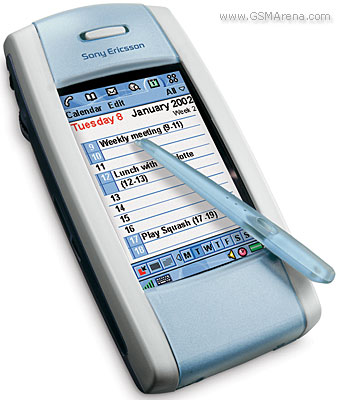
Same thing happens with other companies of course. Er, Apple, in particular. If you ask most people "what was the first smartphone?", they will probably say "the first iPhone"... even though there were a few earlier devices that used the same tech and would have been called "smartphones" today (by the same token as the original iPhone). They just never caught on in the same way as the iPhone did.
It's marketing, innit. I don't think you can win against it.
The iPhone is synonymous with smartphone technology because its debut was a quantum leap ahead of the competition at the time (Blackberry, Palm, etc.). Google was working on a phone that used a physical keyboard until they saw the iPhone announcement and then quickly modified Android to ape iPhone/iOS.
I'm really sick of people trying to downplay Apple's innovations as nothing more than slick packaging and marketing. It's a stupid meme that refuses to die.
Exactly. I would go as far as saying it's simply infotainment.
Here is a test that I would use to determine the value of this. If it wasn't infotainment, it probably wouldn't need to be set to a soundtrack and would stand on it's own w/o music. The music creates an emotion and helps stave off the boredom.
Cameras are cheap and I suspect the 12 cameras have overlap to help with depth perception and maybe even fault tolerances. I suspect as soon as LIDAR becomes a better solution for the price (if that happens) that Tesla will use them. Or maybe a hybrid of both so they can use the strengths of both as needed.
For example with the parking would the car know if the other vehicle has a driver and when that driver moves or is about to move?
But what stops that iPhone metaphor for me is Design, Materials and Finish. Apple Products look and feel like luxury. Where as Tesla only achieves that on the software side - and in your pocket.
Source: I owned Windows CE / windows mobile devices since as early as 2001 if I recall correctly.
Source: I owned Windows CE/Smartphone/Mobile devices starting with the Samsung i600 and was actively using a Treo 700w when the iPhone was released.
That seems to be Ms. Caldwell's point: Without the software or regulations in place, it's impossible to know if the "equipment is ready." I don't disagree with her on this one.
(And I am long TSLA.)
He's doing what he does best: forcing a hard change on an established system.
Autonomous driving not allowed? Well, we'll give them "Autopilot"-- make sure to keep your hands on the wheel! Nope, it's not autonomous, it's Autopilot! It just happens to have all the hardware needed to be fully autonomous, and Autopilot will "gradually gain new capabilities." Questionable? Sure. Best way to make an extremely hard industry transition? Almost definitely.
It would be a chicken and egg problem if he didn't do this. Can't test the system extensively beyond the lab without regulations, can't have a system that doesn't meet regulations because it hasn't been tested enough yet. He's just sidestepping this dilemma.
All this in spite of tremendous uncertainty not just with regards to the regulatory environment but to the not yet fully developed capabilities of their own software.
Tldr: I suspect Tesla know what they're doing with the pricing of this thing.
In a big way. They are using data gathered by the self-driving ready hardware to develop the software that will use it.
Thousands of cars out there collecting data is a huge advantage over groups working with a handful of prototypes.
I'm not sure this is true. At least for Google, it seems like the main bottleneck to progress is engineering time to fix the problems that arise. The problem is not a lack of vehicles driving and finding problems.
I say this because Google has made very little effort to expand their fleet of testing vehicles. The last big expansion, from 28 to 48 vehicles, was in Sept. 2015. Since then they've expanded from 48 to 58, but it doesn't seem to be a priority. [1]
[1] https://docs.google.com/spreadsheets/d/1v0BBTDOXvD8JdhrySFy6...
It just isn't reasonable for Google to build and manage a fleet of that size for a development program. It would cost Google half a billion dollars, but for Tesla it's just a bit of cost they roll into the product.
But saying it's an "autonomous car" because it has the sensors and computers just isn't so. When it gets the software, then it's an "autonomous car."
To use GPs analogy to the iPhone1: If Apple had just shipped the hardware without iOS, it wouldn't have been the iPhone.
Yeah, well... it's not really autonomous. It's a slightly better cruise control + assisted lane change. In fact the "Autopilot" marketing term makes it sound much more like fully autonomous driving than it actually is.
Elon Musk does what he does best alright: make billions. The rest is just educated guesses at best.
At worse, any attempt to "explain" marketing strategy as some sort of passionate drive to improve the technology, or similar, is just so much cold-reading yourself at for the benefit of a commercial company's bottom line.
So I think it might be from an investment standpoint; just think of Tivo they made the DVR, but once others saw what they were doing there are plenty of other DVR choices and Tivo didn't win the category.
Tesla might be forging ahead and blazing the trail for others, who will actually capitalize on it.
I think that the Tesla brand is sexy enough that they'll maintain their niche (as Tivo has to some extent), I'm not sure if that will translate into investment returns.
When Tivo was a simple as plugging in the analog coax signal from your cable or antenna, it made a lot of sense. But once the signal from the cable company needed digital decoding, it hurt them, despite Tivo having a better UI.
It's probably because there is a substantial gap between what Musk spins, and reality.
Take Tesla 3 pre-orders, for instance. Tesla spins 400,000 pre-orders for a car that you might not receive in the next three years as the most amazing innovation in automobile manufacturing.
Historically, there have been a few other companies that had hundreds of thousands of pre-orders, where you would end up waiting years for your car to be built and delivered to you. Their names were Lada, Volga, etc. Soviet auto companies had the exact same problem Tesla has - inability to meet demand.
Because genuine competition in the Soviet Union was not allowed. Don't want to wait for Mr. Musk's Magical Mystery Car? Then buy a damn Honda Civic or something. A huge pre-order list is notable when it occurs in a context where people have many other options not involving a long wait. It proves the existence of real demand, not "demand-because-of-a-lack-of-alternatives". Proving this demand is important for a small company which is trying to scale up.
The reality is that they are the first serious electric car company. A tiny enterprise that took on the old Detroit giants and is winning.
When you see people putting down hard earned cash for something three years into the future, they are not being tricked, they are investing in disruption. He's such a terrible orator you couldn't describe him as a charlatan. It's his actions and people's wallets speak the loudest.
Meanwhile, Detroit produces more cars then that in two weeks.
Tesla might win eventually, but let's not get ahead of ourselves.
Context : No other car manufacturer will have a comparable EV on the road in the next 3 years. I will take what Tesla gives me.
It doesn't have the self driving hardware, it's otherwise comparable to the Model 3.
Once it is released then we can talk about the rate of mfg vs backlog but it is pure silliness to argue against a product because lots of people want it.
By this logic, Apple is a huge disappointment because they won't give me my iPhone 8S until 2019.
In what way are they "winning" against Detroit? Certainly not in revenues, profits, miles driven or cars produced.
Yes, they "own" one segment": high end electric vehicles. No one there is close. But Detroit owns many others. Why does the one that Tesla dominates carry so much weight?
> Why does the segment that Tesla dominates carry so much weight?
The stock market is adjusting for a <10% market share of ICE cars in 2050. It's a Schroedinger situation: If the <10% hypothesis is wrong, then we're all dead (more precisely: Half of us are living under giant cataclisms, the Gulf Stream has stopped, the costal cities are flooded, and our economy is so disorganized that we can't plan where the money will be), so markets don't need to account for this situation. So all Detroit/Toyota industries are slowly shrinking in comparison to Tesla, unless they adapt. It may be hard to imagine if you live in USA because they rely so much on cars for their lifestyle, but our civilization will get rid of petrol cars within our lifespan. This is also the genius of Musk: He saw a version of the future that is obvious but that no other American citizen could understand, and he executed on it. Hence the importance of travelling the world or meeting many people when we want to innovate.
By the way, maybe a sweeping change is preparing that the petrol generations can't foresee. We could imagine things like an international agreement on global warming suddenly reducing the worldwide production of cars. It's impossible today, but educated people may have good reasons to believe something like this will happen, in which case Tesla wins all.
I'm not sure how having a disproportionately high market cap indicates "beating" anyone. It's the whim of the markets.
>If they execute well on the Gigafactory, they may apply a multiplier on this market cap, reaching above Toyota ($200bn)
Based on what, exactly? This is Silicon Valley math. Who on earth is going to pay Toyota prices for a company that you yourself say might only have a fraction of the production? What sort of investment would that be?
I know this is taboo around here, but one day high-growth slows and companies become "established" and it's about how much money they make and return to shareholders. If Tesla is making as many cars as Toyota and as much profit is Toyota, then they'll be priced like Toyota. Why would it be any other way?
>So all Detroit/Toyota industries are slowly shrinking in comparison to Tesla
There were over 70 millions cars sold in 2015. Tesla delivered about 50 thousand, for about a 0.07% market share. Are you surprised that they are able to grow relative to specific players in a massive industry?
But maybe Toyota will return fewer profit per car? Ah, you've already accounted for that. There are other variables: If production is equal today, but if Toyota is expected to halve its production in 2040, the Toyota share will get lower and lower until it's half of Tesla. Other variables can be the health of their distribution system (a vendor with no cardealer lock-in will save a lot on sales), customer trust, innovation methods (e.g. Toyota's methods only led to the invention of Prius, whereas Tesla's methods led to the invention of a fully-electric car with a lot of autonomy, so it's a predictor that Tesla's innovation scheme will produce better things than Toyota in the future), marketing methods (They spend little in advertising and are able to have thousands of viewers watch their keynotes without pushing ads in the newspapers), a legacy of employees that might be hard to re-train, or a forecast that huge R&D expenses will be necessary to keep being relevant in the market of 2040. It's not "a whim of the market", it's that Toyota is shrunk by default in 2050 whereas Tesla is alive by default in 2050.
> Tesla delivered about 50,000, for about a 0.07% market share. Are you surprised that they are able to grow relative to specific players in a massive industry?
..and Tesla plans to deliver 500,000 in 2018, for about 0.7% of the market share. Then I personally think they'll become even more popular (because of law advances, both against pollution and in favor of self-driving cars, and because of social status, geeks, comfort and market-specific innovations like the air filter that will be appealing in China, etc) and that means 7% market share in 2022, etc. So I'd buy Tesla shares for a higher price than Toyota's because I'd trust them more for delivering good dividends in the long term.
Note: I'm neither a financial advisor nor an owner of Tesla shares.
Because it kind of is when we're talking about an electric car. Tesla's competitors can't come up with those numbers for EVs combined (even with hybrids). GM is expected to make 30,000 Bolts for next year, for instance (and it may or may not sell all of them).
That said, I'm skeptical the Autopilot 2.0 hardware is a "Level 5 autonomous system". I think a good rule of thumb would be to subtract about "one level" from what Musk promises, as he always tends to be a little overoptimistic, even if what he creates still ends up being better than the competition.
Take the first Autopilot, which Musk said is "Level 2". It's probably more like a real Level 1. It only works under very specific situations, and even when those specific situations are met (a highway) it can still fail, because Tesla may have accounted for US highways but not European ones, or other road quirks. See the recent Autobahn accident because the Autopilot couldn't properly identify "yellow lines" as opposed to white ones.
So yeah, I expect this to be more like Level 4 ... three years from now (as ready for mainstream use, not just a demo). I don't think we'll see true Level 5 until the 2020s. I think there are still many unexpected things Musk and his engineers aren't foreseeing right now.
Check your sources, we're at well over a million EV/PHEVs[0] combined nowadays and the model S is a bit over 10% of that. It's been a while since I last saw an EV parking spot with chargers that was empty.
Now that I checked it, the Leaf alone is past those numbers for the Model 3.[1]
[0] http://gas2.org/2015/09/22/1-million-electric-cars-now-in-th...
[1] http://nissannews.com/en-US/nissan/usa/channels/Global-Sales...
When we get to level 4 the game is over, it's just an adoption curve at that point.
Under those conditions, it's pretty much Level 5 or bust. But yes, that doesn't mean Level 4 cars won't start getting adopted, especially if the autonomous systems are just another "feature" on a regular car (hopefully EVs in all or most cases).
Other manufacturers aren't simply responding to Elan.
These other car companies have had so much more time and resources, and they have not pushed the way Tesla has.
They'll cool down in a few years (or disappear).
Traditional car investors look at certain tried and proven market indicators to judge stocks. When new tech comes along, they don't know what to think. So they think here and there like in this case.
The real value in bringing self driving tech here is to provide cool features to the buyer, not necessarily bring the stock of the company up. If investors do not know how how to place value on this, I only shrug.
I see the opposite Musk seems to be the new Steve Jobs people are crazy over him and seem to think he can do no wrong.
That said, if some company had manufactured bluetooth hardware last year way in advance of the release and full spec, I would argue that it was a pretty bad move. Clearly this is not a perfect analogy, but it should illustrate that this can seem counter intuitive. Building in the cost of beta tech that doesnt fully work and is not legal is a huge gamble. I just wouldn't personally bet against tesla and for the reasons i outlined; it is likely the right call
They will always say such things.
I cannot judge for myself having not read them yet.
The only people who suggest them are people who I do not respect (rich assholes or people who think they should be rich assholes) or people I not do not know mixed with people insulting them.
Basing your entire philosophy on a cartoon is a mistake, but bashing an author when you haven't read any of their work is a grosser mistake.
Her one good book in my opinion is "we the living" - oh, and Anthem was an interesting novella - think she inspired Tom Disch's 334
Oh, rly?
I prefer her early stuff, from before she lost her ideals to her ideology.
Rand was a mundane, myopic, self righteous ideologue with the philosophical depth f a puddle and the macroeconomic wisdom of a 6 year old with a 20 dollar bill.
Randian politics are a comic strip masquerading as a political movement.
Worthless except as a study in sociology of those people who hold it up as a worldview.
IMNSHO
The classic literature (and Atlas without any doubt belongs to so called modern classic) much like classical music, is a complex and highly artificial phenomena. The word for referring to a piece of art is artifact.
In the case of classical music there is absolutely no objective criteria to judge symphonies. It is possible to compare the pieces of music, and lots of pseudo-intellectual assholes do it for living, but it will be nothing but a joggling with a metaphorical jargon. Nevertheless, one almost always could distinguish some fragments from this or that piece of classical music which he likes for some not very articulable reasons. Bach, arguably, composed most of such sources of a beautiful fragments, Mozart is the second, etc.
These notions could be applied to literature. Like a symphony, a big novel, even a small poem, cannot be judged by a single criteria, but some parts of it we might find delightful and beautiful. The question, as it is in the case of classic music, is who is the reader (or listener).
In case of Atlas Shrugged, there are too many to count arguably beautiful parts (majoring in physics and philosophy is one of them), fragments or even passages, which appeals to the mind of modestly educated reader. The best personages she created were, ironically, not the central, heroic and positive, but all the crooks and weaklings, mediocrities and minor idiots. This, perhaps, is why Rand is hated so much.
As a student of philosophy, Rand got most of the philosophic and economic aspects right. Indeed, her Hegelian professor is a true masterpiece, her bureaucrats are convincing, James Taggard is remarkable. Her main characters are overloaded with virtues.)
Certain naivety of the plot - the miraculous alloy and especially the perpetuum mobile, for which the book has been criticized so often by idiots, actually are mere nuances. The real story is about focus and persistence, accepting the challenges, adapting and evolving and never giving up - all the postulates of a sound moral philosophy, which goes back to ancient Greeks. No one takes the plot of Atlas seriously.
She is also right that the motivations which drive us should be simple and pure (the Greeks, again), should be grounded in our human nature (shaped by evolution, constrained by biology) not in some abstract nonsense, dogmas, fleeting fashions, or even social norms. Rigid social norms are always reflect the ugliness of urban societies. While her main characters are rather angular and clumsy, the driving forces behind them are clearly recognizable and proper. Let's not blame Rand for this angularity.
I could do it for hours, but I think you got the idea. Good literature requires a "good" reader to be able to appreciate what is behind the words in a sentence.
You may well be right - many might read atlas and empathise with the antagonists, and dislike rand's treatment of them. Certainly many self proclaimed conservatives disagree with her philosophy, because it doesn't agree with protecting their rusting vested interests at the expense of innovation and the taxpayer.
An awful lot of people who like rand are assholes, however. The average randroid is more representative of James Taggart than Roarke, bitter and small, scathing of those who disagree with their narrow opinion.
Ah, irony.
No, it's because she advocates for being a jerk.
What I find really interesting about Tesla (and SpaceX and HyperLoop) criticism is that people think it will fail for what it doesn't do, instead of focusing on what it does do. What they don't realize is that all products in history that got hugely successful didn't do a ton of stuff initially. They just did some things really well.
Early washing machines were noisy as hell and got unbalanced all the time. But who cares? they washed clothes and everyone wanted one.
Early TVs were massive things with fussy screens and only in B&W.
The first iPhone was extremely slow and only had EDGE.
But rather than focus on what all of those things don't do, you only need to realize they do something really well, and that's why they are a huge success.
Even if the Tesla can't drive itself too well in heavy snow, or if the range is crap in really, really cold weather - WHO CARES? There are still tens of millions of people on earth that will lap them up because of the list of things they do so well.
Products don't fail or succeed because of what they don't do. They fail or succeed because of what they do do.
This doesn't mean that the majority of people aren't optimistic about the future, just that their opinion has already been expressed.
Sure, but there is more than one way to say it:
"I live in the mountains of Virginia and this will never work here with the snow, therefore it's crap, therefore it will fail!!!!"
OR
"It's going to be really hard for them to solve the problem of heavy snow. I wonder if they'll use <something interesting we can all learn about> or <something else>. I wonder if they've teamed up with <who knows> to research <something interesting>. I think the best approach would be x,y,z and I read the Google are using a,b,c".
etc.
I mean, we're talking about a multi-billon dollar company trying to push forward - OF COURSE there are tons of hard parts. Pointing them out it not useful - thinking about (and working on) how to solve them is what HN should be about.
"I wonder if Elon will go down path A...." "Interesting that the battery is now x, this is probably a result of Y technology they developed last year." Etc. I don't find it hard to discuss a topic in a positive light at all.
Time we spend bickering about whether electric cars are ready is time not spent talking about the new grid, the new architecture, the new social organization that will form around these (to me obviously) imminent technologies.
I don't think "how it could succeed" is less interesting than "how it could fail". And if I expect something to succeed, frankly the failure speculation starts to get a bit boring.
It's a bit personal for me because I am pursuing a high-setback business model in my startup and so people always want to talk about the looming dangers they see. It starts to get boring, because I expect a certain number of failures, and I intend to work through them. What's interesting to mr is whether the first principles analysis is right, and how the plan looks from a Zen perspective... Not is everything right, but am I applying pressure in the right place today given the conditions.
I see things differently. Anyone who criticized Theranos was met with the same reaction, "Everyone on HN is so negative!" But the questions were valid. Look what happened.
The same thing is occurring with Tesla. Yes, there is fantastic work being done, but many people here can't separate marketing from the real world. It's shocking, frankly.
I'm suggesting that there's a lack of critical analysis applied to what are, essentially, Tesla press releases. Like when it was implied that people were sexist for questioning the genius of Elizabeth Holmes, because she was changing the world and all that, according to the press releases.
Again, I have no problem with being a Tesla fan. I probably come off as a "hater" here because I like to play Devil's Advocate and it's a pretty one-sided discussion on HackerNews (expectedly). I think what they're doing is fantastic. But give some credit to other companies who are also doing good things for this space, people's safety and the planet.
From the Wikipedia article [1] about Joseph Weizenbaum: "His influential 1976 book Computer Power and Human Reason displays his ambivalence towards computer technology and lays out his case: while Artificial Intelligence may be possible, we should never allow computers to make important decisions because computers will always lack human qualities such as compassion and wisdom."
So, asking "but what if ..." in a responsible way should always be a big part of any innovation. Just shouting "hey, we are hackers, lets innovate and be open" isn't always responsible.
As a bonus, there's a great archive [2] about Joseph Weizenbaum with audio and film clips for anyone interested. Most of the site and the documents are in german unfortunately, but some transcripts are available in english as well.
[1] https://en.wikipedia.org/wiki/Joseph_Weizenbaum [2] http://www.ilmarefilm.org/archive/weizenbaum_archiv.html
I'm not saying humans react perfectly in these situations, but self-driving cars are rule-based, and have zero ability to adapt to unanticipated situations. I'm not arguing that Tesla shouldn't push forward. However, I believe that so far, Tesla has demonstrated a lack of concern for user safety. Companies like Google, Mercedes-Benz, etc. have tech at least as good as Tesla's, but have been much more cautious about deploying it.
That's different from the previous auto-pilot version.
1 death in 230 million miles (so far) with Autopilot v1 vs 1 death per 90 million miles for non-autopilot.
"Autopilot v1" miles are also largely on freeways and conditions favorable to the driving-assist features. The 1 in 90 million is comparing to all cars and not just other cars with driving-assist. I don't think many people would argue that driving-assist is more dangerous than without. The 1 in 90 million is across far more driving conditions, many of which are more dangerous than what the Tesla Autopilot is driving in.
The comparison between the two isn't really a fair comparison and, in my opinion, is dishonest.
E:
In addition, picking any random model car may yield similar statistics. "Car accidents involving a Honda Civic per mile driven" is probably a lot higher than "Car accidents involving a Pontiac Firebird per mile driven". Because there are more Civics on the road... Firebirds may be in fewer accidents, but my money is on the Civic being a safer car.
I like Tesla, just pointing out why people are right to demand they get it at least as good as humans before pushing it to market.
Indeed, it took Samsung to develop that technology.*
*Joke; in fact Israeli security services invented it in the '90s (https://en.wikipedia.org/wiki/Yahya_Ayyash). Also there aren't reported fatalities from Note 7 explosions.
This is a good counterargument to anyone who says Samsung just copies Apple :D
To be fair, Apple got there first, although I doubt they're proud of it, and probably they were not the absolute first.
A very small number of iPhone 4 (or was it 4S?) had defective batteries which caught fire.
What Samsung can claim an absolute first for, though, is providing replacements which are just as dangerous.
The reality is, with machine learning, you need a lot of data, and yes, you can send a few of your own cars with employees inside like Google, but that's slow. Instead, Tesla is using their existing brand and user base to collect orders of magnitude more data, and this way, they will be able to validate their models much faster.
Again, the thing with data and algorithms is that you can test and retest them. When you have all the data, you can see the info at time X, and also have access to the data at time X+1, so you can check if your algorithm made the right choice. Furthermore, you can actually take tricky situations and replay them thousands of time while tweaking your algorithm to do better.
So yes, while getting it right is very important, I believe their approach of collecting as much data as possible is the best way of getting there
A first-gen iPhone couldn't save people, but a first gen auto-driving car can certainly kill a lot of people if the software isn't working right.
It's interesting that the new Tesla software will be shadowing while the meatbag is driving: not just reporting back driving data, but also simulating what it would do all the time. There's going to be a lot of situations where it would be wrong, all nicely laid out for the developers, ready to fix.
It simply isn't enough to post a video of a car driving in light traffic on a beautiful, California afternoon. That isn't what makes the problem hard. Mess up with your video-based system in the dark, or in bad weather, or...lots of people will die.
This isn't web development. You don't risk lives with your beta release. (Which, not incidentally, is why they haven't released anything other than a video.)
Tesla can collect data from 5 billion miles of driving already one year after the Giga Factory is full operation, if production reaches the planned 500,000 in 2018 and each car drives 10,000 miles annually. And then the miles accumulate exponentially.
Here is my guess: After a few million miles of shadow driving, i.e. a few weeks after the first few thousand new Teslas have been sold, Tesla is likely ready for the real thing under perfect driving conditions like those Google experiences in California. So Tesla is going to open for the self driving capabilities in such geographic areas during the day when weather is nice.
After a few hundred million miles of shadow driving, i.e. within half a year or so when Tesla has marketed 1-200,000 cars that have driven for a couple of months, Tesla will have collected enough data to drive in more difficult traffic conditions, like other American urban areas.
After a billion miles, around a year after Tesla has gotten the Giga Factory up in full speed and the first 2-300,000 cars have been on the streets for half a year, Tesla is probably ready for certain bad weather conditions, like rain, light snow, light fog, and for driving in the dark.
Give it another few billion miles, so still before 2020, and the streets of Istanbul or the snowy roads of Nebraska have been tamed.
Ultimately, this game is about the sensors. If your sensor suite is inadequate to detect every conceivable bad situation a car can be in, then it doesn't matter how much data you accumulate. One million miles of good LIDAR data is worth more than a billion miles of video, if the video can't see white objects during the daytime, or figure out on what side of the parking lot the car should be driving (ahem).
I have no idea how good or bad their sensors are, but instinct tells me they're not up to the task of all-condition driving, and this video provides no useful information either way.
The Teslas sold in October 2018 don't need to have the same sensors as the ones sold in january 2018. As you can see, the car is designed modularly. No other mass marketed car on the planet has any sensors integrated yet.
It's all about big numbers. Google has spent 5 years or more driving a few cars around California. It's never going to match billions of miles driven around the globe.
EDIT: Imagine the engineers working at Google's autonomous cars today. I bet many of them are preparing their resumes for Tesla. They can launch an algorithm or a new sensor type now, wait a few months and then get the feedback on how it worked. With Tesla, they will get that feedback in days. In which lab would you want to work if you want to take part in shaping the future? In the Google lab where you have a Lexus or two assigned to you that drive up to 25 miles per hour in California or in the Tesla lab where you have 2,000 Teslas assigned driving in 50 different countries?
If you mounted a forward-facing video camera on every car in in the world and gathered the data for decades, you'd still be nowhere: you're missing the side and rear views. This is a thought exercise, but it demonstrates the point. If your robot car has a blind spot, all the data in the world won't fix it.
Nobody knows how good these cameras are, but every camera-based system so far has had the same critical limitations: they don't work well at night or in poor visibility.
Tesla doesn't make a mass-market car.
>Imagine the engineers working at Google's autonomous cars today. I bet many of them are preparing their resumes for Tesla.
Uh, probably not.
Uh, yes they do, they make cars that are available to the mass market; anyone can buy a Tesla if they want to. That's what mass market means.
Uh..that's not what "mass market" means. Honda Civics are mass market. $100,000+ electric vehicles are not "mass market".
Here's Wikipedia:
"The mass market is the largest group of end consumers for a specified product. It is the opposite of the term niche market."
The sensors cover the whole spectrum of light humans can see, plus a lot more. There is also ultrasonic sonar.
And, of course, all of this is 360 degrees.
That was also my understanding for the general case, but I was also assuming that cameras were available that could at least approach human dynamic range.
First: Why do you always need to assume web dev is stupid. Or less impactful. Imagine a bank website showing 10,000 <your currency> less in your account. I myself paid several customers a penalty/reimbursement, when because of our website, they suffered. And I am sure there are websites/apps which are more critical.
Second: You are assuming, they have done a half-assed job and hurrying to release. If you look at the earlier thread[1], several people have explained, how Tesla has 100s of millions of kms of their customers driving footage, using which they have trained the AI/ML algos. So I won't be surprised if these cars can do well enough in the dark.
Sebastian Thrun, one of the pioneers of self driving cars, recently has taken a turn to self driven cars just using cameras and AI. In his own words[2] he says, that we humans also just have our two eyes, so cameras should do the job well.
[1] https://news.ycombinator.com/item?id=12748863
[2] https://www.youtube.com/watch?v=kTfEFnYxej8 (Audio is bad for upto 20 minutes, then its Okay)
Edits: 100s of millions of kms of their customer
can't --> canAs for AI, there's no magical "algo" that solves the problem of an all-black video frame. Having more black video frames than anyone else doesn't exactly solve that problem. See also: rain, snow and fog.
But finally, nobody said that web developers are stupid. Calm down. But it's completely fair to note that, however much money you lose for your customers with half-baked beta releases, you're still not killing them. The stakes are higher here. The expectations of proof are higher as well.
So do human eyes. I perhaps should have used the word night rather than dark. So basically it should work in the night also is my understanding.
And I'm totally calm, and not angered :-). Just trying to make my point. Because I don't like arguments like - 'this is not rocket science', or 'this is not web development.
The impact of that, terrifying as it may be, is still significantly less then the impact of a self-driving-but-buggy vehicle into the side of a semi.
Perhaps that particular human was special and worth saving over the other two who were saved instead, but I am not aware of any reason to believe that.
Only after a particularly tortured interpretation of highway safety statistics.
If you exclude pedestrian deaths (Few jaywalkers on the interstate), motorcycle deaths, deaths in conditions where autopilot cannot be used, and deaths due to collisions of lighter, less safe, older, or poorly-maintained automobiles, then regular highway death statistics start looking better then autopilot-enabled ones. [1] [2]
Again, there's a great gap between the hype of Tesla, and the reality.
[1] https://www.technologyreview.com/s/601849/teslas-dubious-cla...
[2] http://www.forbes.com/sites/samabuelsamid/2016/07/05/adding-...
If I had one of these cars, I would not put 100% faith into this technology yet. But, after 5 years, who knows? I may finally be able to drink more than 1 beer at a bar with friends and have my car drive me safely home.
Which brings an interesting point, traffic violations. What will local police do now that self-driving cars drive safely?
And even when purchasing a car , a car that "only" drives itself when it's safe would be great, even if it's only 40% of the time, for people in the right city.
How many truck routes only run across sunny roads?
This level of negativity is typical for HN. Look at what happened when dhouston announced Dropbox- the second comment was about how any Linux user can trivially replace it for themselves:
There's always people with something to say.
Today on Yahoo Finance: 'Tesla Falls After Announcement - Tesla Motors (TSLA) fell nearly 2% and remained in the lower parts of a six-month-old consolidation. Late Wednesday, Tesla said all of its new vehicles will be equipped with hardware that enables fully autonomous driving "at a safety level substantially greater than that of a human driver." [2]
[1] http://forums.macrumors.com/threads/apples-new-thing-ipod.50...
[2] http://www.investors.com/market-trend/stock-market-today/sto...
Or the hundreds of other bad ideas that were criticized and failed because they were bad ideas. Picking a few big successes doesn't make an argument. Because, I agree, there are naysayers for everything. I'm glad; keeps people honest.
"I still can't believe this! All this hype for something so ridiculous! Who cares about an MP3 player? I want something new! I want them to think differently! Why oh why would they do this?! It's so wrong! It's so stupid!"
"Come on everyone, y'all are saying it sucks before you have even held it in your hand. I mean 5GB in a little tiny thing like that, it's amazing. I don't see anyone else making something like that. Do you?"
"No matter what Apple does there are always people who are NEVER happy. Give it a rest. It's a great idea and the first of many."
"The truth is that is really is revolutionary. 5 gigs? Where do you see 5 gigs in an Mp3 player?"
"This is not like any other MP3 player on the market, imagine being able to store several days worth of music at once! The iPod will be great for travelers, students, heck anyone who is really into music"
"This thing's too cool. It makes my Rio 500 (recently upgraded to hold 128 MB of songs) look pathetic. It's beautiful. It looks too easy to use. It has all sorts of cool features that I will never live without again. This is a home run, and y'all who keep complaining its not a $200 Newton device, buy a Visor. They can play MP3s, by the way, but they're still stuck in the 21st century compared to the iPod."
"THIS THING IS AMAZING!!!
It's not jus ANOTHER mp3 player. It's a BREAKTROUGH mp3 player!"
"with all the hype surrounding it, the iPod still came out looking quite good."
"I think it looks like a great toy. The price is steep for 5 GB, but everything else about it is great."
"iPod is a great idea. It has huge capacity for MP3s (5GB is much more than any other similarly sized mp3 toy), syncs with iTunes, and a nicely sized backlit LCD screen with good battery life (10hours). Recharges by FireWIre is also a neat thing."
Because folks who actually used all that stuff know that the iPod was a quantum leap, even in its first few generations. 5GB of storage, MUCH better battery life than any competing device of any kind, and FireWire 400 felt fast enough back then that it was like actually being on fire.
As soon as the ipod came out, I bought one for my girlfriend as a birthday present. She has never used any other system for listening to or acquiring music since. It obviously switched to the smart-phone, but still...
Most of the people who were shitting on the iPod never held one in their hands.
And on point, I would say.
What Tesla has done so far with "autopilot" is a big deal, but releasing a "video of a car driving itself" is the classic marketing trick with machine learning, where you cherry pick aituations in which your system does well, and most people don't second guess it.
And why are you comparing iPhones to self driving cars? That's like comparing paper airplanes to commercial airliners. Honestly posts like these should be automod deleted.
Are you not simultaneously advocating and decrying the exact same activity?
It's like there are three positions:
1. Certain viewpoints or comments should not be allowed. 2. Everything should be allowed except comments which say that certain things shouldn't be allowed (i.e. tolerant of everything except intolerance). 3. Everything should be allowed.
#1 is intolerant, #2 is an attempt at enforced tolerance (which is necessarily intolerant in itself), and #3 is actual tolerance.
It seems to me that the real problem is that meta discussions are frowned upon on HN, but there is no designated place to have them instead. So whenever someone starts one, they face the risk of censure-by-downvote.
If self-driving cars don't happen in my lifetime, it will be because companies piggybacked on the media hype too readily and shipped dangerously misleading technology to consumers before it's ready. A few CNN incidents later, et voila, no one's talking about self-driving cars anymore. The whole thing can grind to a halt just like that. Every overly enthusiastic, precocious CS undergrad who posts in forums about how incredibly inevitable self-driving cars are, and how it's basically a solved problem and a done deal, are helping to set up self-driving cars for failure by encouraging overly optimistic expectations.
For people who care deeply about the technology, the possibility of a company like Tesla putting something out there before it's ready and potentially causing CNN incidents can be more alarming than no one putting anything out there at all. Maybe some people are being too negative and nitpicky, or maybe not, but I think that's where the negative attitudes come from. It's from people who want self-driving cars to succeed.
With iPhone 1, people's lives were not at stake.
... and if you look back at the launch of the iPhone you'll find the response is roughly the same. A healthy degree of scepticism.
Differently from mobile phones, cars actually have the capacity to go horribly, horribly wrong. This is not something to have a "let's fix it in public beta" Approach on.
We don't know yet whether this is the iPhone 1 of self-driving cars or the Newton of self-driving cars, a decade or more ahead of its time.
A cellphone isn't a car. There is a reason why people expect a LOT more perfection when it comes to trusting your life to a machine.
we are geeks, many happy to be early adopters (aka testers), but try to explain this to average middle class joe who sees this and thinks it's already there in point of perfection, no mistake possible.
I just hope for Tesla that they delivered an outstanding technology that will just work, too much at stake with it. For now, respect to engineering team behind this!
So many "but what if this and that and this..." & "and yeah let's see if it can handle X & Y"
This is the iPhone 1 of self-driving cars! That's akin to saying Apple should have waited to release their phone until iPhone 7 "because of this & that & this..."
Don't we have to start somewhere?? Aren't there supposed to be a big user base here who understands that it's an evolutionary process - we build the plane before we build the rocket before we shoot people into space?
Oviously the perfect self-driving car is still some way off, but I for one am thrilled this race is on!