Here you can see it on 0:23 of video tour: https://marketplace.vts.com/building/400-capitol-mall-sacram...
Turning the page is the main thing I do on an ebook, having a button on the side is so much more convenient than touching the screen, I don't obscure what I'm looking at, and I don't smudge the screen.
For touchscreens dry fingers are also called "zombie finger" [1]. The screen registers the too minute change in electrical field as noise and rejects the touch event. Some sweat (but not too much) on the fingers makes all the difference.
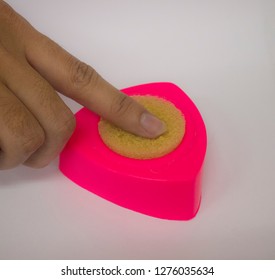
[0] https://image.shutterstock.com/image-photo/sponge-finger-wet...
[1] https://www.consumerreports.org/cro/news/2015/06/zombie-fing...
Source: when I was 5 I saw my grandmother, RIP, doing that and asked her about it. She explained that as she got older her fingers got drier, and now it's just easier to flip pages that way.
I may try to suggest that the other grocery stores adopt this brand but they are big national chains and I doubt they would be interested.
for reference, this bag says PULL-N-PAK® Titan Supreme 28-2024-11-2 www.crownpoly.com
There's always a fraction of a cent to be saved by adding slightly less adhesive, using slightly cheaper plastic, replacing the perforating tool less often, etc.; couple iterations in, the solution stops working reliably. There's no back pressure, because it's not like anyone is choosing where they shop by whether the single-use plastic bags are easy to open.
Oddly, the plastic bags in the produce section do not have that problem. I now just grab one of those and use it for my meat.
Licking or wetting your fingers for this purpose has been a standard practice across the globe, when people are dealing with turning pages (e.g. for accounting), counting tickets, coupons, paper money, etc. It was never just something older people did (except in the sense that the practice is not as common now, as people in the US and Europe don't need to do it that much anymore, due to changes like reduced use of cash, etc.).
So, you might not have seen it since the need is mostly obsolete in most of the west, but it's still a thing elsewhere, and was very much a thing in the US and Europe too until a few decades back.
So much so, that there were office gadgets made for this, basically a base holding a small sponge, that you would add water to, and use it to wet your fingers for counting/changing pages. They're still very much sold:
https://www.amazon.com/money-counting-sponge/s?k=money+count...
(That realization scares me, as it means I too might become an obnoxious finger-licker in a few years.)
Yeah, I'm starting to understand why old people may be past the point of giving a damn about the optics.
--
Source: bank teller training years ago. We were supplied (always) with little moistening pads at our tills.
There's always moisturizer.
That's the other thing about it, when it was being done in the past: people weren't so appealed by having bodies, or frightened of life and anything that's not sterile.
So they weren't as grossed out by everything - including a person merely licking their fingers to count some pages or notes...
Sanitary in quotes since I'm not sure a pot of wax collecting stuff from your fingers for months or years is much better than licking.
no, but older people often tend to dryer less sensitive skin, so I'd wager it's skewed that direction. Source: am approaching "old".
People put their fingers on all kinds of things other people have touched: doorknobs, elevator buttons, shopping basket/cart handles, etc. Adding a moist pad to that isn't going to change anything. Keeping people's hands out of their mouths, however, might.
(I'm asure it was always a bit nasty but when it became a deadly move, my habits finally changed...)
I just find something cold in my cart and use the condensation to wet my fingers
(No, I don't touch the sprayer, just a drop.)
I recommend re-reading it in a few years. Ecos books grow with you; the more you learn about the world and history, the more you'll find in nuance in that book. Maybe more true for me - as a teenager I've read it first as a mostly weird detective story. Later re-reads made me more interested in the weird parts.
There is, by the way, a separately published Postscript to the Name of the Rose with some notes on writing the book.
Nice pull.
It turned out each winter I make screens much more dirty and my fingers are drier. Touch gets more random, fingerprint readers success rate drops from 100% to more like 50%.
Nowadays I make sure I clean the screen with actual dedicated products often, and make sure I keep hands moisturized. It works well, even if the latter contributes to the former.
Haven't changed phone in over 2 years and still don't feel the need for change :)
I don't tend to have the issues everyone here is talking about, but those things never work for me on the first try.
Exactly, i do the same thing with my (new) Macbook Air, it makes the TouchID sensor work much more reliable (also, i use my middle finger by the way...)
You got it (mostly) right :-) Just one minor mistake: a native would write, "Would breathing on it be a contactless way..." in order to indicate that this is only one of several possibilities. You could also say, "Would breathing on it be the contactless way..." in order to indicate that this was the only possibility.
The rule here is really weird. The qualifier is only required when there is a singular noun being used as an object. "Breathing is way of doing it" sounds weird, but "Breathing and licking are ways of doing it" does not.
"English is super-weird" sounds right. "English is super-weird language" sound weird.
/s but not so much
EDIT: back in the day cashiers had a thing to moisture your fingers flipping the bills/notes/papers
(I have to open countless garbage bags, licking is not an option)
I really hope it’s not the case that capacitive sensors are somehow preferred from a security standpoint (i.e., harder to trigger with a robot).
"Excess blood sugar decreases the elasticity of blood vessels and causes them to narrow, impeding blood flow"
It's a trick some flute-players use for the pinky of the right hand, so that it works better rolling between the C, C#/Db and D notes on the bottom. I saw it mentioned in some tutorial once and thought: "no way", and was amazed at how well it worked.
I never really asked myself how it works - something to do with skin on (dead) skin working up some friction, I don't know. I'd be curious to know if it would have worked with your YubiKey issue. But maybe it's too late to try now!
This is heartbreaking. The woman is being excluded through no fault of her own, and she blames herself. I find this to be a common for people who don’t think of themselves as disabled but are made disabled by bad interfaces. They think there must be something wrong with themselves because everyone else has such an easy time, when really it’s the technology.
And how is this supposed to work? Like, at all? Does the urgent care place have 2FA set up for every insurance company? Just the insurance companies they accept? What about folks that don't have their phone on them (which is reasonable to forget if you need medical care urgently, even if it's not ambulance-grade urgently).
Plus, you've got the fact that the elderly are both a major market for medical services and famously techno-phobic....
On one hand, we have a modern banking system that allows instant money transfers to anyone at any time, and the government is developing its own cryptocurrency. With our electronic voting machines, the country knows election results within two hours after polls close.
On the other hand, each company, including those providing essential services, creates its own solution without any regulatory oversight. This fragmentation extends even to official government services.
In the case I mentioned, each private health insurance company freely determines its own procedures for patient check-in at affiliated clinics. With my insurance plan, my ID card is sufficient--for now.
In my experience, using the identity card is more common. Only drivers have a driver license, but nearly everybody has a identity card (and every identity card has a photo); and AFAIK, the identity card is one of the mandatory documents to get a driver license.
A lot of disabled people today subscribe to the "social model of disability" [0] rather than the "medical model". Under the social model, the obstacle is not some property of the individual experiencing an access issue, but are created by a system made by other people who didn't provide alternative access methods. Society and its inventions disable, rather than the individual's condition.
Clearly, disabled people have mental or physiological conditions that produce non-mainstream access needs. None of them deny that... but the social model invites us to take a society-wide ownership of this, and to better support a wider range of access needs by default.
In contrast, the medical model tends to situate the disability within the individual, based on their physiological condition. This tends to put the ownership on the individual (or their immediate carers), which in turn tends to perpetuate exclusion and access challenges.
[0]: https://en.wikipedia.org/wiki/Social_model_of_disability [1]: https://en.wikipedia.org/wiki/Medical_model_of_disability
Pretty typical of modern ideology: find somebody to blame - ideally "society", instead of helping your fellow human.
It's not about who's at fault, it's who has to provide a solution. Society has far more means to provide a solution than each individual.
I think that was a bad call. Society should not shape itself for the sake of a minority of people. That's just silly.
In hindsight, this is a pretty obvious conclusion if we would have taken a bit of extra time to consider why we might want accessibility ramps, but instead we get sidetracked by exactly the kind of thinking displayed by your comment.
When people say "accessibility is good for everyone" it's not a naive feel-good comment. It's an acknowledgement that at some point all of us could use help with accessibility (e.g. when you become a parent, when you get old, etc)
major problem that needs fixing is leave things alone when there is no problem.
forcing new tech, standards and spec, into place so even more money,influence,control can be attained is not a solution to any problem, its a source.
It's individuals mandating the building of wheelchair ramps, it is individuals who build them, and individuals who use them. You don't need to give your nephew or niece a high paying job to make some weird theories about "society". You can instead just state the truth that some people can't walk and if you have the power you can mandate that business owners need to make their places accessible for these people.
I suspect you mean to appeal to the recognition that, unlike water molecules, individual humans have free will and agency and the ability to make choices completely independently. I suspect you abhor the notion of 'groupthink' and excuses for behavior that are underpinned by concepts of culture and social constructs. And there is truth to these ideas, but as with most things, they are helpful as part of a broader model, and not as a totalitarian view of human behavior. We are complex creatures, in complex systems; to ignore the tendencies of our emergent behaviors is as risky as turning your back to a rough shorebreak, believing all the individual water molecules will simply be rational and choose not to hit you, only to be engulfed in a wave that really does exist.
In lack of better comparisons from myself, Santa Claus does not exist. As a concept and an idea he of course exists and has real impact on what people do and what they feel. But part of growing up is differentiating between what is real and what is lie. Enlightened adults shouldn't believe in "society", while still being aware and updated of the possible threats from people who believe in it.
Another example: "Courage" is an abstract idea, but also a very real description of acts by some people. But we all learn when we are kids to not let another kid manipulate us into doing something by saying "Do it or you're a coward!". Even kids learn this early.
And that is true and a useful analysis in a lot of circumstances, like when you're asking questions of "how?" To take this back to the ancestor comment, if you're looking at "how did this wheelchair ramp get built?" you can describe the chain of events from the creation of a law to the construction of the ramp and all the individuals involved along the way making decisions and doing actions. And that is a good and useful analysis. Some tangible entity called "society" is not involved in that chain. And I think that might be your original point. And yes, that's accurate, in that kind of analysis.
So now, take that chain of events, and multiply it by, I dunno, a very large number; hell, infinity. Every outcome and the chain of individuals and actions that led up to it. How do we study this? How to we increase our understanding without having to treat every single outcome and every chain of events completely independently? You probably see where this is going already... :) We could treat every possible combination of coin tosses as an infinite set of independent events. What someone flipping a coin 10 times has to do with someone flipping a coin 1000 times isn't anything tangible - the flips, the individuals who make them, and the outcomes are independent. So... shrug and move on? Nope. We study probability. It helps us describe WHY - if 1000 people each flip a coin 1000 times, most will have a near 50/50 split heads/tails. Probability isn't tangible, but it certainly is real.
My revised argument then is: society is a concept like probability. It is like probability distributions that come from an ever-changing sea of individual opinions, predispositions, and actions. We can measure certain parts of it at points in time and review historical outcomes, and develop theories about why certain patterns are more common, certain outcomes more likely, and use this to enhance our decision making and understanding of the behaviors and tendencies of large groups of people. So to say "society isn't real" is true in the sense of tangibility, but also myopic - and like saying "probability isn't real, there are only outcomes."
Hows that?
From my perspective, bootstrapping is reality. It is the people who deny that who are ignoring reality in favor of idealistic but false paradigms.
Who would ever blame a disabled person for their condition?
Blaming people who have nothing to do with it is exactly the modern ideology that twists people into evil.
Until relatively recently, I never thought of myself as disabled, but in the past year I found this model helpful in understanding how I’m excluded from many parts of society because I’m autistic, and autistic needs are never considered. In reality, there’s nothing wrong with me, but many aspects of society are incompatible with me.
Lucky you, that you don’t have this problem!
Dividing the world into "me" and "society" is a simplistic perspective that is far from the truth. The same for "us" and "society". It's always people, and each bears an individual responsibility as to their behaviour.
How do you differentiate between what exists only in your head vs what exists elsewhere?
Societies make choices that have physical and pragmatic realities associated with them. Those choices impact our everyday lives.
> Individuals exist, "society" has never existed and will never exist. It's only individuals who can take actions. "Society" does not have any means at all, because it's just a mirage within the imagination of some people.
It's one of those critiques that hits really hard when you've been doing lines of cocaine off of stacks of Hayek and Mises books and doesn't really inspire anyone outside of those niches. "Oooh! Checkmate! Got you now, Statist! That's not a society! it's a collection of individuals!" etc.
If you were to say something like "an individual with impaired eye sight is not considered disabled when they have access to eye glasses. disability does not consist solely of an individual's medical impairment, but in the relationship between the individual, other individuals, and available infrastructural and technological means" maybe it'd hit better for them.
"the obstacle is not some property of the individual experiencing an access issue, but are created by a system made by other people who didn't provide alternative access methods" (roughly the same thing) is just super objectionable though /eyeroll
No, only people can make choices. Societies can never make choices, because they do not exist in the real world. One of the greatest mind prisons of this age is believing "societies" have any agency. It's always people, always was, always will be.
We can also give up an offering to "luck" and pray for our luck to change, since luck "makes choices" all the time. Choices which impact your everyday life much more than "society". Or we can accept that these things don't have agency.
How to differentiate between what exists in your head and elsewhere? Good question. Metaphysical. Society is an idea, an abstraction. It is only useful for us as long as we understand it doesn't really exist. Man should never be enslaved by man-made ideas. Other abstract ideas are more powerful and more beneficial. These are better to treat as real than "society".
You may enjoy "Everyone Here Spoke Sign Language: Hereditary Deafness on Martha’s Vineyard" (Groce '85)
In communities where many individuals share a common sign language, deafness doesn't function as a disability in the same way it does when few individuals speak sign language.
Isn't that somewhat obvious? If you only speak Greek, it's a disability if you're not in Greece, but an advantage if you're there.
I think it's a pity that sign language is almost never taught outside of for hearing impaired kids. Every person could have great use of sign language being commonly spoken. It lets you communicate silently and at long distances.
A blind person can't participate in society to the same degree that a sighted person could, but the same is true of the entire world. We can (and arguably should) make their life easier by changing society, but unless you fix the root problem, they'll forever lack visual experiences.
From another angle, life without a human society still has its challenges. Adding a society removes some and adds new ones. Some people only have problems with these new challenges, some struggle with the old as well. These two scenarios should be distinguished, perhaps by applying the "social" and "medical" models appropriately.
But not everybody wants to gain the experiences that would come from not having their condition. (This is especially true in the Deaf community[0], but can be seen in other communities as well.) And honestly? I feel that's a very valid viewpoint to have. The reason they "can't participate in society" to the same extent is because society doesn't let them!
Thankfully, people are starting to realise that.
[0] https://www.theatlantic.com/health/archive/2013/08/understan...
Scott Alexander convincingly argues against that model and provides a better one: https://www.astralcodexten.com/p/contra-the-social-model-of-...
>I’ve never heard anyone willing to defend the actual Social Model the way it’s taught in every course, written on every website, and defined by every government agency. Everyone says they mean the Interactionist Model. Yet somehow, the official descriptions still say that disability is only social and not related to disease, and that you may only treat it with accommodations and not with medical care.
> the topic is taught in a way that only occasionally nods to such a compromise; more often the Medical Model is condemned as outdated and bigoted, and the Social Model introduced as the new, acceptable version that people should use
He quotes many sources that take the social model literally even in the 2020s
And regarding the BPS model: I stand corrected about my agreement - the point he makes about it I very much disagree with:
>This isn’t an exact match for a model of disability; the Biopsychosocial Model is most often used to explain the causes of illness, not how it impairs people. Still, I think there is a close enough analogy that it could be easily extended to disability.
He really shoud at least have read the Beginners Guide to the WHO ICF (which is deeply rooted in the BPSM) https://www.who.int/publications/m/item/icf-beginner-s-guide...
Both the model as a model of disability and a focus on impairment can be found front and center.
When I got to college, they gave everyone Thinkpads with fingerprint readers. Mine had trouble reading my fingerprints for about 2 months. I guess that I scrubbed my fingerprints away with all that grease, and it took that long for my fingerprints to "regrow" enough for the sensor to recognize them.
I can use a proper touchscreen phone just fine, as its OS is advanced enough to run a screen reader, and its touch screen can precisely locate where it was touched and supports flicks, swipes and multi-finger gestures.
Proper touch screens have some very important advantages, notably being able to show different controls at different times. You want to have a different button layout when you're typing a text than when you're watching a movie or playing a game. Physical buttons make this impossible.
Even blind people benefit from this, modern phones have a mode where you can use a touch screen to input characters in Braille, treating different parts of the screen as keys on a brailler (think piano with 6 keys). Each combination of these keys, pressed or touched at once, inputs a specific character[1].
Now touch controls, like those you can find on a washing machine / coffee maker, make no sense. There's no screen behind them, so they're not dynamic in any way, and the primitive software of such devices (as well as the need to seell them in multiple countries without providing specific support for any particular human language) make accessibility impossible to achieve.
For many years now we've had various interfaces that use physical buttons whose function can change at different times during operation, the current function being indicated by the screen: Old fashioned ATMs with 4 buttons on each side of the screen, many business-class feature-phones had "soft-keys", even old DOS programs that used Function Keys are conceptually similar.
There are differing degrees of compromise vs utility.
Touch controls have one really big advantage, they have no switch to wear out, and no opening to get water damaged. Touch might be a worse UX, at least to highly tactile people who are aware of their fingers often, but it can last decades with the cheapest imaginable hardware.
This makes it hard to hit the desired area on a vertical touchscreen at near full extension of the arm.
Now ask anyone with a touch screen in their car what their error rate on that thing is. Even the really good ones are pretty bad.
Touchscreens don't work quite as well for this. Even if it allows for input queuing, you often still need the previous screen to finish drawing to have a frame-of-reference for your presses. Even the slightest delay turns into an annoyance, and when it involves some kind of drag-scrolling a 50ms delay already becomes unbearable.
The ultimate form of accessibility is not 'designed for impaired people' it is a system that does what you want without having to think about it or lift a finger.
That said, i use the physical knobs a lot more often, since your finger position will easily follow any moving button and nudges in rotating or shifting knobs feel super satisfying.
But many modern cars (ex: Teslas) use capacitive screens like on smartphones.
This is yet another example of accessibility being in everyone's interest.
I had no idea that was a thing but it makes sense now that you said it. I will now be a lot more understanding when older folks have trouble using their phones, self-checkout, etc.
Pinch-to-zoom was revolutionary for people with low vision. VoiceOver was revolutionary for people with no vision. Blind people ended up being early adopters of iPhones because of how much better the UX is compared to phones with physical controls, where memorization of the controls and menus is much more necessary.
The flexibility of UI enabled by touchscreens was revolutionary for people with dexterity and cognitive issues. See the Assistive Access feature, for example, which has made Jitterbug phones obsolete for many people.
Touchscreens not responding to dry skin is a real problem, though I’ve only ever seen that on cheap hardware. Testing the device is obviously necessary.
I still want physical controls for simple and common cases, such as the vents in my car. But I now think of them more in terms of convenience and safety rather than accessibility.
But more to the point, I love my clients and friends with such issues but they don't drive and shouldn't drive.
TV remotes are among the most inaccessible consumer electronics devices. They can be made much better with a touchpad or a phone app or even a voice assistant. It’s still nice to have physical volume controls, of course.
Now your phone can act as a remote. Just swipe down from the top right to access the control center and tap the TV remote icon.
I personally like the blocky design, but a phone case can make the edges very rounded if you like that. And of course the touchpad is much improved with it being on your phone screen compared to the physical remote.
Periodically, I have to remind them to turn their volume up when they complain they cannot hear me. Their grip on the phone can inadvertently hold the "volume down" button.
Their reduced motor control mixes up tap versus long press and accidentally triggers all kinds of functions. I've seen the home screen littered with shortcuts accidentally created in this manner.
Somehow, they periodically managed to call me, put me on hold, and call me again. I'm sure this was not intentional, but the rapid replacement of on-screen buttons causes different functions to be activated without any real awareness of what is happening.
The "Emergency" button on a locked phone screen can be misunderstood as a sign of danger.
The random assignment of a color icon to names on a recent calls list, contact list, or favorites list can be misinterpreted as some kind of message about the health of that named individual.
I tried to disable emergency alerts, but I fear the chaos at the care home if an emergency alert comes through and triggers that horrible alert siren.
It really makes you wonder, and by that I mean it really makes me think unflattering things, about the monoculture of 26 year old infants who designed and built all of this.
If they would see beyond their own circle of friends and hire someone with varied life experience, the business may actually benefit.
It's the same people who put charging ports under the mouse so that you can't use it while it is charging. Otherwise the consumers could choose to have it always plugged in, which would make it look like an "ordinary" mouse, and the designers can't allow that :-)
They don't actually seem to list any phones on their site, but some image search brought up a phone with big buttons to call a few specific contacts.
One example is card payment terminals. Vision impaired users don't know where the buttons are for entering the pin code. On a phone they could allow the phone to read out numbers, but you don't want your pin numbers to be read out loud in a public space.
There’s so much misunderstanding of what it’s like to be vision impaired here and what solutions are available for common tasks.
Anyway. Tactile input is generally better where an efficient placement of physical input controls is possible.
Garmin is a seldom example of a company doing it right with the Edge 840. They merged the tactile 530 and the touch 830 into one device. The best of both worlds. Guess what I prefer?
It is the Edge 530. Better screen to body ratio :)
The rise of the touchscreens are an accident. Because MBAs believe iPhone == touch == good. It isn’t. The iPhone is just small, physical switches expensive (remember the slider smartphones) and you can merge output with input (this a pro and a con). Nice when you want to zoom a map. Horrible if Okay changes the position, worse when the keyboard requires the half screen and interaction is generally ineffective.
I recommend: https://en.wikipedia.org/wiki/The_Design_of_Everyday_Things
    1. Layout your tactile interface in a way that it allows the user to create a mental model of it.
    2. In best case this model exists already.
    3. Make it hard to use it wrong.
    4. Make it easy to use it right.
    5. Also applies to the output. If the turn indicator is ON, make it ON.
Can I express an wish?
Dear device manufacturers. Please used high quality switches with travel, resistance and a click „BIPPITY-BUMP“. Add a spring. Built in a indicator light within!
From the map screen, to change zoom, hold a button until a +/- appears next to other buttons. Use those other buttons to zoom in or out. To pan up or down, hold that same button again, until up/down arrows appear next to the other buttons. Use those other buttons to pan up or down. To pan left or right, repeat this process once more.
The entire value proposition of a bike mounted map is to be able to navigate without stopping to use your phone. But if the interface to adjust the map is this cumbersome, stopping to look at a phone is the smart move, never mind the better user experience.
Which they are, given the application. It also goes beyond size and cost. How long will those tactile buttons last, particularly given that the device is meant to be used frequently and is frequently stuffed into a pocket?
Don't get me wrong. I have an ereader with buttons because I like buttons. Yet those buttons are not going to endure the same amount of abuse as they would on a phone.
Decades. Which I guess is too much for a world that's driven by "value engineering".
I mean, we actually have hard data for this. "Dumb phones" (even those that would run J2ME and had apps and stuff) can easily last for decades, and their buttons work fine after 5+ years of intensive use. In contrast, it's rare to find someone whose smartphone lasted more than a year without getting its screen cracked.
(Not sure about the stats for that one, but from my personal experience, a three year old smartphone that wasn't already replaced tends to have at least one screen replacement job behind it.)
(It was better a decade ago, when smartphones were still thick and made of hard plastic. Now that they're all thin and metal, they're too slippery to handle safely.)
   * Shall not be needed for a well designed device.
   * Covers are ugly.
   * Make devices even bigger than they are already.
   * Don’t protect against high forces.
Manufacturers get away with weird design decisions.
   * Hard (fragile) screens. Somewhat okay?
   * Camera lenses extending out of device body.
   * Camera bump extending out of device body.
   * Glued sealant instead of replaceable sealing rubber (Apple *does not* guarantee that the iPhone survives water - the glued sealant ages).
   * Glas backside to make it more fragile. Which improves Qi-Charging needed for metal bodies. Which wouldn’t be needed with polymers bodies.
Oh, I know that alternatives existed. Complete keyboards. Larger screens (but by no means large by current standards) with touch input complimenting the keyboard. I had one of them. Yet it was nothing compared to what we have today, and I doubt that we could have what we have today with what we had then (buttons!) without seriously compromising the size of the device or the durability of those buttons.
It was made in 2019, if I could hand it to you I think you'd reconsider your beliefs about what is and isn't possible, it's a very well-made device, the keyboard is lovely. It has one pretty fun feature which might be counter to the spirit of this thread - the entire keyboard is touch-sensitive and functions as a touchpad area. Software support for this is hit-or-miss, but I'm going to miss it when I have to get rid of it for an all-touch device. Especially I will miss being able to easily use my phone when there's rain drizzling.
How? I've used smartphones without any case since the Galaxy S1 and I have never had a cracked screen.
But yeah, I definitely prefer physical keys too. Since the Blackberry Passport every newer phone was a disappointment. If they made a new one with updated hardware and unlocked Android I'd preorder it immediately.
The only smartphone in my close circles I know to have outlasted its usefulness without having its screen cracked is an LG P350 - my first ever smartphone (which incidentally was barely powerful enough to run its own OS; from then on, I always just saved up money and bought a flagship). Since then, I've seen friends getting new Pixels one day, and breaking their screens the next; in the Galaxy line alone, I had my S4 screen replaced twice, I personally replaced the screen in my wife's S3, my S7 died with a black screen after hitting the pavement (it was in a case, but the impact angle was unlucky); my wife just got the screen replaced on her S23. A family member broke a new Galaxy Tab when their briefcase hit the ground, etc. Same for cheaper devices too.
(EDIT: well, OK, my wife's Huawei P8 didn't live long enough to get its screen broken - 6 months in, it wasn't able to make a phone call without freezing. Replaced it with an S9, whose screen theoretically never cracked - instead, at some point, top half of the display got hue-shifted towards pink.)
Things got much worse when phones became glass/metal instead of glass/plastic; I personally am not brave enough to operate a modern smartphone without a case while standing on hard floor (bathroom tiles, or pavement outside).
I don't know - maybe myself and people around me all have really bad luck? Regardless, before smartphones, neither the screen nor the buttons were particularly fragile; you only ever worried about breaking the plastic case (or the flip mechanism in flip phones) after using the phone as a hammer one too many times...
That is interesting. People usually just buy screen protectors and call it a day since screens are pretty fragile and phones hate gravity.
Possible reason/s for not having a cracked screen for 15 years:
1) No kids around
2) No wife/fiancé around
3) not much of a social life
4) never walked in public with phone in use
5) phone only used in certain places with carpets to cushion fall.
6) only ever had 2 smartphones. The other is the beefy CAT phone.
7) not a sports fan
8) the phone is hardly ever used for anything more than a simple call or text.
Is it any of the above?
Button manufacturers rate their products for this kind of thing. ie. "10k cycles" (not that high), "1M cycles" (better), etc.
So it really depends upon the device manufacturer to pick something appropriate.
Random examples:
• https://uk.rs-online.com/web/p/push-button-switches/1336473
Datasheet for that has 10k cycles: https://docs.rs-online.com/512f/0900766b8137f3b1.pdf
• https://uk.rs-online.com/web/p/push-button-switches/1759621
Datasheet for that lists 1M cycles: https://docs.rs-online.com/4ef8/0900766b81680212.pdf
I can say without a doubt that I've had more touchscreens fail on me in my life than buttons. This is despite buttons being far more common for most of my lifespan.
For outsiders:
You’re move the map by turning your handlebar and riding in another direction. It automatically follows your position, heading and zooms in an out (depending on travel speed and upcoming turns). And routes are planned ahead of time on the computer (i. e. GPX) because you usually don’t want the shortest route between to points.
So the feature flyingcircus is mentions isn’t needed?
It is seldom needed. You can use it if a road is blocked to search the area for alternatives or looking for another riders current position (GroupTrack is awesome and complicated to setup) if far away.
The 840 (buttons + touch) solves that, for twice the price and is bigger/heavier. Or if you want avoid touch, more buttons :)
The old eTrex series feature a kind of TrackPoint serving as cursor-keys and enter-keys. I kept mine, because it shows many good design decisions (AA-Batteries, SD-Card, TrackPoint…) but of course it cannot compete with the Edge 530 (Turn-By-Turn Nav, Training-Status, Sensors, WiFi…).
An Edge with this kind of TrackPoint would be awesome.
The rise of the touchscreens are an accident. Because MBAs believe iPhone == touch == good. It isn’t.
With the most common touchscreen implementations:
• user must hover hand above screen to avoid errant 'clicks' which is physically tiresome during prolonged use
• user cannot locate button without looking at screen, and feedback, if any, is several ms delayed (ie: till audio 'click' sound plays)
• user cannot easily control GUI on large, or multiple displays, since input-to-output scale is 1-to-1
• user cannot view the content under the target without workarounds (eg: iOS's loop widget) since user's finger blocks part of screen, and a human finger is relatively large compared to screen
You mean the magnifying glass during text selection?
Essentially, you are asking what the avionics industry is already doing. Just look at the cockpit of a plane.
As touch screens for applications started to become common, this naturally filtered into tactical and service work fields. There is an advantage in this as it allows a more compact interface that can change more easily based on what the user needs. However the down side is, in harsh fast paced environments where the user may be moving quickly and sweating, it's much harder to register intended user feedback to the interface.
The problem is not just if touch screens should be used, but also how they should be implemented. Especially on the side of general consumer electronics, like mobile phones, iOS and Android have built in interfaces for accessibility. In some cases you can get built in accessibility out of the box with very little effort, but the reality is, it takes a decent effort in most cases to get it right and users who need this behavior are not a heavy majority. This results in a deprioritization of accessibility in many mobile applications.
This gets much worse with more hardware centric devices like thermostats, ovens, refrigerators, etc which have a higher tendency to have user interfaces developed in house and lacking any accessibility. Compounding this problem, with the popularity of touch screen interfaces, and post COVID supply chain problems, many users who needed accessible functionally were (maybe still are) left without many options, likely either having to pay a heavy premium for something with usable accessibility features, but probably more realistically, just taking what they can get.
Modern technology makes accessibility easier than ever now, and enables accessibility in places that didn't previously exist, but the lack of willingness to implement accessible features on the part of some corporations is not just providing terrible accessibility, it's taking accessibility away from places where it previously existed.
I'm not at all opposed to technology but it should be superior to what it replaces.
There are laws forbidding us from touching our phones, but touching the embedded display is fair game? Bring back buttons, knobs and dials please. I shouldn't have to try to aim my finger at something intangible to change a setting while driving a ton of steel at 60mph.
Just knowing where the buttons are and feeling the surface of the buttons while I can keep my eyes and attention on the road is paramount.
Unrelated note, maybe Apple has this in mind when they implemented faceID...
They're anti-accesibility for one group and accessibility for another. I'm part of the latter group that struggles with tactile buttons for physical reasons. The former group may be bigger (no idea what the data looks like), but it's not black and white.
Never heard this about touchscreens not registering your touch when you get old. I guess my 83-year-old mother¹ and 92-year-old father aren’t old enough to experience this yet.
⸻
1. On the other hand, because her fingerprints have essentially vanished, my mother was never able to get touch ID to work.
Before that, I could text quicker on a t9 keypad than I can with the qwerty keyboard on a touch screen.
The feedback from tactile keys also means you don't have to constantly listen exclusively to the phone while operating it. I find it impossible to use Voiceover in a noisy environment or when someone is talking to me.
But here touch screens do make sense, because they are so easy to clean. I don't need them anywhere else though.
All of this, so that the display could actually provide location specific tactile feedback (unlike just the whole device shaking).
Lack of tactile feedback for the sight-impaired is the obvious part but there is another thing:
Touchscreens just stop registering your touch when you get old. The older you get the less moisture there's in your skin, which at some point makes touch screens ignore you.
https://www.gabefender.com/writing/touch-screens-dont-work-f...