I think this is a fantasy. How many decades have there been high-quality headphones for this to be a thing that you think is supposedly the traditional way to do it? Did your parents hand you down their headphones? Surely your grandparents didn't hand down theirs? So it maybe happened once? For a few people?
Let's calculate -- about 320 days a year * 14 hours a day * 19 years = 85k hours.
I think this represents about correctly how much time I spent with these.
I change pads, I open it every couple of years to clean dust and hair and I have fixed broken cable twice (by shortening and giving it new plug).
Other than that they still work perfectly.
They say things aren't designed to last or to be repaired anymore, but some things are, and they're great!
In addition to Sennheisers, I've had good experience with AKG spare parts availability, too.
To be fair, I also have a pair of AirPods Pro (not Max), which I only use on-the-go and for (mostly work-related) phone calls.
'Sure can do, but if you're willing to shell out another $11, we'll sell you a pair of drivers, wrapped in a headphone-shaped box - it even comes with a cable, ready to plug in!'
So, I guess AKG are like any other brand - after market is considered 'free money' and an invitation to fleece the customer...
(Though in fairness, for such a cheap-ish pair of headphones as the K240, the logistics of even keeping a spare inventory probably makes AKG lose money on selling me a new driver, even at the $70-ish price point I was quoted for a driver which goes into an $80 pair of headphones.)
Most companies don't bother keeping spare parts these days and if you, for some unknown reason, want to maintain your cheapish vintage cans, you should be AMAZED they still keep them in stock. Because they are definitely not making any money on it.
Beyer is the kind of thing nascent audiophiles liked about 15 years ago because they sounded very detailed, but people are better at measuring now, there are newer competitors like planar magnetics (eg Hifiman), and if you compare them now it's obvious that the detail is fake. It's an artifact called sibilance that just happens to sound good, like vacuum tube distortion.
I had some friends come in with newer headphones to compare (one with Audeze) and their amps and I was not impressed. It may be that I am just so used to my phones.
Now, I also own other phones. I currently own four pairs of Bose headphones. One (SoundSport) for running, and three QuietComfort which I bought as new generations were produced. These I used when I travel because DT 990s are 250 Ohm and require a bit of stationary hardware to work.
I also have one pair of Beyerdynamic DT 770 PRO which I bought more recently and use when I need to isolate from environment for some reason.
None of these other headphones are as good as DT 990s IMO.
It also sounds quite detailed in the treble range, but if you listen to something like Sundara you realize the detail doesn't actually exist and it's more like a sharpening filter. Sundara also has replaceable audio cables and of course it's easier to drive.
Not really surprised about this, I have never been particularly impressed by Bose except for their noise canceling.
My dt880's sound great - I bought them after auditioning a lot of different modern headphones.
I have some closed planars as well, but I don't enjoy the closed-in feeling that much.
The padding has failed, and been replaced, twice. That cost me just under AUD 100 each time.
The cable has failed, and been replaced, also twice. That cost me an eye-watering AUD 270 each time.
All up, these headphones have cost me approximately $240 on an annualised basis. In my opinion, the sound quality is more than worth this ongoing expense. I spend 10x more on coffee!
I got the AirPod 2 when it was released, almost exactly two years ago. They cost me about AUD 250. Annually this is AUD 125, which is half what the Sennheiser costs. I use the AirPods at work, often up to 8 hours a day.
For comparison, the wired Apple headphones have these "soft" cables that crack in well under a year, and cost $50 to replace. They're e-waste too!
People seem to have this knee-jerk reaction about Apple and e-waste, which to me is just nonsense. Especially Airpods, which are a fantastically well engineered product in my opinion.
But I've had my AKG K240's for years and they're tireless. Not suitable so much for running around town, but they've been made since the 70's nearly to the same spec. The cable is removable, so are the ear pads and both replaceable.
And they aren't even expensive, relatively speaking. Great for mixing and general listening. Can't say enough good about them, really. https://www.akg.com/Headphones/Professional%20Headphones/K24...
edit: My opinions are so very different from an article another user posted about the same (which strangely runs counter to the larger, repeated experience and sentiment). They've always been lauded for their very open, lively soundstage and even, clear response.
The speakers were nice when new, but after 20 or so years, the rubber around the cones began to deteriorate and the cloth covers frayed and developed runs. Even these M-Audio studio monitors I picked up in around 2005 are starting to have issues with the plug jacks.
I imagine it's worth with headphones ear cushions are usually made from synthetic materials that tend not to wear well. Plus they get moved around a lot and are at risk of getting dropped or crushed. I can't say that I've owned a pair of headphones that received frequent use for more than 15 years.
Replacing ear cushions is even easier than that: you order replacements, pull off the old ones and tug the new ones into position. It takes slightly longer than changing the batteries in a remote control, but much less time.
I have a 60W stereo amplifier from the 1970s that works and sounds great. I have an FM tuner from the 1960s of excellent quality.
I no longer have cassette tape decks, but I have a reel-to-reel machine from 1962.
There are speakers from the 1960s and 70s that are worth owning and using; there are lots from the 80s and 90s that are not.
There is so much to expand on there, too. Commoditization, while democratizing in some senses, loses the plot often.
(Say, a Fiio X3duoo player ($75), a 128GB microSD card ($25), and one of N different Chinese IEMs depending on preference, all under $100 and most under $50. TRN V90 is about $40 and does a respectable job.)
It's worth getting old headphones if they were the real top of the line like Stax electrostatics, since you can't afford new ones, but those were especially poorly built back in the day.
As for open headphones like AKG, people praise them for critical listening but I've found they're not good in realistic situations where there's any background noise at all. I can't get a separate soundproofed listening room in my apartment, so if the fridge decides to turn on, I can't hear the bass in an open headphone anymore.
There are SM58/57 mics being handed down to grandchildren.
My parents old Marantz receiver goes for $800 on eBay these days. I think we pitched it somewhere around 1994 for a setup from one of those Best Buy Sunday flyers.
On the headphone side, the technology has gotten massively between in the last 30 years, so all my headphones are from the 1990s or later, but for speakers, tower/cabinet speakers from the 1970s are still functional and good.
My primary set of headphones were purchased new in 2007. It's been 13 years, and they still work perfectly fine. The amplifier they're plugged into was manufactured in 1976 and has had a set of NOS Sylvania Green Hornet tubes swapped in.
Almost everything else has gotten better, or at least a lot cheaper and less trouble for comparable quality. But speakers haven't.
Mind you a lot of that old stuff was crap too.
That said, speakers have gotten a lot better since the Dynaco A-25 came out. They cost $160 for a pair in 1969, or about $1,100 in 2020 by the CPI. You can buy a pretty damn good system for $1,100.
Each one of them has wound up needing the plug replaced, and in the case of the Sennheisers, the connection of the wire to the ear cup just got intermittent, even with replacing and tweaking. One set of the SR60s also has an intermittent connection in one of the wires near the split. I was pondering pulling themm apart and grafting in another cable, but the ear cups don't seem to come apart.
So, yeah, they last a while, there are some replacement parts, but at some point they're still e-waste.
On the other hand, making the shift from crappy earbuds to good headphones probably saved my hearing, and I wish I'd done it sooner.
It warms my heart to see youtube reviewers who encounter them and are shocked at how good they sound for the price.
The company that makes those speakers has long since gone out of business, but they still work and sound out of this world. I think this stands in sharp contrast to some of the practices we see today, e.g. Sonos intentionally bricking their old speakers.
Headphones are perhaps a little more fragile, but NAD isn't even particularly expensive.
The grandparent's complaint holds true for home theatre equipment as well, with constant standards churn driving flipping of high-priced and mostly sub-par components (much HT gear, even extremely expensive, big name gear, is very sub-par repro-wise: Arcam and Marantz will sell you HT processors that struggle to accurately reproduce a CD-quality stream; the most recent "8k" recievers from Yamaha, Denon, etc, don't even implement 8k correctly); most of that is driven by copy protection as much as anything else.
That's pretty standard even in newer Sennheisers. I think HD 650 and above you get the big plug. Some might come with two cables, one with a standard plug and one with the bigger.
I have basically worn one of those two pairs of headphones every single day at work since I bought them; I guess I've just had good luck.
HD 559: 6.3 mm plug.
HD 560 S: 6.3 mm plug.
HD 569: 6.3 mm plug + 3.5 mm plug.
HD 579: 6.3 mm plug.
HD 599: 6.3 mm plug + 3.5 mm plug.
HD 600: 6.3 mm plug.
HD 650: 6.3 mm plug.
HD 660 S: 6.3 mm plug + 4.4 mm balanced.
HD 800 S: 6.3 mm plug + 4.4 mm balanced.
HD 820: 6.3 mm plug.
So really the 3.5 mm cables are an exception that are also bundled with Sennheiser's audiophile-tier headphones and absolutely everything has a 6.3 mm plug out of the box.
Never had original 8xx cables to check but I would be surprised if they weren't the same.

HD 559: https://assets.sennheiser.com/img/18214/product_detail_x2_de...
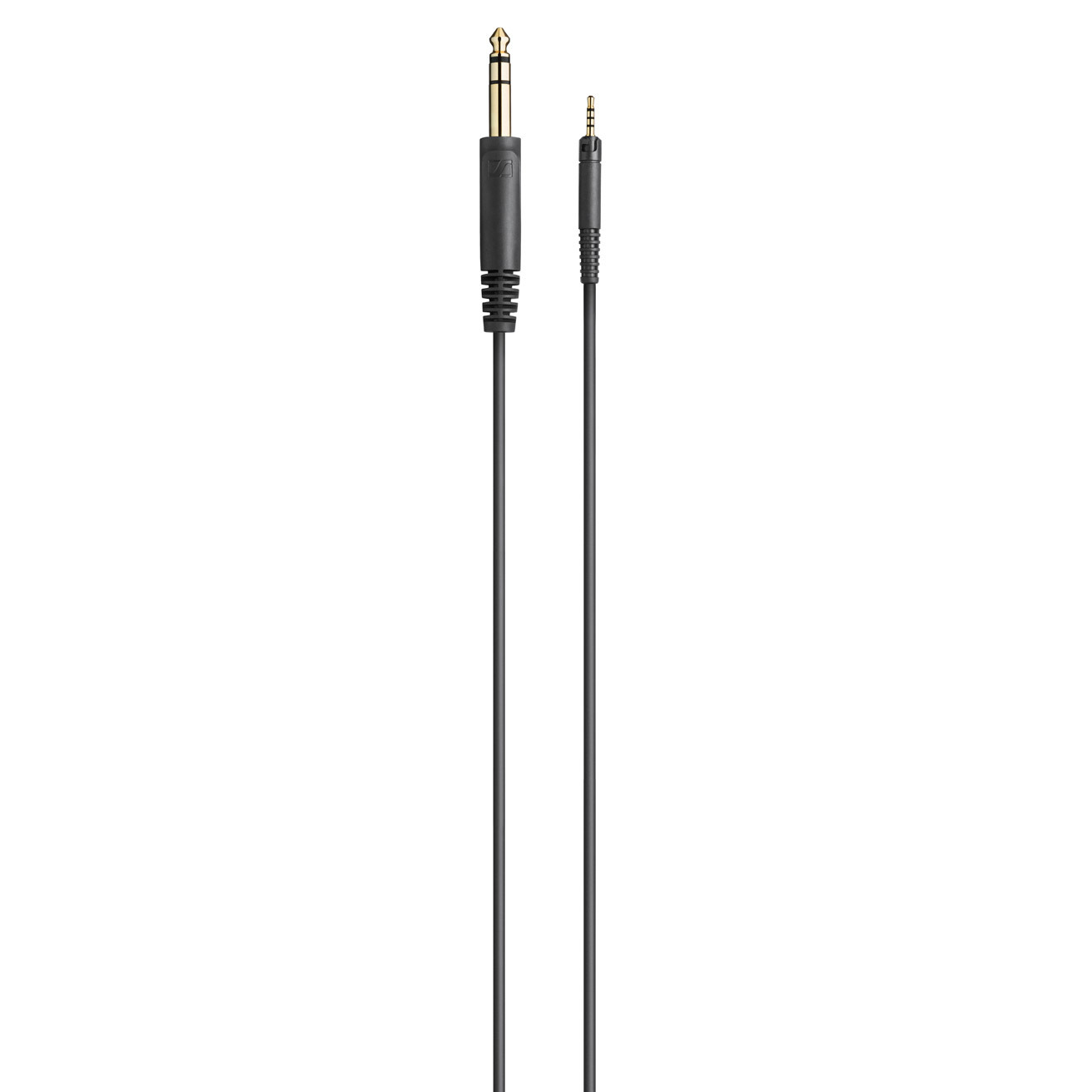
HD 650: https://images-na.ssl-images-amazon.com/images/I/61vm4c%2Bhb...
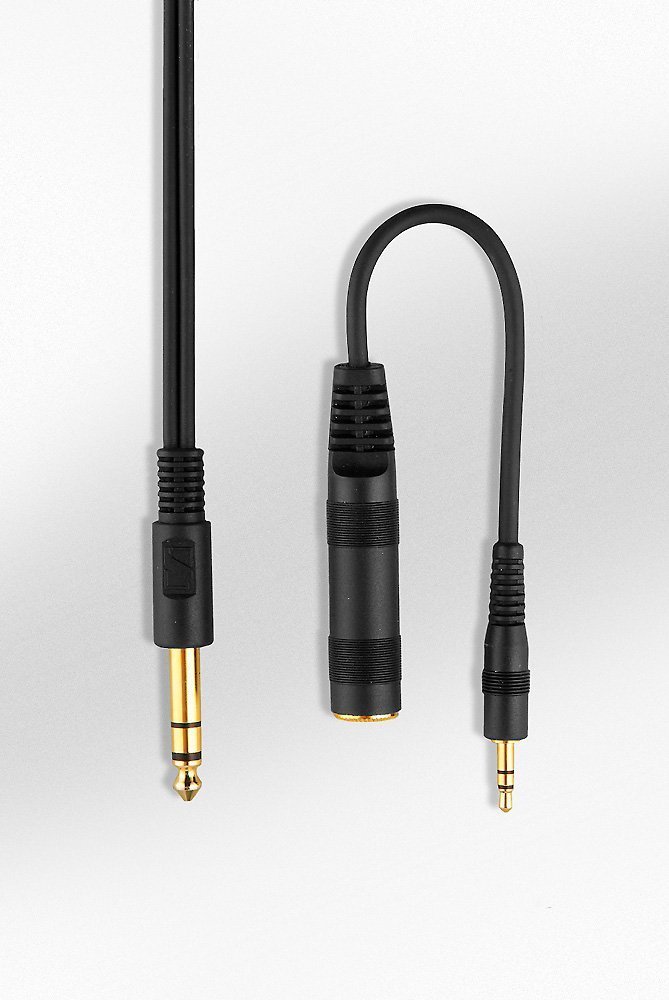
HD 660 S: https://assets.sennheiser.com/img/25816/x1_desktop_sennheise...

HD 800 S: https://cdn.mos.cms.futurecdn.net/cVSs2jBo28NYKPkdGtZhnR.jpg...
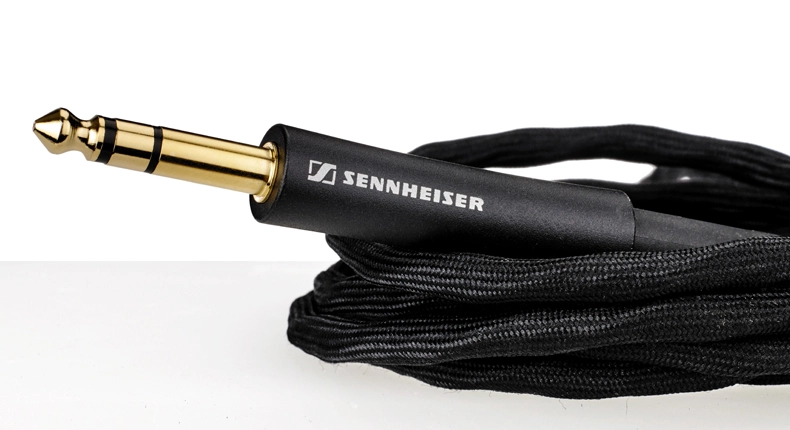
I'm not seeing a lot to back up your claims. Especially since a lot of those headphones come with a 6.3 mm to 3.5 mm adapters.
Edit: the 3.5mm male to headphone is Sennheiser 81435 [0] the 6.3mm male to 3.5mm female that fits over it is Sennheiser 562507 [1].
[0] https://en-us.sennheiser.com/cable-3-m-35-mm [1] https://en-us.sennheiser.com/accessories--adapter-jack-63s-j...
That's actually not true. That plug is commonplace on a lot of music equipment, DJ mixers, etc. that are still manufactured and used commonly today.
I figure there has to be some reason for it in an age when companies are constantly cutting costs.
I doubt many people are trying to drive HD-650's with a phone anyway.
But I believe there's no difference in listening experience. The bigger plug is probably a lot sturdier though. I've had some 3.5 mm jacks bend on me. Can't imagine that on the good ol' 6.3. I have totally busted a 6.3 mm to 3.5 mm adaptor though.
For very long cables or high RF you might want a kind of cable called "balanced", which comes in every size except 3.5mm. Some audiophiles think these make headphones sound better, but it's probably not true.
Incidentally, one of the reasons I got the HD650 was how my headphones/headsets broke every other year and all I could do was trash them and get new ones. That, and I enjoy listening to music and the usual stuff <100 Euro sounds like garbage. Now I've got something more "SO-friendly" than my "two towers" ;-)
If I bought airpods today, they'd likely be useless within 5 years.
I imagine I won't be replacing them because they break, but rather because I want to get something better. However, the 598s sound pretty great to my ear so there's not really a huge incentive for me to get anything new.
A few years back I replaced the foam ear pads and also swapped the cable out with one that has a lightning connector on the end so that my wife can plug it into her new "courage" iPhone.
In contrast, my bluetooth earbuds died after about 3 years of use. (Although, to JLab's credit, they replaced them with a new, better pair.)
Giving too much credit to Apple. The battery will die in 3 years even with very limited usage. If you use it daily it only barely last longer than a year. Replacing Battery cost $49 each.
The AirPod is one of the worst purchase I had from Apple.
Technology can be made to serve our needs.
I have a quarter of century old Beyerdynamic cans that still sound fantastic. I am not seeing their end-of-life any time soon, except the pads are probably going to need a change.
'Quarter of a century' sounds dramatic... but it's just two and a half decades and less than a third of one lifetime... not passing down generations.
From Wikipedia:
January 3 – Motorola introduces the Motorola StarTAC Wearable Cellular Telephone, the first clamshell mobile phone.
September 26 – Nintendo introduces in American market the new game console with the name Nintendo 64.
But what's that got to do with headphones?
Yes, that is Wikipedia page for 1996, not for "80s or whatever".
But what have the internet and clamshell telephones got to do with headphones?
"In 1996, just 20 million American adults had access to the Internet," (https://slate.com/technology/2009/02/the-unrecognizable-inte...)
So... again... which of my statements is inaccurate?
I wrote: "quarter of century ago most people even if heard about the Internet they haven't had a chance to use it yet".
How does that conflict with AOL or the quoted above that at that time only 20 million, less than 10%, of Americans had access to the Internet (and access isn't the same as using it)?
Also, this is for USA. The rest of the world did not have anywhere near that much access to the Internet.
Not sure why you've now decided to go for snark and being snide?
> 20 million American adults had access to the Internet
That seems like a lot of people to me?
But what has any of this got to do with headphones?! Why are you telling me about when models of telephone came out or when people had access to the internet? The thread is about how long headphones last.
> That seems like a lot of people to me?
Yes, that's true. 20 million Americans is a lot of people.
But in 1996 the population of US was about 265 million, so I was completely right to say that "quarter of century ago most people even if heard about the Internet they haven't had a chance to use it yet".
> Not sure why you've now decided to go for snark and being snide?
Not sure why you have decided to oppose what is clearly true and accurate statements with illogical sentences. You could have just ignored it or even downvoted if you decided it worsens overall quality of HN content.
But you decided to write false, illogical responses and you should by now know how it ends on HN.
Are headphones Lindy-estimatable? That I don't know.
Closest we've come to this is old pairs of Sennheiser HD580. Very high quality plastics, still get scraped and loose over time. Full steel or aluminum construction holds up much better.
The materials for the main part of headphones would last probably indefinitely if kept in dark, dry place, undisturbed.
On the other hand the foam that is part of the pads lasts months to maybe couple of years depending on use.
If you bought ones with leather it will last for many decades IF you know how to take care of leather.
If you avoid throwing, dropping or otherwise banging headphones on things, don't come outside in them and don't stretch the headband more than is absolutely necessary to put on your head I estimate they can be maintained practically forever (definitely more than user's lifetime).
Maintanence:
- keep them clean with dry cloth,
- use something to clean/protect leather from drying out,
- replace pads maybe every year or two,
- replace pads on headband maybe once every 10 years,
- disassemble completely to remove hair and other detritus, probably every 5 years
- fix the cable that tends to break after prolonged use, I am gentle so maybe once in 7 years.
This is history of maintenance of my headphones which I use every day, entire day.
A generation is roughly 20-30 years - people don't tend to have kids at the end of their lives.
I highly doubt these new headphones with non user replaceable batteries would survive 2 years of daily usage, that would be 2+ full cycles per day for the airpods, seeing how tiny the batteries are I don't think they'd perform very good after even a year
I like the headphones because they don't wear me down on long continuous usage and the sound is great to my not-golden-ears.
They cost about 350 euros back then and now perhaps paid 50 euros to get them back into shape, so pretty good for a music lover. I have even used them in office space, even though they are semi-open. Luckily the sound isn't leak too noisily on my usual listening levels.
I get that earbuds' 5-hour listening time is borderline annoying and if it drops to 3 or 4 hours you've got a real usefulness problem, but 20 hours has quite a lot of headroom for battery degradation unless you don't sleep.
That said being able to just buy a new cable and whip the old one off is far nicer than having to buy a whole new pair of headphones.
I replaced them with cheap knockoff cables and they're lasting much longer. I haven't replaced them for years now
Meanwhile, I'm on my third replacement airpods (thankfully all covered by warranty, but not much longer!)
Personally, I used one pair of ath-m50x's for about ten years. I just replaced it with some Beyerdynamic's, which I expect to also last at least ten years.
All of the Bluetooth headphones and speakers I've bought have lasted less than a few years. Half the time the batteries fail (and often aren't user-replaceable), the other half it's some component I'm unable to diagnose myself.
The real problem is: For every pair of even $100 headphones, how many $10 headphones do you think are sold? The waste isn't coming from AirPods, it's coming from the $10 set that wasn't designed to last longer than an airline flight
(and yes I'm sure someone will link some cult favorite cheap headphone that's a drop in the bucket compared to how many at the price point are practically disposable)
And sure, maybe Apple does make their devices easier to recycle, but there are still 2 R's that are more important: reusing and reducing. If you can reduce the amount of times someone needs to replace their product, you are having a much greater environmental impact than slightly more recyclable aluminum. That's why my Thinkpad x201 is still a more eco-friendly choice than the M1: it's carbon footprint is inherently lower.
---
Also, a quick bit on the economic strata comment: I come from a relatively lower-income family, but we still did cherish the few nice things we had. My dad passed me down his pair of AKG open-backs with a new DAC for my 13th birthday, and I never really thought of it as that weird. I think your optics are a little out of tune.
My dad still has the headphones he bought in the 70's. He's replaced the pads and the cable.
Good audio equipment is built to be repaired and can last indefinitely when maintained.
Audio fidelity hit its stride decades ago. 40-50 year old stereos are still sought after, not because they look nice and are classic like a vintage car, but mostly because the sound quality is still excellent today.
They behave a bit like Yamaha NS10 monitors in that anything that sounds good in them, will sound good anywhere.
But how do you connect them to your phone. I wish this wasn’t a thing.
They're also known as being pretty easy to fix, because you can find a replacement for virtually every part of them, and they're sold brand new to this day. Plenty of people that own this specific model have had them for more than a decade.
Anyway, my parents didn't pass me down a pair of HD 25s, but my pair (whose initial release is older than I am) is definitely going to be usable for my kids. Whether they'll want to use them or not remains to be seen.
The question is rarely the lifetime of the device. It's usually the lifetime of the interface. Or in this case, a headphone jack. 1/8", 1/4", etc... This is what normally gets obsoleted rather than the device itself. For headphones, the big switch is from wired to wireless. And I think that's where you'll see the shift. Yes, you can get a bluetooth adapter for traditional headphones, but they aren't great, and if you have audiophile wired headphones, you won't be happy with the sound. And so, the device won't be obsoleted because they fail, but rather the preferred interface changes to something that's incompatible. Maybe audio was lucky that there were adapters available for the first shift from 1/4" to 1/8"...
In this regard, I think the audio world is just catching up to their other brethren in the tech world.
AFAIK the turntable and cassette player have had some minor repairs but nothing else has needed maintenance since purchase.
I'm also currently listening to music through a pair of HD202s I bought in 2007 which have copped endless abuse.
I've also got the Meze Classic 99 and they're even more solid. At 3 years old, I've not had to change the cable nor the pads, infact I've also got a backup cable that cable with them. I could easily see them lasting decades if looked after carefully.
Not quite generational inheritance but I can't think of anything else I bought back then that I still use. It's pretty satisfying when I think about it.
I have pair of Monsoon Speakers bought since College (2000), so that's over 20 years. They still work great, just an headjack input, volume/bass control. Simple and they are connected to my PS4.
I have a dell monitor, bought in 2006, still working great with my mac. I bought an LG 4k one last year, and the Thubderbolt port just failed. Right now it is staying as a dead weight, and I am deciding if it is even worth fixing (or it can be fixed).
Some accessories do last decades. Apple accessories are made to last for 2-3 years and discarded after as they are not easily serviceable.
I still have the Koss headphones I bought in the early 1990's. They still work, though they need a 50¢ phono adapter to plug into current gear. Also, I had to send them back to Milwaukee twice to be repaired. But Koss did it for free both times under the "lifetime warranty" program.
Did your parents hand you down their headphones?
Yes.
Surely your grandparents didn't hand down theirs?
No, they didn't. Mostly because headphones weren't invented yet.
My sennheiser HD600 was released 17 years ago. I've tried many other headphones over the years but it's the best I've heard from my very subjective ears. I've also changed almost every part from it due to wear and tear and it's amazing the amount of after market part you can find both from sennheiser and other vendors directly on ebay
I recently moved to Bose NC700s because ya, wireless sure is nice, but I'd be surprised if they last 10 years, much less 20. Still have the HD's though and use them now and then.
I don't know that there's some grand tradition of handing down audio gear over generations, but the point is good audio equipment lasts a long time if the properly cared for. if it sounded good new, it probably sounds good years later too (except tubes, these are consumables). there's no reason why headphones should follow the obsolescence cycle of computers.
Companies should be rewarded when producing something that last. Externalities and disposal should be included in tax rate.
In many other contexts 25 years would be referred to a "generation" or a "lifetime", I think this is more pedantic than it is a generous interpretation of GPs point, which was that It's an enormous increase in e-waste.
I agree, they really are consumables. I had two pairs of regular AirPods. All of them barely last through a meeting now. It's not like I have used them intensively, some meetings every week, and for listening to podcasts when I am cycling.
Not only can a good wired headphone last you for many years, if you are not an audiophile, you can buy a reasonable Sennheiser for a fraction of the cost of the AirPods Max or even AirPods Pro.
The AirPods and AirPods Pro are great if you need something for on the go, but you have to factor in that you have to replace them every two years or so.
(I love the Pro's transparency mode for cycling. However, they are unusable for me when walking due to the 'thumping' sound that many others also suffer from.)
If there have been people passing headphones down to their kids, I bet that would be a lot smaller group than you are suggesting. A pastoral fantasy.
Will my children use them? Possibly not. Is it still better than a reasonable anticipated lifespan for AirPods Max? Yes.
Airpods Max don't compete with any of these "um, see?" headphones people are listing. Very few people these days are settling for wired headphones. I know I got the hell out of that tech as soon as I could.
- independent of quality of your player's DAC
- amp is designed to match the headphone
- sound can't be transmitted through the cable (microphonic effects, etc)
- you can walk around without keeping the player in your pocket
It'd help if the audio codecs used were lossless of course.
Earphones stay, receiver may get replaced.
For example, wind turbine blades are composite components that are too expensive to recycle and wear our much faster than most people realize, so there are vast garbage dumps filled with buried giant wind turbine blades made of petrochemicals.
Most electric vehicles are charged with electricity made from burning carbon (coal & natural gas).
Reusable plastic bags need to be used like 28 times before they have less of an impact than disposable ones. Cotton bags need to be used over 7000 times before they are better than disposable.
Genuine question. Are there any studies on this? And I’m asking about any kind of battery. People toss out used AA and AAAs all the time.
(I noticed their pro "cousin" headphones on the heads of many recording engineers so perhaps one of the reasons they sound great is the mix might have been made on them..).
There is quite an active market for these and they are highly sought after because of their audiophile and build quality. Anyone who was fortunate enough to have inherited them likely for those reasons.
[1] https://www.koss.com/history
[2] https://overearmania.com/2019/01/19/akg-k240-monitor/
In that way they are great comparison with AirPods Max as in practice they will end up in a landfill rather than being lovingly handed down...
https://www.cnet.com/news/does-sennheisers-iconic-1968-headp...
So that’s 3 generations of sennheisers. Some of those now being decades old, with only cables and leather pads being replaced every 5-10 years.
How many kids will want Dad's headphones from the 70s? Probably a few, but I would wager that for a lot of us, sifting through our parents' old hardware probably means a lot of figuring out what has sentimental value, what has actual use (e.g. even if I wanted to keep my folks' nice old record player, none of my music is on records and I'm not about to start buying physical media just because the player's there), and what's headed off to Goodwill.
It's nice to imagine a world where your re-padded headphones are still in use in 2070 when you're long in the cold ground, but that seems like a nostalgic fantasy more than reality for the vast majority of people and hardware.
Isn't it more of a question of how many lifetimes does it take for a pair of AirPods and their battery case to return to the dirt?
I have never, ever, ever known this to have happened. I’ve never once seen a 20+ year old set of headphones, let alone one that has been handed down through generations. That just silly talk.
Not to mention the fact that even if this had happened in a handful of times, the headphones would have outlived multiple cabinet sized sets of audio equipment, and several hundred pounds worth of record, 8 track, tape, and CD players - all of which wound up in a landfill somewhere. So you’ve reused the smallest component of all of that for what?
In the PR sense, yes. But it's disingenuous - they recycle (shred) reusable products.
2017 - Apple Forces Recyclers to Shred All iPhones and MacBooks
https://www.vice.com/en/article/yp73jw/apple-recycling-iphon...
2020 - Apple says it never ‘recycles’ old devices if they can still be used. Its lawsuit against a Canadian recycler suggests otherwise.
https://www.washingtonpost.com/technology/2020/10/07/apple-g...
But I use headphones for two things: talking on the phone/listening to music when I walk my dogs or to pick up my kid, and for meetings at work (I'm long-term remote). Having cordless technology is nice for the former, where it replaced cheap wired earbuds that are always tangled in my pocket and never last for more than a year or so. It's critical for the second, so that I am not chained to my desk for the 1-2.5 hour meetings that I have multiple times a week. And I have to talk with my use cases, not just listen.
The heirloom-quality audiophile headphones are simply not workable for my use case, and I am sure that I am not alone here. And my father, who I am pretty sure did spend lots of time lying on the bed smoking hash and listening to Steely Dan, did not ever pass his headphones down to me.
Have others had similar experiences with the airpods?
The Pros also had a design defect that led to a crackle. I had both my Pro earpieces replaced a few months back - independently, for that issue.
In any case, Airpods are meant to be disposable. Apple does not replace the batteries on them for battery service issues, you just get new ones.
The Maxes are different, the battery can be serviced, and it will last considerably longer - at about 5x the life per charge, you will likely exhaust the shelf life of the battery before it dies from usage.
One upside of this is that I am charging one AirPod at all times, which basically means I never run out of battery.
I still have non-A2DP headsets (the early 2000s ones you see in movies) that pair perfectly with a modern laptop, and Bluetooth 1.x PDAs (~2003ish) that pairs correctly with a modern BT headset (in HSP profile, so audio quality is crap, but then again it's the best the PDA could do).
Battery is the much bigger problem.
Thankfully this isn't true, they've gotten a lot better! But I guess you mean it's still backwards compatible.
It's a big worry on the smaller AirPods, since those are almost 100% battery and glued together (and I'm not sure how you could build a product like that in a way that's both small and has a replaceable battery). For the big cans, you can pay $80USD to get the batteries replaced if the headphones are out of warranty (and, presumably, the warranty will cover the full cost of a battery replacement).
I don't know how these new headphones perform, but I would doubt that many people would get below 80% in two years (even with increased usage due to COVID).
It might still be worth it to get the warranty though, since it covers accidental damage (with a deductible), and the cost for the warranty is the same as the cost for battery replacement ($80).
And yet I can't sync my phone with my car, or my headphones with my laptop.
The earbuds don't even have a replaceable battery. They are deliberately designed to fuck the environment. (Or maximise profit, if you'd like the corporate phrasing.)
People have already pointed out that plastic bottles are recyclable, to which I respond: so are AirPods. They're both made of plastic and other materials that can technically be recycled. The problem is, in both cases, it is cheaper for companies to source new materials than to try and recycle the stuff that ends up in our blue bins. So they all end up in landfills eventually, often overseas in countries willing to take our "recyclables" off our hands in exchange for money.
I switched from buying beverages in 2L plastic bottles to buying cans, and I think the positive impact there greatly outweighs the negative impact of tossing my earbuds in a couple of years. The aluminum is infinitely (and easily) recyclable, unlike most plastics. The cardboard the cans come packaged in is renewable and biodegradable.
Regular AirPods, which are not repairable AFAIK, are more affordable and widely used. But they are also very small, so even if people replaced them every 2-3 years, the amount of waste would be minuscule compared to their waste from takeout containers, food waste, and other refuse. I suppose you could also factor in the energy spent producing and shipping the units, but it's not as if repairable headphones (all of which are much larger than regular AirPods) don't also incur these costs when they are produced and repaired.
So while I agree that it would be great if we could have more repairable things, I'm not sure that this is an especially good example of a product that will meaningfully contribute to e-waste.
Sincerely asking here, but what do you see are the most significant negative externalities here? We're not exactly running out of landfill space anytime soon, and most landfills in the US are very careful to ensure waste doesn't pollute the surrounding environment.
Is it the greenhouse gas emissions? I'm curious how the total emissions on buying a pair of headphones every 2-5 years compares to other everyday activities like shipping my weekly usage of broccoli to the grocery store for me to eat.
Is it the concern of labor going to waste? Something else?
My Bose QC1s barely lasted 15 months (thank god for Amazon's godtier returns policies at the time).
Swore off Bose and got some Beyerdynamics. I think I did have some problems actually but I returned those and my current cans are ~6 years old IIRC
I like the Bose sports earbuds, seems like no one else has worked out that IEMs are a terrible idea for sports sigh though now I just use bone conduction
That's a pretty tiny market. It was also "you spend ten dollars at the grocery store for cheap Sony headphones or earbuds and then they break and then you do it again. Sound quality is terrible."
They did have fewer batteries, though, at least, in terms of the disposability problem.
So, Buy It For Life (and Hand It Down To Your Kids) strategy is elitist in the same way having the basic understanding of thermodynamics is - only a very small amount of people have and appreciate those ideas.
An adapter like that is yet another thing I need to put in my bag, and lacks at least some of the convenience that comes with having headphones that just wirelessly connect to my phone natively.
A huge caveat is that if the headphones have ANC, you now have two sets of batteries and two power switches to worry about, so they're a lot less seamless.
A bicycle could be passed down the generations but not an electric car. Lithium wears down, software stops being updated, parts stop being produced, etc.
That's the price you pay for feaures. Clunky wired 1970s headphones don't fit my use case which requires headphones to be compact and wireless. The same way my electric car outperforms a super-serviceable Model T.
Also, cheaply available, standardized batteries don't address your e-waste concern either. So your post doesn't seem much different than someone being indignant or even sanctimonious about the wireless preference of others.
But they _are_. By now I have seen many review videos that compare them with the typical audiophile/sound production headphones. E.g. Marques compared them with the Sennheiser HD800S [1].
> Also, cheaply available, standardized batteries don't address your e-waste concern either. So your post doesn't seem much different than someone being indignant or even sanctimonious about the wireless preference of others.
Does it not? If I can reuse the housing, the drivers, earpads, headband and just need to replace the battery when its dead, does this not reduce e-waste? Also I do not condemn wireless headphones in general, I said it is a shame that products which could be used for many decades in the past become e-waste rather quickly in today's world. And that I would prefer the approach Shure is taking to reduce waste and only replace the highly degrading components (at least with their monitors).
Use the crappy headphones that came bundled with the portable cassette player, which before too long broke or wore out, and buy another crappy pair because that's what you can afford. Or buy a new cassette player or portable CD player to replace what you had.
Waste from consumer products didn't start with blue tooth headphones.
https://aiaiai.audio/headphones/tma-2
Or the Print Plus 3D printable headphones.
Battery life is not great (a few hours), but it is a small addon which fits nicely into the headphones, and can be easily replaced when it breaks or dies.
Bluetooth and the integrated form factor is a risk, but I think that’s not a ten year concern. It would be nice if they had a physical port for the eventuality though.
Maybe a few people hand down usable audio equipment, but the only stereo equipment I got from my parents was an 8-track tape collection and a console stereo.
For you youngsters that don't know what that is, it's a stereo system (usually tuner + turntable + speakers, some of the more modern ones had a cassette player too) built into a piece of furniture the size of a dresser. My parents, being the audio connoisseurs they were, had an 8-track player that sat on top.
If apple no longer sells the battery, it will be trivial to find a suitable replacement. As long as there is demand, there will be loads of shops able to replace the battery for you.
The real question is: will people who buy $500 branded headphones really have their 5+ year old headphones repaired, or will they but the latest-and-greates shiny new thing?
Its a niche product. You will bot find replacement batteries for it. Heck it is even hard to find replacement batteries for 10 year old MacBooks.
> The real question is: will people who buy $500 branded headphones really have their 5+ year old headphones repaired, or will they but the latest-and-greates shiny new thing?
That’s my whole point. These things are not build (and bought) to last anymore but to be consumed. You used to retain some value when buying into expensive headphones.
If you don't actually "want" a pair of wireless headphones, then the AirPods Max aren't targeting you at all. Absolutely nobody should buy these if they don't intend to use them in wireless mode, there are better wired headphones available for less money.
That's an excellent point. No tech product can be a "BIFL" (Buy It For Life) product, but it'd be nice if all companies were as good as Apple at making their products recyclable, and making recycling easy.
[1] https://www.apple.com/environment/ [2] https://www.apple.com/shop/trade-in
The only way forward I see is to make significant cuts to some of this really low-hanging fruit of single-use plastics (which also have other harms like environmental micro-plastics and inherently requiring fossil fuel use), maybe come up with better ways to recycle the aluminum and stainless steel in a product like these headphones, but most of all to move away from fossil fuels in the manufacturing chain and in the operation of landfills.
The cat is already out of the bag, people enjoy getting new toys like these and the fact that hundreds of millions of people around the world have the disposable income to afford to buy products like this if they want to is amazing. I don't think talking up the good old days when disposable income was a lot more scarce and consumer goods were relatively much much more expensive is going to make much of a difference.
It still is. Good quality wired headphones are easily available and more affordable than ever.
planned obsolescence that leads to phones being upgraded every year or two, and barely working after 5 years, is so so wasteful.
It used to be like this: You spend A LOT of money for really nice headphones and use them (potentially) your lifetime. Or hand it down to your kids as your hearing gets worse. Sound doesn’t change much and the plug has been around for ages.
Nowadays it goes like this: You buy your expensive Apple headphones. And even though Apple is probably supporting these longer than your average earbuds, after a while the bluetooth version will be obsolete and eventually the battery will have reached its end or inflate and become a safety risk.
But because this was expensive and Apple supported it longer, it will have maybe lasted 10 years and one or two (pricey) battery replacements. This is still much worse than audiophile „analog“ headphones and I feel like this change is not adequately addressed.
I would really hope to see more approaches like Shure‘s „Aonic 215 True Wireless“ which is an arguably quite ugly attachment to the drivers that have been around for a long while and just adds the wireless capabilities and bluetooth. It can also be used for any other Shure driver afaik. This way you keep the good old sound producing piece while swapping out the stuff that will degrade over time.