It's not the relationships of the parties in control that worries me. It's the arrests and abductions of the people that concerns me.
Thankfully, posting banned ideas or government critical stuff in the US doesn't involve being arrested by the police and being held for months or years.
The CCP is a completely different beast, it has no issues jailing people for speaking the wrong things, forcing it's citizens into reeducation camps, welding them locked into buildings and much worse.
The Patriot act (and the proposed Restrict Act) would like to disagree. Terrorism threats (and using a VPN to circumvent app bans as per the Restrict Act) are absolutely enough to get you vanished - especially if you're not a natural citizen.
And you don't have to look too many years back in time to find concentration camps for specific ethnicities.
No, the US is not as bad as the CCP. But it has its own issues you can easily find yourself on the wrong side of based off your skin color or ethnicity.
Jack Ma was essentially on house arrest for over a year after flying a little too close to the sun with his IPO plans. Peng Shuai was on house arrest for denouncing sexual abuse by a CCP member.
The psychological, widespread chilling effects of these high profile "vanishings" has absolutely no commonality with the Patriot act (bad as it is).
This is straight up misinformation. While both temporarily retreated from the public eye for obvious reasons, they were not under arrest.
"The CCP is evil, therefore they arrested an innocent woman". This is faith, ideology. Evidence fitted to the conclusion.
You are doing the latter.
(Under the assumption that P(B) > 0 and P(A) > 0 ):
P(A|B) > P(A) iff P(A|B) * P(B) > P(A) * P(B) and so iff P(A & B) > P(A) * P(B) and therefore, by the same reasoning in the other direction,
P(A|B) > P(A) iff P(B|A) > P(B)
(Let A and B be “the CCP is evil” and “the CCP committed [some particular wrongdoing]”)
[1](... with the possible exception of observing something which one previously had assigned a probability of zero, but, this ideally should only ever happen for things where one at least had a positive probability density, in which case a similar argument should still work. I didn't feel like working out all the details in the case of continuous probability distributions, as it is finicky and in any case is irrelevant to the discrete events you mentioned.)
We've had to ask you this more than once before.
Otherwise the CCP did disappear at least one of them, which, admittedly, might happen if the appropriate decision-makers were willing to put such an operation into motion. That just doesn't really seem so significantly more likely than people choosing to retreat from the spotlight.
[0] Because I encountered this post: https://news.ycombinator.com/item?id=35775826
Does a rose by any other name smell as sweet?
> They were both temporarily excluded from the public eye
Retreated and excluded don't mean the same thing in this case.
https://news.ycombinator.com/newsguidelines.html
There is a large set of past explanations about why we have this rule and why it's so important. You can find many by sifting through this history, if you (or anyone) wants more: https://hn.algolia.com/?sort=byDate&dateRange=all&type=comme.... On China-related topics, which particularly give rise to this sort of attack, I put this list together for a user a couple of years ago: https://news.ycombinator.com/chinamod. Nothing has changed since then.
Ghassan al Sharbi
David Matthew Hicks
> The psychological, widespread chilling effects of these high profile "vanishings" has absolutely no commonality with the Patriot act
The patriot act made it such that accused terrorists (including any taken to Guantanamo Bay regardless of their origins) have no legal rights under US law. So while you're technically correct, I'd disagree on principal.
Captured in Faisalabad, Pakistan in March 2002, al-Sharbi was transferred to Guantanamo Bay later that year. In 2006, al-Sharbi told a military commission that he was a member of al-Qaeda and proud of his actions against the United States. Serious war crimes charges were dropped against him in October 2008, as it had been found they were based on evidence gained through torture of Abu Zubaydah. Al-Sharbi had a habeas corpus petition which his father had initiated on his behalf; when it reached the court in March 2009, al-Sharbi requested that it be dismissed. He did not want to pursue it.
Al-Sharbi was held at Guantanamo for twenty years.
The rest of his wikipedia page is not particularly flattering. I don't know to what extent the quasi-justice system that applies to enemy combatants went off the rails here, but I do know that if you're being accused of waging war against the United States, maybe chanting "May God help me fight the infidels or the unfaithful ones" is a bad idea.
> David Matthew Hicks
His story is way too complex to summarize here, but the Wikipedia page is fascinating: https://en.wikipedia.org/wiki/David_Hicks
Say what you will, a lot of legal process (good and bad) was applied, and we're talking about a guy who sought out and attended an al-Qaeda training camp in Afghanistan. He spent 5 years in Gitmo. This is not someone who challenged a political leader by calling him a funny name.
The word "vanished" is a massive over-dramatization.
16 year old American, vaporized by intentional US drone strike. For the crime of being the son of an alleged terrorist.
That’s the opposite of vanished.
Vanished would be things like [https://en.m.wikipedia.org/wiki/Death_flights] where many of the victims were never recorded, and literally no one from their lives knows what happened to them - and many of the perpetrators have taken the memories to their graves, or never knew the victims names to begin with.
Did the guy deserve to spend 20 years in Gitmo? Maybe not. But if I look into my heart of hearts, I genuinely have a tough time feeling too much sympathy. The crazy guy off his meds who points a fake gun at police officers probably didn't deserve to get shot to death either, but that's just what happens.
Can those rights be violated? Yes, governments do bad things all the time. But that is not the same as a foreign national participating in Al-Qaeda training camps and meeting with Osama bin Laden. No nation on Earth has a strong history of giving full citizenship legal rights to foreign nationals and/or enemy combatants captured in a warzone.
Hicks was also returned to Australia to be dealt with by his own government, where presumably he then did retain his legal rights as a citizen of Australia. And at that point it would indeed be a violation on part of Australia if they did not treat him as any citizen of their nation should be treated.
All of that said, Guantanamo has still been a completely broken and messed up situation. We the people of the US owe it to ourselves and the rest of the world to hold our government accountable for that and not allow it to happen again.
It's just if you are wanting to say that the US treatment of it's citizens has been on par with China's treatment of it's citizens, your case may be better served by finding a more direct example.
You're aware that the US actually kidnapped random people because they had the misfortune of using the wrong watch type or having the same name as an alleged terrorist, right? They didn't "capture enemy combatants in a warzone".
> Note that this does not apply to US citizens. US citizens, even those accused of terrorism, still retain their legal rights under US law. That is what citizenship in any country, is.
And also murdered US citizens abroad that were alleged to have ties to terrorists, without due trial.
> Hicks was captured in Afghanistan in December 2001 by the Afghan Northern Alliance
https://en.wikipedia.org/wiki/David_Hicks
>He was captured in March 2002 by Pakistani forces during a raid at Faisalabad, Pakistan. He was held in Islamabad for two months before being turned over the United States forces.
https://en.wikipedia.org/wiki/Ghassan_al-Sharbi
As I said, they were captured as enemy combatants, in a warzone. The circumstances of Sharbi's capture are much more questionable. But from the US's perspective, an ally turned him over as a captured enemy combatant.
It's all questionable and stupid, of course. But the question of their status at the time is relevant to the question of whether the US "vanishes" it's own citizens. These two were not citizens, so what happened to them does not support the case that the US is just as bad as China on that point.
No nation on Earth has a history of treating such captives as full citizens entitled to the same legal rights as it's own people. But maybe that's what we all would want. That's a fair point to argue, separately.
However, that is not the point the person I was responding to was making. Which is part of why I say the examples they offered were ineffective as support for their point.
You may find it helpful to practice re-reading and making sure you understand the case a post is making before responding to it.
You and I clearly agree that what the US did in Guantanamo was bad. You and I also agree that the US can, has, and may yet still violate the rights of it's own citizens as well as the rights of people who are not it's citizens, even in situations where it has signed treaties with those people's nations. And the US government should definitely be held accountable whenever it does something like that.
None of that changes the observation that the US's failure to give full citizen legal rights to Ghassan al Sharbi and David Matthew Hicks, people who were not US citizens, does not make a good supporting example to the case for the US being just as bad as China about "vanishing" it's own citizens.
You are, of course, free to offer concrete examples which would better make that case. That is essentially what I was opening the door for. But here you seem to be responding more to an emotion evoked by how I said something rather than the point I was actually making.
The US police are killing people all the time. In January police killed an environmentalist in January, Manuel Taran. The US kills and jails political prisoners all the time.
If the parallel is to people who got 'vanished', maybe Joseph Nacchio?
https://www.dailysignal.com/wp-content/uploads/FBIP-SOCIAL-0...
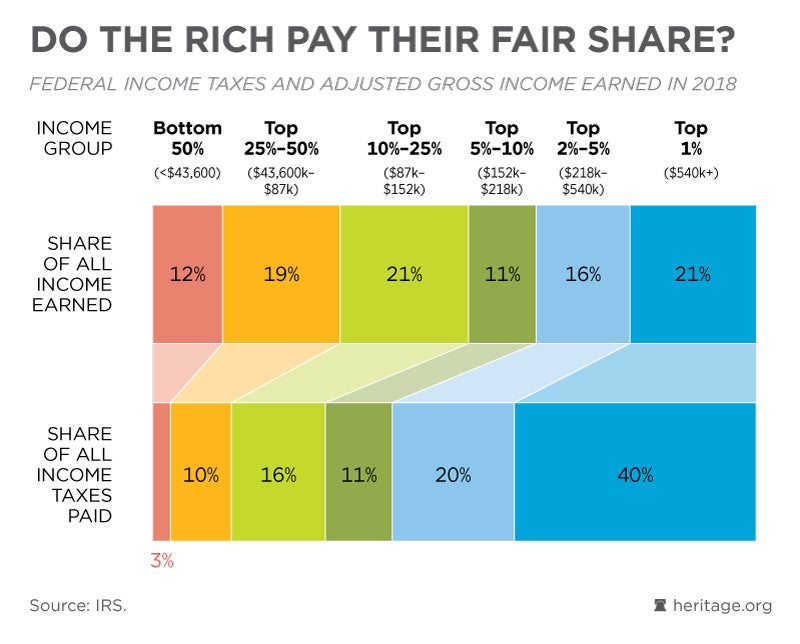
if the rich controlled the government, don't you think they'd lower their taxes? or are we lucky to be ruled by the rich because they are so benevolent?
What a dystopia China is where billionaires can’t get away with paying a fee in a legal for a few world.
The billionaires in China aren't punished for doing illegal shit. They are punished for going against The Party.
They probably get away with at least as much or more than US billionaires as long as they don't ever go against The Party.
Don't get the impression they are being held accountable for other stuff that The Party doesn't care about.
Going against the party and going against the law are often the same thing stated differently.
https://jeffhead.webs.com/liberty/liberty/bdycount.txt
(R) party is left to exist as a group of useful idiots who never pass any meaningful legislation that isn't immediately dismantled by (D) establishment within a few years.
Let's say a certain billionare enters politics, and is not a party favorite, and against the bipartisan elite consensus. Say, they are, god forbid, populist, and against job outsourcing, wars, and such.
Media, who loved him for decades, can suddenly start covering his every action as if describing the leader of the Axis in WWII. Suddenly his associates might start to get investigated for things all sides in DC did since time immemorial with unpunity. Experts might appear day and night on TV to give a psychological assessment of him. Some high standing people might openly advocate for his elimination. Government agencies might join the "good fight". Mere tech corporations might decide to ban his (the active President's) account.
Others might pay some hack to come up with a bogus document binder hack job, a dossier if you will, that will feature day and night on the news. And inversely, his opponent's son might be news gold, be involved in all kinds of shady dealings, and even lose a certain computing device, and they're not covered, lest their parent is harmed.
Or let's say a billionaire lacks the good taste to not antagonize the consensus of the elites and their lapdogs in the aspirational classes. Perhaps their glowing "let's all kiss the ass of the billionaire tech god" coverage changes overnight...
The "media" includes Fox News - and it is, in audience terms, the most mainstream of them. It had absolutely glowing coverage of Trump throughout its presidency and continues heavy coverage of Biden's son. The "media" includes the Falun-affiliated Epoch Times, which is still widely available and continues along the same lines. The "media" includes Twitter, which its owner directed to get his own tweets significantly more audience.
None of these people can even remotely claim to have been vanished by the government.
Nothing. As the very first line of the comment goes: "That's not the way things are done in the west. Lacking absolute rule, you need to achieve similar things with a little more subtlety".
When establishment power is privitazed, distributed, and can be yielded more finely, you don't need to vanish people to shut them up or shut them down.
"The killings were part of a broader program of "targeted killing" by the United States outside the context of armed conflict and based on vague legal standards, a closed executive process, and evidence never presented to the courts. "
Your comment sounds awfully disingenuous. I seriously doubt you do not see the huge difference between implementing official policies of extrajudicial imprisonments and having a random person murder people for their own personal reasons.
See Clinton Body Count
Bob Marley - needle with oncogenic viruses implanted into shoe
MLK Jr. - FBI–King suicide letter
Seth Rich - You should remember this one easily
Stephen Paddock - his life history was deleted from databases (4chan archived lots of it before it vanished) and he was hit with a character assassination to deflect from what actually happened in Vegas (failed firearms sale to would-be murderers of the Saudi royal family staying upstairs)
That's just off the top of my head. Bill Oxley claimed to do in 17 people for Uncle Sam but the "legitimate news sites" which are totally not compromised by Operation Mockingbird conveniently discredit that theory.
Edit: your post kinda proves the point. You're evidently not afraid of posting stuff online that most people would consider crazy conspiracy BS ("Bill Oxley"?). In an actually oppressive regime, that shit would have landed you in jail already...
This is sounding like agitprop.
The restrict act hasn't passed yet. So no, I can't cite anything but the jail time and fines proposed in the bill.
None of the perpetrators of that event are still alive, let alone in positions of power. Eighty qualifies as "too many years back".
Emiko Omori is a survivor of the Poston internment camp in Arizona.
Bad things done 80 years ago do not excuse bad things done by someone else today. We're not all entitled to a turn at mass murder or genocide. That's now how morality works.
Perhaps, but the government can still do something: apologize for the original injustice, provide some compensation, and try to prevent similar occurrences in the future.
It's somewhat surprising that Hawaii didn't enact the same mass internment/incarceration as California, in spite of being the location of both Pearl Harbor and the Niihau incident [3], and being under martial law.
[1] https://en.wikipedia.org/wiki/Internment_of_Japanese_America...
[2] https://www.historynet.com/memories-of-childhood-in-an-ameri...
Two things here.
First, 1945 was a long time ago.
Second, the interment of Japanese-Americans was shameful. It was a concentration camp. It was not intended to make them "un-Japanese" or to destroy their culture.
What's happening to the Uighurs is different on both fronts. It's right now. And it's not just "we'll round up these people and put them in a camp to keep them from maybe doing espionage for a country that we're currently at war with". It's "we're going to completely destroy their cultural identity". What China is doing meets the definition of genocide (even if they aren't killing people, they're killing their ability to be part of "a people"). What the US did was shameful and was falling far short of our ideals as a nation, but it was short of genocide.
No it's not, it's four or five years ago.
Nobody but a shill would reasonably say otherwise.
What China is doing meets the textbook definition of genocide precisely because they are purposefully restricting birthrates.
Or traditional religious and political views that do not agree with the failed doctrines of the regime [0].
[0] https://catholicherald.co.uk/fbi-spied-on-american-catholics...
https://apnews.com/article/52f4a2f42dba4f6b9afe026e57d51e96
https://www.theatlantic.com/ideas/archive/2019/04/julian-ass...
But the reason I decided to look this up is something much more simple than these facts. That Atlantic article reeks of state propaganda, and if it's not sending your propaganda detector to 11, you really need to get it tuned a bit - especially in this day and age. More often than not, you're not going to be able to find a link on somebody's CV or Wiki or whatever directly tying them to state interests, but I mean this just isn't how "normal" people think, behave, or write. It's like he's desperately trying to convince you of a position, by making you believe that thinking otherwise would be absurd. Note the stark similarities in style and rhetoric to something like this [3] piece from the NYtimes in the leadup to the Iraq War.
[1] - https://en.wikipedia.org/wiki/Institute_of_Modern_Russia
[2] - https://en.wikipedia.org/wiki/Radio_Free_Europe/Radio_Libert...
[3] - https://www.nytimes.com/2003/02/06/opinion/irrefutable-and-u...
The 2nd article doesn't seem to claim he isn't a journalist at all. It even says "his own unique brand of journalism", which seems to be an acknowledgement that he is a journalist.
This has been debunked many times over. It's the Guardian journalists, David Leigh and Luke Harding, that published the password to the unredacted archives. Assange, on the other hand, was "meticulous about redacting names in the documents."
https://www.jonathan-cook.net/blog/2020-09-26/guardian-assan...
It might be fair to say that Julian Assange encompassed the roles of journalist, editor and publisher in the same person, which is perhaps not the optimal setup although it's more or less what everyone publishing their work on substack does - but that's not a justification of state persecution.
It's undeniable that Wikileak's publication of the CableGate archive of State Department cables and the Vault7 archive of CIA hacking tool documentation was in the public interest. Some of the more important revelations include that the CIA has tools apparently designed for false-flag cyberattacks, that the State Department's claim to be concerned about human rights and democracy is not reflected in the content of their secret cables (which tend to focus on things like oil pipelines, arms deals, terrorist financing, economic deals, geopolitical maneuvering, etc.).
You might not like it, but it is legitimate journalism as the word is commonly defined.
I do understand that neocons see limitations on domestic civil liberties as an arms race that they're losing to China and Russia, but this version of the Missile Gap is still largely a myth meant to secure the continual state financing of military and intelligence contractors.
Try calling yourself a journalist in Portugal (a western European democracy member of the EU and NATO) without being a part of the journalist trade association and see what happens if you get on the radar.
I would not be so confident about that, at least until the US and other western countries wise up to the CCP's tactics, which may be starting. E.g., CCP is running overseas "police stations" to intimidate and harrass people oversead, and the US FBI finally just arrested two people doing so in New York City.
>>TikTok spied on me. Why?
Short answer, is that it, along with every other Chinese company, has no choice other than to bend to the will of the CCP. Plus, they have no ethical boundaries (other than crossing the CCP) in seeking absolute market position, and this journalist had done something to threaten that dominant position.
[0] https://www.npr.org/2023/04/17/1170571626/fbi-arrests-2-on-c...
One could argue about the fairness of any trial or set of trials, of course, and we should definitely do that and work out what we the people think of those trials as well as what we want to see in a fair trial.
However, if you are trying to say that what those people did was just a protest or just speech, you will need to address the actual crimes the people going to jail were charged with and convicted of. Otherwise, your argument there is not convincing at all.
It's not just free speech when you destroy property, break into government buildings, assault cops and government employees, actually invade and interrupt a session of congress, trespass in government offices, and actually try to locate the vice-president with the loudly declared intent to hang him.
Let me think of groups of people in the US and if they have been treated like this - C language programmers...we'll there is Julian Assange.
> no issues jailing people for speaking the wrong things, forcing it's citizens into reeducation camps, welding them locked into buildings
China has more than four times the US population, yet the US incarcerates more people than China does. In that context it does not sound like much of a knock "China locks up less than a quarter of the people the US does!" Well - yes.
The US locks up more people, but not for wrong-think. Instead our country does it for consuming the wrong plants at the wrong time, because our systems are still racist in various ways, and because we have somehow allowed prison to become a for-profit institution.
Those are different problems and they need to be addressed. The war on drugs must end, policing culture and policies must be corrected, the US prison system must be corrected. Other options for dealing more effectively with various social and mental health problems must be instituted.
And none of that is the same as what China is doing to their people, nor does it absolve China of the wrongs it has committed. And it doesn't take the edge off of it either. Going to China can still get you locked up for reasons you don't understand because you said the wrong thing one time and forgot you even said it.
That actually is a more risky situation for most people than making sure they are not buying or carrying around the wrong plants. That is what comments such as the one you are responding to are actually worried about. It's not a raw numbers game for the individual, it's a question of "how easy is it for me or people I know to go to jail for what should be trivial actions?"
That's just the casus belli for the arrest - the real motivation changes over time. Drug laws have been used to target and disrupt various groups from Latinos and African Americans to hippies and anti-war protestors. First it was about racism and Hearst's economic interests, then about policing wrong thing, then it was about the tough on crime wave, and now it's largely about protecting several lucrative industries.
It seems that line of argument would get much deeper into how, how fairly, and on which groups, the various countries have tended to apply their laws.
For now I can fully grant that selective enforcement has and still does happen in the US. The legal system here definitely does leave that possibility open and prosecutors are elected officials, some of whom have provably gone after certain groups or individuals, hunting for a reason to put them in jail.
https://www.cnn.com/2016/03/23/politics/john-ehrlichman-rich...
“The Nixon campaign in 1968, and the Nixon White House after that, had two enemies: the antiwar left and black people,” former Nixon domestic policy chief John Ehrlichman told Harper’s writer Dan Baum for the April cover story published Tuesday.
“You understand what I’m saying? We knew we couldn’t make it illegal to be either against the war or black, but by getting the public to associate the hippies with marijuana and blacks with heroin. And then criminalizing both heavily, we could disrupt those communities,” Ehrlichman said. “We could arrest their leaders. raid their homes, break up their meetings, and vilify them night after night on the evening news. Did we know we were lying about the drugs? Of course we did.”
The process of repairing the damage that was done should include large payouts for unjustly taking away years of those people's lives, if nothing else. I'm not exactly holding my breath on these points, but if we take seriously the idea that the world should become more fair and just over time, we're going to have to square with the wrongs that were committed in the name of unjust laws.
In the post you are responding to, what you see is me acknowledging that, in order to answer the specific questions: "Is the US just as bad as China on this?" or "Is what China does to it's citizens in order to suppress wrong-think being unfairly criticized in light of what the US does to it's citizens in order to suppress drug use and generally be racist about it?"; one would require good data on just how many citizens are sent to jail for what should be trivial acts of speaking their mind or consuming weird plants, and that data is unlikely to be available or good data if it exists since both countries have rather large incentives to make sure it doesn't.
Please also note that I fully granted Akiselev's point that selective enforcement happens in the US even now. There should be genuine outrage over this until it is changed. However, I understand why people can't even keep up with the sheer scale of the bullshit modern governments get up to.
You completely ignored OP's example of Julian Assange, I guess?
Put it this way, if you can name a country that would not react in the exact same manner to the actions that the US did to Assange's actions, please let me know. I certainly can't think of any.
Wikileaks became very close to Russia in the end, anyways, not exactly a bastion of freedom and IMHO destroying any credibility Assange had. If Assange was on the "other side" and the classified stuff was from Russia, he'd probably have been "Novichoked" for what he did.
"Nowadays, the penalties for being caught with cannabis are severe. Offenders run the risk of receiving the death penalty for being in possession of just five kilograms or more. Additionally, strict sentences are imposed; anything from five years imprisonment to a life sentence."
Yes and PRC wrong think 99% of time gets you an invite to the police station to "drink tea" and sign a paperwork not to do it again. Maybe occasionally a write self criticism letter. Consequences are about as trivial as it gets. It generally takes enormous repeat and public offenses that gains popular traction to get administratively punished let alone end up in jail for the simple reason that PRC doesn't have mass networks of for profit prison that incentive internment. It takes extraordinary bad luck (i.e. % of become a trending author in particularly sensitive times) and to get punished / arrested for wrong think on the same level as Americans carrying the wrong plant, which is statistically a much riskier situation due to how US racial prosecution and internment system is incentivized. Ask PRC citizen how many people they know has been formally punished, even mildly, for wrong think vs Americans who know someone jailed for drug offense and the numbers will be revealing. In both raw numbers and ease of getting fucked over "trivial" offenses, PRC wrong think is much less riskier than US drugs. Which is not to say PRC wrong think wouldn't stack up poorly compared to other "liberal" countries, rather US internment is just that messed up.
That is good to know. And genuinely new information for me. Thank you for contributing it.
And the details you offer do help calibrate something of an answer to the question you are responding to. Thank you also for being a great participant in that conversation!
> Ask PRC citizen how many people they know has been formally punished, even mildly, for wrong think vs Americans who know someone jailed for drug offense and the numbers will be revealing.
We should definitely like to have real data on that for both countries. It seems difficult to find though. In the mean time I take your seemingly first hand experience as insightful. Thanks again!
I personally do not see much difference. Holding person in prison for profit is a result of corporations buying government. It is as political as it gets. Those people in my view are just as bad scam of the Earth their political counterparts in China.
It's not terribly taxing to just say, "that's not the kind of conversation we want to have here" and go on to continue engaging with any specific points being made. And that's doable even when you suspect the post you are responding to might just be trolling. If there is an identifiable point, engage with that if you will, gently and patiently correct or ignore the rest. Kind of similar to being patient with a rowdy kid. Trolls don't get much out of it if they can't get your goat.
The sub-thread below still managed to take on a few people who just wanted to virtue signal with argumentative sniping but others showed up with good points and information, that part was good to see.
Yes, but mostly because of race, not politics. (Not that that's any better, but the underlying dynamic really is different.)
https://www.googleadservices.com/pagead/aclk?sa=L&ai=DChcSEw...
Same with this wiki page
https://en.wikipedia.org/wiki/Incarceration_in_the_United_St....
Is it? I believe every state, or its establishment, acts forcefully to protect against what they consider potential existential threats.
Given that the Western states and their establishment are atleast 2 centuries ahead of the curve of anyone else in terms of modern state apparatus, ideological basis (...), it is natural that we will observe distinct patterns of oppression and red lines. Most of the emerging powers are acutely sensitive to ideological challenges, challenges to the legitimacy of the establishment, precisely because they are the newly arrived and insecure in their position.
Someone mentioned Julian Assange. Why did US and UK come down so hard on this guy? Because he represents an existential threat: he represents dissident factions in their intelligence communities (5 eyes) and that layer of the system is central to their maintenance of power and they will -not- tolerate any challenges in that area.
So the equations defining the dynamics are identical. We just need to plug in the appropriate values for the equation's variables.
Yes.
> I believe every state, or its establishment, acts forcefully to protect against what they consider potential existential threats.
Of course. But just because they all have this one feature in common does not mean that they do not have additional features that distinguish them.
regretfully, being poor and in certain parts of the USA is sufficient to get sucked up by the system. no ideology necessary, just getting caught and loaning money for bail is enough to get swallowed by this beast.
i suppose the CCP pays for these systems directly? whereas the American way has a distributed system of crony 'entrepreneurs' (shoddy lawyers, loan sharks, court bureaucrats and so on) all keeping this system of private jails and other 'services' and industries built around people 'breaking the law'
https://amsterdamnews.com/news/2023/05/04/black-activists-ac...
> Just because you advocate programs that are not aligned with or approved by the U.S. government, siding with anti-racist, anti-colonial forces should not make you a target of U.S. cointelpro actions, raids on the homes of citizens, and humiliating arrests.
[0] https://catholicherald.co.uk/fbi-spied-on-american-catholics...
By the way in China as of this month saying something that is against national interest is punishable under espionage law. If they want they can jail you for using VPN to access something outside of great firewall.
The NSA, CIA and the US intelligence-industrial complex, however, is a direct and credible threat to me. Perhaps not today, and hopefully not tomorrow, but as history has shown us, governments change, sometimes wildly so, in a short period of time while still holding the trappings and lip-service of their predecessors. If you dismiss the concerns about warrantless data collection, tracking, active suppression of free discourse and political targeting of people who ideologically threaten those in power (no matter the political background), well, you just haven't been paying attention.
But if you are nobody why worry about the NSA, FBI, etc they have better people to target
Governments—particularly those of the world's greatest superpowers—have influence outside of their borders, and can make your life hell, no matter where you currently live. They can restrict your freedom to travel, censor your public speech, and target you electronically in many ways. This can happen if you fall on their radar for whatever reason, including by mistake. Good luck getting off that list, and getting your life back after that.
If I'm rating which government I'm more afraid of, it would be the one that has a totalitarian control over its citizens, and no regard for human life. Otherwise, they're all equally harmful to my wellbeing.
That entire sentiment seem to have disappeared especially in the last few years in favor of China-Russia-terrorism-whatever new bs hysteria.
China absolutely does not limit their abductions to their own citizens. If you're in China, you're fair game.
It is absolutely not limited to Chinese citizens.
They've:
"fabricate evidence that the hosts of and participants in the meetings to commemorate the Tiananmen Square massacre were supporting terrorist organizations, inciting violence or distributing child pornography" [0]
You mention only being concerned about US authorities, but have somehow failed to realize they can fabricate evidence and send it to US authorities in an attempt to reach you from across the pond.
[0] https://www.justice.gov/opa/pr/china-based-executive-us-tele...
Have I mentioned that China and Russia are deep allied and are probably sharing intelligence? I don't think the US government is worse than Russia's.
But it is not surprising that those laws are never passed so far. Google in their software realm is too strong to be combated as compared to their hardware realm with right to repair. The big names in hardware are replacable as they all buy stock solution (like fingerprint sensor), and those sensor manufacturers don't care about right to repair. But Instagram or Snapchat or WhatsApp or Tiktok or whatever are not that replacable and thus more addictive and better for the company. Google or Meta is definitely not giving up on these places, and considering their influence, the future ain't bright.
Which parallel world are you living in ? I would like to migrate there to this utopian USA.
In China when the CCP says jump however, there’s no recourse
Only in theory, when it comes to National Security Letters.
If you can't prove the government spied on you specifically, you can't take them to court to get a check or balance.
I'm not sure the same claim can be made about China.
And congress hasn't done anything to reign them in.
And I'll freely admit that China is going to be worse, with less oversight. But not only is the comparison a fallacy, it's cold comfort for the rest of the world (not to mention many non-naturalized American citizens).
Edit: Sorry, 14 days for the defendant to appeal. The Feds team gets longer (because they have less resources than a locked up person I guess, some animals have more rights than others in American courts)
https://www.justice.gov/jm/jm-2-4000-time-appeal-or-petition...
ByteDance has no choice.
I would guess the truth is somewhere in the middle... That there is genuine pushback but also theatrics to project independence.
It would if we account for the fact that we haven't seen any reports of fake legal fights / warrant canaries and etc.
>I would guess the truth is somewhere in the middle
I don't understand this phrase, wouldn't that just mean the bigger lie / conspiracy wins every argument? How do you weigh such things reliably?
If you care about these perceived abuses by US tech companies, why wouldn't you applaud the outcry against TikTok? At the very least, it moves the needle in the right direction. It increases the awareness of industry practices and helps flesh out some constraints. Even if you're of the mindset that there's no practical difference between the US government and an authoritarian communist dictatorship that murdered millions of its compatriots for having the wrong political views, why defend their right to do the things you hate?
in fact, "the pot calling the kettle black" is a textbook example of a tu quoque logical fallacy:
"We need to do X because A is bad because it does Y"
"But we also do Y, shouldn't we also do X for us?"
Logic says yes. "Whataboutism" was invented to kill basic logical inference, in the context of the bipolar Cold War era. Using that term to kill discussion and browbeat is anti-intellectualism, pure and simple.
indeed, the whataboutism itself is intended to kill discussion of the initial topic (in your example, A doing Y, not simply Y), hence why it's a logical fallacy, too
in this case, the goal was to stop people from talking about China's actions and instead deflect to someone else's actions
that might explain why Whataboutism, invented by russian propagandists, is explicitly described as a subtype of the tu quoque logical fallacy:
"From a logical and argumentative point of view it is considered a variant of the tu-quoque pattern (Latin 'you too', term for a counter-accusation), which is a subtype of the ad-hominem argument."[0]
You made this up. Nowhere in this thread is it implied.
as an example, look at whether, after the whataboutism, we're discussing the original topic (China and its actions) or something (or someone) else.
see? whataboutism deflection succeeded.
it should be clear why whataboutism is indeed, as shown above, explicitly defined as a logical fallacy, despite the made-up claim that it isn't one.
It is most often used as an attempt at a defense by calling out other guilty parties. Yes, we should like to live in a world where anyone calling out a problem or injustice only does so from a place of unimpeachable moral authority. But we do not live in such a world so we are still left with the need to address problems where and when we can get the social and political will to do so. Using finger pointing as a defense has the effect of making the problem seem insurmountable and therefore sapping the will to fix it.
The more genuine admission might be to simply say, "I admit I have shit on my shoe, and it does stink; however, if you are to hold me to account for that, then I demand you also be held to account".
With that approach people have a much harder time seeing the complaint as merely a self-defense by way of finger pointing and it's much more likely to be taken seriously.
This is where many people in the US are probably at on, say, the Trump indictment. Can't really say it shouldn't happen, he has almost certainly broken a long list of laws for his whole career. But that also shouldn't be the end of it, more like "Great start getting a corrupt and lawless politician in jail! Who's next on that list? When does their indictment begin?".
That's definitely not you or your deflecting and derailing comment which rocketed to the top or the whatabout comrades who make it impossible to discuss this topic here.
No, no it wouldn't.
P.S. Have you noticed that both Twitter and Youtube have adopted TikTok-type formats, in terms of Twitter video feeds and Youtube Shorts?
It is a relevant question to wonder what prompted the concerns and bills… is it national security of is it economics? That’s not what’s being questioned, and even then there’s no good basis to know so it’s hard to go anywhere other than conspiracy theory.
I actually fully buy that both are plausible and likely, but I have no basis for the economics other than Meta’s lobbying. But the whataboutism always shifts away the conversation from the moment at hand by dismissing it all as something that meta/google do. We can at face value look at the risks of TikTok doing it and understand that they’re maybe legitimate national security concerns. By broadening, we end up just ignoring this completely.
I have noticed the copy cats. The concern from congress has been what can the CCP know via TikTok; not what can TikTok know as an independent entity. I personally do see the control of information and the knowledge of attention being a national security risk, which is unfortunate as I think they have the better product.
And it's been decades, and they've really been quite good about it. There are abstract arguments about whether that kind of data centralization is a good or bad thing, and I think that's fine.
But that's extremely different from "this company actively spied on its enemies". And I think we need to treat with that distinction and not muddy it. Because if your point becomes "Facebook and Google and Amazon are bad to" it becomes isomorphic to "oh well, nothing can be done", because in practice society is OK with the existing giants.
We shouldn't be OK with active spying!
[1] Twitter is more of an open question right now, certainly the promiscuous release of the "Twitter Files" nonsense didn't tend to exhibit an institutional inclination toward privacy.
It is true that authoritarian control freaks are my least favorite people, regardless of what government they're affiliated with - but I don't doubt that the American version, given free rein, would rush to introduce the methods used in China to control the population.

China does continuity not plurality, because its government scopes out centuries, not decades.
And the Chinese understand this - they are broadly happier with their government than Americans are with theirs. https://news.harvard.edu/gazette/story/2020/07/long-term-sur...
How relevant is it that Xi Jinping has gained an additional mandate, if he's basically continuing a long-term policy which started in the early 80s with Deng Xiaoping, who was also the head of the party that's been in power since 1949?
> "By the time ByteDance was founded in Beijing in 2012, Google had been reading our emails over our shoulders, Amazon had been watching us shop, and Twitter and Facebook had been mediating our messages to friends and foes for years. Indeed, Zhang Yiming, the millennial software engineer who set up ByteDance, modeled himself and aspects of his new company on Silicon Valley. Zhang, who briefly worked for Microsoft before going out on his own, was once fond of quoting Steve Jobs and Jack Welch."
It would be highly surprising if the ByteDance-Beijing relationship was all that different from the Google/Verizon-Washington relationship (2013):
https://www.corpwatch.org/article/verizon-and-google-helped-...
> "Technology companies willingly provided information to U.S. government agencies to help the Obama administration snoop on reporters from the Associated Press (AP) and Fox news in order to ostensibly crack down on leaks that pose a "threat" to national security."