w7
Following the event involves trying to see past the state's narrative and take in anything that trickles through. Combine this with the fact that it's likely far easier for most HN readers to send aid to, or know someone in, a friendly nation like Japan. You get the recipe for coverage of Venezuela being muted by comparison.
https://www.amnesty.org/en/latest/news/2026/06/venezuela-hum...
https://rsf.org/en/venezuela-censorship-exacerbates-earthqua...
As far as self-hosting goes, it looks like there are some FOSS projects now, eg https://containerssh.io/
Instead it seems to be populated with what seem to be Heroku API and git credentials.
I don't know if it's missing in people's course work or what, but I've had to use http://www.tcpipguide.com/free/diagrams/ipencap.png many a times to explain how stuff like VPNs work, correct statements like "firewalls don't have a routing table, firewalling is layer 4", explain things like MTU and payload size, or why certain traffic doesn't go beyond a broadcast segment normally.
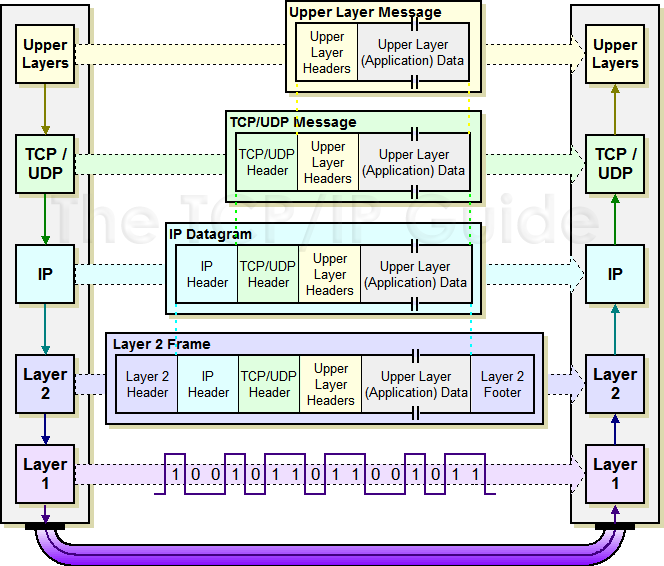
Personally I think this is one of the better visualizations.
Allied bombing of Japan in WWII destroyed upwards of 3.4 million homes and rendered the areas unlivable for a period of time.
You can see discussion on this going on as far back as 2015, explicitly in regards to what "SIGINT enabled" means and Cavium: https://www.metzdowd.com/pipermail/cryptography/2015-Decembe...
Am I missing something here? People are talking as if there is some new backdoor that's somehow avoided detection. Did everyone just miss this discussion in 2015?
Discussion of the "Sigint Enabling Project" goes as far back as 2013 on HN itself.
They're basically THE company for buying cheap, but functional, networking bits-and-bobs-- either in bulk, or as an alternative to prowling ebay for smaller purchases.
I use them all the time for transceivers, cables, DACs, etc.
Mussolini was in Milan, and stayed in Milan, when he ordered the coup march to Rome.
Mussolini lead his coup from >100-600km away from the march, why would the leader of Wagner need to be in the convoy?
I'm pretty sure every consumer router since at least 2002, if not further back, has had some stateful firewall implementation with default deny rules.
Much like a house is more than just the structure itself, so is the realm of computers.
Generally in Go: functions, structs, and consts are namespaced in a way I think is familiar to most, by package origin.
If something is not, then it's either a function/struct in the same namespace (same file, or directory), variable in same scope, or it's a built-in.
Built-ins like `append`, are not much different than say `map`, `filter`, `max`, etc in Python.
Anything sourced from a subdirectory, parent directory, or sibling directory needs to be explicitly imported via the module path.
Rather I think it'd be better phrased as "frameworks should use simple abstractions and methods as often as possible", which the language naturally pushes people towards imo. I believe this causes most Go frameworks to be referred to as "microframeworks".
Go: https://github.com/kyleconroy/sqlc
Rust: https://github.com/cornucopia-rs/cornucopia
This is my preferred method of interacting with databases now, if available.
Very flexible.
* Relatively simple syntax.
* "Good enough" expressivity-- nothing that's considered "missing" has been a true blocker for most projects.
* An easily accessible concurrency primitive, with the bonus that the runtime can choose to execute goroutines in parallel (when able)-- this comes with no required function coloring or split in a code base.
* A well opinionated environment packaged with the compiler: default formatter, default method for fetching remote deps, default documentation generator, default race detector, default profiler, default testing system.
* Decent portability-- can cross compile relatively easily from one platform to another, doesn't require a larger runtime pre-installed on the foreign host.
* "Batteries included" standard library.
* Inertia-- enough of an active community to pull what you need from the Internet, whether it's guides or code.
* A "good enough" type system to catch some errors before they become runtime errors.
* A "good enough" abstraction for operating on data with: structs, interfaces, and methods. With composition being preferred over inheritance, and embedding bringing handy sugar.
No language is perfect, everyone has an opinion, but for many people this is "close enough" to what they prefer to work with.
Gophers may just be a bit more vocal about it.
> Why would they be relied upon if they exist, even further, why would they be the basis of the actual law?
I said you didn't use it in the statement describing civil law.
I didn't bother tackling "common law is based ..." because frankly if I tackled every inaccuracy in your statements, I'd be here all day.
You were opining on the merits of civil law, by describing an "ideal" model of system which doesn't exist in any of the countries you've mentioned.
You attempted to exclude principles, which even if they don't exist in the same form, that are still present in those other country's judicial apparatus-- just with different weights and state supervisory organs.
> I will respond to that comment here because HN rate limits me, making any productive discussion totally infeasible, which is why I almost totally stopped participating on this platform. Seeing how it makes actual discussions impossible, I should altogether stop participating here. But here goes the reply:
The site is actually having problems at the moment for many, including me, you're likely not being targeted specifically-- unless you're getting an explicit error indicating so.
> The term exists, its an important term in history, political science, diplomacy for a very long while, the very Cambridge university uses it itself. At this point you should be aware that even you would be able to find many references using the term. So dont sweat it. The rest of the world is not going to stop using it just because you people have a beef with some country that uses it.
They used it to describe how it goes un-used, outside of France in this specific instance, don't misrepresent the article.
> At this point, seeing that you have claimed that I said various things I have not said and also claimed that I didnt say things that are the very first things that I said, I have no other option but to conclude that you are an insincere debater. Which concludes our discussion since I will spare both of us of a potential unproductive discussion by disengaging...
Where? Don't blame me for your inability to articulate.
Language mutates.
> It amazes me how someone that claims any insight in the matters of law can ask for 'sources' for such a thing. It just feels crazy. Here you go:
> https://www.jstor.org/stable/24517581
An entire article describing the: absence of its usage in scholarly contexts outside of specific cultural domains, and also simultaneously points out its usage as a ideological label.
I'll admit my error in being unable to find this, but it's not legal analysis specific, and the paper probably isn't what you were hoping for.
You probably should have picked something else.
You didn't even use the word "BASED".
When you say:
> It does not rely on agreements, contracts, negotiations or precedents.
Why would they exist conceptually if they're not relied upon?
They're obviously relied upon when.. something related to contracts is in dispute.
That's neat, the dead are welcome to their opinions. That doesn't change where or why it's used primarily by certain parties in their English facing media.
> No offense but just because you people have a beef with Russia at the moment and they are using the term, the rest of the world is not going to change how they speak so that you dont get offended.
I never asked them to-- if that's the phrasing in their native language, then so be it. Same reason why we can call Germany the name "Germany".
But it clearly has a different meaning in English.
> Obviously you are not a student of history.
I'll admit error if you can find a source, that's not Russian, that uses it to refer to modern US law-- even if it's just a translation from another language.
The problem is I'm having a hard time finding one on my own.
> civil law system ... does not rely on agreements, contracts, negotiations or precedents. It cannot be 'interpreted'
betrays that they've never examined legal proceedings in either system.
Contracts apparently don't exist in civil law, and when asked to explain the differences between "Jurisprudence Constante" and "Stare Decisis", I guess "Jurisprudence Constante" means precedent doesn't exist!
I think they're confused on the differing weight and roles of case law in rendering decisions between the two systems, and over corrected.
I don't think I've seen an authoritative source elsewhere use it, because it would be like pretending the Norman conquest never had an effect on legal proceedings. As if there is some unbroken historical lineage.
This is why I labeled it a buzz word, it's a phrase with a specific (negative) connotation attached to it, used by specific media, as a catch-all for describing institutions in the US.
https://euvsdisinfo.eu/what-do-the-pro-kremlin-media-mean-by...
Ignoring the "Anglosaxon" buzzword here, none of this is unique conceptually to US law, or foreign conceptually to anyone who's told a lie when younger. It's instinctual for many when they know they've done something wrong. Trying to paint human nature as a unique problem that US law faces, or promotes, is itself dishonest.
> claim incompetence or mental incapacity
Neither of these get you "off the hook"; that's a misconception.
> That's how you end up with people who are total experts in their field testifying in courts that they "didnt know" that something they did would cause so much harm to something or somebody or the society.
It can be either dishonesty, or lack of omniscience by the expert in question. Unless you're a mind reader, you have no idea. This is why testimony is evaluated along with other aspects of a case, and not alone.
> There wont be any trail of their wrongdoing, and when there is, there will always be plausible deniability in that trail...
Plausible deniability does not shield you from all liability.
The examples you've provided have done the latter.
Stop using indirect language to hide your beliefs.
It is highly unlikely that A) the US with such lead time would fail to blow up all 4 pipes, and B) the US would bother when it had already handled the situation diplomatically.
https://twitter.com/holger_stark/status/1638561100009549829
"But this is, at least in respect to our work at @DIEZEIT, complete BS. And if you write about me: call next time before you publish."
Where does this nonsense about "everyone is getting on board with BRICS" come from? Who is "everyone"?
"Russia has been the one wanting all the pipelines open this whole time" Key word is "wanting", they were not getting it, Germany made is clear they were not getting it.