That's what people said about Salt Lake City and Boise... until about 5 years ago. Cost of living has skyrocketed since 2017, housing alone has doubled in price. It doesn't take long for a low cost of living region to become high cost of living.
Yes, because it's the only major city that's growing. Cleveland, Cincinatti, Toledo, and Dayton are all losing population year-over-year while Columbus's grows.
The biggest expense is typically housing. And if you bought the house, it means the biggest expense is... building equity into an asset you can sell afterward.
Keep in mind the engineer who purchased a 2 million house in Palo Alto can sell it for two million, and then move to Ohio to a much cheaper house purchased in cash. The reverse isn't true.
Main issue in Palo Alto (and to a large extent the rest of the bay area) is that there's massive population growth in the bay area, but very little housing is allowed to be built. This creates artificial scarcity and the people that bought houses 30yrs ago accrue massive wealth because of it at the expense of new people (and the new people that manage to buy at exorbitant rates also end up paying the majority share of taxes too).
This is the natural incentive made worse by things like locked property taxes and rent control. You really need legislation that allows the market to build (easier said than done).
Remember that even when you aren't hampered by lack of space and/or zoning, most build starts are still 'investments'. I knew a whole lot of folks who did homebuilding in the first decade of the century. Housing starts were all over the place, partially because the investors were sure that with prices rising, it was a sure thing, right?
But then the market glut happened. Housing starts stopped. All of those folks left homebuilding and few if any ever went back to it.
I think nowadays Investors are back to preferring smaller buildouts, potentially in more phases. The supply/labor issues from covid haven't helped things lately though.
The rules created by existing residents where designed to push up rent and home prices, and they have succeeded.
https://losangeles.craigslist.org/lac/apa/d/los-angeles-stud...
Apartments.com says theres like hundreds of studios available at this price range across LA:
All that being said, I have every intention on trying to work for Intel or at the tech hub itself, make my money/deal with it until retirement age, then get the heck out of here and find a place far far away where I can get something that looks and feels like this place once was.
Ohio is a great place for this kind of corporate gentrification. As a CMU grad, I know there was a collective desire to get students to stick around, but there was better lifestyle, more money, etc.. leaving after school and a fairly large number of us weren't from the area to begin with. Something like this can be a game changer for the region, plus, there will be dozens of additional companies that set up camp and start up there for support.
If it really works and the region supports it and leans in, all of the schools anywhere near by will step up their engineering programs.
As I have come to realize, when a mistake or delay costs $XX million, it often makes sense to hire with high educational background. I have also come to realize that your bog standard MS or Phd isn't as talented as you might think.
Between this, Ohio's shameful anti-LGBTQ laws, and the truly awful racism, it's really like the state is trying to drive people away. I moved to CA 7 years ago and couldn't imagine moving back after talking to friends who are still there.
They lament some social issues on campus from a populist perspective but sometimes I think it's not always without merit, or at least a discussion.
The political issue is at the elementary and high school level, and it's more about supporting families than it is the schools, where 'teacher quality' is a huge and ridiculous distraction. If every kid got a chance to attend school while living what most of us would call 'Normal Middle Class Circumstances' (i.e. decent parents, stable home, economic stability, no gangs or crime) there would be progress.
This investment is such a hugely important announcement, the number of really high quality jobs ... and the secondary economic factors will be even bigger.
The US Midwest has long been under utilized.
If US leadership could do anything, it would be to convince some of the big SV operators to invest decisively and aggressively in 2cnd and 3rd tier places which are frankly very prepared for it. Ohio, Miami, Raleigh, Michigan, Chicago etc..
Concentration in specific areas has been going on too long and is at least a decade past it's benefit.
The assertion wasn’t that Republicans are too stupid to know the value; but that knowing the value, they still want to make it difficult for more people to achieve it.
Rich people recognize the value of money while at the same time denying money to others.
The US spends more on education as a % of GDP than anywhere in the world. And - it has a very high GDP/capita as a starting point. And sends more people on to post-secondary education than most places, more than in most countries were post-secondary is socialized.
Germany, with fully socialized University has to ration it - the end up 'streaming' kids by age 15, and those slots are disproportionately allocated to rich kids, moreover, the number of post-secondary students (in College programs, not internships) is lower than in the US, kind of exacerbating the inequality problem.
To boot, the US has a massive problem with post-secondary debt.
University education itself is not the only key to success, rather, it was historically a status marker of the elite. Since it is not just that anymore, we have to be more practical about who we send to school.
I would argue we have too many liberal arts graduates, and not nearly enough trade programs and internships. While Liberal Arts programs absolutely embellish students with higher order thinking, and it would be nice if everyone could attend ... it's frankly the purview of the people who can afford to pay for it without having that cost related to a job on the other end.
And, given that in the US that basic literacy is still a serious problem for many of those in High School ... do we really think that the quantity of post-secondary students really the problem?
Probably not.
The US does a pretty good job at getting people into post-secondary programs, even when they generally would not be qualified, and it's arguably inefficient.
If this were 1970, then it would be an easy argument of 'getting more people into College'.
But conditions have changed and it's a much more difficult situation.
Keep the bars high and objective instead of trying to send everyone to College by virtue of magical thinking.
Maybe we can graduate everyone from highschool as a matter of social equality, but providing kids with projects they can sink their effort into and especially develop the middle-tier apprenticeship programs (i.e. Germany) would be probably a better approach.
I'll bet $1000 that these Intel Chip Fabs require just as many 'trained specialists' as they do College Grad designers.
I'd also bet $1000 that 'Republicans' (at least practically and ideologically) would back that kind of approach.
We could start by breaking 'Doctor' and 'Nurse' into more categories. By making college only 2 or 3 years + 2 years teachers college instead of requiring a 4 year degree. By defining and regulating some types of skilled trades, possibly even software. Etc.
And of course, probably by raising minimum wage, supporting automation and happily moving out non-productive jobs to Mexico and Vietnam where the net surpluses are greater anyhow.
In 2021, it's reasonable for people to take the position that fudging more people through college is just not the most productive or even equitable approach we should approach.
A bunch of victimhood to excuse their bad actions (and change the subject). So they are sacrificing assets and essential services to the American people for political revenge? They won't provide public goods to Democrats?
Which ones specifically? I’d like to learn more and this is something that I’ll pester my representative about. For Columbus specifically in day-to-day life I’m curious what effect these laws have. We have gay clubs and actually a reputation as a “gay mecca”. In Columbus we also have the doo-dah parade, a gigantic, corporate sponsored gay pride parade, and lots of drag events like during our big Halloween party.
> and the truly awful racism
Eh you can find racism in all 50 states, California included. People say this but it’s just the news talking that’s coloring your opinion.
They also have laws that allow medical providers to refuse treatment to LGBTQ.
This is just from a few moments on Google; there's a wiki article with more info: https://en.m.wikipedia.org/wiki/LGBT_rights_in_Ohio
https://www.psychiatry.org/patients-families/gender-dysphori...
Regardless of your political stance on the matter, this is off topic. You should ask yourself why you feel compelled to thrust this subject here.
In Aerospace, within both U.S. government and industry, midwest engineering schools are widely seen as producing more undegrad-level engineers who actually want to be engineers than places like Stanford.
Stanford, in particular, seems to attract proportionally way more engineering majors that want to use engineering credentials as a gateway out of engineering (high finance, startup executives, management, etc.). A colleague of mine in Big Aerospace says there's a pretty consistent pattern of not being able to hang on to many Stanford or MIT grads for very long. Granted Big Aerospace can be a miserable place to work in a number of ways, but if you want to hone your craft in a number of aerospace disciplines, you'll need some level of exposure to that kind of knowledge/experience-base. You're not going to get that at the next delivery drone or flying taxi startup.
1. Caltech
2. Stanford
3. Cal
4. UCLA
5. Harvey Mudd
6. USC
7. UCSD
8. UCD
9. UCSB
10. CPSLO
11. UCI
12. CPP
13. UCSC
14. UCR
California has 840 miles of coast line. Absolutely no shortage of water.
Desalination and PV technology keep improving, too.
1. Northwestern
2. Notre Dame
3. Wisconsin Madison
4. Ohio State
5. Minnesota Twin Cities
6. Carnegie Mellon
7. University of Chicago
8. Purdue
9. Penn St
10. Washington University St. Louis
11. UIUC
12. Case Western
13. Michigan
So there are plenty of world class educational institutions in the Midwest. Frankly I’d take this list over your list and that’s not including other brand name universities like Indiana, Pitt, Michigan State, Nebraska, or Iowa, some of which do “non-sexy” research in agricultural science and other fields. Ohio State has the only undergraduate wedding engineering program in North America even. It really is an absolute powerhouse of a region with far more national brand name recognition and reputation and monster enrollment numbers.
California has all that stuff because it’s literally further from SF to LA than it is from Columbus to DC.
I was just going off of the “Midwest” versus distance.
> California has all that stuff because it’s literally further from SF to LA than it is from Columbus to DC.
Yea it’s a big state. I’d love to go off of distance though so we can include lots of other fantastic universities just to further drive home my point.
Oh I know plenty of Californian cities, such as Los Angeles, San Francisco and Google.
The other ones are good schools, but in a distinctly second tier to that group.
What on earth do you mean by second tier?
For example, when it comes to hardware & electrical engineering, UCSD alone is as productive as say Purdue & Illinois combined. And it’s a young university too.
No, Davis, Berkeley, and Stanford are all 350+ miles from LA.
1- Big 10 is not an “engineering school conference”.
2- In what world is Pitt a prominent engineering school? You have no idea what you’re talking about.
University of Illinois at Urbana Champagne was the pre-eminent school for Computer Science. It’s still a fantastic school but most don’t seem to want to live in a cornfield.
As for getting in-depth information on topics, you don't need a university for that anymore. Library Genesis and sci-hub has more in-depth information on topics than you could ever possibly absorb, assuming it's legal in your country. What universities uniquely offer is community, financial support, and research: without universities, sci-hub would be a pretty empty place.
As for computer architecture, OSU is not heavily into computer architecture. It's much more focused on custom accelerators and ASICs as well as semiconductor research. And it is recognized as one of the best ECE programs in the world with one of the main problems with it being that the CS department is comparatively weak.
My graduating class, in a December, was still over 1,000 engineers. Spring graduation typically had 2.5-3.5K/yr.
I'd make a stronger statement than "You're not going to learn electrical and computer engineering by reading stuff on Sci-Hub." You aren't going to learn by reading. You have to actually do stuff in order to construct the knowledge inside your own mind, and as you say, that's hard. But the information is available, even if it isn't academically published; in electrical engineering, in addition to sci-hub stuff, you have Bob Pease columns, appnotes (especially the ones from Analog and Linear), The Art of Electronics, EEVblog, allaboutcircuits, Hackaday, Marco Reps, Camenzind's book, Jeri Ellsworth's Short Circuits, Don Lancaster's website, Forrest Mims's books, patents, Adafruit, etc. LTSpice is proprietary but gratis, while QUCS, ngSpice, and WR-SPICE are free software, and now you can get stuff mostly automatically fabbed by JLCPCB for ridiculously low prices. And with the rise of iceSTORM it's becoming practical to design gateware without signing a support contract with Xilinx. Just like the undergraduate EECE curriculum, a lot of this stuff is aimed at beginners (you can learn a lot by fiddling with Falstad's circuit.js even if it doesn't do Monte Carlo simulation), so it doesn't go very deep, but some of it is very much not.
(Still, there is a lot of information that isn't publicly available at all, because it's a trade secret of TSMC or Lam Research or Intel. But the professors aren't walking undergraduates through that stuff either.)
The huge thing about custom accelerators and ASICs and semiconductor research, though, is that you can't really do it in your basement. MPW/shuttle programs like MOSIS and CMP go a long way to making chip design accessible, but it's going to be tough to even run DRCs on your designs without proprietary software, and then it still costs you US$10k to get back 10 chips that don't work. Going to a university for EECE, even for undergrad, might give you the chance to go through that painful cycle enough times to actually get something working, and the mentorship you need to find out what you don't know.
There were 1800 engineers in my graduating class (1995).
IU is a great liberal arts school - but doesn't compete in engineering by design.
One night while struggling with a problem for work I took a walk and wandered by where I calculated the IBM 650 must have been located back in the day, hoping for some kind of inspiration, or something. It was a good distraction but it did not work at all.
Took a violin course; the teacher, one on one, was FAR too good for what I needed and later played the Brahms concerto in Toronto! According to the rules, at the end had to play for the violin faculty, including the former concert master of the Cleveland Symphony -- poor guy! Eventually I made it through much of the Bach E Major Partita and the Chaconne! Great fun! Met my wife.
The math department had some good mathematicians. The weekly seminar flew in some of the best mathematicians in the world. Later where I got my Ph.D., at a much more famous school, the seminars were nowhere near as good.
As a grad student, since I was teaching ugrad courses, I got paid, enough actually to live nicely, e.g., eat all my meals in restaurants, and save some money!
But I didn't fit into their program: (1) My first semester they put me in their abstract algebra course. Okay: I'd done well in a similar course in ugrad school, and my ugrad honors paper was on group representations. So that I wouldn't have to waste time in the course, the prof and I had an unspoken agreement: At the end he gave me a little oral exam in his office -- I went through some Galois theory! (2) They put me in a topology course, from the famous book by Kelley. In the first class, the prof said that the homework was to work all the exercises! HA! Some of the exercises were notoriously difficult! I wondered if HE could work all the exercises! Besides, in ugrad school I'd taken a reading course from that book -- once a week gave a lecture to a prof, chapter by chapter, one week on the theorems and the next week on the exercises. For the material on Moore-Smith convergence, a second prof showed up -- maybe he wanted to learn some about that topic! I wrote out solutions to about 1/3rd of the exercises (to be honest not the same ~1/3rd I'd done in ugrad), turned them in at the end, and did show for the final exam. (3) They put me in a real analysis course. On the first test, with just one exercise, in set theory, the prof wanted to "see me after class". He had marked my test paper as wrong. Gee, I doubt that many students got that exercise. Since the previous summer I'd had a course in axiomatic set theory, the test was easy for me. When I explained to the prof that my notation, I didn't have time on the test to define, was standard, he saw that (A) my solution was correct and (B), as we both noticed and he confessed, was one step shorter than his. I didn't know that prof, had never had any interaction with him, but concluded he was for whatever reason on my case. My victory over him on that test was enough for me -- I never saw him again. No biggie loss: The book he was using was awful, e.g., was just some typed notes -- Royden, one of the best math texts ever, was MUCH better!
So, net, I did my teaching, used some of the money I was getting, more than I needed, to have fun while saving some money, did my teaching, met my wife, and started violin -- I liked it!
Since that was Indiana, that is, out in the Midwest flat farming country, a lot of the other grad math students were pretty good athletes. So one afternoon I showed up at the volley ball game those students held. Soon I was very much not wanted! I was the last to be chosen! And soon even the other team would make sure I never got to touch the ball! Those guys took athletics VERY seriously, much more seriously than the math!
But in the ugrad teaching, nearly all the girls tried hard to look pretty and be sweet! One course I taught was some math for elementary education majors. There were maybe 30 students in the class. There was one boy there, maybe looking to meet the girls! So, all the rest were girls. And they had their career direction decided, no doubt, high determination -- they'd get a teaching certificate, a husband, a home, and some babies. NO DOUBT! And they were just AWFUL at that math, and soon just terrified of it! Due to the influence of computing, I had to teach them about base 2 and base 16 -- that was more painful for them than having their teeth pulled! I also taught calculus, trigonometry, etc., and in those courses the girls did fine, no angst! So, there was something about elementary education majors!!!
The problem was the author of the book had no idea why they were doing this, or what the purpose of this was. It provided the curriculum, but had already lost the inherent reason behind it.
When was this? Nowadays the grad students are constantly complaining that they don't get paid enough to live and mandatory fees are too high.
The money: I lived with low rent, in a dorm that had the option of no meals in a university cafeteria. Since I was teaching, I paid no tuition and, as I remember, paid no fees. My teaching was a bargain for the university, i.e., I was no doubt MUCH cheaper per course taught than a prof. They had me teaching a wide variety of courses and, one semester, two courses. That wasn't fair to me, but I didn't mind.
It was an old dorm, REALLY nice. And it was next to the music school and, still, not far from the math department or lots of places to eat.
Am I the only one who thinks it's weird that football leagues are used to categorize engineering institutions?
Not sure the NM sizes being made at these sites off hand.
Source: I grew up in central Ohio. Public schools made it a point to practice tornado drills. In addition, there was an old Cold War-era air raid siren a block from the house I grew up in that had been repurposed and tested for tornado warnings. One of these: https://www.youtube.com/watch?v=d9rRSY0dRIU
Edit: read about Xenia, Ohio: https://en.wikipedia.org/wiki/Xenia,_Ohio
> Xenia has a history of severe storm activity. According to local legend, the Shawnee referred to the area as "the place of the devil wind" or "the land of the crazy winds" (depending upon the translation).
> On April 3, 1974, a tornado rated F5 on the Fujita scale cut a path directly through the middle of Xenia during the 1974 Super Outbreak
> Xenia was struck by an F2 tornado on April 25, 1989, and again by an F4 tornado on September 20, 2000.
The probability of a large, damaging tornado at a particular spot in Ohio is quite small compared with the risk of damaging earthquakes in other locations. https://www.usgs.gov/faqs/what-probability-earthquake-will-o...
Interesting. I'm unfamiliar with building code provisions that are designed to mitigate the effects of tornadoes, which are arguably the most destructive force on Earth apart from an erupting volcano or a nuclear attack, on a semiconductor fab, which is arguably among the most sensitive and easily-disrupted facilities ever built. Any good sources for further reading?
I have an old Soviet invasion map of central Ohio, marking all potential airfields etc.
Tiny Waverly would have definitely been wiped off the map because of its fuel refining facility. There's a non-zero chance I keep my EMP-proof diesel truck running due to growing up in those times.
[1] https://www.jumpjet.info/Emergency-Preparedness/Hazard-Maps/...
Looks to be a 1:500,000 topo map of the Ohio/Kentucky/WV border. You can see Columbus and I think Dayton at the top. Google translate via camera is a real charm here.
Apologies in advance for Imgur, but two other services I tried simply didn't work /sigh.
In the wake of the George Floyd protests family talked about their concern that out of state “Antifa looters” were spotted driving down the interstate headed right for them.
I don’t mean to call you a liar, Im sure there indeed are some obscure targets, and your home might be one.
I do think it’s a fascinating phenomenon- this idea of small town obsession with their own destruction.
A quote from Terrence Malick’s BadLands goes something like:
> and if the reds ever do drop the bomb, well I hope they drop it right here in Rapid City (South Dakota).
Can you please post this? That sounds so interesting.
Also I submitted that link as a fresh thread [1], because this admittedly fun rabbit hole has little to do with Intel and Columbus' sprawl.
I don't think there's a city in the United States that isn't an active target of at least one of the 6,000 current Russian nuclear weapons.
Wright Patt definitely has some high level stuff stored, I have a few friends who work engineering there.
Soviets had a concrete plan to invade Ohio? Wow. How were the troops supposed to cross the ocean?
The invaders would cross the ocean from an orbital path streaking in as multiple units launched from submersed platforms or silos in the Motherland raining down from heaven. Those invaders would not need to put a single boot on the ground.
https://www.abortionislegalinohio.com/
You can say that it's not technically illegal now, but it's unquestionably under assault in a way that it's not and won't ever be in California.
Also plenty of people here want to ban abortion too. Tons of small counties have managed to prevent any kind of reproductive health clinics from opening or defacto forced them to close.
My prediction is state governments will make a big difference in quality of life for many people.
California does. CA also has other protections beyond federal ones for breastfeeding and other pregnancy related accommodations, and gives employees the right to sit at work if they do not need to stand.
I would not raise my kids in a state outside of CA to WA and NJ to MA and IL just for this reason.
How is this a "personal liberty" thing? This in turn is probably violating the freedom of association that employers have...
>breastfeeding and other pregnancy related accommodations, and gives employees the right to sit at work if they do not need to stand
All of these trade one liberty for the other.
So you can either worry about the small picture and employers losing a little freedom about who they have to employ. Or you can look at the big picture and realize that for women to maintain financial independence and still be incentivized to have kids, society needs to offer them something.
Surely TSMC advanced the process itself, but Samsung and Intel are not that far behind. But all of 3 use ASML technology and it is not allowed to be exported to China or Russia for that matter. Attacking Taiwan will make a prospect of getting that for China even more unlikely.
Here is a tour: https://www.youtube.com/watch?v=El8-Kqv6vLE
ASML also has a huge R&D campus in San Diego doing cutting edge lithography research. I applied for a job there a couple of years ago.
As for location, in terms of shipping, they're probably about on par to each other. Not sure how stable it is regarding weather conditions, or natural disaster risk in Ohio vs Arizona though.
In either case, it's good to see some uptick in distributed manufacturing. Concentrating most high technology infrastructure into a relatively small region has proven a disaster when problems inevitably happen.
This is provably false. The US population is fleeing the areas with the most natural greenery, migrating south and west. The south western US is primarily dry desert.
"As of the 2010 Census, Nevada was the fastest-growing state in the United States, with an increase of 35.1% in the last ten years. Additionally, Arizona (24.6%), Utah (23.8%), Texas (20.6%), and Colorado (16.9%) were all in the top ten fastest-growing states as well" - https://en.wikipedia.org/wiki/Southwestern_United_States#Cit...
Greenery is nice. Warm weather is also nice. Lack of things like ice storms, fog, black ice, trees falling on power lines, etc., is nice, too.
There are a ton of good big10 engineering schools, and columbus should be able to draw from the east coast as well, since it's a LOT less expensive (currently).
There was actually enough programmers, but they had to compete with automotive wages which are typically above 6 figures.
Ohio doesn't have that industry, so it might be a way to get cheap educated labor that would otherwise move out of state.
I've only ever seen billboards for "clean coal" in SE Ohio, SW PA, and West Virginia.
Ohio produces 1/20th the coal of WV - which is a much more economically poor state - and coal isn't even really that important to WV's economy. Ohio's economy is much more similar to PA - and PA produces 10x more coal: https://www.eia.gov/coal/production/weekly/
Coal is all politics.
I mean, it is still used for a lot of energy production - almost everywhere in the US - Ohio definitely: https://www.eia.gov/state/?sid=OH.
I'm sure power plants don't want to shut down overnight because someone bans coal completely - and they shouldn't. But it's just not economical in most places - the plants are phasing out naturally almost everywhere.
The less scale there is with coal - the less viable it becomes. It's a vicious cycle.
Power plants naturally phasing out because coal isn't economical will have almost 0 impact on Ohio.
Places like WV - that's a different story. WV sells coal! Ohio doesn't.
Coal also doesn't employ people like it used to. It employs 3,000 people in Ohio: https://www.ohiocoal.com/information-library/history-coal-mi.... That's out of a ~5.4M labor force: https://www.bls.gov/eag/eag.oh.htm. That's ~0.05% of the workforce... Even WV is only ~0.15%...
It's really only important to a few barons who want coal to stick around long after it's economically viable (the governor of WV).
In Ohio for residential, which is a good bit more expensive than commercial/utility scale solar, the payback period is about 12 years[4], well within the margin of getting your money back and then some.
0: https://www.cincinnati-oh.gov/mayor/news/cincinnati-to-const... 1: https://newmarketsolar.com/ 2: https://www.nrel.gov/gis/assets/images/solar-annual-ghi-2018... 3: https://solargis.com/file?url=download/Germany/Germany_PVOUT... 4: https://www.energysage.com/local-data/solar-panel-cost/oh/
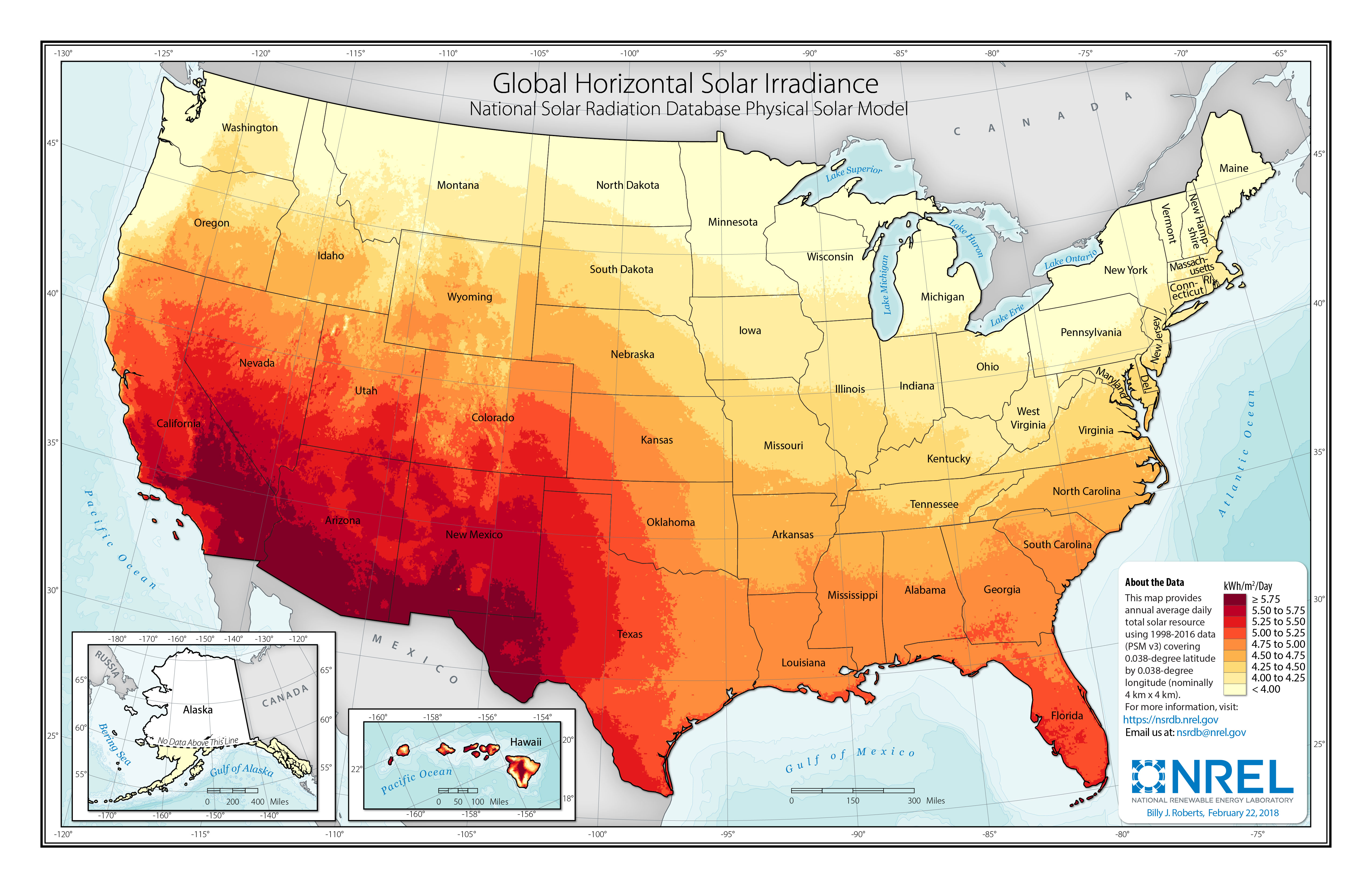

Pretty sure Germany is more know for poor green energy planning, burning more coal, and instance on non optimal strategies for power generation (killing nuclear).
I doubt socks are tasty, but please let us know.
[0]: https://globalsolaratlas.info/map?c=20.797201,-46.494141,3&s...
It's why people view the ability to ignore politics as a privilege having the resources to just avoid whatever they happen to do gives you a massive degree of freedom.
Also aren't these progressive policies supposed to have helped people on the lower end of the economic scale rather then forced them out?
Its not a long term strategy when the majority suffer. Thats why the blue side have shifted towards pushing European style Democratic Socialism policies and the Red has shifted into authoritarian right style policies.
>Also aren't these progressive policies supposed to have helped people on the lower end of the economic scale rather then forced them out?
What progressive policies? There is no real progressive party in the US. California(and the rest of the states (save for a few districts here and there) has been extremely hostile to real progressives. What we have now on the "left" is a combination of neo-liberal right leaning centrists mixed in with fake leftist social populism.
International airport, large rail depot, extremely low cost of living and a city/region that has more good restaurants and activities than might be expected. Ohio State University is in the city and is a huge school that is rapidly growing in academic standing. Road transit in the area is also very good allowing access to any part of the city from any other part in rapid fashion. Good schools, relatively low crime, etc. Probably the only drawback, from a lifestyle point of view, would be the winter and that's not even that bad, compared to other winter regions.