This is a rather extremist take on the issue. You can be against unlawful orders while still obeying the scientific advisories. Take MA for example, where we have a stay-at-home advisory, not order. This advisory has reduced the average number of close contacts of diagnosed COVID-19 people from 10 to 2, while still respecting civil liberties.
The model you preach, one of trust, starts with the government trusting its citizens. Otherwise you end up with tyranny.
For the handful of people I see clearly flaunting the restrictions here, I feel like more often than not they have decent personal reasons for doing so, and I don't think it's my place to stick my nose in that.
A free person does not take orders from the state, nor from anyone. A free person has a right to weigh advice and conscience on his own terms, and negotiate his externalities with society.
This hypothetical "free person" is then also responsible for the results of their actions and for any oversights or vulnerabilities caused by their "free" status.
There are very good reasons we allow ourselves to be part of a society or country - people are always better equipped to survive in groups.
The problem with positioning one's self as a "free person" is that most people advocating this don't comprehend how they benefit from being part of a country or people. Because they don't understand or identify those benefits, they are entirely unwilling to accept the lack of them which is the case if they're entirely "free".
Essentially, they want to have their cake and eat it too - all the benefits of belonging to a modern civilization with no sacrifice of freedom, possessions, or possibilities.
They usually have an ego that allows them to believe they're special for being a person that recognizes the desire to be "free" when the truth is that other people do recognize that desire but also that it's not possible to be entirely free without giving up the benefits of belonging to a group.
Thus,they view themselves as exceptional because they understand that they should be free, when in truth they're exceptional because they're ignorant.
> This hypothetical "free person" is then also responsible for the results of their actions and for any oversights or vulnerabilities caused by their "free" status.
Is this a two way street? Are the authoritarians and experts who decide policy on highly uncertain data, at best, going to be held responsible for the fallout of their actions? I see little historic precedent for this in the US, and plenty of counter-examples.
> There are very good reasons we allow ourselves to be part of a society or country - people are always better equipped to survive in groups.
Does the group have to consent to authoritarian rule? How about we try transparent & honest, evidence-based reasoning and negotiation first. Maybe people would be a little less resistant then.
> They usually have an ego that...
Be careful when discussing matters involving the ego, they can be very mischievous and deceptive, often leading one to believe things like they possess extraordinary abilities in perception, when the exact opposite is actually the case, just as one example.
> ...they want to have their cake and eat it too...
> They usually have an ego that allows them...
Well just because you can think of a hypothetical selfish and entitled person who isn't willing to suffer for liberty, doesn't mean everyone who advocates for freedom is that person, and if anything it makes the case that these people should be brought to put their money where their mouth is.
How do you balance that with another person's right to live? If you as a free person decide "F it, I don't want to stay cooped up despite my positive diagnosis." Is that fair to someone you then infect out in public?
it's easy to forget that most people act with consideration and respect towards each other most of the time, whether or not there is a credible threat of punishment. we tend to notice bad behavior more in our day-to-day lives precisely because it is not the default. you never notice all the dog walkers that dutifully clean up after their pets, but you'll surely remember that one piece of dog shit you stepped in on the way to work. the news almost exclusively covers outliers.
in my state, we have mandatory shelter-in-place under threat of fines/imprisonment, but the police don't really have any way of knowing whether you are violating the order. people mostly follow it anyway, because they are convinced of the severity of the issue.
I think consideration here is extremely subjective. If what you say is even true, that most people are considerate, what defines considerate here? People think they should leave their shopping carts wherever since that's the job of the cart attendant. Are they considerate because without them, that person may not have a job since all the carts are just pushed back to the store?
unfortunately, we don't have a good system to support barbers, who would prefer not to risk catching/spreading the virus but need the money, or barbershop owners, who would prefer to stay closed but need to pay rent. so I do actually support the lockdown as a somewhat dirty hack to trigger benefits for these people.
Why is it that for all of history this hasn't been an issue for infectious diseases until now?
All perfectly legal.
Tyranny is where you restrict the movement of healthy people.
While the quarantine order in Wisconsin isn't.
That cultural chicken is still a massive net win; I'd still much rather live in America and get coronavirus rather than live in China and get black-bagged someday because of my refusal to take authorities seriously.
Pretty much no crisis since the founding of America has "these people have too much personal independence and power" been more of a problem than part of the solution. Indeed, most of the times independence was diagnosed as a problem the solution was worse than the disease. The government-coordinated response to 9/11 remains substantially more damaging than any other aspect of that fiasco.
At the risk of potentially misunderstanding what you meant, there's a yawning chasm between "freedom to die from COVID-19 because public health orders are affronts to liberty" and "extra-judicially kidnapped by one's own government."
I'd much rather live in Sweden or Germany, where people have sufficient trust in their government and a massive social safety net to catch employees who have to be out of work for health reasons--ANY health reasons, but COVID specifically in this instance--and we're able to trust that our fellow residents will act reasonably without forcing others back to work, than in America where the least-powerful and least-well-off of us have the cover of unemployment payments ripped away because some flag-wrapped know-betters demand Golden Corral reopen for buffet service after getting a haircut.
I'm a bit hesitant to compare to either of them because I can't read the local news. That being said, didn't Sweden go with a lockdown-lite policy?
The Sweedes do have the freedom to die from COVID-19 because public health orders are affronts to their liberty.
EDIT And the lockdowns are threatening something like 265 million people experiencing famine [0]. "flag-wrapped know-betters demand Golden Corral reopen for buffet service" is trivialising a serious thing here; the economy isn't a nice-to-have. It is the major generator of all the prosperity that exists in the world. It is too complicated for me to understand causes and effects, but if it doesn't start back up again ASAP the hurt will get worse.
[0] https://www.theguardian.com/global-development/2020/apr/21/c...
Locally, I see city and county governments taking a tack of making slightly differing decisions regarding what to open and keep closed. For example, my city is keeping parks and playgrounds closed; the county is doing the opposite? Why? each other's data shows the historical use trends and such data plays a large part in making reasonable, responsible descisions.
BTW, I'm in Georgia (US state); while the national media makes it out like we're backwoods country idiots, our local governments are very effective in making reasonable choices. Plus the vast marjority of folks are wearing masks and self-distancing. Most people aren't stupid. They only want the freedom to start their lives back up, plus not depend on the state and national governments for their very survival.
I don't think demand will immediately return to 100%, but I think quite a few people are itching to get out and spend money and enjoy life. Maybe not in some areas, but most of the country is probably ready to go.
Keeping things shut down isn't going to help these people get back to work.
When you need those jobs created by reopening to get people back to work and closer to the point of having disposable income again.
This isn't pure chicken & egg, since consumer debt is tightening up while business debt is getting cheaper. Plus the only way we're going to alleviate fear is by opening and seeing what happens.
Even testing vaccines will require that leap of faith at some point. After all, what good would a clinical trial be if the patient quarantined during it?
Not to mention that they've been heavily criticized for mishandling the lockdown.
Sweden never closed down, and Germany is in the midst of reopening. As to the safety net—there is no evidence that safety net has made a difference. (I’m part, I suspect, because the Us already has a comprehensive safety net for the elderly population that is mainly affected by COVID-19). The death rate in the US, per 100,000 people, is well below that of Sweden. It’s also far lower than the death rate in countries with well developed safety nets like France and Italy.
I strongly suspect that people in Germany/Sweden, etc., have more trust in their government because the people themselves are simply less far apart. To pick a controversial but illustrative example: in Germany the outside limit on abortions is 12 weeks—shorter than in any US state. (Excepting a few “heartbeat law” states where the laws have not yet taken effect.) But within that period, abortions are generally available. No such compromise is possible in America. The right is currently focused on ending abortion entirely, while the left is trying to extend abortions into the third trimester (which are pretty much unprecedented in Europe). Or take taxes. Many in the right want to dismantle the existing tax system. But on the left, they treat lowering corporate taxes to the same level as Sweden or Germany (and France and Canada, etc.) not merely as bad policy, but as an affront to morality and decency.
The same is true for COVID-19. In every European country, there is a grown up debate about balancing health and safety with the need to reopen the economy. The American left, meanwhile, has condemned even the idea of such balancing as racist, classist, colonialism, what have you. The left greeted travel bans—which countries from Germany to New Zealand to Denmark have imposed to great effect—as manifest racism and xenophobia. They’re not talking about reopening, as Europe is already doing, but sheltering in place through the rest of 2020. The right, meanwhile, is shouting “give me liberty or give me death.” There is no trust because everybody is crazy, and everybody hates each other, and we should give up being one country and disband the union already.
You seem to forget that in France & Germany, people go to the Netherlands or Spain for abortions after 12 weeks. It’s not a « compromise », it’s just a 1970s law that hasn’t been changed because conservative groups are annoying.
For the European audience: the shortest abortion period that is currently in effect in the US is Mississippi’s at 20 weeks: https://www.guttmacher.org/sites/default/files/922-3.jpg. Shorter ones have been proposed but have been stayed pending litigation. Most of the deep south is close to the Netherlands line at 22 weeks. Most of the blue states limit up to viability, which can be up to 28 weeks. 7 states have no limit whatsoever. (Note that I’m not taking a position in what’s right; I’m just describing how various countries have addressed a divisive issue.)
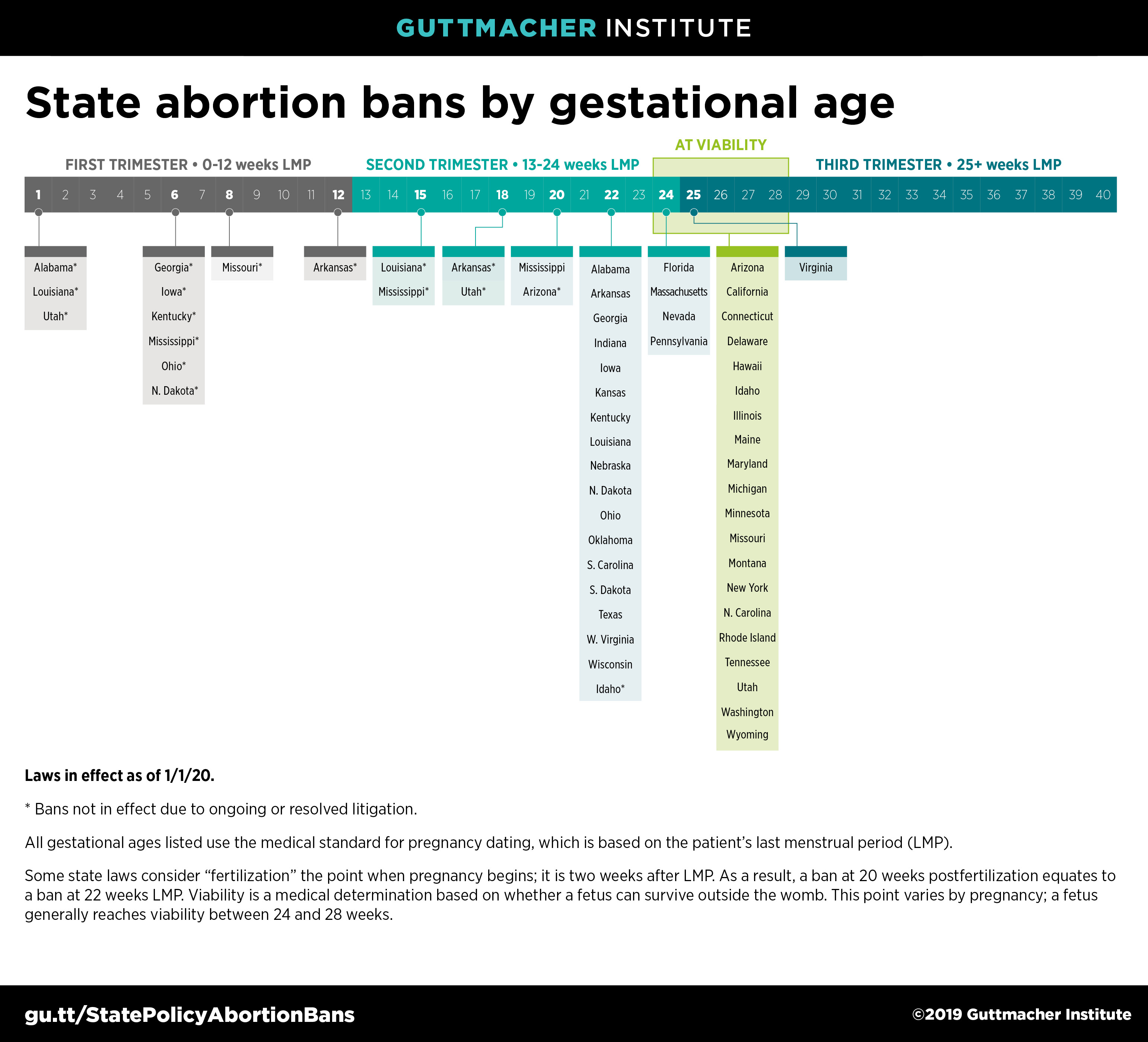
As to “conservative groups” being annoying—that makes it sound like something the majority agrees with but they just haven’t gotten around to updating the law. In fact, the dominant party in both France and Germany has opposed lengthening the current periods. The woman Angela Merkel hand-picked to be her successor as leader of the CDU is against abortion entirely, like many in the CDU. Merkel has maintained the status quo precisely as a compromise between her party and the more liberal parties in Germany.
Despite what you've listed, there are other laws on the books that make operating one nearly impossible - they can't be located within a mile of a school, they need to have admission powers at a hospital, etc, etc.
Apart from that, those restrictions are part of my point. Germans have achieved a compromise, involving fairly high paper requirements for getting an abortion—including limiting most abortions to the first trimester and requiring counseling and a waiting period. German state-sponsored health insurance also generally does not cover abortions absent medical necessity. But the other side of the compromise is that, once those requirements are met, the procedure is relatively accessible.
In the US, the German compromise would be unthinkable to both sides. Here, the battleground for the right is laws limiting abortions to six weeks and abusing zoning laws to shut down clinics. The battleground for the left is things like public funding (not universal in Europe), making third trimester abortions a matter of discretionary medical judgment (highly unusual in Europe), and eliminating medical providers’ rights to refuse to perform abortions for conscience or religious reasons (a right that is nearly universal in Europe).
That seems like a mighty big next step and one that many of "not-so-friendly" countries would want the US to take.
So... in the UK we have the Daily Briefings about covid. Each time I listen to it I hear politicians (they take it in turns) to come out and give us a fucking performance, projecting their voice, projecting (they think) 'calm' and 'competent' and 'in charge of it all' while they spew words for 15 or 20 minutes which could have been given in 5 at the most.
Then it's time for questions from journalists. Which get answered if convenient or if inconvenient they'll answer a question that wasn't asked, all the fucking while spinning to make themselves look like they've not made a series of serious mistakes.
And each time I hear it my confidence in their competence drops further.
And they've no idea why. They don't seem to understand respect is earned.
The only reason politicians are deferring to experts is they've realised experts are actually useful whereas before they didn't like them (something about the time for experts is over, something like that, can anyone recall?)
Conversely you haven't touched on the fact that the buggers are constantly spinning, deferring blame for not getting enough PPE, plain deceit about the number of tests done etc.
The UK has not done well. That was avoidable. If you defend that, you let the responsible ones off the hook and they will do it again.
Michael Gove said, during the Brexit referendum, that "people in this country have had enough of experts".[1]
-- [1] https://www.ft.com/content/3be49734-29cb-11e6-83e4-abc22d5d1...
In a later interview [1] he said this:
"When I was being interviewed on Sky by Faisal Islam, he put it to me that there were a number of economists and organizations of economic prestige that questioned the arguments for leaving the European Union and said that it would be a mistake if we did. I countered it by saying people have had enough of experts from organizations with acronyms that have got things so wrong in the past. And Faisal Islam, as a skilled interrogator, cut me off half way, so while I completed my sentence he took the first half and said ‘people have had enough experts?’ and used that as a fencing posture in the interview itself."
[1] https://www.chathamhouse.org/expert/comment/michael-gove-tro...
The politicians aren't deferring to experts with evidence. They are setting up the experts to be the fallguys for their political missteps.
"We were just following the science" is their excuse when held to account for poorly executed political actions.
> "Protect the NHS" ffs.. how about protect the population?
protecting the NHS IS protecting the population. If you have a better idea of how to protect the population - note that we have had nearly 2 months of government-mandated lockdown based on scientific advice (though taken too late) - then suggest it.
> The politicians aren't deferring to experts with evidence
Yes they are, finally.
> They are setting up the experts to be the fallguys
No they're not and they know it wouldn't work anyway.
I tried to make a justified criticism but yours is just plain destructive cynicism.
I recommend talking to some people instead of parroting the pictures you see in the news.
Is the quantity of risk identical to all populations?
The answer is no. But people like you never mention this.
I'm curious:
What is, in your opinion, the trigger for reopening? What metric? Is that metric at a city, county, or state level?
I'd like to hear specifics, because I have yet to hear them from the cowardly ass covering politicians who say there is no cost that can be put on a human life. The same people who choose not to put a guardrail on a dangerous rural road because the cost isn't worth the number of lives lost per year on said road.
Well ask me something about it and I'll answer it (or tell you if I don't know). There are a million things I haven't mentioned. Just like you. We're not writing dissertations on COVID-19 here. I can only address so many things that I find relevant to the discussion.
What are you even expecting me to say about this? Of course the elderly and the vulnerable are worse off. How is that against anything I was saying? I was suggesting we make more economic impact payments rather than pack together into a crowd and protest. Does it look like there was some obvious connection between that and people's age that I somehow deliberately omitted and that would've hurt my argument? If so please enlighten me and I'll address it.
Meanwhile the one thing I don't hear from "people like you" (since you like painting people with one broad stroke like that) is a single acknowledgment that the experts might know more than you (and me), and this isn't about your opinion vs. mine. Which is funny, though not in a humorous way. To you nobody knows what they're doing. To us, there are people who know what they're doing somewhat better than us laypeople, so we're trying to at least give them and their opinions that much credit and weight.
> What is, in your opinion, the trigger for reopening? What metric? Is that metric at a city, county, or state level? I'd like to hear specifics, because I have yet to hear them from the cowardly ass covering politicians who say there is no cost that can be put on a human life
Well that might be because you haven't been listening to them. I know Cuomo has answered your question quite precisely... same guy whom you're mocking for saying every life is priceless. He said (and this is not his opinion or mine, this is the opinion of the experts advising him) that when the infection rates become constant (i.e. when the derivative reaches 0), you can start to reopen. That is the trigger. https://www.youtube.com/watch?v=jyOnfK_UMV4&t=4m38s
Also, FYI, experts have put costs on human life and they have come to the conclusion (sorry if this isn't what you're hoping to hear) that it's very much worth it to shut down the economy. If you're interested, listen here. I imagine you'll disagree anyway (the experts are blind etc.) but at least you can't accuse them of not having tried to do the analyses that you appear to believe you have done. https://www.npr.org/transcripts/835571843
You are correct. I don't know all of your opinions on this virus response, and shouldn't have characterized it so.
In that note, I certainly don't HOPE to hear anything from experts. I just want to make sure the experts are being consulted on all sides, to better weigh the costs vs. the benefits.
Regarding the NPR article you sent, a rather grim detail that I didn't see addressed in that conversation (but maybe I missed it!!) is how that valuation changes for people when they are near the end of their life.
Is a person's life more "valuable" (putting it in the harsh aspects of policy decision making, that frankly cause me great discomfort) if they are younger, and in prime earning years, than a person in a nursing home who has a rich social life with their grandkids and other patients in their assisted care facility?
It's a horrible thing to try to quantify things that, to me, are objectively valuable, and even sacred. However, our decisions are doing just that, but on the side of people at highest risk vs. others.
I've just come back from my barber after her shop reopened. She's not the owner, just an employee. The visit was very interesting.
I had to wait outside, and a woman (87 years old, but looked MUCH younger) came out of the shop. My son and I both were wearing masks and keeping distant, but we spoke to her and asked how she was. It was her first time leaving her facility since the lockdown, and she told us a good friend of hers had died of the virus. She was a wonderful person to talk to, and had visited my same stylist for years.
My stylist/barber (she is licensed for both in my state) then told me she is leaving the state and moving back to the east coast. Her husband is a mechanic, and they have been financially ruined by this. She applied for benefits right away, but only received them 3 days before the shop was allowed to reopen. She has 3 children, 1 of them special needs. They are good working class people, but they didn't have the savings to weather this shut down, and now have to move in with family on the east coast. Today was my last time seeing her. She'll be gone in 2 weeks.
She expressed frustration at not being able to have the shop opened weeks ago in a controlled manner, with her and the owners radically changing how they operate the business to protect the high-risk populations. She stated that the high cost of housing here also exacerbated the issue, so it's not 100% covid, but the shutdown, she said, was the tipping point. She and her family are all alive, and I'm hoping they do ok on the east coast, but I thought this little visit to the barber shop captured an interesting moment. BTW, when she applied for her unemployment benefits in Colorado, an apalling thing with the legislation: Her tip income, which is 40% of her total, was legally not included with her unemployment payout. So she got a reduced amount of what she normally earns, AND she got it late. Other states probably did a far superior job, but I don't have any ideas if that's the case.
This whole thing is a tragedy, one way or another.
Yeah you did miss it. The question is asked directly ("Did we factor in the age...?") answered quite directly ("Valuing people differently was kind of tried once in 2003..."). I would suggest listening to the whole thing. It's quite eye-opening.
> She expressed frustration at not being able to have the shop opened weeks ago in a control+the owners radically changing how they operate the business to protect the high-risk populations.
It must be incredibly frustrating. I do imagine if she'd gotten checks in the mail to keep life her going, she'd have appreciated that at least as much as having to come to work in the middle of the pandemic, if not more.
> BTW, when she applied for her unemployment benefits in Colorado, an apalling thing with the legislation: Her tip income, which is 40% of her total, was legally not included with her unemployment payout. So she got a reduced amount of what she normally earns, AND she got it late. Other states probably did a far superior job, but I don't have any ideas if that's the case.
This is yet another reason why we need to get rid of tipping and just pay people better instead. And why we need to just mail everyone a check for the pandemic instead of having them rely on unemployment benefits.
> This whole thing is a tragedy, one way or another.
It is definitely a tragedy. However it doesn't need to be this much of a tragedy. If they sent people payments and changed laws accordingly then at least the only thing ruining lives would be the virus, not the economy. It's very tough to say the alternatives people are fighting about are all equally awful with equal certainty here.
Earning a living vs being provided one isn't even really the issue.
> I don't think you're accurately representing what the protesters are angry about. Earning a living vs being provided one isn't even really the issue.
I'm sorry, I was just replying to what you wrote, and you were telling me that the issue is earning a living. Now you changed your argument entirely. So you're saying this isn't even about making a living then, given that paying people would clearly solve that problem? That means you're concluding it's really a political protest then? Isn't that a pretty strong, rational reason for everyone else to actively ignore the protesters in that case? Rather than "show a little more compassion" for something they're not protesting about?
And it's not only about the paycheck/stimulus check. Its also about going out to eat, going to the movies, enjoying life. A stimulus check doesn't compensate for this.
I can't recall meeting many people who get substantially more conservative with age, but I do know many who shift more liberal. I believe there is a correlation with open-mindedness.
You haven't been to a Trump rally and visited with people waiting in line, have you? Lots of people at them have crossed the party lines.
In addition, for the most part, folks in the US want to return to work. The vast majority find pride and comfort in work, even if they bitch about. They know eventually the payouts will come back out of their pocket.
The mixed signals from the CDC and governmental agencies add to the confusion (everything is fine/stay inside until a vaccine is available, don't wear masks/cover up you face once you step outside, etc.) only add to the feeling the government really dosn't have a clue.
I'm confused. I was saying people could demand more money instead of going back to work... precisely because the $1200 they got clearly wasn't enough (like you also said) and because clearly going back to work is otherwise riskier. You just jumped from "$1200 isn't enough" to "the only solution is to go back to work"?
I would not be opposed to constituents showing up at the personal homes of Congressional representatives to protest, but that requires resources as well.
OWS protests resulted in zero legislation. Zero.
I can go to a superstore which is deemed essential because it sells groceries and buy all sorts of items that specialty stores aren't able to sell me because they're closed. any member of the public can enter these superstores with no screening whatsoever. The small business owners would screen customers much more effectively than a large store would.
It's almost like we've taken steps that are arbitrary in nature and aren't actually scientifically valid because we don't have enough data on this virus and how it actually spreads. these arbitrary measures are then doubled down upon by the local governments in the name of preserving their authority and looking good to the press.
what really bugs me is the level of certainty that people seem to have about this. I'm coming from a position of uncertainty. Anyone being honest right now is doing the same.
Look at your comment: you are absolutely certain that a dubious at best chance of economic survival for small businesses is being traded against a certain chance of a public health crisis. I don't think you're being honest with yourself with a level of certainty like that. You're just like the rest of us flying blind, but you are just positive that you are right and that businesses should be closed to support your preconceived notions.
It's real easy to do that when you have a job that allows you to work remotely. It's not costing you anything just let those Walmart shopping losers go out and deal with the unemployment system. In the meantime a percentage of all of our tax dollars goes to paying off interest on the national debt and that percentage is going to have to increase as a result of this.
I'm not a moron or a science denier. I'm fine with taking on debt to the degree necessary to maximize public health. But there are multiple dimensions to public health not just this virus. My brother's business is in jeopardy and it was growing fast before this pandemic hit. Now I'm deeply concerned that he's going to fall back to an addiction that he beat 10 years ago. That's a tiny story that represents something that's going to happen in this country when young people who would otherwise be unaffected by the virus or going to suffer economic calamity.
By the way my brother always voted Democratic. Due to the false partisan positioning of opening versus reopening pushed by the media, he is now never going to vote Democrat again and plans to vote for Trump in November. He voted for Clinton last time think about that.
In the meantime people on keyboards who were going to vote for Biden anyway are now pushing policies that are going to hand this election to Trump. Maybe the elderly will carry Biden since many appear to be switching their votes. But when they're dead in a few years the young people who have lost their businesses will still be voting. It's not going to go well.
At a high level though: surely you understand not everything is equally uncertain here, and that not everything is being flown blindly? We have like 200 other countries in the world to observe and draw conclusions from, both socioeconomically and medically. We have ourselves to draw conclusions from, given the preceding shutdown and its effects. And we have experts who know and analyze quite a bit more than either you or me being quite united in their opinions. You can't seriously be so confident that their opinions are just coin tosses in a vacuum, come on. Especially not when you're the one preaching uncertainty!
"At a high level though: surely you understand not everything is equally uncertain here, and that not everything is being flown blindly? We have like 200 other countries in the world to observe and draw conclusions from, both socioeconomically and medically. "
Yes, you are 100% correct, and I appreciate you taking a charitable view of my comment.
The issue I see here is that the 200 countries we can observe provide a massive stream of data that then gets applied through a tribal filter.
Those who advocate for continued, strict shutdowns look at Sweden and compare it to Finland/Norway negatively. Those who advocate for moderated, easing shutdowns for economy look at Sweden and compare it to other countries with internationally connected economies in Europe in a positive framing.
I see this constantly playing out, with endless justifications/explanations for why "I'm still right."
"They had more testing, and they are better people and can be trusted to wear masks, so no, we're not like South Korea"
"The Swedes are culturally less individualist, and can be trusted more"
"Georgia and Texas are going to be disasters. It hasn't been a full 2 weeks, but just wait, the incubation period..."
I'm on pretty solid ground here. The costs of poverty and economic collapse are arguably better researched than pandemics.
And it is hard not to be disgusted by the attitude of many people on HN, who are least affected by this.
Having some relatives in that part of the country, I would compare this to the dust bowl. A complete economic collapse that will over the next year require millions of people to flee to cities, as they have absolutely nothing left. What are people supposed to do when every single business has gone from their town?
But people here like to sneer at these "stupid rednecks" that are clearly not as smart as us, right?
> But people here like to sneer at these "stupid rednecks" that are clearly not as smart as us, right?
Wow. You're putting a lot of words in people's mouths.
That's also quite a bit coming from someone who just claimed such confidence in his own prediction of the future. I assume this means you're more of an expert in this than the ones in the government we're all familiar with and who are predicting the opposite?
But in case you're actually interested in what actual experts (not me) think about the whole "minimizing harm" thing, you might enjoy reading/listening to this, which evaluates at what point it's worth shutting down the economy. It might shake your solid ground: https://www.npr.org/transcripts/835571843
I realize, of course, I am shouting into the wind. I understand that it isn't actually about the economically underprivileged, because we'd write the checks. And it isn't actually about the Small Business Owner--service industry small business owner checking in, doing fine, thanks--being threatened, because we'd write the checks. It's about something much darker and much more mendacious and the rhetoric that is so readily adopted by useful idiots who want their haircuts or whatever.
We will have to come to grips with the understanding that in many parts of modern America it is more acceptable to have Grandma drown in her own goddamned lungs than it is to just write the checks.
And that is the downfall of civic society before all else.
This is a generality and of course it's more nuanced than just this, but "spend in bad times, tax in good times" is a reasonable place to start. Where we have problems is that the "tax in good times" side of this keeps getting dropped for one reason or another. Cynically, I notice that this "for one reason or another" coincides strongly with a particular political party being elected once good times are back so that they can proceed to drive it off the nearest hillside yet again and somehow blame "government" for it.
I mean, I'm not arguing about how to avoid inflation. My question is about the debt being fictional. When you say "debt is fictional" that means that you can rack it up endlessly without consequences, but this clearly means there are consequences that you have to mitigate in another way. To argue that it's fictional you'd need to argue those problems don't come up at all. Otherwise you might as well say heart attacks are fictional because we can treat them, snake bites are fictional because we can treat them, etc...
Nobody in this thread said anything about that.
"Debt is denominated in our own currency and it's the reserve currency of the world, that debt is fucking fictional."
I studied economics. I can assure you, that's a radical oversimplification of how international debt works.
Are you aware of how US government debt is taken on? I don't think you are. You are acting as if the risk profile remains unchanged as policies are pursued.
I'm not debating Keynesian economics here. If the economy is in a deflationary spiral, then creating money isn't going to be destructive in pure terms, provided it's done correctly.
"We will have to come to grips with the understanding that in many parts of modern America it is more acceptable to have Grandma drown in her own goddamned lungs than it is to just write the checks."
Again, I'm not against writing the checks. I'm against writing the checks if it's not necessary and there isn't a benefit to doing so. The same callousness you highlight in that line could also be said about allowing small businesses to fail (ruining young people's lives) to protect grandma, who had elderly people in previous generations just accept deadly diseases as a part of reality rather than shutting down whole economies to protect themselves.
Glad you, as a small service business owner, are doing fine. But every day, the percentage of business owners who aren't doing fine goes up.
What's the stop criteria for this in your opinion? What is the signal that SHOULD be used for opening back up?
Waiting for a vaccine relies on hope, and that as we all know, is not a strategy.
The economy was going to collapse no matter what - that's not because of government giving an order to stay home, it's because the reality is that the virus infects everyone and leads to horrific health deterioration. Furthermore, our government has provided our economy nearly zero safety net to account for something like this.
Pandemics are scary. Suffering severe health deterioration or maybe even dying are existentially scary. No amount of shutting our ears and screaming "HOAX!" is going to change how most people view the risk - it only increases the chaos and lengthens the crisis. You want the economy to come back? Then figure out how to make people feel safe, which means getting rid of the virus, because no amount of weird charts or saying "it's just the flu" is going to work now that people realize how bad it really is. Ignoring the problem isn't a solution.
Open the stores and nobody comes?
- Slowed the spread of the virus, so it won't overwhelm the capacity of a nation's healthcare system
- Build up testing and tracing capacity to track future spread.
In the US, the SIP orders are an overwhelming success on the first point, and cases are slowly starting to drop off.
On the second point, the US is still far, far behind on testing. For a nation the size of the US, there needs to be something on the order of 2 million tests per day, compared to the the current capacity of roughly 300,000. I cannot overstate how important this testing failure is; without it, businesses will be closed for longer, more jobs will be lost permanently, and the citizens get frustrated that they're stuck at home without any income.
If there was adequate testing capacity, businesses could reopen with precautions, and the government could sustainably offer benefits to those testing positive so they can afford to stay home and not spread the virus any further. If there isn't adequate testing capacity, even with precautions, future waves are more likely, and any of those waves can overwhelm the healthcare system.
The entire rust belt became a cesspool of opiate and heroin addicts and no one cared when companies moved manufacturing offshore. No one cared that healthcare is tied to jobs.
I've talked to a lot of people who said yea I need to work, but I don't WANT to work, I have to. And that is not a failure of the lockdown. it is a failure of this very nation to take care of its own so that the rich can get richer.
Is this really necessary? It's a very inaccurate, and hurtful thing to say.
https://www.washingtonpost.com/news/to-your-health/wp/2016/1...
https://en.wikipedia.org/wiki/Rust_Belt
This is not a comment about the quality of the people in the region, but of the challenging circumstances caused by factors largely outside their control.
https://www.drugabuse.gov/drugs-abuse/opioids/opioid-summari...
https://www.city-journal.org/opiods-homelessness-west-coast
https://calmatters.org/explainers/californias-homelessness-c...
https://www.usnews.com/news/best-states/articles/2019-12-26/...
Maybe California is a cesspool too?
https://www.seattletimes.com/seattle-news/crime/as-opioid-ep...
Or maybe Seattle?
And who knows. Maybe now with more companies going remote or encouraging more remote work, fewer people will feel compelled to move to the Bay Area or whatever.
Anyway. My point isn't to get into "x is better than y" because, frankly, it's not that interesting. But combating stereotypes about locations and geographies or peoples is of interest. Calling the Rust Belt area a cesspool, is pretty pathetic, especially when despite all the nice weather California has its own "cesspool" problems to deal with. If you just spend a lot of time reading coast newspapers it's easy to magnify problems in other areas. In fact, why is it that leading population centers like New York, D.C., and S.F. were able to spend so much energy destroying and outsourcing manufacturing at the expense of their fellow Americans? Why did regulators and politicians in D.C., along with our medical establishment and pharmaceutical companies allow so many opioids to be prescribed?
If you're going to destroy the coal industry because of regulation (which I support) why aren't you also advocating for finding meaningful employment for those who are regulated out of a job? Maybe they should move to SF and learn to code? Well, now they might get their chance, and Twitter et al. may be paying them $60,000 year to do tech jobs that were $200,000/year in NYC or SF or Seattle.
The U.S. really needs to get its shit together and start caring about one another. I've never in my life thought that one part of the country was a cesspool or worthy of ridicule, even if I disagreed with politics there.
I'm not from the valley - born and raised, and live currently, in Pittsburgh. My father was a steel worker, my grandfather on one side an ironworker, the other a steelworker as well. I've seen the downfall, and some of the comeback, and it's a great place - but there are so many areas that are really bad and haven't recovered, and you say "people still live there" - well, look at their population 50 years ago, and try living there now. Because if you did, your tune would damn well change in 5 minutes.
You don't have to be the size of Chicago to be successful.
The cognitive dissonance comes about because it's not very American to expect or ask for help. Even though we're mainly in this position because the government itself mismanaged economic policy for decades, resulting in us being collectively overleveraged.
There seems to be a myth going around that Europe is handling this better than the US and the statistics don't really support that claim. If you have to bash Golden Corral to make your claim, you're probably a bit biased against Americans.
That being said, none of these countries are handling this well, it's just annoying to see the double standard.
Or not, depending on country.
https://ourworldindata.org/grapher/total-daily-covid-deaths-...
https://ourworldindata.org/grapher/total-daily-covid-deaths-...
https://ourworldindata.org/grapher/total-daily-covid-deaths-...
Norway and Sweden are in other measures very similar countries. We lie right next to each other, we have quite similar political environment etc. Our societies are in general quite similar. We had a very different response to the corona virus though.
I'm completely aware that there are different countries in Europe that have different strategies for containing this thing. But so do the states in the US.
[1] https://91-divoc.com/pages/covid-visualization/?chart=states...
I don't claim to know better than local governments what the best decision is -- we're all just making this up as we go along, and I'm glad I don't personally have to make the decision between massive death or economic damage for millions of people.
Infections are inherently locally clustered. There seem to be all sorts of factors affecting spread, and there's no clear picture of what they are. Eastern Europe isn't very heavily affected and nobody seems to know why. Belgium is a disaster; why?
The UK made a number of big mistakes; the first cases were appearing at the end of February, but the Cheltenham Festival still went ahead in mid-March putting 250,000 people close to each other. We're now relaxing the lockdown and putting people back on packed public transport despite still having thousands of new cases per day.
In a month's time, the best handling countries will be almost entirely out of lockdown with weekly COVID deaths below 10. The worst handling countries will still have lockdown and weekly deaths in the hundreds. It looks like that will include the UK and New York state.
1) Stop infected people from entering the country. If you have enough testing capacity, you can allow in those who are clear. Otherwise they have to be quarantined.
2) Track every infection within the country.
3) Test all their contacts.
Of course, those are very hard to do in an airtight fashion. But the smaller the absolute numbers the easier they are to do. Countries not working towards building this capability are just going to keep struggling.
Even NZ has not fully lifted the restrictions yet. They've not even sent kids back to school. https://news.sky.com/story/coronavirus-new-zealand-eases-loc...
Sweden is handling it, not great but not terrible and so is the US and many other countries.
On top of that there is a lot that we don't understand, for example why do many Mediterranean countries has low death rate even though the sick count is not low ?
Wisconsin (pop 5.8 mil, 10.6k cases, 418 deaths). Sweden (pop 10.2 mil, 27.9k cases, 3460 deaths).
It's not a game, and we don't fully understand how this works so maybe we should stop comparing.
Also let’s look at the fundamentals. This virus is spread through contact with viral laden particles, either in an aerosol or on a surface. It is obvious that to get the disease you need to come into contact with the virus. Limit contacts and you limit exposure, this is so basic I hesitate to call it science.
You have a tough row to hoe if you’re going to try and prove no correlation between lockdowns and cases.
[1] https://github.com/ronigold/Covid19-Analysis [2] https://rotter.net/User_files/forum/5ebd03177682d9061.jpg [3] https://rotter.net/User_files/forum/5ebd019c5e89dca42.jpg


The way to do an analysis of this sort is to find very tightly constrained natural experiments. Sweden and Norway (or Sweden and Finland) is an interesting example. Germany and Austria (picking them randomly, I don't know how well-coordinated their lockdown policies are). Or you can pick city twins, like NYC and Mexico City and compare the results each got from their approach.
IOW, in order to say something meaningful about effect of lockdowns, you have to go narrow, not broad.
Do you mind showing your work? What do the statistics say about Europe vs. US? I see you mentioned Sweden and Germany but Europe has many more countries than those two.
I can just as easily pick 3 of the least and tell you a completely different story.
And even you ajust for population you then should also take into account how densely populated, etc. It's hard to make fair comparisons.
Sort by deaths/1M. You’ll see the US doing better than UK, France, Belgium, Spain, Italy, etc.
And in absolute terms, there’s still more cases and deaths in Europe as a whole (I find it funny that when it comes to GDP, we like to think of Europe as “United States of Europe”, but when talking about corona deaths, not so much).
WRT. "United States of Europe", thanks to the EU, you can often consider the Union as a unit in terms of trade; Europe is also more homogenous culturarly than the states. However, when talking about COVID-19, EU has almost zero influence on how the pandemic is handled (somewhat by design, definitely by vote); it's only meaningful to talk about individual nations, with their own healthcare systems, their own emergency policies, and their own sovereign, locked down borders.
Now take into account that these countries have supposedly superior healthcare systems, a healthier population, and leaders not named Trump. I’d say that negates those factors.
If you include all European countries you get a different story.
And Europe has roughly double the population of the US, it's not surprising that it has more cases in absolute numbers.
And yet we’re constantly compared against these countries and told they’re doing things “right” and the US is a disaster.
> If you include all European countries you get a different story.
You mean a bunch of Eastern European countries that basically aren’t doing any testing?
> And Europe has roughly double the population of the US, it's not surprising that it has more cases in absolute numbers.
EU 446M versus US 330M...
Why is it so difficult to stick with the same terms and definitions? Just in this thread Europe has been defined in like five different ways, all of which are various subsets, presumably picked to suit each argument as needed.
An article that really shows that difference is: https://www.forbes.com/sites/lbsbusinessstrategyreview/2020/...
New York City recently reclassified 3K+ deaths as “likely” due to Covid, despite none of those people having been tested. And our CDC’s guidelines state that anyone who died WITH Covid is assumed to have died FROM Covid. I would say we’re definitely not being conservative with the reporting here...
But my point was that picking a handful of countries and calling them Europe isn't very accurate at all.
But the same lies about "the US is doing worse" are told here in Europe as well. Just need to look to the stats, do the sum, and suddenly the US and EU are about the same.
Oh well, modern journalism is about clicks, not facts, unfortunately.
I've been a Social Democrat for over 30 years, that's why I left the social democratic party here.
I don't see how you can call that ultra leftist. For me that would be introducing a planned economy.
https://www.startribune.com/even-during-the-pandemic-in-swed...
It is a shame that we (Americans) stand for this - the right for a parent to under-educate or mis-educate their children. If one allows for homeschool, there should be robust oversight, which in most states, there isn't.
I bumped into a few of them at a community college after I got out of the military. The USMC indoc'd me hard with the groupthink, and that took a while to get past, but I could at least do high school Trig and had basic history. I remember one girl who didn't believe the Holy Roman Empire existed and despite her extensively Christian background, didn't know a damn thing about the Crusades.
But I know folks like the ones you met exist as well, and it irritates me to no end that we, as a society, allow this to happen. It is easy to see that such a thing might have lifelong consequences.
Some of the failures can honestly be dealt with if there were proper coordination and oversight: Use an accredited program (for example). Require regular meetings with other students: Say, perhaps, PE at the school a couple times a week at an elementary level. Require parents to pass the tests for the coursework they are planning on teaching the next year or two. Include more variety on standardized tests: If you want to teach sex education or how to follow a recipe, include these sorts of questions on tests.
Until some sort of system is in place to catch the ones that don't really get taught anything other than propaganda, yes, I condemn the entire thing.
This is precisely why “homeschooling” is so dangerous.
It is also precisely WHY the majority of Americans who “homeschool” chose to do it. It is usually religious families, and they explicitly do it to isolate and “protect” their children from outside influences.
as always, the relevant question is "compared to what?". lots of american public school systems are still deeply segregated and produce astonishingly poor outcomes for their students. the part about being exposed to concepts parents disagree with is a good point, but certain homogeneous christian communities have had some success getting divine creation presented at least side-by-side with evolution (see "teach the controversy"). many public schools still give very watered down versions of slavery and dealings with native americans as well. the high school I went to (in an east coast city and not too long ago) only covered abstinence in sex ed. we were never taught about condoms or other contraceptives. the potential for propaganda in public schools is the same, just at scale. in a democratic system, it's hard to teach things that parents don't want. I guess the most extreme views probably cancel out a bit as you scale up the system, but this has the tradeoff of baking in the status quo even more thoroughly.
implemented correctly, I don't think oversight and coordination would be a bad idea (although if it worked, we might consider applying it to our public/private/charter schools as well). I don't agree that all homeschooling should be banned until such measures are in place.
Australian deaths per million = 3.92
US deaths per million = 228.5
And the US number is likely to go to 500 in the next two months whilst in some Australia states it looks like COVID-19 is fully eradicated.
b) Number of international travellers is irrelevant given that the policy in Australia was to quarantine ALL visitors for 14 days. Same policy that the UK has now adopted and you can’t argue that they don’t have a lot of international travellers. Again it is simply bad policy.
c) Climate is not that different to many parts of the US right now. It’s not like it’s winter versus summer. Fairly mild temperatures in both countries right now.
Autrstial probably didn't have community spread of covid until Late Feb. But America had community spread in at least mid Jan--and probably earlier. But Australia locked down essentially when America did. If they can eradicate the disease, that's a huge win, but if they can't they are just delaying what happened in America.
Or is your point just that America is Special and can't be compared to anyone?
The key point here is transmission of an infectious disease, so to get a proper comparison, you need to start with approximately the same probabilities of people infecting one another. That begins with proximity. Comparing the U.S. and Australia doesn't work because of that.
Am I here on HN or in r/worldnews?
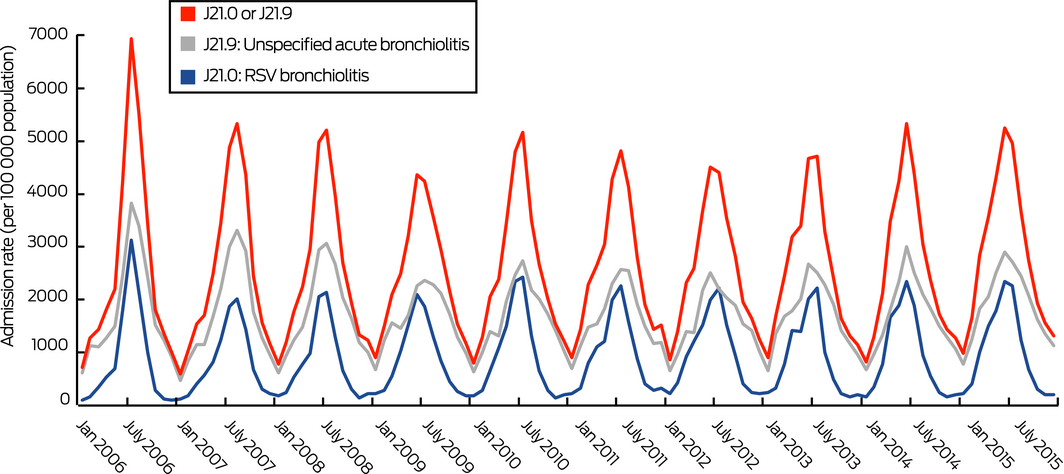
2) Australia and US have quite similar temperatures right now given that it’s often moderate in Autumn/Spring.
[0] Google Scholar search of “COVID-19 humidity”
UK deaths per million = 488
US 260 deaths per million
UK 499
France 404
Netherlands 322
Germany (Kudos!) 94.8
The US is not doing badly at all.
This is who we should be comparing ourselves too, not just choosing some random countries that are doing worse than us.
https://covid19.healthdata.org/united-states-of-america
Which means the US is on track to at minimum 500+ within the next few months making it the worst country in the world.
Because a large number of those cases are NYC, which is already on the downside of its curve by a considerable degree, while the US as a whole is still trending upward, meaning that the country outside of NYC is doing pretty poorly.
Sadly people can’t look past the big absolute number of deaths and attach proper context to it. Like deaths per million, or ignoring that ~half of cases and deaths are restricted to a single metropolitan area.
1) Individual behavior changed prior to the lockdowns (people don't want to die)
2) The government appears generally too incompetent to figure out how to lower R0 low enough to eradicate the virus
3) Since everyone can see that the govt is fucking this up, the marginal utility of hard lockdowns becomes less than the marginal pain. Some people will socialize, go to restaurants, etc. but...
4) It probably won't be more than a 50-75% return to normality because people don't want to die, and risk preferences vary so some will remain cautious. This will, crush small businesses, restaurants, bars, leisure, etc.
So since the govt is too incompetent to bring the virus to actual 0, then formal lockdowns don't matter because you're not getting rid of the virus anyway and raising them doesn't matter much either, because you're not going back to normal.
Point #1 was reinforced by looking at OpenTable data as well. de Blasio told people to go to restaurants, and on that same day he urged people to congregate in close quarters, reservations were down 34% year over year and had been trending down for 2 weeks.
People aren't stupid despite what the media reports, picking out groups of people to prove a point they want to push.
Furthermore, the lockdowns moved the Overton window for a lot of people, hammering it in their head that they need to practice social distancing. It's not likely going to get any stronger with government-mandated half-measure lockdowns continuing.
Like when you say the government is fucking things up, what are talking about here. Federal, state, city level? Because they each have approached the pandemic very differently and it’s unfair to put them all under the same umbrella. I’m pretty happy with the way my local government has responded. It hasn’t been perfect, but I also don’t expect them to deal with a once-in-a-century pandemic without hiccups.
I know at least here in the US it’s common to paint “the government” as incompetent, and overpaid. But when parts of the population are angrily protesting that they can’t get haircuts and flying to FL to party during spring break, it’s no wonder it hasn’t been easy to get this under control. I don’t envy the positions of some government officials.
And the way it is done just showd how the US is going bananas:
> Republicans who brought the lawsuit had asked the justices to side with them but to stay their ruling for about a week so legislators and Evers could work out a new plan to deal with the pandemic.
> The justices declined to do that and had their ruling take effect immediately. ...
> With no COVID-19 policies in place, bars, restaurants and concert halls are allowed to reopen — unless local officials implement their own restrictions. That raises the prospect of a patchwork of policies, with rules varying significantly from one county to the next.
Because without a lockdown order you (may) need to send them to school.
(depends on legality of homeschool in your jurisdiction, most of Europe forbids it, also depends on your ability to provide it)
Or a job/employer who requires physical presence. Hello, Elon!
There is no universe where that was ever going to happen absent herd immunity. It was never a declared goal by any major government and I doubt you could find a single quote from a qualified professional suggesting that is a realistic approach.
So the paramount need was to ensure that the health systems did not get overrun. We socially distance and stay at home until we're sure the health systems are in the clear, and then we return to some mixed approximation to 'normal,' with the understanding we'd probably have to return a few weeks at a time at some points in the future as case counts climbed again.
But at some point, almost every one I know has switched to believing that the real goal is eradication, that we need to be extremely socially distanced until case counts are near zero, or until a vaccine arrives. People now seem terrified at the thought of catching it, despite having no risk factors. What I don't understand is why this switch occurred. I think we have been seeing a lot of sensationalized headlines and statements from scientists taken out of context somewhat, but I don't think that in and of itself is enough to explain the switch.
Since about early March, we have known or strongly believed that the virus was mostly harmless to most people, with the extreme vast majority of serious cases occurring in people with high risks factors. So I have trouble understanding the extreme pushback against moderate reopening I am seeing out of a lot of people I know. People say "but we need to keep case counts low." Yes, I agree, but I don't know how in the world we get them to zero. Containment was broken. If we're going to be angry, let's be angry about the fact that nothing was done to attempt full containment until it was far too late, not the fact that places are ready to fulfill the statements they made in March.
We can't even count on a vaccine to ever come, because there are issues with some coronavirus vaccines. For instance, the vaccine for SARS become not recommended after research showed that, while it prevented future infections from SARS, it made infections from other coronaviruses more damaging. The last thing we want to do is rush a vaccine through human trials that ends up causing more harm than good, but that's what's going to happen if we believe we're all trapped in our houses until one comes.
Anyways, I'm just not sure where the switch happened. Why are so many people I know now frantically talking about how they need to stay home through September or later, after being told just a mere 2 months ago that the goal was curve-flattening? In most areas in the US, it seems the curve has been flattened. Where I live (a mid-sized city), the health system was never remotely close to being stressed. Yes, case counts will increase if you reopen a bit, but remember, 40%-70% of the pop is going to catch it at some point. Those people are going to catch it whether they catch it now, or six months from now.
If you can't tell from my comment, I think (as is usually the case) the right approach sits directly in between the "open now" and "keep everything shut down" camps. The virus is an extremely serious event, a terrible tragedy, and one that we need to ensure we keep from overwhelming hospitals. But where hospitals are not in any danger of being overwhelmed, I just don't know what good having everyone indefinitely locked at home is doing. Taking what seem to be unreasonably conservative stances now does not fix the bullshit actions by our governments 3 months ago; that ship is gone.
The incumbent candidate wants to reopen. Because the election is near, it's especially important for the other side to portray whatever he does as wrong and incompetent and life-threatening. So you then have a major political apparatus pushing the argument that reopening is dangerous and publicizing any instance of any authority saying anything negative about it. They don't benefit from a nuanced or moderate position.
Some of the people you hear pushing this are the partisans themselves, but most of them are just the people who only listen to the media from one side and then repeat what they're told. Meanwhile if you listen to the President the economy is doing great and everything is fine and we'll all be back to normal in a month or two.
The truth is, as always, complicated, and somewhere in the middle.
This same debate is happening in every country in the world, including ones that don't have an election in six months.
So, no, this is not just a bunch of political wankery that's aimed at making Orange Man look bad. It's a very clear consequence of what the two parties value.
They get CNN in more than 200 countries.
> It's a very clear consequence of what the two parties value.
So it's normal for the Democrats to be the conservative party banging the "save American lives at all costs" drum and the Republicans to be the ones worried about blue collar workers and people living paycheck to paycheck, is that it?
So the Democrats are usually the ones in favor of authoritarian War on Drugs measures to prevent domestic overdose deaths? Mandatory employee drug testing? Having the police arrest inconvenient/"unsanitary" protesters?
> the republicans have always prioritized businesses over public and worker safety
Walmart, Pfizer and Netflix are doing fine. The airlines are screwed, but that's already done, they can't go bankrupt twice at once and people aren't going to want to get on a plane for recreational purposes anytime soon even if we reopen.
It's workers who are suffering the most from continuing to not have a paycheck. If you look at what labor unions are saying, it's more along the lines of "here's how we think we should reopen" and not "we don't want to reopen" -- is it normal for Republicans and labor unions to be on the same page?
I even had a discussion with a couple of Germans on here the other day who were convinced their coronavirus testing was abysmal, despite them having one of the biggest programs out there and being the country that the US and UK media currently point to in order to convince us that our governments are failing on testing.
To make matters even more stupid, the US actually passed mass testing success story South Korea - the country which supposedly proves all those deaths could be avoided if you just had proper coronavirus testing - quite some time ago, and people didn't realize because the media carefully avoided updating people's beliefs since this changed. I keep seeing people point to the US supposedly having less per-capita testing than South Korea in HN comments as proof they should be able to do better, even now. Astoundingly, when Trump debunked this widespread, false belief in a recent press conference, this is how the New York Times summed it up in a headline "Trump Misrepresents Testing Record". (The "misrepresentation" was that even though what he said was true it wasn't true two months ago, and also the US hadn't beaten every single country on the planet on coronavirus testing. Seriously.)
Also, the sides certainly aren't the same in all countries when it comes to the legal legitimacy of lockdowns. For example, in the UK our right-wing party is currently in power, which means that arguments that their lockdown rules are illegitimate and exceed their powers mostly come from supporters of the other, left-wing party. The justifications for why they're exceeding their powers actually look similar in many ways to the ones in this lawsuit.
Not convinced you’ve even been following British politics then. The main criticism coming from Starmer is about late decision making and inaction. I haven’t heard anything about abuse of powers or a clamour to reopen from them.
- While most people have almost nothing to fear personally from this virus, the vast majority of people have close ones that do have a lot to fear from the virus
- We have all found out since March, and took to heart, that you may get the virus, feel well, pass it on to loved ones who are at risk, and only later start having ANY symptoms
- the time required until 40-70% of the population will catch this virus while never having so much people infected that hospitals are overwhelmed is YEARS - the popular flatten the curve article omitted this little piece of math
- and obviously, everyone was probably pretty moved by the scenes from Italy and Spain, which brought it much closer to home than similar scenes in China or Iran ever could
So overall, most people are understandably reluctant to go on vacations or visit too many restaurants and concerts, and this will likely continue for a good long time. It is going to be devastating to these industries, but it's going to help keep the curve flat, and I'm sure that we'll see plenty stimulus packages in the months to come. Keeping things forcefully shut down is not going to help in places that are in good shape. However, the alternative must still be social distancing and careful screening and perhaps even enforced quarantine for people coming from hotspots, whether internal or international.
The way that these countries have been able to get R<1 is a combination of social distancing, hygiene (masks), and test-trace-isolate system. So that's the endgame now. The shelter-in-place orders gets R<1, then we keep it at <1 by getting everyone to wear masks, and by getting a tracing system in place so that anyone who comes in contact with an infected person can quickly get tested and self-isolate.
That at least is my understanding, and it's been largely informed by this webpage, which I found incredibly helpful. https://ncase.me/covid-19/
At least in my country, there's already been a lot of complaints about repeated changes to advice and rules.
I'm pretty sure the government's science advisers would ideally like to do a gradual, multi-stage re-opening with the option to roll things back if they need to. You know, reopen some schools next month with teachers under the age of 45, if death rates rise shut them down again, otherwise reopen more the month after, and so on.
The fear is that message is too complicated, and people who are told "here is a schedule for reopenings on a trial basis and subject to change" will hear "lockdown is over, I can finally visit my friends and loved ones" - and we'll get a second peak even worse than the first.
Tribalism and politics. Edit: This comment was downvoted, which just proves my point.
The bad orange man said open up, and the responsible looking people who are good at looking serious as they stare into cameras and repeat information that they have no expertise in decided that they had to oppose him to be a voice for their viewers who didn't vote for him. (That is literally what CNN and MSNBC producers tell their on air anchors)
You, like me, will find that whenever you ask this question you will immediately be condemned as a follower of the bad orange man who cares about money more than human life.
Never mind that you didn't vote for the orange man, or that you supported the lock down to flatten the curve. You are questioning the tribe's decision. And boy do the tribal elders know how to scold.
Remember, if you don't toe the line, you are a bad person who sacrifices the poor workers to the volcano God.
Not that the tribe asked the workers what they want or need. The tribe all sit at desks for a living, and don't actually know any of the workers. But they are supremely confident that they speak for them.
Am example of the tribe at work:
I'm getting a haircut today. My governor is a Democrat. He has responsibly reopened certain kinds of businesses. Not much different than Georgia's governor. But nobody in the media talks about my state, because the narrative they have pushed is GOP are reopening, and Dems aren't. As if this is a partisan issue. It's not. It's a class issue.
That plan includes massive testing and tracing. It includes science and data. It includes sensible triggers for further action -- if we start seeing more infections in the community we slow down the transition to normality.
I don't know much about the US but it feels like a lot of this is really hard to do.
Add to that the story driven way we get out version of the truth and there is now an irresistible pressure on the politicians in charge to do something and to claim that something was effective the data be damned, and that real science is never 100% sure and tend to take years if not decade to come to any kind of conclusion.
If you have view dead turned on in your privilege you’ll see dead comments.
Also, if a comment is too grey for you to read, clicking the time stamp will ship it in regular black text.
I occasionally vouch for dead comments if they seem reasonable to me, and on occasion that has immediately un-dead them.
However I don't remember a comment that died that wasn't a crapfest.
Everybody gets downvoted sometimes, most of the times I was downvoted it was either because I failed to convey my thoughts correctly (well, sometimes I don't have the time or will to go into detail) or just ended up ranting. Opinionated comments (but worded ok) sometimes gets downvoted and that is fine.
Ever since the pandemic started to ramp up, downvotes and hidden comments did as well. I'll see more greyed out comments in a single thread these days than I used to see all day just a year or two ago. Even I've gotten into a bad habit of using it, and I'm trying to avoid it.
If a person posts something intentionally inflammatory or clearly just wants to pick a fight, the flag button works just fine.
Presumably because the anti-speech contingent is all too quick to downvote their opponents (consistent with their deleterious pro-censorship views), but then everyone who believes in speech sees every comment defending it greyed out, which makes them angry that their anti-censorship views are not being respected and unwilling to let the other side have an asymmetric weapon even if it goes against their principles, and the next thing you know every comment in the thread is grey.
And that's the danger of censorship. Nobody is going to let the other side do it but not them, but then everybody does it and and then what are you left with?
I come here primarily to read discussion and to provide my unfiltered critical thought....but what I'm seeing recently is petty downvoting with little discussion or replies.
The downvote system has its disadvantages to be sure, but HN would be far, far worse off without it. Anyone who thinks otherwise is underestimating the need for anti-dreck measures on the internet.
The key word in what you wrote is 'seeing'. You notice the cases you dislike, but the other ones in some sense go unseen: https://hn.algolia.com/?dateRange=all&page=0&prefix=true&que.... In other words you count the cost of the system but not its benefits. I don't mean you personally! we all do this. It's a cognitive bias that strongly (I mean extremely strongly) affects people's perceptions of HN.
In reality, the ability of this site to support your intention ("I come here primarily to read discussion and to provide my unfiltered critical thought") depends utterly on the downvotes, just as the body depends on its white blood cells.
Also, definitely agree that HN would be worse off without downvotes. I just think the system badly needs improvement. Below is a previous related comment of mine:
I think "downvoting for disagreement" generally works on discussion related to non-sensitive topics, but starts to break down once discussion enters the political realm. It turns into a numbers game. Since the dev community tends to lean to the left, the "downvote" numbers are skewed in that direction. It leads to non-left users getting frustrated and possibly no longer visiting the site (including myself), creating an echo chamber and eroding the overall quality of HN.
Why not set a max of 3 downvotes a day? Or subtract 5 karma points IF you don't include a reply with your downvote? There's gotta be a way to improve this.
[1] - https://news.ycombinator.com/item?id=23223555#23225685
I think downvoting unhealthy positions doesn't necessarily cause an echo chamber. Is it really necessary to address every irrational, stupid, inciting, ... posting? Is really every opinion worth being respected? I don't find the op offensive but it's been repeated here many times over - does each copy need a rebuttal or response?
Everyone is entitled to their opinion but I don't believe in the mantra that everyone's opinion matters equally.
This isn’t the rule of law. It’s a cop out.
The problem is leaders had insufficient authorised powers. The solution to that isn’t to ignore the law. It’s to change it. Have the debate about who can activate quarantine under what grounds and in which circumstances, pass the bill and enumerate those powers.
Playing devil’s advocate, the precedent of a single leader having the power to place millions under effective house arrest with limited checks or balances is ripe for abuse.
How’s that working out for terrorism via the PATRIOT Act? People are rightly suspicious of granting sweeping powers to the government in “special circumstances.” There’s ALWAYS the threat of a pandemic, it’s not stretch to assume these “emergency powers” become activated indefinitely, sorta like how these lockdowns are continuing indefinitely.
>The people don't obey the "orders" nor follow advice. Then they wrap themselves in the flag and actively work against the measures in the name of freedom.
I'm strongly against big government, disagree with most R's and D's, will gladly wrap myself in the flag and I'm still quarantining for the most part. Just because you support freedom doesn't mean you're ignorant to this pandemic or methods to reduce spread. It just means you're protective of your rights because government has a very long history of using these kind of opportunities to infringe on them.
The other countries you speak about have already lost their rights, or never had them to begin with.
>Some rights we have voluntarily abrogated in order to meet what we believe to be more important responsibilities
This would be handled by our 10th amendment rights.
So I'm looking for a source of what rights Brits have and it's sort of difficult to understand... This [0] outlines several dates of ratification but I'm not really sure which currently apply. I figure at least these [1] apply but maybe you can give me better information. After looking at some of these articles of rights, I'm not overly impressed, most of these "rights" have asterisks on them. Not to mention how often these say "necessary in a democratic society" when talking about the restrictions, as if they know you're not going to be convinced when reading it.
> Article 10: 1. Everyone has the right to freedom of expression. This right shall include freedom to hold opinions and to receive and impart information and ideas without interference by public authority and regardless of frontiers.
> 2. The exercise of these freedoms, since it carries with it duties and responsibilities, may be subject to such formalities, conditions, restrictions or penalties as are prescribed by law and are necessary in a democratic society, in the interests of national security, territorial integrity or public safety, for the prevention of disorder or crime, for the protection of health or morals, for the protection of the reputation or rights of others, for preventing the disclosure of information received in confidence, or for maintaining the authority and impartiality of the judiciary.
Notice how the conditions are vague, ambiguous and longer than the right itself? That's going to be a big fat no from me, bob.
An interesting difference with the American Bill of Rights is that it's largely full of implied rights, as it doesn't expressly grant rights to people, rather it's written in the form of "government cannot do xyz".
> Amendment 1: Congress shall make no law respecting an establishment of religion, or prohibiting the free exercise thereof; or abridging the freedom of speech, or of the press; or the right of the people peaceably to assemble, and to petition the Government for a redress of grievances.
The end. No asterisks, no vague conditions, no ambiguity.
[0] https://www.equalityhumanrights.com/en/what-are-human-rights... [1] https://www.legislation.gov.uk/ukpga/1998/42/contents
As I pointed out in my post, we are a democracy. Off the top of my head, I'm not familiar with any forms of government that require unanimity. Do you really think that's a necessary requirement?
>So I'm looking for a source of what rights Brits have and it's sort of difficult to understand...
Rich coming from someone in a country that has blatant civil forfeiture, practices extraordinary rendition, still has the death sentence, has courts which have ruled that "Innocence is not sufficient grounds for appeal", that has appalling systematic gerrymandering disenfranchising millions of citizens at the heart of the electoral process, in which monstrous levels of vote buying are routine, oh good grief I could go on and on.
Theory is great, but practical results matter. In theory a written constitution sounds great, but I'm really not impressed at all with how it seems to work out in practice. Don't take this too closely, I love the USA and have visited many times, youre is a safe, prosperous and largely free country I admire very much, but the problems you do have are so deeply ingrained into the culture and society and frozen in place by partisan interpretations of technical language that I do despair sometimes. In practical terms I genuinely feel vastly more confident in my liberty, safety and freedom over here than in the US.
True that! Thankfully our Supreme Court frequently sides with the people and their rights against the government.
You wanna know something that I think a lot of people don't really understand about America........ we're a really young country. One of the youngest. And one of the best! We haven't had much time to settle into our new diggs, ever since we fought your terrible government- and won. Our country is still settling while many other first-world countries, such as Britain, have been settled for centuries. You may not understand this but our government isn't federal top-down. The organization isn't Feds > State > Local > People. That's not how rights work in America (see A10.)
>In practical terms I genuinely feel vastly more confident in my liberty, safety and freedom over here than in the US.
I get the feeling you don't excersize contentious liberties. In which case, you're not the right person to ask if they feel confident in their liberty.
If you have only "the rights we want" then your rights are subject to the whims of the majority.
In America our tradition of civil liberties protected the Illinois Nazis' freedom of speech as they marched through Skokie, celebrating the enemies of America who, within living memory, had waged war and killed millions of our citizens. The exercise meant as an affront to our nation and everything it values. We celebrated it, because if our worst enemies can have rights we don't like, then everyone can have rights.
In the UK, you can't even tolerate Dankula, and people think it's wonderful and good that he was fined for the nazi pug incident, and no one has really has rights unless they're popular. You'd think incidents like that would wave a few red flags, given that your nations' checkered moral history includes multi-century exercises in the deliberate oppression of your religious enemies.
But in that respect, at least, our law is working as intended, the founding fathers' forethought centuries ago still supplying a recourse in the courts when the politically weak are oppressed by the powerful. In the UK, the courts are an official apparatus of the powerful's oppression, and the consensus is that this is how it should be.
He went to court and he could have tried a freedom of speech defence but he chose not to.
New Zealand is widely regarded as the most free country, and they also don’t have coronavirus.
Let's start at the bottom then:
>> The other countries you speak about have already lost their rights, or never had them to begin with.
>and New Zealand is a tiny island, very easy to control
What you're saying here is basically: "even if you back it up with source material, I'm going to claim the US is more diverse/different so it doesn't really apply."
In other words, it's US exceptionalism both ways around, that is, circular reasoning. Why should anyone bother to try and have a good faith argument here?
I've assumed good intent with my reply and included size examples of Australia and Canada referring to my linked paper, so I suppose we will find out.
I'm not saying the USA isn't generally a free place (it obviously is and has many good parts), but comparatively it's not the most free.
Also to reply directly to your point about size, Australia and Canada are both higher in the paper I provided, which are (equal sized / slightly smaller) but more sparse, so I don't think size is the issue.
[1] https://www.cato.org/sites/cato.org/files/human-freedom-inde...
Freedom House has the US at 86, most of Western Europe in the high 90s.
https://freedomhouse.org/explore-the-map?type=fiw&year=2020
While I am not going to say the US is an undemocratic hellhole, after all a score of 86 is respectable, saying that countries that score significantly higher "lost their rights" is unlikely to be correct.
A pointed example of this is the criminal justice system, where people in the US have the right to stay silent, talk to a lawyer, etc, but still get screwed sideways with profoundly unjust outcomes due to plea bargaining, mandatory minimums, etc.
If I understand correctly, the winning side asked for a delay (in a different form than you're thinking). They wanted the case decided, ruled on, with the ruling to take effect a week after the decision, so that the governor and the legislature would have time to work something out. That is, they wanted the governor to have to follow the proper procedures to continue the stay-at-home order, and wanted the court to give time for that to happen, because they didn't actually oppose the stay-at-home order, just the way it was done.
The court didn't do that. It revoked the stay-at-home order, starting right now, not a week from now. That's something neither side asked for. That's either the court following its own agenda, or the court being stupid. I'm not sure which.
In the U.S. executive orders simply don't and can't have the force of law without the support of statutory law, not relative to civilians[0]. If you want a law, it needs to be passed as a statute by the appropriate legislature and must become law via all the usual mechanisms.
It's not that hard to pass emergency laws with sunsets in the very near future. So even if a given State's legislature is skeptical of covid-19's severity, they might nonetheless be amenable to a brief grant of emergency powers and see what happens.
Governors or the President acting alone to impose emergency statute-like law? That's not well received in the U.S., whether by people or courts, and there are very strong precedents in this regard[0].
That has nothing to do with corruption or taxes, and everything to do with long-established, well-thought-out, constitutional law. Yes, we're talking about constitutional law based on past skepticism of government, but that does not imply current skepticism (though it's true there's plenty of it). Also, the U.S. Constitution's requirement that State governments be (small-r) republican almost certainly extends the constraints on the President's EO power to the States' Governors. (Though, admittedly, the Supreme Court has ruled the Republican Government Guarantee clause non-justiciable, that was during the 19th century in a case that was clearly for Congress to decide, and the Court erred in saying that the clause was simply non-justiciable as opposed to certain cases not being justiciable. In a case about the validity and enforcability of gubernatorial EOs, the Court might well rule that the clause does mean that Governors cannot impose emergency rules without statutory support. Certainly that seems like a reasonable interpretation.)
> ... the people will never respect those in charge. ...
This was a decision by a court, not a question of whether the people support their governments. This state high court decision tells you practically nothing about how the people of Wisconsin feel about the measures that the Court struck down.
[0] E.g., the Truman era steel cases: https://en.wikipedia.org/wiki/Youngstown_Sheet_%26_Tube_Co._... https://www.casebriefs.com/blog/law/constitutional-law/const...
Not true, no laws were struck down. They simply overturned Emergency Order 28. DHS can even reissue the order, they just need to submit it to the appropriate legislative committee for approval.
At the heart of the lawsuit was a state law governing communicable diseases that says the Department of Health Services "may close schools and forbid public gatherings in schools, churches, and other places to control outbreaks and epidemics," and gives it the power to "authorize and implement all emergency measures necessary to control communicable diseases."
But the majority found Palm also had to follow another state law that requires regulations to be submitted to a legislative committee that can block them.
[1] https://docs.legis.wisconsin.gov/statutes/statutes/252/02
We can debate whether the Court was right, but not whether its position is a reasonable one. Clearly, deciding that statutory rulemaking procedures apply is a reasonable position. Clearly, also, deciding that they don't apply might well also be reasonable.
| We conclude that Emergency Order 28 is a rule under the controlling precedent of this court, Citizens for Sensible Zoning, Inc. v. DNR, 90 Wis.2d 804, 280 N.W.2d 702 (1979), and therefore is subject to statutory emergency rulemaking procedures established by the Legislature. Emergency Order 28 is a general order of general application within the meaning of Wis. Stat. §227.01(13), which defines "Rule." Accordingly, the rulemaking procedures of Wis. Stat. §227.24 were required to be followed during the promulgation of Order 28.
252.02 plainly says that DHS can issue orders or rules "The department may promulgate and enforce rules or issue orders". The court said they can only use rules. They made that up.
The court also said that while there is authorization under other statutes to take "all emergency measures necessary to control communicable diseases," insofar as these statues are used in this way, they violate the state constitution, because this is a fundamentally legislative power given to one (unelected) member of the executive branch. That is not Constitutional in Wisconsin, and the justices write, "In issuing her order, she arrogated unto herself the power to make the law and the power to execute it, excluding the people from the lawmaking process altogether."
A concurrence went on to quote _Ex parte Milligan_, an 1866 case in which civilians were being tried by military tribunals, ostensibly due to the exigencies of the US Civil War, about why this matters: "No doctrine, involving more pernicious consequences, was ever invented by the wit of man than that any of [the Constitution's] provisions can be suspended during any of the great exigencies of government. Such a doctrine leads directly to anarchy or despotism..."
- 227.01 and 227.24:
> We conclude that Emergency Order 28 is a rule under the controlling precedent of this court, Citizens for Sensible Zoning, Inc. v. DNR, 90 Wis.2d 804, 280 N.W.2d 702 (1979), and therefore is subject to statutory emergency rulemaking procedures established by the Legislature. Emergency Order 28 is a general order of general application within the meaning of Wis. Stat. §227.01(13), which defines "Rule." Accordingly, the rulemaking procedures of Wis. Stat. §227.24 were required to be followed during the promulgation of Order 28.
- 252.25:
> Furthermore, Wis. Stat. §252.25 required that Emergency Order 28be promulgated using the procedures established by the Legislature for rulemaking if criminal penalties were to follow,as we explain fully below. Because Palm did not follow the law in creating Order 28, there can be no criminal penalties for violations of her order. The procedural requirements of Wis. Stat. ch. 227 must be followed because they safeguard all people.
I.e., Emergency Order 28 is not even necessarily overturned, rather, "there can be no criminal penalties" for violating it. Moreover, rulemaking procedures of chapter 227 can still be engaged and Emergency Order 28 (or a new order) can still come into full force if those procedures are followed.
You are either being ignorant / insufficiently careful (did not read the opinion, did not parse it, did not understand it, did not educate yourself -- one of those) or else you are displaying the "extreme partisanship" that you accuse the Court of. Court opinions that we disagree with, unless they are repugnant like Plessy vs Ferguson, are deserving of a minimum of respect, and even when they are repugnant to you, they may nonetheless be the law of the land for some time, so a more constructive take is to see how to work around a decision you disagree with. In this case the Court not only does not preclude your preferred outcome, but shows you how to get it: follow 227.24 in the process of promulgating the emergency order.
[0] https://www.wicourts.gov/sc/opinion/DisplayDocument.pdf?cont...
extremely partisan Wisconsin court has now struck down that law in a blatant act of judicial activism
By the way, Supreme Court justices here in Wisconsin are elected on statewide ballots, not nominated for life like Federal judges. Your basis for calling them "extremely partisan" is, what, exactly?
> We conclude that Emergency Order 28 is a rule under the controlling precedent of this court, Citizens for Sensible Zoning, Inc. v. DNR, 90 Wis.2d 804, 280 N.W.2d 702 (1979), and therefore is subject to statutory emergency rulemaking procedures established by the Legislature. Emergency Order 28 is a general order of general application within the meaning of Wis. Stat. §227.01(13), which defines "Rule." Accordingly, the rulemaking procedures of Wis. Stat. §227.24 were required to be followed during the promulgation of Order 28.
Check out the summary [0] elsewhere in these comments (not mine, but I found it helpful).
> Palm responded that Emergency Order 28 is not a rule. Rather, it is an Order, fully authorized by the powers the Legislature assigned to DHS under Wis. Stat. §252.02.
So the Executive asserted that Emergency Order 28 is not a rule.
> We conclude that Emergency Order 28 is a rule under the controlling precedent of this court, Citizens for Sensible Zoning, Inc. v. DNR, 90 Wis.2d 804, 280 N.W.2d 702 (1979), and therefore is subject to statutory emergency rulemaking procedures established by theLegislature. Emergency Order 28 is a general order of general application within the meaning of Wis. Stat. §227.01(13), which defines "Rule."Accordingly, the rulemaking procedures of Wis. Stat. §227.24 were required to be followed during the promulgation of Order 28.
I.e., 252.02 is not the whole story.
> In the U.S. executive orders simply don't and can't have the force of law without the support of statutory law, not relative to civilians[0]. If you want a law, it needs to be passed as a statute by the appropriate legislature and must become law via all the usual mechanisms.
This isn't true for many reasons including: the federal government controls a lot of what happens in the country indirectly and executive orders can decide what the law means (even if that meaning goes against what the law intended). Executive orders can for example suspend immigration. That absolutely affects civilians in an extremely practical way. More fundamentally, this kind of statement totally ignores how the legal system in the US works practically. Yes, there are laws, but laws are vague and must be interpreted. The federal government makes rules that interpret laws. These rules are what the law "is" practically. There is wide disagreement about what rules a particular law allows or doesn't allow. Executive orders can and do change these rules.
> That has nothing to do with corruption or taxes, and everything to do with long-established, well-thought-out, constitutional law. Yes, we're talking about constitutional law based on past skepticism of government
This is completely and utterly false! You shouldn't say these things without reading the opinion. Neither side made this argument at all and the court narrowly ruled that the rulemaking process had not been followed correctly.
> Also, the U.S. Constitution's requirement that State governments be (small-r) republican
There is no such requirement. This was also not about federal constitutional law, it was about the constitution of Wisconsin.
> extends the constraints on the President's EO power to the States' Governors.
Absolutely not. Each state has its own constitution, the federal constitution says no such thing at all. Also this case was not about an executive order!
> the Court might well rule that the clause does mean that Governors cannot impose emergency rules without statutory support
Again, please read the opinion before you say such things. The main argument was that some details of the law had not been followed.
> This was a decision by a court, not a question of whether the people support their governments
Only in the narrowest sense. It was a decision by a party, not a court. Republicans put their judges in power and the Republican judges made a decision. In that sense the US is absolutely unlike any other democracy in the world.
executive orders can decide what the law means
>>Also, the U.S. Constitution's requirement that State governments be (small-r) republican
There is no such requirement
"The United States shall guarantee to every State in this Union a Republican Form of Government, ..."
> "The United States shall guarantee to every State in this Union a Republican Form of Government, ..."
Perhaps it’s my imperfect understanding of English here, but to me this reads more like a guarantee to the states that the federal government itself will take the form of a republican government, not that the states themselves must be republics.
It’s like a shopkeeper saying “My store shall guarantee to every shopper prices that are no higher than that of a competitor’s.” The guarantee is on the shopkeeper’s part; no obligation is required of the shoppers themselves.
| The United States shall guarantee to every State in this Union a Republican Form of Government, and shall protect each of them against Invasion; ...
That makes it pretty clear that this is about the States.
The Republican Guarantee is a commitment of the Federal Government to the States about the States. It means that the Federal Government will tolerate no State monarchies.
> The Republican Guarantee is a commitment of the Federal Government to the States about the States.
I'm not quite sure where the "about the states" part came from. To me, Article IV just reads like a set of promises the federal government must make to the states.
What?! How do you see that? The ", and" below is a conjunction, it's joining one commitment and another into a list of commitments made to the States:
| The United States shall guarantee to every State in this Union a Republican Form of Government, and shall protect each of them against Invasion; ...
That clearly does not predicate one commitment upon the other. It's just a list of commitments.
The key word in my comment is "additional", which was intended to indicate that I was replying to "and shall protect each of them against Invasion".
I have to admit it's also partially my fault since I didn't notice at the time that you are not the same person who made the original comment I replied to, so I left out some context.
Otherwise I agree that it is just a list of commitments.
I doubt many in Wisconsin are interested in the constitutional subtleties, just as they're not interested in how the "spontaneous" activism and protests have been coordinated by astroturfing.
The bottom line is that this will be marketed as a blow for individual freedom against oppressive government interference, and that marketing frame will be an expedient and manipulative PR position which will result in many avoidable deaths.
Worse, it will also do very little to keep the economy running, because the real economic problems are going to happen upstream, and states have virtually no influence over what happens there. (Which on its own should be enough to expose the lie that "individual freedom" as a magic fetish against economic catastrophe is even a possibility in this situation.)
> This isn't true for many reasons including: the federal government controls a lot of what happens in the country indirectly and executive orders can decide what the law means (even if that meaning goes against what the law intended). Executive orders can for example suspend immigration. That absolutely affects civilians in an extremely practical way. More fundamentally, this kind of statement totally ignores how the legal system in the US works practically. Yes, there are laws, but laws are vague and must be interpreted. The federal government makes rules that interpret laws. These rules are what the law "is" practically. There is wide disagreement about what rules a particular law allows or doesn't allow. Executive orders can and do change these rules.
The President most definitely cannot promulgate Executive Orders that have the force of law without supporting statutory law from Congress. There is no argument about this in U.S. constitutional jurisprudence.
Presidential power is highest in military and foreign policy, and at its lowest in domestic policy. Immigration falls into foreign policy. Also, there's two plus centuries of statutes that delegate some Congressional powers to the Executive, such as tariff powers.
> > Also, the U.S. Constitution's requirement that State governments be (small-r) republican
> There is no such requirement. This was also not about federal constitutional law, it was about the constitution of Wisconsin.
This was addressed by other commenters.
> > This was a decision by a court, not a question of whether the people support their governments
> Only in the narrowest sense. It was a decision by a party, not a court. Republicans put their judges in power and the Republican judges made a decision. In that sense the US is absolutely unlike any other democracy in the world.
That is an outrageous take. The justices in question are elected, not nominated. (IIRC there's a nomination-then-election system in Wisconsin.)
The U.S. is a republic, which means it has stringent procedural rules. Some aspects of American governance are very democratic, some are less, and some are practically not -- that's how it was setup in 1787-1789, and all of that has remained essentially unchanged since then. None of this is new.
Republicans put their judges in power
Excellent comment, just one thing bothered me: even more insipid then the above is the "all politicians are crooks" cynicism.
"Anyway you look at it you lose..." Yes, even Mssr. Simon....
Postponing this ruling until years down the line would render it meaningless. It's a distinctly unamerican stance you're espousing, as our system of checks and balances is central to our governance and our way of life.
Wait, in France and Belgium, the police is coming after your during lockdown. Think: road checkups, city patrols, etc. Fines are being sent left and right and people ended up in jail for breaking the lockdown too many times.
We also see various politicians to take up opposite positions regarding restrictions. Mainly between two state prime ministers, Söder in Bavaria and Laschet in NRW. The former pushed restrictions hard early on, the latter alsways took the approach. Both want to become chancellor during the next elecetions. Söder profited in popularity from his restrictions, he changed course, to a degree, as soon as public opinion started to "shift". At least the loud part of public opinion.
Similarities between the US and Germany, I see are
a) federalism, making central ction more difficult
b) upcoming election making Covid-19 as much a political question as it is a medical and economic one
c) multiple, opposing politians (Germany, even from the same party) or parties (US), aggravating point b)
As much as I hope that we can lift restrictions, I have the feeling that we might regret it. Hope I'm wrong.
For example in Romania, where the number of cases and deaths per million is low, there is no right; by Constitutional text there is a freedom of speech that cannot be infringed, but in practice we have laws that infringe it and they were not considered non-compliant with the Constitution. For example, anyone saying there was no Holocaust will go to prison, even if that is an opinion protected by the free speech article.
All other articles have a formulation "in the limit of the law", that means any law can limit any right. At the same time, one of the first measures of the Government when the lockdown was instituted was to announce the European Court for Human Rights that Romania is suspending human rights. Plain and simple, we have no rights, stuff that can be changed, suspended or taken are not rights, but privileges. Including the right to live, patients with chronically diseases were restricted to get medical care during the lockdown.
Therefore comparing USA with the rest of the "Western world" (Europe and eventually Australia, it is not about geography but culture) needs to take in consideration the situation of fundamental rights in the legislation: USA has fundamental rights, nobody else does.
In fact, blame the governor as well for not acting within the clear boundaries of their power. By trying to cloak themselves in authority they know is not legitimately theirs, they are actively contributing to the problem. The one party blameless in this is the courts.
Also interesting how you lament the divide, and then go ahead and only blame one side for everything. Oh well.
The ends do not justify the means in this country. UCLA law professor Eugene Volokh’s highlighting of the decisiom is helpful: https://reason.com/2020/05/13/wisconsin-supreme-court-strike...
As for the court just ignoring the matter as an exercise of discretion that too would have been an abuse. The ends do not justify the means. We won’t last under that innovation.
This is certainly the facade presented by the international media, but it’s absolutely not true. I have family in some of the more media-celebrated countries, and their citizenry is absolutely not united in the way you’re presenting. Some of them have had their lockdowns legally challenged, legal analysis has absolutely not been favourable in regards to the legality, and attempting to pass zero-scrutiny emergency legislation is a pretty common theme. They’ve also prosecuted between hundreds and thousands of people for movement violations in most jurisdictions.
I remember browsing the international section of a certain large media organisation recently, they had one article ruthlessly condemning the measures implemented by the president of Poland, right next to one singing high praise of the measures implemented by the prime minister of New Zealand. I looked into the details, and the measures implemented were almost exactly the same, the only difference I could find is that police in Poland seem to generally be armed, while police in New Zealand seem to generally not be. I absolutely would not suggest anybody rely on the general tone of the reporting as some sort of gauge for how people are feeling/behaving in any particular place.
But what about the US? If all government is corrupt, if all taxes are sin, if all leaders on the other side are traitors to the cause, the people will never respect those in charge. The people don't obey the "orders" nor follow advice. Then they wrap themselves in the flag and actively work against the measures in the name of freedom. That cultural chicken has now come home to roost.
This state supreme court could have delayed. Cases take years to get to state supreme courts. They could easily have pushed this case until after this disease has come and gone. Instead they pushed this through in order to get a quick victory over a governor with whom they disagree politically.