Plus remote you can not play the butts-in-seats game, get non-work related life things done at your leisure, wear whatever clothes you like, shit in your own bathroom, don't have to worry about anyone tapping you on the shoulder, eat what you want when you want, the list goes on. Theses are just the immediate things that come to mind.
I found remote team code reviews to be much more objective. That way most people aren't worried they'll shame someone in person and they give better and more useful feedback.
The energy you speak of, while very real, is not related to the quality of the work that will follow.
But design is a different beast. Collaborative design of complex systems has a few stages. There's a rapid prototyping stage where 3 people in a room bouncing ideas off of each other and scribbling is better than anything else I've done. Then you circle back with a document that formalizes things (like an RFC). The second part can be done with a distributed group. But the first part is better when people are close to each other. You see this even in distributed groups like OSS projects. They have conferences and work sprints where the maintainers can be colocated for a bit and brainstorm about things in person.
I too collaborate with colleagues in different time zones but design and tons of brain-storming is not the main focus of our work. When we need to do that, we do long video calls with shared diagrams -- or we just scribble with the mouse. Works quite alright 99% of the time.
I agree that the rapid initial stages of a project are best done in person but failing that, there are replacements, and they are not as bad as many in this mega-thread claim.
And that's just one reason to disfavor a remote-only environment.
What other reasons do you see to disfavor a remote-only environment?
In my experience, this need arises very frequently in complex systems with evolving requirements.
Our company offered us to sometimes reconvene physically and discuss such things but since our team are all family men, it hasn't happened yet. But it is a really good idea and we should reconsider actually doing it sometime.
This is an excellent argument for annual all-hands retreats for distributed companies.
The whole idea of agile is to design iteratively and reactively, but you're throwing that away.
Honestly, you can collaborate and do almost everything remotely. What does lose a bit is team building, you have to go a bit out of your way to build rapport (but it´s also doable).
Its still, at least to me, markedly less productive, than an in-person meeting.
Like I said, conferences, summits, etc. These are done for a reason. Not to mention that there's some research I've seen that suggests that places like Bell were so successful because they cultivated happenstance interactions between smart people that don't happen in distributed environments.
My current belief is that a 95% remote team works, you do need in-person opportunities, the more the better, but at least once in a project can be enough.
IME the only people who actually like open plan offices are managers, extroverts, and flakes, most of whom irritate non-managers, introverts, and non-flakes.
2. Your tone is super condescending, regarding the extrovert - introvert bit.
VR will change that at some point. Even in today's infancy, there are some VR apps that give you that sense of presence with all the other tools needed and then some (whiteboards, screen-sharing, projecting your desktop on a huge screen, etc...)
But also if you have that, the advantage of sitting next to each other instead of just in the same building is also less pronounced. It's also easier to train your replacement, and some people are terrified of that.
You can learn a lot about the problems or architectural issues with your system by participating in conversations, and that supports the bullpen organization of offices. But you learn a ton more by participating in private or one-on-one conversations. In public only the brash get to talk. In private people will share their real fears as long as you don't belittle them for it. And those fears may reveal existential crises that are brewing in the system that nobody talks about.
It's much easier to have a private conversation with a remote person than it is to have a private conversation in a bull pen.
In a remote environment the tendency is for communication to be more formalized and structured. "Hey, are you available for a call. I just want to go cover X, Y and Z, then I'll let you get back to work." Often time half-baked ideas end up getting polished into important innovations. Without some sort of channel for informal, impromptu discussions a lot of ideas get overlooked.
So what I really wish for is increased flexibility.
That's not to say it's not useful. It's better than email, leaves a neat record to come back to and supports asynchronous communication. There are advantages. But strictly speaking, no, you cannot capture everything good and useful about in-person conversation using text and video. I don't think it should be controversial that much of the richness of in-person conversation - tone, nuance, body language, facial expression, spontaneity, speed - can't be meaningfully replicated through remote mediums. You can't get all of these things from a message or video chat. You can get some of them well, and a few others decently, but it isn't the same.
I like remote work a lot and wish more companies would support it. That being said, in my experience when people give honest, cogent criticisms of remote work they mostly receive responses which don't speak to the spirit of their point. In this comment thread, for example, the person you responded to is talking about difficulties. You are responding as if the person was talking about impossibilities. It is (emphatically) not impossible to function as a remote team, and very few people will try to make that case. But in the world we live in and with the technology we currently have, there are things about in-person discussion you will not be able to capture on a remote team.
If nothing else people have different values. Some developers enjoy being highly social when they're working, others don't. Some don't mind interruptions, others do. Many people feel a sense of comfort and empowerment by using Slack or Zoom which makes it easier for them to have productive discussion, for a variety of reasons. Likewise many developers do not get any of the same enjoyment out of a Slack or Zoom conversation that they do from face to face communication.
I often wonder how many problems used to be resolved because people worked together in the same location vs now it feels like the 10 things I interact with in a week are broken or require finding a work-around. Many of the chats are "how do you get around this?"
Human conversations are fine, but you generally don't get a durable record of them after the fact, and only those present will have a chance to participate.
I have a feeling that we don't have more work-from-home-first jobs because (middle-)managers wouldn't know how to deal with that. They are not quite there for such change.
And I'm talking about the "simplest" things. Like properly defining a task. Tracking it. Signaling when it's complete. Managing risks, changes. Communication. And so on. To have as most as people at an arms reach is just too convenient to workaround any shortcomings on the managerial side.
If in the general case, i.e., working at offices, all together, we're nowhere near[1] excelling on those "simple" management stuff, things would collapse in a work-from-home situation pretty easy.
I also don't see, in general, (middle-)managers changing their stance in favor of working from home either. Don't see them getting ready for such change. Prepping to work with virtual teams in any future and such.
Perhaps, those who believe are ready for such change could (myself included), somehow[2], show theirs capability. Slowly pushing the changes bottom-up by improving his/her own communication skills, reporting, risk and change management, displaying availability, to such an extent that the concerns of those (middle-)managers are barely noticeable or reasonable?
If we could show that we can organize ourselves and coordinate our efforts towards a goal, effectively, while working remotely, those concerns about remote work could start to fade.
I believe the point I'm trying to make is that we could show better that remote work works! We could be better sellers of this paradigm. Show how we can actually help those worried (middle-)managers. Like safely climbing a ladder, one step at a time :-)
Would be this a good opportunity to create a work-from-home manifesto, in the same way we have an Agile manifesto? I don't know. But that would be something interesting to collaborate on for sure. I might put some thoughts on paper about this subject for starters.
PS: I was an IT project manager for many years, working both on-site and remotely. Now I'm a software developer working on-premises for a big company in my country not friend to the idea of remote working at all; so I could contribute my experiences and views on this subject from both ends, I believe.
PS2: non-native English writer here. So if you find something that needs clarification or correction, please let me know, I'd be grateful to accommodate those kind of feedback. Would be more grateful if you share your thoughts too, though :-)
[1] yeah, I'm aware that there are famous cases of success, but I believe those doesn't account for the majority of offices. [2] not sure how right now.
If your estimation and metrics tracking doesn't catch this remote, it won't catch this in an office. It is true that it's easier to hide incompetence and laziness, but perfection is the enemy of good on those scales.
Your version control system and ticketing system should be able to identify things like this.
If not, then nobody's minding the store, and that's why things aren't working. Not cos people are working remotely.
Those have historically been called "bullpen offices".
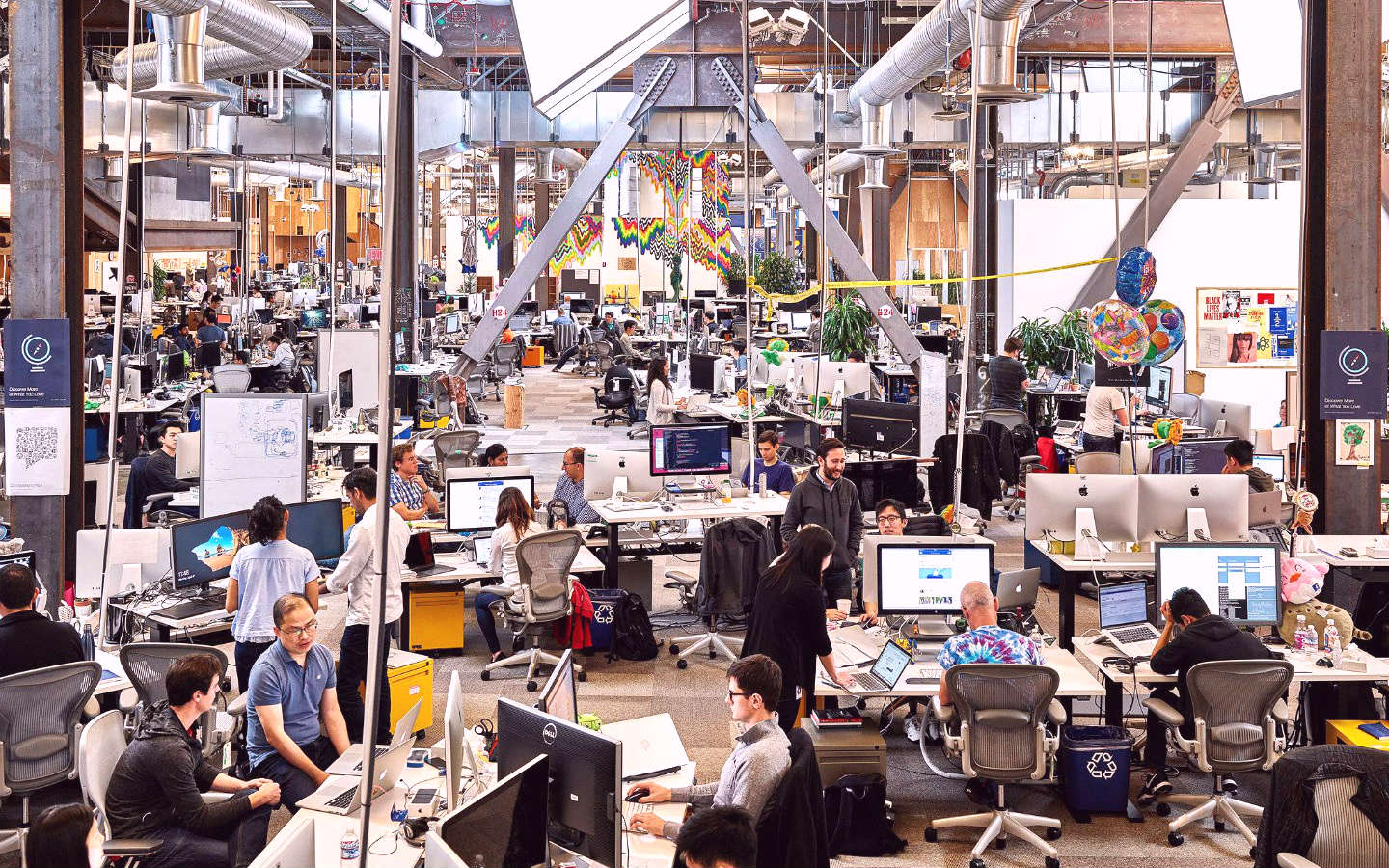
In practice noise doesn't really leak from rooms into the hallway, so it's not a problem most of the time unless something extremely loud is happening, like a dog acting up or someone building flatpack furniture.
In my opinion and experience, professional programming is a deeply collaborative experience. But of course other people who ostensibly do the same kind of work have completely different preferences, and that's great. It does mean that people need to be very careful what kind of company they take a job at.
My approach is to embrace both at the same time, by almost always coming into the office, but arriving before 0700. The first half of my day is super focused, uninterrupted work, and the second half is relatively unfocused, talk to people and be talked to at random times kind of work. I leave around 4pm.
I've had no substantial problems going home so 'early' among the eight or so orgs I've worked at in the past couple of decades.
I sometimes regret weekends because I don't have access to those things.
"An environment where people can find meeting rooms when they need them, can find peace and quiet when they need... and don't be a cubicle farm. Yes, if you think the alternative to remote work is an anonymous grey cubicle on the 5th floor of an anonymous office block (or just as bad, the 'trendy' exposed ducts open plan office)... I'd also recommend being somewhere with good public transport and have flexible working hours so people aren't forced into long commutes..."
Of course this ideal would be great!
But this also totally misses the point that in reality, the reason that people are often attracted to remote-working is precisely because their experience and environment fail on some or many of the ideals you list.
As such, you've not constructed an argument against remote working - just a (valid) argument against most office writing environments.
Disagree. They want to live someplace that doesn't have the highly paid jobs that, say a city or tech center would have. A San Francisco salary with a Modesto cost of living. Or they want to do the digital nomad thing.
Companies these days bend over backwards to make the office experience as optimal as possible.
The "open office" has been repeatedly studied and proven sub-optimal on many aspects that impact both employees and companies. Yet companies continue to design new offices with these designs. I would love a fully-remote gig mostly because it would be respite from the open-office.
I do agree open offices kill productivity but a blend of remote and onsite is best IMO.
disclaimer : I currently travel mon - thurs to be onsite everyweek
I'd say it's 100% different, but it's not necessarily difficult. We need to talk about how change is hard on the one hand, and how remote work is different on the other, and not conflate the difficulty of the two together to have an effective conversation.
There are fixes to just about all of the problems people mention including dedicated in-person time occasionally - just not all the time.
Based on your "onsite" it sounds like you're a consultant or with a pro-services firm servicing clients, rather than part of a product company. I don't think as consultants you can really have the same freedom because you cannot control your client culture, and the client culture will dictate how effective you can be when remote. I would argue that if you're a client-facing consultant you first have to put in the time before you can really consider going remote because you need to build the trust and understanding to do that. That can be hard, and many client cultures do not understand it and will have a hard time connecting delivered functionality to value. They value, instead sometimes, a butt in a seat.
Remote work is difficult because when you are remote and care you feel pressured to do more work to make up for the missing office political presence you get from being onsite.
That human interaction is much more important than people want to acknowledge
While I don't feel pressured to do "more work" necessarily, I think where I have seen intensity increase is in making more of an effort to actually speak to other humans adjacent to your work. This might require taking time out of your day and end up causing you to spend more time.
Overall I find being remote allows you to focus more which means you can often get more done in less time (if you're on maker time) so hopefully this doesn't result in many extra hours.
If you're on manager time (which I often am) then this is a whole different challenge of course, but it's an interesting one.
Mainly I would say it's best to balance your self-pressure to do more (coming from a fellow person who cares). Doing more work probably won't help, but ensuring you have regular touch-points with the right people will go a long way toward people knowing you exist, what your value is, and providing you with context to execute effectively without guidance.
Probably saying something you already know but feels good to type it either way :)
For you perhaps, I for one certainly do not have a problem Not Working All The Time.
I work remotely & onsite. This is a problem.
On-site is best, tho I think taking away time flexibility could actually be a boon and help make remote work tolerable.
Working for minimum wage now as a green waiter with people juggling 2-3 jobs and/or kids and a marriage in the Bay Area, more than any office colleague, I observe that fixed schedules work. The gig people I interact with are far more stressed than my colleagues.
Apparently tangental perhaps, I think this case helps isolate factors of logistics well when contrasting the more common cases; and I think it’s a wise way to go, and am building a life to support that type of engagements. Thanks for sharing.
Another benefit of remote work is that a company that's 100% remote has to spend time thinking through and improving communications and culture in ways that are optional for other companies.
A really good point
I have been working remote for years, and one reasons why companies hire me over a much cheaper resource in other countries is that I am US-based working US hours. If I started working crazy non-standard hours, I will no longer be employed.
I’ve worked at many companies who spent a huge budget on the office, but I was never offered my own office with a door. Anything less is far from optimal.
As a full time dev in one of the world's most valuable companies, I don't even have a cubical wall between me and my teammates. If anyone wants to speak, we all get interrupted.
I did not know how good I had it back then.
Sorry, but most companies nowadays use open offices, which are absolutely anathema to me.
Here's the thing: I absolutely want to work in a cube farm. I want to work in a traditional office environment with individual cubicles in a suburban office park. Unfortunately, there are very few companies like that anymore.
I like my current company. I like it a lot. We're a B2B telecom in the northern suburbs of Dallas with cubicles as far as the eye can see. I'm happy here.
But if I ever end up leaving (which isn't going to happen anytime soon, because I'm happy here), then my next job is probably going to be remote, because I seriously doubt I'll find another non-remote job that matches my criteria. Sadly, the kind of company I prefer working at is a dying breed, and I'd rather work remote than work in a trendy open office environment that caters to millennials (hell, I'm technically a millennial, but everything to do with millennial culture makes me cringe).
I do agree with you, when I graduated from college, I explicitly didn't want to be in a cube farm. Graduating me was an idiot, and I very much do want to be in a cube farm.
Also, I don't think lumping "millennial" as the cause of open offices is the correct reason. I feel like it's initially attractive for a lot of college grads, but it's generally opposed by people with experience. If you're at a place that doesn't have the working conditions you like, it's because they don't (or can't) value you enough to provide those conditions. I'm a millennial as well, but have only worked in an open office once, and that was when I was younger and had less experience.
Individual offices I understand completely. Cubes? Seems like a very cheapskate version of a real office. I've never worked in one though, so I guess I can't quite understand it.
1) Private office - I've had this, it was great
2) Shared office - had this too, it's ok if you have a good officemate
3) Team room - had this, larger office/conference room for one team, you have to be able to close the door
4) private cubicle, high walls - had this, pairing was easy
5) private cubicle, low walls - had this, a few more egregious interruptions
6) shared cubicle - haven't had this, still beats open office
7) open plan, big desks - at this now, it still lacks privacy and noise control
8) open plan, benching - had this, 36" of bench space, had to carry my laptop, mouse and office supplies with me
9) open plan, hot desking - IMO, this is just cause for a resignation letter on ergonomic and dehumanization grounds.
TL; DR: Cubicles are better for concentration and privacy than open plan, not as good as offices. Open plan makes me nostalgic for cubicles.
I kindly disagree. Open spaces are more prevalent than ever.
Dowtowns where office space are plenty are hell to commute.
In general I think companies want bullet points “we’re a great place to work” perks to recrute new people, but overall comfort or ease to work doesn’t seem to have gone up IMO.
The commutes are awful, the parking is expensive or non-existent, the office is noisy and crowded, the culture is repressive, the compensation is below market, but they all claim to be voted "Best workplace" or "Top ten place to work" or some such.
Companies also don't offer San Francisco salaries to people living in India even if they are equally qualified.
Which might mean you can't afford rent.
For the same reason might ask why they would take less than they have to.. although it is true that the candidate pool grows, the pool of jobs we can select from is also worldwide.
I mean, I can afford to work cheaper if I want to, but I don't have to because people will pay... the principle works both ways.
Why would I take a 140K/year job just because the people around me are living in abject poverty unless I have to work locally?
The way your comment was worded, I thought you meant accepting $140k/year was akin to being in abject poverty, which seemed like a very uninformed view of the world. I don't think that's what you meant though.
as an individual, if you can demand more money, you should.
as a company, if you can spend less for the same amount of quality, they should.
[1] https://about.gitlab.com/handbook/people-operations/global-c...
Cuz they don't need to!
My last 3 companies over the last 7 years (I'm new to one of them) have:
* open offices (2 of the 3) or short-wall cubicles. That latter actually had a noise meter to try and flag when people were too loud...but they had to make it mobile so it could be wheeled around to the area that was currently the most complained about.
* A constant battle to find open conference rooms. All 3 changed offices while I was there, and promised more meeting room space in the new office. All 3 quickly found it wasn't enough.
I don't doubt that the companies are trying to make the open office space as nice as they can, but you can only polish a turd so much - they are still committing to the open office spaces.
Ha! Not my company.
Why can't it be both? I want remote work because our office environment is horrible and my company isn't likely to change that AND I don't want to commute (after my company moved it's offices).
Not at all. I think that some folks just don't work well in such circumstances. A close friend of mine was much like you: he craved the social environment, and the immediate collaboration with peers. Personally, I'm the opposite. I hate drive-bys, I crave the flexibility to work when I want and how I want, and the social interactions offer no real value to me.
I think it's great that you know how you best work. It's a key to happiness.
> If developers are remote, you will find that your code-base becomes the same. That critical FooBarAdapter becomes something that only Naimh can work on because without co-location if another developer is stuck on it, rather than grabbing her for a "Can you look at this?" over the shoulder, it gets slung over the fence in an issue or pull request.
That's just patently false. Not only can this happen in co-located work environments, but is often symptomatic of a poorly functioning team rather than how they're located on the planet.
In my experience, most engineers in offices spend their days with headphones on because they’re trying to drown out the office noises. They’re not going to overhear anything. Also, again, in my own experience, even if you don’t and are listening to what’s going on around you, you still can only overhear what’s said by those relatively close to you. That is, the probability of overhearing something useful has been, for me, incredibly low to the point that it hasn’t been worth it.
> rather than grabbing her for a “Can you look at this?”
When I’ve worked remotely, we’ve often sent each other messages asking to explain some code or hopped on a quick screenshare to go over it. Bonus: due to the asynchronous nature of text chat, I don’t accidentally interrupt the other person. Also, the more that is done in text chat, the more of a record of it you have when you inevitably forget. Its much better to be able to do a quick search in your chat logs than to re-interrupt the person to explain the thing again.
> But whole-team remote work? No thanks!
I’d rather have everyone remote, because it means you can optimise the company around it. If only some people are remote, or people are remote only some of the time, then companies tend to treat them as second-class citizens and optimise for in-person.
PS: writing this at the office, feeling sleepy... they won't allow remote work... and this computer takes a while to build, 23x more than my personal workstation, I timed it.
Developing personal rapport with the colleagues is often another factor. I have seen remote-only people join the "office" camp and consider it more productive and motivating, simply because they found a workplace that they liked more than working remote, with one of the factors being relationships they developed. Some even prefer the synched schedule over flexible hours.
Personally I am remote-only but I appreciate everyone's different and not everyone work the same way.
I have not found that at all. With good engineering practices and mature developers, no one should be gatekeeper of any functionality in any environment, remote or co-located. Inside a good piece of software should be idioms that work across the whole platform, so that no matter what the code does, anyone in your team can pick it up.
If you have a bad mix of junior and senior developers, and either of those groups are left to go on programming tangents that are outside of the idioms of the software then yeah, you're going to find yourself with code no one else understands, or tools no one asked for in the codebase. But that was a failure of the software's architecture, and the way you trained and managed your team to work within it.
I'm not saying it can't happen on a remote team, just that it's not a problem caused by remote work. A remote team is not any less competent just for being remote.
Are you sure? I’ve worked remote and worked not remote, and trench warfare between team factions can happen in both situations. It’s leadership and culture issues that leads to that kind of collaboration breakdown, and can happen even with locally collocated teams. In a large company many of your collaborators are going to be in other cities anyway.
The point I would like to make is, in that team of 20 not sharing information and not seeking input was a problem, even though people sat right next to each other. And that problem could have been solved very easily by putting most of the decision making into one pagers, Google Docs and bug tracker, as well well as by defining the goals more clearly.
That is a cultural problem which remote team members did not create, but merely magnified. It existed before we joined and after we left. It resulted in a project which you need to have a PhD in computer science to figure out how to use, and as a result few teams inside Google use it.
Which is a long-winded way of suggesting, that if introducing remote workers shows some cracks in your team structure, perhaps there's a deeper reason why, and things aren't 100% ideal to begin with.
BTW: The best I’ve read about this so far is: “The Culture Code”
Once you've worked in a environment with healthy technical interaction on an organic basis it's qualitatively and quantitatively better than a group of remote workers. There is so much shared information that is lost when you can't just strike up a conversation.
So on-site teams also use Wikis/issue trackers/emails a lot. The difference is that instead of a face-to-face chat remote teams have to use Slack. Which is also largely used in on-site teams... So my point is that some of the modern IT offices already resemble a "co-working" space because all the tools are already digital, and all meaningful knowledge sharing already happens in the digital space.
Some humans do not think on their feet. They often need time to digest thoughts and new ideas. If you start observing this behavior, you will notice that an impromptu brain-storming session often results in a couple of people talking and many others observing.
It ends up being highly productive to the people talking, and very frustrating to those who are observing.
If you don't see this trend, your hiring practices may be optimized for finding only one type of person - extroverted people who can say things quickly.
Consider that you may be missing out on some very good ideas from people who aren't comfortable with quick context switches and immediate requests for feedback on ideas.
Because to have a nice high-quality office (not cube farm, not open-plan exposed-ducts) that's also a large office ('where people can find meeting rooms when they need them and also peace and quiet') in the pricey core of downtown ('somewhere with good public transport'), and to also have your employees afford to live downtown too ('so people aren't forced into long commutes')
It's all true, I agree with all of it, but it's super expensive. Even to do just one of those things is pricey, to do all of these things is enormously expensive.
...it also has to be in the countryside at the same time, because so many people find it exhausting to live in the city centers for sensory reasons.
"Can you look at this" at random points in time would ruin my productivity.
Open plans ruin my productivity.
Constant bullshitting at the office that has nothing to do with work ruins my productivity.
Not being able to do my work between 7PM and 2AM (when I'm the most productive) ruins my productivity.
Commute for 1.5 hours a day ruins my productivity, too.
I actually have my own company now, and while it's just me so far, when it's time to hire people I will structure it such that it's remote-first, and I will hire from all over the US, and possibly all over the globe when the company size allows.
You don't need an office for team cohesion. You don't need a bunch of meetings for that either. You just need reasonably clear goals and responsibilities (this is the hard part, but only when you have no clue what to do), the rest can be handled pretty easily via email and GitHub. Have a weekly Zoom meeting you want, to sync up.
You also do not have to "destroy your hearing with loud music" to avoid coworkers conversations. Earplugs are cheap and available, and industrial grade noise protection (25db+) is available for <50 bucks. Unless you're opposed to wearing any sort of headphone/earplug at all, then you have to heavily screen your potential employers to get the environment you want.
Is that experience, or speculation? Having worked remotely on large teams for a decade myself, I've had just about the opposite experience. The unavailability of a component's main developer can be a powerful spur to dive in and take matters into one's own hands, vs. the short-term convenience but long-term bottleneck of always walking over to your hypothetical Naimh for assistance. This effect is seen all the time in large open source projects, even for challenging code e.g. in the Linux kernel. If your experience has been otherwise, that suggests more about your team than about remote teams in general.
I am of course respectful and cooperative with my fellow coworkers but my relationship with them ends at 5PM.
I personally find the offices that push for forced socialization quite frustrating.
After working remote for the past few years I love the fact that I no longer have to commute, am in charge of my time, can eat what I want , have better sleep, can exercise and have the luxury of actually getting work done.
Not to mention remote work majorly helps people with kids / newborns and also caters to women who need extra comfort during pregnancies.
When I was working in a big office, I actually had to arrive early or stay late to get work done (I'm not kidding), because those were the only non distracting hours.
I suspect the reason why most companies are not remote is because they rather keep a tight leash on their employees and celebrate the butt in chair "work" rather than trusting them with actual work.
I doubt I'm alone in this.
Not everyone is the same.
I just switched to a remote job and at first, it did feel pretty socially isolating. But it doesn't have to be. You might be isolated from your coworkers, but you have to choose to isolate yourself from other people. Depending on your working style, there are dozens of places that work great for working.
In my office talking is EXTREMELY discouraged, only certain people have messenger, email is for specific uses only, dress code, in the winters it easily gets into the low 60Fs in the office and in the spring we start seeing upper 70Fs and even 80Fs in the summer, we get 30 minutes for lunch and the closest fast food is 10-15 minutes in traffic, been here 13 years and we just got the right to wear jeans last fall, no office phones, open office with team leads effectively in the back of every row to watch everything you are doing, shared desks with other shifts, not supposed to even look your personal phone, can't go microwave your food on the clock but only 3 microwaves for 100~ people, 1 drink vending machine that wouldn't take cash or coin for the past 3 weeks and is often empty for most choices, parked off of active runways so our cars get coated in unburnt jet fuel/deicer/bird mess, parking lot is cratered nearly as bad as the moon (not exaggerating), photo ID has to always be visible, cameras on every entrance and exit, have to sign in at your desk but it can often take 2-3 minutes to even get a browser open which means realistically you need to be here 5 minutes early, minimum, every day, have to fully log out AFTER clocking out before you leave --- as you don't have admin privs software hangs and you have to force close it every single time you log out because it wants to update (mostly looking at you adobe), even if there is a county travel ban for snow/ice we're supposed to work our full shift...
Yeah man, I'd love to be able to work from home given there is nothing I have to do here that I can't do from anywhere with a computer, a web browser, an internet connection and a few BlueZone mainframe displays open.
If person A needs “peace and quiet” and Person B needs to grab Person A to “look at something” then it will only be ideal for one of them.
>That critical FooBarAdapter becomes something that only Naimh can work on because without co-location if another developer is stuck on it, rather than grabbing her for a "Can you look at this?" over the shoulder, it gets slung over the fence in an issue or pull request.
For example, with something like USE Together it's possible to have the equivalent of over the shoulder looks complete with easy input sharing.
That sounds neither as effective nor as fast as pointing at my screen with my finger.
With screen sharing I don't have to move, don't have to squint, we both get to have a perfect view of what is going on and I can pull things up on my own computer concurrently (and show it to you if I want to).
edit: In fact, I find it so useful that even when we're in the same room the approach is to screen share.
I'm trying to figure out if you've actually worked remotely or not. It does take a much more concerted effort on everyone's part to be more inclusive of remote workers, especially if only a handful of devs are remote and the rest share an office.
Meetings aren't usually a problem. We primarily rely on Skype for Business and all meetings are generally held online. We've even managed to move scheduled meetings (which I loathe) into Microsoft Teams channels. The written words manage to keep everyone on the same page, much better than just hearing it.
Microsoft Teams and Slack facilitates the sharing of cubicle conversations and informal ideas but it takes effort to get everyone onboard with using these as their primary ways of sharing convos.
I mean, I don't get interrupted very often. I can be as out of site/out of mind as I want and need. And I'm way more productive working from home, than I am where I can be interrupted constantly. I don't know about you, but it usually takes me about two hours to recover from an interruption to get back to where I was. Not always, but usually.
All of the above is pertinent to being a mixed bag of remote and office sharers. I would imagine that an all remote team, would have an even easier time with communications and inclusivity.
My issues stem from working at non-remote-first companies and my personality. Being one of the few people that is remote, I will have no visibility. My pull requests will linger, no room for advancement, no learning from others. And as an incredibly social person, I find the isolation to be too much. I also detest people that work from cafes. They are not offices!
I think this is the key. I am an incredibly NOT social person and LOVE isolation when trying to get work done.
I'm not disagreeing with your main point because remote work is not for everyone, and who am I to tell you what to prefer? But I wanted to note that I've been working fully remote for more than ten years, and I'd say 95% of my contact with team members is informal, and along the lines of just sharing thoughts and ideas exactly as you describe. The only difference is that we share them on slack and via emails rather than having that tap on the shoulder as you describe it. Which is "better" is a matter of personal preference.
If the work has to be done individually, then there is no point in being co-located. Remote works well.
Co-located teams communicate well, decide and move quickly, and has much higher trust between team members.
Work that does not require too much communication, speed and collaboration is more suitable to remote.
This hybrid approach worked well for us.
On "But whole-team remote work? No thanks!":
One of the cardinal rules for "remote-first" to work as intended is that either the whole team is remote, or not. Otherwise, information asymmetry can affect team dynamics and morale in non-trivial ways and the product suffers.
Since the company is cheap, hires the bare minimum of people to do a specific job, those people either have to come from a large local area, or support remote work.
The only addition I would like to make is that an employer should try to take into account the personal situations of their employees. For example, a blanket ban on remote working at a big tech company [1] to me is rediculous. Some people are exceedingly efficient working on their own and on their own terms. At the same time, some employees can become demotivated if left to their own devices.
I would say that in the capacity of the employer and their inherent responsibility towards their employees it sounds natural to me that some would work from home and others not. An all remote team would presuppose that (all) the employee(s) would like that kind of thing.
[1] I see from time to time this happening (or people trying this). A google search some of those that tried: Yahoo, IBM. Top-to-bottom decisions are sometimes rather disruptive and maybe unnecessary in this case.
Yes I agree. This informal communication is an under-appreciated aspect of an open-plan office.
I wonder whether remote teams can be structured to mimic the 'closeness' of co-located team members. Here's what I'm thinking:
1. Two colleagues work similar timezones
2. Each colleague has a dedicated TV screen with webcam 45 degrees to the left of their main computer screen
3. The TV screen displays an always-on Zoom meeting showing the webcam video and screencast of the remote colleague
4. At any time, communication is as simple as turning to the TV and saying, "Hey Bill, did you see the Cowboys game last night?"
I mean, what about grabbing her for a "Can you look at this?" over a quick video call.
I can't tell you how many ideas I've come up with & worked through and problems I've solved while remote. When you have a culture of DMing and chatting in interest channels (#haskell has been a fun place in multiple companies), ideas flow wonderfully. And then you can add to it with Zoom chats and tmate pairing. The next thing I want to try is collaborative distributed whiteboarding using drawing tablets.
However, it does mean that we have good team cohesion.
Today, I work remote approximately 1 day per week. It's great for creative/heads down activities, which for me are writing, reading and tasks like spreadsheet work or ideation. I do it more when I'm on call-driven projects. It's not great for coordination with "close teams" and not great for operations team dynamics.
Work is a distinct social environment. You meet different people, do different things, etc... It has value. It helps see things from different perspectives. If things get hard at work, going back home gives you an escape, and vice-versa. You don't need for commute for that but it helps.
What is the alternative to "not a cubicle farm and not and open office"?
I love working remote. No gas to buy, no wear on the car. No commute time. Instantly at work, instantly back home after. Video conferencing keeps me close (enough) to my co-workers. I can't say enough good things about it.
Online discussions always amplify the decent of the minority because the majority tends to get its way. And because the majority is satisfied, it remains largely silent.
And good grief, if my choice is between a cubicle farm and an open office, cubicle farm every day. Thankfully, my choice is no longer that limited. Oh, and working with people who document their work and read team message board, turning your "only Naimh can work on" into some forgotten memory of past nightmares.
I mean I used to have to commute through downtown Portland, Oregon at rush hour. Just being able to leave that out of EVERY day has tremendously improved my quality of life.
I'd rather have proximity to co-workers so we can easily share ideas in informal ways.
Sometimes you don't want to formally disperse some information but are happy to let people overhear what you think.
An environment where people can find meeting rooms when they need them, can find peace and quiet when they need them but also generally have co-location means good team cohesion.
If developers are remote, you will find that your code-base becomes the same. That critical FooBarAdapter becomes something that only Naimh can work on because without co-location if another developer is stuck on it, rather than grabbing her for a "Can you look at this?" over the shoulder, it gets slung over the fence in an issue or pull request.
Yes, when working face to face too many (formal) meetings can be a problem, but don't abolish co-location just abolish the meetings.
And don't be a cubicle farm. Yes, if you think the alternative to remote work is an anonymous grey cubicle on the 5th floor of an anonymous office block (or just as bad, the 'trendy' exposed ducts open plan office), then remote work will look like nirvana.
Of course I'd also recommend being somewhere with good public transport and have flexible working hours so people aren't forced into long commutes in poluting personal transport. Also offer and allow occassional remote work to further ease that demand without losing the benefits of co-location.
But whole-team remote work? No thanks!