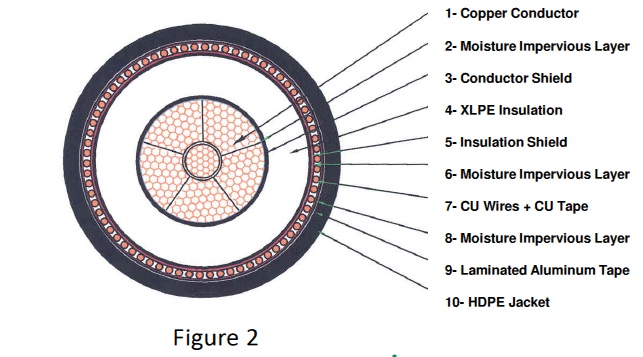
Required cable thickness (and thus weight) is proportional to current, not voltage. Conductors to carry megawatts of electricity could be fairly light as long as the voltage is extremely high and the amperage relatively low.
The issue with acceleration using wheels is gravity. You are limited to 1g, the downforce on the wheels, which you use for traction to push the vehicle forward. Spoilers increase the downforce on the vehicle beyond 1g, but the energy required to do that is proportional to the drag on the spoiler.
Short of a rocket engine, the way to accelerate beyond 1g with a wheeled vehicle is to have a downforce fan. That can be powered by combustion or by electricity. I don't know which would offer the highest power to weight ratio.
I also feel like 800V cars also maintain their maximum power better on lower SoC than 400V systems.
[1] https://www.copper.org/publications/pub_list/pdf/A6192_Elect...
This electric vehicle is accelerating to 100kph (~28 m/s) in less than 1.5 seconds, which is an average acceleration approaching 2g, if I am not mistaken.
The acceleration you can reach is mostly limited by the peak current and the force constant, but the maximum speed you can reach at that acceleration is mostly limited by the voltage you have available because of the back-EMF. A simplified formula is that the voltage you need is R * I + v * BEMF. The higher the voltage is, the better the insulation between the windings needs to be. You need to find a balance between the different properties.
Let's say you can control voltage, cross section area A.
Now, you want a constant power across a load P = V * I.
Your net resistance R is C + D * L / A where C and D are constants and L is your cable length.
I is proportional go V * A / (C * A + E) where E is also a constant.
So your load power is proportional V^2* C * A / (C * A + E) which is proportional to V^2 * A / (A + F) where F is also a constant.
With a large "enough" A, this is effectively V^2. With a small A, this is V^2 * g where g is A / F. So the smaller the area you have the more power you are wasting (roughly equal to V^2 * (1-g) which is heat in the wires).
So the smaller area you have, the less efficient your power delivery. And juicing up your source power is a lot more expensive than juicing up your source voltage.
I've been to two Top Fuel drag races and I left feeling like I was surrounded by people who have just enough sophistication to know that they like to play with fire whenever possible.
they are not like that, of course, but they were definitely caught up in the visceral feeling of watching a race and I was caught up in the idea that I'd never be able to hear again.
I do not recommend races, myself.
It's weird to hear someone say something is in general a Top Experience.
Like live music, like going to a playoff game, watching a rocket launch. Even if you don't care about the race, the game, or the music. The energy of being in these places, experiencing it, feeling it, the spontaneous giggles, the sense of awe being caught in the middle of it, has a value all its own. You can watch the race on TV, catch the game in a pub, listen to the live recording over, and over, and over again.
But it's not the same as being there.
I agree with what you're saying about live events vs video.
Video is completely useless for this. Drag racing is not.
why does everyone assume I wasn't, then reply as if it is fact? fucking internet, man. no one comprehends anything
The pulses are so loud it is like being punched in the chest. Sometimes the engines explode which is also fun as the smoking parts fly around.
Once, the Top Fuel driver had the silly thing in reverse. The christmas tree turned green, and he launched backwards. He had lightning reflexes, chopping the power incredibly fast. The thing still flew back nearly 100 feet, and if it had continued would have climbed up the grandstand behind it.
I never, ever, ever stand in front or in back of a dragster when its engine is running. I also do not stand radially to the engine (when they blow, the parts fly out radially).
Other than that, it is great fun to go to a race in person. It's the only motor sport left where the attendees can go into the pits and watch the mechanics at work. Watching a team rebuild a V8 engine in minutes is amazing. Then they'll fire it up to test it. Blipping the throttle produces shock waves that you can see hitting the bystanders.
The barely restrained violence of those machines is just crazy mad fun you'll never get from watching it on TV.
* I swears it that it wasn't me in the "asking for a friend" manner
It's almost certainly not useful for you but one other motorsport which is comparable in this way is the IOM TT. You can walk around and speak to the guys on the pit crews as they work.
It also offers some visceral experiences, like standing 2ft from the bikes passing you doing the best part of 200mph. In fact when I went a couple of years ago selfie sticks were banned, as you are so close to the action that there is a real danger of hitting a rider with one.
Sure feels like it; don't dare look at a calendar.
STS-121 was 5 years before that. ;)
You either have the worlds most sensitive chest or your memory of the experience is comparable to your memory of the date it occurred, a bit distorted.
I was working at a facility where we tested gas turbines and spent a good amount of time studying combustion acoustics. The best way I could describe the feeling standing near the water for the shuttle launch was feeling a continuous combustion pressure hitting my chest. Pounding wasn't the best choice of words.
Definitely not true. We walk the pits every time we go to an IndyCar race. And of course we do the same at the lower level SCCA-level stuff. Trying to think the last time we couldn't get a pit pass and coming up blank.
https://www.amazon.com/Sign-Merlin-Spitfire-Alex-Henshaw/dp/...
The correct title is "Sigh for a Merlin", and refers to the sound a Merlin V12 makes. This engine also powers the P-51, and I can vouch from first hand experience of what that engine sounds like.
The local airplane museum was happy to do a P-51 flyover at my dad's funeral. You could hear its song long before it came into view. Nothing in the world sounds like a RR Merlin V12 wide open.
-- Sigh --
You can walk around the pits and watch the crews doing a partial strip down of the engine for each run, although it's fundamentally basic V8 pushrod technology, it's far more than that.
There is a video [1] with a few slow motion clips of the preparation and running of a Top Fuel car. One poster mentioned a cameraman who stood between two cars, you can clearly see why that wasn't a good idea!!
Looking at how the tyres deform, not just at launch 2:00 but also at 2:50 it looks like they are a real limitation in acceleration. To help them off the line the launch area is really sticky, shoes melt into the 'tarmac'.
The 0-60 time, as with many really fast cars, doesn't tell the whole story of using their 10,000BHP to get to about 330MPH in about 4.5 seconds.
It's something I think you really need to go and see.
For a one-off design, those cables could be very short. You could even have a very small pantograph (https://en.wikipedia.org/wiki/Pantograph_(transport))
I am not sure the end result would be faster, though. You’ll need grip to get up to speed, and starting from a standstill, you won’t get that from aerodynamics. you’ll need mass. Take away the batteries, and you may have to add a similar mass in dead weight (could be used to add a good Faraday cage to protect the driver from mishaps with the electricity supply)
More mass and more power are roughly equivalent to less mass and less power, if the above holds. Maybe even with less mass it's easier, since you can produce significant downforce with smaller wings.
Not really, high speed train lines do it all the time. They usually operate at 25 kV or 50 kV and often consume a few megawatts per train.
(At 50 kV, one megawatt is only 20 amps, which you can deliver on 12 AWG wire, theoretically.)
1. You need a _lot_ of insulation at 50kV 2. I'm no expert but I very much doubt you could run a motor at anything approaching that voltage. Current electric cars, for example, run c400V as the main motor supply. So there would need to be voltage conversion, which adds weight and bulk.
* lights, plug sockets, etc. are all at normal household voltages
* often trains will run on multiple voltages, so a transformer needs to be involved anyways
* lower voltages let you have thinner insulation, so thinner wires let you save space for things that matter more like a bigger passenger cabin
You can make an electric motor run on pretty much any combination of voltage and current. You just have to make the appropriate trade-offs in insulation, conductor cross section, etc.
ABB (my former employer) makes motors that run on 13.8 kV with a power of up to 29 MW. See https://new.abb.com/motors-generators/high-voltage-induction...
   WARNING
   2 million Ohms
A remarkable number of people kept their distance from this obviously dangerous experiment.
The chemistry-equivalent of this joke is to warn everyone around you of the presence of dangerous di-Hydrogen Oxide which kills hundreds of thousands of people every year.
High voltage utility distribution lines aren’t insulated by anything other than porcelain bushings and air.
In top fuel events, they're burning roughly 20 kg of fuel per second, so a 200kg engine still doesn't equalize the density of that chemical fuel.
To make a 1000 kg car accelerate at 4 gee or 40 m/s^2, you need 40000 N of force. A water rocket engine with 200 m/s exhaust velocity can deliver that with 200 kg/s of mass flow. Since your target velocity is only 28 m/s, you only need reaction mass for 0.7 seconds, or 140 kg or 140 L of water. That's one feed barrel.
The back of the envelope kinetic energy of the water jet is only 3 million joules or less than a kilowatt hour. But the power is 4 megawatts. Pumps also have startup acceleration cavitation issues, so it'd need to start gradually etc.
One could maybe do it with a lot of small independent systems in parallel: a ultra high C rate lithium iron battery connected via a transistor to a pump. Each has its own water pouch and nozzle. If you can achieve 400 N of thrust with one pumping 2 kg/s, then having 100 of them in a 10x10 grid would work. The transistors would be controlled centrally.
A more boring alternative is, like in a real bottle rocket, also here, a compressed air tank half filled with water, a much more straightforward source of pressure energy.
Clay Millican has an amazing YouTube channel that brings you behind the scenes of an NHRA top fuel team - https://www.youtube.com/channel/UClT3GT7hxLbNnypukfyxelQ/vid...
My college motorsports team got to meet with John Force, and someone suggested a flexible rear spoiler for variable downforce. He was quick to note it likely would be faster but would almost certainly get you killed.
And since you can relate energy to momentum in a well defined way…
[1] https://en.wikipedia.org/wiki/Operation_Plumbbob#Missing_ste...
Quotable quote: "However big you think supernovae are, they're bigger than that."
The following paragraph to that quote is a great demonstration of that point.
Summary (found in video at 10:48)
1) separation of subcellular organelle (DNA/RNA) 2) extract solutions in biological fluids from aqueous to organic solvents 3) seperate lipid components 4) pelleting of ribosomes 5) pelleting of macromolecules
>detonating
Should be deflagrating because the ICE flame is designed to be subsonic.
Sure you can, it's what the bulk modulus measures.
You may be right. My assumption is that, by definition, a detonation is an uncontrolled pressure wave and controlling the pressure in an ICE cylinder is a big deal that a lot of engineering goes into. As you point out, the major benefit to nitromethane is that is requires less air because it brings it's own oxygen. So the size of the combustion chamber isn't as much as a limiting factor. I don't think it's intent is to change the flame regime, though. It just crams more energy into the cylinder.
With strong enough engines, detonation isn’t ruled out.
Diesels should not detonate. The autoignition in a diesel occurs by the piston compressing the air/fuel mixture; in detonation, the autoignition occurs by the flame front compressing the air/fuel mixture. To the OP, the definition of detonation is a flame front that is supersonic; that is not the intended operation of a diesel cycle. Diesels do not have a "flame front" like a spark-ignition engine because combustion occurs at various parts of the cylinder as the air/fuel mix reaches autoignition temperature. So by definition, properly operating diesels cannot detonate.
The rattle-y sound of diesels is from the high pressure rise and local ignition of air/fuel, but it's not the same as engine knock from detonation.
Getting dangerously close to "car launched by a railgun" territory, hehehe
If you only care about acceleration, energy density doesn't matter very much. What matters is power: The rate at which you can move energy from the storage medium to the wheels. In that respect a capacitor-powered dragster could probably smoke a top fuel dragster, even though the energy density of capacitors is pretty lousy. No idea if anybody has tried to build a full-size capacitor-powered dragster. Or if any human would be brave enough to drive one.
If you only need a few milliseconds of 'zap', yeah, a capacitor bank is great. It's the only option if you need to do that more than a couple hundred times in the life of the battery; a chemical battery will wear out but a capacitor can last for millions or billions of charge/discharge cycles.
But even a time as short as 1.461 seconds is probably on the far side of the inflection point where capacitors make sense.
If you like, run through the options on Digikey:
https://www.digikey.com/en/products/filter/electric-double-l...
ex:
https://www.eaton.com/content/dam/eaton/products/electronic-...
Also remember that an ultracapacitor is about as far in behavior from a physicist's ideal plate capacitor as you can get - they're not linear, they have highly significant internal series resistance...
I'm not sure if anyone is building electric dragsters with run-once components, or how that might change assumptions?
IOW I'm not sure there's enough volume in a dragster to meaningfully power it with ordinary caps. But if there is, it would be a very quick car.
https://snf.ieeecsc.org/sites/ieeecsc.org/files/CR5_Final3_0...
...if nothing else it adds the extra failure points and safety issues that come with cryogenics!
From the perspective of being that close to being fried, or with respect to the acceleration?
To be honest though, I still think it’s amazing that people casually handle extremely flammable and volatile hydrocarbons whenever they visit the gas station. The safety ecosystem is very well tuned, albeit after a hundred+ years of accidents and research.
I was thinking the former. One does not casually fuck around with big capacitor banks and live to talk about it.
That is correct. Out of curiosity, I looked it up and for the Tesla Plaid that's 0.65 MJ/kg (or 181.5 watt·hours per kilogram)
But my follow-up question is: if gasoline has an energy density about 100 times higher (well, 60 times) why are dragsters not even faster? This Stuttgart EV does 0-100 km/h in 1.461 seconds (1.87g), and dragsters do it in 0.8 seconds (3.42g). It sounds like with such a phenomenal energy density, gasoline-powered dragsters should be able to accelerate at much more than 3.42g, maybe 10g, or more. Intuitively this indicates that the bottleneck isn't energy density, but mechanical factors (gears, traction, etc). Therefore if battery energy density can increase just a little more, maybe to 2 or 5 MJ/kg, this may be sufficient for EV to be able to beat dragsters.
This is like asking if Usain Bolt can run a 9.5s 100m why is a cheetah that can run 6.1s not that much faster
Much progress has been made in raising Li-Ion "C" rates, which is why we now have cell phones that can charge at 20W or more. Graphene batteries are starting to get common in RC battery packs and appear to be the next significant jump.
TLDR: no you can't just put a really small pack in big enough to do one run, unless it's a specially designed pack with a very high discharge rate...in which case it might have worse energy density, and you might be back where you started (but with less total energy storage.)
Also, minor point of order: dragsters don't use gasoline, they use nitromethane. And the limitations are material science; you need an engine with internals, and a frame, and wheels, and tires, that can all withstand enough force without being destroyed...in a sport where every bit of weight slows you down.
A gas engine just cannot do that. At low RPM it has little torque and power. At high RPM, you can't really transfer that full power with a transmission in the lowest gear, because now it's too much torque. (Stripped gears and/or snapped belts were pretty common before computer-controlled automatic transmissions.)
This (idealized) chart may help explain: https://www.researchgate.net/profile/Ronghui-Zhang-2/publica...

That's....wrong
(or at least, not necessarily true).
The torque curve for an electric motor is strongly dependent on the technology used.
Induction motor (as used by Tesla): https://en.wikipedia.org/wiki/Induction_motor#/media/File:To...

If I get this right it means you still have an area of rpm x torque where you want your electric motor to be for peak efficiency.
The grip is limited. You would probably need to pull a wire or have gear mesh rail to accelerate "much more".
Normal tires provide a grip of about 0.8 newton per newton normal force. If you look at a drag racing wheel in slowmo the deformation is insane.
Because the limitating factor stops being the power, and becomes the grip to the road.
After 500 hours of Kerbal space program I’m a bit of an expert in these things.
...that made the effort to submit to Guinness. In racing, established racing orgs are where racing records matter. 0-60 just isn't relevant in drag racing. Any optimum 1/4 mile run under 7s doesn't spend nearly as long as these students did dawdling along under 60 mph. NEDRA record 1/4 mile runs have been under 7 seconds for at least 10 years.
http://nedra.com/record_holders.html
The current fastest run ticked off 0-60 mph in under a second. The 60 foot time was over a second. That means they ticked off 0-60 mph in significantly less than 60 feet (~18m). Submitting that 0-60 time to Guinness would require lots of work and time, and wouldn't be relevant to competing or their sponsors.
https://insideevs.com/news/447378/video-custom-electric-moto...
So, this Guinness record is still easy pickings, as these things go. I'd bet nothing more than moving this run to proper sticky drag strip pavement instead of that grotty old runway would scrub off a tenth or two. Then better drag tires, drag optimized suspension, maybe all wheel drive, gearing optimization, weight reduction, weight placement optimization... and sooner or later Guinness is going to stop taking 0-60 mph submissions for safety reasons.
Are there any wild designs that actually use the air in an electric powered design? Cooling is obvious, but could I just convert the electric energy to heat (100% efficient) and run the air through a heated mesh, ramjet style? :-)
Apparently, electric ramjets for spacecraft propulsion is an active field of research: https://www.sciencedirect.com/science/article/pii/S187770581...
Gotta love the the mix up SI and imperial units, truly effortless. 15PSI is just one bar, it'd even fit nicer too.
It doesn't matter that fossil fuels are energy denser, it's much harder and less efficient to convert fossil fuel into mechanical rotation by setting it alight than it is to turn electrical power into mechanical rotation.
Electric will always win out simply because it's battery->motor. That's it. Apparently the top fuel dragster can do 0-60 in 0.8 seconds and it looks like its biggest advantage is all the downforce it gets from exhaust gasses and airfoil. I'm thinking this is more a difference in the formats of the vehicles; no point making an electric dragster or f1 when the battery won't last the whole race/series.
Batteries are heavy af though, you're right in the disadvantage there. Perhaps the inefficiency of exploding fuel doesn't matter in the face of just how freaking heavy batteries end up being.
This isn't close to the record for dragsters; if they can increase the energy density per unit mass there are traction and downforce improvements that can be used to improve this. It's very hard to beat chemical energy like detonating gasoline or nitromethane - you're looking at roughly a factor of 100, with ~40 MJ/kg for gasoline and 0.4 MJ/kg for a lithium ion battery - especially if you're racing through a 15 PSI gas that you can use in your chemical reaction without having to accelerate it onboard.
I suspect that traction control for an electric motor may someday allow electric vehicles to exceed the records held by internal (well, mostly internal) combustion engines. You could keep the tire at exactly the right amount of slip for maximum acceleration, rather than trying to balance centrifugal clutches to get just the right amount of power at the right time.
I wonder what the record is for a vehicle that can pick up electric energy from a tether/rail/overhead wire...though cables that can carry megawatts of energy are probably pretty heavy.