1. You need a _lot_ of insulation at 50kV 2. I'm no expert but I very much doubt you could run a motor at anything approaching that voltage. Current electric cars, for example, run c400V as the main motor supply. So there would need to be voltage conversion, which adds weight and bulk.
* lights, plug sockets, etc. are all at normal household voltages
* often trains will run on multiple voltages, so a transformer needs to be involved anyways
* lower voltages let you have thinner insulation, so thinner wires let you save space for things that matter more like a bigger passenger cabin
You can make an electric motor run on pretty much any combination of voltage and current. You just have to make the appropriate trade-offs in insulation, conductor cross section, etc.
ABB (my former employer) makes motors that run on 13.8 kV with a power of up to 29 MW. See https://new.abb.com/motors-generators/high-voltage-induction...
   WARNING
   2 million Ohms
A remarkable number of people kept their distance from this obviously dangerous experiment.
The chemistry-equivalent of this joke is to warn everyone around you of the presence of dangerous di-Hydrogen Oxide which kills hundreds of thousands of people every year.
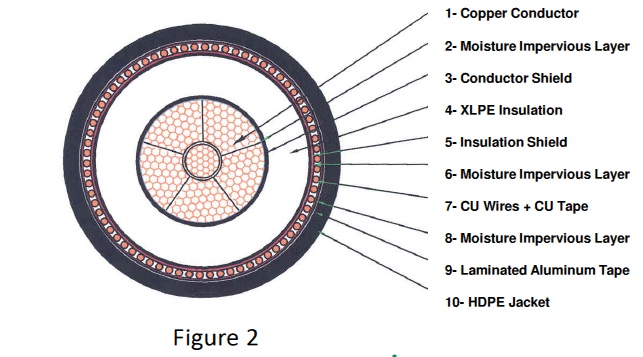
High voltage utility distribution lines aren’t insulated by anything other than porcelain bushings and air.
Not really, high speed train lines do it all the time. They usually operate at 25 kV or 50 kV and often consume a few megawatts per train.
(At 50 kV, one megawatt is only 20 amps, which you can deliver on 12 AWG wire, theoretically.)