The first time I encountered this was when Sony advertised Linux-compatibility for the PS3, which I bought expressly for that purpose. I was shocked when a judge upheld Sony's post-sale removal of that capability.
I’ve had so many issues with Apple devices losing compatibility with obscure features on apps after updating iOS, I wish I could go back occasionally to accomplish some task, and then upgrade again when finished.
The flexibility is valuable.
For example, on the newest iPad Pro, iMovie is unusable after iOS 15, completely jittery and unable to handle smooth user experiences for some reason.
TV updates are another thing. They change things with abandon and you can't revoke the updates.
Sometimes they break stuff and then you have to pray and wait until they hopefully fix them at their leisure.
IMO, it should be illegal to issue unrevokable updates so you can't get a product to have identical features as it did at the time of purchase. You should always be able to wipe it back to stock. Same with phones.
And the people who might crow about "security" - my device, my rules. I can block it on the network if I want.
TV: just don't buy an actual TV. Buy a monitor and hook it up to a Linux box with something like Kodi. You can hook up your cable box if you have that or stream from Netflix and such. Sure, even Netflix makes it hard as you can't get 5.1 surround but I'll take that and 2.0 -> 5.1 upmix over buying a Smart TV any day!
Games: Kerbal Space program sounds fun. Lots of mentions on HN. Apparently after some company bought them up changes of this sort have been made. So I decided against getting it even though I would probably very much enjoy playing it. Don't buy games like that. Buy games like Factorio or some GoG stuff (the ones that actually do work on your current Windows OS if that's what you use ... ;)) and do not buy into the GoG Galaxy thing. Get the installers. Otherwise that's like falling for Steam or Xbox Live or whatever the "Windows Live" BS is called nowadays.
Tablets and Phones: Use them for what they're good for: Making phone calls and browsing the web on the go. Apps are a curse, I avoid installing them as much as possible. Some exceptions prove the rule, like a free GPS tracker app for hiking created by a single guy. UI looks like it's out of the 90s but works for my use case. Found it because the other app I used started requiring a login even for the free part of the app. I refuse to bow to such things.
I've looked into this, but this option is really not great, either:
- Large Monitors are unavailable or (if you use business monitors) a lot more expensive and usually don't have latest panel tech.
- You'll loose surround sound and also 4K on most platforms
- The integration is usually worse (you'll have to start more devices, if you're lucky CEC decides to work)
- Good luck with HDR
I personally settled for a SmartTV behind a PiHole-equivalent, but an Apple TV or an Android TV combined with an offline smart TV are good contenders, too. Unfortunately, there's really no silver bullet right now.
An Nvidia shield handles all the streaming, kodi handles local files etc, all the media that I could possibly need.
4k is handled by default out of the box.
Surround sound is handled by an AV receiver. (Atmos surround is available if I wish to further upgrade the 7.1 speakers).
It can be done. Granted, it’s not cheap and installing all these devices can be painful, but still.
Since all the HDMI connections are via a (slightly older, non-connected) AV receiver, its almost impossible for this to affect my setup. But it's indeed a sleazy move by those setting the HDMI standards.
I'm getting so tired of these constant battles with the devices I paid for.
- Large Monitors are unavailable or (if you use business monitors) a lot more expensive and usually don't have latest panel tech.
- You'll loose surround sound and also 4K on most platforms
- The integration is usually worse (you'll have to start more devices, if you're lucky CEC decides to work)
- Good luck with HDR
offline smart TV are good contenders, too
Personally I'm on a 32" regular HD IPS panel monitor. Given the size of the living room and how far away the sofa is, this is totally adequate (I upgraded from my >>>10 year old 4:3 "I don't even remember the size of it" monitor when it finally broke!). Surround sound depends on the source. If it's Netflix the upmix is "good enough" for most of what the kids wanna watch and then there's other material too where proper AC3 is available. Most of the times I can't really have the bass turned up anyway so as not to wake the kids :P
I think it's prudent not to even buy a Smart TV and use it in "dumb mode". If we do this, we are not voting with our wallet. I'm not sure how likely we would be to have a large enough effect numbers wise but one can try. If we don't try, we've already lost.
But anyway, ever since content consumption became prominent on mobile smart devices (smartphones, tablets), this battle is already lost - the TVs are merely playing catch-up with the rest of the industry.
Your opinion is fine don't get me wrong but my 4k 55" OLED tv is really really impressive.
It's a marvelous picture.
My DSLR images look brilliant on it, games do as well, HDR is surprising ly nice as well.
We watch most tv shows still on a 10 year old 720p beamer due to image size. 110" is still more immersive than 55". But I do expect being able to buy 110" 4k in a few years either through a more affordable 4k projector or by microled panels.
I can't follow your 4k = full of propaganda Point. Not sure what you mean by it.
Then get it from *ahem* elsewhere, you've paid for access to that content in that quality, if they can't provide that… Maybe if enough do that they'll fix the problem, so they can start tracking your use of the content again when you return to consuming it their way.
I simply bought a non-smart TV. I just made sure it had a number of HDMI ports. I plug my various media sources into the HDMI ports.
A "smart" TV must be the most un-smart TV possible - you're stuck with whatever's there. The "smart" part (say, a Pi or a Chromecast or both) must be detached from the display device (the TV), not a part of it.
"smart" TVs remind me of back when I bought a webcam with integrated Skype, for my old parents. It did make it easy for them to skype with their grandchildren, using the TV. But of course Skype, or MS at the time, plugged the pull on the version of Skype used by the webcam and then it became a brick. Never again.
> Games: Kerbal Space program sounds fun. Lots of mentions on HN. Apparently after some company bought them up changes of this sort have been made.
Reference: https://forum.kerbalspaceprogram.com/index.php?/topic/201762...
We've entered a sad dystopia when the manufacturer is the leading security threat to the integrity of my personal devices.
Exactly. Companies that actually care about security don't bundle those updates with major breaking UX changes.
However, around the same time, my PC input began to blank out for a second at a time at random intervals which was very irritating. On a lark I performed a factory reset and didn't set up my wifi credentials, and it hasnt misbehaved since.
If the law needs me as an individual consumer to procure my own team of lawyers to go up against a multinational every time I buy a new TV, then that law might as well not exist.
I consider my time for a day off work, travel to court, preparation, irritation, etc more than the value of the TV, and they probably wouldn't pay me damages for those things.
The point is that I shouldn't have to do that as an individual for every purchase.
We need a blanket rule that they can't remotely modify purchased items in a way that cannot be rolled-back by the consumer to the functionality at the time of purchase.
I'm in Australia. Although we're covered by what I consider to be pretty good consumer guarantees, you can still only demand a refund in the case of a "major problem" with the product.
I don't think simply being unhappy with it connecting outside would qualify, although IMO it should.
https://www.consumer.vic.gov.au/products-and-services/refund...
What are the rules on returning stuff where you are?
Can you just buy a TV, use it for 6 months, and return it no questions asked?
If so, it sounds ripe for abuse, and surprisingly lenient especially if it's the US where I thought there were much less consumer guarantees.
https://arstechnica.com/tech-policy/2016/06/if-you-used-to-r...
Litigation is expensive, pretty much the only way it can be done in the US is as a class action where the number of people ripped off is large.
What about devices that are connected to the internet and need security patches?
As a software engineer can you imagine supporting every version of your software you ever released? Sounds like a nighmare.
This would teach us developers to do better. Like don't push random updates that break shit. If your product is not filled with security issues you should be able to backport a fix for that giant secuiry bug you found, you can ignore the crashes. Anyway this big companies can afford to pay you to backport some fixes . It is not like some volunteer is forced to backport fixes in his free time.
Perhaps we (developers) need to get better at this. We care so much about pushing features and being agile and all, but when it comes to supporting old releases: "umm, no. It's a nightmare".
Gaming consoles had higher tariffs than "general purpose computers", so Sony added the ability to boot into Linux and argued - successfully - that it was a general purpose computing device and thus in the lower tariff category.
I bought a couple Hue bulbs a while back and a (somewhat) recent update to the Hue app removed the ability to control them via by watch. Completely pointless feature removal. Part of the selling point is that level of control, and yet they just removed an entire feature I frequently used. That's simply straight up removing something that I've paid for, which I don't view as any different from theft.
(Cue next rant about class-action settlements. To make me whole, Sony would have needed to give me a full refund (with interest) or restore Linux compatibility.)
Just serves to remind that whenever we talk of governments protecting property rights, it's always worth clarifying whose rights they are actually protecting, and who is SOL.
Anec-data: I purchased a cooking device for my parents in December and it has a single button to turn it off. The only way to use it is with an app which requires a login to the company's service. The device even has local bluetooth capabilities. You may be wondering, "What is this device supposed to do?" and the obvious answer is: "It's supposed to boil water." The real answer seems to be, "it collects usage data about customers boiling water."
This is one of the few (unrooted) smart devices I actually appreciate. You can easily configure it for a specific task (steak? chicken? brussels?), get push notifications when it's done and even turn off it's warm setting remotely if needed.
And given that most of the thing is immersed in boiling hot water, it makes sense to not put controls on the device itself.
The real danger is that eventually the app goes away due to not being maintained. Hopefully they release the API spec before then, but my specific device has already been reverse engineered at least.
I'm reminded of the Wemo netcams my parents owned, which updated to remove a previous ability connect directly to the video stream in favor of pay-only cloud software, and the proceeded to cease support for that, leaving my parents with two completely useless bricks.
I hope we do see phone/OS/store ecosystems that focus on longterm stability of features and UI. Keep devices repairable by end users, supply parts for the whole of the phone's lifespan.
Fair phone is trying to do this for phone hardware, and Framework is doing similar for laptops. We still need OS and store ecosystems.
And whether a device has controls doesn't matter with regards to hot water contact. It has to be properly sealed either way and capacitive buttons work fine for this (not worse than the low-quality buttons they'd use otherwise). The main feature you get with Bluetooth is another point of failure thanks to connection problems, at least that's my average experience with BT.
Making an immersion circulator app-only is likely a BOM-reducing measure, which is fine (given that active time is probably at most a few minutes like twice a day). And you can get smaller form factors too with app-only control (e.g. Ember Mug).
I like it, but now leave it pre-set to 135°F lest I set it elsewhere and then lose the ability to adjust it, so I think they dropped the ball on the design.
Yeah, my watch supports setting (and syncing) the time and timezones using bluetooth. But before you can do that, you must agree to the maker's ridiculous privacy policy which includes consenting to sending them all kinds of data that has fuck all to do with setting the time on a watch. Immediately uninstalled. So that feature is dead weight to me unless/until someone reverse engineers the watch.
Even with the 'value add' of the update, I no longer play the game. Why? Because I invested in learning and mastering the game as it was when I bought it. The forced update removed all value for me, and I'm the one who made the decision to buy it.
If the product is changed significantly after purchase without my consent, then I feel I should be able to revisit my decision to purchase it. Otherwise, it's a sort of bait-and-switch scheme.
Disable (Uncheck) automatic updates from [Settings] > [System] > [Automatic Downloads]
You'll have to uninstall the game and reinstall it from your hard copy to get the original version of the game you remember.
However, if you'd bought the digital version, you'd be out of luck.
When the devs have to keep up with the system updates etc. there is expectation that they keep working on software. I am sure they would love to just push something that would work forever.
So much software that i bought stopped working. Even when you have "lifetime" license - eventually world moves on and you are without hardware to run the software.
I am not saying it's right but i am also not sure how it can be solved.
Hardware evolution isn't a big deal, actually, so long as you can emulate the old on the new. For example, all the old DOS games can still be made to work thanks to DOSBox and PCem. In principle, the same applies to software, except that it evolves too fast for such emulation layers to keep up.
Not having read the TOS of the platform (or even ever having used it), I'll hazard a guess this isn't quite legally true.
You are right in that there probably is a gotcha, you agreed clause in the text that is displayed after I have purchased the item. I also think the idea that is legally binding a farce.
Imagine how popular buying things would be if people actually had to read those agreements.
If you ever wondered why your elders are such sticks in the mud on this sort of thing, that is exactly why. Put a contract in front of most people and off they run for the hills.
This is why the click through EULA was the best thing to ever happen to the legal profession.
I mean, we're actually talking about "buying" games here. That's how insidious these things are. The few people who read this fine print will know that we're not really "buying" anything, we're being offered extremely limited licenses to the content. Can you blame consumers who fall prey to corporate deception? Marketing leads them to believe they're "buying" stuff. It's not really their fault when they become victims of corporate bullshit like remote content deletion. Nobody should have to consult lawyers before consuming.
Let's summarize all company contracts in an easy to understand manner:
1. We can do whatever we want.
2. You can do nothing we don't want.
3. We own everything.
4. We guarantee nothing.
5. You have no rights.
That does it. That's literally what all these little contracts boil down to. Every single time I read one it's just the above 5 points over and over in mind numbing legal language.
Where I live many of these contracts are actually in violation of consumer protection law. I've had actual lawyers tell me I can safely ignore many clauses because they are clearly abusive and judges would strike them down in court. Particularly unacceptable are those that make me give up my rights. Appatently that's a thing in the US, you can just sign away rights such as reverse engineering or even the ability to take companies to court by "agreeing" not to exercise them.
People just don't care until they personally get a kick in their face. We all know that and companies bet on it.
"Read the contract because it is likely a bad idea and you shouldn't do it."
Granted, in the car dealership scenario you have the opportunity to negotiate. That is not the case here.
Which can be a bad thing. The Minecraft I played first and the Minecraft I played recently are two different games, and I don't like how overpacked with stuff the new version is.
Most game expansions - paid or not - follow the philosophy of "more of the same", rather than stopping somewhere between that and "less is more". Depending on the game, that can make it tedious.
Which ones are those?
I tried several alternatives in terms of smart TV (Apple TV, Google/Android TV, Fire TV), and I could not find any platform that let me use all of the apps that I needed without resorting to casting from my phone. And in some cases there was a long process to follow in order to get the device to do what I needed[1], which involved activating developer mode, sideloading apps etc.
In the end, I bought a wireless keyboard/touchpad combo and built a HTPC, reusing old components that I removed from my gaming PC after upgrading it over the years. I installed Ubuntu on it and never looked back.
[1] For example not having the home screen being made of mostly ads, or having a simple web browser installed on the device
Another aspect is the fact that smart TV apps are sometimes not as good as their desktop counterparts. For example the YouTube app on most smart TV platforms does not support viewing show notes or comments. So every time the person in the video says "link in the notes below"... you are missing out on that link. Another example: I like watching martial arts, both the UFC web app and the FloGrappling web app have additional features that are not found in their smart-tv-app counterparts.
Another big one for me, is the fact that in a desktop environment I have better multitasking and I can use browser tabs. For example if I find a Youtube channel I'm interested in, and I see a couple videos that I would like to watch, I just open them in a new tab. On a smart TV you would have to add them to watch later, then go to your library and find them, it's just not as immediate.
Another point is gaming, I am recycling old computer parts that I removed from my gaming PC when doing upgrades, these are relatively old parts but still pretty good, so you can run triple-A desktop games with pretty decent quality, whereas the type of games available for download on smart TVs are mostly just ports of mobile games. I also installed RetroPie which is quite fun!
Then there is hardware upgradeability. Recently I was thinking to add a faster CPU, and then the CPU that is now in the HTPC will go into my NAS since the one I have in the NAS is quite slow. You can't do any of that with a smart TV dongle, all the parts are soldered to the main board :-)
One more thing I like is that it's easier to watch content using alternative clients, for example I watch YouTube videos using the FreeTube app, on Smart TV platforms you might be able to find some alternative clients but the choice is more limited.
EDIT - rephrased some parts as they were not clear
That’s fair, if that’s what you want and if that works for you.
For most users however that would make the TV impossible to use with a regular, simple remote and thus be a major downgrade in user experience.
Basically what it seems like (to me at least) is that people who buy “smart” devices don’t want them to be smart in terms of having advanced capabilities. Rather they want the devices to be smart enough to do the right things in a simplified UI, allowing the user to get the same things done, but with less effort.
Basically smart devices are smart to allow the user to be lazy, dumb or both ;)
Yeah another way to say it is that I want my smart devices to be general computing devices. For example I've build my own NAS instead of getting something like a Synology or a WD NAS, I'm in the process of building a router/firewall using OPNsense etc.
I spend more in the short term but less in the long term due to the ability to reuse old parts etc.
> Basically smart devices are smart to allow the user to be lazy, dumb or both ;)
ahah yeah I see your point.
I went with Apple TV + Plex (along with D+/NFLX/Peacock/HBO Max/Hulu/AppleTV/Prime/Cable... but I still can't find everything I want)
I am curious, why is that undesirable for you? I'm assuming there's something more than lack of individual app support for casting.
We have disney+, and my TV apparently thinks we're not subscribed. My phone does, though, and I can cast from that. Yes, we can watch Encanto again, but it's very jarring when the normal interactions with the TV don't work.
But when you cast from an application with integrated chromecast support (as e.g. Netflix) then the phone is free to use as you wish while the kids are watching. I do this all the time. I start the cast, then use my normal TV remote to pause, for volume control etc. You don't need the actual app for most things and you can use the phone/tablet for other things (I have to find translations for my wife, for example, while watching).
[1] http://www.baaqii.com/promanage/productimage/Ewhole/A/A678-1...

One nice thing about the phone apps is that you can search for a different thing to watch _while_ currently watching something. Fast-forward/rewind also tends to be a little more intuitive with adraggable progress bar, except small-scale rewinds (1-2 minutes) of a movie is _harder_ because a few pixels is difficult to select cleanly.
I will say though that Prime is _freaking fantastic_ when streamed from my phone, better even than using the native TV interface. The Prime phone app lets you navigate _by scene_ in a show (e.g. Bosch) which my tv app won't let me do. I wish Netflix and D+ would/could copy that, specifically. I wish it didn't have spoilers in scene descriptions, but being able to say, "Hey go back to the start of the council of Elrond" is really nice, rather than having to use +/- 30 second increments.
Google in particular is the worst offender here because they actually had Miracast in Android all the way up to Nexus 4 - and then deliberately removed it! Other vendors of Android devices generally reinstate it in their distros, although I do wonder how long that is going to last (probably right until Google makes not supporting it a condition of getting Google Play certified).
Casting from a phone is a terrible experience. I want to sit down on the couch, mash some remote buttons and watch something. I don't want to find a phone to cast from. Whose phone would we use? Mine, my wifes, my relatives who are over? What if they want to change the program? Now they are figuring out all the casting business? No, pick up the remote and use it like normal.
Why is it undesirable having to go find my phone? Because I'm relaxing on the couch I guess?
This screenshot shows the home screen in Google TV and gives you an idea of what I'm talking about https://phandroid.com/wp-content/uploads/2020/10/Chromecast-...
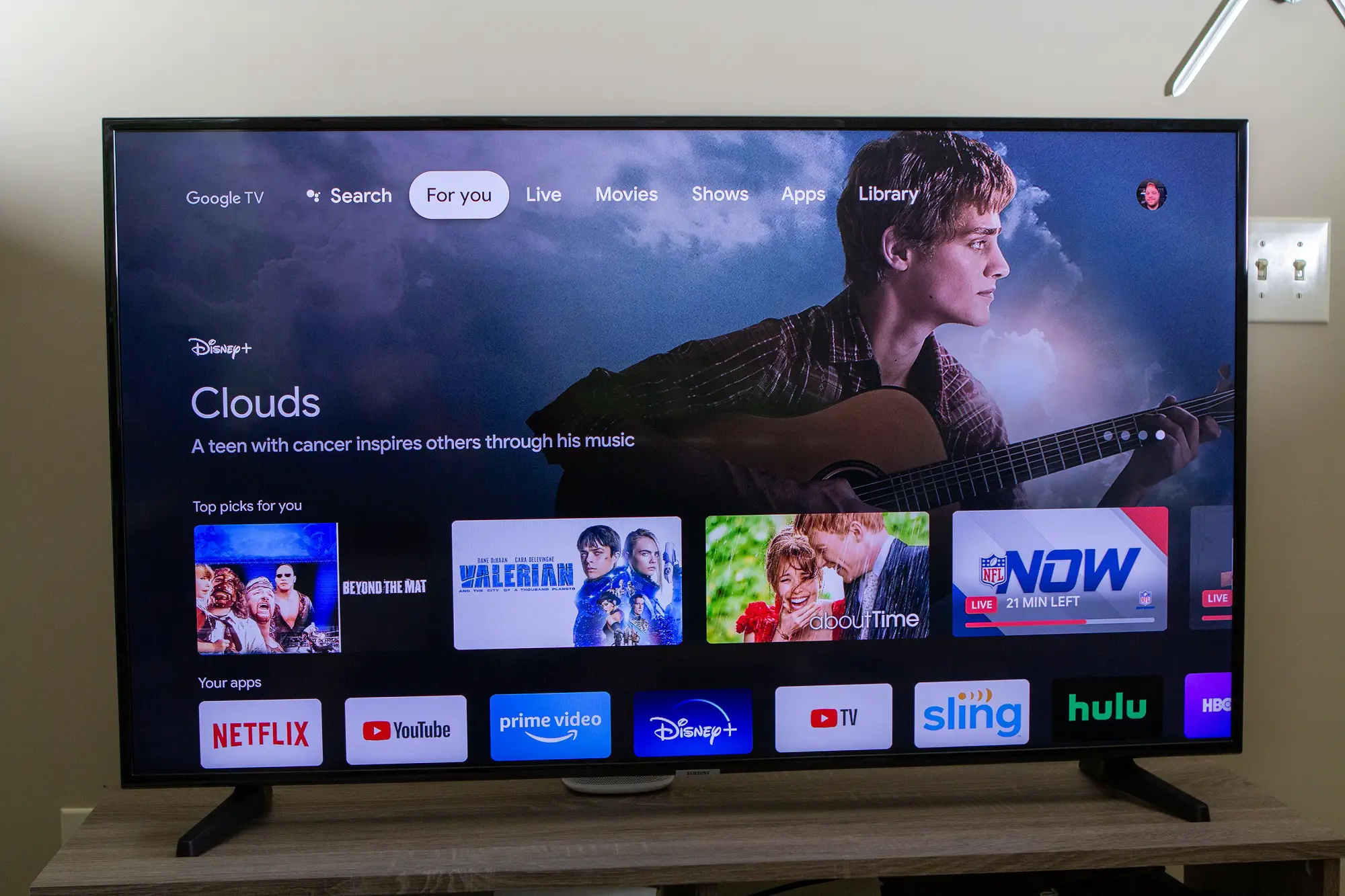
And this screenshot is the home screen in Fire TV: https://cdn.mobilesyrup.com/wp-content/uploads/2020/09/Firet...

> Yeah, I completely agree. Vehicle manufacturers can't just come and change out the steering wheel and dashboard in your vehicle, for example.
We also wouldn't get games like Goat Simulator who basically set a low expectation bar in exchange for low cost, best effort game play. I'm kind of ok with more "garbage" if we also get more weird/low budget games that wouldn't exist otherwise.
...which is still true today. It's common that large titles take 4+ years in development if they're not built on an existing game's engine and actually release in a finished state. Activision was able to release a new CoD every year because they cycled through 3 studios of which each had 3 years time for a game that's mostly a mod of the previous one with slight improvements to the underlying tech. And even then it's now almost expected that it'll take another 3+ months to get in a state that the game was meant to be released in.
> only cover a thousandth of the ground current games cover
That may be true if you go back to the Atari era, but even ~30 years old RPGs can still hold up well in terms of content. It's great that now we don't always need publishers to create & ship games and can release updates online, but that's no excuse to sell incomplete products.
Things are way different now.
The CD also had a folder named "updates and patches" where you could find installers for the latest bug fixes of the most popular MacOS software.
CDs bundled with monthly magazines was a valid conduit for getting patches to users at the time.
Updates can be issued, but it increasingly means that things are released in a state where updates NEED to be issued
What seems to happen is people want the game as soon as possible but also complain when it isn't perfect on release but overall they enjoy playing it sooner more than they are bothered by its lack of polish.
And if you have VR, Pavlov has been the most fun I have ever had gaming. It looks like a CSGO clone on the surface but it becomes the most absurd/surreal experience ever with custom maps. It's almost like playing laser tag in one of those optical illusion room of mirrors type attractions.
I have been appalled at the way people bend over and open their wallet since I was a preteen. Nordic and all the other rent seeking shits count on people blindly using their product they way they are told to. I'm surprised Nordic isn't suing their customers yet.
On the one hand you're purchasing hardware, which you expect to own and control.
On the other, there is software that runs on a subscription model which 'coincidentally' restricts the functionality of the hardware, because they want to stop people from bypassing the sub.
The hardware effectively becomes useless if the subscription service becomes unavailable or is taken down (e.g. if the company is acquired and the new company doesn't want to support that stuff any more). It might still function mechanically, but it now has a broken appendage through no fault of your own.
I just don't think I could justify a purchase like that nos unless I could square that circle. I'm not going to pay 2k for a Peloton bike that holds itself hostage unless I pay another 40 a month.
Welcome to the Right to Repair movement!
Of course, some tech bro will say that their spoon2.0 is specially engineered for the best soup flavor …
Exclusivity always existed at weird levels, here the issue would be more about having the option to freeze/protect a product's software state to get out of the update treadmill.
AirPods can be used with any phone just fine.
Engineering work has been done to make them to integrate deeply into Apple's OSes, but you can definitely use them on any phone.
If we’re speaking wireless accessories I would have gone with the watch.
That's about any electric car manufactured after 2020.
For example, windows updating. There was an updating when professor gave the talk in class. Windows updating popped out. There is no way for professor to stop the updating. He missed the chance and windows already went into blue updating screen. So, We had a break, and professor went to his office to find another computer.
Another problem is that automatically updating almost always runs silently. When I played online game and the game went laggy, I always tabbed out to see what happened with resource monitor. It is easy to find out there is whatever updating using CPU or bandwidth.
I feel updating just like legally raping my device. Oh. It is OUR device.
I’ve often thought about starting a hardware company that provides all the source code, schematics, bill of materials with the sale of a product. This is a dream and a desire I have for the things that I do buy.
For example, I have several digital cinema film cameras that I do not plan to upgrade or sell. Unfortunately they are showing their age and have some fixable faults. I have spent the last two years to reverse engineering these cameras to identify the fault. If only I had a schematic.
I don’t expect the industry or politics to change any time soon. If only a hardware company could change the status quo by enabling their customers to be enabled to have full ownership and access.
> I’ve often thought about starting a hardware company that provides all the source code, schematics, bill of materials with the sale of a product. This is a dream and a desire I have for the things that I do buy.
And on top of everything else, customers thought that they could watch whatever they wanted on their attached 32" LCD screen. Why fuck with wall-mounting a TV or a bouncy tablet when they sell a treadmill with the screen built-in?
Because unless the screen displays what you want it to, it's useless?
> But Howard, and many other NordicTrack owners, weren’t drawn to the hardware by iFit’s videos. They were drawn in by how easy the fitness machines were to hack.
> To get into his X32i, all Howard needed to do was tap the touchscreen 10 times, wait seven seconds, then tap 10 more times. Doing so unlocked the machine—letting Howard into the underlying Android operating system.
Personally, I would never purchase a device with a screen that intentionally locked me out like this.
- here
- John Deer self-fix stories
- Apple store stories (and Android/Google variations)
- Several flavors of techs at places like best buy quivering in their boots at an Apple fix. Techs keep blabbering on about Apple repair policy and what they cannot do. I finally had to tell the guy: Start telling me what you can do, or I'll talk to somebody else. All I asked for was if they have a screw driver to take the bottom plate off, which I later got off Amazon.
- General issues of privacy
We gotta get back to customer satisfaction. Eventually --- not as quick as we might prefer --- customers will realize they have the stronger position and use it. Indeed, if I plunk down money for an object, my assessment counts. I do not accept some paper pusher a large-corp-America gainsaying that.
I think this is a problem which should have a mostly technical solution: If most software was updated as today and users could rollback at will, most problems would be solved. That's a better way than making updates illegal.
Of course the incentives are totally out of whack, since bundling the updates is cheaper and many UX "improvements" exist to make the company more money, at the expense of the user.
Once users are conditioned or forced to auto-update why wouldn't a profit maximizing company make changes to increase its bottom line, regardless of how it helps or hurts users?
You can correctly accuse companies of a lot of things, but decoupling the UX really is a very hard problem.
Not great for security though…
No refunds, no apologies, just a game I'd paid 50 dollars for suddenly didn't work any more. Ultimately, still value for money given how many hours I'd ploughed into it before they broke it, but yeah, I think twice now about that kind of purchase.
That is why I call those devices 'dumb' devices (reminds me of a SciFi book where the AI helpers are called "artifically stupids"). Smart devices are local, no auto-updates, working with no issue in the event of an outage.
I have many smart devices, all that would stop working in the event of an internet outage, would be the voice interface.
"Dumb devices" is already an actual term, already used to refer to non-smart devices, so you are confusing anyone that has not learnt your custom vocabulary.
But calling them smart is also confusing when most of them aren’t, with the "smart" part being on a remote server.
Did you know that before The Phantom Menace, then-20-year-old Star Wars would compete with new movies at rental shops? I personally believe that this is why Star Wars was "updated": it was too resilient to being replaced. The rental place didn't need to buy so many new copies of new movies when they could keep making money on old Star Wars. So the studios needed a way to make Star Wars less appealing.
What about your other devices?
Overreacting aside, control schemes can be customized again in 1.4.
This is much more a question of relying on "off-label" feature / bugs in a product, which will always be an issue. The problem here is that the advertised experience was "you can only use our content" and that should have been enough to scare off potential buyers from considering it as an option.
If part of the product I've paid for is software, and the company can update it without customer consent at any time, then I can't rely on the product's features. Period.
I experienced this myself on the PS4 version of Terraria. I bought a hard-copy of the game. I mastered the controls, and loved them. Terraria was updated one day, and the controls were all changed, completely. Total rip-off. I liked the game I bought, but it was replaced without my consent.
My feeling is that this behavior should be illegal for purchased products.