Another aspect is the fact that smart TV apps are sometimes not as good as their desktop counterparts. For example the YouTube app on most smart TV platforms does not support viewing show notes or comments. So every time the person in the video says "link in the notes below"... you are missing out on that link. Another example: I like watching martial arts, both the UFC web app and the FloGrappling web app have additional features that are not found in their smart-tv-app counterparts.
Another big one for me, is the fact that in a desktop environment I have better multitasking and I can use browser tabs. For example if I find a Youtube channel I'm interested in, and I see a couple videos that I would like to watch, I just open them in a new tab. On a smart TV you would have to add them to watch later, then go to your library and find them, it's just not as immediate.
Another point is gaming, I am recycling old computer parts that I removed from my gaming PC when doing upgrades, these are relatively old parts but still pretty good, so you can run triple-A desktop games with pretty decent quality, whereas the type of games available for download on smart TVs are mostly just ports of mobile games. I also installed RetroPie which is quite fun!
Then there is hardware upgradeability. Recently I was thinking to add a faster CPU, and then the CPU that is now in the HTPC will go into my NAS since the one I have in the NAS is quite slow. You can't do any of that with a smart TV dongle, all the parts are soldered to the main board :-)
One more thing I like is that it's easier to watch content using alternative clients, for example I watch YouTube videos using the FreeTube app, on Smart TV platforms you might be able to find some alternative clients but the choice is more limited.
EDIT - rephrased some parts as they were not clear
That’s fair, if that’s what you want and if that works for you.
For most users however that would make the TV impossible to use with a regular, simple remote and thus be a major downgrade in user experience.
Basically what it seems like (to me at least) is that people who buy “smart” devices don’t want them to be smart in terms of having advanced capabilities. Rather they want the devices to be smart enough to do the right things in a simplified UI, allowing the user to get the same things done, but with less effort.
Basically smart devices are smart to allow the user to be lazy, dumb or both ;)
Yeah another way to say it is that I want my smart devices to be general computing devices. For example I've build my own NAS instead of getting something like a Synology or a WD NAS, I'm in the process of building a router/firewall using OPNsense etc.
I spend more in the short term but less in the long term due to the ability to reuse old parts etc.
> Basically smart devices are smart to allow the user to be lazy, dumb or both ;)
ahah yeah I see your point.
I went with Apple TV + Plex (along with D+/NFLX/Peacock/HBO Max/Hulu/AppleTV/Prime/Cable... but I still can't find everything I want)
I am curious, why is that undesirable for you? I'm assuming there's something more than lack of individual app support for casting.
We have disney+, and my TV apparently thinks we're not subscribed. My phone does, though, and I can cast from that. Yes, we can watch Encanto again, but it's very jarring when the normal interactions with the TV don't work.
But when you cast from an application with integrated chromecast support (as e.g. Netflix) then the phone is free to use as you wish while the kids are watching. I do this all the time. I start the cast, then use my normal TV remote to pause, for volume control etc. You don't need the actual app for most things and you can use the phone/tablet for other things (I have to find translations for my wife, for example, while watching).
[1] http://www.baaqii.com/promanage/productimage/Ewhole/A/A678-1...

One nice thing about the phone apps is that you can search for a different thing to watch _while_ currently watching something. Fast-forward/rewind also tends to be a little more intuitive with adraggable progress bar, except small-scale rewinds (1-2 minutes) of a movie is _harder_ because a few pixels is difficult to select cleanly.
I will say though that Prime is _freaking fantastic_ when streamed from my phone, better even than using the native TV interface. The Prime phone app lets you navigate _by scene_ in a show (e.g. Bosch) which my tv app won't let me do. I wish Netflix and D+ would/could copy that, specifically. I wish it didn't have spoilers in scene descriptions, but being able to say, "Hey go back to the start of the council of Elrond" is really nice, rather than having to use +/- 30 second increments.
Google in particular is the worst offender here because they actually had Miracast in Android all the way up to Nexus 4 - and then deliberately removed it! Other vendors of Android devices generally reinstate it in their distros, although I do wonder how long that is going to last (probably right until Google makes not supporting it a condition of getting Google Play certified).
Casting from a phone is a terrible experience. I want to sit down on the couch, mash some remote buttons and watch something. I don't want to find a phone to cast from. Whose phone would we use? Mine, my wifes, my relatives who are over? What if they want to change the program? Now they are figuring out all the casting business? No, pick up the remote and use it like normal.
Why is it undesirable having to go find my phone? Because I'm relaxing on the couch I guess?
This screenshot shows the home screen in Google TV and gives you an idea of what I'm talking about https://phandroid.com/wp-content/uploads/2020/10/Chromecast-...
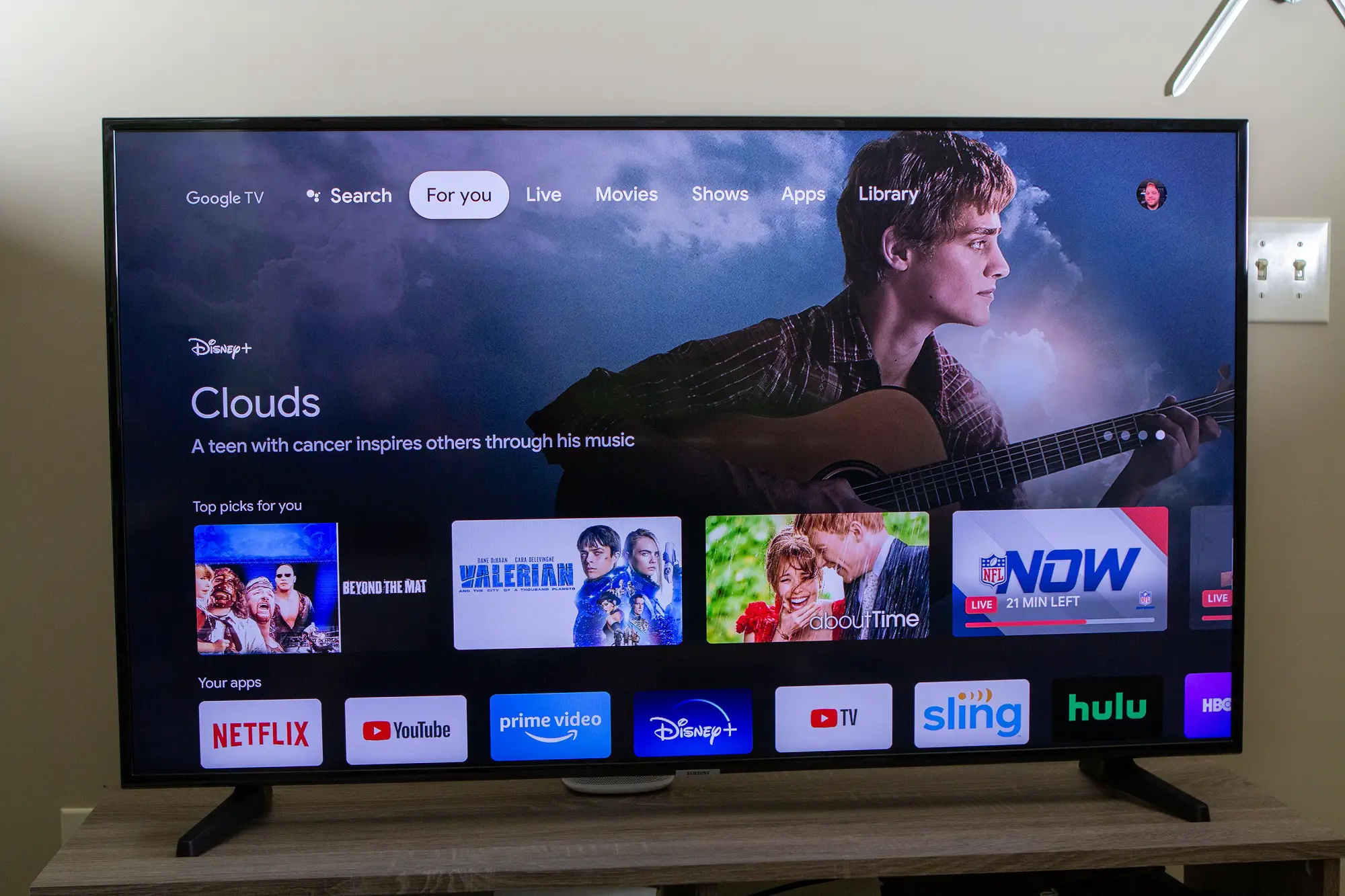
And this screenshot is the home screen in Fire TV: https://cdn.mobilesyrup.com/wp-content/uploads/2020/09/Firet...

I tried several alternatives in terms of smart TV (Apple TV, Google/Android TV, Fire TV), and I could not find any platform that let me use all of the apps that I needed without resorting to casting from my phone. And in some cases there was a long process to follow in order to get the device to do what I needed[1], which involved activating developer mode, sideloading apps etc.
In the end, I bought a wireless keyboard/touchpad combo and built a HTPC, reusing old components that I removed from my gaming PC after upgrading it over the years. I installed Ubuntu on it and never looked back.
[1] For example not having the home screen being made of mostly ads, or having a simple web browser installed on the device