If Windows isn't supported on my laptop, I can nearly always replace it with Linux and still keep it alive. With stuff like this, they can decide to never update it again or just turn off some critical service and render a device unusable. It's not just a thing about owning what you purchase and having the freedom to do what you want with it, it's also about the environment. Forcing things to become dangerous for use or just having the power to kill it remotely out of business interests means more electronic trash.
https://publiccode.eu/ goes in the right direction on a similar topic, but this should also start getting a bit of the limelight.
Okay. Stallman was right. I know it's cliche, I know he's weird. But I learned a LONG TIME AGO never to bet against the man's predictions and ideas on software. He called all of this, and quite a few people (especially HERE) would do well to get back to fundamentals and work on fixing it.
Great link, thanks. Very encouraging.
I've been saying "citizen-owned software".
FWIW, I ran for office on an election integrity platform. Demanding that we own and operate our own elections. While "open source software" worked well enough (10+ years ago), everyone immediately understood "citizen-owned software". Transforms that bullet point into 90/10 (pro/con) issue.
Edit: I should clarify something. FOSS isn't sufficient. Citizen-owned software means we control the repo, builds, distros, etc. Microsoft, RedHat, whomever can fork or whatever, for resale or whatever. But we always control the root.
Who is "we"? That's the point of FOSS: "we", as "we control the repo, builds, distros, etc" is defined basically as anyone who wants to do it. The idea of forking is an incredibly important part of that, but it sounds like you're suggesting that "we" would be limited to a specific group and centralized control.
Citizen-owned software.
I explicitly said FOSS. Any one can fork. How can I better make that point?
My motivation: my county invests in its own election management system (GIS, VRDB, ballot production, tabulation, report generation, etc). I demand that this entire stack is available to everyone for any purpose. Especially other counties that want an alternative to proprietary stacks hidden behind trade secrets, copyrights, and onerous EULAs.
Is this not what you want too?
> ...it sounds like you're suggesting that "we" would be limited to a specific group and centralized control.
"We" the citizens implies "everyone".
But more to your point, what are some examples of FOSS which are not de facto centralized?
I refer you to RMS' Four Freedoms. https://openedreader.org/chapter/stallmans-four-freedom/
A good start. I reiterate that FOSS is necessary but insufficient for citizen-owned software.
Bryan Cantrill's "Power to Fork" thesis is relevant. http://dtrace.org/blogs/bmc/2010/08/03/opensolaris-and-the-p...
Sadly, I lived that experience on another FOSS project. Wish I had heard Cantrill before I committed to that effort.
I'm also deeply influenced by Pieter Hintjens. https://en.wikipedia.org/wiki/Pieter_Hintjens#Bibliography Ditto Clay Shirky, eg Here Comes Everyone.
Nadia Eghbal's research is on my reading list. https://nadiaeghbal.com/oss/ Having just skim read, it looks very insightful, cogent.
I was thinking of getting one for myself, but I think I'll stick to USB-connected JBODs.
Convenience and resilience at the same time.
Also, you need at least two different USB drives, that you back up to in A/B fashion. I prefer to own two separate brands.
A very, very, very select few with the necessary skills could have. This is a mass-market device, if 1 in 10 000 buyers is able to do this, that'd be a lot, and then those would have a Linux machine on an ancient SoC with none of the original functionality.
This one would probably be harder, because there's not a ton of 32bit ppc distros around, and the storage is limited, so you'd have to setup some toolchain and build some ppc basis for the userspace, yourself.
I don't think many people would root for some 11 year old WD's trashy userspace code, and would rather want to run current musl, busybox and samba on this, or whatever.
Someone who likes these devices could have done the work and could have published it for others.
So it isn't completely trash, the drives were still usable even though they were done using it as a MyBookLive device.
Market experimentation is necessary for innovation. Now we've learned never to buy a product from WD (in case you forgot that last year they intentionally sold unfit SMR hard drives and lied about it).
Also, always have backups (not just syncs!).
In this case, "we" is probably a very small group of people. For starters, it's limited to folks who hear about this in the first place. Ars Technica isn't exactly a huge news site, and, while it might be mentioned on TV news, I doubt they'll be talking about it all day long, so only a subset of their viewers would hear about it. Then, beyond that, it's limited to the subset of those who believe that the appropriate response is to not buy WD products anymore. Which isn't everyone on HN, and might not even be half of them.
So maybe we're looking at 1% of the general population? Their opinion isn't going to make a big enough dent in WD's revenues to justify the cost of supporting a product like this past its commercial end of life.
I think that there is a free market answer to this, but it in no way involves successfully pressuring companies like Western Digital to support discontinued products in perpetuity. It's just good old-fashioned "caveat emptor", pure and simple.
Granted, we're talking about consumer tech, so the vast majority of emptors don't have the background knowledge to be able to successfully caveat for themselves. So that approach is sort of acknowledging that a bunch of people will be screwed.
Which might be the best you can get. This is an area with no perfect solutions. More consumer product regulation might curtail events like this, but at the cost of more regulatory costs, possibly stifling innovation, and the risk that the legislative body (few of whom really understand these issues themselves) will just deliver us the latest heinously misdesigned law in a long series of heinously misdesigned law. Leaving things as they are might avoid all of that, but would guarantee that things like this keep happening more-or-less unchecked. Which kind of solution someone prefers is perhaps more a matter of political leaning than any practical consideration.
Markets can only behave reactively, but some harms need to be mitigated proactively.
Hard drives are a particularly bad example too because the risk of failure goes up as the device ages, so people probably should replace them after a few years of heavy use regardless of software support.
We live in a rich society, electronics are relatively cheap, and people like having shiny new things. We will inevitably continue having more and more electronic waste. Right to repair type laws are great for consumers for many other reasons, but I don’t think they’ll make any kind of meaningful dent in the reduction of electronic waste.
As a result, I've bought a new NAS-type device which does have supported software and which I can put on a live network with only minimal worry. (I still take backups of course, but not as thoroughly as I should.)
That's a direct waste impact of the device being out of support. I like the form factor. I like the capacity. I wish I could just run Openwrt or something on it. (It's a Marvell SOC inside, so that's the likely target if I had porting skills.)
Do you really not see how completely unrealistic this is for the average consumer, and honestly the majority of HN readers?
I suspect there will be litigation, but I am not a lawyer. I will be interested to see it though, what is the responsibility for using things post end-of-life? What we might see is a new “your on your own” mode built into this sort of appliance that once EOL hits it asks you to affirmatively indicate that you know it is no longer supported and any further use comes at your own risk.
It is also another great case study for open source NAS devices, like the TrueNAS line, that you can patch even if iXSystems goes away.
I own/use exactly 4 “IoT technologies”.
I have smart radiator thermostats that turn on/off the heat based on family presence, as well as “predict” the heating needs based on weather forecast, sunshine hours, etc.
I have a heat pump in my vacation house that is remote controlled by the internet. Not strictly needed, but very convenient in the winter.
To keep an eye on my vacation house I also have a camera that uses HomeKit Secure Video. Requires no infrastructure on my end except network.
And finally, like a lot of people I have Hue.
I control it all through HomeKit. I also keep everything on a couple of IoT VLANs, one for “trusted” devices (AirPlay, media, PlayStation, etc), and one for “everything else” with client isolation, filtered dns, IDS/IPS. No upnp/nat-pmp, no tunneling (if detectable), and no other dns servers but mine (until dns over https becomes a thing with IoT)
In the future however it might become more or less impossible to avoid. Our neighbors recently purchased a new oven, which of course comes with internet connectivity. Their new washing machine also has internet connectivity.
In the very near future everything will be connected under the pretense of providing useful feature, when in reality it’s all about pushing adds and gathering telemetry data.
Starting pre-heat before you get home. Monitoring temperature away from home. Leaving a dish in the oven and starting it at a specific time, say an hour or two before you leave the office and head home for the day. Checking if you left the oven on after you left home.
> or washing machine
Notifications for the end of the cycle. Status of detergent levels if equipped ("Do I need fabric softener?" whilst at the store). Starting a load (similarly to the oven above) while you are on your way home so you don't end up with wet clothes sitting all day, so they're ready for the dryer when you walk through the door.
--
I get your popular cynicism, but c'mon now. None of the stuff I'm outlining there was researched, it was all off the cuff and I live in an apartment with "dumb" appliances from 1996.
I'm a new dad and when we both are busy with work, chores and the baby I find myself wishing I had IoT devices to automate a couple of stuff home.
First, there's a way to do sous vide cooking without one of those big circulators like the one I use. They sell a device that is a little bluetooth thermometer; you can put it in a pot of water, and the induction range can keep the water at a precise temperature. No circulation, but more than good enough imo.
Then you can use the wifi to operate it remotely. So as a case scenario, one could fill a pot with ice and water and a sous vide bagged steak, then turn it on remotely, say an hour or so before getting home. Or one could conceivably leave an uncooked cake in the oven?
I will probably never bother to enable any of this, but yeah, there are uses. I don't want it, but I get it.
But then again, if you’d asked me 4-5 years ago if I could see the usefulness of smart radiator thermostats, I’d probably have said no. The ability to remotely turn on/off heating is not that big a deal (to me).
It’s only when coupled with AI to optimize savings it becomes a great thing. Since installing the smart thermostats, I save on average 30% on my heating bill, and save the environment from 30% of my CO2 emissions from heating.
The AI part learns about how much the house heats up from a given amount of sunshine, coupled with outside temperature and heat loss, and controls the thermostats accordingly. If the indoor temperature is 1C below the target at 6am, but it’s expected to be sunshine, it simply won’t turn on the heat.
Other appliances, e.g. our washing machine, tell me already how long they'll take. So I can set an alarm to not forget to care for them later. And if my fridge would alarm me because its door is not properly closed, I'd rather prefer a loud alarm over a small notification which I might overlook because a mobile device is someehere else.
These days i just use a Ubiquiti Dream Machine Pro. The base version works just fine as well, the pro just fit better on the shelf, and i didn't need an additional AP.
People who are not rich enough to buy everything single purpose will have to pick and choose.
Things feel bleak.
Just last week, there was this news about the Texas power company that remotely raised temperatures on people's thermostats to save power and avoid brownouts/blackouts. This predictably caused public outrage as people discovered what was in the fine print that they signed without reading, but from the perspective of the power company, everything worked as intended, so I absolutely expect to push these remote-controllable thermostats even harder moving forward.
I just don’t see an alternate way to implement this. Prompting users via pricing is not something that will quick enough or intuitive enough. Also the sacrifice they are asked to make is at most a few degrees
Increase capacity.
By running the system ever closer to the bone you simply cause more disasters.
https://www.upi.com/Archives/1983/03/14/The-last-episode-of-...
why would raising temperatures save power? probably a silly question but I'm confused.
Explanation for those wondering why this needed explanation: Most thermostats set the lower threshold before heating comes on, so turning it up would use more energy.
Adjusting people's usage for demand management is another.
They need to be separated and managed differently.
Instead of push adjusting HVAC for demand, they could use proper price signals with the appropriate local automation at the household that can be over-ridden by the consumer.
BUT giving the grid operators emergency control over demand is a useful tool when the grid is close to failure. Too many people will just hit override unless the price signals are very high. When grid operators know people will die if their system goes down and it’s on the brink, people choosing to be 4 degrees cooler is such an immoral choice I’m OK removing that choice from them.
Also very helpful to reduce shocks to the system after any outages by temporarily limiting HVAC restarts.
But that's the point of an energy market, it will adapt the price signal to the supply and the demand. People will override it without thinking only the first time. The second time they will remember the humongous bill they got because of that and will think twice.
It's possible that people are using thermostats that are still provisioned to the previous tenets electrical bill.
It's a important technological achievement to be able to shift and schedule loads so that we can switch to more efficient energy sources. Requiring the power generation companies to service the upper percentage of usage is a lot of expensive environmentally as well as economically.
Regulation also helps, e.g., in the UK LG's smart TVs have a toggle to enable content fingerprinting, and it's off by default.
Last month I gave our nice SmartTV to a friend and bought low quality non-Smart TV from Walmart for $199. Really low quality but running it with just a new Apple TV box is a UI delight. My wife is unhappy with the downgrade, but I love it - much more private, no unwanted SmartTV apps and having the UI driven in ways I didn't like, being forced to have the old device on the Internet, etc.
I refuse to buy any appliance that requires a connection to the internet. I look for things that are straightforward to repair and maintain.
Now, as for how they ended up configured to be accessible from the internet, I'm not sure. Is that a user-facing option? Is it on by default? Did WD have a responsibility to disable the feature when they stopped maintaining it?
That's one of the reasons why the transition to IPv6 is good : IoT directly connected to the Internet without any NAT is going to be the default assumption.
This whole, "ah sorry we decided to end-of-life that because we couldn't make any more money off it" is so many levels of bullshit.
It's also part of a broader attitude on not repairing anything. Battery dead in your activity tracker? throw it out and buy a new one. Worse still, the band has degraded but the electronics are all fine? still throw it out (or put it in a drawer to never come back out).
Closely aligned to a recent story where Amazon is/was destroying masses of products that hadn't been sold. The waste is just extraordinary.
This is my takeaway from the whole Peloton fiasco. If you spend thousands of dollars on a product, and after the purchase the company bricks the product, the company should legally owe you a full refund.
So car manufacturers are forced to allow their cars to be repaired, not necessarily with their parts, a long time after they've stopped selling them.
IT stuff should start following the same lifecycle.
Do you mean it takes about 10 years for the car to emit the same amount of co2 that was used in producing it?
For years the OEM (original equipment manufacturer) replacement parts fill into the wholesale and retail channels. If the manufacturer stops offering the part, there are still parts in those channels to meet demand, sometimes for many more years to come.
The manufacturer may keep offering parts beyond the requirement, too. Parts can be profitable, and service can be a big part of dealer revenue. Dealers who make money on service put pressure on the manufacturer to keep parts available.
Physical parts are also pretty easy to copy, so if demand persists beyond the availability of OEM parts, you can often get aftermarket parts. There is also a channel of junkyards and enthusiasts who hoard used parts with life still left in them.
I’ve got a couple friends who like old vehicles and they are able to get parts for trucks that are nearing 40 years old. I own a car that just turned 12 and have never had the slightest problem getting parts for it, even OEM.
Why not? Personally i believe a hardware manufacturer should be bound by law to sell parts for any vehicle it sold in the past, as long as it exists. Yes even if it was produced 40 years ago. There's no reason for it to be otherwise.
If this was mandated by law all the tiny incompatibilities that they introduce with very varied models will suddenly go away because they'll be careful to make products that can actually be maintained and repaired decades from now with spare parts compatible with different models.
Some people use cars who are more than 50 years old and they're just fine. Same goes for washing machines, drills, bikes... We have to stop this capitalist nonsense that keeps on producing single-use items that end up in the trash in the coming months. IT'S INSANE!
Cars would get extremely expensive. Imagine Ford still having to supply model T wheels and engines.
They either would have to have kept a production line and employees knowing to operate it around, or have stocked ‘enough’ parts, where ‘enough’ is very hard to estimate up front. Also, stocked parts deteriorate, so for, for example, tyres, they would have to keep a production line running.
And that’s the easy case. At least Ford can ballpark know how many model T’s still exist. what if a car of a model that we thought didn’t exist anymore gets discovered in a barn?
And of course, that wouldn’t work in cases where manufacturers get bankrupt.
On the building where I live, the company which does the elevator maintenance offered a significant discount on the replacement of the control system in the machine room with a more modern model (which uses less energy). Their reason: including us, they had only two clients left which used that older system, so once both upgraded to a newer (and more common) model, they would no longer need to stock replacement parts for that older model.
¿Some? ATM machines have hard disks, and are certified with specific models.
You would be surprised what a hard disk with 1/100 the capacity (or even less) of a $100 one costs.
Said business would eventually declare bankruptcy and stop making the parts
One difference is the difficulties in making some 'parts' now. It's one thing to make a fuel pump for a 1950's car, quite another to duplicate a controller board, often with obsolete parts and secret software, that runs the convertible top.
Another is that a lot of parts are more monolithic than they used to be and harder to design/build. Look at headlight assemblies.
It doesn't help that with the increasing amount of software and electronics in a modern car (a Tesla being the leading example), the auto industry is acquiring the product lifecycle times and forced obsolescence of the PC industry.
But this is literally "Anyone in the world can remotely make your product unusable and destroy everything on it while you use it as intended"
I don't care if a car manifacturer EOL'ed a car model, if an issue gets discovered that will make the engine explode at random they better do recall.
It's not the manufacturer's fault if your expired fire extinguisher or medicine fails.
Internet things are out durable goods. They require maintenance or they fail.
If EOL is unreasonably short, that's a factor in purchase decision or contract or commercial code violation if they surprised you with accelerated EOL.
https://www.forensicdjs.com/blog/bmw-hvac-blower-wiring-reca....
They are, but it kills the planet.
We have 12 year old PCs in the family. Well, back then they were high-end models bought for work. Now they are running Linux just fine for general family purpose. They use a bit more of energy than a new model, but where we live you have to heat buildings at least 8 months a year anyway. I am sure producing a new one would have required much more resources.
Replacing old hardware with "more energy-efficient" hardware is a trap from green capitalism and the numbers do not add up usually.
What might be a more useful comparison is a $20 5W raspberry pi vs. a 2009 100W (at best) desktop computer where a month of continuous desktop operation costs more in energy than the new raspberry pi and ~1 year of usage.
https://www.reuters.com/business/autos-transportation/averag...
E.g. if I had bought the very first generation of the iPhone it would have been much more out of couriosity, not long time usage expectation. But I think there now has been enough development on it, that I should be able to expect the iPhone I bought in 2020 to last say to 2030 somehow if I want to stick with it.
There is a lot of 'everything should be supported for eternity for free' in this thread, but I see no (at least somewhat) concrete suggestions for better solutions. If it was easy, we would have done it people.
Companies have little to no incentive and consumers have little to no power. Barring some very unlikely industry-wide agreement, it requires legislation.
(Note I'm not replying to your first paragraph at all, only the last)
Here's a concrete solution -- The US Consumer Product Safety Commission should be given regulatory power over all consumer products, such as to enforce a minimum five (5) year support for repairs and parts availability, and standardized safety + recall notices.
NHTSA already does all of this for cars and vehicles. (They require a minimum 10 year parts availability. They handle recalls via VIN for auto manufacturers, including notices and matching effected model lookups, etc) - https://www.nhtsa.gov/vehicle
US-CPSC should run a matching mirror'd program exactly like it, but for consumer goods sold in the US.
That's the easy, concrete solution. It's just not "profitable" from a capitalist perspective, and that's why no manufacturer is doing it.
Well not exactly nobody. Some manufacturers like FACOM (probably others) that are not into electronics have (or used to have) lifetime warranties and will happily repair or replace a product that is decades old.
The question is: as a society, do we want to pursue everyone's good and make things more efficient and ecological? or do we want more profits for the industry owners and more inequality and damage to the environment?
These two paths are fundamentally opposed. There is no conciliating them. If you want "nature" and "consumer rights", then you need to abolish "capitalism".
The drives themselves and their function as a NAS on a LAN is still fine.
When "Live" EOLed, they should have turned off the servers and disabled the function. If they weren't going to service/support it anymore, then they should have been honest about it.
Of course, their consumers would have screamed, so they did the worst possible thing, kept the service running as-is and didn't make it clear that people were leaving themselves open to attack.
That makes me think of the internet radio owners (Grace Digital, Yamaha, etc.) that all had their products brick because the underlying look-up service just up and went away. No problem. You just have to buy another hunk of plastic and microprocessor.
(Also, my hard drives always fail after I put them in the bathtub. Lol.)
E.g.: Mybook Live Duo 8TB: https://productimages.hepsiburada.net/s/12/500/8922723713074...
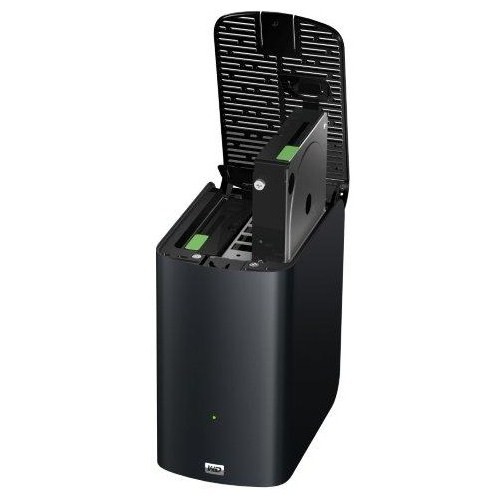
Typical business life of a computer is 5 years. Typical service/support agreement is 1-3 years.
Try getting Apple to address a failed hard drive that's 12 years old. They'd laugh in your face.
They issue security updates for their current OS and 2 versions before, AFAIK.
e.g.: Live Duo 8TB: https://productimages.hepsiburada.net/s/12/500/8922723713074...
WD sells the hardware, hard drive, and software as one sealed unit. The part that fails first will be the hard drive inside. The unit shouldn't be end-of-life until it actually should be expected to fail. (WD claims the units were end of life in 2016)
The current fault erases everything on the drive. That can be equated fairly equally with mechanical failure. Let's imagine a different bug for instance, that allows anyone on the internet to read/write all the data on the drive. If one of these bugs emerged after 12 years, then there is a much stronger argument that the manufacturer should fix it, because it is a fundamental fault with the device.
Under the sale of goods act of 1979, the device must be suitable for the purpose for which it was sold, and there is no time limit on that, so any consumer with the device could demand that the person who sold it to them fix it. The device was unsuitable for the purpose for which it was sold from day one - it just took 12 years to find that out.
Any situation where "you are on your own" should include the dropping of protections preventing you from actually fixing the device. If the manufacturer refuses to produce updates, that should NOT mean there is no way to update the software on the device.
But really as pointed out above, any IoT device will eventually have a security flaw discovered if updates are stopped.
As a consumer the best bet is to switch to a supported device or disconnect the device from the internet.
This really shouldn't have to be a consumer issue, it's wasteful to have to replace something like a router after the short EoL and inevitable vulnerabilities are found.
Perhaps we need more modularity, so core components can be swapped out to upgrade them.
PC hardware isn't ideal because you lose the benefits of specialised offload capabilities.
I'd be willing to pay a nominal annual fee for devices which are important to get firmware updates; router, WiFi AP, phone, etc.
To an extent I've partly achieved the modularity I speak of; after becoming fed up with decommissioning WiFi routers every couple years, I moved to router, switch, AP (Ubiquiti gear).
Just so you know, this isn't true. Nothing stops hardware offload from being put in a PCIe slot (that's where it tends to have started actually). And indeed that's a fairly standard thing on decent NICs, which don't have to be particularly expensive if you buy used. I've switched to OPNsense for routing functionality at all sites I manage, and have had no issues with hardware offloading for CRC, TCP segmentation and large receive offloading, or VLAN hardware filtering with Intel or Chelsio NICs. Both are very well supported under FreeBSD. I suspect a Linux based solution would have an even wider range of options since it tends to have more hardware support, so something like a Mellanox card could work.
At any rate though it works well, and running on a PC opens a vast array of useful options and flexibility, all the standard tools are there, and one can get something enormously more capable then a typical pre-made gateway/router for cheap.
>I moved to router, switch, AP (Ubiquiti gear).
I did this as well way back, and still run the switch and APs as UniFi for now. But I'd caution against depending on them for routing, it's always been a weak point and they've really, REALLY gone down the tubes on development there long since. UniFi gateway/routing and most network services that they've decided to make dependent on it (DNS, DHCP etc) is frankly complete crap. OPNsense (probably pfsense would work too but I didn't want to go to another proprietary solution with a worrying concentration of asshole at the top), VyOS or the like aren't quite as nice to manage, but it's so nice to have normal capabilities and something kept up to date again.
Given my statement, you're correct, but what I meant to say was; I can't just take a random PC (-like) device and expect hardware offload or other similar capabilities, I still have to buy specialised hardware, a suitable NIC, e.g Intel. I make a point of buying Intel NICs for this purpose.
> But I'd caution against depending on them for routing
I agree. I've been running Ubiquiti for 5+ years now at home. At the time nobody was recommending against them, quite the opposite in fact. I use EdgeMax/EdgeSwitch/EdgeRouter + UniFi APs.
> VyOS or the like aren't quite as nice to manage I'm quite happy with VyOS/Vyatta, I'm not interested in fancy UIs, which made me _less_ interested in UniFi.
I've considered getting a PCEngines device because of the open/libre bootloader (uboot), when the EdgeRouter finally kicks it. It's nice and compact like a router, I can stick in my 12u network rack cabinet, and I'll be able to keep it up to date for longer as well as integrate it better with the tools I use.
I mean sure, you can't just take an entirely random PC, but then if you just grab any completely random AIO piece of junk you're probably not going to get a great experience either, "hardware offload" or not. The variety of kit available, particularly used, that has even built-in Intel networking chipsets which work is wide enough and cheap enough that it doesn't seem like a particularly limiting factor.
>I agree. I've been running Ubiquiti for 5+ years now at home. At the time nobody was recommending against them, quite the opposite in fact. I use EdgeMax/EdgeSwitch/EdgeRouter + UniFi APs.
Yeah, when I started with Ubiquiti they were excellent with much promise to come. Unfortunately their CEO is a mixture of toxic as hell and seems only semi-invested at this point while also having complete company control (don't let the "public" aspect fool you, he has a super majority of the shares) and has torpedoed their talent pool and vision. Damn shame, I don't know of anyone else pursuing quite the same thing at all.
I wouldn't bother with them for LAN stuff (their PtP/PtMP is still pretty competitive and useful) greenfield at this point, but even so I think they're fine on the switching side and acceptable for an existing investment on the WAP side. For switching they stopped being as feature/price competitive a while ago, but that doesn't harm the basic functionality. I have doubts about them navigating the multigig or WiFi 6E/7 transitions, they've been able to coast on old talent and investment by people no longer there for a long time. But that won't get pressing for a while so it's not a driver.
The gateway aspects definitely are though, awful. Edge is certainly somewhat better, but even there one can see the stagnation and rot.
>I've considered getting a PCEngines device because of the open/libre bootloader (uboot), when the EdgeRouter finally kicks it. It's nice and compact like a router, I can stick in my 12u network rack cabinet, and I'll be able to keep it up to date for longer as well as integrate it better with the tools I use.
I considered them as well as a range of others that supported coreboot. But in the end since I have a rack in a more out of the way place I just waited for a good 1U server deal to turn up on Ebay and grabbed a few of those. I have a decent SuperMicro system and a few HP DL20s, Provantage even briefly had a bunch up brand new for $350. For something as important as a gateway, it's actually kind of nice to have things like full lights-out-management and kit that's all designed to run 24/7 for years. 1U stuff of course tends to be noisier, but swapping fans for something quieter even at 40mm has tended to work pretty well for me in this application since they tend to be relatively power sipping (at least for x86). No GPUs, no big stonking 100W+ CPUs, not a whole lot to watts dissipate even in that form factor. Though too bad there don't seem to be more options without going custom for something SoHo/SMB focused that could trade Us for noise a bit more. Maybe that'll come around, in data centers density is king of course but I recall reading some articles that even there, let alone in company IT rooms/closets, there has been a growing appreciation about the dangers of high workplace noise levels.
It's fun to control around from our phones but after 2 years it won't be much fun someone else controlling around
(Although potentially something that in hindsight WD would have wanted to patch anyway - assuming end users patch things).
And maybe highlights that support lifecycles for IoT devices should be longer.
Correction: End-of-Support appears to be last manufacture date (2015) + 3 years, so assuming 2018.
Four-year support for a device that is connected to the Internet is ridiculous. I bought a Synology device in late 2012 and it's still getting major release updates.
You can release patches 6 years after your device is EoL but there will forever be more security issues and people using your ancient product (think how long it takes some versions of Windows to truly reach less than 100k active machines. Hell I wonder if Windows 3.1 has really reached that number or not. The long tail is going to be loooong). Not to mention you've created a precedent that the device is still getting patches and can be used by users, only making the lifecycle issue worse.
You can release a version which severely limits the capability of the product or effectively disables it but this is just a guaranteed way of getting bad press and even more customers will be mad at you for killing a device early.
You can turn the device over to the community (if you can managed to get it through legal and 3rd party agreements) but that isn't actually going to solve anything as it's not a product for extremely tech savvy users, at best it buys deflection in the news report in exchange for the effort of doing this (if you can at all).
You can claim the lifecycle is over and years later and be technically correct but still get the bad press and user feedback anyways.
.
Retrospective in this particular case it would have been really great for them to fix this particular issue but that's an extremely hard thing to accurately judge unless you're from the future. I mean what percentage of devices that are many years EoL you've heard get this bad of a publicity hit? I'm sure there are many individual cases to point to but it's nothing against the absolute deluge of devices that have been discontinued over the years quietly without issue.
As more security-related features get added in Android is also losing some of its differentiating abilities - e.g. wifi scanning isn't possible on iOS, but I think it's also been getting more restricted on Android in the last couple releases. That and the must-use-our-webkit browser restrictions on iOS are the only things that that have really annoyed me on iOS.
I looked at the Pixel 4, released October 2019, discontinued October 2020, no guaranteed updates after October 2022...
[1] https://www.gsmarena.com/google_pixel_xl-8345.php [2] https://support.google.com/nexus/answer/4457705?hl=en#zippy=...
Require all hardware devices to have ongoing security support for twenty years. A company can opt out of that support after three years, provided that they open source everything down to the firmware, and provide documentation and any necessary jailbreaking tools.
also an amendment to bankruptcy law that requires open sourcing propriety digital tech as part of filing.
This is so disingenuous (from the first report of this flaw):
“Western Digital takes the security of our customers’ data seriously, and we provide security updates for our products to address issues from both external reports and regular security audits.”
"Winning" isn't "gee if we could just say we'll patch every discontinued product forever and imagine it had no downsides wouldn't that be great" - that's known as "dreaming".
Having a vendor support patch releases indefinitely would not be a huge burden for Western Digital.
In this case, it was obvious errors in their PHP application.
Make a NAS drive which exposes everything to the gateway without bothering for authentication and then let Apple/Google/Amazon work out how to defend access to the resource.
Random OEMs are unable to pull off IoT safely.
There is: don't release devices with security flaws in the first place. The fact is, they released a fatally flawed device. That the flaw was discovered later doesn't change that fact.
I think the way we talk about security patches and updates obscures the fact that they're correcting fundamentally flawed software. In other circumstances, this would result in product recalls. Those financial incentives are a big reason why product recalls for serious faults are fairly rare in other types of products.
This is why 1) Security patches will pretty much always be necessary and 2) relying on perfect software alone is insufficient. Other precautions also need to be taken to prevent or mitigate attacks. In this case, it appears the My Book attack requires the IP address of the device. That indicates that people impacted may have been running these networked in a way that exposed them or the relevant ports to the world, which is very bad security.
This is a false proposition.
All actual engineering professions I know of have processes, checks and balances to avert disasters and premature failures. No one expects all of the shingles to be perfectly straight or have the same color, occasionally a roof may have a bit of a leak, yet I think even a single 4y old roof developing a massive leak would be a big deal. Imagine the consequences if all 4-11y old red roofs from a large construction company collapsed or developed massive leaks overnight.
Neither bridges nor roofs keep standing because they are built perfectly, nor are all bugs security issues. Yet a single fatal flaw can bring a bridge down and a single off-by-one can be a root exploit.
We shouldn't expect perfect software, yet we also shouldn't need security updates (at least not often and on everything). WD SW was fatally flawed, shouldn't have been released, WD should be responsible. SW "engineers" should be ashamed to be associated with such practices. I know I am.
Regardless, we're talking about security, so let's go to the actual real-world equivalent. Physical security. Is perfection possible there? Nope. Anything even remotely capable of surviving a sustained attack is going to cost an amount of money reserved for corporations and nations, not everyday consumers.
If you think the current quality of physical engineering is something we should hold up as a comparison to the security quality expected of software, let's compare notes in a few hundred years when programming reaches the same level of maturity.
Maybe I should have used electrical installations as an example?
> real-world equivalent. Physical security
Physical security isn't a good analogue, because you don't have a line of hackers, trying to get into your cupboard and magically also millions of other cupboards, closets and storage rooms with near 0 marginal cost and incomparably easy way to avoid getting caught.
Unlike physical security, perfect SW security is pretty much attainable (shocking, isn't it), with 0 marginal cost (no cost to duplicate). Physical access, social manipulation etc is physical security.
> footbridge in London
One bridge in 100, caught before it failed? Compared to all SW with network access and weekly updates.
We know how to engineer things so they are reasonably safe, we actually do it.
We also know many ways to make software much, much safer with only moderate investment, and some ways to make provably correct SW, and we do not care.
Hardware needs to be liberated from unsupported software, and users should be made aware of vulnerabilities and support status. Making software vendors liable for future exploits of unknown vulnerabilities opens a can of worms that would have non-neglible consequences for everyone who writes software, and not all of those would be beneficial to security.
Many products have flaws, but if the worst that can happen is that the customer feels ripped off, they don't get recalled. There might be remedies under a express or implied warranty, but tech products typically disclaim all of that in their terms of service.
Just that attackers didn't choose to destroy a device in this instance, but just erased it, doesn't mean allowing control of all software on the device to randos on the internet, by not patching a root RCE vulnerability is not a physical safety issue.
Having total remote control of an IoT device doesn't mean any of these things. Thermal protection is hardware driven typically on die, on cheap devices fan control is implemented in hardware because it's cheaper and easier than software solutions. Voltage regulators are hardware devices that aren't adjustable, even adjustable ones have a working range that is set via resistor. Switching power supplies aren't software driven.
I had noticed shortly after purchase that it was basically a Debian install, on MIPS if I recall correctly. While WD had essentially washed their hands of the device ages previous, it wasn't going to have a current Linux to put on either. Maybe one of the BSDs could be an option.
Instead of worrying too much about it, I have the remote access feature turned off, and have other backup options in case this goes belly up. I will be looking closely at what vulns come to light as being exploited though.
Newer WD NAS devices are much harder to tweak, none should buy them anyway.
[1] https://www.olimex.com/Products/OLinuXino/BOXES/BOX-MICRO-B/
I'm leaning toward one of these as a basic NAS replacement: https://ameridroid.com/collections/single-board-computer/pro... Based on the Odroid XU4, it's a fairly speedy little SBC that runs Armbian, and has a heat sink that doubles as mounting for your hard drive of choice.
That means they were still 0.2 away from the worst possible vulnerability score.
So, on the one hand, Could be worse! On the other hand, there could be a software dev sitting out there thinking "I screwed up big time & didn't even get a perfect score on it. Oh well, better luck next time."
You can't just expect to get a perfect score by accident, you need to work for it.
curl -kX GET -d ‘bim=param`whoami`’ https:///panel/rest/configuration
How does one get to resolve /panel/rest/configuration?
curl --resolve 'panel:443:192.168.10.5' -k -X GET https://panel/rest/configuration
Hostname can be set to * in recent versions of curl, it's even more handy:
curl --resolve '*:443:192.168.10.5' -k -X GET https://panel/rest/configuration
Insane that this has been known since 2018, and not patched - these devices are from ~2011-2015, far from ancient. I’ll personally never, ever buy anything from Western Digital again.
If I build a machine and the third-party screws I use break my customers come to me.
If I use bad quality npm modules as dependencies it's my bad.
If I use an embedded system with flaws it's my issue.
Class action lawsuits don't seem to help anyone except lawyers. I'm not being cynical; they really seem to benefit only lawyers. I've gotten caught up in plenty of class action payouts over things like this, and invariably I lose more on the time wasted reading the letter or email about it than I gain from being part of the class. Things like checks for $1.90 or a month of "free" service from something I haven't used in years. I want companies to be punished for egregious failures (not sure this one qualifies), but I'd honestly rather have the money go 100% to the government and be used to fund more enforcement and prosecutions. It's adding insult to injury when they make token reimbursements to us peasants.
Imagine how many people are walking around right now with Android phones that are more than 2 years old and no longer receiving updates.
It’s such a sizable portion of the population that at some point an attack like this on Android will become a national security and economic issue.
There's "we don't support end-of-life devices" and then there's "we refuse to fix absolutely critical, crippling security vulnerabilities in devices just a few years old." This is well over the line.
I smell (but have no idea of the merits of) a class action lawsuit.
[1] https://www.westerndigital.com/support/productsecurity/wdc-2...
[2] https://nvd.nist.gov/vuln/detail/CVE-2018-18472