But the idea of tracking cost per month is very intriguing (a measure of TCO, which you may want to tackle as well, because for some products that may include electricity usage, upkeep, etc). I think it is something that can truly differentiate, and can appeal to everyone, not just people that are concerned with reducing their environmental footprint.
outdoorgearlab.com looks like a professional review site to me in the context of being an affiliate marketing / review site. IMHO almost all reviews online are affiliate marketing these days, so what I'd really be interested in is a site that hosts reviews and doesn't allow _any_ affiliate marketing or external links. IE: No incentive to game the system with inflated review scores.
And if you pay attention to those affiliate marketing sites that are disguised as review sites, note how they never give anything a bad review. "Poisoned my dog, caused my house to be condemned - 4.0/5.0 stars." Getting you to buy _something_ is the only goal.
So don't build a search engine: build a "rotten tomatoes for X" where the sources for each X are "the top N subreddits/communities/editorial-sites/forums for X".
For example, supplements: examine.com, reddit /r/supplements /r/nootropics (long tail ones), wikipedia, etc.
Then, final piece: make this aggregator site also a community (ala reddit/hn) where people vote on the results rankings, but also vote on how other people comment on them. Because you can lock down user accounts quite a bit (have high bar for registration with lots of verification for voting permissions), and you have a quality indictor for the users themselves (users voting on users), you may get much better results over time as the community sorts out who are legit and who isn't.
I'm not saying any system is immune to optimization/spam, but it feels like Reddit, HN, SO, Wikipedia at least prove that if you want good quality content, rely on a community. Why not extend the model to search itself?
However, at some point the whole review process might become unusable for legitimate users, resulting in too few reviews, rendering the whole endeavour futile.
E.g. if a shitty product earns a seller 20US$, and they expect to sell exactly 100 more over a site like this, then they can easily invest 1000 US$ into trying to make their product seem good, even if it isn't.
Thinking of this, by that reasoning a non-negligible part of the high cost of good quality products might also stem from the fact that advertising genuinely good quality must be expensive like hell (I guess).
* The community chooses what goes in the search database, the rules for the crawler etc.
* People in the community can vote on stuff, etc.
* The engine can be customized to have some "semantic" understanding of what is scraped (i.e. on a math-oriented instance, it would understand latex, in a cooking one, it would be able to parse recipes if they respect schema.org).
I really believe in this kind of concept of "user curated, community oriented" search engine, since this means taking pretty much the opposite approach to what google does, thus:
* this wouldn't compete on google's own ground ==> higher chances of success.
* you could keep more control on the data
* the engine wouldn't pull any tricks on you by trying to overfit what you meant
* lots of customization options, etc.
But I never had the energy to try and start something with the idea…
https://theoutline.com/post/1399/how-google-ate-celebritynet...
There huge incentives from the companies who make the products to influence the ratings, regardless.
Is there any way that this site can prevent fake reviews?
They are: https://www.buyforlifeproducts.com/products/9
Wirecutter, Good Housekeeping, GearLab
I think it really depends on: (disposable income * time to evaluate reviews - fakespot review adjustment)
Reddit has been a good resource lately as someone else mentioned. They have a buy it for life subreddit. Camelcamelcamel for price history.
[0] https://www.xdesk.com/wirecutter-standing-desk-review-pay-to...
[1] https://www.reddit.com/r/StandingDesk/comments/69npx4/drama_...
In general, having been able to talk with some of the people there, I'm convinced that WC was focused first and foremost on truth-seeking and quality at this point in their life (pre-acquisition) — however, the consensus seems to have been that after the NYT acquired them, they started becoming more incentivized to grow revenue, and started to jump the shark.
It’s hard to find a product recommend without an affiliate link. Many recommendations have several comments about why they did not bother to review X cheaper or well known item.
However, this should not be the core focus. After getting enough product submissions from users, I will focus on the cost per month metric. As you said, this could be the true differentiator.
If I have a 500 shoe, does it last the same as 5 similar shoes in a row?
That went a totally different direction than I was expecting.
first, adding an item is a LOT of labor to enter data that's freely available from amazon's APIs for most products you're going to encounter.
not only would this be _much_ easier if you just allowed me to paste in an amazon link, or name that you searched for on amazon, you could also easily generate affiliate links and make money. I used _my_ affiliate link for the product link because... why wouldn't I? except now that i look at the products i see there aren't any links? Why wouldn't you offer links to go buy these things, doubly so when you could profit from it AND make life easier for users without costing them anything.
obviously there needs to be a fallback mechanism to handle things that aren't sold on amazon.
you ask for a weight in kg or lb, thus suggesting a desire to cater to international audiences but then you don't have a currency for price.
"BIFL Score" is something i can guess but is never actually defined. Don't make users think.
when i submit it asks for an email address, but you already HAVE my email address from when i signed in. You could just make this a checkbox "do you want to be notified when we add this?"
Some products seem to have multiple categories but i could only select one. These seem conceptually like tags so i don't know why it's a pull-down instead of a multi-select or some other multiple choice thing.
OP lets you add an affiliate link to order Graeter's ice cream. There's 20 years of 5-star aggregate reviews and a link to go buy it, so you do. But in year 21, Graeter's changed their all-sugar formula to corn syrup, and now you falsely believe that the aggregated five-star rating is supposed to apply to the corn syrup formula.
If one is designing for a lasting product review, the information needs to be snapshotted at a certain point in time- ie "In 2020, this part number from this company was constructed well." Modern listings may reflect the 2020+ product, rather than the 2020 construction that got the good reviews.
In theory, that’s what the dates next to Amazon/App Store reviews are for. The problem with making them immutable though is: say you write a 5 star review, but the next day, the device craps out (inside the warranty). You contact the manufacturer who informs you that they can’t help you because it was caused by “user error” or whatever (basically, you can’t return/replace it). So you’d like to amend your review to mention that it crapped out, but you can’t. There also is the point of reviewing the product, not the company, but if a product and company sucks, why not warn the other consumers?
There's no way to chart the average review score over time, though, is there? If people saw several years of 4.5-averaged scores and then a sudden drop to 3-average, that would tip them off, but looking at dates next to individual reviews doesn't help because any single review by itself varies wildly with the knowledge and opinion of the reviewer.
As for immutable reviews- that's a good point, although it seems like you could get around that by leaving reviews editable through at least the listed warranty period of the item. Or add a separate set of reviews that only become active after a certain period of time after you left your first review, but now we're getting into anal-retentive nerd territory that no average user is incentivized to venture into. ("Why, of course I'd like to log back on to a review site I used once six years ago and talk about how my washing machine is functioning!")
Edit: Actually, the type of person who would seek out and help populate a "reliability rating site" might be the type of person who would respond with details to a six-year-later email that asks for commentary on a product, especially if you can enter the review straight from an email reply.
Interestingly they only allow for recommend / not recommend instead of stars.
Amazon is the biggest offender in the buy it for now category i think
I am an asshole. I copy&pasted a fake 5 star review from Amazon, using a fake account. Do you have a plan to stop brands from doing this to you?
Just a couple of days ago I needed to buy another iphone USB-lightning cable. If you want to get a sense of just how broken Amazon reviews are, try searching for one of these. It's a nightmare minefield of 4.7+ rated products that have these highly dubious 5 star ratings, but with a telltale sizeable chunk of recent 1 star reviews.[1] So I ended up having to also check various meta-review sites or other product review sites just to to buy a stupid cable. For certain product categories, reviews have become mostly noise.
[1] I tend to discount really effusive, highly detailed 5 star reviews for basically mundane products. "This ethernet cable was both highly attractive and yet lighter than others I've bought in the past. I plugged it in and it immediately started working! I was amazed!"
FWIW, almost every [negative, because I'm trying to warn others about wasting money] Amazon review I leave is removed for arbitrary reasons set out by Amazon. They seem uninterested in contributions like "this mouse was $30 not 6 months ago, and the current $90 price tag is unconscionable. [LG G602 mouse]" The few times I've complained about shipping problems (as you suggest you've seen) they also removed those.
Do not leave price related reviews. The prices change daily. You may leave a bad review because you think the price is too high. Tomorrow the mouse may cost $10, but your one star review is still there ten years later.
Shipping problems do not belong in product reviews. The listing is for a PRODUCT, shared by any number of amazon sellers. Amazon provides seller reviews to comment on seller's shipping problems. (If you are leaving these as seller reviews, then I apologize for assuming, and you are correct)
You telling me the mouse was cheaper before doesn’t help me decide which mouse to buy today.
Nice; thanks, Amazon.
> even if it’s potentially fake.
Yikes! Hope I don't get one of those!
> Most of the time you cannot even return these items!
That's just rubbish though, Amazon returns are so easy, if the price is only marginally lower elsewhere I'll order from Amazon just because - if necessary - returning is easy, third party or not.
I'm not sure if I get the point of it, if I can't tell if the product's a 'fake', aren't I happy? If I can (and I'm not happy with it anyway) I'll just send it back?
I think the best thing online stores can do at this point is just nuke all user-submitted ratings and reviews. They're 99% garbage.
Now that there have been some recent rulings that Amazon is liable for defective products they sell[1], we might see a difference as they put actual effort into it since it's more directly related to the bottom line of their e-commerce business.
1: https://www.businessinsider.com/court-rules-amazon-liable-de...
Seeing 4 posts with pictures of the same failure on reddit is a pretty good sign the product has a problem.
Yes, in order to re-start, but what then? The whole user reviews concept is bonkers, I would add that there are - besides "fake" reviews - "real" ones BUT written by clueless people (in good faith, but completely disconnected from an objective rating), and in this it is also way off the "5 star" rating where 4 stars are already "not so good".
Then it's entirely how much you trust the reviewers, and whether you agree with their matrics/tastes.
I really like wire cutter but they convinced me to buy an awesome convection toaster oven that takes seven minutes to lightly toast a piece of bread on its highest setting.
Exactly, and rightly so.
But as well the "negative" ones like (I swear I have seen more than one of these) "The item arrived but it is a darker yellow than what seen in the pictures on the site." which may have some meaning if you order - say - a scarf to match a coat (but you'd better go to a shop with the coat and find a matching colour scarf) but doesn't really apply to - still say - a chainsaw or a power tool.
I could also imagine picking reviewers by interviewing them initially - someone who owns and uses the product for a while.
But theres a problem with that: people create an account, build up their reputation for a while posting credible reviews then when they're large enough and have a good rep/trust, start taking money for their reviews.
A similar thing happens on Reddit -- people build up an account to have lots of karma (sometimes they're literally just bot accounts reposting tons of posts), build it up for a few months, then sell the whole account off for money after the account has 100s of thousands of upvotes/karma.
I think your idea of cost per month is good for things you use often. One thing I've been thinking about lately as I've undertaken a medium-sized kitchen renovation is the cost of ownership of tools. Since I'm not a professional I can't take a cost per month approach since I may not use the tool for many months at a time.
Instead I've been thinking about two things:
1. How many hours of operation can I get out of this tool? If I amortize those hours over my lifetime, will I ever have to buy the tool again? In this case a mid-range tool may be an A+ for me, but a B- for a professional.
2. What is the lifetime of a battery-powered version of the tool? I'm avoiding battery-powered tools (with a few exceptions, I'm looking at you power drill) because I'm concerned the batteries will fail before the tool does.
My ideal situation is that I buy these items once and never need to replace them. As an amateur, I should be able to do that without buying the most expensive tool. As a professional, I probably already have preferences and a strong opinion anyway.
I started “collecting” tools a year ago and my first batteries are starting to go now. They’re actually still plenty good enough good enough for my impact driver (best tool ever) but they die too quickly in my chainsaw. Couldn’t say how many hours they’ve given me but it’s a lot.
- A Milwaukee right angle drill. I don't use it much, but when I need it, it's invaluable
- A Porter Cable circular saw. I get a bit more use out of this. Circular saws are so versatile.
- A hand-held power planer. I used this a lot fitting doors to irregular door jams. I've loaned it out quite a bit too. Like the right angle drill, I don't reach for it often now, but when I need it, I'm damn glad to have it.
- Just purchased a Makita track saw. I'm anticipating a lot of long rip cuts in the next few months. I could do this with a circular saw, but I really like the simplicity of the track saw.
- Power drill. I've had it forever. I rarely reach for it, but it's nice to know it's there.
For battery powered tools I have:
- Power drill. This is a must-have for battery. The convenience is worth having to get a new one every so often. I'm on my second one now. I started with a Craftsman a long time ago. I replaced the batteries once and now I can't get new ones.
- I'm considering a jig saw. I'm not sure. It feels like this would be more convenient w/o a cord, and they're cheap enough that I wouldn't worry about replacing it. Still undecided.
For yard tools, I can totally see going with battery powered as well. I'm considering an edger. I hate dealing with two-stroke engines, and a cord would be a huge PITA. I'll probably get a battery powered one and try to stay in the same brand for leaf blower and chainsaw.
[1] https://www.protoolreviews.com/news/power-tool-manufacturers...
The blower is fantastic and quiet at that too. Much more relaxing than a gas one making noise all the time. The edger is phenomenal but probably too much for my needs.
I've got too many corded tools, so my decision isn't generally choosing between cordless or corded, but rather deciding whether adding a cordless version will help me. My metric is that cordless tools are useful for short jobs where reducing the setup time helps (eg pick up a driver and use it). Corded tools take less maintenance and are adequate for jobs where you're already setting up a work area... which is most things involving a jigsaw. Not having to manage the cord during long cuts would be nice, but doesn't seem like it would make any task significantly easier. Then again if I didn't already have 2+ jigsaws I'd probably feel different.
power tools have changed dramatically in the last 20 years. what was good then is no good now due to greed. Makita has stayed someone consistent as they only have the same brand, same for Bosch, Hitachi and Metabo (although not going forward), but their individual product lines have drifted. eg Bosch jigsaws are still excellent, their circular saws are whatever, some makita impacts have a design flaw, etc.
But it's pretty much a given that anything like a cordless drill will have the batteries give out long before (and even multiple times) before you need to replace the tool itself. Batteries are consumables in any mis- to high-end product with a long lifetime, like it or not. (Same with cameras.)
Search for “battery repack”. The batteries inside are always a standard size, and can be replaced by cracking the case. There are specialist companies that do it, but you have to find them.
You can do it yourself if the tool is worth spending the time on - basic soldering skills, and glue the case back together after you break it open to replace the cells (ugly, but works).
A corded tool, I can leave in a box for 3 years, then pick up, plug in, and run it all day if I need to, then put it away for another few years, and never have to worry about it.
I'd probably also be willing to put up ~$5 dollars to have someone check out the product. I'm not sure if you could turn that into an effective compensation model for reviewers.
On the reviewer side, I'm much more interested in reviewing a product if I got a note from an actual human asking about it. And maybe a little harder to game, since generic review text can't be copy-pasted as easily.
I'm partially interested in this product and also very interested in the TK-01. I'd really love to have that machine but I don't want to pay $800 for a lemon.
I am sick and tired of wasting money on buying products that last a year or two. It's also very bad for the environment. It increases the pill of trash that we're going to have to deal with someday.
That seems to be the fate that has befallen the various other "quality products" forums, subreddits, etc.
I had somewhat similar idea for a site like this, but only for negative reviews. This kind of a site stops the incentive of forging fake review, like who wants to forge a bad one, but this still has to be protected from defamation attempts. That's why I was thinking of making the post somewhat complicated, but not impossible to make the system enough hard to protect it low efforts, which is at least 90% of the attempts, and the rest would be up for a moderation team. The credibility system could work only over protection
I mean, I am a guy who still uses his 8 year old smartphone on a daily basis, so durability is relevant for me, but when I buy something, I want something good. So just because it is made of plastic and can be used for the next 350 years, doesn't mean I would enjoy using it for a single day.
Duration is just one aspect of a high quality product, but so is ease of use or overall functionality. High quality is what I want to buy. Nevertheless, I appreciate the undertaking to develop a platform that is not just about the price and has a higher goal in mind.
Personally, I assign a higher "durability" to a product if it is easily repairable. Parts and schematics/instructions are readily available, at reasonable cost for generations. Ideally seven generations or engineering blueprints released once parts are discontinued. If necessary, I can Ship of Theseus-repair such products over time, which I'm okay with as long as the time between repairs is roughly about the time for less-durable products to break into irreparable junk (without an extensive fabrication shop, which I'm oh-so-ever-slowly building up but could never justify the cost of on that repair capability basis alone).
Most products I select on this durability basis tend to have been in the market for a long time and have a lot of thought refined into their design over that time. I suspect durability raising the cost means the manufacturer has to compete on other axes like usability, functionality, listening and incorporating customer field/operational experience, and overall value by marketing uses it can be put to. Functionality tends to take a hit, especially with commercial-grade gear (compare a commercial restaurant microwave to a consumer model), so I go in with that expectation; sometimes more features is just more fiddly bits to break.
Mostly I do this because I'm utterly fascinated by the shape of design decisions that stand the test of time, and I'm compensated sufficiently to pay for it. Partly I do this because our species faces an energy cliff within an absurdly brief blink of geologic time, and I wish we could keep increasing amounts of stuff out of landfills.
Also don't let pissed off people derail product ratings because they are unhappy.
I'm thinking of a Wirecutter product research methodology and wiki below to list breakdown of materials, where they were sourced, changes in materials by manufacturer in later product updates, etc.
Let the users duke it out in the discussion section.
Basically avoid being Yelp and full of amateur reviews and people gaming the review system.
I would love for this to be an open source 'consumer affairs' product quality watchdog/authority. Too many times do manufacturers do a bait and switch where the first version has durable parts then subsequent versions are tweaked with cost cutting measures and you have inferior pieces that breakdown when they've captured a large market share of customers.
Unlike software, there is no 'what's new in this update' readme overview and you never really know if the manufacturer decided to cut corners by using a factory in Shenzhen that mass produces cheapo materials when they were previously made in a factory in middle America with a higher standard of quality, etc.
Thoughts?
Speaking strictly to that, I cannot agree more. This is exactly how I look at purchases, especially larger ones. I'm sure many others think the same way.
* They will not last forever. Batteries die, wireless specifications change; some day I may buy a phone that uses GreenTooth instead of BlueTooth.
* In the event that I like this new (to me) product category (I had never owned noise-cancelling headphones before), I will always want to own such a thing, that does what this does, and is compatible with my device.
Because it has a limited lifespan, and the product may be something i want to continue to own for the rest of my foreseeable life, I am now signing up to pay a certain amount for life to own such a thing!
Cheap boots are more expensive....
On the topic of boots, let's say we're talking about high-cut hiking boots. I'm not an avid hiker. I do casual hiking sometimes so I just wear regular shoes to those. When I do slightly more strenuous hiking, I wear a specific pair of high-cut hiking boots that I own. I get a chance to do this maybe once a year, or less.
I bought a pair of Denali ones from Big5 for $40 for this purpose. It has been with me for 10 years now with barely any wear. If I don't use it often enough, it makes almost no difference to me to get a $400 "more durable" pair. The $40 pair is not going to get worn out in another 20-30 years at least. I probably won't go through more than say 2 pairs of these in my lifetime.
Is that an uncommon example? Maybe, but I'm not sure it's as uncommon as one would think. How about a travel backpack? I used to travel multiple times a year. Now that I have a young kid, I don't anymore. I go with a $20 backpack that I've used for a number of years that is still in decent enough condition to keep using. I'm probably not going to get much use out of it for the next 10 years before my kid is old enough to travel around the world with me.
How about a cast iron pan? They aren't dishwasher safe, and as a parent, I save time whenever I can. I don't own a cast iron pan, but even if I do, 99% of the time I'll pick up one of these non-stick sauce pans I bought from Costco as a set for a decent price of good quality that is dishwasher safe, when cooking. I've only owned these for a year but based on my experience with past sauce pans, one usually last me a good ~10 years, and that's with very regular home cooking. The iron handle skillet on this site costs $180. The set I got from Costco costs about that much, for a set of 4 pots and 4 pans.
Overall, I'm not sure I buy this entire idea of "buy expensive durable things because it'll cost less in the long run". That just hasn't been my experience in most cases, other than some very specific examples.
And for occasional-use things, higher quality doesn't help as much, as you've seen.
Finally, having an item that fits you well can be better than an item that'll last longer. 10x so for occasional-use items.
For instance, I had a spatula that I loved. I have never found an better one, and every spatula that I've owned since then has been quite inferior. I bought that spatula at Walmart on impulse for just a few dollars. Someone broke it, and I've been searching for a replacement for it for years.
But I agree with sibling comments, you don't need to buy quality for the stuff you rarely use. And/or, you may be able to not buy it at all. A high quality set of basic knives (chef+paring+serrated) and the acquired skill to use them can replace many kitchen gizmos.
I have trouble finding reliable floor lamp like [this](https://i5.walmartimages.com/asr/c38e8535-2ee2-477d-9e9a-836...). The base is almost always coming off after using for a few years so the whole thing is unstable.
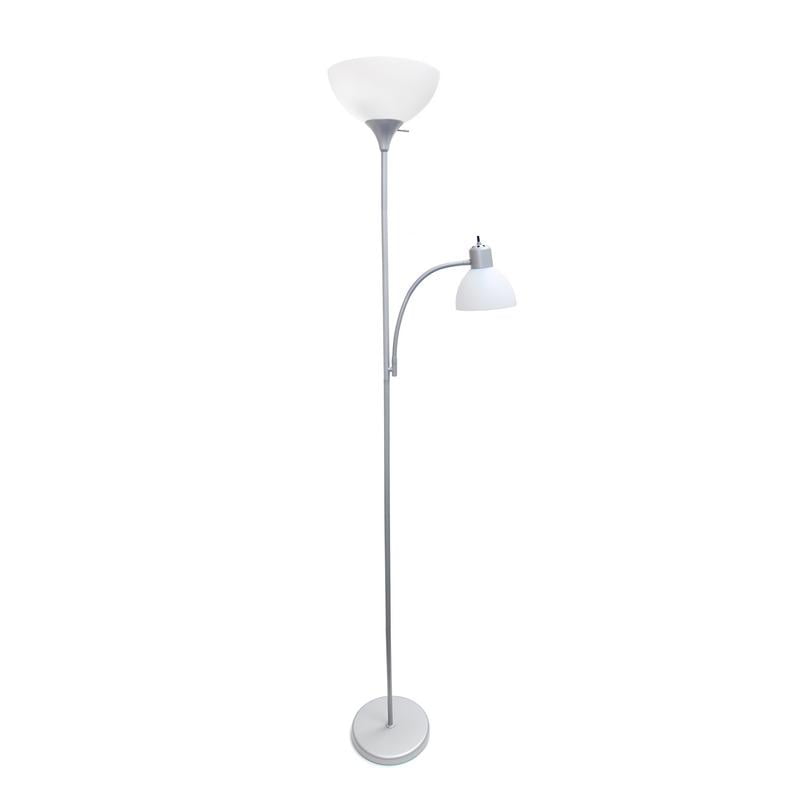
  > the longer you own something, the longer you own
  > something, the more you save
List of more durable items:
Stainless steel frying pan instead of nonstick frying pans where the non stick coating wears off. Cast iron even better.
Plain bicycle without electric parts easier to recycle metal.
Durable quality Screens drivers.
Non electric espresso maker. Bailetto.
Corded headphones no batteries that wear out. Changable parts. No wireless protocol that go obsolete.
LifePo4 lithium iron batteries instead of lithium cobalt chemistry. Cobalt is a conflict mineral mining that puts out dangerous pollutants. Lifepo4 can take more recharge cycles than cobalt chemistry and are safer.
Reasoning is if the product last for life it’s more environmentally sustainable.
Cell phones are on the opposite end of the last for life spectrum.
They're called nonstick for a reason; stainless steel does not compare. You'll have more sticking problems cooking eggs on a steel pan drowning in butter than on a (new) nonstick pan with minimal grease.
I do own an 18th-century cast iron pan and it has pretty good seasoning. I use it for many things, almost daily, but I'm still glad I own nonstick pans too.
For me personally, my most-used pans in order are my 12" cast iron, my 10" cast iron, my 12" All-clad stainless steel, my 6" cast iron, and my 6" non-stick is last, mostly for eggs.
Stainless is excellent for anything like a pasta sauce where you're starting with sautéing onions and such.
We use a cast iron and a nonstick - that's it. You can cover 95% of use cases with that.
Each of these (non-stick, stainless, cast iron) are great for the appropriate application, while also having downsides (like ANY tool). Knowing what to use, and when, comes from experience.
Cooking eggs in a stainless steel pan is a bad example because you shouldn't do that. They are useful for different jobs. Stainless os great for other things, like cooking a piece of meat (try getting that fond in a non-stick pan!), or frying some potatoes... etc
I stay with cast iron, for decades now. No problems.
that's misleading if not outright wrong.
the counterpart to nonstick is not cast iron or stainless steel -- it's carbon steel. carbon steel pans compare well to nonstick when seasoned (good woks are still carbon steel, and you can still find good carbon steel skillet pans, just not by lodge).
Seems like you only take the photo here? So that's a good mitigation of point #1. What about point #2? Curious to know if you have a good plan to deal with that :)
I really appreciate your attempt and wish you the best because I want this.
Do you have plans to monetize this in the future? How do you expect to sustain it?
Would you be open to pressing the content cc-by-sa? That would make me more interested in contributing reviews.
Also, I went looking for your terms of service (to see if they mentioned licensing already), and all I found was a link to some Google page, even when I clicked to sign in "by email".
I want to help people finding the most durable and sustainable products in the world. It should become the Rotten Tomatoes for products, almost like you check the trustworthy rating of a movie before you watch it, people could check a brand or product before they purchase it.
A metric I am working on is the average cost per month of ownership. That feels like a great metric that shifts consumer mindset - the longer you own something, the more you save. I still don't have enough data, so please submit your favourite product.
Let me know what you think!
PS: this project is completely non-commercial and entirely community-driven. It is still a work in progress, but I want to get feedback as early as possible.