I suspect that even a spare cotton t-shirt material affixed over the face would stop a significant amount of droplets from transmitting.
It would be worth researching the effectiveness improvised masks, at the very least.
If the mask becomes contaminated, it becomes an ideal vector for encouraging infection -- so if you touch the inside of the mask with your contaminated hands (say you move the mask to touch your face or adjust it or whatever), for example, the mask becomes the opposite of protective.
Masks are somewhat effective at reducing spread if the already-infected person is wearing the mask.
Also my understanding is that a N95 mask that isn't properly worn (doesn't have a good seal) then it's nearly equivalent to no mask at all.
So you combine those two together and you have people who aren't effectively protected by the mask and are making riskier decisions.
--
I have looked at a fair bit of research on masks lately, and everything I've seen is that they are significantly protective, and, for example, reduce your risk of catching SARS by about 70%.
Yes, if a mask doesn't fit properly, some air will come through the sides. Even in that case though, the mask is still filtering some air, and it's protecting you from touching your mouth or nose, and it's protecting you from droplets hitting your mouth or nose from being coughed or sneezed on.
Surgical masks are meant to protect surgery patients from the medical staff and the droplet-encased germs they emanate. N95 masks are meant to protect the wearer from particulate matter (harmful dust) in the air, specifically those particles over 30 microns. SARS-CoV02 is roughly half the size, so as an aerosolized virion, as opposed to droplet-suspended virions, they may have limited effect. N95 masks also often come with exhalation valve releases to improve inhalation fit - so exhalation pressure does not break the seal around the sides. A sick person wearing a mask with a valve that releases right in front of their mouth may be better than no mask, but it is a potential bypass for droplet suspended virions.
The US just doesn't have the culture where everyone puts on masks during flu season, like some places (HK for one), and that level of herd usage is really what might be likely to slow transmission to a breakable rate.
The N95 filters are tested with particles at 30 microns, but that doesn't say anything about their effectiveness against other particles.
3M, naturally, has released some information on this exact topic [1] which goes into a fair bit of detail on the various methods by which masks effect filtration. The tl;dr version is that there are several ways by which filtration is achieved that generally overlap and work towards providing effective protection well above and below 30um. There is generally a small dip in the transition between two primary methods which creates a specific size range where filtration is less effective.
Whether that's an issue depends on your definition of "limited effect". For the masks they tested, that dip generally occurred around 0.04-0.1um. Even in the worst case scenario, however, the worst masks tested were still filtering ~94% of the particles (in a mask that only claims 95% effectiveness to begin with). The linked document has coronaviruses listed as being about 0.125um in size, which has them falling toward the end of the dip where the mask is trending back towards 100% efficacy.
(For what it's worth, they also have the distribution of droplet sizes in a sneeze and they are all smaller than 30um as well. However they're still in a range where the mask will be about 100% effective.)
Which is all to say I certainly wouldn't describe an N95 mask as being of "limited effect".
[1] https://multimedia.3m.com/mws/media/409903O/respiratory-prot...
My partner is more vulnerable to respiratory problems and has always worn N95 masks when in public during flu season. What's changed now is she gets all kinds of shit from people because they think she somehow hoarded masks away from healthcare workers. We've had boxes N95 masks for years, but now we're assholes for hoarding...
I'd really like to know how often those fit tests actually result in someone needing to select a different respirator size or style.
I wonder if they're only needed if you're required to be 100% sure all your people can use their respirators with near-100% effectiveness. That's probably necessary if you're working in a contagious disease isolation unit or removing asbestos all day every day, but maybe not for less dangerous environments.
I don't know what your over-under on self-driving cars being prevalent is, so I don't know if this supports your point or not.
In cities sure. Rural areas not happening. Add the fact people like to drive to Mexico Canada and Alaska I’d call it a non starter.
Example. I have a place where the road on google maps and the place people drive vary because rural Arizona uses washes as roads. Cars driven by humans get stuck.
I wouldn't want to own a car without a steering wheel, sometimes you have to do weird stuff like park on a specific patch of grass at a rural wedding and it's going to be easier to do that myself than try and convince a robot.
But a car that can a) handle 'most' driving for some value of 'most' and can b) safely hand over or come to a stop under basically all circumstances including a sleeping driver? That's actually a much simpler task and it's a very useful vehicle. I would want one of those even if I lived somewhere where road conditions were such that I had to steer it myself on a daily basis.
Like in Arizona, once you got to paved road you could enter an address in Phoenix and kick back in actual safety, without having to worry about taking over at a moment's notice. I think that's achievable in 10-20 years, and it could be less.
It's not just about putting the mask on; it's also about ensuring they swap them out regularly and don't self-infect in the process.
I wouldn't say it's a certain type of people ("some people" vs. "sometimes people"). You could argue for it, though seems like a hard argument to push.
Cars are inherently dangerous, because there isn't a reasonable guarantee that something will not go critically wrong (as opposed to, say, a train). Also, when driving a car, you're not only betting that you won't make a mistake, but also that someone else won't make a mistake (that would affect you).
Yes, we wear n95, but we also get OSHA/niosh specific training on fitment, changing, PPE exposure limit, and appropriate environments. You do not. What people are hoping is that an industrial particulate mask is going to somehow prevent the flu or corona, which honestly I have never understood. Wearing a mask while pressure cleaning a paccar12 engine? Yes, you don't want fine grease mist in your lungs. Powder coating something? Better mask up. Wearing it for a fire? Yes, but change it out once or twice a day and check it often. The flu? How?
Right on. For the past couple of years, because the Seattle summers have been hazy due to the wildfire smoke, I still have quite a large batch of N95 masks. I too used to wear them during my commute and the only problem I see is that if you're at risk (underlying respiratory/heart problems) you'll not be able to tolerate the mask... With a good fitment, it makes it harder to breathe.
I think it's unfair to label people hoarders for having these masks... After a couple of consecutive years of wildfire smoke, I think this is the new normal and everyone should have them. It's not my problem that the healthcare industry has a supply issue with these masks, they should have a different, hopefully more efficient and preferential supply chain. I hope they don't buy them from Home Depot (where I got them from).
This will be something that's routine, just following the plan, that exists to serve some combination of regulation, duty, and risk (burning important healthcare customer or government relationship) mitigation.
https://www.thetimes.co.uk/article/coronavirus-china-tech-fi...
And even that would hardly look weirder than in surgical masks. Color-coordinated bandanas with a company logo pin?
For a less cynical take, there's a lot of conversations that do happen more efficiently in-person, particularly at a lot of places that aren't set up for "full remote".
At the moment because of the misinformation people wearing masks are being mocked and chided in public and its really unhelpful. Especially since there are immune compromised individuals and individuals with other conditions that really need to take every precaution they can, including that 10% reduction a surgical mask may give them.
When you exhale it is more wet and the moisture causes the barrier to catch more of the airborne particles. The barrier also catches any more-solid material that would otherwise land elsewhere, providing a mechanism for the particle to spread.
This means the net gain for wearing them to keep from catching the disease is relatively small compared to the gain by wearing them to prevent the spread if you may have been exposed.
It may primarily be about preventing spread from those infected, but that's still super helpful.
Logically, I might extend it to everyone wearing masks would considerably reduce the spread of exhaled contagions. This might first be encouraged in high population density areas, like parts of Asia, and first need to be integrated with fashion[0] to have any chance of broad success. I suspect it will never be a preference everywhere barring some sort of serious consequence (like death) for not wearing the mask.
In this situation, I think the most important thing is to know that normally available or homemade masks are helpful for presenting the spread of the disease. The more expensive masks are better but in this instance, not better in a meaningful way for the average person. The current supplies should be saved for those at-higher-risk populations like medical staff.
[0]: https://www.pinterest.ca/charmed4evr/fashionable-surgical-fa...
Please somebody show me data that proves otherwise, I'm totally open to it. (Note: I'm not saying I want you to post opinions from people in authority, I'm saying I want to see data)
They don't find significantly more efficiency for N95 masks, but other studies do find N95 masks slightly better. (2)
(1) https://jamanetwork.com/journals/jama/fullarticle/184819
(2) https://onlinelibrary.wiley.com/doi/full/10.1111/j.1750-2659...
Do a search on Google Scholar for "N95" in combination with "virus" or "sars" for more studies.
Really a shame that authorities, including the Surgeon General, claim that masks are not protective, despite medical science to the contrary.
[1] https://www.researchgate.net/publication/258525804_Testing_t...
[2] https://twitter.com/chaiclate/status/1232972182667612162?s=2...
Yes, it really hurts me, as a science-based person, to have scientists with authority say things that are unscientific.
> Quality commercial masks are not always accessible, but anecdotal evidence has showed that handmade masks of cotton gauze were protective in military barracks and in healthcare workers during the Manchurian epidemic.
> The prototype mask achieved a fit factor of 67 for 1 author with a Los Alamos National Laboratory (LANL) panel face size of 4, a common size. Although insufficient for the workplace, this mask offered substantial protection from the challenge aerosol and showed good fit with minimal leakage.
If you are thinking about coronavirus, you are more likely to feel the symptoms of a coronavirus infection, or what you think are the symptoms.
It took most of the war for that plant to get to the point of building a bomber an hour.
You need an ASTM Level 2 or higher surgical mask to block coronavirus from completely penetrating the mask.
That said, any mask is better than no mask, first because it prevents you touching your mouth and nose with potentially infected hands, and second because coronavirus travels in water droplets which can be stopped by the mask from going straight into your mouth or nose.
Not my original source, but discusses the same thing: https://multimedia.3m.com/mws/media/376179O/nanotechnology-a...
This is to say, 95% filtration is the worst the mask will perform, with particles of any size, as it relates to coronavirus.
Particles smaller in size than 0.3 microns will have HIGHER capture efficiency.
This is similar for HEPA filtration as well.
I think we should all ask ourselves why we take it for granted that we should simply have to ration masks. Why aren't there enough masks available for everyone for inevitable outbreaks like this? Why don't we have the industrial capacity to manufacture masks in the US, leaving us reliant on foreign imports?
We spend ~$80 billion dollars a month on our endless war, military and spy agencies in the name of "national security", but I'd argue that having ample medical supplies (and the ability to manufacture them) are just as, if not more important, to our "national security" as the vast majority of our military activities. Hopefully this crisis will not become to severe and will serve as a wakeup call for us to rethink our national priorities before the next inevitable crisis.
He also recounted how after the 2009 flu scare everyone was telling him how after it ends they will now stockpile masks to be ready for the next one, he increased production, but then was stuck with it because people stopped taking his calls the moment the flu faded.
I don't know anyone who has conclusively demonstrated there are not. What we have right now are runs on Home Depot and the like buying out respirators and dust masks faster than the stores can restock them.
> Why don't we have the industrial capacity to manufacture masks in the US, leaving us reliant on foreign imports?
We haven't and aren't. 3M manufactures their masks in the US.
That is not only completely false but is extremely dangerous misinformation.
https://www.sciencedaily.com/releases/2019/09/190903134732.h...
> The study reported 'no significant difference in the effectiveness' of medical masks vs. N95 respirators for prevention of influenza or other viral respiratory illness.
And it would have to be apocalyptic for them to accept a box of medical equipment from some guy wandering in.
It's almost a moot point right now though because they're sold out pretty much everywhere.
Some people seem to be bothered by it for months after.
But I'm sure my coworker is wearing a mask for their own set of reasons...
This is never not a good idea, so no time like the present to get into it.
As of yesterday, China, a country of 1.4B, had 80,000 cases and 3,000 dead.
Last year, the US had 36M infected with the flu and 34,000 died.[1]
Are you panicking about the flu?
The reason to not panic but be prepared is that humanity has zero immunity to this virus, whereas there's lots of group immunity to influenza. I'm not sure why it's so hard for people to see the issue here.
It's significantly more deadly than the flu. But also, people should probably take influenza more seriously anyways.
34,000 / 36,000,000 = ~0.00094
36,000,000 * 0.0375 = 1,350,000
That's the concern.
China also had some pretty extreme measures to get their low number of cases, measures I don't think will play out too well in the US. And probably won't have a full count yet.
We can hope for the best, we can wash hands etc., but it's not unrealistic to say this can get bad.
Edit: source added
https://inews.co.uk/news/world/china-coronavirus-covid-19-de...
My point is that based on how many die from the flu each year, you’d have to see 130,000 deaths in China for the impact to be the same as the flu.
The flu infects nearly 20% of the world's population each year. Estimates by the NIH are 10-20% annually in the US, and those numbers are probably similar in other countries. China has a billion people, so that means the flu infects probably 200 million people each year but only 130,000 die. The death rate is below 0.2%.
In contrast, only about 90,000 people have been infected with WCV so far. Thousands have died. The death rate is at 3.8%, or roughly 19-20x higher than the flu.
Check out Spanish Flu for worst case scenario.
China restrictions have been much more stringent than what you imply. People in Wuhan were prevented from leaving their apartments at all and needed to wait for food from the government.
The jury is still out whether softer forms of restrictions can work once the disease is widespread. We will see about that by watching South Korea and Italy. (We know it works if there are not too many cases around, like in Singapore.)
Yeah, that would be bad, but there is no data to suggest it would get that bad.
however:
Yan-Chao Li [etal.] ABSTRACT Swine hemagglutinating encephalomyelitis virus (HEV) has been shown to have a capability to propagate via neural circuits to the central nervous system after pe- ripheral inoculation, resulting in acute deadly encepha- lomyelitis in natural host piglets as well as in experimental younger rodents. This study has system- atically examined the assembly and dissemination of HEV 67N in the primary motor cortex of infected rats and provides additional evidence indicating that mem- branous-coating-mediated endo-/exocytosis can be used by HEV for its transsynaptic transfer. In addition, our results suggested that this transsynaptic pathway could adapted for larger granular materials, such as viruses. These findings should help in understanding the mechanisms underlying coronavirus infections as well as the intercellular exchanges occurring at the syn- aptic junctions. J. Comp. Neurol. 521:203–212, 2013.
https://doi.org/10.1002/cne.23171
it seems if you are not a swine or a rat you have little to worry about.
the optic nerve is hidden behind the eye with a substantial barrier of non nervous tissue in front of it.
https://upload.wikimedia.org/wikipedia/commons/thumb/1/1e/Sc...
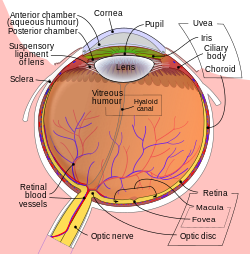
what you should also take from this espescially if you are involved in policy is that this corona virus we are experiencing has in its distant heritage ancestors with reported neurotrophic properties. It is possible, that at some time in the future, this virus will accumulate signifigant genetic drift and gain or lose certain properties.
Where can I buy noseplugs?
> It may also be expected that the symptoms of the patients infected via facal-oral or conjunctival route will be lighter than those infected intranasally.
Not exactly. I'm hopeful that differences between the typical American lifestyle and the typical Chinese lifestyle will help make the epidemic less severe in the US.
Americans are more "spread out" than Chinese: we often drive personal cars instead of taking public transit; our homes are freestanding with more private space per person; our public spaces are often less crowded, etc. I think open offices are even more common in China. Hopefully that extra distance will help.
I haven't heard of nasal irrigation using soap; hypertonic saline solution is usually recommended.
[0] https://www.cdc.gov/niosh/topics/hcwcontrols/recommendedguid...
> One study found that nurses averaged 25 touches per shift to their face, eyes, or N95 respirator during extended use.
How problematic that touching is probably scales with how problematic your environment is. They're pretty sponge-like. Wearing a surgical mask over an N95 would help a lot.
In a controlled biosafety level 3 lab, "single use" things are definitely the most common, where everything exposed to the outside world is destroyed after you're done. What's worn underneath is washed and you're forced to take a shower. So that's what you do if you know you're in a contaminated environment – not sure what I'd do in a public place.
How effective is the virus after the mask has been unused for a while (so "cold", like a doorknob or a desk)? If it is not, the mask should be good to go then, doesn't it?
I use a reusable mask, and honestly, I don't wash it very often. It's there mostly so if I absentmindedly touch my nose I don't actually touch my nose, and so I never remove it until I've thoroughly washed my hands.
Source: https://www.journalofhospitalinfection.com/article/S0195-670...
I don't think that's true.
Are they so high tech you can't just ramp up production? And how many months in advance would you need to ramp it up? We're about 3 months in and nobody got the idea to increase production of masks until about a week ago (similar for hand sanitizer, soaps etc)? What am I missing, why is that a thing?
I read about a hand sanitiser manufacturer ramping up in the UK; by increasing hours, not throughput. And obviously to increase hours you need more staff, training, and maybe to review some policies, local bylaws, and other procedural stuff.
> If the neuroinvasion of SARS-CoV-2 does take a part in the development of respiratory failure in COVID-19 patients, the precaution with masks will absolutely be the most effective measure to protect against the possible entry of the virus into the CNS. It may also be expected that the symptoms of the patients infected via facal-oral or conjunctival route will be lighter than those infected intranasally. The possible neuroinvasion of SARS-CoV-2 may also partially explain why some patients developed respiratory failure, while others not. It is very possible that most of the persons in Wuhan, who were the first exposed to this previously unknown virus, did not have any protective measure, so that the critical patients is much more in Wuhan than in other cities in China.
This is a good example of why writing off COVID-19 as no more dangerous than the flu is itself so dangerous.
I should also point out that most people in the US face similar conditions to those in Wuhan. The extent of infection is not known, and therefore protective measures are not in place. We have been actively discouraged from "buying masks" and told that they are ineffective.