In Apple's case I fully expect they will make it so that when you plug your Apple display into your laptop it also charges it since the charger is permanently connected to (or built into) the Apple monitor/display.
Yes, for some people it is a serious investment.
You might win 500k or more a year, good for you, you are successful. But for people who have kids who will have to go to University ,even at 100k a year , $1300 isn't a small amount of money.
If you think people buy laptops like they buy candies well you're a privileged man, and again I wish you the best,but that's not the reality for most of us.
what this does mean for me, is that older models will come down in price and become much more affordable. might even be able to pick up last years for $2-400 on ebay.
I live in the Midwest and have what in the US would be a sanely priced house that bears some resemblance to its cost-of-construction. I have done business trips to Silicon Valley to developers who are making only modestly more than me, if not the same as me, who are living in houses worth 5 times as much on paper (and in their mortgage payments), and they'll be in there putting in top-of-the-line granite countertops or something that I wouldn't dream of putting in. My theory is that their house is just so gosh darned expensive that the idea of dropping $2K on a new laptop or getting The Very Best Countertops (TM) seems like a drop in the bucket compared to the debt they're already carrying anyhow. While I could certainly afford a $2K laptop, it's certainly enough to make me think twice, thrice, and a fourth time before I bought it (and I tend to come in more in the $1K price range when I do, since I run Linux and not Mac. There's some nice stuff at that price point).
So yes, for most people, this sounds like a fortune for a laptop.
I think it's actually addressed half of shortcomings of the old Pixel: 4GB of memory has been upped to a reasonable 8GB or a generous 16GB. The CPU bump is also a welcome change. Only the limited disk space is an issue.
I just wished they doubled the storage (at least) and sold them with plain old Linux as developer machines. Would be a great way to get into the hearts and minds of many programmers.
I do agree that making it more Linux-friendly or selling a pre-installed Linux version would be great.
(I suppose there is some sort of tax or import cost...?)
Personally I wouldn't pay more than $300 a machine and consider $1299 to be pretty extortionate amounts of cash considering the rate of depreciation.
Hey everyone I just worked 2x the time to pay for something shiny with no productivity gain!
(I use a shitty old X201 with 4Gb RAM and an SSD from eBay connected to a monitor I skip dived because it was 5:4 ratio)
This thing was in almost perfect condition, no scratches, drops, nothing.
The people who wine about the costs of going high end (MacBook , Watch, whatever) aren't part of Apple's target demographic. Apple wants to (and always has) sell well made devices to people who don't want cheap, and aren't afraid to pay for it.
I'm typing this on Thinkpad T430s with i7, two SSDs (one of them in ultrabay), 3G modem... when it was bought, it was as expensive, as Macbook Pro can be. Yet, I consider the Thinkpad worth the asking price and Macbook Pro not.
It is entirely about what you value in the product you buy. You may be totally utilitarian, or you may want fashion item. In the end, it is just stuff anyways ;)
Except that this display does not exist.
http://store.apple.com/us/product/MJ262LL/A/apple-29w-usb-c-...
Yet. Neither does the laptop, by the way. By the time it launches, I expect it'll be surrounded by a fairly decent line of accessories.
There are countless examples where daisy-chaining these devices becomes very inconvenient.
Some of us are still waiting for our Displays with MagSafe2 and USB3... when was the last MagSafe1 laptop made? Yet Apple is still manufacturing the TB display as-is.
And Thunderbolt 2.
And a screen with the same great anti-glare coating as the current two-year-old non-retina iMac.
And industrial design that matches any of Apple's current products, rather than something visually unchanged in six years.
What you seem to have missed is that this is nobody cares.
Nobody is going, "I really wish I could charge my laptop through the same port I connect my external hard drive to." This just isn't a problem people have.
However, plenty of people say about the MacBook Air, "I really wish I could transfer data from my external storage hard drive to my thumb drive while my MacBook Air is plugged into my monitor." The new MacBook Air that they've oddly rebranded to confuse with the entire MacBook brand will have a much worse problem in this respect.
The thing I've come to appreciate better is that everybody needs different tools. When I was working as a Systems Engineer and needed to connect via serial port to ratty old servers, this new Macbook would have had me screaming. As a developer at my current workplace, I don't need infinite connectability, just portability :).
Most of the people in my life (outside of work) have no issue. Most of them don't have second monitors or external hdds. They might have a thumb drive or a Chromecast.
If you're a power user get a power user machine. Get a MacBook Pro.
With the amazing difference of being an industry standard, so I can get that experience with Dell products if I desire.
To be clear, I am a Mac laptop user and have been for years. I love them from a build perspective, but I don't agree with the one-port-to-rule-them-all decision.
The Macbook isn't exactly the choice of power-users. (Actually, seeing how underpowered it is, it's probably the choice of very patient users.)
Even two USB ports on my MacBook "Pro" is too limited for my daily use case. I use a USB yubikey for multifactor auth with LastPass and it takes up one USB slot permanently. I prefer wired mice, so my mouse takes up the second USB port.
If I want to charge my phone, Fitbit or in the past Google Glass with the USB port, I have to unplug my mouse.
I would not buy the new MacBook as it's unusable for me unless I carry around a hub everywhere.
How many times has Apple done this in modern times? Remember the outrage when Apple removed floppy disk drives? Optical drives? Ethernet ports? Remember how mad everyone got when Apple replaced their old, thick connector on the iPhone 5? Nobody complains about how thin their phone is now that the old 30pin connector is no longer the limiting factor on size. Nobody is bemoaning the fact that they can't watch a DVD on their laptop - we've moved on from optical media.
Nobody will even bother examining the bellyaching about this in a couple of years because we'll all be so happy with the obvious (in hindsight) decision to switch to USB-C.
I don't think the issue is the inclusion of USB-C -- in fact, USB-C offers a lot.
I think the issue is only having one connector on the entire laptop. What happens if that port fails or beaks? Your laptop stops working...
I'm not a fan of their single-port decision either, but in fairness: Every laptop stops working when the charging port breaks. No matter how many other ports it may have.
That is true, however if you are using the same port for a multitude of things (plugging/unplugging USB sticks, monitors, etc...) it's going to get a lot more use, and therefore increases the likelihood of something breaking.
I've broken USB ports before on laptops, usually by crushing the floating center plastic thing (USB cable gets ripped out weirdly or something), but I have other USB ports so life goes on. USB-C has the same center floating plastic bit -- just waiting for it to get broken off.
DC ports tend to be pretty robust, but do break from time-to-time. Apple's solution to this was the Magsafe connector, which avoided the issue for the most part. Seems like a step backwards for laptops to now rely on a single, potentially fragile port for everything.
By design it allows at least 10000 cycles of insertion/removal. Using it 8 times a day every single day you'd need about 3.5 years to end them. It's probably ok for most workloads.
Magsafe has prevented a costly fall or other here.
Now I wouldn't buy the new Macbook for my main editing rig, but I might buy it to use when traveling and consulting. I don't understand people complaining about a product that was obviously not designed for their use.
Some of the anger seems to stem from confusion about what the new MacBook is. It's clearly a smaller version of the Air, not a replacement for the Pro.
I.e. the one with "Pro" in the name.
Just because Apple has an iPad doesn't mean you can't buy a Mac Pro, you know?
Forget about using a mouse a these laptops.
Even now, this is sort of like saying 'Forget about watching a movie on these laptops' about it since it doesn't have a DVD drive! (I was going to say 'in a little while', but really, wireless mice are so common now)
> [...] wireless mice are so common now)
I never made any mention of a non-wireless mouse. All highend mice come with USB dongles, regrettably.
You're right that this is classic Apple, but I wouldn't call any of those decisions obviously right. And there have been plenty of bad calls along the way - remember when Apple tried to get you to use Firewire hard drives rather than USB? Remember PERCH? Remember those magnetic ethernet cables? Having fun adaptering back and forth between DisplayPort and Thunderbolt?
Aside from not relying on outside technologies for their success, eliminating cables has basically been Apple's central theme since (and before) their comeback. At least it's based on a standard this time.
However, every day at work, I plug my MacBook Retina into two monitors, plug in my USB 3.0 drive, sometimes my iPhone to charge or do dev stuffs, and charger, and frequently use my SD card slot as a 3rd HDD. Apple now is in the business of offloading the problem of I/O to the user, they haven't fixed it. It wouldn't have hurt the MacBook to include 2-4 ports, all USB3c
And it actually would hurt the Macbook to include more ports. The current port is above the keyboard, likely because it can't fit under the keyboard. Adding more ports would mean increasing one of the dimensions. Given the versatility of the USB3C port, I think it's the best possible tradeoff. If you absolutely use lots of ports day to day, and can't use a hub, then this really isn't the computer for you, and Apple will even sell you one of those.
Optical drives and floppy discs were obvious, they were never used on a daily basis when they were removed and that they remained so long in laptops (macs included) is just astounding. But something like Ethernet is just ludicrous. Unfortunately, if you want a slim laptop Ethernet will have to go - but it sure as hell will be missed in the coming decade.
Non-replacable batteries... Another milestone? No one was stupid enough to come up with that before apple, and thanks to that we all have to throw away all of our devices after a few years. But who cares, right?
Am I the only one who still remembers PCMCIA cards (thinner than most slim laptops) with Ethernet ports?
Here, an example from Wikipedia: https://en.wikipedia.org/wiki/File:XJACK_network_card_extend...

I've only seen those that have either a large RJ45 connector extruding from the card, like: http://www.automation-drive.com/EX/05-13-21/a88fa.jpg
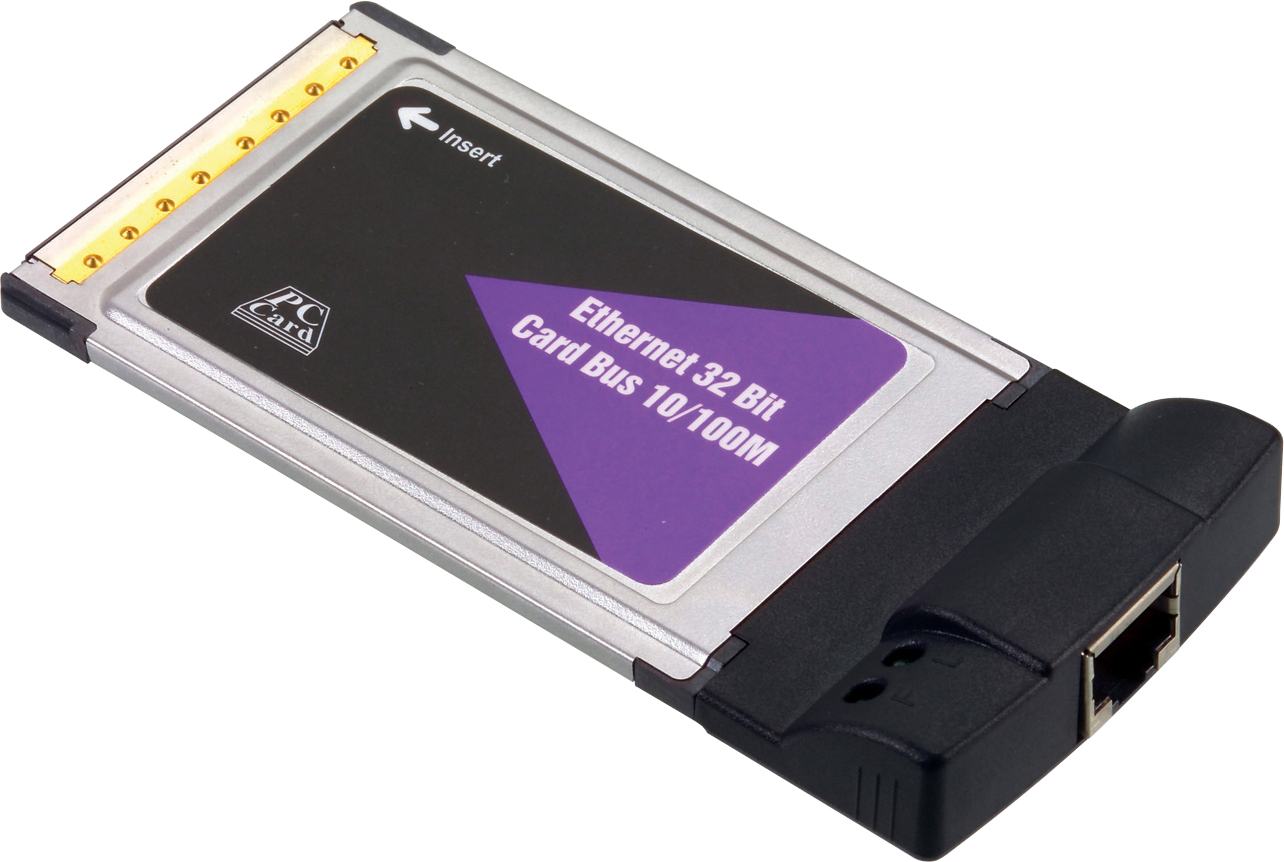
Or where you'd needed an adapter dongle that connected to the PCMCIA card.
I know there was a laptop or at least a concept of it with something similar to the (parent) XJACK connector, but have never seen it in real life. Would love to see them in ultrabooks.
Yup. It's more than just funny. The number of people I know who are carrying around "our thinnest, lightest macbook yet" with a bagful of adaptors that weigh more than the laptop is HILARIOUS.
As for me, I'm carrying around a 2012 Macbook Pro (the last model with a non-glossy screen). Even though my work involves dealing with iOS projects etc., my next laptop will probably be running Linux and I'll learn to rely on my iMac for iOS specific work.
They would have to carry around somewhere between 30 to 50 adapters to reach 2 pounds. I'm excluding the power adapter since that's a baseline for any laptop.
Yeah, they do. Ask someone whose iPhone has just died (again) if they'd take it being a bit thicker with a bit more battery, and I don't know anyone who wouldn't make the trade.
And I personally still miss living in a world where no matter where you went you were never more than 5 feet from a 30-pin cable.
I'd rather have two USB-C ports though than a pointless little audio jack - they should have put one on either side as Google have on their pixel. People could use bluetooth headphones with it if they really couldn't find some other place for the headphone jack, but I'm sure they could have squeezed it in if they tried hard enough. As it is one port is rather limiting (yes I know it shares data and power).
It'd be nice to be able to charge an iphone and charge the computer at the same time, so on port means many people will require a hub. They should also have sorted out their monitors with a refresh which actually functions as a hub for USB-A and USB-C - perhaps they'll do that before launch or I hope soon after.
Not really. What outrage? Floppy and Optical drives were dropped when they were already old. I remember some people complaining about the lack of USB, but you can get a thunderbolt<->ethernet adapter when you purchase it. Also, an ethernet port itself if thicker than the laptop itself, so it's understandable.
I bemoan that about my work laptop. It's not possible to legally stream all the things I'd like to watch, and for whatever reason building USB boot drives is still more painful than burning ISOs to DVDs or CDs (no good reason for that, but each time it's been the case).
http://store.apple.com/us/product/MD824ZM/A/lightning-to-30-...
So at worst you can complain that existing equipment may require an adapter. That seems like a fair price for progress to me.
Standards change, but at least this one hasn't changed very often. I think "once" is an allowable amount of change.
Samsung did it at least twice before Apple switched to Lightning, another time after Lightning and will probably also move to Type C soon. Same for HTC, they switched port choices before Apple did as well, the HTC Dream has a different USB port than the HTC Evo and both came before the iPhone 5, and they're also likely to change to switch to this as well.
So basically Apple is the only choice that comes closest to behaving as you expressed a desire for and instead you shit on them out of complete ignorance. Good job.
Samsung also had USB3 Micro-B (the wide connector) on the Galaxy Note 3, but went back to a regular Micro-B in the Note 4.
Samsung and most other Android manufacturers aren't even guaranteed to maintain physical dimension compatibility between different models of the same exact phone (S6 vs S6 Edge, for example), let alone if you were to just stay with Android as an OS and were switching between manufacturers each upgrade. No way in hell you're keeping any nice-fitting docks or cases around for more than one Android phone purchase.
Their delayed support on NFC arguably killed the user adoption for the tech as well, but i digress.
Wouldn't they be more elegant if they would, you know...Just Work?!
That being said, when I am in meetings, or on the move for work, I don't carry dongles with me. Pure laptop for me. All of our meeting spaces have Airplay compatible projectors, so I sit down, make sure I am on wifi and connect to the display.
Transferring large files? We've got 1 Gbit to our desks, I can sling data from our Denver location to our St. Louis location at almost 300 Mbit/sec sustained. Also, wireless N/AC throughout the building.
In the world where you no longer NEED those ports, having a smaller lighter laptop makes all the difference. I already don't carry dongles with me, the new laptop with less ports wouldn't change that.
Most defense facilities will NOT have wifi, and their meeting rooms will still have projectors with VGA in only. For travelers in the world that I inhabit, all those ports are a necessity. We would even still love to have a DB9 serial port because we often connect to embedded systems with serial consoles.
You and I live in different worlds, even though we both probably work on very technically involved things.
I practically never plug anything into my laptop except the charging cable. I suspect there are many people like me out there. This one is for use, not for you. Apple isn’t into being all things to all people, you know. Or at least their single products never are. Sometimes something is just not for you and that’s ok.
So even if I accept that the storage is in the cloud, it doesn't make sense since the hardware is clearly not there, but the software isn't either. I can't tell VMWare to use Google Drive for storage. It's a propietary data-dump, not an actual drive.
Sure, you could dump Linux on it - but i'm not sure how many would choose a Pixel over some other highend brands for a Linux machine.
I believe the disk is mainly just used as a cache, for web apps (music/etc). Just about everything is stored in the "cloud".
(I own a first generation Chromebook, but things may have changed)
I'm curious to know what other ultrabooks make great hardware for a linux laptop. Do you know a few?
Even better than the Linux support though is their warranty support. For under $100 you can get a year of accidental damage protection with onsite service -- Not long ago I knocked my X230 off a desk, cracking the LCD. Lenovo sent an IBM tech out the next day with an LCD, who then installed it in my home office.
Mostly, i want Macbook Pro "quality", in a system that has good Linux support - mainly for containers, i'm sick of running a Linux VM on my OSX machine.
Since Chromebook is Linux under the hood, they'll presumably have the driver situation down. So this makes for a very nice Linux system.
"Chromebook" is the hardware device. ChromeOS is the operating system.
> What application can you even run on that system that would use 8GiB of RAM and an i5?
Is there an upper limit to the RAM or CPU a browser-based application can use?
I'm not going to buy a vehicle designed for hauling freight, and complain that it isn't sporty enough. Which, in my opinion, is what complaining about the lack of storage in a "Webbook" is like. You're buying a device, specifically tailored and designed for people who are using a web based operating system. It doesn't even let you install things by default, outside of web apps.
Hangouts?
---
Suffice to say, the newer versions of VMWare are not HTML based. It's a full on Flash application.
The whole point of a Chromebook is that the Chrome browser is the app platform. But among the many big pushes of Chrome to enable browser to be a compelling app platform (and one that eventually moved into web standards) is enabling local storage for browser applications so that they don't need to rely on remote storage for everything.
So it makes sense that it would have less storage than a laptop with a traditional OS, but more storage than you would expect from a "the storage is in the cloud" model.
Also, unless Dell have done something very strange it should be able to drive 4K, although I haven't found any confirmation.
Apples to Oranges, no pun intended.
For 1000 USD however this is ridiculous. Just go DELL or Asus or similar. The XPS13 is excellent for example, come with proper ports, disk space, is light, is fast, has long battery life, has great screen, etc.
Getting an Apple or Google ultra-light laptop just because they're big, rich, trendy companies doesn't seem like a great idea this year. Maybe they'll catch up next year.
i don't think i could buy a non HiDPI device anymore.
The full HD (1080p) version is considered the low-res and according to Anandtech it lasts 15 hours of normal use, while the higher end model with a 3200x1800 screen lasts 10 hours of normal use (according to Anandtech), and 7 hours of video playback according to the CNet review.
Anandtech review: http://www.anandtech.com/show/6849/dell-xps-13-q1-2013-ultra...
Benefits of MS Store:
1) It's signature edition PC which means it's a pure copy of Windows 8.1. No trialware, no bloat, or any other crap. Even if you end up dual-booting into Ubuntu or Elementary OS, it's nice to have a clean copy of Windows.
2) You can take it into a local Microsoft Store if you have any issues, no need to deal with Dell's often horrid phone support.
3) You can buy Microsoft Complete Care for $130 which includes 3 years accidental warranty. If you break it, they replace it in the store with a brand new model instantly. I've seen them often simply replace it with an "equivalent or better" machine if the item is no longer available as well.
This is one of the biggest issues with Lenovo even though lots of Linux people run them.
Usability at its finest!
It's Dells model: coupons, discounts, offers, combo offers and all.
I can't imagine more than 10% of people ever even see these additional configuration. (just like this comment!)
So meta! Way to work that hellban, 'ossreality!
It also costs >$1k, so theres that.
So the M will perform perfectly fine for YouTube, web browsing, office etc. but it will suffer significantly in benchmarks (and subsequently any high load / long time situations). Which is a very good tradeoff to make since you get 1/3rd of the power consumption but can run all the important usecases, if the office is what you're targeting.
Power users are not a group that mostly just does "simple web browsing and document processing".
I see your point in general but I don't personally feel that they market it that way.
Any idea if it uses one of the many standard-ish SSD SATA or PCIe interfaces?
So close to perfect, yet so far.
Of course i'm one of those cranky old dinosaurs who likes cords and ports and who doesn't particularly like 'the cloud' so obviously it's not for me anyway.
My computers need to be light. I don't need a powerful CPU and, since I run small VMs, not a lot of memory. With containers, the needs are even more spartan. What I do need is a good battery, screen and keyboard.
Were I running simulations over large datasets, I would prioritize a large amounts of memory, fast CPUs and the fastest GPUs I could lay my hands on. And a fast network so I could move the datasets easily. My general purpose computer would have Xeons (E7s and Phis), Nvidia GPUs and Infiniband interconnects across multiple chassis.
My mom needs a keyboard, a mouse and a screen. And a browser. And that's about it.
She needs a USB slot so she can load a document from a conference.
She needs flash to play that silly train game she found online that the grandkids admire her for. She needs a decent CPU and RAM because webbrowsing requirements are legit ridiculous these days.
* Original iMac (all-USB, no floppy disk drive)
* MacBook Air (no CD drive)
* MacBook Pro (no Ethernet)
People have gotten used to it each time.
If it had another means of charging or another port (like, say, on the back) I wouldn't mind as much.
The original Air basically created the "ultrabook" market and ended the netbook one. I doubt anyone at Apple is disappointed in it.
To your point about he MacBook one port. They do offer a rather smart "splitter" dongle at $60-$90 that allows you to charge while I/Oing other data when that uncommon scenario uncommonly arises.
I just don't get the whole Google approach. They think far higher of their "OS" than is warranted. They should have been selling this thing as a loss leader at around =<$800. I don't know too many people ... as in none ... who want to spend $1k on a Google "OS" machine.
I never look into it further because I assume they've made it difficult.
If you'd rather blow away ChromeOS and install Ubuntu, it's just a few commands on the command line to boot from USB and install Ubuntu.
If it came with a setting that would let me make changes more permanent (e.g., a BIOS setting), I'd want one in a heartbeat.
My wife accidentally wiped my fully configured Crouton Ubuntu install off the drive when I was first playing with my Gen 1 Pixel. I chatted with a few Google Chrome OS devs right after this happened and managed to convince one that some sort of a setting, even if it's super obscure, would be a good idea, but apparently nothing ever came of it.
Crouton has come along way since then and you can back your chroot off to an SD card now, but it's still a pain point for sure.
The problem is that the Pixel as a Chromebook fits in really well with Google's larger business model.
We have one contender from California, but their ideology has them offer just a single USB-C port. Now we get the competitor from Mountain View, who have rightly recognized the need for more than one fucking port when that's how you charge the damn thing, and what do they decide?
Oh yeah, we'll top out storage at 64GiB.