> Imagine the Chinese electric cars are similar to this but the article is lacking much detail.
No, Chinese cars are usually loaded with gimmicks. Even the $10,000 Dolphin has two screens.
> This would be much more effective than electric heating and likely generate less carbon emissions
Even more efficient is to utilize the waste heat from motors, as a proper heat pump system does.
What really kills the range of an EV in the winter is bringing the battery & cabin up to temperature at the beginning. Once the car is moving, the heat pump can scavenge heat from the motor to relatively efficiently heat things. So if you pre-warm your car while it's plugged in the range loss isn't too bad.
Diesel heat would prevent you from doing this because you can't run a diesel heater in the garage. So ironically, a diesel heater could reduce your battery's range even though it doesn't use battery power.
It would be hard to justify not using a screen these days, IMO.
Unless you were concerned about the safety of someone having to look at a screen to operate vehicle controls. Otherwise you could just make it a smartphone app and ditch the screen entirely.
Not every cars are made for Japanese, far from it, but abolition of LCD based map-radio on a standardized slot is a weird hill to die on, so every cars has it anyway.
And, I think, this is where the actual "it's cheaper to..." argument begins: since every cars will have the standard issue map-radio, it _can be cheaper to move buttons into it_. Differences between the standard version and one with this context is whether the cost of the entire 2DIN screen is included in it or not - if the screen cannot be removed, to shut up whining Japanese or not, it becomes sunk cost and becomes a constant term of equation, which physical buttons have no chance of winning.
Being able to separate design decision timelines on how the UI works from manufacturing timelines is also very helpful organizationally.
Then consider how long it takes to wire up and install the LCD versus 20-30 switches (plus mounting brackets, plus functional testing etc.)
Right off the bat all radio controls are free if tossed into the software.
And for new build cars, they often lack a lot of the entertainment and safety systems required in western countries, so they also don't have the onboard computers that would run the touch screen.
When your car already has a backup camera required, so it _has_ to have a screen, and add at least handsfree bluetooth phone connectivity, bluetooth audio and digital radio since I haven't seen a new car without them for years, you have an onboard general purpose computer already. Switching to a touch screen is a small marginal cost over that, and you can lower costs by removing physical controls which not only removes the part cost, but also labour cost of installing, wiring, and quality control.
Also all the features not found in cars for low-cost markets don't need controls, so even if physical controls cost more per-item than touchscreens the total number of controls is much lower.
New cars in here (at least chevrolet, isuzu and toyotas) are being shipped with a touchscreen. As you say, it covers the camera display, the infotaiment and map navigation. Everything else still has manual controls, THANK GOD. For instance AC, lights, wipers.
I currently have a 2017 Mazda Bt50 it didnt have the touchscreen. It does have a rearview camera, and the image is displayed in a little square screen in the central rearview mirror. It also has a frontal camera and both of them can record video continuosly. You can have Features without a "general purpose computer"
The most common transmission is manual, automatic costs around $1000 more. Why? Market preference. We do have some poorly maintained roads, and some dirt roads, mind you.
The only reason to ship all controls in a touchscreen is because it is fancy, and since it is already there, they want to save some money by not including physical buttons.
That's also true in New Zealand, half of the vehicles registered here every year are used imports from Japan, normally 5-10 years old. We don't get the low-cost models though as our safety standards are higher, though you do see Kei cars and trucks. When they can't be sold here anymore they get re-exported to the islands, and generally they make it back here as scrap.
There _are_ brand new cars of course, with the full suite of touch screens, but they're out of reach for most people. Even here in NZ we get feature-cut models to keep the price down.
As for 2017, the cost of large touchscreens was much higher then, and the general purpose computer that was definitely running it behind the scenes was much slower.
And as I said in my post, it's certainly for cost saving. Manufacturers realised they could save a few cents on controls and dollars in labour per car by using the touchscreen they were going to add anyway and there was enough compute power to make it responsive enough to sell. Plus a touchscreen look shiny and most people won't realise the problems until it's sold...
My presumption is you meant cheaper?
Making the screen into a touch screen with a digitizer is cheaper than buttons and knobs.
So if you already have a screen, making it a touchscreen is indeed cheaper.
Wiring in a set of buttons and knobs costs more than a small screen. The buttons and knobs are more ergonomic. The real answer to the above question is that it’s happening already. All new cheap Chinese (or anywhere else that caters to the developing world) made cars have a touch screen and fewer hardwired controls.
If that saves 10% of range that’s 10% less batteries which cost more than $50. Eventually all these savings add up so much that EV is lighter and cheaper than similar ICE vehicle…
Turning an AC unit into a heatpump is indeed pretty simple, but that type of heatpump doesn't work well when the temperature gradient is too high.
What you'd need to heat a car during winter is a "high temperature heat pump", which usually requires multiple stages, different thermal fluids, etc.
That's a much more complex and expensive system, not well suited to vehicles.
For the mid-cold regions though, yeah - I can believe that.
Where I live (-25c during winter) houses typically don't have garages where cars are kept. Modern apartments have underground parking, but the temperature often stays above freezing.
How is a diesel heater different than my furnace? Why can’t you run one in your garage?
Interesting that the market is so held hostage that you didn't even think to mention that the market could demand it.
Do people actually prefer touch screens? I know I don't. I won't buy a car unless every function I need while driving is on a physical knob or button.
If I have to press on a touch screen every time I start the car, this test drive is over.
We own a Volkswagen e-Up, it's exactly like this. We love it too, it's just such a great little car, you can easily get 150 miles out of its 32kWh battery and it fits everything, has no touchscreen, good old buttons for the climate controls and even proper analogue gauges for speed and battery level. I will own it until it falls apart.
>>I also think it would make a lot more sense to have an auxiliary diesel heating system.
I honestly doubt that anyone would like the "convenience" of having to fill up the tank for it with diesel every now and then.
>>and likely generate less carbon emissions
CO2 - yes. But these heaters(and devices like Webasto etc) are hugely polluting because unlike the exhaust from your engine their exhaust isn't filtered or treated in any way, all the bad stuff goes directly outside.
>>A gallon of diesel would last for months if it was just used for heating the cabin
No, it wouldn't - I own two cars with a webasto and they both use about 0.4L of fuel for hour of operation, it's not much but it's not insignificant.
Besides, this is a fixed problem - just use a heatpump instead of a resistive heater. A 500W heatpump will produce as much heat as a 2000W resistive heater.
Anyway, from its spec sheet it says it can actually use up to 0.6L/h at full load:
https://www.webasto-comfort.com/fileadmin/webasto__media/web...
But you're right, without any insulation, the moving vehicle will lose heat much faster. The room has terrible insulation but at least it has bare brick for the bottom 3 feet which probably retains a lot of the heat. I suspect with proper insulation your fuel usage would be drastically reduced.
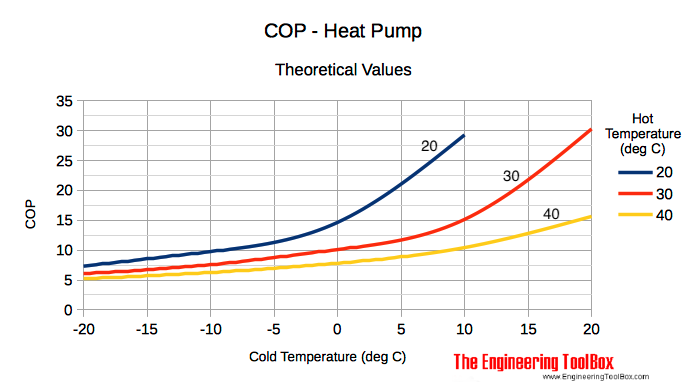
Isn’t this highly dependent on the outside temperature?
However at 0°C/32°F this bumps to 3.5-3.8, so you'd be getting much closer to the quoted 2000W.
If you're operating in -20°C or below for much of the year a heat pump might not be the best option, but even in Yellowknife that's only three months of the year and it's still twice the heat per kW.
I guess it's a concern if you live in Norilsk?
I'm pretty these will never be sold in the US, unfortunately.
Perhaps in the case of an EV using resistive heating, however, most have moved on to using heatpumps.
Heatpumps have COPs that range anywhere from 2 to 10. Which means for every 1kWh in, you get 2 to 10kWh of heat out. A resistive heater has a COP of 1.
Fossil fuel power plants operate at ~40->60% efficiency, which means that past a COP of ~2 you are going to be more efficient for heating even if your power source is directly from fossil fuels. It's sort of neat.
When talking about generation mixed grids (which most are now) the COP level needed to beat having a diesel burner for CO2 output plummets.
But one more point to consider, a modern EV needs an HVAC to ensure the proper operating temperature of a battery. The thing that killed the old Nissan Leafs was the fact that they didn't have any sort of cooling system for their batteries. Put those in hot climates and you are talking major and fast degradation.
So, it wouldn't even be (much) lighter to omit the heatpump. To convert the HVAC system for the battery into a climate system is pretty much just requires a single valve.
Software is a cost center. Your car company probably isnt going to win on it. Enable everyone else to compete to be a good infotainment for your base car.
I'm curious how much control is offered on these Android Auto systems. Ideally in my mind, there would be protocols for controlling windows, sunroofs, seat controls, HVAC, interior lighting, windshield wipers, defog, maybe even running lights headlights cruise control & those closer to the driving experience aspects. The whole car experience should be BYOD.
https://www.visualcapitalist.com/charted-lithium-ion-batteri...
Anyway, sodium ion will scale to less than that regardless of inflation.
A sodium ion battery should cost 40% of nmc.
Look at the Dacia Spring. The entry level barely has a screen at all, and no camera, not even a backup camera, it doesn't even have a display for it. Also: no A/C, no thermostat, no rear power windows. You have to pay if you want these, and even if you take the "premium" model that has a touchscreen, it is pretty basic, essentially that's just a display for Android Auto / Apple Car Play, and you get a backup camera.
That's what you would expect for an economy car. It is less than €20k. Unfortunately, it also has a pretty bad range and overall performance because of its small battery. Of course, batteries are expensive, and it is a cheap car. It means you won't get far with it. That's unlike "A-segment" gas cars (ex: Fiat 500) that while not the most comfortable, have no problem driving cross-country.
The only reason Tesla succeeded is by making sexy car.
Sure we are at the cost point where you can making boring EV. It would cost almost the same and only appeal to 1% of market.
I don't think so. They succeeded because the batteries made by Tesla seems incredibly good. A Model S owner I know swapped his batteries after... 280 000 km (175 000 miles). They seem to live long and have better mileage.
But neither the Model 3 nor the model Y nor the model X are "sexy": they just have a weird shape. Although I'll grant you the Model S is good looking.
To me the german, Porsche and Mercedes for example, make way better looking EV cars than Tesla and with much better interiors. But inferior batteries.
Any lithium battery -- even a bad one -- will last much longer with a great BMS.
Can your Civic do that?
I'll answer for you: No it cannot.
https://www.zeroto60times.com/vehicle-make/honda-0-60-mph-ti...
We all have different definitions of sexy.
Admittedly i’m talking about first generation cars - roadster and S. Cars that decided Tesla’s fate.
I agree we should actually limit top speed and acceleration so people don’t use them as weapons so much.
In a way - nerf and desex the cars.
This is dumb because you can just have sex with your hand. Logically why even involve women? On this regard, you sir are a genius.
I literally don't know anyone who thinks Teslas look sexy - they are like bars of soap, nothing "sexy" about them. But I also know plenty of people who own them, because of their superior battery tech, crazy efficiency, and the supercharger network. I don't know anyone who bought a car because it's "sexy" maybe other than one friend of mine who bought an Alfa Romeo Gulia because it "looks cool" - the argument that it's just a rebranded Fiat Punto never really worked on her unfortunately.
Mind you the competition at the time was only a Prius, which only last year became reasonably good looking.
Model 3 and Y are worlds best selling cars. By definition they have to be boring.
EVs weren't really economically viable at the entry level. Tesla was the first company to figure out how to design, style and market an EV for higher end customers at price points where it could actually compete decently against ICEs both on paper and in actual ownership experience.
Only thing that’s missing g for me is a 4x4 model.
Europe do not have that particular import restriction, and if someone wanted to personally import and register a brand new wheeled fuel drum with appropriate paperwork, they can.
Those things cost a few dollars now. This isn't the 00 where it was advanced tech. Physical buttons cost more.
Is this true? Honest question. My understanding is that for cars in general (implicitly driving range), electric cars are lower impact on the energy grid as a whole (ignoring last mile) because of how energy intensive oil is to refine.
Is it that diesel specifically is less energy intensive because of how it differs in refinement to petrol? Or is it that because heating is effectively 100% efficient it doesn't matter that you're using the energy in refinement?
Some of it comes down to the rocket equation because it takes a lot of energy to warm a battery up. If that energy has to come from a battery itself, then the vehicle needs even more battery. Carrying around that extra battery all the time will consume even more energy. And you lose about 8% total electrical energy by putting it through the lithium battery.
In comparison two litres of diesel fuel with a nearly 100% efficiency can absolutely be more efficient from a full-system standpoint.
What in talking about here is a mostly EV with a 100 ish all electric range, and the diesel/Atkinson adds even more tange
This is how most first generation EVS from legacy car makers were made, and they dramatically underperformed in range, performance, and comfort due to the assumptions, parts, and manufacturing methods inherited from ICE cars.
Suspension isn't infinitely adjustable without other tradeoffs, including cost. Batteries are already very heavy compared to ICE drivetrains.
That might be fine for an expensive car like an Audi or BMW that have a high end suspension anyways (probably even driver adjustable), but that probably won't fit into the budgetary constraints of a more affordable vehicle.
Cheap EVs suffer the most from the drawbacks that make electric kind of suck (smaller batteries reduce range, more sensitive to heating costs, etc). Once you can shove a 60kwh pack in a cheap car, most of those drawbacks go away.
Ford F-150, base price: $39,345, per Car and Driver.
Ford F-150, electric, base price: $49,875, per Car and Driver.
Ford did badly at this. Stellantis did even worse. (Stellantis is the company that ended up with Fiat, Chrysler, Jeep, and Dodge.) Stellantis had a big push into crappy mild hybrids (22 mile electric range). Nobody likes them. A few years ago, the CEO was talking about achieving profit margins as large as as tech companies through higher prices and fees. Now, there are unsold vehicles piled up at dealerships, the market share of Stellantis brands is half what it was a few years ago, and Stellantis is getting a new CEO. SHere's what the dealers have to say about that.[1]
[1] https://s3.documentcloud.org/documents/25136851/letter_to_ta...
I don't buy often but I occasionally fly to nice airport and have rented fiat pandas. Pre covid they were from £5/day rent, £7000 odd to buy. Post, rental rates went silly the other way like £100/day. Now about £15/day rent, £13k ? to buy. I miss the olden days of 5 years ago with £7k cars.
I'm not sure manufacturing costs have really gone up 2x in that period? I guess they were probably losing money at £7k.
The people who would gain the most from EVs will probably get them when they start to be more common and cheap. Think how long it took for cheap Honda Civics to hit the road from when the first Fords rolled off the line. Of course, it'll probably be quicker this time around.
If a manufacturer released the stripped down, no-frills car you're describing, a competitor would release a competing car with all the bells and whistles and slightly less range at the same price-point.
> I also think it would make a lot more sense to have an auxiliary diesel heating system
I think a heat pump (which some EVs have now) would be better especially if it could pump heat away from the engine and batteries.
As for air conditioning (heat and cold) there's more efficient heat pump system that's being used by Tesla that's 3 times more efficient than the conventional system [3].
1) Caterham V: Lightweight EV sport car without infotainment (just phone mirroring)
https://news.ycombinator.com/item?id=41719818
2) Caterham Project V:
https://caterhamcars.com/en/models/projectv
3) Heat pumps make new Tesla more efficient:
https://heatpumpingtechnologies.org/heat-pumps-makes-new-tes...
I've ridden in the dolphin and it has two screens and a bunch of tech attached to it (including gps directions). It's the cheapest BYD car. Two screens + CPU cost probably less than $300. Software doesn't incur extra cost per vehicle.
We're observing in real time - mostly via skyrocketing insurance rates - the impact & unsustainability of expensive, all-proprietary parts. Vehicles are getting totaled out now more than ever for things that should be repairable.
Speaking of diesel - what I really want is a simple plug-in hybrid truck or SUV (e.g. a USA Toyota Hilux or 4runner) with ~50-80 miles of battery-only range, and a diesel generator for 'indefinite' range extension.
I also think it would make a lot more sense to have an auxiliary diesel heating system. This would be much more effective than electric heating and likely generate less carbon emissions (at least until we transition to carbon neutral energy infrastructure). A gallon of diesel would last for months if it was just used for heating the cabin, and it would improve the range. It might even be an effective solution for keeping the battery at optimal temperatures but obviously a lot of math is required here to see if the tradeoff is worth it vs integrated battery heating.