But if it were, it would encourage serving the smallest possible cohort and doing no more business
> Kaiser Permanente operates 39 hospitals and more than 700 medical offices, with over 300,000 personnel, including more than 87,000 physicians and nurses.
https://en.wikipedia.org/wiki/Kaiser_Permanente
The second largest also owns Optum with 60k doctors:
> Optum Care is a family of 60,000 doctors in 2,000 locations nationwide. We work together to help 20+ million people live healthier lives.
https://www.optum.com/en/about-us/optum-care.html
So I'd ask you back, how many insurance companies aren't under the same parent org as hospitals? The 2 largest are, wouldn't surprise me if most are.
Considering I was just laid off for the sake of "efficiency" that is perfectly fine by me.
We’d all be stuck as farmers, tailors and wood cutters, if firing people was penalised or efficiency was punished, no one would want to make their company more efficient with wood cutting machines or sewing machines, or tractors for farming, etc.
In a small timeframe it is horrible to lose a job, but the state is responsible for protecting both the future generations balanced with comfort and safety of present population.
A affordable unemployment insurance is a much better idea tbh compared to profit caps or price caps.
Good luck tho!, may you get a great job soon. May god bless you.
Proper competition would limit market malfunction.
If a group of locals want to pool their cash and start up a local broadband service then good on them, best of luck. But taxpayers shouldn't be on the hook to help them.
However, because USPS exists, there is a ceiling to how much other firms can charge without differentiating their services to make it worth the difference in cost. It helps ensure the market functions with proper competition.
For any other market where distortion (dysfunctional market) is observed, the solution is not to mandate the impossible from the existing players, but to modify the market conditions where they are broken.
Aren't said locals literally tax payers? And they want their tax money to go to something actually useful for them.
That 90% should be allowed to pool their resources, start a "Centiville Fibre" company, build out fibre locally and charge locals a fair rate. Then the remaining 10 don't have to be involved in something they don't want. Or they can pay market rate for it without getting a dividend, which is effectively a penalty.
No government involvement required outside maybe permitting. The people who want it pay, it probably happens faster and all is good.
> And they want their tax money to go to something actually useful for them.
They're going to have their taxes raised to pay for the installation costs. Doing it through the government doesn't mean there is more money (unless they're harvesting resources off people who think it is a bad idea / don't want it / can't afford it which is unfair).
Taxpayers shouldn't be forced to pay for things that they don't use and don't think are good ideas. If you use it, you should pay for it. If you think it is a good idea, you should pay for it. But if people think something is a bad idea they should only have to pay for it under highly exceptional circumstances.
There is no need to force people to pay for broadband. This is a problem that a company can solve using voluntary action.
Many people strongly disagree about the places their tax dollars go. It is maybe one of the single most common complaints people utter and this is an example of it? People are able to make decisions about where their tax dollars go but only in the abstract of collective action via legislation. It’s kind of how governments work on a fundamental level and most of politics is about where the tax dollars go.
If a strong majority of people choose to do something as a municipality, that is the system at work. Sorry to the 10% of people who think they’re getting a bad deal (and are also almost certainly wrong on an objective level unless they just don’t want internet at all).
The suggestion that instead a private enterprise should be spun up for it so they can choose to not subscribe is the antithesis of the entire point. The entire point is that the cost is already beared by the taxpayers in the first place and that it should serve them. It makes more sense to invest directly in the creation and keep it in the hands of those who bore the cost. We give billions out in corporate welfare and yet the companies who get that money are quite often the most reviled in the nation based on public polling (Telcos). It is almost like the incentives aren’t aligned.
The idea that your tax dollars should only get spent on something you use personally is laughable - I'm not arguing that.
> The entire point is that the cost is already beared by the taxpayers in the first place and that it should serve them...
Well, having the taxpayers pay for it is obviously failing. Maybe try not taking the money off people and letting them build their own broadband? If you've identified that something the government is doing isn't working, the first port of call is try privatising it. The private market is pretty good at providing things.
Getting local government to do something instead of state or federal is an improvement; but by golly you could just have the people who want something organise to have what they want without dragging the unwilling in to it. 90% vs 100% of local people paying for something doesn't really make a difference to the underlying economics.
> If a strong majority of people choose to do something as a municipality, that is the system at work. Sorry to the 10% of people who think they’re getting a bad deal (and are also almost certainly wrong on an objective level unless they just don’t want internet at all).
No that isn't the system at work, that is the system failing. Taking a system that could work with just a motivated minority organising it and changing it to a system where everyone has to vote on it at regular intervals is a recipe for failure. If a strong majority wants something, they have all the tools they need to do it themselves at their own cost. The only reason they even need a majority is to push any obstructionist permitting and whatnot out of the way.
> We give billions out in corporate welfare and yet the companies who get that money are quite often the most reviled in the nation based on public polling (Telcos).
A sensible take there is to not make paying them compulsory? I get what you're saying but I don't get how you aren't joining the dots. You start by saying that some people are going to have to pay for something they don't want. You then get to the conclusion and you've identified that people are being forced to pay for something they don't want and that is bad.
There is an easy solution to all this. Stop forcing people to fund things they think are bad ideas, then let the people who want broadband band together, set up a limited liability corporation to control the legal risk, and build themselves a broadband network. IE, get government out of the picture as much as possible. Then literally everyone gets what they want. If someone changes their mind later they aren't a shareholder and will end up having to give money to the people with more foresight.
I don't really see why anyone should be unhappy if Sam the Solar wants to power his own house. Good luck to him. He doesn't have to pay for my electricity and I don't have to pay for his. If it is much more cost effective for him he can come do my house too. There is literally no need to force them to pay or force them to consume a service that they don't think it a good idea.
And the closer the equilibrium can be pushed to a fully private free market the more cost effective it is likely to be.
I was on the private system my first 13 years working in Germany. I was obligated (but didn’t try to fight) switch to public recently.
The change has overall been positive.
I get up, check the weather, throw on clothes for whatever's happening, jump on the e-bike, buzz half a mile down to a gravel trail that runs north-south through my city, and go do what I need to do. I use panniers mounted on a rear rack to hold stuff. For groceries I tend to go to Trader Joe's which is in a shopping area off the trail about a mile and a half from my house. Hardware stuff I get from a family-owned place that's 7 miles away, 5 miles of which is on trails. Electronics is from a store that's sort of like Radio Shack on steroids that's about a mile from the trail system, but that's more like 10 miles each way. I don't need to go there often. Work is 10 miles away, 9 miles of which is on a trail. I park in a bike cage, and there is a locker room with showers.
I am fortunate to be able to work from home most days. I work for a medical group and we have doctor's offices across the city and King County. I can reach all but one by a one or two bus trip when I need to go, which is rare. We have friends who have moved up to Everett and it's a two bus trip to go all of the way from Magnuson Park to downtown Everett.
The only "hard" trip is to go see one of our kids who has since moved to Tacoma. We try to time it when the Sounder is running (a few mid-day trips would be great) or take Cascades if we feel like splurging.
To me, it is more condescending to insist that a car is a basic life necessity. It demeans those of us who live without one.
A car is a basic necessity of life for the vast majority of Washingtonians. Congratulations on being the vast, vast minority.
I do not know this. I have over a thousand taps of my ORCA card in 2023. My wife has more. We have been as far north as Bellingham and as far south as Portland on transit. We attended the wedding of a friend's kid in Yakima by riding transit to Issaquah and taking Greyhound from there.
I don't appreciate being told that my actual, lived experience "isn't viable", especially when I know several other people who do it just the same as me. Not all of us can or want to drive. This is even more true as people get older.
> And you’re fully aware that commutes of >30 minutes are not uncommon, in part die to how unaffordable the greater Puget Sound
According to AAA, the annual cost of owning a car is $12,000. We don't spend that money, so we can afford to live closer-in where transit is better. I am not here to judge people who choose to move far away but I haven't done it and I won't. But even if I did, I could just move to where I already have acquaintances in Lynnwood or Redmond or Renton or Burien and take the bus just the same as I do today.
You're in the vast minority who can take the Sounder, etc. Your scenario does not reflect the reality for the vast majority of Washingtonians.
> I don't appreciate being told that my actual, lived experience "isn't viable"
Yet, it isn't viable for the vast majority of Washingtonians.
> We don't spend that money, so we can afford to live closer-in where transit is better.
Congrats on being wealthy enough to live in a place where ORCA has any value. Most Washingtonians do not.
You do, in fact, live in a transportation bubble. You need to acknowledge that your transportation bubble is not viable for the vast majority of Washingtonians, so your premise that being car-free is do-able in Washington simply is not a reality for millions of Washingtonians.
This is exactly the same blinders we see on r/seattle. Those who call for elimination of cars are privileged enough to live in Seattle and don't seem to recognize other's do not live in Seattle (or commute to Seattle from where most public transportation is not effective, viable, or possible).
I don't think this poster was calling for removal of cars or whatever, just pointing out that it's possible to build your life without them. For at least some people.
There's certainly tradeoffs. Where I live, I could do many things with transit, but hours of operation are very limited, and direct routes are very limited. Sometimes, I can take transit to the airport and it makes sense, but on my most recent trip, getting to the airport would have been very stressful as the ferry canceled most of the morning runs on short notice and AFAIK, there's no reasonable alternative route without a private car. On the way home, there's no transit on my side of the ferry on a Sunday, and even if there was, it ends hours before I get there. If I needed to build my life around transit, I'd need to fly only during limited hours and not have any scheduling mishaps, spend nights in hotels a ferry away from my home, or move to a more transit accessible home.
At the same time, I don't complain that NYC doesn't accomadate my life built around cars. I choose a life built around cars, and so I avoid built up urban areas whenever possible. I hate paying for parking, so going into the city needs a good reason, and I would never want to live there.
The person you’re responding to is one of those people. Don’t waste your time.
While you can certainly spend as much as you like (sky is the limit here), there is no need to spend such amount if you don't want to.
My TCO for my primary driver in 2023 was $2419 when accounting for every expense.
I believe you fail to recognize that a lot of people who don't drive don't live in Seattle. Whether or not someone drives is not always by their choice. I have friends who are physically incapable of driving, yet because drivers tend to outvote and outweigh non-drivers politically, those friends are denied the transit service they would really like to have. And even when it is by choice, nothing says that Yakima or Spokane or Port Angeles can't have transit; most of them do!
I live in Seattle. My wife and I were born here and we will hopefully die and be buried here. It is our home. I have lived through decades of transit that would make a New Yorker howl in peril. It was not so long ago that our idea of a frequent bus route was every half hour, and the light rail (that began running after both of my children were born) stopped in downtown and at 11pm.
Seattle residents aren't a monolithic bloc but, generally, our push for fewer cars is because cars, and especially those cars driven in from places that do have quality transit to reach the city, cause a lot of problems for people outside of those cars. I really, really want to make it to retirement without being run over by someone driving into town who's late for a sporting event.
> Yet, it isn't viable for the vast majority of Washingtonians.
Not driving can be viable! It is viable, if not as convenient, in places you wouldn't think and might even consider are "too rural" or "too spread out." The fact remains, there are a lot of us in Washington who don't drive and, bluntly, I don't appreciate us being insulted or accused of having an excess of privilege or living in a bubble.
There may well come a day when you are not physically able to drive and I wish very much for you to have a robust transit and sidewalk and low-speed city setup that enables you to have independence and access throughout all of your days.
But WA has 7.7M people of whom 3.9M live in Snohomish, King, or Pierce counties.
I agree a majority needs cars, but it’s hardly overwhelming — and worth remembering that half of people live in a narrow, urban bubble. A lot of WA’s political strife is caused by this.
Prior to Seattle, I also lived in Texas and Virginia. Also no car. I moved to VA being unable to afford a car or insurance.
In many situations it is doable. But it requires restructuring how you life and where you live. I spend more on rent, but make up for that by not paying for gas, insurance or the many other small fees that add up. People get trapped into this idea that they need a car that they never consider the costs it has.
Most WA residents live along the I-5 corridor in cities or surrounding suburbs, not in the rural parts. GP specifically lives in Seattle city limits, like about 10% of WA residents.
Also, GP is not trying to eliminate cars.
All west coast states are largely rural where public transportation is ineffective and cars are a basic necessity of life.
Specific cases do work - or at least work better than the car-owning alternatives, for example major transit directions for short-ish distances in San Francisco. If your life revolves around a few of these, you are doing pretty well without a car ... and you still can't escape from that area without one. A significant additional "sweet spot" zone is where car usage has been made - deliberately and assiduously - unbearable. The choice is then about a lesser aggravation, rather then desirable service. And so we get the quality of life we deserve, and that's not great.
Nobody is arguing that YOU should own a car. If you are happy without one that's great and carry on. But that's rather specific situation.
like the Muni is cute and all but it’s a joke compared to the east coast systems i grew up with (wmata, mbta, nyc mta) many of which are in smaller cities.
People should have to pay the full cost of the risk of living in these dangerous areas so the price system encourages them to move.
This should carry with the property address - the next person who buys it should have to sign a form acknowledging that they aren't going to get a FEMA bailout if it gets destroyed.
Lots of Florida Republicans out there who complain about welfare but rely on some of the biggest welfare checks that get written to repair their homes because of the absolutely foreseeable results of their choices.
"We will pay no more than the actual cash value of the damage until actual repair or replacement is complete." [0]
[0] https://www.iii.org/sites/default/files/docs/pdf/HO3_sample....
A secondary threat is prolonged flooding which can submerge entire homes with salt water for weeks at a time. That's very costly and not preventable with existing homes in flood zones.
It defies comprehension that despite being somewhat poorer and enjoying milder weather, Europeans built their houses from brick and mortar while the US insists on erecting cheap cardboard boxes that even if they're not blown away or flooded, will probably rot away within the lifetime of their owner.
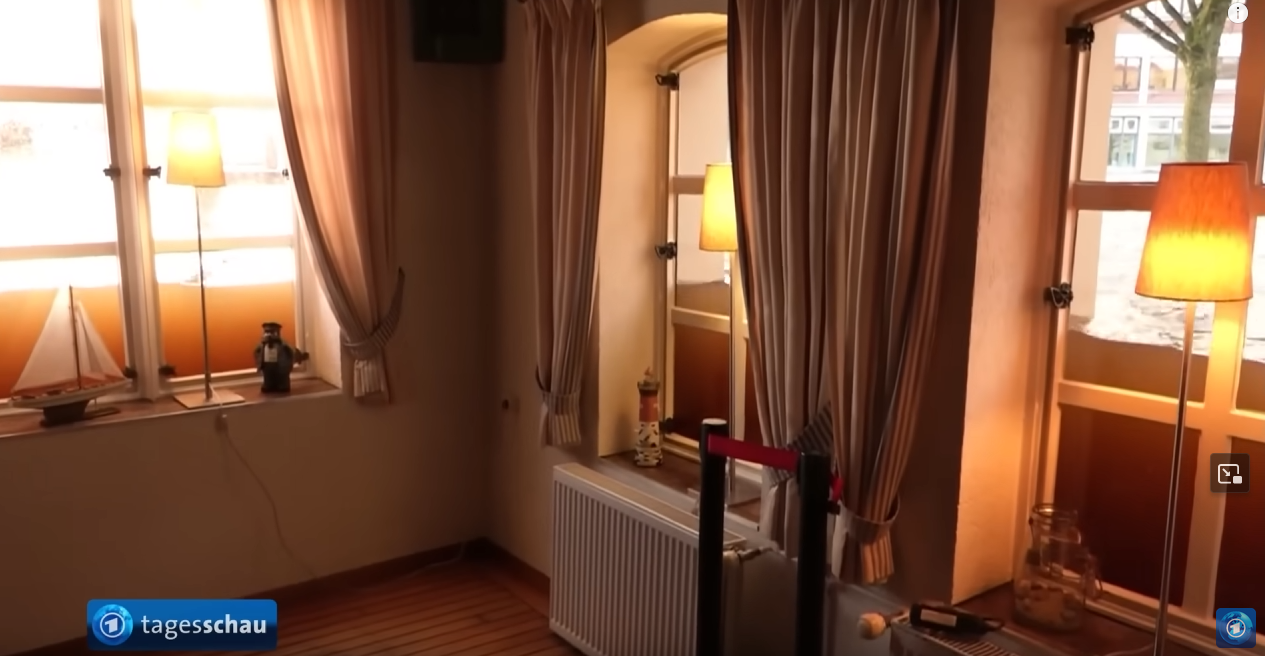
In most of the US, only wood or steel frame construction is safe. Wood houses last centuries.
Wood holds up better in earth quakes and tornadoes than brick, but you could probably build safe buildings with bricks in the USA, they would just cost more and require similar or more maintenance.
While steel-reinforced masonry can be made safe, it isn’t obvious to me that actual brick-and-mortar can be.
America has lots of wood and lots of gypsum, and that's what we build our houses with.
Anyways, the point isn't the materials - the point is that the houses are fundamentally unsuited to the environment they are in.
Drywall walls have never been a problem for me, in fact they're pretty nice. It's really easy to modify the walls. Need to do a new Ethernet run? Want another power run? Feel like moving a lightswitch? Install new access points on the ceiling or change up light fixtures? Easy to drop down the void and cut a new box. Want to redesign the layout of a room? Often not a problem, easy to change.
Meanwhile a concrete wall is a massive pain to modify. You get the runs you get. Good luck redoing a layout. Say goodbye to having good wireless coverage.
We were talking about houses blowing away and falling over but sure.
So do you spend significantly more for construction for a failure that's still extremely unlikely? Y'all are acting like every time there's a thunderstorm all the houses just blow down. You're entirely disconnected from reality of the actual risks versus massive increase in costs.
Major hurricanes are a different story. But even then total loss is relatively rare except for storm surges unless you’re in the path of the eyewall.
There is no construction that can withstand storm surge, which is the biggest and most destructive hurricane impact. Even if the structure is intact, everything has to be ripped out of it. Most of them do survive winds short of tornadoes, though roof damage is very typical for major hurricanes and tree falls can cause problems.
We’re talking about the wind blowing up to 30ft of saltwater _miles_ inland. Given the comparative rarity of a major hurricane in any given geographical location and the oddities that determine the storm surge and where it comes in, the damage usually is worst in places it’s never flooded before - because places where it has are indeed required to build higher.
Do you notice the awkward protruding wall plug, seemingly used by the lamp, on the photo you linked? It doesn’t have to be that way - I have put a receptacle or switch in to the perfect spot as a one day project many times, and we have reworked wall layout in several places.
And, the photo looks like it has single pane windows with snow outside? They might not have had functional multi pane windows when the home was built?
Needs and technical capabilities change, and a design that is less committed to mass walls has important flexibility.
That's water outside. After a storm. That's a waterproof house in a coastal area of Germany that tends to flood during storms.
Needless to say those windows are designed with another problem than just insulation in mind. I can't tell you whether they're multi pane. All I know is that they open towards the outside rather than the inside for obvious reasons.
If they can’t build on it, who would buy it? Urban farmers?
In any case, your plan would destroy the land value, and the corresponding property tax revenue.
Sounds like the market effectively discovered the true value of the property with all externalities priced in. I don’t see a problem here?
On the downside, when the next disaster hit and FEMA didn't cover it, it would look like FEMA doesn't want to cover low income housing, which isn't a good look.
But there does need to be some mechanism to convince people to abandon homes and towns that are not appropriate given environmental conditions. And it needs to be done carefully so it's not like kick all the poor people out, do some civil engineering that never happened while it was a poor community, then sell the land to developers who make a huge profit.
https://www.nbcnews.com/news/us-news/hurricane-idalias-destr...
: Dozens of modest homes along the Big Bend coast were heavily damaged in the floodwaters, but interspersed among the debris were residences left relatively unscathed, all because they were built elevated on stilts.
If a house is destroyed by any form of reasonably common widespread disaster it becomes illegal to build anything on that lot that would likewise be destroyed. You can rebuild after the hurricane, you must build a house that will stand up to a hurricane. (Yes, it can be done.)
I wouldn't apply this to flukes--your town does a Tunguska there's no reason to require asteroid-safe houses.
I would also make an exception for things which by their nature must be in the line of fire--such things must never be permanent habitation and can't have community-rate insurance against whatever happened to them.
A business can rebuild it's beach cabanas but would have to go to Lloyd's if they wanted insurance.
they already do the same in flooding zones.
but yes, people who live in fire-prone areas may take a loss. encouraging people to anticipate these losses is part of a functioning market. if they can live somewhere risky without financial risk, we only encourage future people to do the same.
If you recursively got everyone in dangerous areas to move, no one would live in California. If you live in a population center in California, the only reason why you aren't prone to wildfires is because of the people living around you that are.
It's a scenario where everyone paying the same actually makes sense. Your insurance is that others are accepting the risk of losing all their personal belongings or even their lives - even if insurance will cover them financially.
It's not the same as hurricanes or earthquakes.
In many wildfire events homes burn because brush/scrub burns all the way up to the house and catches the siding on fire, or because embers land on the roof or enter soffits and start a fire that way. These things are really easily improved. Insurance could require fireproof siding, no bushes/plants right up against the house, fire screens on roof/soffit vents, and fireproof roofing. Those changes alone would decrease the number of houses that burn in a fire.
Obviously there are some areas where the landscape, wind patterns, and nature of trees means if it burns it will rage and everything's gonna go up no matter what you do. But that isn't everywhere.
What I don't know right now: how much does CA law allow insurers to price this kind of risk? Is it a matter of law not allowing them to send accurate price signals? I can believe this is the case. I also don't know if CA law allows them to only sell in certain areas... there's no practical wildfire risk to the Bay Area for example so why stop writing policies there?
Or are insurers going into knee-jerk mode or even using this as an opportunity to goose profits (knowing that wildfires wax and wane)? I can also believe this is happening.
Like I said: it is unfortunate that CA law, insurance companies, or both are not using this as an opportunity to improve fire survivability in rural areas.
There is practical wildfire risk in the Bay Area. You should drive down 280 some time.
most of the people with the option to remote work are working decent white-collar jobs, so add this to the long tally of policies that are designed to help but only hurt the poor
Under what conditions will a person have a job that they are expected to be at, but not have car insurance to get there? I'm sure this exists (for instance for someone whose policy is revoked for DUI or accident or whatever), but in many cases I assume public transit or a three week wait to start is acceptable.
Three weeks delay is just the most visible thing, they are basically pulling out all the stops to try to avoid covering as many people as possible.
But even 3 weeks delay in driving a vehicle you just purchased is considerable.
Plus most medical expenses quickly will exceed those bond values these days. Maybe decades ago if you had a lot money to just set aside getting no interest on it it may have made sense.
However the costs of medical and even cars today make it quite a risky proposition
It makes absolutely no sense for me to post a bond for such a small amount when I can get ~10x the coverage, plus all the claims handling, for $1200/yr for two cars and two drivers.
It would make sense if I was a business who had hundreds of cars or some other weird corner case perhaps, but regular people who could afford to post a bond have a better option in the insurance market.
https://www.nerdwallet.com/article/insurance/minimum-car-ins...
My Nevada insurance costs half of what I paid in California.
I'm in California and have been buying insurance like this for 20 years. Last time was 18 months ago. Basically instant.
you say you last bought coverage 18 months ago. i said the market failed in december. i encourage you to try to buy coverage now and see. i was also surprised since i expected the previous situation of instant insurance to still be in place.
not sure why i am being downvoted, i encourage anyone to try for themselves
Geico will quote a price but forces a 15 days waiting period. Then they’ll send you snail mail and ask you to send in a picture of your car within two days, by snail mail. This is the car you don’t have insurance on, so it’s probably still at the dealer’s or at the seller’s house! I think they’re not allowed to actually refuse to sell insurance but they’ll do everything they can to make it annoying enough that you go away. State Farm and the others are all equally bad.
I am curious what makes it different, as I have no record and drive fewer than 2k miles a year.
The matter still hasn’t been fully resolved, say the state’s insurance officials, who argue that rate hike decisions aren’t interfering with unfulfilled rebates.
“These are separate processes,” said Michael Soller
Don't forget fraud isn't covered in econ 101.
If the insurers could have it their way, they wouldn't have to adjust at all (for overcharging), while avoiding undercharging ahead of time. Oversight is necessary to counter misaligned incentives.
The point is no part of this is _fraud_.
What happened is that with the shutdowns, profits went from 2-3% to 20-30%. Some of that money was given back to consumers, but most went into an absolutely insane soft market where every carrier paid more than they ever had to acquire any driver they could.
This led to a lot of carriers having drivers on their books that they really didn't know how to price correctly. Everyone realized at roughly the same time that they had screwed up more than usual - and that was when drivers got back on the roads. Suddenly frequency and severity of accidents were up to historic levels because everyone forgot how to drive and is driving ANGRY.
So there's a double whammy, it's drivers they haven't insured before on the one hand and the drivers they do know how to price changing their behavior en-masse. So we've gone from once-in-a-lifetime industry profits to massive losses. For the first time, when the carriers tell the government the price is unsustainable they actually mean it. Hence the California shut downs - carriers are TRULY taking a loss on most policies they write and are trying to shut down new customer operations as much as legally possible. You'll notice a surprising lack of auto insurance ads on tv compared to 3-4 years ago.
Progressive's underwriters are so far ahead of everybody that they got a lot of their price changes submitted before everyone (the other carriers and the government) figured out what was going on. You can see that in many states where the prices are public, in an incomprehensible data format. So they have been one of the only carriers still getting new customers.
It's basically been a state-by-state showdown now between state insurance commissioners and carriers, and the commissioners are starting to give in. Premiums were up almost 20% last year nation-wide and it's only going up.
As a Brit the fact this position exists AND is elected is bonkers to me. It seems like the US talks about a free market but has done everything possible to add voting and red tape all over the place.
Car Insurance in the US has turned into a tax on the poor.
I don't mind the idea of insurance, but I do mind the idea of insurance companies trying to lessen their risk by getting the state to mandate everyone needs to pay for it. If someone is paying insurance and the other driver doesn't carry insurance and doesn't have the money to sue for it, that's the risk of doing business as an insurance company.
It's regulatory capture, plain and simple.
And lets not even get started on police enforcing it and writing tickets or impounding vehicles of people who don't have insurance. Who doesn't carry insurance? Those who cannot afford to. The state is literally causing harm here.
While there may be downsides, I'm happy to know that if a car hits me or my car, there is an insurance who pays (and it goes not to my insurer).
What the other car having insurance does is give someone for _your_ insurance company to sue to recoup their money. Most individuals aren't going to be worth sue-ing, but other insurance companies will be. And most major insurance companies are going to have in-place agreements so that litigation isn't actually necessary (because it's more expensive).
The other vehicle being covered by insurance is absolutely _no_ guarantee that _your_ insurance won't decide to declare the vehicle a total loss. I myself drive a 2004 corolla that's had a salvage title since the mid-2000's due to someone hitting me. I chose to "buy" the salvage title from them and that vehicle has been 100% solid. They scrapped it because they didn't want to fix the body damage.
The insurance have had their cake and are eating it too. They're not required to cover you, but you're required to be covered.
I experienced once a minor car accident where another driver did some damage to my car (well, and his). There where no courts involved. Just one insurance company retrieving a bill (not mine because it was not my fault as the other driver and me agreed on (and used a form to confirm that) and paying the bill.
And my point is less about _who_ paid, but more about that _anybody_ pays. If two people without insurance hit each other, who's going to pay the bills?
if two uninsured people hit each other then they sue each other, they come up with an agreement on money exchange, or they both go about their business and pretend it didn't happen.
at least in the US, the only difference between two uninsured people hitting each other and one or both having insurance is the party doing the suing changes.
of course, injuries complicate matters but it's all roughly the same. Someone has to pay, which likely means litigation without a gentlemans agreement.
But if someone doesn't have insurance what's the chances that you suing that person is going to actually recoop your money? right, probably not going to happen. That makes it a business risk for insurance companies that end up having to fix their customers car but not being able to recoop that money. So they convinced law makers to require insurance so the chances of that happening are far less.
^ to better explain what I was trying to say before.
People will pay for uninsured motorist protection and _under_ insured motorist protection. under insured typically means an injury happened but the other persons insurance policy doesn't cover injury (liability) or the medical bills exceed what they do cover.
Think about that racket. They insure you but don't want to insure you without being able to fully recoop their money so they charge YOU to cover the case where the other drivers insurance won't cover it all.
it's a frickin' racket. If it's required by law it needs to be covered by the state or the insurance companies themselves need to be required to cover it. Anything else and it causes undue harm to everyone, most especially those who cannot afford insurance in the first place.
PG&E is a private company, but the CPUC has strict controls over it's operations. You can read the CPUC meeting minutes for yourself. Things like "PG&E would like to replace the chain link fence surrounding substation X at a cost of $150,000 - DENIED".
CPUC is a commission whose members are selected by the governor. They are the defacto decisionmakers. Yet Gavin Newsom will give quotes to the media on how "PG&E will need to be punished for it's mismanagement".
My only theory is that keeping PG&E private provides a convenient scapegoat for the utter mismanagement by CPUC.
The reason it's denied is because more spending on infrastructure means higher rates. CPUC is trying to control rates.
For anyone interested you can read about the 2024 rate decision here: https://docs.cpuc.ca.gov/PublishedDocs/Published/G000/M520/K...
For example, PG&E wanted to replace gas service lines made "with Aldyl-A plastic that were installed before 1985" due to the risk of line failure.
The CPUCs decision was "PG&E’s request to replace unidentified services is denied. Moreover, the Commission does not find that PG&E has supported rounding up the number of services to be replaced by 73 per year."
It's a byzantine system of regulations that dive into the minutia of running a utility. Not to mention a lot of these decisions are by administrative judges since the regulations are written into law.
The California auto insurance market basically failed in December and it is now almost impossible to get auto insurance with less than 3 weeks lead time. Most of them have closed their brick and mortar locations and do not accept online applications.
Of course, California’s solution to a shortage is to try to mandate supply.
quote from commissioner that refused to allow price increases for 4 years:
> “These alleged passive-aggressive tactics by insurance companies to slow down drivers’ access to coverage are unacceptable, dangerous, and will not be tolerated,” Lara said in a press release Thursday.