[0] https://i.postimg.cc/HW89hs7r/Screenshot-2022-07-12-145957.p...
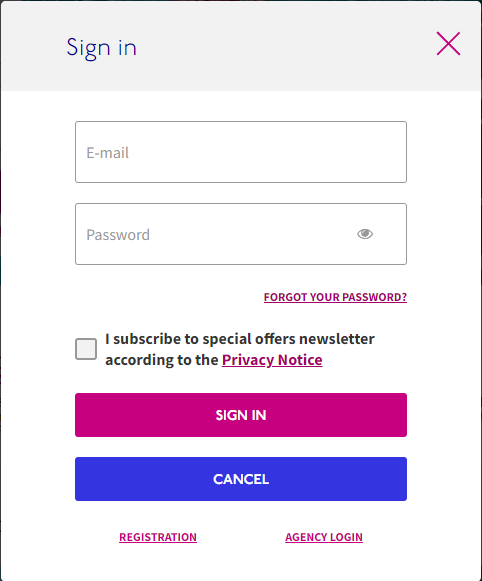
https://arstechnica.com/information-technology/2022/05/some-...
My favorite thing is when the companies outsource the email marketing, so that it has absolutely zero relevance. I've been using the same online tax preparer for 10 years, and I've had exactly zero refunds, yet their emails during tax season always let me know that "my refund is waiting".
Sorry, but honestly speaking even checking your profile does not reveal what your web site is. Probably you are marketing person from your words, but that's not clear.
Hope this feedback helps!
And as a second thought, the way China amd Russia are going, maybe we should just reclaim all their ipv4 addresses, and just give each country 1 IP, they can proxy through it on their end.
Finally, true decentralisation!
Globalization is over. The post Berlin wall fall consensus undermined and ruined.
The last to realize, loses.
This sometimes falls foul of spammers adding some random addresses of the form [email protected] or <commonname>@mycatchall.domain.tld into their lists, but that hasn't happened often enough to be a problem. That it isn't much of a problem surprises me a little, given how much <commonname>@domain.tld (no sub-domain) addresses are used this way. I have considered trying the pattern somename@<sub-domain-per-company>.domain.tld as an alternative if that becomes a problem, but before implementing that I need to change my email setup (doing that anyway soon as running Zimbra's OSS version is going to get more difficult next year) and maybe my DNS server of choice (if wildcard MX records are an issue, I've not looked into that).
Sometimes I get funny looks for addresses like this, especially as I usually work the company/other name in there somewhere. I had one website refuse to accept an address based on their name, which was a rad flag and I backed away from going any further into dealing with that organisation.
The id could be anything, and the SHA1 HMAC takes 32 characters in base32 (which is an email-address-safe encoding). Then just configure your spamfilter to reject any address where the HMAC doesn’t check out.
Of course, the drawback is that you’ll need a computer to generate a new address… At which point you may as well store an explicit whitelist of valid addresses.
This is a great idea, I might implement it. The difficult part is hooking the validation in the mail server I guess.
<emanynapmoc>@mydomain.tld
Spelling the company's name backwards makes it easy to match to a company for use by my own spam filter without setting off their pattern detectors.
AND CALL them, if possible: “I’ve received marketing emails from your company recently, how is this possible, I’ve never signed up, yaddayadda… “
Generate some cost on their side.
Not a burnt WizzAir customer at all! /s
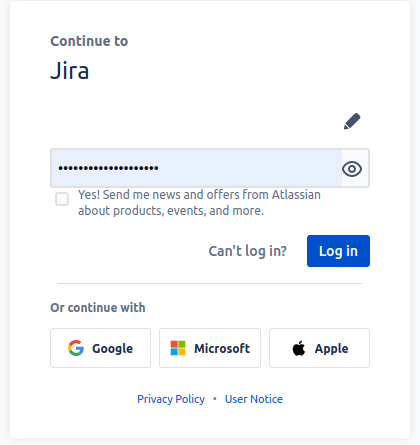
I left a screenshot in slack and it ended up causing a couple of teams to have to roll back their widgets, but it always baffled me that we were able to focus so much on the individual trees of metric optimization that we would miss the forest to that extent.
Always look to the decision maker's incentives and you'll almost always discover why things are the way they are. And often, to your point, there's an aspect of tunnel vision associated with it because considering the bigger picture is difficult as a company grows and becomes more complex and creates friction in achieving goals.
Ultimately, this is the purpose of senior leadership. But the Peter Principal really begins to kick in at that level and the truth is, many senior leaders are in over their head and are unable to materialize the broader strategy and understand how their various units are affecting it. So we end up with crappy products.
Of course if my bonus is some small KPI I can optimize that at the expense of overall performance.
Like I'm sure many users sign up then drop out of your funnel but I'm part of an organization that's a paying customer. I'm already going to use your stuff. What possible business benefit could there be to you spamming me? If anything you're risking the inverse - it made me want to migrate away from the tool.
Still absurd, but I know this is a problem friends of mine have had.
I can't help be reminded of those "if you'd like to unsubscribe call us so we can harass you with offers even more" you see in some company terms and conditions.
Maybe consider, oh I don't know, not deploying a spam cannon in the first place?
The good news is that this sort of thing is enough to trigger the spam filter in my email program so I'll never see it.
Companies have this astonishing arrogance assuming they should be able to interrupt actual humans with robot messages from [email protected] - typically marketing messages that cannot actually be replied to and do not qualify as respectful communication.
I'm not at all related to the people you are talking to, but I am a dev who has accidentally built spam cannons before. It is surprisingly easy to spam people - you need to deliberately build in checks - and put them in the right places to prevent spam cannons.
1. Why our fancy expensive mailing/marketing tool (Intercom) does not spread these messages in a relaxed fashion (it should)
2. If of those five messages, maybe two were the obligatory "confirm your email" and standard "Welcome to Checkly, this is what we do"
TL;DR we should not spam.
BTW: all of this was done without any bad intent. It's 100% us being stupid and not coordinating and being diligent enough.
(on a serious note, good on you for taking action though. +1)
Well, this person had 6 first impressions.
Since it's distressingly common.
Suppose the site isn't concerned about the sale very much at all?
Suppose the thing that the site uses to reel people in, is a good deal that isn't very profitable to the site but what the site then tries to sell is a very profitable near-scam/ripoff. Scaring off half the ordinary customers becomes worth it to get even 10% of the customers buying the scam.
What seems like "poor optimization" can easily optimization for something and could be seen as "the scammification of the web".
Many here are focusing on a single interaction. While the outcome of that single interaction is negative to the company, the aggregate outcome must be positive somehow, perhaps in the way you said, but it doesn't even have to be a scam or ripoff. Some products just have a higher margin and/or customer LTV.
As an individual, it is annoying, but the company is focusing only on the macro effect when it does something like this.
If I may... I have seen data from a big retailer that shows any user that doesn't immediately purchase an item, is actually not that interested in the product on the screen. If a customer is going to buy something, they will do it promptly. Anyone else is just browsing.
YMMV, grain of salt, context dependent, etc, etc.
    1. Clicked on page.
    2. Took maybe 10 seconds to take in what is "above the fold".
    3. Scrolled down to see what else there is.
    4. BAM! Popup triggered by scrolling down.
I will say, generally, when I'm to the point that I'm entering credit card info, I've put up with it, but I have been chased off of sites by this use case before. Especially if that popup also crosses with some other popup and now I'm chasing down the tiny little 6pt light-grey-on-white little "x"s to click away the popups in the right order.
Actually, let me add that to my touchstone list. OF COURSE hiding the dismissal icon for the popup increases "engagement" with the popup. You don't even need to run a test for that, because what other result could it have? "We shrank the close icon, moved it to the lower right corner where nobody expects it, and made sure to kill the constrast even harder, and customers dismissed it 2.5 seconds more quickly on average"? Of course that's not possible. But... that's the wrong question! And AB testing is really good at answering the question you're asking, it has no mechanism in and of itself to see whether you're asking the right question. If you're getting down to this you've overoptimized.
They may also have data that >90% of customers who make a purchase choose/click in <10 seconds, and never scroll. Or may even take a different path entirely or similar.
They could interpret all of that as you inspected the product(s) on the page, didn't choose/click one, and _now_ is the best time to prompt you with suggestions to maintain engagement in >75% of instances.
You could also be one of the lucky few customers in a sacrificial control group unknowingly testing their new shitty popup to measure its impact on sales.
Whilst I can't say for certain that any of this is your case, I absolutely guarantee there are many retail sites that do this - I've worked at several now - and this is bread-and-butter material to data teams working with customer engagement.
Then the problem is people, and "they're just clicking close out of reflex!".
Cue hiding this, and results you wanted appear! Success! Raise! Promotion! Or, maybe more funding, due to signs of greater engagement.
Fuck that. Unless it's an emergency (in which case I'll go to a shop), anything i purchase online is carefully considered, sometimes over several weeks. My revolving user-agent, vpn etc may give the illusion I'm not interested....but i am indeed, just browsing...
I hate them so much. It makes it feel like so much more of a chore to try to do research or look for things online. I'd honestly prefer 56k page-load speeds if the pages were free of this garbage.
1) I open a product in a tab. I click "add to cart" and a "related products" sidebar slides in. I close the tab in annoyance.
However, some items exhibit a similar pattern, EXCEPT...
2) I open a product in a tab. I click "add to cart" and a stupid extended warranty sidebar slides in. I close the tab in annoyance.
The difference?
Item #1 gets added to my cart
Item #2 doesn't make it to the shopping cart.
Amazon just silently deleted my purchase.
I actually don't know when it dawned on me that this happened, but amazon lost money on me because I didn't buy certain things.
This is a good touchstone to use for "you've overoptimized your site, tone it back". I am also taken aback every time I'm on a site, I've got something in my shopping cart, I'm headed for the "check out" button, or I'm even on the checkout page, and some stupid interstitial pops up. Dude, I'm trying to enter my credit card information! Back off! Especially stupid for a "sign up for our newsletter" popup; we all know that unclicking the "yes, we can email you every 17 seconds from now until the heat death of the universe with valuable offers from 'our affiliates' which we define as 'anyone we share a species with'!" box on the checkout form is mandatory, and if we don't see it immediately we'd best go hunting for it. You've already default populating the checkbox to "yes" on this very screen, get out of the way!
Less unbelievably stupid, but related, is when I'm examining product X and just after I scroll down a bit to read more you pop up something related to... well... anything other than product X! I'm signalling interest in product X as hard as I can, and you've AB tested that this is a great time to jangle your keys over there instead? Your AB testing is stupid and can't possibly fail to be some stupid statistical fluke or other terrible error. What fisherman goes out on his boat, hooks a fish, and then rushes to throw another completely different lure out to the hooked fish and get them on that hook instead? This is another good touchstone for being "overoptimized".