News for hackers. Stuff that matters.
Re:ARM Mac Impact on Intel by thatwasunusual on Monday June 22, 2020 @02:05AM (#23597643)
Slightly off-topic, but does anyone have any details on how the new ARM-powered MacBooks will perform compared to the Intel-powered MacBooks? According to this[1] article, "the new ARM machines (is expected) to outperform their Intel predecessors by 50 to 100 percent". Can anyone shed some insight into how this is possible?

[1] https://www.theverge.com/2020/6/21/21298607/first-arm-mac-ma...

Re:ARM Mac Impact on Intel by ipsum2 on Monday June 22, 2020 @02:14AM (#23597683)
The Macbooks will have a CPU that's comparable or better than the iPad Pro. The iPad Pro already beats the Macbook Pro in some well-known benchmarks, such as Geekbench.

https://www.macrumors.com/2020/05/12/ipad-pro-vs-macbook-air...

Re:ARM Mac Impact on Intel by GeekyBear on Monday June 22, 2020 @05:50AM (#23598636)
SPEC is a better cross platform benchmark, since it's an industry standard and was designed just for cross platform testing.

>Overall, in terms of performance, the A13 and the Lightning cores are extremely fast. In the mobile space, there’s really no competition as the A13 posts almost double the performance of the next best non-Apple SoC. The difference is a little bit less in the floating-point suite, but again we’re not expecting any proper competition for at least another 2-3 years, and Apple isn’t standing still either.

Last year I’ve noted that the A12 was margins off the best desktop CPU cores. This year, the A13 has essentially matched best that AMD and Intel have to offer – in SPECint2006 at least. In SPECfp2006 the A13 is still roughly 15% behind.

https://www.anandtech.com/show/14892/the-apple-iphone-11-pro...

I think performance per watt is going to be just as important as overall performance. Apple's "little" cores were a new design in the A13, and compare very well against stock ARM cores on a performance per watt basis.

>In the face-off against a Cortex-A55 implementation such as on the Snapdragon 855, the new Thunder cores represent a 2.5-3x performance lead while at the same time using less than half the energy.

https://www.anandtech.com/show/14892/the-apple-iphone-11-pro...

It will be interesting to see how much performance they can get when they are on a level playing field when it comes to power and cooling constraints.

Re:ARM Mac Impact on Intel by xxs on Monday June 22, 2020 @04:54AM (#23598390)
geekbench is a horrid benchmark.The amount of info on how they run the tests is extremely limited (mostly what lib they opted to use). The tests are very short, no power or thermally limited. I'd try and link to their methodology[0]:

for instance: Integer WorkloadsLZMA CompressionLZMA (Lempel-Ziv-Markov chain algorithm) is a lossless compression algorithm. The algorithm uses a dictionary compression scheme (the dictionary size is variable and can be as large as 4GB). LZMA features a high compression ratio (higher than bzip2).The LZMA workload compresses and decompresses a 450KB HTML ebook using the LZMA compression algorithm. The workload uses the LZMA SDK for the implementation of the core LZMA algorithm.

They compress just 450KB of text as a benchmark - even the dict size is greater then the input. If both fits the CPU caches - the results are supreme, if not - horrible compared to the former. Also it'd vastly depend how fast the CPU can switch to full turbo mode (for servers that doesn't matter at all)

[0]: https://www.geekbench.com/doc/geekbench4-cpu-workloads.pdf

Re:ARM Mac Impact on Intel by Veedrac on Monday June 22, 2020 @05:35AM (#23598574)
FWIW you've linked Geekbench 4; Geekbench 5 is https://www.geekbench.com/doc/geekbench5-cpu-workloads.pdf

I agree these benchmarks have issues, but there's a consistent trend (eg. AnandTech's SPEC results are similar—they use active cooling to avoid the question about thermals) and the most reliable benchmarks, like compilers, aren't outliers.

Re:ARM Mac Impact on Intel by xxs on Monday June 22, 2020 @06:01AM (#23598672)
True that, they did increase the book size and yet it's till below the dict size: compresses and decompresses a 2399KB HTML ebook using the LZMA compression algorithm with a dictionary size of 2048KB.

Doing the test below 4MB of L3 would hurt, doing with with less than 2MB would decimate the test.

Re:ARM Mac Impact on Intel by AnthonyMouse on Monday June 22, 2020 @04:57AM (#23598408)
The Geekbench results are questionable because they do things like give significant weight to SHA2 hashing, which is hardware-accelerated on the iPad Pro but not the older Intel processors in current Macbooks:

https://www.pcworld.com/article/3006268/tested-why-the-ipad-...

Re:ARM Mac Impact on Intel by jsnell on Monday June 22, 2020 @05:20AM (#23598522)
> Geekbench is also browser-based

That's not true.

Re:ARM Mac Impact on Intel by whywhywhywhy on Monday June 22, 2020 @07:52AM (#23599200)
> The iPad Pro already beats the Macbook Pro in some well-known benchmarks, such as Geekbench.

We keep hearing this especially from the Apple-bubble blogs, yet why does it not translate into higher end work being done on these iPads if they are supposedly so powerful, yet all we ever see is digital painting work that isn't pushing it at all and extremely basic video editing.

Re:ARM Mac Impact on Intel by fit2rule on Monday June 22, 2020 @09:35AM (#23599984)
iPad-using musicians, synth-nerds and audio hackers are having a BLAST with the high-end iPads, I can tell that much ..
Re:ARM Mac Impact on Intel by nojito on Monday June 22, 2020 @08:53AM (#23599603)
You’re essentially downplaying a huge percentage of people doing real work.
Re:ARM Mac Impact on Intel by sheeshkebab on Monday June 22, 2020 @08:14AM (#23599344)
it’s bc of iOS and AppStore. No serious dev will port their desktop apps to that.

Also good luck to Apple if they lock down macOS the same way.

Re:ARM Mac Impact on Intel by delfinom on Monday June 22, 2020 @10:02AM (#23600281)
>Also good luck to Apple if they lock down macOS the same way.

They are locking down macOS gradually. Their hardware revenue is declining indefinitely and they know it. Their push is to lock down the software and reap a cut as much as they can.

Re:ARM Mac Impact on Intel by agloeregrets on Monday June 22, 2020 @05:33AM (#23598567)
The rumor is a chip that is twice the core counts of the A12Z/X and built on TSMC 5nm plus with active cooling. I’m guessing somewhere around 3X iPad performance.
Re:ARM Mac Impact on Intel by dx034 on Tuesday June 23, 2020 @05:19AM (#23611588)
Probably 3 chips for different models? I could imagine the iPad Pro chip in the Macbook Air, a mid-range chip and a high performance (the one with 3x performance) for the Macbook Pro.

Could make the Macbook Pro the fastest laptop in some benchmarks while also offering more affordable options.

Re:ARM Mac Impact on Intel by technics256 on Monday June 22, 2020 @06:38AM (#23598844)
Wow..incredible if true.
Re:ARM Mac Impact on Intel by skohan on Monday June 22, 2020 @10:46AM (#23600779)
This might be a dumb question, but what on earth is the point of x86 if ARM performs better and is also more power efficient?
Re:ARM Mac Impact on Intel by kllrnohj on Monday June 22, 2020 @12:47PM (#23602394)
x86 vs. ARM is irrelevant, that's just the instruction set. There's (almost) no performance or efficiency differences from the instruction set by itself.

Apple's particular ARM CPU core happens to look like a beast vs. Intel's particular x86 CPU core. But those are far from the only implementations. AMD's x86 is, at the moment, also very strong, and incredibly efficient. Lookup Zephyrus G14 reviews for example - the AMD 4800HS in that is crazy fast & efficient vs. comparable Intel laptops.

Similarly, lookup Apple A12/A13 vs. Qualcomm benchmarks - Snapdragon is also ARM, but it kinda sucks vs. Apple's A12/A13.

In terms of power realize that there's quite a bit of overlap here. Apple's big cores on the A13 pull about 5W. That's not really that different from X86 CPU cores at similar frequencies. The quad-core i5 in a macbook air, for example, pulls around 10w sustained. It's just a product design question on what the power draw stops at. More power = more performance, so usually if you can afford the power you spend it. So far there's been relatively little product overlap between x86 & ARM. Where there has been, like the recent ARM server push, power consumption differences tend to immediately go away. Laptops will be a _very_ interesting battle ground here, though, as differences get amplified.

Re:ARM Mac Impact on Intel by dx034 on Tuesday June 23, 2020 @05:17AM (#23611571)
I thought RISC chips are easier to create in a more power efficient way as the chip design is way easier than for CISC (like x86)? If Apple had been able to create a competitive x86 chip they would've done that. But the instruction set is an extremely important part of that.
Re:ARM Mac Impact on Intel by dahauns on Wednesday June 24, 2020 @10:33AM (#23628303)
Please no - that debate is an anachronism.

Apple simply can't create any kind of x86 chip whatsoever (at least if they plan to use it :) ) - they don't have an ISA license and likely won't ever be able buy one, because Intel doesn't sell.

Well, apart from outright buying AMD. Or Intel. Or both. :)

Re:ARM Mac Impact on Intel by dx034 on Friday June 26, 2020 @08:28AM (#23651204)
So you basically say it's not hard to design a processor (even x86), just patents prohibit it? I had always thought that at least some part of the Intel/AMD dominance was the complexity of the designs and manufacturing that even a company like Apple couldn't build within a decade.
Re:ARM Mac Impact on Intel by chrisdfrey on Wednesday June 24, 2020 @11:56AM (#23629466)
It's worth noting that this benchmark uses the 13" MBP; the 16" MBP has a more powerful CPU.
Re:ARM Mac Impact on Intel by dannyw on Monday June 22, 2020 @02:14AM (#23597681)
Apple is the most valuable public company in the world. They have been making their own SoCs for the iPhone for over a decade. Their internal-consumption focus along with the bankroll of the world's most valuable corporation means that they can make the best chips. Intel's market cap is just 1/8th of Apple.

Intel chips have basically stagnated for about 5 years and they abused their monopoly and market leader positioning by offering marginal improvements each year in order to protect margins, as well as fab shrink problems that insiders describe as coming from culture not dissimilar to Boeing; just with less lives at stake.

In the meantime, competitor foundries have caught up, and exceed Intel's ability to ship in volume. ARM obviously is eyeing the desktop, but more critically server market so the latest ARM IP is geared towards higher performance computing, quite well I may say.

State of the art fab + state of the art processor IP = state of the art processor. Not a huge surprise :)

Re:ARM Mac Impact on Intel by Nullabillity on Monday June 22, 2020 @03:40AM (#23598038)
Yet Apple can't even make a working keyboard.
Re:ARM Mac Impact on Intel by Cthulhu_ on Monday June 22, 2020 @03:50AM (#23598091)
They can, they just compromised on an overengineered but stupid design so that they could shave off half a mm on their laptop thickness.
Re:ARM Mac Impact on Intel by foldr on Monday June 22, 2020 @08:24AM (#23599397)
Butterfly keyboard works fine for me. It's actually my favorite MacBook keyboard so far.
Re:ARM Mac Impact on Intel by turtlebits on Monday June 22, 2020 @02:35PM (#23603901)
Agreed. I have both the 2019 16" and 2018 15" side by side, I greatly prefer the butterfly keyboard.
Re:ARM Mac Impact on Intel by neilalexander on Monday June 22, 2020 @04:22AM (#23598228)
They made working keyboards for years and have gone back to doing so. The bit in the middle was a blip.
Re:ARM Mac Impact on Intel by m463 on Monday June 22, 2020 @04:34AM (#23598283)
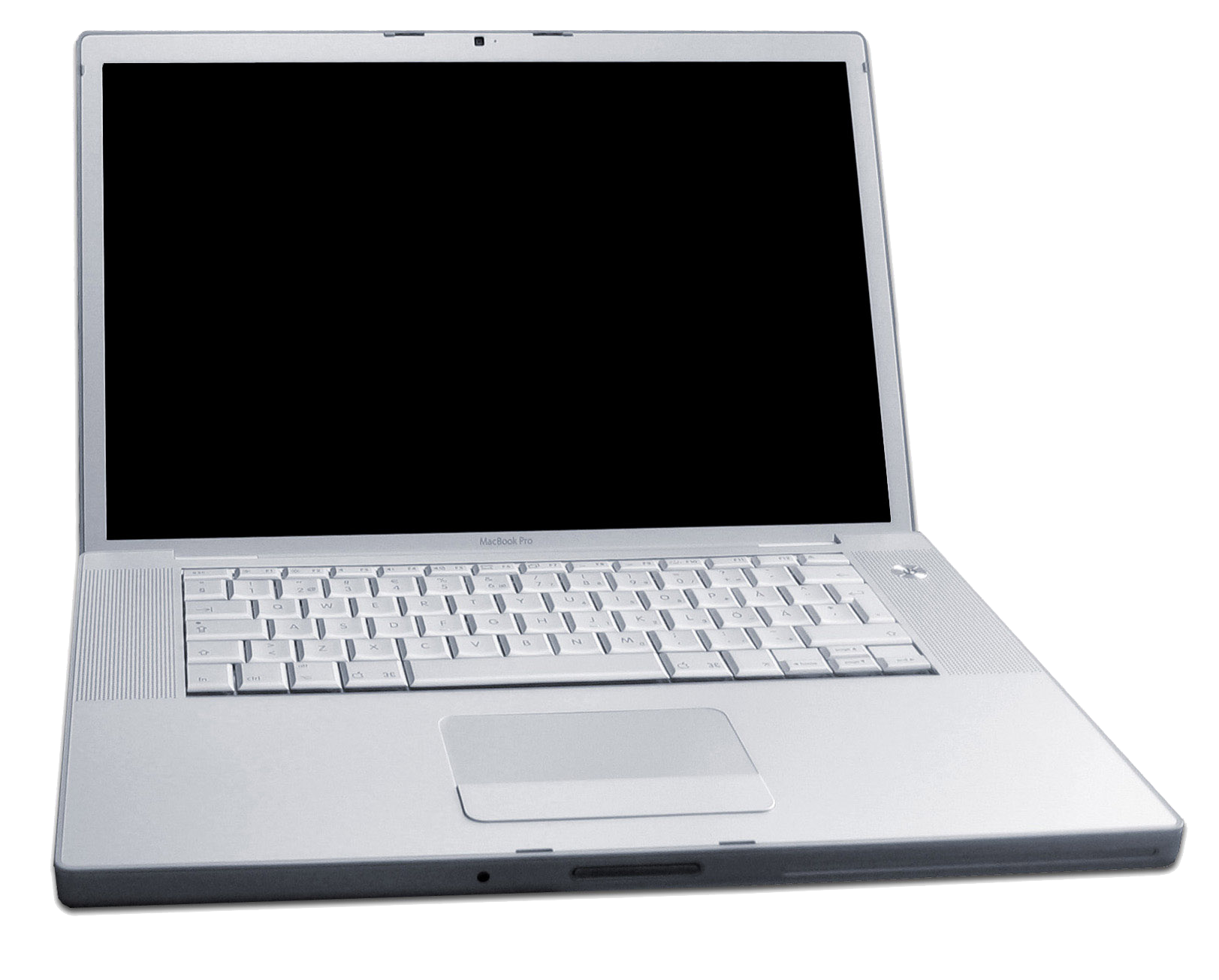
nah. the "gone back" wasn't far enough. I liked say the first generation macbook pro, with concave keys and longer throw (although the creaky case was not as nice as the sculpted aluminum ones)

I had a friend with an old old powerbook and the key shape reminded me of a thinkpad.

They can do it, but the flat short throw keys are too form over function.

Re:ARM Mac Impact on Intel by wlll on Monday June 22, 2020 @07:10AM (#23598990)
I still use a 2014 era Apple wireless keyboard and prefer it over any of the mechanical variants I’ve tried. Key travel distance is a personal metric.
Re:ARM Mac Impact on Intel by m463 on Monday June 22, 2020 @07:38AM (#23599128)
the first macbook pro didn't have THAT long a throw.

https://upload.wikimedia.org/wikipedia/commons/7/76/MacBook_...
Re:ARM Mac Impact on Intel by wlll on Monday June 22, 2020 @10:23AM (#23600490)
Right, I had that mac and the KB was fine, as is the 2014 wireless model I have, despice neother being long throw. I'm fine with short throw, it's a preference.

The 2016 keyboard fiasco was too far for me though, and even now with my 16" 2019 mac with the "fixed" keyboard, I still prefer the wireless 2014 model, or the KB from my 2014 MBP.

Re:ARM Mac Impact on Intel by ArgyleSound on Monday June 22, 2020 @06:00AM (#23598669)
I, for one, prefer a keyboard that is comfortable to type on even if doesn’t have the greatest travel over a significantly thicker laptop.
Re:ARM Mac Impact on Intel by rorykoehler on Monday June 22, 2020 @08:03AM (#23599267)
I’ve had many macs and all the keyboards have been best in class. I just skipped buying a model with the bad keyboard. That was made possible by the fact that their laptops have serious longevity so I could just hold onto machine until they fixed it.
Re:ARM Mac Impact on Intel by m463 on Monday June 22, 2020 @04:31AM (#23598268)
I think when a threat comes along, intel steps up.

they WILL compete, and they've been playing leapfrog with AMD for years.

I'm waiting to see the intel response for the new 32 and 64 core chips from amd.

Re:ARM Mac Impact on Intel by matwood on Monday June 22, 2020 @07:53AM (#23599203)
Maybe. The problem is that I'm guessing Apple wants to move to their own ARM not for more compute, but more power efficiency. Intel has never been able to deliver on the low power side.
Re:ARM Mac Impact on Intel by kllrnohj on Monday June 22, 2020 @12:52PM (#23602462)
> Intel has never been able to deliver on the low power side.

Yes they have. It's why we have 10+ hour thin & light laptops. The quad-core i5 in a macbook air runs at 10W, that's comparable per-core power draw to an A13.

Controlling the CPU will give Apple more controls to tune total-package power, particularly on the GPU / display side of things, but CPU compute efficiency isn't going to be radically different, and that's not going to translate into significant battery life differences, either, since the display, radios, etc... all vastly drown out low-utilization CPU power draw numbers.

Re:ARM Mac Impact on Intel by slantyyz on Monday June 22, 2020 @09:19AM (#23599831)
> The problem is that I'm guessing Apple wants to move to their own ARM not for more compute, but more power efficiency.

I'm guessing the switch is for those reasons, plus a more important one (my opinion only), control.

If they use their own chips, they're not stuck waiting on Intel (or any other x86 CPU manufacturer) to build CPUs that have the attributes that matter to them the most.

Re:ARM Mac Impact on Intel by dx034 on Tuesday June 23, 2020 @05:22AM (#23611601)
What I really don't understand is why can Apple out-compete others by that much? Sure they're bigger than Intel but for them, Chip design is only one small part. Have they outspent Intel, Qualcomm, AMD & Co so massively?
Re:ARM Mac Impact on Intel by jayd16 on Monday June 22, 2020 @03:10AM (#23597934)
Why should we expect anything significantly different than a year iteration on what they already use in the iPad Pro?
Re:ARM Mac Impact on Intel by duskwuff on Monday June 22, 2020 @03:14AM (#23597946)
A laptop (or desktop!) computer has a significantly higher energy budget than the iPad. The SoC Apple uses in those devices could conceivably be clocked higher and/or have more cores than the A12 parts they're currently using in the iPad Pro.
Re:ARM Mac Impact on Intel by virtue3 on Monday June 22, 2020 @04:42AM (#23598316)
You can't exactly just shove a turbo on an under-powerd commuter I4 engine (fuel efficient) and expect it to turn out well.

I wouldn't imagine just upping the vcore and the frequency clock will just magically make it faster and compete at the same level as an intel chip.

I'm deeply skeptical as a developer, you -will- get compiler errors, and it's going to suck for a while.

Re:ARM Mac Impact on Intel by imtringued on Monday June 22, 2020 @08:05AM (#23599285)
Well, it entirely depends on how they designed the chip. If they planned ahead they could design the chip for 4Ghz ahead of schedule and then take advantage of the higher frequency once they decide to actually release a desktop or laptop with an ARM chip. I don't believe that Apple did this so they will either create a new chip exclusively for desktop/laptop or they just keep the low frequency.
Re:ARM Mac Impact on Intel by agloeregrets on Monday June 22, 2020 @05:37AM (#23598586)
> You can't exactly just shove a turbo on an under-powerd commuter I4 engine (fuel efficient) and expect it to turn out well.

Isn’t this the exact concept of the VAG EA888 motor used in the Audi A4 and extended all the way up to the S3?

That said, the rumored chip is an actively cooled 12 core 5nm part which is more like an RS3 motor with extra cores/ cylinders

Re:ARM Mac Impact on Intel by msbarnett on Monday June 22, 2020 @03:36AM (#23598026)
Way different thermal envelope? iPads are passively cooled.
Re:ARM Mac Impact on Intel by imtringued on Monday June 22, 2020 @08:07AM (#23599294)
Isn't that a selling point of ARM? Would you prefer a passively cooled but only slightly slower laptop or a faster laptop with a noisy fan?
Re:ARM Mac Impact on Intel by slantyyz on Monday June 22, 2020 @09:25AM (#23599890)
I don't think there can be a universally accepted answer to this, as there are so many different user priorities for laptops.

Having said that, I think the top requirement for most laptops is that "it's gotta run what I need it to run on day one".

For a huge amount of light users, ARM Macs are going to satisfy that requirement easily.

Once you move up the food chain to users with more complicated requirements, however, it's less of a slam dunk... for the moment.

Re:ARM Mac Impact on Intel by jayd16 on Monday June 22, 2020 @03:53AM (#23598108)
This is like saying Qualcomm and Samsung should be able to make top tier desktop chips but the reality is that it doesn't translate so easily.

I guess its all trust that Apple can pull it off and there's no detailed rumors yet?

Re:ARM Mac Impact on Intel by ulfw on Monday June 22, 2020 @09:54AM (#23600192)
That's because neither does build even a top tier mobile ARM chip. Each of their best offerings is about half as fast as Apple's A12X/Z
Re:ARM Mac Impact on Intel by nojito on Monday June 22, 2020 @07:43AM (#23599149)
Because with the A series they show that they know how to make a good CPU that fits into the thermal restrictions of the chassis.
Re:ARM Mac Impact on Intel by carlmr on Monday June 22, 2020 @02:34AM (#23597783)
>fab shrink problems that insiders describe as coming from culture not dissimilar to Boeing; just with less lives at stake.

Since normal processors calculate a lot of important things, I'm wondering if there really are fewer lives at stake. Of course it would be more indirect, but I could imagine that there are many areas where lives are tied to PCs doing the right thing.

E.g. what if a processor bug leads to security issues in hospital infrastructure.

Re:ARM Mac Impact on Intel by egil on Monday June 22, 2020 @04:24AM (#23598245)
Like Meltdown and Spectre?
Re:ARM Mac Impact on Intel by SenHeng on Monday June 22, 2020 @02:10AM (#23597662)
Maybe we should wait for it to actually be announced?

Otherwise it's just fantasy sports.

Re:ARM Mac Impact on Intel by coldtea on Monday June 22, 2020 @03:31AM (#23598007)
The whole fun of product roadmap speculation is it being a fantasy sport.

(Fun and potentially useful, if you want to plan ahead, play the market, and other causes...)

Re:ARM Mac Impact on Intel by nordsieck on Monday June 22, 2020 @02:37AM (#23597788)
> Maybe we should wait for it to actually be announced?

This[1] claims ARM Macs will be unveiled today (Monday) at WWDC. I guess we'll see soon enough.

___

1. https://www.theverge.com/2020/6/21/21298607/first-arm-mac-ma...

Re:ARM Mac Impact on Intel by SenHeng on Monday June 22, 2020 @02:42AM (#23597816)
That's my whole point. All the discussion up til now has been based on rumours and speculation. There's only so much we can discuss around that.

Until we actually have details of Apple's implementations, there's no realistic way we can discuss

> how the new ARM-powered MacBooks will perform compared to the Intel-powered MacBooks

Re:ARM Mac Impact on Intel by brnt on Monday June 22, 2020 @03:21AM (#23597967)
Apple and the Kremlin share a few things, one of which is that, due to the nature of how official announcements are done, a desire if not need for outside analysts has developed, who specialize in forecasting those official announcements both on outside trends and close observation of the company and any clues they might forget to filter.
Re:ARM Mac Impact on Intel by treekogreen on Monday June 22, 2020 @02:33AM (#23597778)
I'll have to dig around and find relevant phoronix benchmarks later for you. But I think it's somewhat of a hive-mind assumption that Intel has generally higher performance all round. A majority of benchmarks show that Intel is generally better in single threaded benchmarks whereas ARM CPU's are better in multicore, multi-threaded applications with a lower TDP and leagues better efficiency. Heck the Surface Pro X that Microsoft brought out has performance on par with an Intel i5 with at least 1.5x the battery life of its Intel counterpart and without needing an internal fan whatsoever. I wouldn't be surprised at all if Apple will make the switch to ARM for all but their highest spec MacBook pro's.
Re:ARM Mac Impact on Intel by jeroenhd on Monday June 22, 2020 @03:55AM (#23598113)
I will immediately believe them when you interpreted "outperforming" as "better performance per watt".

However, I can also see their chips outperforming Intel in sustained workloads. Apple has a history of crippling Intel performance by allowing the CPU to only run at full speed for a short while, quickly letting it ramp up the temperature before clocking down aggressively. Some of that is likely because of their power delivery system, some of it is because they choose to limit their cooling capacity to make their laptops make less noise or with fewer "unattractive" airholes. Either way, put the same chip in a Macbook and in a Windows laptop and the Windows laptop will run hotter but with better performance.

However, with a more efficient chip, Apple could allow their CPU to run at a higher frequency than Intel for longer, benefiting sustained workloads despite the IPC and frequency being lower on paper. This is especially important for devices like the Macbook Air, where they didn't even bother to connect a heatpipe to the CPU and aggressively limit the performance of their Intel chip.

I'd even consider the conspiracy theory that Apple has been limiting their mobile CPU performance for the last few years to allow for a smoother transition to ARM. If they can outperform their current lineup even slightly, they can claim to have beaten Intel and then make their cooling solution more efficient again.

Re:ARM Mac Impact on Intel by dijit on Monday June 22, 2020 @04:14AM (#23598189)
Everything you said is echoed in this LTT video from yesterday[0].

It does appear to be a very poor thermal design, but you can see that most of the issues appear to be from trying to make the user not feel the heat.

It feels a bit icky to leave performance on the table like that; since you paid for a CPU and are getting a marginal performance from it. But I remember Jobs giving a talk before about how "Computers are tools, and people don't care if their tools give them all it can, they care if they can get their work done with them well"

That's not a defense of a shitty cooling solution, but it is a defence of why they power limit the chips. When I got my first (and only) Macbook in 2011, it had more than twice the real battery life of any machine on the market. That meant that I was _actually_ untethered. That's what I cared about at the time much more than how much CPU I was getting.

[0]: https://www.youtube.com/watch?v=MlOPPuNv4Ec

Re:ARM Mac Impact on Intel by unpossible on Monday June 22, 2020 @08:31AM (#23599446)
> Either way, put the same chip in a Macbook and in a Windows laptop and the Windows laptop will run hotter but with better performance.

The Windows laptop can't possibly run hotter than a Macbook, all of which reach the throttle temperature (~100 °C) almost instantly.

I actually agree to the artificially limited performance, artificially worsened thermals theory. The Macbook Air design is extremely fishy.

Re:ARM Mac Impact on Intel by dx034 on Tuesday June 23, 2020 @05:24AM (#23611616)
The laptop can be hotter if it dissipates more heat to the case. The reason Macbooks reach 100C fast is because they don't give off a lot of heat so that the case doesn't burn your skin.
Re:ARM Mac Impact on Intel by m463 on Monday June 22, 2020 @04:29AM (#23598261)
I think all of that is because of "the triangle".

the vertices would be power, heat and perf.

Apple just hasn't shipped an arm chip with high power and "excessive" cooling.

Re:ARM Mac Impact on Intel by harpratap on Monday June 22, 2020 @02:17AM (#23597698)
The article doesn't really mention outperform in what aspect. The sentence following that claim mentions "50% more efficient" which seems likely because ARM chips usually use <10W power while Intel U series chips use 15-25W
Re:ARM Mac Impact on Intel by jjcm on Monday June 22, 2020 @02:13AM (#23597679)
With geekbench scores, the A13 is outperforming some mobile i7 processors: https://gadgetversus.com/processor/intel-core-i7-8565u-vs-ap....

With a new A14 chip combined with intel stagnation, it wouldn't be too crazy to see a 50-100% increase, especially if you looked at multi-core scores.

Re:ARM Mac Impact on Intel by vardump on Monday June 22, 2020 @03:35AM (#23598021)
While I certainly agree A13 is a fast chip, the more I've compared Geekbench scores the less convinced I am that the results can be compared between platforms.

Also first i7 chip was released in 2008. (The chip you refer to appears to be modern though, from 2018.)

To prevent any misunderstandings, I agree A13 has performance comparable to a modern laptop. I just don't think Geekbench is a right tool to measure that difference.

Re:ARM Mac Impact on Intel by strictnein on Monday June 22, 2020 @02:30AM (#23597763)
> Geekbench 4 - Multi-core & single core score - iOS & Android 64-bit

What does that even mean? The Intel platform is running Android?

Re:ARM Mac Impact on Intel by FractalParadigm on Monday June 22, 2020 @03:04AM (#23597907)
It's entirely possible they installed Android on the Intel platform. Unlikely, but possible.
Re:ARM Mac Impact on Intel by neurostimulant on Monday June 22, 2020 @06:31AM (#23598811)
I had an Intel x86 Android phone from Asus a while ago, complete with Intel Inside logo on the back case. Not sure if they still sell x86 phones these days though.

https://www.gsmarena.com/asus_zenfone_2_ze551ml-6917.php

Re:ARM Mac Impact on Intel by lostmsu on Monday June 22, 2020 @02:51AM (#23597866)
I assume the tests are same regardless of platform.
Re:ARM Mac Impact on Intel by kllrnohj on Monday June 22, 2020 @12:58PM (#23602585)
They aren't, though. Compare windows vs. linux geekbench scores of identical hardware, they are extremely different:

Linux: https://browser.geekbench.com/v5/cpu/2638097 Windows: https://browser.geekbench.com/v5/cpu/2635048

Geekbench is a terrible benchmark.

Re:ARM Mac Impact on Intel by wizee on Monday June 22, 2020 @05:25PM (#23606916)
You cherry picked a terrible example. Here are some more Windows examples with the same chip: https://browser.geekbench.com/v5/cpu/2628613 https://browser.geekbench.com/v5/cpu/2628613

In my own personal experience, running Geekbench on many machines, Geekbench scores are pretty close running between Windows and Linux on the same machine. At least for compiling code (my main use for powerful machines), their compilation benchmark numbers also fairly closely match compilation times I observe.

Re:ARM Mac Impact on Intel by lostmsu on Monday June 22, 2020 @06:04PM (#23607415)
Your links are identical.
Re:ARM Mac Impact on Intel by dispat0r on Monday June 22, 2020 @02:39AM (#23597804)
50-100% seems a little high. I think Apple has picked the low hanging fruit. This kind of performance increase is only possible in multicore workloads. Single core would be more like 20-30%. But maybe they can increase clock speeds with the new 5nm node.
Re:ARM Mac Impact on Intel by darkteflon on Monday June 22, 2020 @02:51AM (#23597863)
They’ll be working with a more forgiving thermal envelope than in iOS devices too, though.
Re:ARM Mac Impact on Intel by leeter on Monday June 22, 2020 @09:11AM (#23599762)
Real world? AFAIK no not yet. The issue is that traditional benchmarks don't really tell the whole story. IPC isn't directly comparable because ARM is ostensibly RISC (this is debatable I'm aware) and Intel is CISC (also debatable). So until things like Adobe Premiere or Media Encoder are ported over (if they are), or similar real world workloads like Blender, it's going to be really hard to compare. Even then things like design power matter. A 15w Intel chip is likely to outperform a 5w ARM chip just because it has more headroom thermally. It doesn't mean that either is faster (IPC per watt goes up the more you downclock for a variety of reasons).

If this sounds like I'm saying it's apples (no pun intended) to oranges... that's pretty much the case. Apple is likey not going to produce an ARM chip in directly comparable fashion to an Intel chip. E.g. equal cache, memory bandwidth, TDP (using Intel calc method), PCI-e lanes etc. Mostly because it doesn't make sense to do so because Intel's chips are designed to be a component of the system while ARM chips are largely designed to be an SOC.

Re:ARM Mac Impact on Intel by hajile on Tuesday June 23, 2020 @11:52AM (#23615586)
They need to prove they can do a few things before I'm worried.

* They need to ramp the clockspeeds -- much easier to say than do.

* They need to include 256 or 512-bit SIMD operations without breaking the power budget.

* They need to design a consistent and fast RAM controller (and likely need to add extra channels)

* They need to integrate power-hungry USB4/thunderbolt into their system.

* They need to add a dozen extra PCIe 3 or 4 lanes without ballooning the power consumption.

* They need an interconnect (like QuickPath or HyperTransport/Infinity Fabric) so all these things can communicate.

These are the hard issues that Intel, AMD, IBM, etc all must deal with and form a much bigger piece of the puzzle than the CPU cores themselves when dealing with high-performance systems.

Re:ARM Mac Impact on Intel by ed25519FUUU on Monday June 22, 2020 @02:10AM (#23597659)
I'd be very surprised by that figure unless it's multicore benchmarks. Many macbooks are still around the 4 CPU/8 thread marks, so there's a lot of space to improve there with multiple cores.
Re:ARM Mac Impact on Intel by dannyw on Monday June 22, 2020 @02:19AM (#23597708)
Why would you be surprised? Apple's chip design team is the best in the entire industry, funded by a virtually infinite bankroll and with a razor focus on only developing chips for Apple's products; so microcode to drivers can be intimately optimized like a gaming console.

The access to iOS and macOS means that they can profile every single app everyone runs and improve real-world performance, and they do.

If you are a company that supplies anything (software or hardware) to Apple or Amazon, and you are operating on >20% gross margins, Apple and Amazon will destroy you, and destroy your margins. You have to continuously innovate and can't just relax and chill and collect your margins, like Intel has been doing for the past 5 years, milking their advantage that has evaporated.

Other than the modem, I don't think there's a component on the latest iPhones that has more than 20% margins for the supplier. Apple is ruthless. So is Amazon, when it comes to fulfilment.

Re:ARM Mac Impact on Intel by ClumsyPilot on Monday June 22, 2020 @09:46AM (#23600107)
Just because you have lots of money doesn't mean laws of physics suddenly are out to lunch.

Apple is using the same fabrication process as everyone else in a mature industy. There simply isn't 2x improvement possible unless everyone else was staggeringly inconpetent. Imagine Apple decided to build their own car, and made their own electric motors. Would you believe claims that their motors are 2x as efficient?

Re:ARM Mac Impact on Intel by pansa2 on Monday June 22, 2020 @02:41AM (#23597812)
Agreed. A lot of people seem to think x86 has some inherent bottleneck that switching to ARM will magically bypass.

Single core performance is currently doubling every five years or so. We’re not about to see it double in the next 24 hours.

Re:ARM Mac Impact on Intel by imtringued on Monday June 22, 2020 @08:27AM (#23599425)
I've never understood this argument. For some reason there is this RISC vs CISC war debate but it's not actually based on reality of modern day chip design. The idea is that the decoder is consuming too much power and this design flaw cannot be fixed. Simplifying the decoder reduces the power consumption and therefore allows higher clock frequencies. But when we look at the clock frequencies of ARM and x86 chips we consistently see that x86 chips run at higher frequencies (roughly 4 Ghz for x86 and 2.7 Ghz for ARM). If there is a difference between ARM and x86 chips then it's not in the decoder. The difference must lie in the micro architecture of the chips and therefore RISC vs CISC is no longer relevant because the ISA is by definition not part of the micro architecture.

Apple's ARM chips probably perform much better than reference ARM chips because they are much closer to the micro architecture that Intel uses. But Apple's chips still consume less power than Intel chips used in laptops. The secret sauce is probably the fact that the SoC has cores with different performance and power profiles. Big cores are used for peak performance bursts and lots of small cores for energy efficiency while the device is waiting for user input.

I think Geekbench is measuring peak performance and not sustained performance but the numbers are probably correct. Making a representative comparison between mobile devices and desktops isn't possible because their different thermal profiles but it's highly likely that Apple will go for a passively cooled design if they can.

Re:ARM Mac Impact on Intel by unpossible on Monday June 22, 2020 @08:36AM (#23599475)
x64 chips can run at 4-5 GHz because these are desktop parts that can drop 10+ W sustained on a single core if need be. Power-frequency scaling tells us that of course this is very inefficient (perf/W), but efficiency isn't all, sometimes you just gotta go fast.
Re:ARM Mac Impact on Intel by m463 on Monday June 22, 2020 @04:38AM (#23598295)
> double in the next 24 hours

there is a time-honored way to do exactly that.

Constrain the comparison.

"Double the performance" (of $899 to $901 laptops with 2560x1440 resolution)

"Twice as fast" (as all laptops with thunderbolt 3 and no sd card reader)

Re:ARM Mac Impact on Intel by jedieaston on Monday June 22, 2020 @08:13AM (#23599334)
That's a fair comparison though, if you're a Mac user and this machine is twice as fast and gets 5 more hours on a charge, you'll probably be persuaded to upgrade. If you aren't a Mac user I don't think they need to convince you now, they need to convince the developers and artists to stay on the platform.
Re:ARM Mac Impact on Intel by lucasverra on Monday June 22, 2020 @04:10AM (#23598178)
sooo. should i NOT invest in a 2K MBP 16 in to do mostly heavy multiple web apps ?
Re:ARM Mac Impact on Intel by neurostimulant on Monday June 22, 2020 @06:47AM (#23598895)
I'd say just buy them if you need it now. Web developers sometimes need to use docker and VMs for various development tasks and testing. Sure you can run docker in arm, but not all docker images has arm version available. Running Linux and windows vm will probably a challenge as well, at least until we know how well x86 simulator run in the new arm laptop.
Re:ARM Mac Impact on Intel by leadingthenet on Monday June 22, 2020 @04:58AM (#23598414)
That's one use-case where they absolutely shine, in my experience.
Re:ARM Mac Impact on Intel by mtgx on Monday June 22, 2020 @04:00AM (#23598132)
For one, because we had evidence of this for a few years now - that Apple's Arm chips can beat Intel's chips. It was mostly ignored because "but that's just peak performance - not sustainable in a phone/tablet envelope."

Yeah, until they put the same chip, or better in a laptop envelope. Then what for Intel?

This was from 2016. People being surprised by this haven't been paying attention to where this was going:

https://www.extremetech.com/mobile/221881-apples-a9x-goes-he...

Also, I said it many times before, Intel trying to be as misleading as possible with the performance of its chips, such as renaming Intel Atom chips to "Intel Celeron/Pentium" and renaming the much weaker Core-M/Y-Series (the same chips used in Macbook Air for the past few years) as "Core i5" is going to bite them hard in the ass, when Apple's chips are going to show that they can beat "Intel Core i5". But Intel kept making this worse with each generation.

https://www.laptopmag.com/articles/intel-renames-core-m-core...

Re:ARM Mac Impact on Intel by ceo_tim_crook on Monday June 22, 2020 @02:10AM (#23597658)
I'm suspicious but for the pain it's going to cause it better have some real benefits
Re:ARM Mac Impact on Intel by ed25519FUUU on Monday June 22, 2020 @02:14AM (#23597680)
Out of curiosity, what pain are you expecting?

Maybe I'm spoiled because my development is mostly java, python, Go, docker, etc, all of which should have no runtime problem.

In terms of IDE, It looks like vscode is ported which is great.

I see two projects in my workflow: intellij and iterm2. I can live with a vanilla terminal but I'll need intellij. It looks like there's some[1] discussion around support.

1. https://github.com/JetBrains/intellij-community/commit/db531...

Re:ARM Mac Impact on Intel by harpratap on Monday June 22, 2020 @02:20AM (#23597716)
How do you expect docker to run fine when it doesn't even run good on x86 OSX? There are constant performance issues (https://github.com/docker/for-mac/issues/3499) because docker-on-mac is basically a VM running Linux
Re:ARM Mac Impact on Intel by aljarry on Monday June 22, 2020 @09:19AM (#23599829)
Docker is a linux tech tied to features in Linux kernel. You don't have cgroups and the like in XNU (OSX kernel) to be able to run docker natively on OSX.
Re:ARM Mac Impact on Intel by harpratap on Monday June 22, 2020 @09:38AM (#23600031)
It's OSX's fault then. Windows can run containers natively now as long as the base image is windows too. No reason why OSX couldn't extend support either.
Re:ARM Mac Impact on Intel by jen20 on Monday June 22, 2020 @10:01AM (#23600272)
I would suggest that the VAST majority of Docker usage on Windows is not “windows containers” but Linux-based containers in a VM, be it WSL or Docker for Windows. The promise of Docker is that a container image built on machine A will run on machine B. That relies on them running the same operating system in some capacity.
Re:ARM Mac Impact on Intel by tempay on Monday June 22, 2020 @02:46AM (#23597836)
I don't expect it to be too painful. Most common software has already been build for ARM on Linux. A lot of things have event been built for Apple's ARM chips running iOS, though the App Store restrictions have limited the usefulness of these builds. Unmaintained closed source software will stop working but most of these applications were already killed by the removal of 32-bit x86 support in Catalina.

The biggest potential issue will be how people get hardware for doing the builds. Hopefully Apple will provide a good way of cross-compiling or a new machine that is suitable for datacenter deployment (ARM based mac mini?). We'll have to wait for the WWDC announcement to find out.

Re:ARM Mac Impact on Intel by kiwiana on Monday June 22, 2020 @02:25AM (#23597747)
You mention Docker which most definitely will be impacted by this change. Docker on Mac runs off a virtualized x86 Linux instance. Docker only announced ARM support last year I think, I can't imagine Docker for ARM would be as anywhere near as fully supported as it is for x86, and you certainly won't be able to build x86 images to push to x86 servers, without using some sort of emulation layer which will be horribly slow compared to current macOS x86 docker.
Re:ARM Mac Impact on Intel by treekogreen on Monday June 22, 2020 @02:40AM (#23597807)
Currently running docker using WSL2 on an ARM laptop. So it's pretty much native Linux, as an anecdote I can tell you that it's just that much more stable than with my Mac or with a traditional Windows laptop. The only downsides is there's a few docker containers that you have to hunt around for to get the ARM64 version. The only way I see docker performance to be better than this or more stable is to switch to a Linux machine entirely.
Re:ARM Mac Impact on Intel by kiwiana on Monday June 22, 2020 @02:49AM (#23597851)
Yes - that's what I was alluding to in my original reply, re: lack of support, lack of images. Docker running on ARM might be great, but one of the original purposes of docker was to build and run the exact same images that would run on your servers, which will no longer be the case unless those servers are ARM based as well.
Re:ARM Mac Impact on Intel by mgoetzke on Monday June 22, 2020 @03:52AM (#23598105)
What laptop ?
Re:ARM Mac Impact on Intel by treekogreen on Monday June 22, 2020 @06:41PM (#23607781)
Surface Pro X
Re:ARM Mac Impact on Intel by darkteflon on Monday June 22, 2020 @03:01AM (#23597898)
I use ARM64 Docker on my Raspberry Pi 4s, it’s excellent and loads of images are already available.
Re:ARM Mac Impact on Intel by jcelerier on Monday June 22, 2020 @03:52AM (#23598098)
But for instance emulating an ARM raspberry on a fairly powerful i7 through qemu is... an exercice in patience to say the least, from my experience compiling the same codebase on the host system and the emulated Pi, it is almost 10x slower. So I'm not holding out on ARM having powerful x86 emulation.
Re:ARM Mac Impact on Intel by anthk on Monday June 22, 2020 @01:58PM (#23603442)
Use qemu user mode with a chroot, it's much faster.
Re:ARM Mac Impact on Intel by jcelerier on Monday June 22, 2020 @02:49PM (#23604123)
I'm using https://github.com/multiarch/qemu-user-static - that's what it is, right ?
Re:ARM Mac Impact on Intel by anthk on Monday June 22, 2020 @03:56PM (#23605549)
Yes, indeed.

But instead of docker, just deboostrap the amd64 release under a directory, copy qemu-amd64 to $DIR/usr/bin and chroot into that directory. Docker is a bit of a mess.

Before chrooting, bind-mount:

/dev to $DIR/dev

/proc to $DIR/proc

/dev/pts to $DIR/pts

/sys to $DIR/dev

/home to $DIR/home

copy /etc/resolv.conf to $DIR/etc/resolv.conf

Then chroot and login (su -l yourusername). That way you could try running a lot of software.

Re:ARM Mac Impact on Intel by jcelerier on Monday June 22, 2020 @05:08PM (#23606686)
okay, will try to see what that gives. I'm curious as to why it would be slower (when taking into account that an equivalent docker container, say running debian stable, but with the same architecture as the host, runs in more-or-less the same time as building directly with my host's GCC)
Re:ARM Mac Impact on Intel by anthk on Tuesday June 23, 2020 @06:46AM (#23612208)
>ut with the same architecture as the host

debootstrap an ARM rootfs, please.

Re:ARM Mac Impact on Intel by harpratap on Monday June 22, 2020 @03:46AM (#23598067)
Yeah but that's Linux. Docker works excellent on Linux distros
Re:ARM Mac Impact on Intel by darkteflon on Monday June 22, 2020 @03:49AM (#23598080)
Yep - I make no claims as to how well Docker works on an ARM Mac.
Re:ARM Mac Impact on Intel by kccqzy on Monday June 22, 2020 @02:22AM (#23597729)
You are probably going to have a great deal of pain with Docker. If you use Docker for Mac, it basically uses Hypervisor.framework to run a slim x86_64 Linux virtual machine. Rumors suggest that Hypervisor.framework won't emulate x86_64 in the next version of macOS. We'll find out tomorrow. So you'll either set up docker-machine with a x86_64 based remote server to run your docker commands, or you'll just use ARM versions of the various docker images. I don't know where you get your images from, but many of them won't be available for ARM.
Re:ARM Mac Impact on Intel by jychang on Monday June 22, 2020 @02:24AM (#23597741)
There's a surprisingly large number of ARM docker images. You can partially thank the Raspberry Pi for that.
Re:ARM Mac Impact on Intel by 0x0 on Monday June 22, 2020 @02:44AM (#23597829)
Is that ARM v6/v7 32bit or ARM v8 64bit? Most Raspberrys run a 32bit userland (armhf).
Re:ARM Mac Impact on Intel by darkteflon on Monday June 22, 2020 @03:03AM (#23597906)
Plenty of ARM64-architected images available. Lots of us using 64-bit Ubuntu.
Re:ARM Mac Impact on Intel by harpratap on Monday June 22, 2020 @03:52AM (#23598099)
Yeah but then you have consistency issue which Docker aimed to get rid of. You local setup won't replicate what runs on production. The enterprise infra isn't going to switch to ARM in next 1-2 years as Apple hopes to.
Re:ARM Mac Impact on Intel by vbezhenar on Monday June 22, 2020 @09:08AM (#23599732)
I bet that all popular docker images will be available for ARM very soon. It's a matter of recompiling.
Re:ARM Mac Impact on Intel by jychang on Monday June 22, 2020 @02:23AM (#23597734)
What are the largest benefit for iterm2? I use it but honestly I don't see much improvement over Terminal.
Re:ARM Mac Impact on Intel by robin_reala on Monday June 22, 2020 @02:25AM (#23597749)
Probably tmux integration, but the speed decrease against Terminal doesn’t warrant the additional features for me at least.
Re:ARM Mac Impact on Intel by jen20 on Monday June 22, 2020 @10:05AM (#23600310)
A trick I recently learned is to add iTerm 2 to the “Developer Tools” section of the Security prefpane - it makes it fly. Similarly if you’ve ported your config through several versions of iTerm, ensure that GPU-accelerated rendering is on.

It’s no stretch to say that iTerm 2 is a major one of the reasons I cannot stand desktop Linux (or Windows, even with the new terminal there).

Re:ARM Mac Impact on Intel by neurostimulant on Monday June 22, 2020 @07:04AM (#23598971)
For me, it's the little things such as ability to undo accidental terminal tab closing with cmd+z, restoring sessions after restart so I don't need to reopen a bunch of tabs and cd manually, ability to show timestamp for each command run, etc.
Re:ARM Mac Impact on Intel by ryan-allen on Monday June 22, 2020 @02:39AM (#23597805)
VS Code is not yet ported to ARM, there are bootleg builds but they do not work with many extensions, for example Remote SSH relies on a project that lies below the VS Code project proper, and that (apparently) is a fair bit of work to bring to ARM (though it's being worked on) [0]

[0] https://github.com/microsoft/vscode/issues/6442

Re:ARM Mac Impact on Intel by treekogreen on Monday June 22, 2020 @02:47AM (#23597845)
You are wrong. I currently use VS Code insiders daily on ARM with all my extensions working.

https://code.visualstudio.com/updates/v1_46#_windows-arm64-i...

Re:ARM Mac Impact on Intel by maxbaines on Monday June 22, 2020 @03:31AM (#23598004)
I second this, of course VS Code needed Electron which needs Node all ready for ARM https://github.com/nodejs/node/issues/25998#issuecomment-637... Also to note Edge is available on ARM. Very happy Surface Pro X user here.
Re:ARM Mac Impact on Intel by ryan-allen on Monday June 22, 2020 @03:33AM (#23598013)
I second Edge working fantastic on ARM! I have a Galaxy Book S.
Re:ARM Mac Impact on Intel by ryan-allen on Monday June 22, 2020 @03:31AM (#23598002)
Really? That is GREAT NEWS!!!

EDIT: It works great, and it has remote for ssh and wsl!!! This made my day!

Re:ARM Mac Impact on Intel by ceo_tim_crook on Monday June 22, 2020 @02:19AM (#23597711)
out of what you've listed docker is probably the biggest issue -- there is support for multiarch containers but migration has some pain points depending on your setup, also docker will be have to made to work on the arm build of macos assuming virtualization is supported and speedy
Re:ARM Mac Impact on Intel by imtringued on Monday June 22, 2020 @08:30AM (#23599439)
What about legacy software and software provided by a vendor? Let's say I want to run Fusion 360 and Altium on my hypothetical ARM Mac. Can I do that today?

Outdated information: Windows on ARM requires you to build UWP apps which is more work than just a recompile.