https://en.wikipedia.org/wiki/Roy_Moore_sexual_abuse_allegat...
"No, he's not a pedaphile, he's a just sex offender"
Girls or Boys. Pedophilia is not gender specific.
He is also not accused of relations with a 22 year old. He is accused of assault. Difference being someone taking you out on a date, vs someone grabbing your junk and forcing themselves on/in you without your consent.
It seems to me that some of these discussions are mostly dominated by irrationality. This is particularly recognizable in the US, but also occurs in Europe to a degree that varies from topic to topic and country to country.
I believe there are two major factors at play. First, certain topics concern taboos that are still strong even in secularized societies. To these belong anything concerning human sexuality and some religious views. Second, certain topics have simply been hijacked by politicians, because they need positions that differentiate them from other politicians in a world in which most problems can and need be solved in a technical way. Criminal justice, gun laws, drug laws, healthcare, and climate change are such topics in the US. The discussion of these topics in the US barely makes any sense, because at least certain aspects of the problems related to them have perfectly objective solutions. But then US Democrats and Republicans would essentially defend the same policies and only differ on technical details, and that's not compatible with US election cycles.
A third 'problem' is perhaps a self-imposed and socially imposed limitation of freedom of speech that is particularly strong in developed humanist societies. What e.g. many US gun nuts really want to say is that the freedom of owning a gun outweighs the deaths by gun accidents and amok runs with guns, because freedom is such a high good and they like guns. A politician is not allowed to say that, however, and so the value ordering behind the policy is hidden behind insincere arguments that merely serve as a pretext. This happens everywhere, not just in the US, of course. I don't think this third issue is a problem, as it merely illustrates how evolved the societies are already. The social pressure is there for good reasons and fulfills an important role. (You don't want people starting rational arguments for introducing slavery, because it would lower their production costs. It's good when society endorses values that sanction such arguments even when they are purportedly rational.)
To make this clear, these phenomena occur everywhere in the Western industrialized world. Democratic politicians have run out of political positions, because most problems could be solved by experts and have one or more good technical solution.
(Note: In this post I mean 'technical' in the sense of τέχνη, as in 'technocracy', concerning instrumental means-end rationality.)
This is the problem when discussing political issues like gun control. Gun related crimes has shown correlation with gun ownership laws. Gun accidents is naturally correlated to gun ownership. Mass public shootings however do not when adjusted for the population, but it draws so much political attention so it always get put into the discussion regardless if it match the data.
Gun accidents is also a rather weak-ish argument for gun control. Accidental deaths and injured caused by guns is statistically unusual, and no where near the top for the population in general or kids specifically. As famously noted in the book freakonomics, swimming pools comes in a big second place directly after Motor vehicle accidents in accidental deaths. The best argument in my view being made for gun control based on accidents is a moral one, in that even some accidents is bad enough when the owners don't have any reason to own a gun.
Which leaves us with the parent comment and gun related crimes. Assault and robberies. Those are where gun control seems to have the strongest connection with the data, and where it would do the most good. People on the lower end of the social economical ladder getting shot by other people on the lower end of the social economical ladder. It is not flashy, its not a winning political platform, but its where the data points to. I would not call it irrationality, but rather human fallibility in focusing on the rare and extreme and not see the common.
Anyone who has dealt with depression can tell you how this works. The suicidal urge doesn't last very long, but guns are waaaaaaay too convenient. Guns are far from the only way to kill yourself, but their widespread availability and the immediacy of the action are unique among suicide methods.
The theory sounds right, but it doesn't look like the data supports it.
We have a waiting period here in the USA when you purchase a firearm from a store. Is the waiting period not long enough in your opinion?
There had been a Federal waiting period, but it was ruled unconstitutional in 1997. Some states have waiting periods. See https://en.wikipedia.org/wiki/National_Instant_Criminal_Back...
This isn't so much about "I want to kill myself; I should go buy a gun" but rather about "I want to kill myself; my dad keeps a gun in his sock drawer". Talk about responsible gun ownership all you want; but if you own a gun for personal defense (as the majority of gun owners do), it's probably not locked up most of the time.
In addition I have this philosophy that if you want to interfere with peoples freedom you are responsible for making their life (as judged by that person) worth living - not just preventing them from killing themselves.
Regardless, it would be interesting to know if there was data on the effect on suicide when you get increased gun control. The data for suicide that I have seen seems to imply that the availability of guns would increase the suicide rate for men, which is also the biggest demographic for suicide victims.
It should also be noted that the data set they used only include mass killing with guns, and not mass stabbings. Those also happens, including here in Sweden a year ago at a school. But if you don't like that data then bring more and we can discuss.
https://www.cdc.gov/nchs/pressroom/sosmap/Firearm.htm
Two things pops out. First that the variance is massive within the united states. The second part is that 63 percent were suicides. It is very doubtful that a single correlating factor accounts for the variance.
The problem with politics is that you have a status quo from where you operate and you are massively constraint in the possible directions you can go. For example, you simply can not go against social security and things like that because the way these programs have been designed ensures that they are almost immortal.
I disagree with you that these easy technocratic solutions exists. There are fundamentally different positions that people can have and actually do have, I just think that whatever these positions are, they matter little because they are not reachable anyway.
I have another theory: people are very conservative and rational (with all its limitations) at the society level, doesn't matter if they came from the left or right, deep changes in society have unexpected consequences. It didn't happen with same marriage laws but can happen in many other sectors.
Thanks for dismissing myself, many of my friends, and many people who share my opinions, lord jonathanstrange. Such arguments aren't in bad faith at all, and quite the contrary, promote reasonable discussion where people are happy to take a verbal beating for their beliefs.
Implicit here is that when you say "experts", you mean people who share your terminal values and general way of thinking.
Your post makes it seem like you're having trouble stepping out of your value system to consider opposing views. Consider your quote here:
"certain topics concern taboos that are still strong even in secularized societies. To these belong anything concerning human sexuality and some religious views."
Apparently to you it's unthinkable that secular (e.g. leftist) viewpoints could also nurture irrational, destructive taboos and blind spots. But they absolutely do. Some of them are on display in your post.
You say, "most problems could be solved by experts". This is basically stating, "If I had absolute power all this could be solved easily." It's one of the impulses that leads to tyranny. This sort of thing has been tried; the world has seen many leftist technocracies, and it's been one of the most murderous political forces in human history. It's not a good line of thought.
The reality is that the solutions you imagine wouldn't actually work the way you imagine they would. Because your values aren't ultimately the best ones in any absolute sense. They're just yours, and like all humans, they're blinding you to critical aspects of the situation. This is why successful societies become successful not by concentrating power, but by spreading it. When power is spread, many values and perspectives are brought to bear, and we muddle through.
The technocratic, power concentrating, "If only I was king!" tyranny impulse needs to be rejected at every turn.
I'm not saying you shouldn't have any power; your values are valid and valuable. But you should continue to share that power.
Technocracy is tyranny is murder.
At most you can look at countries who listen to relevant experts, which very much includes the United States. Though again on a sliding scale and always secondary to maintaining power for the in groups.
Really if you look at the worst leaders of all time none of them are Technocrats. Joseph Stalin pure politician>Revolutionary , Hitler - Artist>Soldier>Politician. Pol pot failed out, built roads in Croatia then became a revolutionary. Mao Zedong > Politician/Revolutionary. Augusto Pinochet > Military. Leopold II of Belgium > Prince > King.
Karl Marx for example may have qualified and is tied to Socialism, but never gained power.
Technocracy is how to chose who runs things: "is a system of governance where decision-makers are selected on the basis of technological knowledge. Scientists, engineers, technologists, or experts in any field, would compose the governing body, instead of elected representatives. Leadership skills would be selected on the basis of specialized knowledge and performance, rather than parliamentary skills.[2] Technocracy in that sense of the word (an entire government run as a technical or engineering problem) is mostly hypothetical." https://en.wikipedia.org/wiki/Technocracy
Critically, having someone technical in charge based on an election is not a Technocracy. It's related to Monarchy/Democracy just replace by birth or by election with by demonstrating relevant technical skill. Knowing how to build a CPU for example is not relevant to setting health policy.
PS: The closest we have come is probably a small hunter gather group lead by a group of the eldest. As they are selected based on their skill in survival. Though presumably they had far fewer regulations etc.
On top of that, pure and legitimate technocrats frequently are so deep in their fields they don't notice side effects to other fields. Politics are about making the whole system work, not about advancing one single field.
It's easy to optimise a society for a specific task (e.g. war economy). But the disbalance it brings may not be worth it in the long run. E.g. today's western societies are not self-sustainable due to huge welfare and too low birth rate. I wonder wether we'll revert to family-based societies next or invent smth new.
Of course, next step is that welfare to freeriders is cheaper for the society than freeriders turning into criminals. But even with welfare there're criminals and not all freeriders are criminally minded either.
US has a 18.57 trillion GDP, if you dedicate 10% of that into ~1,500$/month free riders that's ~1/3 of society. As long as most people want more than a subsistence level income it's simply not going to become a big deal. Sure, you in theory lose the economic output of the lazy not just the old or the infirm, but that output is simply not that significant in the first place.
Granted, we spend vastly more than that on many people. But, higher costs are a question of poor implementation not inherent costs.
The two are nowhere near synonymous.
Implicit here is that when you say "experts", you mean people who share your terminal values and general way of thinking.
No, I'm really thinking about experts in the technical sense, based on instrumental rationality. Think of panels of domain experts from all political sides and how they can agree on a solution. And yes, they often can agree on a solution - or at least could - if they put their own political agenda to the side for a moment.
Your post makes it seem like you're having trouble stepping out of your value system to consider opposing views.
That's an unfair and unwarrented assumption. I have no problems stepping outside of my value system. I have no troubles understanding e.g. ISIS, social darwinists, very right wing positions, libertarians, etc. and have had discussions with all of these except members of ISIS.
You say, "most problems could be solved by experts". This is basically stating, "If I had absolute power all this could be solved easily."
If there is a meaningful relation between those two statements, you certainly haven't made it explicit. The experts in question can be as conservative as you like, if that appeases your mind - as long as they are able to distinguish between their own values and expert opinion about technical issues.
The reality is that the solutions you imagine wouldn't actually work the way you imagine they would. Because your values aren't ultimately the best ones in any absolute sense.
There are two claims here. The first one is empirical, and since I haven't discussed any particular solutions we can ignore this issue. The second one concerns the role of values. My claim is that the solution of most problems in modern societies has not much to do with values, but mostly will be based on technical issues aka means-end rationality. Not all of them, there is plenty of room for different values and democratic equilibrium between those. You're ignoring my central claim and don't back up your opinion.
The technocratic, power concentrating, "If only I was king!" tyranny impulse needs to be rejected at every turn.
I would consider myself an expert on the interplay between abstract values and technical rationality, as I'm currently leading a research project on this topic, but I'm decidedly not an expert in any of the domains that are relevant for the problems mentioned in my post. So your (personal?) critique seems off-topic. If I would be king that would probably be fairly bad for my country (although perhaps not so much if I'd listen to experts).
When I'm talking about experts I'm literally talking about professors with a high reputation among their colleagues and a proven track record of 40 years of peer reviewed publication in their domain who converge in expert panels to come up with solutions to given problems in some democratically legitimized way and who are not chosen on the basis of their beliefs or political views. Not about random people on social media or electrical engineers who debunk General Relativity or climate science.
Technocracy is tyranny is murder.
I used to think that in less drastic terms, too, but have changed my mind. Modern problems, especially their economic aspects, have become too complex for basic democracy and some strongly representational mechanisms are needed for democracy to work. Technocracy does not imply tyranny as long as proper division of power mechanisms are in place. (Whether the division of power is good enough in country X is another question and certainly debatable for some countries.)
To the contrary, this is an excellent place for this sort of discussion, and there are far too few of them here. Thanks for the excellent response.
When I'm talking about experts I'm literally talking about professors with a high reputation among their colleagues and a proven track record of 40 years of peer reviewed publication in their domain who converge in expert panels to come up with solutions to given problems
I'd guess that this is exactly the scenario that the parent was evisioning. I'd also guess that the parent doubts that these experts would be able to agree on a solution if they were actually ideologically diverse; and that if they did agree, it's unlikely that the solution would be workable and without unforeseen consequences.
since I haven't discussed any particular solutions we can ignore this issue
I think there is a legitimate fear that many "unsolved" problems remain that way not because of lack of technical knowledge but because of lack of agreement as to what a desirable solution would entail. Are there any particularly strong historical examples that you could point to where a technocratic approach has worked? Absence is not proof of absence, but it can be evidence, and a good example (future or historical) would make your argument much stronger.
And nobody needs absolute power to do that. They just need to discuss reasonably amongst themselves and decide on a course of measurable action and re-evaluate down the road to ensure the desired effect was reached.
But yeah, I suspect you don't listen well to reasonable arguments, likely because you're too busy pretending words can't be pinned to specific definitions for the purposes of productive discussion.
There's slightly older (2009) systemic review of Portugal's drug policy and it's effects available at: https://www.cato.org/publications/white-paper/drug-decrimina... which is also interesting and has fair bit of stats to back the discussion up with.
But that's just a talking point. It's like saying if there are less silver cars, there are less car accidents involving silver cars. That doesn't tell you anything about whether it makes sense to ban silver cars. You can insert literally anything into that sentence and it's still true. If there is less food, less people will get food poisoning. If there is less water, less people will drown in water.
It doesn't prove anything, it's just sophistry. We obviously shouldn't ban water, which implies the question of whether we should ban guns is more complicated than that.
Also, there isn't a National Silver Car Association that is influencing Congress to block research into silver car related deaths.
They are not. If people who like silver cars had to drive white cars instead, life would go on and there would still be less accidents involving silver cars. That there would then be more accidents involving white cars might be a relevant factor the talking point glosses over, however.
Even food could in theory be replaced with IV nutrition. But there are countervailing advantages to actual food that aren't taken into consideration by the simplistic logic of food poisoning is bad, therefore ban food.
And we can't do without water, but we can, for example, require swimming pools to have fences, which would reduce the amount of drowning without prohibiting water at all.
But the point is that they aren't even examples. You can use that "logic" against literally anything, which makes it obviously flawed. If there were less puppies then less puppies would bite people. That doesn't mean we should ban puppies.
> Also, there isn't a National Silver Car Association that is influencing Congress to block research into silver car related deaths.
There also isn't a Campaign to End Silver Car Accidents trying to get Congress to fund research into silver car accidents that only produces the raw numbers without accounting for things like the independent trend for reduction in accident fatality rates over time when measuring the effects of a silver car ban, substitution effects, the fact that there are more silver cars than red cars when comparing the accident numbers, etc.
I understand your point though. I just think that gun regulation is a special case, since due to NRA influence "less guns = less gun deaths" is the only association we have to go on right now, and reducing deaths should be our primary goal.
That's the point. We have that number of vehicle fatalities. We don't ban cars, we improve safety. Air bags, concrete barriers on divided highways, etc.
There are a lot of things we could do to reduce the number of firearms fatalities that we aren't doing. Mandatory firearms safety classes in high schools would reduce the accident rate. The government actually prohibits normal citizens from buying body armor, even though people who know they're at high risk of being shot could otherwise buy it and cause them to be less dead. A huge proportion of the shootings in the US are drug and gang related, which means if we addressed those problems better there would be less shootings.
But it's politics. Their intent isn't to solve the problem, it's to whip people into a frenzy so they'll vote for one party or the other.
The question I pose is, what are the primary uses for guns and their viable alternatives, if any?
At which point you're having the entire gun debate. Are more criminals deterred when it's more likely their victims are armed? Does that also work at the national level, in that it's easier to raise an army when more of your population already knows how to shoot, so other nations are less likely to attack? Does it deter domestic tyrants who know they would have to fight an armed insurgency, or give citizens more confidence to make just demands of a corrupt state? What's the economic value of the jobs created by that industry? What's the community value of it as a sport? Are there ways to reduce the harms without prohibiting anything?
If you want the answer it's necessary to have the debate, not pretend there is no debate to be had.
Opponents of gay marriage want strong families with good environments to raise children.
Opponents of drug legalization want to prevent the individual and societal harm caused by drug use.
Viewing opponents with that perspective helps find more effective ways of working together.
It's also interesting that advocates for those "liberal" items want to get the government out of individual choices, which is the same goal cited by "conservatives" against centralized health care/education, etc.
Otherwise every decision would just be made through a review of data and only the first country to make a massive change would be venturing into the unknown while everyone else could simply observe what happens and decide to follow suit if the outcome is favorable.
Being in the US you see identity politics quite clearly. People simply vote by who supports abortion and who doesn't. To them the rest of the platform doesn't matter, but this one issue is so critical that they simply look at it alone and nothing else.
If you look at many of the votes on key issues you will notice that they aren't passed 90 to 10, they are usually 55 to 45, if you are lucky, or even closer. Given how close these votes are it's a surprise anything ever changes at all.
I agree that the debate often ignored existence proofs, but... It can be hard to take this a whole lot further.
The Aussie gun example is used mostly because the narrative fits. The Tassie shooting leading to a buyback. But, there are lots of counties with all sorts of policies and realities. Which to compare to? Details can matter, as can all sorts of context.
Like any-friggin-one! You had to compare to bottom of the barrel to find a country that has the worse situation with guns than US.
There are a lot of places where civilian gun ownership causes problems, gun crime, etc. Some of the places where it does not cause big problems (eg Switzerland) have liberal gun laws and high ownership rates.
There are examples where widespread gun ownership/availability causes exactly the kinds of is "problems" that (according to some) the American founders intended it to cause. Basically, armed revolutions.
There are confusing examples where laws are liberal but ownership is rare. There are opposite examples.
I'm not saying ignore all this. If you want to learn about policy areas, you need to study examples. Just beware the anecdote, attributing cause and effect. Beware within heated political debates, they are known to cause insanity. There is rarely some objective fact that proves your argument, just a collection of facts that may, taken in context, convince you.
Back to drugs policy, Portugal had its own set of cultural norms, problems they were trying to solve, political considerations...
I think Mexico and some other big transit countries need to look at radical liberalisation options. Portugal is a good guide for some of their issues, but overall their situation is very different. They have nasty problems with the wholesale dealing, and the organized crime that goes with it. The street level crime and consumption is not their biggest problem, like Portugal.
From wiki about gun laws there:
In 2016, the defence ministry estimated that 2 million privately owned guns are in circulation, which given a population of 8.3 million corresponds to a gun ownership rate of around 24 guns per 100 residents. This is roughly a quarter of the rate in the United States, and lower than that in the neighbouring countries of Germany, and Austria, but about the double of Italy and France.
Quarter of guns per person US has. If US taxed gun manufacturers an used that money to buy back 3/4 of guns off the market it would surely have bit less gun related problems.
Guns are certainly an issue but not the issue. If you cut American gun ownership by 75% you'd still have more per capita gun crime than Switzerland, why?
[0] Homicides, not all gun deaths. It's important to compare apples to apples.
Looking at the numbers alone is not enough. Just like looking at the US numbers alone doesn't really tell the real story. Guns are definitely part of the problem, but it's the rest of the culture and economic factors that tells the story of why the US numbers are so high.
Government-issued ammunition is difficult to take home, but there's plenty of commercial ammunition that will work in the government-issued rifles.
Not every relationship has to be linear. Also there might be other factors. They might be easier to spot if you take away 3/4 of all guns in US.
So ... After all the history that passed since then, after all the civil wars and armed revolutions do we still believe they are good idea?
I guess US military thinks so after supporting so many in the middle east. Europe I think has different take on the subject.
Also, I recommend to you the fascinating history of the African-American tradition of arms in the US. Black's used firearms to defend their families and communities against KKK and white mobs.
"A good revolver is the best response to the slave catcher" - Fredrick Douglas
The notion of gun rights as essential to defending against tyranny is inherently self-defeating. If all it takes to defeat gun owners is passing some laws making them illegal, won’t a tyrant do that before they start with other forms of oppression? If gun control works, tyrants will use it too. If it doesn’t then you don’t have to worry about it.
Russian peasants actually did stop the government from taking over in 1920. Lenin was forced to enact the NEP because their policies were literally collapsing.
There was no other plan behind the NEP, it was written within a 3 month period.
It took a massive effort and practically a civil war by Stalin to collectivize agriculture.
While the state was eventually successful in that case, it clearly shows that resistance is possible.
In many other countries in the middle east for example, the governments know that they can not implement many polices, so they don't even try.
It also depends on level, if you are 1 of 50 people who oppose the government, its not gone go well. However if there is widespread support then the cost of the government goes up hugly if citizens are armed.
If the reasoning was “don’t pass gun control, or you’ll have an armed insurrection” then that would make sense. But that’s never what gun advocates say. They always portray gun owners as somehow being simultaneously the final bulwark against a tyrannical government, and vulnerable to even mild gun control laws.
A "mild" law will carry all that as an implicit potential consequence, so perhaps it should not be enacted, thus sparing us the possibility of having to deal with an lawfully empowered tyranny (tyranny is usually lawful, btw).
This has nothing to do with my point, or if it does, it certainly isn't clearly elucidated. As far as I'm aware, there is no strong history of armed resistance from either of the groups that I mentioned. And I'll leave you to the research the history of successful resistance movements, as there are many. I would start with the American Revolutionary War and then perhaps the importance of guns and armed resistance by blacks during Antebellum South and the Jim Crow period.
The notion of gun rights as essential to defending against tyranny is inherently self-defeating. If all it takes to defeat gun owners is passing some laws making them illegal, won’t a tyrant do that before they start with other forms of oppression?
Your argument is circular as it's based on a false premise. Yes, they may very well begin with outlawing guns. Which is why we have guns. If you try to take my gun by force, I will shoot you.
If all it takes to defeat gun owners is passing some laws making them illegal
This isn't what it takes. This would be the first formal step, but what it would take is for the State to pry them out of my hands, which would be met with resistance. Not just by me, but by the millions of gun-owners across the country - which is precisely why it won't happen.
So, just to be clear, if the government outlaws your guns, when they come for them, you're going out shooting?
>Yes, they may very well begin with outlawing guns. Which is why we have guns. If you try to take my gun by force, I will shoot you.
>This isn't what it takes. This would be the first formal step, but what it would take is for the State to pry them out of my hands, which would be met with resistance. Not just by me, but by the millions of gun-owners across the country - which is precisely why it won't happen.
It's been interesting, and more than a little disturbing, to watch it change. I'm not a big fan either way, but I much preferred them when their gun advocacy was part of a larger libertarian framework rather than a fascist one.
Both the American Revolutionary and Civil War have only hardened my position on the importance of gun ownership.
There is a fundamental ideological divide between us that drives these positions. You can call me a cook, crank, nutter, clinger, whatever you want, but the fact is this:
I simply don't trust the government and I believe in the right to arm and protect myself at any and all costs.
But you are aware that your government has tanks, drones and vast selection of chemical weapons. Soon they'll have lethal drones small enough to make a person with gun just as harmless as a person without a gun.
People that want guns, I feel, think they are living with their minds in the future where they heroically oppose facist leaning government with their trusty guns. I feel they are in fact living in the glorious past when such thing was possible, not even in the present when goverment has all the power industry manufactured for military since the beginning of industrial revolution. Definitely not in the future when you'll be just labeled domestic terrorist and bombed, gassed, sniped from at least a mile or assasinated by a drone.
Guns today in context of opposing government are just imagination enhacers same way as D&D figurines, just less harmless.
Also, those guys we've been trying to kill for the past 15 years in the middle east keep coming back fiercer than ever.
And who do you think operates all that fancy technology? Men who own guns and whose fathers owned guns before them. No, not all of them, but by and large. So I wouldn't be so sure that they would be on "your" side if push came to shove.
The table titled Belligerents on the page https://en.wikipedia.org/wiki/Vietnam_War doesn't say "US gov" vs "mudhut villagers".
Do you expect Soviets to help you with your struggle with your oppressive US government?
Besides it was 40 years ago which is pretty much ancient time for military and anti-riot technology.
> Also, those guys we've been trying to kill for the past 15 years in the middle east keep coming back fiercer than ever.
So losses of 15000 isis soldiers for each US military soldier dead is for you "guys ... in the middle east coming back fiercer than ever"? You'd like to be of the loosing side of such conflict for whatever reason?
> And who do you think operates all that fancy technology? Men who own guns and whose fathers owned guns before them.
Not necessarily own, just operate. I don't think that soldiers have significantly higher gun ownership percentage than civilians. Also all of them have a strong opinion about obeying your superiors, kinda goes along with the job. I don't think they'll be sympathetic to bunch of civilians that don't obey their superiors.
Blacks protected themselves, their families and their communities through armed resistance. They could finally "shoot back". In fact, some of the earliest gun control measures were taken up TO KEEP GUNS AWAY FROM BLACKS, so that they could not resist against the atrocities of slavery.
It isn't talked about because white liberal academic elites are so hostile to guns, but armed resistance and guns were a central part of the civil rights movement.
Recommended reading for you:
We Will Shoot Back - Umoja
Negros With Guns - Williams, Martin Luther King Jr., Truman Nelson
Negroes and the Gun: The Black Tradition of Arms - Johnson
So you don't consider suicides to be a 'big problem', eh? https://www.swissinfo.ch/eng/switzerland-s-troubling-record-...
https://www.swissinfo.ch/eng/who-findings_switzerland-report...
http://www.huffingtonpost.com.au/2016/09/27/australias-suici...
I don't know much about it, and it's hard to deal in "not a problem" terms when it comes to life and death.
I do think even this speaks to my point though, about looking at examples as fully fleshed out examples. There are all sorts of "gun problems." All sorts of "gun rules." All sorts of simple and complex relationships between those two things and a whole lot of other things.
The relationship between gun accessability and suicide is fairly straightforward. But both suicide and gun availability are related to a bunch of other things.
*I'm not talking about gun laws (don't live in the US, own guns or have a strong opinion), I'm talking about how we think of policies using examples.
And then we get into the practicalities and the politics!
In order to have strict gun control you first need strict border control.
Yet the group that wants strict gun control is strongly opposed to strict border control.
From the article:
> It had become clear to a growing number of practitioners that the most effective response to addiction had to be personal, and rooted in communities. Treatment was still small-scale, local and largely ad hoc.
> after 10 years of running the CAT in Faro, Goulão was invited to help design and lead a national drug strategy.
It seems to me this is really important. You can't just decriminalize drugs on a national level and expect things to improve on their own. These CATs were around for over a decade and seemed a large part of the success.
There is something to your point regardless, but moral disparities do not proportionately account for the disparities here. The situations are more complicated. The political types of topics which seem to suffer here are laden with some impurity with considering. Many cultural and moral values shift like the wind, so why do political concerns seem so immutable? I think we would be fools to accept this as simply a moral disparity. I encourage considering a more complex model of social relations. The more significant influences at play here are symbolism, identity and politics.
The right to not be a slave is a moral right. That's literally the definition of a right. First entry from Google's dictionary:
> morally good, justified, or acceptable.
https://www.skepticink.com/humanisticas/2013/03/23/is-the-io...
I agree with that. It has been very illuminating for me to watch how large groups of people get to consensus. Whether it is something like women wearing pants or if it is ok to smoke cigarettes in a restaurant. My interest has been that sometimes, when one is a part of a larger group, one might want the group to change to a new consensus.
As the article points out, there is a certain amount of collective pain that has to be experienced before you can motivate a critical mass of the group to switch to a new point of view. I wonder if the opioid crisis that is afflicting the US has inflicted that much pain yet.
It's likely a large cohort of Trumps voters were those who were incensed by "central government interfering in local affairs", in particular the case of Kim Davis springs to mind.
Never mind that Trump doesn't exactly embody conservatism, I'd imagine a large amount of conservative voters, alarmed by social progress would have voted him out of spite.
Of course, now I like to think that the current wave of high-profile sexual impropriety cases is similarly a sparked by the more socially liberal sectors of society against the misogyny embodied by Trump and the socially conservative segments.
Most conservatives are driven almost entirely by spite:
http://science.nbcnews.com/_news/2013/04/29/17971903-to-figh...
>When the more expensive CFLs were sold without environmental messaging — but touted the fact that CFLs last 9,000 hours longer than the less expensive incandescent bulbs and reduce energy costs by 75 percent — more conservatives bought them.
>The ideological divide was strongest when energy efficiency was tied to the environmental message of reducing carbon emissions.
See also: the entire concept of "rolling coal" (https://en.wikipedia.org/wiki/Rolling_coal).
I know, I'll poison the air around myself, that'll make those damn liberals crazy!
What? Pretty much every harasser and rapist revealed recently has been a moderate-to-active liberal. Weinstein himself gave generously to Hillary.
How do you spin this as righteous leftists getting rid of those bad conservatives when all the perps are full-throated leftist donors, activists, and supporters? I'm sorry but this strikes me as just surreal.
That's a pretty tough statement to make when the GOP and Trump just endorsed Roy Moore for the senate race in Alabama because they need the seat.
Also, I never said "left" and "right", or anything to do with political allegiances. These topics transcend political identity.
Well, just look at the US. Political correctness is getting totally out of hand and the same is happening more and more in European countries.
Changing traditions causes a lot of entitlement in people who also feel that they should get a special treatment and it seems that there's no end to it. In a democratic society, entitlement from small groups is a societal cancer.
And equal legal partnership rights aren't even good enough for many. They absolutely need to have it called marriage, a word that has had a different religious meaning for hundreds of years. It's like these people intentionally try to cause trouble and I can understand why others don't want any of it.
By the way - last time I looked into this, marriage predates organised religion, and definitely predates Christianity. If your intention is to maintain a Christian country to the detriment of those following other religions or none at all, at least be honest about it.
It proved a wise solution when the older one were dying in the hospital and the only allowed visits were from the spouse and the sons.
Come back when lynch mobs have literally hanged thousands of people for being politically incorrect. Or when millions of people are being systemically disenfranchised because they're politically incorrect. Or when a US president is about to trigger a nuclear war over "political correctness".
It’s basically a defining feature of Communist-Socialist regimes: imprision or liquidate dissenting voices.
Heck, it is quite entitled for people to think that they inherently deserve privileges that others are denied simply because "that is how it has always been". Bullheaded traditionalism is the actual cancer.
I'd hardly call gay marriage 'special treatment'. It's the opposite: equal treatment. In that regard it's fundamentally different from, say, mandatory wheelchair-access laws.
> They absolutely need to have it called marriage, a word that has had a different religious meaning for hundreds of years.
The emotional baggage of religious conservatives isn't reason enough to deny gay couples an equal right to be officially partnered in the eyes of the law. 'Equal' includes the name of the arrangement.
I think the biggest sign that this isnt actually true is that marriage exists in countries across many different religions. That to me indicates that although religion has practices for marriage, marriage itself does not belong to religion. Its almost like a super/subset thing.
Because that's what it called?
You wrote above that entitlement of minorities is cancer. Isn't limiting marriage based on sex just such a cancer? Most of all, sexual desires and even biological structure isn't binary.
It's not being overly liberal, it's being non-discriminatory.
The key here is 'a binding contract between individuals'.
The 'gayness is evil' trope is not fundamental to even western civilization. It was totally ok to be gay in ancient greece.
Yes, because that's equality.
We've tried "separate but equal" before, haven't we? It doesn't work out, and it's used as an excuse for continuing discrimination.
This is not entitlement, it's equal treatment.
In fact, your burger analogy perfectly demonstrates the point. Yes, once upon a time, "hamburger" meant a patty of ground beef. However the word "burger" has long since lost the implication of meat and is now freely used to refer to any and all grilled, fried, and baked patties served on a bun.
It's not as though the hamburger was created specifically to be a meat product, and the non-meat hamburgers be damned: it's that when the hamburger was created, the only things of its kind were made of meat. A veggie burger can be "fake meat", but it isn't a "fake burger" unless it's not actually food.
Moving this logic to social dynamics, if the majority of the population don't agree two person of the same sex forming a couple is a marriage, why get so angry at this? It is counterproductive as it helps the right wing join forces irrationally around a common ground. People that don't agree with this discussion are not all "cis-gendered white males".
Because said people are often trying to use the force of law to stop you calling your burger a burger.
You can say what you like at home or even in public (and reveal your prejudices to the world), but when it comes to using the state to enforce inequality that's a different matter.
This is the definition of society/democracy. Imagine if Scientology started change US laws?
Marriage has meant all sorts of things over the ages in various cultures.
There're a lot of practial differences and I can give you some:
- male/female couples might have offsprings
- Children change the amount of resources consumed and available
- States need to plan based on these numbers and their variation
- Married couples behave differently than single male and females both short and long-term which also affect governmental planning.
So there are a lot of reasons to say that's wrong to add a lot of noise to this only for the sake of calling it marriage.
Older people get married past the age of childbirth, infertile or avowed child-free opposite-sex couples marry too.
The 'signal' is already hopelessy noisy and not fit for any sort of purpose. Plus, "we were using those numbers for something they are inherently unsuitable for" is no valid reason to continue discrimination.
At this point it really looks like you're grasping at straws to justify what is just a prejudice.
I also know married straight couples who've adopted children rather than having their own - are those fake families? Would a gay couple who adopted a child be creating a fake family?
The only thing consistently binding marriages across cultures in the US and my own country, IME, is that two people have agreed to love and care for each other "until death do us part".
I'm not ever going to have kids with my girlfriend, am I to be restrained from marrying her?
My mother was well past the age of childbearing when she married her current husband.
Your argument doesn't hold water.
My getting married - according to my definition of married - doesn't affect you in any way, shape, or form, so why would the Government prevent me from doing so?
I never did get to the bottom of how that was supposed to work.
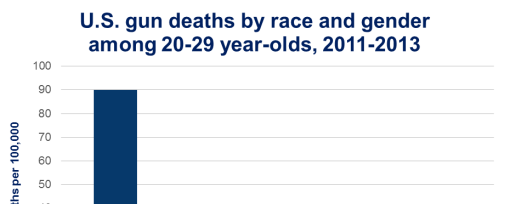
https://www.hsph.harvard.edu/hicrc/firearms-research/guns-an...
Obviously some of it is cultural, for instance, I'm from New Zealand, and I was raised with the attitude that if you own firearms, you should (almost) never use them for shooting people. They're for target shooting and hunting. Anyway, I digress.
You can find fairly easily on the internet that different countries have different firearms homicide rates per firearm[0], for instance, it stands at 0.00009361 in the USA, and 0.00003567 in New Zealand (one of the lowest, despite relatively high ownership). Which points to cultural differences, or something else.
But, if you look at the developed nations, and look at their firearms homicide rates, you will see that the USA sits at the highest, at around 3 times the rate of the next developed country.
[0] https://en.wikipedia.org/wiki/List_of_countries_by_firearm-r...
This is key info here. People in different corners of the world react differently to owning weapons. While some are taught to only use them as tools, others have them for fun. While some will only shoot them to kill pray, others will shoot at people. It already shows in the shooting ranges, in some parts of the world they are equipped with only numbers as target, others enjoy building a simulation close to an FPS game.
Let us break down, what is necessary to have a firearms homicide:
  a) ownership of / access to a gun
  b) reason to kill
    b1) malicious intent
    b2) self-defence, extended self-defence
- What is it that makes gun owners believe that there are no other means of defending themselves or their families but killing (or at least shooting at) the aggressor?
- Is it assumed, that if the "good guy with gun" kills the aggressor, more than one other human being is saved from death?
- Is it worth having a human killed because the good guy would have "only" faced a robbery and therefore only economical loss?
- Does crime really decrease because good guys kill bad guys?
- What is the worth of a human life, regardless of criminal background of the individual?
Because the answer to the questions above is different in each culture, country and individual I do not think comparing the aproaches of different countries to decrease crime (including firearm homicides) is helpful here. Different communities have different approaches to deal with same problems and having only <200 countries available for comparison makes it very hard to do so as a lot of criteria are just not comparable enough to be of much use. This is why we keep picking the examples that confirm our theories.
[Edit: formatting]
When the Supreme court rules that the police do not have a constitutional requirement to protect, that resides in the last mile - us. We legally cannot count on others to do this for us. And that includes even a court issued protective order .
As for a trespasser/thief, if they have no compunction of breaking the law to break and steal, how do we know they aren't armed? So you end up with Castle Doctrine - given how prevalent guns are, it's safe to assume a bad actor who has broken in has one.
The last problem with the whole gun rights, which usually makes me not comment about it, is that the US is the only country in the world that enshrines gun rights in the founding documents. (Badly written, and SCOTUS has ruled on both sides of the main interpretations). That isn't changing until the US, well, isn't.
https://kieranhealy.org/blog/archives/2017/10/02/assault-dea...
The comparison always makes one thing unmistakably clear: the U.S. is an exceptionally violent country among OECD peers.
Sources? Do you mean "more guns" or "easier access to guns"?
The vast majority of gun crime is done with handguns, and much of it is already illegal - i.e. felons in possession of guns or people carrying when or where they're not legally allowed to do so.
This does not follow. Take Brazil for example. 60k homicides per year, and guns are pretty much forbidden.
Of course, criminals don’t seem to care.
Brazil compared to US is so poor and with shitty corrupted police. US police prides itself on being the best most sophisticated in the world i dont se a reason why they would have problems doing same job as police in europe. They would have it in fact much easier.
Also the fact that Brazil has gun problems even when guns are prohibited does not mean that it would be better if they were allowed and everyone would carry one. What is this logic wtf.
A proof by contradiction only requires one single example.
> Brazil compared to US is so poor and with shitty corrupted police
That's true but completely unrelated to gun ownership. The police has to deal with people who don't care about gun ownership laws.
> Also the fact that Brazil has gun problems even when guns are prohibited does not mean that it would be better if they were allowed and everyone would carry one. What is this logic wtf.
Criminals can be absolutely sure that citizens won't be able to protect themselves.
How about this: Criminals can expect not to be shot when they try to pull something, thus they don't have to shoot first. If the amount of criminals trying to pull something does not go up or down (which I expect but don't know) the whole criminaling might become less deadly.
This doesn't seem to match reality, at least in my country.
If the ban didn't actually lessen the number of handguns, then we don't have the left hand side of the implication! These are two things:
ban on handguns -> less handguns
less handguns -> fewer deaths
Someone argued that the second is true, and you seem to refute it by saying the first isn't. So maybe you aren't talking about the same thing. I'm going to argue that the second thing isn't controversial. What's difficult and possibly controversial is whether item #1 is possible in Brazil, or the US (where guns are already common).
My take on it is this:
stricter laws + wait 2 or 3 generations -> fewer guns.
fewer guns -> fewer deaths.
It's interesting to me that a lot progressive, popular armchair analysis of the issue advocates for strict gun laws, and at the same time advocates for loose drug laws. What are the inherent differences between both problems that most people use to reconcile the cognitive dissonance?
All guns were legal at one point. Buy backs, fewer sales etc mean fewer legal and illegal guns in circulation (unless you see an increase in illegal smuggling and manufacturing - but obviously that's a problem you need to address first then). There will always be demand for weapons, legal or illegal. Just like with drugs. If you don't want people to buy illegal drugs or illegal guns, you only need to keep supply so low that prices are too high for most.
The problem for the US is that there are already so many guns, that effective legislation is problematic. For any legislation to be effective you'd first need to lower the amount of guns in society - because as you say otherwise there are too many guns that flow into the "illegal gun pipeline". So it's a chicken and egg problem. The questoin is: is it really an ok solution to say "we can't change regulation to something that would mean less guns in society because we have too many guns"?
> It's interesting to me that a lot progressive, popular armchair analysis of the issue advocates for strict gun laws, and at the same time advocates for loose drug laws
I think progressives mostly argue for looser drug laws for USE, not sale, apart from possibly also legalizing a few drugs. I don't think many progressives argue for lower penalties for drug smuggling, manufacturing and sales. The big difference between gun ownership and drug use in that context is that gun ownership would be a choice. If you are conservative you might argue that using drugs, being gay etc. is also a choice - but that's the philosophical side of it - I won't go there.
as well, drugs are "the product" to a large semi-captured audience, but guns don't share this sort of situation. it's not clear that "illegal guns" and "illegal drugs" share much in terms of the market behavior.
most progressive drug reform isn't necessarily for legalized production and sale (perhaps it is for some libertarian progressives) - rather it's focused on decriminalizing most end-user behavior so they can both work with police without fear and have much improved access to help getting sober.
It might also lead to less guns also in the hands of those who don't care about laws. For example because fewer guns can make them a lot more expensive and/or more risky to aquire illegaly.
One can't simply argue that "A law against X only affects those who care about laws!". That's always the case. Seatbelt laws leads to fewer deaths - among those who care about seatbelt laws. A ban on smoking in restaurants leads to fewer people who care about bans smoking in restaurants...
That was my point too: that it's not really a good argument to argue against laws because they are uneffective against criminals who don't care about them.
Laws against child abuse are only effective on people who care about child abuse.
Laws against plane hijacking are only effective on people who care about laws on plane hijacking.
What's the difference?
However these cases are fundamentally different. Only criminals abuse children, hijack planes or commit murder.
Guns, on the other hand, are not only used by criminals. They can be used by citizens for their own protection, to prevent crimes. For example, consider a woman preventing a rape attempt by using her gun. Or the recent case of the Texas church, which could have resulted in many more deaths if not by the actions of an armed citizen.
When you forbid gun ownership, then only criminals will have access to them. You remove access for regular people but keep it for criminals who would already have access to them anyway.
> They can be used by citizens for their own protection, to prevent crimes. > For example, consider a woman preventing a rape attempt by using her gun. Or the recent case of the Texas church, which could have resulted in many more deaths if not by the actions of an armed citizen.
Right. And in countries with fewer guns that citizen wouldn't have been there with his gun - but on the other hand the chance that someone has a semi auto high velocity gun at a church service in the first place is almost zero. There are just 3 societies here: one where everyone has guns, one where only the criminal has a gun, and one where almost no one has a gun. I prefer the last, even if there is a small number of people that have a gun and I don't (I also live in that kind of country so I know it works pretty well). To put this another way: if seeing someone next to me in church had brought a gun would make me feel safer than before because "good they can protect me if a madman starts shooting" then something is already wrong.
One can't argue with that you can stop an individual criminal with a gun. What you can argue about is (for example) whether owning a gun uts you at more risk of being shot than not owning one. Or whether, for society as a whole, guns cause or prevent violence as a net effect. I also think it's problematic to begin by categorizing people into "criminals" and "others" and assuming only people form the criminals group will commit crimes. One has to assume anyone can be a criminal tomorrow.
> but on the other hand the chance that someone has a semi auto high velocity gun at a church service in the first place is almost zero
Indeed, but w.r.t gun restrictions, I don't see this guy thinking "Going for a spree kill today... oh wait, guns are forbidden! Guess I'll stay home and watch something on Netflix instead". My point being, someone with the intention to kill will find a way to get a gun, with or without gun ownership restrictions.
So in my view, the such a law does nothing against the bad case, but prevents the good case (i.e. someone being prepared for the low-probability event).
> then something is already wrong
Well, that's the thing, something is always wrong. I live in a country where criminals regularly commit crimes while carrying assalt rifles. Heck, they carry their rifles even in open space parties: https://s03.video.glbimg.com/x720/6261094.jpg

I don't know in which country you live but I'm sure it has less wrong things than in Brazil. However, here they will kill you even if you don't react, so I see no benefit in removing from citizens even the chance of trying.
Incidentally, in 2005 we had a referendum about the prohibition of guns. The majority vote was against the prohibition, and yet the government ignored the result and prohibited them anyway.
I think the problem here is: what makes a person even think about the concept of a mass shooting? What makes it even enter someones head? This is obviously very hard to provide any facts on, but I think it's an athmosphere in society. If you are wronged/crazy/whatever - why are guns even a thought? Or put another way: why doesn't this happen anywhere else - regardless of gun concentration? It has to be either genetic, environmental (lead in the water??), or cultural. There is no fourth option. And I don't think it's genetic. I think people are just as evil and crazy all around the world, but elsewhere people are much less likely to be mass shooters regardless of whether they have guns.
So I completely agree - the problem isn't that the individual criminal had a gun. The problem is that guns permeate society in such a profound way that guns are the go-to idea in so many situations. And that can either be seen as good/inevitable/bad - but it's certainly "different".
Similar thing: why does a fight escalate to a shooting? Why does someone being stopped by a police car escalate to shooting (regardless of whether the driver had a gun)? Because one person (for example the police officer) was afraid the other might have a gun, so pulled a gun. Now you have potentially dangerous situation, regardless of whether the driver had a gun (doubly so if he does, obviosly). Fear is the big driver.
I think perhaps I can express my opinion on why fewer guns is good this way: for shootings to stop, you need to get the gun out of the peoples heads not out of their hands. But you can't just magically make people belive that no one has a gun so they don't need one. You can't magically make police officers calmly approach any vehicle in any neighborhood without worrying that there might be a gun in the vehicle. For that to happen you have to actually lower the odds of there being a gun there.
> I don't know in which country you live
Sweden. And my opinions on most things political assume "stable/functioning/non-corrupt public institutions". I think things can be very different if you aren't so lucky.
I think this is a misguided perception:
http://www.politifact.com/truth-o-meter/statements/2015/jun/...
https://crimeresearch.org/2015/06/comparing-death-rates-from...
But anyway, thanks for the thoughtful conversation!
I didn't argue against cherry picking (which I'm also against) I was arguing against the parent opposing something entirely different than the post he was responding to. I divided the implication into two.
The guns-to-deaths implication isn't clear cut either, but less so than the laws-to-guns one.
My argument is that this is mostly cultural, which is why it's so hard to measure. The reason being that gun culture both creates a cliate of many guns, but also the other way around (many guns means people are more likely to use/buy guns). Comparable societies (such as US vs rest of western world).
By "more guns" I include not just more guns sold/owned but "more guns in circulation" i.e. number of guns on streets, in cars, in bedside tables, as opposed to in gun safes.
A lot of countries with lots of guns have mostly locked up rifles and very few handguns. That blurs these statistics.
So the stricter gun laws can't be considered the sole explanation for fewer deaths.
> "Violent crime without firearms went down, maybe it was just people getting less violent."
> "Violent crime without firearms went up, people are going to be violent with or without guns."
The USA has a homicide rate of 4.88 per 100,000. of which 3.60 are from firearms.
It's also interesting to note that the USA has the highest homicide rate of all "first world" nations, trailing close behind wonderful places like Kyrgyzstan and Somalia. The next highest "first world" nation, Canada, is 1.68 (1/3 of the USA), of which 0.38 are from firearms.
The USA has the most lax firearm laws of the three I mentioned, and also has a high proportion of homicides perpetrated using firearms. Canada has somewhat stricter laws and a considerably lower rate from firearms. Brazil has extreme gun control, but still a very high rate from firearms.
The link between gun control and violence seems inconclusive to me. However, the base propensity for violence is definitely tied to the culture.
"Two common proxies for gun availability are used, the percentage of suicides with a firearm, and the"Cook index," the average of the percentage of suicides with a firearm and the percentage of homicides with a firearm."
"In simple regressions (no control variables) across 26 high-income nations, there is a strong and statistically significant association between gun availability and homicide rates."
So, if I'm reading this correctly, gun availability is calculated by percentage of deaths by firearm, and using that info they determine that gun availability leads to a higher homicide rate? Also no control variables? Why?
Using such source numbers, it's a foregone conclusion. If you use percentage of firearm deaths as a proxy for gun ownership, you will by definition have a strong correlation between gun ownership and deaths.
The USA has 101 guns per 100 residents and a homicide rate of 15.696 per 100,000.
The Bahamas has 5.3 per 100 residents and a homicide rate of 29.81.
Canada has 30.8 per 100 residents and a homicide rate of 1.68.
Norway has 31.3 per 100 resdents and a homicide rate of 0.56.
Finland has 34.2 per 100 residents and a homicide rate of 1.60
Serbia has 58.21 per 100 residents and a homicide rate of 1.13
In other words, it's all over the map.
Or is it just that gun control, like drug legalization, is an emotional topic and not a rational one?
Accidental gun deaths will however drop by a lot. Thousands of people die every year from that (including 1300 children according to a random headline I quickly googled). These are silly and preventable deaths.
Most importantly we have strict storage laws (you can't drive around with a gun in your car every day, you can't have a gun in next to your bed etc- you have guns in your gun safe, period).
And the reason behind why all this works is because there is a broad acceptance that a gun is a hunting tool or sports equipment, not a tool for self defense, nor a tool for ensuring that government stays in line (we use pitchforks and cobblestone for that).
Gun laws are both the cause and effect of such a mentality. You can't have strict gun laws in a place where people believe guns are essential for self defense and defense of democracy. And vice versa. For the US to end up with sane (yes) gun laws, the water needs to be slowly heated. Generations of tightened gun laws, amnesties etc. Just starting with a ban on just a few types of weapons + adding safe storage requirements would go a long way.
I think those who want to keep responsible gun ownership also need to realize they have a lot to win from stricter regulation. With the current culture of short-sighted and reactive legislation, the next ban will be rammed through congress after the next terrible shootout - and that's not the law gun advocates want. I think they are mistaken if they believe they can just use the NRA as a roadblock to keep people buying AR's at gun shows forever. I don't think the political climate a generation from now allows that.
The "gun show loophole" is a misnomer. It's not a loophole. It's simply the case in most states in the US for private sales you're allowed to sell your gun to another person without checking with the federal government first, something that's not true of dealers.
> A deliberate or accidental provision in tax law that allows an individual or corporation to be exempt from some provision. Most loopholes are deliberate and are created to ensure that the law is not draconian, to please a lobbyist, or for some other reason.
Sure, you can call it the "private sale loophole" if you want. Go for it. The agonizing over the semantic merits of the "gun show" part of the term is the same tactic as turning any gun argument into a debate over "clip vs. magazine" or "there's no such thing as an assault rifle" stuff - intentional missing of the point to derail a necessary conversation. Might even call that "dishonest rhetoric".
People advocating stricter gun laws have been open about their intentions - it's obvious that such people just want to live in a safer society. Gun advocates just assume they're liars and really just want to come for their guns.
Finland, Norway, Austria, France, Iceland, Germany, Switzerland - seven of the top 20 nations when it comes to guns per capita.
It's the nature of the gun laws, not the forbidden or not forbidden aspect, that plays a far larger role.
This is in EU country and I believe quite a few other countries are on similar level.
The difference is in the quality of the society.
Try Europe.
What gun you can buy is different story. Anything more powerful than a pistol or hunting riffle is more or less no-go.
Suddenly, the "Christians" are trying to elect a pedophile to US Senate. Coincidence? I think not.
Who has the pool on when they try to elect on Congressman with a bestiality tape?
<Yes, /s, just in case someone can't figure it out ...>
(More violent knife crime, though. This goes ignored by the anti-gun nuts.)
But the crime still rolls on, regardless. Knives don't kill people - violent maniacs kill people. They also injure, maim, disfigure and disable people.
And the UK is no good at dealing with insane maniacs, just because they banned guns.
I'd much rather defend myself with a gun against a knife-wielding maniac than, you know .. get my shit all cut up to hell.
So, just keep that in mind in the equation. Knife crime is absolutely heinous in the UK - it does not get the attention it deserves.
Banning guns didn't fix that. Just made it harder to defence oneself against a blade, which is part of the UK policy - the individual is not allowed to defend themselves, and must depend on the state for that service .. and then only when its severe, i.e. likely to get a politician in trouble.
Check the stats, down-voters: the UK has one of the worst statistics for violent knife crime trauma of all the western nations. Its nothing to be proud of.
These issues aren’t as simple as you might imply. The demographics of Sweden are different than those of Chicago or Matamoros. Conroe, Texas has very high gun ownership and very low violent crime. New York has very low gun ownership and relatively low violent crime.
Cancer death rates are higher in the UK compared to the US despite “universal” healthcare in the UK.
It’s naïve to draw simplistic cause-effect conclusions and it’s intellectually dishonest to suggest that policies that work in Lisbon would work at a similar level of success in Los Angeles.
To be clear, I am all for decriminalization of drugs, however suggesting that policies will have similar effects in different regions or countries is to ignore the thousands of other variables at play.
> Gun ownership was a significant predictor of firearm homicide rates (incidence rate ratio = 1.009; 95% confidence interval = 1.004, 1.014). This model indicated that for each percentage point increase in gun ownership, the firearm homicide rate increased by 0.9%.
Firearms ownership rate doesn't correlate directly to firearms crime rates, but the change in ownership does.
Switzerland also allow assisted suicide. They have a different attitude in that regard. Why make it difficult for someone who wants to go?
Secondly, this research looks only on guns vs. homicides, I would say that there could be a few other factors that might be more stronger then guns (poverty level, drugs abuse level, local society structure, etc.) - this is speculation, but I don't see that researches even looked on possible other factors that can potentially explain higer/lower homicide rate.
And taking that reasoning one step further I'm going to argue that in places where guns are prevalent/accepted, people might think a gun can be used for self defense, so more guns actually lead to even more guns.
Whereas in places where guns are scarce and unaccepted, they are less likely to be seen as tools for self defense, so a neighborhood having more guns does not lead to others buying guns.
So I'm arguing both things happen. If you have a culture of gun ownership then more guns will lead to both more homicides and more guns.
But if there is no cultural belief in guns as self protection, then that correlation doesn't occur.
Effect: More people get cancer
On the flip side, Denmark has the highest cancer rate, so they must be doing something wrong.
The alternative explanation is that people in Mexico generally die before they can get cancer.
---
Crime has seen a huge increase in Britain and it appears set to keep getting worse. Crime in London has increased dramatically. I'm not going to claim that's due to gun laws, however it is factually correct that crime is surging big time.
Acid attacks alone have skyrocketed in the last three years in London, tripling in that time to around 500 annually.
Jul 2017
"Police record 10% rise in crime in England and Wales, with 18% increase in violent crime and significant rise in murder rate"
https://www.theguardian.com/uk-news/2017/jul/20/official-fig...
April 2017
"Gun crime offences in London surged by 42% in the last year, according to official statistics. The Met Police's figures showed there were 2,544 gun crime offences from April 2016 to April 2017 compared to 1,793 offences from 2015 until 2016."
"Knife crime also increased by 24% with 12,074 recorded offences from 2016 to 2017."
http://www.bbc.com/news/uk-england-london-39578500
Oct 2017
"Violent crime soars by fifth as total offences recorded by police push past five million. ... The data, published by the Office for National Statistics, showed the number of violence against the person crimes logged by police went up by a fifth (19 per cent) to 1.2 million."
http://www.telegraph.co.uk/news/2017/10/20/london-now-danger...
No, it hasn't. We've seen better recording, different definitions, better detection, and there have been several operations targetting gangs and street violence and weapons.
Importantly: police recorded crime statistics are not reliable, and so we don't use them in the UK. We use the ONS, which doesn't rely on police recording.
> "Knife crime also increased by 24% with 12,074 recorded offences from 2016 to 2017."
Does this only mean wounding using a knife, or does it include people carrying a knife?
We have strict knife laws in the UK, and there have been several police operations targetting people who carry knives. So the figure you quote includes people who were carrying, but not using, knives.
Here's what ONS says: https://www.ons.gov.uk/peoplepopulationandcommunity/crimeand...
> This fairly flat trend continues that seen in recent years, with no significant year-on-year change since the survey year ending March 2014. However, the cumulative effect of this downward trend has seen a statistically significant decrease of 25% in the latest survey year compared with the year ending March 2013. The longer-term reductions in violent crime, as shown by the CSEW, are also reflected in the findings of research conducted by the Violence and Society Research Group at Cardiff University. Findings from their annual survey, covering a sample of hospital emergency departments and walk-in centers in England and Wales, show that serious violence-related attendances in 2016 showed a 10% fall compared with 2015 and continue a generally long-term downward trend.
Solve nothing.
From the same Guardian article:
"The policing minister, Nick Hurd, said that crime, as measured by the crime survey, was down by a third since 2010 and by 69% since its 1995 peak."
From the BBC article:
Martin Hewitt, assistant commissioner responsible for territorial policing, said: "Similar to the rest of England and Wales, crime rates in London are rising, but many of these are still at a much lower level than five years ago and are against the backdrop of significant reductions in resources.
A 600% increase in acid attacks? A 200% increase in gun offenses? A 70% increase in knife crimes?
London has a lot of knife crime. A 24% increase in such a short amount of time is not a tiny increase in that either.
That's not to mention that we need to look at numbers in a long term trend, looking at 1 or 2 years of data doesn't show the full story.
I agree both that you're factually correct and that your data does not at all support your earlier assertion that "banning guns increased gun crime".
So % are increasing, but the overall per-capita UK gun crime and death is still woefully below the good ol US of A as per: https://www.usatoday.com/story/news/world/2016/06/16/gun-vio...
You just made a mistake there.
I didn't assert earlier that banning guns increases gun crime. Someone else said that.
Unfortunately that's an exaggerated claim. The world is still extraordinarily backwards when it comes to gay marriage. 70% of European nations for example don't allow gay marriage. About 90% of the world's population live in a nation where gay marriage is not yet legalized.
Only a little over two dozen nations allow it, out of ~195.
More than 80% of EU population is living in a country where either gay marriage or civil unions (which are pretty close) are legal.
Consider for a moment, that in the responses below, people are actually defending and rationalizing that 70% of European nations haven't legalized gay marriage. Let that sink in for a moment. Now imagine if ~35 states in the US didn't have gay marriage, and someone tried to rationalize that away (oh they're just small states; oh those are newer states), what would the response be? Yeah.
---
> To be fair, the 70% number is true but misleading due to a lot of the new smaller members in the East.
It's not misleading in the least. It's an annoying fact to europhiles perhaps.
New smaller members in the East... what are you talking about? New members of what? Those are European nations, it's entirely fair to count them as European nations.
Civil unions are not gay marriage. If all the US had done is to implement civil unions, it would be roundly and properly mocked for doing so.
Proportion of nations is misleading compared to proportion of population.
Those European nations that don't allow gay marriage collectively represent several hundred million people.
Besides, the majority of nations in the world are small, that doesn't excuse them not legalizing gay marriage. 70% is a very high number of nations in Europe to not have legalized gay marriage.
If the US only had legalized gay marriage in 15 states, such as California, New York, Washington, Massachussetts, etc. - it would be properly mocked as regressive and backwards.
Please, be more precise with the numbers. What is several? 2, 3? Because Europe has several hundred million people in total (where several equals about 7).
It’s possible for something to be both true and misleading - the 70% figure makes the situation sound worse than it really is, IMO.
The situation is bad, IMO, when the majority of European nations don't allow gay marriage. It's a grotesque travesty.
You keep harking on about the 70% number, and maybe that works with a certain demographic of people but it reads as pretty transparent here. 90% of the EU living in countries that respect Gay marriage is a great thing, and is the most concentrated acceptance of gay marriage in the world. But hey, boo Europe!
> the majority of European nations don't allow gay marriage
The majority of American nations don't either.
What is a travesty, exactly?
In terms of gay marriage that is good for the US: I think if every state could decide it for themselves a lot of them wouldn't have by now. Look at how slow marijuana legalisation is in both the US and EU when states can decide for themselves.
I think my country NL has been at it solo for 40 years or so. It's easy to think things like these go like dominos but they really don't most of the time.
Although I'm glad the other EU nations can't for their ideas on us a lot of the time.. so it's a trade off I guess.
> If you're doing the census of an appartment block, do you count the flats or the people in each?
If I were doing a census of an apartment block, I would count the number of flats and the people in each. For conceptually the same reason it's a good idea to know how many households there are in a nation as well as how many people total.
"The world is still extraordinarily backwards when it comes to gay marriage."
I then referenced the fact that 70% of European nations don't have legalized gay marriage, as partial supporting evidence for just how backwards most of the world is on this human rights matter.
The attempt was then made to rationalize the fact that the majority of European nations don't allow gay marriage. To which I replied accordingly. What's not clear about any of that?
Is 80% of countries representing 20% population more meaningful 20% countries representing 80% population? (Arbitrary numbers to illustrate my point.) I realise this is quite pedantic but I think measuring "covered population" is more relevant than measuring administrative repartition especially with the Schengen factor.
Of course there's progress to be made either way but can you explain to me in what way my heuristic isn't appropriate to you?
The Australia and British laws and results are evidence that is plain in front of you. Those are humans on a different piece of land on our planet that on a whole have less gun violence occurring because there are less guns.
You can talk about culture, how it wouldn't work, etc. but that is the exact point the parent comment is making.
It would be nice if the US would let the CDC do in-depth studies of this nature, but gun lobbyists have blocked this from happening.
Do you honestly think that he wants information about less guns leading to lower cardiac arrests? Or perhaps less motor vehicle accidents involving death?
There is only one type of death that is in context in a discussion about firearms, death caused by firearms.
You can see similar things happening in UK recently, where they had a heavy campaign on banning knifes. This has resulted in increased use of acid attacks in gang/criminal violence.
"The same willful ignorance of existing examples is also applied to ..."
I was merely pointing out that haggy's comment ("I would love to see hard statistical evidence that less guns = less deaths...") was an exact example of this willful ignorance. The fact that we are discussing gun death/violence isn't really the point.
The point is that there are policies/laws working in other areas of the world and its kinda silly to outright dismiss them because "its different here" etc.
There will always be violent criminals. My belief is if there are less firearms, there are less choices for those criminals to easily commit violence. I would think survival chances when a criminal is attacking with a knife are much higher than if they had a gun.
The problem with this statement is that it is injecting an untested hypothesis in a discussion about the lack of facts when making policy.
You are right that natural deaths are unlikely to be affected, but it's entirely possible for other kinds of death to be affected (e.g. if I can't shoot you I may stab you to death). The appropriate category to compare would be violent deaths.
[1] https://en.m.wikipedia.org/wiki/List_of_countries_by_firearm...
The expansion of maintenance access, both to suboxone and methadone clinics, safe injection sites, needle exchanges and other hard decisions are going to need to be made more quickly than usual to stem the tide.
Harm reduction works, prohibition doesn't.
[edit] the graph came out looking like this https://twitter.com/73rhodes/status/915604039873769472
http://www.chicagobusiness.com/article/20151008/NEWS02/15100...
The question is why Chicago has problems with organised violence and other places don't to the same degree. I think if you look into it, the reasons are significantly more complex than "one place has more legal guns" - the data for that hypothesis doesn't make sense when plotted on a chart.
His perception of reality, his interpretation of threats, and what drove his motivations were are an exceptionally poor basis for establishing public gun policy.
That's called being a sovereign state. Else we'll just all adopt some universal law (of course everybody imagines this law to be one they like. Would you be OK if it was based on Swedish or Saudi Arabian or Guatemalan law?)
Just because "it's done elsewhere" doesn't mean you should do it to, or that it's compatible with your preferences and standards and so on, or with how you want life to be.
Quotation marks are not only for quotes, you know...
I think it's a horrible example in this context, because you can't compare being gay to being a drug abuser. One of them is nature, the other is nurture (at least, that's what research says, people are still debating though).
Also, you can't measure "corruption of society, or ruin the sanctity of marriage, or cause God to punish us", since they're all populist statements. The benefits of Portugal's drug policy are measurable however.
And more of the society will crumble sorts of bits.
It really doesn't matter if there are benefits or not in other countries, just like it doesn't matter if legal gay marriage hasn't doomed other countries. Facts aren't an issue in these sorts of disagreements, unfortunately.
People will debate something that is done elsewhere, and ignore completely that it's done elsewhere.
Gay marriage is a prime example, as it's something that has been legalised in a lot of countries now. Every time a country goes through the process of debating whether to legalise gay marriage, there's a bunch of people that say it's going to cause the corruption of society, or ruin the sanctity of marriage, or cause God to punish us.
However, legalising gay marriage in other countries hasn't caused the sky to fall. But anti-gay marriage people conveniently ignore this.
The same wilful ignorance of existing examples is also applied to Universal Healthcare, drug laws, minimum wages (for either raising or lowering/removing), criminal justice, firearms, and education.
Obviously countries are all different, but the general ideas are the same. For example, it's fairly well established that the less guns there are, the less gun crime there is, however, an Australia or British-style "ban handguns and buy them back off owners" isn't going to work in America. But the same principle applies, less handguns = less deaths.