TLDR: it’s a function of ventilation
Ventilation depends partly on individual behaviour, eg I open windows in good weather and close them in winter.
tho i admit it kinda sucks ass when it's 100 degrees
Ventilation prevents it from reaching hazardous levels from a gas stove; induction does not produce it.
So you can simmer a stock for a couple hours without needing to run the fan (and cook most anything under 300 degrees or so), and with the fan off you don’t lose nice conditioned air from inside.
They should ban teflon. It leaches estrogen analogues into food, and is an endocrine disrupter. Also, teflon pans last 2-5% as long as cheaper cast iron / stainless steel equivalents (or most more expensive options).
This one doctor (whom I probably trust the most of online doctors) disagrees.
https://peterattiamd.com/putting-out-the-fire-on-the-gas-sto...
> For example, the analysis included multiple studies that found an association between gas cooking and respiratory disease in children but variously failed to evaluate parental smoking habits, indoor smoke, pet ownership, or outdoor pollution as other possible factors which might underlie the observed associations. In other words, we must interpret these conclusions with a high degree of caution.
Older construction leaks a lot more air than newer construction, primarily due to changes in code. More specifically, the air in an older home, from the 1980s, might change over every four hours or so. In a newer home built to modern building codes, it's eight or ten hours.
My apartment has a gas stove, which I was was induction. The gas stove plus the lack of a hood that vents to the outside means the indoor air quality gets pretty messed up. I usually have to open some windows when cooking, which is not great in winter.
https://pubs.acs.org/doi/suppl/10.1021/acs.est.1c04707/suppl...
See the last page.
What you need is a real vent that vents outside. Or a stove that doesn’t emit NOx (and carbon monoxide, etc).
Frankly this whole thing is a bit absurd. Everyone ought to know that flue gas from a furnace or water heater is extremely dangerous when it ends up indoors. Why are gas stoves ever considered okay?
Total bans on products people use and can enjoy responsibility due to potential health risks is nearly always a bad idea in my opinion. Just look at smoking in the US, for example, which recently hit an all time low. We could have gone the prohibition route (and we can guess how that would turn out), but instead we clamped down on advertising, increased taxes, and helped usher in a societal change where smoking is largely seen as unacceptable behavior by huge swaths of people now.
They aren't going to force the gas to be removed from current kitchens and heaters any time soon.
There is a prohibition on smoking, kids aren't allowed to buy cigarettes
These are both rounding errors vs. a year of energy bills. If you want something even cheaper (for instance, because you hate your tenants, and they are paying the power bill), resistive ones are still available.
It was a long time ago though.
numbers are higher now. but nobody was counting e-cig before. some were even getting money to buy them as they were spined as a quiting smoke path.
also, opioid epidemic is not helping things. this is really reaching and not sourced but i wonder if less smoking means more people reach for pills?
• 40% of cancer deaths are related to smoking • 80% of lung cancer deaths are related to smoking • 33% of heart disease deaths are related to smoking
There's over half a million deaths a year from smoking and 10% are second hand smoking related.
I’m not quite sure we can call this a win yet.
the plain packaging stuff is moving past people taking informed risks (even if i think they're stupid ones) and towards overt control of behavior for technocratic reasons. which explains why there's way more uptake for it in europe and australia than here
https://www.ucsusa.org/resources/climate-risks-natural-gas
Granted, much of that is due to power plants, but residential + commercial is over 10%.
If you use gas and your neighbours use electricity, and there's suddenly a power outage, you can help your neighbors and heat/cook their food too,... or in case of a gas system outage, they can help with yours. If you heat with gas, you don't freeze even with a power outage, and can still buy a cheap electric heater with a gas outage... if you heat with electricity, you can atleast try to find someone with gas heat to let you sleep over and not freeze.
Banning everything except electricity is just calling for a catastrophy.
(yes yes, i know, old heaters will stay, this applies only to new construction, but in 30 years, most old devices will be replaced too)
edit: i don't know why the downvotes... probably not many people from texas here... or anywhere else in the world... or maybe people think that NY is somehow immune to such outages
Things that don't work without electric power:
* Refrigeration. For a 6-12 hour power outage, leaving the doors closed is sufficient. For 1-3 days, fridge temperatures may be maintained by buying bags of ice, but not a freezer.
* Emergency communication. Landline phones might still function, depending on exactly where the breakage occurred. Cell phones have 24-48 hours of battery power at the most.
* Central heating. Even a gas furnace requires electricity for its controller.
* Kitchen ranges (conditional). For a gas range, this depends on whether you have a lighter or matches.
A power outage disrupts normal life. During a power outage, you cannot cook food, cannot preserve food, and cannot heat your home. Depending on the duration, sheltering away from home may be the less disruptive option.
But FWIW, as someone who is from Texas who lost power for 5 days during Uri and nearly a week for the latest freeze this winter, I wholeheartedly agree. Not sure how I would have made it during Uri without gas - even with gas, we couldn't run our heater (system still needs electricity to run the fans, thermostats, etc.) but we could run a gas fireplace, which kept our house temp just high enough to keep our pipes from bursting. I still shudder from all the pics of people with icicles dripping from their ceiling fans.
In my country, we had a strange mix of humid air hitting a cold air front, so one side of the country had rain, the other had snowfall, and in between you had frozen rain...
The result? This: https://www.youtube.com/watch?v=A2Gr_RKN4Os (ignore the weird music).
This is what the power lines looked like: https://www.postojna.si/Datoteke/Slike/Novice/123958/l_12395...
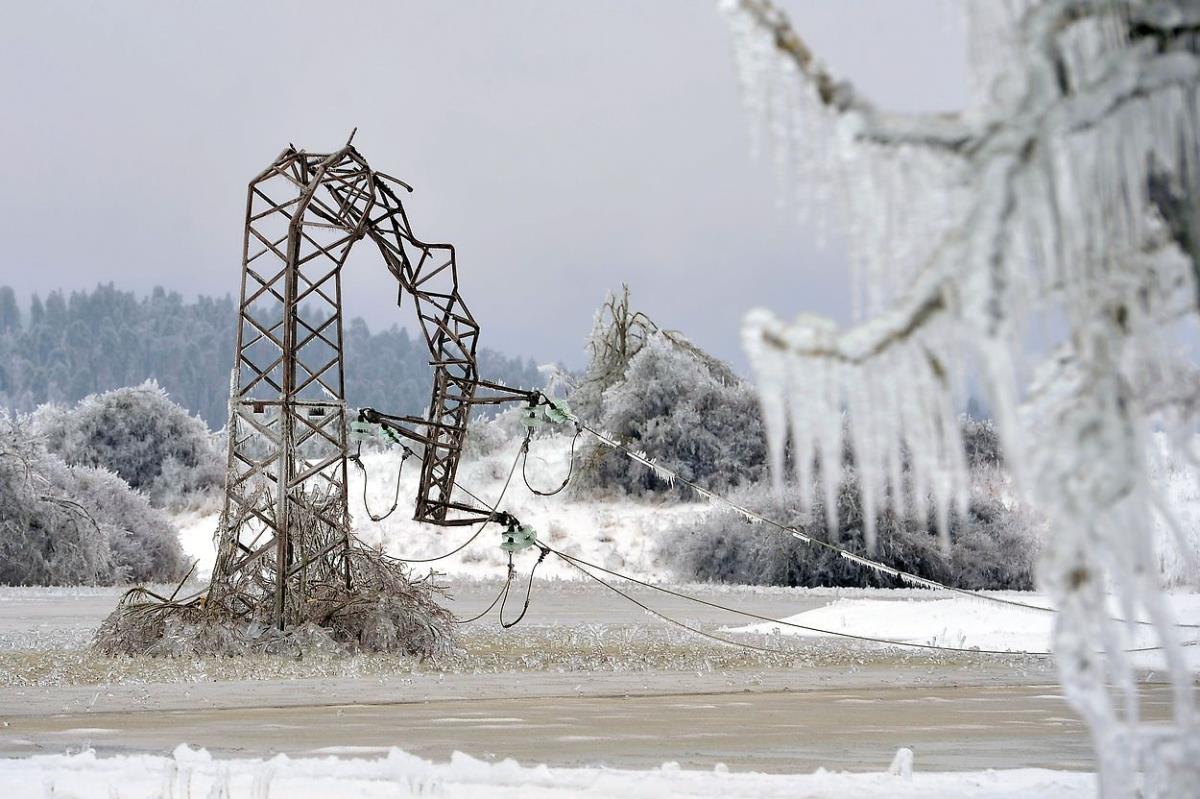
Was it a problem? Sure. But not a huge once, since everyone in the rural area was familiar with power issues even from the yugoslav era, wood furnaces are still common, even in houses with central heating (most nowadays), and well.. the country of ~2mio pop. has ~162k voulonteer firefighters, and fallen trees were removed, roads were cleared, and due to a lot of shitty wood, the toilet paper was cheap :)
Now we're looking at this (article here), and germany banning gas, oil and wood heating, and many other countries following, and even a localized event or just some operator fuckup can cause a huge catastrophy. (also, I might have a slight bias, since I know how the infrastructure works and many people who operate it, and it's a miracly we don't have more outages.... same for the internet itself... the core of the internet is based on routers saying "This is me, i own this IP block, just send me the traffic" and all the other routers believing it and doing what it's said... so yeah)
I guess it depends on where you live! But to me it's certainly iffy to ask people to just be ok with being helpless if unpredictable stuff happens.
Two decades and a half ago, the Quebec grid was completely fubar* for the most part of January due to freezing rains too so it's not super uncommon.
*worse than Texas 2 years ago as the electricity infrastructure physically collapsed, literally.
I’m not saying the power going out is no big deal. I’m saying he’s not being overly dramatic.
When the entire power goes down for an extended period, people can and do freeze, or suffer the effects of poisoning or fire, from less safe forms of heat used out of desperation. (BBQ grill or wood/trash fire indoors, etc.) The Quebec/New England region grid collapse during the 1998 ice storm was particularly bad with dozens dead. Certainly an atypical event, but many do plan for that eventuality in some way, whether by having backup heat or hopefully knowing someone who does.
I got solar, a powerwall, and a wood stove.
(I also have a gas stove, but I wish I put the money into buying an extra powerwall.)
Gas systems could make a backup, but don't unless they're designed to, and even if they do, you're gonna have a cheaper time installing just the one system than multiple. A generator, or a community generator with rollover practice is the right answer.
You don't see hospitals making every other room gas so they can survive a power outage. Instead, they have a generator
I had an annoying experience with this during a multi-day outage in Alaska last year. We did have other options including a generator, but I'm not a fan of being patronized by an appliance.
https://i.imgur.com/rHDaZxm.png <- something like this was standard, also back in the time the colors were browner ( eg. https://i.imgur.com/RJkq5GK.png ) :)


The modern variants look more like this: https://i.imgur.com/iJvKQjy.png or with inductive heat instead of resistive: https://i.imgur.com/BOetXJz.png


I remember only one gas outage (some repair work done somewhere and they closed the valves) but there were quite a few power outages, where you had to use a lighter.
I also have a gas grill and a camping stove for emergencies (and for camping).
Regarding heat pumps phasing out gas heat, in NY it isn’t feasible. It gets too cold. In more temperate climates, sure, but in the northern US and further, there will be a need for on-demand heat for a long time to come. The heat pump is being oversold as the answer to everything, but there are use cases it doesn’t account for.
The path forward to carbon neutrality is electrification. Electrify new construction, use steam to heat them, etc. Something which addresses heat will dwarf any of the benefits from coming after people’s stovetops, at a fraction of the lifestyle cost.
It almost feels like this is something designed to turn heads; a political act focused on banning something quite popular, that everyone knows about, for very marginal benefit. It’s almost certainly not to help with “climate change”; if it were, the legislation would target non-negligible emissions sources.
I live in MA and heat my whole house with a heat pump. It works fine. I have an electric strip for backup.
My house (and heat pump) are five years old. The newer ones are better; Lennox's new model can work in Upstate New York without a backup heat source: https://www.energy.gov/articles/doe-announces-breakthrough-r...
(I will admit that I have a gas stove in my basement to handle power outages, a gas stove, and a gas grill. I will also admit that I really, really regret installing a gas stove and will switch to an induction stove when it's time to replace the stove.)
Why?
We HAVE to run the fan when we turn on the stove or oven. That's not the case with electric / induction.
Given your concerns, I wouldn’t cook using electric/induction without the fan on either.
Not true, heat pumps are widely used as primary heat sources in environments as cold or colder than NY, like in Montreal and other parts of Canada. The take that heat pump tech only works in very moderate temperatures is stale at this point.
1. Ground source heat pump -- which can work pretty much anywhere people live, but costs a lot more and people don't necessarily know about them.
2. Failover to resistive heating when it gets too cold outside. It's fine to do this in Montreal, because electricity is relatively inexpensive there. It's fine to do this in New York City, or even somewhere a little cooler like Boston, because you're doing it for max like 2 days a year even in an outlier year. Not sure if it's fine to do this in Buffalo.
As the owner of a 5 year old heat pump in a milder climate in Indiana, I can tell you this:
* When it is under 10°F, my heat pump switches to emergency heat... forced air electric and is very expensive to run. * Often the temperature swings are pretty wild... 40-50 degrees and that also can force emergency heat.
Oh, and since the electric company is usually using gas to generate the electricity, isn't the environmental impact somewhat of a wash?
Interesting reading: https://www.worldatlas.com/articles/countries-least-dependen...
However you need to look more at the average scenario to draw a complete picture. When your heat pump isn't in emergency heating then it's more efficient to burn the gas for electricity to power that heat pump than it is to burn the gas for heat (moving heat is substantially cheaper than making heat). So how often is your heat pump in regular heating vs. emergency heat? And then is it in emergency heating often enough to justify having a secondary piece of infrastructure to get gas to your house where you then also need a gas furnace which is more expensive than some resistive heat strips are?
This is something that can be improved.
I mean cities do not work because "what if everybody decides to leave at the same time -and I mean everybody".
"What if its really hot and everybody turns on their aircon at the same time"
Gas heating is inefficient when compared to heat pumps and gas stoves are extremely inefficient when compared to say an induction stove. It simply will not make sense to install them very soon. A heat-pump is really just an air-conditioner with very few extra bits stuck on so houses might have everything in place already. And the grid isn't collapsing because of that.
As for the ban - there might be market forces at play that would make gas real cheap for a time - this would lead to an inclusion in practically all new buildings. But it fairly certain that after that gas will get expensive and supplying it at the individual building level might get less reliable. This will cause a liability because the state will probably be called to fiance the mitigation of that.
Actually I think this will happen regardless. So the ban is simply a way to prevent it getting more costly than it already will be.
Induction is fantastic and even superior to gas in some ways (even faster for boiling water, for example). While some may still prefer gas, given that induction gives instant power and is more powerful, I have a hard time believing that it results in a "large cost to lifestyle".
Besides, gas stoves actually cause a significant amount of indoor air pollution, which may be more relevant than the climate change impact. They are quite literally bad for you: https://www.health.harvard.edu/blog/have-a-gas-stove-how-to-...
> Children living in households that use gas stoves for cooking are 42% more likely to have asthma
At this point, you should just assume that anything you see with the words "observational research" is wrong. it used to be a sort of questionable research that people mostly ignored or used for hypothesis generation, but now that political teams are picking up the mantle of "science" to justify whatever they want to do anyway, these kinds of bad papers get spread widely with little critical analysis.
Someone else posted this link up-thread, and I think it's a reasonable summary of the current data:
https://peterattiamd.com/putting-out-the-fire-on-the-gas-sto...
Induction is a far better choice for residential use.
gas ranges: $949, $848, $676. boujee model is $1199
induction ranges: $1198 starting, $4138, $1848, $1598, $2498
plus i can't use my nice copper diffuser with them :(
nah, imma stick to gas :)
By stove I mean the cooktop and oven in one package. That is what my house needs so I haven't looked at the other options.
This is the more common arrangement where I am and the price difference are much smaller.
Dunno what kind of pricing y'all have on that side of the Atlantic.
For the obvious reason that it’s much cheaper.
Ban cooking gas as well, and they save a ton of money running gas pipes, and utility companies having to maintain that gas pipe.
Also, “serious cooks” can still use their gas stoves. They just need to hook it up to a cylinder like most of the world manages just fine, but apparently the people in the richest country in the world can’t figure out.
Scandinavia here. Heat pumps work just fine down to -20C
This is basically how all climate regulations are perceived at the end of the day, and it’s the primary fuel for my most doompilled opinions for sure.
Sooner or later this is going away. If you announce you're not doing new installations, that starts a timer on the existing users. In 2028 everything in use is at least 5 years old. In summer 2035 everything in use is at least 12 years old. Politically that makes it a lot easier to sell an actual prohibition on supply than it will be for places where that's a sudden overnight change from "Sure, you can use gas" to "No, we're ripping that out".
My country has begun gradually getting rid of POTS copper wire telephone provision. You can still have it, for a little while at least, but we know it has limited lifespan, if you're an outfit who somehow didn't spot the signs and were shipping devices that expect a physical copper line to work, you've had your notice, in a couple of years stuff like that will drop dead. When it's gone, with it goes a bunch of expenses that most people don't benefit from at all. And yes, also some relatively modest benefits are gone too, but mostly it's a burden, we have better things to spend resources on. But you need to give people a heads up first, and that's what this legislation seems to do.
In summer 2035, you won’t have any buildings than less than 12 years old with gas available, But, as I understand it from the article, someone could replace their stove or heating system in a building that has pre-ban gas, no problem at any point in the intervening 12 years. Even the winter of 2035.
Gas heat and hot water may be cheaper or more expensive than heat pumps depending on utility rates and climate. Too bad residential gas-fires cogeneration isn’t really a thing.
The price of gas is going up, and the price of electricity is plummeting thanks to renewables.
Also, the efficiency of electric ranges has doubled in recent years. Heatpumps are something like 3-10x more efficient than older systems.
Our electric dryer greatly outperforms any old gas dryers we had, and it wasn’t significantly more expensive.
Not according to sources I can find. EIA forecasts for the long term project continued increases through 2050 [1] Maybe in locations elsewhere in the world? Or specific states in the US? Certainly not where I live, which is aggressively pursuing renewables and despite this prices continue to increase, and were doing so before the spike in natural gas prices.
[1] https://www.eia.gov/outlooks/aeo/data/browser/#/?id=1-AEO202...
I hope they will plummet, I just don’t see much pointing in that direction right now.
Most gas appliances also require electricity to run, and in addition the broader gas infrastructure itself requires electricity to compress the gas so that it reaches the consumer. There's no getting around the need for reliable electric infrastructure; centralized gas infrastructure won't save you from unreliable electricity.
It absolutely will and the gas infrastructure is far more reliable than the electricity one.
My gas fired boiler can heat my house for days running off my Yeti battery pack.
That same Yeti couldn't put a dent in the cold weather we had this year.
Running my generator (on LP or NG or Gasoline) would allow me to keep my boiler running effectively indefinitely. Heating my home directly would be way more dangerous.
While you're correct that it's possible that NG supply can be disrupted, it's far less vulnerable to disruption than electricity. The natural gas supply is entirely underground and the natural gas infrastructure you're talking about that requires compression to pump to consumers has a built-in supply of fuel for running generators to generate electricity to run those compressors in an emergency.
There were innumerable electricity disruptions where I live in the almost 40 years I've lived here. Mostly short ones (under one hour) but several much longer ones (12+ hours). Without NG heat in my home I would have been forced to evacuate on a number of occasions. I've had one, single, disruption to my NG supply in 40 years. PSE&G found a leak in the gas lines in our street, this didn't cause a supply disruption however but put us (and a lot of our town somehow) on an expedited list to have all of our NG lines replaced. PSE&G came around and trenched in new high-pressure gas lines along the streets (still not disrupting our supply) and then a few weeks later they individually came and swapped each home to utilize the new high-pressure gas by fishing a smaller HP PEX pipe down the old gas pipe from our old service. No new trench from street-house, just a pit in the street and a pit alongside our foundation and a new exterior meter and pressure regulator. Exceedingly well done process and incredibly smooth. They even had a cool soft-tracked excavator so it didn't damage our lawn! Total outage was about 2 hours. How many nines of reliability is two hours of outage in 40 years?
On the US east coast it does not. Very rare occurrence, to the point where a major blackout is a noteworthy event.
This is not something that should happen in urban/sub-urban environment often in a first world country. In rural areas building up the infrastructure to that point can be too expensive but not in built up areas.
In the last ~15 years of living in cities/suburbs in Finland I have not had a single power outage that lasted more then 5 minutes. And even those have been super rare.
If that really is a problem in a first world country (and you are not riving in a really remote area) talk to your politicians as your system is seriously broken and needs fixing.
It's not clear to me that this legislation would do anything to stop you from throwing a 250gallon tank on your house to run a generator in upstate NY.
That's because when gas lines fail, which they obviously do, they leak instead. And leaking natural gas into the air of densely populated areas is of course a bad idea.
And since those leaks are just small pressure drops and everything keeps "working" there's much less urgency or incentive to fix it. Unlike circuit breakers & other protective circuits that cut power which prompts immediate action to correct.
Have you tried a heat-pump dryer?
Using gas to drive a clothes dryer is the most American thing in a good while =)
> Plus electric goes out often.
Where do you live when you have a 100% reliable gas hookup but electricity is down "often"?
No one is banning gas. You can go ahead and buy a gas stove and use it.
What you cannot do is expect buildings to install piping throughout the building, the gas provider to provide infrastructure to supply that building with gas, and get the gas out of a tap.
The vast majority of the world in fact does not have gas coming out of a tap because it’s not profitable. The U.S. has it almost entirely because of regulation thst requires it to be provided, which has now baked in expectation among homeowners that it will be there. This expectation leads to buildings paying extra to supply gas at exorbitant costs so their homes don’t feel less luxury than an equivalent competitor.
If this is true, then why is the New York Times calling it a ban? Wouldn't it be more accurate to call it a repeal of whatever legislation that was requiring it?
Do you have a source on this regulation?
Gas cooking makes sense when the infrastructure costs can be amortized with that of heating. One of these costs is the 2-3% of gas that leaks, and this loss will occur even if you heat your home with heat pumps so long as you're connected to the gas grid. If your only use of gas is cooking, it makes much more sense to simply buy cans of propane.
There's the fact that you are actually burning fuel, which released noxious fumes into the home [1]. There's mounting evidence that this sort of exposure has pretty negative health implications [2]
Gas is also inherently dangerous, more-so than electricity. There's been more than a few examples of exploded homes/buildings due to gas leaks [3]. All it takes is for someone to accidentally leave a burner on unstarted (or for a kid to do it while playing around the home).
But as for cooking, heat pumps won't work there. What you're more likely to see is either homes coming standard with thick enough lines to power everything or stoves with batteries (think about it, a stove is off 90% of the time, so why not slowly charge a battery during that time for the times when you need to cook fast?)
[1] https://pubs.acs.org/doi/10.1021/acs.est.1c04707
Also, as the other commenter said, these are apartment buildings. If you burn your apartment down it's gonna affect your neighbors. If you mess up your indoor air quality it's gonna affect your neighbors.
https://americacomesalive.com/the-invention-of-the-fire-esca...
No one is an island.
This is where it stops being "personal responsibility"
Also you personally can still have gas anyway, you just don't get government subsidized gas infrastructure anymore. Go get your own propane tank or whatever. Go be "personally independent"
24,000 for all electrical fires. [2]
I wasn't able to find specifically fires caused by electric stoves. Most are caused by faulty wiring, lights, and space heaters.
My assumption, stoves are not often involved in electric fires. They have isolated, grounded circuits that you aren't frequently plugging and unplugging into. The thinker cables usually have thicker insulation on top of that.
[1] https://www.millerweisbrod.com/preventing-gas-explosions#:~:....
[2] https://www.firerescue1.com/fire-products/firefightingtools/...
A household battery made out of old Tesla batteries sounds like a good idea, but I think someone has thought of it.
Especially when why would you need such a thing anyway when you have 220v+ just itching to get the job done directly from the grid? The grid needs power storage, yes, but there's all sorts of solutions to that beyond lithium ion batteries including water & stone gravity storage systems. Or just centralized batteries.
A battery bank at home can be a good solution to grid balancing, eg if power is cheaper during the day or night, or if you have solar. Water storage systems aren’t very efficient and need lots of space, but there are people who do it. You can also compress air into a cave. Batteries are just something that are cheaper and more space efficient than other solutions.
Centralized batteries work as well, though they don’t do anything if you have lots of grid failures.
So while yes water storage systems need lots of space, that's really only a problem if you're trying to distribute it. But you don't need to, you can centralize power storage to alleviate time of day spikes. Which many power grids already do.
This is exactly what governmental action is meant to put a stop to. We have a case where due to inertia, consumer preferences, market failures w.r.t. externalities, etc. residential gas use would, if left to the market, make up a significant proportion of heating energy.
Maybe "eventually anyway" gas would "fall out of favor", but what needs to happen is for it to no longer be in use (along with 1000 other such changes). The market cannot achieve this for us.
A man should have the freedom to damage the environment so long as he pay for it, and that money can then be used to undo his damage.
Of course, it's always quite inconsistent how these things are applied based on cultural reasons. I've been in favor for a long time for higher taxes on paper. The production of paper is apparently 1/5 of deforestation and there really is not much justification for it now with alternatives with less of an environmental footprint, but too many people, even those who supposedly stand for the environment, are too emotionally attached to paper for cultural reasons to see this ever pass.
For example, here in Canada, we recently banned a wide range of window blinds including the very popular top-down bottom-up style (a personal favourite). Why? To save the kids of course. One Canadian child a year was killed, on average, over 30 years.[0] So it's a performative win and, let's be honest, who's going to defend our right to buy and install blinds?
[0] https://science.gc.ca/site/science/en/blogs/science-health/k...
On one hand, for those pushing for a ban, this seems largely performative, a la banning plastic straws. Gas is used for 2 main reasons: for cooking, where it represents a miniscule amount of overall energy use, and for heating, where, if what all the heat pump folks say is true, gas should fall out of favor vs. heat pumps eventually anyway. On the other side, I'm tired of the constant cries of "Muh Freedom!!!" in the face of any regulation that ignores the collective impact of not having any regulations.
Still, even for those who are gravely concerned about global warming, this feels like it will lead to a pyrrhic victory at best by making your average Joe more skeptical of government overreach. It seems like there could have been umpteen different types of government responses (e.g. support for heat pumps) that would have been better received by most folks compared to "we're banning something that a lot of people find useful and convenient".