[1] https://www.census.gov/programs-surveys/geography/guidance/g...
The census defines 3 population area groups, urban areas (+50k), urban clusters (2.5k-50k), and rural (-2.5k).
If you combine urban clusters and rural that’s still only 28% of the population, and you’ll be including a lot of people who don’t consider life very rural.
https://www.census.gov/programs-surveys/geography/guidance/g...
https://docs.google.com/spreadsheets/d/104wPPSJ_4CzutRK5Ypp_...
Last year, I took a trip to Roswell NM. This is close to the population cut-off for “urban” at about 49k people. Would Roswell suddenly become NYC-like if 1500 people migrated there? The idea that Roswell and Manhattan can be in the same classification is not very useful in terms of defining policy. The lifestyle for each is widely divergent and I think they each have very different transportation needs.
Cars are made for people who buy cars, not want or use cars.
It could be 28%, or 60%, or whatever. But people who buy cars buy pickup trucks and not small EVs. What more is there to it? If you want to find out why, ask them, or convince people interested in small EVs to you know, actually buy some.
I don’t think saying “cars are made for people who buy cars” is helpful unless you are willing to elaborate on why they want those cars. If you don’t think the geography is a main driver, this forum is a good place to discuss counter-examples
Sometimes in those discussions I’m extremely confused. It’s as though the concept of an exception doesn’t exist and any counter example prevents some policy suggestion, no matter how minor.
You need exceptions for 90 million people? How does that get enforced, generally? Even though no one has mentioned a specific policy that we can have a concrete discussion about, I see the abstract problem.
1. We need a solution for actual urban populations 2. We also need a solution for the 90 million that don't fall under solution 1 3. and finally, we shouldn't be forcing people to buy specific cars. Not saying EV are bad, just that the market needs to start being more competetive, and automakers need to care more. People tend to follow the crowd, if lawmakers were serious about the environment, automakers would have a harder time continuing selling new cars every year(waste), and even more so non electric vehicles.
I think there will still be a niche market for ICE vehicles for a very long time, but people who are not "car people" would very easily be driving EVs if they were more popular. Most won't notice the difference.
This is an important pragmatic point that reminded me of a study that tried to change people's behavior as it related to environmental impact. As I remember it, they tried three approaches:
1) Communicating the benefits of the change (e.g., look how much money you'd save)
2) Shaming the current behavior (e.g., look how much damage you're creating in the environment)
3) Communicating that a large proportion of your neighbors have already changed their behavior
The only one that effectively made any difference in people's behavior was #3
I do know that much of Europe is something less than urban by this measure, and they seem to get by fine with a lot fewer cars, and the cars they have are almost always much smaller than ours.
Perhaps this is one of those self perpetuating problems.
And what you're referring to is not a problem, because it is objectively useful to have a large truck in the middle of nowhere. I enjoy being able to move lots of things at once without asking another person for help. Also, have you ever had a tract of land in a rural part of the USA? It's quite nice.
Europeans have a tendency to think they're superior to Americans, but that's just classist crap that needs to stop. The USA has cool things, and so do Germans and Austrians and Belgians and the French and so on. Why divide ourselves?
While I agree that each has their advantages and disadvantages, transportation is something many places in Europe have something to show us IMHO.
A small village would typically have a train station where you can quickly travel to a populated area and urban cores are often nearly completely restricted from cars excepting deliveries making for walkable daily life.
It’s true that having a personal vehicle is more convenient, but in my opinion that is a bit of a tragedy of the commons. If everyone decides to have one then we all pay the price in needing one to get anywhere.
I’m really not sure where class figures into these two different models honestly.
Having been born and raised in a typical small village in The Netherlands (population then ± 12000) with a lot of smaller and slightly larger villages around, there were no train station in sight for at least 30km. I had to travel to the big city to get to the nearest train station, which took about an hour by bus. And this is the norm rather than the exception.
The problem with trains is that the tracks are put in relatively straight between large cities. If your village is on that line between these cities, you're in luck and probably have a station close-by. Otherwise, you're out of luck and have to hope there is a reasonable frequent bus line going to your closest station.
Of course, because these bus lines tend to follow the more historical routes between cities, visiting each and every village in between, getting to the nearest big city by bus might take up to three times as long as just taking your own car.
Heck, if I'd not mind cycling fast (just over 20km/h) for an hour and a half I'd also be in the city. Just half an hour after the bus would get there. Actually, that was nice in summer as a poor high school student.
Trains work well when you have enough people to care to use the infrastructure. But if not, you might try buses. I saw a rural village in Hungary (~80 people) which has a bus stop to the nearest town. That's very nice, but the village center is a mile walk from the bus stop on the highway. My point is that a train may not automatically work. (Some rural communities in the USA do have similar bus routes.)
I'm curious: what is your example of a small European village with a train line? I'm asking because I just picked a random American town on the map: Spencer, Iowa. ~11k people, and it's about a two hour drive (~100 miles) in all directions to a larger city. A two hour drive is a decent drive, but it's not much overall, especially if you're comfortable driving. It's quite hard to find a similar scenario in Europe: these vast, sparsely-populated tracts of land. And that's my primary point: Europe's population is distributed more uniformly and densely than the USA. A blanket claim about how x transportation mode must be used in the USA ignores the stark regional variations.
Sure, in certain large cities, widespread car ownership may lead to a tragedy of the commons scenario, but it's on a per-city basis. The vast majority of cities in the USA will never encounter this problem because their "commons" are just so big, all cows still find a spot to graze. The cities that do encounter large traffic jams eventually build public transportation infrastructure to reduce the burden on roadways.
Playing out the maximal scenarios, I'd much rather live in a world where everyone drives cars than everyone rides trains. A mix of both is even better.
Walkable downtowns are great, and cities of all sizes should have them.
Huh? We have lots and lots of train lines, also passing through very small villages. But sure, not at all to every village, so there are also enough villages, where only a bus goes. And in some only sometimes. Maybe only on the weekend, maybe only weekdays.
So you also need a car in rural germany.
My understanding of rural Germany is that villages are usually are within 6 km of each other. Is this fairly accurate?
I remember seeing a video or article about how towns in rural USA are ~15 miles (24 km) away from each other because half this distance is what a person could walk in a day, handle in-town business, and be home by dark.
Density makes a big difference.
Pretty much. You have to search for places, where that distance is higher. But there is a increasingly number of ghost villages, where only some old people remain.
Most people do have a car so the pressure is high to get one, it is also cheapin rural areas of Sweden. Parking is free, always available, most of the infrastructure is slowly being erroded by car centric design. So yes soon you will be required to have a car in some rural areas to be able to travel anywhare ot get food.
And you had those conditions, while having a family? I doubt that can work out, my wife is pregnant, for example. She cannot walk or cycle 10 km to get anywhere.
Anyway, we had the choice and we live in a village with a supermarket and trainstation. But if we had to live in a place you describe, it would not work without a car.
https://en.wikipedia.org/wiki/Population_density#/media/File...

The largest H-bomb test ever carried out was in Europe!
While technically Severny Island is "in Europe" in the historical continental sense, Russian arctic islands aren't what anyone is referring to as a comparison point with the US in this discussion. Nor Russia in general for that matter.
"It's quite hard to find a similar scenario in Europe: these vast, sparsely-populated tracts of land."
Saying that a part of Europe should be excluded from debate about whether Europe has "sparsely-populated tracts of land" because it is remote and sparsely populated seems a bit circular.
A sizeable chunk of Russia is in Europe - not sure why that should be excluded?
Edit: If people mean the EU or Western Europe when they say "Europe" then that's fine - but it's arguably similar to people from Europe only regarding the US as the two coasts!
Yep, that's what I refer to. I imagine most Americans do as well. From my perspective, I don't expect Europeans to automatically include considerations of Alaska.
>it's arguably similar to people from Europe only regarding the US as the two coasts!
A well-known term in the USA is "fly-over country." That refers to all the land between the two coasts. Our own "coasties" already view the rest of the country as another world. We already do that to ourseleves!
Good god the "cool stuff" that the US has in no way shape or form compensates for the poor lives that the majority of the country leads.
If a train is the best solution for a USA community, by all means, make it happen! However, trains are optimal in the USA in far fewer scenarios than either automobiles, buses, or airplanes.
This sounds like the rhetoric around gun rights, where any amount of regulation on guns becomes an absolute seizure of the right to have any gun. No one is talking about an absolute zero automobile society; even societies that deprioritize the car still have cars available, just not as the first choice. Cars don't have to be dominant to be available and usable.
No disrepsect, but did any country? Trains were used extensively, but the double-whammy of automobiles and airplanes did do a number on the attractiveness of trains.
>And most rural towns today even have dead or dying Main Streets caused by the huge shift towards automobile dependent big box stores.
Mmm. I feel that's a case of "correlation != causation."
- The decades-long export of jobs (avoidable or not) depleted available capital in the community. With little money and work, supporting businesses (mostly those in town centers) greatly struggled, and many folded.
- Big box stores use economies of scale to undercut Main Street prices, which further accelerates the collapse of small business. Dollar General is an interesting example, where they (in my view) have tried to fill the gaps these collapses left.
- Big box stores are inherently large, so good luck finding a tract of land big enough in a rural downtown. If a rural community has a bus line, I'd wager good money that the Walmart has a stop.
>This sounds like the rhetoric around gun rights, where any amount of regulation on guns becomes an absolute seizure of the right to have any gun.
Gun rights are constitutionally protected, whereas no law says "the right to own vehicles, being necessary for the operation of a free society, shall not be infringed." Some people really, really love the law if it makes them feel more secure (and that's okay). Also, bear (heh) in mind gun rhetoric in today's age is manufactured for political purposes.
>Cars don't have to be dominant to be available and usable.
Agreed. If cars are less optimal than other transportation modes, people will chose otherwise. But in the vast majority of the USA, except for commuting, cars enable more liberty than trains at lower levels of efficiency. Not the worst thing, in my opinion.
This seems to be the point missed. It’s almost as if many commentators assume everyone is trying to optimize for the same thing in all cases. Some are talking about optimal access and freedom of movement, some for cost, some for efficiency etc.
Everyone has cool stuff, but there are bad things to say about every country in addition to good things.
As for high growth, Europe doesn’t have the space to engage in pump & dump real estate and the same scale of military subsidies that made the fortunes of many US industries.
American exceptionalism in one phrase.
That said, I will prefer to live in places that give me more choice - more economic choice, more living choices, more everything choices. I am by any global metric a wealthy person and my US tax rate is very low compared to every other western nation except for tax shelter countries. And I prefer to have less government mandating where my wealth is spent and retain more control over my life.
What’s so wonderful is that apparently anyone (just like yourself!) can so easily uproot their entire lives to experiment living in two different countries! Although research tells me that Scandinavian countries, The Netherlands, and France have very difficult requirements for immigration. I need to learn Dutch? Huh? In the USA it’s so much easier!
Are you one of those Californians who are desperate to escape California but then try to change all the rules of your new home to match what you had in California? Just so you know, this is very irritating to your new neighbors.
I live in the USA. I like it here. But you say it is better because it has lower taxes and doesn't make you learn Dutch. Others point out that your taxes + your health insurance premiums + doctor fees are not less than Netherland's taxes that include healthcare.
When I lived outside the USA I made a significant effort to learn the language. I've never understood why one would not.
If these are your main reasons for preferring the USA they seem pretty weak. Your first paragraph is a much stronger position.
Anyway, it sounds like you deserve all of the problems of the US since you're not actually interested in making anything better. As a result, you'd be a net negative to anywhere you move with that mindset.
When you look into the metrics, you'd see what kind of vapid bullshit this is.
Relief does exist. I know two close people who each had around $70k of medical debt wiped clean by hospitals.
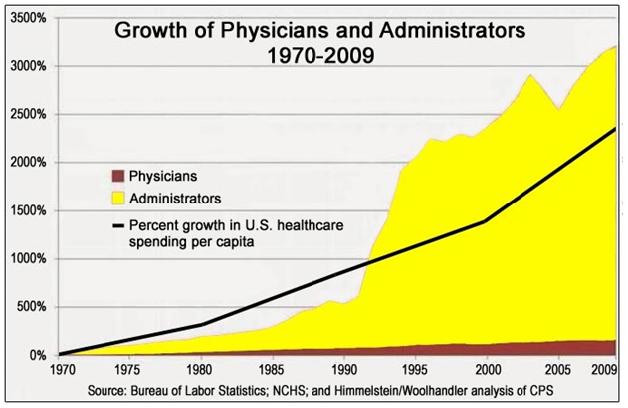
But yes, healthcare costs need to drop. See this graph for a symptom of why healthcare is so expensive: http://www.ibj.com/ext/resources/blog/The-Dose/Physicians-Ad...
There are plenty of personal vehicles in rural southern Germany, SUVs and all, to the point I’d go so far as to call it the norm. Not the case in the Balkans, though.
Most NYC urbanites I know e.g. wouldn't describe Staten Island or most/all of New Jersey as densley populated. Yet, the workers/contractors that can't afford to live in the center or dumbo have to get their tools into the city somehow, if they are to fix my 150k+/year income earning friends condos.
So now I found your stats intriguing and looking into it: That alledged 72% urban area inhabitants include non-dense areas like staten island and NJ, so I guess the stats are a bit misleading?
Can you please show where this point was stated? It seems like you are reading between the lines too much and straw manning.
The point is that “urban” by the definition used to create the statistic in the argument is a very broad term and this makes it difficult to draw good generalizations.
I don’t think a claim for “needing personal transportation with a large range” should be equated to “must be using pickups as commuter vehicles”
Sure:
but smaller, lighter, and slower vehicles are a viable option for most American as a response to So much of what is toxic about cars and car culture could be fixed by downsizing and slowing them. […] I wish north america would fully get on board with these small EVs
Not much of a strawman to me, rather good old urbanite-intellectual disregard for the life-styles/social classes driving these big vehicles.
makes it difficult to draw good generalizations. Agreed, which is why I would refrain to claim that 80% of Americans live in areas with a density above 50k. As the census noted, this is clearly not the case if e.g. Staten Island has a density of 8k.
When I'm in the US, and get the chance to walk around some city's blocks, these things are nothing but intimidating to me. Being rather tall, I'm not used to cross a traffic light as pedestrian and not being able to see above the hood of the car I'm passing. It has a different vibe to it, if this towering above me isn't caused by the vehicle owner's commercial needs but because the driver fancies it.
A Smart Car or Yaris or whatever will do just fine for commuting from rural Floyd County into Atlanta. Been there, done that. It. Is. Fine.
Conversely, a fully-size sedan is the minimal useful car if you want to go the ~10 blocks or whatever from Michigan Ave to the beach in mid January. Again, been there and done that. It. Is. Not! Fine.
This is less of a urban/rural thing and more of a weather/climate thing.
Comfort and fuel efficiency are not necessarily conflicting.
I have an Opel Corsa (supermini/subcompact) rental car right now, and it's both roomy, quiet and comfortable. The little 1.4L engine gets to motorway speed a lot faster than you'd think, plus it's quiet and smooth, really very little vibration felt at all, not even at 50kph in 5th gear.
The front seat pulls back enough that I literally cannot reach the steering wheel or pedals, and I have plenty of headroom (178cm/5'10").
Modern cars in all segments are generally comfortable and quiet, because that's what people want.
I suspect this is more related to the quality of the build rather than the size of the car
Edit: I'm being downvoted, but I live / have lived in these places. What gives? Do you have direct knowledge to the contrary?
The ideals of city living are rather myopic when you consider how large the continental US is and how much sprawl most metros have.
The truth is the lack of proper urban planning due to over reliance on the automobile is why European cities always feel so much nicer than cities in the states you mention.
If we continue to embrace sprawl then we will continue to have long commutes, worse health, and be isolated in our homes without anything to walk to.
Likely the same vice versa. Both are enormous and diverse places.
Speak for yourself. It’s all about priorities and they only feel nicer if you don’t care about affordable houses with private yards and prioritize walkability.
I get it that you don't have a family or maybe you just don't have the money.
Here in Canada there was this provincial deputy from a very left leaning and pro public transport party that got elected. You know the first thing she did with her salary? She bought a SUV (https://www.tvanouvelles.ca/2018/11/19/la-deputee-catherine-...)
> The truth is the lack of proper urban planning due to over reliance on the automobile is why European cities always feel so much nicer than cities in the states you mention.
And we saw how that was great during the pandemic, and that's not even mentioning other calamities that could happen. And that's not even taking snow into account. Not everyone lives in California.
> If we continue to embrace sprawl then we will continue to have long commutes, worse health, and be isolated in our homes without anything to walk to.
Or organize planning so that everything is more distributed. There are no reasons for mega cities to exist in the Internet Age.
That is a nice sound bite and proves nothing. Someone campaigning on a pro public transit agenda may well not believe that transit is yet suitable, and running on that platform is hardly incompatible with car ownership. They are nowhere near mutually exclusive. If you live in Toronto, a train won’t take you to the cottage up in the Kawarthas, nor should it more than likely. Not sure where provincial politicians have their cottages —- the Laurentides?
Cars will have uses even if transit is beefed up, certainly in the winter. Good on the provincial deputy. Or at least, a big shrug.
> And we saw how that was great during the pandemic, and that's not even mentioning other calamities that could happen. And that's not even taking snow into account. Not everyone lives in California.
We did. European cities fared much better than American ones and continue to. That’s got little to do with how the city is laid out and everything to do with how those in it act in the face of shared danger.
> Or organize planning so that everything is more distributed. There are no reasons for mega cities to exist in the Internet Age.
Sure there is. It’s vastly, and I do mean, vastly, more efficient. In terms of water, in terms of energy, in terms of carbon footprint, in terms of space. Vastly. That alone makes not having cities a dealbreaker for some whole countries like Australia where these resources are at a premium.
Cities are efficiencies of scale incarnate.
brb just going to remove the two child seats from the back of our Fiat 500
Europe has done significantly better with the pandemic so your point doesn’t make sense. The walkability of their towns and cities is a benefit during coronavirus.
I’ll just add that your assumptions are wrong. I can easily afford a car and it’s this sort of car-centric attitude that people without them must be too broke to afford them that is emblematic of why North America has such poor planning.
The city I just left, Boise ID, had 80% of people driving to work alone in these suburbitanks.
Suburban environment is not so dense so you could expect the nearest fast charger be pretty far away. Driving in a city traffic involves a lot of acceleration and slowing down, where the electric recuperative braking shines, unlike on a highway. OTOH in suburban setting you have a good chance to be able to put a fast charger into your garage (and you have a garage!), and maybe even charge the car from solar panels on your roof (and the roof is yours!). In a city, chances are you park in a multi-level parking or on a street, and charging your car from an electric outlet of your third-floor apartment is not realistic. The parking garage has a higher chance to provide charging, though.
To me, this entire problem can be solved by having a market with varying options for varying situations in life. If you don't want to spend the extra money on a big SUV, you don't have to, and one can use their own reasoning to decide what's right for them. If some person in Russia is happy with driving a crappy little car, all the more power to them. If they want to spend more on a vehicle that more adequately handles the conditions, I would be happy to sell them a big SUV!
I've lived in both rural areas in secluded towns of less than 3000 people in the wintery north and in cities with 1 million+ metros that hardly get a few inches of rain, let alone snow. Different situations call for different tools and if one doesn't like their current mode of transport, they are always free to either move somewhere that fits with their lifestyle more adequately or simply change modes of transportation.
I'm all about the right tool for the job for your life. Personally, I hate snow and love walking so I choose a city that is both walkable has relatively short winter months (Ann Arbor, MI). I'm able to walk or bike to work for most of the year, but I choose to own a vehicle to handle snowy days and Costco visits. Could I get rid of my car? Absolutely. Uber, Lyft, and good neighbors to the rescue... but the cost of ownership is so low compared to the value I get in return. By keeping my car and paying a small amount for gas, maintenance, insurance, etc.., I get to travel anywhere in the continental united states whenever I damn well please without talking to another person, why would I want to get rid of that? If my neighbor hates to travel, hates driving, and is fine with walking a few blocks or waiting on the bus/train to get groceries every few days, all the more power to them. Been there, done that, I'll take my car.
this is some very weird bullshit. i would (and always do) chose a smaller/lighter vehicle over the heavier one any time i need to go through the ice/snow.
the only explanation i can think of is that they tried it on summer tires? but itd be too stupid, wouldnt it?
Could you not have afforded skis? For 6 feet of snow, they're much better than any car.
> If some person in Russia is happy with driving a crappy little car, all the more power to them. If they want to spend more on a vehicle that more adequately handles the conditions, I would be happy to sell them a big SUV!
Many people in Russia driving crappy little cars often aren't doing that because they prefer it.
Snowmobiles were extremely common, absolutely! But as someone who doesn't like be cold and wet, they're not exactly the thing I want to ride before sitting down at my desk. As I mentioned in another comment, a lot of my fellow classmates would drive their snowmobiles to school because they either wouldn't get plowed out before noon or they would simply prefer it over the alternatives.
> Many people in Russia driving crappy little cars often aren't doing that because they prefer it.
Well yes, Russia has had it's own problems with creating opportunity and wealth in their country (I assume this is what you are getting at anyway). Policy aside, I disagree with you that they don't prefer it. If that were the case, those people would be walking or doing something else instead of driving those cars. If you are saying those people are not choosing their preferred option due to say, someone forcing them to do something else by gun point, well then I would say we are discussing very different things and I'll leave it at that.
Edit: I should also note, I loved to ski! It's roller-blades with snow and when I could, I would!
I’m not sure if this was intended as a joke, but when I spent time in northern MI using snowmobiles instead of commutes wasn’t uncommon
Remember that your AWD car may put power to the ground through all four tires, but it has the same braking capabilities as any other car. Please don't over-speed your braking distance.
I told her it wasn’t a problem and just rocked my way out of the space and on we went. Snow tires are amazing, and it’s incredible to me how few people get them here.
Another idea would be to build out bullet trains and infrastructure. Make a societal decision to reconnect all rural areas so living there and working in any of a number of cities is readily accessible.
That is not factually accurate given your prior statement.
In my personal case I have to sometimes wait 30-40 mins in traffic to get to the freeway about 5 miles away but once there the remaining 40 miles of commute takes about 30 minutes. This about average in the super giant US urban area where I live.
Society just doesn't go backwards in terms of living standards unless there's literally no other choice and forcing it backwards artificially is not something people will take kindly to.
Given a sufficiently strong government you might be able to get people to suck it up for awhile but that "awhile" is gonna end with a lot of people getting shot.
Associating smaller cars with « lower standards of living » isn't exactly universal.
SUVs and pickup trucks sell. A lot. Yes even in the cheaper segments- you can buy a new SUV for under €25k. Clearly people like them.
A family with kids probably has more than one car, and probably only needs one big one.
Huh yes it does. Especially 4x4 and higher to the ground which are two qualities SUVs and trucks tend to have compared to "normal" cars.
> A family with kids probably has more than one car, and probably only needs one big one.
First of all that's not true, it's pretty much 50/50 if there's only one car or not and it mostly depends on budget, work location and schedule. Also, people with families tend to bring with them more stuff than what can be put inside the trunk.
Saying bigger vehicles "tend to" have 4x4 is not a counter to what I said.
I am comparing some of the cheapest all-seasons on earth to some of the cheapest snow tires on earth in a vehicle platform that was renown at the time for having one of the most effective AWD systems so if I were to compare high dollar all seasons to high dollar snow tires in a vehicle known for having particularly bad AWD the results may be different.
Short of putting Greening on a wartime-footing - massive incentives for change, including gas-rationing - I don't see the end of the tunnel-vision. The home-heating elephant in the room gets no press.
This can be a game changer in urban set up especially in my part of the world where it can protect the occupants from the weather that is either rain or hot.
It can also solve the last mile problem and hopefully they can ride share them at the Park & Ride LRT/MRT train stations.
Rural areas, and locations with severe winter weather, have special needs for which higher speeds and more robust vehicles are appropriate, but smaller, lighter, and slower vehicles are a viable option for most Americans.
It's laughably out of touch to believe the US is even half rural. That ship sailed a very long time ago.
[0] https://www.census.gov/newsroom/press-releases/2016/cb16-210... [1] https://www.cnbc.com/2018/02/22/study-states-with-the-longes...