These people are property owners in Berkeley, California. While I'm sure yarns can be spun about the difference between asset value and cash liquidity, this is just not an impoverished class, sorry. They've seen their property values go through the roof, then the trees, now through the first cloud layer into the open sky with eyes toward low orbit. Arguing that they don't have an "alternative" is a little spun.
To wit: cry me a river. Build those homes.
There's a hyperbole to express on both sides, but I can understand why people who are worth $1-5 million and are past their 50s might feel threatened by this sort of development.
They aren't in a particularly marginalized position, but they are probably frightened about the rapid change and possibly out hundreds of thousands of dollars plus time they don't have.
I agree, build those homes and reduce the power of small groups to put up large barriers, but I also understand where the residents are coming from to some degree.
They can sell their house and live a life of luxury virtually anywhere else in the world.
I have a hard time sympathizing with such people. They're not out anything—they're amongst the most privileged people in the country.
Sure, I understand where they're coming from. That doesn't mean they have my sympathy. I understand why billionaires advocate for lowering their own taxes—that doesn't mean I give them an ounce of sympathy.
For many of those who move for retirement, the place they most love doesn't perfectly align when the best place to work and raise children. That makes it an easy decision. My parents moved to a place with more family, lower cost of living, and easier access to commercial areas. The fact that it is hard to find a job in this place no longer played a major role.
Sure, there are people living in Berkley and NYC who LOVE those places and want to die there. Still... that's not necessarily representative or even common. Many people move further away from urban centers even when starting a family.
Unconscionable!
Further, making financial decisions based on a plan with facts and figures rather than mere emotion is what responsible people do.
And the answer is "yes". Come on.
This was unnecessary. Don't make attempts to map a person's opinion to their age. That's a first step towards implicitly invalidating their opinion because of their age, which isn't a substantive rebuttal.
There are taxes, but people who have 100 times the median household income in the bank might be able to figure something out.
It makes sense that they're fighting for their money. And people deserve basic empathy, no matter what the situation. There could be solutions out there that make the most people happy.
The cynical view is that this is their greed, and they are taking money from people with less means with their demands.
Less cynically... we can try to find solutions to assure them their house value won't plummet, but encouraging a view where more prices at least stabilize won't put _that_ much strain on them, compared to the help it would give to other families with less means.
If that's the price that has to be paid, I think there's no moral argument to be made on this discussion, what remains is a legal-political challenge.
Finally, I do believe this is all part of investing into the housing market. If you want a risk-free investment, choose government bonds. If you want to play the housing game, this is part of the story. You can't expect to invest a few million into an overpriced industry with a scarcity-controversy, and expect to reap risk-free rewards. Everyone who buys a house in these areas knows that your money pouring in and your legal defences are inadvertently screwing with housing affordability. If you're okay with that and want to make a risky investment, so be it. But then don't treat it like some kind of safe retirement plan you worked your entire life towards, it's not.
That's usually marketed to older people.
Why not just build a massive cluster of skyscrapers and put all the people who want cheap rent there? It would cause much less impact on the existing homeowners at large. To me that is a much more equitable solution for both parties.
Personally, I would say if you can't afford to live there, don't. There are plenty of places to live and many people do.
2. Having moderately higher density has a lot of useful knock-on effects, like better walkability and transit support.
3. The objections are rooted in selfishness and classism/elitism. It's like someone objecting to a homeless shelter in their neighborhood because eww, homeless people. This common attitude doesn't mean we should never build homeless shelters.
A typical two bedroom in Shanghai is $870k [1]. Homes in Chongqing China are more expensive than in Columbus Ohio [2] -- yet wages are about 1/5th ($9k/yr in Chongqing vs $46k/yr in Columbus) [3]
[1] http://fortune.com/2017/07/18/china-beijing-property-housing...
[2] https://www.numbeo.com/cost-of-living/compare_cities.jsp?cou...
[3] https://www.statista.com/statistics/278350/average-annual-sa...
Also, earthquake protection makes SF based buildings more expensive to build, especially as they grow tall.
China has a massive housing imbalance. The skyscrapers are being purchased as investments by the newly rich and are out of reach to low/middle income folks. Also, not all those skyscrapers are good quality. In our condo on the 37th floor, we had to have the bathroom flooring completely redone because there were leaks all over the place. This building was built like 5 year ago! In addition, when you walk around the construction sites of those new skyscraper projects, you see those countryside workers crowded into hastily constructed dorms, 4 or 5 people in one tiny room. You can see them sitting around eating their small portion of rice and veggies. It is definitely a sight that would make most “living wage” Americans cringe...
My wife grew up in China and she loathes skyscrapers. We bought a single family home here in the USA with a nice size backyard and she has the happiest wife in the world. She often goes in our backyard just to sit and watch the squirrels. She also has a piano which she can play any time of the day. In China, neighbors complain when start playing your piano in those crowded skyscrapers....
I have an unproven hypothesis that most people on the planet would love their own single family home like we have here in the US. They aren't living in those dense urban areas because it is hip and cool. They are living there because they have no choice.
My guess is that if we re-zoned the Bay Area and replaced 1/4 of the current single family homes with 3-to-6-story apartment buildings we could cover several decades of regional housing demand and push housing prices down by 50%.
1: where? and 2: these homeowners will oppose it, because it still drives down the value of their investment because it drives down demand.
There is no way to drive down demand but keep prices high. That's not how economics works.
2. The logic being, if you have to screw people out of their equity (retirement) might as well make the smallest footprint.
I can't even touch the housing market in an area inconvenient to my work without literally hundreds of thousands of dollars in liquidity. That is cash that I simply do not have, nor do I have wealthy relatives that can front me the money. Please don't assume that just because an engineer has, what looks like a high income on paper, that they can even afford houses that cost millions of dollars in a high cost of living region as the Bay Area.
My coworkers that have set down roots here have to drive hours, and they're also making "at least 100k a year". What about the engineers that need jobs and homes, and the people that move just for their job? City's full, go away.
You and the parent agree. guywaffle's comment talks about people who make much less than you and are in the exact same situation. Absolutely true that a high income doesn't make spending 50% of it on housing any better. And someone who makes a smaller amount doesn't even have that option. You're both screwed, just in different degrees.
You are looking to moving out of the Bay Area for cheaper rent. There are people who make a lot less than you who can’t afford to live here. They drive from Tracy and Stockton to get paid a fraction of what you get. Stop crying.
You're watching it play out, but some seem to not like that the residents of the city have a greater say than the "not residents" of the city. I find that perfectly natural, normal, and desirable.
To sell the 3 units in the new lot, they will have to be relatively high end and there will probably be no clear net plus/minus in property values attributable to them. Instead of fighting the change tooth and claw, the neighborhood should be ensuring that the development as-built is high quality. For one, the lot setbacks look like to be as much as 20 feet, which is quite good.
I assume you work in some form of technology. Technology and related jobs have seen their wages increase astronomically compared to textiles or fast food. Sorry, you're not impoverished. You, and everyone else in your town, are now subject to 100% tax above a certain threshold, at 110% of full time minimum wage. This is so we can give that money to people who chose to not enter technology.
Ridiculous. Moderate taxation on a progressive marginal increase is fine. The extreme is absurd. Property rights are what make trade work without having to hire armed thugs.
I absolutely reject the notion that a home owner's personal reserve price to walk away from their property should be coercable.
That being said, my neighbor should have little say over what happens on my property outside of mutually agreed covenants.
Assuming they have little equity to start with, of course.
Can you help me understand why that's a good idea?
This IS not a failing in modern debate, but a much bigger issue.
I have seen less educated people show zero empathy for the opposing side many more times than the reverse.
Also you cannot have debates with some people, e.g. right wing authoritarians.
Some people are just born that way.
http://www.unitedcountry.com/CountryHomes/img/Country_Homes_...

and some people want to live in a place that looks like this:
https://www.cmgsite.com/wp-content/uploads/2015/03/Presidio-...

and some people want to live in a place that looks like this:
https://upload.wikimedia.org/wikipedia/commons/2/23/Hong_Kon...
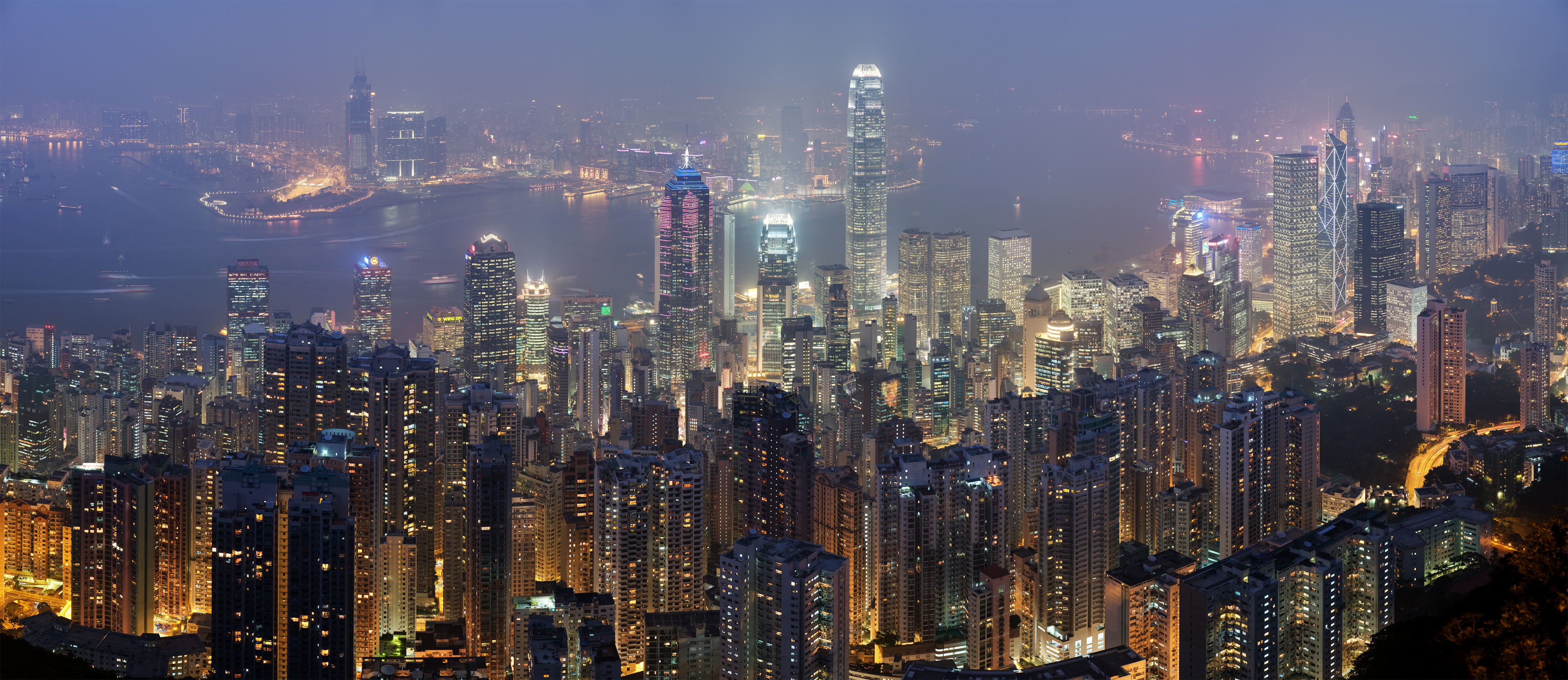
The problem is that someone who moves to the first type of place doesn't want to have to move again when it turns into the second type of place, and someone who moves to the second type of place doesn't want to move again when it turns into the third type of place. It's not entirely unreasonable.
Single family homeowners own their own homes. It can't get sold out from underneath them. But they don't own the plots next store or across the street. If their happiness with their living situation is dependent on those plots having the same buildings on them then they need to buy those plots too. Then they get to decide what happens to them.
A homeowner NIMBYite is exactly the same as a renter that agitates for imposing rent control.
When we lived in the city I had to file a permit to fix my 3' high fence. Pay something like $100 just to have "permission" to start working on something that was rotting and falling over. I don't really consider that "owning".
Ditto zoning and a bunch of other things. When we had the chance we moved out to the country so we could use our land how we wanted without having to live in the covenants of what the city lays down(for instance one of the local towns doesn't allow beekeeping, regardless of plot size).
I totally understand that there's a place for high density living and that some people enjoy that life. However when you see rapid change in these tech centers understand that are some people didn't sign up for that when it came around.
[edit]
I should add that I really wish more companies would support remote work. It both solves the housing issue and lets people live in the areas that fit their lifestyle better.
Isn't it a reasonable expectation for city and suburb dwellers that when you affect your neighbors, you might have to get permission? And when your interest is greater than their inconvenience, that you should be granted permission? And that authority should be an expert at it and impartial?
I wasn't talking at all about what the neighboring plot does. The parent was making the claim that when you 'own' you can do whatever you want with your land which is far from the truth.
Look, I have no beef with people who want to live in high density spaces. That's totally cool(and more power to them) however in our case we had retired neighbors all up in our business(since they had nothing better to do) and city codes dictating exactly what we can do with our land.
Unless you research extensively before you buy(see beekeeping above) it's very easy for your neighbors to make your life a living hell after you buy your house(see also HoAs).
The cops will even close a major street for the food catering trucks for the private parties they throw on public lands and in public buildings.
I get that people want it all but for example. Friend bought 26th floor corner apartment in a 32 story buiding with amazing view. 2 years later someone built another 32 story building next door blocking 30% of his view. Did he have some kind of right to prevent that? Another friend bought a lot and had a house built on it in a downtown-ish area. All houses in the area have no yard, at most they have a backyard porch big enough for a couple of chairs. His house now blocks most of the sunlight into at least one of the houses around his lot. His neighbor complains. If she wanted not to be blocked she really needed to by the land.
I don't see any other reasonable solution to these types of problems. The fence seems like yet another where the owner of the land should be able to build the tall fence. I say that as well as my mom used to sunbath topless in our backyard as a kid. She mostly took advantage of the fact she didn't expect anyone to look over the fence but the fence was only about 7ft high and houses around us all 1 story tall.
Also, is there a substantive difference between being a "NIMBYite" and simply opposing market externalities?
You could argue it but it would be wrong. They could collectively own a given area -- form a corporation and buy a neighborhood. Then they would collectively own a given area and the collective entity would be entirely within its rights to decide what does or doesn't get built on a piece of land it owns (subject to the corporate governance rules).
That's essentially how co-op apartment buildings work. But these homeowner NIMBYites don't want to do that. They want to exercise the incidents of ownership without making an investment.
Given how local governments are set up they have the raw power to do what they are doing. But the rest of us don't have to pretend it is okay. This isn't stopping a gold mine from polluting a river, it's not building public schools, it's not defending the country from invasion -- it's exercising naked political power to take property rights from people that bought them simply because they want to and they have the votes.
They do, it's called a municipal corporation, and it makes it decisions through voting.
Even better, you don't even need to be a homeowner to influence the decision of this corporation -- anyone living there is allowed to vote.
This cuts both ways -- people who 'didn't invest' also have a voice in property development, precisely through that same democratic process that you seem to consider so illegitimate.
> it's exercising naked political power to take property rights from people that bought them simply because they want to and they have the votes.
I mean -- if you really want to live in a free-market paradise, there are plenty of places that don't practice much zoning, like Houston. Anyone who buys real estate in the Bay Area ought to research exactly what the local laws in the area are first, and if they don't that's on them.
In ancient Athens a plebiscite could exile any citizen. Do you consider that a legitimate exercise of democratic power?
> I mean -- if you really want to live in a free-market paradise
Is it fun to beat up strawmen? Believing the public policy ought to be driven by appeals to public reason and not naked special pleading is more Rawls than Rand.
Absolutely, it was part of the social contract and certainly understood by any citizen that their continued membership in the body public rests at the pleasure of the the public will.
Even today, it's the right of sovereign nations to claim or revoke citizenship as they please
> Believing the public policy ought to be driven by appeals to public reason
I agree that public policy ought to be driven by reason, but presuming that you have reason on your side, when 'reason' just so happens to also be nakedly self-serving, doesn't seem very honest.
Either it's ok to vote and agitate for your self-interest (including yourself), or it's not. You can't say 'it's evil for homeowners to want what's good for themselves', but then not apply that same standard to yourself.
What's to pretend? Local governments have a responsibility to their residents. Granted, that doesn't give them free reign to hurt non-residents, but they can't simply ignore the concerns of those who fund them and elected them into office.
I say this as someone who has been negatively impacted by the restrictive zoning in the bay area. It would benefit me personally more if they allowed more dense housing.
> it's exercising naked political power to take property rights from people that bought them simply because they want to and they have the votes.
Who's property right's are being revoked, the real estate developers? Again, what's the difference between that and the gold mine? The gold mine is a good thing. It provides jobs, adds wealth to the economy, etc. And yet, a gold mine polluting a river increases health risks, mars the natural beauty, and decreases the property value for those living downstream. We expect the gold mine to help reduce or bear the cost to those they affect.
On the other hand, real estate developers who build lots of high-density living also increase health risks (traffic, pollution), mar the natural beauty (bulldozing trees, fields) and decrease the property value of those living nearby. You may argue that it's not to the same degree, and I would agree, but I think it's still the same kind of situation.
But the benefits of resource extraction to society don't justify ignoring the interests of people living nearby. Ditto for creating new housing near highly desirable urban zones.
If anything the gold mine has an advantage in that, while people can live other places (even if at a somewhat lesser quality of life) you can't can't really build the mine somewhere else.
A NIMBY says it's fine to do something, just don't do it near me. Yes, freeways are necessary, just not too close to my house. Yes, we need a waste-water treatment plant, just don't put it in my neighborhood.
Unless you are a literal cartoon villain, you probably don't want public policy to minimize having a place to live. You just want people to have their places to live somewhere else.
Perhaps.
But a democratic process that generates NIMBY policies is the same as a democratic process that generates rent control: neither outcome is off-limits in our Democracy and both should be respected.
I personally value democracy more than I value land-use policy in one particular place. I further find it disheartening to hear of disregarding democratic outcomes from the very same progressive left that should be championing that process.
It is a fundamental principle of American democracy that the people ought to exercise thier power virtuously and it is entirely appropriate to chide them when they do not. Nothing in the “progressive left” philosophy is to the contrary as far as I’m aware.
The simplistic notion that whatever a bare majority of the people want is good went out of fashion more than 2000 years ago.
Well, that depends. One could argue that by allowing you to establish a home in their apartment building (in exchange for rent), they've taken on a responsibility towards you. Nobody can build up a decent life if they were under the constant fear to be evicted. That's why as a tenant, you are especially worth of protection from arbitrary actions would make you lose your home, no matter if the building you live in belongs to someone else. In other words, there must be a very good reason for the landlord to make you move out, such as e.g., they need it for themselves to live in.
At least that's one way of seeing it.
You're right. It's not at all -- like not even a little bit -- unreasonable to desire that your neighborhood stay the way it was on the day you bought into it. That's why you bought there in the first place, presumably; you liked it the way it was!
But it is 100% unreasonable to expect the rest of the world to help you achieve that goal. Times change. Places change. Building more density in the Bay Area is good for the most people and should be supported on those grounds.
I desire a lot of things. They aren't unreasonable desires. But that doesn't make them good policy goals for society as a whole.
The entire planet is nontrivially affected by creating and preserving car-dependent settlements; this sort of thing needs to be handled at the level of international climate treaties.
The entire country is nontrivially affected by the inaccessibility of moving to where there are jobs. Shadows on your garden don’t come close to being stuck in a place with no opportunity.
Imagine if other law was made at such a hyper-local level. Should residents of the 1200 block get to write themselves a murder statue that says residents of the 1100 block are fair game?
Good government is an antidote to the patchwork of small-scale actors making decisions in their own interests but dumping the downside of those decisions on society.
I disagree. I think that NIMBY has its place. Maybe not in Berkeley or 101-corridor Marin or in (insert miles and miles of shitty two story residential in SF) ... but I can quickly think of examples where NIMBY created tremendously valuable outcomes that were worth fighting for.
Here are a few, from places I live or have lived:
- West Marin County, with the accompanying Pt. Reyes National Seashore, is an incredible, awe-inspiring example not just of nature, but of the foresight and the hard work that a small community of people had to keep out development and large roadways.
- Boulder, CO, with all of its flaws and idiosyncrasies, is a quite impressive achievement that has grown up over many decades - starting with the original open space ring circling the city and continuing with height and density restrictions, etc.
Those are very expensive places to live with a fairly high bar for entry (and certainly for home ownership) ... and that is OK. It's OK that not everyone can live in Aspen. It's OK that we can't afford a home in Gstaad. It's OK that ranches in West Marin are expensive.
The world does not owe you these things.
The world doesn’t owe anybody anything. You’re right about that. The few white families lucky enough to buy cheap subsidized housing at just the right time in history as new highways ripped through existing (many times conveniently black) neighborhoods didn’t deserve to get rich off that decision.
But here we are.
It’s almost as if deserve’s got nothin to do with it.
I might agree that zoning should be all-or-nothing with respect to residential uses, and that there should not be such a thing as a "luxury residential only" (i.e. single family home only) zone.
But this is something totally different.
This is just urban incumbents opposing further urban developments in their neighborhoods on the grounds that they’ve got theirs and there’s no upside to making it any easier for other people to move there, too.
This isn’t about keeping the oil refinery out. This is about keeping other people out.
That’s a fundamentally different thing. NIMBY isn’t even the right word for it.
"Fuck you, I (literally) got mine"?
Seems like you either stay and fight (which history implies does not work) or keep moving to new similar-to-before places. Always. Expecting otherwise is not entirely reasonable either.
Ever increasing property values caused by artificially restricted zoning is basically a generational Ponzi scheme. It's stupid and wrong and it can't last forever. And like real Ponzi schemes, the only people who benefit are those who got in early.
Whereas, the whole "enrich myself off property values" thing only works if those values are continually increasing.
That is far from clear. No human civilization has ever had a stable population.
> the whole "enrich myself off property values" thing only works if those values are continually increasing.
That's true, but that's not what I was talking about. What I was talking about is people's reasonable desire for a stable environment. Rising housing costs is just a side-effect of that plus population growth.
You might as well blame the situation on people who have babies as on people who want to limit growth in their communities.
And if the local residents don't want a new housing development because it negatively impacts their home value, then maybe someone will find a way to make it worth their while (i.e. real-estate developer grants current residents a stake in the returns of the new development if they stay for 5 years after the new housing is constructed).
This is the local equivalent of Trump-style “close the borders and build a wall” anti-immigration rhetoric.
You're damn right. I assume you don't give half your paycheck away either.
>Any conversation about 'right', 'wrong', 'moral', it all goes out the window.
Right wrong and moral? From perspective of whom? Those are such subjective constructs. Is it right, wrong or moral to actively attempt to triple the population of an already densely populated area when there are millions of underutilized acreage in the continental US?
>It really sucks that so much of peoples' value is often tied up in a single property. It would be a gobsmackingly terrible investment decision, if you didn't need shelter to live reasonably well.
It's actually a pretty decent investment, but does involve risk. Instead of paying someone rent and owning jack shit, you are paying a mortgage and keeping at least some of that money. Most houses will increase in value as well. Also, your mortgage payment won't go up every few years like rents do, particularly in densely populated areas. You also get a decent tax break on a mortgage. You can also borrow against it at much better rates than cards when you are in a pinch (or are even unemployed).
>These people are being incredibly selfish, and that is reprehensible.
Which people? The people who bought houses, or the people who want to devalue someone else's home so they can get cheaper rent in a already overpopulated area that they just have to move to? That isn't entirely clear to me.
If bay area land was not underutilized you would not need zoning to artificially constrain housing supply. We would also not be supply constrained on housing.
Artificially causing a housing shortage is arguably immoral because it cause high housing costs that in effect limits access to the rare opportunities found here. It makes it almost impossible to grow up with lower middle class parents or work in a low-pay low-skilled position, and mingling with the tech crowd to work your way up.
* A snapshot of more recent U.S. Census migration numbers shows that nearly three-quarters of those who have left California for other states since 2007 earn less than $50k a year.
* San Francisco's African American population has declined from 13.4% of the population in 1970 to 6.1%
* 41 percent of San Franciscans spend 30 to 50 percent on rent, despite a lot of rent control for longer-tenure residents and a population average income being $104k as well as median $77k
It also limits the number of and kind of opportunities that can be found here.
It's that land in Bay Area and SF which is underutilized. Because high density makes sense. Yes, I enjoy living in NYC.
> devalue someone else's home
A house is not money. It does not have a guaranteed value. It's property, like stock. If one's shares go down because of e.g. competition, people don't see it as an unjust assault.
By artificially constraining supply you are forcing externalities onto renters as well as new homebuyers, and in the same breath limiting others ability to meet this demand with the land they own. For the majority that can't afford the inflated rent you just kicked them out or made it impossible for them to even move here to seek opportunity.
I do not see how this can be just.
In reality if they do start building up the city extensively, the bubble will have burst by the time the housing capacity is much higher and people won’t want to live there at that time anyway, they’ll move somewhere cheaper - just my two cents.
Quite to the contrary rezoning is a normal way for cities to respond to changes in needs. You do however have a right to decide over your own land and to negotiate with other interests on changes to zoning rules, and I wholeheartedly support that.
Considering that land value has generally risen with density in western society and the economic drivers denser cities have become, I do not think your argument that higher density reduces monetary land value holds up to scrutiny.
A Berkley land owner decided they wanted to build something on their land that would satisfy the zoning requirements. Their neighbors didn't like it, so they lobbied the city government to ignore the zoning requirements and not let them build it.
Good. Your sense of entitlement to drive and park everywhere all the time does not and should not outrank other people's need to live where there are jobs (or, for that matter, the long-term viability of the planet).
>by the way the value of your most valuable asset, your home, was just halved.
I couldn't think of a brighter public policy success story than redistributing the unearned income of the landed aristocracy to people who are trying to make a living. If we build enough for the newcomers, at worst you're going to see returns at parity with inflation. Am I supposed to be sympathetic that you were thwarted from profiteering on a shortage?
You seem to have confused land ownership with its complement, ie. the right to dictate the uses of neighboring land but not your own. I don’t see any inverse deeds listed on the MLS. The closest thing I can think of would be voting shares in a corporation that come with permission to live on its land. But I’m guessing you’re not in favor of permitting more coops/TICs.
That many suburbs function this way is an emergent property of the political process, which can and should be unmade through the same process.
Owning a home in a coastal city or other job center is a question of bloodline and being in the right place at the right time; it’s not realistically available for any amount of wage labor, which is why I call it aristocracy. People whose home value corresponds to their earned income (most homeowners) aren’t in that category.
Granted, most American cities are this way. That’s because they are shriveled ruins of their former selves thanks to White Flight and deindustrializaton.
There should be a lower return for less efficient land use, buildings that are badly maintained or outdated housing stock.
Maybe devalue the actual structure, but upzoned land is worth more. The only people getting economically screwed here are condo owners.
Used to get a decent tax break. But Republicans made sure to stick it to Blue states with reducing the mortgage cap for deduction from $1M to $500k.
NIMBYism prevents outsiders from moving to your neighborhood. It is xenophobic in intent and effect.
It's not far-fetched to associate NIMBYism with a fear of the strange and foreign.
NIMBY means "Not in my back yard." That includes everything from HUD housing, to nuclear power plants, to fracking, to prisons.
I don't see how being afraid of nuclear disasters is in any way xenophobic. I also don't see how not wanting your property devalued by building cheaper houses is either.
I think you don't have a clear understanding of what those things are, particularly in regards to the article we're discussing which happens to be in present day time.
Or maybe that's your "I want to win" tactic and you are just throwing it out there to see if it will stick. That might work in some corners of the internet, but it doesn't seem to be working here. If you have a rational argument about the discussion, I invite you to present it.
Nuclear plants are a ridiculous strawman. We're talking about places for people — living, breathing human beings, with thoughts, dreams and aspirations — to live in.
Ensuring other people have a place to live is more important than your property values and neighborhood character.
I have an extremely clear understanding of how the white upper middle class has systematically used the state's monopoly on violence to exclude anyone else from joining their ranks.
xen·o·pho·bi·a ˌzenəˈfōbēə,ˌzēnəˈfōbēə/Submit noun intense or irrational dislike or fear of people from other countries.
Nimby ˈnimbē/Submit noun a person who objects to the siting of something perceived as unpleasant or potentially dangerous in their own neighborhood, such as a landfill or hazardous waste facility, especially while raising no such objections to similar developments elsewhere.
In common parlance in the United States, NIMBYism includes opposition to housing. That is also what we're talking about in this thread.
You'll see that the changes don't actually make a difference to any of my arguments.
What they generally want is to enjoy the current character of their neighborhood (big lots, green space, still close to the city, walkable, etc.), but also realize substantial gains in housing value by keeping new housing off the market. They might gain even more money if their particular land could be developed and they moved, but then they woud have to move.
But if they don’t own the property, they need to stop trying to get Berkeley zoning to break Berkeley laws. Thank goodness for Nancy Skinner’s law that will make the city pay legal fees if the city does more crazy stuff like this.
I can’t wait to vote Jesse out of office at the next election.
That's not true at all. They could sell their homes for their mindbogglingly inflated values to condo developers in exchange for multiple units in the new buildings. They wouldn't have to move at all (except temporarily, while construction is going on), and would even gain an asset that they can rent out or sell later.
What they're fighting for is the right to keep their low-density suburb, single-family home, lifestyle. Which would be fine except that their insistence on doing this is impoverishing everyone else.
I don't understand why people feel they have a right to move to a particular place and live there at a particular price.
I don't understand why people feel they should have the right to decide what their neighbors do with their property (as long as they're not opening up a waste treatment facility or something). But that's beside the point.
There are two main reasons why "just move" isn't easily actionable advice: jobs and family.
The reason expensive areas are expensive is because they have desirable jobs. (One) reason cheap areas are cheap is because they don't have as many desirable jobs. Those of us working in tech in the Bay Area accept that we earn high salaries in part because the rent is so high. So we grumble but we can make ends meet and life is mostly good.
For those who aren't so lucky to be working in hot industries with good pay, support of family and friends matters much more. Single-mom has grandma looking after the kid so she can work; if she moves to Des Moines or wherever the rent is lower, she loses that free childcare she'd been getting. Since most jobs come through referrals, she'd have to have professional and social networks in those cities before moving. Otherwise it's just a leap into the unknown to move before having an offer in hand. If you don't work in tech, I don't think having 15 recruiters emailing you before breakfast is the norm.
They will have a litany of troubles and problems that they go through, ready to fire off, no matter how well off they are.
I know I have one. It's not fair, so I try not to listen to it, but I do have one. A whole litany.
Well the fact remains that it does not happen. When I purchased my home in 2003 I received no tax credits, support from the government, bonuses, or a pat on the back. I put 20% down after saving up everything I could for a solid 5 years after landing a great job after college, which again wasn't subsidized or had grants for.
No one else does this but me and the ridiculous sense of entitlement or attitude of it being "unfair" that someone else can't afford it really stems from a deeper issue.
Get off your high horse about the government charitability towards homes, the government didn’t provide these programs out of its own back pocket, our tax dollars provide these programs.
Are you being sarcastic?
If you're not a Bay Area (or other unaffordable area) resident, then your viewpoint is rational. The price-to-income ratio of your new neighbor should be about the same as your price-to-income ratio when you moved in.
If you're a resident of metro San Francisco, San Jose, Denver, Dallas, Austin, Washington DC, or Boston, then you are expecting different behavior from your new neighbors. They will need to save for 10 or more years for that down payment of 20% due to competition from each other. The income required to live in these metro areas is much higher. The lower-middle class is pushed out. Upper-middle class folks who want to live below their means don't have the option to.
Fairness is the wrong metric; life in all societies is fundamentally unfair.
It is just nonsensical for you to expect other people who are chasing opportunity (those metros are where the best jobs are) to give up, when you chased that same opportunity when you moved where you currently live.
Because our economy is changing, this means it's harder, but don't knock people for trying.
It does not make sense for renters to vote against developer interests and for homeowner/landlord interests, as a supply constrained housing market increases rent.
Even if you have rent control, wouldn't it be nice if you could move out of your moldy unit into a new one or from a one bedroom into a two bedroom without breaking the bank? Or from Berkeley to Menlo Park if that is where you find a job, without loosing out in rent?
Fortunately there are a lot of options here still, even though I do hope density does not go up too high; oak trees here are protected and a huge part of the city's character. If you want higher density than the trees can allow, maybe go to SF. If you want higher density than they allow maybe go to Chicago, NY, Hong Kong, or London. IDK.
Yet this problem got started in the 1970s: https://jakeseliger.com/2015/12/27/why-did-cities-freeze-in-..., and I don't think human nature suddenly changed then. So what did?
In addition, Tokyo doesn't have this problem: https://www.vox.com/2016/8/8/12390048/san-francisco-housing-....
So it's probably something other than pure selfishness per se.
I own a small house (with a mortgage). I'm hoping house prices go down over the next 10 years. I'll probably want to buy a larger house, so if prices come down I don't have to come up with as much cash. OK, I'll get less for the house I'm selling, but the difference in the prices is also less than if they were to go up.
As long as I sell the current house for enough to pay off what's left of the mortgage, I think I'm winning if house prices go down.
Also, because it is highly leveraged for many, especially in the Bay, to have it reduce in value can actually easily bankrupt you. But for many, they feel they need to take the risk to lock in home prices, and also to grab what they still cling to as "the american dream" of owning a small single family home. Can't say I blame people for being upset by that, especially after this tax reform theft.
For those people, if their house goes up in value, it represents an important source of financial security (if they haven't gutted it via refinancing and HELOCs for renovations returning $0.60 on the dollar, new cars or vacations)
Even for people with decent financial planning skills, the home is such a large investment and typically bought with 5-33x leverage, that a small price drop is dangerous to their position.
In cities, it is often that bigger appts are cheaper per sq/ft because the market for them is much smaller than 1br/2br.
It's more complicated than that, but you get the idea.
I think it's more complicated than that - certainly $100K houses would not be the same size and features as $200K one, and when determining the price estimates, this is usually taken into account - 1bd/1br is not the same as 3bd/3br.
If houses in a neighborhood were sold strictly on a price / sq. foot basis, there probably wouldn't be much devaluation, in fact you would probably get an increase valuation based the costs incurred to just build a house without regards to sq footage. (meaning the first $125K is the first 1000 sq feet and the 2nd 1000 is only $75K more.
Average home value is largely meaningless if you are averaging substantially different houses. It only has meaning if we're talking about heterogeneous neighborhood or about something like a large area in rough comparison with another large area. Well, maybe not entirely meaningless as you still can get rough indicator of "price level", but useless in comparing the effect of this or that measure. It's like the reverse of the joke when Bill Gates walks into a pub and average income of everybody in the pub doubles. May be technically true but not a useful measure of anything.
That must be a really big pub or have started out with some very rich people in it to have only doubled.
I disagree with the tone. Everyone is selfish. Everyone wants either their own benefit or their own benefit. Everyone is grasping. Moral, wrong or right can't correct that behavior, even if you could agree to it. Thats why the moral, wrong or right decisions dont have to be about what people want, but what you allow people to do or not do.
Why is it that the middle class who only have their single single-family house are the selfish ones?
No, on the eve of what looks like the most disastrous tax policy in the history of this nation for working and middle class folks, I don't think it's the middle class who are being selfish by a long shot.
The problem with this, of course, is that it involves picking an economic fight against rich people, the people who win economic fights.
Anyway. A lot of zoning policy is set by people who claim to be middle-class but own fabulously valuable property. They could become rich at any moment they choose because they are lucky enough to live in a home that has become worth about $3 million due to the housing shortage. It's in their interest, of course, to stay where they are and keep the housing shortage going until their house is worth $4 million.
If we had a land value tax, maybe people would prefer to have a sensible rate of development that kept their home price stable. But accidentally-wealthy homeowners are a huge voting demographic, on top of the fact that blatantly rich people have a lot of political influence. So the land value tax is politically infeasible.
This thread is largely an assault on the middle class in SF who happen to have been around when it was affordable to buy there by a swarm of very well salaried (but still priced out) techies who've by and large ruined SF with their presence as it is.
Like most Americans, the target isn't the rich because the techies in question see themselves as being those people someday.
Middle-class people, on the other hand, are not facing their single-family house being taken away; just some of its benefits being reduced and its value possibly dropping.
For starters, that would violate the 5th amendment.
Why should everything be balanced on the backs of the working and middle class if we're talking about architecting a more functional society.
You can believe that "densification" will be applied in-equally as well. Just as it happened to poor or working class folks who were gentrified out of the homes they had inherited, it will move up the 'class' gradient until only the wealthiest own everything.
At some point the practicality of life in a civil society has to trump insane ideologies committed only to protecting 'property rights' of a small minority.
Why?
But I wonder if developers offered to buy neighboring houses at the same time they buy the first house, if that would help at all. Then the neighbors have the option of not losing any value because of the shadows that will go up or whatever. This would require by-right type laws where the developers could trust that housing is actually possible to build on these lots, otherwise buying multiple properties may be too big of a risk.
I suspect NIMBYs might like this idea even less since it could more drastically change a bigger part of the neighborhood, but it seems like it would at least partially address their stated concerns of neighbors being financially impacted.
There is NO reason we can't have the same rate of home construction as Seattle, which built homes at the fastest rate in the nation. No infrastructure? Build it. No school slots? Build more. The Bay Aarea can easily accommodate double digit population increases with almost no perceived increase in density. It just requires action rather than whining about neighborhood "character" or traffic.
If you had a single-family home in the middle of Manhattan, it'd be worth a lot just from the land. It seems like you'd want to encourage the city around you to be as highly developed as possible if money was the main concern.
Better: people are self-perserving.
Here's why - it's true that the value of a SFH in many parts of SF would drop if a large apartment were built next door, if that house could only be sold as a SFH. But what would the value of the land beneath it be if zoning restrictions were relaxed?
To be clear, I'm not sure, but I have a friend who owns a SF on one of those rare streets that is zoned R-2, and some of his neighbors have been cleared to build two flats where there was once a SFH. The two flats sell for considerably more than the SFH would have.
Now, this might still reflect scarcity, and a rare flat in an otherwise SFH neighborhood might be more desirable than an entire neighborhood of them (maybe, but not necessarily, I doubt it - nob hill and Russian hill are more expensive than the SFH parts of the sunset and excelsior, and Manhattan/(+ some other parts of New York), one of the few urban areas that is more expensive than SF, is also the only large scale urban area that is considerably more densely built.
Even if lots of people were to build 2 or 3 unit flats, vertically, that's a huge amount of additional housing. The value of the land sitting beneath the SFH would reflect this, even if the current owner chose not to undertake the project. I also believe that greater density in SF might very well stimulate additional economic activity, which could end up offsetting the additional supply, eat least enough that 3 apartments would be worth more than one house on the same plot of land (again, if density meant lower prices, Manhattan would be the cheapest place to rent in the entire US, and Nob Hill would be much cheaper than the Sunset).
When I heard what people on this street had done, I was almost jealous. They replaced their aging SFH with two apartments that were just as spacious and nicer, building vertically. The backyard is now shared, but it's still big. And they got so much $$ for the additional unit that their mortgage is paid off with a nice fat chunk of change left over.
I suspect that much of SF's famous nimbyism is actually motivated by a desire for things to stay the same. People like their SFH neighborhoods, and don't really want it to chance. They don't want to tear down their house and build a bunch of flats, even if this would be a way to wring a lot more money out of their investment - and because they don't want to, they don't stand to benefit if their neighbors do this either. Alternatively, they might not be aware of this possibility. Or, in a city of 75% renters, they may rent and not see any benefit to this new construction - at best, disruption during construction, at worst, losing their current rental.
It may indeed be selfish, but I'm not sure it's asset maximization behind all this.
> a gobsmackingly terrible investment decision
Here is a somewhat paraphrased version of the author's main points:
* Not just an initial, but a relentlessly ongoing drain on the cash reserves of the owner requiring an endless parade of repairs and maintenance without which it will crumble
* Illiquid. It takes months of time and effort to buy or sell
* Expensive to buy and sell with very high transaction costs: 5%+ commissions, buying and selling
* Undiversified. Represents a disproportionate percentage of a person’s net worth
* Complex to buy or sell
* Lots of extra fees and reports and documents you must pay for
* Generates low returns. At or below the inflation rate
* Leveraged. If the price goes up a little bit, leverage will magnify this and people will convince themselves it’s actually a good investment! Most will never consider that leverage is also very high risk and could just as easily wipe them out
* Mortgaged. You pay interest on the loans. Many people borrow money against it more than once
* Unproductive. Never pays interest, never pays dividends
* Immobile. Fixed to one geographical spot so at any given time only a tiny group (if any) of potential buyers for it will exist
* Subject to the fortunes of a single neighborhood
* Fragile. Easily damaged by weather, fire, vandalism and the like. As such it requires expensive insurance to cover these risks. Often the the bad things that are most likely to happen aren’t actually covered
* Heavily taxed.
* * If it should go up in value, we tax that gain. If it goes down in value we do not offer a balancing tax deduction on the loss like with other investments
* * Taxed annually, not just when bought or sold
* * Tax rate goes up as value increases. Does not go down when value decreases
* Subject to eminent domain
* Increases stress, leads to more divorces, but then be impossible to divide
(Note, I am biased against homeownership. Which hasn't stopped me from recently buying a house for a variety of reasons, mostly revolving around space needs for my family that could not be met with the available rental options in my current city)
The tax rate usually doesn't change in either direction with value, except in states like California which limit assessment increases, where the effective rate decreases if value increases rapidly (because the tax basis increases less than the full increase in value).
And in most jurisdictions, value decreases are fully reflected in tax assessments, even when increases are only partially captured.
It really sucks that so much of peoples' value is often tied up in a single property. It would be a gobsmackingly terrible investment decision, if you didn't need shelter to live reasonably well.
So let's be clear. These people are being incredibly selfish, and that is reprehensible. But they also don't really have a good alternative that wouldn't lose them a lot of money in a time where, if they're not in the class that owns multiple houses, they're already struggling. And that is sort of ameliorating imo.